
Introduction
The palm oil industry, as a critical driver of economic growth and development, significantly contributes to global trade and the livelihoods of millions. Indonesia, as a leading producer, exemplifies this industry's vast scale, with an output of approximately 45 million metric tons annually (Figure 1(a)). Its versatile applications in various sectors like food, cosmetics, and biofuels underscore palm oil's ubiquitous presence in global commerce [1-4]. This widespread utility is matched by a growing number of publications, which has expanded exponentially, indicating a robust and sustained interest in the commodity and its associated technologies (Figure 1(b)).
However, in conjunction with its economic strength, the palm oil sector encounters substantial environmental and sustainability obstacles. Concerns such as deforestation, the loss of biodiversity, and the discharge of greenhouse gases have instigated a pressing demand for more sustainable methodologies [5]. The industry's traditionally linear model of production, characterized by extensive extraction of raw materials and significant generation of waste, further exacerbates these challenges. In response to these apprehensions, there has been a noticeable shift in research focus towards sustainability and the effective utilization of palm oil waste or byproducts (Figure 1(c)).
The model of the circular economy offers a revolutionary framework to directly confront these challenges. By endorsing the reduction, reuse, recycling, and regeneration of resources, the circular economy strives to detach economic growth from the consumption of resources and the deterioration of the environment [6-8]. The utilization of this method is not solely a tactical reaction to the ecological predicaments linked with the manufacture of palm oil, but also a chance to bolster economic endurance and societal inclusiveness within the sector [9-11].
Copyright ©2024 Published by IRCS - ITB J. Eng. Technol. Sci. Vol. 56, No. 1, 2024, 25-49 ISSN: 2337-5779 DOI: 10.5614/j.eng.technol.sci.2023.56.1.3
Despite the possible advantages, the process of transitioning towards a circular economy within the palm oil sector is characterized by intricate complications. The industry generates substantial amounts of biomass, effluent, and waste, historically regarded as disposable rather than valuable assets. Recent developments have initiated the exploration of the potential presented by palm-based biomass, palm oil mill effluent (POME), and refinery wastes, aiming to convert them into products and energy that possess added value [12-14]. This transition not only holds the promise of relieving environmental burdens, but also of fostering innovation and profitability within the industry [10, 15]. However, realizing the full potential of these waste streams requires overcoming significant technological, logistical, and economic hurdles.
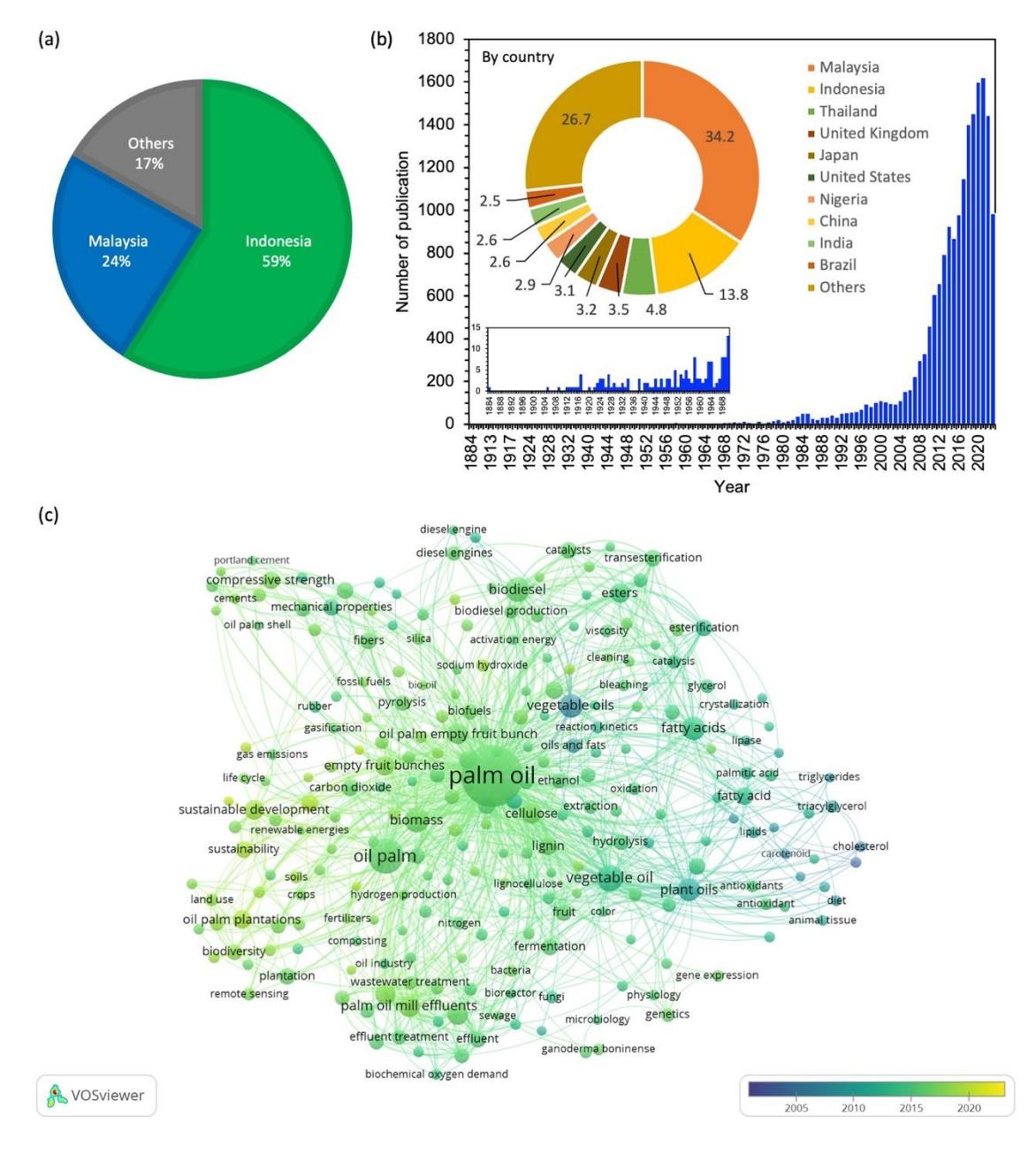
Figure 1 Palm oil production and publications related to palm oil. (a) Palm oil production by country (data source: http://www.worldagriculturalproduction.com/crops/palmoil.aspx). (b) Number of publication per year and by country (data obtained from SCOPUS, 6 September 2023). (c) keyword network generated by using VOSViewer (keywords source: SCOPUS).
The application of Industry 4.0 technologies is pivotal in addressing these challenges. By integrating smart technologies, data analytics, and automation, the palm oil industry can enhance operational efficiency, reduce waste, and improve the valorization of by-products [16, 17]. However, integrating these advanced technologies into a coherent circular economy framework remains an ongoing challenge, particularly in balancing the priorities of energy efficiency, cost-effectiveness, and sustainable production [18-20].
Figure 1(c) visualizes the complex network of research themes related to the palm oil industry. It illustrates the diverse and evolving areas of focus, from technical aspects like biodiesel production and effluent treatment to broader themes encompassing sustainable development and renewable energies. This network analysis not only highlights the current state of research but also sheds light on emerging trends and potential future directions (Figure 1(c)).
This review explores the fundamental concepts underlying the circular economy and their essential implementation in the palm oil sector. It conducts an examination of waste generation throughout the entire value chain, while also investigating strategic approaches designed to minimize waste production and enhance sustainability. Furthermore, it discusses the potential for converting palm oil by-products into value-added goods, thus contributing to diversification and increased profitability. Additionally, it highlights the role of technological advancements in facilitating circular economy practices. Through the analysis of successful case studies and the exploration of challenges and obstacles, this paper aims to inspire collaborative efforts towards establishing a palm oil sector that is both sustainable and economically viable, while also being environmentally responsible. This comprehensive analysis makes a significant contribution to the wider discourse on sustainable development and responsible business practices, emphasizing the importance of innovative strategies and technologies in ensuring the long-term sustainability and profitability of the industry.
CE Principles and their Relevance to the Palm Oil Industry
CE signifies a fundamental change in the way resources are managed, endorsing a sustainable methodology that aims to establish a closed-loop system in order to optimize the value of products, materials, and resources while minimizing the generation of waste. This transformative approach is distinguished by a number of fundamental principles, which encompass the design of products for prolonged usage, the optimization of resource utilization, the reduction of waste, the encouragement of sharing and collaborative consumption, the extension of product lifespan, and the closure of the loop through recycling and recovery [21-23]. The palm oil industry is increasingly embracing these principles as it grapples with environmental obstacles and explores opportunities to improve its profitability (Table 1).
Biorefineries are being recognized as an imperative constituent within the circular economy of the palm oil sector, facilitating the conversion of biomass waste into diverse bio-products. This conversion mechanism assists in mitigating greenhouse gas emissions resulting from waste decomposition, all the while fostering energy preservation and effectiveness, thus aligning with the circular economy's objective of diminishing energy consumption [10, 24]. The industry's transition towards the development of value-enhanced commodities, such as biodiesel and bioethanol derived from the byproducts of palm oil, serves as a notable demonstration of the practical implementation of circular economy principles. This approach advocates for a self-sustaining system that not only stimulates economic advancement but also facilitates the preservation of the environment [25, 26]. This approach is supported by models and indicators designed to assess the sustainability and economic viability of circular economy practices, highlighting the potential for cost savings and emission reductions [27].
The core principle that underpins the circular economy's significance in the palm oil sector is the notion of waste valorization. This involves the treatment of by-products such as biomass, POME, and refinery wastes not merely as waste, but as valuable resources (Table 1). This particular perspective promotes the development of additional revenue streams by incorporating palm-based biomass into various industries such as paper, polymer, and furniture. The integration of these components establishes a closed-loop system, thereby substantially reducing the amount of waste sent to landfills, limiting emissions, and generating economic value. Ultimately, this process transforms waste into a form of wealth [15].
Furthermore, the adoption of advanced technologies like microwave-assisted processes for converting oil palm waste into bioenergy exemplifies the innovative application of circular economy principles towards more sustainable practices [28, 29]. For example, Abas et al., investigated the microwave-assisted optimization of pyrolysis liquid oil (PLO) production from oil palm fiber, focusing on maximizing liquid oil yield and total phenolic content concentration, important for biomedical applications such as antioxidants and antimicrobial agents [30]. Through response surface methodology and central composite design, they found significant effects of final temperature and AC loading on PLO yield and total phenolic content concentration, with the highest PLO yield at 40.66 wt% and total phenolic content concentration at 26.61±0.96 mg gallic acid/g under optimal conditions.
Integrating the technologies of Industry 4.0 within the circular economy framework is of utmost importance for effectively tackling the operational and sustainability obstacles faced by the palm oil industry. The automation, real-time data processing, and connectivity play a crucial role in augmenting the efficiency of palm oil production and facilitating the shift towards a circular economy [16, 18-20].
The successful execution of circular economy principles within the palm oil sector requires an inclusive approach that encompasses the entirety of the supply chain. This comprehensive strategy entails the development of policies, regulations, technological advancements, and analysis of market behavior. Such a holistic approach is crucial in guiding the industry towards a bio-circular-green economy model that effectively balances sustainability and economic expansion [31]. By adopting circular economy principles, the palm oil industry can mitigate its environmental impact while maximizing its economic benefits, marking a significant step towards sustainable production and consumption.
| Principle | Description | Refs. |
|---|---|---|
| Optimize resource use | Implement efficient production processes to minimize water, energy, and material consumption throughout the palm oil production chain. | |
| Reduce waste | Minimize waste generation during palm oil production and processing through improved practices and technologies. | [21-23] |
| Promote sharing and collaboration | Encourage collaborative consumption models, such as shared transportation or platforms for exchanging palm oil by-products, to reduce individual resource usage. | [21-23] |
| Extend product life | Implement repair, refurbishment, and remanufacturing programs to extend the useful life of palm oil products before disposal. | [21-23] |
| Close the Loop | Recover and recycle palm oil waste, including biomass, POME, and refinery wastes, for new uses and product creation. | [15, 21-23] |
| Waste valorization | Treat palm oil by-products not as waste but as valuable resources with potential for generating new revenue streams and products. | [15, 21-23] |
| Biorefineries | Utilize biorefineries to convert palm oil waste into bio-products like biodiesel, bioethanol, and biomaterials, reducing waste and creating value added products. | [10-24] [25, 26] |
| CE assessment | Utilize models and indicators to evaluate the sustainability and economic viability of circular practices in the palm oil industry, promoting informed decision-making. | [27] |
| Holistic supply chain approach | Develop comprehensive strategies encompassing policy, regulation, technology, and market analysis to integrate circular principles across the entire palm oil supply chain. | [31] |
| Industry 4.0 integration | Leverage automation, real-time data processing, and connectivity to optimize palm oil production, track resource use, and facilitate transition to circular practices. | [16, 18-20] |
Table 1 CE principles for palm oil industry.
Waste Generation and Management in the Palm Oil Value Chain
The comprehensive value chain of the palm oil industry entails a sequence of intricate and interrelated procedures that convert gathered oil palm fruit into a diverse range of consumer and industrial goods [32, 33]. Comprehending the complexities inherent in these operations is of utmost importance when it comes to tackling the obstacles linked to the production and control of waste within the sector.
In the palm oil industry, the production process commences in extensive plantations, wherein oil palm trees are cultivated to yield clusters of fruit bunches, abundant in oil-rich mesocarp, palm kernels, and fiber. Upon achieving maturity, typically every 3 to 4 years, these bunches are harvested and conveyed to mills for subsequent processing [34, 35]. At the mills, the fruit bunches undergo sterilization, threshing, and extraction, a series of processes critical for separating crude palm oil (CPO) and palm kernel oil (PKO) from the biomass. This stage of CPO production, as depicted in Figure 2(a), is particularly significant as it generates the majority of solid and liquid waste in the industry, including POME [36, 37].
After the extraction process, the CPO goes through a series of refining procedures to improve its overall quality for various purposes, ranging from consumption to industrial applications. These refining stages, consisting of degumming, neutralization, bleaching, and deodorization, additionally contribute to the waste stream by generating extra effluents that necessitate meticulous treatment to minimize their environmental influence [38- 42]. In the comprehensive production process, it is observed that for each ton of CPO produced, around 5 tons of solid biomass waste is generated. This waste, which includes Empty Fruit Bunches (EFB), palm kernel shells (PKS), palm mesocarp fibers (PMF), and POME, not only serves as a significant source of greenhouse gas emissions, but also poses a missed opportunity for economic benefit if not utilized efficiently for bio-based products, as depicted in Figure 2(b) [43].
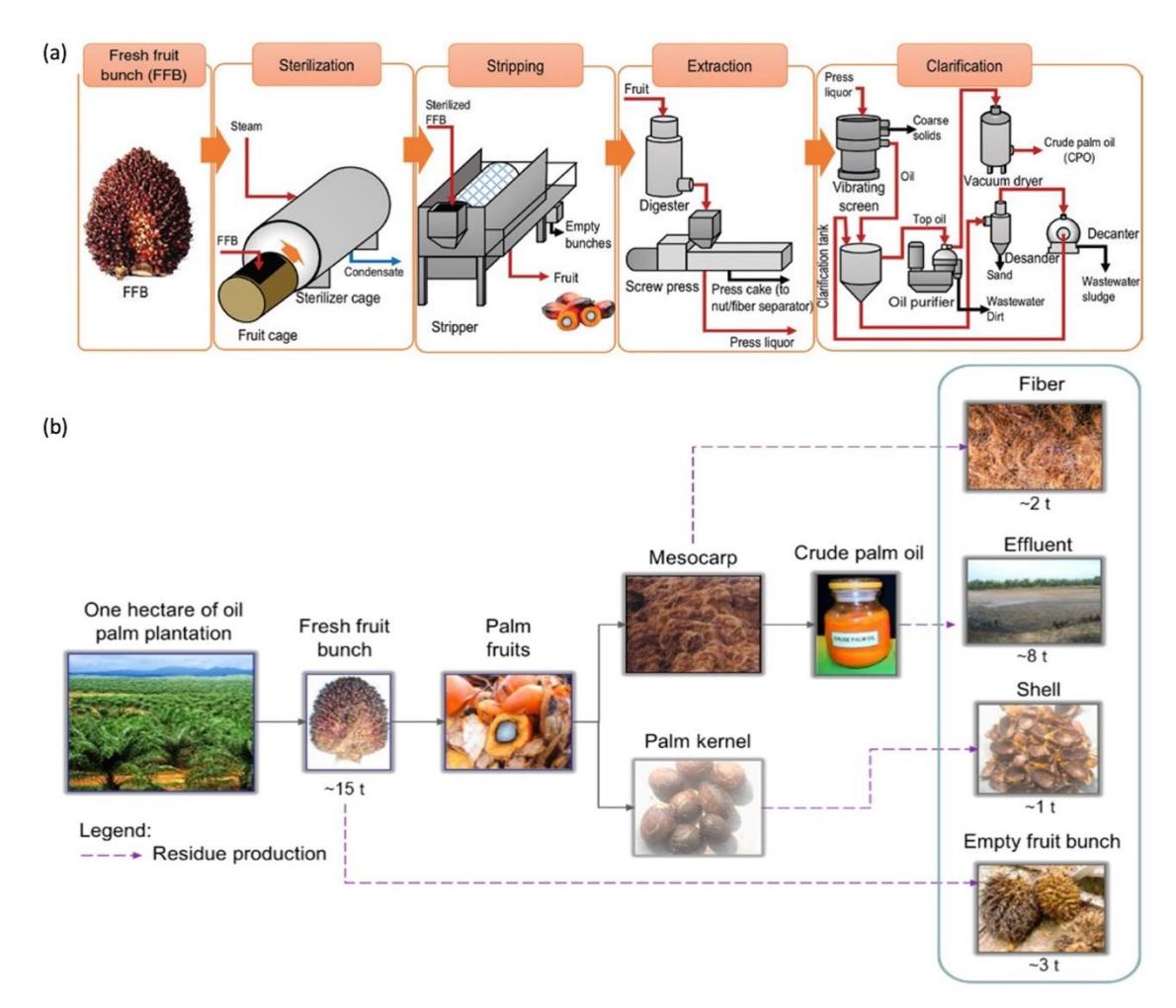
Figure 2 Palm oil milling plant and residues and utilization. (a) Palm oil milling plant processes. Reprinted from [44]. (b) Palm biomass residue generated from oil palm plantation (reprinted from [43], under a creative common license, https://creativecommons.org/licenses/by/4.0).
Across these stages, the industry generates various types of waste, including EFB, POME, PKS, and fibers. EFB, a substantial by-product, presents disposal and land use challenges [45, 46]. POME, a particularly polluting liquid
waste stream, is characterized by high BOD and COD levels, making it a significant environmental concern if not properly managed. Typical POME characteristics include BOD values between 31,000 and 34,000 mg/L, COD values between 62,000 and 67,000 mg/L, suspended solids between 20,500 and 24,000 mg/L, and a typical pH range of 4.2 to 5.1 [47-49] (also see Table 2). Kernel shells and fiber, while potential sources of biomass energy, require proper technology and handling for efficient utilization [50-52]. Additionally, decanter cake and sludge, by-products of the oil extraction and clarification process, contain residual oil and solids, necessitating effective treatment strategies [53].
Effluent treatment facilities assume a pivotal function in the management and remediation of the aqueous byproduct originating from both palm oil mills and refineries, thereby reducing the ecological repercussions of waste expulsion, and safeguarding the ecosystems [54-56]. Nevertheless, there are ongoing difficulties. It is imperative to incorporate efficient waste reduction and circular economy techniques into the industry's operational procedures to optimize resource utilization and minimize disposal. The objective of the circular economy approach is to convert waste into valuable resources, thus establishing a self-sustaining system that is consistent with overarching sustainability objectives [57, 58]
| BOD (g/L) | COD (g/L) | Total solids (g/L) | TSS (g/L) | pH | Oil and grease (g/L) | Ref. |
|---|---|---|---|---|---|---|
| 31-34 | 62-67 | - | 20.5-24.0 | 4.2-5.1 | 1.8-2.1 | [49] |
| 34.4 | 75.9 | - | 14.5 | 4.74 | 0.19 | [59] |
| 10.3-43.8 | 15-100 | - | 5-54 | 3.4-5.2 | 0.13-18 | [12] |
| 0.3 | 0.9 | - | 0.4 | 6.2 | - | [60] |
| - | 68.8-74.7 | 43.4-48.0 | - | 4.5 | 14.1-18 | [61] |
| 63.3-83.5 | 75-200 | - | 8.3-58 | 3.3-4.8 | 4.0-5.8 | [62] |
| 32.9 | 54.3 | 33.1 | 25.2 | - | 5.9 | [63] |
| 22.0–54.3 | 75.2–96.3 | 35.0–42.0 | 8.5–12.0 | - | 8.3–10.6 | [64] |
| - | 52.9 | 36.7 | 2.4 | 2.8–3.1 | - | [65] |
Table 2 Palm oil mill effluent characteristics.
BOD – biological oxygen demand; COD – chemical oxygen demand.
CE Strategies for Waste Reduction in the Palm Oil Industry
CE strategies play an increasingly crucial role in mitigating waste and enhancing the sustainability of the palm oil industry [66-68]. At the core of these strategies is the transformation of waste streams into valuable resources, optimizing processes to reduce environmental impact, and aligning industry practices with broader sustainability goals [69, 70]. Efficient harvesting and processing, pivotal in minimizing waste generation, involve selective harvesting methods that target only ripe fruit bunches, reducing unproductive harvest and minimizing the volume of EFB generated [71, 72]. Enhanced oil extraction techniques reduce residual oil in by-products, while precision agriculture ensures targeted resource application, minimizing unnecessary input usage [73, 74]. Integrated pest management reduces reliance on chemical pesticides, contributing to a healthier environment [75, 76].
Waste repurposing and upcycling initiatives are key to transforming waste materials into valuable resources. Anaerobic digestion converts POME into biogas, a renewable energy source powering mill operation, reducing greenhouse gas emissions, and contributing to renewable energy production [77, 78]. Studies have demonstrated the economic viability of converting POME to biogas, with one showing potential to produce 21,195,909.76 kWh/year of electrical energy from methane gas, demonstrating substantial economic potential and environmental benefits [79]. Optimization techniques have enhanced COD removal and biogas production, indicating the economic and environmental feasibility of these processes [63].
In addition to biogas production, other waste materials from the palm oil industry offer potential for resource recovery and valorization. Composting EFB results in nutrient-rich organic fertilizers, enhancing soil fertility and reducing reliance on chemical fertilizers [80, 81]. Studies have explored increasing the nutritional content of EFB compost with various amendments, showing the potential of these bio-based products to contribute to sustainable agriculture [82, 83].
For instance, Yong et al.'s study focused on optimizing biogas production from POME by identifying and optimizing critical parameters affecting methane yield and COD removal [84]. The study utilized comparative analysis and response surface methodology to analyze historical data from three commercial POME-based biogas plants in Malaysia. The researchers identified organic loading rate (OLR) as the most critical factor for methane yield (Figure 3(a)). They determined that the optimal conditions for maximum methane production were an OLR of 1.23 kg/m³·day, inlet total solids (TS) of 46,370 mg/L, pH of 4.5, and temperature of 45.4℃. Under these conditions, the study reported a 39.6% increase in methane yield, achieving 0.335 m³ CH₄/kg COD removed, and a 1.1% increase in COD removal efficiency, achieving 93.4%. Suksaroj et al., studied the codigestion of oil palm EFB pressing wastewater and POME for biogas production, with a focus on integrating circular economy principles into the palm oil industry [24]. The study found an optimal mix of 45% POME, 50% seed, and 5% EFB wastewater for semi-continuous fermentation, which significantly increased biogas and methane yields to 18,679 mL/L and 6778 mL/L respectively, with a 62% methane content and a 67% COD removal efficiency over a 25-day hydraulic retention time. Notably, Figure 3(b) from their study presents results from various experimental sets of batch co-digestion, with the mentioned mixture (Experimental set 7) yielding the highest cumulative biogas and methane at 396 ± 4.58 mL and 294 ± 3.51 mL respectively. This result was superior compared to other mix ratios tested, underscoring the effectiveness of the identified optimal conditions. Another study has focused on the utilization of EFB ash as a source of potassium and other minerals, demonstrating that with proper treatment and combination with other fertilizing agents like urea and diammonium phosphate, EFB can be converted into a beneficial NPK fertilizer [85]. Additionally, the integration of EFB with inorganic fertilizers was shown to increase vegetative growth and support productivity in oil palm plantations, providing an optimal rate of application for effective use [85].
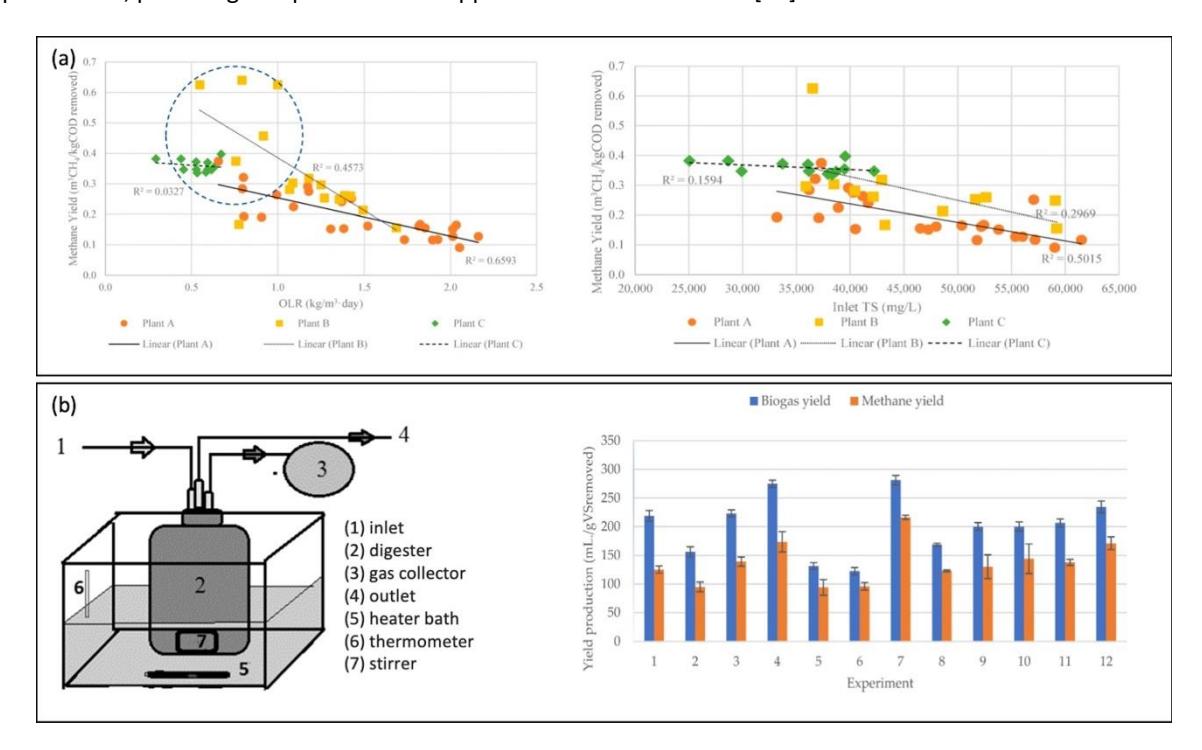
Figure 3 Biogas production from POME. (a) Methane yield vs organic loading rate (OLR) (left) and inlet total solids in POME (right) [84]. (b) Digester (left) and biogas and methane production per volatile solids of POME (right) [24]. All panels are under a creative common license, https://creativecommons.org/licenses/by/4.0.
The integration of biogas generation from POME in the palm oil industry presents a diverse array of benefits, spanning sustainable energy production, significant environmental improvements, and substantial economic gains. The implementation of integrated biogas and wastewater treatment systems has proven effective in generating up to 1.9 MW of electrical power or compressed biomethane [86]. This approach aligns with regional renewable energy and greenhouse gas targets, potentially contributing 540 MW of installed capacity or 37 million MMBtu in the form of Bio-CNG or biomethane, and greatly reducing GHG emissions [87]. Life cycle assessments of POME-based energy generation, utilizing technologies like the covered lagoon bio-digester and the continuous stirred tank reactor, have shown net environmental benefits in terms of global warming and acidification potential, advocating for the adoption of eco-friendly biogas facilities in palm oil mills [88]. Economically, the conversion of biogas from POME to energy offers significant financial returns, as exemplified by a palm oil mill processing 60 tonnes/hr potentially earning a net profit of RM 3.8 million per year from electricity generation [89]. Additionally, integrating anaerobic up-flow anaerobic sludge-fixed film reactor and membrane separation processes transforms organic waste into biogas while producing high-quality effluent, thus reducing operational costs and generating heat or electricity in the mill [90]. A novel approach further elaborates on the economic viability of integrated technology for biogas energy and compost production in a palm oil mill. A case study processing 54 tonnes of fresh fruit bunch (FFB) per hour highlights the potential to produce 8.2 GWh per year of electricity using biogas captured from POME. This integrated system, which also produces significant quantities of compost using EFB and POME anaerobic sludge, emerges as a more attractive solution than implementing either biogas energy or compost technology individually. This approach is economically effective even without clean development mechanism support, presenting a sustainable and profitable solution for the palm oil industry, while simultaneously contributing to local economic activation and environmental improvement [91].
Furthermore, PKS are utilized as biomass fuel for energy generation and as a source for activated carbon, indicating the diverse applications of these waste materials in contributing to a circular economy [92, 93]. For example, a study used PKS-derived graphene oxide derivative materials as anode electrodes in microbial fuel cells (MFCs) [94]. The results showed that PKS-rGO/ZnO had the highest power density of 43.2 mW/m² and a current density of 111.1 mA/m², significantly enhancing the MFC's performance. Additionally, this modification led to a bioremediation efficiency of up to 93% [94]. PKS was employed as granular filter media for removing COD and color from palm oil mill effluent (POME). The study reported removal efficiencies of 77% for COD and 69% for color using PKS, demonstrating its effectiveness compared to traditional sand filters [95]. Microporous adsorbents derived from PKS have been used as adsorbent for CO2 in [96]. The adsorbents achieved a CO2 purity of 83% and a recovery of 65% using ZIF-8, indicating its potential in flue gas treatment applications [96]. Meanwhile, in the context of urban stormwater management, pervious concrete mixtures incorporating PKS showed a range of heavy metal removal between 14 and 63%, depending on the type of heavy metals present in the runoff water [97]. In addition, in the realm of biodiesel production, a study used PKS-derived sulfonated magnetic biochar as a catalyst [98]. The total environmental impact of waste cooking oil biodiesel produced by this catalyst was quantified as 1.08E+01 Pt per tonne of biodiesel, with an 89% decrease in total weighted impacts when substituting palm oil biodiesel and diesel [98].
Technological innovations such as gasification and pyrolysis convert organic waste into synthesis gas, biochar, bio-oil, and gases, offering routes to transform waste into energy and valuable materials [99-102]. Gasification converts organic waste into synthesis gas, which can be processed for heat, electricity, or biofuels [99, 100]. Pyrolysis, on the other hand, heats waste materials without oxygen, producing biochar, bio-oil, and gases [101, 102]. Biorefineries extract bioactive compounds from waste, supporting applications in pharmaceuticals, cosmetics, and functional foods, while waste oils and fatty acids are processed into biodiesel, further aligning industry practices with sustainability objectives [103-107].
Digital solutions offer transformative potential in waste management, providing real-time data, predictive analytics, and collaborative platforms to enhance waste valorization and promote resource efficiency [108-112] They provide insights into waste generation, movement, and disposal across various stages of the palm oil industry, allowing for more effective and efficient resource utilization. Automated waste sorting technologies, environmental impact assessment tools, and continuous monitoring of waste metrics foster a culture of continuous waste reduction, aligning industry practices with circular economy principles [31, 107, 113-115].
Product Diversification and Value-Addition from Palm Oil By-Products
The palm oil industry is redefining its relationship with by-products, transforming what was once considered waste into valuable commodities. This shift is not just a testament to innovation but also aligns with the principles of a circular economy, seeking to minimize waste and maximize resource efficiency [116-118]. EFB, PKS, and POME are among the by-products now seen as economic and environmental assets. EFB is repurposed as a biomass source for energy generation, reducing reliance on fossil fuels and supporting renewable energy initiatives [119, 120].
Furthermore, EFB fibers are composted into nutrient-rich fertilizers, enhancing sustainable agriculture practices [121, 122], and used in the production of green materials and biomaterials [123, 124]. The morphology of palm oil flower and fruit fibers was studied using scanning electron microscopy, revealing distinct characteristics (Figure 4(a)-(d)). The palm oil flower fibers demonstrate considerable morphological diversity, characterized by aligned, nonwoven, and irregularly structured bundles influenced by the presence of noncellulosic particles like lignin and pectin. In contrast, palm fruit fibers exhibit a robust honeycomb-like structure in their cross-sections, signifying strong inter-fiber binding. Notably, this honeycomb structure consists of pores with varying sizes and shapes; the periphery features small-diameter hollow structures, while the center houses larger-diameter hollows [125]. In addition, isolated cellulose from OPEFB is presented in Figure 4 (e) and (f). At an elevated acid concentration of 60% under 35℃ hydrolysis temperature, and time (25 min), the resultant fibers were of a notably small diameter, approximately 317 nm, as depicted in Figure 4 (e) and (f)..
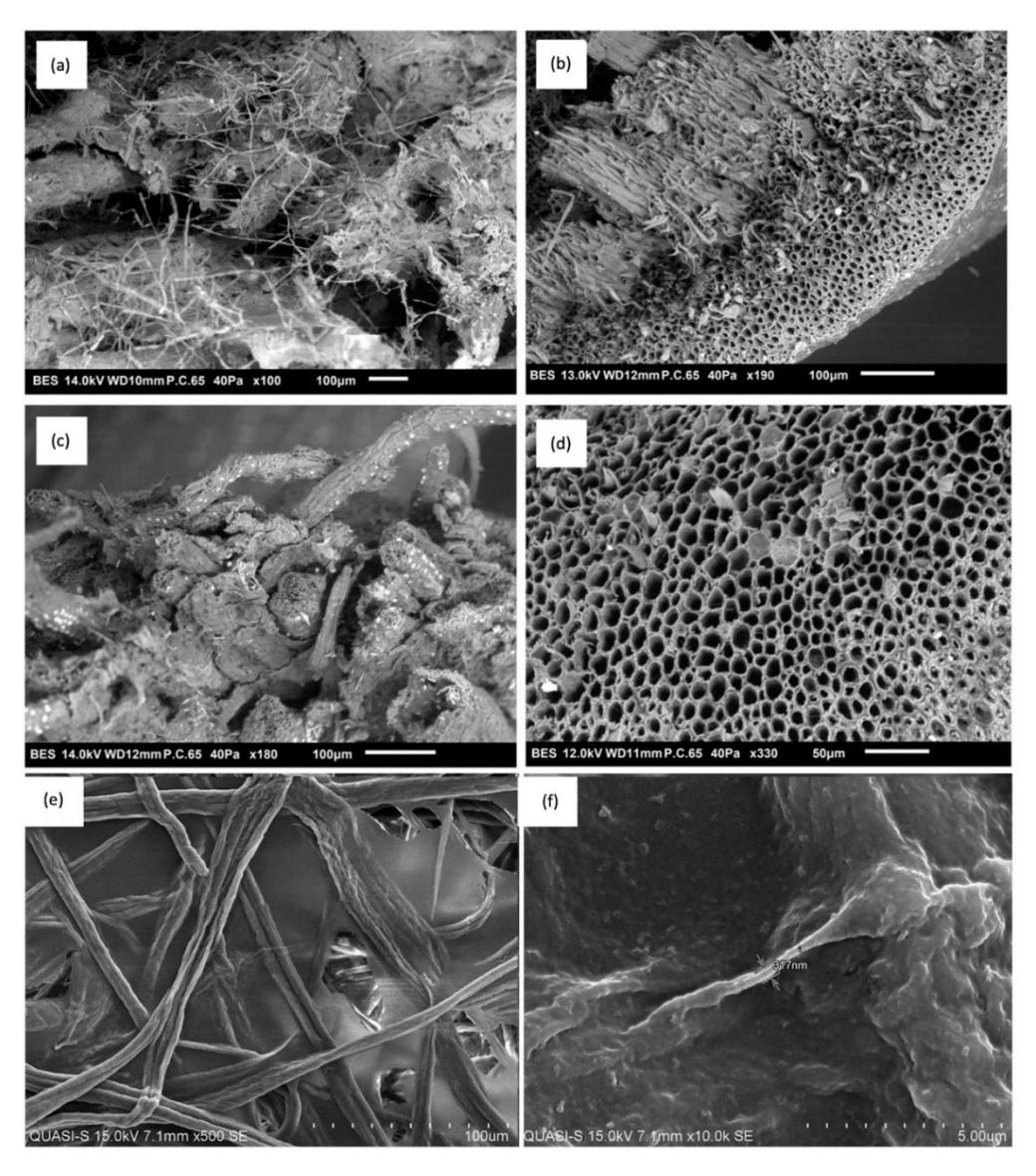
Figure 4 SEM images of (a, b) the palm oil flower fibers and (c, d) fruit fibers. Panels a-d are from [125]. (e, f) SEM images of isolated cellulose from EFB [130]. All panels are under a creative common license, https://creativecommons.org/licenses/by/4.0.
Chaiwong et al.'s study on treating EFB fiber offers compelling insights into sustainable material enhancement for the palm oil industry [126]. Their detailed examination revealed that fibers treated with 5 w/v% NaOH displayed a pronounced rough surface morphology and optimally removed surface contaminants, improving fiber-matrix adhesion. Notably, this treatment regimen yielded the highest tensile strength (13.75 MPa) in wheat gluten-based bioplastic composites, underscoring the interplay between surface treatment, morphology, and resultant mechanical properties. Yang et al.'s investigation into starch-based bioplastic composites with treated oil palm EFB (TEFB) fibers illuminates the nuanced relationship between fiber content and resultant composite properties [127]. SEM micrographs showcased that optimal fiber distribution is achieved below 10 wt% content, beyond which challenges such as starch retrogradation and fiber aggregation arise. Concurrently, the study highlighted a substantial improvement in tensile strength, rising from 0.45 to 1.99 MPa, as TEFB fiber content increased, affirming the fiber's reinforcing role. However, elongation at break decreased with most increased fiber content levels. This balance between tensile strength and morphology, underlined by the SEM findings, emphasizes the critical importance of precise fiber treatments [121, 122] and loading levels in developing sustainable bioplastics. Another study developed natural fiber-reinforced polymer matrix composites using two different sizes of EFB fibers (605 μm and 633 μm) and acrylic thermoplastic resin. The composites, maintaining a filler content of 42 wt.%, improved their mechanical properties significantly with processing temperature, showing the potential of EFB fibers in composite fabrication [128]. In addition, the exploration of acetylated lignin from EFB in electrospinning nanofibres revealed electrical conductivity of 443 μS/cm and viscosity of 2.8×10⁻³ Pa.s for the samples, with more beads on the surface of lignin/PVA nanofibres compared to acetylated lignin/PVA nanofibres, suggesting an improved surface structure [129].
PKS, traditionally seen as waste, are now utilized for energy production and as raw materials for activated carbon, contributing to water and air purification processes [131, 132]. POME, once a challenging waste stream due to its high organic content, is now harnessed for anaerobic digestion, generating biogas for electricity and heat generation [133]. This approach not only addresses waste disposal issues but also adds a renewable energy source to the industry's portfolio. The organic components of POME are also transformed into nutrient-rich organic fertilizers, further contributing to sustainable agricultural practices [122].
Anaerobic digestion technology has revolutionized the way palm oil mills manage POME, turning it into biogas and contributing to a more sustainable energy landscape [134, 135]. The extraction of bioactive compounds from palm oil and its by-products has paved the way for the creation of high-value functional ingredients, while bio-based chemicals and green cosmetics have emerged as sustainable alternatives in various industries [136- 141].
In transforming palm oil by-products into value-added commodities, the industry not only addresses environmental challenges but also opens up new avenues for economic growth. This transformation leads to cost savings by reducing waste disposal expenses and creates new revenue streams through the sale of innovative products. By embracing the principles of a circular economy, the palm oil industry is making strides towards sustainability, resource efficiency, and economic stability, positioning itself as a leader in responsible resource management and innovative product development [142, 143]. However, achieving these outcomes requires overcoming technological, market, and regulatory challenges to fully realize the potential of these innovations and ensure their successful integration into the industry's value chain [144, 145].
Technological Innovations Enabling Circular Economy Practices
Technological advancements are playing a crucial role in the implementation of circular economy practices within the palm oil industry (see Table 3). These innovations can facilitate waste reduction, resource optimization, and value creation across the value chain [146].
Gasification technology is a leading solution that transforms organic waste like EFB and palm kernel shells into syngas, which can power gas turbines or internal combustion engines, reducing dependence on traditional fossil fuels [147]. Syngas can also be refined into synthetic biofuels, serving as an eco-friendly alternative in transportation and industrial sectors. Studies have demonstrated that syngas yields and reactor performance can be substantially enhanced by optimizing the EFB feeding rate and gasification temperature, with one study
achieving a carbon conversion approaching 97% and a solar-to-fuel energy conversion efficiency up to 20% at temperatures between 1100-1300 ℃ [148]. The integrated production of bio-dimethyl ether using biomass gasification and direct synthesis (IBG-DME), using oil palm residue as feedstock, is another area of exploration. The process is thermally self-sufficient at gasifying temperatures around 882 ℃ and can achieve maximum yield of bio-DME at higher temperatures of around 950 ℃ [149]. In parallel, the comparison of EFB and PKS for syngas production using Aspen Plus simulation indicates that temperature and equivalence ratio significantly influence syngas output and composition, with EFB showing a higher capability to produce quality syngas compared to PKS [150]. Continuous solar gasification of EFB was experimentally carried out in a solar particle-fed gasifier, examining the influence of gasifying agent types (H2O and CO2), gasifying agent/EFB molar ratios, and temperatures. The study concluded that solar EFB gasification performed efficiently with both H2O and CO2 gasifying agents under continuous operation, achieving high carbon conversion and solar-to-fuel energy conversion efficiency [151]. The co-gasification of different biomass feedstocks, like oil palm trunk (OPT) and frond (OPF), is considered a reliable means of syngas production. The study found that the optimum blend was 30 OPT/70 OPF, producing the highest gas constituents of CO, H2, and CH4 compared to other blends [152]. The unique thermal decomposition process of pyrolysis technology yields valuable outputs such as bio-oil and biochar, which can be employed for energy generation or as feedstocks for various chemical [153]. These technologies not only address waste management concerns but also contribute to a more sustainable energy paradigm, aligned with global environmental aspirations.
Biorefining involves converting biomass into a range of products, from chemicals to materials and energy. In the palm oil industry, biorefining aims to extract valuable compounds from by-products like EFB and PKS, providing sustainable alternatives to synthetic ingredients [13]. Rhamnolipids production utilizing palm oil refinery byproducts like palm fatty acid distillate (PFAD) and fatty acid methyl ester (FAME) has been studied [154]. Pseudomonas aeruginosa PAO1 was used to convert these by-products into high-value RLs, achieving concentrations up to 3.4 g/L using PFAD. The production not only highlights the potential for waste valorization but also the ability to reduce surface tension significantly, making them efficient biosurfactants for various applications. The study underscores the potential for integrated palm oil biorefinery systems to produce lowcost and renewable substrates for RL production [154]. Additionally, the utilization of agro-industrial waste as a renewable carbon source has been gaining attention, particularly focusing on the production of PHAs and biosurfactants as biodegradable alternatives to petrochemicals [155]. Molasses and sweet water, by-products from sugar cane and palm oil production, have been identified as feasible, inexpensive feedstocks for PHA and biosurfactant production [155].
Furthermore, the valorization of oil palm EFBs for the generation of bioenergy and bio-based products is an area with significant potential. Indonesia, with its intensive agro-industrial sector, produces large volumes of oil palm EFBs, which have been identified as promising to produce bioethanol and xylitol [156]. Scenario analyses suggest that co-production of bioethanol, xylitol, and lignin is the most favorable, presenting an opportunity to significantly boost the country's production of these bio-based products. However, the realization of these biorefining processes requires further efforts in addressing technical challenges, policy formulation, and supply chain optimization [156].
Thanapimmetha et al., explored optimal fermentation strategies for enhancing bioethanol production from oil palm EFB [157]. Investigating three strategies: separate hydrolysis and fermentation, simultaneous saccharification and fermentation, and delayed simultaneous saccharification and fermentation, they aimed to increase bioethanol yield while reducing process time. After pretreatment, oil palm EFBs cellulose content rose to 72.1%. The study found DSSF to be superior, yielding the highest bioethanol concentration of 26.1±0.18 g/L and the shortest overall process time of 73 hours, making it the most efficient method compared to separate hydrolysis and fermentation and simultaneous saccharification and fermentation. This advancement provides a significant contribution to sustainable bioethanol production, offering an efficient route for converting agroindustrial waste into valuable energy resources.
Wilaithup et al. reported study on enhancing the sustainability and cost-effectiveness of bioethanol production from oil palm trunk (OPT) fibers through a simultaneous saccharification and fermentation process utilizing activated immobilized Saccharomyces cerevisiae SC90 cells [158]. This method was chosen for its ability to reuse yeast cells, thus reducing production costs. The study found that immobilized cells produced a significantly
higher ethanol concentration of 104.52 g/L from glucose within 48 hours compared to 85.87 g/L by free cells. When using 10% and 20% (w/v) alkaline pretreated OPT fibers as the carbon source, the batch simultaneous saccharification and fermentation process yielded a maximum ethanol concentration of 29.68 g/L and an ethanol yield of 0.32 g/g. The fed-batch SSF further improved these results, achieving a maximum ethanol concentration of 51.68 g/L and a yield of 0.28 g/g. These findings highlight the potential of activated immobilized S. cerevisiae SC90 cells in producing higher concentrations of ethanol from OPT fibers without the need for additional nitrogen sources, marking a promising advancement in cost-effective second-generation (2G) bioethanol production.
Saelee et al. investigated cost-effective lactic acid production using old OPT sap as a substrate [159]. They employed various fermentation modes with Lactobacillus rhamnosus ATCC 10863. The study found that modified constant feed mode of fed-batch and repeated fed-batch fermentation significantly increased LA concentration, yield, and productivity, achieving an average of 95.94 g/L lactic acid concentration and 6.40 g/L/h productivity in just 11 hours. In comparison, open and repeated batch methods took 21 hours for slightly lower outcomes. This research highlights the potential of using OPT sap for efficient and scalable LA production, suggesting that cheap agricultural by-products could be viable substrates for industrial bioprocessing.
Supercritical fluid extraction uses supercritical carbon dioxide as a solvent to extract bioactives, offering high selectivity, reduced environmental impact, and solvent-free final product [160]. Microwave energy speeds up extraction, reducing time and energy consumption [161]. Supercritical fluid extraction using CO2 as a solvent has emerged as a potential green technology for the extraction of valuable compounds from palm oil byproducts. Studies have shown the effective extraction of β-carotene from crude palm oil, with optimal conditions for maximum volumetric mass transfer coefficient found to be around 2.486 × 10⁻² s-1 at 7.5 MPa and 100 ℃ for 1 hour [162]. This approach not only maximizes the yield but also retains the quality of the β-carotene extracted. Moreover, the extraction of tocopherols from palm oil leaves using supercritical fluid extraction yielded high concentrations, showcasing the potential to process agricultural waste into valuable products like tocopherols and carotenes [163]. The extraction conditions of supercritical fluid extraction have a significant impact on the yield and quality of the products. For instance, the highest yield of β-carotene from crude palm oil was obtained at a pressure of 75 bar, temperature of 120 ℃, and an extraction time of 1 hour [164]. Similarly, the solubility of tocopherols in carbon dioxide was found to be around 2.27% at 120 ℃ and 5.44 MPa, indicating the effect of temperature and pressure on the extraction process [165]. Supercritical fluid extraction with CO2 is not just limited to extracting specific components but is also beneficial for the palm oil industry. It can extract nearly 100% oil, producing fractionated, refined, bleached, and deodorized palm oil, palm kernel oil, and purified fatty acid fractions suitable for various applications [166]. This method is preferable due to its non-toxic, inexpensive, non-flammable, and non-polluting nature. Furthermore, the addition of ethanol as a co-solvent in SC-CO2 extraction of palm kernel oil from palm kernel cake has been shown to improve the yield and quality of the oil, indicating the role of modifiers in enhancing the extraction process [167].
Membrane technology is increasingly pivotal in wastewater treatment and product recovery within the palm oil industry, offering innovative solutions to enhance efficiency and sustainability [44]. Recent research sheds light on various applications and optimizations of this technology. Anaerobic membrane bioreactors are utilized for wastewater treatment, specifically targeting the reduction of membrane fouling caused primarily by extracellular polymeric substances. A study found that introducing a microbe activator at a 1/500 dilution into the anaerobic membrane bioreactors significantly improved performance, yielding a chemical oxygen demand removal efficiency of 79.47% ± 2.76%, the highest among tested dilutions [168]. To produce xylooligosaccharides from oil palm EFB, membranes facilitated the concentration of highly extracted xylan liquor to 53.7%. A subsequent xylanase-catalyzed hydrolysis under pilot-scale conditions yielded a 69.3% sum of xylobiose and xylotriose from the extracted xylan, demonstrating the feasibility of membrane technology for efficient xylooligosaccharides production [169]. Nanofiltration has been explored for separating xylose from glucose in OPF bagasse hydrolysate. The Desal-5 DK membrane showed a high xylose separation factor of 1.63, indicating its applicability in large-scale sugar separation processes [170]. Integrated electrocoagulation with ultrafiltration membranes for treating POME demonstrated that the 2A-2C–2B electrode configuration achieved high contaminant removal rates: 59.1% for total dissolved solids (TDS), 99.9% for TSS, 96.8% for COD, and 96% for BOD [60]. The life cycle assessment of anaerobic-treated POME in integrated membrane processes revealed a significant impact of the hollow fiber membrane from adsorption integrated membrane, contributing 42% to 99% across all impact categories. The electro-oxidation integrated membrane, on the other hand, had a lesser environmental impact, particularly on the ozone formation (human health) at 0.38 kg NOx-eq compared to the adsorption integrated membrane at 0.66 kg NOx-eq [171].
Waste repurposing and circular business models offer innovative strategies for reshaping the palm oil industry's approach to by-products [172, 173]. Industrial symbiosis drives collaboration across industries, enabling the exchange of waste materials for productive purposes [174]. Circular business models emphasize the reintegration of waste into the value chain, promoting resource efficiency by reducing reliance on virgin resources, minimizing waste, and lowering energy consumption.
However, challenges related to technology implementation, market acceptance, regulations, and supply chain integration must be addressed [175]. Collaborations among stakeholders, including industry players, researchers, and policymakers, are crucial for overcoming these hurdles and pave the way for a circular economy that prioritizes sustainability, waste reduction, and economic resilience.
| Table 3 | Examples of technological innovations enabling circular economy practices in the palm oil industry. |
|---|
| Technology | Purpose | Benefits | Ref. | ||
|---|---|---|---|---|---|
| Gasification | Converts waste (EFB, PKS) to syngas for energy generation | EFB, PKS | Reduces dependence on fossil fuels, produces biofuels | [147-152] | |
| Pyrolysis | Produces bio-oil and biochar from waste for energy or chemicals | EFB, PKS | Reduces waste, provides sustainable energy and chemicals | [153] | |
| Biorefining or biotechnology | Extracts valuable compounds from by-products (EFB, PKS) for various uses | EFB, PKS | Valorizes waste, produces sustainable alternatives to synthetic ingredients | [13, 154, 155] | |
| Biorefining or biotechnology | Uses EFB and OPT to produce bioethanol | EFB, OPT | Efficiently converts waste into renewable energy | [156-158] | |
| Biorefining or biotechnology | Uses OPT sap to produce lactic acid | OPT sap | Cost-effective and scalable production of lactic acid from agricultural waste | [159] | |
| Supercritical Fluid Extraction | Extracts bioactives from by products (β-carotene, tocopherols) with CO2 as a solvent | Crude palm oil, palm oil leaves, palm kernel cake | High selectivity, reduced environmental impact, solvent-free products | [160, 162-167] | |
| Membrane technology | Used in wastewater treatment and product recovery | EFB, OPF, POME | Improves efficiency and sustainability in various processes | [168-171] | |
EFB – empty fruit bunch; OPT – oil palm trunk; PKS – palm kernel shell; OPF – oil palm frond.
Case Studies of CE Implementation in the Palm Oil Industry
Implementing a CE in the palm oil industry is a transformative approach that significantly enhances sustainability, waste valorization, and economic efficiency. The industry produces substantial biomass byproducts, effluents, and refinery wastes typically disposed of in landfills, leading to inefficiency and environmental concerns. A shift to a CE approach entail optimizing the reuse and recycling of these residues within the palm oil sector and integrating with other industries like paper, polymer, and furniture, as well as various biorefineries. The objective is to convert palm-based biomass and refinery wastes into value-added products and energy, thereby enhancing resource circularity, reducing landfill disposal, and lowering emissions (Table 4).
A study employing a mathematical optimization model sought to identify optimal pathways for biomass, POME, and refinery wastes circularity within the palm oil sector [15]. By integrating with industries like paper, polymer, and furniture, the model explored scenarios to maximize economic potential and minimize emissions and landfill waste. The multi-objective results showed impressive outcomes, including an economic potential of USD 151.36 million, a reduction of net emissions by −804,946.60 tCO2, and a significant reduction of landfill waste by 80.17%, highlighting the integration potential with the polymer industry [15].
In another study examining Industry 4.0's barriers within a circular economy context in the palm oil industry, 18 essential challenges were identified using the fuzzy Delphi method and interpretive structural modelling [18]. Key challenges included the lack of automation system virtualization and unclear economic benefits of digital investment. Addressing these challenges is crucial for operational decision-making and the successful integration of Industry 4.0 within a circular economy [18].
| Table 4 | Examples of circular economy implementations in the palm oil industry. |
|---|
| Example | Description | Benefits | Refs. |
|---|---|---|---|
| Multi-objective optimization model | Integrates palm oil waste with paper, polymer, and furniture industries to maximize economic potential and minimize emissions and landfill waste. | USD 151.36 million potential profit, -804,946.60 tCO2 emission reduction, 80.17% landfill waste reduction. | [15] |
| Energy efficiency analysis | Shows substantial energy savings potential (~40%) with advanced palm oil mill mechanization compared to manual and semi-mechanized methods. | Reduced production costs and increased energy recovery opportunities. | [176] |
| CE model development | Demonstrates potential for reducing imported inputs (steam, electricity) by 39.29% and 13.469% respectively, even with slight profit decrease. | Increased resource circularity and environmental benefits. | [10] |
| Co-digestion for biogas production | Achieves significant biogas accumulation and methane content from palm oil waste, reducing COD and demonstrating circular approach in biogas generation. | Sustainable palm oil processing and renewable energy production. | [24] |
| Industry 4.0 barriers identification | Identifies key challenges like lack of automation and unclear economic benefits of digital investment in circular economy palm oil industry. | Informs operational decision making and Industry 4.0 integration. | [18] |
| Industry 4.0 drivers identification | Highlights complex interplay of factors like information access, cybersecurity, economic attractiveness, and policy in driving Industry 4.0 adoption for circular economy. | Guides development of strategies to facilitate Industry 4.0 integration. | [19] |
| POME-based biodiesel synthesis | Achieves 89% biodiesel yield from POME solids, repurposing a challenging feedstock into valuable biofuel. | Circular waste management and renewable energy production. | [29] |
| Chemical-enzymatic bioethanol production | Integrates chemical and enzymatic processes for bioethanol production from palm fruit bunch, showing potential for efficiency and environmental friendliness. | Advanced bioethanol production with circular utilization of biomass waste. | [26] |
Energy consumption patterns in palm oil mills were determined in a study conducted in Ghana to enhance system efficiency and reduce production costs [176]. The results indicated average total energy consumption for manual, semi-mechanized, and highly mechanized extraction systems at 122.5, 112.9, and 82.4 kJ/kg respectively. Notably, the net potential electricity from oil palm residue was estimated at 299 kJ/kg, which could be utilized for other operations, emphasizing the benefits of advanced mechanization for energy efficiency [176].
The feasibility of a sustainable CE was evaluated in a study that developed a mathematical model demonstrating the biomass network, targeting common resources like fertilizer, steam, and electricity for recycling [10]. The results indicated that while the linear economy model was preferred in terms of profitability, the circular economy model showed potential in reducing imported steam by 39.292% and imported electricity by 13.469%, albeit with a slight reduction in gross profit of 0.642% [10].
Research on biogas production through the co-digestion of EFB pressing wastewater and POME revealed optimal conditions leading to significant biogas accumulation of 18,679 mL/L and methane totalling 6778 mL/L [24]. The methane content was 62%, and the COD removal efficiency was 67%, showcasing the potential of this approach to enhance sustainable palm oil processing through a circular economic approach [24].
Investigating the drivers of Industry 4.0 in a CE within the palm oil industry, the study identified 17 driving criteria in the cause group and 13 criteria in the effect group [19]. Notable among them were information for practitioners, cybersecurity, improving real-time, economic attractiveness, laws and policy, and energy recovery, highlighting the complexity and interconnectivity of factors influencing the adoption of Industry 4.0 in a circular economy [19].
An innovative approach to biodiesel synthesis using POME as a feedstock resulted in an 89% yield of biodiesel from the available fatty acids in the POME solids [29]. This process presents a viable route to repurpose a challenging feedstock and contribute to the circular economy [29]. Furthermore, an economic analysis of biodiesel production from POME using Microwave Heating demonstrated the process's economic feasibility, suggesting Malaysia as a potential location due to palm oil production density [25].
Lastly, the proposed novel chemical enzymatic integration process for bioethanol production from oil palm EFB indicated the potential of this integration technology in applying the circular economy to make bioethanol production more efficient and environmentally friendly [26].
Prospects, Challenges, and Recommendations
The palm oil sector, known for its wide-reaching economic and social influence, is currently grappling with urgent challenges related to environmental sustainability and waste management. To address these issues, CE approaches have emerged as transformative solutions that enable the effective utilization of by-products, the minimization of waste, and the promotion of sustainable production methods.
The principles of CE provide a robust framework that the palm oil industry can use to convert waste into valuable resources. This transition from traditional linear models to sustainable practices involves the implementation of recycling, upcycling, and the adoption of innovative technologies, which ultimately leads to an improvement in both environmental sustainability and economic efficiency.
Within the palm oil industry, a significant amount of biomass by-products, effluents, and refinery wastes are generated. To mitigate the environmental impacts of this waste, it is crucial to prioritize effective waste management strategies, particularly through the application of CE principles. By placing an emphasis on waste valorization and recycling, the industry can reduce the use of landfills, minimize emissions, and avoid resource depletion, all of which contribute to the overall sustainability of the sector.
The palm oil industry focuses on the implementation of CE strategies to reduce waste generation and enhance the utilization of by-products through technological innovation, bioenergy production, and the development of value-added products. To achieve these objectives, it is imperative to optimize processes, integrate various sectors of the industry, and cultivate markets for circular products. Ultimately, these endeavors will yield both environmental and economic advantages. The industry's by-products hold potential for a range of value-added products, fostering economic diversification and sustainability. By capitalizing on advancements in biorefining, material science, and technology, the industry can convert biomass, POME, and other residues into biofuels, biomaterials, and biochemicals, thereby bolstering profitability and mitigating environmental impact.
Technological innovations such as gasification, pyrolysis, and biorefining play a crucial role in advancing CE practices in the palm oil industry. These technologies are instrumental in waste reduction, resource optimization, and the generation of value-added products, significantly enhancing sustainability and economic outcomes. Case studies provide examples of the effective implementation of CE practices in the palm oil industry, demonstrating the economic, environmental, and technological feasibility of converting waste into valuable resources. These include optimizing biomass and POME for energy and products, applying Industry 4.0 technologies, and employing innovative approaches like bioethanol production from palm residues.
Nevertheless, the transition to a CE in the palm oil industry is not without challenges. Significant barriers that must be overcome include regulatory frameworks, technological and infrastructural innovation, financial constraints, consumer behavior and market acceptance, collaboration throughout the supply chain, organizational culture, and education. To facilitate this transition, clear and supportive policies, investments in technology and innovation, and industry-wide collaboration are crucial. The industry is at a critical juncture where embracing technology, reinforcing regulations, promoting partnerships, educating consumers, and investing in research are essential for a sustainable and efficient future. By adopting circular business models, integrating sustainability into core operations, and establishing robust monitoring mechanisms, the industry can demonstrate its commitment to sustainable practices and enhance its resilience. In essence, the shift to a circular economy in the palm oil industry is indispensable and intricate, but it holds the key to sustainable growth and environmental preservation. Through the adoption of a long-term vision and a collaborative approach, the industry can make significant contributions to a sustainable planet, ensuring the well-being of communities and ecosystems for future generations.
Abbreviations
BOD : biological oxygen demand
CE : circular economy
COD : chemical oxygen demand
CPO : crude palm oil EFB : empty fruit bunch FAME : fatty acid methyl ester
OPF : oil palm frond OPT : oil palm trunk
PFAD : palm fatty acid distillate PMF : palm mesocarp fibers PKO : palm kernel oil PKS : palm kernel shell POME : palm oil mill effluent TSS : total suspended solids