
Introduction
Nowadays, universities are in the process of globalization, and the number of minority students and overseas students who have religious beliefs is increasing, which greatly increases the possibility of conflicts between different religious beliefs and national cultures. Thus, ethnic-religious issues are particularly prominent [1]. Some hostile religious forces outside of China will take the opportunity to intervene and transfer conflicts in daily life to the level of political beliefs under the pretext of 'human rights' and 'democracy' and carry out ideological infiltration in an attempt to intensify ethnic conflicts, cause trouble, sow division, and create social unrest [2]. In addition, with the rapid development of the Internet, foreign forces can use it as a medium to create problems and conflicts faster and use the youthful enthusiasm of college students to achieve their desired goals [3]. Thus, colleges and universities are sensitive areas for ethnic and religious issues. Although Internet technology is developing faster and faster nowadays, most domestic colleges and universities still use the same mode of online public opinion work as they did a few years ago or even a decade ago [4]. This working mode is gradually out of touch with the times. It reveals more and more problems and defects, which hinder the progress of public opinion work in colleges and universities and causes campus network security to be seriously threatened [5, 6].
This paper also aims to discuss the current situation of online public opinion in colleges and universities and the upcoming problems in the light of the current Internet environment so that the research on public opinion guidance in colleges and universities in the latest field can be enriched [7]. At the same time, it will provide a theoretical basis for improving and innovating university online public opinion work by combining the nature of
Copyright ©2024 Published by IRCS - ITB J. Eng. Technol. Sci. Vol. 56, No. 3, 2024, 414-424 ISSN: 2337-5779 DOI: 10.5614/j.eng.technol.sci.2024.56.3.9 the Internet and the current environment [8]. At the same time, based on the similarity of the network environment and the similarity of public opinion work, theoretical perspectives are used to guide the public opinion guidance work in other fields. Public opinion work in colleges and universities has always been an important part of college management. Under the background of the rapid development of the Internet, colleges and universities urgently need a set of public opinion work modes in line with the times [9]. This topic is of great practical significance to make up for the existing network public opinion work shortage in colleges and universities and to explore a new working mode of the network public opinion guidance in colleges and universities [10].
As a new media form, omni media has gradually replaced traditional media with its advantages of openness, interactivity, and timeliness and has been rapidly popularized in the world. All-media is of great significance to the network education of colleges and universities [11]. Due to the characteristics of comprehensive coverage of information in the all-media era, it can be highly combined with the network education work of colleges and universities, so that the two are strongly unified [12]. This study fully analyzes the dual impact of intelligent robots on ideological and political education in colleges and universities in the all-media era, breaks traditional thinking methods to a certain extent, penetrates the all-media into the ideological and political education environment and concepts, and forms a joint force for ideological and political education reform and innovation in terms of content and mechanism, which is of practical significance for guiding the work at this stage.
In this paper, a comparative approach is used in analyzing the connotation and characteristics of the intelligent Internet. By comparing with the traditional Internet, it explains how the Smart Internet, based on the traditional Internet, emerged and developed. And by comparing the characteristics of both, the theoretical knowledge of the traditional Internet reveals the similarities and differences between the Smart Internet and the traditional Internet, as well as which favorable and unfavorable factors the Smart Internet brings to the guidance of university online public opinion. In studying public opinion guidance in colleges and universities, this paper grasps the work status of public opinion guidance in the current period by reviewing a large number of domestic and foreign books, journals and papers, and understands the latest research results and research status through the literature related to public opinion. Regarding the existing achievements, we analyze the shortcomings and discover new problems to lay the foundation for the research orientation of this paper. The innovations of this paper can be summarized as follows:
First, this paper puts forward two relatively independent concepts: intelligent Internet and network public opinion guidance in colleges and universities, which involve many different fields, such as network technology, teaching management, and thought management.
Second, through interdisciplinary research methods, we find out the inevitable links between various concepts, integrate knowledge in various fields, conduct comprehensive research, and find reasonable and reliable solutions to problems.
Third, under the guidance of a variety of theoretical systems and practical experience, the ideological security work in colleges and universities under the background of intelligent era is analyzed, the existing problems and influencing factors are found, and the specific principles, intelligent application platform and corresponding operating mechanism of ideological security construction in colleges and universities are further explored.
Related Work
The age of intelligence is an emerging concept, i.e., a period of continuous outward expansion of human intelligence, a period of gradual improvement of human intelligence through artificial intelligence in colleges and universities, and a period when higher education moves from knowledge courses to intelligent courses [13]. Usually, representative production methods are used to name eras, such as the Stone Age, Steam Age, Electronic Age, Network Age, and Artificial Intelligence Age. The concept of the Web was introduced in 1999 and after decades of development, today, in the 21st century, we have entered an era of intelligence. Artificial intelligence is no longer 'high-end magic' but has become a great help to ordinary people. With the continuous development of intelligent technology, its commercial application prospects are also expanding. Whether in agriculture, business, industry, entertainment and other fields, artificial intelligence has specific examples of application [14].
Virtual reality technology, big data technology, artificial intelligence, VR technology, and other network technologies have brought revolutionary changes to the rapid spread and dissemination of various types of information. In contrast, in the mode of communication, intelligent information reflects personal customization and completely overturns the traditional communicator-centered communication method. It has realized the transmission of information from a thousand people to a thousand people [15].
Every major technological change has a profound impact on the structure of society, leading to new social contradictions and thus contributing to its development [16]. 'The ultimate goal of education is not to impart knowledge but to stimulate human creativity and awaken life and values. Smart technologies are widely used on university campuses in the areas of big data and media, thus enriching the content and methods of university education. Using an intelligent platform, it can grasp the social hotspots that college students are concerned about in time and enrich universities' ideological education resource system [17]. And ideological and political education based on the Internet can broaden the horizons of college students and provide a convenient way for them to the ideological and political education of college students [18]. However, the openness of Internet information can also greatly influence students' learning mode, thinking style, political attitude, value orientation and moral style. The Action Plan for Artificial Intelligence Innovation in Higher Education, released on the website of the Ministry of Education, proposes to form a new model of 'AI+X' composite professional training in the future. It puts forward the requirement of introducing universal education of intelligent technology in colleges and universities [19].
Therefore, it is necessary to conduct an in-depth analysis of the response strategy of ideological security in colleges and universities in the age of intelligence. In the face of the new changes in national and world conditions, the traditional way of guiding online public opinion has little effect on the current work of guiding online public opinion in colleges and universities [20]. The case analysis method is used to select influential and representative university network public opinion events in recent years for in-depth analysis and summarize the problems in the process of China's university network public opinion guidance through the shortcomings exposed by them [21]. The current problems are solved by synthesizing the results of interdisciplinary disciplines of political science, journalism and communication, and psychology, such as public crisis management theory, opinion leader theory and use and satisfaction theory in the context of the Marxist theory discipline.
Influencing Factors of Full Media Network Education
Socialization and Concealment of Online Opinion Guidance Objects
Integrating social media with new technologies has led to expanding discourse and the tendency of socialization and clustering. The full coverage of diversified media and the mixing of expression platforms make it difficult to identify and judge at the technical supervision level accurately, and universities' traditional agenda-setting ability and public opinion control ability are affected. The traditional agenda-setting ability and public opinion control ability of universities have been affected. The short-form video media with fragmentation and one-sided facts has exacerbated the difficulty of mainstream guidance and consensus building and revealed that the current emotion recognition and processing technology network is still limited in controlling the hidden elements of public opinion. High density and topic concentration are the distinctive features of university online public opinion. Gustave Le Bon once pointed out that 'people gathered in groups have their feelings and thoughts all betting on the same direction, their self-conscious individuality disappears, and a collective psychology is formed.'
On the one hand, college students show their independent consciousness, curiosity, and a strong desire to express themselves in response to Internet public opinion. Still, on the other hand, the college students themselves in the stage of shaping their views lack deep exploration and essential inquiry into the facts. They very easily follow the crowd and fall into the negative whirlpool of post-truth. At the same time, dominated by group psychology such as perceptual image thinking, group pressure, the need to belong and 'cognitive closure tendency' and 'cognitive schema reinforcement', college public opinion groups are often caught in the 'spiral of silence', with no blame encouragement. The 'collective unconscious' and 'individual irrationality' are encouraged by the exemption of responsibility, as shown in Figure 1. Under the 'echo chamber effect' of social media, the different virtual circles prefer to choose the views consistent with their groups, which leads to 'involution', and based on the virtual anonymity of online communication and the mentality mechanism of herd
interaction, it generates the polarization phenomenon of intra-group homogeneity and inter-group heterogeneity has become more and more prominent.
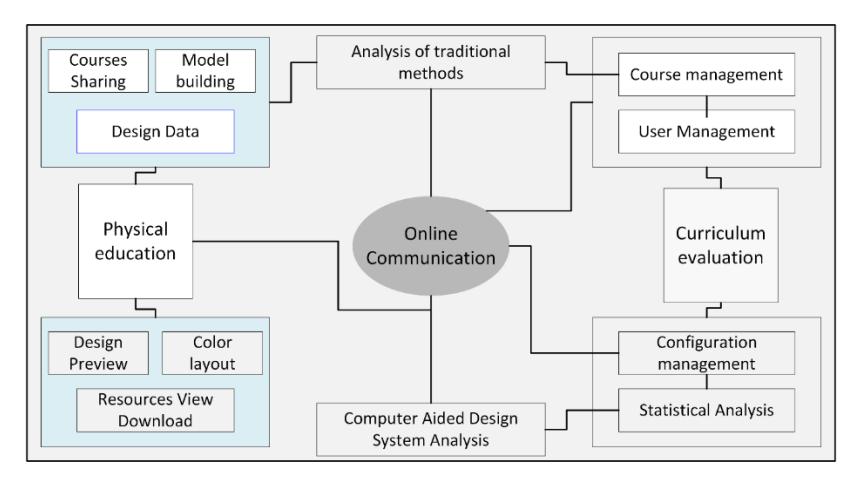
Socialization of online communication.
The regulatory role of ethics lies in the shaping of its internalized ethical boundaries. The Council on Big Data, Ethics and Society (U.S.) summarizes cyberethics around network technology and environment as digital identity defined by the sum of information, digital divide by the nature of technological preemption, privacy by exclusive knowledge and rights, safety by subjective and objective legitimate rights and interests, and security by both sides of information review and filtering and use to obtain legitimate rights. Privacy, security, and access to both parties' legitimate rights and interests. Due to the lack of technical procedures and institutional norms, university online public opinion, as an important part of the development and construction of the overall online public opinion ecology, has given rise to many ethical conflicts in the process of realizing its ethical value goals, like social online public opinion, in the process of multi-dimensional coexistence of value rationality.
On the one hand, social units can use big data systems to scientifically analyze and integrate users' life scenes into social networks and build multi-dimensional databases for human-computer integration to provide better quality media services; on the other hand, according to Rothbaum's 'secondary control theory', individuals will lose their understanding and control of the situation because the external environment is not a primary environment that can be directly contacted; they then turn to interpret and explain through imagination, fantasy and other perceptual ways to relieve the anxiety brought by the unknown environment. As a result, the logic of data operation, which is heavy in weight but light in quality, also produces more information anxiety. Through the direct grafting of imagination and stereotypes or even the intentional manipulation of unscrupulous elements, it becomes a breeding ground for cyber violence, rumor proliferation, and water army speculation. At the same time, media organizations, when the overall truth and the efficiency of the matter are difficult to meet, often use the means of additional clarification after the fact to try to make up for the inaccuracies brought about by the complicated information and fragmented interpretation of facts, but still inevitably break the native truthtesting system, helping to spread the negative effects of 'post truth' and intensify the imbalance of the mindset of netizens.
Network Parenting Guidance
Generally speaking, public opinion will eventually return to a quiescent state. According to the principle of entropy increase, the entropy of things in the final state is the highest. So, whether the natural development of public opinion or its guidance, the final result is to increase the entropy value of public opinion. If this process is very smooth, there will be no public opinion event; if the opposite process is very drastic, it means there is a public opinion event. At present, network opinion workers in colleges and universities often still use methods such as siege, blocking, locking, and deleting. Although such methods have certain effects in emergencies, the simple and massive use of such methods is essentially an attempt to achieve absolute smoothness in a simple and low-cost way. Still, this smoothness is only temporary, and instead of increasing the entropy of public opinion, an explosive force will accumulate in public opinion. In the smart Internet era, where everyone has smart terminals, there are more and more ways for teachers and students in colleges and universities to express
their opinions through platforms, such as microblogs, WeChat and smart APPs. Thus the caliber of public opinion outbreaks is increasing. Teachers and students in colleges and universities are relatively highly educated. They have their own considerations and opinions about many public opinion events and they urgently need an appropriate official response. Suppose their demands are not solved and the entropy of public opinion is not increased. In that case, all the accumulated explosive power will erupt in a flash and form more serious public opinion events, as shown in Figure 2. Various ideas colliding with each other is also a phenomenon in which the entropy of public opinion is increasing. Therefore, the simple and massive work methods of siege, blocking, locking and deleting will hinder the increase of public opinion entropy. In essence, this method cannot be considered as public opinion guidance.
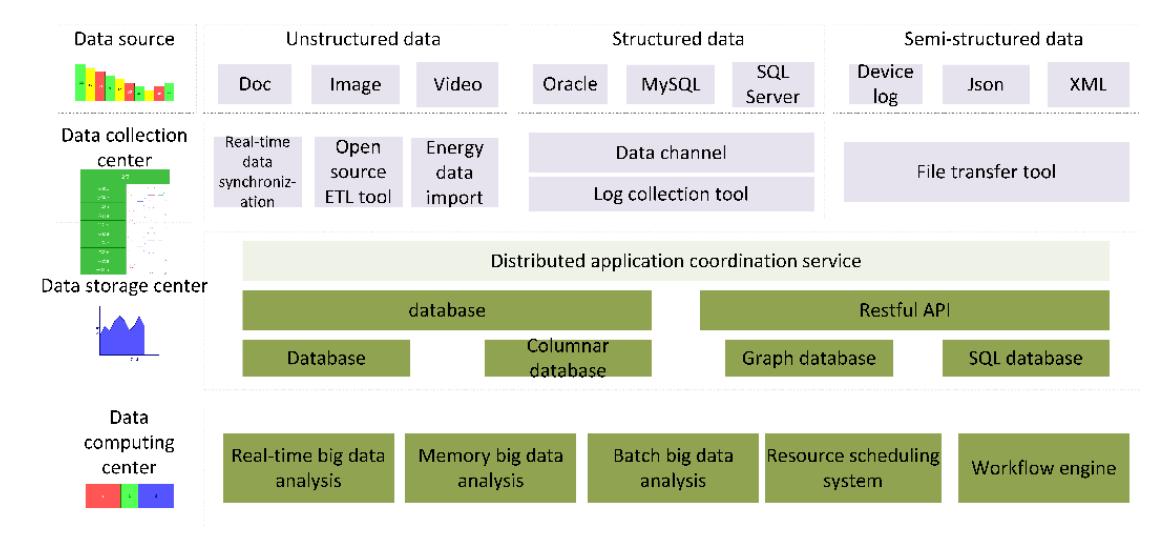
Public opinion feedback mechanism.
Under the intelligent Internet, relying on community interaction modes such as microblogging, WeChat and circle of friends as well as intelligent reporting technology such as machine reporters, an event can be widely known within two hours, as shown in Figure 3. In actual work, the analysis report of public opinion work is usually done by front-line staff, and then reported and examined by layers, and finally reaches the decision-making level. When the decision is made, it is sent down in the opposite direction and finally conveyed to the front-line staff. Under this process, work efficiency is greatly affected. If universities are too late to react, they basically lose the initiative of public opinion and miss the best time for public opinion work. Some colleges and universities also have the problem of redundant leadership, and many decisions also need approval and reporting from multiple leaders at different levels. In addition, since public opinion events are often sudden, it is difficult for the working group to meet and agree on the work plan in time, so there are cases that leaders at different levels give completely opposite instructions, which hinders the implementation of the work.
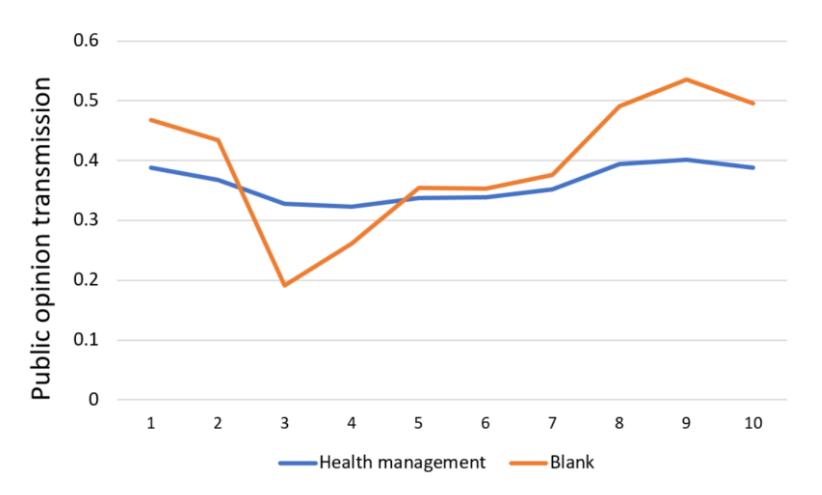
Public opinion transmission to change with health management.
In the era of the intelligent Internet, many new technologies have emerged one after another, which are now widely used. The support of these new technologies is also indispensable in the guidance of university network public opinion. However, the network technology used in network public opinion work has been very backward for a long time. As a result, the network opinion work of colleges and universities is seriously hindered. In the era of the intelligent Internet, wide application of big data technology makes all aspects of production and life become sources of information, and those hard-to-discover information fragments, such as opinions and emotions hidden behind the data content, can be classified and integrated under data mining technology to produce great value. At present, due to the relatively backward network technology, the collection of public opinion information in the network is still basically done by manual keyword search in the work of university network public opinion. However, because the scope of manual search is very limited, it can only cover the popular network platforms. In the era of big data, the volume of information has almost reached ZB magnitude. With the combination of data mining and cloud computing, it can be said that every cloud is generating big data. In the face of such a speed of information output, manual search alone is completely unable to cope with it, as shown in Figure 4. In addition, with the application of artificial intelligence technologies such as MGC, IGC, semantic analysis, and sentiment analysis, information is being automatically produced 24 hours a day, while manual searching is very exhausting for staff members, and long hours of work will also cause mental stress to staff members and seriously affect their work efficiency; therefore, it is difficult to rely on manual work alone to carry out lasting battles of public opinion work in the present era.
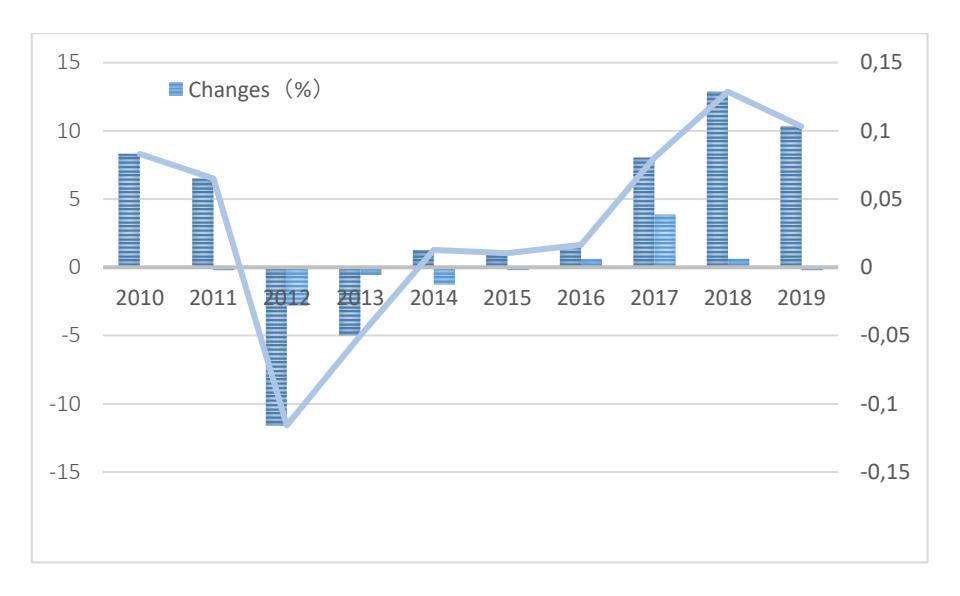
Change of information volume under full media.
Intelligent Robot Monitoring of Web-Based Parenting
Such monitoring software only unifies mainstream search engines in a platform and then uses already set keywords to search, so such platforms are still limited to the backward technology of keyword search and do not solve the problem of incomplete coverage of public opinion monitoring, and the other is that such software is not really based on big data . At present, each public opinion software company is still in its own state and they have not yet established reliable cloud computing centers. As a result, even if they work on artificial intelligence technologies such as semantic analysis and sentiment analysis, they only carry out data mining according to their own standards without achieving the best results, as shown in Figure 5. However, there are only a few public opinion softwares equipped with AI technologies, and almost all of them are for commercial publicity and have not been used in the field of universities. In forming public opinion reports and charts, they still fill specific contents into fixed templates, lack neural network training in big data, and in the judgment of positive and negative public opinion it is easy to make mistakes. Eventually, they have to rely on staff for secondary processing. Thirdly, this kind of software is basically designed and produced for website pages, and although a few of them have designs for platforms, they belong to the traditional Internet, and no software has been designed for new technologies such as MGC, IGC, smart apps and IoT to monitor public opinion. Therefore, such software still lags behind the present era and is not fully functional.
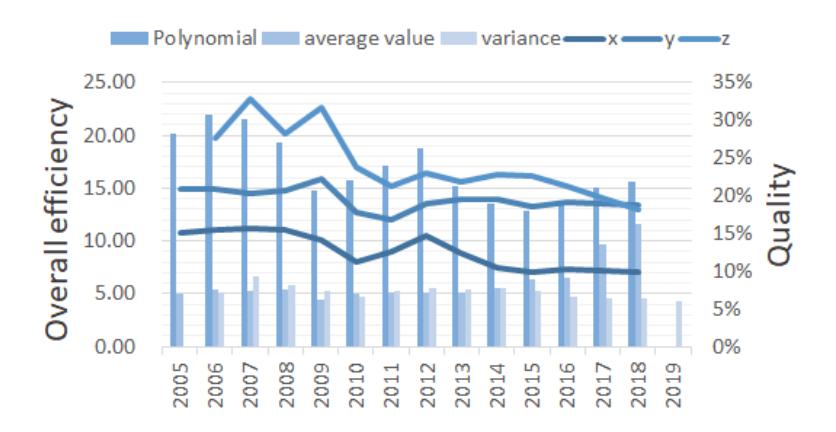
Smart robotics cloud subscription changes.ga
In the era of intelligent Internet, network technology, network structure and the methods of public opinion dissemination and development are very different from those in the past, and the sources of information and public opinion have increased greatly compared with those in the past. The traditional working concept is still stuck in the understanding that public opinion information is tangible. The methods of dissemination are specific, and it is also assumed that people are the only participants on the Internet. This working concept is obviously not feasible in today's intelligent Internet era. Therefore, in the new network environment, the way out for the university network opinion guidance work is to change the one-sided and limited traditional working concepts. To change the working concept of university network opinion guidance, first of all, it is necessary to overcome the fear of unfamiliar things and new things and not to adopt the negative attitude of escaping in the face of the new situation. In the era of the intelligent Internet, it is necessary to recognize the essential features of intelligent Internet, take the initiative to learn new platforms such as microblogs, Weibo and intelligent APPs, and learn new knowledge and new technologies. Smart Internet is characterized by extensive, deep and fragmented information, diversified network participants, and three-dimensional communication channels, and the network world is closely connected with the real world and various automated content output modes such as MGC and IGC are being used more and more widely. Only after recognizing the essential characteristics of intelligent Internet can we adapt to the changes in environment and situation brought about by intelligent Internet and rely on the new network environment and use new network resources to carry out the work of university network opinion guidance.
Discussion
The traditional work mode consists of work methods developed on the basis of the traditional Internet. However, this work mode is not suitable for the situation of the era of intelligent Internet. If the traditional working mode is still adopted despite the situation change, it will lead to low efficiency and waste of a great deal of social resources. Under the intelligent Internet environment, various intelligent and automatic information output methods have been used in various fields. However, the online opinion guidance work of universities still adopts the mode of manual monitoring and manual processing. The efficiency of manual processing is very limited, and it is also much less likely to dig into the relationships, opinions, emotions, behaviors, and motives hidden behind the contents. To solve the problem, it is necessary to establish a self-intelligent public opinion work platform based on data mining technology and intelligent analysis technology. The public opinion work that is difficult to be undertaken by human beings with a huge workload will be completed by computer programs, and artificial intelligence algorithms will be made by intelligent programs, with the same human beings as the final decision-makers. Such a work mode must fit the characteristics of the intelligent Internet era, as shown in Figure 6. In addition, the simulation of public opinion events with the help of big data and intelligent analysis technology can also realize accurate predictions of public opinion development. In the future, while monitoring public opinion, it is also possible to deploy guidance work in advance through public opinion prediction.
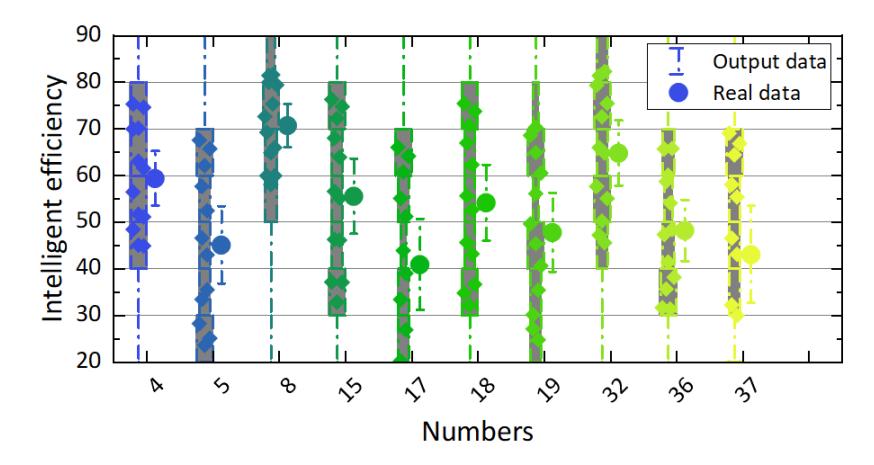
Intelligent robot processing efficiency comparison.
However, in some colleges and universities, some staff in the public opinion work team do not have a good understanding of the importance of college network opinion guidance work in today's intelligent Internet era and appear to work sloppily and cope with the situation. Or because of the low working treatment and poor working environment, they are negligent in their work, which is bound to seriously affect the effectiveness of the work of college network opinion guidance. Through education and training for public opinion guidance staff, they should have a correct understanding of the work of university network public opinion guidance and their role as 'gatekeepers' in public opinion work, improve their treatment to a certain extent and support relevant long-term incentive mechanism to give them motivation and stabilize their working attitude. The era of intelligent Internet itself includes many advanced Internet technologies, so today's online public opinion work has high requirements for the staff's network technology level, as shown in Figure 7. This is the second focus of improving public opinion guidance work.
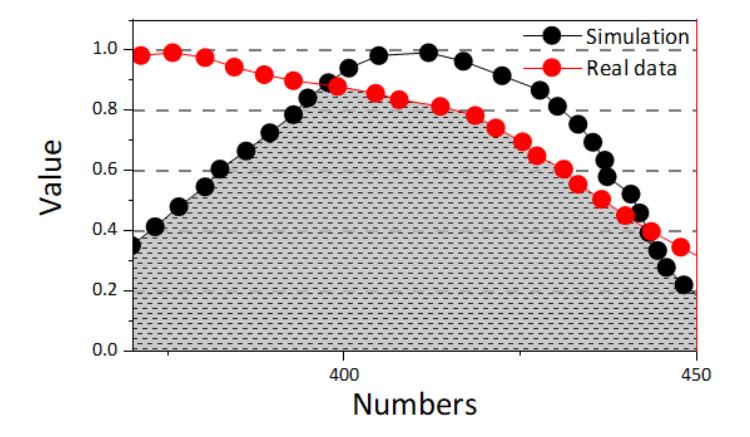
Efficiency of public opinion guidance.
In the work of disposal and guidance of public opinion, currently, most universities still use manual methods. However, in the age of the intelligent Internet, human capabilities cannot keep up with the speed of spreading online public opinion. Student groups create the public opinion of colleges and universities, as shown in Figure 8. Advanced public opinion promotes the development of colleges and universities, while backward public opinion hinders the development of colleges and universities. Therefore, the management of ideology is indispensable for the guidance of college network public opinion. Ideological work in colleges and universities is heavy and difficult work, and for a long time, ideological work in colleges and universities has not achieved good results. One of the reasons is that the ideological work in colleges and universities still adopts the old working methods, such as concentrated study in the form of lectures, pure theoretical knowledge indoctrination, and compulsory examination. To make the ideological work achieve good results, we need to innovate the management form of ideology in colleges and universities. It is necessary to adopt more easily acceptable
methods, such as art creation and cultural activities, to reduce teachers' and students' boredom and resistance to theoretical education and to combine ideological theory with practical life so that teachers and students can practice and apply theoretical knowledge in practical work and study and life, and form a personalized understanding of theoretical knowledge, to truly internalize ideology in teachers' and students' hearts.
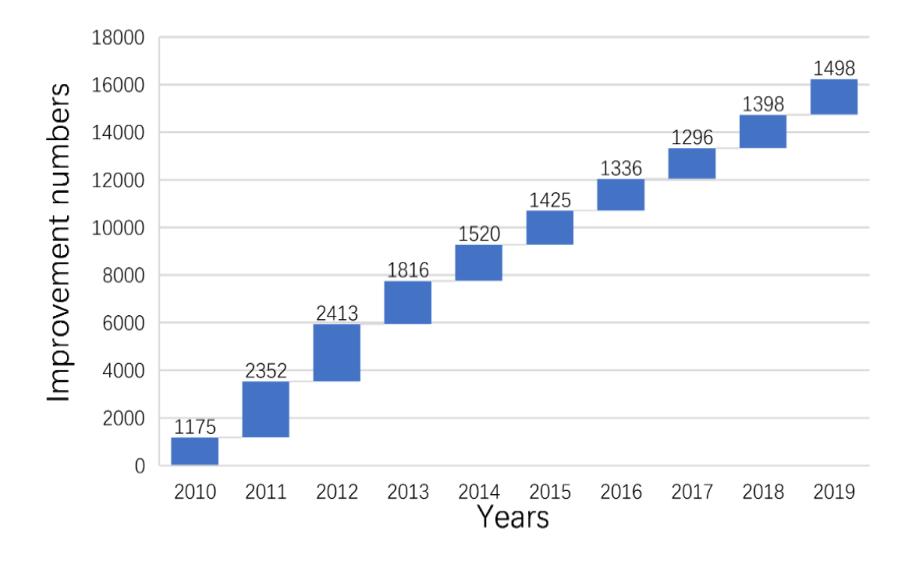
The improvement of students' and teachers' emotions by public opinion guidance.
The development of a smart app can connect campus cards, access control, and other systems to the network and form an intelligent Internet within the school. All aspects of teachers' and students' food, clothing, housing and transportation are monitored through data mining technology. Thirdly, the smart campus can also unite with the school's official microblog and official Weibo, apply machine learning technology, and establish a neural network on the microblog and Weibo public number, which can realize the intelligence of agenda setting. Meanwhile, it can be combined with IGC, MGC, KGC, and other content production methods to cultivate a group of bot official public numbers, algorithmic opinion leaders and so on to quickly react to rumors and extreme public opinion and realize automated public opinion guidance. Finally, smart campuses can provide an exclusive and intelligent public opinion platform for teachers and students of colleges and universities and provide a unique channel for disseminating campus public opinion. It allows managers of colleges and universities to regain the dominant position in public opinion work, enabling them to grasp the online public opinion on campus better and making the work of public opinion guidance easier.
Conclusion
For the online public opinion work of colleges and universities, colleges and universities, education bureaus, network operators, Internet information offices, public security, and national security are all relevant departments. It is necessary to establish a governmental coordination mechanism and give individual identity authentication to the public opinion work units or public opinion staff of each department to strengthen the working connection or to establish public opinion work groups based on the public opinion work units of each department and interconnect them on the network to realize the rapid sharing of work information and work resources and provide the construction foundation for the big data of public opinion work to guarantee the efficiency of public opinion work in the era of intelligent Internet. Under the role of all-media intelligent robots, colleges and universities should evaluate the situation in the process of online education, face the real situation, and strengthen and improve the education environment, education mechanism, education concept, education content and other aspects. At the same time, teachers, as the leading force of education, play the primary responsibility for students' learning. They should timely change the educational concept of educators, and advocate teachers to actively explore new methods, new laws, and new contents to promote online education under the all-media intelligent robot communication pattern. The purpose is to firmly grasp the right to speak and initiative in network education, give full play to the advantages of all-media intelligent robots, serve the network education of colleges and universities, and avoid the consequences caused by its adverse factors. Effectively enhancing the effectiveness of relying on all-media intelligent robots for network education will help
college students strengthen their ideals and beliefs, improve their problem-solving skills, and promote their allround development.
Due to the limited theoretical foundation, the definition of the concept of college network education ecology is not scientific and accurate enough, the induction and summary of the relevant research status of college network education ecology is not comprehensive enough, the division of the elements of college network education ecology needs to be detailed, the scope of questionnaire survey is not extensive enough, and some words in the article are not standardized. The existing problems and effective optimization path of the network education ecology in colleges and universities still need to be further studied. Optimizing the network education ecology in colleges and universities is an important task in strengthening the construction of network culture and realizing the power of the network. It is worth our further exploration and research to build a positive network education ecology for the growth of college students in the new era.
Funding
Ningxia Key R&D Plan project: Research on innovation and sharing application of Minning Red cultural and educational resources based on VR technology, project number: 2023BEG03065.
Compliance with ethics guidelines
The authors declare that they have no conflict of interest or financial conflicts to disclose.
This article does not contain any studies with human or animal subjects performed by any of the authors.