
Introduction
Inside the polymer, most of the adjacent molecules are arranged in a regular consequence with respect to each other called "tacticity". This order impacts the nature of the material to be soft or rigid, and the structure to be amorphous or crystalline. The tacticity has essential effects on many characteristics of the polymer related to thermal, chemical and mechanical properties (Van Krevelen & Nijenhuis, 2009; Young, 2011). Polymeric materials can be seen in isotactic, syndiotactic or atactic forms (Stevens, 1999). Isotactic form is the least appeared form, which is occurred when the molecules arranged along the same side repeatedly. For syndiotactic form, the chain has alternated groups. Atactic polymer appeared in case of random groups of molecules within the chain (Brandrup et al., 2003). Most of the polymeric material may include all these forms of tacticity (Noble, 2016). The ratio of isotactic content within a certain volume can be defined by what so-called "isotacticity index" (Zheng et al., 2020). This parameter is sensitive to the catalyst used, solvent and Lewis acids (Eastmond, 2001). Other effective factors are polymerization behavior (Moad, 2015), temperature and pressure (Chat et al., 2021).
For investigation purposes, researchers have used to serve unique polymers, such as polystyrene (PS) and polypropylene (PP), to comprehend the impact of tacticity on the morphology of the polymer and its thermo-physical properties. There are three categories of PS based on the tacticity as: isotactic polystyrene "iPS", syndiotactic polystyrene "sPS" and atactic polystyrene "aPS". The phenyl groups are equally positioned throughout the chain of isotactic polystyrene, and they are alternate for syndiotactic polystyrene, or randomly oriented for atactic polystyrene (Allcock et al., 2003). Subsequently, this distribution causes the crystalline, semi-crystalline or amorphous structure. Thus, it may affect the corresponding thermo-physical properties. The crystallization and the rapid growth of crystals in a pack under different heating conditions can be related to the tacticity directly. Generally, crystallization can be seen in isotactic and syndiotactic forms. Atactic form has not shown any crystalline regions because of irregularity in the structure of the molecules. Chains might pack periodically and tightly to form crystalline structures, where; the crystallization process is related to the isotacticity of the chains. This is supplied in manufacturing highly refined polymer fibers, primarily determined by the relation between tacticity and fiber diameter (Li et al., 2020; Lin et al.,
2020). In practice, syndiotactic polystyrene (sPS) has possessed a huge interest due to its high melting point, high heat resistance, high dielectric constant and low permeability to gases (Laur et al., 2017). Furthermore, tacticity for mixed arrangements of the chain can be related to the viscosity as a function of temperature (Van Opdenbosch et al., 2022). Also, studies reported a robust linkage of mechanical properties (Mofrad et al., 2024), especially the surface energy (Hamieh, 2024), to the chain tacticity. The impact of molecular stereo-regularity can be appeared as well in the field of oligomerization and organometallic processes (Drzeżdżon et al., 2024).
In general, the influence of tacticity on the thermo-physical properties of the polystyrene was of interest in many previous investigations. Chen et al. (2007) have considered this index as a parameter affecting the PS's thermal stability. The degradation of syndiotactic mode is almost similar to the behavior of atactic mode with a slight divergence for certain cases. While, for the isotactic type it is rather different at ultimate temperatures. Ziaee et al. (2008) have investigated the impact of temperature on tacticity for bulk thermal polymerization of styrene, which is important to obtain a concerning relation between structure and properties. The results of the study indicated that by increasing polymerization temperature the probability of meso addition in polystyrene chains was enhanced. This means rich isotactic polymer. Fritz et al. (2009) have presented a molecular coarse-graining approach applied to isotactic, syndiotactic and atactic polystyrene, in order to study the structure-property relations of chemically specific systems. The research shows that the coarse-grained polystyrene model is able to predict the melt properties and the density. Huang et al. (2011) have measured the characteristics of isotactic, syndiotactic and atactic polystyrene molten of different stereo-regularity with a range of molecular weights to determine flow activation energy during viscoelastic phase. Hikosaka and Ohki (2011) have studied the effect of tacticity on the dielectric properties of syndiotactic PS with different crystallinity values and atactic PS. The results indicated that the increasing in the tacticity of sPS samples led to increase the crystallinity value, increase the density, increase the melting point and reduce the glass-transition point. The electrical conductivity and permittivity were directly proportional to the crystallinity value as well. Annunziata et al. (2013) have studied morphological features, molecular weight and density of syndiotactic/atactic polystyrene copolymers. The study showed different behaviors for the molecular weight and the crystallization of aPS and sPS. For the aPS, the slower crystallization appeared at low molecular weight. While for sPS, the faster the crystallization can be seen at low molecular weight. The density of sPS was always higher than that in blends. The addition of the stereo-diblock copolymer in the blends had rather imperceptible effects on the glass-transition temperature or the melting point. Figueroa-Campos et al. (2017) have studied the microwave activation effects on the tacticity of polystyrene during the polymerization. The experiments show that microwave-activated reactions resulted in shorter reaction time and higher stereo-regularity of polystyrene, i.e. isotacticity. Negash et al. (2018) have carried out a simulation to recognize the influence of tacticity index on the nature of the polystyrene and the corresponding glass-transition temperature (Tg). For a certain case (contact film), it has noticed that this index is directly affect the Tg value. The results of the study revealed that sPS has the largest Tg compared to aPS. Grigoriadi et al. (2019) have studied the ageing kinetics of atactic, isotactic and syndiotactic polystyrene for a period of time and a range of temperatures. The ageing kinetics appear to depend on tacticity, where sPS and iPS exhibiting the slowest and fastest ageing kinetics, respectively, while aPS exhibiting ageing kinetics between these two extremes. Danilov et al. (2020) have investigated the role of isotacticity on the structure of single chain nanoparticles (SCNPs) to fine-tune the assembly properties. The characteristics of functionalized PS (thermal and mechanical) were directly proportional to the arrangement of chains, whether they are aPS, sPS or iPS. The results of the study indicated that structural transitions occur in sPS when the temperature is the less in contrast to the other modes.
The mentioned investigations were focused upon stereo-regularity, chain micro-structure, molecular weight and their connections to the thermo-physical properties. The features of PS are accordingly influenced by its components, and an improving in final form can be adjusted during the polymerization by set certain methods of molecular arranges and corresponding molecular weights. Furthermore, the catalyst system during the polymerization and the operational temperature and pressure affects the characteristics of the polymer. The value of thermal conductivity is affected by many factors, such as: operating temperature, moisture content, density, porosity, degree of crystallinity, features of the contents, homogeneity, interface quality and many other factors (Anh & Pásztory, 2021; Mohammed, 2021). The sources that presented the effect of tacticity on the thermal conductivity of polymers are very limited, as reported by previous researchers. Rashidi et al. (2016) have used computational methods to study the effect of structure chains on the thermal transport in bulk polymers. The simulation can be generalized, but the considered polymers were: PMMA, PVA and PE. The study investigated the changes in the number of hydrogen bonds, chain elongation, bond strength and tacticity and the influences on the thermal conductivity value. It is observed large variation in thermal conductivity due to the modifications to chain chemistry (e.g., inter-chain bonding and chain alignment). Mohammadi et al. (2017) have attempted to estimate the thermal conductivity of isotactic
polymethacrylic acid (iPMMA). Thermal conductivity was calculated using the equilibrium molecular dynamics (MD) simulation according to the Green–Kubo approach. To achieve this objective, the polymer properties including the glass-transition temperature should be founded. Lee (2020) has tried to investigate the heat conduction of amorphous structures by extended polymer molecules. The tacticity and the degree of ionization were considered to separate the polymeric groups. The study showed different thermal conduction coefficients based on planar readings. The results differ from 1.14 W/m∙K for polymers in ionized atactic polyacrylic acid (aPAA) to 0.69 W/m∙K in ionized syndiotactic polymethacrylic acid (sPMAA). On the other hand, the thermal conductivity was 0.55 W/m∙K for polymer in ionized isotactic (iPAA) and 0.48 W/m∙K in ionized isotactic (iPMAA). Regarding the polystyrene, Ma and Tian (2015) have studied the effects of chain confinement on density and thermal conductivity of ultrathin amorphous atactic polystyrene films using equilibrium molecular dynamics (MD) simulations. They found that stronger confinement and less entanglement lead to lower thermal conductivity. This underlines the fundamental difference in heat conduction between amorphous polymers and crystalline polymers.
The current study aims to study the effect of tacticity of molecules on the thermal conductance behavior of polystyrene. The originality is implementing the combined effects of molecular weight and molecular arrangement to present a realistic correlation between isotacticity index and coefficient of thermal conductivity based on experimental analysis of different polystyrene groups. Note that the available literature may not show the direct relationship between the tacticity of polystyrene and the corresponding thermal conductivity. Hence this work tries to address this gap for selected groups of isotactic and syndiotactic polystyrene.
Materials and Methods
In the current study, several PS pellets have been collected from the local market of lab stuffs in Baghdad. Only five groups (batches) of PS have been selected. The pellets used were rigid and virgin polymeric materials with transparent to white color. The specifications of PS groups are listed in Table 1.
| Group | Specifications |
|---|---|
| 1 | Purity >99%, density 1.10 g/cm3 , transparent |
| 2 | Purity 98-99%, density 1.10 g/cm3 , transparent |
| 3 | Purity 95-97%, density 1.05 g/cm3 ,transparent-to-white |
| 4 | Purity 92-94%, density 1.0 g/cm3 , transparent-to-white |
| 5 | Purity 90-92%, density 1.0 g/cm3 , dark white |
Table 1 General specification of different PS groups used in this study
The PS considered for the investigation can be isotactic or syndiotactic. However, commercial PS usually has average MW between 150,000-400,000 g/mol (Hitachi, 1995), isotacticity index between 0.5-0.8 (Ziaee et al., 2008), and thermal conductivity between 0.15-0.17 W/m.K (Simpson et al., 2020).
The MW has been analyzed using gel permeation chromatography (GPC) of brand ISOGEN PROXIMA 16 PHI. Note that the determination of MW of polystyrene solutions can be done using an application equipped with the measuring equipment. Where, narrow standards of polystyrene have been prepared in tetrahydrofuran (THF) solvent by adding 1.5 mL of the solvent to each vial and dissolving the polystyrene for several hours (Kol et al., 2024). This process demonstrates excellent calibration and accurate determination of MW of PS samples. Note that the experimental measurements for GPC have been conducted in Chemical Analysis Center-Mustansiriyah University.
Meanwhile, nuclear magnetic resonance (NMR) of brand Ascend 400 MHz-BRUKER has been utilized to analyze the arrangements of the macromolecular groups, which leads to find the isotacticity index. The 1H-NMR and 13C-NMR scanning images have been analyzed to figure out the tactic order of the components in the structure; i.e. stereoregularity of polymeric chains. Note that for GPC and NMR, the solid polymer should be grinded into small particles, where the average diameter of the particle was less than 2.36 mm (Mesh 8), to be ready for the tests. These techniques required small weights of them, between 5-10 mg. The process of preparing the samples for NMR test required solving the particles in 2 mL of the solvent (Deuterated chloroform CDC13) to each vial and remaining the polystyrene for several hours (Kol et al., 2024). The NMR tests have been conducted in the Central Lab-University of Basrah.
Thermal conductivity measurements have been taken at Lab of Materials, Mustansiriyah University. Thermal conductivity apparatus (MED-103) have been used to measure thermal conductivity of the samples according to ASTM C177, where each sample has 4 cm diameter and 0.5 cm thickness. The device consists of a chamber, electronic box and two thermocouples. The specimens were placed upon the heater in the chamber with a suitable separation. The thermometer recorded the temperatures across the specimen until the equilibrium condition satisfied. The recorded values have compensated in a special equation approved for this device, and based on one-dimensional steady-state heat equation (Fourier equation). The features of the samples are shown in Table 2 according to the tests under consideration. The instruments used in the experimental work are shown in Figure 1.
Table 2 Features of the samples according to the tests
| Test | Specimen | Samples | |
|---|---|---|---|
| GPC & NMR | Particles of mesh 8 (d < 2.36 mm) | ||
| Thermal conductivity | Disc of 40 mm diameter and 6 mm thickness | ||
(a) GPC (ISOGEN PROXIMA 16 PHI) (b) NMR (ASCEND 400 MHz-BRUKER)
(c)Thermal conductivity apparatus (MED-103)
Instruments used in the experimental work.
Results and Discussion
The current results are assigned to show the behavior of 5 groups of rigid polystyrene pellets. They come as virgin and neat products. Some of the groups (Groups 1 & 2) are for laboratory purposes, while some others (Groups 3, 4 & 5) are commercial. By GPC test, it is found that the groups have molecular weights between 145,000-235,000 g/mol (lowto-medium ranges), as shown in Table 3.
Table 3 Molecular weights of different groups measured by GPC.
| Group | Type | MW(g/mol) |
|---|---|---|
| 1 | Isotactic polystyrene (iPS) | 235,000 |
| 2 | Isotactic polystyrene (iPS) | 211,000 |
| 3 | Syndiotactic polystyrene (sPS) | 192,000 |
| 4 | Syndiotactic polystyrene (sPS) | 176,000 |
| 5 | Syndiotactic polystyrene (sPS) | 145,000 |
Note that the calibration of GPC results can be represented graphically in a relationship, as shown in Figure 2 (for the PS of group 3 as an example). The curve shows the relationship between the retention time (in minute) and the logarithm of the molecular weight (in g/mol) for peaks of the samples.
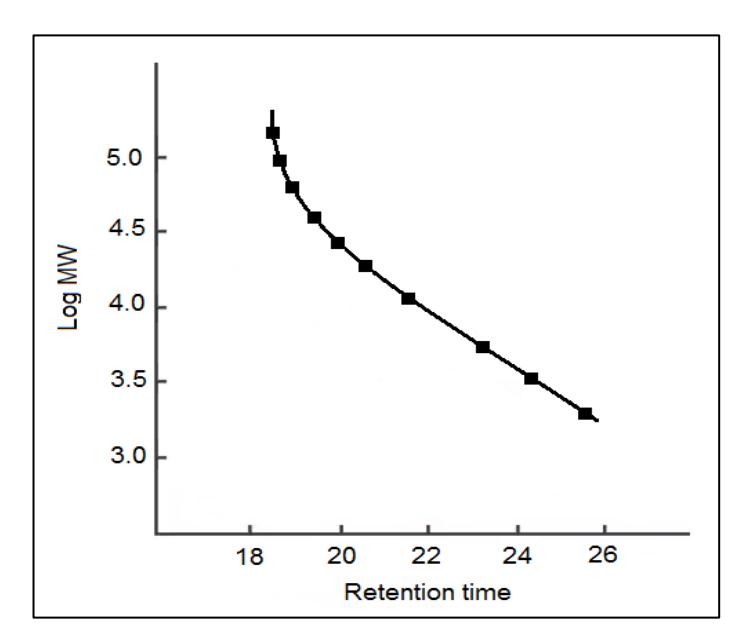
Calibration curve for GPC used in the experimental work.
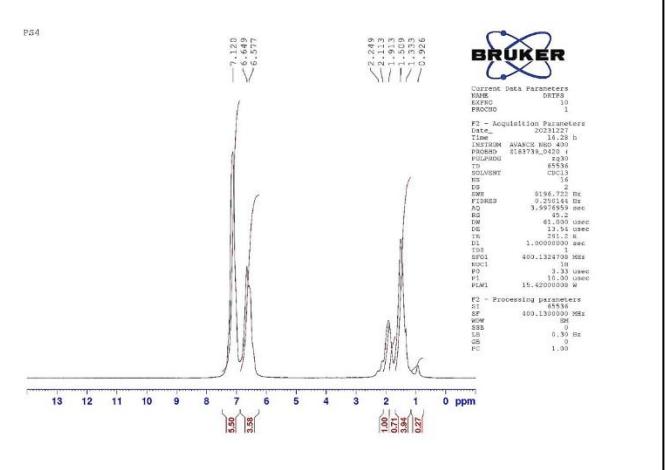
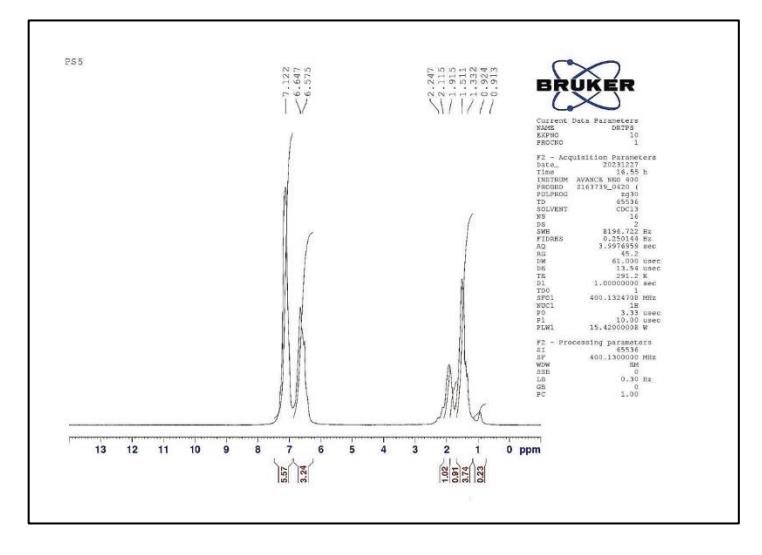
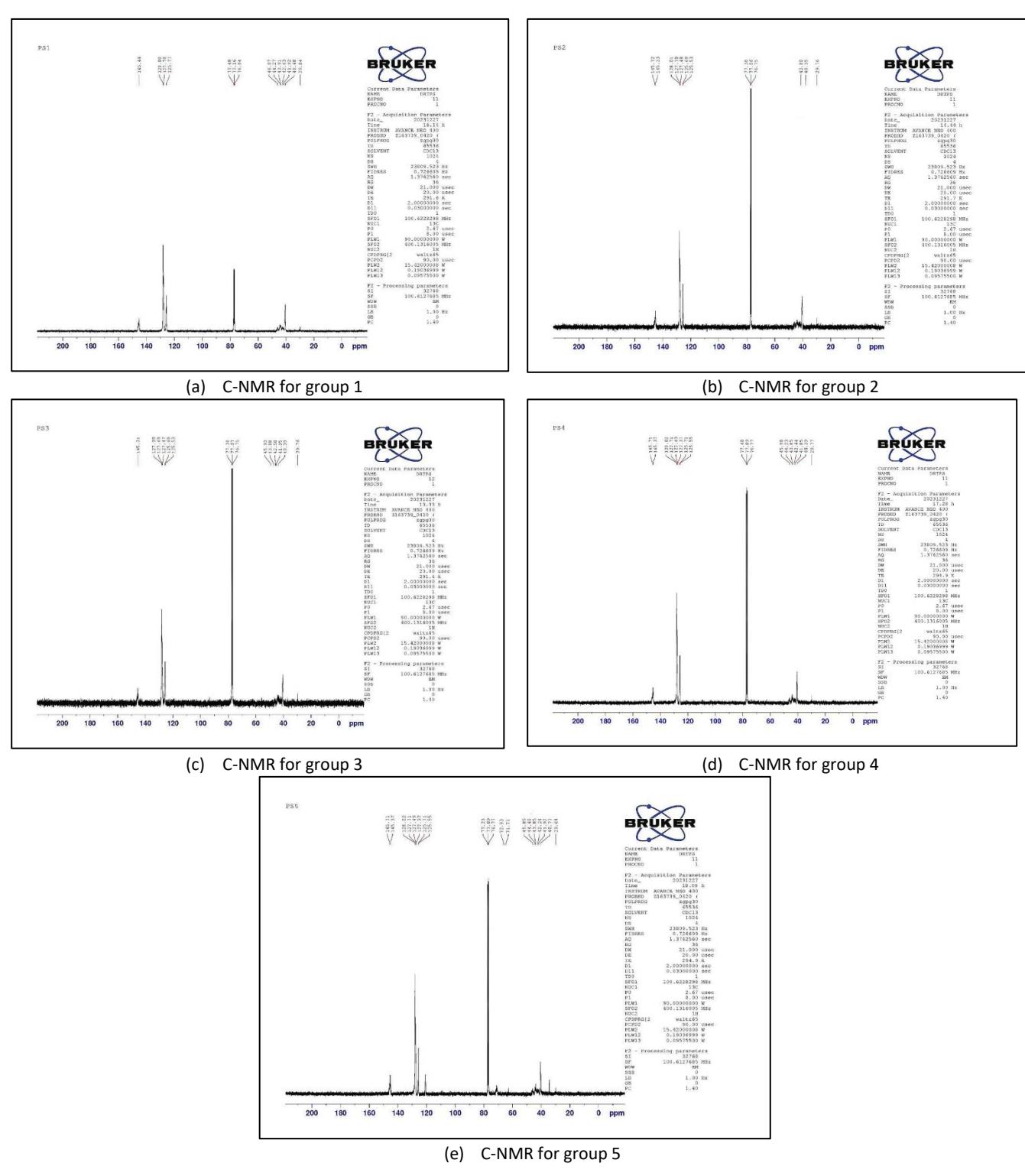
The groups of PS then exposed to H-NMR and 13C-NMR spectroscopic scanning tests to configure the stereo-regularity of the chains, i.e. tacticity-index, as shown in Figures 3 and 4.
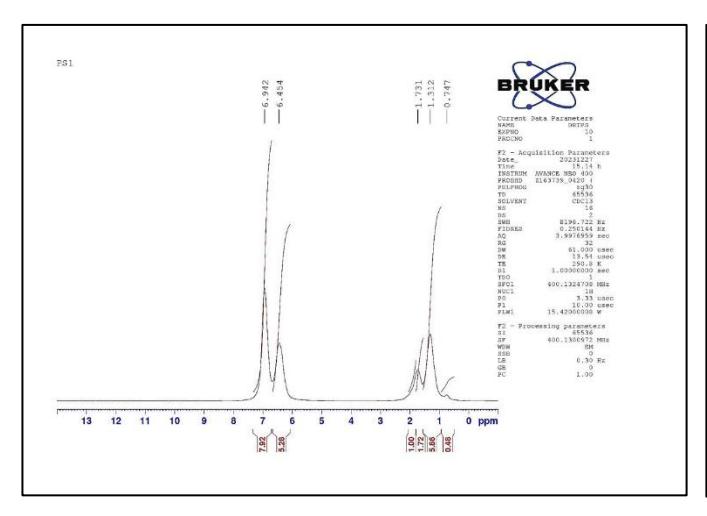
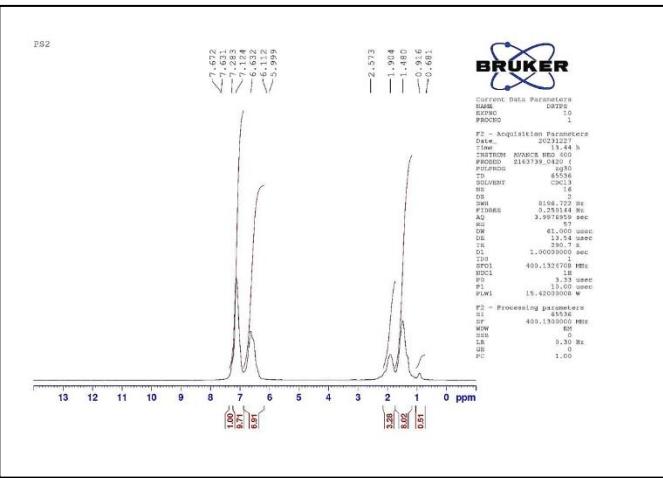

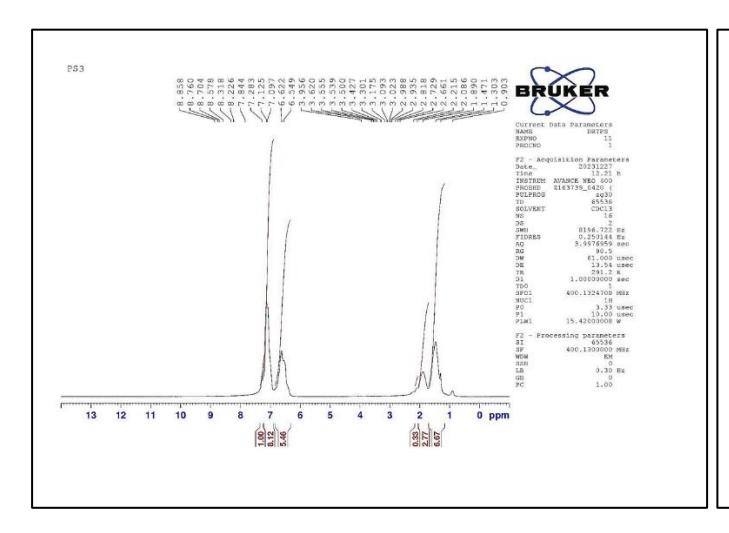
(c) H-NMR for group 3 (d) H-NMR for group 4
(e) H-NMR for group 5
Results of H-NMR for the selected groups.
Results of C-NMR for the selected groups.
The results of 1H-NMR show that there are two regions of peaks in general. The first region includes aliphatic compounds (between 1-2 ppm) with low amplitudes, and the second region includes aromatic compounds (between 6-8 ppm) with high amplitudes, relatively. The resonances centered at 1-2 ppm and at 6-8 ppm are ascribed to the main chains of methylene, methine and phenyl (Vasilenko et al., 2008). Where, the manufacturers usually involve different contents into stereo-regular polystyrene blocks, such as: ethylene, alpha-olefins, conjugated and nonconjugated dienes and styrene derivatives (Laur et al., 2017). However, the NMR analysis has observed the presence of random phenyl groups in the PS, which decreases its isotacticity (Negash et al., 2018). Regarding the regularity of the chain, it is observed that iPS groups have fewer peaks with calm fluctuations, while sPS has more peaks with disturbed oscillations.
On the other hand, the results of 13C-NMR show that there are almost four regions of peaks at: 40, 80, 120 and 140 ppm, with higher amplitudes. The pentad distributions were assumed to analyze the tacticity of the groups. The curves of the spectrum reveal the influence of variety in the mode of connected groups in a chain on the chemical construction of the whole polymer. Note that different configuration of pentad distribution is attributed to inaccurate peak assignment and overlapping (Nabhan et al., 2024). The aromatic region of the 13C NMR spectrum of the polymer shows only a few signals assigned to rrrr, mrrr and mrrm pentads. Interestingly, soluble polystyrene is characterized by a high syndiotacticity (Vasilenko et al., 2008). However, the physical treatments, operating temperature, molecular weight and type of solvent have notable effects on the resolution of peaks and assignment of the sequences. Therefore, some parts in quaternary aromatic carbon of polystyrene are rich in racemic sequences while some others are rich in meso sequences (Ziaee et al., 2008). Details for calculating pentad assignments based on NMR spectroscopic are explained in references (Alshaiban, 2011; Zhu et al., 1983). The analysis based on the obtained data gave various shifts for the arrangements, thus different tacticity ratios for selected groups, as shown in Table 4.
G. mmmm mmmr rmmr mmrr mmrm rrmr rmrm rrrr mrrr mrrm 1 56.6 23.1 7.4 2.3 2.6 2.1 1.9 1.2 1.5 1.3 2 53.4 22.8 6.7 2.7 3.3 3.1 2.3 2.2 2.1 1.4 3 51.3 19.1 5.4 3.2 4.5 3.9 3.3 3.8 3.7 1.8 4 49.4 17.7 4.5 3.5 5.1 4.6 4.6 4.3 4.1 2.2 5 48.7 16.8 4.2 3.7 5.3 4.9 5.1 4.7 4.3 2.3
Table 4 Tacticity ratios of polystyrene groups (mol%)
When a macromolecule's stereo-chemistry is assigned based on Bernoullian statistics (Kawamura et al., 1994), combinations can be calculated from the probability of finding a meso diads. The relations that allow one to determine the tacticity for pentad sequences are given by (Ziaee et al., 2008):
\[mm = mmmm + mmmr + rmmr\] \[mr = mmrm + mmrr + rmrm + rmrr\] \[rr = mrrm + mrrr + rrrr\] (2)
Where, mm, mr and rr denoted for isotactic, syndiotactic and atactic content, respectively. The sequences: mmmm, mmmr and rmmr denoted for isotactic pentads with different chains. The sequences: mmrm, mmrr, rmrm and rmrr denoted for effective pentads that play a role in syndiotactic content. The sequences: mrrm, mrrr and rrrrr denoted for atactic pentads.
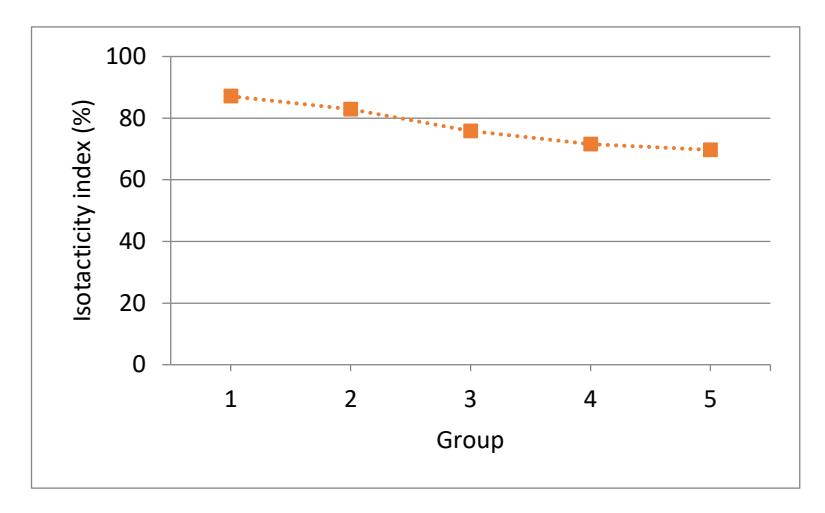
By applying the calculation over the entire structure of the group, the isotacticity index (mm) can be determined for the whole groups, as presented in Figure 5. According to stereo-regularity, it is clear that groups 1 to 2 have a high isotacticity index between 82 and 87%. Less isotacticity index is observed for groups 3-5 due to higher (mr-) or (rr-) contents, which leads to an extra amount of dis-ordinary in the structural chains.
Isotacticity index for each group.
The results of k-values for the selected groups are shown in Table 5. These values have been obtained using thermal conductivity apparatus under direct absolute technique. The results show that the thermal conductivity values of sPS groups are higher than that of iPS groups by 30-40% in average. However, the decrease in the tacticity of sPS (from G3 to G5) leads to reduce its k-value by 15-20%. On the other hand, the decrease in the tacticity of iPS (from G1 to G2) leads to raise its thermal conductivity by 20-30%.
| Group | Type | k-value (W/m.K) | |
|---|---|---|---|
| 1 | Isotactic polystyrene (iPS) | 0.11 | |
| 2 | Isotactic polystyrene (iPS) | 0.14 | |
| 3 | Syndiotactic polystyrene (sPS) | 0.21 | |
| 4 | Syndiotactic polystyrene (sPS) | 0.20 | |
5 Syndiotactic polystyrene (sPS) 0.17
Table 5 Thermal conductivity values for different PS groups.
The variation in the thermal conductivity value of sPS groups may attribute to the fact that samples with higher tacticity show higher crystallinity (Rungswang et al., 2019). Where, the increasing of crystallinity means more packed structure, which acts as a thermal bridge improves the conductive heat through the material's core (Zaki & Salih, 2021). Note that syndiotactic samples that witnessed a decreasing in the tacticity suffer a reduction in the molecular weight as well. This is also mentioned by Huang et al. (2011). Also, Hikosaka and Ohki (2011)revealed that the electrical conductivity of sPS has been decreased for low crystalline structure. Knowing that electrical conductance has a proportional relation to the thermal conductance in PS (H. Xu et al., 2021); which means that k-value is lower too for the case of low crystalline sPS. This is consistent with what was stated in the current research.
On the other hand, the reason behind the low k-value of iPS in group 1 relative to that in group 2 may be due to the content of phenyl. Group 1 has higher content of phenyl due to its higher molecular weight. With increasing phenyl content, the thermal conductivity of the polymer may be decreased (T. Xu et al., 2019). Furthermore, the behavior of k-value for iPS can be explained depending on the behavior of other thermo-physical properties that have similar manner to thermal conductivity. For example, Grigoriadi et al. (2019) have found that the rate of ageing in PS decreases with increasing chain stiffness. In other words, more arranged chains mean less aging rate (which is obvious in group 1). Note that Torres‐Regalado et al. (2023) claimed that aging rate may act proportional to thermal conductivity. As a result, k-value will be less in group 1.
It is important to note that Pasztor et al. (1991) have found that the values of specific heat (Cp) of sPS in general are higher than that of iPS. Since Cp-values and k-values have the same behavior, as denoted by Stephens et al. (1972), therefore this emphasizes that k-values of sPS are higher than that of iPS. Note that thermal conductivity is related to the specific heat through the definition of thermal diffusivity.
For comparison purpose, the general thermal conductivity values out of the current work have been compared with that obtained in reliable source based on the values of the molecular weight, as shown in Table 6. The average difference in k-values between current and previous results is 22 %, which is related to the slight difference in the molecular weight, as well as the difference in degree of crystallinity and tacticity index between the compared groups.
| lt. | Source | Corresponded k-value (W/m.K) | Corresponded MW (g/mol) | Current k-value (W/m.K) | Current MW (g/mol) | Difference |
|---|---|---|---|---|---|---|
| 1 | (Kiessling et al., 2021) | 0.16 | 106,000 | 0.17 | 145,000 | 6 % (D1) |
| 2 | (Kiessling et al., 2021) | 0.17 | 187, 000 | 0.21 | 192,000 | 23 % (D2) |
| 3 | (Kiessling et al., 2021) | 0.18 | 260,000 | 0.11 | 235,000 | 38 % (D3) |
| Average difference in k-values between current and previous results = \((\frac{D1+D2+D3}{3})\) | 22 % | |||||
Table 6 Comparison for the values of thermal conductivity.
Conclusions
This study investigates the effect of chain tacticity on the thermal conductivity of isotactic and syndiotactic polystyrene with respect to a range of molecular weight between 145,000-235,000 g/mol. Five groups of polystyrene were used, that are rigid and virgin pellets. A technique of NMR showed that the isotacticity index for the selected groups was ranged between 70-87%. The results of k-values, obtained using thermal conductivity apparatus, showed that k-values of sPS witnessed a decreasing by 15-20% when their tacticity has reduced. On the other hand, the decrease in the tacticity of iPS increases thermal conductivity by 20-30%. However, the thermal conductivity values of syndiotactic polystyrene are higher than that of isotactic mode by 30-40% in average.
Acknowledgments
The authors would like to express their gratitude to College of Engineering/Mustansiriyah University, Iraq.
Conflicts of Interest
All authors should disclose in their manuscript any financial or other substantive conflict of interest that might be construed to influence the results or interpretation of their manuscript.