
Introduction
Coffee is among the most consumed beverages in the world. Coffee beans contain various chemical compounds that affect the aroma and taste of coffee, such as caffeine, diterpenes, and chlorogenic acid. Caffeine is among the most important non-volatile chemical compounds in the alkaloid group which gives coffee a bitter taste (Blumberg et al., 2010). Caffeine in the body can stimulate the central nervous system so that it can relieve drowsiness and fatigue, increase enthusiasm, and may reduce the risk of disease development (Shofinita et al., 2024a). However, caffeine can also have negative effects on the body when consumed regularly and in large quantities (Willson, 2018). The United States Food and Drug Administration has cited 400 milligrams as the maximum amount of caffeine consumption per person per day (Shofinita et al., 2024b). Some people have a low caffeine tolerance; thus the negative effects that arise from caffeine consumption pose detrimental risks that might decrease the pleasure of drinking coffee. Too much caffeine intake for some people may result in an increase in heart rate, central nervous system stimulation, arrhythmias, and a decrease in breast milk production in nursing mothers (Shofinita et al., 2023).
The decaffeination process is an effort that can be taken to reduce the caffeine content in coffee so that coffee is safer for consumption and can still be enjoyed by individuals who have a low caffeine tolerance and are sensitive to caffeine. The degree of decaffeinated coffee varies throughout the world. In European countries, decaffeinated coffee products contain 0.1 wt% anhydrous caffeine in green and roasted coffee beans and a maximum of 0.3 wt% in solid, pasty, or liquid coffee extracts (European Parliament and Council, 1999). In the United States and Canada, the maximum caffeine content in decaffeinated roasted coffee beans is 0.1 wt% (USDA, 1996). Several commonly used decaffeination methods are water decaffeination, supercritical decaffeination, and solvent decaffeination. In solvent decaffeination methods,
organic solvents, such as acetone, chloroform, benzene, ethyl acetate, ethyl alcohol, ethyl ether, methylene chloride, dichloromethane, and trichloroethylene, that are selective in caffeine separation are used (Shofinita et al., 2024b). Dichloromethane was reported to show high separation of caffeine, yet may be carcinogenic (Bermejo et al., 2013). In addition, ethyl acetate has gained more attention in this area because of its low toxicity and food grade.
Life Cycle Assessment (LCA) is a mechanism to analyze each stage of a product's life cycle and to calculate the total environmental impact of each of these stages. This includes the preparation of raw materials, production processes, sales, and transportation, as well as the disposal of product waste (ISO 14040:2006). The purpose of the LCA is to provide information used as an assessment of product systems to better understand the environmental significance of the process. Environmental issues are now a major consideration in the global market and several literatures have studied the LCA of coffee production (Salomone, 2003; De Marco et al., 2018; Phrommarat, 2019). However, the amount of literature that discusses the LCA analysis of coffee bean decaffeination processes is still limited. Therefore, an LCA analysis was conducted to determine the sustainability of the decaffeinated coffee bean production process by evaluating the required stages of the production process and energy consumption starting from planting and raw material processing, to producing decaffeinated coffee beans.
Methods
Design Of Production Process
First, the flow of the decaffeinated coffee bean production process was designed, consisting of the stages of postharvest processing, transportation, and coffee bean decaffeination. Data on operating conditions in the production process of natural flavors from decaffeinated coffee beans were obtained from previous research results (Widyotomo et al., 2009; Patel & Wolfson, 1972). The coffee beans used in the decaffeination process were Robusta coffee beans with post-harvest processing of the dry method which is commonly used due to its simplicity, low cost, and ability to yield a more diverse coffee flavor (Bermejo et al., 2013). The decaffeination method was conducted using organic solvents (Widyotomo et al., 2009; Patel & Wolfson, 1972). The various types of organic solvents used were ethyl acetate (EA) and dichloromethane (DCM). The process of decaffeinating coffee beans with EA solvent was conducted in two stages. First, the process of steaming coffee beans with hot water at 100℃ for 4 hours using a single-column reactor to obtain maximum coffee bean swelling. Then, it was followed by the next stage in the form of extracting caffeine from coffee beans using 10% ethyl acetate solvent with a ratio of coffee beans to solvent of 1:5 for 12 hours at 70 ℃ (Widyotomo et al., 2009). The process of decaffeinating coffee beans with DCM solvent was conducted through a steaming process for 30 minutes at 110°C, followed by an extraction process with a solvent temperature of 60°C for 10 hours at a pressure of 3.45 bar. The decaffeinated coffee beans were then stripped with solvent at 100°C and dried with hot air at 176.7°C for 8 minutes (Patel & Wolfson, 1972). The decaffeination process is shown in Figure 1.
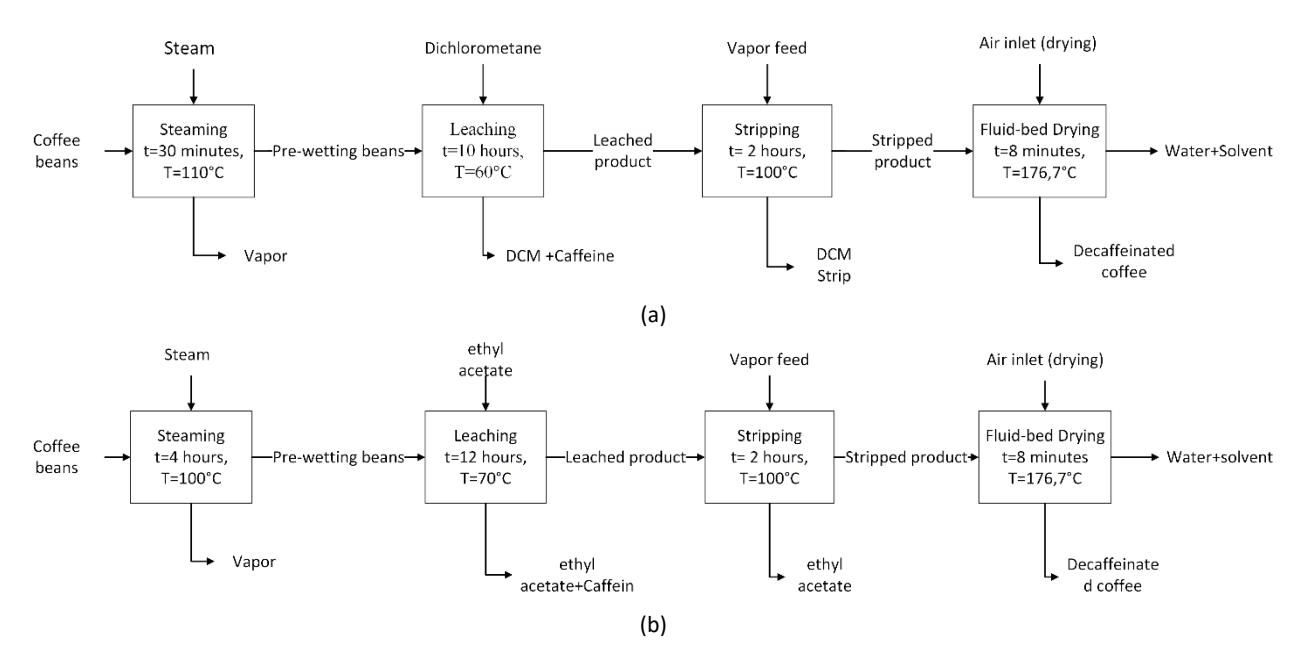
Block Flow Diagram of the decaffeination process using: (a) dichloromethane and (b) ethyl acetate.
Simulation of Production Process
Simulation of the planting and transportation process was conducted using Microsoft Excel for mass balance calculations. Meanwhile, the simulation of drying (postharvest process), steaming, caffeine extraction, solvent stripping, and coffee bean drying processes were modeled in a SuperPro Designer (Intelligen, Inc.) (Sebastião et al., 2016). The production capacity of the decaffeinated coffee bean products was estimated based on the export data of decaffeinated coffee beans in Indonesia, which reached 105.49 tons/year or around 319.67 kg/day of decaffeinated coffee beans ] (Badan Pusat Statistik Indonesia, 2020). The amount of coffee cherry raw material used to produce 320 kg/day of decaffeinated coffee beans is 1,615 kg/day. The process boundary and assumptions used in this study are summarized in Table 1.
Table 1 Process boundary and assumptions used for the production process of decaffeinated coffee beans.
| Process | Assumptions and Limitations for Ethyl Acetate | Assumptions and Limitations for Dichloromethane | ||
|---|---|---|---|---|
| Planting | The type of coffee used is robusta coffee with a total robusta coffee cherry production of 1,615 kg/day or 533 tons/year (Badan Pusat Statistik Indonesia, 2020). Calculation of land, fertilizer, and pesticide needs is based on annual needs because coffee plants are included in the type of perennial crops. The types of fertilizers used consist of organic and inorganic fertilizers. The need for organic fertilizer is 2 tons of fertilizer/ton of coffee cherry and inorganic fertilizer is 500 kg/ton of coffee cherry (Adiwinata et al., 2021). | |||
| Post-harvest | Dry post-harvest processing method consisting of drying and hulling. The drying process uses a gasoline-fueled rotary drum drying machine with a power of 7.5 kW. The hulling process uses a gasoline-fueled dehulling machine with a power of 5.5 HP or 22.56 kW. The energy capacity is 33.7 kWh/gallon of gasoline The post-harvest process produces waste in the form of fruit skins and horn skins. | |||
| Transportation | The assumed distance from the plantation to the processing plant is 10 km. Transportation of green coffee beans using a lorry-type truck. | |||
| Steaming | The process was held at 100℃ for 4 hours. - | - The process was held at 110℃ for 30 minutes (Patel & Wolfson, 1972). | ||
| Leaching | The process was carried out at 70℃ for 12 - hours. - The ratio of coffee beans to ethyl acetate was 1:5. | - The process was carried out at 60℃, 3.45 bar pressure for 10 hours (Patel & Wolfson, 1972). - The ratio of coffee beans to ethyl acetate was 1:4. - The total solute recovery yield in the liquid phase was 97%. | ||
| Solvent stripping | - The process is carried out using the steam stripping method at 100℃ for 2 hours (Patel & Wolfson, 1972). | - The process is carried out using the steam stripping method at 100℃ for 2 hours (Patel & Wolfson, 1972). | ||
| Drying | The process was carried out at 176.7℃ for 8 - minutes (Patel & Wolfson, 1972). | The process was carried out at 176.7℃ for 8 - minutes (Patel & Wolfson, 1972). | ||
Life Cycle Assessment Using OpenLCA
The data that has been collected was obtained from the literature and the simulation results were used as input for conducting LCA analysis using the OpenLCA software application version 1.10.3 (Miyoshi & Secchi, 2024). OpenLCA has been widely used to model the LCA of process. This software is open source, possible to import and export datasets easily, and by using this software, costs and social aspects can be modelled. However, many datasets of this software are poorly documented (Silva et al., 2017).
In this study, the ReCiPe 2016 Midpoint (H) method, which has 18 impact categories, was used (Feng et al., 2023). The ReCiPe 2016 midpoint has the broadest set of midpoint impact categories and implements characterisation factors at an international scale (Feng et al., 2023). The impact categories used by the ReCiPe 2016 Midpoint (H) method are summarized in Table 2.
Table 2 Impact categories used in the ReCiPe 2016 Midpoint (H) method.
| Impact Categories | Reference unit | Abbreviation |
|---|---|---|
| Fine particulate matter (PM) formation | kg PM 2.5 eq | PMFP |
| Fossil resource scarcity | kg oil eq | FFP |
| Freshwater ecotoxicity | kg 1,4-dichlorobenzene eq (kg 1,4-DCB) | FEFP |
| Freshwater eutrophication | kg phosphorous eq (kg P eq) | FEP |
| Global warming | kg CO2 eq | GW |
| Human carcinogenic toxicity | kg 1,4-dichlorobenzene eq (kg 1,4-DCB) | HTPc |
| Human non-carcinogenic toxicity | kg 1,4-dichlorobenzene eq (kg 1,4-DCB) | HTPnc |
| Ionizing radiation | kBq Co-60 eq | IR |
| Land use | m2a crop eq | ALO |
| Marine ecotoxicity | kg 1,4-dichlorobenzene eq (kg 1,4-DCB) | MEFP |
| Marine eutrophication | kg N eq | MEP |
| Mineral resource scarcity | kg Cu eq | SOP |
| Ozone formation, Human health | kg NOx eq | HOFP |
| Ozone formation, Terrestrial ecosystems | kg NOx eq | EOFP |
| Stratospheric ozone depletion | kg CFC-11 eq | ODP |
| Terrestrial acidification | kg SO2 eq | TAP |
| Terrestrial ecotoxicity | kg 1,4-dichlorobenzene eq (kg 1,4-DCB) | TEFP |
| Water consumption | m3 | WD |
At this stage, an analysis was conducted to classify and quantitatively assess the impact on the environment at all stages of the production process based on the data obtained in the previous stages. Hotspot analysis was conducted as a prioritization approach to identify sustainability impacts across a range of attributes such as economic, environmental, social, and governance. In this study, hotspots were identified as the ones that have the highest impact contribution (Feng et al., 2023). Based on the results of the LCA data, further analysis, summary, and interpretation were carried out as a basis for drawing conclusions and recommendations for a more environmentally friendly decaffeinated coffee bean production process as an improvement process.
Results and Discussion
Life Cycle Assessment of The Decaffeination Process Utilizing Ethyl Acetate
The analysis results of the influence of the production process using ethyl acetate solvent on the impact category with the ReCiPe 2016 Midpoint (H) method are shown in Figure 2. Based on the results of the hotspot analysis, it was found that the impact category that made the largest contribution was HTPc of 7.73 x 101 kg 1.4- DCB (40.50%), MEFP of 1.3 x 101 kg 1.4-DCB (18.28%), GW of 5.58 x 10⁴ kg CO2 eq (10.13%), FEFP of 7.32 x 100 kg 1,4-DCB (8.66%), and ALO of 3.47 x 10⁴ m2a crop eq (8.15%).
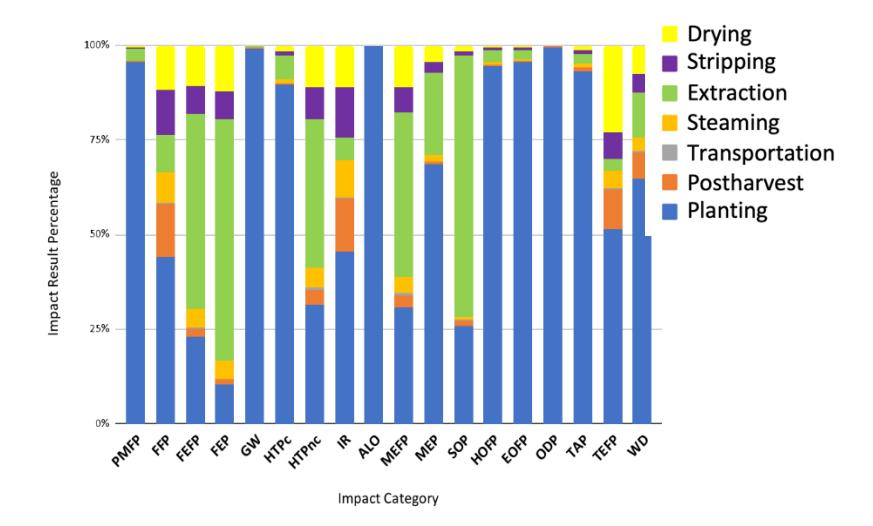
Percentage of process contribution to the impact category in the ReCiPe 2016 Midpoint method for ethyl acetate (EA).
HTPc is the emission of various chemical compounds that are carcinogenic. MEFP and FEFP are emissions from various products containing hundreds of chemical compounds that have the potential to cause toxicity to marine and freshwater ecosystems, causing damage to ecosystems. GW is anthropogenic emissions from greenhouse gases that can cause climate change. The main gases that contribute most to the greenhouse effect are carbon dioxide, methane, nitrous oxide, water vapor (natural), and fluorinated (synthetic) gases. ALO is the use or occupation of land and natural areas because of human activities, such as for urban land and agricultural land which can affect the life of flora and fauna. Furthermore, further hotspot analysis was conducted to determine the most significant process stages for the five impact categories. It was found that for HTPc, the most relevant process was planting, amounting to 89.57%. In the planting process, it is necessary to change an area into agricultural land for coffee bean plantations. Based on analysis with OpenLCA, emissions of furan compounds are known to make the greatest contribution to the clear-cutting process for land clearing which is the main cause of the high impact of HTPc on the planting process. In the process of clearing agricultural land, the use of mechanical devices requires energy generation and heating or burning of fuel. Based on the inventory results of Warlina (Warlina et al., 2008) energy generation and heating contribute 66% to furan emissions in Indonesia. Furans are generally produced as an unwanted by-product in almost all combustion processes, including fuel combustion and biomass combustion (Wielgosiński, 2011). Furan is classified as a compound that is carcinogenic to humans (WHO, 1995) Long-term effects of furan can cause cancer, disorders of the reproductive system, and birth defects; while in the short term, it causes liver damage, weight loss, or a decrease in the immune system (Verchot et al., 2012).
In MEFP and FEFP, the most relevant processes were cultivation, extraction, and drying with respective percentages of 30.74%, 43.42%, and 11.12% for MEFP, and 22.93%, 51.79%, and 10.80% for FEFP. Emissions of zinc compounds are known to make the largest contribution to the process of burning diesel fuel in engines which is the main cause of the high impact of MEFP and FEFP on the planting process. In the area of coffee farming, various mechanical machines are needed which require fuel to operate optimally. The use of fuels that emit Total Suspended Particulate (TSP) contains more heavy metals, such as zinc. Furthermore, zinc is also known to make the largest contribution to the electricity usage process which is the main cause of the high impact on the extraction and drying processes. Zinc oxide is an inorganic compound that has high optical transmission and is a good electrical conductor. Therefore, zinc oxide in the form of thin films is often used as the first choice in the application of various transparent conductors. Zinc contamination in water can increase the acidity of the water. Some types of fish can also accumulate zinc content in their bodies, so it can spread zinc contamination in a wider food chain and potentially cause damage to ecosystems.
In the GW impact, the planting process is the biggest contribution, amounting to 99.26%. Carbon dioxide (CO2) emissions originating from deforestation activities, namely the clear-cutting of forests to make land available for agriculture, contribute to the high impact. CO2 gas is a greenhouse gas (GHG) that plays a role in increasing the earth's temperature to make it warmer known as global warming. In addition, high CO2 emissions can cause changes in the earth's climate, such as the phenomenon of stronger storms, more severe droughts, and rising sea levels. About 80% of Indonesia's national emissions come from land use (Patel & Wolfson, 1972). Forests store carbon in the form of plant matter and soil, so when deforestation occurs, large amounts of stored carbon will be released and transferred to the atmosphere, causing carbon emissions. Therefore, the existence of deforestation has an effect on the environmental impact of GW, with the greater the amount of land needed, the greater the forest that needs to be cut down for land acquisition, and the greater the carbon gas emissions produced.
In ALO, the planting process contributes 100% because of deforestation activities as well. The results of the impact assessment obtained showed that to produce 320 kg of decaffeinated coffee beans or 1615 kg of coffee cherries, the productivity of the coffee plants used was 794 kg/hectare/year, resulting in an impact of 34,679 m2a crop eq. This shows the amount of land that is transformed for agricultural needs. Land use causes various environmental impacts. One of the main focuses is related to greenhouse gas emissions due to land provision and use activities, as previously discussed in the global warming impact category. In addition, the existence of land acquisition and use also results in changes in carbon cycles and storage, reduces soil quality and productivity, loss of biodiversity, and affects water quality and availability [(Mattila et al., 2011). One of the impacts needs to be considered is the loss of biodiversity. This is because biodiversity is different from other environmental impacts, due to its irreversible nature.
Life Cycle Assessment of Decaffeination Using Dichloromethane
The analysis results of the influence of the production process using dichloromethane solvent on the impact category with the ReCiPe 2016 Midpoint (H) method are shown in Figure 3. Based on the results, it was found that the impact category that contributes to the impact in LCA is HTPc of 7.77 x 101 kg 1.4- DCB (40.46%), MEFP of 1.3 x 101 kg 1.4-DCB (18.18%), GW of 5.58 x 10⁴ kg CO2 eq (10.8%), FEFP 7.49 x 100 kg 1,4-DCB (8.81%), and ALO of 3.47 x 10⁴ m2a crop eq (8.11%). The results of this analysis have similarities with the hotspot analysis of the production process using ethyl acetate solvent.
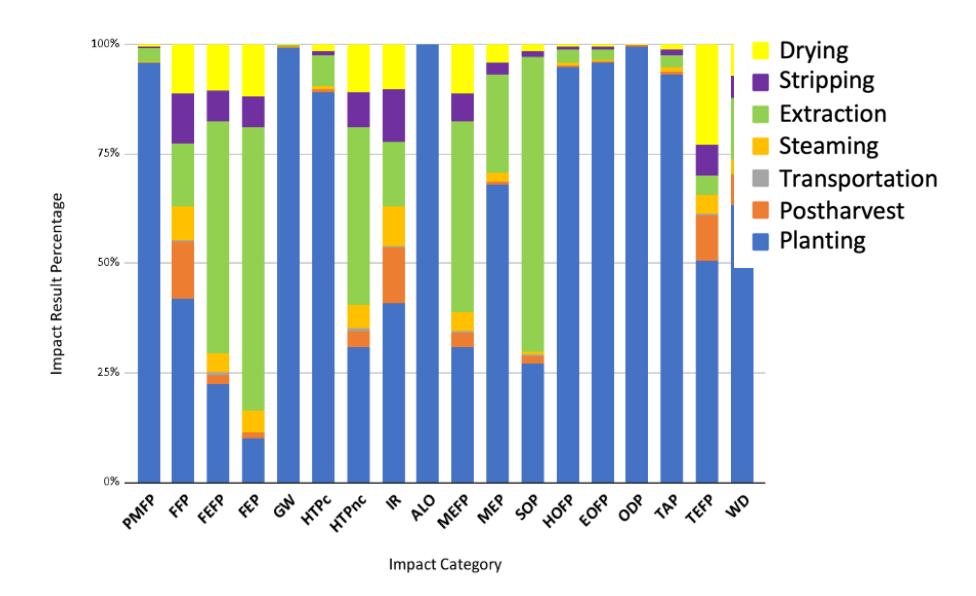
Percentage of process contribution to the impact category in the ReCiPe 2016 Midpoint method for dichloromethane (DCM).
In the HTPc impact category, the planting process contributed the most, namely 89.13%. In the MEFP and FEFP impact categories, the processes of caffeine extraction, planting, and drying are the processes that make the greatest contribution to the magnitude of the environmental impact. Based on the analysis results, the caffeine extraction process contributed the most, namely 43.35%, followed by the planting process at 30.74%, and the drying process at 11.15% for MEFP. As for FEFP, the caffeine extraction process also contributed the most, namely 52.85%, followed by the planting process at 22.41%, and the drying process at 10.54%. In the GW impact category, the planting process contributed the most, amounting to 99.19%. In the ALO impact category, the planting process contributes 100% to deforestation. Based on the analysis results with OpenLCA, it was found that the emission compounds that cause high environmental impacts from each impact category of the decaffeination process with DCM solvent have similar results with the hotspot analysis in EA solvent which has been described in the previous section.
LCIA Comparison Between Solvents
In OpenLCA, a comparison of the impact of the categories for the two solvents used was conducted. A comparison of the impact of the two solvent variations was carried out on the scope of the coffee bean steaming process to decaffeinated coffee bean drying. The scope determination is because the planting, post-harvest, and transportation processes have the same conditions, needs, and stages for the two solvent variations. Comparisons were made to find out which solvent has a lower environmental impact, so they are better used. The results of the comparative analysis between the two solvent variations are shown in Figure 4.
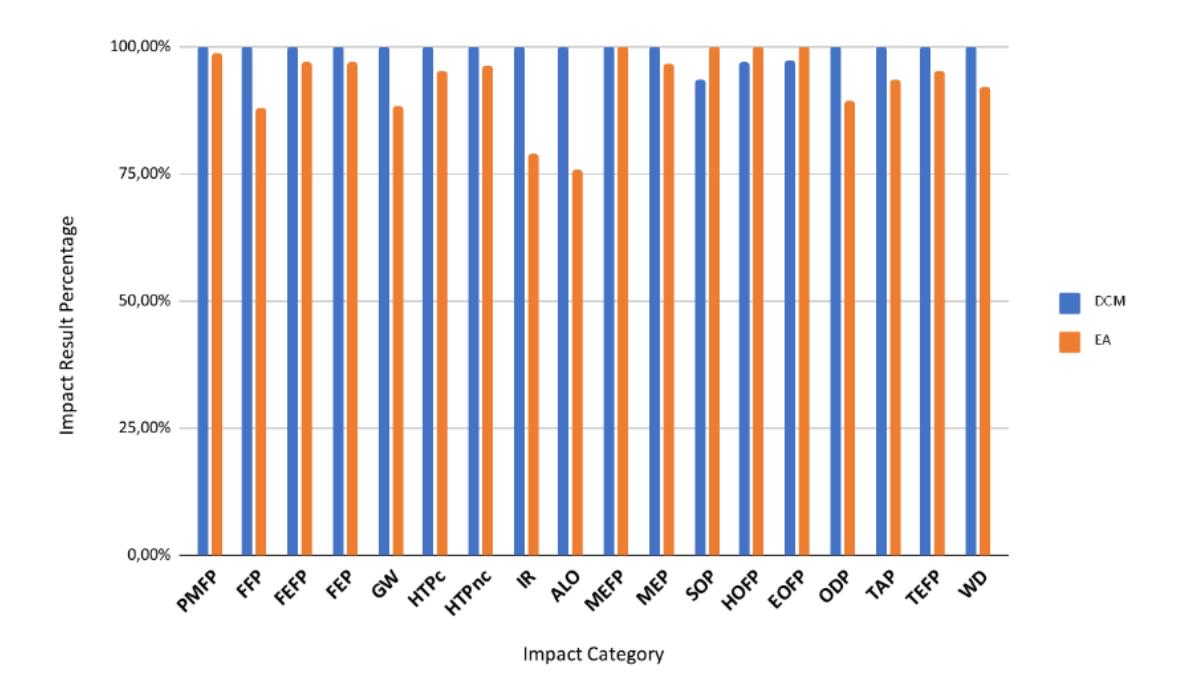
LCA comparison of decaffeination processes between various solvents (DCM = dichloromethane; EA = ethyl acetate).
The results of the LCIA analysis shown in Figure 4 were obtained from the production process based on two different literature, namely Widyotomo et al. (Widyotomo et al., 2009) for EA solvents, and Patel et al. (Patel & Wolfson, 1972) for DCM solvents. The results of the Hotspot Analysis indicate that the impact categories that contribute the most to impact based on the production processes reviewed are MEFP, FEFP, and HTPc. The results obtained are similar for both solvents with the contribution shown in Table 3.
Table 3 Hotspot Analysis of Ethyl Acetate and Dichloromethane Solvent Variations.
| Ethyl Acetate | Dichloromethane | |||
|---|---|---|---|---|
| Impact Category | Impact Assessment | Contribution (%) | Impact Assessment | Contribution (%) |
| MEFP | 8.52 x 100 kg 1,4-DCB | 45.60% | 8.52x100 kg 1,4-DCB | 44.62% |
| FEFP | 5.44x 100 kg 1,4-DCB | 24.51% | 5.61x100 kg 1,4-DCB | 24.73% |
| HTPc | 7.65x100 kg 1,4-DCB | 15.26% | 8.03x100 kg 1,4-DCB | 15.67% |
MEFP: Marine ecotoxicity; FEFP: Freshwater ecotoxicity; HTPc: Human carcinogenic toxicity
In the MEFP impact category, the stages of the decaffeination process that contributed the most were caffeine extraction and drying of decaf coffee beans, amounting to 66.29% and 16.98% for EA solvent, while for DCM solvent were 66.18% and 17.02%. In the FEFP impact category, the stages of the decaffeination process that contributed the most were the caffeine extraction and drying of the decaf coffee beans, amounting to 69.67% and 14.53% for the EA solvent, while for the DCM solvent, it was 70.54% and 14.06%, respectively. The MEFP impact category is related to the FEFP impact category, due to the observation of the water ecosystem. MEFP reviews marine ecosystems, while FEFP reviews freshwater ecosystems. Based on the analysis results, the high impact on the environment generated in the process is due to the emission of chromium (Cr) and nickel (Ni) originating from the process of supplying electricity to operate production equipment in the extraction and drying process, as well as providing steam or heat needed as utilities to support the process. In aquatic ecosystems, the level of chromium metal (Cr) is among the parameters that determines water quality because of its toxicity. In waters, Cr(VI) emissions are highly toxic, corrosive, carcinogenic, and have a very high solubility. It is known that Cr(VI), which is commonly found in the form of chromate and dichromate, has soluble properties over a wide range of pH values (Prasad et al., 2020). Based on research, exposure to chromium (VI) in marine organisms can affect the hatching of organisms, damage DNA, shorten the life of fish, and can accumulate in the fish's body, resulting in damage and death to the liver and kidneys. The high chromium content in waters will also affect the life of organisms by causing changes in the food chain system [26]. Similarly, accumulated nickel metal whose presence exceeds a threshold value will also be toxic and have a direct impact on aquatic organisms, causing death. Nickel is a metal that forms colloids in waters, its insoluble nature results in sedimentation or deposition in waters to form sediments. Apart from polluting the waters, the sediments that form have a residence time of up to thousands of years, so aquatic organisms that pass through or live in these waters can be exposed to nickel metal which can enter through the respiratory tract, food, and through the skin, resulting in accumulation in the body of the organism.
In the HTPc impact category for EA solvent, the process stages that contributed the most were the caffeine extraction process (64.32%), the drying process (15.20%), and the stripping process (12.23%). Meanwhile, in the dichloromethane solvent variations, there were two processes that contributed the most, namely the caffeine extraction process (65.90%) and the drying process (14.48%). Based on the analysis conducted, it was found that the largest contribution to the environmental impact is caused by emissions of chromium, nickel, and formaldehyde from the process of supplying electricity used in operating equipment in the extraction and drying processes, as well as supplying steam or heat needed to run these processes. The provision of electricity and heat is obtained by burning fossil fuels, such as coal, natural gas, and crude oil. The burning of fossil fuels produces chromium compounds as a by-product and is a source of high chromium emissions (Nriagu & Pacyna, 1988). Chromium compounds are found in fossil fuels such as coal in the range of 0.5-60 mg/kg (Swaine, 2013). The chromium compound in coal is trivalent (Cr(III)), which is relatively harmless, but the combustion process can change some of the Cr(III) into a more toxic form, namely carcinogenic hexavalent (Cr(VI)) (Galbreath & Zygarlicke, 2004). According to the United States Department of Labor, exposure to Cr(VI) can cause asthma, eye irritation and damage, perforated eardrums, respiratory irritation, kidney damage, liver damage, pulmonary edema, upper abdominal pain, irritation and damage to the nose, respiratory cancer, skin irritation, and tooth discoloration. Apart from chromium compounds, it is known that nickel is also present in coal with levels of around 300 mg/kg and in crude oil with a range of <1-80 mg/kg. The burning of fuels which are generally required in the supply of electricity and heat is known to be one of the main sources of nickel emissions to the atmosphere. A common reaction that occurs due to exposure to nickel is a skin rash on the contact body parts. Other health problems include chronic bronchitis, decreased lung function, and lung and sinus cancer. Formaldehyde is also a by-product of the combustion process. Formaldehyde is produced from the combustion process of natural gas which is also included in fossil fuels. According to the International Agency for Research on Cancer, formaldehyde is a gas that is carcinogenic and is known to be closely related to the cause of leukemia and nasopharyngeal cancer. Exposure to formaldehyde has been associated with spontaneous abortion, congenital malformations, infertility, and endometriosis.
Based on the analysis results shown in Figure 4, it was found that the use of ethyl acetate solvent has a lower environmental impact for all categories, except SOP, HOFP, and EOFP. SOP is an impact caused by the high demand for mineral compounds in many industrial sectors, but is not comparable to their availability in nature, which can lead to scarcity of mineral resources. HOFP and EOFP are emissions by nitrogen oxides (NOx) and non-methane volatile organic compounds (NMVOC) which are mostly caused by transportation activities, industrial processes, and the use of organic solvents. Based on the analysis results with OpenLCA, it was found that the process that contributes the most to the SOP is the extraction process. In this impact category, it was found that emissions from molybdenum compounds make the largest contribution to the ethyl acetate production process which is the main cause of the high SOP impact, which is 1.23368 kg Cu eq. In the DCM production process, molybdenum compounds also make the largest contribution to the DCM production process, but the resulting impact is lower, namely 1.04936 kg Cu eq. Molybdenum is an essential mineral compound for several enzymes and plays an important role in animal and plant metabolism. Molybdenum is known to be used as an effective catalyst in controlling the rate and selectivity of various chemical reactions (Jiang et al., 2019). The use of the mineral molybdenum in the production process of EA and DCM is among the reasons for the reduced availability of these minerals in nature which leads to scarcity.
The extraction process also gave the highest contribution in the HOFP and EOFP category impacts. Nitrogen oxide (NOx) is known as the highest emission stream which is the main cause of the high HOFP and EOFP impacts. NOx is a mixture of oxygen and nitrogen chemical compounds produced from combustion at high temperatures, especially burning fuels, such as petroleum, diesel, gas, and organic matter. The factor that causes the impact of HOFP and EOFP on EA to be higher than DCM is the NOx emission formed from the EA production process of 0.35801 kg NOx eq, while in the DCM production process, the value is 0.28476 kg NOx eq. Exposure to nitrogen oxides can have a negative impact on human
health, such as causing respiratory, eye, and skin infections, chronic lung disease, poor air quality, smog and brown clouds, acid rain, and the formation of ground-level ozone which can damage the life of animals, plants, and the equality of ecosystems.
Based on the results of the LCIA analysis and explanation of each impact category that has been carried out, it was found that both processes and emissions contributing to the impact category SOP, as well as HOFP and EOFP for both solvents have the same source. This shows that the high impact on the environment from the use of EA solvents compared to DCM in the three impact categories comes from the differences in the amount and operating conditions required to produce decaffeinated coffee bean products with the best sensory gain and quality based on the literature sources used for each solvent. Due to the use of two different literature sources for the two solvent variations, further LCIA analysis was conducted on the caffeine extraction process using the same amount of solvent and operating conditions to see the effect of using the solvent. Comparative analysis was conducted based on the amount of solvent and the operating conditions of the production process using dichloromethane as a solvent (Patel & Wolfson, 1972). Based on the analysis results, the use of EA as a solvent has a lower environmental impact for all impact categories in the midpoint ReCiPe 2016 method reviewed. This is in line with the opinion of Cayot et al. (Cayot et al., 2016) which stated that dichloromethane is a dangerous solvent and can interfere with the health of the human body.
Alternatives For Emission Reduction
Based on the LCA analysis of the decaffeinated coffee bean production process, it can be concluded that the stage of the production process that contributes the most to the environmental impact is the planting process, followed by the caffeine extraction process, and drying for several impact categories on the Recipe 2016 midpoint (H) analysis method. According to Supriadi and Pranowo (Supriadi & Pranowo, 2015), the conversion rate of agricultural land reaches 100,000 ha/year, this high procurement of agricultural land is one of the reasons for the high contribution of the planting process to LCA. Because it is unavoidable, reducing emissions in the planting process can be done by reducing the amount of planting materials, such as inorganic fertilizers and pesticides. Based on the literature, there is an alternative scenario of reducing fertilizer use by 10-20% by producing the same yield of coffee cherries resulting in a 5-10% reduction in environmental impact for HTPc and GW impact categories, and <5% for MEFP and FEFP (De Marco et al., 2018). Inorganic fertilizer is a type of fertilizer derived from inorganic materials, generally containing certain nutrients or minerals. A reduction in the use of inorganic fertilizers with the addition of more environmentally friendly fertilizers such as organic fertilizers can reduce the environmental impact resulting from the planting process. In addition, the application of coffee planting with shade plants (agroforestry) and organic farming can also be an alternative to reducing the impact on the environment in the planting process.
The existence of limited agricultural land encourages farmers to open new land in forest areas, by way of deforestation. Apart from causing loss of natural habitats for animals and plants, loss of biodiversity and global warming, the process of deforestation also results in damage to land caused by a decrease in the content of nutrient elements in the soil. One way that has the potential to maintain forest and environmental functions while meeting the need for agricultural land is by applying agroforestry to the planting method. Based on the literature, the application of agroforestry to coffee cultivation has a role in conserving soil, water and biodiversity, adding nutrients, modifying microclimate, increasing carbon stocks, suppressing coffee pests and diseases, and playing a role in climate change adaptation and mitigation (Supriadi & Pranowo, 2015).
An organic farming system is an agricultural system that does not use chemicals either from pesticides, fertilizers, or herbicides as inputs from agricultural processes. As an alternative, farmers use self-produced organic fertilizers from post-harvest waste from coffee processing, in the form of coffee husks, and use agents such as entomopathogenic fungi such as biological pest and disease control in the coffee cultivation process. However, due to less intensive pest and disease control, coffee production is not optimal and requires further research to increase the productivity of coffee plants with these more environmentally friendly methods.
The results of the LCA analysis that has been carried out also show that the process of extracting caffeine and drying is a process that contributes to producing an impact on the environment for the impact category MEFP, FEFP, and HTPc originating from the process of procuring and supplying electricity originating from burning fossil fuels for process equipment and steam as a utility in the production process. An alternative that can be done is to carry out a more environmentally friendly electricity supply process, one of which is by using photovoltaic panels. According to Corcelli et al. (Corcelli et al., 2017), the process of producing electricity with photovoltaic panels is a method that supports sustainable development because it is more environmentally friendly than the production of electricity from burning
fossil fuels. This is also supported by research conducted by Marco et al. (De Marco et al., 2018). By substituting the use of electricity using photovoltaic panels by 20-40%, the emissions in all environmental impact categories in the Recipe 2016 midpoint (H) analysis method, except for the TEFP impact category were reduced. The reduction in emissions for almost all impact categories shows that the use or substitution of electricity with photovoltaic panels has a very significant impact on the environment. In addition, the use of wind energy to produce electricity is also considered a more environmentally friendly method (Solarin & Bello, 2022). In Indonesia, there are already two wind power plants in the South Sulawesi region that are already operating commercially, namely in Sidrap, Sidenreng Rappang, and Tolo districts in Jeneponto Regency. Just like the previous use of solar energy, wind energy is also available energy in nature and will never run out, so it will be more cost-effective in operation and maintenance.
Based on the study conducted in Puerto Rico, it has been observed that shade trees are quite significant in carbon storage and emission reduction of greenhouse gases from the coffee plantations. It was observed that the 68 coffee plantations studied using an agroforestry system with shade trees had an average capacity for carbon storage of 74.9 Mg/ha, which was 58.5% higher than in the plantations without shade (31.1 Mg/ha). Shade trees accounted for most of the variation in the amount of carbon stored, and other carbon sources such as soils, coffee plants and other crops were relatively similar between plantations. Of the estimated 5,221 ha of coffee produced in PR, about 3,726 ha (66%) are without shade trees. By integrating shade trees into the landscape of the Puerto Rican coffee plantation, researchers estimated this could raise the average storage capacity by 40 Mg of carbon per hectare and thereby sequester up to 149,040 Mg of carbon in the future decades. Therefore, these findings again emphasize sustainable incentives that stimulate the local-scale adoption of agroforestry practices in coffee plantations across the Caribbean as an appropriate climate change mitigation strategy (Lugo-Pérez et al., 2023).
Table 4 Summary of potential and benerfit of alternatives for emission reduction.
| Alternative Method | Description | Reduction Potential/Benefit | Reference |
|---|---|---|---|
| Inorganic Fertilizer | Reducing chemical fertilizer usage by 10- 20% in the planting process while maintaining optimal yield by using organic fertilizer | 5-10% reduction in environmental impact for HTPc and GW impact categories, and <5% for MEFP and FEFP | (De Marco et al., 2018) |
| Agroforestry Farming System | The application of agroforestry to coffee cultivation has a role in conserving soil, water, and biodiversity, adding nutrients, modifying microclimate, increasing carbon stocks, suppressing coffee pests and diseases, and playing a role in climate change adaptation and mitigation. | • Increases carbon storage up to 58.5% higher compared to non shaded systems • Enhances soil fertility naturally • Maintains soil moisture and water availability | (Supriadi & Pranowo, 2015),(Lugo-Pérez et al., 2023) |
| Organic Farming System | An agricultural system that does not use chemicals either from pesticides, fertilizers, or herbicides as inputs from agricultural processes, utilizing coffee pulp waste as organic fertilizer and biological agents for pest control | Produces healthier and more environmentally friendly coffee | (Supriadi & Pranowo, 2015) |
| Photovoltaic panels Implementation | Substituting 20-40% of conventional electricity with solar energy for caffeine extraction and drying processes | • Long-term energy cost savings • By substituting the use of electricity using photovoltaic panels by 20- 40%, the emissions in all environmental impact categories in the Recipe 2016 midpoint (H) analysis method, except for the TEFP impact category were reduced. | (De Marco et al., 2018), (Corcelli et al., 2017) |
| Wind Energy Utilization | Using wind power plants as an alternative energy source in production processes, as implemented in South Sulawesi | • Renewable and environmentally friendly energy source • More cost-effective in operation and maintenance. | (Solarin & Bello, 2022) |
Conclusions
The impact of the decaffeination process of ethyl acetate (EA) and dichloromethane (DCM) solvents was conducted with a scope ranging from the process of steaming the coffee beans to drying the decaffeinated coffee beans. It was found that the most contributing impact categories were MEFP, FEFP, and HTPc. The contribution of each impact category (MEFP, FEFP, and HTPc) sequentially for EA solvents were 8.52x100 kg 1,4-DCB, 5.44x100 kg 1,4-DCB, and 7.65x100 kg 1,4-DC, and 8.52x100 kg 1,4-DCB, 5.61x100 kg 1,4-DCB, and 8.03x100 kg 1,4-DCB for DCM. Using EA solvents has a lower environmental impact for all categories, except for SOP, HOFP, and EOFP. Finally, the stages of the decaffeinated coffee bean production process that contribute most to the environmental impact are the planting process, followed by the caffeine extraction process, and drying for several impact categories in the Recipe 2016 midpoint (H) analysis method. Alternative emission reductions that can be done are the use of organic fertilizers and the application of agroforestry systems and organic farming in the planting process. In addition, the use of more environmentally friendly sources of electricity, such as photovoltaic panels can also reduce emissions generated in the extraction and drying processes.
Compliance with ethics guidelines
The authors declare they have no conflict of interest or financial conflicts to disclose.
This article contains no studies with human or animal subjects performed by authors.