
Introduction
Firing of bricks in a kiln process requires much energy owing to the high temperature required. Clay is also not an environmentally friendly material since it consumes a lot of energy although it is fairly utilized as a raw material in production of bricks due to its availability. In the recent past, increasing focus has been placed on the study of alternative materials of construction to overcome these issues. The removal of landfill issues can be done through the implementation of waste materials to make bricks or blocks. The area of experimenting with waste materials to create bricks and blocks is a wide one; some materials include fly ash, rice husk ash, wood ash, and wood sawdust (Cheah et al., 2017; Engone et al., 2018; Fernando et al., 2022). The recent developments in building wall materials study can provide a new approach to the energy conservation process, specifically, the study of insulating qualities of materials utilized in the construction of residential buildings in terms of thermal insulation. This is a technique whereby waste products are incorporated into blocks of concrete with the view of increasing their thermal resisting properties. Ma et al. (2024) compared the thermal transmittance coefficient of hollow blocks and hollow block insert with rice husks. In their studies, they established that hollow block walls gave lower thermal transmittance coefficients compared to walls made of rice husk or wood fiber-insulated blocks. Equally, Hu et al. (2022) researched the use of foam inserts in hollow masonry blocks. The results expressed that the foam when placed in the hollow block cavities reduced the heat transfer and improved the thermal properties of the hollow blocks.
The geopolymer binders were the raw materials in this study, i.e., fly ash, slag, metakaolin, and palm oil ash that were to be utilized in new building materials. Formation occurs due to chemical reaction of sodium silicate (Na2SiO3), sodium hydroxide (NaOH), and fine materials of silica and alumina to form geopolymers. Silica (SiO2), alumina (Al2O3) materials such as fly ash (Maho et al., 2021; Chindaprasirt et al., 2021; Hawa et al., 2017), metakaolin (Hawa et al., 2017; Shilar et al., 2022; Oshani et al., 2022), palm oil ash (Salami et al., 2016; Mashri et al., 2022), and slag (Oua et al., 2022; Xu et al., 2022). Salih et al. (2014) have prepared geopolymer binder using palm oil ash (POA) as the primary raw material. POA contains a lot of SiO2 and a little amount of Al2O3 hence a good raw material since it generates geopolymer blocks that are of smaller compressive strength. Salih et al., (2014) left a report about a geopolymer paste produced of POA. The mechanical properties of geopolymers are similar to cement materials used in construction. Geopolymers also offer a
Copyright ©2025 Published by IRCS - ITB J. Eng. Technol. Sci. Vol. 57, No. 6, 2025, 844-858 ISSN: 2337-5779 DOI: 10.5614/j.eng.technol.sci.2025.57.6.8
ratio of rice husk ash to fly ash, achieved a compressive strength of 8.5 MPa.
sustainable alternative by utilizing waste raw materials for binder and aggregate in bricks or blocks, resulting in construction materials with high strength. Somna et al. (2022) reported that geopolymer hollow blocks, with a 50:50
Thermal insulation concrete blocks are specifically designed to provide insulation against heat transfer. These blocks are made from concrete, a naturally insulating material, but they also incorporate additional insulation materials to enhance their thermal properties. Using thermal insulation concrete blocks improves the energy efficiency of a building by reducing heat loss through the walls in winter and minimizing cooling costs in the summer. Newly developed materials show promise in providing adequate thermal insulation properties. The thermal insulation properties of blocks and bricks contribute to the preservation of a comfortable room temperature and protection from external heat.
It is possible to utilize lightweight aggregates and porous matrix and holes of geopolymer blocks as insulating materials. The process of decreasing the thermal conductivity of thermal insulation block of concrete can be minimized through the incorporation of foam in the mixture to create immense cavities. Singh et al. (2021) demonstrated that foam decreased bulk density and compressive strength were prepared by adding fly ash and glass powder to geopolymer. Nevertheless, a growth in foam reduces the thermal conductivity. This was due to the fact that the thermal conductivity was influenced by the high porosity which was a result of the incorporation of the foam in the geopolymer blocks. According to Sukontasukkul et al. (2016), lightweight geopolymers which are made of lightweight aggregates and paraffin showed a high boost in thermal insulation and heat retention. This was evidenced by the retarded peak temperature and the capacity of the geopolymer matrix to retain high heat upon heating. According to Tarek et al. (2022), the use of industrial by-products like ferrosilicon and aluminum slag together with raw materials in the geopolymer brick to enhance the thermal insulation properties. This method has led to a thermal conductivity of 0.28 W/m·K and this is very much lower than the conventional bricks. A high porosity of geopolymer blocks and bricks can be used to effective reduce thermal conductivity of the blocks and bricks. The geopolymer is normally produced by addition of foam to the geopolymer matrix to create thermal insulation products in building walls (Chen et al., 2022; Raut et al., 2022; Shi et al., 2022). According to Zhang et al. (2015), fly ash-based geopolymers with pre-formed foam recorded low densities of between 720 and 1,600 kg/m3 with thermal conductivity values ranging between 0.15 and 0.48 W/m·K. These geopolymers were better than the Portland cement foam concrete in thermal insulation. With porous aggregates and air channels, their thermal insulation of geopolymer blocks is achieved effectively, and it can prevent the diffusion of heat. Detphan et al. (2021) presented that the thermal conductivity of lightweight geopolymer concrete produced with palm oil ash, fly ash, and Portland cement was lower than that of clay bricks, with a range of 0.551 to 0.647 W/m·K. Adnan et al. (2020) produced bricks using 25% palm oil ash, which decreased 16.6% in thermal conductivity when compared to bricks without palm oil ash.
However, few research papers have assessed the construction of geopolymer blocks using oil palm ash combined with field Para rubber latex as a void filler, with geopolymers mainly created using fly ash or metakaolin. This study explored the properties of geopolymers made from palm oil ash (POA) with alumina powder (AP) and field Para rubber latex (FPRL) for thermal block production under varying conditions. Geopolymer block samples featuring 3- and 5-channel configurations with channel widths of 2 and 4 mm were injected with field Para rubber latex to test their thermal insulation. Enhancing the thermal insulation of buildings can significantly reduce energy consumption by minimizing the need for air conditioning.
Materials and Methods
Materials
Palm oil ash (POA) is a biomass by-product obtained from power plants in Southern Thailand. Waste POA, consisting of incompletely combusted fibers and palm kernel shells, was sieved (No. 8) after drying in an oven for 24 hours. The POA was then ground in 5 kg batches for 5 hours using a Los Angeles abrasion machine. The particle size distribution of POA after grinding was assessed from wet dispersions using a Malvern Hydro 2000 MU volume sample dispersion unit, compatible with the Mastersizer2000 granulometer, as depicted in Figure 1. The chemical composition of POA was analyzed using X-ray fluorescence (XRF), with results shown in Table 1. The major oxide present was silica (SiO2), with a scanty alumina (Al2O3) content of 1.06%. Raw materials for geopolymer production must have high alumina content because geopolymers chiefly rely on SiO₂ and Al₂O₃ as their fundamental reactive components. Most earlier studies used fly ash or metakaolin rich in SiO₂ and Al₂O₃ as the primary source materinal for geopolymer sythesis. By contrast, the palm oil fuel ash utilized in this research was predominantly composed of SiO₂, with alumina powder added to the mixture to enhance the Al₂O₃ content.
Alumina powder (AP), employed in this research as an additive to improve the strength properties of the geopolymer derived from POA, was synthesized through a geopolymerization process. Geopolymerization requiressubstantial Al2O3, whereas the chemical composition of POA has relatively low Al2O3 content. Figure 1 illustrates the particle size distribution of finely powdered AP at below 20 µm, conducted using a laser diffraction technique. The chemical analysis revealed an Al2O3 content of 99.7% (Table 1).
The alkaline activator for the geopolymerization process was prepared using sodium silicate (Na2SiO3) and sodium hydroxide (NaOH) flakes with a purity of 99%. The chemical composition of sodium silicate was 29.45 wt% SiO2, 14.85 wt% Na2O, and 55.70 wt% H2O.
Palm oil clinker (POC) was utilized as a fine aggregate to replace river sand due to its low bulk density, suitable for geopolymer production. POC was sourced from biomass power plants in Southern Thailand, crushed, and sieved in accordance with ASTM C33/C33M (2016) to meet the requirements for fine aggregate. The particle size distribution of POC is depicted in Figure 2, along with its physical properties including loose and compacted bulk densities of 673 and 724 kg/m3 , respectively. The bulk density of POC complied with the ASTM C331/C331M (2017) specifications for lightweight aggregates in concrete masonry units, which stipulate a maximum dry loose bulk density of fine aggregate at 1,120 kg/m3 . The water absorption and specific gravity of POC were 4.09% and 1.91, respectively.
| Materials | SiO2 | Al2O3 | Fe2O3 | CaO | MgO | SO3 | K2O | P2O5 | MnO | Cl | TiO2 |
|---|---|---|---|---|---|---|---|---|---|---|---|
| POA | 56.8 | 1.06 | 2.46 | 7.74 | 6.54 | 1.92 | 8.60 | 6.96 | 0.21 | 0.34 | - |
| AP | 0.11 | 99.7 | - | - | - | - | - | - | - | - | 0.10 |
Table 1 Chemical compositions of palm oil ash and alumina powder.
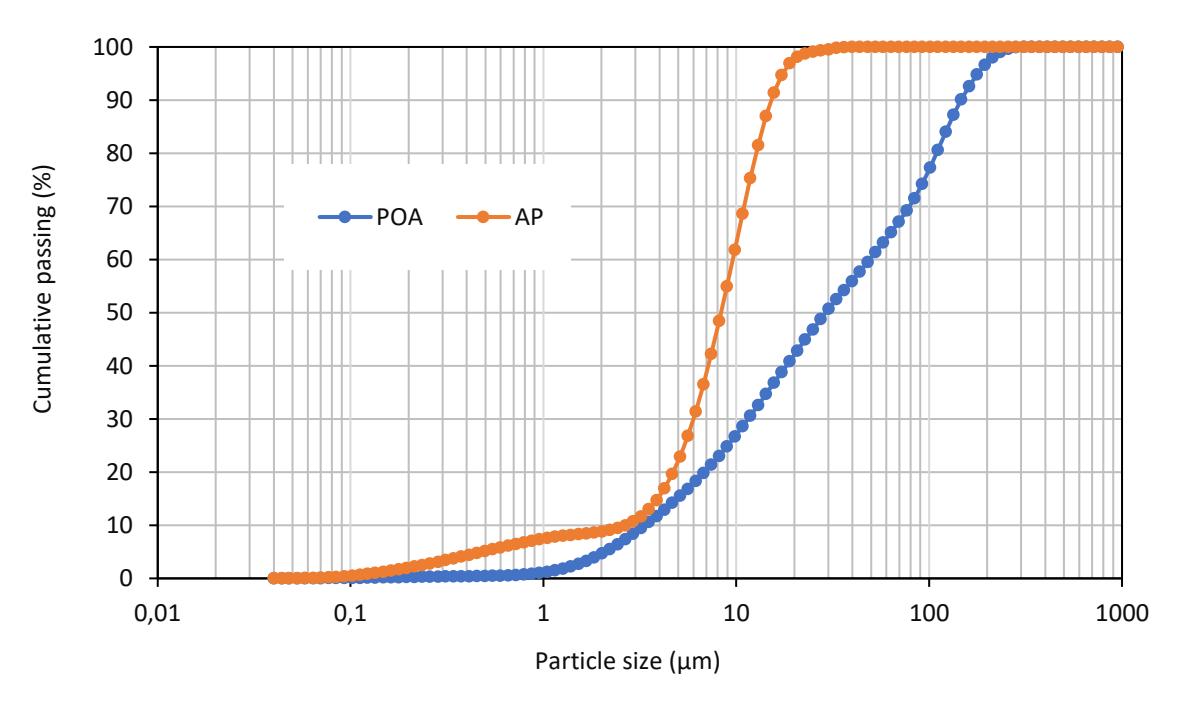
Particle size distribution of palm oil ash and alumina powder.
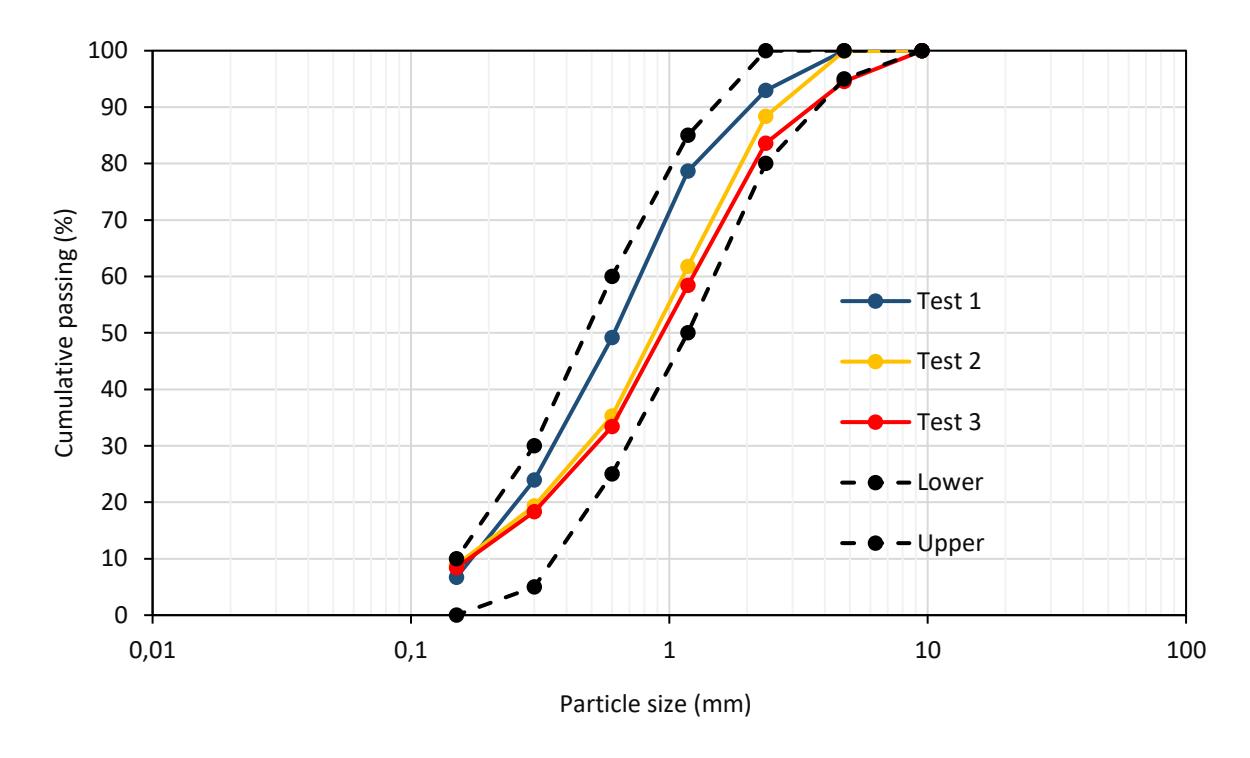
Particle size distribution of palm oil clinker.
Preparation and mix proportions
The mix proportions of the geopolymer mortars were an alkaline-to-binder ratio of 0.6, a water-to-binder ratio of 0.5, and a sodium hydroxide to sodium silicate ratio of 1:2.5 by weight. Six mixture samples were prepared with varying AP contents at ratios of 0%, 2.5%, 5%, 7.5%, and 10% by weight of binder. The mix proportions are shown in Table 2 (Hawa et al., 2023). The preparation of the geopolymer mortars involved four steps (Figure 3). First, the POC and binder were hand-mixed for 3 minutes. Second, sodium hydroxide, sodium silicate, and water were combined to form a homogeneous alkaline activator. The alkaline activator was introduced into the solid materials (aggregate + binder) from the initial step and stirred for 3 minutes. FPRL was then added to the mortar samples and mixed for 5 minutes. Following the compaction procedure specified in ASTM C109/C109M (2016), the fresh geopolymer mortar was poured into 50x50x50 mm molds for setting and hardening before undergoing compressive strength and water absorption testing. The samples were cured at an ambient temperature of 30±2 ºC for 24 hours before they were removed from the molds and stored at room temperature for 1, 7, and 28 days for further examination. The geopolymer blocks of 70×390×190 mm, were prepared with 3 and 5 channels with channel widths of 2 and 4 mm. The channels were filled with field Para rubber latex to evaluate the thermal insulation properties of the geopolymer blocks.
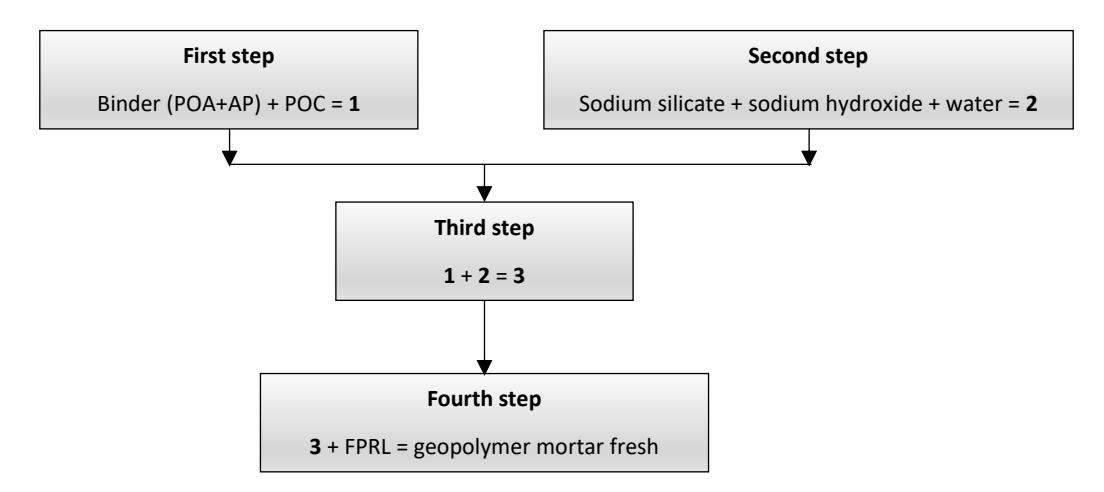
Flow chart of the geopolymer mortar preparation method.
| POA | FPRL | AP | SS | SH | |||
|---|---|---|---|---|---|---|---|
| Samples | 206.2 | 123.66 | Water | POC | |||
| CT | 195.89 | 10.31 | 0 | 88.33 | 35.33 | 103.10 | 567 |
| 2.5A | 190.73 | 10.31 | 5.15 | 88.33 | 35.33 | 103.10 | 567 |
| 5A | 185.58 | 10.31 | 10.31 | 88.33 | 35.33 | 103.10 | 567 |
| 7.5A | 180.42 | 10.31 | 15.46 | 88.33 | 35.33 | 103.10 | 567 |
| 10A | 175.27 | 10.31 | 20.62 | 88.33 | 35.33 | 103.10 | 567 |
Table 2 Mix proportions of geopolymer mortars (by 1,000 g).
Experimental program
The geopolymer mortar samples were tested for bulk density, compressive strength, water absorption, and thermal storage.
Compressive Strength Testing: The compressive strength of the geopolymer mortars was assessed using 50×50×50 mm cubes, following the guidelines outlined in ASTM C109/C109M (2016), at 1, 7, and 28 days. The test involved applying a force to a geopolymer mortar cube using a Universal Testing Machine (UTM, model 50-C92C22) with a maximum capacity of 600 kN. The loading rate was set at 2.225 kN/s until the cube failed.
Bulk density: The density of the geopolymer mortars was ascertained by weighing the samples on the day of testing before conducting the compressive strength tests. At the 28-day mark, three samples were measured for each mix proportion to determine the density. The density was calculated by dividing the weight of the samples by their volume, and the average density was computed.
Water Absorption: Water absorption involves the uptake of moisture from the environment to fill the void spaces within the geopolymer mortar matrix, with porosity quantified as the number of pore spaces in the samples. Testing was conducted on hardened geopolymer mortars after 28 days of curing at an ambient temperature of 30±2 ºC. The initial constant weight was recorded as "Wage." The mortar samples were then submerged in water for 1, 6, 12, and 24 hours at room temperature. Following each specified period, the mortar specimens were removed from the water and their cube surfaces were dried using a towel. The weights were recorded as "Wss". The water absorption (Wap) was calculated using Eq.(1).
\[W_{ap}(\%) = \frac{W_{ss} - W_{age}}{W_{age}} \times 100 \tag{1}\]
Thermal storage: The thermal storage test was conducted using a heat-insulated box constructed with foam (Figure 4). The insulation box (800×1600×750 mm), was equipped with a 1500 Watt spotlight (as a heat source), as shown in Figure 4.
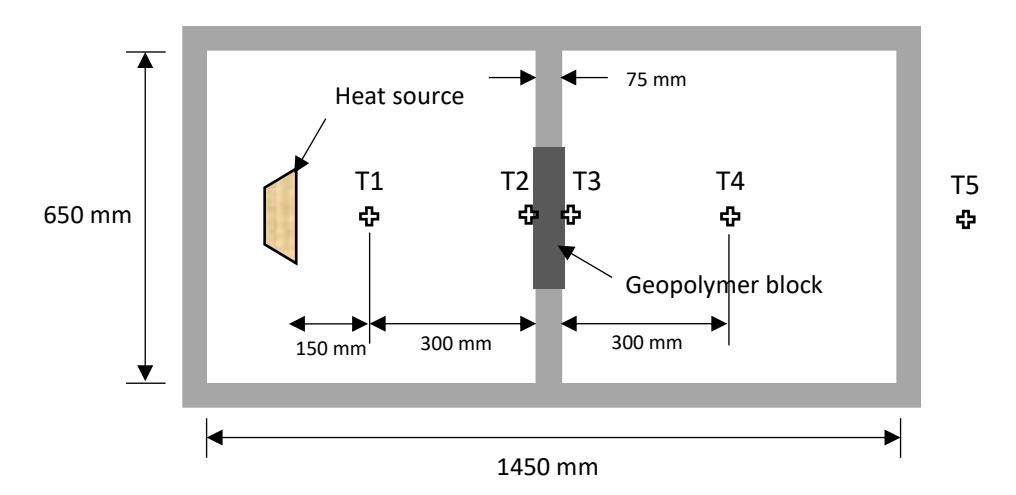
Heat-insulated box.
Geopolymer blocks measuring 70×390×190 mm (Figure 5) were cast. Five thermocouples were installed; four were embedded inside the heat-insulated box, while the last thermocouple (T5) was placed outside the box to measure changes in room temperature. The thermocouples were positioned at five locations, with T2 and T3 directly affixed to the surface of the geopolymer blocks to ensure direct contact. A foam lid 75 mm thick was used to seal the box, and plastic tape was applied to secure the seams tightly. The spotlight was then turned on and temperature measurements were taken using a temperature data logger (model BTM-4208SD). Temperature changes were automatically measured and recorded every 10 minutes.
Geopolymer block samples. (a) 3 channels, (b) 5 channels, (c) 3 channels insert with FPRL and (d) 5 channels insert with FPRL.
Results
Compressive Strength
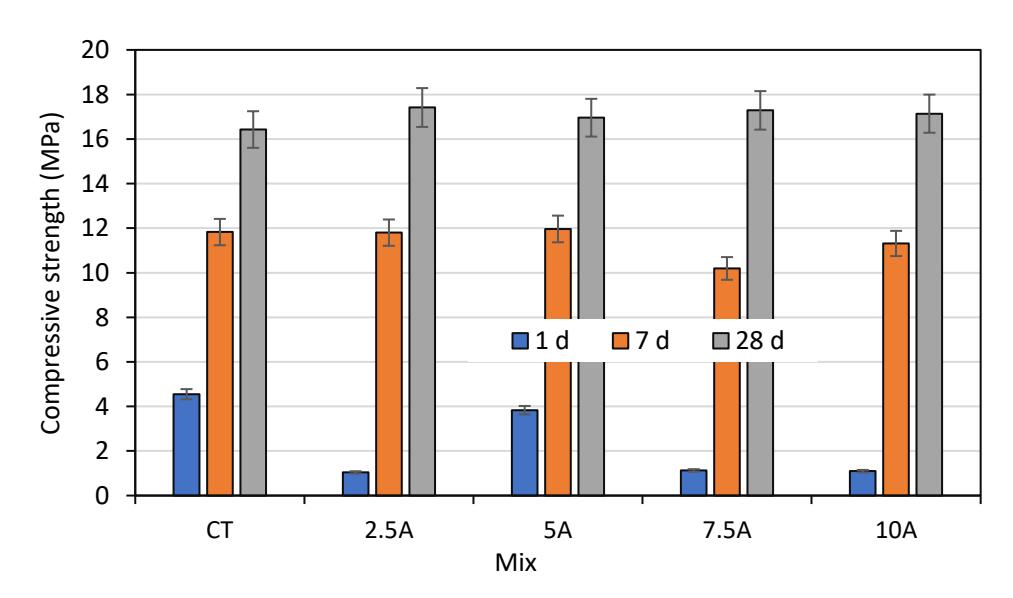
The compressive strengths of the palm oil ash geopolymer containing 5% FPRL with varying amounts of AP (0% to 10% by weight) are presented in Figure 6.
Effect of alumina powder on compressive strength.
Testing, following Hawa et al. (2023), showed that the 5A geopolymer sample achieved the highest compressive strength at 7 days, while all the samples exhibited changes in strength at 28 days. The amount of AP added had minimal influence on the compressive strength of the geopolymer binder made from palm oil ash, and the inclusion of FPRL was the dominant factor affecting strength. Adding 5% FPRL enhanced early compressive strength because the rubber particles in the latex filled the voids within the geopolymer matrix.
Bulk Density
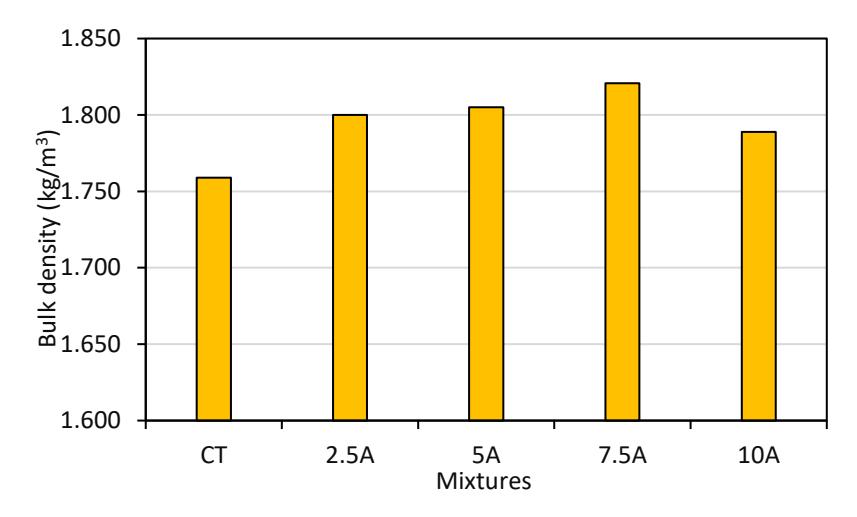
Figure 7 shows the bulk density of the mortar samples after 28 days for various percentages of AP under ambient curing conditions. The higher specific gravity of AP (>3.5) increased the bulk density of the geopolymer mortars when used to replace POA. However, at more than 7.5% replacement the bulk density decreased, due to the 7.5A and 10A samples experiencing drying because AP possesses a higher specific surface area (SSA) and fineness compared to POA. The bulk density values for all the mixtures ranged between 1,759 and 1,821 kg/m³.
Effect of alumina powder on water absorption.
Water Absorption
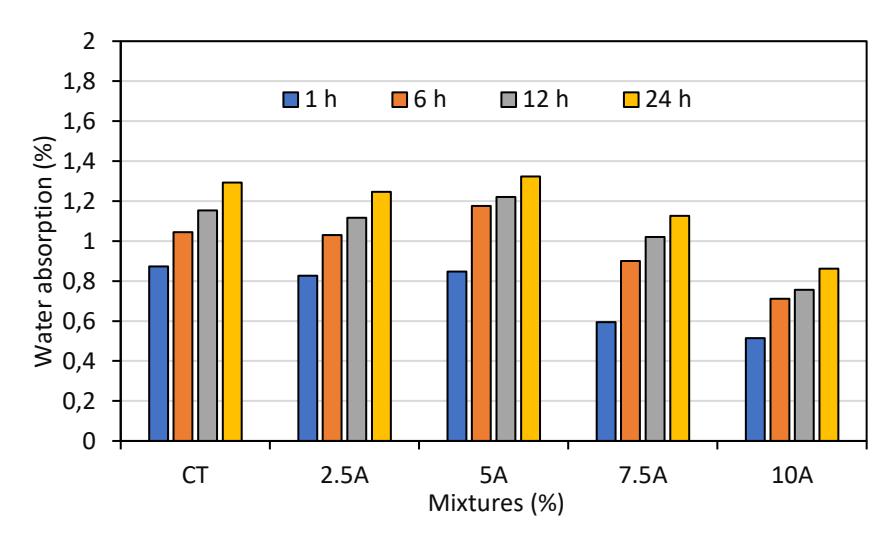
Figure 8 shows the water absorption behavior of the geopolymer mortars with AP substitution levels ranging from 0% to 10%. Water absorption increased for all the mixtures with longer submersion times at ambient temperature because the samples had more time to absorb water into the matrix. Water absorption decreased as the AP content increased, particularly in samples containing 7.5% and 10% AP because the finer AP particles filled the pores and cavities within the geopolymer matrix.
Effect of alumina powder on water absorption.
Thermal Properties
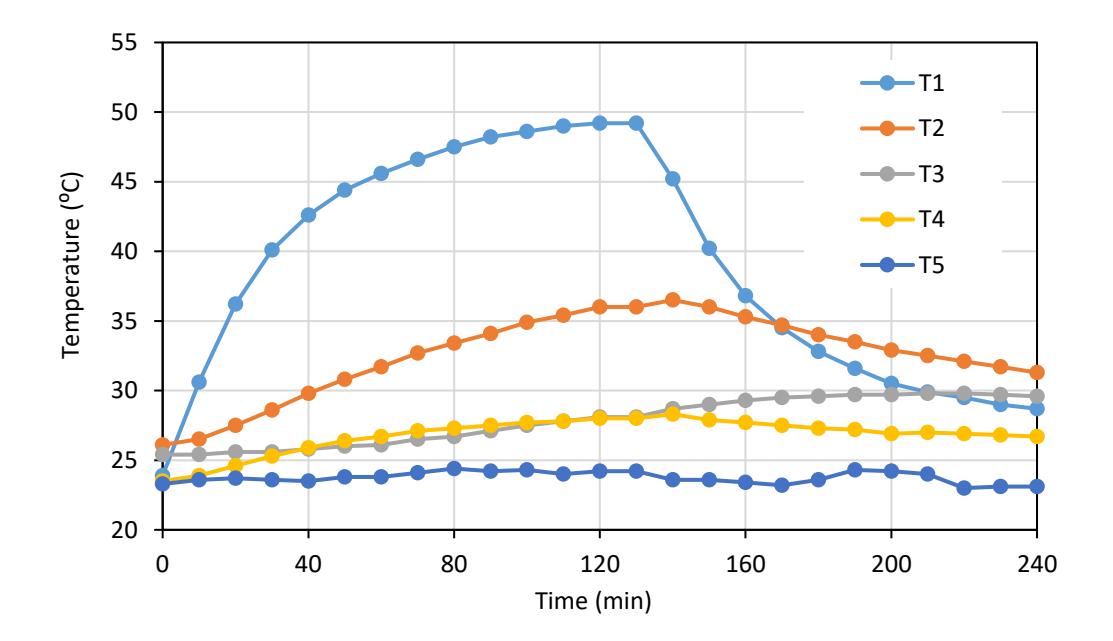
The heat resistance capability of the geopolymer CT sample was compared to the cast geopolymer in various forms. A typical temperature-versus-time curve for the 5C2T-L sample is illustrated in Figure 9. The pattern of temperature changes between the heat bank and the normal bank (refer to Figure 4) at different time intervals before and after reaching the peak temperature were discussed. Heat was applied to the geopolymer blocks for up to 120 minutes and the temperature assessment was conducted for a total duration of 240 minutes.
Temperature at five positions on the geopolymer block.
Temperature Change
Effect of channel
The test results (Figure 10a-g), show the temperature variations at different locations on each geopolymer block over time. In Figure 10a, the commercial block was subjected to temperature testing at various points. After 30 minutes of heating, location T3 recorded a temperature reduction of 2.9 ºC (9.8%) compared to T2. This difference increased after 120 minutes, with T2 experiencing a marked temperature rise while T3 showed only a slight increase, suggesting that larger channel widths in the commercial block better inhibited heat flow. All the geopolymer blocks, regardless of configuration, demonstrated superior heat protection compared to commercial blocks, particularly during the 120 minute heating period. This improved performance was attributed to the porosity of the palm oil clinker aggregate, which reduced heat flow between T2 and T3. The thermal insulation values for geopolymer blocks with different channel configurations (3C2T, 3C4T, and 5C2T) gave 15.3%, 18.2%, and 21.3% reductions, respectively with the highest insulation observed in the block with five channels. Blocks with larger channel widths (4 mm) were more effective at retaining and transferring heat than those with smaller channel widths (2 mm).
Effect of with and without field Para rubber latex insert
Figure 10(c), e, and g, shows the temperature changes in geopolymer blocks with FPRL inserted into the channels. The insertion of FPRL reduced the thermal protection provided by the blocks. The 3C2T-L sample (with FPRL) exhibited lower thermal insulation compared to the 3C2T sample (without FPRL), while the 3C4T-L sample also showed significantly lower thermal protection than its counterpart without FPRL. This effect was due to the moisture present in the FPRL matrix during testing, which conducted heat more efficiently than air-filled channels. In blocks with five channels, with and without FPRL, only slight temperature changes were observed, indicating that the number of channels played a dominant role in thermal performance.
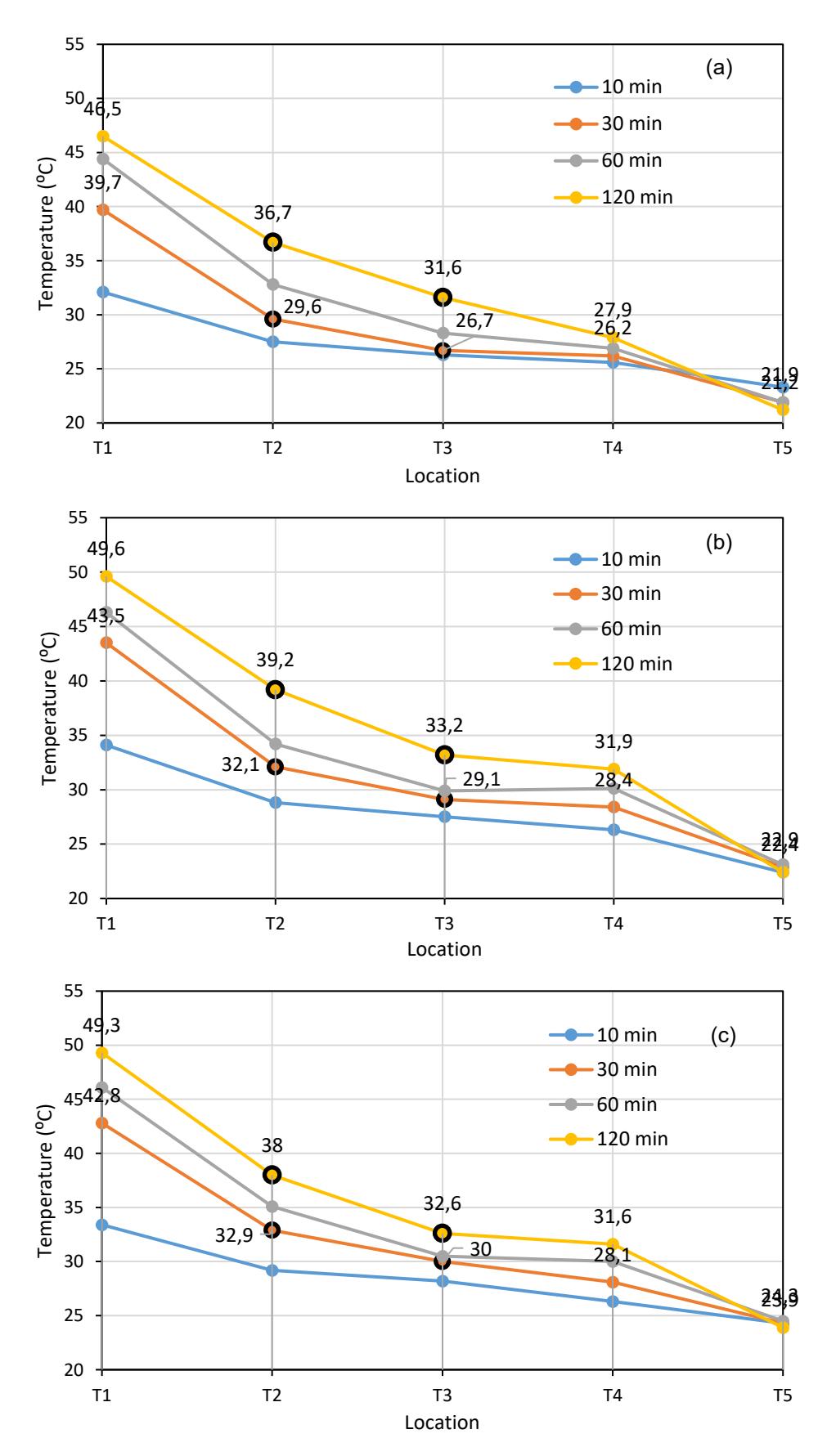
Temperature patterns at different positions (a) Block, (b) 3C2T, (c) 3C2T-L, (d) 3C4T. (e) 3C4T-L, (f) 5C2T, and (g) 5C2T-L.
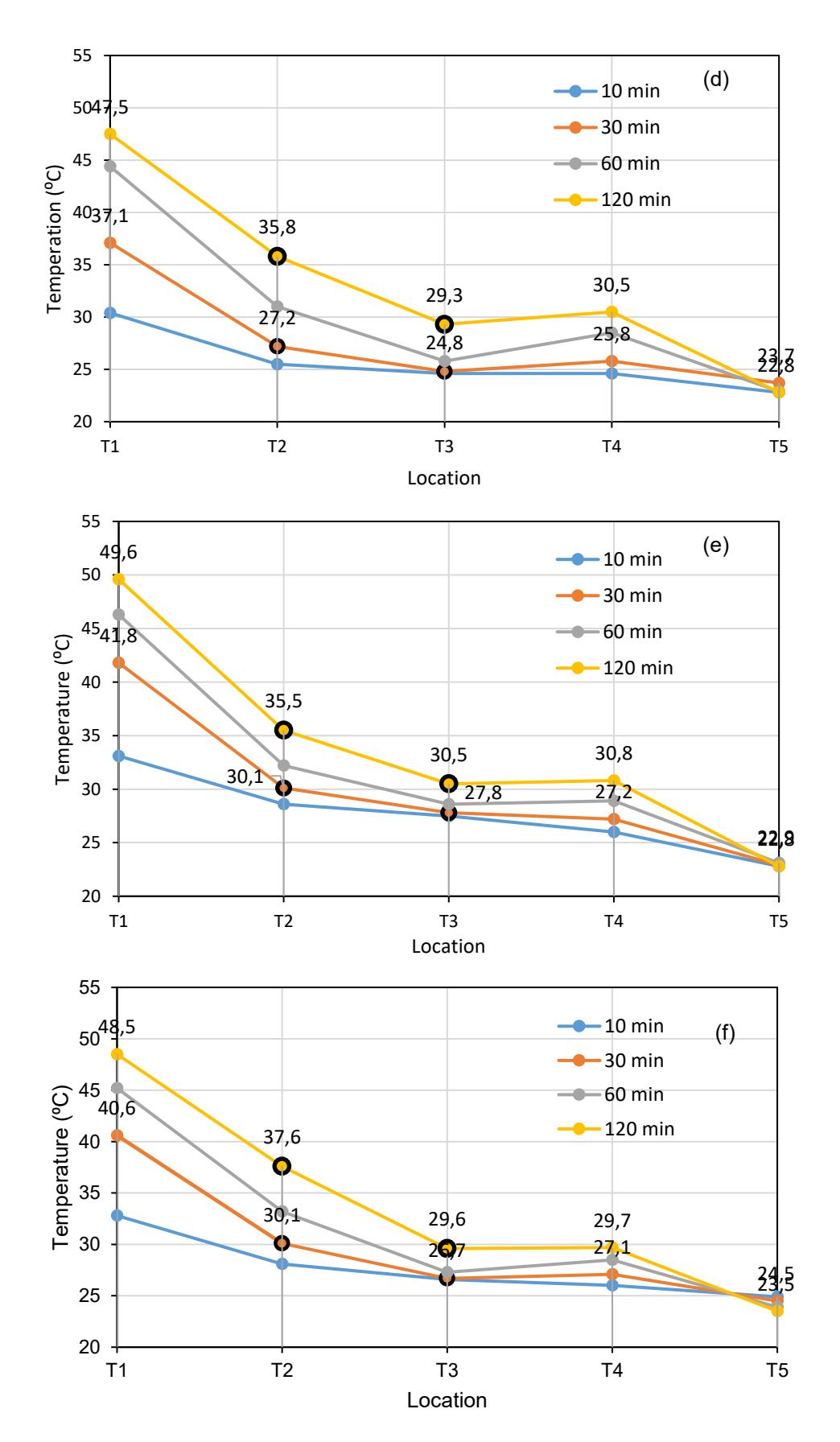
Figure 10 Continued. Temperature patterns at different positions (a) Block, (b) 3C2T, (c) 3C2T-L, (d) 3C4T. (e) 3C4T-L, (f) 5C2T, and (g) 5C2T-L.
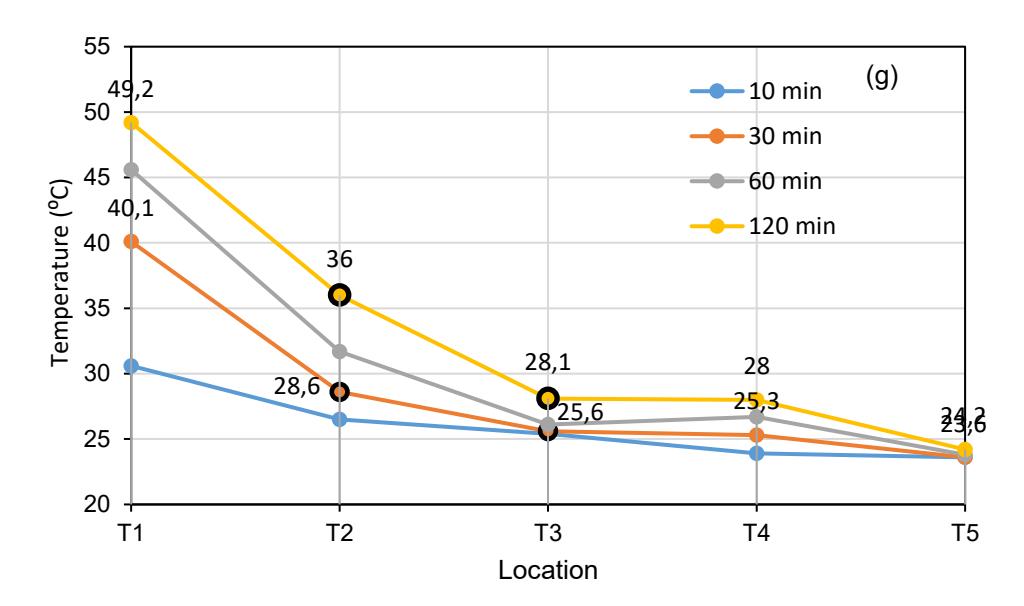
Figure 10 Continued. Temperature patterns at different positions (a) Block, (b) 3C2T, (c) 3C2T-L, (d) 3C4T. (e) 3C4T-L, (f) 5C2T, and (g) 5C2T-L.
The test results, as shown in Figure 11, compared the thermal insulation performance of geopolymer blocks with five channels (5C2T and 5C2T-L) to a commercial block and geopolymer block with 3 channels. The 5C2T and 5C2T-L blocks provided superior thermal protection, resulting in reduced energy consumption for cooling and contributing to a more comfortable indoor environment. This enhanced performance suggested that geopolymer blocks made with palm oil ash as a binder and palm oil clinker as the aggregate were particularly suited for use in regions with hot climates.
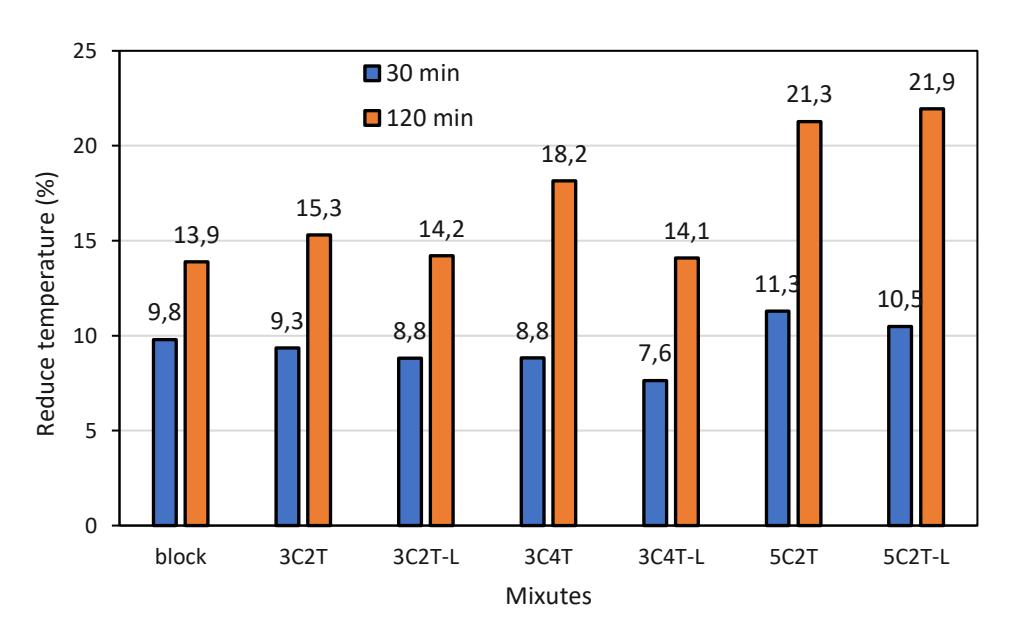
The temperature change of the geopolymer blocks between T2 and T3..
Discussions
Physical and mechanical properties
The increased block compressive strength observed in the first 7 days was attributed to the physical void-filling effect of the latex rather than its participation in chemical reactions. After 7 days the rate of strength gain reduced, supporting the idea that latex primarily acted as a filler. Hawa et al. (2020) reported that fly ash geopolymer with 5% FPRL achieved compressive strengths of 9.65 MPa at 7 days and 11.27 MPa at 28 days under heat curing, meeting the ASTM C129 (2017) requirements for non-loadbearing masonry units. Rahman et al. (2014) found that masonry blocks with palm oil ash as partial cement replacement reached compressive strengths between 6 and 16 MPa, depending on the mix ratio, suitable for masonry applications. However, Detphan et al. (2021) noted that palm oil ash geopolymers alone had lower strength due to slow reaction rates at ambient temperature and high K2O content, which prolonged setting time. The addition of fly ash improved strength development, particularly in mixes with 60% FA compared to those with 100% POA.
These results concurred with previous studies. Darvish et al. (2020) reported that geopolymers made from POA aggregates with varying NaOH molar ratios exhibited bulk densities between 1,710.4 and 1,753.7 kg/m³. The bulk density of concrete between 900 and 2,000 kg/m³ is classified as lightweight concrete (LWC). This is an important property because it can be produced from recycled and industrial waste materials, which supports energy efficiency and sustainability. Hawa (2022) reported that the use of palm oil clinker as a fine aggregate in geopolymer mortars with varying curing conditions resulted in a bulk density ranging from 1,853 to 1,911 kg/m³ at 28 days. The results showed that the material selection and curing conditions significantly affected the bulk density, which in turn affected the geopolymer application.
Water absorption is important for the durability of blocks and bricks. However, the ASTM C129 (2017) standard does not establish a maximum water absorption limit for non-load-bearing concrete masonry. However, the standard of ASTM C90 (2016) establishes a limit of 14% for loadbearing concrete blocks with density ranging from 1,680 to 2,000 kg/m³. The results of this study demonstrated that the water absorption rates of geopolymer binders produced with palm oil ash and palm oil clinker as aggregates were significantly lower than the standard. This suggests that the binders are more durable and suitable for construction applications, where low water absorption is desired.
Thermal properties
According to the results it was found out that substantial addition of thermal insulation was due to the number of channels (holes) as well as size of channels in blocks of geopolymers. The transmission of temperature of block samples was also minimized due to the unhappened and stored heat owing to the increased void fraction due to the use of more or bigger channels. This pattern corresponded to the case of Singh et al. (2021), who stated that the thermal conductivity of geopolymer blocks that were foam-injected was low because of high rates of voids. As Sassine et al. (2020) explained, block samples consisting of longitudinal channels (holes), could become a considerable decrease in internal temperature transmission. Thermal insulation was highest in this study by the geopolymer block that had five channels which was due to the increased channels of heat storage and resistance in the channels. The concept design of various channels in geopolymer blocks can be used to effectively improve thermal insulation characteristics of the channel, and thus can be used in energy safe building works with its effectiveness already proven to be effective in insulating buildings of bigger channels.
The findings showed that channel type including aggregate and channel structure had a greater effect on regulating heat flow even though the insertion of the FPRL could destabilize thermal insulation, especially when the FPRL is not thoroughly dry. Figure 11 confirmed the results that geopolymer blocks using palm oil clinker (POC) as an increase in the matrix porosity due to the inclusion of lightweight aggregate was more effective at intercepting heat transfer than normal aggregate. Sukontasukkul et al. (2016) reported that lightweight aggregate improved thermal insulation and heat storage in geopolymer panels, and Zhang et al. (2015) showed that lower-density geopolymers with higher porosity exhibited reduced thermal conductivity. Therefor, channel design and aggregate selection is important for the thermal insulation properties of geopolymer blocks.
These findings concurred with previous research. Detphan et al. (2021) found that geopolymers made solely from palm oil fuel ash could not be assessed for thermal conductivity but when combined with fly ash and cement they exhibited thermal conductivities between 0.551 and 0.647 W/m·K—lower than traditional clay bricks. They concluded that nonload-bearing masonry units made from palm oil ash-based lightweight geopolymer concrete with fly ash and cement
minimized daily temperature fluctuations in wall sections. The current research is distinctive in its use of a heat source capable of producing temperatures in degrees Celsius for thermal insulation evaluation, setting it apart from earlier studies. Our results suggested that geopolymers made entirely from palm oil fuel ash including sand aggregates and palm oil clinker offered superior thermal insulation compared to conventional clay bricks and standard concrete blocks, making them a promising material for energy-efficient construction.
Conclusion
This paper proposed the use of palm oil ash as a binder and palm oil clinker as a fine aggregate, based on the concept of solid waste recycling, to produce environmentally friendly geopolymer blocks. Geopolymer blocks exhibit excellent thermal insulation properties and good strength due to their structural characteristics and material properties. This study investigated the compressive strength and thermal insulation of geopolymer blocks. The geopolymer blocks exhibited average compressive strengths ranging from 16.7 to 17.6 MPa, indicating strong performances that exceeded the Thai industrial standard minimum strength for hollow non-loadbearing concrete masonry units. All the geopolymer blocks demonstrated improved heat protection compared to conventional concrete blocks at 120 min. Geopolymer blocks with five channels gave 7.4 - 8% more effective heat protection than conventional concrete blocks. For geopolymer blocks with 4 mm width air channels, thermal insulation performance improved by 2.9% compared to blocks with 2 mm width air channels. Geopolymer blocks with five air channels arranged in two rows exhibited 6% and 7.7% better thermal insulation performance than blocks with three air channels in a single row for samples with and without field Para rubber latex, respectively. Our study results hold significant importance for energy-efficient construction. Reducing heat transfer through building envelope materials is critically important in tropical climates to lower air conditioning energy costs in residential and commercial structures.
Acknowledgments
The authors sincerely appreciate the financial support from Thailand Science Research and Innovation (TSRI) and the facility access provided by the Infrastructure and Materials Innovation Research Unit and the Department of Civil Engineering at Princess of Naradhiwas University.
Compliance with ethics guidelines
The authors declare they have no conflict of interest or financial conflicts to disclose.
This article contains no studies with human or animal subjects performed by authors.