

1 Introduction
Games and game technology are aimed to transform the way we educate and train students at all levels. Education and information, skill training, even political and religious beliefs can be communicated via video games. Somehow, these games and repurposed game technology, collectively called "serious games," have yet to be fully embraced by educators [1]. It means that not every educator is aware of the existence and advantage of serious game.
From previous research, we know that the serious game support the education process. Marsh, et al. [2] and Clark [3] stated that serious game is learning
Received September 30<sup>th</sup>, 2010, Revised June 15<sup>th</sup>, 2011, 2<sup>nd</sup> Revision July 9<sup>th</sup>, 2011, Accepted for publication October 15<sup>th</sup>, 2011.
Copyright © 2011 Published by LPPM ITB, ISSN: 1978-3086, DOI: 10.5614/itbj.ict.2011.5.3.3
through games which contain pedagogical aspects and is part of e-learning tools/media [4],[5],[6]. Clark [3], Arnseth [7] and Smith [8] further states that learning method using game is better then the conventional one since animations of learning material in game activates students' long term memories.
Serious games, like every other tool of education, must be able to show that the necessary learning has occurred. Specifically, games that teach also need to be games that test. Fortunately, serious games can build on both the long history of traditional assessment methods and the interactive nature of video games to provide testing and proof of teaching [1]. In other words, we can say that serious games should be reliable as a teaching aid as well as an assessment device.
In contras, Clark [9] in Evaluating the Learning and Motivation Effects of Serious Games explains that the tests of learning are often unreliable and invalid. Learning cannot be measured by self report, because there is an opportunity to manipulate data. In this research we propose the Cognitive Skill Game (CSG) to eliminate the data manipulation of learning tests in serious games. CSG is a model of indirect measurement of cognitive levels. CSG is a players' cognitive characteristics measurement by observing the players' cognitive behavior. The value of cognitive behavior can be taken from the indicators that appear when a game takes place.
On the other hand, game learning has an inverse relationship with learning test in many instances. Clark [9] gives details, pedagogy in games is often based on unguided discovery such as; minimal guidance and only high skill works, overwhelming discovery evidence without any assistance for beginners/novices learners [10],[11], discovery technique design and some game cause memory overwork and decrease the learning process [12].
Overload will not occur if the level of cognitive skill players is controlled. Inal, & Cagiltay [13] explain the research of Csikszentmihalyi who emphasized the balance between an individual's skills and difficulties of tasks. He theorizes that the occurrence of flow experiences depends on this balance, and that if the balance does not exist between the individual's skills and the task, flow experiences will not occur. It is because heavier duty will cause faster frustration while too easy challenge will cause faster boredom. Typical assessments are likely to disrupt flow experience in immersive games. Thus there is a need for embedded assessments that would be less obtrusive and hence less disruptive to flow experience [14].
Proper classification of cognitive skills can be used to control the level of difficulty of the game. Providing an appropriate level of difficulty to the level of cognitive skill in a game scenario will balance the emotions of players. We can not provide an appropriate difficulty level of task if the cognitive skills of players are unknown. CSG is used to cluster cognitive skill process when the player is playing the serious game.
In previous studies, researchers have suggested the cognitive architecture and cognitive model [15],[16]. CBR (Case-Based-Reasoning), as conceptualized in rule-based classification and similarity-based classification, is the technical counterpart of psychological exemplar-based reasoning [16]. Conde & Thalmann [16] propose the concept of a Learning Unit Architecture that function as a control unit of the AVAs' brain (Autonomous Virtual Agents). Both [15],[16] are Non Player Character (NPC) agent, the cognitive skill of which are applied into behavioral animation and machine learning agent. CSG improves this cognitive concept to monitor how players interact with the game. In other studies, Conati & Klawe [17] proposed SIAs (Socially Intelligent Agents) architecture to support Game-Based Collaborative Learning. These agents are active game characters that can generate tailored interventions to stimulate students' learning and engagement by taking into account the student's cognitive states, as well as the student's meta-cognitive skill and emotional reaction. But do not involve elements of teachers' values in the calibration of cognitive.
Based on previous research [15],[16],[17], this project presents two original contributions that make this approach generic in serious game. The first contribution is proposes a method for embedding assessments in immersive games to reveal the behavior of player's cognitive skills. The second contribution is a complementary the serious game with embedded sensitivity of teachers to classification the cognitive skill.
In an ongoing global research, we will construct the pedagogic engine for all game which is called game pedagogic (shown in Figure 1.). The purpose of this research is to give a new alternative to know the players' cognitive skill. CSG is a part of pedagogic game, which is a model of cognitive measurement on a serious game. CSG can support the decisions of pedagogic game engine to give a reward or warnings to the player when the serious game is being played. The game engine will provide the appropriate tasks according to players' ability. CSG will help balance the emotions of players, so players do not get bored and frustrated. The balance emotion of the players strongly supports the procedural learning in a serious game.
CSG is Pedagogic Player Character (PPC) based on artificial intelligent agent. CSG can forecast the cognitive character of players. Learning Vector Quantization (LVQ) method is used in CSG. LVQ is used to classify players' the cognitive level. The teachers' data are neuron vector to use in learning or supervising data in LVQ method. Three multi objective classifications in CSG are; trial and error, carefully, and expert cognitive skill. In this research, students are respondent players demonstrates.
2 Cognitive Skill Game
Empirical studies have shown that although video and computer games are usually highly engaging and they have the potential educational tools, they often do not trigger the constructive reasoning necessary for learning. Conati & Klawe [17] have a preliminary architecture (SIAs architecture) to improve the effectiveness of collaborative educational game. The architecture relies on the usage of socially intelligent agents that calibrate their interventions by taking into account not only the students' cognitive state, but also their emotional states and the unfolding of collaborative interactions within the game. They have presented a preliminary architecture based on Bayesian networks and influence diagrams. However, they have not explained the methods used to detect level of cognitive players' ability.
In several ongoing studies, Conde & Thalmann [16] introduce AVA learning in which an AVA automatically learns an unknown cognitive model. They have developed a novel technique to achieve AVA learning using a tree search with a k-nearest neighbors (k-NN) method. Whereas, Bosch, et al. [15] argued that in variety of cognitive task rule-based classification and similarity-based classification mechanisms interact. They discussed several examples from Cognitive Psychology, AI and Semantics.
In addition to the development of cognitive research in the game [1],[2],[3],[4],[5],[6],[7],[8],[9],[10],[11],[12],[15],[16],[17], there are also some researchers use LVQ method for data classification in game [18],[19],[20],[21]. CSG based on two phenomena (cognitive game and LVQ in game) are developed.
The CSG position in pedagogic game engine is shown in Figure 1 by the block with dark color. Two important parts of the game pedagogic engine are; i) artificial intelligent pedagogic and ii) autonomous pedagogic. The artificial intelligent pedagogic is used to observe the behavior of the players. There are four behaviors observed, including; i) players' motivation, i) players' cognitive, iii) players' time response, and iv) mistake goal of players. Autonomous pedagogic will provide a response to the behavior patterns of the players by providing feedback in the form of task and guidance automatically.
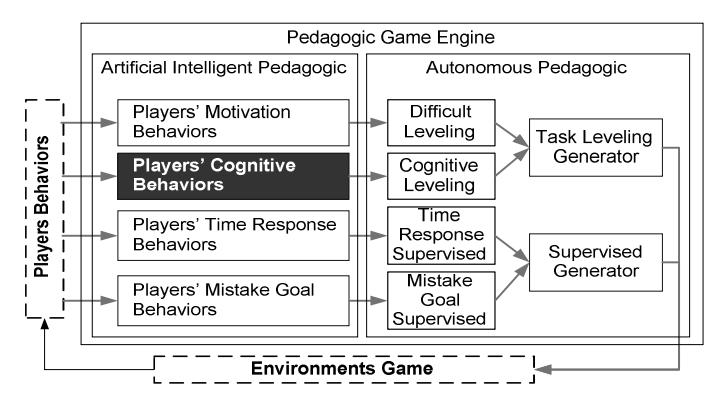
Figure 1 Pedagogic game engine structure.
CSG is a game that measures the level of players' cognitive process-based. This gives more emphasis on the achievement level of ability, for example; calculating the number of correct and incorrect items, and the competence by considering the weight of error, truth, and cancellation. The weakness of the measurement-based results is not considering players' characteristics of the action in completing the mission in the game. Players' game characteristics are in the forms of cognitive skills in the process.
The result of the cognitive skill classification is used to classify the cognitive level of task in game engine. The method of cognitive leveling in game engine is using the algorithm which will adapt the cognitive skill classification. The accuracy of classification results will determine the accuracy of the game engine to provide the appropriate level of difficulty of the task in the task level generator. CSG supported achievement balance between an individual's skills and difficulties of tasks. CSG can prevent boredom and frustration.
CSG is divided into three parts, namely; high cognitive skill (expert), middle cognitive skill (carefully), and low cognitive skill (trial and error). Those parts have a tendency of multi-objective due to the parameters that appears from each contrasted indicator.
3 Design System and Method
Design system of CSG is illustrated in a classifier structure and modeling functions use the LVQ method.
3.1 Classifier Structure
CSG represented in a classifier structure is shown in Figure 2 and Table 1. Three elements of CSG structure are; i) Identify Players Behavior, ii)
Classification of Cognitive Skill Players and iii) Pattern of Cognitive Skill Players.
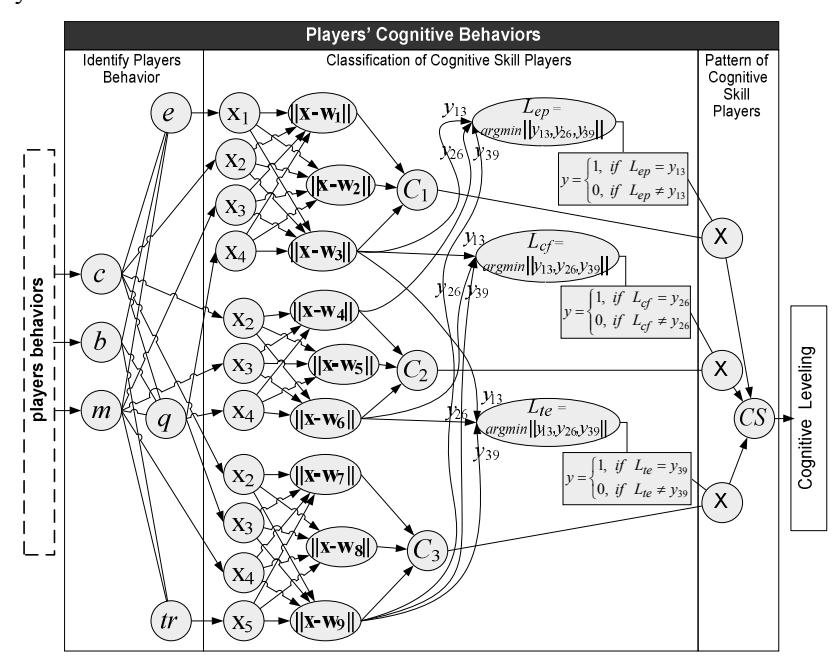
Figure 2 Classifier cognitive skill structure.
Table 1 Notation of classifier cognitive skill structure.
| Notation | Description | Notation | Description |
|---|---|---|---|
| С | Input from Players (Number of Uncertainty (cancel) / to Decline (escape)) | W2 | Weight vector of Semi Expert (\(\mathbf{w}_{j,ep}\) for \(j = 2\)) |
| b | Input from Players (Number of Correct Answers / Number of Victory in the Game) | W3 | Weight vector of High Expert \((\mathbf{w}_{j,ep} \text{ for } j = 3)\) |
| m | Input from Players (Number of Wrong / Lost) | \(\mathbf{W}_4\) | Weight vector of Low Careful (\(\mathbf{w}_{j,cf}\) for \(j = 1\)) |
| e | Value of Players Ability / Self Efficacy | \(\mathbf{w}_{5}\) | Weight vector of Semi Careful (\(\mathbf{w}_{j,cf}\) for \(j = 2\)) |
| q | Value of Players Pick Question / Playing the Game | \(\mathbf{w}_{6}\) | Weight vector of High Careful (\(\mathbf{w}_{j,cf}\) for \(j = 3\)) |
| tr | Value of Players Try to Answer / Try to Finish | \(\mathbf{w}_7\) | Weight vector of Low Trial and Error (\(\mathbf{w}_{j,te}\) for \(j = 1\)) |
| \(\mathbf{x}_1\) | Input vector of Self Efficacy / Ability (e) | W8 | Weight vector of Semi Trial and Error (\(\mathbf{w}_{j,te}\) for \(j = 2\)) |
| \(\mathbf{x}_2\) | Input vector of Uncertainty (cancel) / to Decline (escape) (\(c\)) | W9 | Weight vector of High Trial and Error \((\mathbf{w}_{j,te}\) for \(j = 3)\) |
| \(\mathbf{x}_3\) | Input vector of Wrong / Lost (m) | \(C_1\) | Class of Expert Level Classification \((C_{i,ep})\) |
| \(\mathbf{x}_4\) | Input vector Pick Question / Playing the Game (q) | \(C_2\) | Class of Careful Level Classification \((C_{i,cf})\) |
| X5 | Input vector Try to Answer / to Finish (tr) | \(C_3\) | Class of Trial and Error Level Classification \((C_{i,te})\) |
| \(||\mathbf{x}-\mathbf{w}_{\mathbf{n}}||\) | Distance between the input vector (x) and weight | y13 | Output of High Expert (ep3) |
| vector (wn) in competitive layer (hidden layer) | y26 | Output of High Careful (cf3) | |
| X | input vector ( \(\mathbf{x} = \{x_1, x_2 \dots x_5\}\) ) | y39 | Output of High Trial and Error (te3) |
| \(\mathbf{W}_{\mathbf{n}}\) | weight vector for the nth output unit | L | Cognitive Skill Type |
| \(\mathbf{w}_1\) | Weight vector of Low Expert (\(\mathbf{w}_{j,ep}\) for \(j = 1\)) | CS | Classification of CSG |
For example A is Cognitive Steps containing all skill contest with tests forms or all competitions items in the game. The number of skill contest (test) / competition (game) is \(A = \{b, m, c\}\). b, m, and c are players' parameter in playing the game. b is the number of correct answers in the tests or the number of victory in the game, m is the number of mistakes in the tests or the number of lost in the game, and c is the number of hesitation (failure) in the tests or step back (escape) from competition in the game.
\(tr = \{b, m\}\) is the condition when players try to answer a number of tests or try to finish all competition of CSG modeling which is also the indication of players' correct item/ victory and mistakes/ lost.
\[tr = \frac{b+m}{2} \tag{1}\]
\(e=\{0.5b.0.3m.0.2c\}\) is self efficacy or ability and also \(q=\{b.m.c\}\) is the number of picking up questions from all of tests or playing all competition in the game. that is the content of players' characters in mistakes, correct items, and doubts in game.
\[e = 0.5b + 0.3m + 0.2c \tag{2}\]
\[q = \frac{b + m + c}{3} \tag{3}\]
Three domains CSG are; i) trial and error domain, ii) carefully domain and iii) expert domain. \(q \in te\), \(tr \in te\), \(te = \{\{b,m,c\},\{b,m\},m,c\}\) is trial and error domain which contains picking up question, trying to answer, mistakes, and uncertainty. \(q \in cf\), \(cf = \{\{b,m,c\},m,c\}\) is carefully domain which contains picking up question mistakes, and uncertainty. Whereas, \(q \in ep\), \(e \in ep\), \(\text{[rumus tidak dapat ditampilkan dengan baik — lihat PDF asli]}\)0.2c, m,c is expert domain which contains picking up question, self efficacy, mistakes, and uncertainty. To classify this domain is using LVQ method.
L=(s,j) is CSG representative, s is the notation of three domain in CSG, and j is three level in every domain. L has nine probability out comes, those are; i) low trial and error, ii) semi trial and error, iii) high trial and error, iv) low carefully, v) semi carefully, vi) high carefully, vii) low expert, viii) semi expert and ix) high expert.
LVQ Method 3.2
Many methods can be used for classifying data. Learning Vector Quantization (LVQ) is the data classification method used in this research. LVQ is supervised Artificial Neural Network (ANN) using competitive learning method developed by Kohonen, et al. [22], used in guided training from layers in ANN competition. Competitive layers will automatically learn to improve the classification of input vector performance periodically. When some input has very close distance vectors, those vectors will be grouped in the some class.
\[\mathbf{c} = \arg\min \left\| \mathbf{x} - \mathbf{w}_i \right\| \tag{4}\]
The algorithm of LVQ includes learning and recalling processes. In the learning process, in order to achieve accurate classification, Euclidean distance \((D_i)\) was utilized as a basic rule of competition [23].
\[D_{j} = \left\| \mathbf{x} - \mathbf{w}_{j} \right\| = \sqrt{\sum_{i} \left( \mathbf{x}_{i} - \mathbf{w}_{ij} \right)^{2}}\] (5)
LVQ is used to classify data of input vector in CSG into three clusters. The input vector of LVQ is the weight of variables in CSG, namely; weight of trying to answer, picking up questions, competency, errors, and cancellation. The outcome of LVQ are three clusters of cognitive skill data type, namely; trial and error (te), careful (cf) and expert (ep) cognitive skill with three levels of clusters each. Those levels are high, middle and low cognitive skill.
\[\mathbf{x}_{2,te} \iff c, \mathbf{x}_{3,te} \iff m, \mathbf{x}_{4,te} \iff q, \mathbf{x}_{5,te} \iff tr\] \[te_{j} = \sqrt{\sum_{i} (\mathbf{x}_{i,te} - \mathbf{w}_{ij,te})^{2}}\] \[(6)\]
\[C_{j,te} = \arg\min \left\| \mathbf{x}_{te} - \mathbf{w}_{j,te} \right\| \tag{7}\]
\(te_j\) is the value of trial and error in CGS, and \(C_{j,te}\) is the classification of trial and error level. Three classes of trial and error are \(j = \{1,2,3\}\), in which; i) the value of j is equal to one at j,te for low condition of trial and error representation index, ii) semi trial and error index will be presented with j having value is two at j,te, and iii) three is value of j at j,te for index of high trial and error conditions. The variables q, tr, m and c for trial and error have weight (\(\mathbf{w}\)). The weight of te in j class is \(\mathbf{w}_{i,te}\).
\(cf_j\) is value of careful variable in CSG, \(C_{j,cf}\) is the classification of careful level. Three careful classes are \(j = \{1,2,3\}\) in which; i) j value which is one at j,cf is used as a representation index for low careful, ii) j which is two at j,cf is index for semi careful and iii) j which is three at j,cf is the index for high careful. The weight of cf in j class is \(\mathbf{w}_{j,cf}\).
\[\mathbf{x}_{2,cf} \Leftrightarrow c\] , \(\mathbf{x}_{3,cf} \Leftrightarrow m\) , \(\mathbf{x}_{4,cf} \Leftrightarrow q\)
\[cf_j = \sqrt{\sum_i (\mathbf{x}_{i,cf} - \mathbf{w}_{ij,cf})^2}\] (8)
\[C_{j,cf} = \arg\min \left\| \mathbf{x}_{cf} - \mathbf{w}_{j,cf} \right\| \tag{9}\]
\(ep_j\) is value expert variable in CSG in which \(C_{j,ep}\) is the classification of expert level. Three expert classes are \(i = \{1,2,3\}\) where; i) j which is one at j,ep variable is the index for low expert, ii) j which is two at j.ep is the index for semi expert, and iii) j which is three at j,ep is index for high expert. The weight of ep in j class is \(\mathbf{w}_{i,ep}\).
\[\mathbf{X}_{1,ep} \Longleftrightarrow e\], \(\mathbf{X}_{2,ep} \Longleftrightarrow c\), \(\mathbf{X}_{3,ep} \Longleftrightarrow m\), \(\mathbf{X}_{4,ep} \Longleftrightarrow q\)
\[ep_j = \sqrt{\sum_i (\mathbf{x}_{i,ep} - \mathbf{w}_{ij,ep})^2}\] (10)
\[C_{j,ep} = \arg\min \left\| \mathbf{x}_{ep} - \mathbf{w}_{j,ep} \right\| \tag{11}\]
Some researchers use the optimum method based on LVO [24],[25]. L is classification of CS optimum conditions. L is defined at three probability optimum conditions, namely; i) trial and error, ii) careful, and iii) expert. CS is the classification of CSG outcome that can be defined at nine probability optimum conditions, namely; i) high trial and error, ii) semi trial and error, iii) low trial and error, iv) high careful, v) semi careful, vi) low careful, vii) high expert, viii) semi expert, and ix) low expert.
\[L = \arg\min \|\{te_3, cf_3, ep_3\}\|\] (12)
\[CS = \begin{cases} C_{j,te}, & \text{if } L = te_3 \\ C_{j,cf}, & \text{if } L = cf_3 \\ C_{j,ep}, & \text{if } L = ep_3 \end{cases}\] \[(13)\]
L is considered as trial and error if high trial and error (\(te_3\)) value is smaller than high careful (\(cf_3\)) and smaller than high expert (\(ep_3\)) too, then CS is low trial and error if \(C_{ite}\) value is close to low trial and error value. CS is semi trial and error if \(C_{i,te}\) value is close to semi trial and error value and then CS is high trial and error if \(C_{i,te}\) value is close to high trial and error value.
The description of L is careful is when the value of high careful (cf3) is smaller than high trial and error (te3) and smaller than high expert (ep3) too. CS is low careful if Cj,cf value is close to low careful value, CS is semi careful if Cj,cf value is close to semi careful value, and CS is high careful if Cj,cf value is close to high careful value.
L is expert outcome probabilities which is obtained if the value of high expert (ep3) is smaller than high trial and error (te3) and smaller than high careful (cf3) too, then CS is low expert if Cj,ep value is close to low expert value. CS is semi expert if Cj,ep value is close to semi expert value, and CS is high expert if Cj,ep value is close to high expert value.
4 Experiment
We conducted a survey to twenty teachers to obtain three characteristic of cognitive skill. The aims of choosing teachers as the respondents is to get the ideal cognitive skill characteristics based on the assumption that teachers are the best cognitive skill evaluator. The other consideration is that teachers have the qualification as pedagogic assessors which is shown by their diplomas, certificates, and teaching experience. Therefore, teachers are reliable in determining the parameters of cognitive skill indicators.
The population is senior high school teachers that consist of two groups, twelve respondents are the math and science teachers, and eight respondents are the social teachers.
Teachers will give weight of the variable reference can influence the value of type (L) and class (C) of cognitive skills. Variable reference from teachers includes; pick questions (q), try to answer (tr), self efficacy (e), mistake (m), and cancels (c).
Parameters of cognitive skill characteristic value can be used as a cognitive skill reference. The reference of cognitive skill is the value of ideal cognitive skills. Values of the parameters in the cognitive skill reference data obtained from the classification of the teachers' survey data. Data of cognitive skill characteristic from teachers will be applied on learning rate of the LVQ cognitive skill pattern.
Populations of cognitive skill classification in this research are 33 pupils, including; 18 male and 15 female. The respondents are students in a senior high school. The ages of respondents are ranged from 16 to 19 years old. Respondents are used to test the CSG system. CSG base on LVQ will classify the students cognitive.
Value of b, m, and c is taken when students play the game. The variable of b, m, and c are players' characteristic of cognitive behavior. These variables are the input of CSG.
5 Results
5.1 Value of Cognitive Skills
CSG is embedded in sensitivity of teachers in the game. It is because CSG data training is taken from the teachers. The data observation from the teacher is ideal data that can be used as training data in LVQ method. LVQ training outcome is used as weight value reference of cognitive skill classification. Table 2 is the result of LVQ training (from data teachers) which includes; weight of pick questions (q), weight of try to answers (tr), weight of self efficacy (e), weight of mistake (m), and weight of cancels (c). The value of Table 2 is a reference weight value of cognitive skills in the CSG. The Table value is showing the character of cognitive skill reference which is in accordance with the players' character.
In Eqs. (6) and (7), the trial and error cognitive skill reference shows the weight of q in j class is w1 j.te 0.12,0.82,0.84, the weight of tr in j class is w2 j,te 0.12,0.80,0.79, the weight of m in j class is w3 j,te 0.12,0.82,0.82, and the weight of c in j class is w4 j,te 0.31,0.85,0.11.
| pick questions (q) | tray to answers (tr) | self efficacy (e) | mistake (m) | cancels (c) | class (C) | cognitive skill type (L) |
|---|---|---|---|---|---|---|
| 0.119625 | 0.124634 | - | 0.124744 | 0.310473 | low | |
| 0.821745 | 0.801989 | - | 0.822156 | 0.851593 | semi | Trial and Error |
| 0.840679 | 0.790841 | - | 0.822156 | 0.109681 | high | |
| 0.870272 | - | - | 0.87992 | 0.299464 | low | |
| 0.870449 | - | - | 0.88013 | 0.859627 | semi | Carefully |
| 0.8001 | - | - | 0.129553 | 0.860264 | high | |
| 0.859762 | - | 0.124506 | 0.879788 | 0.6648206 | low | |
| 0.110407 | - | 0.889593 | 0.119265 | 0.8791854 | semi | Expert |
| 0.131112 | - | 0.868888 | 0.120705 | 0.1207046 | high |
Table 2 Weight of cognitive skill reference.
In Eqs. (8) and (9), the careful cognitive skill reference shows the weight of q in j class is w1 j,cf 0.87,0.87,0.80, the weight of m in j class is w2 j,cf 0.88,0.88,0.13, and the weight of c in j class is w3 j,cf 0.30,0.86,0.86.
In Eqs. (10) and (11), the expert cognitive shows the weight of q in j class is w1 j,ep 0.86,0.11,0.13, the weight of e in j class is w2 j,ep 0.12,0.89,0.87, the weight of m in j class is w3 j,ep 0.88,0.12,0.12, and the weight of c in j class is w4 j,ep 0.66,0.88,0.12.
5.2 Cognitive Skill Classification
From Eqs. (6) until (13), it can be stated that, this research is a method implementation in game to know the three cognitive skill behaviors from 33 players (students), and three cognitive skill levels in each cognitive skill. Trial and error cognitive skill indicates low competency in playing a game. Carefully cognitive skill indicates good ability and expert cognitive skill shows players have high ability in game.
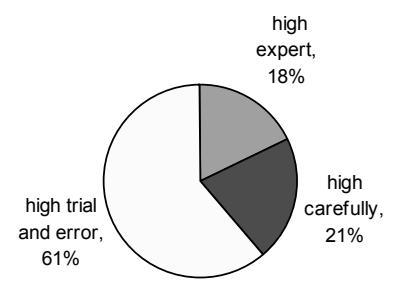
Figure 3 Classification of cognitive skill behaviors.
Sixty one percent players have high trial and error cognitive skill. Twenty one percent players have high carefully cognitive skill, while eighteen percent players have high expert cognitive skill.
5.3 Cognitive Skill Game Multiple Objective
The results of experiment are shown in Table 3. CSG is identified from the cognitive skills of 33 respondents.
CSG is representing the three cognitive skill references; those are trial and error, careful and expert cognitive skill references. This is the CSG multi objective. Player's performance will be strong in one cognitive skill references and weak in the other. The first objective is Expert (C1), the second objective is carefully (C2), and the third objective is trial and error (C3). Table 3 shows how the 33 respondents are multi-objective nature of each type of cognitive skills.
In this research, 33 respondents are playing the game to present CSG multiple objectives. 33 player's behavior shows multi-objective of trial and error, carefully and expert cognitive skill. Table 3 shows the results of experiments in
general. To facilitate observation, we perform weighting on the value of C1, C2 and C3.
Table 3 Results of experiments.
| ID respondent | expert class (C1) | carefully class (C2) | trial and error class (C3) | cognitive skill type | cognitive skill classification | % from all respondents | |||
|---|---|---|---|---|---|---|---|---|---|
| value weight value weight value weight | (L) | (CS) | |||||||
| 12 | high | 3 | high | 3 | low | 1 | carefully | high carefully | |
| 10 | high | 3 | high | 3 | low | 1 | carefully | high carefully | |
| 20 | low | 1 | high | 3 | semi | 2 | carefully | high carefully | |
| 2 | high | 3 | high | 3 | low | 1 | carefully | high carefully | 21% |
| 4 | semi | 2 | high | 3 | low | 1 | carefully | high carefully | |
| 17 | semi | 2 | high | 3 | semi | 2 | carefully | high carefully | |
| 33 | low | 1 | high | 3 | semi | 2 | carefully | high carefully | |
| 9 | high | 3 | high | 3 | low | 1 | expert | high expert | |
| 7 | high | 3 | low | 1 | low | 1 | expert | high expert | |
| 5 | high | 3 | high | 3 | low | 1 | expert | high expert | 18% |
| 11 | high | 3 | high | 3 | low | 1 | expert | high expert | |
| 3 | high | 3 | high | 3 | low | 1 | expert | high expert | |
| 1 | high | 3 | high | 3 | low | 1 | expert | high expert | |
| 23 | high | 3 | low | 1 | high | 3 | trial and error | high trial and error | |
| 15 | low | 1 | low | 1 | high | 3 | trial and error | high trial and error | |
| 19 | low | 1 | low | 1 | high | 3 | trial and error | high trial and error | |
| 16 | high | 3 | low | 1 | high | 3 | trial and error | high trial and error | |
| 18 | low | 1 | low | 1 | high | 3 | trial and error | high trial and error | |
| 8 | high | 3 | low | 1 | high | 3 | trial and error | high trial and error | |
| 6 | high | 3 | low | 1 | high | 3 | trial and error | high trial and error | |
| 14 | low | 1 | low | 1 | high | 3 | trial and error | high trial and error | |
| 25 | low | 1 | low | 1 | high | 3 | trial and error | high trial and error | |
| 13 | low | 1 | low | 1 | high | 3 | trial and error | high trial and error | 61% |
| 30 | low | 1 | low | 1 | high | 3 | trial and error | high trial and error | |
| 28 | low | 1 | low | 1 | high | 3 | trial and error | high trial and error | |
| 22 | low | 1 | low | 1 | high | 3 | trial and error | high trial and error | |
| 24 | low | 1 | low | 1 | high | 3 | trial and error | high trial and error | |
| 21 | low | 1 | low | 1 | high | 3 | trial and error | high trial and error | |
| 26 | low | 1 | low | 1 | high | 3 | trial and error | high trial and error | |
| 27 | low | 1 | low | 1 | high | 3 | trial and error | high trial and error | |
| 29 | low | 1 | low | 1 | high | 3 | trial and error | high trial and error | |
| 31 | low | 1 | low | 1 | high | 3 | trial and error | high trial and error | |
| 32 | low | 1 | low | 1 | high | 3 | trial and error | high trial and error | |
5.4 Analysis of Cognitive Skill Characteristic
The characteristic of cognitive skill are divided into three groups, namely; high cognitive skill, middle cognitive skill, and low cognitive skill. High cognitive skill is the highest cognitive performance of the players during the process of completing a game mission. Those with high cognitive skills are experts, who are characterized as; never make mistakes, have a high competence (high self
efficacy), always confident with high level of efficiency to answer, and finish the tasks thoroughly.
Middle cognitive skill is a cognitive performance that is good enough at the time of completing the mission of the game. Cognitive skills have good characteristics as careful, includes; few errors, low confident, low level of efficiency to answer, and finish the tasks thoroughly.
Low cognitive skill is the lowest performance of the players' cognitive during serious games. The characteristic of this skill are trial & error, includes; tend to make many mistakes (high error factor), always try to respond or try to answer, low confident, low efficiency in answering questions and solve the problem thoroughly.
6 Discussions
6.1 Multiple Objective Characteristic
By looking at the results of Cognitive Skill Classification (section 5.2 and 5.3), Sixty one percent players have high trial and error cognitive skill. Twenty one percent players have high carefully cognitive skill, while eighteen percent players have high expert cognitive skill. We will look at the level of multiobjective character of each cognitive skills classification. Refer to the results of experiments in Table 3; value of cognitive skill multi-objective is presented in Table 4.
| cognitive skill objective | |||||||
|---|---|---|---|---|---|---|---|
| cognitive skill classification of respondent | 1st objective (expert) average of C1 weights | 2sd objective (carefully) average of C2 weights | 3rd objective (trial and error) average of C3 weights | ||||
| high expert (18% from all respondents) | 3.00 | 2.67 | 1.00 | ||||
| high carefully (21% from all respondents) | 2.14 | 3.00 | 1.43 | ||||
| high trial and error (61% from all respondents) | 1.40 | 1.00 | 3.00 | ||||
Table 4 Value of cognitive skill multi-objective.
Table 4 visualizes the multi-objective for each group of respondents with cognitive skills classification of high trial and error, high carefully and high expert. Value of weight equals to three is having a strong character objective, and on the other hand a weight with one value is having a weak character objective.
In row expert of Table 4, the players who have expert cognitive skill character is highly multi objective with the trial and error cognitive skill character, but few with carefully cognitive skill character. This means that expert players also have the carefully character.
The multi objective character is high for the twenty one percent players who have carefully cognitive skill. In Table 4, high carefully row displays multiple objectives of carefully cognitive skills. This shows that the players with carefully cognitive skill character have high multi objective with the trial and error cognitive skill characters' and relatively high multi objective of expert cognitive skill characters' too.
In high trial and error row from Table 4 displays multiple objectives of players with classification high trial and error cognitive skill. These show that the players with trial & error cognitive skill character have highly multi objective with the carefully cognitive skill characters' and expert cognitive skill characters' too.
7 Conclusions
In CSG modeling research, we get the function of cognitive skill behavior identification. LVQ method is used to classify player's characteristic in playing games. The CSG is embedding sensitivity of teachers in the game. It is because CSG data training in LVQ method is taken from the teachers.
In CSG classification research, game can identify player's cognitive skill behavior. Players can be classified in three cognitive skill clusters namely; i) trial and error, ii) careful and iii) expert, by result are 18% is high expert, 21% high carefully, 61% high trial and error.
In CSG multiple objective research, we find the players with trial and error character are strong multiple objective. These players are weak in expert and carefully character. The players have carefully character, weak in trial and error character, also weak in expert character. Whereas, the players who have expert character have carefully character too but weak in trial and error character.
In education methodology (by utilizing games), mastery learning is the core of the learning process. Mastery learning can be achieved by always maintaining a high interest (included in serious game). Typical assessments are likely to disrupt the interest. CSG is embedding assessments of cognitive skills in serious game. Thus there would be less obtrusive and hence less disruptive to flow experience in a game.
For further research, CSG can provide feed back to determine the level or used as a guide in game. Individual behavior can influence the scenario changes in game. CSG can be fun and personality challenges in serious game.
To sum up, we can conclude that the CSG is embedded assessments of cognitive skills with the sensitivity of teachers in the serious game. CSG disposed have strong multi-objective character of cognitive skills classification. Thus there is a need the optimum method based on LVQ. Indirectly, CSG always observe fluctuations in the interest of the players. CSG informed an accurate level of cognitive skills, it strongly supports the completeness learning in serious game.