

1 Introduction
The frequency spectrum is a limited resource for wireless-fidelity (Wi-Fi) networks, which use the radio band that is part of the unlicensed spectrum domain. This band is shared by many other stations, so the system must be resilient to interference. This means that the available spectrum should be used carefully and efficiently. Accordingly, to cope with emerging new applications and devices that require a connection to the Internet, wireless local area network (WLAN) technology should support higher demand for data transmission. There is an apparent lack of exploitation of unused portions of the spectrum, which steered us to develop a method to exploit these. Fortunately, several schemes have been proposed to improve the throughput of WLANs. One of these schemes is channel bonding, which creates a single wide channel from multiple subchannels [1,2]. This technique is divided into two categories: static channel bonding (SCB) and dynamic channel bonding (DCB).
Several studies have demonstrated that DCB significantly outperforms SCB at achieving higher throughput as it allows users to transmit over several available channels rather than the entire assigned channel [3,4]. However, using a wider channel is inefficient owing to the increased interference and the longer delay between neighboring WLANs, which can result in unfair spectrum utilization [2]. Single-channel networks share the same frequency for communication. The advantage of a single-channel architecture is that there is zero-handoff time, alleviating interference by using a central WLAN controller. The limitations of the single-channel approach are that it is computationally expensive, has a single point of failure at the controller, which makes these systems unsuitable for mission critical applications such as process control [5].
Network capacity is affected by many factors. One that plays a crucial role is the bandwidth that is available for increasing the network throughput. A multichannel network enables data transmission over a number of channels in parallel, which contributes to improving the maximum throughput and latency of the network. Additionally, to satisfy the increasing requirements of high-speed wireless communication in real-world applications and the explosive growth of capacity and coverage demands, the IEEE802.11ac specification for WLANs supports multichannel transmissions of up to 160 MHz of frequency bands [6]. However, inefficiency issues arise when a single user occupies the whole bandwidth. To overcome these issues, research on protocols has focused on multichannel access methods that enable multiple users to transmit and receive concurrently. Several multichannel access protocols have been proposed to tackle the spectral underutilization and efficiency problems. However, there are still limitations in utilizing limited network resources.
IEEE 802.11ac operates only at the 5 GHz frequency band because of the requirements for increasing the channel bandwidth in IEEE 802.11ac. Therefore, IEEE 802.11ac devices operate in the 5 GHz band, which is less crowded than the 2.4 GHz band. The 2.4 GHz frequency band is expected to be more affected by interference owing to WLANs with legacy devices. The number of nonoverlapping channels in 5 GHz is 25, which is greater than that of the 2.4 GHz band, which has only 3 non-overlapping channels [7].
The algorithm proposed in this paper works on the IEEE 802.11ac amendment [8], which represents a significant evolution in wireless network communication in WLANs. IEEE 802.11ac enables so-called very high throughput WLANs, owing to the significant increase in data rates, reaching over 1 Gbps. Nowadays, most devices support this wireless standard and currently we are heading towards a new standard, called IEEE 802.11ax.
In this paper, we propose multichannel medium access control (MAC) using the transmission opportunity (TXOP) scheme, through a novel method called the Adaptive Multi-Channel Access with TXOP (AMCA-TXOP) protocol for ad hoc wireless networks to improve overall network performance. AMCA-TXOP enables a multichannel scenario that limits the contention area between users while supporting a dynamic common channel. In addition, the proposed protocol uses TXOP, which is a type of transmission that permits to resend a number of frames during a period of time without repeating the contention process to achieve differentiated quality-of-service requirements. Furthermore, AMCA-TXOP follows the Carrier Sensing Multiple Access with Collision Avoidance (CSMA/CA) scheme and does not require clock synchronization.
The remainder of this paper is organized as follows. First, we review related work on bandwidth utilization for WLANs in Section 2. Section 3 describes the specific solution we have developed to improve overall network performance, which is validated by the simulation results in Section 4. Finally, the conclusion is given in Section 5.
2 Literature Review
Since most previous works addressed the spectral underutilization efficiency problem [9,10], here we present related studies that are most relevant to multichannel access schemes [10-14]. The channel bonding technique has been proposed to work on one wide channel rather than multichannel access because it increases the data rate and supports the high speed of IEEE 802.11 communications. Unfortunately, this method causes waste of frequency resources, for instance through inefficient bandwidth utilization and network performance drop [15]. We will discuss a number of papers that consider these issues and their proposed solutions.
In [11], the authors attempted to enhance the performance of the overlapping basic service set (OBSS), where all the available secondary channels are determined as one new extended channel and one of them is set as the new primary channel, which is called the relay (RL) approach. Subsequently, the OBSS stations contend for the new extended channel. Hence, the contestant node transmits its data to the RL station, which is a station that falls outside of the overlapping area after the contention process. After that, the RL station carries the OBSS station data with its own data to the AP. Ultimately, the AP replies to these data by sending an ACK to both stations. However, this algorithm does not have direct access to the AP so it is not appropriate for real-time applications.
The method proposed by Stelter [12] assigns a distinct non-overlap 20 MHz primary channel to each BSS. Then, all nodes run the channel width selection scheme (CWSS) algorithm to define the width of the channel depending on its data length and then starts the transmission procedure. However, each data frame generates a high overhead. Furthermore, the algorithms cause it to not utilize the remaining bandwidth. Multi-user parallel channel access (MU/PCA) [13] has been proposed to exploit the network resources more efficiently. This protocol is based on orthogonal frequency division multiple access (OFDMA), which enables simultaneous transmission by multiple devices over various bandwidths while maintaining backward compatibility with the 802.11 protocol. However, a large portion of time is wasted on the coordination procedure. In [16], the authors analyzed the network throughput in different deployment scenarios by considering non-overlapping and overlapping channels of random widths. They concluded that the use of channel bonding of non-overlapping channels attains higher throughput. However, they only considered a centralization scenario with relatively few contending stations. The authors of [17] proposed a channel allocation method to utilize channels for bonding patterns in DBC. This scheme creates a bonding matrix (BM) that stores information about occupied channels and each AP has its own BM. Moreover, the APs send beacon frames over the primary channel to declare the primary channel assignment. It considers neighboring APs to select channels based on measurements to maximize utilization of all bonding levels. Hence, extra time may be required that is not appropriate for real-world technologies. Reference [18] used stochastic models to show that a dynamic approach achieves better results than a static approach. However, problems occur when the secondary channels are busy. Reference [19] showed that when a wide channel is divided into multiple narrow channels, spectrum utilization is improved. It was found that spectrum utilization increases with multiple narrow channels instead of one wide channel, especially in dense environments.
The use of channel bonding increases delay and resource consumption according to [14,20,21]. Dynamic multichannel access has been proposed to overcome these problems. The dynamic channel bonding (DyB) [22] protocol, gives nodes the ability to transmit their data if there are some idle narrow channels and then gradually increases the channel width. DyB establishes a convolution method to speed up agreement between the transmitter and the receiver and a bitwise arbitration method to resolve contention among nodes. The enhancement dynamic multichannel access (EDMA) method, proposed in [21], is a protocol based on the advantages of static and dynamic multichannel access protocols using a transmission opportunity limit (TXOPLimit). Furthermore, it grants
802.11ac stations the opportunity to win new idle channels during transmission. However, EDMA sometimes causes the throughput to be underutilized and leads to the same dynamic multichannel access scheme results. Dynamic-wise (DyWi) [23] is an adaptive algorithm aimed for maximizing the throughput by considering primary channel selection. Channel selection depends on the empirical probability of transmitting at a higher bandwidth and it takes a number of iterations to reach a satisfactory primary channel for traffic loads. However, the complexity of the iterative algorithm increases with the number of channels.
3 Adaptive Multichannel MAC with Transmission Opportunity Protocol
In IEEE 802.11 networks there are several issues when the entire frequency band is used by one STA [24]: (1) overhead problems caused by channel contention and back-off at each transmission; (2) the required quality requirements cannot be met; and (3) inefficient utilization of the available channel resources.
We considered a WLAN with several STAs operating in ad hoc mode with no central authority to perform channel management. The bandwidth was split into multiple channels with all STAs being aware of this segmentation. This approach solves the problem of bandwidth underutilization, particularly for short data frames [24,25]. A subchannel is defined as a basic frequency unit that can be allocated to communicating pairs.
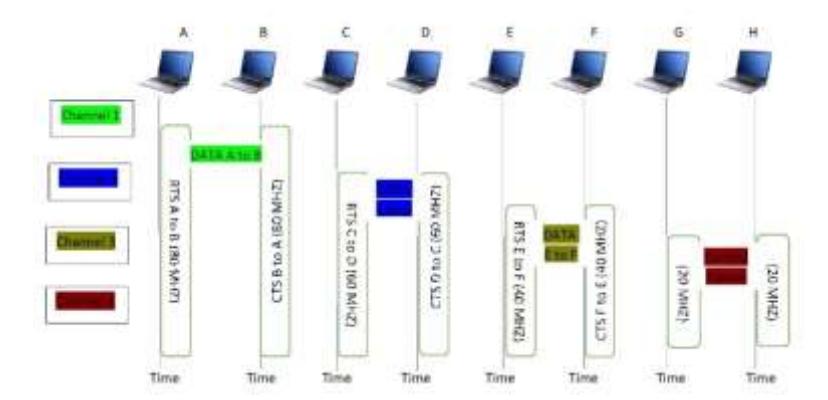
Figure 1 Example of data exchange timeline.
The adaptive multichannel access (AMCA) protocol [26] employs a parallel multichannel MAC protocol to improve throughput in ad hoc networks and supports multiple STAs. By partitioning the overall bandwidth into multiple
subchannels and regulating simultaneous transmissions between the STAs, the result is increased frequency resource utilization.
Unlike the existing Common Control Channel (CCC) protocols, we used an adaptive mechanism in our protocol. In an adaptive CCC, the CCC is changed over time based on the available frequency resources. It is mandatory for channel negotiation that all STAs on the control channel are aware of all the agreements made by the other STAs; hence, this protocol resolves the problems of congestion of the common channel and of decreased spectrum efficiency, especially when few channels are available [27]. Moreover, all STAs listen to the adaptive CCC at all times, so synchronization of the STAs is not required.
In this study, we modified the AMCA protocol [26] by adding the concept of TXOP. TXOP is a QoS parameter defined in IEEE 802.11e, also known as the enhanced distributed channel access (EDCA) [28] standard. The proposed enhancements, which we will refer to as the AMCA-TXOP protocol, aimed to reduce the overhead of AMCA. The basic idea is based on four access categories (ACs): background (BK), best effort (BE), video (VI), and voice (VO). Each one has its own parameters to support the priorities. With EDCA [28], a high-priority AC has a higher chance of transmitting than ACs with lower priorities. EDCA is a contention process similar to that of DCF; each of the ACs senses whether the medium is idle for at least an arbitration interframe space (AIFS). Then, the backoff counter is decreased until it reaches zero before it begins the transmission procedure.
The concept of TXOP bursting is defined for the AC that wins the channel. It allows the STA to transmit multiple frames within one TXOP duration. The TXOP scheme is characterized by the starting time of the transmission and the duration of the transmission process, called the TXOP limit. The ACs compete for the TXOP limit, which is the period of time during which a number of packets can be transmitted. According to this process, higher throughput and lower delay can be obtained by decreasing the contention overhead [29].
To illustrate the proposed approach, we consider a WLAN network that has eight STAs, as shown in Figure 1. We assume that the entire bandwidth is 80 MHz. When STA A has to transmit data to STA B, first, it transmits an RTS packet over the available CCC (e.g. 80 MHz). Over the same CCC (80 MHz), STA B receives the RTS and replies with a CTS packet, informing the availability of a subchannel (channel 1 is 20 MHz) for the transmission of data. Then, the two STAs switch to this channel for data exchange; further, all other STAs are aware that STAs A and B have reserved channel 1. Therefore, the other STAs contend for the remaining idle channels over the CCC (60 MHz). Subsequently, if STA C wants to transmit to STA D, it transmits the RTS packet over the CCC (60 MHz). Then,
D responds on the incoming RTS with a CTS packet on the CCC (60 MHz) notifying the availability of a subchannel (channel 2 is 20 MHz) for data transfer. The two STAs will use channel 2 to transmit the data. Similarly, when STA E wants to communicate with STA F, they negotiate via the CCC (40 MHz), STA E transmits the RTS packet over the CCC (40 MHz). STA F responds to RTS with a CTS packet over the CCC (40 MHz) informing the availability of a subchannel (channel 3 is 20 MHz) for data transfer. Then, they utilize channel 3 for sending the data frame. Finally, we assume that the remaining subchannel (channel 4 is 20 MHz) is not used for transferring data but is retained for control operations. By providing AMCA, the underutilization and synchronization problems are resolved.
As we will see, AMCA did not achieve the expected enhanced network performance by utilizing the available network resources more efficiently. Note that the performance results of AMCA and the IEEE 802.11 standard protocols are not much different from each other. This is because AMCA suffers from a high channel contention level in the network environment, causing back-off overhead, which leads to network performance degradation.
AMCA-TXOP is a modification of the AMCA protocol. If the AIFS period accords to the IEEE 802.11 MAC standard, it signifies that at least one data channel is idle and the receiver is also idle. Then, the transmitter transmits its own CL and RTS over the adaptive CCC. If a CTS collision occurs, it is retransmitted within the retrial limit, otherwise it switches to an assigned channel to exchange data. If the ACK-1 frame is received and the TXOP limit is not reached, the next frame is transmitted and the sender waits for the ACK-2 frame. If there is a collision of ACK frames, the resolution follows the DCF method. Otherwise, the adaptive CCC is updated and the procedure is restarted. The key contribution is increasing the efficiency of the network.
4 Performance Evaluation
In this section, we present an evaluation of the performance of AMCA and AMCA-TXOP using a simulation in MATLAB. For performance evaluation, the proposed algorithm was compared to the traditional IEEE 802.11 DCF and AMCA in terms of MAC throughput and end-to-end delay.
4.1 Simulation Model
The MATLAB simulator was used for the simulation; the simulation parameters following the IEEE 802.11ac standard are presented in Table 1 [8]. In addition, the bit rate was set to 6 Mbps for each channel. We neglected the propagation delay and the channel switching delay because they were below 1 µs [30]. Some
parameter values in the network were varied, such as the number of nodes, the number of channels, and the data size. The TXOP parameters are listed in Table 2 [21].
We simulated a scenario where STAs contended over the common control channel and the winning STA sent its own data over a subchannel, which was defined as a 20 MHz wide channel. The simulation was operated for 1000 s. In addition, we assumed that all STAs were in saturated condition. The system was operated considering a varying number of STAs in the network, i.e. 10, 50, or 100 STAs, with packet payloads of 512 bytes, 1024 bytes, or 1500 bytes, respectively. We assumed ideal channel conditions.
Table 1 Simulation parameters (IEEE 802.11AC) [26].
| Simulation parameters | Values |
|---|---|
| PHY header | 16 bytes |
| MAC header | 34 bytes |
| CWmin | 16 time slots |
| CWmax | 1024 time slot |
| Channel bandwidth | 20/40/80 MHz |
| Basic rate | 6 Mbps |
| Payload | 1500 bytes |
| DIFS | 34 µs |
| SIFS | 16 µs |
| Slot time | 9 µs |
| RTS | 20 bytes |
| CTS | 14 bytes |
| ACK | 14 bytes |
Table 2 EDCA parameter in IEEE 802.11AC.
| Simulation parameters | Values |
|---|---|
| AC | BK, BE, VI, VO |
| TXOPLimit [AC] | 0, 0, 60, 3274 µs |
| CWmin [AC] (time slot) | 15, 15, 7, 3 |
| CWmax [AC] (time slot) | 1023, 1023, 15, 7 |
| AIFS [AC] | 97, 43, 34, 34 µs |
4.2 Simulation Result
In this section we evaluate and compare our protocol with the IEEE 802.11ac standard protocols. The following performance metrics were considered:
1. Aggregate throughput. Our protocol was expected to increase the throughput of the whole network by exploiting multiple channels. The aggregate throughput is the overall quantity of data conveyed between the source and the destination during a certain time achieved by the MAC protocol. Ideally, the optimum aggregate throughput of a multichannel MAC protocol T should be:
\[T = N * t, (1)\] where N is the number of channels and t is the saturated throughput of a single channel.
2. Average end-to-end packet delay. This delay is the total of the queueing, back-off, channel coordination, and transmission latency values. The packet delay is the duration required for a packet to travel from the sender to its destination. The queue size at each STA was 50 packets. The delay of a random back-off is the period of time required for a node to avoid collision. We ignored the missed frames.
To the best of our knowledge, none of the protocols described in Section 2 assign a channel for control operations. The dynamic bandwidth access method was used for the data channels, with the aim of enhancing the network utilization in the infrastructure environment. Meanwhile, the proposed AMCA-TXOP defines a channel for control operations. Its evaluation was done in an ad hoc environment. We compared AMCA-TXOP with three protocols:
- 1. IEEE 802.11ac single channel protocol. One channel is used for both sending control messages and data packets one at a time. The IEEE 802.11 legacy standard [31] is based on the single-channel model, in which the transmitter and the receiver are on the same channel. Despite its ease of coordination, it is vulnerable to collision, thus affecting throughput and delay.
- 2. IEEE 802.11ac multi-channel protocol. More than one node can transmit at the same time on different data channels. Each channel L has a fixed bandwidth
\[L=|M/C|, (2)\] where is the number of channels and is the entire bandwidth. Multiple users transmit over different channels simultaneously. An example of this approach is the dynamic channel allocation model [32]. It faces the challenge
- of channel agreement between sender and receiver, but it is considered better in terms of throughput and delay.
- 3. AMCA. All nodes compete over the available bandwidth of an adaptive CCC to access the agreed channel selected by pairs, which the STAs switch to for their data transfer process. During data transfer, this data channel becomes busy. Each data channel has a fixed bandwidth. Multiple users transmit over different channels simultaneously.
Figure 2 shows the overall throughput for various numbers of nodes while the number of channels and data size were static. We can observe that the total throughput was semi-steady with a slight drop in the same way that the number of nodes increased. In addition, we notice that AMCA showed a simple difference with the IEEE standard 802.11ac protocols. Meanwhile, AMCA-TXOP demonstrated a higher throughput than any other protocol. AMCA-TXOP achieved 501.5634, 502.4502, and 520.9719 percentage improvement compared to the multichannel, single channel, and AMCA protocols, respectively, when the number of nodes was 10. Note that the throughput of AMCA was not different from that of the IEEE 802.11ac protocols because it had a high-overhead problem, while AMCATXOP had higher throughput because of a reduction in contention overhead.
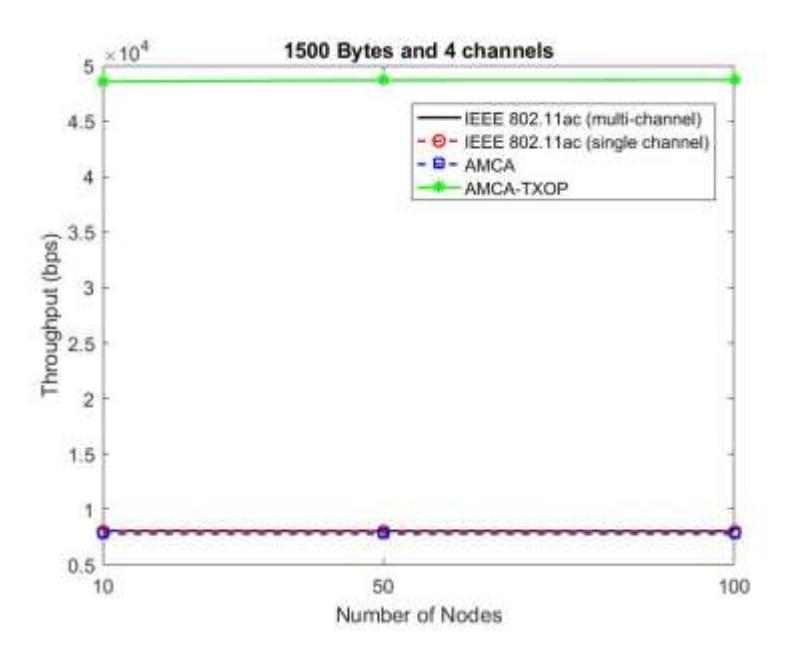
Figure 2 Aggregate throughput versus various numbers of nodes while the number of channels and data size were static.
Figure 3 shows the aggregate throughput for various numbers of nodes while the number of channels and nodes were static. To demonstrate a larger throughput, we transmitted a larger number of packets through the IEEE 802.11ac multichannel, IEEE 802.11ac single channel, and AMCA protocols, in comparison with AMCA-TXOP, which achieved a lower network throughput when the data size was increased. AMCA-TXOP achieved 504.2768, 504.5019, and 522.4305 percentage improvement compared to the multichannel, single channel, and AMCA protocols, respectively, when the data size was 1500 bytes. AMCA-TXOP lost a small amount of throughput when the frame size was increased compared to the IEEE 802.11ac and AMCA protocols because of the restricted data channel size and the larger protocol overhead, although its throughput gain was still significant compared to the other protocols.
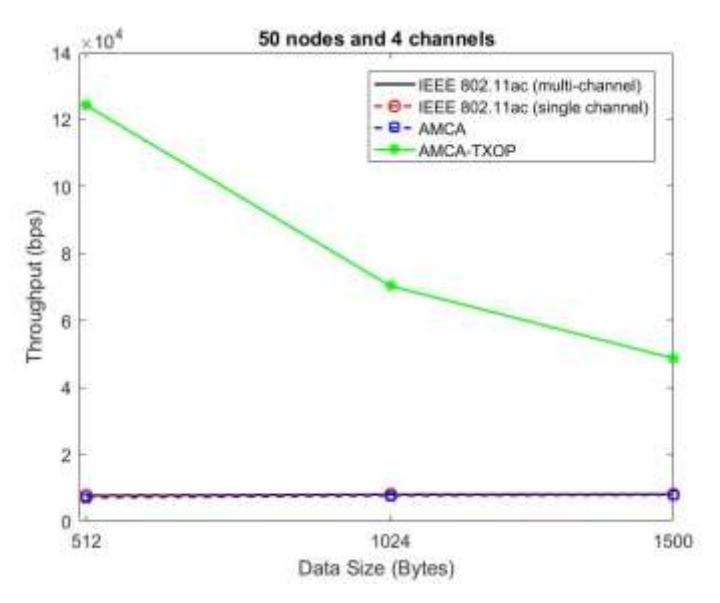
Figure 3 Aggregate throughput versus data size while the numbers of nodes and channels were steady.
The obtained results shown in Figure 4 clearly illustrate the aggregate throughput versus the number of channels while the number of nodes and packet size were stable. When the number of channels was increased, the throughput of the AMCA-TXOP scheme increased gradually because the number of STAs decreased with an increase in the number of channels, whereas the three other protocols achieved steady throughput values. When the number of channels was four, the proposed AMCA-TXOP achieved 503.6439, 504.0112, and 521.7785 percentage improvement compared to the multichannel, single channel, and AMCA protocols, respectively. Thus, the throughput of AMCA-TXOP was higher and increased with an increase in the number of channels compared to the other protocols due to the lower collision rate and thus reduced overhead.
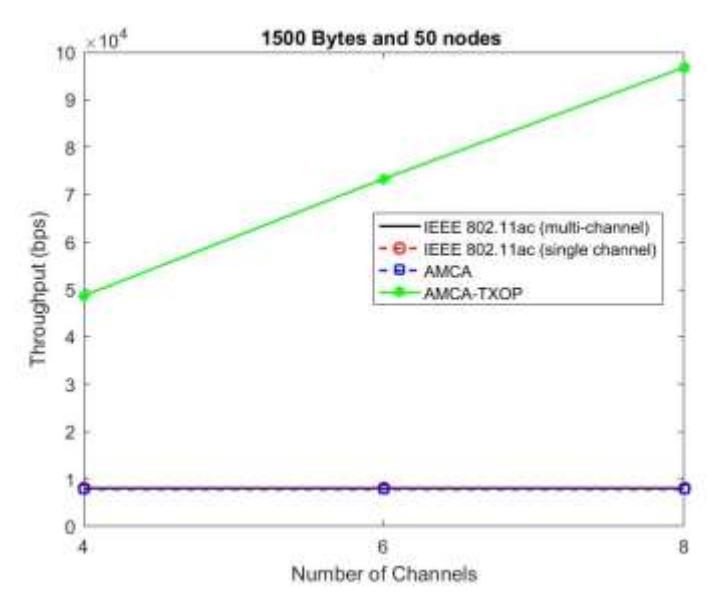
Figure 4 Aggregate throughput versus various numbers of channels while the number of nodes and data size were steady.
The network performance of all protocols was evaluated with the average end-toend delay plotted as a function of the number of nodes when the number of channels and the data size were stable, as shown in Figure 5. We can see that the average end-to-end-delays of AMCA and AMCA-TXOP were not much affected by the number of nodes, while the other protocols were semi-steady with a gradual increase as the number of nodes rose because of increased collision and back-off overhead in the network. However, when comparing the results of AMCA TXOP to the other results, AMCAT-XOP demonstrated less system delay because its property of using multiple-time transmission overcomes the overhead problem of AMCA and the two IEEE 802.11ac standard protocols.
Figure 6 demonstrates the relation between delay and data size when the number of nodes and channels were predefined. It can be seen that the average delay of all algorithms rose with an increase in data size, whereas AMCA-TXOP achieved improved results, demonstrating lower delay values. In addition, we see that the average delay was influenced by the packet length. As the data size increased, the delay of all protocols increased owing to the prolonged contention process.
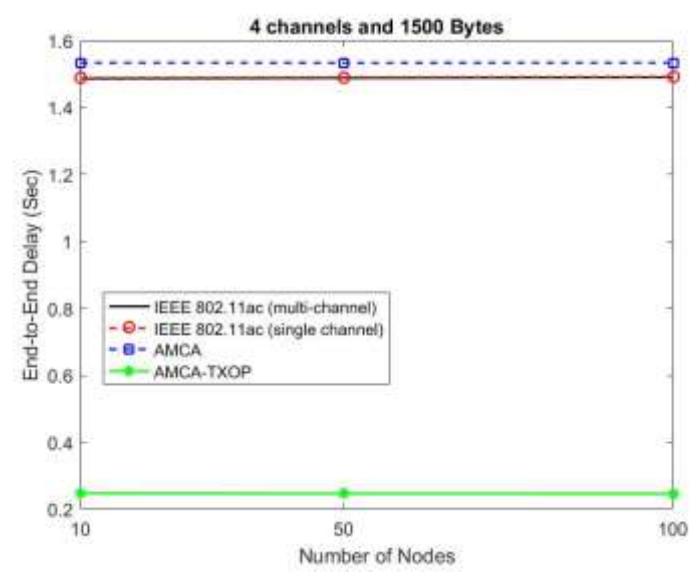
Figure 5 End-to-end delay versus number of nodes while the number of channels and data size were steady.
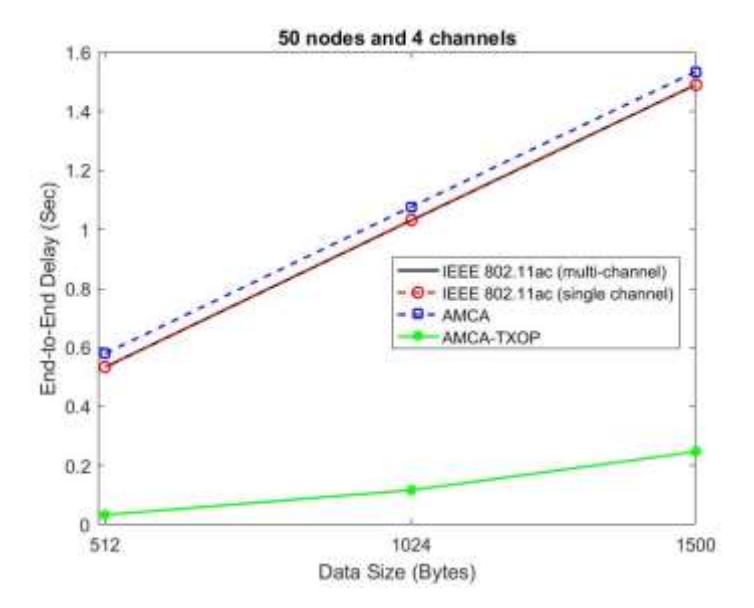
Figure 6 End-to-end delay versus data size while the numbers of nodes and channels were steady.
The effect of the number of channels on the overall delay when the data size and the number of nodes was predefined is shown in Figure 7. It can be seen that
AMCA and the 802.11ac protocols achieved level values, even when the number of channels was modified. When comparing AMCA-TXOP to the other protocols, AMCA-TXOP demonstrated less delay. Further, the delay of AMCA-TXOP decreased as the number of channels increased due to optimized network utilization and reduced congestion.
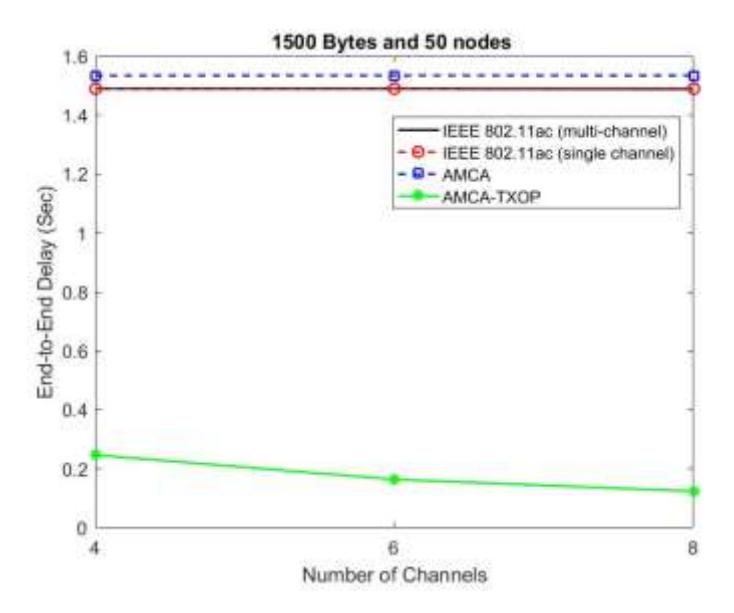
Figure 7 End-to-end delay versus number of channels while the number of nodes and data size were steady.
5 Conclusion
In this paper, we expanded the TXOP strategy that was introduced in IEEE 802.11e in our protocol, which is called AMCA-TXOP, to improve overall network performance. AMCA-TXOP is a modification of the AMCA protocol based on assigning certain priorities to the traffic and boosting the amount of data sent by using the EDCA function instead of DCF in the IEEE 802.11 protocols. We performed extensive simulations to examine the performance of our proposed model and compare its performance with the IEEE 802.11ac protocols according to various parameters. The simulations showed that AMCA-TXOP obtained significant improvements by decreasing the contention overhead and increasing the number of transmitted data frames. Furthermore, we observed that AMCA-TXOP achieved higher throughput and lower delay than AMCA and the IEEE 802.11ac protocols.