

1 Introduction
Term weighting refers to the process of indexing text in a document to determine the weight of each word in the document. The weight of a word in a document is vital for improving the data retrieval efficiency [1]. Term weighting is a commonly accepted technique in text classification for determining the importance of words in a document or query, because each word is not equally significant. This approach is important for data retrieval systems and demonstrates great potential for improving the data extraction performance of data retrieval systems [2]. Term weighting is a well-known step in creating feature vectors to enhance the accuracy of text classification [3]. Thai text classification in previous research is limited. Previous studies used traditional
term weighting and machine learning (ML) techniques, but their accuracy was not high. In addition, these studies utilized datasets from the Internet that did not explicitly identify classes of text [4-7].
Increasing the accuracy of text classification is a challenging issue for researchers. The accuracy of text classification and sentiment analysis depends on the selected term weighting technique, dataset, and ML technique [8-9]. An effective technique must be able to determine the appropriate weights for the words in a text. A good dataset must be reliable and have a clearly identifiable group of texts. The applied ML techniques should be highly accurate and reliable for text classification and sentiment analysis.
The aim of the present research was to introduce a new term frequency with a Gaussian technique (TF-G) and to compare its text classification accuracy with the accuracy of bag-of-words (BoW) [10], term frequency (TF), term frequencyinverse document frequency (TF-IDF) [2], and term frequency-inverse corpus document frequency (TF-ICF) [11]. The ML techniques compared in this study were decision tree (DT) [12], naïve Bayes (NB) [13], support vector machine (SVM) [14], random forest (RF) [15], and multilayer perceptron (MLP) [16-17] techniques to enhance the accuracy of text classification. The datasets in this study were derived from clinical notes in Thai from the outpatient department (OPD) of Khon Kaen Rajanagarindra Psychiatric Hospital, from Thai text of customer reviews for Burger King, Pizza Hut, and Sizzler restaurants [18], and from English text in the tweets of travelers that use US airline services [19].
2 Theoretical Background and Related Works
This section describes the theories and techniques applied for text classification, including Thai word segmentation, term weighting techniques, and feature extraction, as well as a literature review of works related to Thai and English text classification and sentiment analysis.
2.1 Thai Word Segmentation
The Thai language structure is different from that of the English language. The Thai language does not use spaces to separate words and full stops are not used to indicate the end of a sentence. Thus, word segmentation is an important step in the classification of Thai text.
2.1.1 Longest Matching
The longest matching method was used in the majority of early studies of Thai word segmentation. This approach involves scanning a sentence from left to right for the longest match with a dictionary entry at each point. If the algorithm cannot
discover the rest of the words in a phrase using the selected match, the program will backtrack to locate the next-longest match and to continue finding more matches. Because of its greedy nature, this algorithm will fail to obtain the correct segmentation in many cases. For example, the text 'ไปหามเหสี' ('go see the queen') is segmented as 'ไป/หาม/เห/สี' ('go/carry/deviate/color') with the longest matching technique; this is incorrect. The correct result is 'ไป/หา/มเหสี' ('go/see/queen'), which the algorithm cannot obtain. The longest matching technique is approximately 90% accurate for Thai text [20].
2.1.2 Maximum Matching
To overcome the limitations of the longest matching algorithm, the maximum matching algorithm was developed. This algorithm generates all feasible segmentations for a sentence before selecting the sentence with the fewest words, which can be quickly achieved using dynamic programming. This technique outperforms the longest matching approach because it can obtain real maximum matches rather than guessing using local greedy heuristics. For example, in the text 'ไปหามเหสี' ('go see the queen'), when using the maximum matching technique, the word segmentations are (1) 'ไป/หาม/เห/สี' ('go/carry/deviate/color') and (2) 'ไป/หา/มเหสี' ('go/see/queen'). This method selects the segmented text result with the smallest number of words, which is (2). In the case that the results of all segment types have the same number of words, the result of the longest matching technique is selected. The maximum matching technique is 99% accurate for Thai text [21].
2.2 Term Weighting
The term weighting technique refers to a well-known preprocessing step in text classification that assigns appropriate weights to each term in documents with a feature vector structure to enhance the accuracy of text classification. This section describes various term weighting techniques, including the bag-of-words (BoW), term frequency (TF), term frequency-inverse document frequency (TF-IDF), and term frequency-inverse corpus frequency (TF-ICF) techniques for text classification.
2.2.1 Bag of Words (BoW)
BoW is a technique for extracting features from text [10]. This technique is simple to understand and implement. For example, for the text 'I am a mental patient, but I never commit suicide', the total number of words is 10; the frequency of 'I' is 2; the frequency of 'am' is 1; the frequency of 'a' is 1; the frequency of 'mental' is 1; the frequency of 'patient' is 1; the frequency of 'but' is 1; the frequency of 'never' is 1, the frequency of 'commit' is 1 and the frequency of 'suicide' is 1.
2.2.2 Term Frequency-Inverse Document Frequency (TF-IDF)
The TF, tf(t,d), is the number of words that appear in a document divided by the total number of words in a document and can be calculated with Eq. (1). The IDF, idf(t,D), is a calculation of the importance of a term across a collection of documents and can be calculated with Eq. (2). TF-IDF, tfidf(t,d,D), is a technique for assessing the importance of individual terms in a document by calculating the weight of each term. This approach is commonly applied in information retrieval and text mining and is based on Eq. (3) [2].
\[tf(t,d) = \frac{f_{t,d}}{\sum_{t' \in a} f_{t',d}}\] (1)
\[idf(t,D) = \log(\frac{N}{|\{d \in D, t \in d\}|})\] \[\tag{2}\]
\[tfidf(t,d,D) = tf(t,d) * idf(t,d)\] (3)
where \(f_{t,d}\) is the frequency of term (t) in document (d), N is the total number of documents in the corpus N = |D|, and \(tf(t,d) \neq 0\). If the term is not in the corpus, a division-by-zero will occur. It is therefore common to adjust the denominator to \(1 + |\{d \in D, t \in d\}|\).
2.2.3 Term Frequency-Inverse Corpus Frequency (TF-ICF)
The TF-ICF, tficf(t,C), is the inverse of the frequency of documents in each group of terms being considered and the total number of documents and can be calculated with Eq. (4) [11].
\[\operatorname{tficf}(t,C) = \log\left(f_{t,d} + 1\right) * \log(\frac{N_c}{df_{t,c}}) \tag{4}\] where \(f_{t,d}\) is the frequency of term (t) in document (d), \(N_c\) is the total number of documents in each class c = |C|, and \(df_{t,c}\) is the number of documents in which term (t) appears in class (c).
2.3 Feature Extraction
Feature extraction has become an important part of natural language processing tasks [22]. Feature extraction extracts attributes from data as numbers or determines the weights of terms so that they can be inserted into a model (as a feature vector). The numerical value or weight of each term is obtained from term weighting techniques.
2.4 Text Classification and Sentiment Analysis Works
Some related works involving Thai and English text classification and sentiment analysis that use term weighting are shown in Table 1. Table 1 shows related work on Thai text classification and sentiment analysis. For example, Ref. [7] considered major depressive disorder (MDD) risk classification in 2019. This work applied the BoW technique for term weighting and ML techniques, including SVM and NB techniques, to classify the risk of MDD based on Thai texts on Facebook, with a total of 1,500 posts. The SVM technique was the most accurate, with an F-measure of 94%.
Table 1 Related works on Thai and English text classification (sorted from lowest to highest accuracy based on the F-measure).
| Reference | Techniqu | ie | Dataset | E | |
|---|---|---|---|---|---|
| / Year | Term weighting | Machine learning | Dataset | Number of texts | F-measure, by technique |
| [4]/2018 | TF-IDF applied to PoS | DT, NB and SVM | Customer reviews from three beauty websites (Thai) | 2,770 | 70.90%, TF-IDF with bigram words |
| [5]/2014 | BoW, TF and TF-IDF | SVM, NB, DT and k- NN | Social network posts (Thai) | 1,800 | 77.86%, BoW with SVM |
| [18]/2017 | PoS | DNN | Customer reviews from three restaurants (Thai) | 644 | 87.34%, PoS with DNN |
| [6]/2010 | TF-IDF and SVD | DT, SVM, NB and k-NN | Internet (Thai) | 200 | 90.00%, TF-IDF and SVD with NB |
| [7]/2019 | BoW | SVM and NB | Facebook posts (Thai) | 1,500 | 94.00%, BoW with SVM |
| [23]/2015 | PoS | NB, RF, and SVM | Product reviews collected from Amazon.com (English) | 2,000,00 | 94% with SVM |
| [24]/2014 | VADER, Hu- Liu04, LIWC, GI, ANEW, SWN, SCN, and WSD | NB,ME, and SVM | Tweets, movie reviews, product reviews, opinion news articles (English) | 4,200, 10,605, 3,708, and 5,190 | 96% with VADER and SVM |
Note: Valence Aware Dictionary for sEntiment Reasoning (VADER), Linguistic Inquiry Word Count (LIWC), General Inquirer (GI), Affective Norms for English Words (ANEW), SentiWordNet (SWN), SenticNet (SCN), Word-Sense Disambiguation (WSD), and Maximum Entropy (ME) [24].
In this research, we used the following techniques: Thai word segmentation with the maximum matching technique and term weighting with BoW, TF, TF-IDF, and TF-ICF. The latter methods were compared with TF-G. DT, NB, SVM, RF, and MLP models are techniques for Thai and English text classification and sentiment analysis.
3 Methodology
This section describes the datasets and conceptual framework.
3.1 Datasets
Three different datasets were utilized in this research.
- (1) The first dataset contained 2,987 data samples, which were collected from clinical notes in Thai on mental illness history from the OPD of Khon Kaen Rajanagarindra Psychiatric Hospital between January 2016 and January 2019. The data were obtained from 1,552 clinical records in which nurses and psychiatrists indicated suicide risk and 1,435 clinical records in which nurses and psychiatrists indicated no suicide risk for 238 patients. The average length of the clinical notes was 105 words; the shortest note contained 2 words; the longest note contained 204 words.
- (2) The second dataset contained data that were downloaded from Thai customer reviews of Burger King, Pizza Hut, and Sizzler restaurants, with a total of 644 posts, including 361 positive posts and 283 negative posts. The average length for the corpus was 230 words; the shortest post contained 2 words; the longest post contained 458 words [18].
- (3) The third dataset contained data that were downloaded from the tweets of users of US airline services in February 2015 who expressed their feelings on Twitter (license: CC BY-NC-SA 4.0), with a total of 14,640 tweets, including 3,090 neutral tweets, 2,363 positive tweets and 9,187 negative tweets. The average length for the corpus was 21 words; the shortest tweet contained 2 words; the longest tweet contained 40 words [19].
3.2 Conceptual Framework
The conceptual framework (Figure 1) includes data preparation and cleaning, text preprocessing, feature extraction, text classification (suicide risk and sentiment), and a comparison of techniques used for text classification from clinical notes, customer reviews, and tweet sentiments of travelers using US airline services.
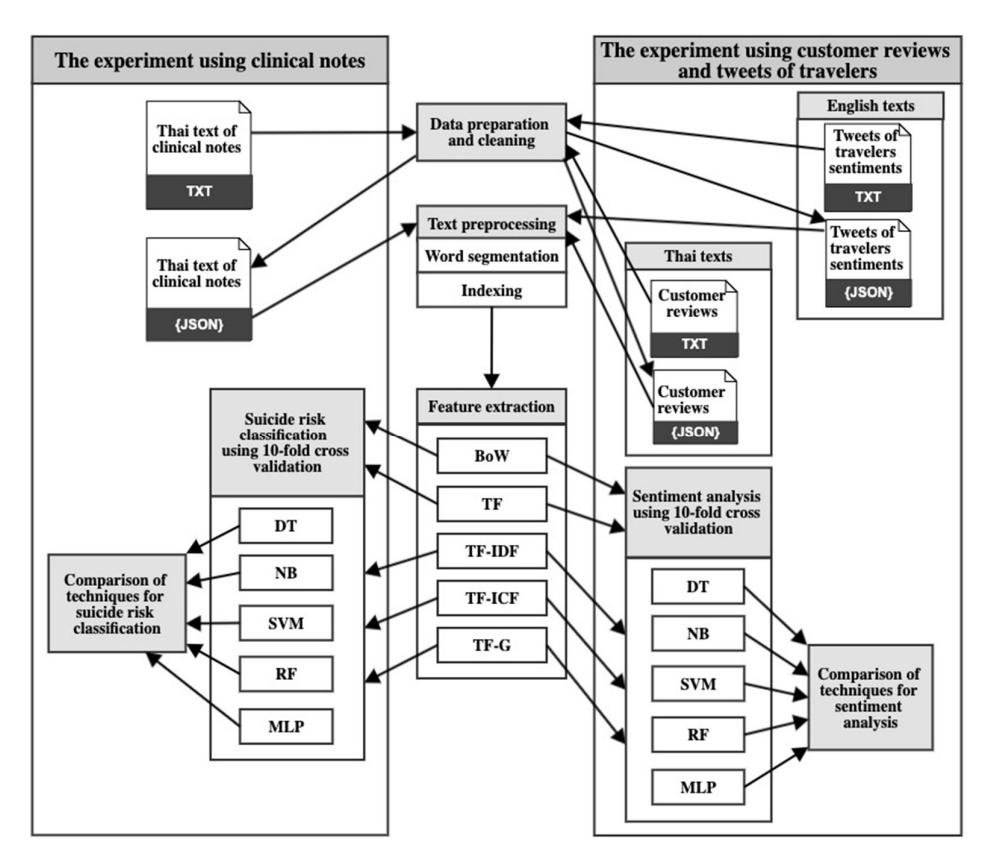
Figure 1 Conceptual framework of this research.
3.2.1 Data Preparation and Cleaning
This step was conducted to handle text in datasets before text preprocessing. The step can be divided into two substeps: data preparation and cleaning for the Thai language and data preparation and cleaning for the English language. The proposed method consists of the following processes:
3.2.1.1 Data Preparation and Cleaning in the Thai Language
Data preparation and cleaning for the Thai language involved the following steps. (1) Typos and misspelled words were manually corrected. For example, the misspelled words 'หงิดหงุด' and 'โมห' are meaningless. The correct words are 'หงุดหงิด', which means 'irritable', and 'โมโห', which means 'angry'. (2) Abbreviations and medical vocabularies were changed to Thai text in clinical notes. For example, the text 'admit' was changed to 'ใหพักรักษาในโรงพยาบาล';
the text 'MT' was changed to 'จิตบำบัด' ('MT' stands for 'mental treatment'); and the text 'SE' was changed to 'ผลบ้างเคียง' ('SE' stands for 'side effect'). (3) Special characters and numbers, such as '+', '-', '#', and '@', were removed from the datasets.
3.2.1.2 Data Preparation and Cleaning in the English Language
Data preparation and cleaning for the English language involved the following steps. (1) Typographical errors were manually corrected. For example, the misspelled words 'wlere' and 'dslike' were changed to 'where' and 'dislike'. (2) Groups of characters that create emoji symbols, such as 'úà', 'úî\(\hat{O}\Pi\hat{e}\)', 'ú\(\hat{O}\)', and '\(\neq\hat{e}\hat{O}\Pi\hat{e}\)', were removed. (3) Special characters and numbers, such as '+', '-', '#', and '@', were removed from the datasets.
3.2.2 Text Preprocessing
Text preprocessing consists of word segmentation and the identification of stopping words and stemming words.
3.2.2.1 Word Segmentation
This process is divided into two types of word segmentation because this study used Thai and English datasets. (1) The clinical notes and customer reviews are Thai language datasets, so word segmentation using the maximum matching technique was performed. (2) The travelers' tweets about US airline services was an English language dataset, so word segmentation considered spaces in text.
3.2.2.2 Indexing
Indexing involves establishing a collection of unique words in a document system. This step creates index words by selecting the unique words from every text that has undergone text preprocessing.
3.2.3 TF-G Technique
The TF-G, tfg(t,G), is based on the idea that the distribution of words in each document category is related to the document category. Therefore, we propose a new technique for term weighting by applying Gaussian functions to calculate the distribution of words in each category, as shown in Eq. (5) and Eq. (6).
\[G = \frac{n_c + 1}{\sqrt{\pi 2 (\sigma_{i,c} + 1)^2}} e^{-\left[\frac{\left(w_{i,j} - \mu_{i,c}\right)^2}{2 (\sigma_{i,c} + 1)^2}\right]}\] (5)
\[tfg(t,G) = \log(f_{t,d} + 1) * G\] (6)
where G is the distribution value of term i in document j of category c; \(n_c\) is the number of documents in category c; \(w_{i,j}\) is the frequency of term i in document j; \(\mu_{i,c}\) is the mean of all terms i that are within a document in category c; \(\sigma_{i,c}\) is the variance in term i within a document in category c; c is the category of a document; and \(f_{t,d}\) is the frequency of term (t) in document (d).
For example, we consider a set of seven documents. The category is identified from the documents (where 1 is positive and 0 is negative), as shown in Table 2.
Document No. Texts Label 'อยากตาย เบือ '('am bored and want to die') 2 'เบื่อไม่อยากกินยา '('am bored and do not want to take 1 medicine') 3 'ไม่อยากตาย เบื่อ '('do not want to sleep and am bored') 0 4 'ไม่นอน เบื่อยา '('do not want to sleep and am bored with 5 'เบื่อ หงุดหงิด '('am bored, frustrated') 6 'หงุดหงิด+อยากตาย+ไม่อยากนอน '('am frustrated +want to die +do not want to sleep') 7 'นอนกินยา '('take medicine while sleeping ')
Table 2 Document sample.
The documents in Table 2 are processed via the data preparation, data cleaning, and text preprocessing steps. The results are shown in Table 3.
| Document No. | Texts | Label |
|---|---|---|
| 1 | อยาก/ตาย/เบือ | 1 |
| 2 | เบื่อ/ไม่/อยาก/กิน/ยา | 1 |
| 3 | ไม่/อยาก/ตาย/เบื่อ | 0 |
| 4 | ไม่/นอน/เบื่อ/ยา | 0 |
| 5 | เบื่อ/หงุดหงิด | 1 |
| 6 | หงุดหงิ๊ด/อยาก/ตาย/ไม่/อยาก/นอน | 1 |
| 7 | นอน/กิน/ยา | 0 |
Table 3 Results of text preprocessing.
The next step is to create index terms from the results in Table 3. The index terms are 'อยาก', 'ตาย', 'เบื่อ', 'ไม่', 'กิน', 'ยา', 'นอน', and 'หงุดหงิด'. The weights of the index terms are shown in Table 4. These weights are calculated with the BoW technique.
Document No. , (Weights of index terms obtained using the BoW technique) Label อยา ก ตาย เบื่อ ไม กิน ยา นอน หงดุ ห งิด 1 1 1 1 0 0 0 0 0 1 2 1 0 1 1 1 1 0 0 1 3 1 1 0 1 0 0 0 0 0 4 0 0 1 1 0 1 1 0 0 5 0 0 1 0 0 0 0 1 1 6 2 1 0 1 0 0 1 1 1 7 0 0 0 0 1 1 1 0 0
Table 4 Weights of the index terms obtained from the BoW technique.
From Table 4, the next step is to calculate the mean and variance of index terms in the documents in each category. The results are shown in Table 5.
Table 5 Mean and variance of index terms in the documents in each category.
| Index terms | |||||||||
|---|---|---|---|---|---|---|---|---|---|
| Mean/Variance | อยา | ตาย | เบื่อ | ไม | กิน | ยา | นอน | หงุดห | Label |
| ก | งิด | ||||||||
| 𝜇, | 1.00 | 0.50 | 0.75 | 0.50 | 0.25 | 0.25 | 0.25 | 0.50 | 1 |
| 𝜇,ே | 0.33 | 0.33 | 0.33 | 0.67 | 0.33 | 0.67 | 0.67 | 0.00 | 0 |
| 𝜎, | 0.58 | 0.48 | 0.52 | 0.48 | 0.47 | 0.52 | 0.52 | 0.25 | 1 |
| 𝜎,ே | 1.07 | 0.51 | 0.51 | 0.51 | 0.19 | 0.38 | 0.51 | 0.58 | 0 |
The final step is to calculate the distribution value of index terms in the documents in each category. These values can be calculated by Eq. (5) and Eq. (6) with the values in Tables 4 and 5, respectively. The results are shown in Table 6.
Table 6 Distribution values of the index terms in the documents in each category.
| Document No. | The weights of index terms obtained using the TF-G technique | Label | |||||||
|---|---|---|---|---|---|---|---|---|---|
| อยา | ตาย | เบื่อ | ปฏิเ | กิน | ยา | นอน | หงดุ ห | ||
| ก | สธ | งิด | |||||||
| 1 | 0.38 | 0.38 | 0.39 | 0.00 | 0.00 | 0.00 | 0.00 | 0.00 | 1 |
| 2 | 0.38 | 0.00 | 0.39 | 0.38 | 0.36 | 0.35 | 0.00 | 0.00 | 1 |
| 3 | 0.22 | 0.29 | 0.00 | 0.31 | 0.00 | 0.00 | 0.00 | 0.00 | 0 |
| 4 | 0.00 | 0.00 | 0.29 | 0.31 | 0.00 | 0.34 | 0.31 | 0.00 | 0 |
| 5 | 0.00 | 0.00 | 0.39 | 0.00 | 0.00 | 0.00 | 0.00 | 0.44 | 1 |
| 6 | 0.49 | 0.38 | 0.00 | 0.38 | 0.00 | 0.00 | 0.35 | 0.44 | 1 |
| 7 | 0.00 | 0.00 | 0.00 | 0.00 | 0.34 | 0.34 | 0.31 | 0.00 | 0 |
3.2.4 Suicide Risk Classification and Sentiment Analysis
This procedure uses a feature vector, and each weighted technique classified suicide risk from clinical notes, customer reviews for sentiment analysis, and traveler tweets regarding US airline services for sentiment analysis. Suicide risk and sentiment analysis was done with the DT, NB, SVM, RF, and MLP techniques.
These experiments were conducted in Python (version 2.7.16). The model evaluation method for all datasets was 10-fold cross-validation. The advantage of 10-fold cross-validation is that all feature vectors are used for both training and testing, and each feature vector is utilized for validation only once.
3.2.5 Comparison of Techniques for Thai Text Classification, Thai Text Sentiment Analysis, and English Text Sentiment Analysis
The comparison steps were: (1) finding the most accurate technique for suicide risk classification from Thai clinical notes, (2) finding the most accurate technique for sentiment analysis from Thai customer reviews, and (3) finding the most accurate technique for sentiment analysis from the tweets of travelers using US airline services.
4 Results
This section presents the experimental results of the risk of suicide classification from the clinical notes dataset (Table 7), sentiment analysis from the customer reviews dataset (Table 8), and sentiment analysis from the tweet dataset for travelers using US airline services (Table 9).
In Table 7, the TF-G technique was the most accurate technique in Thai suicide risk classification, with higher F-measure scores than other term weighting techniques based on 10-fold cross-validation. The TF-G technique with the RF technique was the most accurate technique in suicide risk classification, with precision, recall, and F-measure scores of 97.83%, 96.88%, and 97.51%, respectively. The results of the experiment for text sentiment analysis are shown in Table 8. The TF-G technique was the most accurate technique in Thai sentiment analysis, with higher F-measure scores than the other term weighting techniques based on 10-fold cross-validation. The TF-G technique with the RF technique was the most accurate in suicide risk classification, with precision, recall, and F-measure scores of 92.5%, 92.18%, and 92.21%, respectively.
Table 7 Results of suicide risk classification from clinical notes.
| Machine learning | Term weighting | Precision | Recall | F-measure |
|---|---|---|---|---|
| BoW | 78.06 | 76.14 | 75.30 | |
| TF | 77.81 | 75.74 | 74.82 | |
| DT | TF-IDF | 77.81 | 75.74 | 74.82 |
| TF-ICF | 91.82 | 90.03 | 89.86 | |
| TF-G | 96.45 | 96.39 | 96.23 | |
| BoW | 75.78 | 75.25 | 74.98 | |
| TF | 71.95 | 70.56 | 70.31 | |
| NB | TF-IDF | 72.30 | 71.01 | 70.78 |
| TF-ICF | 66.79 | 66.51 | 66.19 | |
| TF-G | 76.77 | 75.89 | 76.34 | |
| BoW | 77.70 | 76.78 | 76.26 | |
| TF | 77.53 | 76.61 | 76.10 | |
| SVM | TF-IDF | 75.70 | 74.95 | 74.46 |
| TF-ICF | 72.91 | 72.59 | 72.35 | |
| TF-G | 78.22 | 77.58 | 77.18 | |
| BoW | 78.69 | 77.49 | 76.84 | |
| TF | 78.56 | 77.67 | 77.14 | |
| RF | TF-IDF | 78.56 | 77.67 | 77.14 |
| TF-ICF | 95.75 | 95.76 | 95.68 | |
| TF-G | 97.83 | 96.88 | 97.51 | |
| BoW | 71.07 | 69.65 | 70.33 | |
| TF | 72.15 | 72.74 | 72.41 | |
| MLP | TF-IDF | 70.60 | 71.78 | 71.14 |
| TF-ICF | 70.26 | 71.40 | 72.68 | |
| TF-G | 72.24 | 73.02 | 73.21 |
As the experimental results show in Tables 7 and 8, the TF-G technique for Thai text classification and Thai sentiment analysis was more accurate than the results of the BoW, TF, TF-IDF, and TF-ICF techniques with the DT, NB, SVM, RF, and MLP techniques.
In Table 9, the TF-G technique was the most accurate in English sentiment analysis, with higher F-measure scores than other term weighting techniques. The TF-G technique with the SVM technique was the most accurate technique in the sentiment analysis of travelers using US airline services, with precision, recall, and F-measure scores of 99.84%, 99.73%, and 99.78%, respectively, based on 10-fold cross-validation.
Based on the experimental results shown in Tables 7, 8, and 9, the results of the TF-G technique for text classification and sentiment analysis were more accurate than the results of the BoW, TF, TF-IDF, and TF-ICF techniques with the DT, NB, SVM, RF, and MLP techniques for Thai and English datasets.
Table 8 Results of the sentiment analysis from customer reviews.
| Machine learning | Term weighting | Precision | Recall | F-measure |
|---|---|---|---|---|
| BoW | 79.20 | 77.82 | 77.84 | |
| TF | 76.69 | 76.31 | 76.15 | |
| DT | TF-IDF | 76.69 | 76.31 | 76.15 |
| TF-ICF | 87.53 | 86.34 | 85.25 | |
| TF-G | 90.90 | 91.22 | 90.60 | |
| BoW | 87.77 | 87.01 | 87.07 | |
| TF | 85.03 | 73.25 | 72.65 | |
| NB | TF-IDF | 85.80 | 77.07 | 77.09 |
| TF-ICF | 74.39 | 73.89 | 73.94 | |
| TF-G | 88.28 | 88.92 | 88.80 | |
| BoW | 86.89 | 86.68 | 86.43 | |
| TF | 88.72 | 87.63 | 87.82 | |
| SVM | TF-IDF | 86.56 | 85.58 | 85.76 |
| TF-ICF | 78.93 | 78.62 | 78.37 | |
| TF-G | 89.49 | 88.87 | 88.86 | |
| BoW | 85.99 | 78.76 | 78.90 | |
| TF | 86.08 | 78.82 | 79.21 | |
| RF | TF-IDF | 86.08 | 78.82 | 79.21 |
| TF-ICF | 85.41 | 74.86 | 74.26 | |
| TF-G | 92.50 | 92.18 | 92.21 | |
| BoW | 79.76 | 79.73 | 89.60 | |
| MLP | TF | 93.64 | 81.17 | 86.64 |
| TF-IDF | 92.96 | 74.43 | 82.37 |
| TF-ICF | 83.01 | 83.28 | 82.83 |
|---|---|---|---|
| TF-G | 90.23 | 90.31 | 90.11 |
Table 9 Results of the sentiment analysis from the tweets of travelers using the US airline services sentiment dataset [19].
| Machine learning | Term weighting | Precision | Recall | F-measure |
|---|---|---|---|---|
| BoW | 72.38 | 64.06 | 64.01 | |
| TF | 72.02 | 60.09 | 61.34 | |
| DT | TF-IDF | 73.15 | 61.43 | 63.62 |
| TF-ICF | 86.14 | 69.21 | 70.03 | |
| TF-G | 80.99 | 81.75 | 79.93 | |
| BoW | 78.53 | 71.74 | 72.91 | |
| TF | 82.14 | 53.30 | 65.16 | |
| NB | TF-IDF | 84.75 | 63.1 | 69.67 |
| TF-ICF | 84.15 | 80.62 | 81.87 | |
| TF-G | 81.79 | 82.60 | 82.13 | |
| BoW | 83.89 | 81.91 | 82.68 | |
| TF | 81.66 | 77.62 | 78.81 | |
| SVM | TF-IDF | 81.41 | 78.56 | 79.24 |
| TF-ICF | 92.27 | 89.15 | 90.34 | |
| TF-G | 99.84 | 99.73 | 99.78 | |
| BoW | 68.32 | 63.69 | 65.93 | |
| TF | 62.40 | 65.32 | 63.85 | |
| RF | TF-IDF | 64.45 | 65.89 | 65.20 |
| TF-ICF | 87.82 | 90.32 | 89.12 | |
| TF-G | 88.35 | 93.12 | 90.67 | |
| BoW | 68.41 | 67.34 | 67.84 | |
| TF | 70.88 | 69.26 | 70.02 | |
| MLP | TF-IDF | 67.53 | 68.44 | 67.96 |
| TF-ICF | 77.94 | 73.38 | 75.5 | |
| TF-G | 81.58 | 75.79 | 79.08 |
5 Conclusion
In this paper, a new TF-G technique was proposed for creating feature vectors with well-known and effective ML techniques to enhance the accuracy of classifying text. Cases involving classification from Thai clinical notes, a sentiment analysis of Thai customer reviews [18], and a sentiment analysis of English tweets from travelers using US airline services [19] were investigated.
The datasets had different characteristics: the Thai clinical notes dataset was composed of patient data from the OPD of Khon Kaen Rajanagarindra Psychiatric Hospital; the Thai customer reviews conveyed the sentiments of customers after using the services at Burger King, Pizza Hut, and Sizzler restaurants; and the English tweets conveyed the sentiments of travelers after using US airline services. Although these datasets contained some typographical errors, they were reliable; notably, the clinical notes were patient health records, and the risk of suicide was diagnosed during each visit by nurses and psychiatrists. Additionally, customer reviews were clearly identified with positive and negative sentiments, and the tweets of traveler sentiments are clearly identified with neutral, positive, and negative connotations.
The proposed technique is a term weighting technique for creating feature vectors. This research compares the BoW, TF, TF-IDF, and TF-ICF techniques with TF-G in the extraction of features from Thai text and English text. Suicide risk classification and sentiment analysis were performed with the DT, NB, SVM, RF, and MLP techniques. The experimental results showed that TF-G with the RF technique was the most effective for suicide risk classification. The TF-G with the RF technique was the most accurate for positive and negative sentiment analysis. The TF-G with the SVM technique was the most accurate for neutral, positive, and negative sentiment analysis.
The TF-G method performed significantly better than the traditional term weighting techniques for all three datasets. Therefore, the TF-G technique is appropriate for Thai text classification, Thai text sentiment analysis, and English text sentiment analysis.
A limitation of this research was that we were not able to find a dataset from a previous research to compare with the results of our model to evaluate efficiency. Therefore, this research used clinical notes collected from an OPD, customer reviews downloaded from the Internet, and tweets from travelers downloaded from the Internet to conduct the experiments. In the future, we will use TF-G techniques to implement a new module to classify the risk of suicide from clinical notes. This module could be integrated with a hospital system to assist psychiatrists and nurses in their diagnoses.
Acknowledgment
We thank the director and staff of Khon Kaen Rajanagarindra Psychiatric Hospital for their help in collecting the data and for their valuable technical support in this research.