

1 Introduction
The current generation of students prefers digital information and adapts more easily to screen and internet technology. The tendency to adapt to technology can make them feel thrilled, challenged, and more curious about certain things [1]. A suitable learning method is not only able to convey teaching material but can also provide a pleasant knowledge experience. In the context of learning, the current technological era can also be called the digital learning era. Agusta's research [2] states that the definition of digital learning includes aspects of software or hardware in the form of a set of computers that are interconnected by exchanging data, such as messages, video, text, audio, and graphics. Digital learning is a model of information technology used in the education sector, known as elearning.
Immersive learning is an online learning method that uses technology to facilitate learning, for example, virtual reality (VR) or augmented reality (AR) headsets. Immersion is defined as the experience being absorbed in a phenomenon by an individual. Immersive learning is learning where someone can experience immersion in the studied topic[3]. One form of immersive digital learning uses metaverse technology. Metaverse technology emerged in response to recent developments in the 3-dimensional (3D) world[4]. The metaverse can be experienced through the sense of sight by viewing 3D designs, which can be accessed online via computers, smartphones, augmented reality (AR), or virtual reality (VR). In this virtual space, digital avatars can represent users, who can move and interact with other users in real-time. Active user involvement with this virtual system is one of the core principles of metaverse technology[5]. This technology functions to unite users in socializing, playing games, meetings, and working in 3D space. Metaverse technology enables people to engage in various online 3D world experiences in an immersive way through virtual reality (VR) or augmented reality (AR) headset devices[6].
Interior design is a physical arrangement in the form of planning, arranging, and designing space in a building. Interior design is intended to fulfil basic human needs for shelter, to determine and regulate forms of human activity, to maintain aspirations, and to express ideas that accompany human actions[7]. The aims and objectives of interior design are to improve function, enrich aesthetic value, and improve the psychological aspects of interior space to improve the quality and standard of human life[8]. Interior design theory uses the concept of 'sense of place'. Sense of place has as similar meaning as the terms 'the spirit of a place' and 'the character of a place'. Sense of place can be inferred as the characteristics, spirit, or soul of a place present through existing symbols that engender users' feelings or emotions [9]. Nazgol [10] suggests that sense of place is a factor that can make a space into a place. These changes can be seen through individuals' particular behavior and emotional characteristics. Sense of place is a combination of conscious and unconscious feelings and perceptions, a concept rich in unifying how individuals realize, experience, and express the meaning of a place. Sense of place encapsulates a person's feelings, perceptions, attitudes, and behavior toward a place [11]. Sense of place theory has been discussed for a long time and in its development it has been refined to explore technical variables that can be tested on human behavior indoors. As shown in the following typology chart (Figure 1), which explains that sense of place contains activity, physical setting, and meaning to construct the relationship between design and reality.
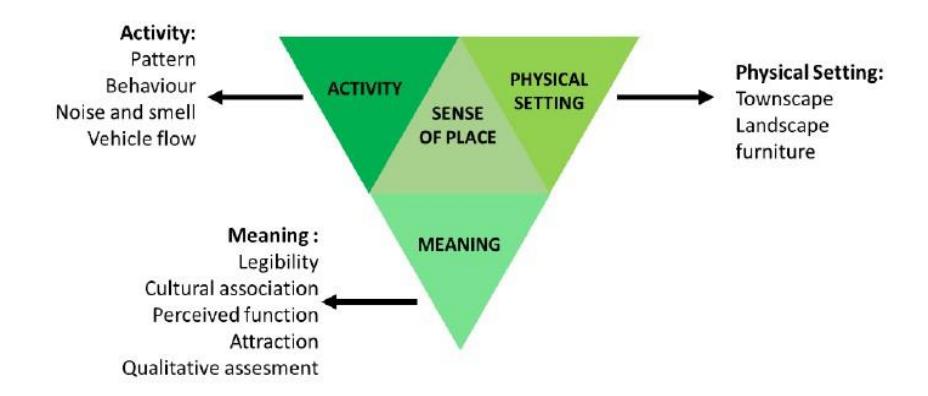
Figure 1 Diagram of the relationship between sense of place and its forming variables. Source: Shamai, in Akhmadi, 2019 [12].
Widagdo [13] explains that the emergence of interior design activites began in England in the Victorian era and encouraged middle-class women, who were not allowed to work, to finally fill their daily activities by arranging their homes. Laksmi Kusuma Wardani previously carried out research regarding educational models in the field of interior design. It showed an interior design education model that departs from critical and creative thinking [14]. The research conclusions of Laksmi's critical and creative learning methods can be applied through studio classes on campus.
The studio class method is for students, with a limitation of 25 students per class. In the classroom, drawing tables are available for each student. Studio classes are designed to bring the students closer to the tutor or lecturer through assistance in critical and creative discussions during class. Studio classes are considered an effective learning method in design[13]. Triatmodjo's research [13] showed seven benefits for students studying interior design through studio classes. The first benefit is that they provide an open place for meetings of many parties, from students, lecturers to practitioners. Secondly, they can train students to communicate effectively in verbal, written, and graphic form and be open and flexible in expressing opinions and accepting criticism. Thirdly, they allow students to practice critical thinking in expressing opinions. Fourthly, they train students to get used to working in groups. Fifthly, they train students to think quickly and logically. Sixthly, they allow students to master knowledge and experience through group discussions. Seventhly, they provide a place where students achieve a natural understanding of design and practice. In the studio class method, it is also hoped that the form and physical space of the class will stay the same so that students and lecturers can consistently discuss comfortably with each other.
2 Objectives
This research used as a case study the Interior Design II course taken by level-2 students, Interior Design Study Program, School of Creative Industries, Telkom University. The course requires students to design the interior of a residence with a minimum area of 100 m2 . They must then produce a 3D perspective drawing or design plan that closely resembles the original house. At the end of the semester, students have gone through a period of assistance and planning space concepts with their lecturers. Students show their design work by printing 2D and 3D images on paper. The 2D working drawings shown in Figure 2 include technical drawings showing the size and dimensions of the room and its furniture by hand drawing or computer printing on paper. They also include 3D images that can be perspective or orthogonal rendering images. They express their sense of design through their technical drawing and rendering portfolios.
Figure 2 3D perspective manual drawings (hand drawing) are among the final results of students in the Interior Design II course. Source: Author's student task.
The studio class method for the Interior Design II course produces 3D perspective images on paper or other 2D media. Animated video can explain the results with a more realistic perspective design. However, this animated video only presents a limited number of scenes, without providing an in-depth spatial experience for students. Animated videos as in Figure 3 are only shown in sequence according to camera placement and duration. Therefore, to stop momentarily, students need to press pause on the media player, and it can only be zoomed in to a specific part without seeing the entire surrounding area. Animated videos can be used to continue critical and creative learning methods through discussion in studio classes. However, there are limitations to animated videos that prevent students from experiencing the depth and aesthetic of their home space. Animated videos can only be played via a monitor and cannot be viewed at 360 degrees. The present research aimed to provide novelty in immersive learning using VR technology methods to support the creation of students' spatial experiences. The journal contribution is to complement the visual presentation method in interior design to increase the sense of place through the VR technology. Thus, it may enrich the field of interior design technology.
Figure 3 One of the results of Interior Design II studio is an animated rendering that looks more real than a drawing. It is usually uploaded to a Youtube channel. Source: Author's student task.
3 Method
This research used a mixed method, i.e., a combined qualitative and quantitative methodology with a sequential exploratory strategy. The sequential exploration strategy is used to explore phenomena, test variables, or elements of a theory produced at the qualitative stage and generalize the findings from quantitative calculations [15]. At the qualitative stage, the literature study found several indicators of learning methods for drawing residential designs and the sense of place theory. Then, in the quantitative stage, the authors conducted an intervention trial using the metaverse learning method in residential homes before and after using VR. The result analysis of the pre-test and post-test questionnaires was carried out using a paired sample t-test using the SPSS software, as shown in Figure 4. This analysis tested whether there were significant differences between before and after the intervention of using the VR method.
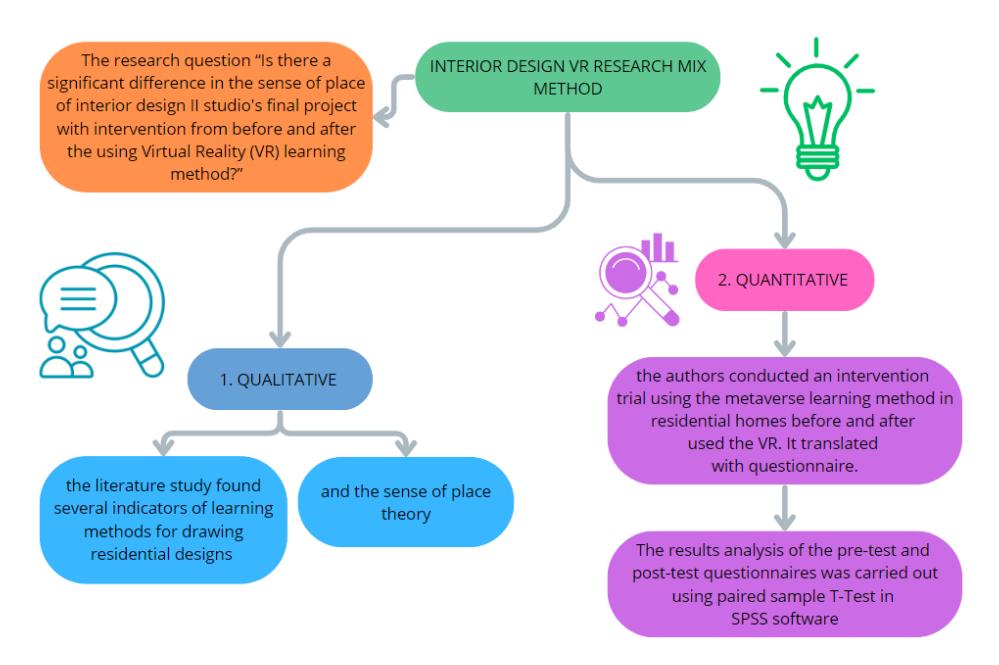
Figure 4 Diagram of the division of qualitative phases and quantitative phases in the mixed method. Source: Authors.
The subjects involved were researchers (three lecturers) and one assistant lecturer. Meanwhile, the research objects were 24 students in the Interior Design II course, who were required to create a residential interior project at the end of the semester. The researchers asked the participants to prepare the design results using the SketchUp software to make three-dimensional (3D) files. Then, the files were inserted into the room using the Enscape software. The output of the 3D Enscape engineering file was converted so that it could be viewed via an Oculus Virtual Reality device. Before the participants used VR, they were asked to fill out a questionnaire, and then they were asked to fill out the same questionnaire again after seeing the results of the design engineering using Oculus VR. The form of the questionnaire was a statement of agreement (Likert scale) regarding the statement of the 3D space depiction method and the sense of place of the residential project. This whole sequence is shown in Figure 5.
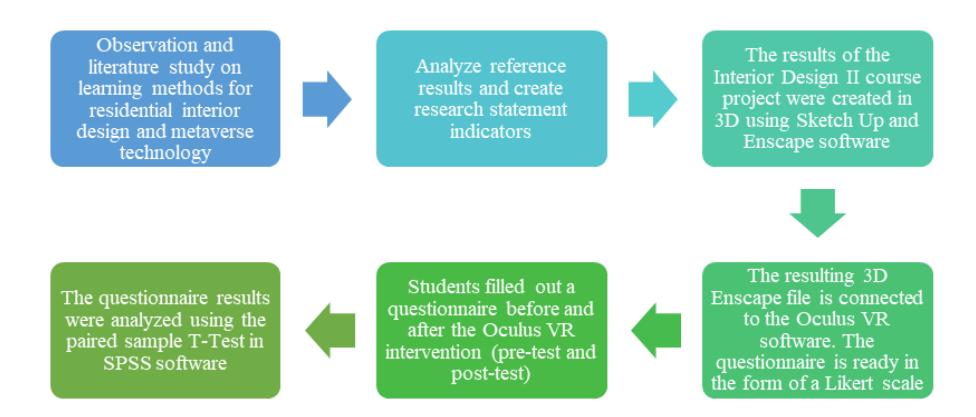
Figure 5 The flow activity of Interior Design VR research. Source: Authors.
The expected result of the intervention was to provide a more immersive or immersed sense of place in the designs created by the students for their clients. Thus, the output results using the 2D output on paper or document files on the monitor could be felt more realistically. The research question was: "Is there a significant difference in the sense of place of the final project of the interior design II studio before and after the intervention of using the virtual reality (VR) learning method?"
4 Results and Discussion
According to the research method explained in Table 1, there are findings from both the qualitative and the quantitative stage. The findings at the qualitative stage produced several indicator words and sentences to make Likert scale statements for the respondents. At the quantitative stage, the Likert scale results were tested using t-test score analysis of the overall pre-test and post-test scores. For better clarity, the authors divided the three findings as follows.
Table 1 Stages of research methods and their findings. Source: Authors' analysis.
| Stages of Research Methods | Research Findings | ||||
|---|---|---|---|---|---|
| Qualitative | Indicators of learning methods for 3D drawing and sense of | ||||
| Method | place | ||||
| Qualitative | Module for connecting 3D SketchUp and Enscape results to | ||||
| Method | Oculus VR | ||||
| Quantitative | Respondents' preferences when filling out pre-test and post-test | ||||
| Method | questionnaires regarding the Oculus VR technology intervention | ||||
| using SPSS T-Test analysis. | |||||
4.1 Indicators of 3D Drawing Learning Methods and Sense of Place Theory
The first finding provided indicator data for respondents' statements from the literature, as shown in Table 2. The authors concluded that several of these indicators could be used as benchmarks in assessing respondents' preferences and tendencies to perceive differences in visualizing the Interior Design II course final results. These findings can strengthen the indicators of critical and creative learning methods in studio classes, as discussed above. These indicators were as follows:
Table 2 Indicator statements of 3D drawing theory and sense of place theory. Source: Authors' analysis
| Topic Variables | Preference Indicator | |||||
|---|---|---|---|---|---|---|
| The design I made is close to reality | ||||||
| The design visualization methods I saw were very easy for me | ||||||
| My manual (or digital) design drawings feel more interesting | ||||||
| I feel more comfortable working manually (or digitally) | ||||||
| Residential | Residential interior concepts are more clearly visible with manual (or digital) drawings | |||||
| interior visualization | Manual (or digital) methods for making residential home designs more attractive | |||||
| Manual (or digital) perspective drawing looks better and more realistic | ||||||
| I am confident in presenting designs manually (or digitally) | ||||||
| I understand the importance of residential interior standards | ||||||
| A person's attachment to a home is relatively high because of the necessities of life | ||||||
| Someone will feel at home in an ideal standard residence | ||||||
| Life productivity is more motivated when you are in a comfortable home | ||||||
| Sense of place | The atmosphere of the house is not essential for its residents | |||||
| of residential | I can feel the identity of the home space when I live in it | |||||
| interior | I like to explore all the contents of the house I just moved into | |||||
| I sometimes forget the atmosphere of a house where I only live | ||||||
| for a day | ||||||
| When I am in a new house, I like to arrange the space similar to my old house | ||||||
| The interior design that is designed must have a strong | ||||||
| connection to the space concept with the prospective occupants | ||||||
Interior design learning methods, applying critical and creative thinking processes gathered in one studio class, can also create a conducive learning atmosphere. However, it is possible to explore the learning tendencies of interior design students by asking about their preferences for visualizing a sense of place.
From Table 2, the residential interior visualization indicators mention preferences when students use the manual drawing method and when they have tried the digital method. The sense of place indicator can be novelty in analyzing psychological effects, behavior, and activities that will occur, as well as the suitability of the design for previous planning concepts.
4.2 Module on How to Connect 3D Render Enscape to Oculus VR
Digital modeling of residential spaces for Interior Design II had to be done using the SketchUp software. After the modeling process was carried out in a scalable, neat, and aesthetic manner, a rendering process was carried out to create a more realistic image. In the process of converting the SketchUp digital model into VR files, the authors used the Enscape software. How to turn on the Enscape toolbar by right clicking on the standard toolbar, then turning on the Enscape menu check to be able to display our standard toolbar on the screen is shown in Figure 6 below.
Figure 6 The process of opening Enscape through the SketchUp toolbar option 'enscape'. Source: Authors.
After the Enscape toolbar lights up, click on the 'Enscape' logo button as in Figure 7 below. Then wait for a few moments until the Enscape window appears. In this conversion process, the 3D assets available in Enscape need to be checked. If there are many 3D modeling assets from 3D Warehouse (a website where all 3D SketchUp assets are stored), sometimes an error occurs when opening Enscape via SketchUp.
Figure 7 The process of opening Enscape through the SketchUp toolbar option 'enscape'. Source: Authors.
Upgrading to the latest version of SketchUp and Enscape needs to be done so that data such as the following Enscape interface can be obtained. The process of opening 3D assets in Enscape is successful when the Enscape window appears as in Figure 8.
Figure 8 Successful interface when opening the Enscape software. Source: Authors.
After the Enscape interface opens, immediately click the .exe feature button in the main menu bar at the top of the screen, as shown in the following image.
Figure 9 The button of Exe Standalone that can start the process of converting a digital 3D render to a VR application file. Source: Authors.
After the clicking process is carried out, wait a few minutes for the computer to process the digital modeling application into an application (.exe) that can be connected using Oculus Quest VR as shown in Figure 9 above.
Ensure that the VR is connected and the device application is installed on the same computer as shown in Figure 10. The authors used an Oculus Quest 2-type VR device. It connected the Oculus to a computer via a USB type C to C highspeed cable for Oculus. This cable was designed to transmit data from computer applications to VR devices. Once connected and open, the user can explore the entire room area with the Oculus joystick's help.
Figure 10 Oculus Quest 2 application interface showing the success of the connected 'greenlight' questlink from VR to computer. Source: Authors.
Figure 11 Students in the Interior Design II studio class are trying to explore their design, which can be seen by other classmates. Source: Authors.
Figure 12 Students in the Interior Design II studio are exploring their living space with VR Oculus, which can be watched together on an HDMI projector screen. Source: Authors
Figures 11 and 12 show how students could explore the residential design result from their first-semester design thinking class. They explored the virtual design of the whole room. They even pretended to sit on a sofa or lie down on a bed and said 'ouch' when they accidentally hit a table. They were very excited and wanted to try it again to feel immersed in the virtual room, like in previous research [16]. For this part of the research, the authors had developed a procedure according to which the students, before trying out the VR, had to observe their perspective design printed on paper and then explain the sense of place on the pre-test questionnaire. After that they tried the VR and explained the sense of place on the post-test questionnaire.
The module on how to convert a 3D SketchUp model into files that are ready to be viewed via VR is one of the findings of this research. In this experiment, the authors experienced several problems, including files that needed to be smaller, models created using a lower version of SketchUp, so many were not compatible when opened, and several furniture models or asset model components were taken from 3D Warehouse. The last problem can be overcome by using another laptop, which must be done carefully. The findings of the residential interior design conversion module in SketchUp can strengthen the technical flow of elearning and immersive learning methods using VR technology to improve design students' sense of place and visualization.
4.3 Preferences for Respondents' Questionnaire Results and T-Test Analysis
These findings explained the results of the approval preferences of the respondents, totaling 24 Interior Design II course students. When reading the preference indicator statement, they were asked to agree or disagree according to their feelings. The researchers limited the agreement value to 'strongly disagree' = 1, 'disagree' = 2, 'agree' = 3, and 'strongly agree' = 4. The form of agreement above was processed into a percentage by dividing the final number of agreements by the total number of agreements and then multiplying by one hundred. By looking at these results, it can be seen, as shown in Table 3, whether many respondents agreed or disagreed when they made the final work of the Interior Design II studio class using manual drawing (hand-drawing) and after the intervention of testing the Oculus VR technology method.
The results of the respondents' preferences based on agreement with the statements given during the pre-test and the post-test can be seen in the table above. Calculating the pre-test and post-test percentages showed that there was a significant difference in the results of the total agreement between the two topic variables. The maximum result of the residential interior visualization variable was 800% (i.e., the sum of 100% agreement multiplied by eight statements). Meanwhile, the maximum number of feelings of residential space as 1000% (i.e., the sum of 100% agreement multiplied by ten statements). The visualization topic variable during the pre-test only obtained 481.3% because the researchers saw that the students still felt unable to imagine the visualization of their living space using manual drawing methods on paper or other 2D media.
Table 3 Preference for consent before the intervention using the manual drawing method, the Oculus VR technology method. Source: Authors' analysis.
| Topic | Preference Indicators Before Oculus VR | Percentage of Respondent Agreement | ||
|---|---|---|---|---|
| Variables | Intervention (Pre-Test) | Pre-Test | Post-Test | |
| The design I made is close to reality | 75.0% | 76.0% | ||
| The design visualization methods I saw were very easy for me | 61.5% | 71.9% | ||
| My manual (or digital) design drawings feel more interesting | 58.3% | 84.4% | ||
| I feel more comfortable working manually (or digitally) | 58.3% | 79.2% | ||
| Residentia l Interior Visualizati on | Residential interior concepts are more clearly visible with manual (or digital) drawings | 55.2% | 86.5% | |
| Manual (or digital) methods for making residential home designs more attractive | 59.4% | 80.2% | ||
| Manual (or digital) perspective drawing looks better and more realistic | 56.3% | 85.4% | ||
| I am confident in presenting designs manually (or digitally) | 57.3% | 78.1% | ||
| 481.3% | 641.7% | |||
| Sense of Home Space | I understand the importance of residential interior standards | 80.2% | 80.2% | |
| A person's attachment to a home is relatively high because of the necessities of life | 87.5% | 86.5% | ||
| Someone will feel at home in an ideal standard residence | 85.4% | 86.5% | ||
| Life productivity is more motivated when you are at a comfortable home | 89.6% | 88.5% | ||
| The atmosphere of the house is not essential for its residents | 83.3% | 89.6% | ||
| I can feel the identity of the home space when I live in it | 79.2% | 80.2% | ||
| I like to explore all the contents of the house I just moved into | 87.5% | 84.4% | ||
| I sometimes forget the atmosphere of a house where I only live for a day | 54.2% | 58.3% | ||
| When I am in a new house. I like to arrange the space similar to my old house | 58.3% | 59.4% | ||
| The interior design that is designed must have a strong connection to the space concept with the prospective occupants | 85.4% | 87.5% | ||
| TOTAL | 790.6% | 801% | ||
Meanwhile, immediately after trying to use VR, the post-test approval results increased significantly (to 641.7%), so it can be concluded that the Oculus VR method can increase students' sense of visualization of their interior design results in a more engaging, excellent, and realistic way. A subsequent finding was that on the topic variable, the taste of the living space during the pre-test, it only
got 790.6% out of the maximum total of 1000%. This figure shows that the students' sense of place was still unclear, and they could not assess the desired spatial atmosphere in their home design using the 2D manual drawing method. Meanwhile, when students tried the Oculus VR, the sense of place, which includes the attachment to the space, the atmosphere of the space, and the feeling of wanting to explore deeper, became more thrilling, as evidenced by the preference result of 801% in the post-test column. The results showed that students felt that they could better imagine and were more immersed (immersive experience), as if they were in the room of an actual house, being able to see and experience every corner and the dimensions of the room, the lighting, the colors, and even the material motifs of the floor, walls, ceiling, and other furniture.
The paired sample t-test analysis in SPSS was part of the comparative hypothesis testing. The paired sample t-test aims to determine whether there is a difference in the average of two samples related to each other [17]. This test was also used to determine the research hypothesis: "There is a significant difference in the sense of place intervention of the Virtual Reality (VR) learning method before and after students use the learning technology". Whether this is true or whether there is no relationship. One output of the paired sample test is a table that shows the significant relationship between the pre-test and the post-test. The results for this research can be seen in the following table image.
| Paired Samples Test | ||||||||||||
|---|---|---|---|---|---|---|---|---|---|---|---|---|
| Paired Differences | ||||||||||||
| Std. Error | 95% Confidence Interval of the Difference | |||||||||||
| Mean | Std. Deviation | Mean | Lower | Upper | t | df | Sig. (2-tailed) | |||||
| Pair 1 | PreTest - PosTest | -6.750 | 6.264 | 1.279 | -9.395 | -4.105 | -5.279 | 23 | .000 | |||
Figure 13 Results of analysis of paired sample test calculations via SPSS to test the hypothesis of this research. Source: Authors' analysis.
When the research hypothesis is rejected (H0=), there is no difference in the average between the results of the pre-test and post-test design engineering methods; the results show no effect of using the Oculus VR method in increasing the sense of place of Interior Design II studio students. Meanwhile, when the research hypothesis is accepted (Ha=), there is an significant difference between the pre-test and the post-test results in the design engineering method using the VR Oculus method. The results showed an influence of using the Oculus VR method in improving the sense of place of Interior Design II studio students.
According to Singgih Santoso [18], guidelines for decision-making based on the paired sample t-test analysis should be based on the significance value (Sig.) of the SPSS output results:
- 1. If Sig. (2-tailed) < 0.05, then H0 is rejected and Ha is accepted.
- 2. On the other hand, if Sig. (2-tailed) > 0.05, then H0 is accepted and Ha is rejected.
Based on the output table in Figure 13 above, Sig. (2-tailed) was 0.000 (encircled in red). If the value 0.000 < 0.05, then H0 is rejected and Ha is accepted. Hence, it can be concluded that there was an average difference between the results of the pre-test and the post-test, indicating a significant influence of the design intervention using the VR Oculus method in improving the sense of place for Interior Design II studio students at the School of Creative Industries, Telkom University Bandung. Thus, this trial further strengthens the initial hypothesis that the spatial visualization intervention had a significant effect. Critical and creative learning methods in previous studio classes will be complemented by the presence of this new technology in the field of virtual reality to improve the spatial power and immersiveness of experiencing sense of place.
5 Conclusion
This research succeeded in creating novelty in interior design learning methods, which must include a trial of the design engineering process. This research also complements Aswin's previous research [19], according to which design visualization techniques can be more realistically felt with VR technology. The Interior Design II course is a tiered course from the previous Interior Design I course in the Interior Design, School of Creative Industries, Telkom University Bandung Undergraduate Study Program. Fourth-semester students must pass this course. Critical and creative learning methods in studio classrooms can be further refined using the Oculus Quest 2 Virtual Reality technology to increase students' sense of place. Several indicators can be used to measure student preferences before and after using VR. The metaverse space method is suggested to be implemented at the end of the semester when students submit their final design results. Like in Doddy's previous research [20], the studio class method should be complemented by engineering visualization practice methods for student design results in class. The results of the design concept in the form of technical drawings, renderings, and animations will provide a greater sense of place when students use a VR Oculus, which can display up to 360 degrees.
Acknowledgements
Our team, consisting of Akhmadi, Athifa Sri Ismiranti, and Hanif Azhar of the Interior dan Product Industrial Design, School of Creative Industries, Telkom University (Tel U), prepared this journal article based on the literature studies, observation, and the SPSS T-Test statistic software. The Center of E-learning and Open Education (Celoe), Telkom
University funded the research under the Hibah Learning Center (HLE) Grants 2023 program. The research's opinions express the authors's and reflect the views of the funding agencies.