

1. INTRODUCTION.
Idjen Crater Lake containing 36 million cubic meter of acidic water is situated 20 km birds flight distance North West of Banjuwangi, East Java at an elevation of 2148 m above sea level.
The milky green colored lake water containing free sulfuric and hydrochloric acid has in the past drawn the attention of several investigators.
Van Tongeren 1) submitted a calculation according to which it should be possible to recover from the lake water:
hydrochloric acid gypsum alum
Muellcr 3) whose commission actually was to look for gypsum sources for the cement industry, suggested the use of Idjen Crater Lake Water as a raw material for gypsum production. ln an additional report {) he suggested to broaden the scope of production and include the rnanufarctLrre of
plaster of paris carbon dioxide aluminum sulfate.
Muellers recommendation was based on thc assumption, that although Idjen Volcano is still listed to be active, in view of the volcanoes record of quiescence since the last major eruption in 1817, the risk ol'an eruption in the near future may not be great. Furthennore it is estimated that a yearly amount of 400.000 cubic meter of lake water can safely be withdrawn from the lake, without an appreciable change of lake water composition, since this is continuously replenished.
In the following only technological aspccts will be considered and investigations made into the possibility of sLrggesting the acidic lakc water as an industrial raw material.
II. ANALYSES AND POSSIBILITIES.
Extensive sampling of the lake water has first been carried out by Mueller who collected samples from 32 systematically selected points ranging from 7 to 127 meters below the lake surface (1957).
Average analyses showed the lbllowing components:
| Soo" | s7.0 ell | ||
|---|---|---|---|
| cl' | r7.1 cll | ||
| Al l.rl | 5,08 g/l | ||
| p"]-+(r'l I ) | 1,58 g/l | ||
| CaJ t | 0,94 gll | ||
| Mgr-i | 0,63 gll | ||
| NaF | 1,05 g/l | ||
| K + | 0,98 g/l | ||
| pH | 0,11 |
Although it is recognized that the composition may vary from point to point and from one season to another, which variation should be taken into consideration in an eventual plant design, it can however be assumed that no principal dcviation will occur, so that it was decided to carry out the experiments with a synthetic mixture based on Muellers analysis.
From this free acid containing lake water sulfate, chloride and alum will be taken in consideration for recoverv.
1. Chloride.
From the acidic character of the lake water it can be expected that hydrochloric acid can be easily removed from the heated solution, since sulfuric acid has a drecreasing effect on the solubility of HCL gas in water <sup>1</sup>).
A maximum gain of HCl can therefore be expected when lake water is directly fractionnated.
The following is a typical distillation showing HCl yields in the various fractions.
Table 1 Fractionnation of 500 ml Idjen Crater Lake Water.
| \[\text{[rumus tidak dapat ditampilkan dengan baik — lihat PDF asli]}\] | mulative) illate |
|---|---|
| \[\text{[rumus tidak dapat ditampilkan dengan baik — lihat PDF asli]}\] |
For recovering 90.6% of the hydrochloric acid, 95% of the solution has to be distilled in which most of the gas is collected in the final 15% of distillate.
The HCl — \(H_2O\) vapor liquid equilibrium diagram is known to have a maximum boiling point corresponding with an azeotropic mixture consisting of 20% HCl.
Recovery of HCl not only requires distillation of the major part of the Lake Water in acid resistant equipment, but also a maximum strength of 20% HCl only can be expected which compares unfavorably with the 35% of commercial solutions.
It is doubtful whether dilute hydrochloric acid recovered in this way can compete with concentrated acid from the electrolysis process, which for some time to come will remain a relatively "cheap" byproduct in Indonesia, for which the demand is still limited <sup>6</sup>).
Leaving hydrochloric acid in the solution moreover facilitates the recovery of sulfate as pure gypsum (see II.3).
2. Alum.
Aluminum contents can theoretically be recovered from the lake water as alum (potassium aluminum sulfate) or aluminum sulfate.
Compared with commercial processes for the production of aluminum sulfate, in which bauxite (53% Al<sub>2</sub>O<sub>3</sub>) and 50° Bé sulfuric acid are reacted or the manufacturing of alum, which starts from aluminum sulfate, it should be obvious that compared to it, lake water is a dilute and impure (Fe and Cl containing) raw material, which first of all needs concentration in expensive acid resistant equipment, finally however yielding a product, which is impure.
Although it has been shown by Eimco <sup>7</sup>) that aluminum sulfate production from lake water is chemically feasible, it remains to be seen whether alum production can economically be based on Idjen Crater Lake Water as a raw material.
3. Sulfate.
Idjen Crater Lake Water can probably best be regarded as a dilute sulfur source, which should be concentrated before applying it as an industrial raw material.
This concentration step can easily be carried out by adding crushed limestone to the acidic lake water at atmospheric temperature thus easily yielding gypsum precipitate (table 2), which can be separated from the bulk of the lake water and can be regarded as a more concentrated raw material.
While for this concentration step no fuel is required, this operation at less acidity is another advantage from the point of view of materials of construction.
Basically the following reaction takes place:
\[H_2SO_4\] (lake water) + \(CaCO_3 + H_2O \longrightarrow CaSO_4\). 2 aq + \(CO_2\)
The gas evolved provides a stirring action, which is beneficial to the proceeding of the reaction.
At pH higher than 3.0 side reactions will occur, causing impurities to be incorporated in the gypsum precipitate
\[AI^{3+} + 3H_2O \longrightarrow AI(OH)_3 + 3H^+\]
\(Fe^{3+} + 3H_2O \longrightarrow Fe(OH)_3 + 3H^+\)
so that an increased yield will necessarily imply a purity decrease of the fina product.
Conditions of gypsum recovery have been described by Eimco 7).
III. FURTHER UTILIZATION OF GYPSUM.
Although from the above, conversion of Idjen Crater Lake Water into gypsum seems to be the only feasible possibility, production of this inexpensive commodity for direct consumption in the cement industry as suggested by Mueller :) is not too attractive, if we bear in mind that a relatively substantial investment will be required for this project. (a.o. a 25.000 meter acid resistant pipe line from the crater lake to the plantsite).
Furthermore it is indicated by Mueller ) that due to the apparent absence of limestone deposits of good quality in the neighbourhood of Banjuwangi, this should be procured from elsewhere (it is even suggested flom Gresik area, to make use of the crushing facilities of the cement plant) so that two way transportation of bulky material (limestone and gypsum) will be needed.
In vierv of the above, it is suggested here to process the gypsum further into ammoniumsulfate according to the Merseburg process. Reasons for this proposal will be obvious from the following reactions:
\[\text{[rumus tidak dapat ditampilkan dengan baik — lihat PDF asli]}\]
- a). The final product, ammoniumsulfate ts a fertilizer, valuable in increasing food production in Indonesia.
- b). Since CaCO" is recycled, theoretically no limestone will be required for above process.
- c). CO, evolved in the gypsum production (*), can be completely utilized in the conversion into fertilizer. ***)
- d) CaCO, and gypsum are already in a fine state as precipitates, so that the grinding operation normaly required, can be ornitted here. Furthermorc increased reaction rates may be expected.
- e). Above plant can eventually be regarded as an extension ofthe intended Cresik fertilizer plant in which however the sulfate required can be obtained from local sources (lake water). As such it can be suggested to ship the required ammonia as liquid in tankcars frorn Gresik to the the plant site.
- Theoretical output. If 400.000 rna of lake water per year containing 57g SOr/liter will bc. processed at90o/o yield, the ammoniumsulfate production will be: 132 -* x 0.90 x 400.000 x 57 kg: 28.000 tons per year. 96 f).
In developing a process for the manufacture of ammonium sulfate from Lake Water the attached flowsheet is suggested.
IV. INTENDED PROCESS.
ldjen Crater Lake Water is reacted with a slurry of recycled precipitated CaCO<sub>3</sub> (plus make up) in a Gypsum Reactor at room temperature.
\[H_2SO_4 + CaCO_3 + H_2O \longrightarrow CaSO_4.2 a q + CO_2\]
\({\rm CO}_2\) gas evolved is stored and will be used with NH\(_3\) for making ammonium arbonate solution for the Merseburg reaction.
The underflow from the Gypsum Reactor is filtered, and the waste liquor discarded. The filtered gypsum, which has a purity of at least 85% is forwarded to the Mersehurg Reactor, in which double decomposition takes place as follows:
\[CaSO_4.2aq + (NH_4)^2CO_3 \longrightarrow CaCO_3 + (NH_4)^2SO_4\]
The filtered and washed CaCO<sub>3</sub> is cycled back to the gypsum reactor, while the ammonium sulfate solution freed from NH<sub>3</sub> and CO<sub>2</sub> by heating is concentrated and crystallised, finally yielding dry ammoniumsulfate crystals for fertilizing purposes.
In the flow diagram proposed the following will be checked:
- Gypsum preparation: Yield, purity of gypsum obtained and amount of limestone required.
- 2. Washing of gypsum cake with Lake Water.
- 3. Ammoniumsulfate preparation. (Merseburg reaction).
- a) reaction conditions.
- b) influence of impurities on yield.
- 4. Yield and purity of gypsum from impure CaCO<sub>3</sub> (possibility of recycling impure CaCO<sub>3</sub> from the Merseburg reactor).
V. EXPERIMENTAL PART.
1. Gypsum preparation.
Lake water is stirred with varying molar proportions of 20% CaCO<sub>3</sub> slurry at room temperature, resulting in 71.5 - 93.0% yields with 95.0 - 78.0% purity (table 2).
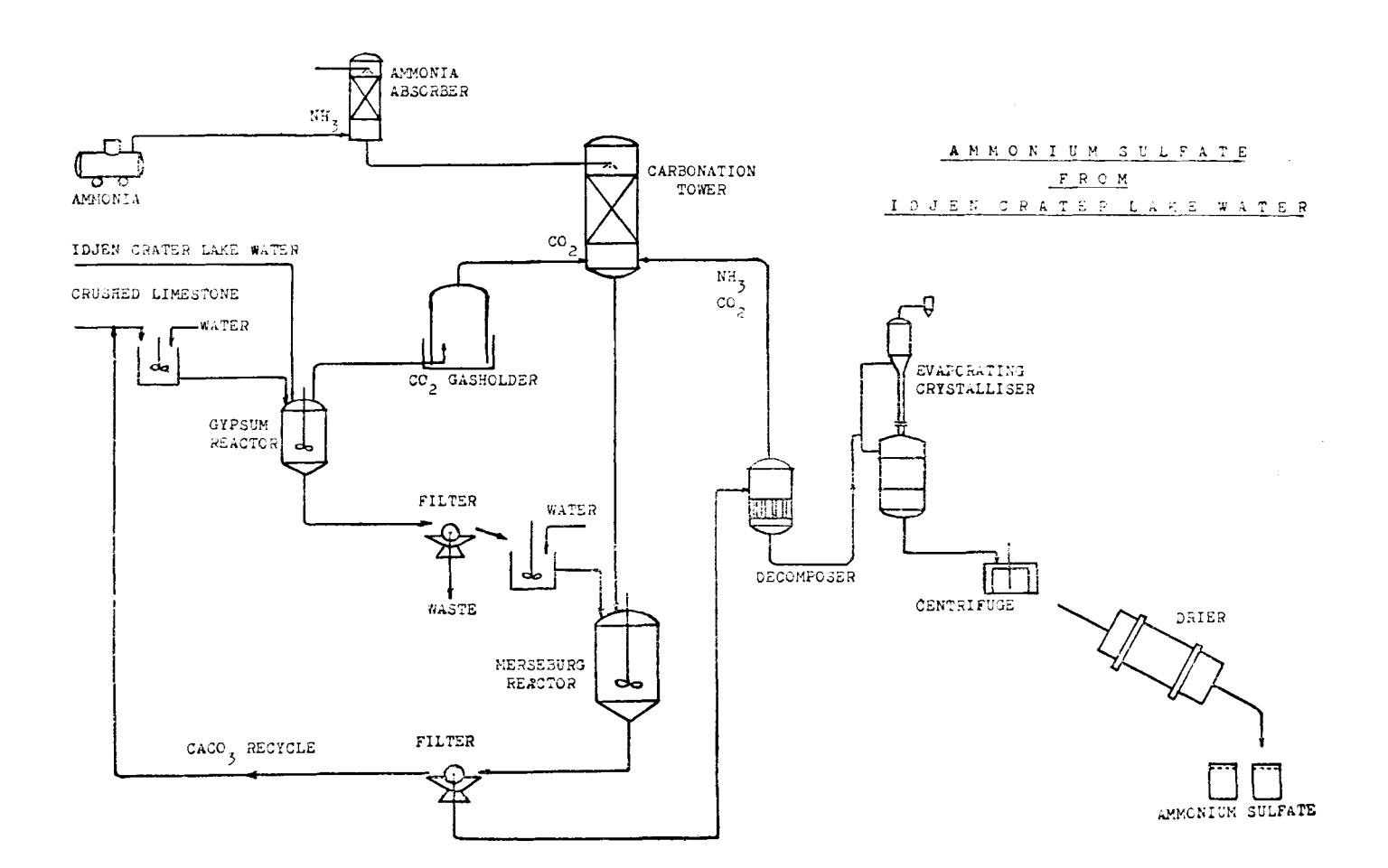
Table 2 Purity and Yield of Gypsum produced from and washed with Lake Water.
| Raw Material Product CaSO4, 2 aq | Waste Liquor | Wash Liq | Washed Product | SO4 consumption per gr. SO4 recovered | Waste Wash Liq. | |||||||||||
|---|---|---|---|---|---|---|---|---|---|---|---|---|---|---|---|---|
| Test No. | m! Lake Water | gr. CaCo 3 | mole ratio Ca/SO | gr. Yield | Purity | Yield (SO3 basis) | Yield (CaO basis) | рН | ml. Lake Water | °.∘ Purity | gr. Yield | Yield 1/d | Reac- tion a/l | Wash- ing j/I | Total o + p | pН |
| a | b | С | d | e | f | g | h | j | k | 1 | m | o | р | q | r | |
| 1. | 250 | 11.89 | 80 | 19.21 | 95.0 | 71.5 | 89.5 | 3.0 | 22.1 | 96.6 | 17.12 | 94.0 | 1.54 | 0.136 | 1.676 | 2.8 |
| 2. | 250 | 13.37 | 90 | 21.20 | 94.5 | 78.5 | 87.0 | 3.5 | 24.8 | 95.7 | 19.0 | 94.9 | 1.38 | 0.136 | 1.516 | 2.8 |
| 3. | 250 | 14.85 | 100 | 26.27 | 87.1 | 89.8 | 89.6 | 4.2 | 81.2 | 98.6 | 20.82 | 90.8 | 1.24 | 0.403 | 1.643 | 2.8 |
| 4. | 250 | 16.35 | 110 | 28.42 | 81.7 | 90.0 | 82.5 | 4.2 | 105.0 | 94.4 | 22.42 | 97.9 | 1.205 | 0.505 | 1.710 | 2.8 |
| 5. | 250 | 17.84 | 120 | 30.41 | 78.0 | 93.0 | 77.4 | 5.0 | 149.0 | 89.4 | 23.65 | 99.6 | 1.205 | 0.716 | 1.921 | 2.7 |
Note:
- 1. Prec. \(CaCO_3\) (99,6%) applied as 20% slurry—b)
- 2. Reaction time 30 min., mixture stirred at 150 rpm.
- 3. Precipitate washed with 500 ml. distilled water and dried at \(60^{\circ}\)C d).
- 4. % Purity indicates CaSO<sub>1</sub>, 2aq. content in product e). (Al and Fe hydroxides independently determined).
- 5. Amount of \(SO_4 + Cl\) in wash liquid j) equivalent with Al and Fe hydroxides in gypsum cakes.
Whether a high purity at low yield or low purity at high yield of product will be preferred should be checked with results of the Merseburg reaction. It should however be noted that
- i) not all sr-rlfate from the lake water will be recovered.
- ii) part of the caco. r-rsed will dissolve arnd will be wasted in the wastc liquor as CaClr.
- iii) the product will contain impurities of Al (OH)., anct Fe(OFI), which will bc precipitated under the conditions of the reaction.
2. Washing of gypsum cake.
In the above it is stated that thc gypsum precipitated in the reaction between lake water and caco, will contain Al and Fe hydroxides as impurities. It is expected that these impurities rvill not dissolve in the ammoniumsulfate reaction and so will be rcturned to the gypsum reactor together with the precipated cacor. Any eventnal build Lrp as a result of this impurities recyclc should however bc avoided.
washing of one of the cakes with Iake water as the logical acid available, indicaties a washing time of 90 rninutcs to bc sufficient to dissolvethesreater part of the inrpurites (sce tablc 3).
Table 3 Imptrritics dissolved in washing gypsum (purity 82ofr'1with 100/n cquivalent of Lake Watcr.
| M inutes | Impurities gypsum (dry basis) | .o./u impurities dissolvcd from cake |
|---|---|---|
| 0 | r8.0 | 0 |
| l 0 | t7.4 | 3.4 |
| 10 | 9.8 | 45.6 |
| 60 | 8.9 | 50.6 |
| 90 | 5.9 | 67.2 |
| 100 | 5.86 | 67.2 |
Note: Gypsum cake as a l0o/r,, slurry is stired (300 rpm) with l00of, equivalent of lake water, filtered and washed.
Based on the above, washing experiments of the impure gypsum from the gypsum reactor with acidic lake water, to remove any undesirable high content of hydroxides, (fron.r the various gypsum cakes obtained in V.l).
have been carried out with a washing time of 90 minutes and 100%0 equivalent of lake water and the results (acid consumption versus purity obtained) tabled in table 2.
Total requirement of lake water needed for gypsum precipitation and washing has also been included in this table.
Results fromt able 2 indicate that purities of the gypsum precipitation from lake water can sufficiently be increased to 89% and higher by washing with an equivalent amount of lake water at a favourable yield (91%) and better).
3. Merseburg reaction.
Ammoniumsulfate is prepared industrially from gypsum or anhydrite with NH<sub>3</sub> and CO<sub>2</sub> gas according to the double decomposition reaction as follows. CaSO<sub>4</sub> + \((NH_4)_2CO_3 \longrightarrow (NH_4)_2SO_4 + CaCO_3\) (Merseburg reaction) 8) In the particular condition the gypsum required is already inafine state, which needs a shorter reaction time if compared to similar applications elsewhere 9)
a) Reaction time and temperature
Reaction time required has been followed at room and somewhat elevated temperature in reacting 20% gypsum slurry at atmospheric pressure with an equivalent amount of \((NH_4)_2\) CO<sub>3</sub> solution, containing excess \(NH_3\) (\(NH_3/CO_2\) molar ratio: 2,07), resulting in a liquor containing 12,5% (\(NH_4\))<sub>2</sub> \(SO_4\).
Table 4% Conversion of gypsum in the Merseburg reaction
| \(\frac{\text{o}}{\text{o}}\) conversion = \(\frac{\text{CaSO}_4 \text{ reacted}}{\text{CaSO}_3 \text{ initial}}\) | |||||
|---|---|---|---|---|---|
| Time | Temp.: 26°C. | Temp. \(37 - 38\)°C. gypsum of \(87.05\%\) purity | |||
| 5 | 68 | ||||
| 7 | _ | 84.5 | |||
| 10 | 80 | — | |||
| 15 | 82.5 | 90.8 | |||
| 20 | 88.5 | 91.9 | |||
| 30 | 94.8 | 95.3 | |||
| 35 | piyina | 95.2 | |||
| 60 | 95.2 | ||||
| 120 | 95.2 | ||||
With 35 minutes reaction time at room temperature, a 95% yield is obtained which is comparable to results obtained in industry <sup>10</sup>)
b) Yield of (NH<sub>4</sub>)<sub>2</sub> SO<sub>4</sub> from gypsum of variable purity.
Reacting Lake Water wih different quantities of CaCO<sub>3</sub> will result in a gypsum precipitate of different purities (see table 2).
As these may have its effect on the Merseburg reaction, different gypsum precipitates have been reacted with (NH<sub>4</sub>)<sub>2</sub>CO<sub>3</sub> as under a) during 35 minutes at room temperature.
| Purity gypsum | % conversion | ||
|---|---|---|---|
| 100 | 95.2 | ||
| 92.2 | 95.1 | ||
| 88 | 95.0 | ||
| 87.1 | 95.2 | ||
| 85 | 95.1 | ||
| 84.7 | 92.0 | ||
| 78 | 92.1 | ||
Gypsum of 85% purity and better easily results in a 95% conversion into ammonium sulfate, when the reaction is carried out at room temperature during 35 minutes.
4. Gypsum prepared from impure CaCO<sub>3</sub>.
Whereas the experiments in table 2 were carried out with pure CaCO<sub>3</sub>, the question is raised whether Al and Fe hydroxides containing impure CaCO<sub>3</sub> can be used in the gypsum conversion in order to know the recycling possibilities of CaCO<sub>3</sub> from the Merseburg reaction.
Table 6 Gypsum from impure CaCO<sub>3</sub> samples.
| Analysis of C | aCO3 | Yield | Gypsum | рН | |||
|---|---|---|---|---|---|---|---|
| %CaCO3 | 0/0CaSO4. 2aq | Impurities Al (OH)3 + Fe (OH)3 | Cake gram | purity | \(\frac{SO_4 \text{ in prod.}}{SO_4 \text{ available}}\) | waste liquor | |
| 100 | 10.54 | 87.1 | 89.8 | 4.2 | |||
| 91.4 | 6.7 | 1.9 | 11.0 | 87.0 | 90.0 | 4.2 | |
| 87 | 6.36 | 6.64 | 10.92 | 86.8 | 89.0 | 4.2 | |
| 78.8 | 5.78 | 15.42 | 11.01 | 86.6 | 89.3 | 4.2 | |
| 74.6 | 6.05 | 19.35 | 11.0 | 86.4 | 89.4 | 4.2 | |
| 67.2 | 8.79 | 24.01 | 13.1 | 73.8 | 88.2 | 4.4 | |
Note: Each sample containing 5.94 g pure CaCO, is reacted with equivalent amoLrnt (100 rnl) of lake water during 30 minutes.
Conclusion: If lime stone finally applied to the gypsum reactor (recycle * rnake up) has ir purity of at least 74.60/0, gypsum of a fairly constant purity (86 - 3794,) wil! be produced.
Since onlv p'rrities of 85o/u are required for a good conversion in the Merseburg rcaction (V.3), above results give an indication that washing of the gypsum as discussed under V.2 is superfluous.
Based on a gypsum feed to the Merseburg reactor of S6o/n purity, it can be calculated thot lime stonc make up for compensating losses in the waste liquor from the gypsLrm reactor amounts to11.8or,'o with a minimum required purity of 95 Ji, thus mirking the ammoniumsulfate manufacturing from Idjen Crater Lake Watcr according to Merseburg with CaCO, to be recycled, a feasiblc process.
ACKNOWLEDGEMENT.
Financial aid from the N{inistry of Higher Education for this investigation is herewith kindly acknowledged. Thanks are due to Miss Siti Aminah Soepoio, IVicssrs Adrima Amadar and Njoman Sudibia for their contribution to tlre cxpcrirncnts in this work.
REFERENCES.
- l. Van Bentmelen R.W.: The geology of lndonesia, vol. [[ yt. 239 -241, Government Printing Office. the Hague 1949
- 2. lbicl p. 179
- 3. Mue llcr, Gcorgc V.: Rcsults of a Prcliminary Investigation of thc ldjen Cratcr Lake as a source of Gypsum and of related economic considcration. National Planning Bureau, Djakarta, July 1956.
- 4. Mucllcr, George V.: Idjen Crater Lake Project. National Planning Bureau, Djakarta, May 1957.
- 5. Seidcll A; Solubilities of lnorganic and Metai Organic Compounds, p. 573, V. Nostrand, New York, 1940.
- 6. Tjiook Tiauw Kien,: Soal Soda bagi Indonesia, Insinjur Indonesia no. 12. 2L - 23 (1959)
- 7. Thc Eirnco Corporation: ldjen Crater Lake Project Palatine. Ill. U.S.A., 1957
- 8. Higson, G.l.: CaSOn as a raw material for chemical manufacture, Chem. Eng. News, 29 no. 43,4469 - 4474 (1951)
- (). Higson, G.l.: The Manufacture of ammonium sulphate from anhydrite, Chem. & Ind. 36,752 (1951).
- 10. Van Ness H.W.: Unique fertilizer plant claims rnany firsts, Chem. Eng. 57 (6), 105 (1950).