

INTRODUCTION
The ultranafi.c rocks ln SulawesL are closely associated with small masses of gabbrole rocks. This paper deals wlth the distrlbutlon, petrology and petrochemlstry of the rocks.
Sanples which are petrographically described in the text were all collected duri.ng the heJ-icopter supported flel-d actlvltles of P.T. International Nickel Indonesia, with close cooperation of the Geological Survey of Indonesia and the Geological Department of the Instltute of Technology, Bandung.
ACKNOWLEDGEMENT
Grateful acknowledgement l-s extended to Dr. Warren Hamil_ ton of the United States Geologlcal Survey, Denver, Colorado for valuable dlscusslons on the pJ-ate tectbnlcs of Sulawesl, and crltlcal revlew of thls manuscrlpt.
DISTRIBUTION
\.
Sulawesi is characterLzed by the side by slde occurence of two arcs ln whlch each ls marked by different lgneous rock asseublages. Grani-te and granodiorite associations are widely distrlbuted ln the Western Arc, whereas the Eastern Arc ls characterized by the absence or scarcity of granltic rocks and the abundance of nafl-c and ultramafLc rocks,
Large ultramafic complexes are extenslvely distributed in the East Arn and the northern part of South-East Arm (Flg. 1). The ultranaflc lntruslons in the East Arm occur as slightly curvtng elongate bodi-es with thelr convex slde to the north. The strlke of these bodles ls parallel to the strike of the encloslng rocks and the dorninant structural trend ln the area. The tectonlc setting of the ultramaflc nasses conforms to that 'of the Alpine-type. They extend dlscontinuously from the eastern-most extremlty of the peninsula west-ward and curve southwest-ward before they reach the neck of Sulawesi following the South-East Arm.
The south-western one comprises a south - east trending string of plutons each of relatively smal-1 outcrop area. The trend starts at Sua-Sua on the east coast of the gulf of Bone and continues along the shore to Pomalaa. There is a possiblllty that these bodies are connected via submarine outcroppings.
At Ponalaa the trend branches, one branch gotng east across the peninsula toward Kendari ernbracing ul-tramafics near Andowengga, Makalelu and Benua while the other branch continues south-east through G. Watunohai and Bombakou to the'rlcinity of Torobulu on the strait of Tioro. The two branches
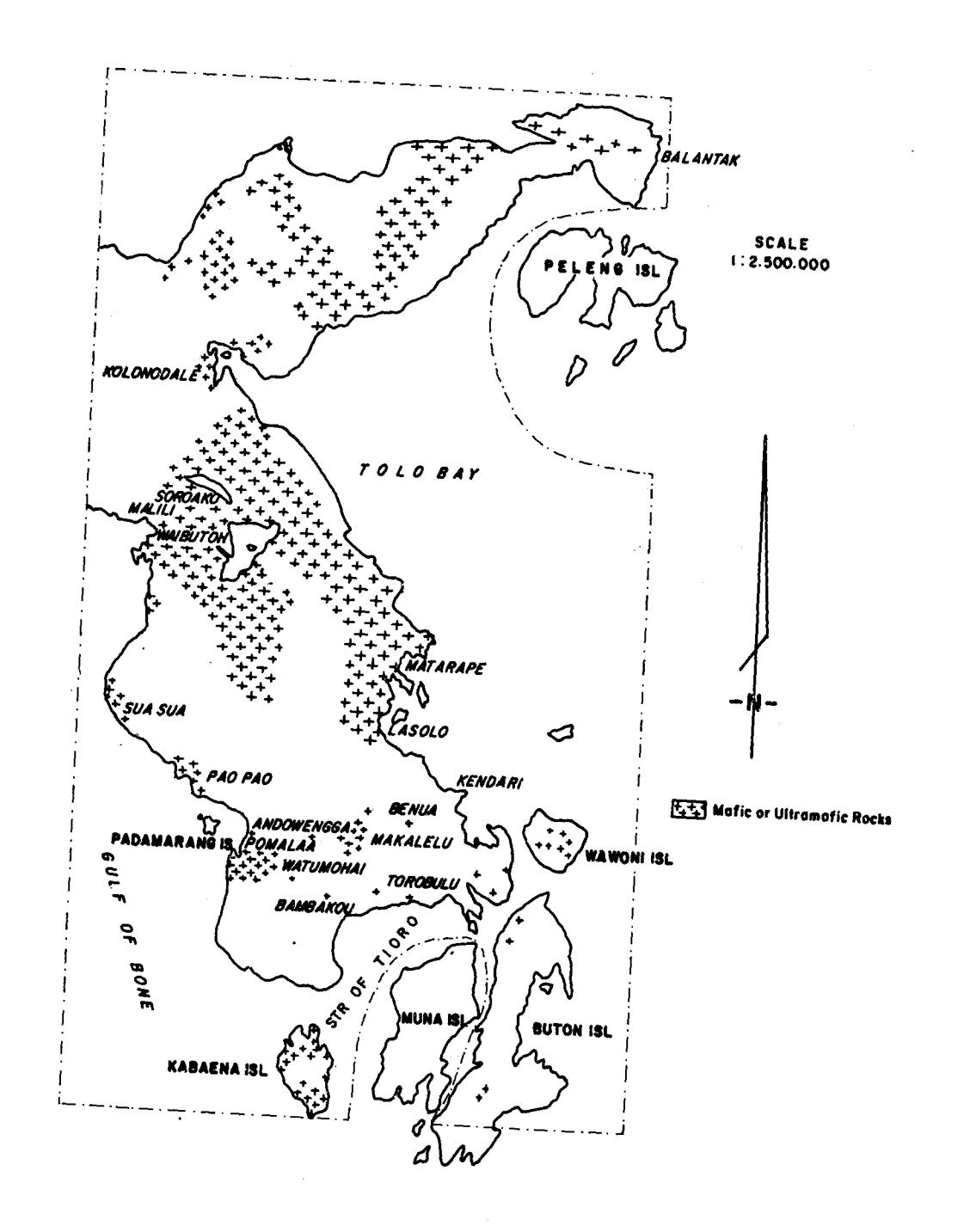
FIG. 1 MAFIC AND ULTRAMAFIC ROCK DISTRIBUTION S.E. SULAWESI
could rejoin at the south-east corner of the peninsula around the Strait Wawoni where there are numerous small ultramafic bodies, both on Wawoni Island and the mainland. Scattered very small occurrences exist well to the south-west of here near the west coast of Buton Island.
The other major belt lies to the north-east across the central mass of crystalline-schists. The ultramafic bodies are relatively large. Approximately 70% of the quadrilateral from Kolonodale to Waibutoh peninsula on the north-west down to Matarape and Lasolo on the East Coast is underlain by ultrabasic rock. The ultrabasics appear to be associated with Cretaceous sediments, dominantly limestones and thinbedded cherts, in contrast to the south-west belt of ultramafics which generally are associated with crystalline-schists.
FIELD RELATIONS
The ultramafic belt is made up chiefly of harzburgite, with some dunite, lherzolite serpentinite and pyroxenite. Closely associated with these rocks are intrusive bodies and dikes of gabbro, diorite, pyroxenite, and basaltic lavas (basalt, diabase, spilite). Lavas of basaltic compositions such as diabase, diabase tuff and melaphyre were found in the northern part of Balantak peninsula at the eastern part East Arm. According to Kundig (1956) this rock suite represents a volcanic facies of the ophiolite rock series. many places, basaltic lavas are intruded by diorite dikes which have caused thermal effects within the basalt and diabase along the contact zone. The age relations with the ultramafic is not known, but the authors believe that, possibly, there had been several phases of basaltic extrusions prior to as well as subsequent to the emplacement of the ultramafic The relations of the above rock suite are likely of genetic nature as suggested by the spatial relationship. Such igneous rock assemblages characterize the outer-island arc of Indonesia, and are widely recognized in igneous complexes of the Alpine-type.
The ultramafic belt is characterized by the irregularity in form and distribution, the lack of primary internal structures, and their occurrence along strongly deformed orogenic zones. The common occurrence of huge ultramafic masses with small amount of gabbroic rocks is very characteristic.
In Soroako (South-East Arm) the ultramafics show a very slight change in composition toward the intrusive margins. The rocks are structureless except that foliation (mylonitization) is more confined to peripheral zones of the intrusive body, and this seems to be a general feature of the ultramafic complexes in the East Arc.
Over most parts of the investigated area, the ultramafic rocks exhlblt various stages of serpentinizatlon. Outcrops of these rocks in the Soroako area show crosscuttlng fractures and veinlets of serpentlne materials. In many pJ-aces the rocks g-lve evidence of shearing. The effect of deformation has been observed as narron zones of intense brecciation in whlch ultramaflc fragments of varlous slzes are cemented by flnely crushed materials. Field observatlons ln Soroako suggest that serpe.ntinlzatlon ls lntenslve aLong zones of brecciat1on.
The age of the ultramaflc rocks ls stlll lnsufflclently known. Previous reports mentloned that the contacts of the lntrusi.ve bodies wlth the encLosing rocks are obscured by tectonic movement, and therefore precluded reLative age datlng. A tectonlc map of the East Arn complled by Kundlg (1956) displays fault-and overthrust-contact. The nature of the contacts of ultramaflc intruslons wlth the adJacent country rock was later confirmed by recent aerlal photographlc studles (Francken and Jones, 1971). Kundlg (1956) consldered the maln phase of the magmatlc activity to be Upper Cretaceous/Paleocene, although the whoLe phase may range fron Upper Cretaceous to Early Tertlary.
Van Bemnelen (1949) found mlnor thermaL effects withln the rocks encloslng the ultranafic bodles ln the area of Lake Matano (South-East Arro), and suggested that the ternperature of the perldotlte nagna durlng the emplacement was not blgh. In the southern part of the South-East Arm, ultramaflc rocks were found ln Jurasslc sedlments without a dlstlnct thernal metamorphlsm. This might indicate a Cretaceous age (post-Jurassl-c), and that the rocks represent low-temperafure intruslon. However, many examples of hlgh-teruperalure peridotltes from other countries have been reported by several authors (Ctrat-11s, 1955; Green, L967), where the mlneral associatlons in the contact zones lndlcate low-temperature metasouatlc reactlons which accompanled serpentlnlzatlon subpequent to the magmatlc intrusion.
Brourser (L947) suggests different age of the ultramafic lntruslons from Cretaceous to Early Tertiaty.
PETROLOGY
Ultz,anafic Rocks
A J-arge number of handspecimens of ul-tramafLc rocks have been collected from the South-East Arm. Samples of their associates originated mostly fron the East Arm.
TexturaL features indLcate that the fresh rocks are mostly al.lotrlonorphic-granular wlth some hypidiomorphtc-granular textures. Thelr gralnslze varles from medlum to very coarse.
The rocks exhibit features indicative of cataclastic deformation and recrystallization. The development of porphyroclastic textures and suturing and fracturing of mineral grains are very common in these rocks.
In the partially serpentinized rocks there is a marked reduction in grainsize, and they develop pseudo-porphyritic textures. In these rocks, remnants of olivine occur as subsequent granular clusters floating in fine nets of serpentine veinlets. In many strongly serpentinized rocks the original texture is often preserved.
Olivine occurs as fractured rounded grains varying in size from 2-6 mm. Strong undulatory extinction and kink banding parallel to (100) in olivine crystals are evidence of high temperature strain. The presence of sub-parallel oriented elongate grains of olivine and schlieren of finely granulated materials at a high angle to the kink banding, make the rock appear foliated.
Ortho-pyroxene occurs as short prisms with ragged crystal edges. It shows exsolution lamellae of clino-pyroxene along cleavage traces of the ortho-pyroxene host. Clino-pyroxene is also present as individual grains interstitial to olivine. Intergrowth textures of olivine and pyroxene suggest simultaneous crystallization. Small unaltered exsolution lamellae of clino-pyroxene are often found in completely serpentinized ortho-pyroxene grains (bastite).
In the partially serpentinized rocks the primary minerals (olivine and pyroxene) are fractured and dissected by numerous veinlets of pale-green serpentine. Olivine is typically replaced by serpentine with mesh structure, whereas pyroxene is commonly replaced by bastite. The alteration pattern within the olivine grains are controlled by the original irregular rectangular fractures. Serpentine can be found as pale-green to brownish green flakes, massive seams, cross-fiber veinlets, and nearly isotropic matrix. Several grains of pyroxene display rims and veinlets of talc aggregates. Talc and tremolite are the alterations of pyroxene. Muscovite flakes are occasionally present in some sections.
Fine particles of magnetite, native ferro-nickel alloy and chrome-spinel are usually associated with serpentine masses. Trains of magnetite particles occur as discontinuous string following the original crystal outline of olivine grains. Magnetite is partly representing the iron that was set free during serpentinization. These opaque particles are also present as irregular blebs in serpentine masses, as veinlets and thin rims enclosing olivine crystals.
Within the Soroako ultrabasic complex (Fig. 2) there are three areas underlying the dominant hills east of the main road north of Wowondula to Soroako in which the bedrock is a partially to strongly serpentinized lherzolite. The primery
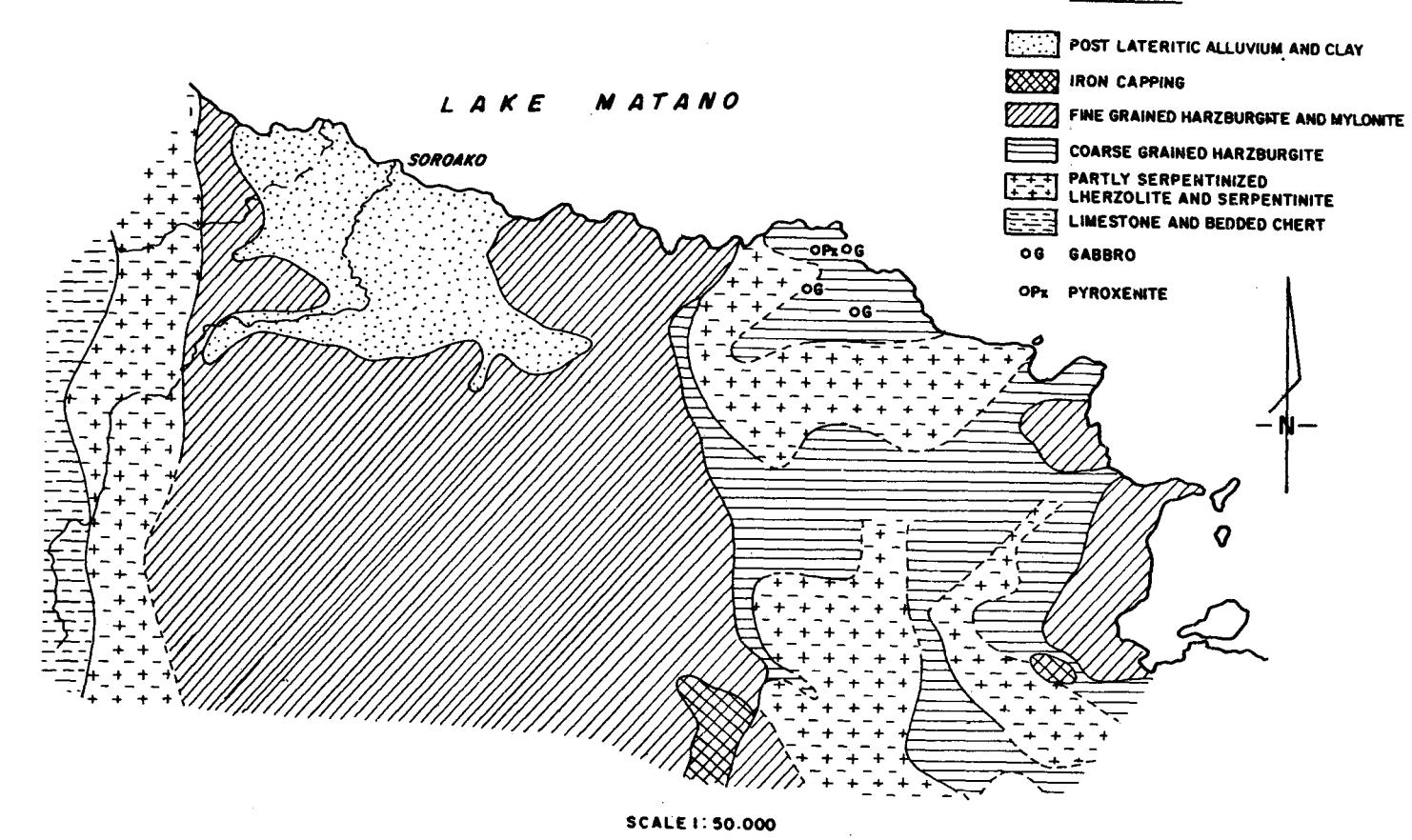
FIG. 2 SOROAKO AREA (GENERALIZED GEOLOGY)
igneous minerals are subhedral olivine with cups-shaped interstitial ortho-pyroxene and diallage. The olivine has some strain lamellae, and the pyroxene shows some bent cleavege traces.
Perioditite samples from Soroako and Pomalaa are immediately distinguishable by the absence of strain effects in the Pomalaa ones.
Elsewhere in the Soroako area, the bedrock is essentially unserpentinized, serpentine being restricted to the immediate vicinity of joints as a thin rim, or to the fine-grained matrix of tectonic breccias.
Anorthosite, Gabbro and Diorite
Anorthosite seems to be the least common rock type among the three intrusive rocks. These rocks are mostly medium-, coarse-grained to pegmatitic with hypidiomorphic-granular textures. Ophitic and porphyritic textures were observed in several sections of gabbros. Fine-grained varieties of gabbroic rocks which have been found in some places are likely chilled margins of the intrusive bodies against the enclosing country rock.
Clino-pyroxene and labradorite are the principal minerals in the gabbroic rocks; the former is also present in some diorites. Clino - pyroxene exhibits partial serpentinization, chloritization, and uralitization along fractures and cleavage traces. In several sections, prismatic crystals of pyroxene are partly intergrown with labradorite in an ophitic fashion.
Olivine is present in a few sections of gabbroic rocks. It is usually fractured and is partially serpentinized along the fractures.
Green to olive green hornblende is the principal mineral in the diorites. It is present as ragged crystal grains and as fibrous actinolitic aggregates (secondary). The latter is commonly accompanied by chlorite and epidote granules. Embayments of several plagioclase grains bu hornblende suggest replacement relationship. Hornblende is partly derived from the alteration of pyroxene.
Plagioclase shows compositional zoning and polysynthetic albite twinning. The crystals are often fractured and show ragged crystal faces. In many sections plagioclase grains are clouded by clay particles, sericite, chlorite, epidote and calcite. The compositions of plagioclase in the diorites and gabbros vary from intermediate andesine to intermediate labradorite.
The accessory minerals in the rock include quartz, analcite, zeolite- and carbonate-minerals which are often present as veinlets and openspace filling.
THE OR]GIN OF ULTRA},IAFIC ROCKS
GeneraL
The asso_ci.ation of mafic-ultrarnafie rocks of the Al-pinetype 1s known from many orogenic zones in various parts of the globe. Coleman (I97L) plotted the ul-trarnafic belts on a world map along with the plate boundarles, and found out that they display very cloce correlatlon in space and time. Another significant feature whlch he noted was the intimate assocla-Lion of Phanerozol-c ultramafic rocks wlth blue-schLsts. This rock assembl.age is also known from the East Arc of Sulawesl. Hamilton (1.970) interpreted the geology of the East Arc 1n terms of subduction geol-ogy, and accepted two subductlon complexes. The western subduction zone (Mesozoic) dipped eastward, the eastern one (Tertiary) dipped west-ward. Zwaxt (1967) considered Sulawesi as paired Circr:mpaciflc belts consisting of a hlgh-pressure belt on the ocean side and a lowpressure belt on the contlnental side. According to Mitchell and Reading (l-971-) many of the ultramafic rock assoclations ln such high-pressure belt were emplaced as cold lntrrlsions. during metamorphism.
The origin of Alpine ultramaflc within orogenlc zones have been argued among petrologists over many years. The main disagreement has been the mechanism of emplacement, whether the rock represents col-d intrusion or hlgh temperature emplacement of lntruslon derived from igneous melt. Several authors have ascribed the origln of ultramafic lntrusive bodles to either crystal accuoulatlon from a maflc magma, crystallization of an ultramafic magma, or residuum from partial melting of a primitive mantle (Challls, 1965; Davies, 1968; Thayer & Hi-runelberg, 1968; Loney et al, 1971).
The main dlfferences of opinlon in the concept lle 1n the depth at whlch magmatic differentiation takes pJ-ace, the mechani-sm of empJ-acement, and differentiatlon ln sltu. In revlewing the current hypotheses for the origln of Alplne ultramafic rocks it is signlficant to note that the theorles have two features in cornmon; these are:
- 1. the upper uranEle ls the source of ultramaflcs and
- 2. the tectonlc setting and re-lntruslon of the ultramafic rocks (tectonic emplacement).
Intv,usion of the ULtrunafic Rocks
The ultramafic belt of the East Arc displays many feattires of the Alpine-type peridotite, these are: the irregularity in form and distrlbution; close relationship of naficultra.mafic rocks with preferential occurrence of the latter with gabbro rather than diorite; predominance of olivine over pyroxene in many ultraurafic bodies; borders of the ultramafic
intrusions are commonly serpentinized and faulted/thrusted against the enclosing rocks; the occurrence of chromite with nodular and orbicular textures in the dunitic parts of the ultramafics.
Previous investigations and results of recent geologic reconnaissance in many parts of the East Arc mentioned that most ultramafic intrusions are bounded by fault contacts. Aerial photographic interpretations provide evidence of either tectonic or unconformable contact with the surrounding country rock. Similar to other known Alpine-type peridotites, the ultramafic rocks in the area under consideration exhibit evidence of tectonic deformation which has complicated the contact effects.
Primary thermal contacts of these intrusive bodies with the adjacent rocks have never been observed in the field. Since detail observations along the contact zones were never carried out, nothing can be said on the nature of the reaction zones.
Beside tectonic deformation, the failure to recognize the nature of thermal metamorphism at the contact of ultramafic bodies may be the result of Ca-metasomatism at the contact rocks by the release of Ca during the process of serpentinization. Coleman (1967) suggested that the reaction zones developed at the same time of the tectonic emplacement of peridotite. Serpentinization and tectonic movement occured at the same time, and therefore the alteration is not related to the igneous intrusion.
Van Bemmelen (1949) recognized the presence of crystal-line-schists, amphibolites, epidote - rocks, garnet-epidote-muscovite-schist near the border of a peridotite intrusion in the central part of the South-East Arm (Lasolo area). He thoungt that their position suggests genetic relationship with the emplacement of the intrusion. To the present authors it seems that the rocks are the result of regional metamorphism prior to the ultramafic intrusion. However, forcefully emplaced intrusions could generate thermal aureoles containing minerals and structures commonly associated with regional metamorphic rocks (Pitcher & Read in Joplin, 1968). If the above mentioned rocks are thermal metamorphic rocks as the consequence of peridotite intrusion, the facies would place them in the hornblende-hornfels facies or higher, indicating a temperatur range of 550° - 700°C (Turner & Verhoogen, 1960).
Examintaion of ultramafic rocks under the microscope reveals that the rocks are mostly allotriomorphic-granular and are made up of interlocking anhedra of pyroxene and olivine in variable proportions; hypidiomorphic textures are also common. Intergrowths of olivine and pyroxene suggest typical igneous textures indicating simultaneous crystallization in a fluid magma. Evidence of cataclastic deformation is reflected by the presence of strained crystals, fracturing and granulation of the primary constituents (mainly olivine) and the formation of ultramafic mylonites. Olivine grains in these rocks display kink banding and strong undulatory extinction, indicating that the rocks have been subjected to considerable stress. The presence of these textures seems to suggest deformation (plastic?) after the rocks have developed primary crystallization textures. Such deformation was very likely accompanied by recrystallization, both processes have obliterated much of the primary textures, and the rock obtained metamorphic textures.
A sample of unserpentinized lherzolite collected near Soroako was analysed and found to contain about 1.60% CaO and 1.44% Alumina.
| Table 1 | |||||||||
|---|---|---|---|---|---|---|---|---|---|
| Fe | Ca0 | sio2 | Cr2O3 | Total | |||||
| 6.24 | 1.60 | 44.1 | .42 | .13 .23 | 3 44.2 | 1.44 | .031 | .009 | 100.00 |
As such the lherzolite is less calcic than most and might best be described as a harzburgitic lherzolite.
X-Ray Fluorescence analyses of ortho-pyroxene, clino-pyroxene and olivine separated from this sample are given in the table.
Table 2
| Olivine | Enstatite | Clino-pyroxene | ||
|---|---|---|---|---|
| Fe | 6.93 | 4.49 | 1.96 | |
| SiO2 | 40.3 | 44.1 | 53.2 | |
| MgO | 50.8 | 33.5 | 18.5 | |
| A1203 | •41 | 3.23 | 3.47 | |
| Ca0 | .07 | 1.86 | 21.7 | |
| Cr2O3 | .02 | .58 | .86 | |
| MnO | .13 | .14 | .08 | |
| Ni | .29 | .06 | .04 | |
| Со | .010 | .005 | .005 | |
| \(^{\mathtt{TiO}}_{2}\) | .02 | .05 | .09 | |
| roi | .23 | .40 | .64 | |
| · | ||||
The projections of the mineral compositions onto the CaO-MgO-FeO phase triangle is shown in Fig. 3. The chemical compositions are, in a general sense, quite comparable to normal ultramafic plutonic minerals. In particular, the olivine is about 91 mole % forsterite with the normal minor substitution of about .29 weight % of nickel. The pyroxenes in contrast are virtually devoid of nickel and contain abundant chromium and aluminum. The physical separation of the clino-pyroxene from ortho-pyroxene was not complete. This has a noticeable effect on the calcium analyses of each phase but otherwise they are so similar in composition that the error due to contamination is well within the accuracy of the analyses.
The mineral analyses can be used to yield rough estimates of the temperature and pressure of crystallization of the lherzolitic sample. These estimates (Table 3) are based on the Al-content to clino-pyroxene and the Fe/Mg ratios of the two pyroxene and olivine. Incomplete separation of the two pyroxene makes it impossible to use the Ca analyses, but the Fe, Mg and Al are relatively unaffected.
The Fe/Mg determinations are mutually compatible and are plotted at B of Fig. 4 which gives the temperature/depth dependence of the mineralogy of lherzolitic rock compositions.
Table 3
| Method | Estimated Temperature-Pressure | ||
|---|---|---|---|
| в 1. | Fe/Mg : | Olivine- Orthopyroxene | 1025°C@1kb-900°C@7kb |
| 2. | Fe/Mg : | Clinopyroxene- Orthopyroxene | 925.°C |
| A | A1203 + Cr203 | of Clinopyro- xene | 1100°C@8kb-1250°C@5kb |
こうこうかん きんかんかいき 大きない
The Al determination gives a much higher temperature or pressure, and is plotted at A. The points are both well on the high temperature/low depth side of "normal" depth temperature curves for the mantle.
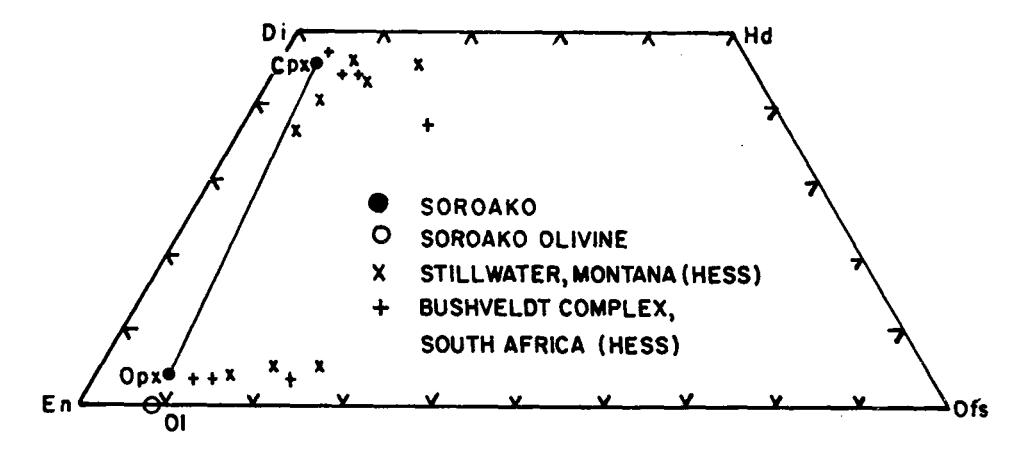
PYROXENES FROM SOROAKO
FIG. 3 COMPOSITION OF PYROXENES AND OLIVINE FROM SOROAKO PROJECTED ON TO THE ENSTATITE - FERROSILITE - WOLLASTONITE TERNARY DIAGRAM.
It ls suggested that the two pressure-temperature palrs are conpatlble with the fo1J-owing abrldged htstory of the Soroako ultrabaslc complex:
Stage 1 consists of crystallizatlon or partlal- nelting at a depth of about 30 kllometres (upper mantle?) represented by the TrP pair A. The AL and Cr content of the cLlno-pyroxene are guenched in at thls polnt. Feldspar - bearing pegrnatltes may have segregated at thls ttme; note that A ls Just at the upper pressure llnit for stabllity of fel-dspar. Within the framework of plate tectonlcs thls would likel-y occur at a midoceanlc ridge after a slow adlabatlc rlse up through the mantle.
Stage 2 conslsts of coollng wlth attendant cataclasis and defornatlon from A through TrP palr B. RelatLvely moblle, Fe and Mg are able to react quickly enough to follow the thermal coollng equllibrium down to thls polnt.
Stage 3 conslsts of deformatlon with access of water and atten{lant serpentlnlzatlon to parts of the complex when coollng dropped T to below 500'C. Retentlon of origlnal water ln the rel-atlvely undeforned therzolitlc rocks may have aided preferential serpentlnization there. This could be complenentary to the harzburgltes and dunltes belng refractory resldues that remained after partlal roeltLng of therzollte and reuovpl (carrylng any t{20 wlth tt) of a basaltlc l-lquid. However, this ls speculati-ve and access of nater during col-d intrusl-on lnto the present location cannot be excluded. Such nater from the country rock 1s an acceptable explanatlon of the serpentlnlzed mylonite on the rtrest edge of the Soroako area. The last two stages in any case could occur at any tlme after the flrst. But the serpentlnlzatton and.cataclasls, slnce they seem to have been orlented relatlve to loca1 structural elements ln Sulawesi, J.lkely occurred durlng the final emplacement of the present compl-ex.
The mineral assemblage of the ultranafic rocks under conslderatlon conforms wlth the splnel-peridotl-te facies (fleld /l II in Flg. 4) (forsterite-enstatlte-dlopslde-chrome splnel), which accordlng to MacGregor (ln Loney et al, 1971) has relatively small stablllty field at high temperatures and moderately hlgh pressuree. On ttrls basls lt nay be lnferred that the deformatlon and recrystalllzation of the rocks occurred ln the upper mantle; irystal envlronment should have produced plagioclase-perldotite, or garnet-perldotl.te, dependlng on the pressure (Loney et al, 1971).
For the ?apuan ultramafic beLt Davles (1968) suggested that the ultrauafics represent prinary mantLe materiaL and the nafic rocks represent prinitive oceanic crust. Ile belleved that the ultramaflc belt was forned tectonically by obductlon
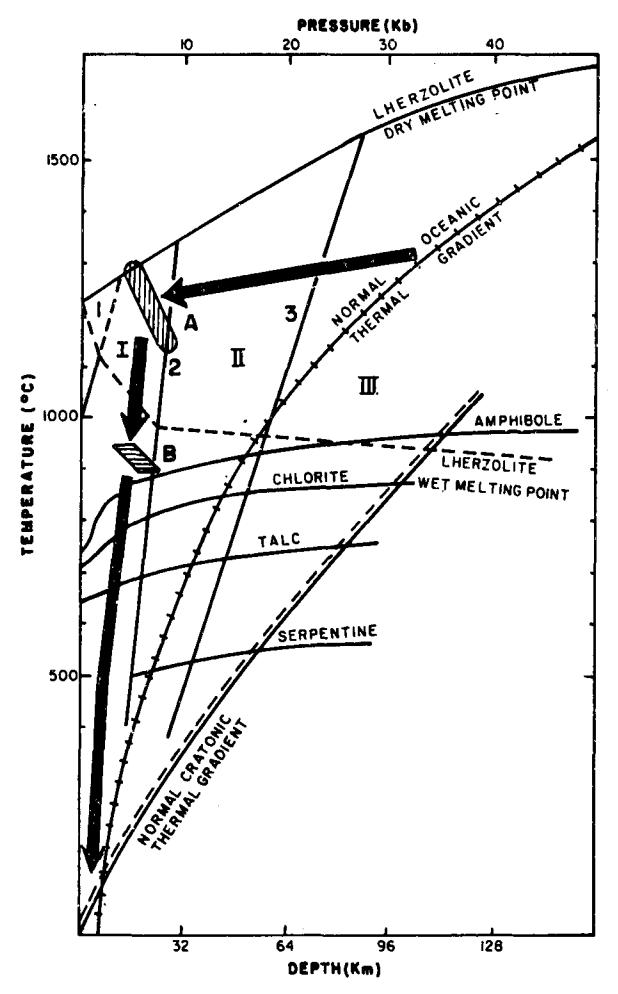
THE INFERRED EQUILIBRATION TEMPERATURES OF THE LHERZOLITIC SAMPLE DISCUSSED IN THE TEXT SUPERIMPOSED ON THE FACIES OF A CHROME-FREE LHERZOLITE COMPOSITION. FIELD LABELLED IN ROMAN NUMERALS ARE: FIG. 4
FELSPAR — LHERZOLITE SPINEL — LHERZOLITE PYROPE — LHERZOLITE I
m
THE PRESENCE OF CHROMIUM IN REAL LHERZOLITES RELAXES THE PHASE-RULE AND ALLOWS SPINEL AND FELSPAR FIELDS TO OVERLAP.
of the oceanic plate onto continental crust from east to west. Challis (1965) stated that the New Zealand ultramafics have formed from fractional crystallization of a tholeiitic magma.
The present authors are very much influenced bu the fact that small intrusive masses of gabbro are closely associated with the ultramafic rocks.
On the basis of the present available informations it has been tentatively concluded that the ultramafics of the East Arc have gone through a complicated history which involved:
- fractionation of a basaltic or lherzolitic magma (?);
- 2. deformation and recrystallization at great depth (upper mantle?);
- tectonic transport of the semi-solid material into higher levels in the crust.