

INTRODUCTION
One of the crucial problems in connection with plant protection and pests management in Indonesia was the problem of continuous and regular data collection of the pests.
After a relatively long delay, an intensive effort in this direction was started again in 1964 (Soenardi, 1967) with the prime emphasis on the control of rice pests. It was followed later on with a more detail study such as population life table of Tryporyza incertulas Walk (Suhardjan, 1973).
Insect ecology is always an interesting subject especially if it deals with insect pests. The following report will be on the ecology of insect pests of rice and vegetable association such as the insects component within a certain area, population trend and parasitism and the damage or infestation of the pests. This preliminary investigation is expected to stimulate further study in the field of insect ecology especially of the insect pests.
MATERIALS AND METHODS
I. RICE INSECT PESTS
1. Insect Composition
The northern part of Java has been subjected to various treatment in relation with the rice intentification program. One of the first steps in this ecological study was to find out the insects composition within the rice field and to compare with the data collected long before the program.
Investigation was carried out from July upto November 1972 (dry season), sponsored by LP<sub>3</sub> Bogor. The location was Ciberes (West Java); the area was planted with local as well as high yielding rice varieties. Insects were collected for a 24 hours period (3 hours interval) from 8, 10, 12, 14 and 16 weeks old crop. At daytime the insects were collected with standard sweeping net of a fine mesh; at night with standard kerosene light trap. One set of sweeping involved 20 m walk to four direction from points of intersection between ricefield dykes selected at random.
2. The population trend of rice-stem borers and gallmidge \(^{\circ}\)
At certain areas, rice-stem borers, gallmidge and hoppers had caused considerable lost and even total. To explore the knowledge on the population trend of the important rice pests, an investigation was carried out at Sang Hyang Seri Experimental Station (West Java) during the wet season 1969. Effective area was 360 m2 and from each plot 16 hills were investigated everyday for larvae and pupae. Each plot was selected at random.
3. Seasonal pattern of borers and gallmidge infestation
The most common method for rice-borers evaluation has been the assessment on the degree of infestation in the form of white heads and deadhearts. Another symptom suitable for population estimate has been on gallmidge by using the percentage of silvershoots within a hill. Direct counting on larvae will be very tideous.
a. Susceptibility of various rice varieties
Example on the influence of rice variety was taken from variety screening investigation located at Bekasi, northern part of West Java. Period of investigation from January upto May 1972. The screened varieties were IR5, IR8, C4-63, IR-532, 1576-2, Dewi Ratih, Pelita I/1, Pelita I/2 and Syntha. Dosage and application of fertilizers was standard, no insecticides were used. Each plot was 10 x 5 m2 with three repetitions for each variety. Hills for whitehead, deadheart and silvershoots investigation were taken from intersection of line 3, 8, 13 and 18 with line 3, 8, 13, 28, 33 and 38 (32 hills) with 7 days interval of observation. The degree of infestation was expressed in \(\frac{M-m}{M} \times \frac{N-n}{N} \times 100\%\) (M = number of tillers observed; m = numbers of infected tillers; N = number of hills observed; n = number of infected hills).
b. The effect of insecticides on borers population
From hundreds of insecticides experiments took place from all over Java, one experiment from Cirebon (West Java) will be taken as an example. It was a trial of 8 different insecticides and the rice variety was Syntha. Measurement for each plot was \(5 \times 10\) m2 and there were 3 repetitions for each insecticide treatment. Fertilizers application was standard. The period of investigation was January to June 1970. The percentage of borers infestation were calculated from 32 hills from each plot.
II. VEGETABLES INSECTS PESTS
Insects Composition
Component of insect pests from vegetables association have not been intensively explored. It will be interesting in the flrst place to reevaluate the inportance of Lnsects from this comunlty. The sunrey area lras Lenbang (West Jav:i), elevatlon 900 n. Aslde from routlne earnpllng for PLuteLLa sp. alod Croeidolomia sp. a speclal effort wae uade to evaluate the other pests frou Novembet L972 to May 1973.
Countlng of Lnaects were done on lndlvldual crop chosen at random. Samples were taken ln plaetlc bags for ineects analyels.
2. Insecte eonposi.tion and. the degree of danage i,n relation uith erop stages
Cabbage was selected to lllustrate a correlatlon between the developnent of lnsects conposltlon and the degree of danage 1nfllcted to the crop as host.
Ten cabbage were selected at random from several locatlons 1n Lenbang and Pacet (West Java) at weekly tnterval and kept singly ln plastlc bags for lnsects analysls and assessment of damage. The sanpling perlod was during the wet season ot L97L1L972.
A more detall lnvestlgatlon \ras carried out withln an area of 0.5 I{A wlth a more controlled conditlons. The area was divlded lnto 4 plots, each was 16 x 65 n2. The cabbage varlety was Orsena (Denmark). Manura was used ln nursery and for protectlon Dlthane-45 (0.27() and Tamaron 0.12 were used. Each plot conslsts of approxlnately 1600 cabbages. Fertlllzers used were urea (200 kg) and manure (9.500 kg). .One plot waa untreated for control and the other three rrere treated 0.052, 0.102 and 0.152 Tamaron ln 5 days lntenral. For lnsects countlng, 160 plants were chosen at random and the count was started from 10 days after transplantlng upto 65 days with an lnterval of 5 days.
3. The probLens of paz,asitism
Little has been done to evaluate the degree of parasltism on insect pests especlally lnsects pests of vegetables. The dtfflcultles are mostly on the ldentlflcatlon of the paraeltes. Evaluation lras done by collectlng materi.als from fields, kept ln v1als and walt for the ernerglng Parasltes. The percentage of parasltlsm wae an expresalon of how uany collected rnaterlals bel.ng parasltlzed. Evaluatlon froo pupal stage of several pests durlng L972 - L973 at Lembang area produced meager data on parasltisro. We knew e.g. that Agrotis ypeilon was parasltlzed by tachlnld at 5Z level, whlch meane 5 out of 100 collected plpae from the fleld were paraaltlzed;
C. bi.notalis by lchneunonlds at 57.1eve1, P. macuLipennia by Angitia eeropluga upto 752; P. orielnlcea by lchneunonlds and broconlds at 102 level and H, artni,gera by lchneumonlds at 5% level.
A rather lntenslve study on paratlslms has been carrled out wlth the populatlon of PLuteLLa maauli,pennis and lcs paraslte Angitia cerophaga. Assessment on the degree of parasltlsn of P. maculipennie by Angitia eeroplwga were made several tlnes at Lenbang area. Flrst, fron Novenber 1968 upto urld 1969. Then from January 1970 upto nld 1970. Sanpllng were done weekly fron 50 cabbages ln a plot randonly selected. A11 stadla of PLuteLLa vere counted and collected. Percentage of parasitisn was calculated from the emergence of Angitia fron 50 PLuteLLa pupae chosen at random.
Data of nonthly temperature, huntdlty, raLnfall and numbers of ralny days at Lenbang area rraa obtalned fron the Dlrectorate of Meteorology and Geophyslcs for a perLod frour 1951 - 1960; 1968 - 1970.
RESULTS
I, RICE INSECT PEST
1.. Inseet Cornpoeition
From these fLve tlnee of sampllng and each of whlch wlthtn 24 hours of survelllance we have the lnpressLon that insect populatlon from rlce flelds around thls area nas not very poor. There were more than 10 orders repreaented ln thls area (Fig. l-). Furthermore, level of populatlon was relatlvely hlgh.
2. The population trend. of irnportant riee inseets
From a total of 33 observatlons (x 16 h111s) on 1, 2, 3 and 4 months old crop, a rather rough population trend of borers was constructed. It was found that borers egg cl-usters were found throughout the flrst 3.5 months perlod of observatlon and were urostly confined on early stage crop ( L - 2 nonths). Concentratlon of egg clusters nere spotted from medlo February upto early March (Fig. 2). Early lnstar larvae were found nostly on the flrst 2.5 oonths of observatlon, whlle late instar larvae and pupae were found mostly ln the last half perlod of observatlon. Egg cLusters reappeared ln the last weeks of rlce crop season (several days before harvest). From the results of thl-s observatlon it 1s assumed that wlthln a slngIe rret season there were three groups of borers populatlon. The flrst group lras a snal1 lnltlal populatlon, the uothe fllght ended approxlmately 40 days after
transplantation (however lt may vary accordlng to the etart of rlce cultlvatlon ln the area). Egg clusters could be spotted untll the fLrst month after transplantlng (Flg. 2). The second group conslsted of accr.oulatlons of several broods or1 glnated fron the surroundtng area and fron the area ltself. Eggs were found for a perlod of 20 days, early instar larvae for a perlod of 50 days and late lnstar larvae plus pupae for the last 30 days.
If lt was consLdered that the net aeason rlce crop started late November and early December (the start of ralny season ln the northern part of West Java) then lt ls assumed that thls type of borers populatlon trend ls typlcal for the northerTI part of West Java and even part of central Java. Fron December to medlo January, rlce crop couLd accorunodate one lnitial brood of borers. From nedlo February to medlo March egg clusters and early lnstar larvae were domlnant. Light trap catch showed 1fi.g. 3) that durlng rnedlo February, moth catch was lncreaslng and reached lts. flrst peak. From medio February to rnedl.o March early instar larvae were domlnant, egg clusters decllned. From tredlo Aprll to. medlo May (harvest for early varletles) late inetar l-arvae was predominant. Egg clusters rrere concentrated on Late March, Aprll and early May. The pattern of noth catch by Llght trap showed a very closely related pattern of populatlon of the lmratures. Flrst there was an 1nltiaL1y low level of moth catch ternlnated on medio February. The second and the largest uroth populatlon wlthln the season started ln medio March and after a sllght drop ln late March lt was contlnuously hlgh untll medlo Aprll. The thlrd group of rnoth fllghts appeared ln early May.
Other important rlce insects have not been lnspected thouroughly. However, frour the llght trap catch (F19. 3) we got and lmpression that several rlce insects have a rather slmllar pattern of population developnent while monltored from this trap. These are Nilaparuatd sp. r Nephotettis sp. and Inazwna sp. Rlce bugs (Leptoeotisa and Podnps) appeared several tlmes but they were rather far-off from the borers pattern op populatlon.
p I t 1
3. Seasorlal patterm of infestation
Borers infestatlon reached lts hlghest peak at approxlrnately 50 days after plantlng. It rnay represent the second large populatlon of brood mlxture origlnated from the lnitlal snall populatlon. The second hlghest lnfestatlon occured sevi eral days before harvest (126 days after plantlng date). Thts phenomenon may represent the last brood of borers populatlon wlthln the season. Between the hlghest lnfestatLon at the early season and the second htgh lnfestation at late seasont
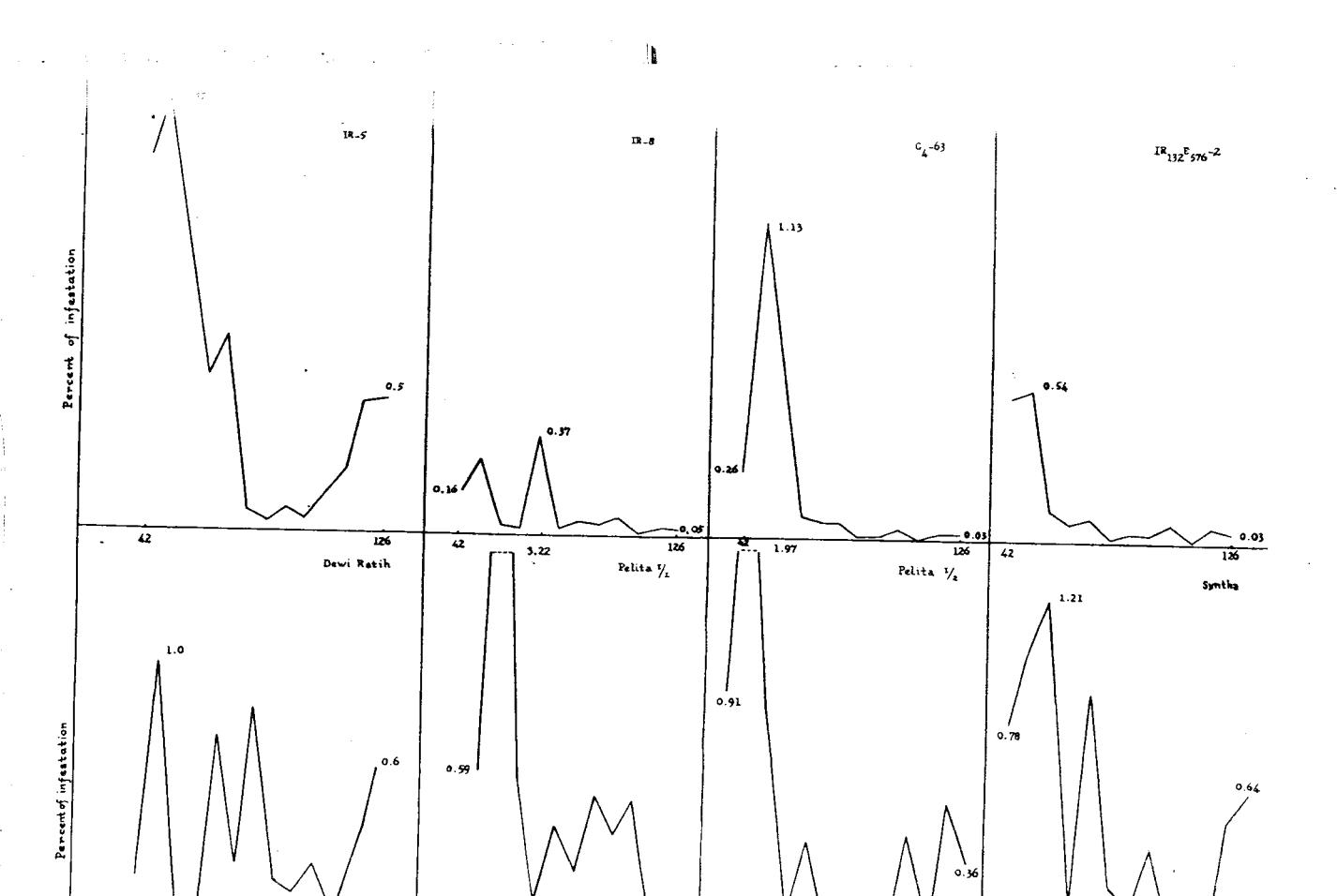
Fig. 4. Pattern of borers infestation on several rice variaties. (Bekasi, West Java, 1972)
126 42
126 42
42, Crop stage (days)
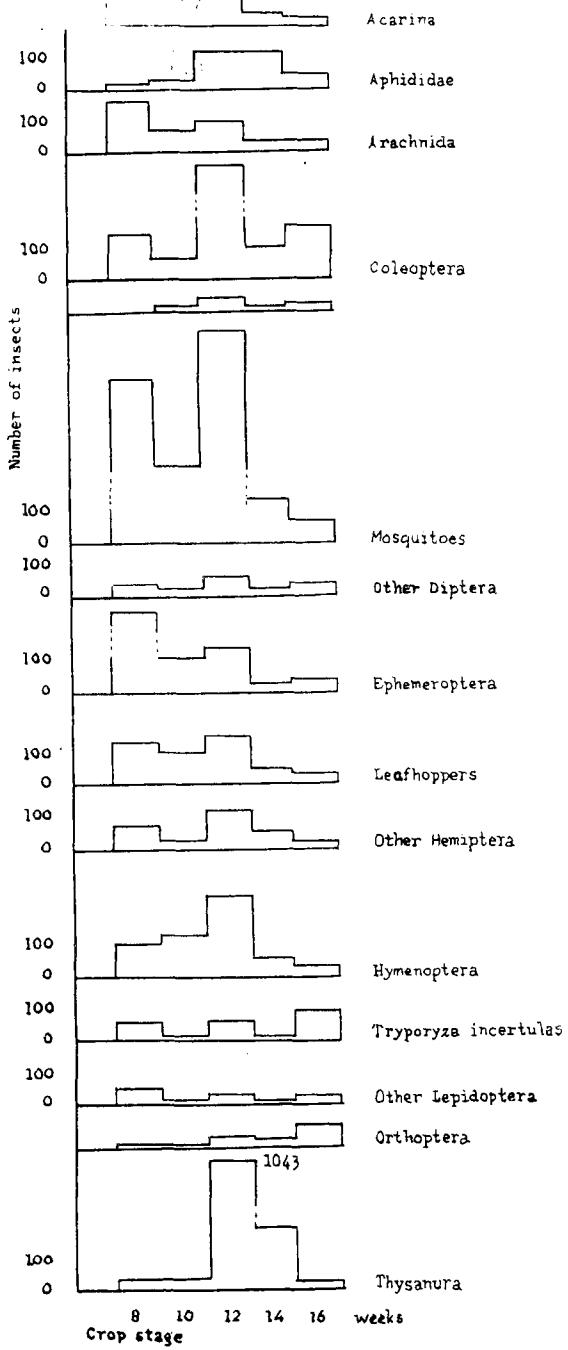
Fig. 1. Insects and arthropods from rice crop (sweeping net and light trap) Gempolsari (West Java) July - November 1972.
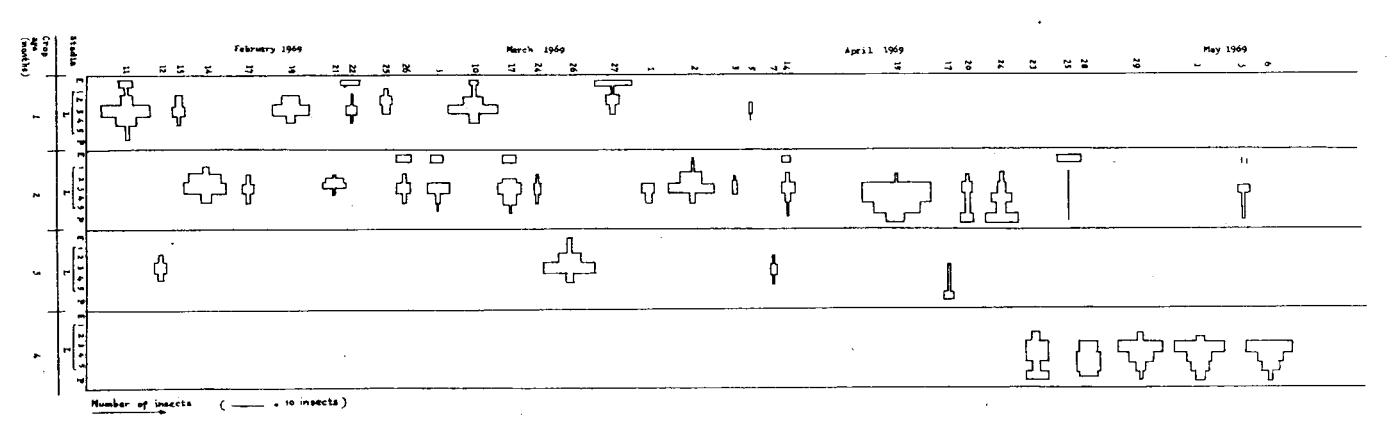
Fig. 2. Composition of immatures borers randomly sampled (16 hills daily) at Sang Hyang Seri Exp. Sta (West Java), February - May 1969. E = egg clusters L = larvae (1 - 5 instars) P = pupae
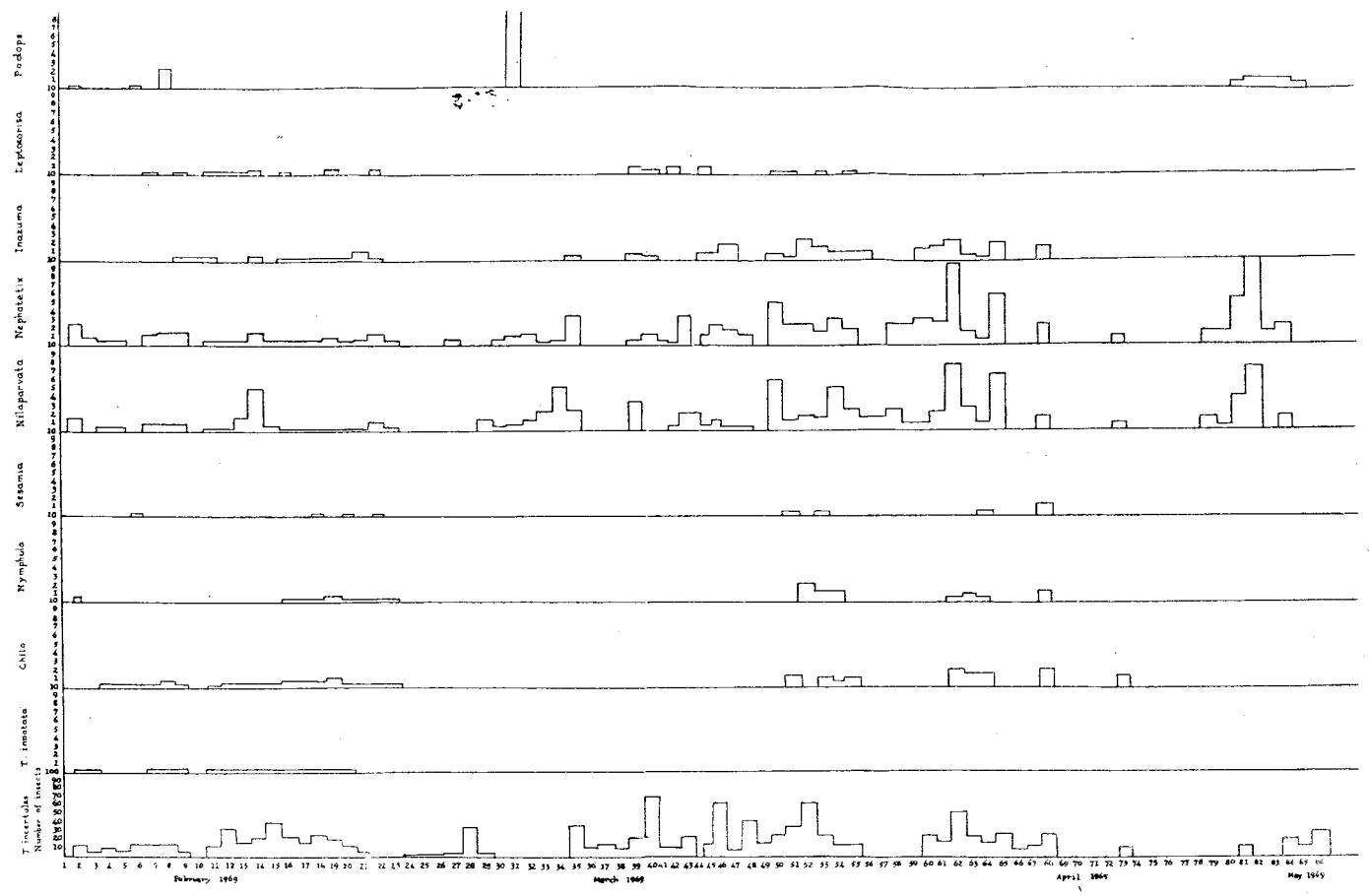
Fig. 3. Light Trap Catch from Sang Hyang Seri Exp. Station, February - May, 1969.

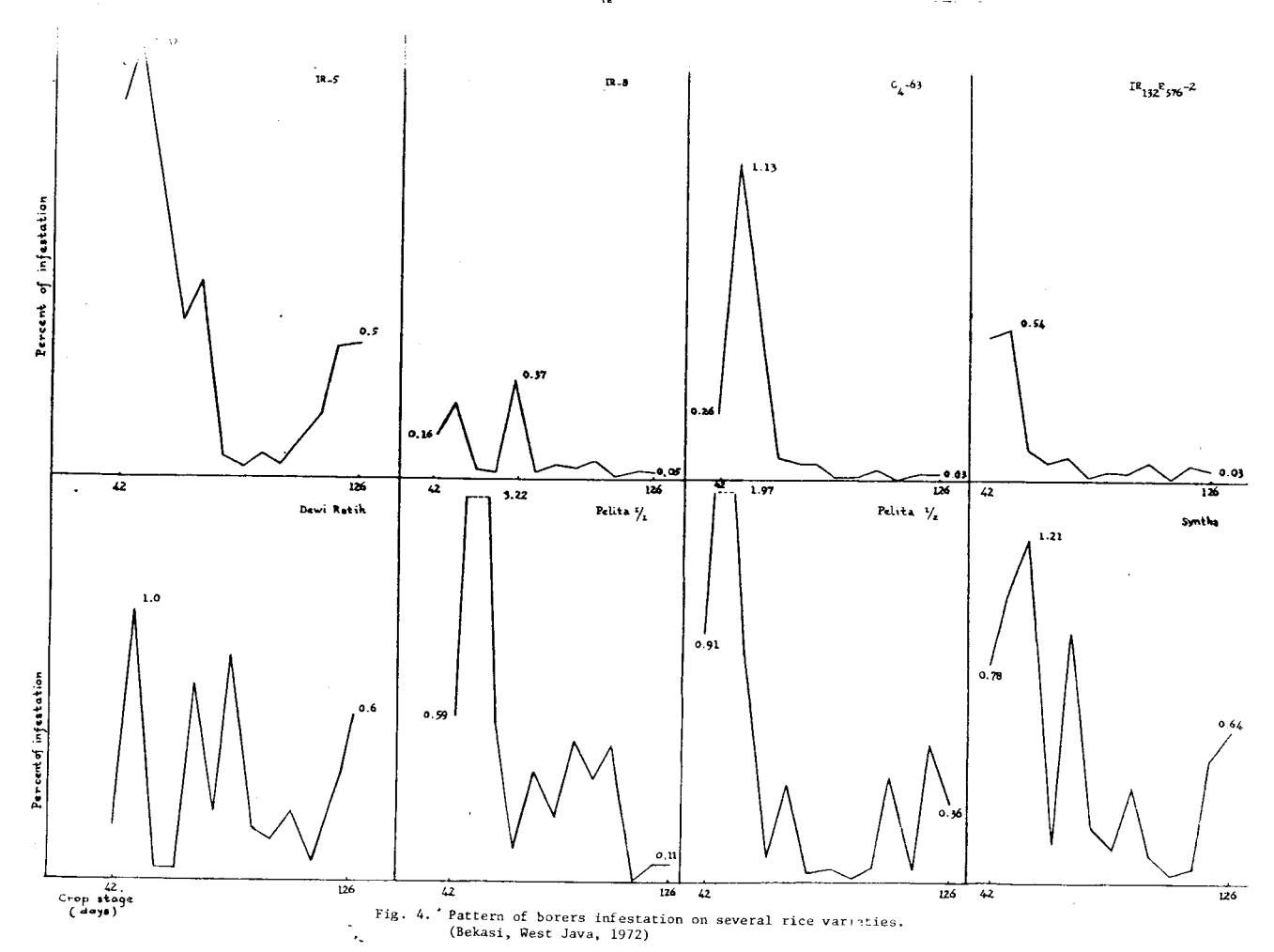
two or three ever decreasing peaks of infestation could occur between 80 - 100 days old crop, the infestation were relative-lu low (Fig. 4). Counting of immatures from tillers showed that the high population level were found around 60 and 120 days ald crop (Fig. 5). The pattern of two peaks, one at the early crop stage and the second at the late crop season is similar to the infestation pattern.
Now come the question of whether varietal difference had any effect on borers population trend. From the result of this investigation and if the degree of infestation as well as the population of the immature insects were taken into consideration, it appeared that the pattern of population trend from various varieties was similar (Fig. 4). The difference was on the level of susceptibility toward the insect attack as seen from the level of infestation and also from the content of the immatures. When this infestation level was compared or matched with the light trap catch (Fig. 6), then there was a similar trend such as reported previously.
Results of the observation from the same location told us something about the gallmidge population pattern. It was apparent that there was a rather significant population level infected approximately 50 days old rice crop (Fig. 7). The level decreased on 60 days old crop and increased to a relatively very high population level around 90 days and the level dropped down to very low level. Furthermore the infestation trend of gallmidge on 8 different varieties was similar, the differences was only on the level of infestation.
It was interesting to see from the results of the investigation that the trend of borers infestation was similar for the treated and the untreated crop; and again the difference was only on the level of infestation (Fig. 8).
4. The general population trend of borers
Speaking of population trend based on insects infestation and also from immatures and moths catch, it may hereby be concluded that within a certain crop season there was only one trend of borers population that was valid within a relatively large planting area although there were several rice varieties and also subjected to the application of several pesticides. There was an initial borers brood upto 30-40 days old crop followed by a second large cumulative brood which is low at 70 days old crop. Finally there is a last group of borers population which will go through a fallow period and which be the initial brood for the next season and reached its peak around 100 days old crop. Moths catch from this area was also similar to the catch pattern from places previously mentioned.
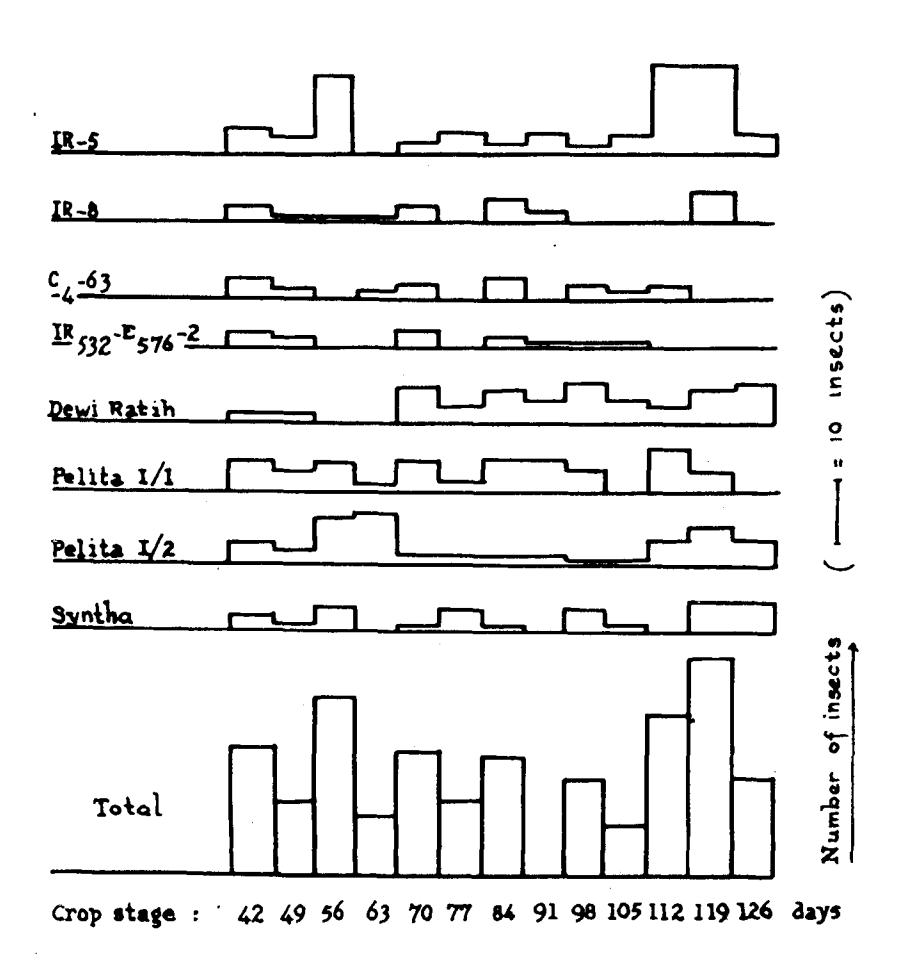
Fig. 5. Immatures borers on 8 different rice varieties. (Bekasi, West Java, 1972)
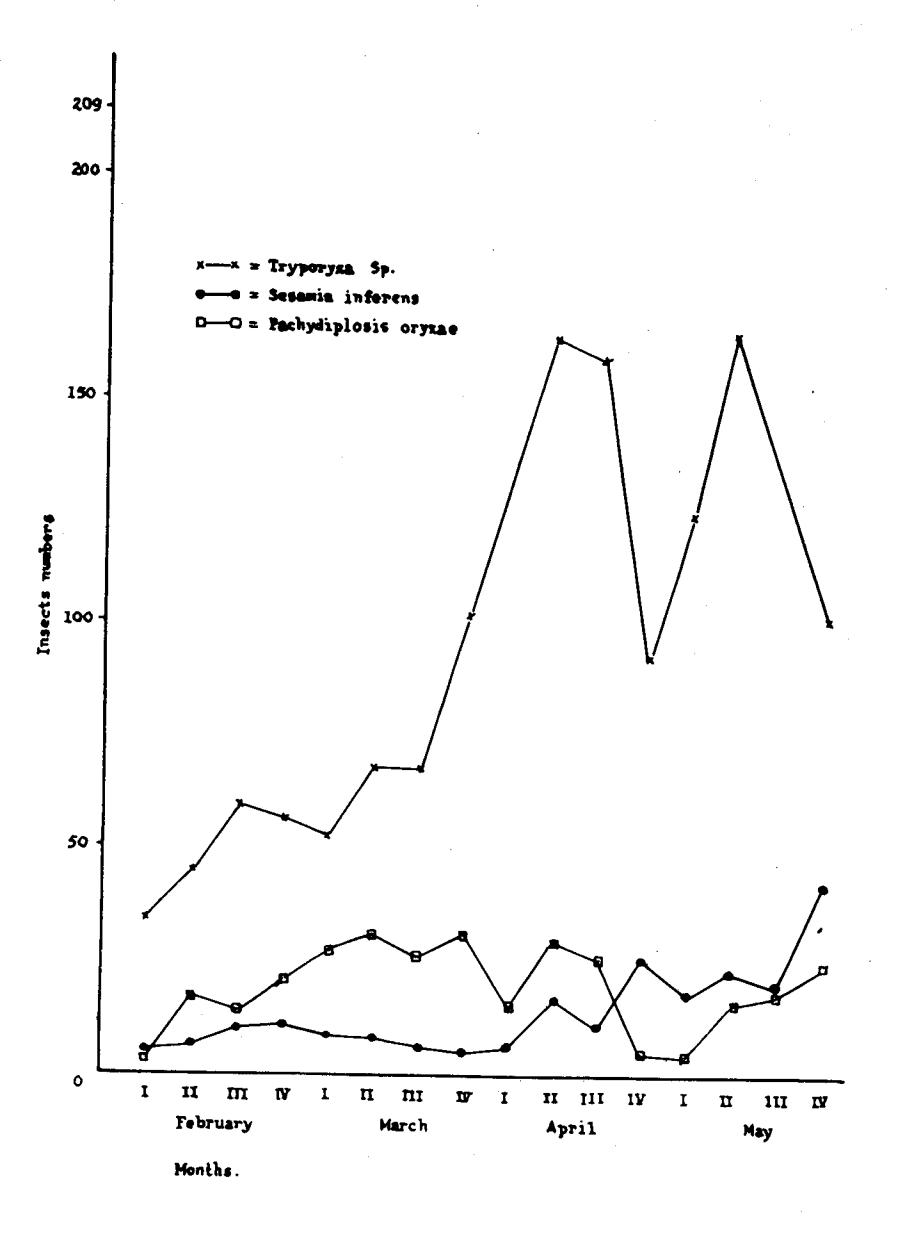
Fig. 6. Light trap catch from the experimental area. (Bekasi, West Java, 1972)
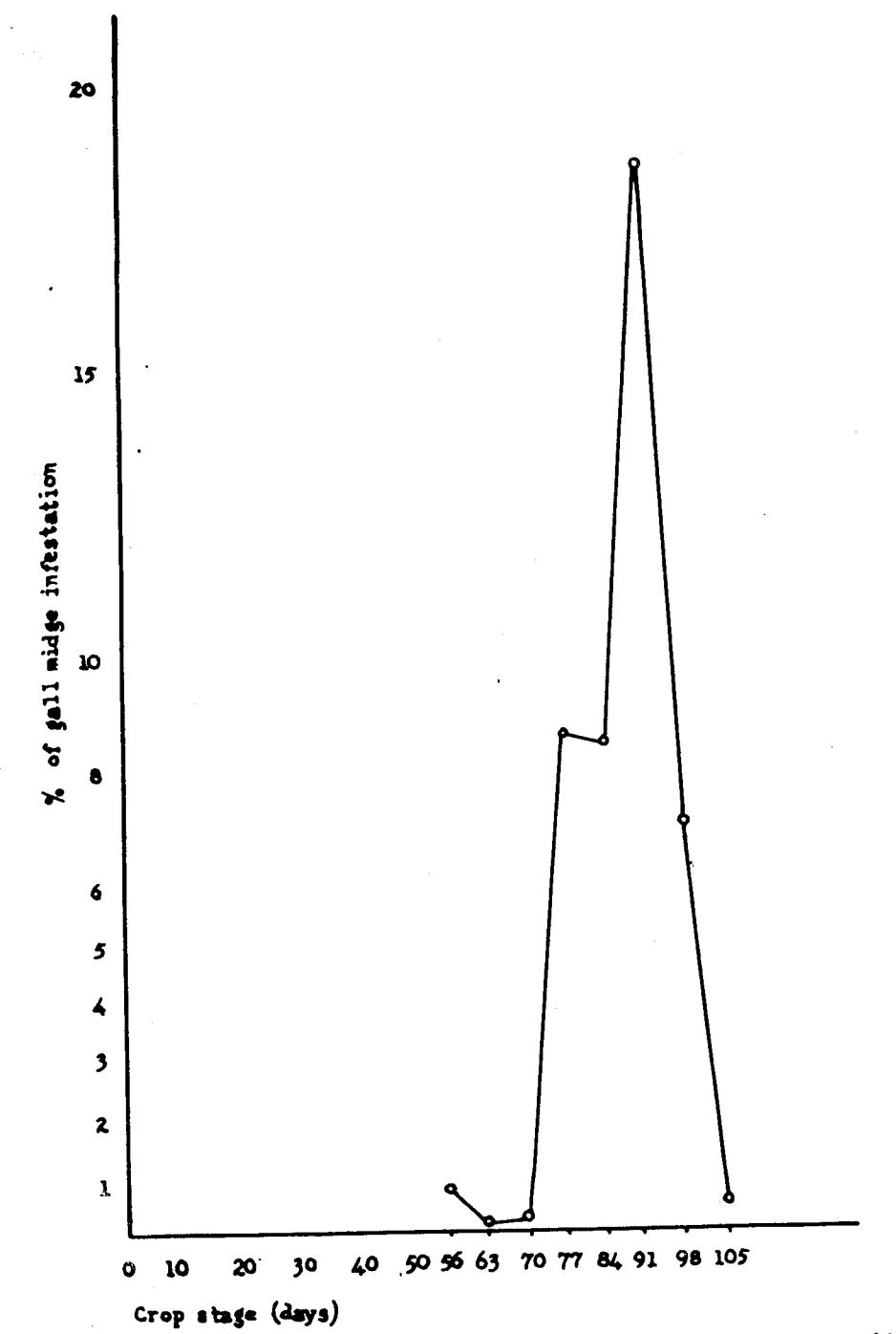
Fig. 7. Pattern of gallmidge infestation. (Bekasi, West Java, 1972)
8 types of insecticides
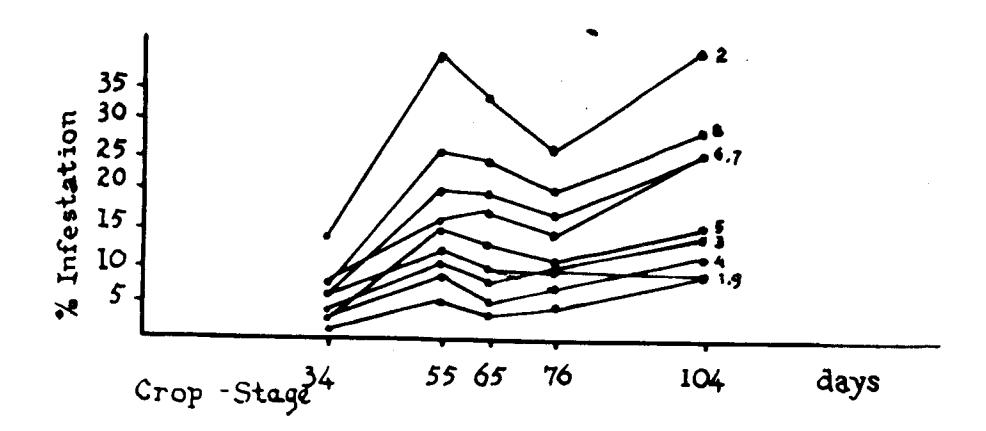
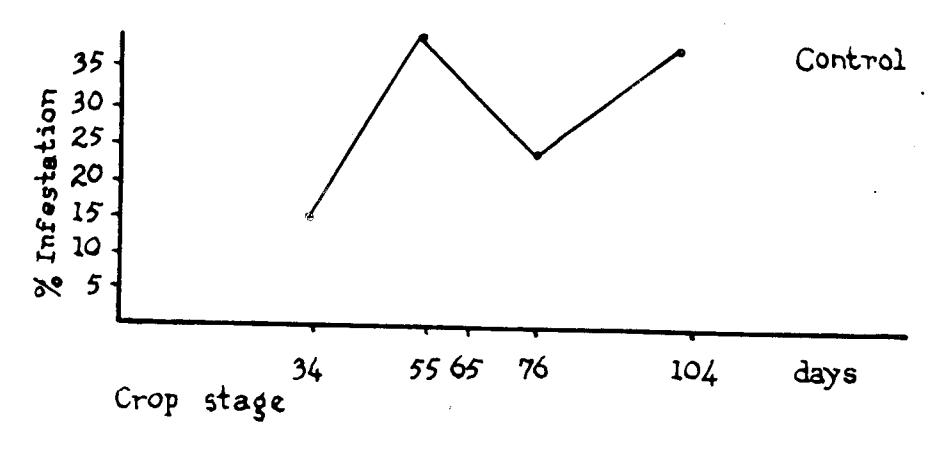
Fig. 8. Pattern of borers infestation on Syntha sprayed by 8 different insecticides. (Kapetakan, Cirebon, West Java, wet season 1970)
5. Notes on parasites
There was no clear picture on the general level on rice pest parasitism throughout Java. Samples from several places at West Java revealed that the level of borers egg parasitism were under 40%. In addition, several borers larvae were also paratisized by nematodes (Amphimermis sp.). Gallmidge was mostly parasitized by Platygaster oryzae which averaged 70%. Few eupelmids were also found in gallmidge.
II. VEGETABLES INSECTS PESTS
1. Insect Components
The following results illustrate the composition of insect pests from vegetables and ranked in the order of importance.
Cabbage
- 1. Plutella maculipennis Zell
- 2. Crocidolomia binotalis Zell
- 3. Aphids
- 4. Agrotis ypsilon (Hufnagel)
- 5. Prodenia littura (Fabricius)
- 6. Plusia orichalcea Fabricius
- 7. Heliothis armigera (Hurbner)
- 8. Hellula undalis Fabricius
- 9. Laphygma exigua (Hurbner)
- 10. Leucania unipunctata (Haworth)
- 11. Plusia chalsites (Espen)
Tomatoes
- 1. Heliothis armigera Hurbner
- 2. Prodenia littura Fabr.
- 3. Plusia orichalcea Fabr.
- 4. Agrotis ypsilon (Hufnagel)
Potatoes
- 1. Phthorimaea opercullea Zeller
- 2. Elimaea chloris de M
- 3. Heliothis armigera (Hurbner)
- 4. Epilachna sparsa Hrbst
- 5. Myzus persicae
- 6. Plusia calchytes (Esper)
- 7. Lygus solani chu
- 8. Nezara viridula L
- 9. Anomala varidis F
- 10. Gryllotalpa africana Pal
Condition of the field (1972 - 1973)
Mixed crop, several different vegetables were cultivated closely together. Insecticides used by crop growers were Tamaron, Bayrucyl, Antracol, Prolan an Antracol (for tomatoes), fungicide: Dithene - 45. Cabbage was treated with Tamaron, Bayrucyl and Endrine. Information on pesticides application came from the growers. (Some of the pesticides mentioned has not received appoval for release by Indonesia Pesticides Commission).
2. Insect composition and the degree of damage in relation with crop stages
In a period of 16 weeks sampling (1 week interval) it was apparent that there were two predominant insects from cabbage: Plutella maculipennis and Crosidolomia binotalis. insects were collected, they were groupped according to the instars. It was possible therefore to construct a kind of population table from several of the vegetables insects. was apparent that there were two broods of pests within one crop season (Fig. 9). To start with Plutella was the pest appeared on cabbage (Agrotis also, but in a Smaller scale). The first generation terminated on the 9th weeks old cabbage, changes from larval composition to pupal started on the 10th weeks old crop. Soon the population multiplied approximately 10 times and it was the second generation. \(C.\ bi\)notalis appeared later, the group of the 1st instars appeared. already in larger number then Plutella, at the 3rd weeks old crop. The second generation terminated later then Plutella. but the size of the population was almost similar.
The second point of interest was to see any possible relationship between the development of various insects population, the level of leaves damage and the percentage of infected leaves. Assessment of leaves surface damage were made by transfering the outline of leaves area into cheese paper, including the damage portion. The damage portion were cut out and weight. Percent damage was expressed as the weight of damage portion devided by the intact portion. The overall results as it is presented in Fig. 10, showed the succesive appearance and development of insect pests on cabbage. The optimal number of infected or damage of leaves was on 11 weeks old cabbage. It happened simultaneously with the population increase of the 3rd broods of Plutella maculipennis and C. binotalis and other insects. Speaking of damage, there were more or less 4 peaks within a season; 3, 4, 12 and 16 weeks old cabbage.
Tomatoes
From intensive pbservations started on November 1972 and ended on May 1973 it was concluded that the insects composition of tomatoes was very much influenced by the surrounding crops. Sampling for each location were done by selecting at random 5 rows of crop. Insects were collected, damage fruits were counted and also total fruits within a row. It was noted that tomatoes located in a heterogenous environment (potatoes, corn, cabbage, sweet potatoes, carrot etc.) were attacked by Heliothis armigera, P. littura and Plusia orichalcea at a relatively high population level. If only surrounded by one or two types of crops, most likely it was found only Heliothis armigera and in a lower population level. Fruit damage were due mostly to H. armigera infestation, both in number of fruit as well as on degree of damage.
3. The problems of parasitism
From the available data any correlation between the population level of Plutella as host and Angitia as parasite and also with the climatic factors was interpreted (Fig. 11).
The population level of Plutella in October and November 1968 averaged 50 larvae per crop. The damage due to this insect was high at that time and it was assumed as an outbreak. No cabbage escaped from total damage. Most of the growers expected to overcome the problem by using several organophosphates insecticides. The population level of Angitia parasitism was low on both October and November 1968 (Fig. 11). There was no outbreak in 1969 and 1970.
Looking at the population of Plutella and Angitia monthly within those 3 years of investigation it was found out that the level of parasitism in general was low in August, September and October. On the other hand the population of Plutella was high. The population level of Angitia increased in October, December, January and February and declined gradually to the lower level in August - September (Fig. 11). While the population of Plutella was low in March, April, May and June, the population level of Angitia was relatively high. tion of parasitism plot by plot revealed that from all the collected samples the percentage of parasitism was lower then Looking at the situation of several climatic factors it seems that rainfall could have any effect on this population problem. No statistical analysis were made however on the relationships between the insects population and the rainfall. It seems, that aside from pesticides used regularly by the growers (without which it will be a total crop damage) rain-
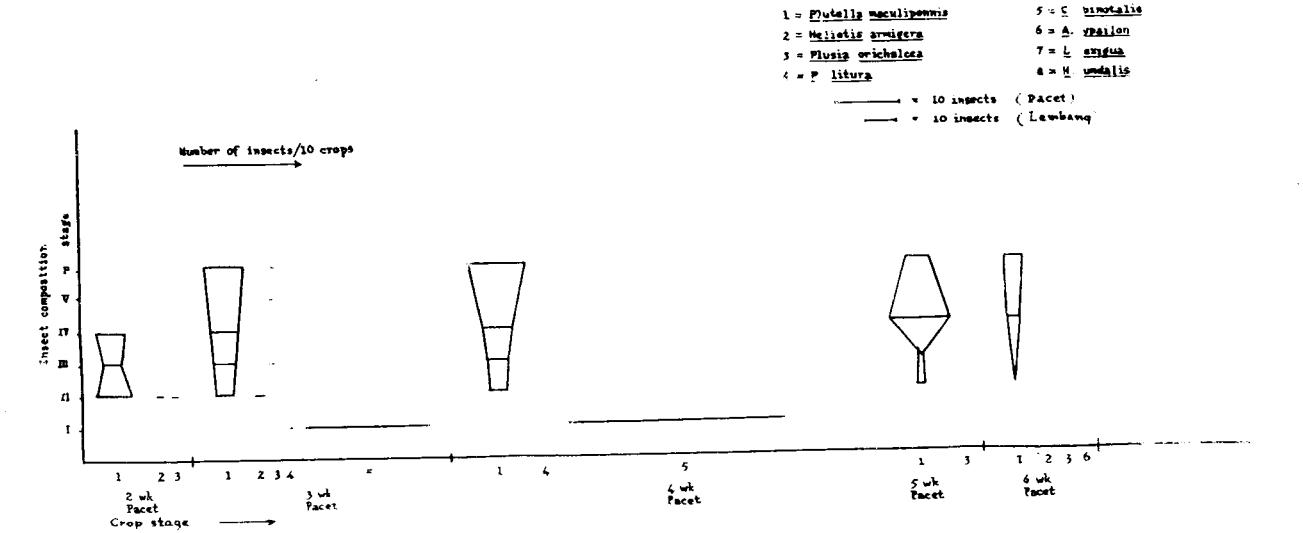
Fig. 9 (1) The development of various insects population feeding on cabbag-(Pacet, Lembang, West Java, 1973)
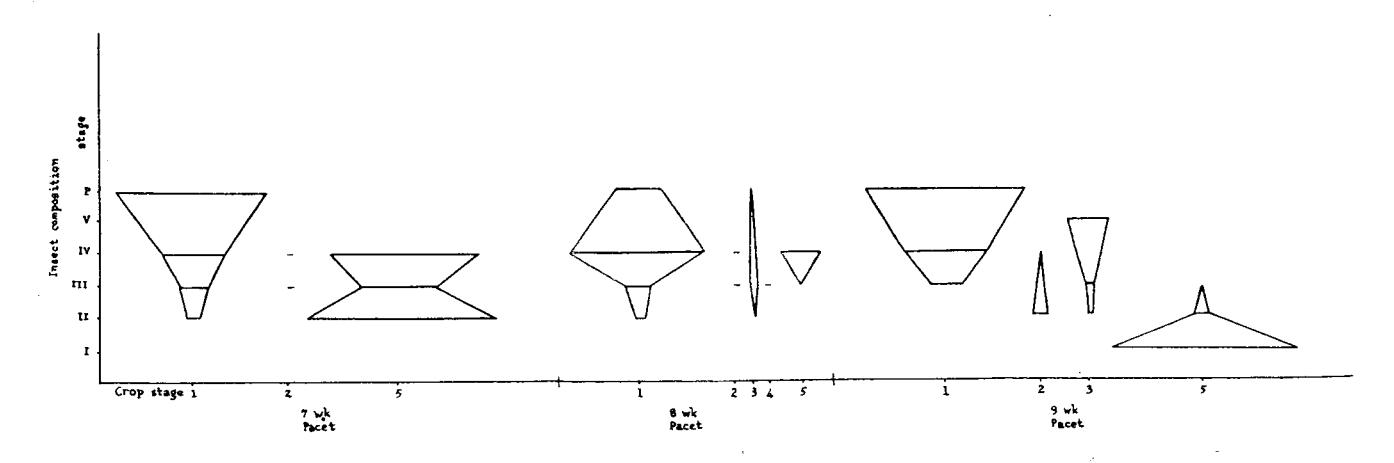
Fls, 9 (2). The developoent of various insects PoPulalion feeding on cabbage (Pacet, LeDbang, west Java, 1973)
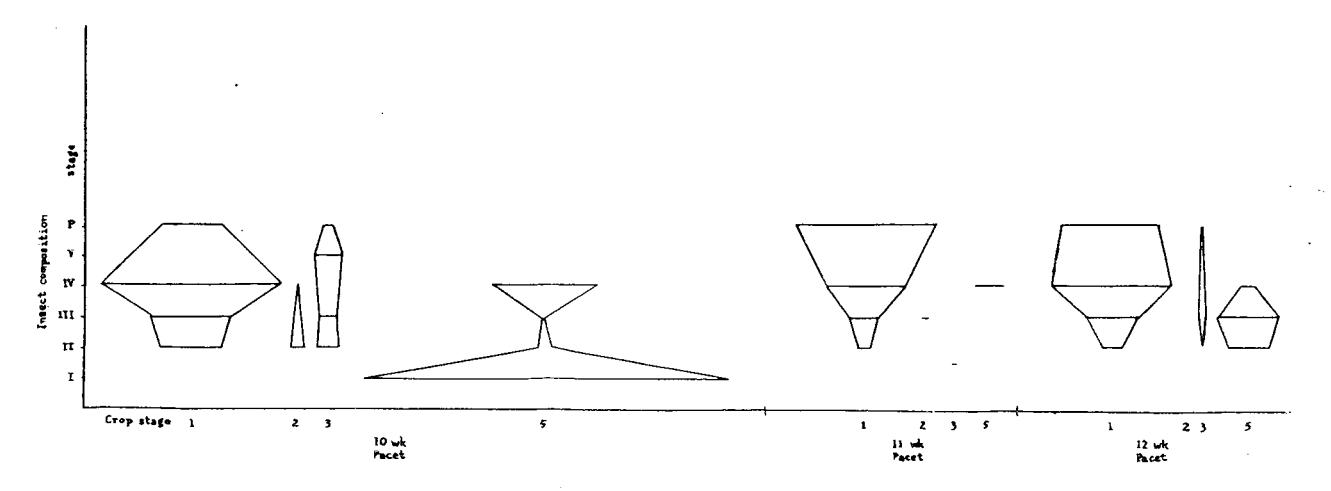
Fig. 9 (3). The development of various insects population feeding on cabbage (Pacet, Lembang, West Java, 1973)
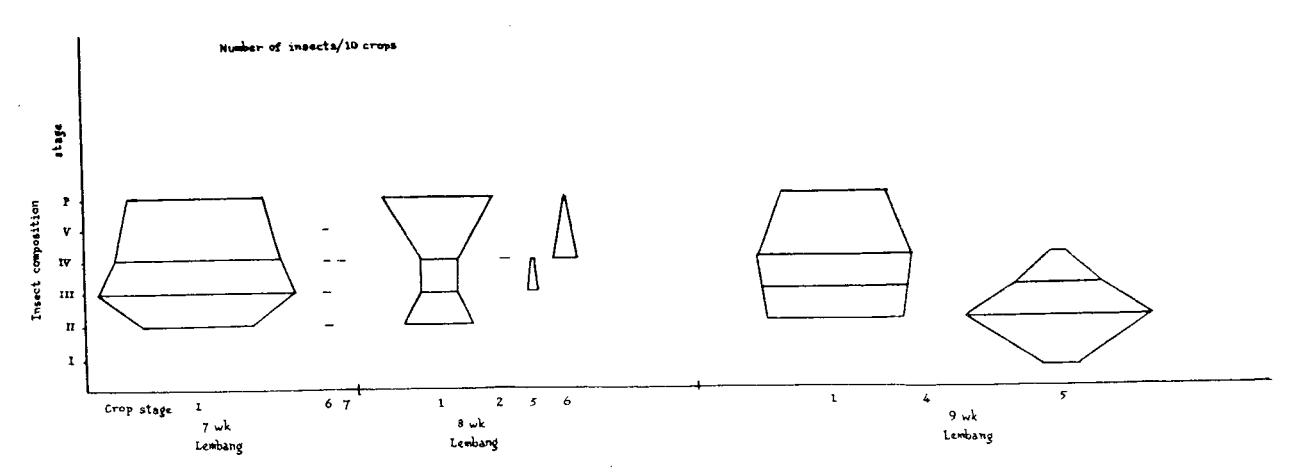
Fig. 9 (4). The development of various insects population feedings on cabbage (Pacet, Lembang, West Java, 1973)
= 10 insects
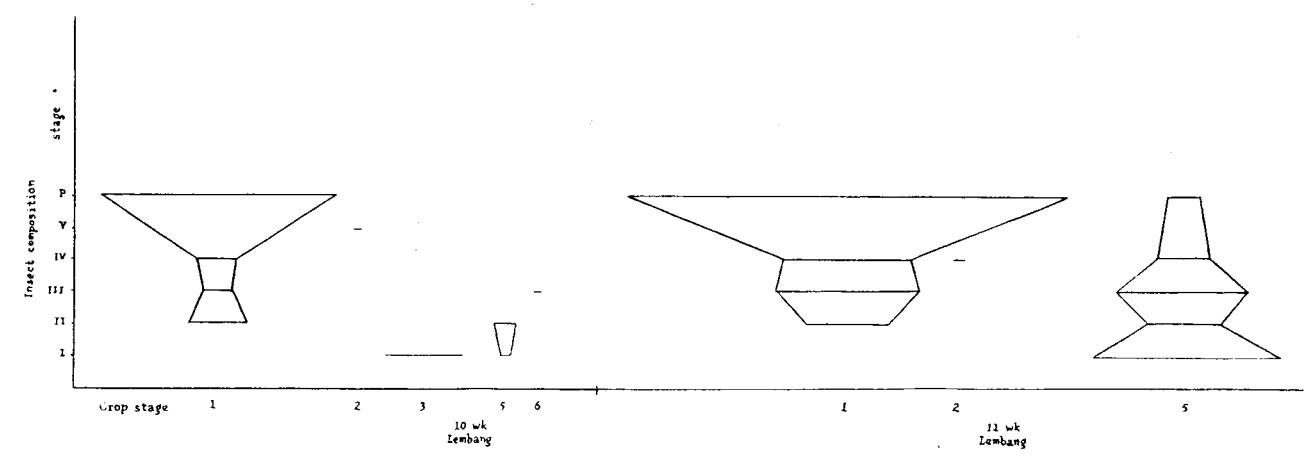
Fig. 9 (5). The development of various insects population feedings on cabbage (Pacet, Lembang, West Java, 1973)

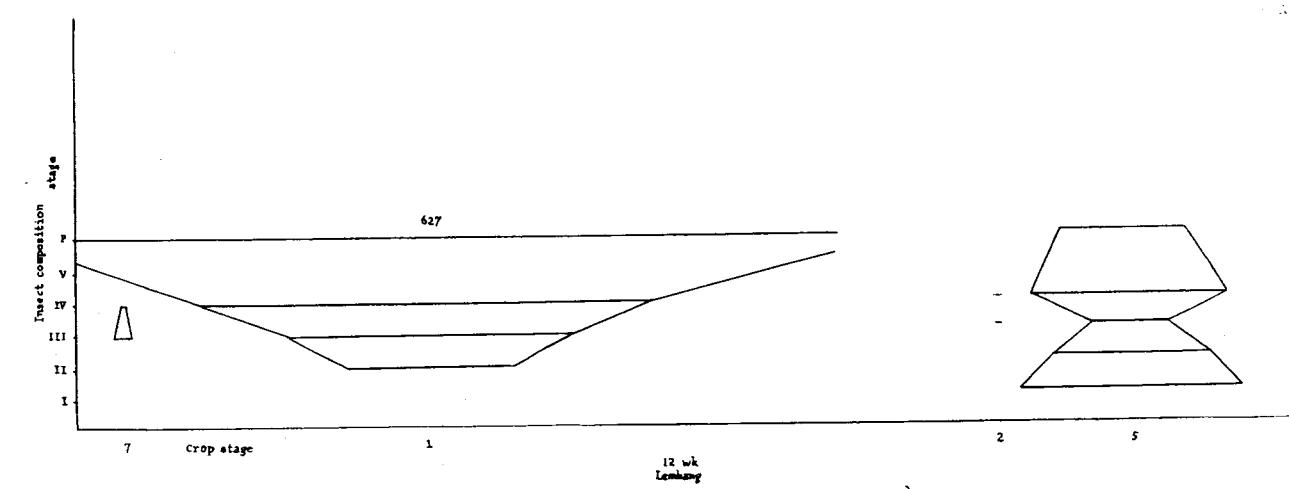
Fig. 9 (6). The development of various insects population feedings on cabbage (Pacet, Lembang, West Java, 1973)
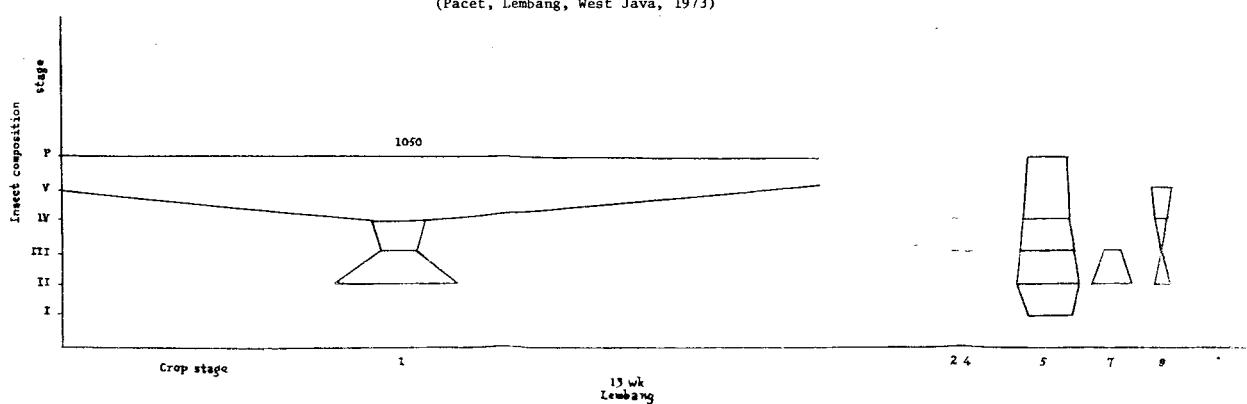
Fig. 9 (7). The development of various insects population feedings on cabbage (Pacet. Lembang, West Java, 1973)
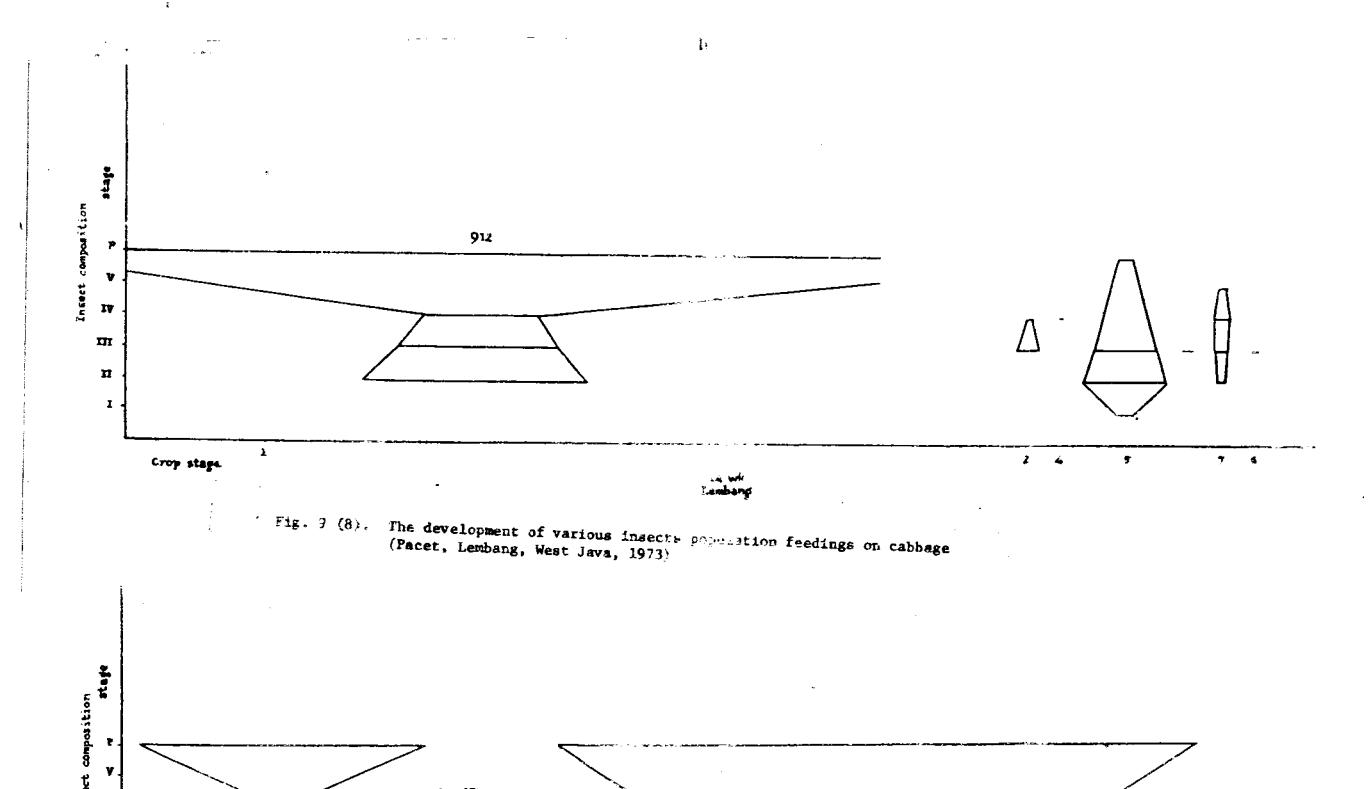
16 wk Lembars Fig. 9 (9). The development of Various insects population feedings on cabbage (Pacet, Lembang, West Java, 1973)
· é - 4
ш
Crop stage
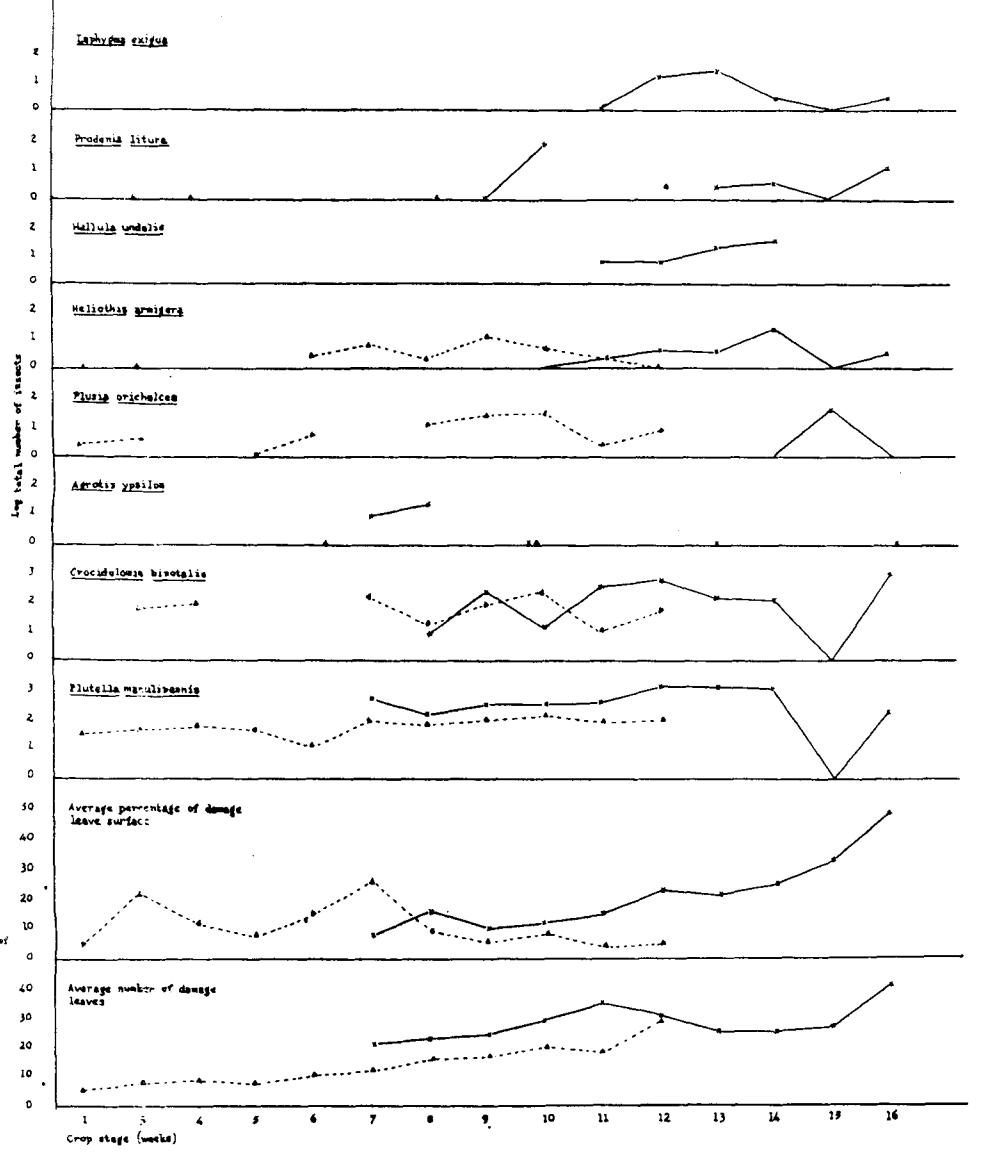
Fig. 10. The development of various insects population Cabbage and the damage on the crop (Pacet, Lembang, West Java, 1972)
parasite Angriva cerophaga and the possible effects of climatic factors. (Lembang, West Java)
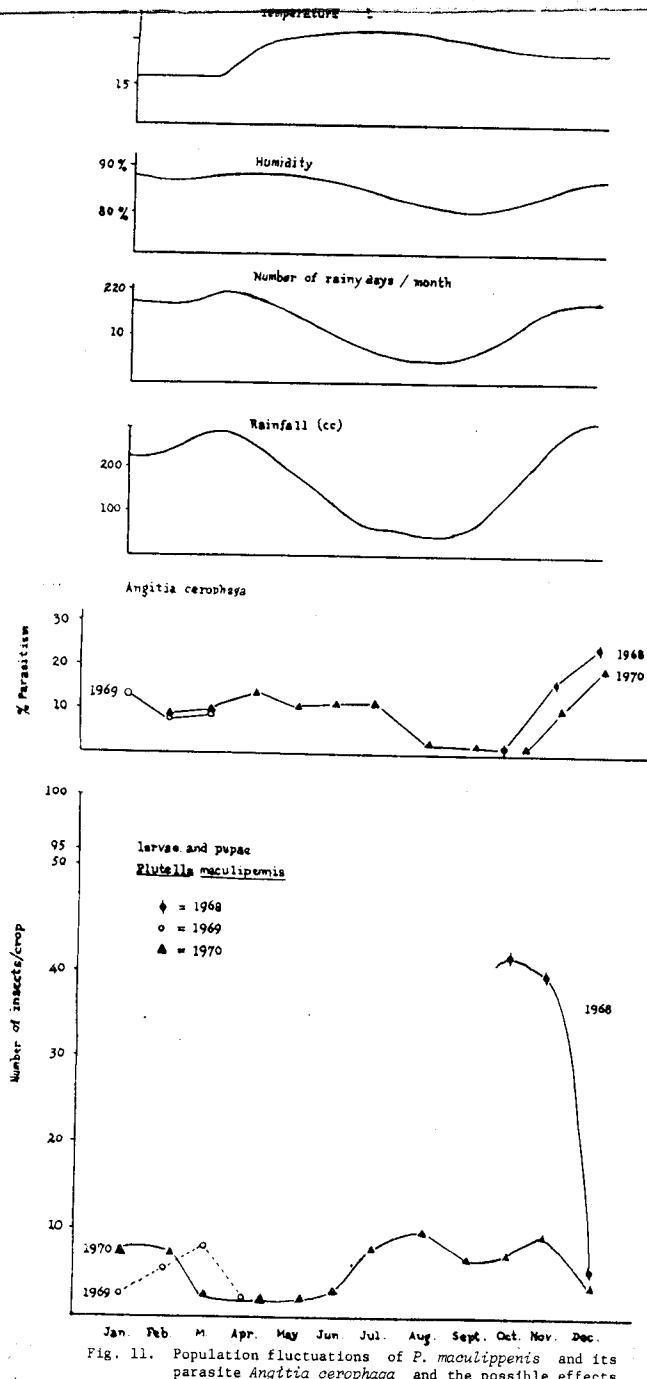
Fig. 11. Population fluctuations of P. maculippents and its parasite Angitia cerophaga and the possible effects of climatic factors. (Lembang, West Java)
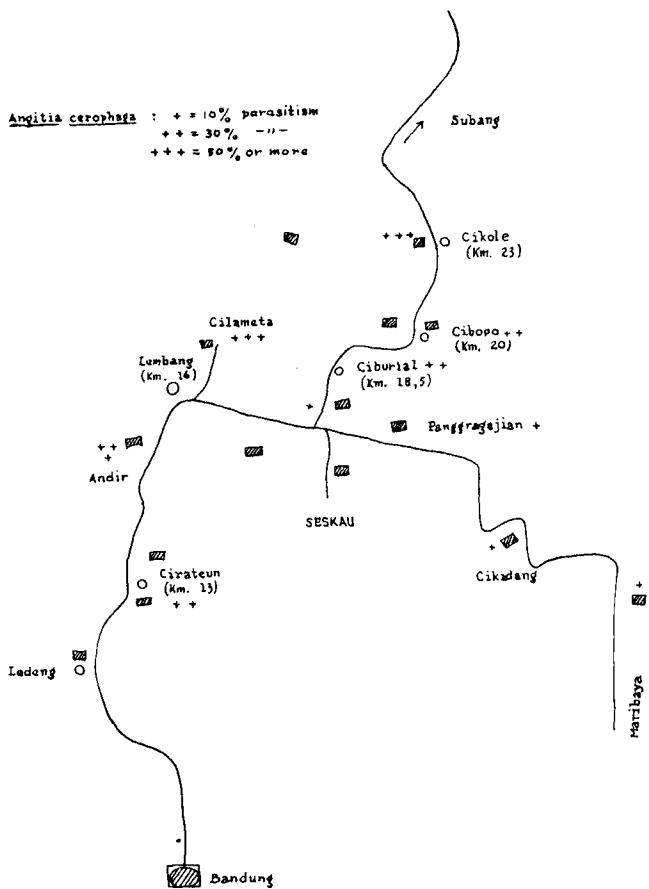
Fig. 12. Distribution of Angitia cerophaga as expressed by the level of parasitism from several location at Lembang
fall may be one of the important factors contributed to the reduction of Plutella population.
Another interesting point of this parasitic relationships was the problem of Angitia distribution. Even within this relatively small area as Lembang the density of Angitia was not evenly distributed (Fig. 12). Differences of the surrounding vegetation may have contributed to uneven parasitic distribution.
CONCLUDING REMARK
After going through the ecological as well a bit of biological information of important pests, it is realized that further detail and intensive exploration are still necessary.
The most important step however is to choose the proper direction on investigation in relation with the urgent need of pests control or pests management in Indonesia. Limited fund is one of the reasons why research should be directed into a certain goal. Ideally there should be very extensive and intensive research on agricultural insects such as reviewed by Torii on borers from Japan (Torii, 1971).
At this moment however, bionomics study such as on rice borers and other agricultural pests from Serawak (Rothschild, 1971) should be implemented for a direct support of crop protection in Indonesia. Such an attempt has been started here, especially by Soehardjan with emphasis on the construction of rice borers population table (Soehardjan, 1973). Insecticidal screening on rice pests had been tremendous and these were always expected to be able to support any control program.
While from one investigation it was found out that despite the used of several pesticides (several years back in a rather large amount) the number of arthropods components from the rice field are still significant from the ecological point of view. These components belongs to the hosts, parasites and predator group. Birds as well as amphibians and reptiles were present in significant number.
It is never too late therefore to start a new strategy for rice pests control, as small as possible effecting the community.
From the population side, it was found out a general population trend of rice borers within a crop season which covered a large area. Despite small variation due to varietal differences and pesticides application, this population trend could be valid for a large area e.g. the northern part on West Java.
Models of population trend for other rice pests from other areas should be made and these models will be very usefull for control decision.
Second to the rice pests problems, the vegetable pests began to get more attention. The last extensive work on this pests group has been on Plutella maculipennis (Vos, 1963) in relation with the biological control effort.
Our group started to work on these vegetable pests in 1967. After adapting the autecological approach for sometime, we realized at present that such a community study approach (Weir, 1973) will be more appropriate.
From cabbage for instance it is not only Plutella contributed to crop damage (and lost), but Crocidolomia, Agrotis, Plusia and others did the same and it looked that the pattern of damage coincide with the successive development of the pests population on the crop.
Vegetables cultivation has become a good sector for business investation which means more fertilizers and pesticides to the area. There should be serious attention on control attempt, especially on the residual side.
ACKNOWLEDGEMENT
Our thank due to the Institute of Technology Bandung Research Committee for financial support (1971 - 1972).
Ir. Hidajat Sjarief Natawigena and Ir. Sanoesi from West Java, Jawatan Pertanian Rakyat for cooperation.
Ir. Soehardjan from LP<sub>3</sub> Bogor and Mr. Herbagiandono from LPH Lembang for valuable discussion and Miss Oey Biauw Lan and Dr. R.E. Soeriaatmadja for correction of the manuscript.
Ir. Soehaedi former Director of Sang Hyang Seri Exp. Station for opportunities to work at the Station.
Most of all I am greatly indepted to my former students A. Muchri, Tadjudin Daulay, Ati Sri Oemijati, D. Tjahjadi, Teteh Sudjaah, Hendrawati and Aznam Azis for their helpful cooperation.