

Introduction
Powder metallurgy parts, commonly called P/M parts are produced by blending metal powders, compacting the mixture under intense pressure in a precision die and sintering the compacted powder in a protective atmosphere furnace to bond the particles into a strong shape. No melting take place. These three basic steps in the powder metallurgy process are frequently followed by subsequent processing technique. See Figure 1.
P/M parts are shaped directly from powders, unlike other metal forming processes such as castings which are formed from molten metal and wrought parts which are shaped by plastic deformation of hot or cold metal or by machining.
Although metals in powder form have been used for a number of centuries, modern powdered metal technology came into its own during World-War II, and since that time has been growing more rapidly than any other metal fabricating process. Perhaps the principle reason for this rapid growth is that the powder metallurgy process is an economical, rapid, high production method for making parts exactly to or close to final dimensions and finish with little or no subsequent machining operations. This, in return, has been coupled with a clearer understanding of the basic phenomena involved.
Numerous ferrous and non-ferrous elemental and prealloyed metal powders are available in different grades to meet a wide range of requirements. Most metal powders are produced by atomization, reduction of oxides, electrolysis or chemical reduction. Metal powders can be physically mixed to produce alloys or they may be pre-alloyed in which each particle is in itself an alloy. It is also possible to combine metal and non metallic powders to provide a composite with the desirable properties in the finished part (1). For instance, aluminium powder metal parts can be rade substantially more resistant to wear by adding Triballby intermetallic compounds.
P/M technique is used in fast, high volume production of countless parts in the automotive, appliance, agricultural equipment, business machine, electrical and electronics, power tool, ordnance and machine tool like to (1,2). A recent
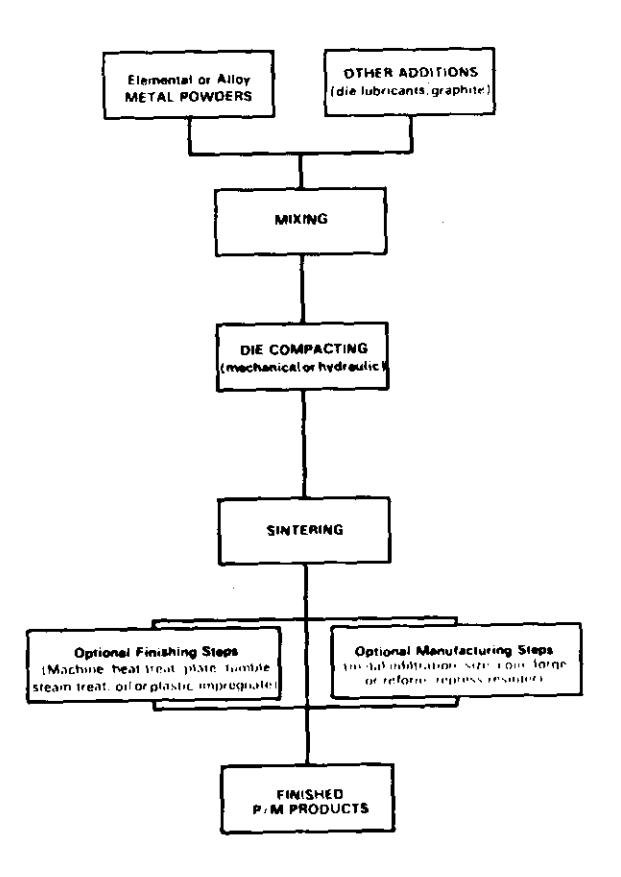
Figure 1. Basic steps in the powder metallurgy process
study<sup>(2)</sup> showed that the 14,000 tons of P/M bearings and structural parts produced by West-Germany in 1976 yielded a material saving of about 64.3% as compared with machined bearings and parts. In addition, energy savings in comparison with requirements for metal cutting came to about 50%.
Thurscrerization of powders
The success of any material processing technique depends to a great extent on the complete characterization and control of the initial raw materials. As in P/M technique, this would affect the subsequent compacting and sintering processes. There are many characteristics of powder, some interrelated, that can be considered. The obvious factors such as, particle size and shape are indeed important, but the methods of manufacture and their influence on particle structure and chemistry, and the precise nature of particle size distribution are equally significant factors.
1. Powder Manufacture.
The most important principles and processes of powder manufacture can be briefly summarized as follows:
a. Chemical reactions and decompositions.
This is based on the principle that the material (metal) oxide decompose into its elements if heated to a sufficiently high temperature at which a reduction process takes plase. The reduction of a simple metal oxide by either hydrogen (H<sub>2</sub>) or carbon mono-oxide (CO) can be illustrated as follows,
\[MO + H_2 \rightarrow M + H_2O \dots\] due to hydrogen.
\[MO + CO + M + CO_2\] ..... due to carbon mono-oxide, where MO and M are metal oxide and metal respectively. Some basic thermodynamics and kinetics play an important role in determining the possible reaction that may proceed. Reduced iron powder is one of the common powder made from this method and its photomicrograph is given in figure 2.
b. Atomization of molten metals.
Powder produced by this technique necessitates molten metal which is melted in a conventional manner. The molten metal is then tapped into a crucible which has one or more fine nozzles at the bottom. This crucible is located on top of an atomization chamber into which the fine teeming jets pour. Gas nozzles of special design are located in close proximity to the teeming jets and from these nozzles are discharged high speed gas jets which break up the metal streams into a shower of fine droplets. The metal droplets freeze while falling freely down the chamber and collect at the bottom. The shape and size distribution of powder is controlled by the speed, shape of the gas jets and cooling rate (3). Many powders can be produced by this method such as iron, copper and copper base alloys, metals of low melting point such as lead, zinc, aluminium, etc. The photomicrographs of this powder are given in figure 2.
c. Electrolytic deposition.
Metals can be made to precipitate on the cathode of an electrolytic cell as sponge, powder or in a form which can be mechanically disintegrated rather easily. Copper, beryllium and iron powders are made in considerable quantities by this technique. In general, the method yields a high purity metal with excellent properties for conventional powder metallurgy process. Photomicrograph of this powder is given in figure 2.
d. Mechanical processing of solid materials.
Certain brittle materials like Sb, Si, Bi, and a number of alloys are normally processed by crushing and/or milling. This technique is currently receiving much attention, since a new method in the form of metal waste recycling has been applied in the powder metallurgy, for instance metallurgical recycling of powdered cast iron chips (4). The photomicrograph of this powder is given in figure 2.
2. Chemical composition and structure.
The levels of impurity elements can be very significant to both the processing and the properties of the final product. The impurities present in the powder particles are mostly in oxide form which have been formed during powder manufacture. Obviously, the effect of impurity elements on the hardness of the particles and the degree of chemical reactivity during sintering differs widely depending on the actual form they are in (5). It is possible to assess the presence of oxides in powder particles by metallographic examination as given in figure 3.
The grain structure of crystalline powders may also have an extremely powerful influence on the behaviour during compaction and sintering and on the properties of the final products. Photomicrographs illustrating the grain structures in several types of powders are given in figure 3.
3. Particle size and shape.
Most of the particles in the powders are not spherical but are three dimensional in nature or in other words
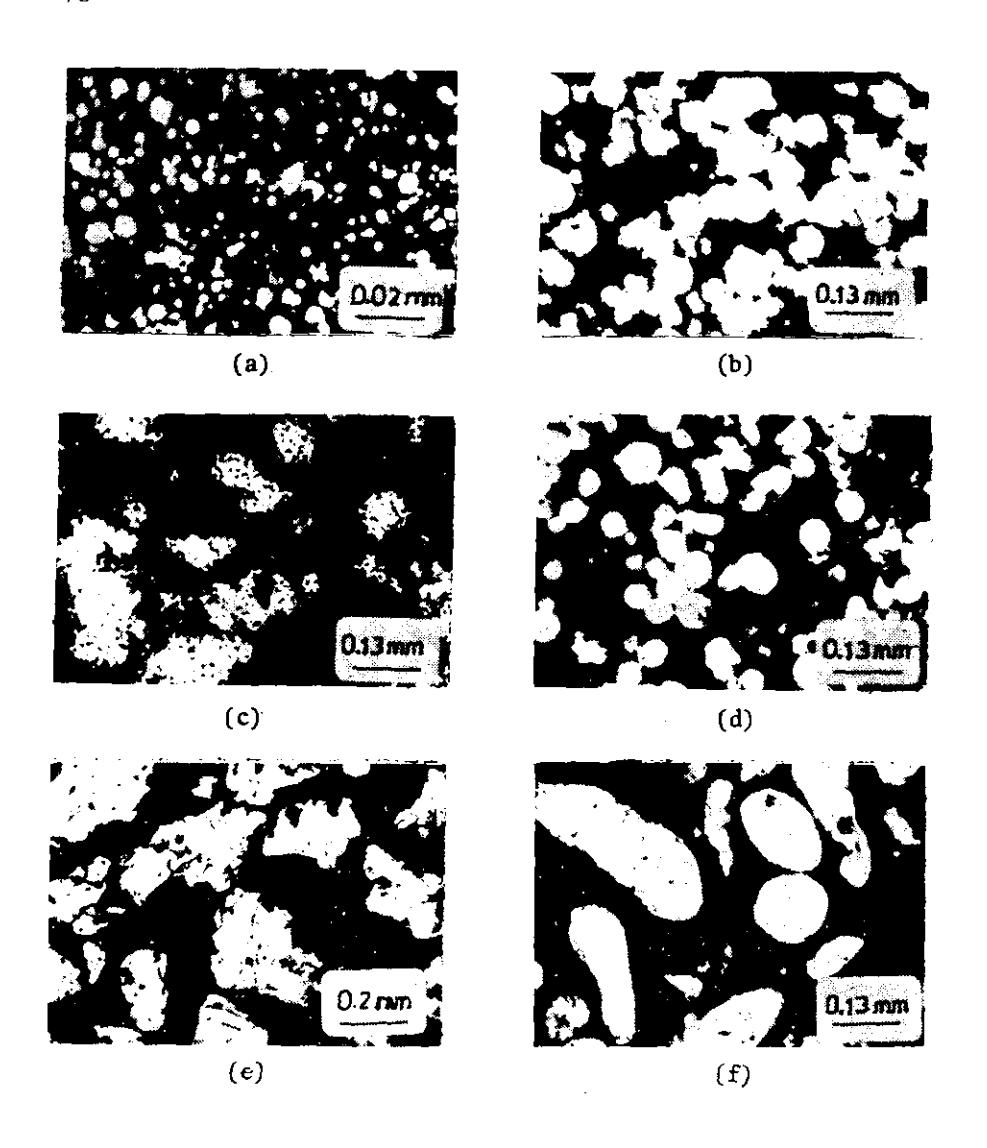
Figure 2: Photomicrographs of loose powders:
- (a): Reduced iron(b): Atomized iron
- (c): Electrolytic copper (d): Atomized copper (e): Atomized aluminium
- (f): Milled cast iron
(a) Atomized copper
(b) Electrolytic copper
(c) Atomized aluminium
Figure \(\hat{4}\)
Figure 4
Figure 4: Images of individual particle surfaces obtained with the Scanning Electron Microscope:
- (a): atomized copper
- (b): electrolytic copper
- (c): atomized iron
- (d): atomized aluminium
- (e): swing hammer milled cast iron
- (f): as in figure (e) but after processing further in attrition mill for 7 hours.
somewhat equiaxed. The particle size and shape are primarily determined by the manufacturing techniques, as seen in metallographic observations (Figure 2). The most common method of describing the actual size of powders is by screening of powder particles in standardized sieves or screens (6). However, there are still many other methods available such as microscopy, sedimentation, turbidimetry, elutriation, etc. (7)
4. Surface topography and surface area.
The exact nature of the surface topography influences the frictional and contact forces between particles during compaction and sintering. Its assessment in a quantitative basis is difficult, therefore it can be considered as the extent of surface roughness on a microscopic scale. And it is possible to consider the topography (the relative size and shape of surface elevations or protruberances) for any particles. Two concepts may be used to describe such surface roughness, the relative height and width of such bulges compared to the particle dimensions and the shape of such material extensions (5).
A very significant recent development has been the application of Scanning Electron Microscopy (SEM) to the study of individual powder particles. The great detail that can be observed is illustrated in figure 4. Both surface roughness and particle porosity are clearly shown. In some cases grain boundaries are also evident.
The actual amount of surface area per-unit amount of powders can also be very significant. Any reaction between the particles or between the powder and its environment is initiated, at these surfaces and hence sintering will be influenced by the ratio of surface area to particle volume \(^{(5)}\).
5. Other characterizations.
There are still other factors which are related to the subsequent route of processing, i.e:
a. Apparent density.
The apparent density determines the actual volume occupied by a mass of powder, in other words the weight of a unit volume of loose powder, usually expressed in gram/cm<sup>3</sup>. This ultimately determines the size of compaction tooling and the magnitude of the press motions necessary to compact and densify the loose powder. Apparent density depends on the density of the solid material, particle size shape, surface area, topography and distribution, and how the particles are packed or arranged. The apparent density is usually determined by flowing a mass of powder into a container of known volume and measuring the weight of the powder which completely fills the space (5).
b. Flow rate.
This means the ability of powders to flow from storage container to dies and within the dies too. The flow rate of powder can be determined by measuring the time necessary for 50 gms of powder to flow through a prescribed small orifice i,e, the Hall flow-meter \(\binom{8}{}\).
c. Compressibility.
This behaviour is described in the following discussion of powder compaction.
Powder Compaction.
This is the preform process that can be done mechanically or hydraulically with conventional pressing technique and it is commonly carried out at room temperature. The pressure required for compacting varies with the green density desired of compact. The compacting operation is the most critical and controlling one in part design that would offer the success of the subsequent processes. There are two factors in the compacting operation that control or influence part design, namely:
a. The flow behaviour of metal powders.
This factor has an important function in order to improve the properties of compact as a result of uniform
distribution of powders. It is relevant to the properties or conditions of powder particle itself such as size and shape, fluidization and compressibility of metal powder. Because of friction between powder particles and between the particles and the dies and punches, metal powders do not flow properly. Therefore, in order to minimize such friction, the metal powders are frequently blended together with lubricants or other alloy additions, although this method is harmfull during sintering process. The effects of admixed lubricants on green density are given in Table 1.
- b. Consideration to the pressing action itself is associated to the following factors:
- degree of applied pressure.
- dimensionality of applied pressure.
- speed of pressure application. This may be considered from the view point of the time involved in the process or as the velocity of a moving ram (punch) which causes the increase in pressure on the powder mass.
- nature of the mold or die.
In general, the use of hydraulically compacting process is more preferred than the mechanical process since the following advantages may be achieved:
- a hydraulic press can give continuous compaction pressure within the minimum and maximum capacities of the press.
- maximum pressure can be applied at almost any point in the stroke by a hydraulic press.
The compacting remess as described above is usually operated with content, had pressing technique as given schematically in regure to.
Fill: the blended or unblended powder is fed into a precision die automatically or manually.
Compression: both top and bottom punches simultaneously press the metal powder in the die.
Ejection: the top punch is withdrawn and the green compact is ejected from the die by the bottom punch.
Other compacting methods are sometimes used including isostatic pressing, extrusion, forging, high energy rate forming, slip casting, etc.
The previous discussion dealt on how the powder characteristics play a role in determining the green density obtained. Also, the compaction pressure and speed are an
÷ :-
(a) electrolytic powder pressed at 25 tsi.
(b) electrolytic powder pressed at 30 tsi.
(c) reduced powder pressed at 30 tsi.
(from Joel S. Hirschhorn, Introduction to powder Metallurgy, 1969, p. 148).
qually important parameters as shown schematically in figure 6. The density gain with increasing compacting pressure for different powders are given in figure 7. Simultaneously, the number of pores are reduced with increasing of compacting pressure (figure 8).
Figure 5. Pressing cycle for compacting metal powders
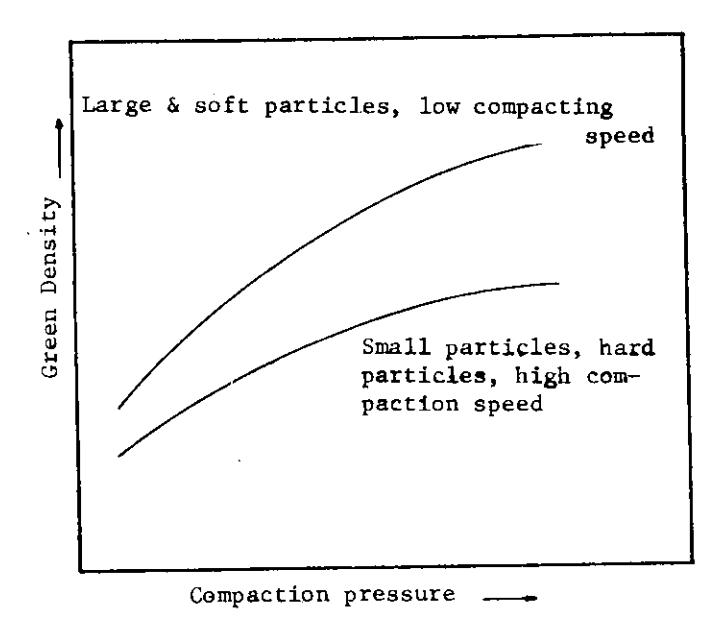
Figure 6. Schematic illustration of dependence of green density of compaction pressure, particle size, particle hardness and compacting speed.
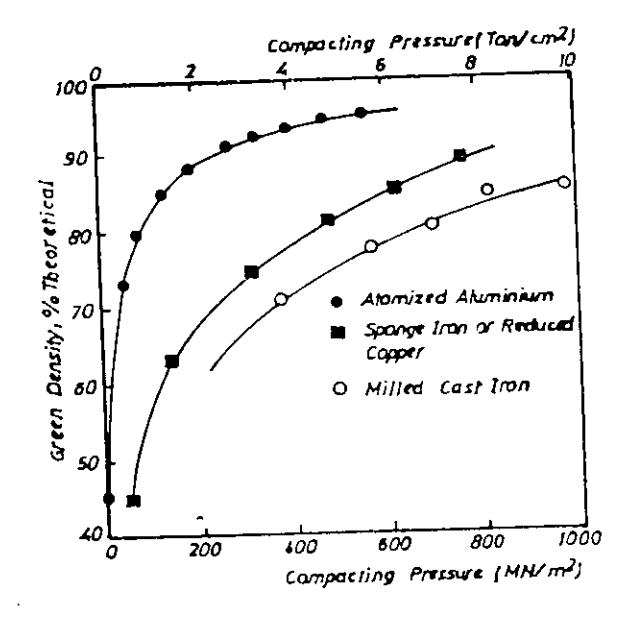
Figure 7. Green density vs' compacting pressure for different powders.
Figure 8. The pores on the surface of green compacts of atomized iron powder. (a). compacting pressure: 4 ton/cm
(b)
(b). compacting pressure: 6 ton/cm<sup>2</sup>
Sintering
This process is carried out after compacting in which the green compact is heated in a protective atmosphere—furnace to a relatively high temperature, but—below the melting point of the metal powder. Sintering which is mainly a solid state process develops metallurgical bonds among the powder—particles and thus produces the P/M part's mechanical and physical properties. The major sintering atmospheres normally used—in practice are hydrogen, nitrogen, hydrogen-nitrogen mixtures, carbon mono-oxide, argon and vacuum. The choise of the protective atmosphere, temperature and time for sintering process would vitally determine the properties of the sintered compact and this choice is based on such factors as follows:
- The diffusivity during sintering results in metallurgical bonds among the powder particles. This is particularly important because diffusivity can be strongly affected by the chemical nature of the sintering atmosphere and by the nature of the materials to be sintered.
- A number of oxidation and/or reduction reactions may take place.
- Shrinkage of the sintered material very often occurs. Due to the phenomena given above, the following should be taken into consideration.
- Increasing the sintering temperature, greatly increased the rate and magnitude of any changes occuring.
- The degree of sintering increased with increasing time, but this effect is small in comparison to the temperature dependent effects.
Effects of increasing sintering temperature and time are reflected on the process of densification of the compact as illustrated in figure 9. A comparison made between compact densities before and after sintering of atomized iron powder as given in figure 10 apparently shows how the effect of sintering on the densification takes place.
Sintering Furnace
The choice of most furnaces are intimately linked to specific applications. There are instances in which it is expected heat-treatment will be accomplished as part of the sintering cycle, so that the obvious commonical benefits the process can be realized;
Figure 9: Sintered density - time curves illustrating effects of increasing green density and sintering temperature on the process of densification.
A conventional sintering furnace commonly has three distinct zones or sections, namely:
- 1. A burn-off and entrance zone (pre-heat zone).
- 2. A high temperature sintering zone.
- A cooling zone.
The first zone is designed to heat the green compacts rather slowly to a moderate temperature and this slow heating provides some advantages as follows:
- To volatilize and eliminate the admixed lubricant.
- To avoid excessive pressures within the compact that may possibly result in the expansion, fracture or spalling.
The cooling zone consists of two sections i.e,
- A short insulated section that permits the parts to cool down from the high sintering temperature to a lower one at a slow rate so as to avoid thermal shock in the compacts.
- A relatively long water jacketed section that provides the parts to cool to a temperature low enough to prevent oxidation of the material upon exposure to the air.
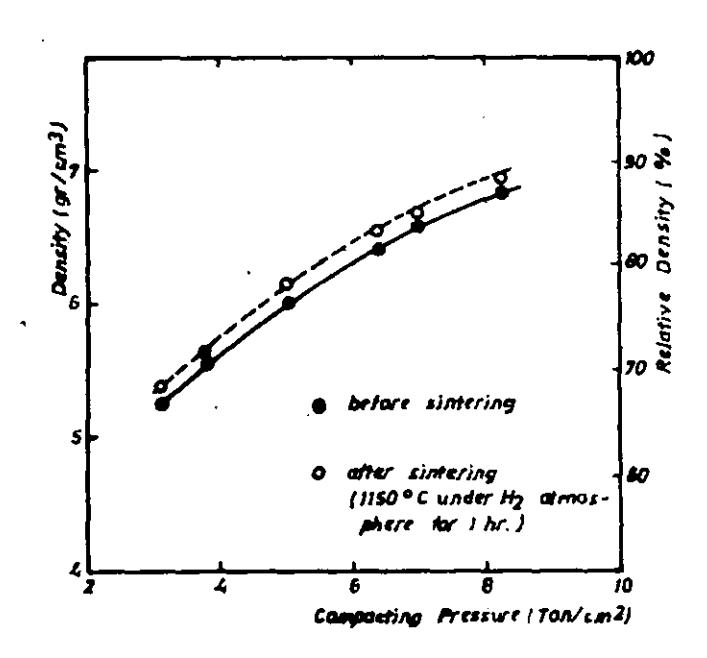
Figure 10: Density vs compacting pressure for atomized iron powder.
Other Processing Methods
The use of the conventional methods of compacting followed by high temperature sintering as already mentioned, however, would present restrictions in particular application in producing a fully homogeneous material in properties of desired compact. Therefore, in order to improve the properties of the final product, other methods are followed such as:
a. Liquid phase sintering.
This process consists of:
Normal liquid phase sintering, for which the sintering temperature is high enough that one or more components of the green compact powder is present
Figure 11 a: CuZnAl alloy (14.23 wt. % Zn - 8.62 wt. % A1). Pre-alloyed powder was first cold extruded, then followed by hot extrusion at 800°C.
- density: 7.456 gr/cm<sup>2</sup> tensile strength: 83 kg/mm<sup>2</sup>.
- 11 b: Al Al\(_2\)O\(_3\) powder (7% oxide). Powder was first cold extruded, then the green compact was sintered at 550°C for 6 hours under N\(_2\) atmosphere. Finally it was hot extruded.
- density: 2.8 gr/cm<sup>2</sup>. tensile strength: 25 kg/mm<sup>2</sup>.
as a liquid during all or part of the sintering process.
- Liquid infiltration, in which a mass of a lower melting point metal is allowed to melt and flow into the porosity of the green compact (a metalliquid formed lies outside the compact). In this method, once the liquid is within the compact the situation is very similar to the first case (normal liquid phase sintering).
Both these methods (normal liquid phase and liquid infiltration sintering) are widespread commercial processes used to minimize the porosity present in the P/M parts.
b. Hot Pressing.
It was decided to perform the compaction and sintering operation simultaneously using hot pressing (e.g. hot extrusion, hot forging, etc.). Figure 11 shows the microstructures of Cu-Zn-Al alloy and Al-Al\(_2^0\)<sub>3</sub> powders that have been made using this method.
Summary
From the previous discussion, it is seen that:
- The powder characterization plays an important role in determining the subsequent processes of compaction and sintering.
- Green and sintered properties of the compact are definitely influenced by the powder properties, the compacting and sintering conditions.
Acknowledgment
The author thanks Prof. Dr. E. Aernoudt for his encouragement in writing this paper.