

1 Introduction
Conjugated polymers are basically plastics with combined electrical properties of metals and semiconductors. Polypyrrole is among the conjugated polymers that is environmentally stable and biocompatible. It has been extensively studied because of its wide potential industrial applications such as electromagnetic shielding, fuel cell catalysts and membranes, nerve regeneration and chemical detectors [1-6]. As the most biologically compatible conductive polymer, polypyrrole has also been investigated as a potential
candidate material for the fabrication of biosensors as well as for drug delivery devices [7]. Conducting polymer-based biosensors work as transducers in which biomolecules are immobilized. The presence of certain immobilized biomolecules on the surface of conductive polymers could in turn make this system function as that of toll-like receptors for pathogen recognition system [8]. As a starting point in uncovering the physical phenomena responsible for the immobilization of much more complex biological systems, we report in this paper a density functional theory (DFT) based study on the interaction of polypyrrole and the amino acids, i.e. leucine and glycine, with molecular formula C<sub>6</sub>H<sub>13</sub>NO<sub>2</sub> and C<sub>2</sub>H<sub>5</sub>NO<sub>2</sub>, respectively. There are 20 most common amino acids that constitute proteins. Although we choose among the simplest ones, i.e. glycine and leucine, as the starting point, nevertheless the importance of glycine and leucine should not be underestimated. Glycine is essential for the biosynthesis of nuclei acids [9], and has the ability to act as inhibitory neurotransmitter in the central neurosystem [10,11]. To emphasize further on the objectives of this study, glycine adsorption has been investigated previously on several surfaces such as carbon nanotubes, graphite, Cu, TiO<sub>2</sub>, Si, NiAl, Au, and Pt for corrosion prevention, biocompatibility and biosensor [12-23]. Similarly, leucine immobilization has been actively investigated previously, for applications in protein chemistry [24], smart biocatalyst [25], biological and medical application [26-27], and other potential applications [28]. To the best of our knowledge, the study on the surface interaction between these amino acids and polypyrrole is still lacking.
Our computations with Ppy in the following section involve glycine and leucine, both in its zwitterionic (\(NH_3^+\)-\(CH_2\)-COO- and \(NH_3^+\)-\(C_5H_{10}\)-COO-) and neutral/nonionic (\(NH_2\)-\(CH_2\)-COOH and \(NH_2\)-\(C_5H_{10}\)-COOH) forms, dealing with the adsorption on both amino acid's carboxyl and amine ends. The total energies of the polypyrrole doped with leucine and glycine are minimized with respect to the orientation and distance of the amino acids to the polypyrrole cluster.
2 Computational Details
Density functional theory based calculations [29] are conducted for all configuration using Gaussian03 [30] code using 6-31G(d) basis sets and GGA (Generalized Gradient Approximation) of PBE (Perdew, Burke, Ernzerhof) [31] exchange correlation functional level of theory. Contracted Gaussian basis sets have successfully been used to study the interaction between polymers and metals [32-33]. These contracted Gaussian basis sets on an imposed periodic boundary conditions were also successfully utilized by [34-35] in their ab initio study of polypyrrole and ladder-polypyrrole. It was revealed that the 6-31G
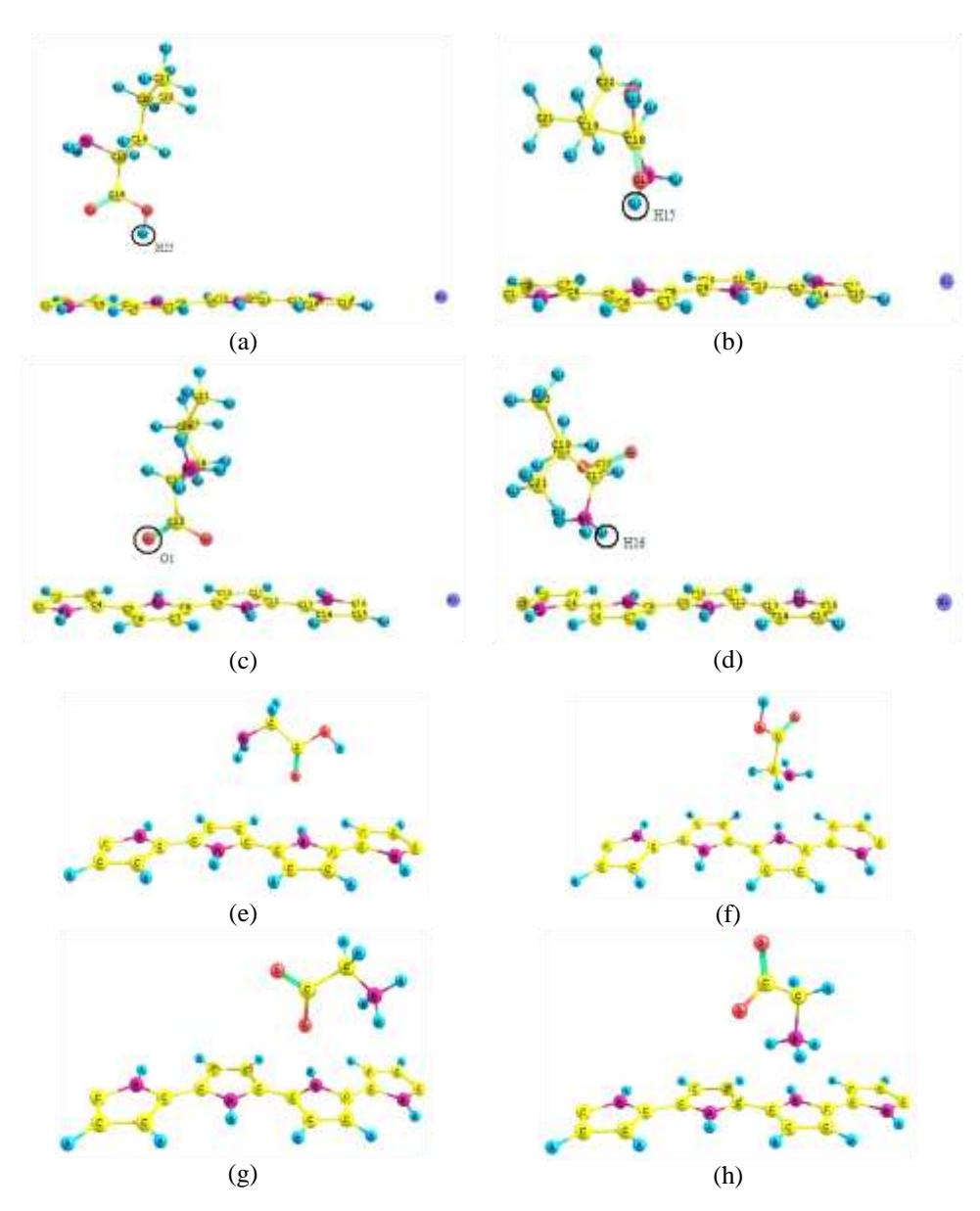
Figure 1 Computational model of amino acids on top of Ppy: (a) Ppy + neutral leucine-carboxyl side (b) Ppy + neutral leucine-amine side (c) Ppy + zwitterionic leucine-carboxyl side (d) Ppy + zwitterionic leucine-amine side (e) Ppy + neutral glycine-carboxyl side (f) Ppy + neutral glycine-amine side (g) Ppy + zwitterionic glycine-carboxyl side (h) Ppy + zwitterionic glycine-amine side.
basis set suited well for polypyrrole with periodic boundary conditions. Disparities between the structural properties of polymer with a larger basis sets such as LANL2DZ and those of 6-31G were reported in the order of only 0.005 Å. For these reasons and computational efficiency, we have opted to use the same basis sets as were used in [34]. We employ periodic boundary conditions to this glycine – polypyrrole system and consider 4 rings of pyrrole as the oligomers and one glycine. In other words, we have used a coverage of one glycine molecule for every 4 pyrrole oligomers, and we have set the distance between every periodic images at 14.46 Å in order to minimize the interaction with glycines in other neighbouring supercells. The size of our supercell at 14.46 Å is larger than that used by [13] in their study of glycine adsorption on carbon nanotube.
In this investigation we fix the geometry of polypyrrole and amino acids, only their distance from each other are varied. In addition, we also only consider the interaction of 1-D pyrrole rings with glycine or leucine in the vacuum. In other words, the investigations are limited toward uncovering the intrinsic properties. Knowing that glycine and leucine have 10 and 22 component atoms, respectively, suggests that the adsorption process involves some degrees of freedom. However we have opted to limit our ab initio analyses to the computational models shown in Figure 1. Initial calculations are conducted to determine the stable or optimized structures of isolated polypyrrole and amino acids. These optimized structures are then used to calculate their total energies as functions of their distance and orientation. The orientations and positions of the amino acids have been specifically chosen so that the amino acid carboxyl and amine groups approach directly to the surface of Ppy.
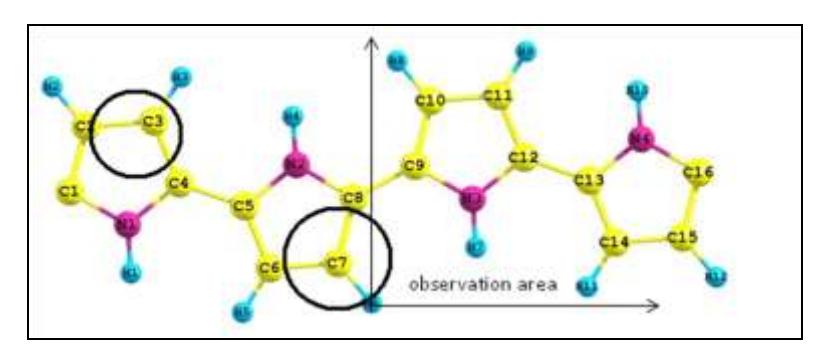
Figure 2 Region where PES calculation are conducted.
We have determined the minimum potential energy surface (PES) from which point the total energies are calculated at varying distance from the surface of Ppy. Figure 2 shows the region where PES are evaluated with 0.2 Å resolution near minimum point. Figure 3 shows the contour maps of PES for Ppy +
zwitterionic glycine carboxyl and Ppy + neutral leucine carboxyl. Although investigation are conducted to all contour maps however only those two contour maps are shown here. The minimum energy of this configuration are used to calculate the adsorption energy. These methods are applied to other Ppy + glycine and Ppy + leucine models as well.
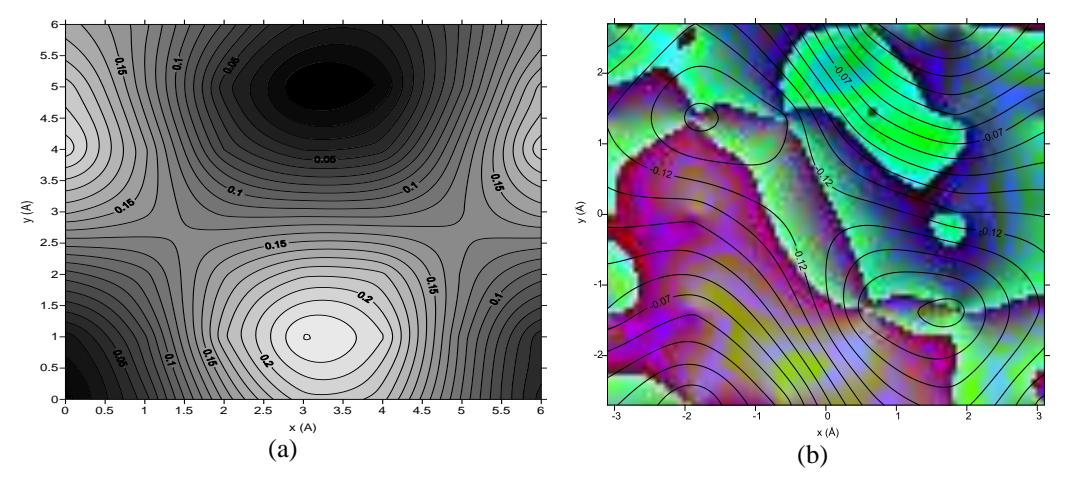
Figure 3 Contour map of (a) zwitterionic glycine carboxyl and (b) neutral leucine carboxyl potential energy surface (PES) in Hatree.
3 Results and Discussion
Contour map of PES shown in Figure 3 are calculated by scanning on top of Ppy covering area of 5 Å x 5 Å (see Figure 2) with 0.2 Å resolution at a height of 3.0 Å. From the minimum site in PES, the total energies are then calculated at varied distances between the amino acids and Ppy surface.
In Figure 4 we show the energy curve describing the adsorption of amino acids in both ionic and nonionic forms. Table 1 shows the numerical results of the adsorption energy calculations which are based on
\[E_{ad} =E_{min} -E_{ref} \quad ; \quad E_{ref} =E_{PPy}+E_{gly}. \label{eq:energy}\] where Emin is the minimum energy obtained by varying the distance between Ppy and amino acids, Eref is the sum of energies of isolated Ppy and amino acids. Numerical results shown in Table 1 suggest that both glycines and leucines are weakly bound on the Ppy surface, with adsorption energies close to that for gas molecules ([36,37] reported adsorption energies in the range of about 0.1 – 0.8 eV). These results are comparable to that of glycine interaction with carbon nanotubes [9,13].
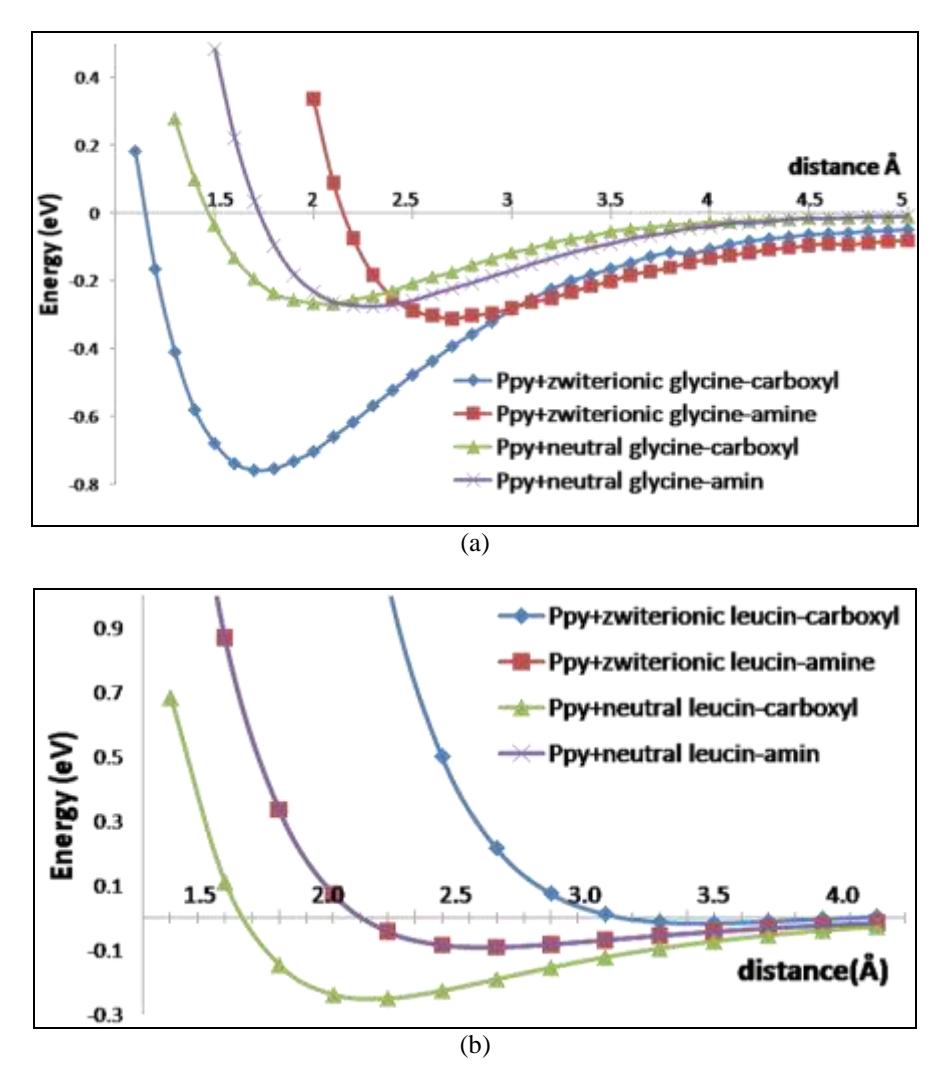
Figure 4 Adsorption energy curves of (a) Ppy + glycine and (b) Ppy + leucine.
These results in turn suggest the involvement of only non-covalent interactions in the adsorption, as it is well known that non-covalent bonds are naturally weak. Amino acids leucine and glycine through its carboxyl groups, as shown in Table 1, is the strongest attracted to the Ppy surface among all adsorption models (Ead=0.25 eV and Ead=0.76, respectively). The amino acids approaching the Ppy surface through the deprotonated carboxyl groups adsorb the strongest among all adsorption models which is similar to that adsorption on carbon nanotubes surface as reported in [9,13]. A further detailed comparison from the Figure 4 shows that the leucine in nonionic forms binds stronger onto the Ppy
surface as compared to their ionic counterparts. However, the glycine in ionic forms bind stronger onto the Ppy surface as compared to their nonionic counterparts. These observations suggest that the nature of non-covalent interactions between the two amino acids and Ppy surface is different. It seems that ionic bonds in glycine – Ppy interaction is somehow more dominant than that in leucine – Ppy one. It is also obvious from the smooth energy curves that the amino acids adsorption should proceed easily, i.e. the activation barriers are either absent or very small. Although a more complete modeling may be necessary, the current preliminary results may provide rough information for further development on entrapment process in polypyrrole based biosensor.
Table 1 Adsorption energies and optimum distances (zlc: zwitterionic leucine carboxyl; zla: zwitterionic leucine amine; nlc: neutral leucine carboxyl; nla: neutral leucine amine; zgc: zwitterionic glycine carboxyl; zga: zwitterionic glycine amine; ngc: neutral glycine carboxyl; neutral glycine amine).
| Species | Optimum Distance (Å) | Adsorption Energy (eV) |
|---|---|---|
| Ppy+zlc | 3.4 | 0.02 |
| Ppy+zla | 2.6 | 0.18 |
| Ppy+nlc | 2.2 | 0.25 |
| Ppy+nla | 2.6 | 0.01 |
| Ppy+zgc | 1.7 | 0.76 |
| Ppy+zga | 2.7 | 0.31 |
| Ppy+ngc | 2.0 | 0.26 |
| Ppy+nga | 2.3 | 0.28 |
4 Conclusions
On the way to uncovering physical phenomena responsible for the adsorption processes of more complex biomolecules, we have investigated the adsorption of the amino acids leucine and glycine on polypyrrole. Neutral leucine carboxyl showes greater binding energy as compared to the other leucine configurations; it has adsorption energy of 0.25 eV at optimum distance of 2.2 Å from the surface of Ppy. As for the glycine, the zwitterionic carboxyl exhibits the strongest binding energy among other glycine configurations. It has adsorption energy of 0.76 eV at optimum distance of 1.7 Å from the surface of Ppy. The adsorption processes for both amino acids should proceed easily because the activation barriers are either absent or very small. It is our hope that these results somehow provide a new impetus for these new functional materials in addition to the relevant experimental works.
Acknowledgements
We would like to acknowledge the generous financial supports from IA-ITB (Institute Technology Bandung Alumni Association), and Japan Society for the Promotion of Science (JSPS) and Directorate General of Higher Education (DGHE) through their Joint International Research Program, that make this study possible. We would also like to express our gratitude to the Asahi Glass Foundation for the partial financial support.