

1 Introduction
Proton exchange membranes (PEMs) are commonly used to drive conductivity. In order to achieve acceptable levels of proton conductivity, conventional PEMs need water, which is unsuitable for high-temperature operation of fuel cells. To overcome this problem, one needs to use pure polymer membranes for anhydrous proton conduction. However, despite their high thermal and chemical stability, some of these materials suffer from complex external humidification and high material cost [1,2].
There are many thermoplastic polymers that can be used for polymer electrolyte membranes. It has been reported that polysulfone was considered more interesting because of its low cost, commercial availability and ease to be processed [3-5]. Polysulfone, as shown in Figure 1, can be synthesized through
condensation polymerization between diphenol and 4,4-dichloro-diphenyl sulfone. To achieve good anhydrous proton conductivity, polysulfone must be highly sulfonated, because a sulfone compound as a side chain can easily form a hydrogen bond with a nitrogen-containing heterocycle compound.
C O S CH3 CH3 n O
Figure 1 Polysulfone.
In order to obtain highly sulfonated polysulfone, the polysulfone polymer has to be dissolved in a solvent, and then treated with a sulfonation agent with a given mole ratio. It has been reported by Lufrano, et al. [4] that using chloroform as the solvent at 25°C and a mole ratio of 1:1.5 resulted in a maximum sulfonation degree of 77%. However, Sheng-Li, et al. [6] used1,2-dichloroethane and the same sulfonation agent with mole ratios of 1:1.43 and 1:2.86 at room temperature, which resulted in sulfonation degrees of 87% and 127%, respectively.
In the last decade, nitrogen-containing heterocycle compounds such as imidazole [7], benzimidazole [8,9] and triazole derivatives [10-13] have been reported to be promising protonic charge carriers in anhydrous state. Proton conduction in these systems may occur through a mechanism where protons are transferred by a hydrogen-bond breaking and forming process without the involvement of water acting as a carrier [7,14,15].
In this work we synthesised samples of polysulfone membranes with a higher degree of sulfonation in order to increase the proton conductivity at higher temperatures. The synthesis of sulfonated polysulfone was performed using 1,2 dichloroethane as the solvent. The composite polymer membranes of sulfonated polysulfone were prepared by adding 1H-benzotriazol. The composite polymer membranes were evaluated in terms of sulfonation degree,thermal stabilities, phase transition, and proton conductivities.
2 Experimental
2.1 Materials
Commercial polysulfone (PSU) and trimethylsilyl chlorosulfonate (TMSCS) were purchased from Aldrich; dimethylformamide,1,2-dichloroethane from
Merck; methanol from Sigma-Aldrich;and 1H-benzotriazole (BTri) from Alfa A.
2.2 Synthesis of Sulfonated Polysulfone
The sulfonation process was similar to the method used by Sheng-Li, et al. [6]. PSU was dissolved in 1,2-dichloroethane at a temperature of 25°C under a stream of nitrogen gas. The time required to dissolve polysulfone in 1,2 dichloroethane was 5 hours. This was long enough because 1,2-dichloroethane has a high dipole moment (1.86 D) and dielectric constant (10.36).
TMSCS was added as the sulfonation agent into the solution at room temperature. The amount of TMSCS was determined based on the mole ratio between the PSU and the TMSCS it self. According to Sheng-Li, et al. [6], mole ratios of 1:1.43 and 1:2.86 with a reaction time of 36 hours at room temperature resulted in sulfonation degrees of 87% and 127%, respectively. Based on these results, we chose a mole ratio of 1:1.5. The volume of the solvent used was 100% of the weight of the polysulfone.
The sulfonation was stopped by adding methanol to obtain sulfonated polysulfone (SPSU). The final sulfonated products were washed with methanol and rinsed several times with distillate water. For complete removal of the solvents, they were evaporated at a pressure of 1 atm and then dried in a vacuum oven at a pressure of 400 mm Hg and a temperature 55°C. The degree of sulfonation was determined by titration using 0.01 N NaOH that was standardized.
2.3 Preparation of Composite Membranes
Preparation of the membranes was performed by mixing BTri and SPSU in dimethylformamide. The amounts of SPSU and BTri were determined using the stoichiometric ratios of moles; the ratios were 1:0.5 and 1:1. In order to obtain a homogeneous polymer solution, the mixture was stirred for 12 hours at room temperature. The mixture was cast on a Teflon container and evaporated slowly at a temperature of 50°C for 24 hours and then evaporated in a vacuum oven at a pressure of 200 mmHg and a temperature of 50°C to get rid of the solvent residue in the membrane.
2.4 Characterizations
The FTIR spectra were recorded on a Bruker Alpha-P with Attenuated Total Reflectance in a range of 4000-400 cm-1.The thermal stabilities of the polymer electrolytes were examined by TG analyses using a Perkin Elmer STA 6000. The samples (∼10 mg) were heated from room temperature to 700°C under N2
atmosphere at a scanning rate of 10°C/min. DSC measurements were carried out using a Perkin Elmer JADE DSC under nitrogen atmosphere; heating-cooling curves were recorded at a rate of 10°C/min. The proton conductivity studies of the samples were performed using a Novocontrol dielectric-impedance analyzer. The films were sandwiched between gold blocking electrodes and the conductivities were measured in a frequency range of 0.1 Hz to 1 MHz in 10°C intervals. The temperature between -100 and 250 °C was controlled using a Novocontrol cryosystem.
3 Results and Discussion
3.1 Sulfonation
The degree of sulfonation as a function of reaction time is depicted in Figure 2. We see that the sulfonation degree increased exponentially with the increase of the reaction time. To prevent excessive sulfonation, the longest reaction time in this work was 36 hours. The sulfonation degree with this reaction time was 134% higher than the result of Sheng-Li, et al. [6] with mole ratio 1:2.86. The resulted SPSU was not dissolved in chloform and 1,2-dichloroethane but soluble in dimethyl formamide.
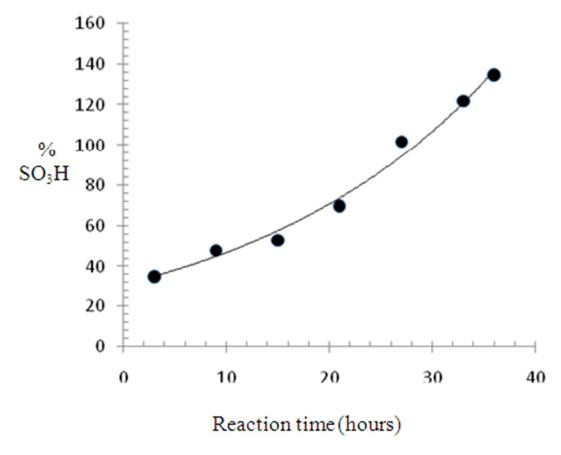
Figure 2 Sulfonation degrees (%) as a function of reaction time.
3.2 FTIR Studies
Figure 3 shows the FTIR spectra of polysulfone, synthesized sulfonated polysulfone, and BTri. From the peaks at 690 cm<sup>-1</sup>, 1041 cm<sup>-1</sup>, 1103 cm<sup>-1</sup>, 1149 cm<sup>-1</sup>, 1238 cm<sup>-1</sup>, 1485 cm<sup>-1</sup>, 2950 cm<sup>-1</sup>, 3110 cm<sup>-1</sup>, and 3500 cm<sup>-1</sup>, it was confirmed that the peaks were attributable to the presence of C-S, SO<sub>3</sub>, C-O, R-
SO<sub>2</sub>-R, C-O, C=C (aromatic), CH (aliphatic), CH (aromatic), and OH stretching bonds respectively from sulfonated polysulfone [16]. This is different from the spectrum of polysulfone. In this spectrum there are no peaks at 3500 cm<sup>-1</sup> and near 1041 cm<sup>-1</sup>, which can be attributed to -OH and asymmetric O=S=O stretching vibration of -SO<sub>3</sub> groups respectively. The SPSU compound is shown in Figure 4 [6].The functional groups and wave numbers of polysulfone (PSU) and sulfonated polysulfone (SPSU) are shown in Table 1.
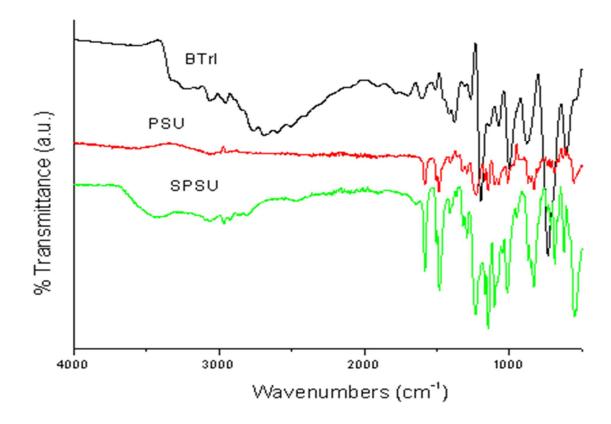
Figure 3 FTIR spectra of polysulfone (PSU), synthesized sulfonated polysulfone (SPSU), and 1H-Benzotriazole (BTri).
\[\text{[rumus tidak dapat ditampilkan dengan baik — lihat PDF asli]}\]
Figure 4 Sulfonated polysulfone [6].
Table 1 Functional groups and wave numbers of polysulfone (PSU) and sulfonated polysulfone (SPSU).
| Functional groups of polysulfone | Wave numbers (cm-1) | Functional groups of sulfonated polysulfone | Wave numbers (cm-1) |
|---|---|---|---|
| Stretching vibration C-S | 690 | Stretchingvibration C-S | 690 |
| Stretching symmetry -SO3- | - | Stretching symmetry -SO3- | 1310-1200 |
| Stretching vibration -SO2- | 1360-1300 | Stretching vibration -SO2- | 1360-1300 |
| Stretching vibration C-O-C | 1300-1175 | Stretching vibration C-O-C | 1300-1175 |
| Stretching vibration C=C | 1700-1500 | Stretching vibration C=C | 1700-1500 |
| CH (aliphatic) | 3400-2700 | CH (aliphatic) | 3400-2700 |
| CH (aromatic) | 3110 | CH (aromatic) | 3110 |
| Stretching vibration O-H | - | Stretching vibration O-H | 3700-2900 |
The FTIR spectrum of BTri in Figure 3 shows C-N stretching at around 1430 – 1650 cm<sup>-1</sup> and a peak at 1270 cm<sup>-1</sup> that are attributable to N-N stretching. The peaks at 670-1225 cm<sup>-1</sup> are attributable to C-H, the peak at 1629 cm<sup>-1</sup> is attributable to C=C stretching bands, and the peak around 3380 cm<sup>-1</sup> is attributable to N-H stretching.
Figure 5 shows the FTIR spectra acid-base complex pair sulfonated polysulfone and BTri for mole ratios 1:0.5 (SPSBTri0.5) and 1:1 (SPSBTri1), respectively.
The band between 3000 and 2000 cm<sup>-1</sup> can be attributed to the possibility of the formation and interaction between BTri and SPSU, which were supported in the 1800-900 cm<sup>-1</sup> region and peaked near 1100 cm<sup>-1</sup> and 979 cm<sup>-1</sup>. A similar study of the interaction acid-base complex pair in proton conducting composite membranes based on poly(1-vinyl-1,2,4-triazole) and nitrilotri(methyl triphosphonicacid) has been reported by Gustian, et al. [12]. Acid-base complex pair sulfonated polysulfone and Btri are shown in Figure 6. Moreover, previous studies of the interaction acid-base complex pair between poly(2,5 benzimidazole) and poly(styrene sulfonic acid) have been reported by Acar, et al. [9]; more details are shown in Table 2.
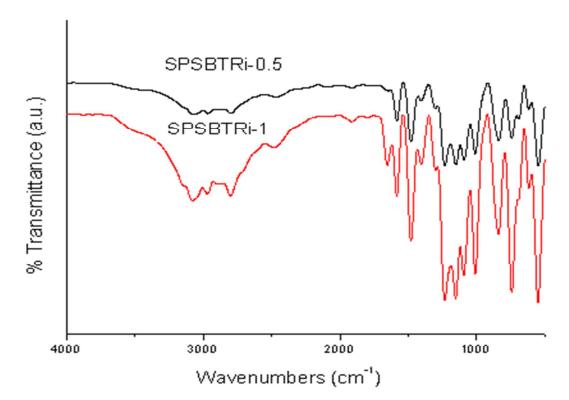
Figure 5 FTIR spectra of the membranes of SPSBTri0.5 and SPSBTri1.
Figure 6 Acid-base complex pair sulfonated polysulfone and Btri.
| Functional Groups of Benzotriazole (Btri) | Wave Numbers (cm-1) | Functional Groups of Membranes of SPSBTri | Wave Numbers (cm-1) |
|---|---|---|---|
| Stretching vibration N-H | 3380 | Stretching vibrationN-H | 3380 |
| Interactionacid-base | - | Interactionacid-base complex | 3000-2000 |
| complex pair | pair | ||
| Stretching vibrationC=N | 1700-1570 | Stretching vibrationC=N | 1700-1570 |
| Stretching vibrationC=C | 1629 | Stretching vibrationC=C | 1629 |
| Stretching vibration -SO2- | - | Stretching vibration -SO2- | 1360-1300 |
| Stretching symmetr-SO3- | - | Stretching symmetry -SO3- | 1310-1200 |
| Stretching vibrationN-N | 1270 | Stretching vibrationN-N | 1270 |
| Absorption acid-base | - | Absorption acid-base | 1100 - 979 |
| complex pair | complex pair | ||
| Bending vibration C-H | 750-650 | Bending vibration C-H | 750-650 |
Table 2 Functional groups and wave numbers of benzotriazole (Btri) and membranes of SPSBTri.
3.3 Thermal Analysis
Figure 7 shows the thermograms of PSU polymer, SPSU, SPSBTri0.5 and SPSBTri1. The PSU polymer has very high stability, its glass transition temperature is about 185°C, and degradation to appear at 500°C corresponding to the degradation of the polymer backbone; this pattern is similar to previous studies [17]. The figure also shows the first weight loss of SPSBTri1 at around 100°C, SPSBTri0.5 and SPSU at around 250°C. The weight loss is related to the loss of water that is physically adsorbed in the samples. Both of SPSU and polymer membrane electrolytes were degraded at 200°C.
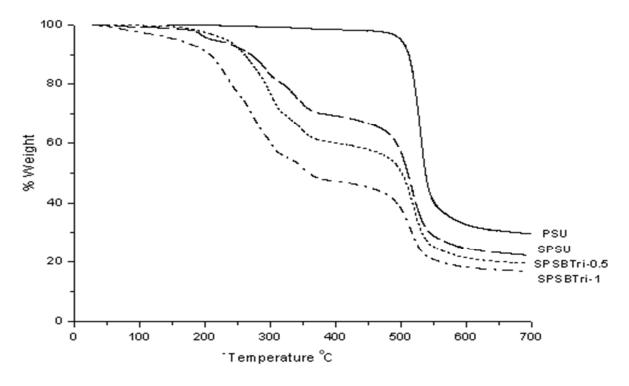
Figure 7 Thermograms of polysulfone polymer(PSU), membrane of sulfonated polysulfone (SPSU), membranes of SPSBTri0.5 and SPSBTri1.
The BTri effects can be seen clearly at 200°C; the membrane having a higher mole ratio is easier to be degraded. At temperatures above 200°C the weight of the membranes declines continuously until 500°C. The weight loss of the membrane is due to the thermal decomposition of side groups and the polymer main chain.
The thermal stability of sulfonated polysulfon membrane was investigated using a thermogravimetric analysis/mass spectrometer. The first weight loss at around 100°C is caused by evaporation of water molecules bound in hydrophilic sulfonated polysulfon membrane. The secondary weight loss between 200 and 400°C is mainly due to the thermally activated decomposition of sulfonic acid groups in the polymer chain, which is confirmed by the evolution of SO and SO2 gas detected in the mass spectra [18]. All of the samples were thermally stable in the temperature range of proton conductivity measurements. In the DSC measurements, we found the glass transition temperature Tg of SPSU to be 65.5°C, while the glass transition temperature for SPSBTri0.5 and SPSBTri1 was found to be 64°C and 62°C, respectively.
3.4 Conductivity Measurements
The frequency-dependent AC conductivities, σac (ω), of the polymer electrolyte membranes were measured at several temperatures using the following equation:
\[\sigma'(\omega) = \sigma_{ac}(\omega) = \varepsilon''(\omega)\,\omega\,\varepsilon_0\tag{1}\] where σ′ (ω) is the real part of conductivity, ω =2πƒ is the angular frequency, ε0 is the vacuum permittivity, and ε″ is the imaginary part of complex dielectric permittivity. The proton conductivities of the anhydrous complex polymer electrolytes were measured at several temperatures between 20 and 150°C.
Figure 8 shows the AC conductivities of membrane SPSBTri1 versus the log frequency at several temperatures. Each curve shows two regions that are typical for ion conducting polymers. A low frequency region at low temperatures is related to conduction processes in the bulk of samples. This region shifts to higher frequencies with increasing temperature. The irregularities at the low frequency side at higher temperatures are caused by electrode polarization due to blocking effect of the electrodes. From curve the AC conductivity of sulfonated polysulfone-BTri1 versus log frequency at measurements 90°C, shows the change a transition. Where in general, below 100°C the proton transport mechanism that occurs is vehicle mechanism. The direct current (DC) conductivities of the samples are generated from the plateau regions by extrapolating to zero frequency. DC conductivity strongly depends on the temperature and the mole ratio of BTri. From the measurements at 150°C
we obtained a conductivity of \(2.52 \times 10^{-4} \text{ S cm}^{-1}\) for SPSBTri0.5 and \(3.34 \times 10^{-4} \text{ S cm}^{-1}\) for SPSBTri1.
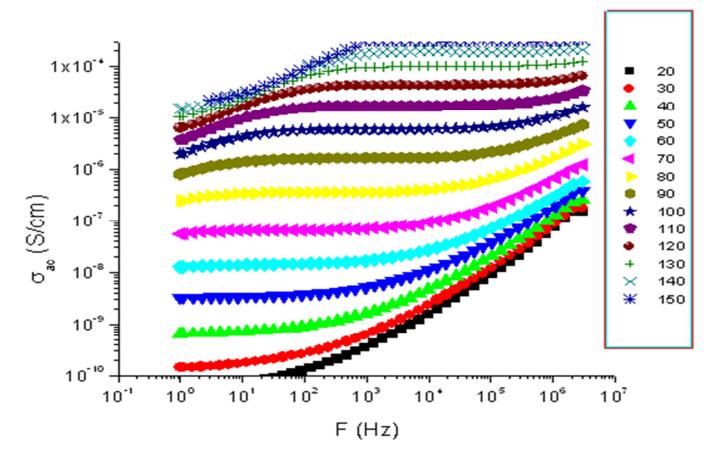
Figure 8 The AC conductivity of sulfonated polysulfone-BTri1 versus log frequency at several temperatures.
From Figure 8 we obtained the DC conductivity as a function of reciprocal temperature, as depicted in Figure 9. As shown in the figure, we have been made a linear fitting of two groups of data, i.e. lower and higher temperature data. The intersection of the two lines is at \(1000/T(K^{-1})=2.975\) or T=63°C, which is close to glass temperature Tg obtained by DSC. At the glass transition temperature, the membranes still exhibit thermal stability up to 150°C, which is also shown by the conductivity measurements.
Using Arrhenius equation
\[\sigma_{DC}(T) = A \exp\left(-\frac{E}{k_B T}\right) \tag{2}\] where \(k_B\) is the Boltzmann constant and E is the activation energy, we obtain E=1.83 eV for \(T \le 63\)°C and E=1.25 eV for \(T \ge 63\)°C. This means that the activation energy of the protons decreased with increasing temperature.
It was found that the membrane with a higher mole ratio of BTri has a higher conductivity. In this case, the proposed model of proton transport occurs via structural diffusion of proton conductivity is mainly controlled by the proton transport. This mechanism is known as the 'Grotthus mechanism', includes the proton hopping from one protonated site to the next non-protonated site, protons can be transferred from a protonated BTri molecule to a neighbor nonprotonated BTri molecule. Therefore, at higher addition of Btri, a proton can be transferred rapidly to a neighboring molecule with small activation energy, especially at higher temperatures. The transport of the proton in the membrane follow Grotthuss diffusion, can be explained by BTri replace water to promote proton conductivity of materials at temperatures above 100°C.
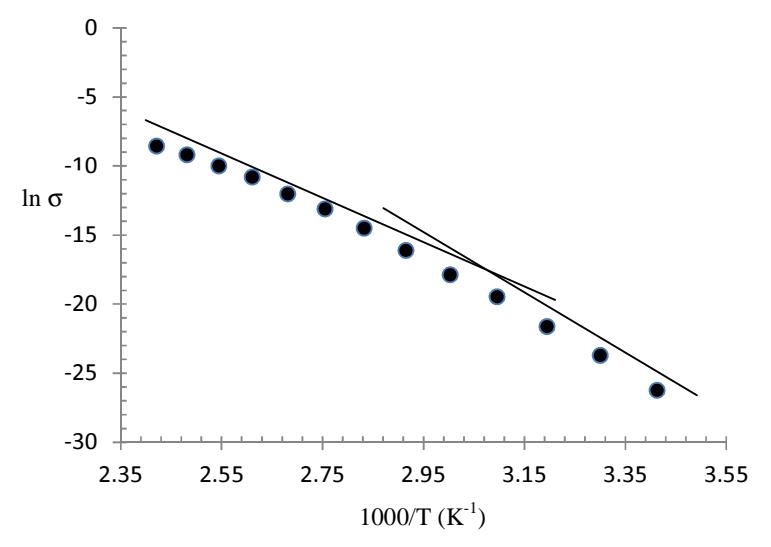
Figure 9 Conductivity as a function of reciprocal temperature.
4 Conclusions
We have successfully synthesized sulfonated polysulfone polymers with a sulfonation degree of 134%using 1,2-dichloroetana as solvent and trimethysilyl chlorosulfonate as sulfonating agent with a mole ratio of 1:1.5. The polymer electrolyte membranes were prepared by mixing the sulfonated polysulfone polymers with 1H-Benzotriazole with mole ratios 1:0.5 and 1:1 in dimethylformamide. The FTIR spectra of the membranes exhibited the presence of interaction 1H-Benzotriazole and sulfonated polysulfone polymer. DSC measurements showed that the Tg temperature of the polymer electrolyte membrane with mole ratio 1:1 was 62°C. The temperature dependence of the proton conductivity showed that the activation energy at temperatures lower than Tg was 1.83 eV, while the activation energy at temperatures higher than Tg was 1.25 eV. The proton conductivity of the polymer electrolyte membrane was found to be 3.34 x 10⁻⁴ S cm-1 at 150°C.
Acknowledgements
We would like to thank the Department of Chemistry, Fatih University, Istanbul, Turkey for recording the FTIR, TG, DSC, and proton conductivity. The authors are also grateful to the Department of Chemistry and the Department of Physics, Universitas Padjadjaran, Indonesia and the Department of Chemistry, Universitas Bengkulu, Indonesia.