

1 Introduction
Flavonols are major dietary flavonoid and are particularly abundant in fruits and vegetables. It has been reported that flavonoids posses a number of biologic effects such as antiallergic, anti-inflammatory, antiviral, anti-proliferative and anticarcinogenic activities. Quercetin (3,3',4',5,7-pentahydroxyflavone, compound 1) is the main flavonol in our diet. Quercetin acts as anti-inflammatory agent via several target pathways, i.e. modulation of cellular activities of inflammation-related cells, modulation of arachidonic acid-related enzymes, modulation of the production of other proinflammatory molecules, as well as modulation of proinflammatory gene expression [1]. Quercetin inhibits
carrageenan-induced inflammation in rats and suppresses the contents of prostaglandin E2 (PGE2), tumor necrosis factor-α (TNF-α) and the mRNA for cyclooxygenase [2]. Quercetin blocks both the cyclooxygenase (COX) and lipooxygenase (LOX) pathways at relatively high concentrations, while at lower concentrations the LOX pathway is the primary target of anti-inflammatory activity. When intraperitoneally administered, quercetin decreases the production of edema in the acute phase after carrageenan injection, but has no significant action on the chronic phase [3,4]. Quercetin has also been reported to promote antioxidant enzyme activity, prevent free radical attacks as well as enhance endogenous antioxidant molecules [1]. In addition, quercetin possesses gastric protective and gastric ulcer healing-promoting action [5], so quercetin was chosen as lead compound for the development of anti-inflammatory agents with low-risk of gastrointestinal toxicity.
However, there are conflicting reports of its in vivo and in vitro activity. When orally administered, quercetin shows weak anti-inflammatory activity, as opposed to the strong COX inhibition in vitro. This is due to the poor bioavailability of quercetin, which is practically insoluble in water or oil [6]. In addition, after oral administration, quercetin is rapidly glucuronated, sulfated and methylated. To overcome these limitations, introduction of lipophilic substituent may increase its permeability into the cell or increase the affinity for the plasma membrane and thus improve its biological activity. Esters are the most commonly added moiety to increase lipophilicity and mask hydrogenbonding groups of the active compound [7]. Biasutto, et al. [8] reported that esterification of quercetin can be a useful method to increase the systemic concentration of quercetin. From their transepithelial absorption study using Caco-2 cells, it was concluded that acyl moieties protect the hydroxyl group of quercetin from the metabolism reaction.
In this study tetraacetylquercetin (TAQ) and tetrapivaloylquercetin (TPQ) were synthesized and their anti-inflammatory activity against carrageenan induced rat paw edema was examined as well as gastrointestinal safety by ulcer index determination.
2 Materials and Methods
2.1 Materials
Quercetin and λ-carrageenan were purchased from Sigma-Aldrich. Other chemicals, i.e. acetic anhydride, pyridine, ethanol, pivaloyl chloride, methylene chloride, hydrochloride acid, acetone, and MgSO4, were purchased from Merck. The sodium diclofenac and the sodium CMC were pharmaceutical grade.
Healthy male Wistar albino rats, weighing 150-200 g, 12-16 weeks old were utilized in this study. They were housed in cages under standard laboratory conditions (12 hours of light period, 27±3°C). The animals were given standard rat pellets and tap water ad libitum. The animals were obtained from the Animal Laboratory, School of Pharmacy, Institut Teknologi Bandung, Indonesia and were maintained in colony cages at 25-30 °C and fed standard animal feed. All animals were acclimatized for a week before use. The Institutional Animal Ethics committee has approved the protocol adopted for the experimentation of animals. The animals were randomly grouped into 5 groups, each group consisting of 6 animals. The test compounds (quercetin 20 mg/kg, TPQ 42.2 mg/kg, TAQ 31.1 mg/kg, sodium diclofenac 5 mg/kg as well as vehicle control) were orally administered 30 minutes prior to carrageenan induction). The edema volumes were measured by plethysmograph before induction and every hour after induction.
2.2 Methods
Thin layer chromatography was performed using precoated silica gel plates (Merck 60 F254) and detection of the components was conducted by 254 nm UV light. Melting points were measured with a melting point apparatus and were uncorrected. \(^{1}\)H-NMR and \(^{13}\)C-NMR were made on a JEOL 250 MHz using tetrametylsilane (TMS) as the internal standard. Chemical shifts (\(\delta\)) are expressed in ppm downfield from TMS. Elemental analyses were carried out on a Heraeus elemental analyzer; the results are within \(\pm\) 0.4% of the theoretical values. Column chromatography was performed on 70-230 mesh silica gel from Merck. Figure 1 outlines the synthesis scheme of tetra-ester quercetin.
3,3',4',7-tetraacetylquercetin (2) was synthesized using the standard procedure reported in[9]. In a dry flask, anhydrous quercetin (1.51 g, 5 mmol), acetic anhydride (15 ml, 0.15 mol) and 5 drops of pyridine were reacted at room temperature, until no yellow appearance of quercetin was observed. After 10 minutes the residue was washed with cold water and recrystallized in absolute ethanol. This yielded 1.55 g (65.9 %) of white crystal with a melting point of 69.0-69.5°C. Analysis with <sup>1</sup>H NMR (250 MHz, DMSO<sub>d6</sub>) showed the following spectra data: \(\delta = 2.07\)-2.35 (m, <sup>12</sup>H, CH<sub>3</sub>-C=O), 6.74 (d, J=2 Hz, 1H, H<sub>6</sub>), 7.13 (d, J=2 Hz, 1H, H<sub>8</sub>), 7.53 (dd, J=2.7 Hz, 6.45 Hz, 1H, H<sub>6</sub>·), 7.85-7.89 (m, 2H, Ar.). Analysis with <sup>13</sup>C NMR (250 MHz, DMSO<sub>d6</sub>) showed the following spectra data: \(\delta = 20.81\), 20.85, 21.05 (CH<sub>3</sub>), 102.56 (C<sub>8</sub>), 106.11 (C<sub>6</sub>), 108.59 (C<sub>9</sub>), 124.35 (C<sup>2</sup>), 125.03 (C<sup>5</sup>), 127.3 (C<sub>6</sub>·), 127.39 (C<sub>1</sub>·), 132.03 (C<sub>3</sub>), 142.66 (C<sub>3</sub>·), 145.14 (C<sub>4</sub>·), 155.59 (C<sub>2</sub>), 156.06 (C<sub>10</sub>), 156.78 (C<sub>7</sub>), 160.76 (C<sub>5</sub>), 168.22, 168.44, 168.64, 168.79 (C=O), 176.07(C<sub>4</sub>). Elemental analysis revealed the following contents: C: 58.76%, H: 3.84% (Calcd. C: 58.73%, H: 3.86%).
3,3',4',7-tetrapivaloylquercetin (3) was analogously synthesized according to the procedure reported by Mattarei, et al. [10]. Pivaloyl chloride (12.06 ml, 0.1 mol) was added dropwise and under continuous stirring to a mixture of quercetin (1.55 g, 5 mmol) and anhydrous pyridine (4.25 ml, 50 mmol) that was previously cooled in a dry ice bath. A white precipitate (pyridinium chloride) formed immediately. The mixture was subsequently allowed to warm to room temperature and was stirred overnight. CH2Cl2 (50 ml) was then added and the organic layer was washed with cold 0.5N HCl (3x50 ml) and cold H2O (2 x 30 ml). The organic phase was then dried and filtered over anhydrous MgSO4. The solvent was evaporated under reduced pressure and the residue was purified by flash chromatography using CH2Cl2/chloroform/acetone (14:5:1) as mobile phase. This yielded 1.55 g (48.5%) of yellow crystal with a melting point of 74.0-75.0 °C. Analysis with 1 H NMR (250 MHz, CDCl3) showed the following spectra data: δ = 1.27-1.38 (CH3), 6.79 (d, J=2 Hz, 1H, H6), 7.28 (d, J=4.1 Hz, 1H, H5'), 7.30 (d, J=2.3 Hz, 1H, H8), 7.62 (d, J=2.1, 1H, H2'), 7.71 (dd, J=2.1Hz, 5 Hz, 1H, H6'). Analysis with 13C NMR (250 MHz, CDCl3) showed the following spectra data: δ = 21.03-22.67 (12C, CH3), 42.29, 42.54, 42.66, 42.78 (>C<), 108.44 (C8), 112.41 (C6), 113.95 (C9), 122.18 (C2'), 122.50 (C5'), 125.14 (C6'), 126.50 (C1'), 132.14 (C3), 142.14 (C3'), 143.06 (C4'), 149.83 (C2), 152.56 (C10), 154.19 (C7), 158.12 (C5), 168.22 (C4), 170.11, 170.55, 170.71, 170.82 (C=O). Elemental analysis revealed the following contents: C: 65.72%, H: 6.55% (Calcd. C: 65.82%, H: 6.63%).
\[\text{[rumus tidak dapat ditampilkan dengan baik — lihat PDF asli]}\]
Figure 1 Scheme of 3,3',4',7-tetraacetylquercetin and 3,3',4',7-tetrapivaloyl quercetin synthesis.
The synthesized compounds were evaluated for their anti-inflammatory activity and ulcerogenic index in Wistar rats using the carragenan-induced rat paw edema method [11]. Test compounds and standard drugs were orally administered as a suspension (with 1% carboxymethyl cellulose as a vehicle).
The rats were daily treated with a test compound at an equivalent dose of 20 mg/kg bw of quercetin for 3 days. The control group rats were treated with an equal volume of the vehicle (0.5% carboxy methyl cellulose). The animals were sacrificed 4 h after the treatment. Their stomachs were observed for ulcers and scored as (0 = normal colored stomach, 0.5 = red coloration, 1 = spot ulcers, 1.5 hemorrhagic streaks, 2 = ulcers > 3 but < 5, 3 = ulcer > 5) [12].
The results were expressed as mean ± SEM, while statistical significance was calculated by applying one way ANOVA. P < 0.05 was considered significant.
3 Results and Discussion
3.1 Anti-Inflammatory Activity
For clarity the percentage of edema inhibiton of the test compounds is listed in Figure 2. Inhibition activity after oral administration of 20 mg/kg of quercetin was only below 10%. At equimolar dose of quercetin, inhibiton activity of TPQ (42.2 mg/kg) and TAQ (31.1 mg/kg) was 5-15% and 11-33% respectively. Sodium diclofenac (5 mg/kg) showed the highest inhibition activity. Table 1 features the percentage of edema after induction of carrageenan.
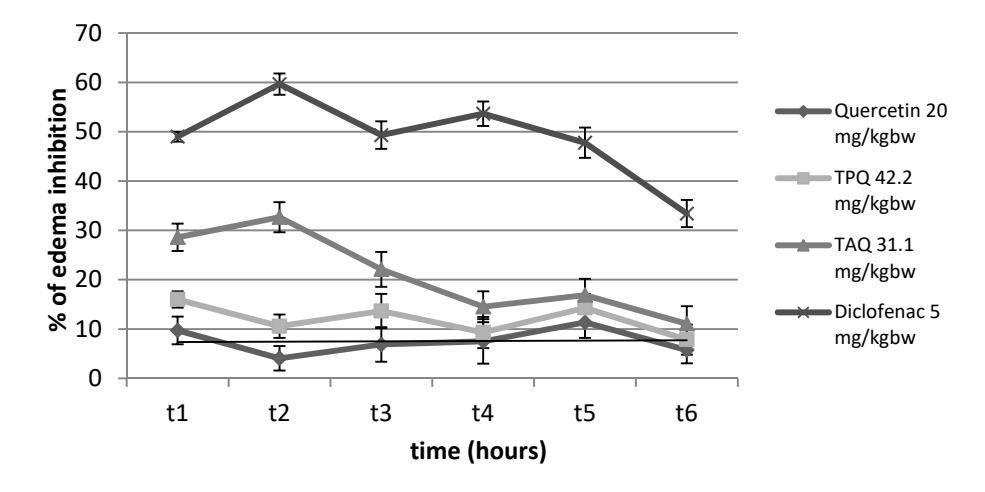
Figure 2 Edema inhibition activity of test compounds.
| Group | Increase of Paw Edema (%) | |||||
|---|---|---|---|---|---|---|
| 1 h | 2 h | 3 h | 4 h | 5 h | 6 h | |
| Control | 28.82±2.48 | 57.80±2.96 | 89.21±4.46 | 109.77±3.64 | 112.89±2.66 | 114.78±3.45 |
| Quercetin 20 mg/kg | 26.02±2.82 | 55.45±2.49 | 83.08±3.50a | 101.54±4.51a | 100.08±3.14 | 108.19±2.70a |
| TPQ 42.2 mg/kg | 24.21±1.65a,b | 51.69±2.36a,b | 77.03±3.46a,b | 99.56±3.16a | 96.77±2.79a | 105.77±3.04a |
| TAQ 31.1 mg/kg | 20.58±2.78a,b | 38.92±3.04a,b | 69.50±3.55a,b | 93.83±3.12a,b | 93.83±3.31a,b | 102.08±3.57a,b |
| Diclofenac 5 mg/kg | 14.70±1.01a,b | 23.32±2.15a,b | 45.23±2.79a,b | 50.88±2.49a,b | 58.97±3.07a,b | 76.43±2.76a,b |
Table 1 Increase of Paw Edema after induction of carrageenan.
3.2 Gastric Ulcer-Inducing Property
Oral administration of quercetin (20 mg/kg, p.o., 3 days) did not induce gastric ulcers in the treated mice as well as in the control group, which received vehicle only (ulcer index of 0.0±0.00). Tetrapivaloylquercetin caused only minor damage on gastric epithelium with an ulcer index of 0.3±0.26. However, tetraacetylquercetin showed more severe ulcerogenic damage with an ulcer index of 0.9±0.20. Gastric ulcer properties of the test compounds are shown on Figure 3. Diclofenac caused extensive damage on the gastric epithelium with an ulcer index of 2.3±0.52 (Table 2).
Figure 3 Gastric ulcer-inducing properties of test compounds, (a) control, (b) quercetin 20 mg/kgbw, (c) TAQ 31.1 mg/kgbw, (d) TPQ 42.4 mg/kgbw, (e) diclofenac 5 mg/kg. Black arrows indicate ulcers.
a: P < 0.05 compared to control, b: P < 0.05 compared to quercetin.
| Treatment | Ulcer index | |
|---|---|---|
| Control | \(0.0\pm0.00\) | |
| Quercetin (20 mg/kgbw) | \(0.0\pm0.00\) | |
| Tetraacetylquercetin(31.1 mg/kgbw) | \(0.9{\pm}0.20^*\) | |
| Tetrapivaloylquercetin(42.2 mg/kgbw) | \(0.3{\pm}0.26^*\) | |
| Sodium diclofenac (5 mg/kgbw) | \(2.3{\pm}0.52^*\) | |
Table 2 Ulcer index after 3 days of treatment with test compounds.
4 Discussion
Pharmacological activities of acyl derivative flavonoids have been explored intensively, mainly because acylation is a simple way to improve the physicochemical properties of a compound. In the case of quercetin, pentacetylquercetin and 3-O-acetyl quercetin have been reported to show higher anti-inflammatory activity than that of the parent compound [3,13]. In this study, the anti-inflammatory activity and gastric ulcer property of other ester derivatives of quercetin were elaborated, i.e. TAQ as well as TPQ, in order to study the role of acyl substituents in anti-inflammatory and gastrointestinal toxicity.
Acylation of quercetin by acid anhydride conducted at low or room temperature produces tetra substituted quercetin. The hydroxyl group at C5 is difficult to substitute because it forms intramolecular hydrogen bonding with the carbonyl group at C4 (Figure 3). A rise in temperature to 140°C is needed to obtain penta-substitution of quercetin esters when acid anhydride is used as acylating agent. Using acyl chloride, prolonging the reaction time to 48 hours produces penta substituted ester quercetin.
Figure 4 Intramolecular hydrogen bonding (dashed line) of tetraacetylquercetin.
*P < 0.05 compared to control.
Carrageenan-induction of rat paw edema is a widely used method to determine anti-inflammatory activity. Inflammation induced by carrageenan is acute, non immune, well researched, and highly reproducible [14]. Guardia, et al. [4] have reported that intraperitonial administration of quercetin at a dose of 80 mg/kg gives 59% inhibition of edema volume in the carrageenan induced paw edema model. However, as shown in Figure 2, edema inhibition after oral administration of quercetin at a dose of 20 mg/kg bw was only below 20%. The lower dose and difference in administration route in our experiment influenced this discrepancy. This can be explained that when used orally, quercetin is metabolized so its level in systemic circulation is decreased. Both tetraacylquercetins enhanced the edema inhibiton, mainly at 1-3 hours. TAQ showed a marked increase of edema inhibiton compared to quercetin and TPQ. When used at a higher dose (equivalent to 80 mg/kgbw of quercetin), both TAQ and TPQ are predicted to show higher anti-inflammation activity due to the increase of free quercetin levels in systemic circulation.
Cermak, et al. [15] have reported that after oral administration of quercetin, the conjugated quercetin was always detected as main metabolite, while very few free quercetin was detected in the blood. Quercetin is rapidly glucuronated, sulfated and methylated after diffusing into cytosol, resulting in very low levels of original compound found in the blood or plasma, mostly as metabolites. Biasutto, et al. [8] have reported that ester-based derivatives enhance bioavailability of quercetin. They studied the transepithelial absorption of several ester derivatives of quercetin across supported tight monolayers of MDCK-1, MDCK-2 and Caco-2 cells. Only a small percentage of quercetin was found in the basolateral compartement, on the other hand, quercetin sulfate was the primary metabolite detected on the basolateral side. Methylquercetin, methylquercetin sulfate and quercetin-O-quinone were the other compounds appearing on the basolateral side. In contrast, in the study of quercetin pentaacetate using MDCK cells there was no quercetin sulfate detected on the basolateral side. The quercetin pentaacetate partially deacetylated, so tetraacetyl quercetin, monoacetate quercetin and diacetate quercetin were detected on the basolateral side. Similar results were obtained with tetraacetyl quercetin derivatives. Acetylated forms (mainly of diacetyl quercetin and monoacetyl quercetin), but no parent or sulfated compounds, appeared on the basolateral side [8].
Ester derivatives of quercetin may increase the systemic quercetin concentration and thus increase the anti-inflammatory activity. Biotransformation of quercetin may affect its pharmacological effect, including anti-inflammatory activity, because its metabolites are generally more hydrophilic and have negative charge at physiological pH [16]. Some in vitro studies have reported that quercetinmono-glucuronides possess antioxidant-scavenging activity, delay cell
membrane lipid peroxidation, as well as inhibit both cyclooxygenase and lipoxygenase expression and activity [17,18]. However, there is no report about the anti-inflammatory activities of methylated or sulfonated metabolites. It is suggested that acylation protects the hydroxyl group of quercetin from the methylation metabolism by cathecol-O-methyltransferase (COMT), sulfonation or glucuronidation, whereas methylated and sulfonated metabolites have no anti-inflammatory activity. In our experiment, a significant increase in activity only occurred at 1-3 hours. In vivo, these acylated species are predicted to be converted to quercetin by esterase. This causesa decrease of the effect due to the metabolism reaction of quercetin producing more hydrophylic metabolites that are easily excreted.
The anti-inflammatory activity of TAQ was higher than that of TPQ. This is correlated to the increase in anti-inflammatory activity of acetylsalicylic acid (ASA) compared to that of salicylic acid. ASA irreversibly acetylates the OH group of serine at position 530 of cyclooxygenase-1 [19]. It was found that, although quercetin has a protective effect against NSAID induced-gastric ulcers, its tetraacetyl derivative caused gastric ulcers after 3 days of oral administration. This gastric ulcer-inducing effect is correlated to inhibition of cyclooxygenase-1, which plays a role in gastrointestinal mucous biosynthesis. However, the gastric ulcer toxicity of TAQ was lower than that of diclofenac, which showed severe gastric ulcer toxicity due to the gastric ulcer protecting effect of quercetin [5].
5 Conslusion
It is concluded that tetraacyl derivatization enhances the oral anti-inflammatory activity of quercetin. The higher activity was shown by tetraacetyl derivatives. However, tetraacetylquercetin causes mild gastric ulcers, contrary to the gastric ulcer protection property of quercetin, while tetrapivaloylquercetin administration didnot cause gastric ulcers.
Acknowledgements
This study was supported by a research grant from the Ministry of Research and Technology, Indonesia. The authors acknowledge Prof. Jochen Lehmann from Jena University, Germany for supporting the NMR and elemental analysis.