

1 Introduction
Methylene blue (MB) is a cationic dye that is often used in the textile industry. MB has negative impacts on living organisms, such as causing skin irritation, nausea, and diarrhea. Consequently, the removal of MB dye from wastewater is necessary [1]. Different methods can be used for removal of MB from water, such as flocculation, adsorption, oxidation, electrolysis, biodegradation, ionexchange, and photocatalysis [2]. Among these techniques, adsorption is widely applied because it is low cost, easy to operate, flexible, and insensitive to harmful pollutants [1]. Various types of adsorbents can be used for adsorption applications. The adsorbent preparation varies from low- to high-cost processes. A low-cost material is necessary in order to solve the water pollution problem in developing countries. Low-cost materials are mostly derived from biomass such as dead leaves, wood, nutshells, or any other kind of waste biomass.
Cassava is one of the most versatile crops cultivated in Indonesia. Young cassava leaves are used as protein substitution to combat malnutrition in developing countries [3]. However, old leaves are not utilized for feed because of their hardness. Moreover, cassava leaves are rather considered as a crop residue and leaves used as food should be carefully selected and prepared due to their high content of anti-nutrients such as cyanide, phytate, and tannin [4]. In a previous report, cassava leaves were used as a parent material for activated carbon production. The activated carbon was then used for adsorption of rhodamin-B in wastewater [5]. The results were promising. However, the adsorption performance of raw cassava leaves was not reported. Therefore, in this study, raw cassava leaves were only treated with deionized water as the washing process and the adsorption performance of the adsorbents was measured by using a methylene blue solution.
2 Materials and Methods
2.1 Materials
Cassava (Manihot esculenta) leaves were taken from a cassava farm in the neighborhood of Institut Teknologi Sumatera. Deionized water was purchased from Brataco, while HCl and NaOH were purchased from Chemical Industry Indonesia. All chemicals were pure analysis grade.
2.2 Preparation and Characterization of Adsorbents
The adsorbents were prepared by simply washing the cassava leaves with deionized water, followed by drying. The dried leaves were crushed by using a blender. After that, the powder was washed several times using deionized water until the filtrate had a transparent color. Washing took a total of 2 hours at room temperature. The obtained residues were open dried at 100 °C overnight. Before the adsorbents were used for further investigation, they were crushed and meshed to obtain a uniform sized powder. The surface morphology of CLP before and after washing, and also before and after adsorption, was analyzed by scanning electron microscopy (ZEISS EVO MA 10). Fourier transform infrared spectrometry (FTIR) (Agilent) was used to analyze the functional groups on the surface of the CLP in the spectral range of 4000 to 600 cm-1.
2.3 Adsorption Behavior Study
2.3.1 Effect of pH
Ten (10) mg of adsorbent was added to 10 ml of methylene blue 50 ppm. The pH values used in this study were 4, 6, 8, and 10, adjusted by NaOH and HCl. Each mixture was shaken for 2 hours at room temperature. The methylene blue
concentration remaining in the solution was measured by using UV/Vis spectrophotometry.
2.3.2 Effect of Contact Time and Adsorption Kinetics
Ten (10) mg of adsorbent was added to the 10 ml methylene blue 50 ppm. The mixtures were shaken with several variations of contact time at room temperature. The variations of contact time used in this study were 1, 5, 10, 30, 60, 120, 150, 180 minutes. After that, the methylene blue concentration remaining in the solution was measured by using UV/Vis spectrophotometry. The adsorption kinetics were studied by using a pseudo-first-order and a pseudo-second-order model. The pseudo-first-order model was based on the approximation that the adsorption rate relates to the number of vacant adsorptive sites [6]. The pseudo-first-order kinetic model can be expressed in the following equations:
\[ln(qe - qt) = lnqe - k_1t\] (1)
The pseudo-second-order kinetic model is presented in the equation below:
\[qt = \frac{k_2 q_{e^2} t}{1 + k_2 q_{e^t}} \tag{2}\] where qe (mg g<sup>-1</sup>) is the adsorption uptake at equilibrium; qt (mg g<sup>-1</sup>) is the adsorption uptake at time t; \(k_I\) (min<sup>-1</sup>) is the pseudo-first-order rate constant; \(k_2\) (g mg<sup>-1</sup>min<sup>-1</sup>) is the pseudo-second-order rate constant; and t (min) is the contact time.
2.3.3 Effect of Initial Concentration of Methylene Blue and Adsorption Isotherm
Ten (10) mg of adsorbent was added to 10 mL methylene blue at various concentrations, i.e. 50, 100, 200, 300, 400, 500, and 600 ppm. The mixture was shaken for 2 hours. After that, the methylene blue concentration remaining in the solution was measured using UV/Vis spectrophotometry. To obtain the adsorption capacity, the amount of MB adsorbed per mass unit of adsorbents used (qe) was evaluated using the following expression:
\[qe = \frac{(\text{Co-Ce})V}{m} \tag{3}\]
The percentage of removed MB (%R) was calculated using the following equation:
Removal (%R) = \[\frac{(\text{Co-Ce})}{\text{Co}} \times 100\%\] (4)
The adsorption isotherms of MB onto the activated cassava leaves were calculated using the Langmuir, Freundlich, and Temkin isotherm models. The
Langmuir isotherm is based on the monolayer sorption of MB on the surface of activated cassava leaves sites and is expressed by the following equation:
\[\frac{\text{Ce}}{ge} = \frac{1}{\text{b}g_o} + \frac{\text{Ce}}{g_o} \tag{5}\]
The Freundlich model assumes that the adsorption surface is heterogeneous and the binding force decreases with increased site occupation [7]. The following linear equation represents the Freundlich isotherm model:
\[\ln qe = \ln Kf + \frac{1}{n} \ln Ce \tag{6}\]
The Temkin isotherm model assumes that the heat of adsorption (a function of temperature) of all molecules in the layer will decline linearly rather than logarithmic binding energies. The heat adsorption constant was calculated by plotting the quantity adsorbed (qe) against ln Ce [8]. The linear form of the Temkin isotherm is as follows:
\[qe = BlnK_{T} + BlnCe \tag{7}\] where qe (mg g<sup>-1</sup>) is the adsorption uptake of adsorbents at equilibrium; Co and Ce are the initial and equilibrium concentrations of MB in the solution (mg L<sup>-1</sup>); V is the volume of the solution (L); m is the mass of dry adsorbent used (g); p (L mg<sup>-1</sup>) is the equilibrium adsorption constant; \(q_o\) is the maximum adsorption capacity; Kf and p are the Freundlich constants which are related to the capacity and the intensity of sorption [9]; p is the heat of adsorption constant (kJmol<sup>-1</sup>); and p is the Temkin constant (Lmmol<sup>-1</sup>).
3 Results and Discussion
3.1 Characterization of Adsorbents
FTIR spectroscopy can give useful information regarding functional groups on the surface of adsorbents. The FTIR spectra of both adsorbents before and after adsorption of MB are shown in Figure 1. For both adsorbents before and after MB adsorption there were several apparent peaks. The broad peak at 3280 cm<sup>-1</sup> is presumably due to phenolic –OH stretching vibration [10]. The band at 2855 cm<sup>-1</sup> may be due to C-H and C=O stretching of carboxylic acid and ester [11]. The bands at 1729 cm<sup>-1</sup> and around 1625 cm<sup>-1</sup> may be attributed to C=O stretching [1]. The band at 1021 cm<sup>-1</sup> may be due to the C-O stretching of ester or ether [11]. Overall, the more CLP interacts with water (CLP before washing < CLP before washing + MB < CLP after washing < CLP after washing + MB), the higher the decrease in transmission of the peaks mentioned above. This may be due to the dissolution of some water-soluble molecules (that contain phenolic and carboxylic acid) during the washing and adsorption processes.
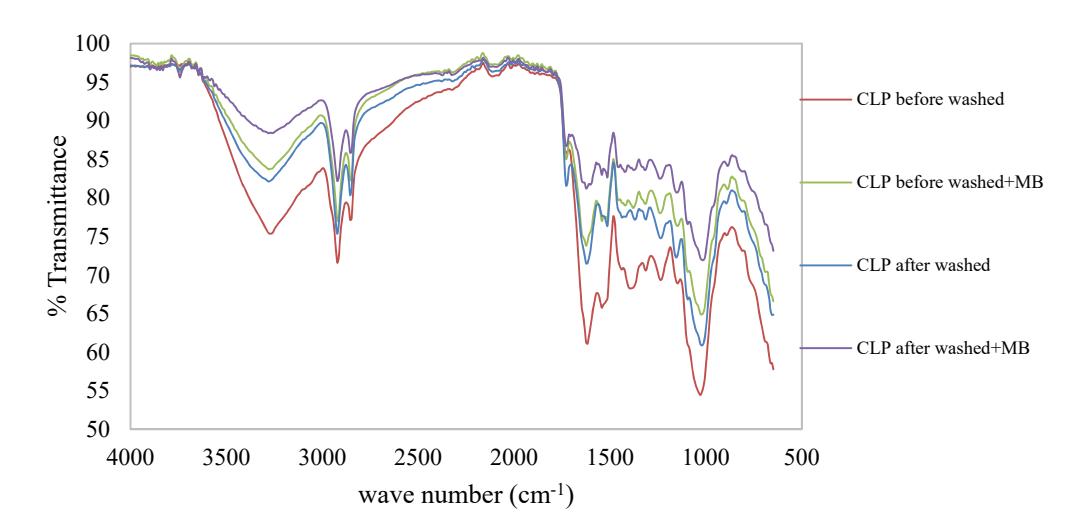
Figure 1 FTIR spectra of cassava leaves before and after adsorption.
Moreover, the peak at 1394 cm-1 and a broad peak at around 1300 cm-1 on the CLP disappeared after the CLP was washed with water and used for MB adsorption. From these FTIR results it is presumed that the washing process caused the dissolution of some water-soluble substances contained in the CLP. On the other hand, when the adsorbents' FTIR spectra before and after MB adsorption are compared, the same phenomena can be observed, i.e. the decreasing of % transmittance of some hydrophilic functional group bands such as –OH and C=O stretching, which may be due to the involvement of hydroxyl and carboxyl groups, respectively, in binding MB during adsorption [1].
Based on several previous reports, dry CLP contains 31% crude protein, 10% HCN-potential, and 2% tannin [3]. Moreover, CLP contains cyanogenic linamarin (approximately 93% of total glucoside), 2-(ß-D-glucopyranosyloxy) isobutyronitrile derived from valine and lotaustraline derived from isoleucine [12][13]. These compounds have several –OH groups that may be able to interact with MB through electrostatic forces.
The morphological features of CLP before and after washing were examined by using a scanning electron microscope (SEM), as depicted in Figure 2 and Figure 3. From the SEM micrograph, the surface of the CLP before and after washing is irregular and contains pores of different sizes and shapes, which may provide areas for MB-surface interaction.
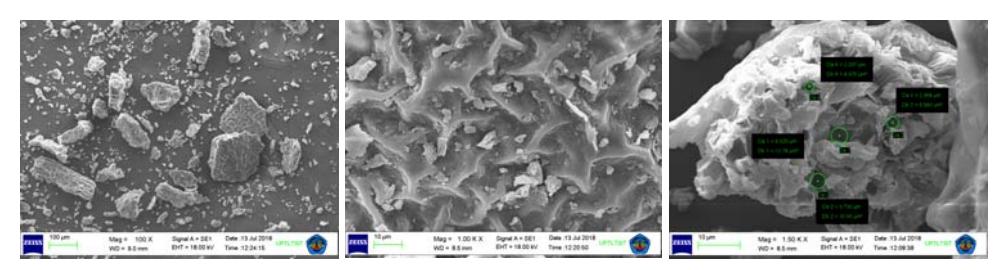
Figure 2 SEM image of the cassava leaves before washing.
Figure 3 SEM image of the cassava leaves after washing.
3.2 Effect of MB Solution pH
The acidity of the solution affects the surface ionic formation of both adsorbents and adsorbates. Therefore, it is essential to measure the effect of the solution pH on the adsorption activity. In this research, the pH range used was 2, 4, 6, 8, and 10. The lowest MB adsorption uptake (qe) for both adsorbents was when the MB solution pH was 2, i.e. 23.6 mg g-1 and 32.5 mg g-1 for the CLP before washing and after washing, respectively. As the pH increased, qe became higher. The protonation of adsorbent material may have caused the lowest qe of the CLP at pH 2.
It is known that MB is a cationic dye, therefore, there will be electrostatic repulsion between protonated adsorbent active sites and the MB. On the other hand, the increase of the solution pH led to the deprotonation of adsorbent functional groups. This process produced adsorbents with a negative surface charge, which will lead to a higher electrostatic attraction between cationic MB and negatively charged adsorbents [14].
From Figure 4, there were insignificant qe values for both adsorbents at pH 4 to 10. Here, it can be assumed that CLP can work in a wide pH range. From this result, when cassava leaves are applied for adsorption, pH adjustment can be omitted, which may reduce the operational cost.
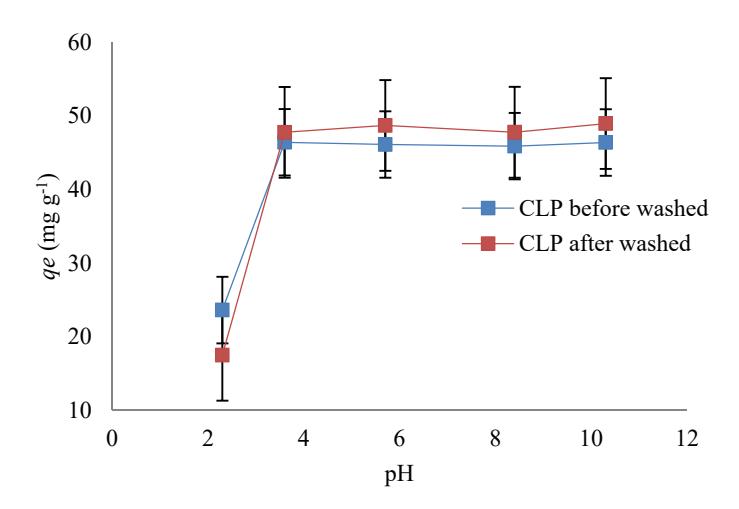
Figure 4 Effect of pH on the sorption of MB by cassava leaves.
3.3 Effect of Contact Time and Adsorption Kinetics
The effect of contact time between adsorbents and MB was studied by using 1 minute to 180 minutes of shaking time. In Figures 5-7 it is shown that qe increased as the contact time increased. In the initial adsorption stage, all vacant sites on the adsorbent surface area were available for rapid attachment of adsorbate molecules. As the process continues, the number of available sites declines and repulsion exists between the adsorbate molecules attached to the adsorbent in the bulk phase. Finally, the adsorption equilibrium stage is reached, where the adsorption and desorption rates are equal and no apparent increase in qe or removal percentage can be observed [15].
The kinetics mechanism of MB adsorption onto CLP was investigated by using two kinetics models, i.e. a pseudo-first-order and a pseudo-second-order model. The graphs of all kinetics investigations on adsorption of MB onto CLP are presented in Figures 6 and 7. The values of the kinetics parameters are shown in Table 1. From Table 1 it can be seen that the adsorption of MB onto CLP before and after washing by using the pseudo-first-order model had R2 at 0.56 and 0.45, which is far from linearity. On the other hand, the pseudo-second-order plot had R2 at 0.99 for both CLP before and after washing. Moreover, qe (experiment) and qe calculated by the pseudo-second-order models were comparable. Therefore, it can be assumed that the kinetics mechanism of MB onto CLP before and after washing followed the pseudo-second-order model, which indicates chemisorption as the rate-controlling step [16,17].
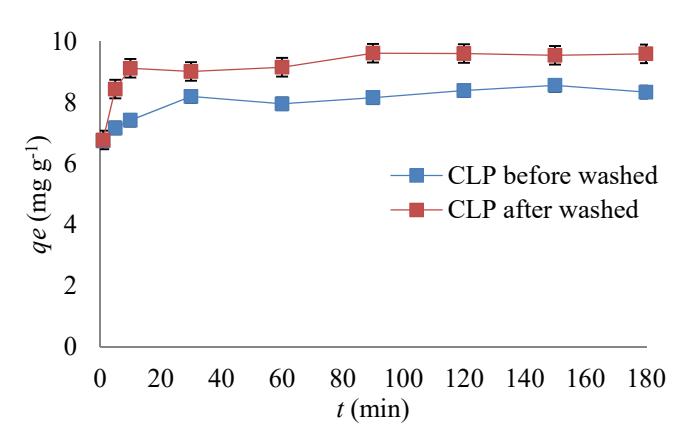
Figure 5 Effect of contact time on sorption of MB by cassava leaves.
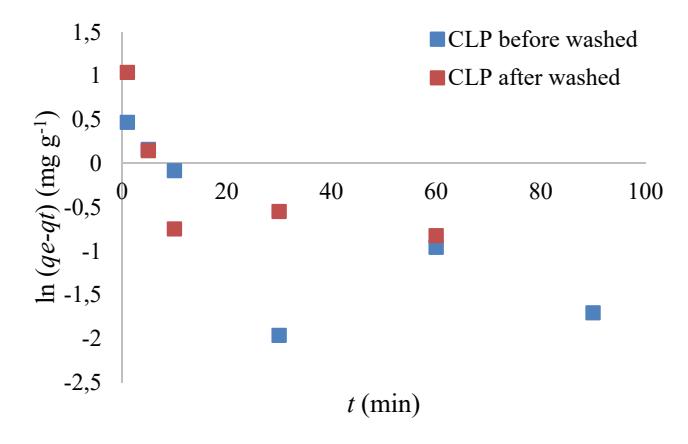
Figure 6 Pseudo-first-order kinetic model on adsorption of MB onto CLP.
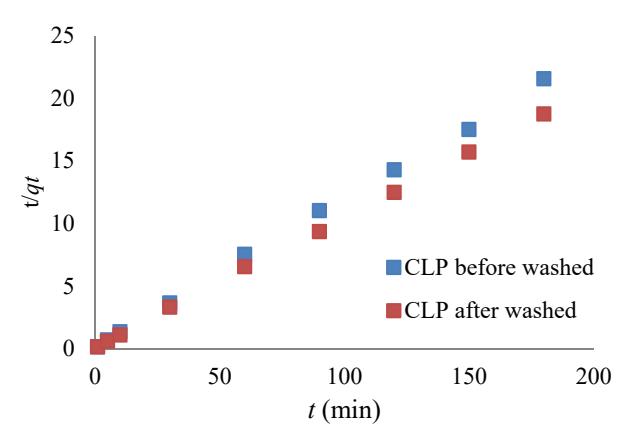
Figure 7 Pseudo-second-order kinetic model on adsorption of MB onto CLP.
| Kinetic model | Parameters | CLP before washing | CLP after washing |
|---|---|---|---|
| k1 (min-1) | 0.0215 | 0.0217 | |
| Pseudo | qe (mg g-1) (calculation) | 1.023 | 1.314 |
| first order | qe (mg g-1) (experiment) | 8.39 | 9.61 |
| R2 | 0.56 | 0.45 | |
| 2 (min g mg-1) k | 0.087 | 0.094 | |
| Pseudo | qe (mg g-1) (calculation) | 8.34 | 9.60 |
| second order | qe (mg g-1) (experiment) | 8.39 | 9.61 |
| R2 | 0.99 | 0.99 |
Table 1 Kinetic parameters for the adsorption of MB onto CLP.
3.4 Effect of Initial Concentration and Adsorption Isotherm
The effect of MB initial concentration on the adsorption capacity of the CLP before and after washing was investigated using MB solutions with a variety of concentrations. From Figure 8 it can be seen that the higher the concentration of MB solution, the more MB was adsorbed on the CLP. The adsorption capacity of the CLP before washing increased from 37.4 mg g-1 to 188.1 mg g-1. On the other hand, the adsorption capacity of CLP after washing increased from 47.5 mg g-1 to 246.1 mg g-1. The higher adsorption capacity at larger MB concentration may be due to the increase of the driving force by the concentration gradient with the enhancement of the MB initial concentration [18].
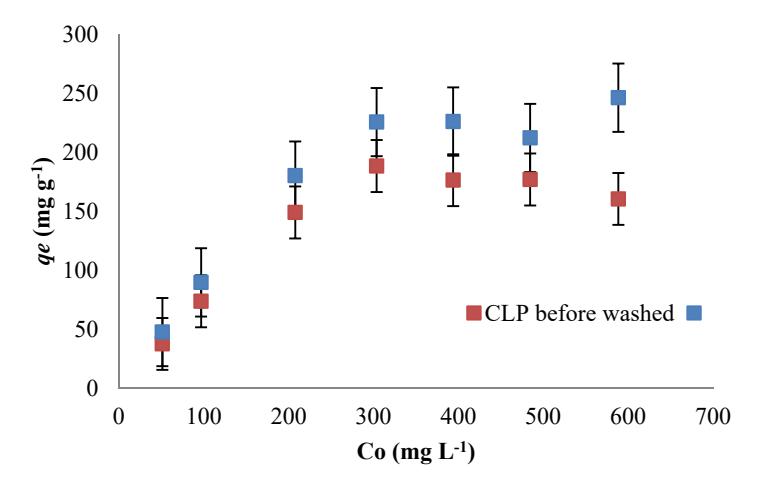
Figure 8 Effect of initial on sorption of MB by CLP.
In order to understand the interaction between MB molecules and adsorbent materials during the adsorption equilibrium, the MB adsorption capacity onto CLP before and after washing at room temperature was calculated by using the Langmuir, Freundlich, and Temkin isotherm models. Table 2 shows the values of the adsorption isotherm parameters for MB adsorption on the CL before and after washing at room temperature. The adsorption capacity for all samples increased with increasing initial dye concentration. The maximum adsorption capacity of the CLP before and after washing was 178.57 mg g<sup>-1</sup> and 243 mg g<sup>-1</sup>, respectively.
| Isotherm model | Parameters | CLP before washing | CLP after washing |
|---|---|---|---|
| \(q_o (\mathrm{g mg^{-1}})\) | 178.57 | 243.90 | |
| Langmuir isotherm | b (L mg-1) R2 | 0.04 | 0.08 |
| \(R^2\) | 0.97 | 0.99 | |
| 1/n | 0.40 | 0.31 | |
| Freundlich isotherm | \(K_F (mg g^{-1})\) \(R^2\) | 19.76 | 44.16 |
| \(R^2\) | 0.74 | 0.84 | |
| B (kJ mol-1) | 40.53 | 38.73 | |
| Temkin isotherm | \(K_T (L \text{ mmol}^{-1})\) | 1.48 | 0.37 |
| \(\mathbb{R}^2\) | 0.90 | 0.76 |
Table 2 Adsorption isotherm parameters.
Figures 9, 10, and 11 present the linearized Langmuir, Freundlich, and Temkin isotherm plots. The analyzed results (Table 2) show that the R<sup>2</sup> values from the Langmuir model were superior to those from the Freundlich and Temkin models for both adsorbents. Therefore, it can be assumed that the adsorption of MB onto CLP before and after washing followed the Langmuir isotherm model. This model suggests that the adsorption process happens in a monolayer onto a surface with homogenous sites available for interaction with the adsorbate. After reaching equilibrium migration of adsorbate molecules through the adsorbent surface was not observed [19].
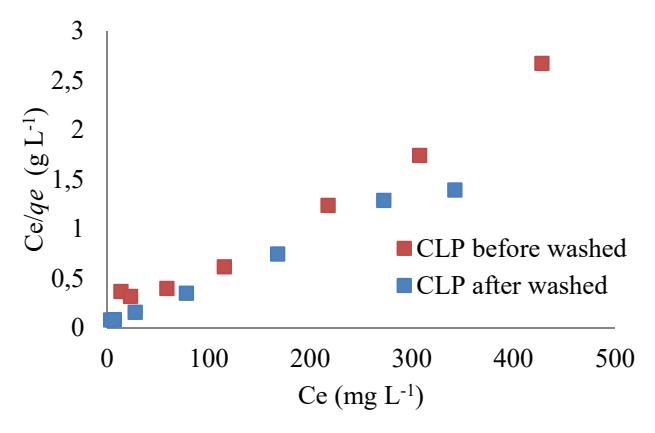
Figure 9 Langmuir isotherm of MB adsorption by CLP.
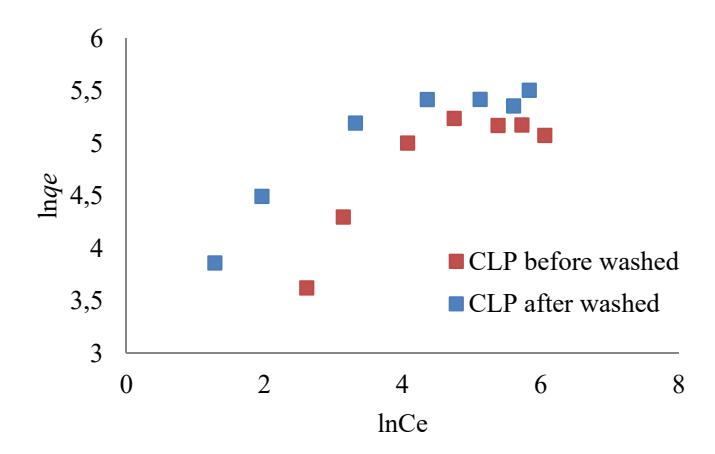
Figure 10 Freundlich isotherm of MB adsorption by CLP.
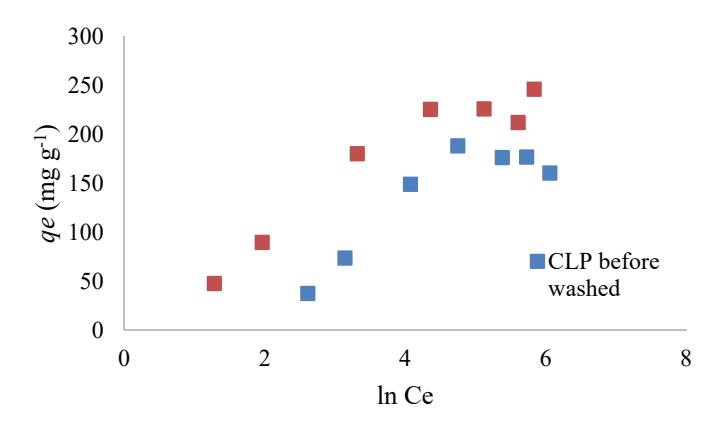
Figure 11 Temkin isotherm of MB adsorption by CLP.
3.5 Effect of Salt
In real polluted sites, the water contains not only one single component but multiple components, which may affect the adsorption process of a specific compound. Inorganic salts are commonly used as an additive in dye production as dye-promoting and leveling agent [20]. Therefore, to check the specificity of the adsorbent, the influence of the presence of disturbing ions should be studied. The presence of ions in the MB solution can interfere with the MB adsorption process on CLP because the ions will interact with the CLP through electrostatic forces, which may reduce the availability of functional groups on the surface of the CLP.
In this study, NaCl was used as the source of ions. From Figure 12 it can be observed that the presence of NaCl in the MB solution decreased the adsorption
capacity of the CLP. The greater the concentration of NaCl in the solution, the higher the decrease in CLP adsorption capacity towards MB.
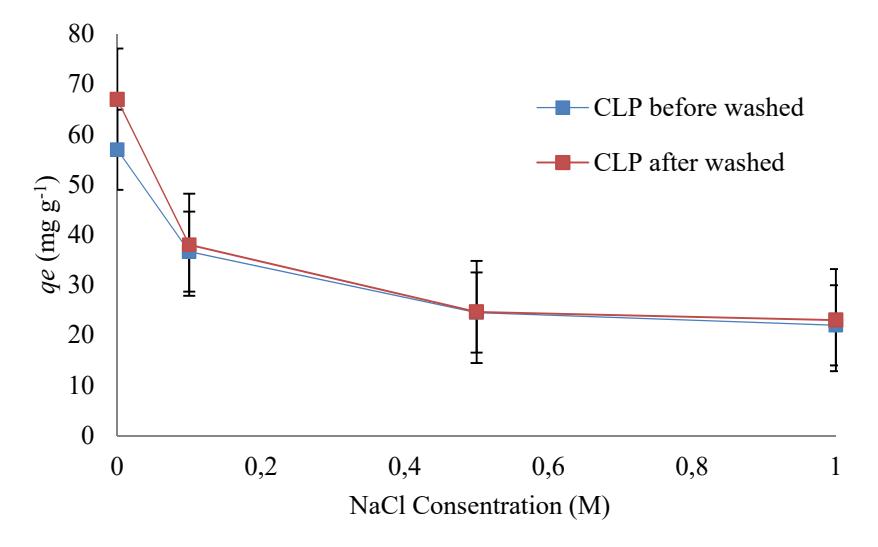
Figure 12 The effect of salt presence on the adsorption of MB onto cassava leaves.
Table 3 Comparison of Langmuir maximum adsorption capacity of MB by different adsorbents.
| Sorbent | Sorption capacity (mg g-1) | Reference |
|---|---|---|
| Gulmohar plant leaf powder | 186.2 | [21] |
| Cassava leaves before washing | 178.5 | This work |
| Cassava leaves after washing | 243.9 | This work |
| Pine tree leaves | 126.5 | [22] |
| Oil palm leaves | 103.02 | [23] |
| Salix babylonica leaves | 60.97 | [24] |
| Platanus orientalis leaves | 114.94 | [25] |
The determined maximum MB adsorption capacities on CLP before and after washing were compared with other typical adsorbents from prior reports (Table 3). Comparatively, the CLP adsorption capacity of MB can compete with other similar adsorbents such as Gulmohar plant leaf powder and Planatus orientalis leaves. Moreover, it has a higher adsorption capacity compared with other leafbased adsorbents. On the other hand, CLP after washing has a higher adsorption capacity towards MB compared to another adsorbents listed in Table 3. From this comparison, CLP has the advantage of low cost and high performance in removing MB from aqueous solutions. According to this comparison it can be assumed that CLP is a promising alternative adsorbent to remove MB from wastewater.
4 Conclusions
Cassava leaf powder before and after washing can be used as an effective alternative low-cost adsorbent for adsorption of methylene blue from aqueous solutions. From this study it is known that CLP can work over a wide pH range. The MB adsorption kinetics on CLP before and after washing fitted well to the pseudo-second-order model. On the other hand, the equilibrium of the MB adsorption process matched well with the Langmuir isotherm model with the calculated maximum qe at 178.5 mg g-1 and 243.9 mg g-1 for CLP before and after washing, respectively. Also, it was found that the presence of salt in the MB solution could reduce the adsorption capacity of CLP towards MB.
Acknowledgment
This work was financially supported by Penelitian Dosen Pemula, SIMLITABMAS, Ministry of Technology Research and Higher Education, Indonesia.