

1 Introduction
The formation of Sumatra is closely correlated with several critical tectonic processes in the Southeast Asian region. The history of the opening and closing of several ancient oceans as well as rotation and convergence between plates have influenced the geology of Sumatra. The western part of Sumatra is derived from the West Sumatra Plate, while the eastern part is part of the Sibumasu Plate. The two plates are thought to have merged at the end of the Late Permian
Received September 27 th, 2023, Revised February 5 th, 2024, Accepted for publication April 3 rd, 2024 Copyright © 2023 Published by ITB Institut for Research and Community Service, ISSN: 2337-5760, DOI: 10.5614/j.math.fund.sci.2023.55.2.5math to Early Triassic [1,2]. The Medial Sumatra Tectonic Zone (MSTZ), which stretches from the Andaman Sea to the southern part of Sumatra, is the presentday imaginary boundary between the two plates. Records of the Woyla Arc in Sumatra were the subject of several studies [3-5].
Inter-plate tectonics have initiated intrusions in Southeast Asia, including Sumatra. The granite provinces proposed in this region are distinguished by time of formation and tectonic mechanisms. The Eastern Granite Province, which spans eastern Thailand, Cambodia, Vietnam, eastern Malaysia, and several islands east of Sumatra, was initiated by Palaeo-Tethys subduction under Indochina in the Permian [2,6,7]. The collision of the Sibumasu Plate and the Indochina Plate during the Triassic triggered intrusions in the Main Range Province [8,9]. Tin mineralization in Southeast Asia is generally found in Stype granites in Main Range Province [10-12]. Granite formation in the Western Province, which is dominantly of Cretaceous age, began to intrude after the Neo-Tethys subduction under Sibumasu [7,13,14]. Previous study [15] added a group of granitoids called the Volcanic Arc Suite, which is emplaced close to the Bukit Barisan Range in the east-central Sumatra region (Figure 1). The granitic rocks in this suite were not formed as large batholiths, as generally found in other provinces, but as scattered plutons [1,2,10].
Granitic rocks are found in several areas of Lampung Province, including in Tanggamus Regency. A mount called Tanggamus, which may be associated with the intrusions, is located in this regency. The mountain is situated in the range of Barisan Mountains as a continental margin volcanic arc, which was formed by the subduction of the Indian-Australian Plate below the Eurasian Plate [16]. Previous studies have concluded that granites associated with volcanic arcs typically show specific geochemical characteristics [14,17-19]. This study describes the geochemical characteristics of the granitic rocks from the Tanggamus area and its surroundings. This study could clarify the boundaries between the Volcanic Arc Suite and other granitoid provinces in Sumatra, especially in the studied region.
1.1 Geology of Tanggamus Region
Tanggamus Regency is located at the southern tip of Lampung Province and has a general morphology consisting of lowlands, undulating hills, mountains, and volcanic cones. The geology of Tanggamus Regency is composed of several volcanic rock units, intrusive rocks, sedimentary rocks, and alluvial deposits [19]. The Great Sumatra Fault (GFT) is a fault that extends from the Andaman Sea to the Sunda Strait east of Tanggamus Regency. GFT is special because >45% of active volcanoes in Sumatra are within a radius of 10 km [20]. In general, the sedimentary and volcanic rock units around the studied location can be divided into two groups, namely the Barisan and Bengkulu Lanes. The first is in the eastern part of the study region whilst the other is in the western part. The Hulusimpang Formation, the Gading Formation, the Bal Formation, the Lampung Formation, and the Young Quaternary Volcanoes of Mount Tanggamus are in the Barisan Lane. On the other hand, the Lemau Formation and the Simpangaur Formation are located in the Bengkulu Lane.
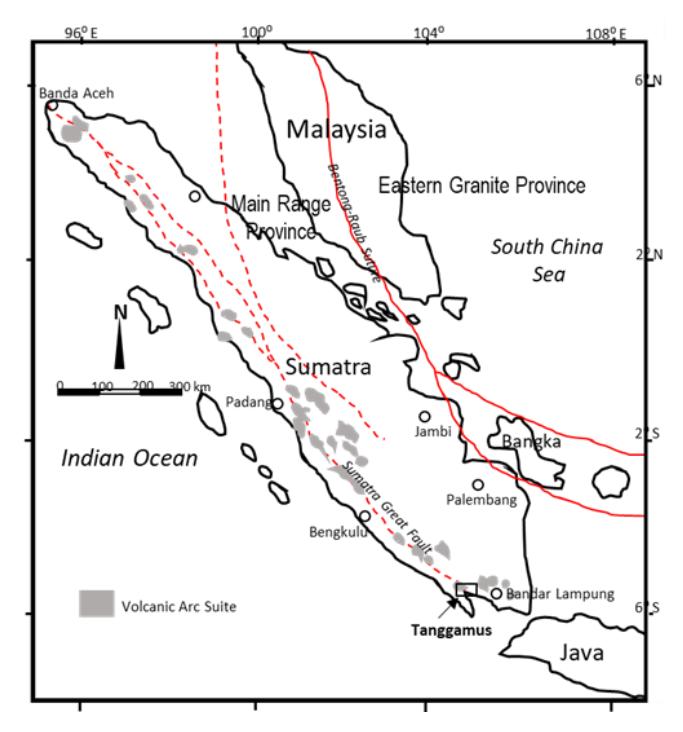
Figure 1 Granitoids of the Volcanic Arc Suite in Sumatra are located in the western part of the island [20].
The Hulusimpang Formation and the Gading Formation, which were formed in the Oligocene–Miocene, are the oldest rock units in Tanggamus. The two rock units are interfingering [19]. The Hulusimpang Formation is composed of volcanic breccia, lava, and basalt-andesitic tuff, while the Gading Formation consists of sandstone, siltstone, and claystone intercalated with limestone. The Hulusimpang Formation has the widest domain in the Tanggamus Regency (Figure 2). The granitoids in Tanggamus intrude the Hulusimpang Formation. The Bal Formation, which was formed in the Middle Miocene to Late Miocene, is composed of dacite, dacitic-tuff, and sandstone inserts. This sedimentary rock unit is predominantly located in the west of Semangko Bay. Kota Agung, the capital of Tanggamus Regency, is surrounded by the young quaternary volcanic rocks of basalt and andesite-dominated Mount Tanggamus.
The Middle Miocene Lemau Formation consists of calcareous claystone and sandstone, whilst the Late Miocene–Pliocene Simpangaur Formation comprises tuffaceous sandstones, tuffaceous siltstones, and conglomerates of various materials. The second rock unit is the most dominant one on the west coast of Lampung. The Quaternary Alluvium spreads west of Kota Agung and at the southern tip of the Bengkulu Lane. The geological conditions around the study area can be observed in Figure 2.
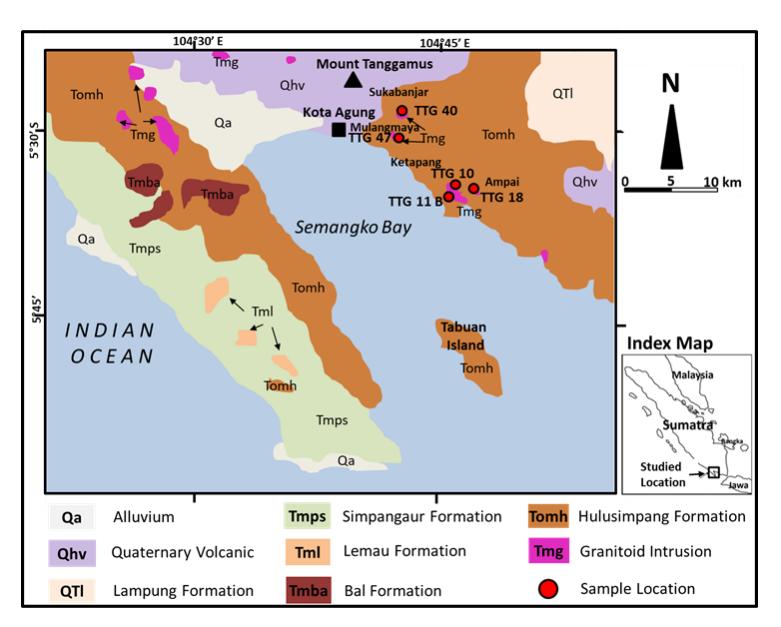
Figure 2 Granitoids of the Volcanic Arc Suite in Sumatra located in the western part of the island (modification from [20]).
2. Methodology
2.1 Sample Description
Five samples of granitic rocks were taken from the Tanggamus Regency area, namely TG 10, TG 11B, TG 18, TG 40, and TG 47. The TG 10 sample was obtained from the side of the road between Kota Agung Timur to Cukuh Balak, in Ketapang Village. The outcrop forms a very steep cliff morphology, the dimensions of which are more than 50 meters long and about 10 meters high. Megascopically, the TG 10 sample is a light grey, porphyritic, dense, and solid granitoid (Figure 3a). Some parts of the outcrop are fractured. Approximately
200 meters from the first location, a granitoid outcrop that intrudes basalt with a stronger degree of alteration than TG 10 was found. The TG 11B sample is a lighter-colored granitic rock than TG 10, medium-grained and was taken at the edge of contact with the basalt. Although quartz veins were detected in this outcrop (Figure 3b), a relatively unaltered sample was carefully taken for laboratory analysis. Another light-grey granitoid (TG 18) sample was taken from Ampai Village.
Granite outcrops and volcanic boulders were found in a river at Mulangmaya Village, Kota Agung Timur District. Sample TG 40 was estimated to be a diorite, greyish with bright, porphyritic, medium-coarse-grained, solid, and dense quartz flecks from the bank (Figure 3c). At another location, in Sukabanjar Village, a river was found with almost the same rock appearance as at the TG 40 station. The TG 47 sample was taken from that location and can be described as an ash-grey granitoid with bright spots, medium grain, and a reddish surface due to weathering (Figure 3d).
2.2 Analytical Procedure
The rock samples were sent to the Laboratory of the Center for Geological Survey of Indonesia in Bandung for preparation and analysis. The bulk geochemical contents were measured using two devices, namely an Advant X-Ray Fluorescence device and an X-series Thermo Inductively Coupled Plasma-Mass Spectrometer. All samples were washed, separated from their weathered parts, and dried outdoors for at least one workday. The samples were ground to obtain a grain size of -200 mesh. The smaller the grain size, the greater the contact area with the chemical solution, thus facilitating the preparation process. In this study, the XRF device was used to determine the abundance of the major oxides (SiO2, TiO2, Al2O3, Fe2O3T, MnO, CaO, MgO, K2O, and Na2O) using the pressed pellet technique based on the considerations and sequences described in previous study [21]. Lost on ignition (LOI) was measured by comparing the weight of the sample after and before burning at 1000 °C as described in previous studies [2,22].
ICP-MS was used for trace and rare earth elements (REE) analysis, namely Sc, V, Cr, Rb, Sr, Y, Zr, Nb, Ba, La, Ce, Pr, Nd, Sm, Eu, Gd, Tb, Dy, Ho, Er, Tm, Yb, Lu, Pb, Th, and U. Precisely 0.1 gram of sample was destructed using three strong acids, HCl (chloric acid), HF (hydrofluoric acid), and HNO3 (nitric acid). This process was carried out on a hotplate so that the reaction went faster and was more complete. Perchloric acid (HClO4) addition was necessary because the sample had not been destructed after the three acids reaction. Destruction was stopped when almost all of the solution was dry. The mother liquor obtained with the addition of 2% HNO3 can be stored. On the same day as the measurement, 1 ml of mother liquor was again diluted with 2% HNO3 to get a volume of 10 ml. The five levels of calibration solution of each element measured served as a basis for calculating the count per second (CPS) into composition by the ICP-MS device. Two certified reference materials, namely AGV-2 and GBW 7113, were also prepared and analyzed through the same process as the samples to confirm the accuracy of the measurement results.
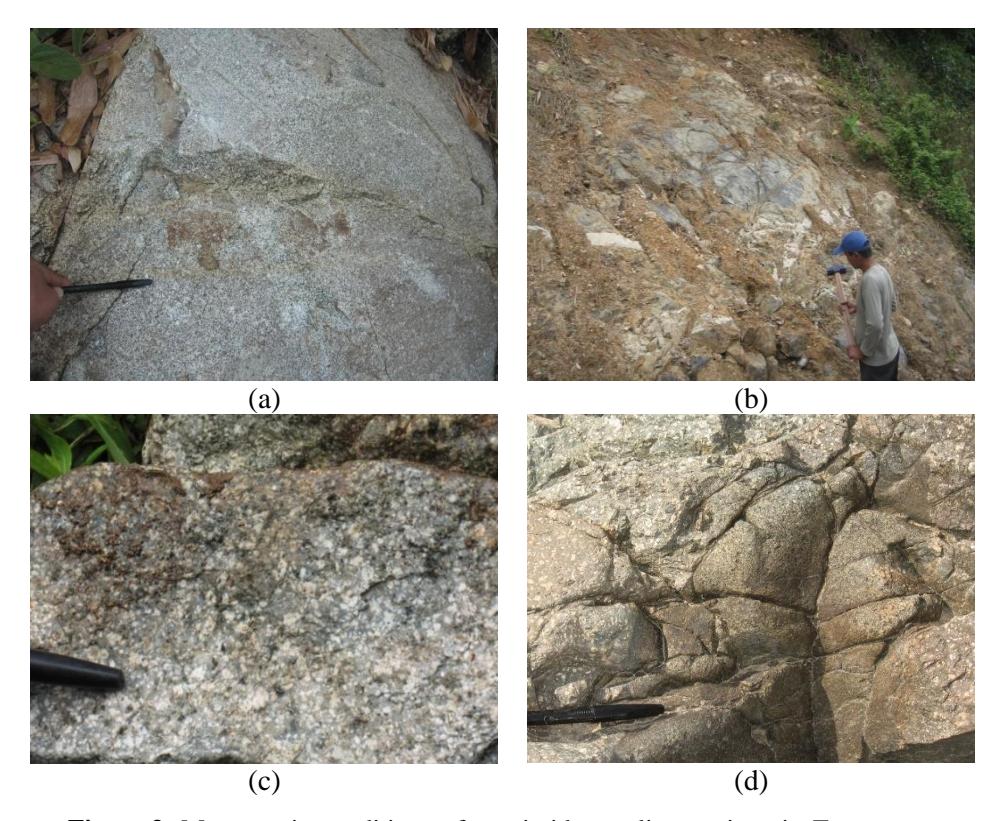
Figure 3 Megascopic conditions of granitoid sampling stations in Tanggamus Regency: a) TGG 10 in Ketapang Village; b) TGG 11B, situated 200 m from TGG 10; c) TGG 40 in Mulangmaya Village; and d) TGG 47 in Sukabanjar Village.
3. Results and Discussion
3.1 Analytical Results
The collected samples are felsic rocks with a wide range of SiO2 composition of 61.35% to 75.29%. Al2O3 was the second largest major oxide with an average of 17.05%. Although TG 11B was detected as the sample richest in silica and potassium, this rock had the least abundance of TiO2, Al2O3, Fe2O3T, CaO, MgO, and Na2O. This may be associated with the quartz veins present in TG 11B (Figure 3b). All samples are categorized as fresh based on the lowness of the LOI value. However, the sample composition remained normalized before the interpretation using geochemical diagrams.
Strontium and barium were the two most abundant trace elements, with an average of 233 ppm and 175 ppm, respectively. The content of radioactive material in the sample was low, at a maximum amount of Th 4.92 ppm and U 0.14 ppm. Although studies of REE deposits in igneous rocks tend to focus on granitic rocks [2,23-25], their composition in these samples was insignificant, with an average of 43.97 ppm. Cerium and lanthanum were detected as the two most abundant REE, at an average of 16.78 ppm and 9.57 ppm, respectively.
Tabel 1 Composition of the granitoids from Tanggamus Regency and its surroundings.
| TG 10 | TG | TG | TG | TG 11 | TG 10 | TG 18 | TG 40 | TG | TG 11 | |||
|---|---|---|---|---|---|---|---|---|---|---|---|---|
| Major oxides (wt%) | Trace and rare earth elements (ppm) | |||||||||||
| \(SiO_2\) | 61.35 | 63.44 | 62.89 | 61.96 | 67.04 | Sc | 7.73 | 5.25 | 5.76 | 4.54 | ||
| \(TiO_2\) | 0.60 | 0.50 | 0.45 | 0.49 | 0.35 | V | 95.07 | 81.61 | 52.04 | 49.29 | 35.38 | |
| \(Al_2O_3\) | 17.81 | 17.33 | 18.46 | 17.03 | 16.81 | Cr | 130.73 | 27.86 | 26.57 | 32.54 | 150.00 | |
| Fe2O3T | 4.74 | 5.31 | 3.77 | 4.90 | 3.03 | Rb | 24.60 | 34.32 | 40.98 | 36.17 | 56.66 | |
| MnO | 0.05 | 0.10 | 0.08 | 0.09 | 0.08 | Sr | 451.80 | 185.60 | 212.30 | 183.90 | 401.80 | |
| CaO | 6.09 | 4.19 | 3.74 | 4.89 | 3.41 | Y | 13.08 | 7.50 | 9.72 | 11.07 | 10.40 | |
| MgO | 2.28 | 1.73 | 1.26 | 1.31 | 1.07 | Zr | 41.58 | 46.31 | 48.94 | 35.15 | 287.10 | |
| Na2O | 4.59 | 3.77 | 4.58 | 4.36 | 4.18 | Nt | 1.10 | 1.51 | 2.09 | 2.45 | 4.87 | |
| \(K_2O\) | 1.45 | 1.87 | 2.80 | 2.63 | 2.08 | Cs | 0.90 | 1.33 | 1.09 | 0.49 | 1.56 | |
| \(P_2O_5\) | 0.06 | 0.13 | 0.13 | 0.14 | 0.14 | Ba | 302.70 | 122.00 | 139.40 | 151.90 | 483.40 | |
| LOI | 0.98 | 1.19 | 1.61 | 1.92 | 1.53 | La | 6.85 | 11.26 | 7.77 | 8.43 | 13.52 | |
| Total | 100.01 | 99.66 | 99.77 | 99.72 | 99.72 | Ce | 18.74 | 15.82 | 18.02 | 19.39 | 32.98 | |
| Pr | 1.87 | 1.69 | 2.06 | 2.26 | 2.99 | |||||||
| No | 8.48 | 6.80 | 7.90 | 9.55 | 11.55 | |||||||
| Sn | 2.12 | 1.44 | 1.71 | 1.93 | 2.08 | |||||||
| Eu | 0.52 | 0.53 | 0.55 | 0.94 | ||||||||
| Go | l 1.76 | 1.26 | 1.57 | 1.68 | 1.89 | |||||||
| Tb | 0.36 | 0.24 | 0.30 | 0.32 | 0.32 | |||||||
| Dy | 2.21 | 1.32 | 1.69 | 1.91 | 1.73 | |||||||
| Ho | 0.28 | 0.37 | 0.41 | 0.37 | ||||||||
| Er | 0.77 | 0.99 | 1.07 | 1.12 | ||||||||
| Tn | 0.12 | 0.16 | 0.17 | 0.19 | ||||||||
| Yt | 0.78 | 0.96 | 1.14 | 1.22 | ||||||||
| Lu | 0.10 | 0.14 | 0.16 | 0.22 | ||||||||
| Pb | 6.24 | 4.24 | 2.94 | 58.48 | ||||||||
| Th | 0.31 | 1.10 | 0.51 | 4.92 | ||||||||
| Ū | 0.12 | 0.07 | 0.09 | 0.07 | 0.14 | |||||||
3.2 Rock Classification
This paper used a GCD kit, version 6.0 for plotting to help geochemical interpretation. Using the total alkali versus silica (TAS) diagram proposed in [26], TTG 10 falls into the diorite group while the other rocks fall in the granodiorite group (Figure 4a). The diagram also shows that these rocks are in the boundary between intermediate and acid rocks. The granitoids from
Tanggamus are associated with a subduction process based on their calcalkaline affinity, as shown in the AFM diagram [27] in Figure 4b.
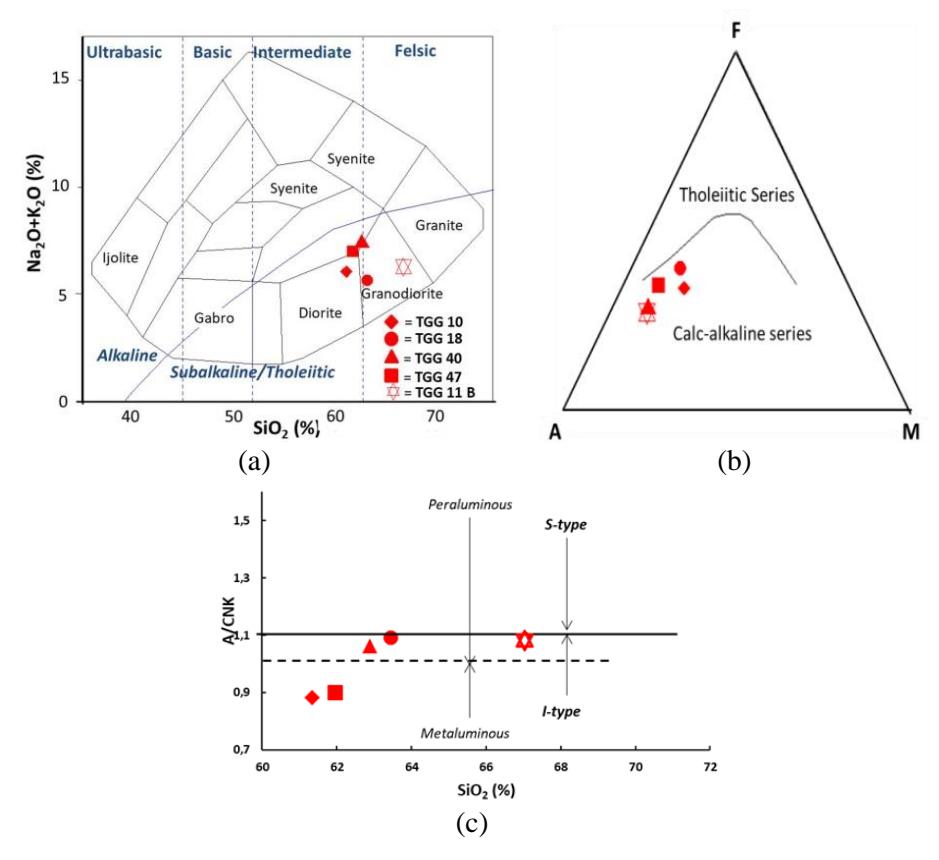
Figure 4 a) Based on the TAS diagram, the studied rocks are classified in the range of diorite to granodiorite; and b) all samples fall within the calc-alkaline series; and c) the samples show a metaluminous-weak peraluminous character.
Alphabetical classification formerly divided granitoids into I- and S-type based on a study in the Lachlan Fold Belt [28]. The I-type is subduction-associated, while the S-type is collision-correlated [2,29,30]. The A- and M-types were proposed later to define intrusion triggered by anorogenic and mantle melt tectonic settings, respectively [31,32]. Tanggamus Granite exists in the Barisan Mountains range, resulting from the subduction of the Indian-Australian Plate below the Eurasian Plate, affirming its I-type affinity. Granitic rocks are classified as metaluminous rocks when the molarity ratio A/CNK is ≤1, while values outside of that range are classified as peraluminous due to alumina enrichment when reacting with adjacent rock. I-type rocks are relatively metaluminous to weak peraluminous (A/CNK <1.1), whereas the S-type ones are strong peraluminous (A/CNK >1.1). Rock samples from the study area show an I-type character of the A/CNK range between 0.86 and 1.09 (Figure 4c).
Granite intrusions in the central to the western part of Sumatra are majorly situated not far from the Bukit Barisan Range and classified into the Volcanic Arc Suite [33]. This group consists of small batholiths with a wide range of compositions, from gabbro to monzogranite. Several plutons in the Sumatra Volcanic Arc Suite are categorized into the Volcanic Arc Granite (VAG) area in the diagram proposed in [34], such as Lassi Pluton, Sulit Air Granite, Tanjung Gadang Granite, Singkarak Granite, Lolo Pluton, and several members of the Sibolga Granite group [2,33]. In the alphabetical classification, VAG is typical for I-type granite [14,16,35]. Granitic rock samples from Tanggamus are indicated as type-I, since they fall in the VAG range on the Y+Nb vs Rb and Y vs Nb diagrams (Figure 5a and Figure 5b).
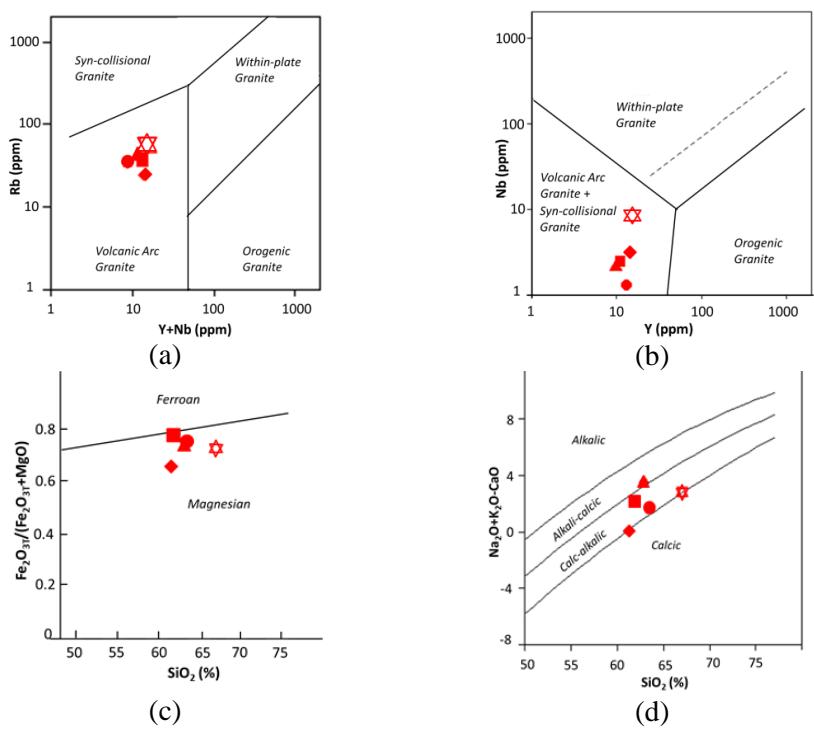
Figure 5 Rock affinities to the volcanic arc granite are depicted in the Y+Nb versus Rb diagram (a) and the Y versus Rb diagram (b). The granitoids from Tanggamus are magnesian (c) and the samples fall within the calcic to calcalkalic categories (d). The sample codes are the same as in Figure 4.
3.3 REE Spider Diagram
The REE composition needs to be normalized to eliminate the Oddo-Harkins effect so that it is easier to study. For comparison, data from [14] was also used here. The primitive mantle and chondrite composition of [38] was used in this study to draw an REE spider diagram (Figure 6). The samples from Tanggamus, Lolo Pluton and Tarusan Pluton [14] showed low Nb and Ti compositions as an indication of subduction associated magma [40]. All rocks depict a sharp declining pattern in light-REE (La to Eu) and tend to be sloping in heavy-REE (Gd to Eu).
Three samples from Tanggamus (TG 10, TG 11 B, and TG 18) and the only rock from Lolo Pluton (LL-59) indicated a small positive Eu anomaly, while the other two were without any significant anomalies. The Eu anomaly amplifies that plagioclase differentiation is unimportant during rock differentiation. Previous research described that the positive Eu anomaly happens because of a shift in the Eu2+–Eu3+ balance towards Eu2+ and is accompanied by an increase in Ca and Sr concentrations [39]. This concept is in accordance with this study, where the abundances of CaO and Sr in TGG 10 were in line with a much higher positive Eu anomaly than the other two samples.
The positive Eu anomaly in TG 11 B and TG 18 may also be associated with plagioclase alteration of the side rocks during magma rise [41]. On the other hand, the samples of Tarusan Pluton showed a negative Eu anomaly, describing the different magma evolution in which plagioclase fractionation happened [14].
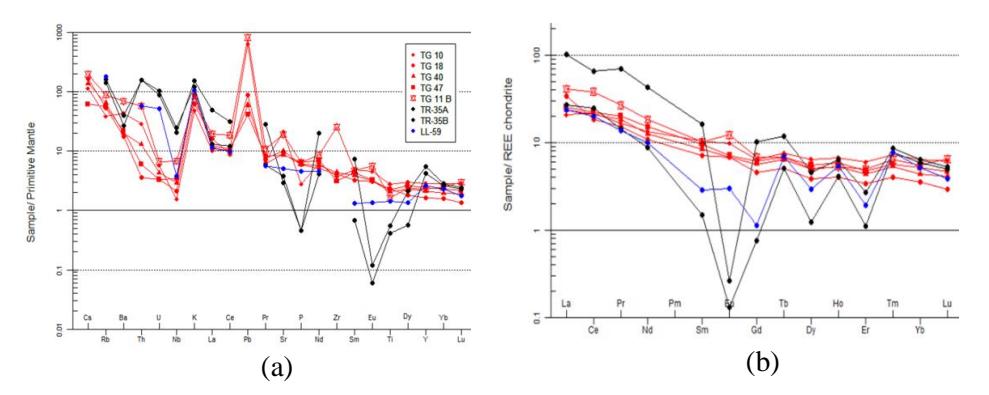
Figure 6 Spider diagrams of the studied samples: (a) normalized to primitive mantle value; and (b) normalized to chondrite value. TR 35B and TR-35B were taken from Tarusan Pluton while LL-59 was taken from Lolo Pluton [14].
4 Conclusion
Five granitoids from Tanggamus Regency were measured for their major oxides, trace, and rare earth elements composition. The samples were acidintermediate rocks and were in the range of diorite to granodiorite and resulted from a subduction process. Based on the A/CNK ratio, the affinity to volcanic arc granite, the K2O/Na2O ratio, and the magnesian affinity of the studied granitoids are classified into I-type intrusion. The average REE abundance in the samples was 43.97 ppm. Some samples indicated a small positive Eu anomaly, while some others were without any significant one. The similarity of the REE normalized diagrams shows that the samples come from an identical origin.
Acknowledgements
The writers would like to thank Mr Hermansyah, the head of the Center for Geological Survey of Indonesia for publication permission. Mr. Sigit Maryanto and Mr. Joko Subandrio are acknowledged for their review of the Tanggamus geology. Mrs Irfanny helped with good laboratory work.