

1 Introduction
The hydrocarbon prospectivity of the Lariang and Karama areas has attracted the attention of oil and gas exploration since 1898 when the Doda Exploratie Maatschappij drilled a series of shallow wells in the Doda area [1-3]. Subsurface
Received February 16 th, 2023, Revised June 21 st, 2023, Accepted for publication November 30th, 2023 Copyright © 2023 Published by ITB Institut for Research and Community Service, ISSN: 2337-5760, DOI: 10.5614/j.math.fund.sci.2023.55.2.3math
accumulations of petroleum in the studied areas were indicated by numerous oil and gas seeps [1-7].
The stratigraphy of the studied area was provided by Ratman and Atmawinata in [8] and Calvert and Hall in [9]. The pre-rift Mesozoic basement consists of metamorphic rock overlain unconformably by Upper Cretaceous dark shales and volcanic rock [9]. In the Paleogene, the study area was in the syn-rift to post-rift phase, during which the Toraja Group was deposited [10]. It is divided into a marine facies association (Budung-Budung Formation) and marginal a marine/terrestrial association (Kalumpang Formation) [9]. The Toraja Group was followed by the latest Early Miocene to Early Pliocene post-rift Lisu Formation, which was deposited on a shallow-marine shelf [9]. In the latest Early Pliocene to Pleistocene, the Pasangkayu Formation was accumulated in a foreland basin setting with a depositional environment ranging from alluvial fan to inner-outer neritic [1,9,11].
The best candidates for the source rock of the oil seep are coal and carbonaceous shale of the Middle to Late Eocene Toraja Group (Kalumpang/Budung-Budung Formation) deposited in a fluvial-deltaic setting [1,5,6]. Organic petrographic analysis of the coal of the Kalumpang Formation showed that it was deposited in a wet forest swamp environment [12]. The coal is classified into sub-bituminous to high volatile bituminous, and its maceral composition contains vitrinite (91.6 to 100%), liptinite/exinite (0.1 to 8.2%), and inertinite (0.1 to 1%) [12].
Organic matter from the source rock that generated oil contains biomarkers or molecular fossils that can be used to infer the specific depositional environment, age, organic input, and thermal maturity of the source rock [5,13]. Utilization of biomarkers to obtain information regarding source rock organic matter has been widely used (e.g., Seifert and Moldowan [14], Curiale et al. [15], Waples and Machihara [16], Peters and Moldowan [17], Holba et al. [18]).
The study by Sutadiwiria et al. reported in [7] concluded that the source rock of Lariang-Karama oil seep samples was deposited in a deltaic or nearshore environment. Furthermore, they suggested that the source rock of the Karama oil seep samples were deposited in more distal facies than that of the Lariang oil. The paleoenvironment of the Karama oil seep samples was an open marine/deep lacustrine, while the Lariang oil was found in an estuarine/shallow lacustrine [1]. The oil recovered from sandstone of the Kaluku-1 well (offshore of West Sulawesi) indicates that it was generated from source rock that was deposited in a shallow lacustrine environment [4,5].
Nevertheless, to the best of our knowledge, a combined analysis of sedimentary facies, palynological, and geochemical methods has never been performed on this potential source rock and the oil seep. The integration of the three methods in this study aimed to provide a more comprehensive perspective on the source rock and oil paleoenvironment, age, and their correlation. Thus, the present study intended to describe a sedimentary facies analysis of two sections of the Kalumpang Formation to develop facies for a depositional environment interpretation.
The palynological analysis was performed to obtain the age of the analyzed sediment and to support the paleodepositional environment interpretation. Moreover, outcrop samples and the oil seep were evaluated for their source rock characterization, maturity evaluation, extract and oil characterization, and organic input source, along with a paleodepositional characterization using geochemical methods. The results of this paper are expected to provide additional information on the research of the hydrocarbon prospectivity of the West Sulawesi area and its surroundings to scholars engaged in paleoenvironmental and paleogeographic reconstructions.
2 Materials and Methods
This research involved lithological observation in the field and palynological and geochemical analysis in the laboratory. Detailed sedimentological observations were performed on two Kalumpang Formation sections (Kalumpang 1 and 2, Figure 1). Observations of the sedimentary successions focused on grain size, color, texture, sedimentary structure, bed thickness, and bed contact [19]. The classification and interpretation of the facies associations were based on similarity of sedimentary features, mainly based on Nichols [20] and Boggs [21] amongst others references.
A total of six outcrop samples from the Mesozoic Basement (MB1 and MB2), Kalumpang (KL1 and KL2), Lisu (LS1), and Pasangkayu (PS1) Formations and an oil seep sample (Doda) were analyzed using geochemical methods (Figure 1). The geochemical analysis methods used in this study were total organic carbon, Rock-Eval pyrolysis, vitrinite reflectance, extraction, liquid chromatography, gas chromatography, and gas chromatography-mass spectrometry. The geochemical analysis was performed at PT Batuan Sedimen Indonesia Laboratorium (BSI lab).
To eliminate carbonates (inorganic carbon), dried samples were crushed into powder and treated with hot and cold hydrochloric acid. After acid treatment, the samples were subjected to combustion at ~1.100 °C in a Leco WR-112 Carbon Analyzer to assess their organic carbon content (TOC). After an initial gas purge at 90 °C, a Rock-Eval instrument (Rock-Eval II) was used to heat up small (90- 130 mg) samples of rock throughout a temperature range from 300 to 600 °C for 25 minutes for each sample to evaluate the source rock. In order to perform
vitrinite reflectance readings, the crushed rock pieces were inserted into an epoxy resin plug. The polished hardened plugs were examined under a microscope (Leica DM4500) to determine the reflectance of the identified individual vitrinite particles. Powdered rock samples were put in Soxhlet thimbles and extracted with chloroform for 24 hours to assess the amount of soluble organic materials. After transferring an aliquot of the extracted material to a pre-weighed container, the chloroform solvent evaporates under nitrogen at 40 °C.
The stabilized extract's (soluble organic matter) residue concentration is given in parts per million. The chloroform-soluble organic matter extract was concentrated and an excessive amount of n-pentane was added. The precipitated asphaltenes were centrifuged out, dried, and weighed. They were dried to remove the chloroform from the residual extract and then were progressively resolubilized in hexane, DCM, and DCM/methanol. After that, the extracts were passed down a silica gel column to determine the percentages of saturates, aromatics, and NSO compounds (resins).
The whole extract/oil was analyzed with a PerkinElmer Clarus 600 GC gas chromatography instrument. The hydrocarbons were separated using a capillary column made of high-resolution fused quartz. A temperature-programmed analysis was performed on a Varian gas chromatographer equipped with a flame ionization detector. The GC-MS analysis also used the Clarus 600 GC connected to a Clarus SQ 8C GC/Mass Spectrometer.
To separate the complex mixture into individual compounds, a C15+ saturated hydrocarbon fraction that had been cleaned off the straight chain saturate compounds or an aromatic hydrocarbon fraction was injected into a fused quartz capillary chromatograph column. The substances were then eluted into the ion source of the mass spectrometer, where each substance was broken down and ionized by an electron stream. The produced ion masses and relative intensities were determined and then documented.
Three coal samples and four carbonaceous siltstone and mudstone samples from the Kalumpang Formation were prepared for the palynological analysis (Figure 2). The palynological sample preparation was performed at the laboratorium of Pusat Survei Geologi, Indonesia using the standard palynological procedure [22]. The extraction of the palynological samples was conducted using HCl, HF, H2SO4, and ZnCl2. The observation of palynomorph was done using a light microscope at 1000x magnification (Olympus BX61).
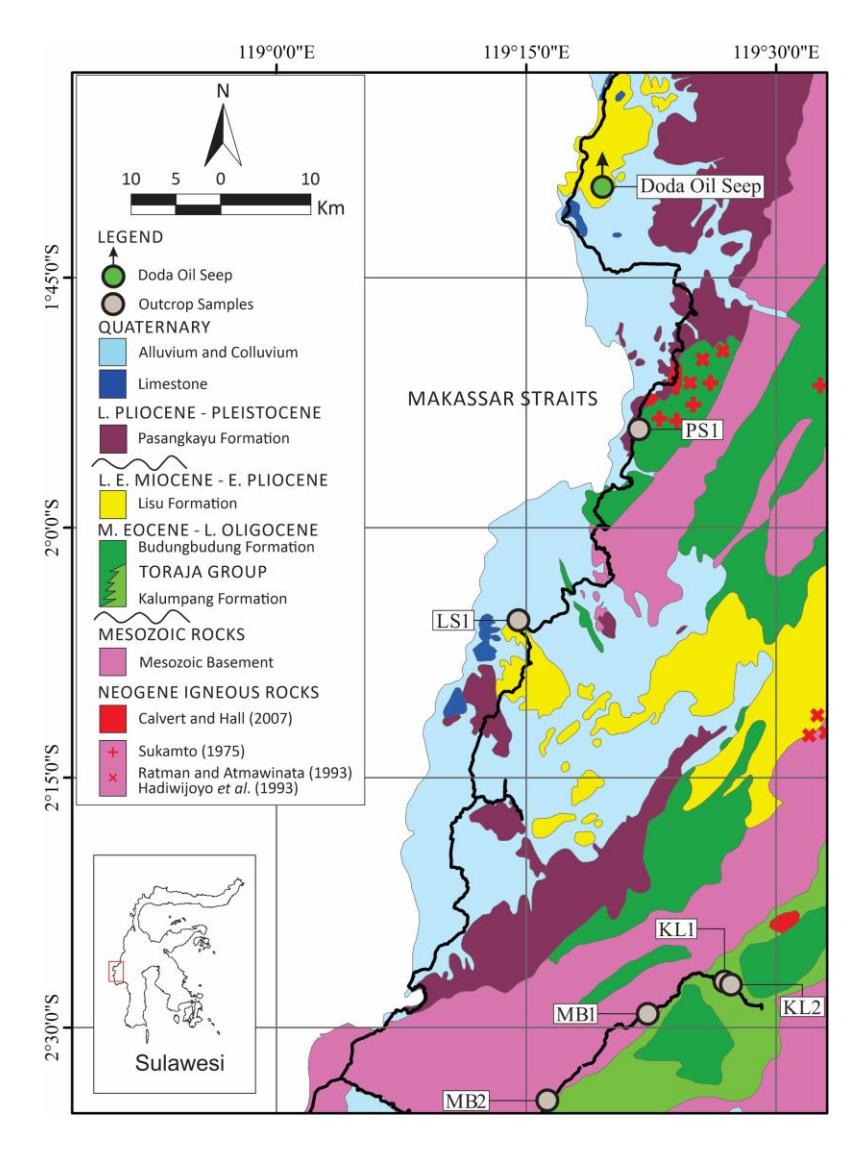
Figure 1 Geological map of the Lariang and Karama areas, showing the position of the analyzed outcrop samples and the Doda oil seep. Source: Modified after Ratman and Atmawinata [8] and Calvert and Hall [9].
3 Results and Discussion
3.1 Facies Analysis of Kalumpang Formation
Based on the observed lithological characteristics, four types of facies associations were identified in the studied section (Figure 2).
Facies association 1 (FA1) is mainly composed of light grey mudstone dominated facies. Very fine-grained sandstone nodules with a light brown color were found locally marking the bed plane. In places, the mudstone is intercalated with thinbedded very fine-grained sandstone. The total thickness of FA1 is from 2.5 to 9.5 m. FA1 is interpreted as interdistributary bay deposits. The regions of low-energy sedimentation between the delta lobes are called interdistributary bays [20]. These are sheltered areas of shallow water along the edge of a delta top/delta plain that may be protected from strong waves and currents [20]. Interdistributary bay successions are muddy with sandstone and siltstone stringers and are usually less than ten meters thick [21,23].
FA2 is composed primarily of carbonaceous siltstone interbedded with coal layers and thin beds of very fine-grained sandstone. In some places, the sandstone is rippled, while parallel lamination occurs in the sandstone and siltstone. The coal layers are 8 to 160 cm in thickness. The total thickness of FA2 is from 1.7 to 4.5 m. A floodplain or overbank deposit is suggested for the deposition of FA2. Floodplain areas are sites of accumulation of suspended load from main clay- and silt-sized debris when the channels flood [20].
In humid climatic conditions, the floodplain may be vegetated and peat may accumulate in the swamp or marsh area, resulting in the formation of coal [20,24,25]. Carbonaceous mud/siltstone may form if there is a mixture of organic and clastic material from frequent overbank flow [20]. If the waterflows over the banks are rapid enough to carry sand in suspension, the sediment load may include fine sand. This results in the deposition of sand and silt, showing current ripple or horizontal lamination as a thin sheet over the floodplain [20].
FA3 consists of 180 cm of light brown cross-bedded coarse to medium-grained sandstone overlain by 30 cm of rippled medium-grained sandstone. The succession shows an upward fining trend and features an erosional base. This is interpreted as a deposit of a distributary channel. In the delta top, a distributary pattern of channels is created by the branching of the river channel into multiple courses [20]. The distributary channel successions are characterized by erosional basal contact and an upward fining pattern [23,26]. The cross-bedding is produced by migration of dune bedforms in the deeper parts of the channel, while cross-lamination in the finer sand is formed in the higher areas of the inner bank, where the flow is slower [20].
FA4 consists of an upward coarsening succession of carbonaceous siltstone to rippled fine- to medium-grained sandstone. The total thickness of FA4 is 1.4 m. This FA is interpreted as a crevasse splay deposit. It occurs in floodplains during periods of flooding when the natural levees break and water laden with sediment is carried out onto the delta plain, leading to deposition of silt and sand in lobes
[20,21,25]. Crevasse splay deposits are characterized by an upward coarsening pattern and may form distinct layers of rippled sandstone [20,25].
Based on the description and interpretation, a delta plain setting is suggested for the depositional environment of the Kalumpang Formation observed in the studied sections (Figure 3). The delta plain is determined by the occurrence of distributary channels and a wide variety of sub-environments, including floodplains (swamps, marshes, and freshwater lakes), tidal flats/channels, lagoons, interdistributary bays, natural levees, and crevasse splays [21,27]. The presence of interdistributary bays is a characteristic of river-dominated deltas [20]. The successions of interdistributary bays may be punctuated by crevasse splays or channel deposits, or it may grade into a floodplain environment with carbonaceous to coaly mud/siltstone or coal [23].
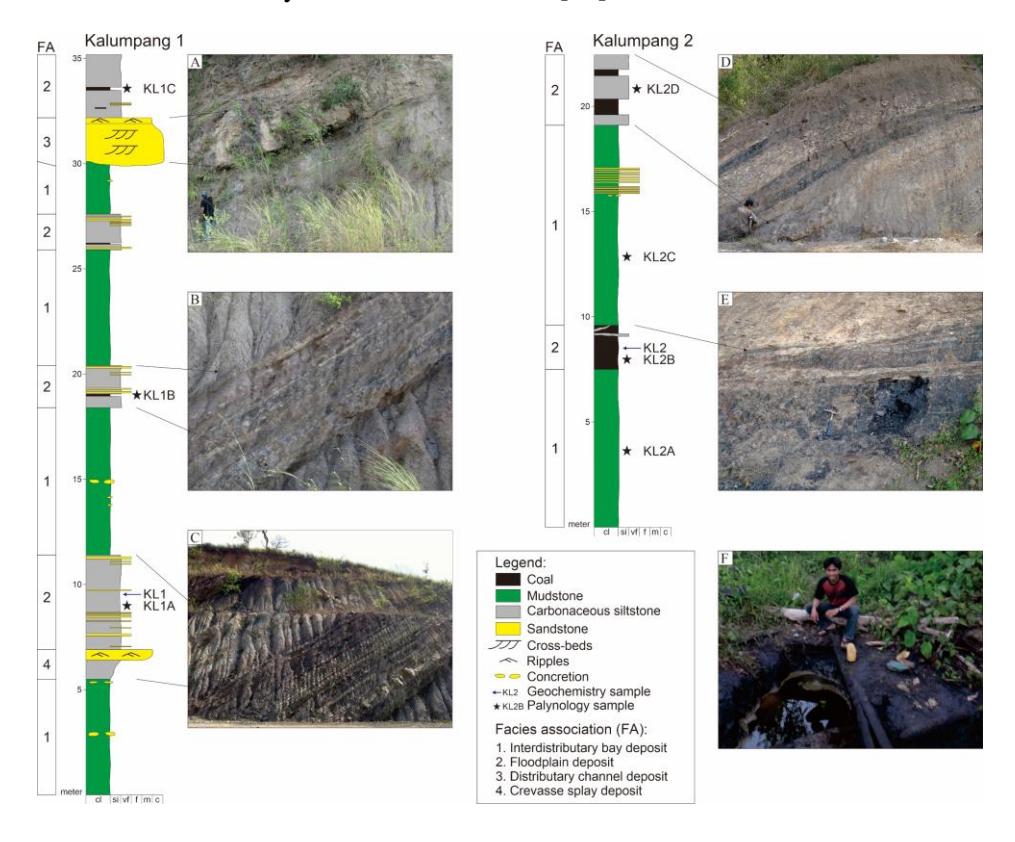
Figure 2 Sedimentary logs and facies associations interpretation of the Kalumpang Formation, showing: (A) distributary channel deposit overlaying interdistributary bay deposit; (B, D, & E) intimately associated interdistributary bay and floodplain deposits; (C) interdistributary bay and floodplain deposits with intercalation of crevasse splay deposits; (F) photograph of the Doda oil seep.
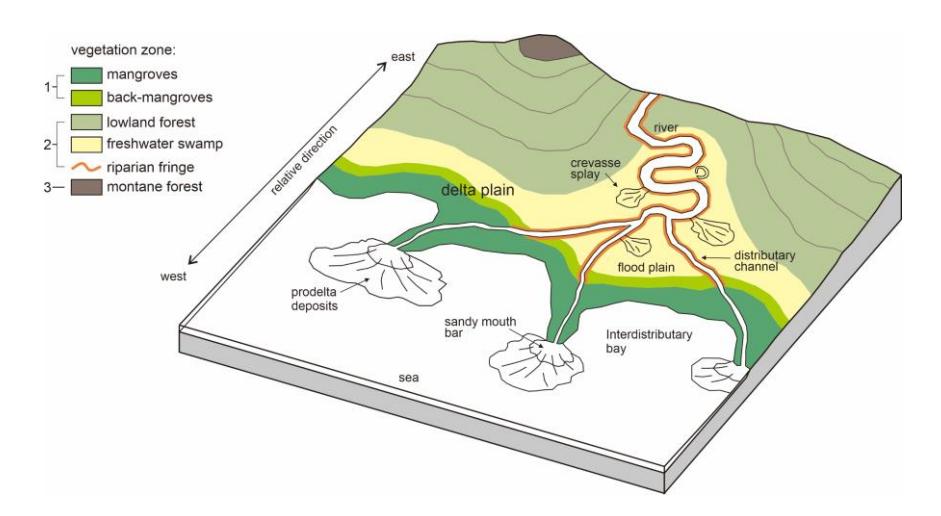
Figure 3 Depositional model and vegetation zone of the Kalumpang Formation. Source: Modified from Nichols [20], Haseldonckx [28], and Polhaupessy [29].
3.2 Palynological Analysis of Kalumpang Formation
Overall, the palynomorph recovery from seven samples of the Kalumpang Formation ranged from very poor to good. The coal samples yielded relatively better palynomorph recovery than the carbonaceous siltstone and mudstone samples. The preservation of the palynomorph was moderate to good, with high miospore diversity. Based on the pollen assemblages that occurred in the analyzed samples, the studied sections were assigned to the Proxapertites operculatus zone of Rahardjo et al. [30] with an age range of Middle to Late Eocene. The Eocene fossil markers present in the studied samples were Proxapertites operculatus with the co-occurrence of Proxapertites cursus, Longapertites sp., Palmaepollenites kutchensis, Florschuetzia trilobata, Palmaepollenites sp., Discoidites sp., Dicolpopollis sp., and Spinizonocolpites echinatus (Figure 4) [10,31-33].
Three main vegetation zones were acknowledged based on the palynological assemblages: mangroves and back-mangroves, lowland forest, swamp and riparian, and montane forest (Figures 3 and 5). Mangroves and back-mangroves vegetation comprise of Proxapertites operculatus, Proxapertites cursus, Acrostichum sp., and Spinizonocolpites echinatus. The lowland forest, swamp, and riparian vegetation consist of Palmaepollenites kutchensis, Longapertitessp., Palmaepollenites sp., Malvacipollis sp., Margocolporites sp., Dicolpopollis sp., Discoidites sp., Florschuetzia trilobata, Casuarina type, Cupanieidites sp., Quercoidites sp., Campnosperma sp., Lanagiopollis sp., Ericipites sp.,
Tricolpites sp., Tricolporites sp., Crassoretitriletes sp., and Verrucatosporites usmensis. The montane forest as background vegetation around the depositional environment is characterized by the presence of Podocarpus sp. and Araucaria type. A pollen diagram of the studied section showed the abundant presence of mangrove/back-mangrove and lowland forest, swamp, and riparian pollen, which suggests that the mangrove/back-mangrove and lowland freshwater vegetation was the main influx for organic matter in the study area (Figure 3 and 5). Furthermore, the abundant occurrence of mangrove/back-mangrove and lowland freshwater vegetation also supports the paleoenvironmental interpretation from the lithofacies analysis that the studied Kalumpang Formation was deposited in a coastal/delta plain setting with strong terrestrial influence.
Figure 4 Photomicrograph of representative pollen and spores in the studied samples (under 1000x magnification): (A & B) Proxapertites cursus; (C & D) Longapertites sp.; (E & F) Proxapertites operculatus; (G-I) Palmaepollenites kutchensis; (J, P & Q) Palmaepollenites sp.; (K-M) Florschuetzia trilobata; (N & O) Malvacipollis sp.; (R & S) Spinizonocolpites echinatus, (T-V) Dicolpopollis sp.; (W) Quercoidites sp.; (X-Z) Discoidites sp.; (AA & AB) Casuarina type; (AC) Campnosperma sp.; (AD) Cupanieidites sp.; (AE) Lanagiopollis sp.; (AF) Margocolporites sp.; (AG) Verrucatosporites usmensis; (AH) Podocarpus sp.; (AI) Acrostichum sp.
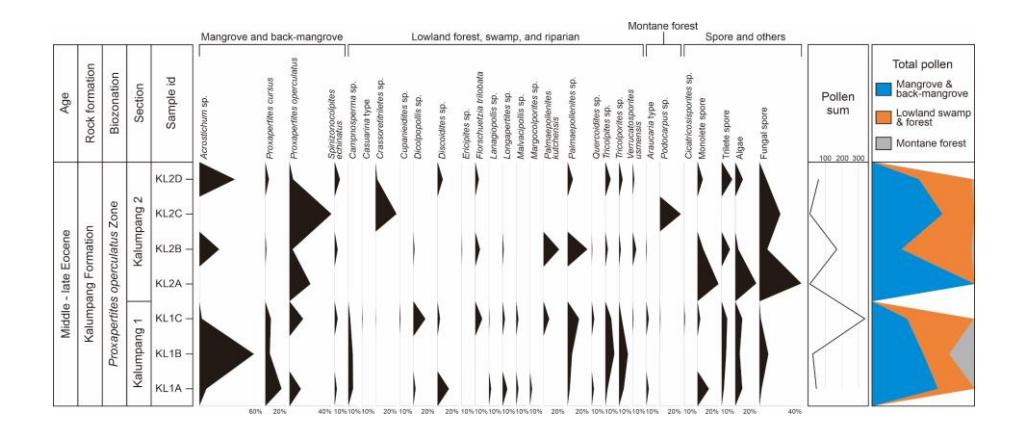
Figure 5 Pollen diagram from the studied section of the Kalumpang Formation.
3.3 Source Rock Characterization
The total organic carbon (TOC) content of the samples Mesozoic Basement (MB1 and MB2), Lisu (LS1), and Pasangkayu (PS1) Formations yielded negligible organic richness ranging from 0.03 to 0.08 wt% (Table 1). Consequently, the Rock-Eval pyrolysis resulting from these samples was unreliable.
| Table 1 | TOC, Rock-Eval pyrolysis, and vitrinite reflectance data. | ||||||||
|---|---|---|---|---|---|---|---|---|---|
| Formation | Lithology | TOC | S1 | S2 | S3 | HI | OI | PI | Tmax %Ro |
| Sample ID | Formation | Lithology | TOC (wt%) | S1 | S2 | S3 | HI | OI | PI | Tmax %Ro | |
|---|---|---|---|---|---|---|---|---|---|---|---|
| PS1 | Pasangkayu | Mudstone | 0.06 | 0.07 | 0.12 | 0.01 | 189 | 16 | 0.37 | 303* | - |
| LS1 | Lisu | Mudstone | 0.08 | 0.04 | 0.06 | 0.02 | 72 | 24 | 0.4 | 305* | - |
| KL1 | Kalumpang | Carbonaceous mudstone | 4.68 | 0.09 | 1.09 | 4.51 | 23 | 96 | 0.08 | 447 | 0.49 |
| KL2 | Kalumpang | Coal | 58.25 | 1.79 | 122.53 | 11.72 | 210 | 20 | 0.01 | 441 | 0.56 |
| MB1 | Mesozoic Basement | Mudstone | 0.03 | 0.08 | 0.05 | - | 172 | 0 | 0.62 | 325* | - |
| MB2 | Mesozoic Basement | Mudstone | 0.03 | 0.02 | 0.06 | - | 192 | 0 | 0.25 | 312* | - |
*: Erroreneous Tmax readings due to lack of S2
The carbonaceous mudstone (KL1) and coal (KL2) from the Kalumpang Formation were characterized by very good to excellent organic richness, respectively 4.68 and 58.25 wt% (Table 1). The Rock-Eval pyrolysis results revealed low to medium hydrogen indices (HI 23 and 210 mg HC/g TOC), suggesting the presence of mainly gas-prone kerogen in KL1 and gas- and oilprone kerogen in KL2 (Figure 6). A cross plot of S2 pyrolytic versus TOC suggested that KL1 and KL2 ranged from fair to excellent source rock. The kerogen type for both KL1 and KL2 was Type III, as indicated by their hydrogen index (HI) value (Figure 6). The KL1 had poor hydrocarbon generative capacity
based on poor pyrolysis potential yields (S1+S2 1.18 mg HC/g rock). In contrast, the KL2 is regarded to have excellent hydrocarbon generative capacity based on its excellent pyrolysis potential yields (S1+S2 124.32 mg HC/g rock).
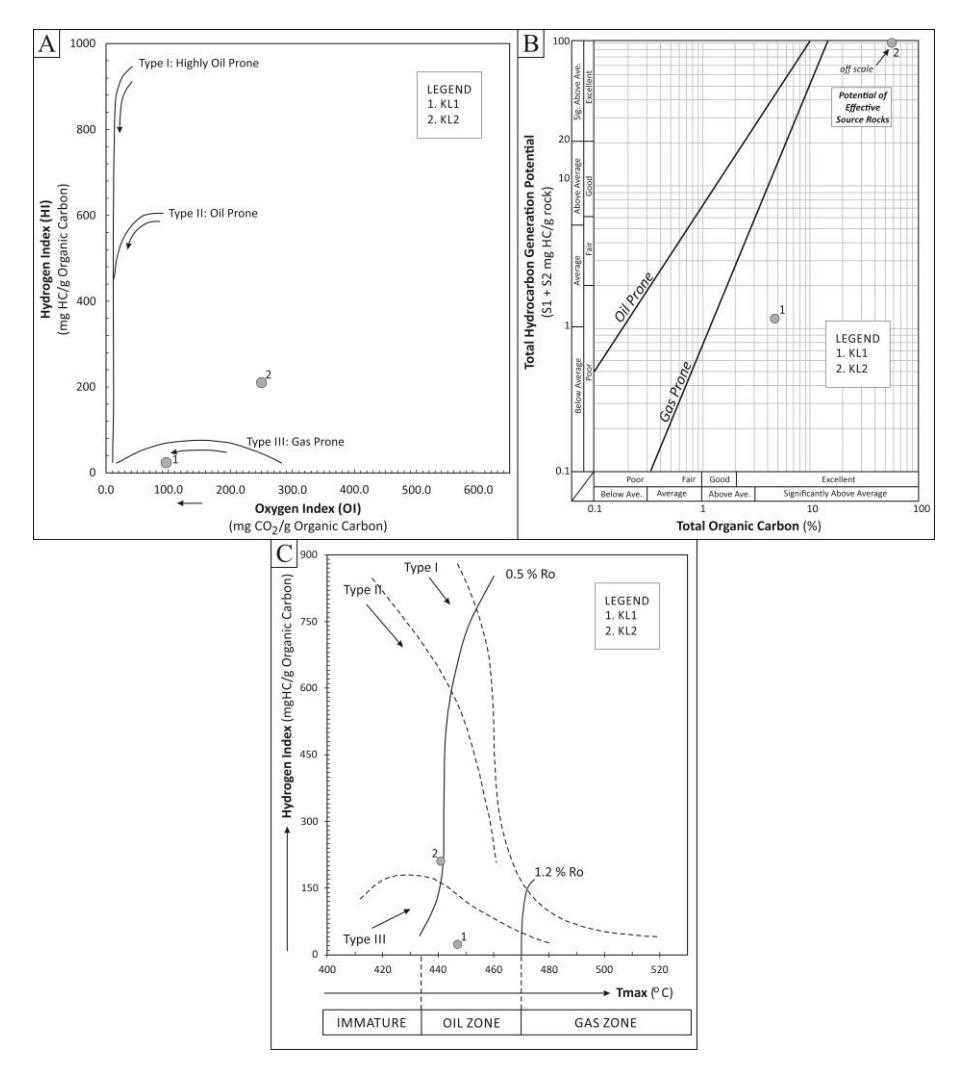
Figure 6 (A) Diagram of HI vs OI; (B) total hydrocarbon generation potential vs TOC; and (C) HI vs Tmax.
3.4 Maturity Evaluation
The samples from the Mesozoic Basement, Lisu, and Pasangkayu Formations (MB1, MB2, LS1, and PS1) were found to be barren of vitrinite particles. The mean vitrinite reflectivity values for the Kalumpang Formation samples (Table 1)
ranged from 0.49% Ro (KL1) to 0.56% Ro (KL2). This suggests that the samples ranged from thermally marginal mature to early mature for hydrocarbon generation. In contrast, the pyrolysis Tmax values showed a higher reading, ranging from 441 to 447 °C, i.e., in the early to peak thermal maturity stage. It is suggested that the Tmax values were not reliable. The higher anomaly reading of Tmax was probably due to the clay-rich nature of the samples and was also affected by weathering and oxidation [34,35].
3.5 Extractable Organic Matter and Oil Composition
Extraction analysis was carried out on KL1 and KL2 samples of the Kalumpang Formation to conduct bitumen characterization analyses. The results from the extraction of the samples exhibited excellent levels of soluble organic matter (EOM 2,537 to 39,870 ppm) (Table 2). Corresponding hydrocarbon yields (HC 302 to 15,274 ppm) suggest poor to very good liquid hydrocarbon source potential. The ratios of extractable organic matter to total organic carbon (EOM/TOC) in these samples of 5.40% and 6.84% indicate the presence of indigenous hydrocarbons. However, the high EOM (39,870 ppm) and HC (15,274 ppm) values of the KL2 samples indicate oil contamination or staining. The liquid chromatography data for these extracts indicate low concentrations of saturated hydrocarbons (8.68 to 13.35%) with moderate amounts of aromatic hydrocarbons (3.22 to 24.96%). Polar compounds (NSO plus asphaltene) constitute a dominant portion of the total extracted yields (61.69 to 88.10%). This indicates that the extracts were typically low maturity-generated hydrocarbons.
The oil from the Doda oil seep at room temperature can be described as brownishblack liquid. It is dominated by saturated hydrocarbons (44.44%) with secondary amounts of aromatic hydrocarbons (43.80%), and polar compounds occurred in low abundance (11.75%) (Table 2). The crude oil composition and the low saturate to aromatic ratio (1.01) suggest that the oil is a mature, paraffinic liquid hydrocarbon product.
| Sample ID | EOM | HC (ppm) | Composition of C15+ Extractable Organic | Sat/Aro | |||
|---|---|---|---|---|---|---|---|
| (ppm) | Sat (%) | Matter Aro (%) | NSO (%) | Asph (%) | |||
| KL1 | 2537 | 302 | 8.68 | 3.22 | 21.86 | 66.24 | 2.7 |
| KL2 | 39870 | 15274 | 13.35 | 24.96 | 16.42 | 45.27 | 0.53 |
| Doda oil seep | - | - | 44.44 | 43.8 | 9.5 | 2.25 | 1.01 |
Table 2 Extractable organic matter and oil composition data.
3.6 Biomarker Characteristic
The GC profile for the outcrop extract of Kalumpang Formation carbonaceous mudstone (KL1) was characterized by a suite of normal paraffins ranging from nC16 to nC30+. These GC features are commonly seen in low maturity indigenous hydrocarbons. The Pris/Phy ratio was 1.48, indicating a suboxic environment (Table 3). The CPI ratio was 2.22, suggesting that the sample was thermally immature [13]. A cross plot of Pr/nC17 versus Ph/nC18indicated a mixed organic/transitional source (Figure 7).
Gas chromatography analysis was carried out on the whole oil (C5+) fraction recovered from the Doda oil seep sample (Figure 7). The GC profile was characterized by a large hump of unresolved complex mixture (UCM). Pris/Phy and Pris/nC17 were not present in this sample suite, indicating that the oil seep is biodegraded. The lower molecular weight of n-alkane and isoprenoids means they are more susceptible to biodegradation, as their presence may be attacked by bacteria in the first order, as was seen in the Doda oil seep [36,37]. However, the Doda oil seep still exhibits a significant amount of steranes and triterpanes, which refers to a moderate level of biodegradation, as those biomarkers are not readily attacked by bacteria [17]. According to Peters and Moldowan [17], the biodegradation scale of this oil seep is PM-5, or moderately biodegraded.
Table 3 Summary of n-alkanes and saturated biomarkers measured in m/z ion 191 (triterpenes) and m/z 217 (steranes).
| n-Alkanes (TIC) | Triterpanes (m/z 191) | Steranes (m/z 217) | |||||||||||
|---|---|---|---|---|---|---|---|---|---|---|---|---|---|
| Sample ID | Pr/ Ph | Pr/ nC17 | Ph/ nC18 | CPI nC30/ nC17 | Tm/ Ts | Total % C19-C31 Tricy | Total % Hopanes | % C30 Resins + OL | 30M/ 30H | C27 (%) | C28 (%) | C29 (%) | |
| KL1 | 1.48 | 0.4 | 0.27 | 2.22 | 0.71 | 1.63 | 18.62 | 78.82 | 2.56 | 0.22 | 40.47 | 14.3 | 45.23 |
| KL2 | - | - | - | - | - | 1.55 | 73.96 | 26.04 | - | - | - | - | - |
| Doda | - | - | - | - | - | 0.53 | 6.63 | 62.94 | 30.43 | 0.12 | 30.61 | 10.2 | 59.18 |
The fragmentograms of the triterpanes and steranes from the analyzed samples are displayed in Figure 8, while their peak identification is provided in Table 4. The triterpane fragmentograms for the two extracts (KL1 and KL2) and the Doda oil seep display relatively simple distributions of bacterial-derived 17αβ(H) hopanes (Figure 8). The patterns of the oil sample are dominated by C30αβ(H) hopane (C30 hopane > C29 hopane), suggesting a non-carbonate origin. On the other hand, the rock samples showed that their C29 hopane value was higher than their C30 hopane value, indicating a more carbonate/calcareous shale lithology. The high abundance of C19 and C20 tricyclic compounds relative to C23 tricyclic compound in all samples is indicative of a terrestrial origin.
The sterane distributions for the extracts (KL1) and the Doda oil seep sample show that the C27ααα(R) forms were less abundant (30.61 to 40.47%) relative to the C29ααα(R) steranes (45.23 to 59.18%) (Table 3). This is interpreted as a significant contribution of terrestrial-derived organic matter to the depositional
environment. A plot of the ratio of C27, C28, and C29 sterane distributions on Huang and Meinschein's paleoenvironment diagram (Figure 9) indicates that the Kalumpang Formation (KL1) and the Doda oil seep originate from source rock in a depositional estuarine/bay environment [38]. The depositional environmental interpretation of the biomarker characteristics is in agreement with the result of the lithofacies and palynological analysis, which showed that the Kalumpang Formation was deposited in a coastal/delta plain setting with strong terrestrial influence. This demonstrates that the biomarker-based environmental interpretation from Huang and Meinschein in [38] holds true (e.g., Abdullah et al. [39]). Noteworthy are the poorly recognized sterane distributions of the KL2 samples. It is suggested that the steranes have been substantially altered by severe biodegradation, confirming the presence of oil contamination in this sample, as also shown by their high value of EOM and HC.
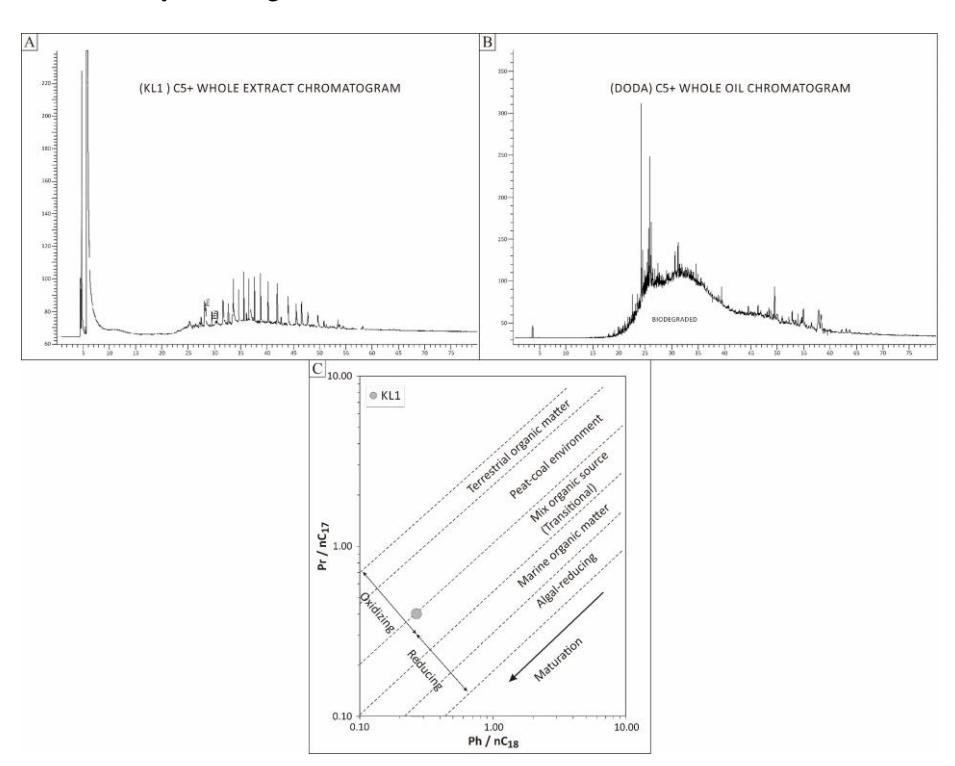
Figure 7 (A) Whole chromatogram of KL1 sample, (B) Doda oil seep, and (C) cross plot of Pr/nC17 vs Ph/nC18 of the KL1 sample.
The abundance of 18α(H)-oleanane compound and C30 resins in the Kalumpang Formation (KL1) and the Doda oil seep samples (Table 3 and Figure 8) suggests higher plant angiosperm input of Late Cretaceous or younger age [13,17]. This biomarker is considered to be specific for higher plant input to Tertiary-sourced oils throughout Southeast Asia [40,41]. The age assessment of the petroleum source rock and oil samples based on biomarkers is fully in concordance with the age interpretation from the palynological analysis, which established a Middle to Late Eocene age for the analyzed samples. The palynological analysis also showed the dominant presence of higher plant angiosperm palynomorphs with only rare occurrence of montane gymnosperms (Podocarpus sp., Podocarpaceae and Araucaria sp., Araucariaceae). This result is in agreement with the abundance of oleanane found in the biomarker analysis.
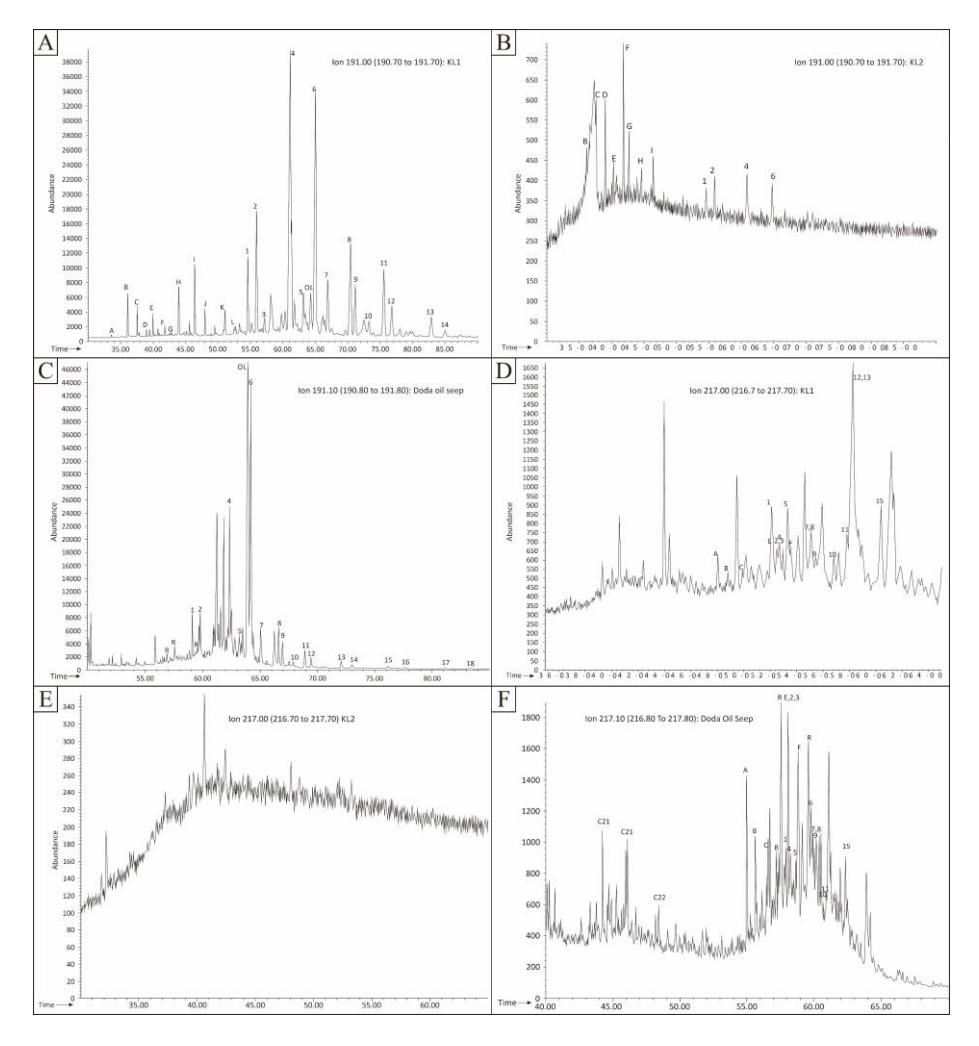
Figure 8 GC-MS biomarker triterpenes (m/z 191) of (A) KL1 sample, (B) KL2 sample, (C) Doda oil seep; steranes(m/z 217) of (D) KL1 sample, (E) KL2 sample, and (F) Doda oil seep.
Furthermore, the Doda oil seep contains more abundant oleanane compared to the carbonaceous mudstone of the Kalumpang Formation. This suggests that the oil originates from more marine facies than the carbonaceous mudstone (KL1) and coal facies (KL2) deposited in a delta plain setting. Murray et al. [42] suggested that oleanane is better preserved in more marine environments due to contact with seawater during early diagenesis compared with preservation in a more landward environment, despite their abundant angiosperm input [13].
The combined analysis of the three methods used in this study for depositional environment interpretation and age assessment for petroleum source rock evaluation and oil to source rock correlation showed their concordant nature, in which they complement each other. Figure 10 shows our proposed terminology comparison of the depositional environment interpretation from sedimentary facies, palynological, and geochemical analysis in marginal marine and nearshore continental environments [20,28,29,36,43].
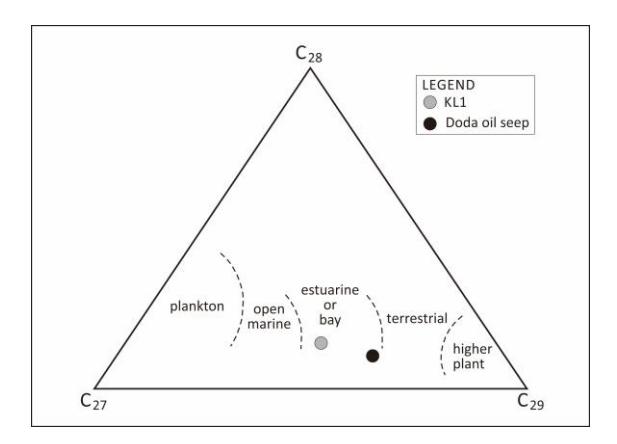
Figure 9 Sterane composition and depositional environment of KL1 sample and Doda oil seep (after Huang and Meinschein in [38]).
| Sedimentary facies analysis | Lithofacies | Channel deposits, floodplain deposits, crevasse splay deposits, lake ponds, etc. | Channel deposits, crevasse sp interdis bay fill, la | Mouth bar, offshore bar, prodelta deposit, shelf deposit, etc. | |
|---|---|---|---|---|---|
| Palynology | Vegetation zone | Lowland / Freshwater (alluvial & peat) / Riparian forest / swamp forest | Back-mangrove forest | Mangrove forest | Non-vascular vegetation |
| analysis | Enviromental units | Alluvial plain | Coast | al plain | Shallow marine |
| Organic geochemistry analysis Huang & Meinschein's depositional environment interpretation based on sterane compositions | Higher plant - terrestrial | Estuarir | ne or bay | Open marine - plankton | |
Figure 10 Terminological comparison of the depositional environment interpretation of sedimentary facies, palynological, and geochemical analysis for marginal marine and nearshore continental environments [20,28,29,38,43].
Table 4 Peak identification of triterpanes (m/z 191) and steranes (m/z 217).
| Triterpanes (m/z 191) | Steranes (m/z 217) | ||||||
|---|---|---|---|---|---|---|---|
| Peak No | Carbon No. | Identification | Peak No | Carbon No. | Identification | ||
| T. 1 | 13β(Η),17α(Η)- | ||||||
| A | 19 | Tricyclic terpane | A | 27 | Diacholestane(20S) | ||
| В | 19 | Tricyclic terpane | В | 27 | \(13\beta(H),17\alpha(H)\)- | ||
| Б | 19 | Theyene terpane | ь | 21 | Diacholestane(20R) | ||
| C | 20 | Tricyclic terpane | C | 28 | 24-Methyl-13β(H),17α(H)- Diacholestane(20S) | ||
| D | 21 | Tricyclic terpane | D | 28 | 24-Methyl-13\(\beta\)(H),17\(\alpha\)(H)-Diacholestane(20R) | ||
| E | 22 | Tricyclic terpane | E | 29 | 24-Ethyl-13\(\beta\)(H),17\(\alpha\)(H)-Diacholestane(20S) | ||
| F | 23 | Tricyclic terpane | F | 29 | 24-Ethyl-13β(H),17α(H)- Diacholestane(20R) | ||
| G | 24 | Tricyclic terpane | a | 27 | \(13\alpha(H),17\beta(H)\)-Diacholestane | ||
| Н | 25 | Tricyclic terpane | b | 27 | \(13\alpha(H)\), \(17\beta(H)\)-Diacholestane | ||
| I | 26 | Tricyclic terpane | c | 28 | 24-Methyl-13α(H),17β(H)- Diacholestane | ||
| J | 27 | Tricyclic terpane | d | 28 | 24-Methyl-13α(H),17β(H)- Diacholestane | ||
| K | 28 | Tricyclic terpane | e | 29 | 24-Ethyl-13α(H),18β(H)- Diacholestane | ||
| L | 29 | Tricyclic terpane | f | 29 | 24-Ethyl-13α(H),17β(H)- Diacholestane | ||
| 1 | 27 | 18α(H),21β(H)-22,29,30- trisnorhopane(Ts) | 1 | 27 | \(5\alpha(H),14\alpha(H),17\alpha(H)\)- Cholestane(20S) | ||
| 2 | 27 | 17α(H),21β(H)-22,29,30- | 2 | 27 | 5β(H),14α(H),17α(H)- | ||
| 2 | 27 | trisnorhopane(Tm) | 2 | 27 | Cholestane(20R) | ||
| M | 30 | Tricyclic diterpane | 3 | 27 | \(5\alpha(H)\),14\(\beta(H)\),17\(\beta(H)\)-Cholestane(20R) | ||
| 3 | 28 | \(17\alpha(H)\),21\(\beta(H)\)-28,30-bisnorhopane | 4 | 27 | 5α(H),14β(H),17β(H)- Cholestane(20S) | ||
| 4 | 29 | \(17\alpha(H)\),21\(\beta(H)\)-30-norhopane | 5 | 27 | \(5\alpha(H),14\alpha(H),17\alpha(H)\)- Cholestane(20R) | ||
| 5 | 29 | \(17\beta(H),21\alpha(H)-30\)-normoretane | 6 | 28 | 24-Methyl- \(5\alpha(H)\),14\(\alpha(H)\),17\(\alpha(H)\)- Cholestane(20S) | ||
| 6 | 30 | \(17\alpha(H),21\beta(H)\)-hopane | 7 | 28 | 24-Methyl- \(5\beta(H)\),\(14\alpha(H)\),\(17\alpha(H)\)- Cholestane(20R) | ||
| 7 | 30 | \(17\beta(H),21\alpha(H)\)-moretane | 8 | 28 | 24-Methyl-\(5\alpha(H)\),14\(\beta(H)\),17\(\beta(H)\)-Cholestane(20R) | ||
| 8 | 31 | 17α(H),21β(H)-30- homohopane(22S) | 9 | 28 | 24-Methyl- 5α(H),14β(H),17β(H)- Cholestane(20S) | ||
Triterpanes (m/z 191) Steranes (m/z 217) Peak Carbon Peak Carbon Identification Identification No No. No No 24-Methyl-\(17\alpha(H),21\beta(H)-30-\)9 31 10 28 \(5\alpha(H), 14\alpha(H), 17\alpha(H)\)homohopane(22R) Cholestane(20R) 24-Ethyl-\(5\alpha(H)\), \(14\alpha(H)\), \(17\alpha(H)\)-10 31 11 29 \(17\beta(H),21\alpha(H)\)-homomoretane Cholestane(20S) \(17\alpha(H),21\beta(H)-30,31-\)24-Ethyl-5\(\beta\)(H),14\(\alpha\)(H),17\(\alpha\)(H)-11 32 12 29 bishomohopane(22S) Cholestane(20R) \(17\alpha(H),21\beta(H)-30,31-\)24-Ethyl-\(5\alpha(H)\),14\(\beta(H)\),17\(\beta(H)\)-12 32 13 29 Cholestane(20R) bishomohopane(22R) 17α(Η),21β(Η)-30,31,32-24-Ethyl-\(5\alpha(H)\),14\(\beta(H)\),17\(\beta(H)\)-13 33 14 29 trishomohopane(22S) Cholestane(20S) \(17\alpha(H),21\beta(H)-30,31,32-\)24-Ethyl-\(5\alpha(H)\), \(14\alpha(H)\), \(17\alpha(H)\)-14 33 15 29 trishomohopane(22R) Cholestane(20R) \(17\alpha(H),21\beta(H)-30,31,32,33-\)15 34 R 30 Cyclic Alkane tetrahomohopane(22S) \(17\alpha(H),21\beta(H)-30,31,32,33-\)16 34 30 C<sub>30</sub>-Methylated Sterane tetrahomohopane(22R) C<sub>30</sub>-Rearranged Methylated \(17\alpha(H),21\beta(H)-30,31,32,33,34\)30 17 35 Sterane pentahomohopane(22S) \(17\alpha(H),21\beta(H)-30,31,32,33,34-\)C<sub>30</sub>-Sterane 18 35 0 30 pentahomohopane(22R) OL 30 18α(H)-Oleanane Gm 30 Gammacerane R 30 Cyclic Alkane MH 30 Methylated Hopane 32 MH Methylated Hopane
Table 4 Cont. Peak identification of triterpanes (m/z 191) and steranes (m/z 217).
3.7 Implications for Hydrocarbon Exploration
Tetracyclic Terpane
X
Based on the results of the sedimentary facies, palynological, and geochemical analysis, we interpret that the oil was most likely generated from the pro delta facies of the Eocene Kalumpang Formation rather than its delta plain facies. Further study about the distribution of the Eocene deltaic deposit onshore of West Sulawesi is needed to delineate the potential kitchen area. The regional paleogeography of the Eocene deposit of the onshore of West Sulawesi from Raharjo et al. [1] and Calvert and Hall [9] shows that the major depositional direction is from east to west. The basin-ward area of the Eocene deltaic deposit, the western part of the onshore of West Sulawesi, is more likely to have a better potential source rock area.
Moreover, further hydrocarbon exploration onshore of West Sulawesi is suggested in order to target the Neogene reservoir that was charged by Eocene
sources [5]. The presence of a thrust fault of the west Sulawesi Fold Belt connecting the Paleogene unit with the Neogene unit should act as a migration conduit [1,5]. Evaluation of the Neogene era sand fairways is also critical to unravel the area's hydrocarbon potential [1]. Even though this area is a frontier area and risky with many unsolved geologic problems, the presence of numerous oil seeps and oil in the wells still make the onshore of West Sulawesi attractive for further exploration.
4 Conclusions
The Kalumpang Formation consists of four facies associations (interdistributary bay, floodplain, distributary channel, and crevasse splay deposits). A delta plain setting is inferred as the depositional environment of this rock unit. The palynological analysis suggests a Middle to Late Eocene age for the studied section (Proxapertites operculatus zone). The paleoenvironment was in a coastal plain setting with strong terrestrial influences.
The TOC content of the analyzed samples showed that only the Kalumpang Formation contains excellent organic richness. The mean vitrinite reflectivity (Ro) values of the Kalumpang Formation samples indicate a marginal mature to early mature stage for hydrocarbon generation. The samples mainly consist of gas-prone to oil and gas-prone Type III kerogen facies. The gas chromatography profile of the Kalumpang Formation samples indicates low maturity indigenous hydrocarbon, while the Doda oil seep is moderately biodegraded. The triterpane fragmentograms for both the rock and oil samples suggest a terrestrial origin, with the oil originating from a non-carbonate lithology, while the rock samples are from carbonate/calcareous shale origin. The sterane distributions show a significant contribution of estuarine or bay organic material. The abundance of oleanane compound and C30 resins in the rock and oil samples suggests the presence of higher plant angiosperm input of Late Cretaceous or younger age. The Doda oil seep contains more abundant oleanane compared to the carbonaceous mudstone of the Kalumpang Formation. This may suggest that the oil originates from more marine facies than the Kalumpang Formation samples, which were deposited in a delta plain setting.
The combined analysis of sedimentary facies, palynological, and geochemical methods for depositional environment interpretation, age assessment, and petroleum source rock evaluation exhibited concordance of the three methods, which complement each other.
Acknowledgements
The authors are grateful to the Centre for Geological Survey, Geological Agency, Ministry of Energy and Mineral Resources, Indonesia, for funding the fieldwork and laboratory process. We thank the reviewers for their constructive comments and suggestion that significantly improved the quality of the manuscript.