

1 Introduction
Since its discovery by Geim and Novoselov (2004), graphene is practically known as super material that can be applied to almost all fields due to its special physical and chemical properties [1]. Graphene is well known as a pure carbon with a hexagonal structure in the form of a very thin, one-atom-thick layer and has extraordinary optical transparency, electronic, thermal, mechanical strength, and even magnetic properties [2–4]. Graphene can be synthesized using two types of approaches: top-down and bottom-up. In the top-down approach, graphene sheets are synthesized from the separation of graphite layers, while in the bottom-
Received June 30th, 2024, Revised September 6 th, 2024, Accepted for publication September 17th, 2024 Copyright © 2024 Published by ITB Institut for Research and Community Service, ISSN: 2337-5760, DOI: 10.5614/j.math.fund.sci.2024.56.1.5math
up approach, graphene is produced from the synthesis of carbon-containing materials [5]. During the early time of its invention in 2014, graphene was produced by repeated exfoliation of graphite block surfaces. In addition, graphene can also be synthesized using several other methods, such as liquid phase exfoliation (LPE), chemical vapor deposition (CVD), flame synthesis, and pulsed laser deposition (PLD) [6]. A recent method for graphene fabrication is the flash method. In this approach, the carbon source is placed inside a quartz tube and compressed between two copper or graphite electrodes. These electrodes are connected to a capacitor bank with a total capacitance of 60 mF at a voltage of 120 V for approximately 50 ms. This process heats the carbon source to a temperature of 3,000 K [7].
There are several derivatives of graphene, including pristine graphene, graphene oxide, and reduced graphene oxide [8]. Graphene oxide (GO) is graphene that has been functionalized with oxygen-containing groups such as hydroxyl, epoxy, and carboxyl groups [9,10]. It has excellent optical properties so that it can fluoresce at wide wavelengths [11]. The optical properties (photoluminescence) of GO and its derivatives have several potential applications, such as in photonic devices, photovoltaics, and photosensors [12].
Precursors for the synthesis of graphene oxide can be derived from pure graphite or carbon-containing materials such as biomass. Recent research mentions the use of biomass materials such as rice husks, oil palm empty fruit bunches (OPEFB), bagasse, mango peel, coffee beans, tea leaves, coconut shells, and oil palm fronds as carbon precursors [13–18]. Graphite precursors typically involve the Hummers method, which utilizes various harmful chemicals that pose environmental risks and requires a lengthy synthesis process to oxidize the graphite followed by exfoliation to graphene oxide [19–22].
The use of hazardous chemicals can be reduced by employing temperature-based methods [7], such as carbonization, pyrolysis, and graphitization. These methods generally use biomass materials containing lignocellulose (lignin, cellulose, hemicellulose) as precursors, leading to the thermal decomposition of the material. However, these methods rely on catalysts [17,23] and require long processing times due to temperature limitations [24]. To address these issues, this study introduces a plasma-based method that converts biomass materials into carbon-rich substances such as graphene oxide by utilizing high temperatures over a shorter period, without the need for any chemicals.
2 Materials and Methods
2.1 Materials
The carbon sources are a variety of biomass wood, easily found everywhere in Indonesia and the Asian region, such as palm (Veitchia merillii) fronds, coconut fronds, and rambutan stems. The biomass materials were each cut to a length of approximately 2.8 cm, a width of 0.2 cm, and a thickness of 1 cm, and then arranged into a graphite container measuring 4 cm in length and 4 cm in diameter, which was sun-dried for 3 hours before plasma exposure. Commercial GO powder Sigma Aldrich (Product Number: 796034), with specifications of 15-20 sheets and 4-10% edge-oxidized, was used as reference material.
2.2 Experimental Setup
Conversion of biomass into graphite or graphene needs a temperature of at least 3,000 K and reduced oxygen [25]. These conditions were provided by our instrumental setup (Figure 1). The key part of this setup was the plasma torch, which was placed at the top of the process chamber insulated by a quartz glass container, so that the whole process could be observed for good control. The plasma beam was generated inside the plasma torch via ionization of argon gas caused by a DC pulse at 12 V of voltage and 80 A of current, which only requires 0.08 kWh of electricity for a single synthesis. However, not all of the gas flowing through the torch is consumed in the formation of plasma. The excess argon gas is used to fill the volume around the graphite container holding the biomass feedstock to inhibit oxidation during plasma exposure and cooling. This technique is therefore sufficiently effective in reducing or eliminating most of the oxygen atoms within the processing chamber. By utilizing inert argon gas (in the absence of O2) in plasma technology, thermal decomposition of biomass materials occurs.
2.3 Experimental Procedure
The plasma process was carried out for 5 minutes under a constant flow of argon gas at a rate of 15 liters per minute with the equipment current maintained at 80 A. The distance between the top edge of the graphite container and the plasma torch nozzle was consistently set at 10 mm. Following the plasma process, the container remained inside the processing chamber for 3 minutes to allow the heat to dissipate, preventing residual heat from interacting with oxygen. The synthesis products were then removed from the chamber for preliminary testing. Initial tests involved measuring the electrical resistance of the plasma-treated biomass material, with resistance values being inversely proportional to electrical conductivity. This measurement was intended to identify the mature portions, indicating the presence of graphite in the product. The product with the lowest
resistance was then ground using a mortar for further characterization, as shown in Figure 2.
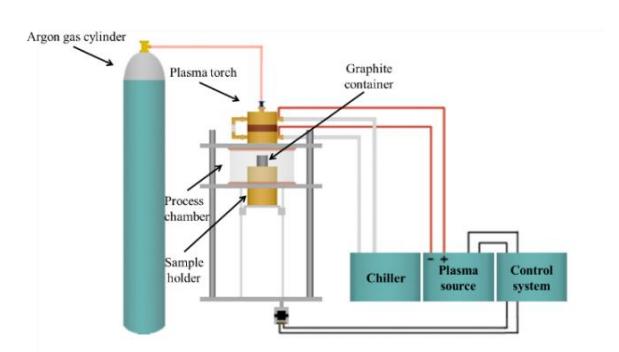
Figure 1 Schematic description of the instrumental setup.
Figure 2 Schematic of GO synthesis from biomass.
2.4 Sample Characterization
The plasma GO samples were then characterized using several analytical techniques. Raman spectroscopy (Horiba Scientific) was used to analyze the quality of graphene at Raman shift 0 to 3,000 cm-1 . Crystal structure identification was done with a PANalytical EMPYREAN X-ray diffractometer (XRD) based on dimension units from 5° to 80° using Cu-Kα radiation (λ = 0.154 nm) at 40 kV and 30 mA. The morphology and elemental composition of the product were examined with a JEOL JSM-6510 scanning electron microscope (SEM). The morphology and diffraction of the biomass after undergoing the plasma process were investigated in greater detail using a Talos F200C transmission electron microscope (TEM). Fourier transform infrared (FTIR) was used to investigate the presence of functional groups in the samples. FTIR spectra were recorded in KBr using a Brüker Tensor 27 spectrometer at wave numbers ranging from 4,000 to 400 cm-1 under transmission mode. The commercial GO was then characterized
using FTIR (Brüker Tensor 27) and SEM (JEOL JSM-6510) to determine its functional groups, morphology, and elemental composition.
3 Results and Discussion
The preparation of graphene, especially graphene oxide, usually takes hours to days due to the complexity of the different processes involved, from the carbon source to the formation of graphene oxide. When using a faster technique, expensive equipment costs are required. Atmospheric plasma technology provides the ideal conditions for preparing graphene and its derivatives. This is mainly due to the high temperature the plasma provides and the low oxygen content. These two parameters are accepted among scientists as the crucial conditions for a good transformation of carbon to graphite and graphene [7]. Interestingly, during the formation of graphene, there are at least two series of processes: pyrolysis and graphitization. During the pyrolysis process, all the volatile material and gases are burned before the pyrolysis itself. The plasma treatment given to the biomass makes the material go through a graphitization process, where the structure of the biomass material containing cellulose, hemicellulose, and lignin is converted to graphite through high temperatures [26]. Electrical conductivity is an important property of graphite and graphene. Hence, this can be used as the first indication of carbon-to-graphite transformation. Some literature states that even lower-temperature carbon can be partially transformed and exhibit conductivity. The conductivity, however, depends on the amount of graphite formed. A complete transformation can be achieved only under sufficiently high temperatures. Below is an explanation of the characterization of plasma-generated biomass materials using X-ray diffraction (XRD), Raman spectroscopy, SEM-EDX, TEM, and FTIR.
X-ray diffraction was used to investigate the crystal structure of the graphite products [15,27]. Figure 3 shows the XRD spectra with some Miller indices for coconut, palm, and rambutan wood after being heated with atmospheric plasma for 5 minutes. The product of the plasma treatment was determined as plasma GO. Two variations of crystal structure were determined. For the coconut and the palm-derived plasma GO, the crystal structures determined were hexagonal, which were probably of graphitic carbon phases, as can be seen in Figures 4(a) and 4(b). On the other hand, for the rambutan stem-derived GO, the crystal structure determined was probably tetragonal, as can be seen in Figure 4(c). A more detailed analysis of the hexagonal and tetragonal crystal structures is provided using the following equations [28,29], with the results presented in Table 1.
Hexagonal determination: \[Sin^2\theta = \frac{\lambda^2}{3a^2}(h^2 + hk + k^2) + \frac{\lambda^2}{4c^2}l^2\] (1)
Tetragonal determination: \[Sin^2\theta = \frac{\lambda^2}{4a^2}(h^2 + k^2) + \frac{\lambda^2}{4c^2}l^2\] (2)
Table 1 Determination of XRD diffraction peak patterns.
| 2θ (o ) | 2θ (rad) | FWHM | sin θ | Sin2θ 2+hk+k2 h | hkl | d (Å) | ||
|---|---|---|---|---|---|---|---|---|
| l Plasma GO Coconut | ||||||||
| 13.7001 | 0.2391 | 0.3070 | 0.1193 | 0.0142 | 0 | 4 | 002 | 6.4584 |
| 22.8479 | 0.3988 | 0.3070 | 0.1981 | 0.0392 | 0 | 16 | 004 | 3.8891 |
| 28.1934 | 0.4921 | 0.1023 | 0.2436 | 0.0593 | 1 | 16 | 104 | 3.1627 |
| 29.2504 | 0.5105 | 0.1791 | 0.2525 | 0.0638 | 3 | 0 | 110 | 3.0508 |
| 31.5452 | 0.5506 | 0.1535 | 0.2718 | 0.0739 | 3 | 4 | 112 | 2.8339 |
| 33.8696 | 0.5911 | 0.1535 | 0.2913 | 0.0848 | 4 | 0 | 200 | 2.6445 |
| 35.7849 | 0.6246 | 0.2558 | 0.3072 | 0.0944 | 4 | 4 | 202 | 2.5072 |
| 37.3100 | 0.6512 | 0.6140 | 0.3199 | 0.1023 | 3 | 16 | 114 | 2.4082 |
| 39.2193 | 0.6845 | 0.2047 | 0.3356 | 0.1126 | 1 | 36 | 106 | 2.2952 |
| 40.3651 | 0.7045 | 0.1279 | 0.3450 | 0.1190 | 0 | 49 | 007 | 2.2327 |
| 42.9748 | 0.7501 | 0.2558 | 0.3663 | 0.1342 | 1 | 49 | 107 | 2.1029 |
| 45.3419 | 0.7914 | 0.6140 | 0.3854 | 0.1486 | 7 | 0 | 210 | 1.9985 |
| 47.3916 | 0.8271 | 0.1535 | 0.4019 | 0.1615 | 7 | 4 | 212 | 1.9167 |
| 48.3520 | 0.8439 | 0.2558 | 0.4095 | 0.1677 | 7 | 9 | 213 | 1.8809 |
| 50.0213 | 0.8730 | 0.0768 | 0.4228 | 0.1787 | 1 | 64 | 108 | 1.8220 |
| 57.2293 | 0.9988 | 0.3070 | 0.4789 | 0.2294 | 9 | 16 | 304 | 1.6084 |
| 58.5665 | 1.0222 | 0.3070 | 0.4891 | 0.2392 | 4 | 64 | 208 | 1.5748 |
| 60.7090 | 1.0596 | 0.6140 | 0.5053 | 0.2554 | 12 | 0 | 220 | 1.5243 |
| 64.5356 | 1.1264 | 0.4093 | 0.5339 | 0.2850 | 13 | 4 | 312 | 1.4428 |
| 66.3448 | 1.1579 | 0.6140 | 0.5472 | 0.2994 | 13 | 9 | 313 | 1.4078 |
| Plasma GO Palm | ||||||||
| 28.2643 | 0.4933 | 0.1279 | 0.2442 | 0.0596 | 1 | 4 | 102 | 3.1549 |
| 29.3104 | 0.5116 | 0.1535 | 0.2530 | 0.0640 | 3 | 0 | 110 | 3.0446 |
| 33.7177 | 0.5885 | 0.8187 | 0.2900 | 0.0841 | 4 | 0 | 200 | 2.6561 |
| 40.4348 | 0.7057 | 0.1535 | 0.3456 | 0.1194 | 4 | 4 | 202 | 2.2290 |
| 45.3605 | 0.7917 | 0.6140 | 0.3856 | 0.1487 | 3 | 9 | 113 | 1.9977 |
| 50.1400 | 0.8751 | 0.3070 | 0.4237 | 0.1795 | 7 | 4 | 212 | 1.8179 |
| 60.0826 | 1.0486 | 0.6140 | 0.5006 | 0.2506 | 12 | 1 | 221 | 1.5387 |
| 66.2928 | 1.1570 | 0.2558 | 0.5468 | 0.2990 | 13 | 4 | 312 | 1.4088 |
| Plasma GO Rambutan | ||||||||
| 18.0011 | 0.3142 | 0.5117 | 0.1564 | 0.0245 | 0 | 16 | 004 | 4.9238 |
| 22.9790 | 0.4011 | 0.2047 | 0.1992 | 0.0397 | 0 | 25 | 005 | 3.8672 |
| 29.3483 | 0.5122 | 0.2303 | 0.2533 | 0.0642 | 1 | 25 | 105 | 3.0408 |
| 33.9667 | 0.5928 | 0.4093 | 0.2921 | 0.0853 | 1 | 36 | 106 | 2.6372 |
| 35.8341 | 0.6254 | 0.1791 | 0.3076 | 0.0946 | 2 | 25 | 115 | 2.5039 |
| 39.3129 | 0.6861 | 0.2558 | 0.3364 | 0.1132 | 4 | 0 | 200 | 2.2900 |
| 43.0596 | 0.7515 | 0.2558 | 0.3670 | 0.1347 | 4 | 16 | 204 | 2.0990 |
| 47.4800 | 0.8287 | 0.1535 | 0.4026 | 0.1621 | 5 | 16 | 214 | 1.9134 |
| 48.4926 | 0.8464 | 0.3070 | 0.4107 | 0.1686 | 4 | 36 | 206 | 1.8758 |
| 50.8898 | 0.8882 | 0.6140 | 0.4296 | 0.1846 | 4 | 49 | 207 | 1.7929 |
| 57.2063 | 0.9984 | 0.4093 | 0.4787 | 0.2292 | 8 | 1 | 221 | 1.6090 |
| 60.5510 | 1.0568 | 0.3070 | 0.5042 | 0.2542 | 9 | 0 | 300 | 1.5279 |
| 64.5769 | 1.1271 | 0.5117 | 0.5342 | 0.2854 | 10 | 1 | 311 | 1.4420 |
Based on the positions of 2θ peaks and the integrated intensity values shown in Figure 3, the atomic coordinates were determined through the structure factor analysis method. The calculation results are tabulated in Table 2. Based on these calculated atomic coordinates, probable unit cells were simulated, as shown in Figure 4. These simulations show that unit-cell frameworks can probably be constructed by carbon atoms, while other atoms with lower atomic radius than carbon atoms can be diffused between some carbon atoms. Thus, based on the simulation result, the probability of graphene and/or graphene oxide formation should be in the plasma GO derived from coconut and palm fronds due to their hexagonal structures.
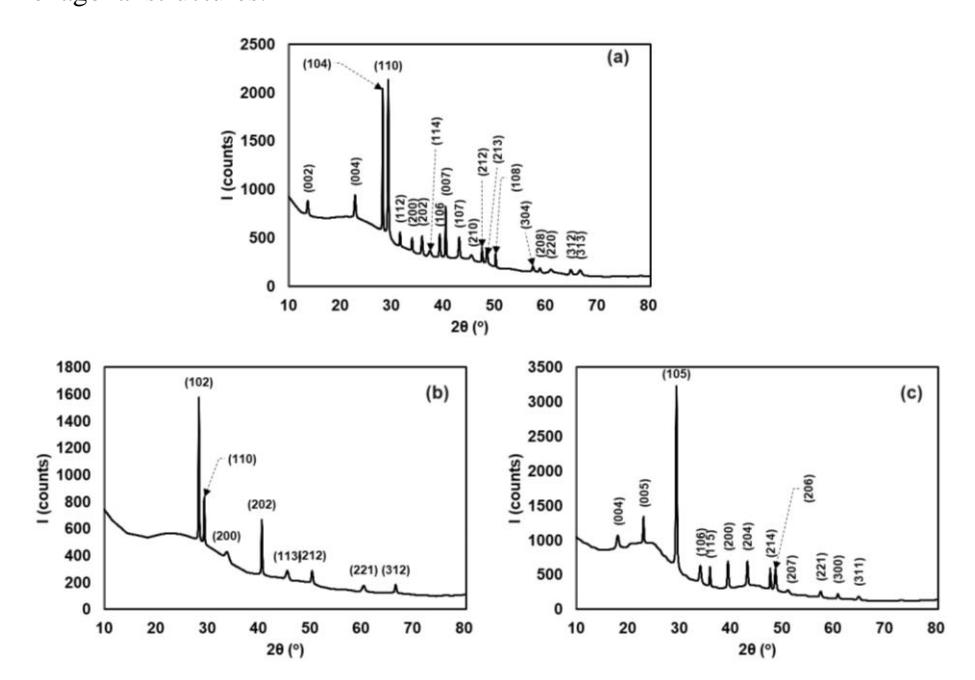
Figure 3 XRD patterns of the plasma GO: (a) coconut frond-derived plasma GO, (b) palm frond-derived plasma GO, and (c) rambutan stem-derived plasma GO.
Table 2 Calculated atomic coordinates based on XRD structure factor analysis.
| Probability of Atom | x/a | y/b | z/c | B-factor | Occupation | |||
|---|---|---|---|---|---|---|---|---|
| Coconut frond-derived plasma GO: | ||||||||
| C | 0.000 | 0.000 | 0.000 | 0.3 | 1 | |||
| C | 0.000 | 0.000 | 0.250 | 0.3 | 1 | |||
| C | 0.000 | 0.000 | 0.125 | 0.3 | 1 | |||
| C | 0.500 | 0.500 | 0.000 | 0.3 | 1 | |||
| C | 0.500 | 0.500 | 0.500 | 0.3 | 1 | |||
| Non-C | 0.250 | 0.250 | 0.000 | 0.3 | 1 | |||
| Probability of Atom | x/a | y/b | z/c | B-factor | Occupation | |||
|---|---|---|---|---|---|---|---|---|
| Palm frond-derived plasma GO: | ||||||||
| C | 0.000 | 0.000 | 0.000 | 0.3 | 1 | |||
| C | 0.500 | 0.000 | 0.000 | 0.3 | 1 | |||
| Non-C | 0.250 | 0.000 | 0.000 | 0.3 | 1 | |||
| Rambutan stem-derived plasma GO: | ||||||||
| C | 0.000 | 0.000 | 0.000 | 0.3 | 1 | |||
| C | 0.500 | 0.000 | 0.000 | 0.3 | 1 | |||
| C | 0.000 | 0.000 | 0.500 | 0.3 | 1 | |||
| C | 0.000 | 0.000 | 0.125 | 0.3 | 1 | |||
| Non-C | 0.250 | 0.000 | 0.000 | 0.3 | 1 | |||
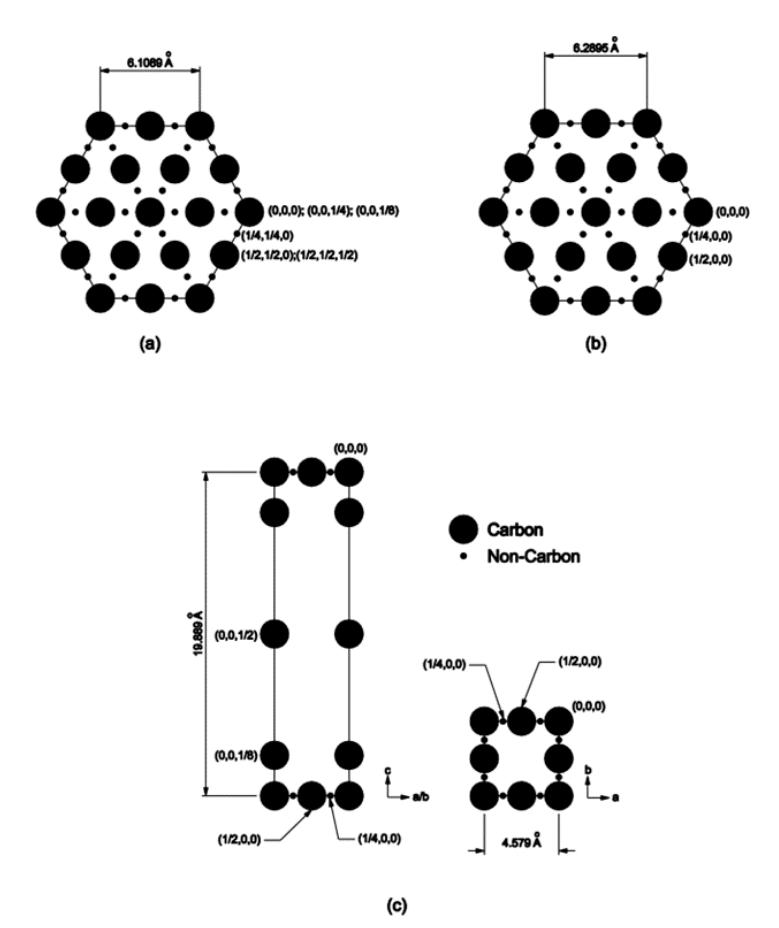
Figure 4 Unit-cell simulation of plasma GO based on XRD analytical results: (a) coconut frond-derived plasma GO, (b) palm frond-derived plasma GO, and (c) rambutan stem-derived plasma GO.
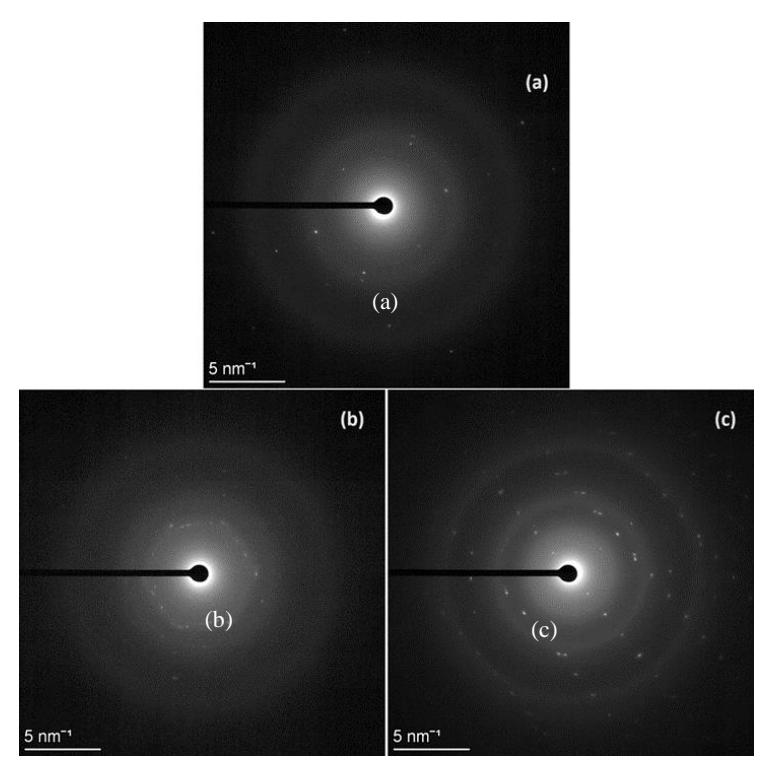
Figure 5 SAED of TEM: (a) coconut frond-derived plasma GO, (b) palm frondderived plasma GO, and (c) rambutan stem-derived plasma GO.
Figure 5 shows the selected area electron diffraction (SAED) from TEM. The presence of diffraction patterns with white spots on the sample indicates that the sample has a crystalline structure in the form of a hexagonal carbon layer [30]. In Figures 5(a) and 5(b), the diffraction spots form a six-point pattern compatible with a hexagonal symmetry, which is a honeycomb-forming structure like graphene [31], indicating (002) planes of a hexagonal crystal structure. The distance between the two spots for both were about 0.23 nm, which indicates the characteristics of a lattice constant of hexagonal graphitic carbon phase. Figure 5(c) shows the imaginary lines constructed by groups of atoms that have a constant periodic distance. The distance between two imaginary lines indicates the interplanar spacing of a plane. The interplanar spacing (d) was determined to be about 0.25 nm. According to the XRD analytical result of the rambutan stemderived sample, this d value tended to be a (115) plane with a tetragonal crystal structure. These structures determined by SAED-TEM confirm the XRD-based analysis, which determined the same crystal structure characteristics.
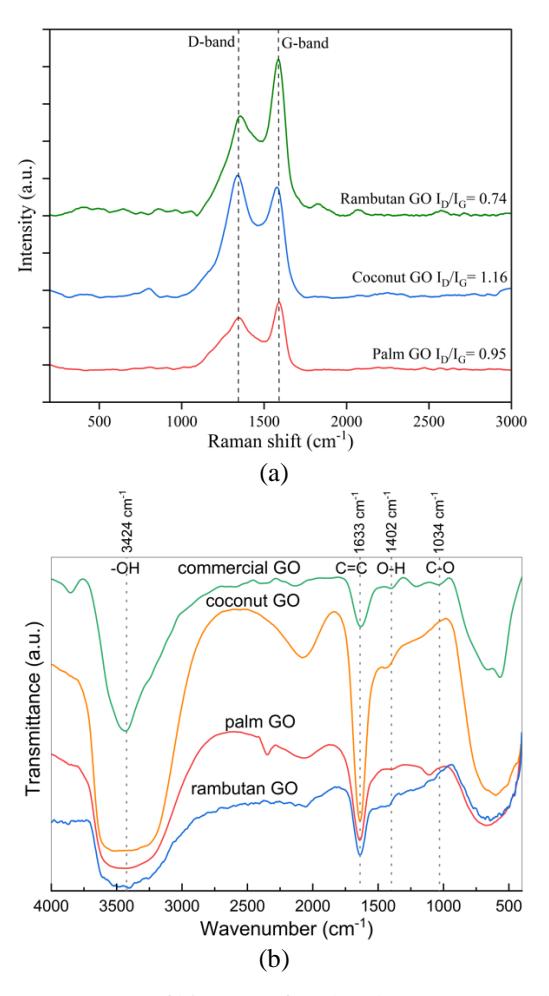
Figure 6 (a) Raman spectra of biomass after the plasma process, (b) FTIR spectra of the biomass after the plasma process and the commercial GO.
The quality of the synthesis results was also investigated by performing Raman spectroscopy, as shown in Figure 6(a). By using Raman spectroscopy, the hybridization of carbon can be investigated [21]. The image identifies the defect peak (D-band) and the graphitic peak (G-band), which are characteristic of the carbon material formed. The D-band was formed at a wavelength of around 1,340 to 1,350 cm-1 , indicating the presence of defects in the material. These defects disrupt the sp2 bonding in the material. The G-band was formed at a wavelength of around 1,570 to 1,585 cm-1 , indicating the graphitic characteristics of the material. This spectrum is caused by the stretching motion of the sp2 carboncarbon bonds. Carbon hybridization can be determined by the intensity ratio
between the disorder-induced D-band and the G-band (ID/IG) [32]. The samples had an ID/IG ratio of 1.16, 0.95, and 0.74 for coconut, palm, and rambutan, respectively. The ID/IG ratio values indicate the presence of graphitic or aromatic bonds of carbon, indicating the presence of a graphene layer containing oxygen [33]. These values were below 2, indicating the formation of carbon materials such as graphene oxide and suggesting good quality [34].
The functional groups present in the plasma-treated GO samples and the commercial GO were analyzed using FTIR, with the resulting spectra shown in Figure 6(b). The FTIR spectra of all GO samples from biomass (coconut, palm, and rambutan) appear identical to the FTIR spectra of the commercial GO. The types of functional groups were identified by comparing the observed peak wavenumbers with reference values. The spectrum revealed vibrations corresponding to several functional groups, including O-H stretching and C=C stretching [35,36], as well as characteristic regions for C-O and O-H bonds. The hydroxyl (O-H) groups at 3,424 cm-1 appeared in all samples, with deep and broad transmittance peaks that indicate significant infrared absorption. Stretching vibrations of C=C were also observed in all GO samples and the commercial GO within the 1,600 to 1,650 cm-1 range, suggesting the presence of alkene functional groups in aromatic structures, characterized by hexagonal carbon bonds in the sp² hybridization state. This sp² hybridization is fundamental to the structure of graphene and other aromatic compounds [30]. A bending vibration peak of O-H bonds was detected at 1,402 cm-1 , further indicating the presence of hydroxyl groups. Vibrations of carbon-oxygen groups were observed at 1,034 cm-1 .
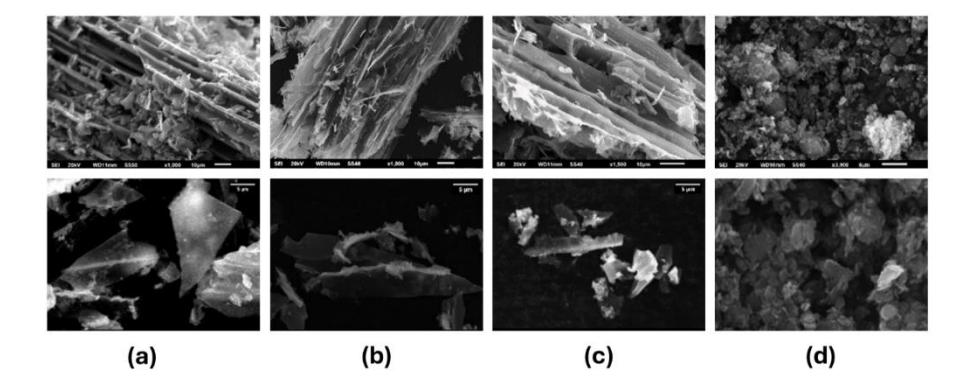
Figure 7 SEM images with low magnification (top) and high magnification (bottom): (a) coconut frond-derived plasma GO, (b) palm frond-derived plasma GO, and (c) rambutan stem-derived plasma GO, and (d) commercial GO.
The morphology of carbonaceous material such as graphene oxide from the biomass material after the plasma process was micro-analyzed using SEM, as shown in Figure 7(a), 7(b), and 7(c). At low magnification, the fiber structure of the biomass material can be seen with graphene sheets flaking on the surface. At higher magnification, it can be seen that the graphene was in the form of thin sheets. In more detail, the sheet of biomass plasma GO was observed using TEM, as shown in Figure 8. The TEM image shows the graphene sheet, with the darker part indicating a stacked or thicker sheet (indicated by the red arrow). Figure 7(d) shows the morphology of the commercial GO, which exhibits a spherical nanoparticle structure. Upon further magnification, stacked exfoliated sheets could be observed.
Figure 8 TEM images: (a) coconut frond-derived plasma GO, (b) palm frondderived plasma GO, and (c) rambutan stem-derived plasma GO.
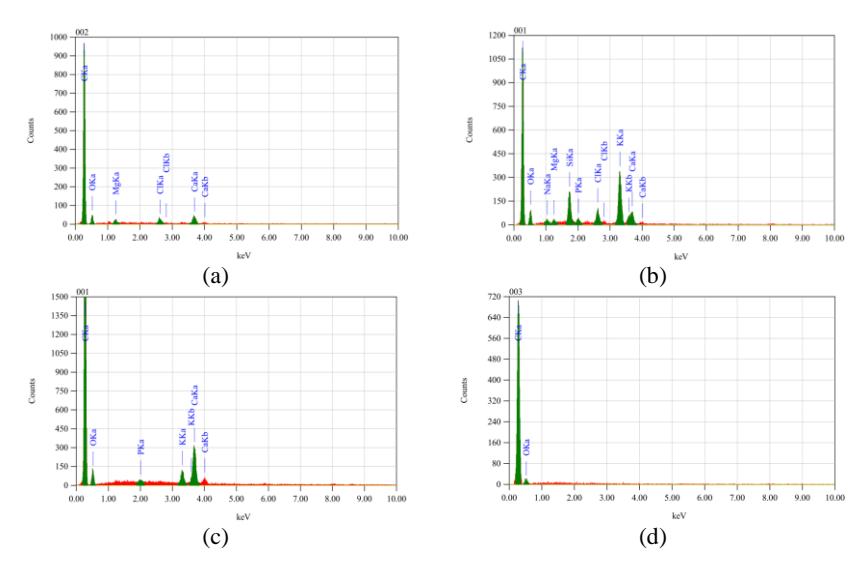
Figure 9 EDX elemental compositions of the biomass plasma GO and the commercial GO.
| Element | Plasma GO Coconut | Plasma GO Palm | Plasma GO Rambutan | Commercial GO | ||||
|---|---|---|---|---|---|---|---|---|
| Mass % | Atom % | Mass % | Atom % | Mass % | Atom % | Mass % | Atom % | |
| C | 80.15 | 85.60 | 69.02 | 80.18 | 78.32 | 85.73 | 87.63 | 90.42 |
| O | 16.35 | 13.11 | 15.59 | 13.60 | 14.45 | 11.87 | 12.37 | 9.58 |
| Ca | 1.97 | 0.63 | 1.98 | 0.69 | 5.39 | 1.77 | - | - |
| Si | - | - | 3.06 | 1.52 | - | - | - | - |
| Na | - | - | 0.48 | 0.29 | - | - | - | - |
| Mg | 0.66 | 0.35 | 0.43 | 0.24 | - | - | - | - |
| P | - | - | 0.54 | 0.24 | 0.17 | 0.07 | - | - |
| Cl | 0.86 | 0.31 | 1.51 | 0.60 | - | - | - | - |
| K | - | - | 7.39 | 2.64 | 1.67 | 0.56 | - | - |
Table 3 EDX elemental compositions of the biomass plasma GO and the commercial GO in mass percentage and atom percentage.
The synthesized findings and elemental analysis were identified through EDX. EDX can provide an elemental composition prediction. The distribution of the elemental composition in the GO with biomass feedstock after plasma processing and the commercial GO is presented in Figure 9. The elemental composition in mass percentage and atom percentage is presented in more detail in Table 3. Table 3 shows the EDX elemental compositions of the biomass plasma GO and the commercial GO. Carbon and oxygen are the most abundant elements found in the three GO plasma samples, with a C:O ratio for coconut 4.9:1, palm 4.4:1, and rambutan 5.4:1 in mass percentage. Regarding the atom percentage, the C:O ratio for coconut was 6.5:1, for palm 5.9:1, and for rambutan 7.2:1. Moreover, the commercial GO containing C:O was 7:1 in mass percentage and 9.4:1 in atom percentage. This ratio indicates that the samples included materials such as graphene oxide, which usually contains a carbon/oxygen ratio of 3:1 [37]. In addition to carbon and oxygen, other elements were also present, although their proportions compared to the carbon atoms were very small, such as Ca, Si, Na, Mg, P, Cl, and K, which are macro elements in the biomass feedstock. This is because the carbon source comes from natural materials that contain several nutrients essential for plant growth.
Almost all biomass wood can be converted to graphite and graphene. This indicates that all biomass materials have similar properties. There are differences in relative carbon content, because of high volatile and organic parts, and in the impurity content, which in fact, cannot be classified as impurities. These elements somehow play an important role as dotting elements, which needs further investigation. According to the characterization results, it could be verified that the synthesis of biomass material, especially from coconut fronds, palm fronds, and rambutan stems, using plasma technology, can produce graphene oxide, which is a derivative of graphene.
4 Conclusion
Graphene oxide was successfully synthesized directly, rapidly, and at low cost from biomass materials, especially coconut fronds, palm fronds, and rambutan stems, as a precursor to natural carbon with 5 minutes of atmospheric plasma exposure, as evidenced by Raman spectroscopy with an ID/IG ratio of 1.16, 0.95, and 0.74 for coconut, palm, and rambutan, respectively. The C:O ratio of these three biomass materials was observed using SEM-EDS, where the carbon content was more than 80%, as indicated by the structure of graphene oxide (GO). As an XRD investigation, the detected crystal structure derived from coconut and palm fronds was hexagonal and consisted of multi-layer graphene, in line with the results of the SEM and TEM investigations. A unique structure was detected in the rambutan stem-derived GO, which had a tetragonal structure but had sp2 hybridization. In addition, atmospheric plasma technology can convert biomass wood into valuable materials and can be considered for large-scale production, considering the short synthesis process time.
5 Acknowledgments
The authors would like to thank the Research Organization for Nuclear Energy for assistance in the material support of this research. They also express their gratitude to the Advanced Characterization Laboratories Serpong, National Research and Innovation Agency for the use of its facilities and the scientific and technical assistance offered through E-Layanan Sains, Badan Riset dan Inovasi Nasional. The authors are particularly grateful to the head of the Research Center for Nuclear Beam Analysis Technology for his assistance in the conduction of the research work.
6 References
- [1] Radadiya, T.M., A Properties of Graphene, European Journal of Material Sciences, 2(1), pp. 6-18, 2015.
- [2] Fortugno, P., Musikhin, S., Shi, X., Wang, H., Wiggers H. & Schulz, C., Synthesis of Freestanding Few-layer Graphene in Microwave Plasma: The Role of Oxygen, Carbon N.Y., pp. 186, 560-573, 2022.
- [3] Chang, Y.C., Yen, C.C., Tsai, H.C., Chen, T.C., Yang, C.M., Chen, C.H. &. Woon, W.Y., Characteristics of Graphene Grown Through Low Power Capacitive Coupled Radio Frequency Plasma Enhanced Chemical Vapor Deposition, Carbon N.Y., 159, pp. 570-578, 2020.
- [4] Walimbe, P. & Chaudhari, M., State-of-the-art Advancements in Studies and Applications of Graphene: A Comprehensive Review, Materials Today Sustainability, 6, 100026, 2019.
- [5] Surekha, G., Krishnaiah, K.V., Ravi, N. & Padma Suvarna, R., FTIR, Raman And XRD Analysis of Graphene Oxide Films Prepared by Modified Hummers Method, in: J Phys Conf Ser, Institute of Physics Publishing, 1495(1), 012012, 2020.
- [6] Rudrapati, R., Graphene: Fabrication Methods, Properties, and Applications in Modern Industries, in Graphene Production and Application, IntechOpen, 1, 1-14, 2020.
- [7] Luong, D.X., Bets, K.V., Algozeeb, W.A., Stanford, M.G., Kittrell, C., Chen, W., Salvatierra, R.V., Ren, M., McHugh, E.A., Advincula, P.A., Wang, Z., Bhatt, M., Guo, H., Mancevski, V., Shahsavari, R., Yakobson, B.I. &. Tour, J.M., Gram-scale Bottom-up Flash Graphene Synthesis, Nature, 577(7792), pp. 647-651, 2020.
- [8] Safian, M.T.U., Umar, K. & Ibrahim, M.N.M., Synthesis and Scalability of Graphene and Its Derivatives: A Journey Towards Sustainable and Commercial Material, J Clean Prod., 318, 2021.
- [9] Chua, C.K. & Pumera, M., Chemical Reduction of Graphene Oxide: A Synthetic Chemistry Viewpoint, Chem Soc Rev., 43(1), pp. 291-312, 2014.
- [10] Dreyer, D.R., Park, S., Bielawski, C.W. & Ruoff, R.S., The Chemistry of Graphene Oxide, Chem Soc Rev., 39(1), pp. 228-240, 2010.
- [11] Naumov, A.V., Graphene Oxide: Fundamentals and Applications, 2017.
- [12] Eda, G. & Chhowalla, M., Chemically Derived Graphene Oxide: Towards Large-area Thin-film Electronics and Optoelectronics, Advanced Materials, 22(22), pp. 2392-2415, 2010.
- [13] Shah, J., Lopez-Mercado, J., Carreon, M.G., Lopez-Miranda, A. & Carreon, M.L., Plasma Synthesis of Graphene from Mango Peel, ACS Omega, 3(1), pp. 455-463, 2018.
- [14] Supriyanto, G., Rukman, N.K., Khoiron Nisa, A., Jannatin, M., Piere, B., Zakki Fahmi, M. & Septya Kusuma, H., Graphene Oxide from Indonesian Biomass: Synthesis and Characterization, BioResources, 13(3), pp. 4832- 4840, 2018.
- [15] Ramli, R. & Hidayat, R., Graphene Oxide Based on Biomass Waste: Synthesis and Applications, in Graphene - A Wonder Material for Scientists and Engineers, IntechOpen, pp. 1-20, 2023.
- [16] Abbas, A., Eng, X.E., Ee, N., Saleem, F., Wu, D., Chen, W., Handayani, M., Tabish, T.A., Wai, N. & Lim, T.M., Development of Reduced Graphene Oxide from Biowaste as an Electrode Material for Vanadium Redox Flow Battery, J Energy Storage, 41, 102848, 2021.
- [17] Challa, A.A., Saha, N., Ngwabebhoh, F.A., Nguyen, H.T., Urbanek, P., Fei, H. & Saha, P., Synthesis and Characterization of Graphene Oxide from Residual Biomass, in: 2022 IEEE 12th International Conference Nanomaterials: Applications & Properties (NAP), IEEE, pp. 1-4, 2022.
- [18] Purawiardi, R.I., Dimyati, A., Handayani, A.H., Kismanto, A., Sari, Y.W., Maddu, A. & Elbersen, H.W., Plasma-assisted Pyrolysis for Converting
- Oil Palm Fronds into Reduced Graphite Oxide, in: IOP Conf Ser Earth Environ Sci, Institute of Physics, 1309(1), 2024.
- [19] Hanifa, I.I., Sunu, W. & Dwandaru, B., Synthesis and Characterization of Graphene Oxide based on Processed Graphite using Audiosonication Method, 8(1), 2021.
- [20] Gutiérrez-Cruz, A., Ruiz-Hernández, A.R., Vega-Clemente, J.F. & Luna-Gazcón, D.G. & Campos-Delgado, J., A Review of Top-down and Bottomup Synthesis Methods for the Production of Graphene, Graphene Oxide and Reduced Graphene Oxide, J. Mater Sci., 57(31), pp. 14543-14578, 2022.
- [21] Yu, H., Zhang, B., Bulin, C., Li, R. & Xing, R., High-efficient Synthesis of Graphene Oxide Based on Improved Hummers Method, Sci Rep, 6(1), pp. 1-7, 2016.
- [22] Ciptasari, N., Darsono, N., Handayani, M. & Soedarsono, J., Synthesis of Graphite Oxide using Hummers Method: Oxidation Time Influence, in: AIP Conf. Proc. 2382(1), 020010, 2021.
- [23] Thangaraj, B., Mumtaz, F., Abbas, Y., Anjum, D.H., Solomon, P.R. & Hassan, J., Synthesis of Graphene Oxide from Sugarcane Dry Leaves by Two-stage Pyrolysis, Molecules, 28(8), 3329, 2023.
- [24] Purawiardi, I., Kismanto, A., Hijrah Handayani, A., Maddu, A., Elbersen, W., Kartono, A., Widya Sari, Y. & Dimyati, A., Numerical Analysis for Predicting the Rate of Graphitization on Wood Biomass during the Plasma-assisted Pyrolysis, in: IOP Conf Ser Earth Environ Sci, Institute of Physics, 1354(1), 012017, 2024.
- [25] Wyss, K.M., Luong, D.X. & Tour, J.M., Large-scale Syntheses of 2D Materials: Flash Joule Heating and Other Methods, Advanced Materials, 34(8), 2106970, 2022.
- [26] Farid, M.A.A. & Andou, Y., A Route Towards Graphene from Lignocellulosic Biomass, J Clean Prod., 380, 135090, 2022.
- [27] Hidayah, N.M.S., Liu, W.W., Lai, C.W., Noriman, N.Z., Khe, C.S., Hashim, U. & Lee, H.C., Comparison on Graphite, Graphene Oxide and Reduced Graphene Oxide: Synthesis and Characterization, In: AIP Conf Proc, American Institute of Physics Inc., 1892(1), 2017.
- [28] Purawiardi, I., Analisis XRD untuk Logam Padat (XRD Analysis for Solid Metals), IPB Press, 2020.
- [29] Suryanarayana, C. & Norton, M.G., X-Ray Diffraction, Springer US, Boston, MA, 1998.
- [30] Darminto, D., Baqiya, M. & Asih, R., Pengembangan Bahan Karbon Dari Biomassa (Development of Carbon-based Materials from Biomass), ITS Press Surabaya, 2018.
- [31] Jiříčková, A., Jankovský, O., Sofer, Z. & Sedmidubský, D., Synthesis and Applications of Graphene Oxide, Materials, 15(3), 920, 2022.
- [32] Smith, E. & Dent, G., Modern Raman Spectroscopy-a Practical Approach. John Wiley and Sons Ltd., Chichester, 2005.
- [33] Scardaci, V. & Compagnini, G., Raman Spectroscopy Investigation of Graphene Oxide Reduction by Laser Scribing, C (Basel), 7(2), 48, 2021.
- [34] Widyaningrum, B.A., Apriani, D. & Amanda, P., Synthesis and Characterization: Composite of Graphene Oxide Based Palm Kernel Shell Waste with Fe3O4, 22(2), 488372, 2021.
- [35] Kim, S.G., Park, O.K., Lee, J.H. & Ku, B.C., Layer-by-layer Assembled Graphene Oxide Films and Barrier Properties of Thermally Reduced Graphene Oxide Membranes, Carbon Letters, 14(4), pp. 247-250, 2013.
- [36] Emiru, T.F. & Ayele, D.W., Controlled Synthesis, Characterization and Reduction of Graphene Oxide: A Convenient Method for Large Scale Production, Egyptian Journal of Basic and Applied Sciences, 4(1), pp. 74- 79, 2017.
- [37] Tiginyanu, I., Ursaki, V. & Popa, V., Ultra-thin Membranes for Sensor Applications, In: Nanocoatings and Ultra-thin Films, pp. 330-354, 2011.