

1 Introduction
Various scientific and technological applications in the fields of particle accelerators, mass spectroscopy, atmospheric and space researches, photometric measurements, and vacuum technology need an electrometer [1][2][3][4][5]. The electrometer is an instrument to measure very low current in the range of several milliamperes down to picoamperes. In combination with a dc voltage source, the electrometer is powerful to obtain current-voltage (I-V) characteristics of materials and devices [6]. Very recently, we have developed a simple electrometer based on LOG112 and C8051F006 System-on-a-Chip (SoC) for measuring current in metal-oxide-semiconductor (MOS) devices [7]. We have also showed that the instrument is able to be used in undergraduate laboratory to characterize electronic components such as resistors and diodes [8].
One of commercial instruments commonly utilized for obtaining the I-V characteristics is Keithley 617 Programmable Electrometer System. The Programmable Electrometer System is composed of a programmable electrometer, which is actually an electrometer combined with a programmable dc voltage source, and a computer. The electrometer is capable of measuring dc currents of 20 milliamperes down to 2 picoamperes while the dc voltage source provides voltages in the range of - 102 to +102 volts. The computer is employed to control the programmable electrometer by the use of an IEEE-488 general purpose interface bus (GPIB) [9].
Since the Keithley 617 Programmable Electrometer System was released more than two decades ago, it works under an XT486 computer using an 8086 microprocessor, which is now out of date. The operating system of the computer is MS DOS (Microsoft Disk Operating System), which is also obsolete and does not support graphical programming. The outdated system is still encountered nowadays [10][11][12]. By upgrading the Keithley 617 Programmable Electrometer System, it is expected that the system becomes more convenient to be used by researchers at present.
In this paper, we report the improvements of the hardware and software of the Keithley 617 Programmable Electrometer System that make convenient environment for users. Under the consideration of limited budget, economical upgrading of the system is presented. Evaluation on the upgraded system is carried out by characterizing the 1N4148 silicon diode and the measurement result will be discussed.
2 Hardware and Software Improvements
Figure 1 gives original configuration of the Keithley 617 Programmable Electrometer System, which consists of an XT486 computer with the operating system of MS DOS, a PCL488 ISA card, a Keithley 617 Programmable Electrometer, and a cable for communication between the computer and the electrometer under the IEEE-488 GPIB (general purpose interface bus) protocol. Since the MS DOS running the XT486 computer does not provide graphical programming environment, it is unpleasant for present users. Moreover, software for handling measurement process and manipulating data was written by using the Turbo Pascal version 6.0 programming language, which works under the MS DOS and therefore does not have graphical interface capability. The communication between the XT486 computer and the programmable electrometer is performed by the PCL488 ISA card of the Capital Equipment Corporation (CEC), which is plugged into the ISA slot of the XT486 computer. The PCL488 ISA card and its driver allow the IEEE-488 GPIB protocol to control the programmable electrometer. However, it is not easy to find the card and its driver because they are out of date [13].
Figure 1 Original configuration of the Keithley 617 Programmable Electrometer System
In order to make convenient environment for users who are working with the Keithley 617 Programmable Electrometer System, the original system must be updated. The best computers to be used, of course, are the present computers based on the Intel Core Duo processor. Unfortunately, the ISA bus slots are not available in the present computers so that the existing PCL488 ISA card can not be plugged in. Alternatively, a PCL488 PCI card, which can be directly plugged into the PCI bus slots of the present computers, should be possessed. Since the restriction in improving the system was budget, the PCL488 ISA card was decided to be reused. This limited us in selecting an appropriate computer. It was found that computers supporting the ISA bus are those based on the Intel Pentium II microprocessor with 128 Megabytes of RAM (random access memory).
Therefore, possible operating systems that can run the Pentium II computers are also limited. The Windows 98 SE is the optimal choice due to its good performance with the limited RAM of 128 Megabytes. As compared to the MS DOS, the Windows 98 SE is a graphical-based operating system. The software driver for the PCL488 card is CEC488 v7, which is the latest update for Microsoft Windows operating systems provided by the CEC [13]. The improved configuration of the Keithley 617 Programmable Electrometer System is depicted in Figure 2.
Figure 2 Improved configuration of the Keithley 617 Programmable Electrometer System
A program, which is for handling measurement process and manipulating data, was designed and developed under the flowchart described in Fig. 3. Firstly, the hardware is initialized. Then, a menu is selected in which the user is allowed to do the following:
- 1. to set dc voltage source (minimum, maximum, and step voltages) to be fed to a device under test (DUT),
- 2. to set the maximum measured current and the measurement delay time,
- 3. to write a title of graph,
- 4. to choose a type of the graph axis.
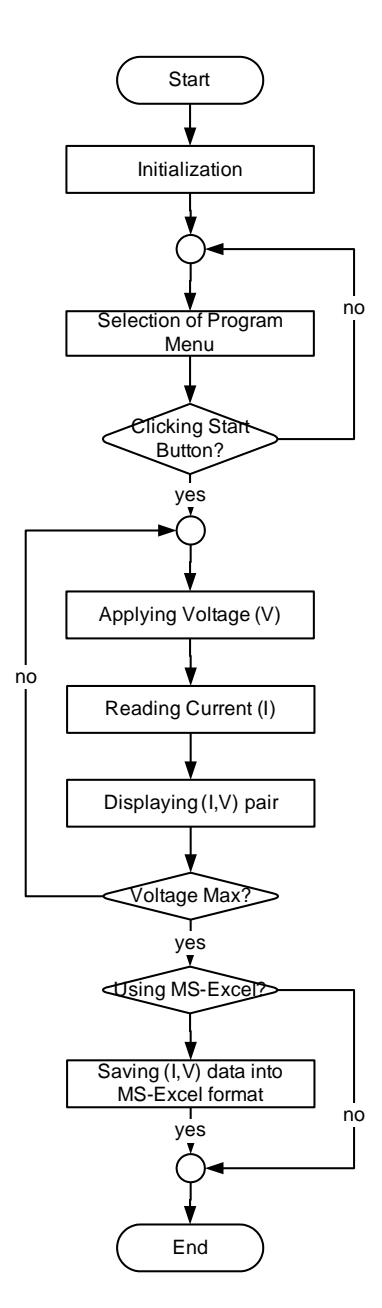
Figure 3 Flowchart of measurement, processing and displaying data
Next, Start button is clicked to start measurement and to display measurement data (I,V). The measurement and display processes are repeated until the maximum voltage is reached. Finally, the measurement data are saved into a file in the Microsoft Excel format by clicking Save to MS Excel button. Since the Windows 98 SE provides the graphical programming capability, the program must exploit the graphical capability. Therefore, the program was written by employing the Borland Delphi version 6.0, which is a programming language with graphical-user interface facilities.
The flowchart explained in Figure 3 was realized to be an interactive window as shown in Figure 4. The window is divided into left, right, top, and bottom areas. The top area is the name program, i.e. I-V Characterizer v.1.1. There are editable text boxes in the left area. The user can type the top text boxes to set the minimum, maximum, and step voltages of the voltage source. The measurement delay time and the title of graph are entered into the middle and bottom text boxes, respectively. The types of x -y axis are selected by modifying the text boxes in the bottom area. The right area is intended to plot an I-V characteristic from the measurement data (I,V).
Figure 4 Interactive window for measurement, processing, and displaying data
3 Characterization Results and Discussion
Figure 5 displays the Keithley 617 Programmable Electrometer system with the Intel Pentium II-based computer. The DUT is placed into the Faraday cage. Since the computer also supports USB, transferring measurement data into other storage media such flash disk to do further processing is very easy.
Figure 5 Keithley 617 Programmable Electrometer with the Pentium II-Based PC
Referring to the interactive window in Figure 4, measurement process is started by clicking the Start button and ticking the Auto box located in the left area and a graph is automatically displayed so that the user can see easily the measurement results. The top text in the right area, i.e. IV Characteristic, is the title of graph, which was entered by typing the Title text box in the left area. The graph illustrated in Fig. 6 is the I-V characteristic of the 1N4148 silicon diode under forward bias. By pushing the Save to MS Excel button, the plotted (I,V) pairs are saved into a file in the Microsoft Excel format.
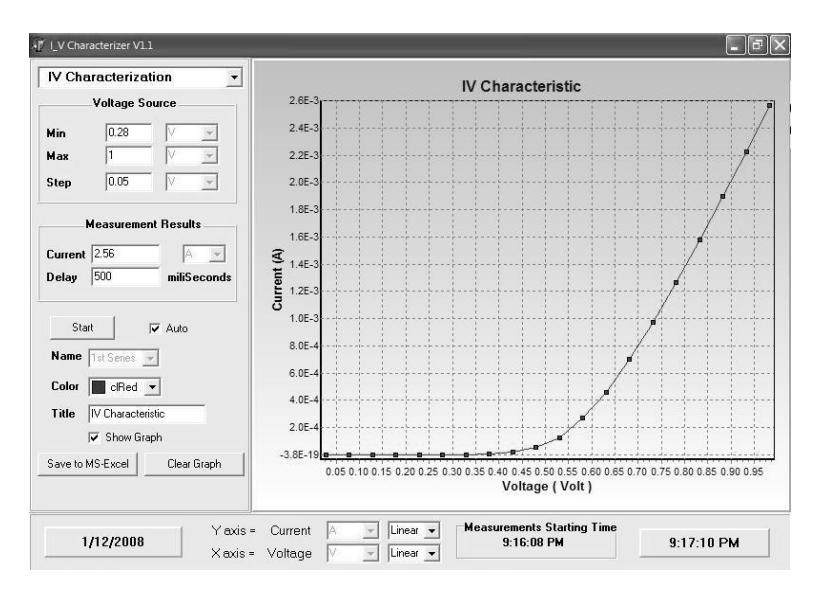
Figure 6 Characterization of 1N4148 silicon diode
Figure 7 demonstrates normal and semilog plots of the I-V characteristic of the silicon diode after being processed by the Microsoft Excel. Both plots illustrate the flexibility in manipulating a graph to be processed further. It can be clearly seen that the junction voltage of the diode is about 0.6 V, which confirms that the diode is made from silicon [14].
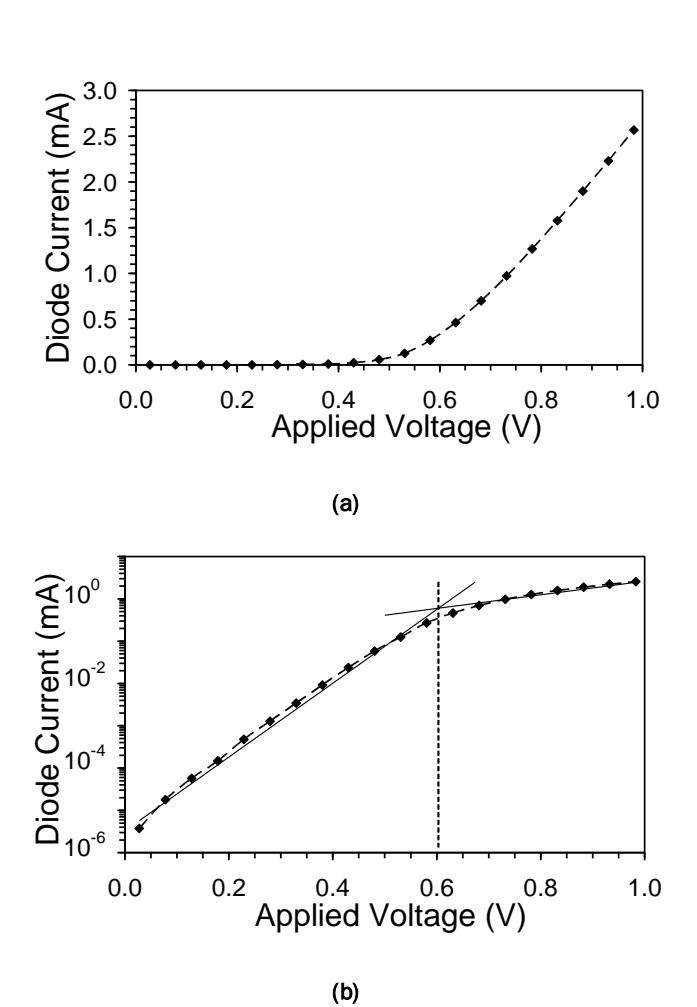
Figure 7 I-V characteristic of 1N4148 silicon diode processed by Microsoft Excel (a) Normal and (b) Semilog plots
4 Conclusions
We have improved the hardware and software of the Keithley 617 Programmable Electrometer System, which is used for electrical characterization of materials and devices, to make convenient environment for users with the limitation that the PCL488 ISA card is reused. The computer that can support the PCL488 ISA card was the Pentium II with 128 Megabytes of RAM and Windows 98 SE operating system. The software driver for the PCL488 card was also updated to be CEC488 v7, which is the latest version for the operating system. The Borland Delphi version 6.0, which has graphical-user interface capability, was used in making interactive software for measurement, processing and displaying data so that users can operate the system easily.
5 References
- [1] Y. B. Acharya, A Wide Range Linear Electrometer, Review of Scientific Instruments, Vol. 71, No. 6, 2000, pp. 2585-2588.
- [2] Y. B. Acharya and P. D. Vyavahare, A Low Current Logarithmic LED Electrometer, IEEE Transactions on Instrumentation and Measurement, Vol. 49, No. 1, 2000, pp. 5-9.
- [3] S. S. Rajput, An Improved Multigain Range Linear Current Electrometer, Review of Scientific Instruments, Vol. 74, No. 6, 2003, pp. 3120-3126.
- [4] Y. B. Acharya and P. D. Vyavahare, Response Time of Light Emitting Diode -Logarithmic Electrometer, Review of Scientific Instruments, Vol. 69, No. 2, 1998, pp. 595-598.
- [5] Y. B. Acharya, Logarithmic Current Electrometer Using Commercially Available Current Conveyor AD844, International Journal of Electronics, Vol. 93, No. 4, 2006, pp. 223- 229.
- [6] K. K. Ng, Complete Guide to Semiconductor Devices, McGraw-Hill Inc, New York, 1995.
- [7] Khairurrijal, M. Abdullah, A. Suhendi, M. M. Munir, and A. Surachman, A Simple Microcontroller-Based Current Electrometer Made from LOG112 and C8051F006 for Measuring Current in Metal-Oxide-Semiconductor Devices, Measurement Science and Technology, Vol. 18, 2007, pp. 3019-3024.
- [8] Khairurrijal, M. Abdullah, M. M. Munir, A. Surachman, and A. Suhendi, Low Cost and User-friendly Electronic Components Characterization System for Undergraduate Students, WSEAS Transactions on Advances in Engineering Education, Vol. 3, No. 11, 2006, pp. 971-976.
- [9] Keithley Instruments, Inc., Model 617 Programmable Electrometer Instruction Manual, (1984).
- [10]G. Biskos, K. Reavell, and N. Collings, Electrostatic Characterization of Corona-wire Aerosol Chargers, Journal of Electrostatics, Vol.63, No. 1, 2005, pp.69-82.
- [11]M. Krondak, G. Broncová, S. Anikin, A. Merz, and V. M. Mirsky, Chemosensitive Properties of Poly-4,4′-dialkoxy-2,2′-bipyrroles, Journal of Solid State Electrochemistry, Vol.10, No. 3, 2006, pp.185-191.
- [12]B. Kim, Y. Lee, J.-D. Nam, and Y. Son, The Electrochemical and Thermal Stability of PEDOT-based Composite Films, Molecular Crystals and Liquid Crystals, Vo. 444, 2006, pp. 191-196.
- [13]http://www.measurementcomputing.com/cecindex.html .
- [14]D. K. Schröder, Semiconductor Material and Device Characterization 2nd Edition, Wiley-Interscience, 1998.