

Introduction
Background
Regional development is currently realized through a comprehensive approach involving various aspects. This includes physical, economic, social, cultural, and environmental aspects. The integration of these aspects will lead to sustainable development for present and future generations to come. Noer (2008) explains that the strategy of regional planning also does not yet accommodate the social (social relationships) and political dimensions (authority) in local culture into the decision-making process.
In this context, a dynamic systems approach has excellent prospects as a tool to address a paradigm shift in spatial planning. From the aspect of consistency of planning and utilization of space, for example, through this approach, it is expected to be able to forecast the impact of the implementation of various policy scenarios on regional development, both spatial and nonspatial.
This approach can serve as an early warning system for the implementation of a region's development policy, to make it possible to choose the optimal policy scenario, and also to anticipate as early as possible the consequences of implementing these policies and thus maintaining consistency (Sterman et al., 2007).
The rapid growth of the tourism sector has turned out to negatively impact the spatial structure in Bali, such as land conversion. Agricultural land conversion in 2013 occurred rapidly in various regencies. From a total of nine regencies and one city in Bali, most of the agricultural land conversion in 2013 occurred in five regencies, namely, Tabanan where agricultural land conversion reached 15,577 ha, Buleleng 7,196 ha, Gianyar 4,585 ha, Karangasem 4,256 ha, and Klungkung 1,337 ha (Department of Agriculture Tabanan Regency, 2014).
Violations to the spatial planning concept illustrate that spatial planning models in Bali Province, in general, and in Tabanan in particular, have started to shift the conception of regional development that was based on sustainable development and local institutions. One of the programs that were designed by the provincial government of Bali to overcome land conversion is the planning of sustainable tourism villages.
Jones (2005) explained that the development of environmentally-based tourism villages (ecotourism) should include an element of social capital from the local community. Social capital has played a role in establishing tourism villages and improving the environment which is under threat because social capital also served as the driver of the carrying capacity of a region. According to Scheyvens (2009), tourism villages can also succeed if local communities have some measure of control over them and if they can equitably reap the benefits arising from such activities. Shikida et al. (2010) explained that in Japan, tourism villages are not limited to nature-based tourism, but also include tourism that focuses on local lifestyles, learning about local culture and history, and to support local industries.
The existence of the irrigation management system for paddy fields Subak and other local institutions such as Pakraman villages is also threatened by the conversion of agricultural land. The Provincial Government of Bali, therefore, planned to develop sustainable tourism villages as a measure to overcome agricultural land conversion (paddy fields) to non-agricultural functions. This anticipation was taken because the spatial structure in Bali was becoming chaotic and increasingly space for local people to survive in their own region was diminishing.
Research Objective
This study generally aims to analyze the relationship between physical/environmental, economic, social aspects with local institutions in Tabanan Regency, Bali Province in realizing the development of sustainable tourism villages. In particular, this study aims to: (1) create a model for sustainable development in tourism village regions based on local institutions and (2) to analyze policy directives for local governments and local institutions in planning sustainable tourism villages based on local institutions.
Literature Review
The Concept of Sustainable Tourism Villages
The involvement of local or traditional communities in the development of a region or country can be realized if the space they are given is proportional to that of the government. Visualizing the role of local or traditional communities in sustainable development originally started with village development. Village development is the embryo of a region's spatial planning.
Sutoro (2012) explained that several villages in continental Europe or the Parish in the United Kingdom or even in Indonesia are classified as self-governing communities. A self-governing community is a local community that establishes and maintains their own government based on local institutions, is of non-governmental and autonomous nature, and is not shaped by external forces nor structurally bonded to external organizations such as the state. Local or traditional communities have a different institutional mechanism for each region. For instance, in Thailand, irrigation in rural areas is autonomously managed by a traditional institution through the Montane irrigation system. These traditional institutions have their own rules and its existence is a way to avoid land conversion (Larsen et al., 2011). Generally, the mechanism of traditional institutions in spatial planning is always associated with local land use.
The cases above show that efforts to develop sustainable tourism villages will involve several aspects, such as the local communities, the development of tourism village product quality, and support for a group of local businessmen. The principle of sustainable tourism village development is an alternative tourism product. Spatial planning can provide an impetus for sustainable rural development and has management principles that include:
- 1. Protecting the environment, such as by not converting land use functions (preventing or minimizing land conversion, especially agricultural land)
- 2. Utilizing local community facilities and infrastructure
- 3. Benefitting the local community
- 4. Small scale in nature as to facilitate a reciprocal relationship with the local community
- 5. Involving the local community
- 6. Applying the development of rural tourism products
System Dynamics
The systems approach is a method of problem-solving that begins with the identification and analysis of needs and ends with an effective operating system. This systems approach has several elements, among others, the methodology for planning and management is multidisciplinary and organized, able to think in a non-quantitative way, using mathematical models, includes simulation and optimization techniques, and can be applied on computers (Eriyatno, 2012).
System dynamics is a representation of a system's behavior which has an interdependent relationship and changes with time. A dynamic system is an interrelated feedback structure that moves toward a balance. In this stage, the determining factors that affect and are affected have been determined based on survey results. The stages of developing the model are as follows (Sterman et al., 2007):
1. Determining model limits
The model needs to be given limits so that the system is not too broad but can still represent real conditions. The limits of this model are derived from the objectives of this research and are also based on the identification of the variables in the previous stage.
2. Identifying causal loop
This process needs to be done to determine the relationship between the variables. After the applying model limits, the next step is to add the interdependent relationship between the variables. This relationship will show which variables affect and are affected as well as those that increase and decrease the conversion of paddy fields.
3. Creating causal loop
After the identification process, the next step is to make the causal loop. In this process, all the variables are connected using arrows at each end and are given positive and negative signs. A positive sign means it adds to other variables while a negative sign shows that it reduces other variables.
4. Formulating the model
After creating the causal loop, the next step is to create a formulation for the model. The objective is that the model can be executed and is meaningful.
5. Simulation and validation of the system dynamics model
Having obtained the formulation for each variable, then the next step is to run or simulate the model that has been created. At the time of simulation, the model will display a graph for each variable. After the simulation process, the next step is to check if the model is appropriate or not. If the model that has been formulated is not valid, then the model formulation phase needs to be looked at to see if there are errors in formulating the model. If the model is valid, it is possible to continue to the next stage.
6. Simulation of changing conditions and scenarios
Once the model is deemed valid, then the next step is to simulate changing conditions by giving different treatment to several variables that are considered important. This is done in order to find the right policy. This process is executed in several simulated scenarios related to policies that are taken in planning sustainable tourism villages based on local institutional.
Local institutions
Koentjaraningrat (2009) explained that institutions are a system of social behavior that is formal or consists of the customs and norms that regulate behavior and all its provisions to fulfill human needs in the community. Syahyuti (2003) research on watershed institutions shows that institutions or organizations consist of two aspects, namely institutional (cultural aspects) and organizational aspects (structural aspects). The cultural aspect is a dynamic aspect that contains abstract things and forms the soul of the institution. Cultural aspects are values, rules, norms, beliefs, morals, ideas, concepts, doctrines, desires, needs, orientation, etc. Meanwhile, the structural aspect is static but more visual, namely in the form of structure, roles, membership, relations between roles, integration between parts, the structure of authority, the relationship between activities with its purpose, aspects of solidarity, profile, patterns of power, etc. The combination of both will shape the institutional behavior or institutional performance. Behavior or institutional performance can be traced through institutional effectiveness.
Local institutions are local level social organizations that exist between the individual in his personal life and with his environment (Munawar, 2009). Local institutions not only regulate the way of life of the community but also play a very important role in the economic growth of the community. From the above definition, it can be concluded that local institutions are a social system that aims to achieve specific objectives and that focuses on behavior with its embedded values, norms, and rules, as well as have a form and area of activity.
The local institutions that were examined in this study include Subak and traditional villages/Pakraman. Regional Regulation of the Province of Bali No.02/PD/DPRD/l972 on Subak explains that Subak is a customary law community with socio-agrarian-religious characteristics. It is an association of farmers who manage irrigation in paddy fields. Subak is also one of the stakeholders involved in spatial planning in its region. As part of its task, Subak always coordinates with traditional villages/Pakraman. Regional Regulation of the Province of Bali No.3 of 2001 on traditional villages, notes that traditional villages form a unity of customary law communities in the Province of Bali which has a unity of tradition and etiquette of social life of the Hindu community, is hereditary in the bond of Kahyangan Tiga (temple) with a territory specific and has their own wealth and is entitled to manage its own household. One of the roles of traditional villages/Pakraman is in protecting the land of the traditional villages so ownership is not eroded by parties outside the traditional village.
Research Methods
Time and Place of the Study
The study was conducted from January 2013 to January 2014. The research location consists of two villages: Jatiluwih in Penebel District and Candi Kuning in Baturiti, Tanaban Regency in the Bali Province. This research was conducted in Tabanan Regency because this regency is the main rice producer in Bali and relates to the sustainability of the agricultural land program.
Methods of Data Collection and Analysis
Sample selection was done through purposive sampling. This study uses two types of data, primary and secondary data. Secondary data comes from the Central Statistics Agency, Bali Regional Development Planning Agency, Tabanan Regency Regional Development Planning Agency, Tanaban Regency Agriculture Office, Tanaban Regency Public Works Office, Tanaban
Regency Tourism Office, Tanaban Regency Regional Revenue Office, Jatiluwih Village Head Office of Penebel District, and Candi Kuning Village Head Office of Baturiti District in Tabanan Regency. This data includes the physical condition (land and water), economic conditions, social conditions, and other data related to regency and village spatial planning. The data used is time series data over a five-year period (2009-2013). Data collected is based on the implementation of the new tourism village area program that began in early 2009. The data was simulated for 21 years (2009-2030 years) in accordance with the Tanaban Regency Spatial Plan. The primary data was obtained from interviews with the head of each agency, the village head, pekaseh, kelian adat and local communities about their role in spatial planning, local institutional effectiveness in maintaining paddy fields, as well as other data associated with spatial planning.
Methodological Approach
The planning model of sustainable tourism villages and the discussion of policy directives are analyzed through system dynamics by using Powersim Studio 10 software. A dynamic system is a representation of the behavior of a system which has an interdependent relationship and changes with time. A dynamic system is an interrelated feedback structure that moves toward a balance (Sterman et al., 2007):
Model Validation
According to Daalen and Thissen (2001), validation of system dynamics modeling can be done in several ways that involve direct structure test without running the model, structure-oriented behavior tests to operate the model, and comparing the behavior of the model with real systems (quantitative behavior pattern comparison). Validation used in this study is AME (Absolute Mean Error) and AVE (Absolute Variation Error). AME is a deviation (difference) between the average value (mean) of simulation results simulation with the actual value. AVE is a variance simulation towards the actual situation. The acceptable limit deviation is between 1-10 percent.
AME = [(Si - Ai) / Ai]
Si = Si N, where S = simulation value
Ai = Ai N, where A = actual value
N = time interval of observation
AVE = [(Ss - Sa) / Sa]
Ss = [(Si - Si)2 N] = simulation deviation value
Sa = [(Ai - Ai)2 N] = actual deviation value
Simulation Base
Simulations were conducted for two villages regarding the local institutional aspects (traditions), namely Jatiluwih village and Candi Kuning village, in Tabanan Regency. This regency has 38 tourism villages with attractions based on agricultural landscape and agrotourism, nature (beaches, waterfalls, forests), and arts and culture. Among the 38 tourist villages, two villages are focused on agricultural tourism (paddy fields and agro-tourism), namely Jatiluwih village as the main producer of organic brown rice which is still able to maintain the presence of paddy fields. The second one is the village of Candi Kuning as an agro-tourism location for fruits, which has experienced a conversion of agricultural land for the last ten years.
The aim of this simulation for both villages is to see the development of local institutions in both villages (linked also with the physical, economic, and social aspects of Tabanan Regency) in maintaining agricultural land for sustainable tourism villages for 21 years (2009-2030 years). The time span of 21 years conforms to the Medium Term Development Plan of Tabanan Regency.
Measuring Institutional Effectiveness
Effectiveness of local institutions is analyzed using a score (a Likert scale). The higher the score, the higher the effectiveness of the local institutions (Desa Dinas, Pakraman, Subak) and vice versa, the lower the resulting score, the more ineffective the local institutions are. Scores are calculated as follows (Norken 2003):
1. (Mi + 2 Sdi) < x < (Mi + 3 Sdi) = Very effective
2. (Mi + 1 Sdi) < x < (Mi + 2 Sdi) = Effective
3. (Mi - 1 Sdi) < x < (Mi + 1 Sdi) = Sufficiently effective
4. (Mi - 2 Sdi) < x < (Mi - 1 Sdi) = Ineffective 5. (Mi - 3 Sdi) < x < (Mi - 2 Sdi) = Very ineffective where:
Mi = ideal mean = (1/2 x (maximum ideal score + minimum ideal score))
Sdi = ideal standard deviation = (1/6 x (maximum ideal score - minimum ideal score)
Institutions are considered effective in a condition or situation, where they chose the right goals to be achieved and use the right means, as well as have the right capabilities so that the desired goals can be achieved with satisfying results (Boettke et al., 2008; Paraso, 2013). Institutions like Pakraman villages and Subak will not be effective by themselves. Both institutions require the assistance of local authorities. Widhianthini et al. (2006), Mudhina (2009), and Nunuk (2010) explained that the effectiveness of Subak and traditional villages/Pakraman can be seen from the aspects of its institutional situation, facilities and infrastructure, human resources, management, and financing. The effectiveness of local institutions is included in the dynamic model and is associated with physical, economic, and social aspects in Tabanan Regency. In dynamic models, an overview of the real conditions can be described in a scenario describing causal relationships between some representing samples (e.g. village) with wider variables in a region (e.g. regencies).
Results and Discussion
Model of Sustainable Development in the Tourism Villages Based on Local Institutions
The model is an abstraction to approach an actual situation. The model of sustainable tourism villages based on local institutions involves the interaction between interrelated sub-systems. The planning model of tourism villages oriented on the sustainability of agricultural land in the study location involves the physical, economic, and social and institutional aspects, which influence each other (Figure 1). The physical aspects include designation of paddy fields and other land use designations (such as designation of settlements, the sacred areas, and other buildings).
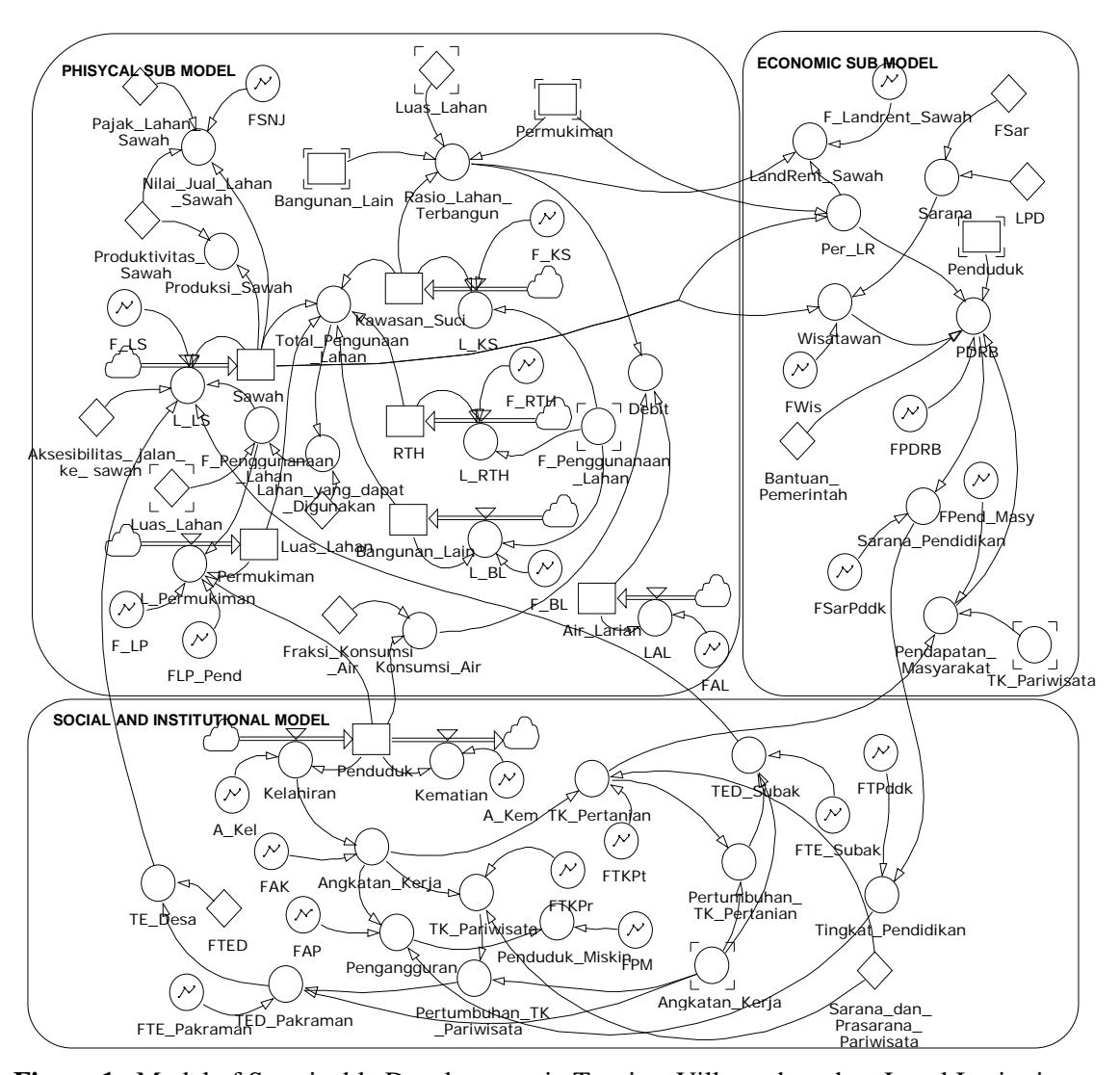
Figure 1. Model of Sustainable Development in Tourism Villages based on Local Institutions
Economic aspects are associated with land rent (lease of agricultural land/paddy fields due to the development of tourism villages), government aid for the tourism villages, and Village Credit Institutions. Village Credit Institutions are managed by traditional villages and also serve as a tourism advocating institution that helps local communities to use these financial institutions in developing tourism supporting businesses. Business development in the field of tourism while maintaining the sustainability of agricultural land may affect the Regional Gross Domestic Product of Tabanan Regency. Relevant social aspects are the driving factor behind land use changes such as population driving up demand for land for housing or other buildings, which in turn will affect the number of workers in agriculture and tourism, unemployment rate, and poverty rate. Shifts in land use can be controlled through local (traditional) institutions, namely Subak and traditional villages/Pakraman in preventing the conversion of agricultural land.
Physical sub-systems indicate that the use of land for settlements and other buildings will cause a decrease of 22 465 hectares of paddy fields to 21744.29 hectares by the end of 2030, or by 3.21 percent by incorporating local institutional elements of Jatiluwih village (Figure 2) and by 8.05 percent by incorporating local institutional elements of Candi Kuning village (Figure 3).
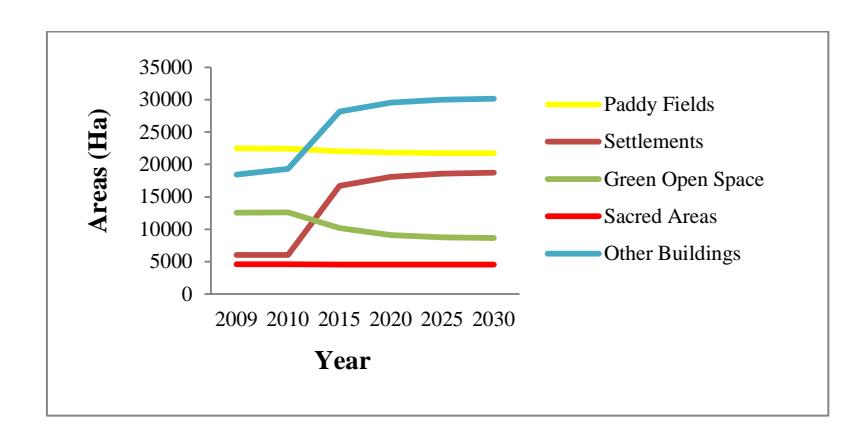
Figure 2. Simulation of Land Use in Tabanan Regency by Incorporating Local Institutional Elements of Jatiluwih Village
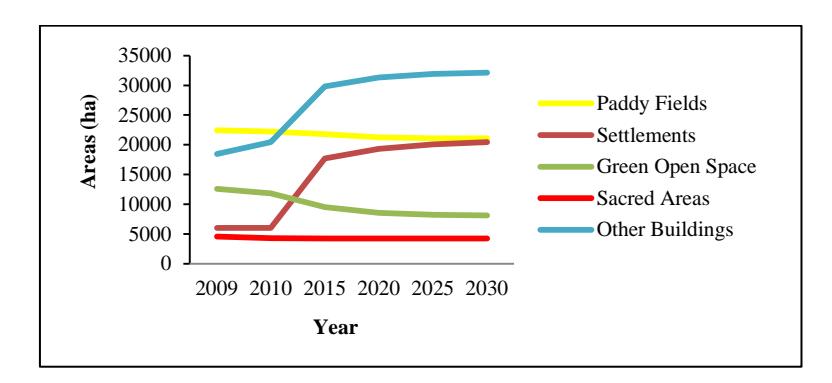
Figure 3. Simulation of Land Use in Tabanan Regency by Incorporating Local Institutional Elements of Candi Kuning Village
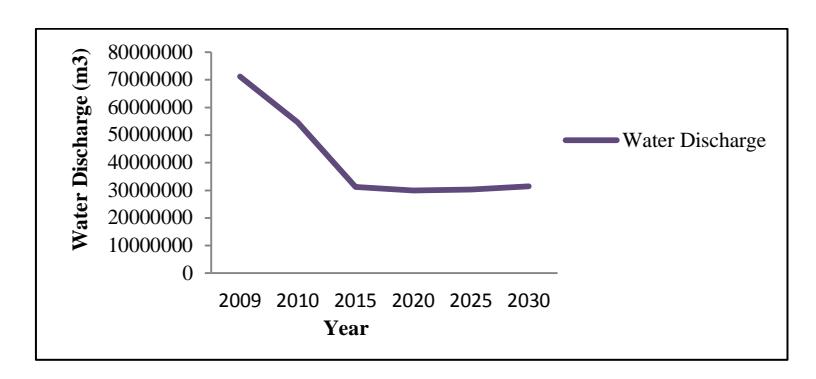
Figure 4. Simulation of Water Discharge in Tabanan Regency by Incorporating Local Institutional Elements of Jatiluwih Village
Simulation of the model shows that water discharge in the Tabanan Regency will be reduced by 55.78 percent from 2009 to 2030 by incorporating local institutional elements of Jatiluwih village (Figure 4). This is different in the case of local institutional elements of Candi Kuning village, which will reduce water discharge by 75.30 percent (Figure 5).
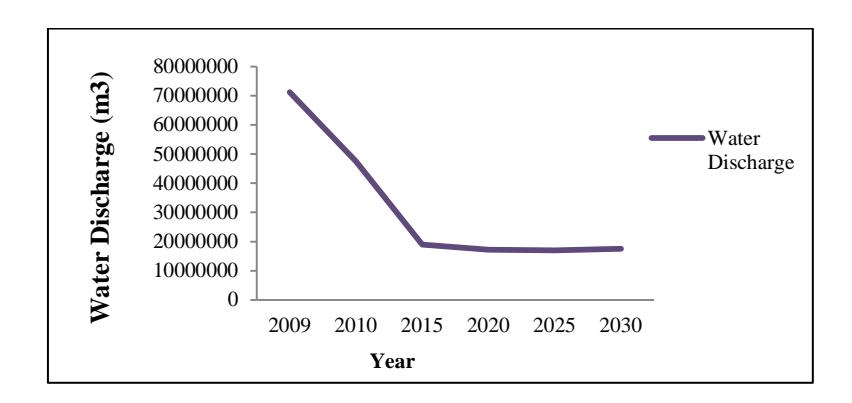
Figure 5. Simulation of Water Discharge in Tabanan Regency by Incorporating Local Institutional Elements of Candi Kuning Village
The simulation of the economic sub-systems model for the Regional GDP shows an increase. The simulation (2009-2030) shows the value of Regional GDP of Tabanan Regency, by incorporating local institutional elements of Jatiluwih village, increased by 94.01 percent (Figure 6) and for the local institutional elements of Candi Kuning village by 90.13 percent (Figure 7). This increase was caused by a growth of the tourism sector which is in line with the development of tourism villages.
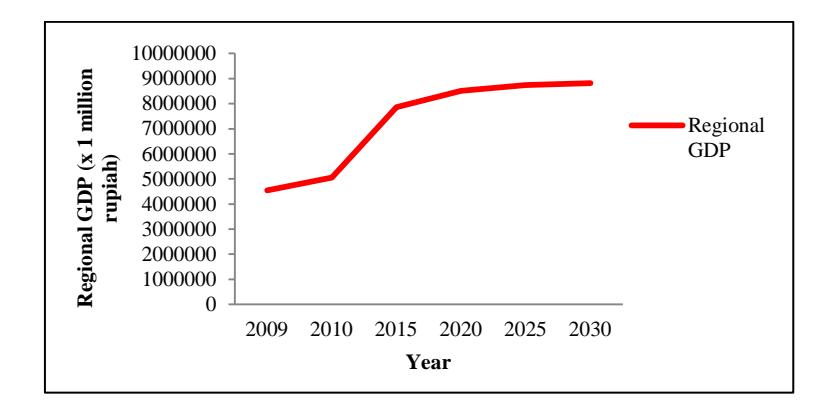
Figure 6. Simulation of Regional GDP in Tabanan Regency by Incorporating Local Institutional Elements of Jatiluwih Village
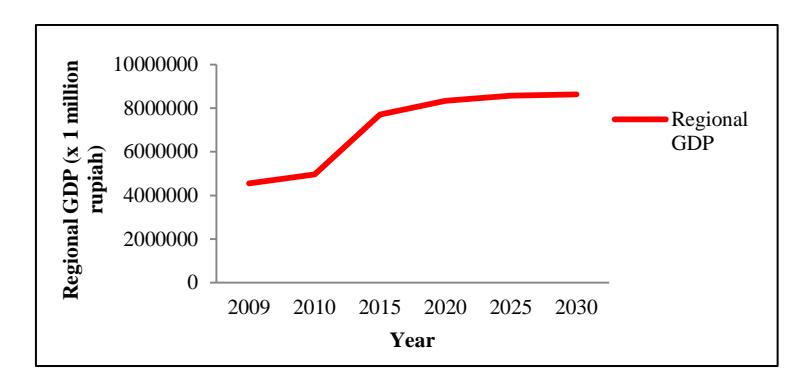
Figure 7. Simulation of Regional GDP in Tabanan Regency by Incorporating Local Institutional Elements of Candi Kuning Village
Boettke et al. (2008) clarify that institutions play a role in deriving subjective perception of reality to become a choice. The institutional effectiveness of Subak and Desa Dinas in the village of Candi Kuning is quite effective, although less effective than in the village of Jatiluwih. Pakraman villages are also quite effective. Pakraman villages continue to do their task in the field of religion and society (Figures 8-9).
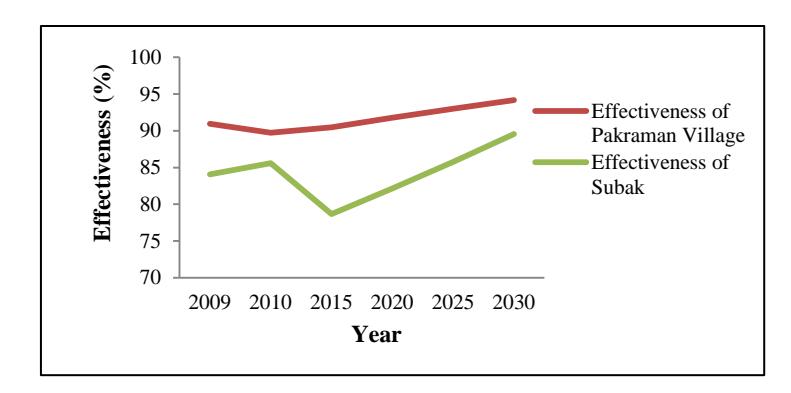
Figure 8. Simulation of the Effectiveness of Subak Pakraman Village in Jatiluwih Village
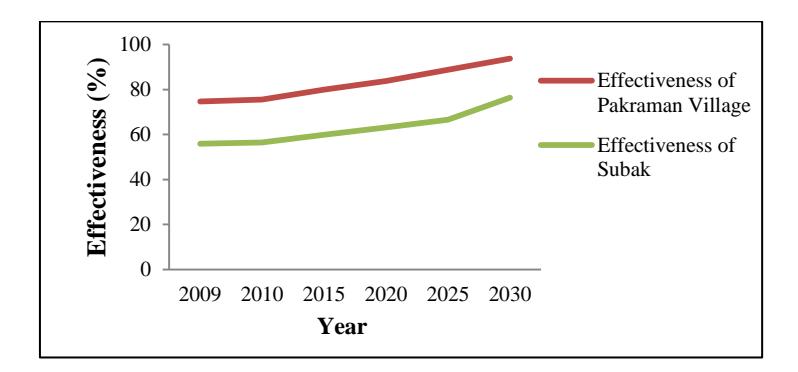
Figure 9. Simulation of the Effectiveness of the Subak Pakraman Village in Candi Kuning Village
Policy Scenario Model for Sustainable Development in Tourism Villages
Related to spatial planning, scenario models are needed to reduce the impact of the conversion of agricultural land. Based on the scenario model of sustainable development of tourism villages based on local institutions, a simulation of scenario models was performed for the important factors or system catalysts that affect the conversion of agricultural land (paddy fields). In this study, the policy directives are carried out by changing the variables of accessibility, government assistance, and tourism facilities and infrastructure for the development of tourism villages (based on interviews and field observations). Policy directives in this model are divided into three scenarios, namely:
- 1. Scenario I: variables of accessibility 70 percent, government assistance 5 percent, tourism facilities and infrastructure 85 percent.
- 2. Scenario II: variables of accessibility 90 percent, government assistance 6 percent, tourism facilities and infrastructure 90 percent.
3. Scenario III: variables of accessibility 80 percent, government assistance 5,5 percent, tourism facilities and infrastructure 88 percent.
Accessibility consists of building roads towards paddy fields. Currently, the road accessibility in Jatiluwih village has only reached 70 percent, while in the village of Candi Kuning it has reached 90 percent.
Judging from the perspective of government assistance, the government of Tabanan Regency has provided funding with the amount of USD 200 million/year/tourism village. With the growing number of tourism villages, the government of Tabanan Regency increases aid with five percent from the initial number.
The next variable used in the scenario is tourism facilities and infrastructure. Planning of tourism villages will result in the growth of tourism supporting facilities and infrastructure, such as the need for lodging, transportation, tourist guides, and so forth, all of which are managed by local communities through local institutions in the village. The growth of these facilities and infrastructure will create jobs in the agricultural and tourism sectors.
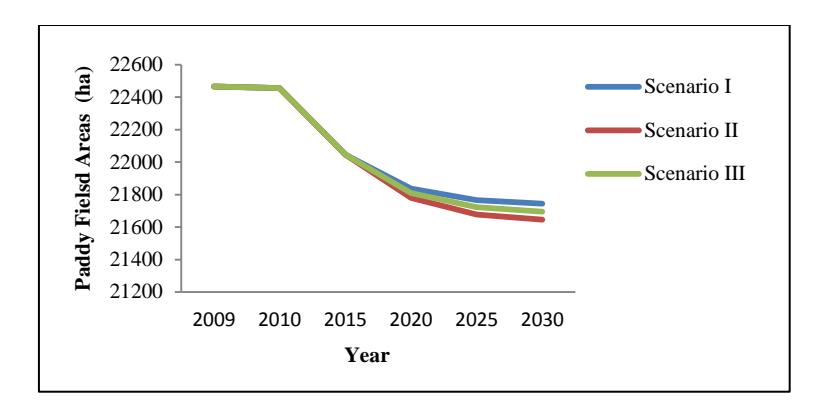
Figure 10. Scenario I, II, III for Paddy Fields by Incorporating Local Institutional Elements of Jatiluwih Village
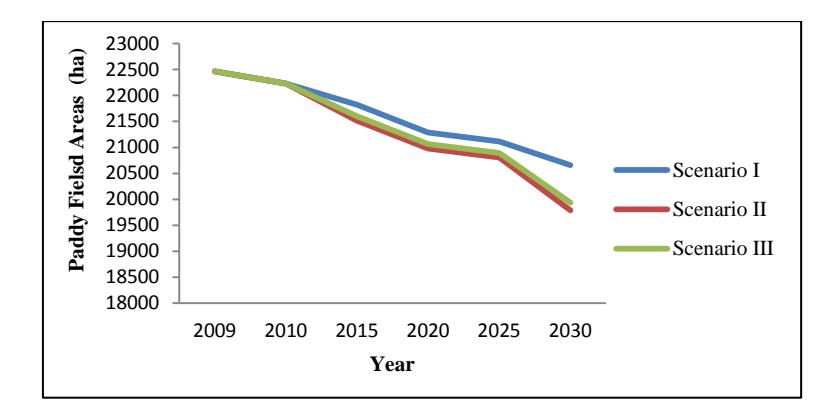
Figure 11. Scenario I, II, III for Paddy Fields by Incorporating Local Institutional Elements of Candi Kuning Village
In the case of areas of paddy fields, it is best to select scenario I. The decline of paddy fields in the first scenario for local institutional elements of Jatiluwih village is 3.21 percent compared to scenario II (3.65 percent) and scenario III (3.43 percent) (Figure 10). While for the local institutional elements of Candi Kuning village, this scenario projects a decrease of paddy fields by 8.05 percent compared to scenario II (11.91 percent) and scenario III (11.27 percent) (Figure 11).
Based on the Regional GDP, for both cases by either incorporating local institutional elements of Jatiluwih village or local institutional elements of Candi Kuning village (Figures 12-13), scenario II should be selected. The changes in the increase of Regional GDP for the case of local institutional elements of Jatiluwih village are larger than in scenario I.
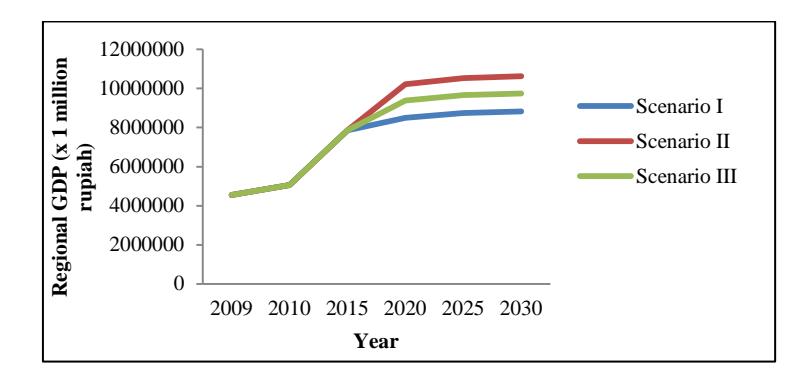
Figure 12. Scenario I, II, III for Tabanan Regency Regional GDP by Incorporating Local Institutional Elements of Jatiluwih Village
The scenarios show that the scenario I should be chosen when aiming to protect paddy fields (the decline in paddy field area is smaller than for scenarios II and III). If Regional GDP is the priority then the second scenario is selected. In the development of sustainable tourism villages based on local institutions, road accessibility leading to paddy fields should be stopped because it is this opening of road access to paddy fields that could increase paddy field conversion.
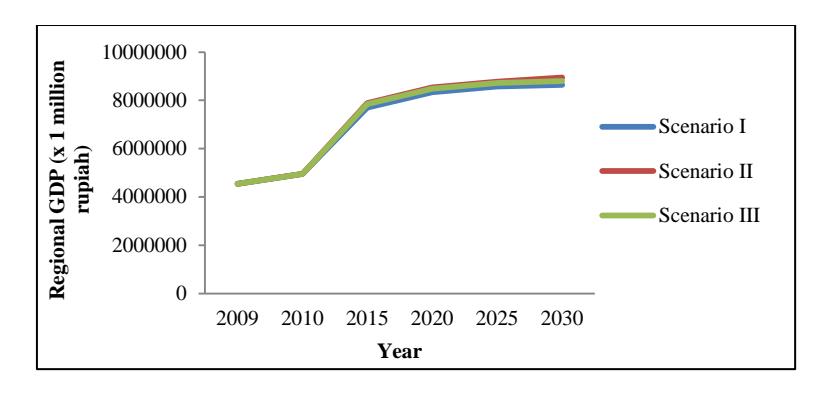
Figure 13. Scenario I, II, III for Tabanan Regency Regional GDP by Incorporating Local Institutional Elements of Candi Kuning Village
The effectiveness of local institutions (Subak and Pakraman villages) must still be preserved. The involvement of local institutions can slow down the conversion of agricultural land. This situation occurs because of the power of awig-awig (local rules) in traditional villages and in Subak itself in binding citizens and the concept of Tri Hita Karana (three causes of goodness:
balance of mankind's relationship with God, between humans, and of people with their environment).
Conclusions and Suggestions
Conclusions
The conclusions of this study are:
- 1. The dynamic model is a model of interdependent relationships (causal) between the institutional aspects of local/traditional tourism villages and physical, economic, and social aspects at the regency level. This model significantly shows that local institutional effectiveness can slowing down the rate of conversion of agricultural land so that the planning of sustainable tourism villages can be realized.
- 2. To put a halt to the conversion of agricultural land to other uses, the implementation of scenario I is proposed. This scenario is built around the concept of development of tourism villages which is directed at reducing paved public roads access to the paddy fields, increased government support for tourism villages, and support of locally based tourism facilities and infrastructure for Subak and Pakraman villages.
Suggestions
Based on the conclusion, in planning sustainable tourism villages based on local institutions, the following section contains a few suggestions:
- 1. This study uses a dynamic model which is a representation of the behavior of a system which has interdependent relationships and changes with time. Future studies are suggested to include other variables and controlled input in the form of time series data that can reduce or stop the conversion of agricultural land (paddy fields).
- 2. Local institutions should be given authority in structuring sustainable tourism villages, from the planning phase until evaluation. This authority should also be strengthened with local regulations.