

Introduction
Human resource performance is usually measured by three main aspects, i.e. its effectiveness, efficiency, and sustainability. Effectiveness refers to the extent to which human resources (HR) can meet the expected goals. Meanwhile, efficiency is related to the use of resources. Sustainability concerns how conducive human resources are in maintaining relationships and continuity by taking into account the effectiveness and efficiency. Thus, an HR performance measurement system is a strategic parameter in ensuring that HR useful for all parties. Thus, performance management is one of the important managerial concepts in an HR performance system.
Several experts have written about HR performance measurement systems. Aguinis (2007) argued that performance measurement is the process of identifying, measuring, and developing the performance of both the individual and the group (team) and aligning this with the strategic objectives. Noe et al. (2010) stated that performance measurement is a managerial task which ensures that employees' activities and performance are in line with the expected goals. Hannay (2010) argued that performance measurement is an important activity that involves managers' responsibility to train, guide, motivate and give appreciation to employees to perform optimally. These opinions show that performance measurement is a process or set of processes of developing a shared understanding of the goals to accomplish, how to achieve them, and how to manage people in such way to increase the likelihood of achieving the objectives (Maarif and Kartika, 2012).
Currently, there is a great variety of performance measurement methods, ranging from simple to complex. In general, the selection of HR performance measurement techniques strongly depends on the size, scale, and complexity of the organization or company. Performance measurement methods include checklists, alternative rating scales, graphic rating scales, behaviorally anchored rating scales (BARS), behavioral observation scales (BOS), management by objectives (MBO), critical incidents, forced-choice scales, paired comparations, forced distribution method, point allocation method, essays, self-assessments, 360o feedback, balanced scorecard (BSC), human resource scorecard (HSRC) and work standard (Maarif and Kartika 2012; Noe et al., 2010; Dessler, 2003; Rothmann and Cooper, 2008; Byars and Rue, 1997; Jackson et al., 2012; Kapplan and Norton, 1996; Becker and Ulrich 2011).
Suwignyo et al., (2000) stated that performance measurement is a synergy that must be formulated in the form of a guideline for each partner. In the past, organizational performance was only oriented at financial measures, but now increasingly uses a mixed measurement system of integrated financial and non-financial criteria (Kaplan and Norton, 1996; Ingle, 1998; Li and O'Brien, 1998; Suwignyo et al., 2000). In addition, the ability of HR to produce useful and relevant products is highly dependent on the policies, strategies, and practices of the management of the organization and the company. Consequently, its measurement must involve
evaluating the key elements of management implementation and at the same time identifying hindrances and analyzing data and information to find patterns of tendencies within the system (Syahyuti, 2003).
Indonesia is one of the world's biggest suppliers of nutmeg (Myristica fragrans) with a market share of around 70-85%, outperforming Granada, Sri Lanka and Jamaica (Balittro, 2012; Bachmid, 2008). Nutmeg production in Aceh is the third largest in Indonesia after North Maluku and North Sulawesi (Ditjenbun Kementan, 2014). This, in turn, was able to increase the economy and income of the population of Aceh, especially in the regencies of South Aceh and Southwest Aceh Regency (Abdya), which is the largest nutmeg producing region in Aceh. Aceh is a pioneer in nutmeg oil refinery in Indonesia, with the establishment of PT ADI (Aceh Distilling Industries) in Tapak Tuan in the 1970s, which introduced the most modern tools of processing nutmeg oil at the time. PT ADI has long been closed, but refining technology has been adopted by a number of nutmeg businesses in Aceh. The performance of the nutmeg oil agro-industry, particularly related to human resources, fluctuates over time. Therefore, performance measurement is needed to assess the effectiveness of the investments in nutmeg oil processing made by various small-scale agro-industries in the region. Hence, a performance measurement system needs to be developed to assess how human resource performance in the nutmeg oil agro-industry in Aceh can continue to grow.
The objective of this study is to develop an HR performance measurement model for the nutmeg agro-industry in Aceh by determining the key performance factor that most influences the attributes in the system, using the HRSC method. Moreover, the study aims to determine the association rules to facilitate the performance measurement system by considering the relationship between attributes based on the support value and certainty value.
Methodology
The analysis and system design are done using the System Development Life Cycle (SDLC) (Wasson, 2006; Moore, 2015). This cycle can be seen in Figure 1.
Analysis and design of the design follow five phases, from planning to implementation. The analysis involves defining the system, analysis of requirements, use case diagram, and creating a Business Process Model and Notation (BPMN). The system is designed using Sybase-PowerDesigner version 16.5 (Sybase 2013). The system is defined as describing the problem threshold comprehensively and usually involves goals, schedules, costs and models that will be developed to solve the problem at hand. Requirements analysis aims to identify the requirements to achieve when executing the system mechanism. It further serves as the basis for understanding the system. The details will be explained in the methodology section. The use case diagram graphically describes actors or stakeholders that interact in the system. Meanwhile, the BPMN model is designed to represent the flow of a business process by presenting the various notations that are used for process modeling. These graphical notations include a start event, task, intermediate message, end event, gateway, and others (Wasson, 2006; Miers and White, 2008; Djatna, 2016).
The HR performance measurement methods in the system are the Human Resource Scorecard (HRSC) method, developed by Becker and Ulrich (2011) of the Harvard Business School. The HRSC method is an HR performance measurement that aims to explain in detail the role of human resources, which was always deemed intangible. It measures the role and performance of
HR in achieving the vision, mission, goals, and objectives through the strategy of an organization or company.
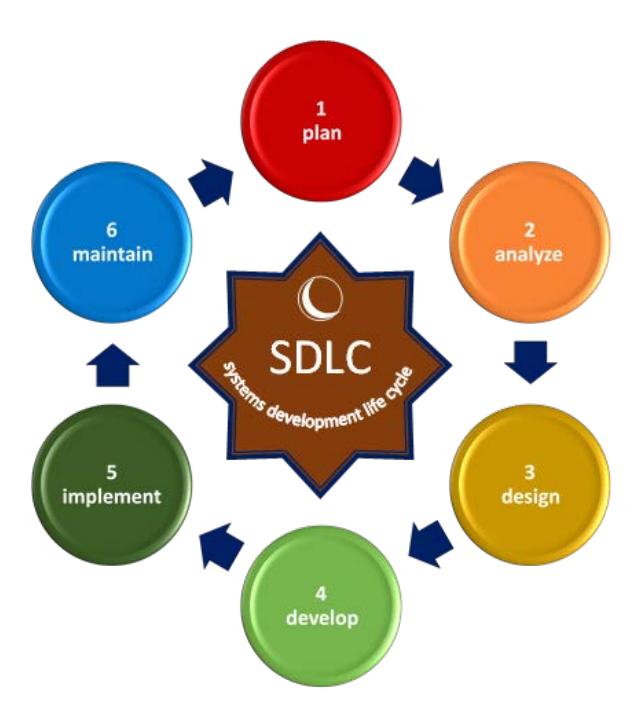
Figure 1. System Development Life Cycle (SDLC)
The attributes to be measured and each question that represents them are as follows:
- a. Defining Human Resource Competency (HRC). This competence involves the knowledge, skills, abilities and personality characteristics that directly influence performance. Question: "What is the technical capability of agro-industry workers in handling and processing nutmeg oil?"
- b. Measuring the High-Performance Work System (HPWS). This assesses how the organization works through each HR function from the macro level and focusing on work orientation in each activity. Question: "How is the difference in wages between high performing and low performing agro-industry workers?"
- c. Measuring the Human Resource System Alignment (HRSA). This assesses the extent to which HR systems meet the implementation needs of the corporate strategy (external alignment) and how all elements can work together without conflicts (internal alignment). Question: "Are agro-industry workers without problems/conflicts among them and able to work together?"
- d. Measuring the Human Resource Efficiency (HRE). This reflects how HR functions can help a company achieve the required competencies in a cost effective and efficient manner, but not at the expense of the expected results.
- Measuring core efficiency. This represents significant human resource expenditures that do not directly contribute to the implementation of corporate strategy. Question: "Are the costs incurred by the agro-industry proportional to the expected performance results?"
- Measuring strategic efficiency. Assessment of the efficiency of HR activities and processes is designed to generate HR contributions. Question: "Is the agro-industry expenditure for workers already proportionate in achieving efficiency?"
e. Measuring the Human Resource Deliverable (HRD). Identifying unique causal relationships where the HR system creates value in the company. Question: "Do workers have important meaning for agro-industry as an asset or capability that affects worker productivity and job satisfaction?"
Data is collected through interviews, questionnaires, direct observations and synthesis of field data. Experts are considered competent to give their verdict based on relevant formal education, experience and employment history, and direct with the study topic. The rating scale for each attribute is shown in Figure 2.
The assessment of the various attributes in HR performance measurement for the nutmeg oil agro-industry was conducted with 12 experts comprising: local nutmeg entrepreneurs, a lecturer of Syiah Kuala University (Unsyiah), agro-industry workers, the South Aceh Regency Food Crops and Horticulture Agency, The Aceh Nutmeg Forum, the South Aceh Regency Industry, Trade, Cooperative and SME Agency, and the Banda Aceh Industry Research and Development Agency (Baristan).
The HR performance measurement system is formulated using two models. The first is the Relief method, which is used to determine which factors have the greatest influence on HR performance. Relief is a weighted technique to measure the significance of features and classify features that have weight values above the threshold (Kesuma, 2011). Relief is used to determine the key effect of performance and formulation of the measured attributes.
The second model is to formulate association rules using the Association Rules Mining (ARM) model, which interprets the rules of the relationship between the attributes of a performance measurement database or a relational database. In determining an association rule, the interestingness measure (a measure of confidence) is obtained by data processing with specific calculations. Generally, there are three measurements, namely:
A. Support: measures the dominance of an item/set of items of the whole process of data handling. This stage is used to look for a combination of items that meet the minimum support value in the database. The support value of an item is obtained with the following formula:
Support \[(A \to B)\] = Probability \((A \to B)\)....(1)
B. Confidence: measures the relationship between the two items conditionally (e.g., how often does item B appear if item A is selected).
Confidence \[(A \rightarrow B) = \dots (2)\]
C. Improvement: measures the possibility of two items to be selected simultaneously.
Improvement \[(A \rightarrow B) = \dots (3)\]
These three measurements are useful in determining the interesting association rules, which is a comparison with the threshold. The threshold is generally composed of min_support, min_confidence, and min_improvement. Consequently, the process of finding relationships between these variables requires repeatedly analyzing the process data to find different relationship patterns. The significance of an association rule can be determined by two parameters, i.e. support value, which is the combined percentage of these attributes in the database and the confidence value, which is the strength of the relationship between attributes in the association rules.
| Human Resource Competency (HRC) | HRE-Core Efficiency Measures (CEM) | |||||||
|---|---|---|---|---|---|---|---|---|
| 6 | Very satisfactory | 5 | Very comparable | |||||
| 5 | Satisfactory | 4 Comparable | ||||||
| 4 | Good | 3 Medium | ||||||
| 3 | Needs improvement | 2 | Incomparable | |||||
| 2 | Bad | 1 Very incomparable | ||||||
| 1 Very bad | ||||||||
| High-Performance Work System (HPWS) | HRE-Strategic Efficiency Measure (SEM) | |||||||
| 5 | Very high | 5 | Very proportional | |||||
| 4 | High | 4 | Proportional | |||||
| 3 | Medium | 3 | Medium | |||||
| 2 | Low | 2 | Disproportional | |||||
| 1 | Very low | 1 | Very disproportional | |||||
| Human Resource System Alignment (HRSA) | Human Resource Deliverable (HRD) | |||||||
| 3 | Not conflicting | 3 | Yes | |||||
| 2 | Sometimes | 2 | Unsure | |||||
| 1 | Conflicting | 1 | No | |||||
Figure 2. Attribute value scale
The next stage consists of verification and validation. Verification is done to check whether the system, which is built using Sybase-PowerDesigner 16.5, has been properly implemented. Meanwhile, validation involves checking whether the system meets the operational requirements.
Results and Discussion
System Analysis and Design
In this study, system analysis and design is a process of measuring the human resource performance of the nutmeg agro-industry in Aceh to produce a sustainable human resource performance measurement system. This process involves the stages of identifying various strategic factors to find the performance that most influences the attributes in the system, using the HRSC method. In addition, the association rules are determined to facilitate the performance measurement system by considering the relationship between attributes based on the support value and certainty value. The analysis of system requirements involves formulating input and output factors (acceptable and unacceptable), stakeholders, objectives, threats, controls, resources and is simultaneously the threshold of the study as a system forming entity (Figure 3).
A use case diagram is used to explain the role of each stakeholder in this system. Use case diagrams facilitate understanding the role of each actor in a system. In this study, the use case diagram describes the experts that were asked for their verdict on the state of HR performance in the nutmeg oil agro-industry in Aceh (Figure 4).
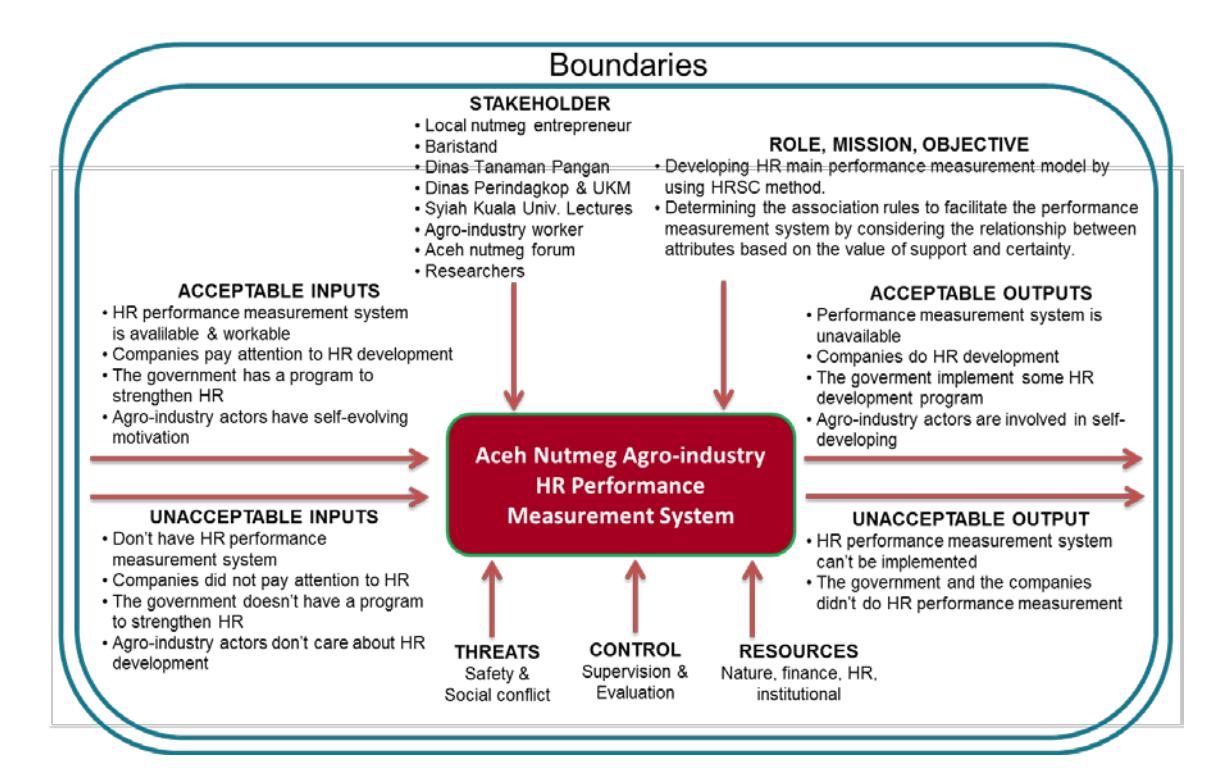
Figure 3. Analytical system entity construct (developed from Wasson 2006).
A Business Process Model and Notation (BPMN) diagram was then developed. This is a workflow with the purpose of facilitating the analysis of a model of a business or business processes (Wasson, 2006; Miers and White, 2008; Djatna, 2016). A BPMN diagram is very helpful in representing the actual occurrence of an HR performance measurement system developed with the HRSC method because of its comprehensive notation function (Figure 5). The designed workflow enables the possibility to understand in detail every operation process system.
The design stage of the HR performance measurement system generated a number of key attributes, or most influential factors, by performing weighting with the relief method. The two attributes with the highest ranking, HPWS and HRSA (Table 1), were then used to determine association rules. Processing with ARM, which includes pre-processing the data, calculating the bond value, the support value, the lift value, and the confidence, conjunction, and disjunction value, generated the three highest-ranking association rules (Table 2).
Researchers have extensively analyzed association rules because it can uncover relationships between attributes of a data set in various applications (Garcia et al., 2008; Koksal et al., 2001; Zhou and Yau, 2007; Zubcoff and Trujillo, 2007; Yang and Wu 2006; Chen et al., 2006), including performance measurement (Srivihok and Mongkolsripattana, 2008; Ostroff, 2006; Huang et al., 2011).
Verification and Validation
The procedure is verified with PowerDesigner Sybase 16.5, using running use case and BPMN. Verification is deemed correct if no error and warning are found.
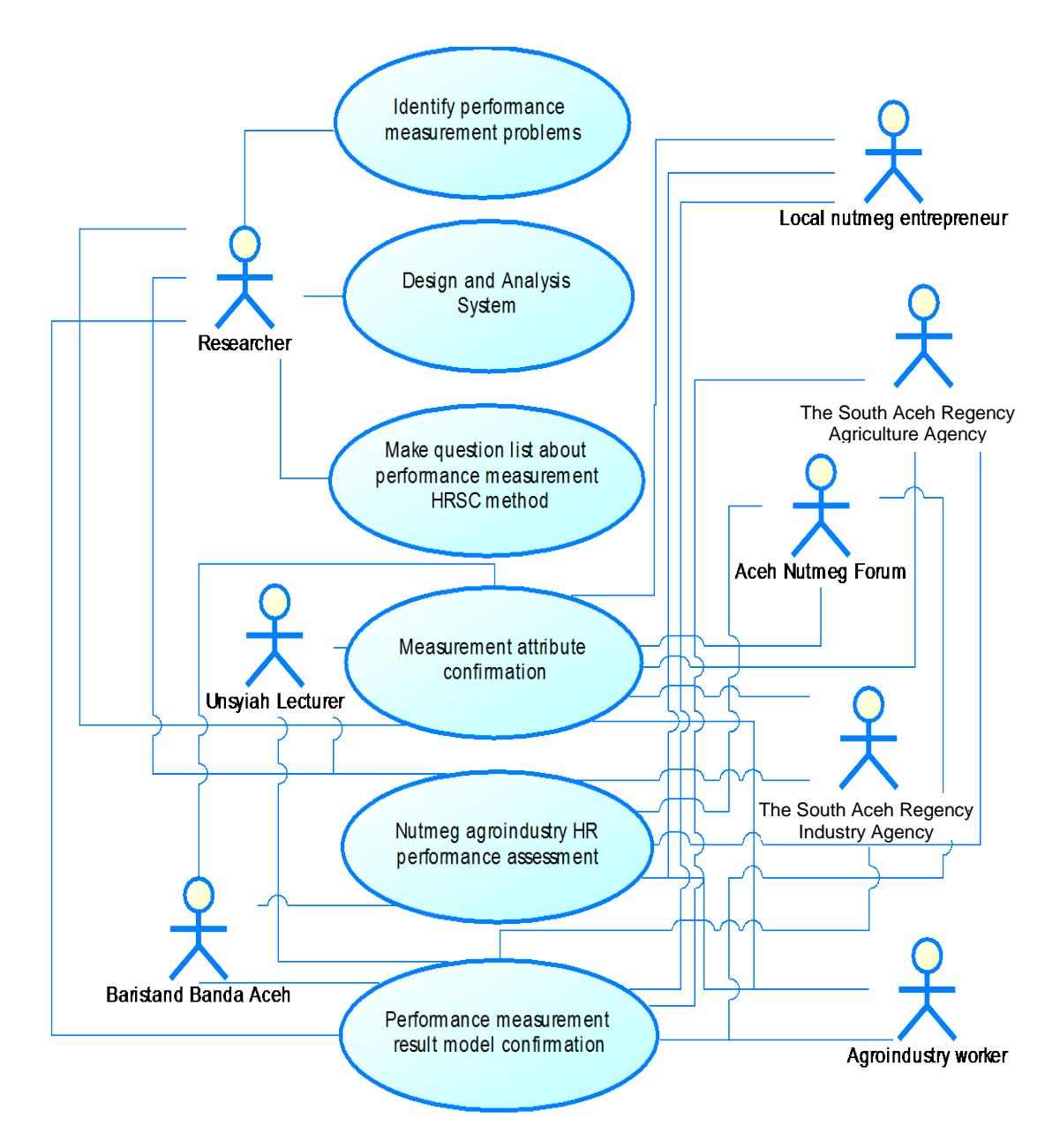
Figure 4. Use case diagram
Validation of the relief method mainly deals with calculating various attributes that have a key impact on the HR performance measurement system. The validation process is used to ensure the system meets the operational requirements. The ARM method is also validated to determine if the association rules are appropriate. According to Srivok and Mongkolsripattana (2008), a system that is proposed through the ARM method offers a complete management strategy based on the factors found and can further improve the process of performance measurement.
This study has found that HPWS and HRSA are the key performance factors that most influence the attributes in the human resource performance measurement system of the nutmeg oil agroindustry in Aceh, as developed with the HRSC method.
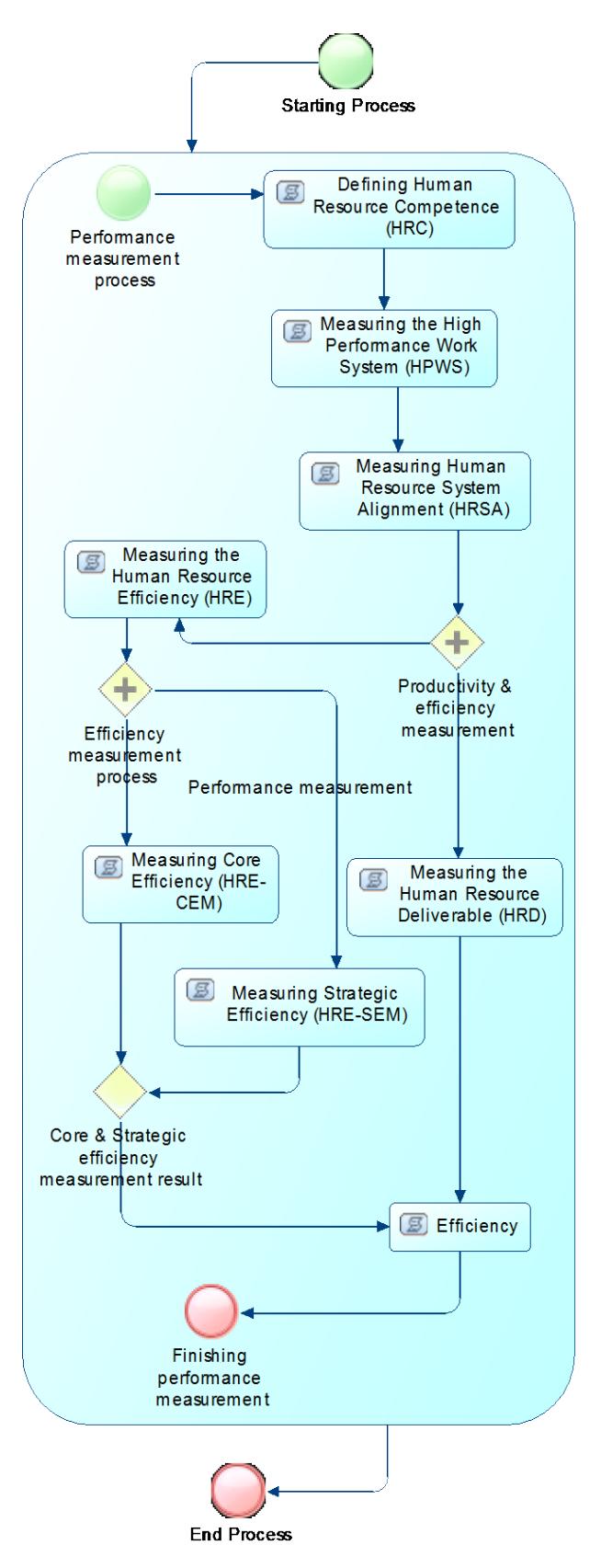
Figure 5. BPMN HR performance measurement system.
| Attribute | Hit | Miss | Weight | Rank |
|---|---|---|---|---|
| HRC | -11.00 | 16.50 | 0.18 | 3 |
| HPWS | -11.36 | 20.35 | 0.30 | 1 |
| HRSA | -7.00 | 14.50 | 0.25 | 2 |
| HRE-CEM | -7.07 | 12.08 | 0.17 | 4 |
| HRE-SEM | -13.68 | 14.07 | 0.01 | 5 |
| HRD | -14 | 13.5 | -0.02 | 6 |
Table 1. Results of Relief Weighting
Table 2. Determination of top-3 Ranking of Association Rules
| No | Rules | Support | Elevator | Confidence | Conjunction | Disjunction | Bond |
|---|---|---|---|---|---|---|---|
| 1 | IF HPWS is Very High THEN HRSA is Good | 25,000 | 0.023 | 75 | 3 | 5 | 60,000 |
| 2 | IF HPWS is Low THEN HRSA is Medium | 25,000 | 0.017 | 100 | 3 | 7 | 42,857 |
| 3 | IF HPWS is Medium THEN HRSA is Medium | 16.667 | 0.011 | 66,667 | 2 | 8 | 25,000 |
HPWS focuses on how organizations work through each HR function starting at a macro level and emphasizing the work orientation of every activity. Further, HRSA is related to the extent of implementation of HR systems to meet the needs of corporate strategy (external alignment) and how each element can work together without conflicts between them (internal alignment). Advanced analysis using the ARM method helps to obtain increasingly definite decisionmaking results. If HPWS is very high, then the implication is that HRSA will be good. Further, if HPWS is low then HRSA is medium. Finally, if HPWS is medium, then HRSA is moderate. The results of this analysis will greatly assist the management and agro-industry actors in developing the human resource performance of the nutmeg oil agro-industry in Aceh.
Conclusion
System analysis was successful, using Sybase-Power Designer 16.5, to illustrate in detail the flow process of the whole set of systems that were examined. System design through the relief method is capable of ranking main attributes based on a Human Resource Scorecard (HRSC) approach in HR performance measurement, i.e. High-Performance Work System (HPWS) and Human Resource System Alignment (HRSA). Advanced processing with Association Rules Mining (ARM) generated association rules with the three highest ranks that can represent the overall HR performance measurement system.
The advantage of the system that was developed is that it can formulate a performance measurement system that is better and easier in determining the key factors that are most influential out of a number of attributes. In addition, association rules can be obtained by determining the highest ranking based on the certainty value and support value using the ARM
method. However, the weakness is that this system is only studied for one method of HR performance measurement, i.e. HRSC with decision assessment is based on a diverse group of experts that are not specific to only one agro-industry.
Acknowledgement
The authors would like to thank the assistants of the computational laboratory of the Department of Agro-industrial Technology, Bogor Agricultural University (IPB) for their time in supervision and assistance during this research. The authors would also like to thank the experts who have been willing to give their verdict on HR performance assessment of the nutmeg oil agro-industry in Aceh, which provided the material for analysis in this research.