
Introduction
Rural areas are important for Indonesia's development. In September 2017, the number of poor in Indonesia reached 27.76 million people, 62.2% of these poor people lived in rural areas (BPS, 2017a). In addition, rural areas are identical to agriculture. Consequently, rural development is identical to agricultural development. The number of people working in the agricultural sector is still very high. Data of February 2017 shows that the agricultural labor force reached 31.86 million. This is more than double the industrial workforce with 13.31 million people (BPS, 2017c). When viewed from the aspect of population growth, the urban population grew at 2.18% per year. This is higher than the annual growth of the rural population of 0.64%. By 2015, 56% of Indonesia's inhabitants lived in urban areas. However, the contribution to the Gross Regional Domestic Product (GRDP) of 94 autonomous cities (including Jakarta) only reached 40 percent of the total Gross Domestic Product (GDP) (CBS, 2017b).
Agrarian policy relates to rural and agricultural development policy, which is considered fundamental. In Indonesia, agrarian policy is known as agrarian reform. Meanwhile, the scientific terminology that is often used is land reform. Agrarian aspects, land, in particular, are the most important production factor of agriculture. According to Ellis (1992), agrarian policy is very important because economically, land is very different to other production factors, such as fertilizers, labor, seeds, etc., which can be reproduced. Land, on the other hand, is a fixed production factor. It also represents capital in the form of assets or investment, which is an indicator of welfare as well. Ownership of land is a form of private property and affects the forms of social relations.
Historically, the agrarian aspect is a fundamental cause of economic, social, and cultural changes in rural communities. Various policies on agrarian aspects have been implemented since the colonial government in Indonesia. At the time of Raffles, a land rent system was implemented to replace the contingenten policy (tax in the form of agricultural products), which Daendels had applied. In the midst of the economic downturn of the colonial government, and because of the ineffectiveness of the land rent policy, the cultuurstelsel policy was implemented. At that time, it appears there already was a struggle between liberal and conservative ideologies. The efforts to develop the colonial economy involved the private sector to contest the government's dominance in the management of the colonies. The history of the agrarian structure began at this time until the Agrarische Wet (Agrarian Law) and the Suikerwet (Sugar Law) were enacted in 1870. Meanwhile, after independence, the starting point of Indonesia's agrarian policy was the enactment of Law 5/1960 concerning Basic Regulations on Agrarian Principles.
The purpose of this paper is to analyze the agrarian reform policies that have been enacted by the government, especially after the enactment of Decree of the People's Consultative Assembly of the Republic of Indonesia (MPR RI), No. IX/MPR/2001 on Agrarian Reform and Natural Resources Management. The analysis includes a description of policies, strategies, implementation, obstacles, and problems, and lastly will propose policy improvements.
The analysis in this paper is based on Tinbergen's framework of policy analysis and the Sustainable Livelihood Framework (SLF). The selection of Tinbergen's framework of policy analysis, known as the Objective - Constraint - Instruments Approach, enables the analytical framework to explain the logic behind policies. In addition, its side effects are also considered as input for future policy improvements. The Sustainable Livelihood Framework is usually applied in poor countries as part of the planning phase of a policy intervention. In this sense,
SLF is an analytical tool that is used to view the livelihoods of communities and see what is needed to increase their welfare.
Theoretical Review and Policy Analysis Framework
Historical Aspects of Agrarian Structure Change in Indonesia
The changing of the agrarian structure in rural Indonesia takes place slowly but surely, even since the colonial era. This change has both direct and indirect consequences for to the economic, social, and cultural aspects of society. Boeke viewed the Indonesian economy in colonial times as a dual economy with a subsistence and a capitalist economic system. There is a contradiction between a capitalist colonial plantation economy and a subsistence-based rural economy. Boeke based his analysis on rural social and economic relations. The village is a closed society, which tends to have a subsistence economy, while the owners of capital control the supra-village and the network of capitalization is much more open. Boeke's thinking was affected by Chayanov's concept of the peasant economy. The capitalization that should be able to transform Indonesia's countryside into a modern economy, it turns out, presents a different picture, that of the survival of the traditional economy. Boeke described this period as static expansion (Husken, 1998; Wertheim, 1999; Luthfi, 2011; Akhyat, 2015).
The cultuurstelsel caused ecological changes in rural Java. It changed agricultural patterns from seasonal crops, particularly food crops in the form of rice, into plantation crops in the form of sugarcane. These changes, according to Boeke, caused economic dualism, which Geertz called agricultural involution. Geertz observed the Indonesia countryside by its ecology. He used a cultural ecological approach developed by Julian Steward (Geertz, 1976). Geertz was interested in uncovering the close relationship between capitalist exploitation, population growth, technological intensification, and social welfare. He continued Boeke's static expansion to reveal a rural economic stagnation followed by a cultural stagnation in the Javanese society. Geertz also attributed the economic stagnation to the expansion of sugar companies that changed Java's rural ecology. The expansion of the sugar industry generated profits for the colonial government but, on the other hand, led to the freezing up of the Javanese rural economy. Involution can be understood in two forms, i.e., involution of agricultural systems and of culture. This agricultural involution causes shared poverty (Geertz, 1976; Hüsken, 1998).
Geertz thinking about shared poverty, according to Sajogjo, has shortcomings because it does not consider social stratification. Based on his findings, the phenomenon of shared poverty occurs only in the bottom layer of society, that of landless farmers. Meanwhile, the relation between the lower and upper layer is one of patronage (Sajogyo, 1975 in Geertz, 1976). Criticism of Geertz has continued to emerge since the 1970s. For instance, Husken (1998) stated that the Javanese society did not actually experience agricultural involution but a process of agricultural evolution.
The green revolution, one of the forms of agricultural policy adopted by the New Order government, has also changed the socio-economic conditions of rural communities. The study of rural communities has expanded rapidly. The modernization debate such as related to Rostow's linear growth stages continues to face various types of criticism. Critics of the green revolution include (1) the occurrence of social differentiation; (2) the marginalization of women; (3) deagrarianization; (4) rural unrest; and (5) the loss of biodiversity (Rogan, 2011). Deagrarianization is the phenomenon where labor is uprooted from the agricultural and rural sectors. These symptoms are increasingly apparent, even today. One form of deagrarianization is migration. Breman and Wiradi (2004) demonstrate an inequality of land tenure followed by symptoms of circular and international migration in Indonesia. Similar findings are presented by Widodo (2006), who indicates the presence of migration symptoms in rural areas because of limited job access and ecological challenges of dry land. Meanwhile, depeasantization is a symptom were farmers are deprived of access to land, marked by a decrease in the percentage of agriculture in the Gross Domestic Product, migration, and a pattern of off-farm livelihoods (Rogan, 2011).
The emergence of a double livelihood patterns and off-farm trends give an insight into the patterns of livelihood strategies adopted by rural farmers in the midst of economic stagnation, as suggested by Boeke. Farmers are rational and have adaptive capacity. Sajogyo (2002) explains that there is a difference in livelihood strategies. Households in the lower layer of society (e.g. small farmers, land laborers) have a "secure and safety" pattern. Meanwhile, the middle layer "consolidates", and the upper layer (sufficient land, off-farm business opportunities) exhibits a pattern of "capital accumulation". Widodo (2011) also demonstrates the double livelihood phenomena in poor households through economic and social strategies.
Agrarian Reform
Agrarian reform or land reform is a policy that covers two aspects, i.e. a compulsory acquisition of land by the government from large landowners with compensation and distribution of the land to provide greater benefits (Lipton, 2009). According to Norton (2004), the main objective of agrarian reform is to reduce the inequality of agricultural land tenure in rural areas in order to reduce poverty.
Agrarian reform is the rearrangement of the structure of ownership and control of land along with all other supporting packages. The supporting packages comprise a legal guarantee of rights, availability of credit, access to information and new technology, agricultural extension, and access to production facilities and marketing assistance (Fauzi, 2002). It appears that the notion of agrarian reform is not limited to land reform, which is understood strictly as land redistribution. The wider meaning relates to the implementation of agrarian reform policy by the government. The final goal this policy is to create justice and social welfare. Meanwhile, the intermediate goal is the equitable distribution of land tenure by the community.
One small aspect of agrarian reform is land certification. Land certification is the recognition of the right to control and own land granted by the state to the public. De Soto (2003) emphasizes the importance of the legal aspects of property assets. Based on experiences in western capitalist countries, the legalization of property assets has five positive effects, i.e., (1) property will improve the economic potential if the potential of the asset can be identified and converted into capital; (2) property law unites various forms of economic activity into a formal legal property system; (3) property makes people increasingly accountable, because their property is recognized legally; (4) property law causes everyone's assets to function better; (5) property law can help form a network; and (6) through property law any transaction can be better protected.
De Soto's statement received praise as well as various criticisms. The government has previously implemented some agrarian reforms as proposed by De Soto. One example is the Land Administration Project, which was a failure because it did not improve the welfare of its beneficiaries. This implies that legal guarantee of land ownership will not necessarily increase the "benefit value" of land. De Soto apparently overlooked the social-cultural aspects. De Soto's expectation of the Land Administration Project was the liquidity of the asset of land in the face of the banking sector. Generally, the requirement for a loan is collateral. The expectation was that by holding certificates, households would be able to access capital through banking. This did not happen as expected, given the reluctance of the majority of rural communities to borrow money in banks, especially with collateral in the form of land titles. Land has high sociocultural value, so there is a tendency to maintain and pass it on to the next generation. In addition, the credit process with collateral land titles tends to be more complicated than that of movable assets, such as motors.
Policy Analysis Framework
Objective - Constraint - Instruments Approach
The policy analysis framework in this paper uses the model developed by Tinbergen. This analysis framework consists of three main components, i.e., the objective, constraints, and policy instruments. Referring to the Tinbergen model, the purpose of development policy is to achieve community welfare. This final goal is reflected by the objective or intermediate variables, such as household income, agricultural production, access to educations, etc. These policies contain strategies and instruments to achieve the objective by overcoming the existing constraints and taking into consideration the side effects of policies (Ellis, 1992). Various studies use Tinbergen's framework of policy analysis, e.g., Sembiring et al. (2010). However, this study does not analyze land policy but focuses on agricultural policy, especially rice price policy (see Figure 1).
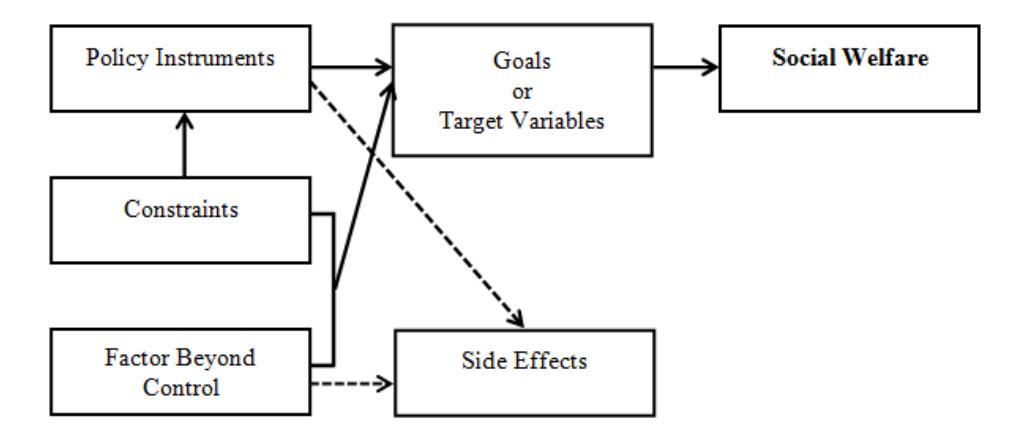
Figure 1. The Tinbergen Framework of Policy Analysis (Ellis, 1992).
Sustainable Livelihood Framework
Morse and Namara (2013) stated that sustainable livelihood is a degree of socio-economic welfare that is not only oriented at momentary capital accumulation but prioritizes the needs of future generations so they can enjoy the same quantity and quality of life as the present generation (see Figure 2).
This concept was first developed in the UK in the late 1990s but was designed in such a way that it is highly relevant to developing regions. A sustainable livelihood approach is a development approach that attempts to correct contemporary modernization development approaches that are environmentally unfriendly. The sustainable livelihood approach seeks to achieve a fair and balanced degree of fulfillment of social, economic and ecological needs. The attainment of social welfare is attempted through a combination of activities and capital utilization related to livelihood (Ellis, 2000).
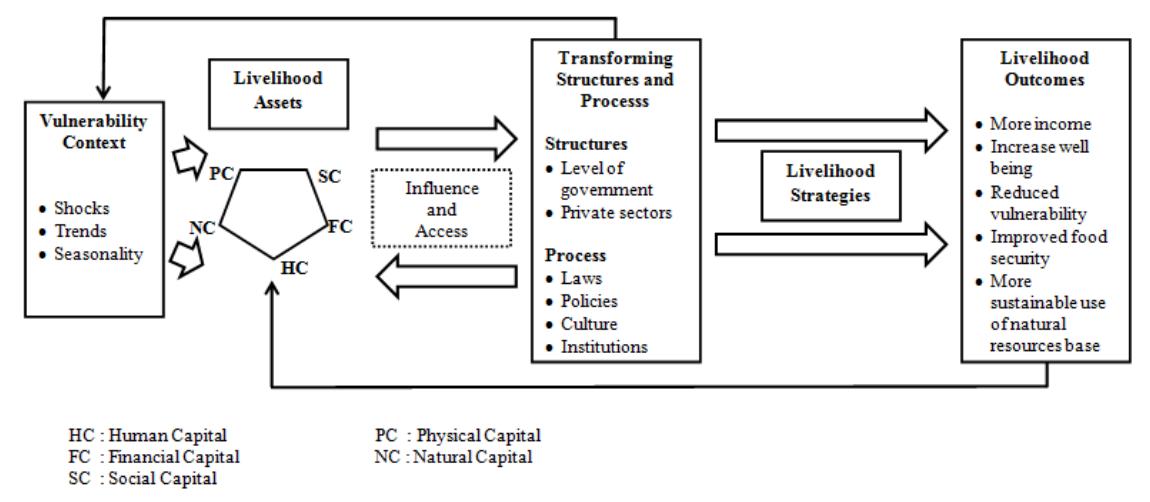
Figure 2. Sustainable Livelihoods Framework (SLF)
SLF is used to analyze if policies are in accordance with the principles of sustainable development. The aspect of sustainability is, of course, the main indicator of the extent to which a policy is able to maintain the continuity of livelihoods of poor households. The objectives of agrarian reform include the aspects of economic, ecological and institutional sustainability.
In the 2000s the development perspective of Sustainable Livelihood Framework (SLF) emerged. SLF is seen as a comprehensive analytical tool that prioritizes the interests of rural groups that had been neglected by modernization style development policies (Hall & Midgley, 2004; Torre & Wallet, 2016).
SLF is a development approach that seeks to maximize the effectiveness of interventions to help the poor. It is seen as a diagnostic tool that provides an analytical framework that provides concrete suggestions for interventions (Allison and Horemans, 2006; Tao and Wall, 2009). These diagnostic instruments can avoid inappropriate interventions from being implemented. SLF can also produce recommendations that communities can practice independently to be independent of outside actions. Some studies also use the SLF in analyzing the impact of agrarian reform policy, particularly in viewing the impact of the policy. Studies by Lahiff (2002); Diniz et al. (2013); Kaewkallaya et al. (2014); and Mabhena (2014) provide an overview of the impact of agrarian reform on community livelihoods.
Results and Discussion
Agrarian Reform in the Tinbergen Framework of Policy Analysis
Objective
The purpose of agrarian reform is to achieve justice in the agrarian structure. In the Indonesian context, agrarian reform also seeks to fulfill the mandate of the opening of the 1945 Constitution, "... to protect all the people of Indonesia and the land that has been struggled for and to improve public welfare, to educate the life of the people, and to participate in the establishment of a world order based on freedom, eternal peace and social justice, ... ". Whether Indonesians realize it or not, Indonesia has had a spirit for agrarian reform since the early days of independence. The Basic Regulations on Agrarian Principles Act is one of the pillars of agrarian justice. The act that has survived for 56 years and has never faced any judicial review. This leads to the simple conclusion that society has deemed the Basic Regulations on Agrarian Principles Act in compliance with the 1945 Constitution. Some acts have been filed a judicial review because they were deemed contrary to the 1945 Constitution, even when it was shortly after the law was enacted.
Even though the Basic Regulations on Agrarian Principles Act is an old product, it turned out to have a wide view. Its agrarian definition represents all aspects of community life; it not only covers land, but also the earth, water, space, and its natural resources. Thus, the act regulates not only land.
Its visionary view is also seen from the recognition of customary rights and laws governing agrarian areas. Recognition of local entities, including in customary norms and law is considered a new development paradigm but was already contained in the Basic Regulations on Agrarian Principles Act. Nevertheless, despite its "perfection", until now its goals have not been fully realized.
Agrarian reform has political, social and economic objectives. The main political objective is a consolidation for a country that has just undergone a political revolution. Meanwhile, the social objective is social equality and empowerment. Economic objectives include the distribution of income, employment, and productivity (Cohen, 1978, Ellis, 1992). Meanwhile, Norton (2004) stated that the goals of agrarian reform are economic efficiency, equity and poverty reduction and environmental and institutional sustainability.
Agrarian reform in Indonesia intends to (1) create agrarian-based welfare resources for society; (2) organize community life to be more just; (3) improve the sustainability of the Indonesian national and state system; and (4) promote a harmonious society. Meanwhile, its objectives are to (1) reduce poverty; (2) create jobs; (3) improve public access to economic resources, land in particular; (4) restructure the inequality of ownership and the use and utilization of land and agrarian resources; (5) to reduce disputes and conflicts over land and agriculture; (6) to improve and maintain the quality of the environment; and (7) to increase the food and energy stability of society.
Constraint: the Current Agrarian Structure of Indonesia
An interesting question is how the present agrarian structure is. The agricultural census of 2013, found that the national average agricultural land ownership was 0.86 hectares per farm household. The distribution of data per province shows an imbalance between Java and outside Java where agricultural land ownership outside Java tends to be higher. North Kalimantan reaches 31.09 hectares per household, while in Java ownership ranges between 0.18 hectares per household in Jakarta and 0.53 hectares per household in Banten (BPS, 2013).
The regions outside Java are dominated by non-rice fields, primarily plantations. This is different to Java, which is dominated by agricultural land in the form of rice fields. Data on the average ownership of agricultural land cannot be accepted outright. It is also necessary to look at inequalities in the agricultural land ownership. The agriculture census data of 2013 shows that 55.33% of 26.14 million farm households control agricultural land smaller than 0.5 hectares. These figures further reinforce the idea that there is an imbalance in agrarian structures in Indonesia.
The area of land owned is still categorized as small, which means that farming is not optimal yet. In a study in Nusa Tenggara Barat, Nazam (2016) found that farmers require a minimum amount of land 0.73 hectares per household to fulfill adequately the needs of life, while the average area of arable land is 0.48 hectares on average per household. Using this finding as a reference, it means that farmers nationally are still below the minimum limit of land area for rice farming that can provide an adequate income. In 2013, the average size of rice cultivation area was 0.67 hectares per household.
This imbalance in agrarian structure can also be approached from the perspective of the conflicts that arise. Agrarian conflict is a manifestation of hidden problems. Thus, it should be emphasized that the phenomenon of conflict is like an iceberg. The noticeable conflict is only the tip of the iceberg. Agrarian problems in Indonesia are not limited to the number of conflicts that arise but are much greater than that.
In 2015, 252 agrarian conflicts occurred, with a total conflict area of 400,430 hectares. The conflicts involved at least 108,714 households. Agrarian conflicts occur most commonly in the plantation sector, with 127 conflicts (50%). This is followed by 70 conflicts in the infrastructure development sector (28%), the forestry sector with 24 conflicts (9.60%), the mining sector with 14 conflicts (5.2%), and the agriculture sector and coastal/marine sector in fifth place with 4 conflicts each (2%) (KPA, 2016). The plantation sector is the biggest source of conflict, which shows that the expansion of plantations, especially palm oil in Indonesia, affects society.
Policy Instrument: the National Agrarian Reform Program (NARP)
This paper discusses the National Agrarian Reform Program (NARP) as an example of agrarian reform in Indonesia. Its legal basis is the Decree of the People's Consultative Assembly of the Republic of Indonesia (MPR RI), No. IX/MPR/2001 on Agrarian Reform and Natural Resources Management. The decree gives the government the mandate to restructure the control, ownership, and use and utilization of land (land reform) to be equitable with regard to the people's land ownership. In addition, the resolution of natural resource conflicts can also anticipate potential future conflicts. In 2003, the People's Consultative Assembly issued Decree No. 5/MPR/2003, which assigned the leadership of the People's Consultative Assembly the task to submit suggestions to the President, Parliament, Audit Board, and Supreme Court to solve various agrarian problems.
During Indonesia's reformation, agrarian reform made a comeback, after agrarian reform, especially land reform, seemed a taboo during the New Order regime. The political constellation is one of the determinants of how agrarian policy will be implemented. Various historical records show that agrarian reform after the Basic Regulations on Agrarian Principles Act indeed experienced irregularities that presented a frightening impression for some parties. Agrarian reform was introduced as the political agenda of the Indonesian Communist Party. The unilateral actions of peasants organized by the Indonesian Peasants Front are some of the dark chapters of agrarian reform. In the New Order era, agrarian issues became a very sensitive topic; it was even used as censorship of agrarian activists or farmers fighting for agrarian justice. According to Cohen (1978), the process of agrarian reform occurs in three stages/phases, i.e., (1) the sociological phase, where agrarian reform is influenced by sociological factors, including the attitude of the landlords, farmers, and other social groups; (2) the political phase, governed by political forces carrying out agrarian reform programs with a political power approach; and (3) the economic phase, where agrarian reform is strongly influenced by the market.
The political phase was obviously noticeable in Indonesia's agrarian reform policy after regime changes. During the New Order regime, the practical issue of land reform was simplified, if not virtually hidden. The terms land reform or agrarian reform did not emerge or were unknown. However, this does not mean that the New Order government did not implement any agrarian policy at all, rather it used terms such as land use policy, regulation of land administration. The selection of the terms cannot be ignored and considered only a matter of language. The choice of terminology is very political action and contains a policy paradigm.
Two of the programs of the New Order government to address the agrarian issues of high population growth in Java, which was not in balance with access to land, were transmigration, and the core estate and smallholder scheme. When viewed from their objective, both of these programs could be called agrarian reform, which provides assets and access to land to small farmers. This pattern is known as land settlement. The transmigration program has succeeded in increasing the welfare of the transmigration farmers and improving the distribution of the population. However, there is another side to this success. Criticism of the program includes Javanization, marginalization of local communities, and transferring inequality.
The National Agrarian Reform Program (NARP) during the reformation era was an agrarian reform policy defined as land reform plus. Agrarian reform in Indonesia is not only focused on aspects of land redistribution (asset reform) but also covers providing economic access to beneficiaries (access reform). The mechanism of the National Agrarian Reform Program (Figure 3) comprises four stages, namely; (1) determination of the object; (2) determination of the subject; (3) determination of the delivery system; and (4) development of access reform.
The object, land that will be redistributed to society, has to fulfill requirements of the Basic Regulations on Agrarian Principles Act, i.e., it has to be owned by the state. Meanwhile, the subjects of the National Agrarian Reform Program (NARP) are its beneficiaries, in other words, the recipients of redistributed NARP land. The determination of subjects is a crucial step and is critical to the success of agrarian reform. The subjects have to be determined carefully, starting from the preparation of criteria, up to the stage of validation, and the determination as subject. This reflects on some of the poverty reduction programs, which often experience irregularities in the determination of program beneficiaries.
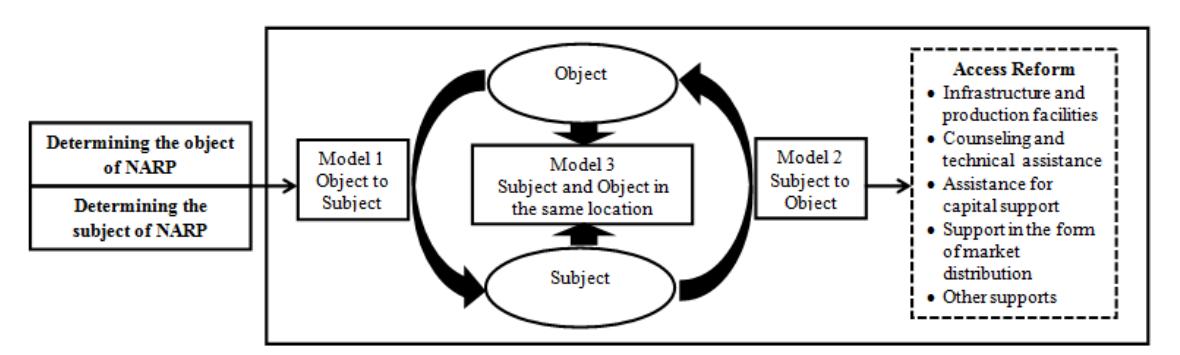
Figure 3. Models and Mechanisms of the National Agrarian Reform Program (NARP) (Mulyana, 2011).
The delivery system is the process of transferring the object to the subject. This is particularly important when the agrarian subjects are not located in a single location with the object, or even far apart. There are three patterns of operating mechanisms, (1) the subject moves to the object; (2) the object moves to the subject, and (3) the subject and object are at the same location. In the case where the subject and object are in the same location, the delivery system is not an issue and the program can be implemented immediately. Meanwhile, in the case of different locations, the alternatives are that the subject moves toward the object or vice versa.
Access reform became the characteristic of the National Agrarian Reform Program (NARP). As mentioned before, agrarian reform in Indonesia is not just land reform that only covers asset reform. Access reform aims to provide the ability for the subjects to manage the objects that they received. Land redistribution alone without providing the management ability will not give long-term benefits. Therefore, NARP needs to include access reform that comprises a series of interconnected and continuous activities. This access reform includes (1) the provision of production facilities and infrastructure; (2) the provision of guidance and technical assistance; (3) capital support; and (4) support in marketing distribution and other support.
Side Effects
A policy will inevitably have some side effects; this is also true for the National Agrarian Reform Program. These side effects can be either positive or negative for the sustainability of the policy. However, as a form of refining policy, reviewing the findings of negative side effects will enrich the discussion of policy reform.
Sirait et al. (2016) demonstrate changes in the agrarian structure in two villages in Garut and Lampung after land redistribution through the National Agrarian Reform Program (NARP). After 10 years of NARP implementation, no equal agrarian distribution was created, as indicated by the emergence of a class of landholders and landless farmers. In fact, both of these classes did not exist before the land redistribution. Ningtyas and Darmawan (2010) found that NARP was not executed well in the village of Pangradin, Jasinga, Bogor. Certain people acquired more land because of their closeness to the elite. The changes in the social and economic situation were only evident in land ownership status and did not affect income levels. Local income levels remained the same but only slightly changed in composition. Similar findings were presented by Utami (2014), who found that NARP did not achieve the expected agrarian justice from its land redistribution. The implementation of NARP in Serdang was limited to the registration of land rights for free.
Agrarian Reform from the Perspective of the Sustainable Livelihood Framework (SLF)
SLF, as a contemporary development approach, views household assets and access based on five categories, known as the pentagon assets. The five assets are natural, physical, human, financial, and social capital. The asset directly related to agrarian issues is natural capital. The understanding of agrarian affairs in the Basic Regulations on Agrarian Principles Act is not limited to land; nevertheless, this discussion focuses on the aspect of land. Agrarian reform, as an effort of bringing justice in the distribution of land ownership, can be reviewed using the SLF approach.
SLF considers household access to assets as heavily influenced by the social structure, in particular, the relationships to land ownership. Patterns of revenue-sharing, wages, and land rent, will be portrayed clearly based on the relationships with land ownership. The type of these relationships affects how household access land. The ideal conditions are when each household's access to land is manifested in land tenure. Agrarian reform has the objective of justice and equitable distribution of control of land assets, so households can develop their livelihoods strategy for a sustainable way of life.
There are problems that manifest itself in development issues, such as rural-urban symptoms and international migration. This can be seen as a form of off-farm livelihood strategies by rural households because of a lack of access to assets in their surroundings. Apart from migration theory that explains migratory behavior, the SLF approach views that the absence of access to agrarian resources, especially land, is one of the causes of the phenomenon. The SLF approach considers symptoms of agrarian resource conflicts, particularly related to land, as aspects of vulnerability in the form of a shock.
The government defined the National Agrarian Reform Program (NARP) as land reform plus, consisting of asset reform and access reform. This means that the government has adopted a development paradigm with the SLF approach albeit NARP has not been executed properly, as stated before. Vista et al. (2012) stated that land reform is only a prerequisite for sustainable livelihood, reflected from guaranteed access to land for the rural poor. The sustainability will greatly depend on the sincerity of the government in implementing agrarian reform that not only distributes land but also adopts a more holistic approach to society and rural development.
The Next Concept
Referring to Ellis (1992), the constraints in the implementation of agrarian reform in Indonesia can be separated into two aspects, i.e., economic and political. The political aspect can be seen from the institutional bureaucracy problems involving the institutional capacity of the National Land Agency as executor on the internal and external side. Internally, the National Land Agency is not ready for its new task of carrying out agrarian reform. So far, it was focused on the mere administrative process of land registration. Meanwhile, externally there is budgetary support from the Ministry of Finance. Mulyani et al. (2011) and Utami (2014) demonstrate several issues related to the implementation of the National Agrarian Reform Program (NARP), e.g. (1) the participation of stakeholders is still low; (2) cross-sectoral administration is often an obstacle; (3) asset reform, i.e., the availability of the object of land that will be redistributed; and (4) access reform, i.e., cross-sectoral cooperation is still not established well.
Agrarian reform using the SLF approach views aspects of land assets not as limited to the redistribution and recognition of the rights over the redistributed land. Although the National Agrarian Reform Program (NARP) contains a clause that prohibits the transfer of rights for 10 years, in practice, this still occurs without being reported.
The use of the SLF approach as in Figure 4 provides assurance of sustainability. For that reason, the National Agrarian Reform Program (NARP), which connects asset reform and access reform, should be continued with some improvements. NARP has been under the control of the National Land Agency, or the Ministry of Agriculture and Spatial Planning. Viewing NARP from two aspects, in particular, access reform, cross-sectoral cooperation, and coordination is required. Economic empowerment of NARP subjects may include several aspects, ranging from technical skills training in agriculture, access to capital, to the provision of production facilities and infrastructure. All of this cannot be mandated to the National Land Agency alone but must involve relevant ministries to be able to achieve the holistic principle of the SLF.
The SLF approach also answers the theory of De Soto related to the capitalization of property assets. The National Agrarian Reform Program (NARP) attempted to modify the theory of De Soto by separating assets and access. When referring to De Soto, the emergence of capital is an impact of legalization or the recognition of land rights. Therefore, the NARP should have more Indonesian characteristics with its social and cultural ways of viewing land. The failures of the Land Administration Project, which is not necessarily followed by increased welfare, need to be taken into consideration in improving the NARP. In socio-cultural terms, land is still seen as a valuable asset that is not easily transferable and used as collateral. Thus, the process of making land a capital asset is not finished with land certification alone. The combination of asset reform and access reform is found in the practice of agrarian reform in various countries and is proven to increase welfare levels. As Kaewkallaya et al. (2014) found, a land reform project in Thailand showed improvement in every farmer's livelihood assets after the project was carried out. Similar results were found by Mabhena (2014) in a collaborative program of agrarian reform and the development of farms in Zimbabwe.
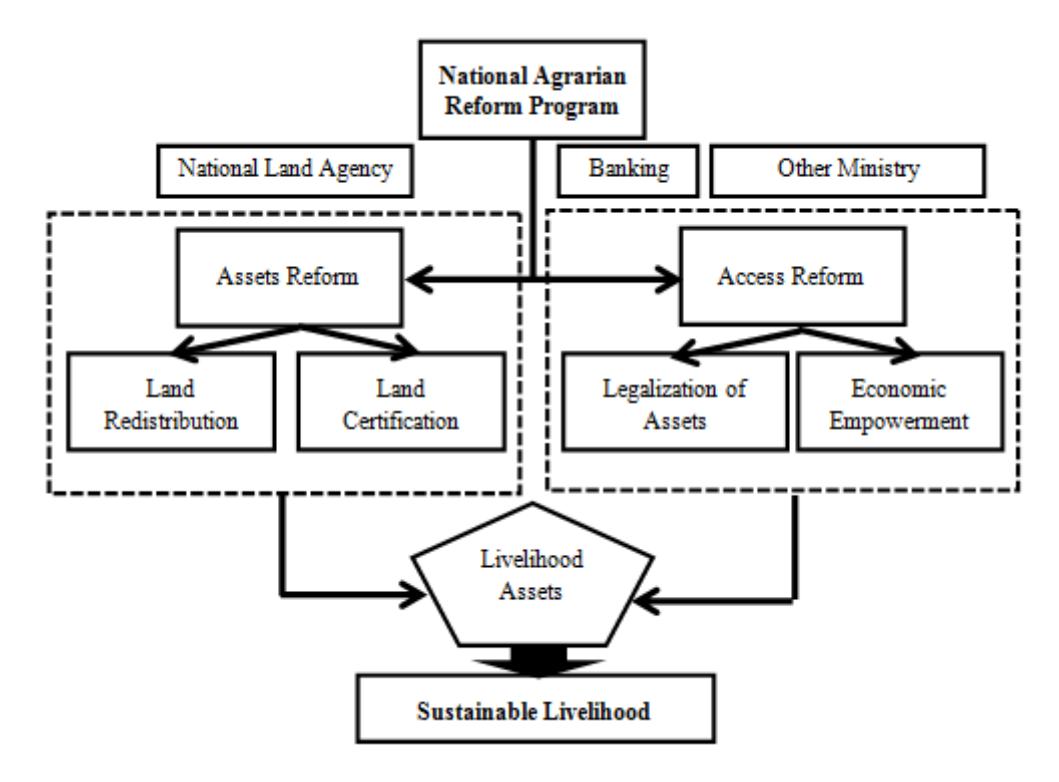
Figure 4. Agrarian reform in the Sustainable Livelihood Framework.
Land redistribution needs to be in accordance with its allocation. Changes in land use have an impact on the ecology. Therefore, it is necessary to study the suitability of land allotment in relation to the prevailing regulations and laws governing land use (Hidayat et al., 2015). One form of sustainable livelihood within the SLF framework is a balance between economic, social and ecological objectives. In rural areas, it is essential to implement this concept to succeed in managing the environment and alleviating poverty. Therefore, its implementation requires a different approach that is in line with the economic and ecological characteristics of rural areas (Prabatmodjo, 2016).
On the other hand, findings in some regions that have implemented the National Agrarian Reform Program (NARP) include that changes in the agrarian structure should be considered.
NARP should not consist of land redistribution and only last for 10 years, after which, without empowerment efforts, there will be a transfer of land titles. Then, the problem of agrarian inequality will return, together with the emergence of the social class of landholders in conjunction with the class of landless farmers.
Conclusion
Agrarian reform is a necessity to achieve justice in the control of agrarian resources. The most advanced agrarian reform policy is the National Agrarian Reform Program (NARP). Its legal basis is the Decree of the People's Consultative Assembly of the Republic of Indonesia (MPR RI) No. IX/MPR/2001 on Agrarian Reform and Natural Resources Management. NARP is a policy that combines asset reform and access reform, so the policy has a clear direction. Nevertheless, there is still a failure in its implementation, as it appears that NARP deals with asset reform only. The SLF approach should be used as input for the improvement of the NARP so agrarian reform will be able to deliver sustainable livelihoods for the society.
It is suggested to strengthen the coordination and collaboration among stakeholders. It must be realized that agrarian reform is not only the responsibility of the Ministry of Agricultural and Spatial Planning, in this case the National Land Agency, but is also the responsibility of other relevant ministries. Development using the SLF approach requires holistic cooperation between various sectors.