

Introduction
The emergence of New Public Management (NPM) raises the importance of performance in the public sector. The orientation of public managers, both at central and local level, both in developed and less developed countries, goes beyond thinking about inputs and processes and instead shifts towards a focus on outputs, outcomes and even impacts (Hood, 1991; Polidano and Hulme, 1999). As a result, instruments to measure and manage performance become more crucial. Following this logic, there also needs to be a way of measuring and managing the performance of local governments, which are part of the public sector, since some powers and authorities have been decentralised (devolved) from the central government to local governments.
The question arises how effective the implementation of performance management is when most powers are decentralised. In other words, to what extent is decentralisation compatible with effective performance management in influencing the behaviour of the public sector. Particularly motivation (compliance) is an essential question that has been subject to limited attention within the academic literature.
This paper attempts to fill this gap by investigating the extent to which minimum service standards (MSS), a performance management tool directed at local government service delivery, influences the motivation of local government to improve their performance in highly decentralised systems, such as those in Indonesia. The two research questions of this study were: (a) what influence does MSS have on the motivation of local governments to improve their service delivery performance, and (b) to what extent does decentralisation influence the implementation of effective performance management toward the motivation of local government.
This paper consists of three parts. The first part is a review of the literature on the concept of decentralisation and its potential merits and costs. The discussion also includes a literature review towards the concept of MSS and its relationship with the practice of decentralisation in Indonesia towards the improvement of public servies. Secondly, it reviews the way performance management influences behaviour in the public sector. The second part is about the design and methodology of this research. The last part presents the data, analysis and a discussion of the various patterns of motivation in the public sector in response to MSS. The principal–agent approach as well as the phenomenon of the unambitious average syndrome are used. In this part, the influence of decentralisation on effective performance management, particularly towards the possibility to set strong enforcement and appropriate incentives, is also analysed. Besides that, the reasons for continuing performance management beyond pursueing effective performance management are also analysed.
Literature Review
Concept, Gains and Costs of Decentralisation
The term decentralisation is defined differently by different scholars depending on the area, subject and context in which the term is deployed. Smith (1985) notes that there is no single definition that can exactly represent the entire concept, given that it can be applied in a wide range of areas and can refer to various definitions. Pollitt and Bouckaert (2011), for instance, argue that decentralised management in the public sector refers to situations in which managers are given flexibility to tackle their responsibilities and gain bigger managerial autonomy and authority to achieve their organization's goals. Pollitt and Bouckaert (2011, pp. 101-106) distinguish six categories of decentralisation commonly applied to most public organisations and countries: political, administrative, competitive, non-competitive, internal, and external. Others, such as the World Bank (2003), Firman (2003), and Bardhan and Mookherjee (2006), have also expanded the concept proposed by Pollitt and Bouckaert (2011) by adding two types of decentralisation, financial and spatial-economic decentralisation.
There is a long-standing debate among scholars on the merits and costs of decentralisation. The supporters of decentralised systems believe this approach to be the best way to govern modern societies and the best solution to the failures of centralised systems. Scholars such as Conyers (1983) and international organisations such as UCLG (2009) believe that decentralisation creates: a more responsive and reactive government when it comes to service provision (in the administrative spectrum); more accountability, more transparency, and more participation in decision-making (in the political spectrum); and more equal revenue sharing between centre and periphery (in the fiscal spectrum).
The supporters of decentralised systems argue that those strengths are achieved because of the ability of such systems to bring government closer to the people as well as give more discretion to both local governments and local people (Bardhan and Mookherjee, 2006; Boasiako and Csanyi, 2014). Moreover, decentralisation also shortens the route of accountability so services are delivered quicker and cheaper. Instead of following 'a long route', where accountability of providers of services to local people should be held by national policy makers, 'a short route' is followed, where accountability is only held by local governments (World Bank, 2003; Ahmad et al., 2006). Besides that, a decentralised system requires accountability of performance of the heads of autonomous regions to their people through a form of political competition. Faguet (2011), based on experiences in Europe, Asia and Africa, uses the same logic by arguing that decentralisation policy will punish poor performing governments at elections.
However, this does not mean that decentralisation has no potential costs. It brings risks related to inequality of resources and capacities. Decentralisation policy gives more autonomy and discretion to local governments, including how to deliver services, in considering their own financial and human resources and capacities (Aritenang, 2015). Thus, regions that are rich in natural resources have high levels of discretion to deliver better services based on the interests of their local people. In contrast, poor regions have many limitations in terms of fiscal and financial capacity. That is why inequality of quality of services between regions often cannot be avoided in decentralised systems.
Moreover, the central government may not treat every region equally. Unlike in centralised systems, when there is persistence to maintain uniformity of quality of services across regions, decentralisation policy allows non-uniformity in services to match the interests of local people and the local government's financial capacity (Breton, 2002). Homme (1995) refers to this as an additional danger of decentralisation. Similarly, Fuhr (2011) refers to this phenomenon as an inequality trap, while Vazquez and Vaillancourt, (2011) note it as an obstacle of decentralisation.
Moreover, decentralisation also has negative consequences by creating inefficiency in the coordination between the central government and local governments since the central government has less authority to control the local governments. Homme (1995), Fuhr (2011) and Vazquez and Vaillancourt, (2011) note it as coordination problems, traps or obstacles of decentralised systems when the central government is unable to directly intervene and control the performance of local governments.
Indonesian Decentralisation, Public Service and MSS
The emerging concept of minimum service standards cannot be separated from the rationale of Indonesian decentralisation towards public services. As is known, in 1999 Indonesia started with a 'big-bang' decentralisation process that rapidly and significantly devolved most central government powers and authorities to local governments (see Aspinall and Feally, 2003; Alm, Vazquez and Weist, 2004). This policy, seen as a panacea to the multi-dimensional crisis in Indonesia that reached its peak in 1998, has been a major instrument of political, economic and social reform (Hofman and Kaiser, 2006; Fengler and Hofman, 2009).
While some of these rationales, such as preventing conflicts between regions and reducing unfair fiscal allocation between the central government and local governments, are relatively straightforward to accomplish, improving the quality of public services and capacity of government to deliver them is a significant challenge. According to Lewis and Pattinasarany (2009), basic public services neither significantly affect low-income people, nor have they significantly improved after the decentralisation. Kristiansen and Santoso (2006) add that the decentralisation policy in the Indonesian healthcare sector neither increased local government spending on local public health facilities for the poor, nor improved the accountability in the management of local health units. Similarly, decentralisation policy in the education sector in Indonesia neither improved transparency, accountability and financial allocation to primary and secondary education, nor the inequality of these services across regions (Kristiansen and Pratikno, 2006).
Kompas (2015), one the largest newspapers in Indonesia, notes that national educational services are far from the required standards after decentralisation, whether in terms of competency, quality of teachers, or infrastructure. Similarly, a research conducted in 2016 by Muttaqin et al. (2016) found that educational attainment in Indonesia as shown by length of schooling only slightly increased after the introduction of decentralisation policy. Strategic Asia (2013) refers to this as an 'unfinished agenda' after almost a decade of ongoing decentralisation.
Table 1. Indicators and MSS standards in the health sector.
| No | Types of services | Indicators | Standards | Targeted year |
|---|---|---|---|---|
| 1 | Basic treatment | Daily visit to pregnant mothers (K4 criteria) | 95% | 2015 |
| Visits to pregnant mothers in case of complicated problems | 80% | 2015 | ||
| Aid from health workers or nurses | 90% | 2015 | ||
| Service to mothers after giving birth (childbed) | 90 % | 2015 | ||
| Neo-natal care in case of complicated problems | 80% | 2010 | ||
| Baby visits | 90% | 2010 | ||
| Universal child immunization in Sub Districts | 100 % | 2010 | ||
| Services to under 5-year old children | 90 % | 2010 | ||
| Provision of food additional to breast-milk to children from poor families from 6 months to 2 years | 100% | 2010 | ||
| Services to those under 5 years old who are malnourished so that they get special treatment | 100% | 2010 | ||
| Quality of health of students in primary schools | 100% | 2010 | ||
| Active family planning participation | 70% | 2010 | ||
| Observation and treatment for those who are ill | 100% | 2010 | ||
| Basic health services for poor families | 100% | 2015 | ||
| 2 | Referral treatment | Recommended services for poor families | 100% | 2015 |
| First level of emergency services that should be supported by health infrastructure in districts | 100% | 2015 | ||
| 3 | Epidemiology investigation and cure for special diseases | Scope of village or subdistricts launching special epidemiology investigations in fewer than 24 hours | 100% | 2015 |
| 4 | Health promotion and people\nempowerment | Scope of Active Alert Villages | 80% | 2015 |
Source: Ministry of Health (MoHE) Decree 828/Menkes/SK/IX/2008
| No | Types of services | Indicators for primary schools | Indicators for junior high schools |
|---|---|---|---|
| 1 | Affordable walking distance from remote/isolate areas | 6 kms | 3 kms |
| 2 | Number of students per class | 32 (complete with chair, table, blackboard) | 36 (complete with chair, table, blackboard) |
| 3 | Teacher rooms per school | 1 | 1 |
| 4 | Principal room per school | - | 1 (separated from teacher's room) |
| 5 | Physics laboratory | - | Capacity for 36 students with demonstration instrument |
| 6 | Availability of teacher | 6 teachers for each unit of education and 4 teachers for each unit of education in a special region | 1 teacher for each subject or 1 teacher for one group of subject in a special regions |
| 7 | Teacher's qualifications | 2 undergraduate degree holders, 2 certified teachers | 70% of teacher has an undergraduate degree and half are certified (i.e. 40% undergraduate, 20 % certified in special regions) |
| 8 | Principal's qualifications | Undergraduate qualification and certification | Undergraduate qualification and certification |
| 9 | School supervisor's qualifications | Undergraduate qualification and certification | Undergraduate qualification and certification |
| 10 | Textbooks | 1 set per student in Indonesian language, mathematics and sciences | 1 set per student |
Table 2. Indicators and MSS standards in the education sector.
Source: Ministry of National Education Decree (MNED) 23/2013 as a revision of MED 15/2010 on the MSS of basic education.
As a response to problems of low-quality public services and inequality of access to those services across regions (especially with respect to health and primary education), in 2002 through Decree No. 100/756/OTDA/2002, Indonesia's central government introduced MSS. It was regulated in the 2004 Law 32, later revised in Law 23 of 2017 and Government Regulation (GR) 65/2005, and again revised in GR 2/2018. These documents contain guidance on the types and quality of basic services that are the main obligation of local governments and which should be received by the public at a minimum level (Ferrazzi, 2005; Hudawi, 2012). In other words, MSS is unique in defining minimum thresholds and is also considered a breakthrough, given the aim of both enhancing the quality of services and addressing the underlying problems with capacity that lie behind the inequality in access to services across regions (Roudo and Chalil, 2016).
There are 15 MSS, which encapsulate 65 services and 174 indicators. Among the many sectors of MSS, two sectors, health and education, are at the heart of its implementation and reflect the most essential basic services. Besides that, MSS within these sectors entails considerable preparation in order to meet the terms laid out in the supporting law, regulations and ministerial decrees.
MSS in the health sector has been in place since 2003, accompanied by the publication of Ministry of Health (MoHE) Decree No. 1457/2003, which was revised in 2008 through MoHE Decree
741/Menkes/Per/VII/2008 and MoHE Decree 828/Menkes/SK/IX/2008, which contain guidance on the implementation of MSS in the health sector in districts and cities. MSS within the education sector is similarly well-developed. It is regulated by MoNE Decree 23/2013 and its revised sibling, MoNE Decree 15/2010 on the MSS for basic education. This MoNE Decree provides operational guidance on the implementation of MSS in education. Some indicators and standards concerning MSS in the health and education sector based on these regulations can be seen in Table 1 and 2.
Performance Management and Influence of Behaviour on Public Services
As discussed above, the definitions of MSS are concerned with the obligations of local government. Also, the existence of MSS requires measurement and management of the performance of local governments related to powers that have been devolved in a decentralised system. Thus, it seems reasonable to say that MSS is tightly related to the performance management of local governments, particularly in delivering services. Given that MSS is a form of performance management, the literature on performance management and its potential influence towards the behaviour of local governments to improve the delivery of services was also reviewed, from the perspective of accountability and the principal–agent framework.
The concept of accountability is contestable and multi-faceted. Sinclair (1995) points out that although the idea of accountability is complex, there is even no consensus about how to implement it in reality. Hughes (2003) and Lane (2003) argue that accountability refers to the responsibility of individuals or groups to report back about their performance to those who have give them a mandate. However, Parker and Gould (1999) argue that the idea of accountability in its operation and scope is more total and insistent than simply a responsibility since it requires the holding and providing of accounts involving two individuals or groups: those who have given a mandate and those who have received the mandate. From the definitions, the core elements of accountability can be seen concerning who are accountable, to whom, for what, and how. These elements reflect the relations between a principal and an agent.
The model of principal–agent relations is actually an accountability model that seeks to explain how two actors, a principal and an agent, interact to achieve their own respective goals. Braun and Guston (2003) refer to it in terms of delegation and exchange of resources. They also term it the 'opportunistic actor model' since it is assumed that all actors are selfish, thinking only of themselves and promoting their own self-interests and personal welfare (Braun and Guston, 2003). Similarly, Coleman (1990) highlighted it as 'the extension of self-interests' of actors to achieve their goals by delegating tasks to those with greater capacities than themselves.
To ensure that agents remain accountable to the principal, there needs to be a mechanism to which both the principal and agents are bound. Waterman and Meier (1998) noted that there should be a 'contract' between the principal and the agent that establishes what the agent should do and what information should be received by the principal. This 'contract' acts to bind both the principal and the agent in order to improve the principal's information, reducing the information gap between the principal and the agent and ensuring that the agent acts in the best interest of the principal (Hughes, 2003).
In our context, this contract is converted to performance management. Van Dooren, Bouckaert, and Halligan (2010) and Moorhead and Griffin (2012) add that the importance of performance management can be seen from the extent to which it can positively change the behaviour of those individuals and organisations that it is intended to influence. In other words, as a contract, performance management has no use unless it positively influences the individuals/organisations involved to improve their performance. Two kinds of agential behaviour are expected to emerge on the basis of performance management: compliance and motivation. This is simply illustrated in Figure 1.
This could be understood by framing the internal and external roles and functions of performance management. Scholars note that the importance of performance management to public managers is varied and will follow the purposes of the public managers who use it (Behn, 2003). Behn (2003) lists eight different purposes for performance management in the public sector: evaluate, control, budget, motivate, promote, celebrate, learn and improve.
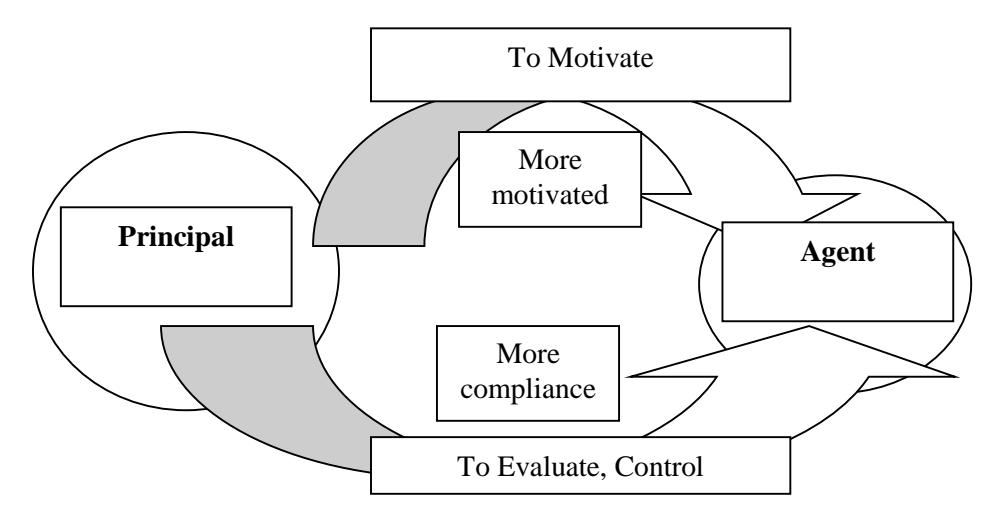
Figure 1. Performance-management and influence on behaviour of individuals/organisations. Source: Adapted and modified from Behn (2003), De Bruijn (2007), Van Dooren, Bouckaert, and Halligan (2010).
These eight roles can be generalised into two main functions: internal, to improve performance and productivity, as well as external, to hold agents accountable (see De Bruijn, 2007; Van Dooren, Bouckaert, and Halligan, 2010). The way performance management makes agents more motivated is related to the purposes of performance management to improve performance and productivity. This is related to internal roles and can be achieved through attempts to motivate, celebrate, promote and improve outcomes. Otherwise, the way performance management makes agents more compliant is related to the external purposes of performance management. Performance management is the way the principal holds the agent accountable by controling and evaluating the agent.
Furthermore, the link between motivation and performance is explained by Mullins (2008) and Moorhead and Griffin (2012). They argue that the overall performance of an organisation is a function of its capacity, ability and motivation, and the external factors that either support or impede them (Mullins, 2008; Moorhead and Griffin, 2012). Simplified, it can be formulated as follows:
Performance = Function [Ability + Motivation + Environment (External Factor)]
From this formula, high motivation is considered to be the main determinant of individual and organisational performance. Understanding what motivates someone makes it possible to change
their attitude and influence their behaviour towards what is desired (Huczynski and Buchanan, 1991). In the principal–agent framework, to motivate means that the principal should be able to direct agents to act, work and behave according to what is required and expected by the principal, without resorting to force (Crowther and Green, 2004). When agents are motivated, the principals will be able to direct agents to work according to their interests and expectations. This means that they can direct their agents to produce maximum output and improve their performance to achieve organisational goals (Crowther and Green, 2004). Here, a principal uses performance management to make agents more motivated, more accountable and more willing to do a good job in pursuit of the principal's interests and the goals of the organisation (Braun and Guston, 2003). As argued by Lane (2005), when performance management is effectively treated as a tool to motivate, the principal will be able to motivate in an efficient manner given particular constraints. As motivation increases, the agent's performance will improve.
Furthermore, Milward and Provan (2000) and Braun and Guston (2003) stress the importance of a 'clear' principal and agent relation, where the relations between principal and agent in using performance measurement should be attributed by a set of proper enforcements and incentives. This will ensure that the results from measuring and managing performance will influence the public organisation's overall management and change the behaviour of public organisations (Milward and Provan, 2000; Braun and Guston, 2003). In other words, incentives and enforcements are required as two core elements of performance management that are able to influence of behaviour of public organisations. While motivation requires a number of incentives, compliance requires particular enforcements. Simply put, incentives can be defined as external or internal factors that motivate people to act (Laffont and Martimort, 2009). Two common types of incentives can be identified: financial and non-financial incentives. Moreover, enforcements include routine monitoring, evaluation and auditing as well as consistent sanctions or punishments.
Aside from positive results of performance management, such as greater motivation and compliance, there are also a number of potentially dysfunctional effects. One type of negative effects is the unambitious average syndrome. The phrase 'unambitious average' was commonly used by auditors in the UK during the 1990s and 2000s in the context of performance management of local governments under top-down regimes, particular directed at league tables. They would use the term to describe units in the public sector that had no motivation to improve their performance beyond their targets, despite them having the ability to do so. These units preferred to remain in the middle, neither exceeding nor falling below their targets, and would stay safely in that position to avoid inspection or supervision from auditors, inspectors or higher authorities. There was no point in performing at a higher level and thus they maintained an average performance just slightly above or in line with the target that had been set.
According to Inside House (2016), in the case of UK housing organisations, the unambitious average syndrome refers to a mediocre average since there is nothing to push units above the target and they tend to remain close to mediocrity (cited in Inside Housing, Out of Commission, 2016):
What Ms Taylor calls the 'unambitious average' that is the concern. 'There will be nothing to push them anymore,' she says. 'It will be easier to get away with mediocrity now,' agrees... (Inside Housing, 2016)
Design and Methods
The design used for this research was a multiple and parallel case study, where several cases are observed together. A qualitative approach was deployed. The data were taken from extensive semi-structured interviews with 83 individuals in total, including central government officers from 9 Indonesian technical ministries; local government actors (i.e. regional heads, members of local councils as well as local agencies and local providers); non-government actors, including university scholars as well as experts and representatives from non-government organisations (NGOs). Information from quantitative secondary data, focusing on the achievement of MSS targets in 8 districts and cities, was also used for completeness.
Nonprobability sampling, specifically purposive sampling, was used to select the 8 districts and cities. The choice was based on two considerations: level of performance of districts or cities based on the Evaluation of Performance of Regional/Local Governance, or Evaluasi Kinerja Penyelenggaraan Pemerintahan Daerah (EKPPD), published by the Ministry of Home Affairs (MoHA); and the fiscal capacity of each district or city, published by the Ministry of Finance (MoF). The characteristics of the area were also considered: Java (more developed) and outside of Java (less developed), as presented in Table 3.
Java Outside of Java Cities Regencies Cities Regencies High performance City of Depok (Province of West Java) District of Sleman (Province of Jogjakarta) City of Denpasar (Province of Bali) District of Batang Hari (Province of Jambi) Low performance City of Bekasi (Province of West Java) District of West Bandung (Province of West Java) City of Padang Sidempuan (Province of North Sumatera) District of Southwest Sumba (Province of East Nusa Tenggara)
Table 3. Selection of cases using purposive sampling.
To select the 83 interviewees, purposive and snowball sampling were used. Thematic analysis was used to analyse the collected data. Although MSS consists of 15 sectors, this research only focused on the health and primary education sectors, as discussed above. In this research, achievement of MSS standards in the health sector based on the performance of the district or city was used instead of education, which is based on school performance.
Analysis and Discussion
MSS and Varying Effects on the Motivation of Local Government to Improve Service Delivery
The analysis of the influence of MSS on the motivation of local governments to improve their service delivery performance was done firstly through observing the position of each local government (district or city) vis-à-vis the MSS standards. This position was then related to the results from the interviews in order to identify similarities and differences in the motivations of local governments.
In order to understand the position of each local government we observed the performance of MSS in the health sector in 2015. This was calculated from data on the achievement of MSS
standards published by MoHE. These standards are set as an average of the percentage of standards across indicators. Figure 2 below shows the performance in the health sector for each sample district and city in 2015.
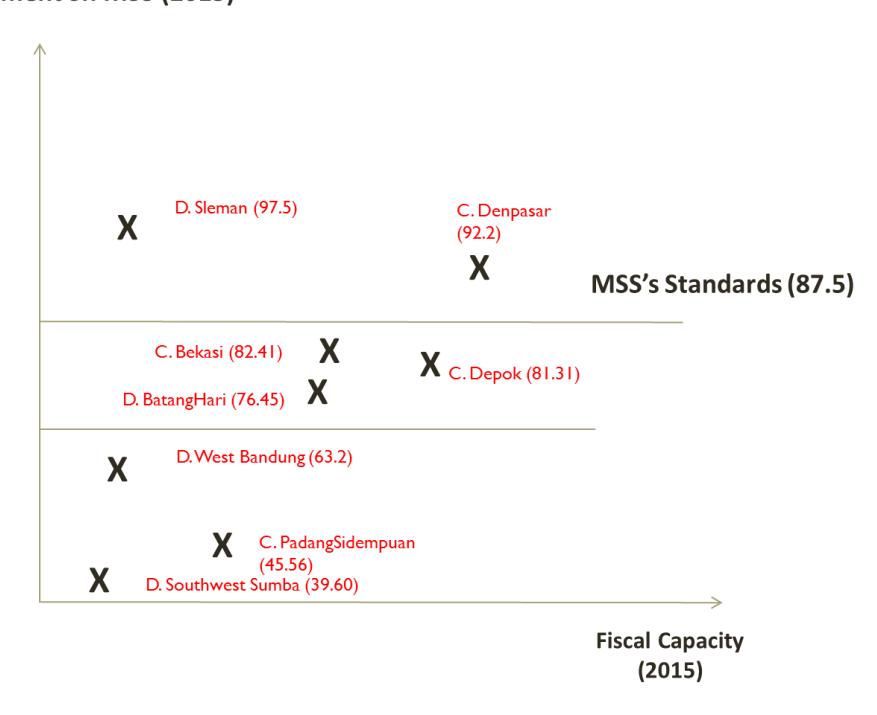
Figure 2. MSS achievement in six health indicators for cities and districts in 2015.
While target standards are set at 87.5%, the performance of the 8 districts and cities can be classified into three categories. The first category consists of local governments whose current achievement exceeds the MSS target standards. In this category are Sleman, with a current achievement of 97.5%, and Denpasar, with 92.02%. The second category includes local governments whose current progress falls just below the targets. These include Bekasi, with a rate of 82.41%, Depok (81.31%) and Batanghari (76.45%). Finally, the third category comprises local governments whose current level of performance is well below the standard. In this category are West Bandung, Padang Sidempuan and Southwest Sumba, whose current levels of achievement are 63.2%, 45.56 % and 39.6% respectively.
Combined with the information obtained from the interviews through thematic analysis, we can say that MSS seems to motivate improvements in performance among the local governments in the second category, whose current performance falls just below the standards. Some local governments, such as Depok, Bekasi and Batanghari, are motivated to exceed the standards, although they do not perceive there to be any incentives for them to do so or enforcements if they fail to. These three local governments are motivated to maintain their performance at a level slightly above the standards – or at least close to it – in order to avoid scrutiny from higher authorities during coordination meetings. They will seek to maintain this position since they feel safe in the middle and, effectively, avoid scrutiny from auditors in provincial and central governments.
As such, the empirical findings reveal that MSS is important to these local governments, as evidenced in the following extract from the interviews conducted with local government officials in Bekasi:
It seems that our concern about being embarrassed by our mayor in front of other local technical agencies has become our motivation to achieve the MSS's standards although we believe there will be no enforcement from him. Some of the indicators in MSS have been achieved by us and only a few have yet to be accomplished. Our current position is near the standards so it would be embarrassing for our mayor if we could still not close this small gap. We keep our spirit to achieve the standards in a short time. If we could pass or exceed the standards, it would be terrific. (Local Health Agency, City of Bekasi, 2016)
In this city, it seems this could be because local government members worry about being embarrassed in front of their principals (mayors, regional heads, higher authorities, and so on). Local bureaucrats at the district level can feel embarrassed that their current performance is below the standards that have been set, even though they will receive no rewards if they succeed nor punishments if they fail. Thus they improve their performance to avoid behind ashamed in front of regional heads (as their principals) and amongst other local technical agencies.
However, MSS does not seem to motivate those whose performance is either above the standards or well below the standards, that is, those districts/cities in the first or third categories. Firstly, those local governments who are in the first category, Sleman and Denpasar, are not motivated to continually improve their performance once they have passed the standards. MSS seems less important to them since they have already achieved the required standards and there is no further incentive for them to continue to improve their performance. Thus, they maintain an average level of performance despite being able to achieve more, thereby avoiding a situation in which an extraordinary performance attracts the attention of higher authorities. Instead of improving their achievement against MSS standards, they pay attention to other measurements that better reflect quality assurance, such as accreditation. This is evident in the following extract from an interview with members of local government from Sleman:
In most sectors in this district, the achievement of indicators has been above the MSS's standards. In the education sector, for instance, the ratio of teachers to students and the fulfilment of numbers for primary and junior high schools in residential areas are higher than those required by the central government. There is no point in them continually improving their performance since they have already far exceeded the standards. To go higher would mean attracting attention from the central government to demand achievement. Thus, their focus is currently again not about MSS but is on the achievement of the Human Development Index (HDI), school accreditation and innovations in education. (Organisation Bureau, Regional Secretary, District of Sleman, 2015)
Secondly, those local governments whose current performance falls far below the standards, i.e. those in the third category, such as Southwest Sumba and Padang Sidempuan, are not motivated to improve their performance in delivering services. This is reflected by their lower motivation to achieve the MSS standards. They may in some cases be willing to improve their performance to just above the standards, but they claim that they have no capacity to do this. The gap between the capacity required to pass the standards and their current capacity to do so is too large. In other words, for this category of local government, MSS seems less important. This is supported by statements from a government officer in Padang Sidempuan:
Perhaps MSS is very useful for us. It gives a clear clue as to what local governments have to do to deliver better services to people. While people are happy about the services, we are motivated to improve our performance more and more. However, the classic problem appears. Although we have a particular motivation, we cannot implement it since we do not have any funds. Our local budget capacity is very low and never sufficient. As a result, we and some local technical agencies are no longer motivated. (Organisation Bureau, Regional Secretary, City of Padang, Sidempuan, 2016)
So far, we have identified the influence of MSS on the motivation of local governments to improve their performance in delivering services. The next task is to examine whether the influence of MSS that we have seen fits with or could at least be explained by the unambitious average syndrome. However, the unambitious average syndrome hypothesis built into this research differs from the practice in the UK, because it was modified to reflect MSS, in which a particular set of minimum standards must be met. This is outlined in Table 4 below.
Table 4. Hypotheses on unambitious average syndrome from UK practice in league table system.
| Status of Current Performance of Public Units | UK Practice on Unambitious Average (League Table) | Adapted Hypothesis (Minimum Standards) |
|---|---|---|
| Far above average/minimum standards | Not important | Less important |
| Slightly above average/minimum standards | Not important | Less important |
| Slightly below average/minimum standards | Less important | Important |
| Far below average/minimum standards | Important | Important |
Based on what was found in Sleman and Denpasar, whose current achievement is above the standards (local governments in the first category), the influence of MSS on motivation in those in local governments fits the adapted hypothesis on the unambitious average syndrome. MSS as a performance management tool is neither sufficiently important to motivate local governments nor relevant once they have reached the required standards.
Empirically, however, there is a further explanation in the case of MSS beyond the adapted hypothesis: local governments have no motivation to reach a higher level since they shift from minimum standards to other types of quality assurance, such as innovation and accreditation, which are more useful and beneficial. However, some explanations in relation to the unambitious average syndrome, such as avoiding the attention of auditors and higher authorities as well as having no incentive, were also found.
Moreover, for local governments in the second category, that is those whose current achievement falls either just below or close to the standards, performance management is empirically shown to be important. The behaviour of local governments in this category is a good fit with the notion of the unambitious average syndrome. It can be seen that MSS is important to the local governments in this category.
Finally, for the local governments in the third category, whose current achievement falls well below the standards, the empirical findings reveal a different conclusion in relation to the concept of the unambitious average syndrome as it is set out the hypothesis. While the hypothesis notes that standards are important in the public sector, it was found empirically that MSS, as a set of standards, is not important for the motivation of local governments to improve service delivery performance. A comparison of the unambitious average syndrome hypothesis and the empirical evidence in the case of MSS can be seen in Table 5 below.
| Status of Achievement of MSS | Adapted Hypothesis | Empirical Findings of MSS Practice |
|---|---|---|
| Far and slightly above | Less important | Less important (i.e. Sleman and |
| standards (1st category) | Denpasar) | |
| Slightly below | Important | Important (i.e. Depok, Bekasi and |
| standards (2nd category) | Batang Hari) | |
| Far below standards | Important | Less important (i.e. Padang |
| (3rd category) | - | Sidempuan, West Bandung, |
| Southwest Sumba) |
Table 5. Comparison between hypotheses and empirical findings.
Incompatibility of Decentralisation to Application of Performance Management: Limitations to Strong Enforcements and Effective Incentives
Based on the results of the interiews as discussed above we know that motivation of local governments to improve their service delivery is various in response to the existence of minimum standards or thresholds. However, the findings also show limited influence of MSS on performance of local governments since five out of the eight local governments were not motivated to improve their performance in their delivering services. The next question is to what extent the highly decentralised system affects the effectiveness of MSS in influencing the motivation of local governments.
As discussed in the literature review section, two main elements, strong enforcement and effective incentives, are necessary to ensure the application of performance management. Thus, the extent to which decentralised systems can provide these two core elements, particularly in the implementation of MSS, is analysed.
From the interviews it can be seen that information derived in the course of MSS is used and managed with sub-optimal and ineffective incentives and is undermined by a lack of strong enforcement. MSS is not supported by punishments or sanctions (what we might call 'strong' enforcement techniques). One local government officer says:
In the current law and regulation concerning MSS, there is no chapter that regulates enforcement and punishment. Perhaps this means that districts and cities in this province do not try to achieve MSS standards. (Organisation Bureau, Regional Secretary, Province of West Java, 2015)
A lack of authority of central government as caused by the decentralised system is one of the reasons why there is little enforcement and punishment in the implementation of MSS. A lack of authority was discussed by one central government officer in LAN, who said that:
In this decentralised system there is no direct vertical link between technical ministries and local technical agencies. Central government has no authority to force local government to implement MSS. That is why strong enforcement in terms of punishment is relatively difficult to apply. (State Administration Agency, LAN, 2015)
If incentives, particularly financial or material incentives (in the form of block grants), have been planned and promised to encourage the implementation of MSS in some local governments, they are not addressed and allocated to those local public units that successfully achieve MSS standards. Instead they are allocated to those local governments that need more funding to achieve MSS standards. These funds are intended for those local governments that truly need additional funds instead of to those who have already successfully achieved MSS targets and thus improved the quality of the services they provide. In other words, there is no incentive for champions. As noted by a government officer in Southwest Sumba:
We will not gain any incentives if we are able to achieve the MSS standards. We only get funding to ensure that we can achieve the target with our current capacity. (Local Education Agency, District of Southwest Sumba, 2016)
This was confirmed by an officer in MoHA:
In future planning, if a local government is not able to achieve MSS standards, later they will be supported by general or specific block grants as a form of incentive. They will be prioritised for funding through these grants. (Directorate General of Regional Development 1, MoHA, 2015)
For this reason, it becomes a question of whether these kinds of incentives are actually 'true incentives', since they are given to those whose really need them instead of those who have high performance. Nevertheless, it is not only a question of whether incentives work or not. It could be the case that opposite results to those that are expected could arise; performance, in other words, could be weakened.
Given that MSS is not supported by optimal incentives or strong punishments and sanctions (what we might call 'strong' enforcement techniques), it works to an extent through self-compliance or self-motivation. However, in the case of MSS, self-motivation and self-compliance do not lead to more motivation or more compliance. In other words, the lack of these elements is less supportive towards positive behaviour of local governments to improve performance in delivering services.
The information above also implies that decentralised systems can bring with them limitations in terms of enforcement and incentives. This implies limitations of centrally led performance management systems, where enforcement is constrained because central government must respect the autonomy of the local governments.
This intervention acts as a negative signal for the sustainability of the decentralised system. Instead of enforcing local governments, which is considered ineffective in decentralised systems, building the system according to MSS, which only requires the achievement of minimum points, is selected as a feasible strategy to improve service quality. This also confirms the costs and limitations of decentralisation, which is known as the coordination trap or obstacles as mentioned by Homme (1995), Fuhr (2011) and Vazquez and Vaillancourt (2011), when the central government has limitations in directly intervening and imposing a particular policy on local governments in a decentralised system.
On the other hand, this also implies the limitations of the central government in imposing more equal incentives, unlike in a centralised system. The central government faces difficult decisions or dillemmas whether to give these incentives to those who really need it for reasons of equality or to champions, ignoring equality. This also confirms that decentralisation allows variety in local governments' financial and human resources and capacities, so it is less easy to set policies to deal with inequality traps as a cost of decentralisation, as noted by Homme (1995), Fuhr (2011) and Vazquez and Vaillancourt (2011).
Reasons for Continuing Implementation of MSS: Gaining Other Benefits
MSS appears to only motivate a handful of local governments, particularly those that lie just below the standards. This leads to a further question: why should the government still continue to implement MSS if it does not significantly influence the performance of local governments in delivering services? From the interviews that were conducted, it is clear that one benefit that MSS has persisted to be implemented is that it is the way of central government to build better communications and dialogue with local governments in delivering services.
This dialogue between central and local governments is believed to improve central-local relations. Sullivan and Gillanders (2005) and Li (2010) indicate that better mutual understanding and having the same voice and policy language when talking about and implementing policy are indicators that improve central-local communications. However, it seems that MSS only improves 'vertical communication' between non-political actors. It only improves the communication between technical ministries and local technical agencies in central-local relations. A local government official in Bekasi said:
Usually, only us and local technical agencies such as the health and education agencies deal with the achievement of MSS with the MoHA and technical ministries. We and MoHA are usually talking about the management aspects, while local technical agencies and technical ministries deal with technical aspects and problems. Through MSS, the communication between us and technical ministries becomes better. At least we use the same language or voice, so we can easily understand it. (Organisation Bureau, Regional Secretary, City of Bekasi, 2016)
In contrast, MSS does not seem to improve vertical communication, which includes political actors and horizontal communications. For instance, MSS does not improve communication between non-political actors at the central level (1st level) and political actors at the local level (2nd level). MSS does not improve communication among these actors in this relation because different languages are used by political and non-political actors. MSS, which is set by technical ministries, requires technical and management languages. Unfortunately, regional heads understand political language, so they face difficulties in understanding or are less interested in the language of MSS. As stated by the Mayor of Padang Sidempuan:
I personally do not too frequently interact with technical ministries related to the implementation of MSS. Perhaps the language is too technical so the coordination and communication are more between technical ministries and local technical agencies. For instance, related to MSS in education, the communication is more between the Ministry of National Education and our staff in the city education agency as representatives of me. (Mayor, city of Padang Sidempuan, 2016)
From that statement we can argue that it appears that because of the different languages used by regional heads as representatives of local government and technical ministries as representatives of the central government, MSS does not improve communication in this relationship. While the language of MSS can be easily understood by technical ministries, it is not fully understood by the mayor or regional heads. Similarly, MSS does not seem to improve vertical communication between political actors and officials at different levels of government. The influence of MSS on improving communication between stakeholders can be seen in the Table 6 below.
| Types of Relations (between) | Principal–Agent Relations | Influences |
|---|---|---|
| Technical ministries and regional heads | Vertical (between 1st and 2nd level) | Less improved communication |
| Technical ministries, local agencies and local providers | Vertical (between 1st and 2nd level) | Improves communication |
| Regional heads and local people (voters) | Horizontal (2nd level) | Does not improve communication |
| Regional heads and local council members | Horizontal (2nd level) | Does not improve communication |
| Regional heads and local agencies and providers | Vertical (2nd level) | Less improved Communication |
Table 6. Influence of MSS on central-local communication.
Conclusion
This research is expected to contribute to the ongoing discussion on the compatibility of decentralisation with effective performance management in influencing the motivation of public sector bodies, which has been subject to limited attention among scholars in public performance management. The results of this study show that MSS with its characteristic minimum thresholds can lead to varying effects on the motivation of local governments to improve their service delivery. MSS does not motivate local governments that are already performing well but, more importantly, it also does not motivate those that are performing badly. However, a small positive effect is found on the motivation of those whose performance lies just below the minimum standards.
This study also shows the limitations of decentralisation systems in executing effective performance management. In other words, it seems plausible to say that MSS to some extent is not compatible with the application of performance management, which requires strong enforcement (punishments and sanctions) and effective incentives. The nature of decentralised systems, wherein the autonomy of local governments has to be respected, could lead to inequality and coordination traps, which could be incompatible with effective performance management.
However, this does not mean that MSS as performance management tool in decentralised systems has no impact at all. As it has limited influence, the MSS system does not achieve its formal objectives. MSS survives because it brings central government other benefits. MSS provides a framework for central-local dialogue about public service delivery. This could be a good starting point for the improvement of public services in districts and cities in the future.
This research also has a number of policy implications that can be embraced by the central government to improve the effectiveness of MSS and administrative decentralisation in the future.
The firstly policy implication is related to the design of standards. On the one hand, future standards should be able to influence the behaviour of more local governments to improve their performance. The standards should be able to motivate those local governments whose performance lies below the standards, particularly those that have low capacity. On the other hand, the standards should be still able to maintain the performance of those who lie above the standards.
In terms of which group of local governments (i.e. those performing above or below the standards) are the main targets, there are several measures that could be taken, depending on the objectives of the central government. First, the design could allow for asymmetry of standards. In other words, there could be an application of different standards for each group of local governments. This category could be set based on capacity or other agreed criteria. Another option is to lower the minimum standards. This option would suit those local governments whose performance falls below the standards because of their low capacity. However, it will have little impact on those local governments whose current performance lies above the standards. These local governments will become demotivated. The last option is the use of progressive standards, whereby future standards can be adjusted and kept near current performance levels. Thus, they could motivate all categories of local governments, particularly those whose performance lies below the standards.
The last policy implication is related to the need for strong enforcement (i.e. sanctions and punishments). We saw above that a lack of strong enforcement is one of the reasons why the influence of MSS on the performance of local governments is relatively low. In other words, performance management does not function if it is not accompanied by sanctions for noncompliance. This is more problematic when implemented in a decentralised system, where these are difficult to enforce. There are several ways to deal with this situation. One is to set strong enforcement through sanctions and punishments, as happens in a centralised system. This option is feasible in the Indonesian context, although it is not as easy to bring about as it would be in a centralised system. However, we should consider whether introducing enforcement in MSS could cause a reversal of the process of decentralisation and even a re-centralisation of powers instead of improving central-local relations.
The second alternative is to rank local governments in a league table system and publish such tables transparently. In other words, sharing information about MSS to the public or people is desirable. Meanwhile, the capacity of each local government, particularly those with low capacity, can be improved through the provision of financial grants and qualified human resources within local governments. Another option is to maintain the status quo. This would mean that MSS without any enforcement or incentives would be maintained. Instead of improving performance, MSS is viewed only as a means to build dialogue or communication between the central government and local governments in order to maintain stable relations.
Acknowledgement
An earlier draft of this article was presented at "The 4th Planocosmo International Conference", Bandung, 2-4 April 2018.