

Introduction
The growing global urban population raises vulnerability to climate change related to flooding. In urban areas this condition is worsened by land use conversion and floodplain area modification (Rosyidie, 2013), sea level rise, and uncontrolled urbanization in unsustainable ways (Matthews et al., 2015). Urban floodplain areas are constrained by structural mitigation of flooding, multiuse developments such as agriculture, housing, and in many cases informal settlements (Marsalek et al., 2002), while at the same time the capacity of the government to cope is low (Pelling, 2007). In the cities of the global south, the encroachment of floodplain areas by urban poor is driven by unutilized land that is mostly located in floodplain areas with a flat topography suitable for housing development and with access to water (Pelling, 2007). Mitigating the impact of climate change related flooding is a worldwide urban issue. The change of frequency and magnitude patterns have urged governments to adopt policies to keep floodplains in view of natural flooding control while allowing for suitable multiuse development. One is to integrate land use and water management with floodplain management. Floodplain management aims to reduce the flooding impact on people; to maintain the natural function of floodplain areas for the conveyance and storage of water; and to set guidance for multiuse development (SCARM, 2000). In this context, the employment of green infrastructure (GI) can be introduced as a sustainable alternative approach (Ennos et al., 2007). However, this intervention requires integrated cooperation between government at any level, communities, private sector, and any community organizations in urban floodplain areas.
Although GI has already been practiced to mitigate the impact of flooding in urban areas, other critical issues in urban poor areas are rarely discussed. As the encroachment by the urban poor is seen to pose a threat to natural services and resources such as water detention during flooding, the government exercises displacement and relocation as a common mean, particularly for structural mitigation development, but this policy is not always executed in an equitable way (Carmin et al., 2009). This study believes that exploring this issue is essential because the urban poor dominantly occupy urban flood areas and are the most vulnerable to the impact of flooding while at the same time they could be a key party in mitigation efforts using GI. Therefore, this study aimed to examine the current practices of GI in urban poor areas of Kibera (Kenya), Madurai (India) and Old Fadama (Ghana) to mitigate climate related flood impacts. More specifically, we investigated how urban stakeholders can address and overcome the critical issues of governance, finance and awareness to secure the success of GI implementation.
This paper begins with a description of the methodology used and a review of the literature on the function of urban green infrastructure to mitigate climate related flooding in urban poor
contexts. The most critical issues of green infrastructure development in urban poor areas are also discussed as well as the framework for the case study analysis. Then, the results of the analysis of the 3 case studies are reported. The closing section contains the result, discussion and conclusion.
Methodology
This study used the descriptive case study method. This is based on qualitative material as well as secondary sources, including scientific articles, case studies and other literature. First, existing literature on urban green infrastructure in mitigating climate related flooding is discussed. Second, critical issues of governance, finance and awareness in adopting and implementing GI in urban poor areas are investigated. In the case study part, GI practices in poor urban areas in Kibera, Nairobi, Kenya; Madurai, Tamil Nadu, India; and Old Fadama, Accra, Ghana is are presented and analysed. These three areas were chosen because they (1) experience severe climate related flooding impacts; (2) represent global urban areas with dense poor populations; (3) face increasing urbanization; (4) are politically contested and have economic importance; and (5) are developing or have completed GI. This study sought to reveal how key parties in the case study areas can address and overcome issues that are critical in the adoption and development of GI. It is hoped that the result can provide lessons learnt for policy adoption in similar urban areas.
Urban Green Infrastructure and Mitigating Climate Related Flooding
Green infrastructure (GI) refers to the development of interconnected networks of green spaces, such as parks, greenways, retention ponds, etc. that conserve natural ecosystems associated with a variety of social, economic and environment benefits, including conserving habitats and preserving natural services (US Environmental Protection Agency/USEPA 2010), reducing the urban heat island effect (Debbage et al., 2015), improving air quality (Bereitschaft et al., 2013), controlling floods, improving water quality, adapting to climate change, and recharging groundwater (Dhakal et al., 2016). It has been measured as the best approach in water management to protect, restore or mimic the natural water cycle (American Rivers, 2018). Connecting and incorporating pre-existing natural and artificial elements is the key principle (Al Amin, 2016; Serra-Llobet et al., 2017). GI not only provides sustainability but also enhances resilience or the ability to cope with disturbances or changes (Ahern, 2007; Davoudi et al., 2012; Hess et al., 2012; Lennon et al., 2014).
Climate-related flooding is becoming a more frequent and intense meteorological phenomenon in urban areas. This is strongly linked to increased temperature and precipitation patterns (Rock, 2001). Conventional flood control infrastructure fails to cope with intensified and extreme floods, which exceed its capacity (Chizewer et al., 2013; Means et al., 2005). Communities are more vulnerable because of excessive development such as unsustainable land use changes (Sharif et al., 2016). In line with this, the application of GI by urban stakeholders such as planners can be an alternative strategy in managing, mitigating and adapting to climate change related flooding (Gill, 2007). It is also viewed as a means to acknowledging climate justice for communities (Cheng, 2016).
GI contributes to flooding mitigation by minimizing surface runoff and increasing flood storage as a result of excessive stormwater runoff at more effective cost. Large-scale smooth impervious surfaces as a result of development have made runoff velocity greater compared to rough natural surfaces. The cost is 15-64% lower than that of grey infrastructure (Gill, 2007). At macro scale, GI elements such as forests, wetlands and floodplains function as effective barriers to peak flows while also purifying water by removing pollutants (Ellis, 2012). Its effectiveness is greatly influenced by several factors, including location development, landscape configuration as well as soil infiltration capacity (Ellis, 2012). For instance, green areas as part of GI in highly urbanized flood-prone urbanized areas can reduce runoff by 7788% (Capitol Region Watershed District, 2012). At micro scale, green roofs may reduce runoff by 65-85% depending on structure, microclimate and amount of precipitation (Mentens et al., 2007). While the benefits of GI to mitigate and adaptation to climate change related floods are being explored, further discussion on how key urban stakeholders can address and overcome critical issues to assure the accomplishment of GI is needed to improve urban disaster resilience.
Climate Change Related Flooding and the Urban Poor
Urbanization is a phenomenon that brings tremendous prospects and is expected to continue at an unprecedented pace, especially in developing countries. As cities are concentrations of economic centres, innovation hubs and prosperity sources, they attract people that look for a better living. Most of these are in the low-income group, and contribute to urban economic activities in the informal sector. Because over 70 million people flow to urban areas, these cities are facing problems in providing public infrastructure, services and land (UN-Habitat, 2008). This trend is expected to grow at a significant rate, particularly in the developing world. For instance, Africa's urban population is predicted to increase from 400 million to 1.26 billion between 2010 and 2050 (UN-Habitat, 2014). This prompts the expansion of urban areas by converting and modifying land cover, in most cases significantly degrading the environment through the loss of natural areas and hydro-modification, both factors that increase vulnerability to flooding (Gearheart, 2007; Shuster, 2005).
Studies have shown that most of this expansion is in the form of informal settlements that encroach on floodplains, reducing space to store flood waters (Douglas, 2016; De Risi et al., 2013). For illustration, in some African cities more than 80% of the population lives in informal settlements on slopes or wetlands or in the margins of floodplains areas (Douglas, 2016). These settlements also enlarge urban impermeable surfaces, contributing to increased magnitude and frequency of flooding. This is exacerbated by poor housing construction and high-density populations, lack of storm water drainage systems as well as haphazard dumping of solid waste (Jalayer et al., 2013; Sakijege et al., 2012).
Under these conditions, the residents are highly vulnerable to intensified flooding while also inducing flooding impacts in other areas of the city. Several researches have been conducted to estimate the impact of urban exposure to climate related disasters (Taş et al., 2013; Wakhungu et al., 2010). They concluded that flooding was most prevalent from 2002-2010 and the risk is significantly growing with the increasing changes in climate. In addition, urban poor groups had the largest impact and this is expected to continue without proper intervention. The direct impact varies from the loss of basic services, partial damage or destruction of houses, reduction or loss of livelihoods, rapid spread of water- and vector-borne diseases, disability, and loss of life. The indirect consequences include a decline in quality of water, air and food, alterations in ecosystems, and negative effects on the economy and food security (Tzoulas et al., 2007).
Considering these consequences, some challenges need to be addressed. Firstly, how can urban stakeholders acknowledge and deal with issues of governance, finance and awareness that are critical to the success of GI implementation. Secondly, what lessons can be learnt from case studies. In seeking answers to these questions, GI employment in 3 case studies was analysed based on which some recommendations are given.
Critical Issue of Green Infrastructure in Urban Poor Context
The introduction of GI in urban poor areas is challenging as it is socially resisted as well as politically and economically contested. Addressing critical issues faced by urban key stakeholders can ensure the success of GI to be inclusive, economically and environmentally sustainable while improving the disaster resilience of the urban poor. Based on the literature, this study addressed 3 issues that are critical tothe success of GI in urban poor areas, i.e. governance, finance, and awareness. This study used these issues as a framework to investigate how urban stakeholders can address them and to formulate the lessons learnt from the case studies.
Governance
Governance is a critical leadership aspect in adopting GI for the urban poor. Governance culture is commonly aimed at supporting the provision of grey infrastructure, which favors a centralized system. However, in contrast to grey infrastructure, GI require a decentralized system through public involvement. Another governance barrier is the spatial and functional fragmentation of institutions and agencies that deal with storm water management at any level. Since these institutions sometimes have significantly different goals, priorities and interests, multisectoral cooperation is required for the effectiveness of policy adoption and implementation of GI. Lack of motivation and willingness to include communities in the GI development process by government and storm water agencies is another issue in the governance model that often occurs in the developing world (Dhakal & Chevalier, 2016). In many cases, public involvement only happens partially or is more likely to be disregarded as important steps in the GI development and implementation process (Dhakal & Chevalier, 2017). In cities of the global south, a topdown approach is common practice in urban planning which, is problematic due to governance issues such as corruption and interest collusion (Bozzini, 2013; Server, 1996).
Finance
Despite its cost effectiveness compared to grey infrastructure, finance is still a critical issue regarding GI. Firstly, a legal framework to allocate public funding to GI infrastructure development and maintenance is rarely adopted. Public funding is commonly not allowed to be used for financing and maintaining infrastructure on private land, which GI incorporates mostly (Copeland, 2014). Capital and budgeting planning for public funding is important because it greatly influences the patterns of urban development (Burroughs, 2011; Coppola, 2015), where on the one hand it can support GI while on the other hand it can also discourage it. Secondly, the private sector does not invest in ecosystem services due to a lack of cost-benefit analysis data and tools. This analysis is a justification for introducing policies on financing GI by private sector parties, improving the risk perception of GI adoption by government agencies, politicians, the public and private sectors. Thirdly, legal uncertainty, particularly in developing countries, for example regarding the complex and long process of land acquisition through related institutions for GI development (Banaitiene et al., 2012).
Awareness
Improving public awareness on the importance and benefit of GI can be viewed as a sustainable instrument in GI policy and development (Coppola, 2015). Public awareness efforts require as many urban key stakeholders as possible to recognize the principles, advantages and actions in mitigating the impacts of natural disasters such as climate related floods (Schwab et al., 2010). It also improves the risk perception by the public related to natural disasters so they can respond
appropriately (White, 1974). Improving public awareness strongly correlates with increasing public participation. GI demands public participation because it is a decentralized system. For illustration, green space networks are usually installed on private land. Urban stakeholders such as landowners, government agencies, and policy makers usually lack awareness and have attitudes and perceptions that do not favor GI adoption due to a lack of data, cost analysis availability, incentives and performance success indicators (Nylen et al., 2015). This leads them to notfully participate while at the same time many professionals question the reliability and liability of GI technology (Porse, 2013). The lack of public awareness sometime induces strong opposition from the community to GI development in developing countries (Habibullah, 2013). A lack of awareness can reduce the community's responsibility to participate in the planning, development, monitoring and evaluation of GI, which can affect the success of its implementation.
Case Studies
To gain a better understanding of the critical issues that contribute to the success of GI, this study used the multiple case study method. Three cases were selected: Kibera, Nairobi, Kenya; Madurai; and Tamil Nadu, India Old Fadama, Accra, Ghana, based on criteria explained in the methodology section. The multiple case study method allows for analysis of a current phenomenon in an applied context, systematic investigation of differences across cases, and incorporation of multiple sources of case study data (Yin, 1994). This study hoped that the multiple case design could provide more robust and compelling evidence than individual case studies. Data were investigated through literature review and other valid sources focusing on issues of governance, finance and awareness in the implementation of GI within urban poor contexts.
Kibera, Nairobi, Kenya
Kibera is the largest informal settlement area in Nairobi City, Kenya. Its population is about 800,000 inhabitants, over 90% of whom are tenants (Kibera, 2018) (Figure 1). Residents use stream banks and space around the settlement to grow their own food, yet along with the increase of the population, they also use gardening sacks to compensate for the lack of space. There are dozens of NGOs collaborating with the communities and local government to upgrade settlement conditions and some initiatives developed elements of GI infrastructure to mitigate flooding risks.
Figure 1. Polluted stream bank in Kibera, Nairobi, Kenya (Source: Kibera slum, Nairobi, Kenya: UrbanHell, by Ann Hartman, 2014).
One of the recognized programs for introducing GI is the Kuonkey Design Initiative (KDI) (Douglas, 2016). KDI is an international nonprofit organization (NGO) that engages community groups, professionals, local government and the private sector to collaborate in designing, creating and implementing solutions such as GI to advance the physical, economic, and social quality of life of the Kibera community. It mediates between political interests within the informal settlements and government at all levels. In contrast to conventional NGO work, KDI does not look for problems to fix. Through discussion with and participation of the community, KDI has uncovered the crtical issues that need to be acknowledged (Figure 2). Typically, KDI initiatives seek to create 'productive spaces' in Kibera. The project faces difficulties as public funding is only allocated insufficiently. Therefore, alternative funding comes from international grants and aid.
This initiative was successful in establishing small-scale projects, developing a network of multifunctional green spaces to mitigate the impact of flooding and reduce poverty, revitalizing rivers, enhancing social cohesion as well as developing a digital flood map collaborating with the community to help them in identifying flood hazard zones. KDI found that the awareness of the community to raise their quality of life through the GI programs has been improved through collaborative design and construction as well as the flood map creation.
Despite many interventions being completed by NGOs in Kiberia, the residents suggest that to be effective, the external initiatives of NGOs must not be imposed but carried out by residents and community leaders. The example of KDI illustrates that the development of GI can be implemented successfully within informal settlements with full cooperation of the local community and mediating the local political interests with minimal funding resources.
Figure 2. Public discussion on GI development in Kibera, Nairobi, Kenya (Source: http://www.kounkuey.org/)
Madurai, Tamil Nadu, India
Madurai is the second largest city in the Tamil Nadu State, India with 1.4 million inhabitants in 2011 (Indian Cities Madurai Corporation, 2014). The urban landscape is composed of a complex network of green spaces and water bodies that are essential for providing water, drainage and sanitation. Over a quarter of households live in slum areas that are located directly along the Vaigai River (Figure 3). Madurai faces intense and increasing climate-related flooding due to the blockage of storm water infrastructure and the encroachment of flood plains by slum areas with the respective residents being the most severe victims.
Responding to the pressures on urban resources such as land and water due to the increasing population, in 2013, Atkins in partnership with UCL, DFID and the Madurai City Corporation developed an integrated assessment framework for the Future Proofing Cities project (Indian Cities Madurai Corporation, 2014). It acknowledged the complexity of the risks and vulnerabilities that can affect the future growth and development of Madurai and specifically prepared a blue-green infrastructure guidance for Madurai's slum areas. The framework was agreed upon by the residents, governmental agencies and other urban stakeholders. Several key factors contributed to the success of the program, which comprised building a shared vision among diverse groups by participatory cross-sectoral forms of decision-making, employing convincing evidence to mobilize for change through engaging stakeholders to synthesize complex issues in communities, endorsement of the plan particularly for public and other potential funding by local and state government, introducing a legal framework to implementaction by judicative branches, building social capital to improve awareness of communities especially on GI, and bringing all stakeholders together to participate (Indian Cities Madurai Corporation, 2014) (Figure 4).
Figure 3. Polluted river water resources in Madurai, Tamil Nadu, India (source: GRID-New Dawn India).
Figure 4. A shared vision among diverse groups by using a participatory approach (source: ATKINS).
Assisted by public funding, this program is now being implemented. This initiative shows that establishment of GI is an effective way of reducing the impacts of climate change related floods in the city of Madurai, India. The plan's development suggests that to introduce such an approach
effectively, it is important to involve multiple stakeholders to identify and prioritize resources in finding a range of suitable programs and actions. The process of engagement and implementation also needs intermediary organizations, such as the Development of Humane Action (DHAN) Foundation in Mundai, for assisting the government and the communities as a platform party.
Old Fadama, Accra, Ghana
Old Fadama is an informal settlement in Accra, Ghana located on the floodplain of the Odaw River and the edge of Korle Lagoon with 80,000 people, or around one fifth of Nairobi's population, and 250 hectares in size (Huang et al., 2014). The river and lagoon have been heavily polluted by neighbouring electronic waste dumps, scavenging areas and untreated sewage from the upstream Greater Accra (Huang et al., 2014) (Figure 5). Unfortunately, this over 100 years old informal settlement did not feature in any government plans until recently. Flooding is a regular seasonal risk, yet it more frequently hits Old Fadama and adjacent parts of the city. Particularly severe floods hit in 2014 and 2015, obviously affecting the people living right on the river banks, as the impermeable surface was enlarged and the capacity of the Odaw River channel reduced due to settlement development and debris. The conditions were worsened by low community disaster resilience in the respective areas due to poverty.
The interventions to reduce flooding vulnerability by revitalizing the Odaw river and turning the floodplain into an urban green space made little progress. It takes a long and complex process due to the significant economic contribution of this area to Accra city. In the broader context, Old Fadama residents have played an important role in the informal e-waste and appliance disassembly and recycling industries, contributing to Ghana's international economy. Removal of communities from Old Fadama could also impact political parties' interests (Huang et al., 2014).
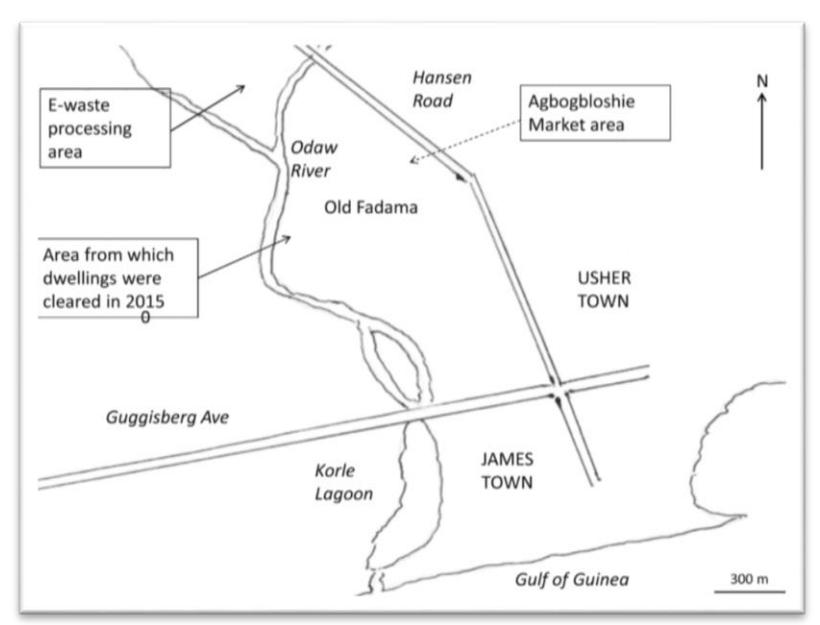
Figure 5. Old Fadama, Accra, Ghana and sources of pollution (source: IAN).
As part of the Korle Lagoon Ecological Restoration Project (KLERP) in 2013, the Accra government planned to relocate settlements from Old Fadama (Huang et al., 2014). This raised a conflict because the new location and its infrastructure have not yet been completed. A severe flood event on 2015, leaving 150 people dead, ignited the central government to order a massive eviction of over 50,000 people to complete a flood mitigation project combining grey and green infrastructure within a public funding scheme (Figure 6). Despite the relocation in 2015, the implementation of the initiative still takes a long process as the bulk of the settlement remains in the floodplain area of Old Fadama. The community of Old Fadama is sceptical about this program of relocation, upgrading and infrastructure development because it threatens the benefits they have from the mega-slum. It seems this view comes from low participation in the planning process. For instance, the relocation sites are far from current job sites. From this case it can be concluded that conflicts and long processes relate to a lack of understanding of economical issues such as job accessibility; land ownership; interdependence between the elite and the poor; and failure of public participation and consultation, governance and leadership. This is exacerbated by low public funding commitment as Old Fadama is not recognized in any government urban plans.
Figure 6. Eviction for completion of the flood mitigation infrastructure (source: IAN).
Discussion
Despite the effectiveness of GI in mitigating the impacts of the climate related floods in urban poor areas, its adoption and application is always challenging. As discussed above, the most critical issues are related to governance, finance and awareness. This section discusses the findings of the three case studies and recommends some approaches to ensure that GI is successfully introduced in urban poor areas and is more acknowledged by the public and policy makers.
The case studies of Kibera, Nairobi, Kenya and Madurai, Tamil Nadu, India show that addressing the governance issue is imperative in GI development. Bringing together local government and other stakeholders is effective to educate the respective agencies on how GI functions and benefits. This understanding brings along a change in governance culture to employ a decentralized approach as GI requires. Understanding the relations and mediating political interests among the urban poor can support the success of GI development. However, it is important to note that dealing with the governance issue requires a lengthy process and a great deal of persistence because of the complexity of relationships and legal uncertainity.
Regardless of GI's advantages being widely acknowledged and encouraged, funding for GI development projects can be difficult to come by. Public funding is the most suitable resource, yet it faces some barriers related to the legal framework and political interests. The case studies of Kiberai and Madurai provide good examples of how to move forward when the community and organizations can discover the right financial sources, such as grants or international aid
through NGO's or communities. Establishing small-scale projects can also be used as an entry to large-scale interventions if funding is insufficientIn the hope that this will attract investors while raising awareness of the community and government for securing public funding.
Green infrastructure awareness is another fundamental issue. To mitigate the impacts of climate related floods, it is essential for the urban poor to understand the importance of GI. There is a need for greater awareness to promote GI in poor areas. Awareness can be formed through programs and activities promoting the positive contributions GI can bring to urban poor communities. The case studies of Kibera and Madurai confirm that lack of awareness can be improved in many ways, such as collaborative design and construction, flood map creation involving poor groups, addressing issues through discussion and public participation as well as building a shared vision and mission among various groups using a participatory method. It can also be concluded from the case studies that public awareness not only tells the community about what to do but also explains issues and disseminates knowledge to people so that they can make their own decisions about GI regarding planning, development, monitoring and evaluation.
From the case studies of Old Fadama, Accra, Ghana, one lesson learnt is that the introduction of GI into informal settlements is socially resisted and politically and economically contested. A perceived belief underpinning urban policies on flood mitigation is that informal settlements need to be removed due to their illegal status. The successful removal of such settlements is often a main indicator of GI implementation. Removing people from informal settlements to new locations that are usually far removed from existing sources of livelihood and job opportunities is common practice in upgrading informal settlements. However, this disrupts existing social networks in informal settlements. Evictions and litigation often characterize the lengthy process of moving people out of informal settlements into a new location, which greatly influences the completion of GI. The case studies show that removing residents is not sustainable since these people will usually come back to live in the area they were evicted from. On the one hand it may solve the flooding problem but on the other hand it raises new social problems. Finding sustainable solutions for this problem is a priority for introducing a GI project in such areas. Generally, it is important to understand how the community in an informal settlement functions, how the social relationship and political power distribution in poor urban areas interact, and how the community and the government cooperate.
Lesson learnt based on the cases studies combined with the understanding gained from the existing literatures, this study recommends a number of approaches to ensure that GI is successfully introduced to urban poor groups andmore acknowledged by the public and policy makers. As for the governance issue, because GI demands public participation of interested parties, the establishment of smallscale neighbourhood-level governance could be a suitable system. This model will deliver direct coordination and interaction to foster stakeholder engagement, which is critical for sustainability.
Exploring innovative funding mechanismsis a way to deal with the financial issue. Some potential alternative financial sourcesinclude revenue collected from storm water fees/charges, in-lieu fees, allowance trading, and green bonds. If these alternatives can be appropriately regulated and ensured by authorities, then the private sector may be interested to invest in GI projects. For the awareness issue, the acceptance by the public of GI can be improved by advancing financial allocation to enhance human and social capital by education and awareness programs. Human and social capital operate synergistically to increase public acceptance of GI.
Conclusion
In many cities, there is increasing vulnerability to climate change related floods. Unsustainable development in response to rapid and rising urbanization causes degradation of the environment. This presents increased risks for urban inhabitants. Urban poor settlements are often developed in floodplain areas and nearby water bodies, which exacerbates this condition. Continuing and increasing flood losses and damages in cities demand solutions at many different scales, structures and areas. The urban poor as the most affected group should be viewed as an important party in mitigating climate related flood impacts. For this reason, the adoption of GI can be an appropriate approach. Therefore, this study aimed to analyze current GI practices in urban poor areas in Kibera (Kenya), Madurai (India) and Old Fadama (Ghana. An in-depth investigation showed how the stakeholders in the case studies addressed and overcame the critical issues of governance, finance and awareness to secure the success of GI development. This study believes that finding lessons learnt from the case studies can deliver public acceptance of GI employment on a large scale. From the case studies it can be concluded that GI intervention requires cohesive cooperation and full participation between government at any level, communities, the private sector, and community organizations. Policy adoption, development and implementation of GI must be supported by a holistic view across all scales of the political, social, economic and environmental aspects of urban poor communities. This will secure the success of GI initiatives in urban poor areas as reflected in the literature review on the importance of addressing the critical issues of governance, finance and awareness. Failing to acknowledge and respond to these issues can lead to failure of GI adoption and development.
Acknowledgement
An earlier draft of this article was presented at "The 4th Planocosmo International Conference", Bandung, 2-4 April 2018.