
Introduction
In this study an attempt was made to investigate the regulation of construction works in Shashemene city, Ethiopia, focusing on urban planning, institutional frameworks and policies and regulations that govern on-time completion and use of urban new buildings as working space/business premises. The central tenet was that microbusiness working space demand, business premises availability and location convenience as hindrance for their growth and expansion in Shashemene has received little attention in urban planning, urban renewal initiatives and construction work regulations. The existing regulations and interviews conducted with officials and microbusinesses revealed that these businesses have been viewed as selfsustaining and any kind of official government intervention was assumed to strain their growth and expansion opportunities in the city. Hence, urban land use proclamations and regulations leave no room for their growth aspirations as integral component of the socio-economic and socio-spatial fabric of the city. Thus, market led business premises rent oscillation has been the major management position taken by concerned officials of the municipality. Nevertheless, authorities have not been sucessful with this laissez-faire management approach. Such a loose approach and measure taken to promote free-market principles and practices has not guaranteed extension of the local revenue base through urban renewal initiatives nor nourished growth opportunities for microbusinesses in the city. Urban renewal practices in Ethiopia, as initially experienced in Addis Ababa city renewal projects, have been carried out with slum clearance in mind. Microbusiness working space need has not received the attention it deserves in urban and local development plans. There are unmet needs with regard to working space/business premises demand as constrained by negligible supply. Besides that, the response to agglomeration of related microbusinesses in the city space is not always planned ahead. Hence, for entrepreneurs and young new business entrants who wish to engage in microbusiness as well as for experienced business owners there is only seriously confined city space which in practice/through city-space or land-use policies should be extended with vertical or horizontal orientation of business buildings so as to accommodate rising demand for working space in Shashemene city to reduce the frequency of microbusinesses looking for location alternatives and the challenges they encounter due to unfamiliar and inconvenient working spaces when departing from an overcrowded business environment.
Discription of Study Area
Location of Shashemene City
Shashemene city is bordered by Arsi Negelle in the North, Hawassa in the South, AlabaKulito in the West, and Dodola in the East (Figure 1).
Figure 1. Relative Location of Shashemene City. Source: 1995-2012 (Information Technology Associates)
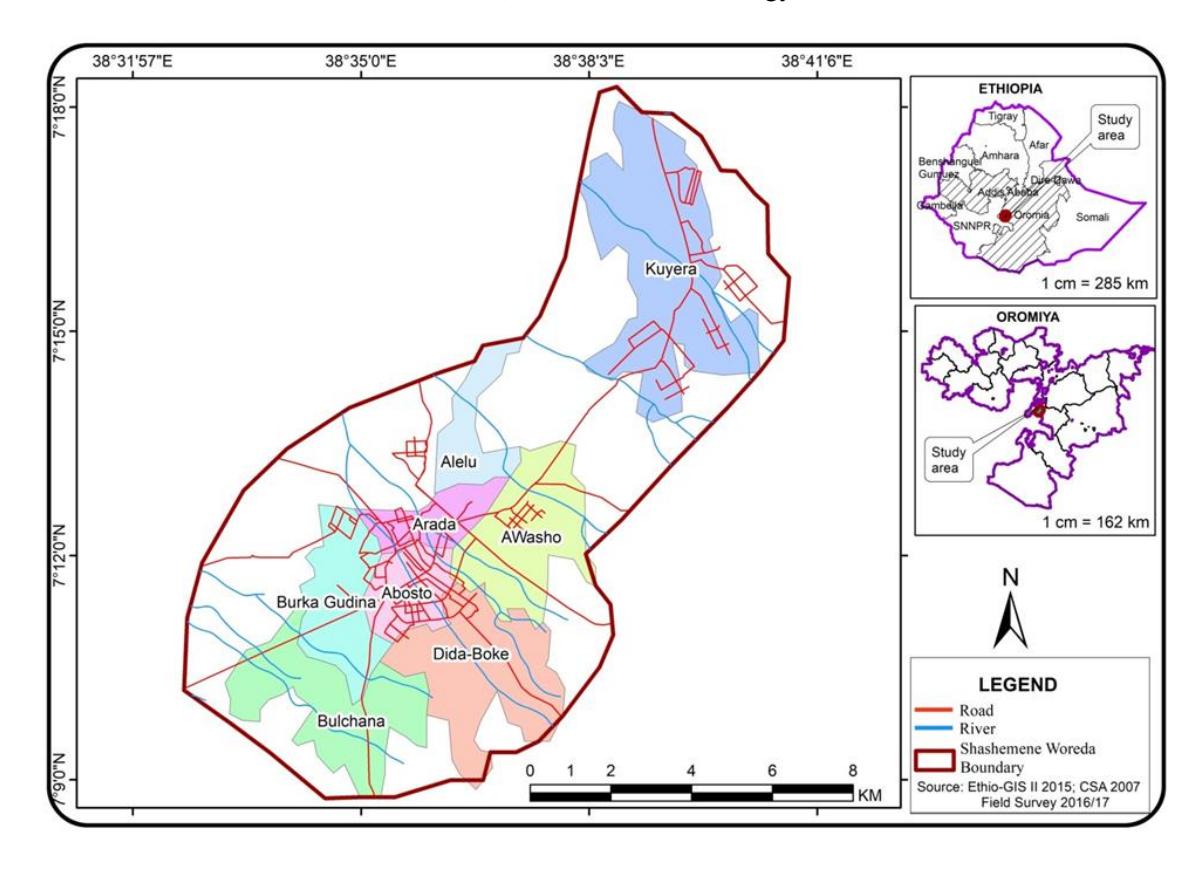
Figure 2. Geographical location of Shashemene City. Source: Ethio-GIS:CSA2007Field Survey 2016/2017
Shashemene, the West Arsi Zone Administrative center, is found 250 km south of Addis Ababa, with a surface area of 12,960 ha. Geographically, the city is located between 7 0 9′50″N and 7 0 18′17″N latitude and between 380 31′43″E and 380 41′58″E longitude (Figure 2). Shashemene is a city and a separate woreda3 in West Arsi Zone, Oromia Region, Ethiopia. The city lies on the Trans-African Highway; Cairo-Cape Town, about 156 miles (250 km) from Addis Ababa in the main Ethiopia Rift Valley (CSA 2012). In the late 1960s, Shashemene was one of the newly emerging towns situated on a route used for migration, and trade and connecting Kenya to Ethiopia. Since its establishment, it has been known as a business center and has attracted many temporary and permanent inmigrants. Bjerén (1985) wrote that, "….a great deal of the growth of Shashemene was caused by net inmigration. For instance, both in 1965 and 1970, 45 percent of the sample population over 15 years of age claimed to have lived less than 6 years in Shashemene…" (Bjerén, 1985).
Research Methods and Materials
For this particular study, an embedded mixed research design (EMRD, one methodology within another one) was applied. As a mixed research method, EMRD fulfils the requirements of this particular research in view of the use of quantitative and qualitative approaches in combination, providing a better understanding of the research problems than either approach alone (Creswell & Plano Clark, 2007). This research design helps to reject 'either..or' choices (Teddlie Tashakkori, 2010) as the choice of method/s is driven by philosophical (ontological and epistemological) assumptions and also advocates a iterative or cyclical approach to research. Therefore, a common stance taken in EMRD is that of pragmatism, or what Teddlie and Tashakkori (2010) refer to as an example of a single paradigm stance. Pragmatism can be considered a bridge between paradigm and methodology, or what they refer to as a particular stance at the interface between philosophy and methodology. Many mixed method researchers and theorists draw strong associations with mixed methodology and pragmatism. As pragmatism argues against an unfastened dichotomy between the qualitative and quantitative research paradigms and allows methodological flexibility and adaptability, this particular research adopted pragmatism as a problem-solving and action-oriented inquiry process. In addition, Bazeley (2010) defines integration in MMR- as combining different data elements and various strategies for analysis of those elements throughout a study in such a way as to become interdependent in reaching a common theoretical or research goal, thereby producing findings that are greater than the sum of the parts. Any problem is better understood if multiple aspects of it are studied (Gusic, 2017). Thus, this research attempted to integrate qualitative and quantitative data coherently.
Sampling Method and Sample Size
Finding a complete list of research participants related to manufactured ready-made clothing sellers from 2003 to 2016 in Shashemene city was a difficult task. A considerable part of the available list containing these business owners was incomplete and misleading. Some have mixed titles, such as 'cultural clothing collection, imported fashion collection seller', and 'décor collection seller' together. According to Shashemene Municipality (2016) there are about 2015 manufactured redary-made clothing sellers formally carrying out their business in the city. This implies that for the present study, the population was finite, so simple random sampling was 3 The woreda is the second smallest political administrative tier next to the kebele(the smallest administrative functional unit) in Ethiopia.
preferably adopted to select the sample of respondents. Thus, a new sample size of businesses under study was constructed by making door-to-door field visits of businesses with the help of knowledgeable local assistants. Besides, that, the City Municipality Trade and Industry Office was consulted-on the accuracy of the sampling outcome.The newly constructed sample was much more comprehensive and relevant than the list provided earlier by the same office. Having done all this, differentiation was made among 2015 manufactured ready-made clothing sellers in the city based on the type of business premises in which their businesss activites take place. It was found that a total of 1273 and 742 manufactured ready-made clothing sellers were conducting transactions in old but transformed buildings and newly built business buildings in the city, respectively. Therefore, for the comparative survey, taking two blocks of samples was believed to be logical. Following the sample size determination formula - of Yemane (1996), we got a grand total sample size of 564 (304 and 260 enterprises in old but transformed buildings and newly built buildings in the city, respectively), at 95% confidence level and 0.05 precision level.
\[n_0 = \left(\frac{N}{1+N(e^2)}\right)\] \[= \frac{1273}{1+1273(.05^2)} = 304 \text{ (in old but transformed buildings)}\] \[= \frac{742}{1+742(.05^2)} = 260 \text{ (in newly built buildings)}\] (1.1)
where, n0= sample size, N = population size, e = sampling error/level of precision
Method of Data Collection and Analysis
A single data collection is inadequate to provide sufficient and relatively accurate data (Creswell and Plano Clark, 2011). Because of this,the sources of data for this study were both primary and secondary. The primary data collection involved predominantly four methods, comprising of; (1) field observation in order to identify the degree of spatial distribution of microbusinesses in the city; (2) a questionnaire survey of ready-made clothing sellers; (3) key informant interviews with Municipal Land Administration Officers, Business and Trade Development Officers, Customs and Revenue Officers; and (4) in-depth interviews with some selected ready-made clothing sellers. The secondary data were gathered from various studies and reports for the city and the country as a whole, mainly on the external barriers affecting growth opportunities for microbusinesses. Various policy and regulatory documents of the Ministry of Urban Development, Housing and Construction (MUDHCo), Central Statistical Agency (CSA), surveys (mainly on microbusinesses sector growth hindering factors, urban employment/unemployment data, labor force surveys, reports from the Ministry of Labor and Social Affairs (MoLSA), Urban Labor Force Dynamics, Shashemene City Urban Land Development and Management Office, Plan and Development Cooperation, Bureau of Finance and Economic Development Shashemene City and other plans, reports, proclamations and directives of the city were used. Moreover, reports and studies conducted by ILO and others in developing countries and within the African context were also reviewed.The data obtained through the questionnaire survey were analyzed using SPSS version 20, while the data gained via observation check list as well as interview transcripts, were analyzed using qualitative techniques descriptions and narrations.
Literature Review
Urban Renewal and Microbusinesses Growth Opportunity
This section is devoted to discussion of urban renewal as a neighbourhood project, the way it interlinks growth opportunities for micro-enterprises/-entrepreneurs and consumers. Changes to the built environment demonstrate that renewed spaces are frequently orientated towards new uses, created for newcomers as well as new purposes. Thus, urban renewal can create'sheltered islands' (Cowan, 2016) that allow access for those with the necessary means to (economically) survive or spend accordingly. Through development projects like urban renewal, neighbourhoods generate opportunities for people. For instance, Thurber (2018) states that, materially, neighbourhoods are the places where people live, have the potential to build wealth and often have access to school, work and needed services. Epistemically, neighbourhoods can be sites where people come together to share and build knowledge and participate in civic action. Affectively, neighbourhoods are places where many people enact caring relations with others and the environment. The emergence of neighbourhoods is not an accident (Thurber, 2018) but rather due to geographic concentrations of risk and opportunity to people in urban areas, as spatial factors are at the core of urban life.
There are responsible spatial transformation practices for neighbourhood dynamism, though critics still prevail against unintended, outcomes. Terms such as 'gentrification', 'regeneration' (in Europe), 'renewal', 'redevelopment' or 'revitalization' (in North America) and 'urban transformation' are interchangeably used throughout the literature to describe these practices. Although the ultimate goal of spatial transformation practices are assumed to be similar, some are highly preordained (such as gentrification resulting from rising land value, loss of affordable housing, the displacement of poor and working-class residents and health risks, loss of long-time residents' ability to imagine the future, and rising rents and/or property taxes (Zuk et al., 2015), privilege newer residents (Stein, 2015), produce political, community, cultural and social displacement (Hyra, 2013), ignore residents' lived experience of a place accompanied by political and social elites re-narrating historical meanings of a place and other forms of symbolic erasure, such as rebranding a neighbourhood and changing place names (Hodkinson & Essen, 2015).
Similarly, urban renewal projects have been criticized as contributory to gentrification through rising rents and property taxes, reducing jobs and amenities targeted at lower-income residents, forcing residents to travel further to purchase affordable products (Shaw & Hagemans, 2015), compelling residents to search for affordable housing in suburban locations leading to suburbanization of poverty, which in turn results in increased costs of transit to and from work and accessing other services (Kneebone & Garr, 2010). Nevertheless, some acclaim urban renewal as a potential solution for decaying and disinvested inner-city areas. Another form of spatial transformation, regeneration, which is a 'holistic process of reversing economic, social and physical decay reflecting market failure, equivocally with urban revitalization rather than renewal), suggests moving beyond the physical redevelopments associated with large-scale slum clearance towards a more ambitious approach to resolving urban problems. Conceptually, urban regeneration shares meaning with redevelopment. Hence, cities and their residents depend on taxes generated by successful businesses, solid property values and employed citizens. Therefore, the concept of redevelopment is used to describe the best practices in improving the economic status of communities. Moreover, urban experiences involve travel, interactions, and communicative practices of people within a city, which have a function to weave a sense of connectedness in space and in turn serve to imagine the city as a single place (Gonzalez, 2010).
The urban imagery (broadly and specifically considered) becomes intertwined with the process of producing and transferring mobilized urban regeneration policies. The production of these urban imageries is a conscious act worthy of attention (Zukin, 2014). For instance, New York City's High Line is 'one of the world's best-known urban-renewal projects (Kwaak, 2014). Reusing the High Line for housing with a public promenade and park, respectively, it fits into a larger context of what Short (2012) has called a 'global city imagery', where the people of various cities embrace the production of symbols that connect them to the image of being a modern global city. The High Line's popularity has continued to increase, drawing almost six million visitors in 2014 (Pogrebin, 2015). Initially, cities with similar post-industrial infrastructure adopted the concept or otherwise used defunct infrastructure such as the High Line to gain traction for their own revitalization plans (Jaffe, 2011). The most important factors for urban renewal/regeneration projects' success or failure include: context-, as for northern/southern global cities (Lees, 2011), media backup, 'policy networks' and channels (McCann & Ward, 2012), the neighbourhood (Sng, 2017), weight given to physical and soft infrastructure, the position of art in the city (Chakravarty & Chan, 2016), existing privileged groups (Madgin,2013), the affordances of neighbourhood/place, and government involvement (European Union, 2011; Zimmermann, 2016). Microbusinesses are owned by entrepreneurs (members of the neighbourhood) who share the same urban spaces and places, so the growth opportunities and risks of their accustomed urban environment are intertwined with the success or failure of urban renewal projects.
Main Actors of Urban Renewal
Urban Planning Interventions
Urban planners are under varying levels of influence precipitating from dual the nature of several urban development challenges. To name a few: favoring either 'top-down or bottomup' approaches (Tallon, 2010); whose interest should be prioritized; the private sector, the community or the elite (Clark & Wright, 2017); which travelling urban renewal experiences bring intended outcomes with them; how can the balance of power between stakeholders be maintained in the design and implementation phases of the project; applauding place/spacemaking as opposed to place/space-breaking trends or views and saving status quo ante or promoting the status quo; inward/outward design's suitability for the external/internal context. Keeping the delicate balance of all these issues throughout the design and implementation phases of urban projects has been debated by authorities, scholars, and community and private sector developers. Thus, planning for change, along with decision-making in relation to the process, is initiated and undertaken by necessarily interested stakeholders (Clark& Wise, 2018).
For instance, by keeping in touch with the status quo (adopting travelling or mobile modern urban renewal experiences from advanced economies): compromising 'structural forces and agents' actions (Pierce et al.; 2011): applying a compact urban form (for efficient use of finite spaces in a city) (Ewing and Hamidi, 2015) to realize real opportunities, promoting pro-growth and competitiveness-oriented renewal that centers on place-marketing and place-branding agendas (Friedmann, 2010; Munzner & Shaw, 2015); place-making (as 'the art of making places for people') and advocating a people-oriented approach (Sep, 2013); focusing on practices like improving 'walkability', 'imageability' and 'sealibility' of a place (Gehl, 2010); promoting the development of amenities (with their leading-/lagging dimensions) as 'locationspecific goods' (Florida, 2002; Musterd & Murie, 2010): distinguishing between areas that are opportunity-rich (with better service and income generation chances) and opportunity-poor
(inferior quality services and meager chance to get income) (Davis &Welcher, 2013). All these approaches urge urban planners to develop a holistic view of interrelated issues.
The same goes when keeping the status quo ante demands; promoting economic viability of an area (acknowledging social spaces as third spaces significant to local economic integration such as home and place of work, historic district preservation (reactive zoning) (Young, 2012; Carmona et al., 2010) and transit-oriented development (proactive zoning); matching density with diversity (Campbell et al., 2014), avoiding exclusionary zoning, and preserving the lived experiences of early residents of the locality (Lefebvre, 1991): changing informal social areas into formal administrative or planning units (Abdollahi et al., 2010): considering the effects of space (social space as three–dimensional; conceived, perceived and lived space (Lefebvre, 1991) and place (as dynamic and continuously changing locations, relations and connections) in economic and social integration; checking the effects of the power of property and capital privileges/property rights on the disadvantaged (Lefebvre, 1996) and on mixed-income neighbourhood development projects (Oakley et al., 2015); admitting the merits of infusing physical infrastructure (buildings, roads and community facilities) and 'softer' forms of infrastructure_(social networks; and their dual roles in promoting community-building (Canadian Urban Institute, 2015) and community consultation in project work(Gladki, 2013): community empowerment/community organizing (Lucio et al., 2014) and snatch planner proficiency in the design and implementation phase of projects.
Within the complex web of the urban development planning process there is interplay of such elements as; governance, policy, community empowerment, social learning, economic motives, political approaches, cultural settings and physical environment resources. Therefore, collaborative forms of governance (UNDP, 2014), policy testing/applying through urban labs and living labs and-/or co-design approach (Karvonen and van Heur, 2014), community empowerment (Parker, 2017; Clark & Wright, 2017) and social learning (Astbury & Leeuw, 2010): economic(Lees & Melhuish, 2015), political (a neoliberal framework vis. governmental) (Ghertner, 2015), cultural (Wise, 2016), and physical capital (European Union, 2011) of an area undergoing renewal need to be understood and acknowledged.
In general, urban planners have adopted the design principles of New Urbanism and Florida's (2005) notion of first attracting the 'creative class' in order to set the process of urban renewal in motion, recognizing the role of artists and other creative people as 'catalysts for change' and the 'foundations of the community' (Pitman, 2013). However, as the Maboneng experience in South Africa indicates, both direct and indirect forms of displacement are evidenced by urban renewal projects (Walsh, 2013; Reid, 2014), which have been linked to'apartheid gentrification' (Reid, 2014). Rees (2013) calls this'economic apartheid' as people are people are excluded because of their socio-economic status. Therefore, planning a high-quality built environment with effective maintenance of common areas for both private and social renting residents must form a core part of an intervention. The way in which an intervention is conducted can have significant impacts on well-being, undermining residents' sense of status and control and potentially eclipse positive impacts that may otherwise be gained (Clark & Kearns, 2012).
Community Interests versus Private developers' Interests
For communities of which micro-enterprises owners are a part, places/spaces have meanings beyond mere inclusion/exclusion debates. Ideas or practices generated or located and adopted by 'the community' have more political weight and authenticity. Therefore, it is increasingly necessary to look beyond more official networks, processes and actors. Even in investigating
discourses of public participation within regeneration, Pollock and Sharp (2012) argue that 'contestation and conflict' should be recognized as appropriate reflections of a commuinity (Chakravarty & Chan, 2016). Hence, colective memories of resilience and continued practices of imagining alternatives/spatial imaginaries are central to residents and working-class communities (Lipsitz, 2011). When buildings are being demolished in favor of urban renewal, the continuity in the landscape, such as 'strong characteristics' or 'the local spirit' evident in the area must be carefully preserved. Although may be temporararily, regeneration can lead to further exclusion if local people are not involved- and if social policies and legacy initiatives are not in place to protect local residents (Smith, 2012). Moreover, individual and social capital, which involve the formation of networks, norms and trust, enable people to work together to pursue and achieve a number of set shared objectives across the community (Quinn & Wilks, 2013; Ruller, 2011). Thus, existing analyses of the process of art and urban change are often framed as the distinction between participation and inclusion (Pollock & Sharp, 2012; Lees & Melhuish, 2015). Despite increasingly innovative approaches to place-making as a pathway to economic development and social sustainability (Munzner & Shaw, 2015), issues of inclusion and exclusion/the drivers and beneficiaries of neighbourhood and wider urban change persist.
The work of Lefebvre (1991) summerized as a claim on 'the right to the city's and 'the right in the city', exposing the social construction of space- has provided an invaluable framework to articulate and address inequitable power relations; processes of change can be unjust; and not all voices are heard or recognized as valid (Harvey, 2012). Beyond the varied interests and policies that drive urban renewal initiatives, the will to understand the lived experience of urban change emphasizes who might be the focus of planning, policy and change, and who is overlooked. Hence, end users should be seen as contributors to creative and co-designed processes rather than passive recipients. This results in creative collaboration between citizens (as customers), developers and other stakeholders (European Commission, 2009; Dutilleul, et al., 2010). Hence, the implications of new forms of community involvement are able to incorporate those who lack presence or avoice in traditional political practices (Baviskar, 2010) and local residents, after all, will be the ones participating in, contributing to and therefore affected by events and planning, urban change and renewal.
Citizen participation is citizen power, a 'redistribution of power that enables the have-not citizens presently excluded from the political and economic processes andwho need to be deliberately included in the future. Participation is the route to a more equitable sharing of society's benefits. Representative democracy coupled with techno-bureaucratic administration is no longer able to preserve democracy's ideals of active citizen involvement and equitable distribution of a nation's wealth. Ellis (2012) extends this to the particular context of development policy, positing that citizens are cast as urban stakeholders, a new public at the site of public consultation in world-class cities. For community members 'displacement is much more than the 'moment of spatial dislocation'; it is also the loss of place,neighbourhood, family and home (Rérat et al., 2010; Davidson, 2011). Therefore, once unheard voices gather momentum, public protest and destruction, will result, as was the case for instance in South Africa. The developer's claim that Maboneng was a place where people from different socioeconomic backgrounds could live, work and play was questioned and protested severely (Wilhelm-Solomon, 2012) and residents marched through the streets in protest against eviction/lack of affordable housing and the changes in the area due to gentrification (Lupindo, 2015). Likewise, throughout the 1960s, public housing residents in cities across the United States organized rent strikes, resulting in improved housing and services (Karp, 2014).
Community participation in urban renewal projects takes different forms mandated by the project owners, which create ambiguity for city governments in designing their own process (Raman, 2013). Meanwhile, participation has taken on instrumental, exigent forms aiding the market-oriented visions of urban development programmes like the JnNURM urban renewal projects in India (Coelho et al., 2011), institutional participatory components in policy aim to foreclose the scope of political claims-making by constraining participation to apolitical, technical, civic terms (Coelho et al., 2011). Institutionalized forms of participation have been made available only to elite civil society, at the site of public consultation (Ellis, 2012). Hence, in most cases, forums of citizen participation/public consultation are overtaken by elites' invited spaces that empower the middle class and reinforce agendas already set by international development donors (Coelho et al. , 2011).
In most cases community participation opportunities empower middle-class residents (Coelho et al., 2011). Local interests are therefore not always adequately considered and research notes that locals feel excluded as a result of renewal (Spirou, 2010). Therefore, participation is increasingly becoming less radical, existing to simply pander to donor requirements. Coelho et al. (2011) argue that though tokenistic forms of participation are declining, the efficiency of implementation of development often take precedence and priority over participatory processes, and financial stresses of urban decline and de-industrialisation have made the private sector a desirable and necessary funding source (Tallon, 2010). Although the government recommends a list of tasks and services to be provided by urban local bodies, a number of other specialized agencies and special purpose vehicles render services by passing/ignoring their 'power jurisdictions'(Transparent Chennai, 2014).
Moreover, for addressing and avoiding inconveniences to private developers' interests, elites prefer to hire private governance consultants so as to compile a new city development plan, though the impacts of these consultations remains unclear as the consultants set the terms of the engagement, foreclosing the opportunity for the public to demand accountability, as they could from their elected urban local body (Raman,2013). Besides, private-sector project owners seek informal political arrangements like patronage relations that emphasize negotiations, which pose an obstacle to both the retreat of the state in neoliberal development and the subjection of people to market-driven urban renewal (Shatkin & Vidyarthi, 2014). In addition, components of policy aimed at participation and empowerment lend legitimacy to development agendas usually driven by international donors offering standard solution packages to all sites of development. There are opportunities for the World Bank to intervene in community participation cases (Raman, 2011). For governance processes to be accepted and owned by the people, building processes of consensus into these institutions is essential, giving rise to what is broadly called 'civil society participation'(Coelho et.at., 2011). However, participation is a bid for public support through which new subjects are constituted, consensus is manufactured for outsider agendas and the open-ended nature of participation allows the coexistence of contradictory objectives and room for agendas to be controlled (Burbank et al., 2012) leading urban renewal to be driven by private capital.
When community participation is organized by people in power, it is those people who set the terms of participation, framing the objectives as well as designing the mechanisms and limits of any delegated power. Usually, the state withdraws in favour of private markets and the public are re-conceptualized as individual citizens- consumers who must manage their own risks (Bradley, 2014). Given this backdrop, ongoing difficulties in persuading the public to engage in participation exercises are unsurprising (Lowndes et al., 2001). Hence, it is likely that the coercions of the'neoliberal paradigm' cast a shadow on the future of cities, community actors and collective political action (Leary-Owhin, 2016). Strong cohesiveness and collaboration in a neighbourhood strengthen collective action against gentrification (Clampet-Lundquist, 2010; Thurber and Fraser, 2016; Hyra, 2013).
Academic Involvement
Academics are involved in almost all aspects of urban renewal projects under the banner of site surveyors, consultants, designers, project leaders, mobile/travelling tested experience facilitators, artists, and others. They attempt to mediate theory with practice. Numerous design scholars have criticized the disciplinary tendency of prioritizing the physical form and visual aesthetic quality over other types of design exploration (Southworth & Ruggeri, 2011). There is an environmental dimension to poverty and inequality (Pinoncley, 2016). For instance, when old businesses are replaced by amenities more appropriate to an affluent population, as a displacement pressure, it leaves the original residents feeling out of place in what was their home area. Rgeneration should ultimately serve the needs of the original resident community (Clark & Wright, 2017) and policy ambitions that aspire towards genuine community engagement and moving beyond a superficial demolish-and-rebuild model of urban renewal projects has to be promoted.
Academics have remarked methodological challenges in understanding neighbourhood displacement in its full-range -dimensions. As both theoretical practitioners and practical theorists, academics indulge in identifying the fits and misfits of governing ideas/theories, questioning what parts of social life have been accounted for and whether any facets are left untouched (Markusen, 2014). For instance, while discussing about the nature of neighbourhoods, structuralists argue that neighbourhoods are not accidentally formed entities but constructed through processes of uneven development, whereby some places (spaces, cities or countries) are systematically less developed enabling other places to become increasingly valued and valuable. Social process theorist in their stance focus on the many ways that lived experience is both shaped by and shapes macro-forces (Lees and Melhuish, 2015). In the theory of structuration all structure constrains and enables human agency; institutions, rules-and practices that govern society are created, maintained recursively through human actions and human actions are always embedded in structures.
Thus, social process theorists are interested in the processes through which this transformation takes place. In addition, social movement scholars agree with structuralists that political power and wealth are concentrated in the hands of a few and that systemic racial, gender and other inequalities shape life chances in profound and measurable ways. Thus, social movement models recognize the latent power of residents and point in the direction of a concrete strategy that organizers can implement. However, post-structural theorists suggest that such models are inherently incomplete and reductionist, and argue that life cannot be modelled or diagrammed or derived from a single cause. Hence, while structural analysis put forward only the most probabilistic outcomes of social inequality, post-structuralists seek moments where these trends are being contested, undone and reimagined - no matter how seemingly small or insignificant andconsider ways to amplify, extend and enlarge these efforts.
Structuralism explains the forces driving gentrification, yet groups out the potential of those most harmed to affect change. Social process models suggest specific strategies to mobilize for change, yet the requisite preconditions (state political opportunity, organizational strength and cognitive liberation in the social movement model) undercut its potential utility for emergent community organizing efforts in sub-optimal conditions. Even though post-structuralism
succeeded in capturing indigenous knowledge, strength and potential, it offered no specific instructions on what those groups ought to do with that strength to achieve their goals (Thurber, 2018). A 'great men theory' of historians argues that key events in history would not have occurred without the actions of great men- who served as catalyst for some of the world's most important events (Ghertner, 2015; Shatkin & Vidyarthi, 2014). While this theory pioneering urban renewal project leaders, there is a need to credit smaller actors, everyday players on the city scene, where the people in the middle should convince the ones at the top.
All this indicates that no single theory can capture the fully-fledged story pertinent to success/failure of urban renewal projects, private developers' interventions ,elites' implicit actions, community involvement and donors'interventions'(Bocken et al., 2015; Zhao et al., 2011; Putnam, 2000; Wise, 2015). As critical thinkers in geography have noted (Soja, 2010; Harvey, 2012), when policies are driven by politics of power and exclusion, what we see at the surface only tells one part of the story. Masterplanning, either coercive or voluntaristic, should help to improve place-making, foster a close working relationship between local stakeholders and public consultation as part of development (Donnison, 2016):Tiesdell & MacFarlane, 2007). Thus, to call any regeneration a genuine success requires a longer lens and wider field of vision than current practice allows (Clark & Wright, 2017). This situation ultimately improves and extends growth opportunities of microenterprises in their immediate business environment.
Theorizing the City
The city is understood as the context of the urban, which in turn is the way cities function and are lived in. Hence, the city is the habitat and the urban is the way in which the city is inhabited (Gusic, 2017). The city is often theorized as constituted by four theoretical building blocks: three are intrinsic (heterogeneity, density, openness- and permeability) and one is about the central position of the city within its wider context. The city is theorized as having substantive heterogeneity across the whole socio-political spectrum (Lefebvre, 1996)-heterogeneity of people and communities living in the city. This understanding implies that heterogeneity attempts to govern the city via everything from city administrations, police forces, and religious institutions to criminal gangs, street norms, and people such as parents and shop owners (Magnusson, 2011). This understanding also implies the heterogeneity of spaces, as the city consists of multifaceted and fluid spaces that are used differently depending on context, time of day, or user (Jacobs, 1994). The city is thus theorized as a mosaic that holds an enormous collection of small, overlapping, and mutually contradicting elements (ibid.).The city is also theorized as having a considerable density that ensures that the heterogeneous elements occupying the city – e.g- people, governing attempts, or spaces – are concentrated with little to no distance between them (Lefebvre, 1996; Magnusson, 2011). Openness and permeability re the third way in which the city is theorized (Hall, 1999). This implies that the city has multiple contact points between which there are possibilities of open flow so that the heterogeneous and densely located elements of the city are able to connect with each other (Amin & Thrift, 2002).
The open and permeable city is thus an entity where it is possible to move among and between different eighbourhoods, regularly bumping into something old or new (Sennett, 2008). The city is finally theorized as central in its wider socio-political context (Brenner, 2011). In other words, the city is a center of politics and a hub of economic activity (Sassen, 2002), a magnet of constant influx. The city is also where political parties are based, capital is invested, enterprises are founded, religious or historical monuments are preserved, and cultural activities (e.gtheatres, concerts, or museums) are concentrated (Hepburn, 2004). As mentioned before,in urban studies the city generally has four main characteristics: (i) heterogeneity; (ii) density; (iii)
openness and permeability; and (iv) being central within its wider socio-political context. Provided that these characteristics of a city are integrated in a sound way, they may serve as growth opportunity for microenterprises through urging sufficient availability and suitableness of working spaces.
Policies for Governing Urban Land Use in Ethiopia
Several efforts are being undertaken to improve the understanding of urban land governance. In this regard, the comprehensive contributions of international organizations such as the World Bank, UN-Habitat, Slum Dwellers International, and the Lincoln Institute of Land Policy are worth mentioning. For example, the World Bank has developed Land Governance Assessment Framework (LGAF), which is a comprehensive indicator based framework for assessing land governance in each country (World Bank, 2014). Specific to urban areas, UN-Habitat undertakes different urban governance awareness creation campaigns through its different programs such as the Urban Governance Campaign (UN-Habitat, 2004b), the Tenure Security Campaign (UN-Habitat, 2004a) and Land For All (UN-Habitat, 2004c), among others. In addition, UN-Habitat is also developing tools that help to improve urban governance in general and land access and tenure security in particular through knowledge management, institutional capacity and capacity development and advocacy (GLTN, 2012). Nevertheless, literature on policy implementation analysis focuses mainly on the national and extra-national levels (Bjorn, 2008). Pertinent to this, LGAF is a good example. However, urban governance and development are greatly influenced by local actors in a given province (Stigt, 2013; Racodi, 2003; Kihato et al., 2013); they deal directly with local interests, including informalities, disputes, land transactions, and land allocation. In Ethiopia, urban land is governed and administered by the urban land leasehold law, which has been subjected to improvement three times since its first appearance in 1993.The first urban land leasehold law (proclamation 80/1993) was endorsed in 1993 (TGE, 1993) and the second urban land leasehold law (Proclamation 272/2002) was issued in 2002 (FDRE, 2002a). These two laws were issued without an underlying urban land policy, even though the need for a policy framework had been discussed in several works (Desalegn, 2009). Meanwhile, the third urban land leasehold law (Proclamation 721/2011) (FDRE, 2002a) was issued following the acceptance of the first urban land management policy of the country (FDRE, 2011b). Therefore, in Ethiopia, the aim of the urban land management policy, as mentioned in the document, is to create a transparent and accountable lease tender and land delivery system to make tenders in accordance with the prevailing land values and for urban development to be guided by land-use plans (FDRE, 20011b). The policy also mentions that these were lacking in the previous proclamations. However, the non-transparent and non-participatory nature of the urban land management policy formulation and the low societal participation are deemed to affect the urban people-toland relationship. For example, during the implementation of Proclamation 272/2002, owing to the absence of underlying policy objectives, urban land governance was not appreciably good and consequently neither was urban land management. For integrating the usually disparate information about the urban people-to-land relationship, Bennet (2007) notes the different rights, responsibilities and restrictions that exist between land users and land need to be systematically understood. Hence, for the sake of comprehending urban land leasehold proclamation 721/2011 in Ethiopia in light of urban land governance, the matrix shown in Table 1was employed, as it incorporates urban land management policy.
Comparative urban land policy analysis among urban land proclamations shows that shortcomings are visible in the initial implementation phase of Proclamation 721/2011. These include; the policy came into effect without prior designed implementation strategy; issues of organizational reform, human resources and facilities that slow down the execution of planned activities in the urban land policy. Besides, that Proclamation 721/2011 plans to transfer all old possessions and informal settlements to a lease system in four years, which has not substantially been realized. The same proclamation also aims to create complete harmonization of land development with land-use planning. However, the reality is that the land-use plans of most cities in Ethiopia are obsolete (Tekle, 2011) and current urban developments, for example in Bahir Dar city, are beyond the capacity of land-use plans (Alemie et al., 2014). Therefore, the urban land governance problems both at the national and city level iclude tenure insecurity, informal settlements, informal land markets, inequity, lack of information access, weak local government capacity, and lack of transparency. The prevalence of urban land governance problems both at the national andcity levels, even after the 2011 urban land management proclamation, reveals a weak institutional and organizational performance (Alemie et al., 2014).
Table 1. Proclamation 721/2011 in light of urban land governance concepts.
| Proclamation 721/2011 | ||||
|---|---|---|---|---|
| Ensure rapid, equitable and sustainable urban development through | ||||
| improving the land governance and land information system; | ||||
| Realize common interests and development of the people; | ||||
| Create a transparent and accountable urban land lease tender and land | ||||
| delivery systems by preventing corrupt practices and abuse; | ||||
| Make the tender reflect the prevailing value of the land. | ||||
| Urban land leasehold proclamation and its regional regulations; | ||||
| Regional government informal settlement formalization regulations; | ||||
| Urban land leasehold registration proclamation and its regional regulations; | ||||
| Cadastral standard regulation and its regional regulations; | ||||
| Capacity building in the short and long term. | ||||
| The policy formulation process lacked transparency and participation, there | ||||
| was no awareness- creation activity to the public, the public heard its issuance | ||||
| from the media; | ||||
| Public hearings were conducted after its issuance, which did not have any | ||||
| relevance; | ||||
| Current implementation activities are done in an integrated way among the | ||||
| Ministry of Urban Development and Housing, regional bureau, | ||||
| municipalities, kebeles, the Mapping Agency and the Information Security | ||||
| Agency (INSA), evaluating noteworthy effects of their integration is still | ||||
| difficulteven though the roles of each actor are identified; e.g. the Mapping Agency is responsible for establishing ground control points, INSA for | ||||
| orthophoto production. | ||||
| Organizational reforms and human resources get attention at the policy level; | ||||
| Efforts, especially organizational reforms (Real Property Registration | ||||
| Agency, Integrated Land Information System Project Office, Land | ||||
| Management and Development Bureau),aremade at the national (MUDHCo) | ||||
| level, but at the local level the organizational reform process is sluggish; | ||||
| Human, material and financial resources remain long-lasting issues at local | ||||
| levels. | ||||
Source: Adopted from Alemie et al., 2015
Policies for Governing Urban Land Use in Shashemene City
The current urban land-use regulations at work today in Shashemene city are almost an exact a replica of the national laws. The difference between the regulations and the national proclamation are minor with respect to significant changes in urban land governance. The date of issuance-and the year of entitlement for informal settlement formalization in the city seem to be the only real difference. Hence, it could be argued that there is interference of the national government at diverse levels of regional regulation formulation. Besides, that,a study of UN-Habitat (2008d)revealed that a shortage of housing and lack of access to urban land for housing is the primary cause for informal settlements and slums in most urban areas of Ethiopia. The existing land-use plans and cadasters do not cope with the demand of contemporary urbanization (Alemie et al., 2015b). Desalegn (2009) has argued that the lack of a federal institution at the ministerial level also contributes to the problem. Concerning the regional urban land leasehold regulations on issues of informal settlements and old possessions, the regulation does not provide a clear distinction between old possessions and informal settlements, because informal settlements are describedin the articleon old possessions. In addition, the urban land governance problems observed in other cities of the country (Hawassa, BairDar and DireDawa) are similar to those in Shashemene city (for example, informal land market, lack of information access, lack of transparency and bureaucratic disorder).
Table 2. ULG dual responsibility.
State functions (executed by ULGs) Municipal functions of ULGs
Functions prescribed by federal law to regional governments as their core responsibility and assigned by regions to ULGs (and to woredas in rural areas) for execution:
- expansion and management of primary and secondary schools;
- expansion and management of primary health care and services;
- management of police and courts;
- support to micro- and small enterprises.
Regions retain decision-making-power and administrative control over these functions. Budgetary approval of expenditures is required by city council, but otherwise there is a chain of management and reporting that proceeds from separate line offices within the city administration to regional authorities.
Functions assigned to ULGs by regions through city proclamations include, among others:
- Housing supply;
- land servicing and supply;
- supply and quality of water, electricity and telephone services;
- road construction;
- drainage;
- road lights;
- drainage and sewerage;
- solid waste disposal system;
- poverty reduction;
- maintaining vital statistics;
- marriage, -birth and death certificates;
- abattoirs;
- bus terminals and market places;
- combating soil erosion, land slide, disaster and environmental pollution.
Source: Adopted from MUDHCo,2015
In Shashemene city, urban land issues are administered by the Urban Land Management and Development Bureau of the Shashemene Municipality, a government organization. Besides that, brokers and traditional financial institutions, ikub4 and idir5 , play their own role as actors in 4 Ikub is money collected from individuals having common agreement and members get the amount they contributed turn by turn.
urban land issues. Moreover, Oromia National Regional State retains control of key legislative functions in urban land-use categories. However, local governments, as the third tier of government administration in Ethiopia, are established by regions according to their own constitutions and governance structures. Notwithstanding minor variations, the most prevalent local government structures are woredas (in rural areas) and urban local governments (ULGs), also referred to as city administartion. While the constitution falls short of recognizing the local government level, providing constitutional rights or protections to ULGs, each regional government has adopted city Proclamations that specify cities' powers and responsibilities (GTZ, 2013). Since the early 2000s, Ethiopia has devolved substantial legal authority and responsibility for service delivery to urban local governments (ULGs and/or muncipalities). However, despite ULGs' increasing importance in local governance, they are constrained in carrying out their mandates because key powers are still retained by regional governments. This issue is particularly pronounced in municipal finance, personnel management and land management (MUDHCo, 2015). This is not only significantly limiting ULGs in properly carrying out their mandates, but also contrary to the proclamations on the organization of ULGs in the regions. Thus, city administrations/ULGs and woredas are semi-autonomous local government entities with legal status as corporate bodies, their own political leadership (councils) and their own budget. Nevertheless, ULGs and woredas are overseen by their respective councils, whose members are directly elected to represent each kebele (ward) within their jurisdiction. It is stated in the proclamation that ULGs also havethe right to collect municipal taxes and revenues and the mandate to undertake an extensive list of municipal and state functions, the latter under delegation approved by their regional governments (MUDHCo, 2015). Therefore, local governments in Ethiopia are responsible for a significant number of essential municipal services and state-level functions that they execute on behalf of their respective regional- governments dual responsibility (Table 2).
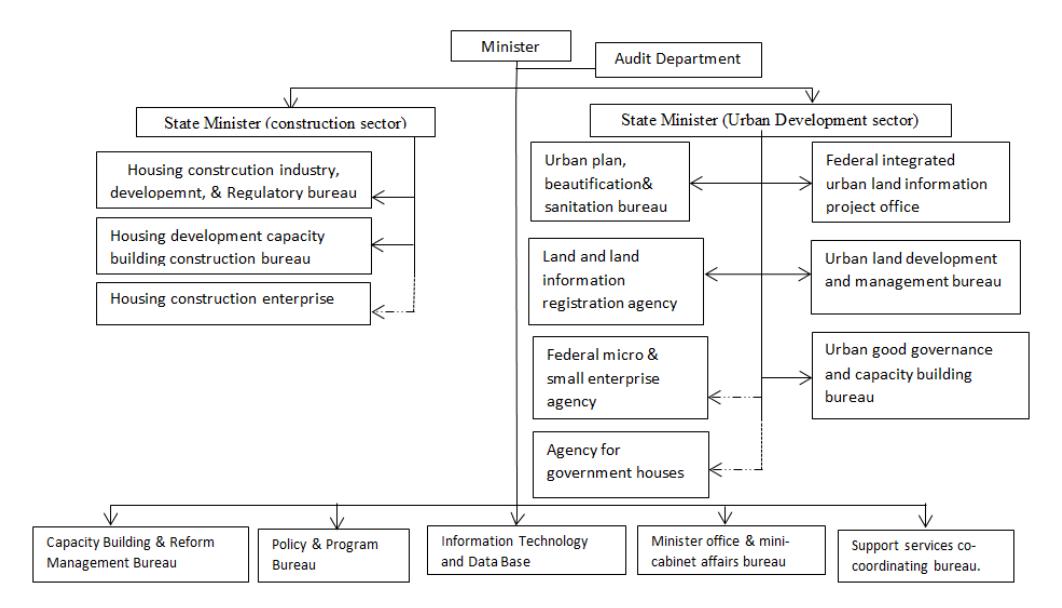
Figure 3. Organizational structure of Ministry of Urban Development and Housing Construction (MUDHCo). Source : Adopted from MUDHCO, 2015.
However, due to intervention by regional governments (state), municipal functions haveturned out to be state functions. In Adama city, for instance, land management and building permit
5 Idir is social support in terms of money and labor during funeral occasions.
issuance became state government functions in 2013, while these used to be municipal functions. In Bahir Dar, the city is considering restructuring a number of assignments to make them state functions. Consequently, the division of labor between regional govenments and ULGs poses challenges. In Adama, for instance, the city manager was asked to use municipal revenues to cover the construction costs of microenterprise clusters, that had been initiated by the state department of trade without adequate prior consultation with the municiplaty (World Bank, 2014). Basic regional legislation, such as city proclamations of each regional state, generally provides some measure of autonomy to cities, for instance- to deliver services, establish their budget, raise revenues, determine their organizational structure, perform a full range of personnel activities, expropriate land, enter into contracts, and incur (domestic) debt. In reality, however, these proclamations tend to be very broad and are often undermined by more detailed guidance and directives. For instance, ULGs are typically granted authority through regional proclamations to determine local and rates, while in reality regional governments tend to issue some form of city tariff regulations that in most cases nullify or greatly curtail ULGs' ability to adopt or update local tax rates. This weakens the ULGs' ability to raise own-source revenue. Mekele city, for example, still uses tariff regulations from 1997/98 as it is not allowed by the regional government to update its tariffs. As a result, the city cannot fulfill its revenue collection potential, as the existing tariffs are severely outdated. Similarly, while proclamations allow urban local governments to decide on their respective personnel requirements and skillsmix needs, in reality, the human resource structures of ULGs are determined mostly by regional bureaus of urban development and civil service. There is therefore a need to clearly indicate the roles and responsibilities of ULGs and regional governments in the execution of their respective functions, as well as the agent functions that the ULGs execute on behalf of the regional governments (World Bank, 2014). One can also observe a duality in the institutional framework and responsibility for managing urban land and construction works at state-minister level, where construction activities are headed by both the state minister construction sector and the state minister urban development sector (Figure 3).
As can be observed from Figure 3, the building construction bureau and the microenterprisses agency are explicitly interlinked througha ministerial office. However, existing dual responsibilities are likely to deter construction of business premises in cities in the country, including Shashemene city, for there are several procedural chains or bureaucratic processes that need to be consulted from the main line offices to less functionally linked bureaus.
Result, Discussion and Interpretation
External Growth Opportunity Barriers for microenterprises in Shashemene City
Personal Characteristics vs. Business Premises Convenience
Microbusinesses were asked to show the major factors affecting their growth opportunities in relation to conducting business and business premises convenience in the city. They specified several factors hindering their growth (see Table 3). For instance, the business background experience;of more than half of respondents were government employee (57.45%) and students (56.21%), which has no direct relation with their present job. Wholesalers were the largest suppliers of goods for the businesses (73%) and most transactions occur over the whole day (84.4%), while morning hours are most preferred by shop customers (72.2%). Adequate supply (87.41%), profitability (84.75%) and many customers for the goods (75%) were reasons for selling particular goods. More than three quarters of respondents (84.93) preferred to continue their business. Their main reasons include enjoying self-assurance (89.18), profitability (83.16), and lack of plausible alternative options (77.13). Those who indicated to discontinue their current business did so due to lack of permanent working space (85.99%), financial difficulties (74.29%), inability to compete (63.48%) and market shortage (54.26). With respect to likely future preferred jobs in case of failure in business work, more than three quarters selected street vending (88.30%) and private work (57.98%), while government work was least preferred (37.41%).
Table 3. Transaction related factors swaying growth opportunities for microenterprises.
| Response | ||||
|---|---|---|---|---|
| Factors | Frequency | % | ||
| Experiences prior to current business: | ||||
| Farming | 231 | 41.0 | ||
| Student | 317 | 56.21 | ||
| Merchant | 349 | 61.88 | ||
| Employee/private | 210 | 37.23 | ||
| Employee/government | 324 | 57.45 | ||
| Sources of goods supply: | ||||
| Wholesalers | 411 | 72.90 | ||
| Retailers | 17 | 3.01 | ||
| Private enterprise | 35 | 4.21 | ||
| State enterprise | 11 | 1.95 | ||
| Most tarnsactions within the day day: | ||||
| Morning | 407 | 72.16 | ||
| Evening | 358 | 63.48 | ||
| Night | 211 | 37.41 | ||
| The whole day | 476 | 84.40 | ||
| Reasons for selling this particular good: | ||||
| Many customers for it | 423 | 75.00 | ||
| Profitability | 478 | 84.75 | ||
| Adequate supply | 493 | 87.41 | ||
| Do you continue current business? | ||||
| Yes | 479 | 84.93 | ||
| No | 85 | 15.07 | ||
| Reasons for continuing current business: | ||||
| No option | 435 | 77.13 | ||
| Profitability | 469 | 83.16 | ||
| Allows flexibility | 401 | 71.09 | ||
| Be my own boss | 503 | 89.18 | ||
| Reasons for discontinuing current business: | ||||
| Financial difficulties | 419 | 74.29 | ||
| Inability to compete | 358 | 63.48 | ||
| Lack of permanent working space | 485 | 85.99 | ||
| Market shortage | 306 | 54.26 | ||
| Supply shortage | 8 | 1.42 | ||
| Your future subsidiary job in case of failure: | ||||
| Not decided | 341 | 60.46 | ||
| Street vending | 498 | 88.30 | ||
| Government work | 216 | 37.41 | ||
| Private work | 327 | 57.98 | ||
Source : Own survey , July 2017
As for working space availability and convenience, the respondents cited a number of factors affecting their growth opportunities (see Table 4). For instance, almost one third of businesses were in old and inconvenient buildings (30%), while rent price (55%) determined the selection of their location. Similarly, competitor pressure (56%), span of premises contract expiry (50%), and the need for business building modification (45%) influenced their location permanency. Modification of residential buildings to serve as a business shop was also indicated as a factor (44%).
Table 4. Working space related factors upsetting growth opportunities for microenterprises.
| Factors | Response | |||
|---|---|---|---|---|
| Frequency | % | |||
| Current state of business premises: | ||||
| Old and not renewed for years | 167 | 29.61 | ||
| Old but modified to fit current use | 56 | 9.93 | ||
| Newly established | 283 | 50.18 | ||
| Old but entirely modified | 119 | 21.10 | ||
| Reason for selecting the present location | ||||
| Nearness to customers | 395 | 70.04 | ||
| Nearness to home | 125 | 22.16 | ||
| Nearness to suppliers | 109 | 19.33 | ||
| Can't afford another site | 312 | 55.32 | ||
| Few competitors | 238 | 42.20 | ||
| Reasons for shifting business premises location in the | ||||
| city: | 259 | 45.92 | ||
| Business building modification | 173 | 30.67 | ||
| Site clearance | 281 | 49.82 | ||
| Expiry of rental contract competitor pressure | 316 | 56.03 | ||
| Original purpose of working space construction: | ||||
| Residential use | 249 | 44.15 | ||
| - Institutional use | 117 | 20.74 | ||
| - Store reserve | 39 | 6.91 | ||
| - Multipurpose | 398 | 70.57 | ||
Source : Own survey, July 2017
Challenges Faced by Micoenterpreises in Shashemene City
Nature, Location, Rent and Presupposed Purpose of Business Premises
Microbusinesses were asked to indicate the major challenges they were facing in relation to working space availability and suitability in the city (see Table 5). Accordingly, they mentioned a long list of challenges they were facing and that has negatively been affecting their business as well as their livelihood. For instance, the purpose for which the- premises were built stood out as the top ranked challenge (for 78.55% of the total respondents), followed by rent price of business premises (65.07%), age of business premises (56.91%), size of business premises (52.84%), shifting working space in the city to get a convenient location (45.04%). Table 5 provides a list of major challenges faced by the microbusinesses in connection with working space scarceness and unsuitability in Shashemene city. Microbusinesses were asked to rate the three top challenges they have been facing and therefore, the total is not necessarily equal to the total number of selected microbusinesses.
The study revealed that over two- thirds of microbusinesses indicated that the purpose for which the premises were originally built as their major challenge. They noted that existing
business premises were built with multipurpose use and high rent per unit space in mind. Thus, the size and structure of building design do not fit their attempt to display avariety of goods for sale and to keep goods clean over a long-period of time. In addition, over half of the respondents did not think the rent price of the business premises was fair. However, those who had no serious pressure from the rent cost for the business premises were frustrated due to the age of the business premises ,which can lead to forced eviction from an accustomed profitable location. In-depth interviews conducted with most microbusiness owners revealed that they shift location within the sub-cities more than twice per year. In this respect, an interview conducted with a male business owner, aged 29, who sells clothes in a shop in the Awasho sub-city pointed out the above as follows:
"…I and my four colleagues sell clothes. We are facing common challenges in conducting our business. The most serious challenges are getting suitable and permanent premises in the city. Both the availability and suitableness of the business premises are locked in due to pressure from competitors, frequent rise of premises rent and also unbearable taxes. So, in most cases we prefer changing locations in favor of low rent in the city.."
Interviews conducted with other microbusiness owners in other sub-cities of Shashemenecity also indicate that there is inconvenience of working space, unfair rent prices , and ignorance of authorities on their working space demands.
Table 5. Major challenges faced by microenterprises in Shashemene City.
| Challenges faced by selected | Response | |
|---|---|---|
| microbusinesses in the city | Frequency | % |
| No problems | 48 | 8.51 |
| Lack of credit | 210 | 37.23 |
| Shifting working space in the city | 254 | 45.04 |
| Size of business premises | 298 | 52.84 |
| Too many competitors | 186 | 32.98 |
| Rent price of business premises | 367 | 65.07 |
| Age of business premises | 321 | 56.91 |
| Chain of goods suppliers | 189 | 33.51 |
| Original purpose of the premises | 443 | 78.55 |
| Others | 93 | 16.49 |
Source: Own survey, July 2017
Financial Shortfalls and Actors in the Business Environment
Lack of credit (37.23%) topped the six most faced challenges. Moreover, problems related to market chains and intimacy of goods suppliers (33.51%) and the presence of too many competitors with imitating effect (32.98%) were mentioned among the challenges they were facing. The other challenges mentioned were; intervention by brokers, government tax, and business premises owners' personal influence on either shortening business premises rental contract duration or unexpected contract termination, altogether accounting for about 16.49% Virtually all respondents who had faced the problem of shifting working space in the city to get a convenient location reported that the wrongdoers were premises owners, government officials who have the power to levy taxes and brokers in the city who benefit from both sides (building owners and traders).
Type of Support Needed by Microbusinesses in Shashemene City
Provision of Convenient Working Spaces
As discussed in previous section, microbusinesses Shashemene city face various challenges and problems in relation to their livelihoods that mostly depend on selling clothes in convenient working space locations. As formal business enterprises they need support from the relevant departments of the city to enhance their livelihood. In connection with the challenges they have been facing, the microbusinesses were asked to mention the most preferred type of support they would like to receive if there were plans by the city to provide them in the future. Accordingly, Table 6 provides the type of support the microbusinesses would like to receive if there were intentions by the City to provide them.
Table 6. Type of support microbusinesses prefer in Shashemene City.
| If there are plans to provide you support, which kind of support do you need to receive? | Frequency | % |
|---|---|---|
| Provision of working space near other business activities | 371 | 65.78 |
| Provision of working space in any conventional location | 289 | 51.24 |
| Assistance with market opportunities | 216 | 38.29 |
| Organizing microbusinesses with a similar trade license | 163 | 28.90 |
| Reducing informal microbusinesses selling similar goods | 172 | 30.49 |
| Access to credit/finance | 265 | 47.00 |
| Tax burden exemptions | 327 | 57.98 |
| Reducing the influences of brokers in premises rent oscillation | 239 | 42.38 |
Source: Own survey, 2017
As can be seen from Table 6, microbusinesses need variousforms of support. Among these, almost two thirds (66%) need provision of working space near other business activities and more than half (51%) need provision of working space in any conventional location in the city. It appears from the above analysis that the vitality of working space availability inconvenient locations for the livelihood of microbusinesses is obvious.
Lessening the Effect of Growth Hindrances in the Business Environment
Slightly over half of microbusinesses require reduction of their tax burden (58%). Access to credit was one of the types of support they need (47%), while reducing the influence of brokers on premises rent oscillation was another one (42%). Assistance with market opportunities and reducing informal microbusinesses selling similar goods were also mentioned as support types needed. Surprisingly, organizing microbusinesses with a similar trade license was not expected by most of microbusinesses, only 30 percent of the total number of respondents expected it.
Challenges of Managing Businesses Premises Access and suitability in Shashemene City
Lack of Database at City Level
As is common in major urban centers of Ethiopia, there is a lack of working spaces at a fair rent price for microenterprises in Shashemene city, limiting their growth and expansion opportunities. Microenterprises are vulnerable largely due to the informality of working space
rent prices and locational inconvenience, which leads to businesses failing early or in an immature phase. City authorities reiterate that inconsistency of microenterprises either to situate themselves in a specific location or to adhere to their accustomed business activities remained to be the most challenging component of managing microbusinesses in Shashemene. They have been trying to address this by promoting bazaars/public trade fair and allowing to use road side open spaces; For commercial activities. Nevertheless, effective facilitation and management of microenterprises growth and expansion is not possible yet. In this respect, an interview with the Head of Urban Land Development and Management Agency, Shashemene Municipality points out:
"…We do not have organized data pertinent to microbusiness working space demand- nor to their claims on availability and convenience of business premises. Nevertheless, routine surveys reveal that microbusinesses once assumed to be flourishing in the city unexpectedly shift location, change business title, downsize their activities, even some were found selling a single good in smaller numbers or amounts and others disappearing from the city. Experience has also shown that businesses take their own measures in response to several factors, including personal (internal) and external (governmental, social-especially competing trade, partners, financial, or environmental factors). However, our most serious challenge is microbusinesses givin no sign of coming up with unified action based on corporate interest related to urban business buildings, urban land demand and financial strength at least to upgrade existing old buildings into business,malls. Therefore we are trying to inform diversified businesses in the city to catch the opportunity of getting communal urban land through leasehold provided that they have a diligently organized cohort and committed leadership. Unless they do that we opt to tolerate whatever they encounter…"
Lack of Institutional Proficiency
Moreover, the Head of Trade and Revenue Department, Shashemene Municipality, shares a similar but somewhat different view regarding availability and convenience of working spaces for microbusinesses in the city. He put the challenges forward as follows:
"…As far as a number of microbusinesses as formal and informal enterprises exist in the city, it is obvious to have insufficient business premises due to sharing of the same space. However, the main challenges for theMunicipality are lack of transparency with regard to the process of licensing, taxing and follow-up information about microbusiness growth and expansion patterns. Likewise, informal businesses flourish side by side, with formal businesses holding similar goods for sale. As such, there is no clear-cut evidence as to whether formal or informal businesses are suffering from lack of working space in the city. In addition, there is no separate office in charge of facilitating business premises availability and convenience for private microbusinesses in the city unless a business is government-supported with temporary constructed sheds especially for prioritized technology-oriented businesses. Even these businesses are obliged to leave the sheds withina restricted span of time…."
Interviews conducted with the Head of Trade Promotion, Expansion and Development Department in the Shashemene Municipality revealed more or less the same challenges. He pointed out:
"….Working space requirements of businesses in the city are frequently missing as if it is up to an entrepreneur to choose his/her business category and working space. The concern of our office is more to create an environment for networked market chains and consequently attain fair trading practices. We promote those microbusinesses whose value chains accommodate prioritized industrial linkages. However, the prevalence of competition as well as conflict emanating from working space scarcity cannot be addressed by municipal management or a control mechanism alone. As for the successive emergence of new businesses every day, this is an inevitable business phenomenon in the city. The role of the chamber of commerce and/or trade associations is tremendous. So, the challenge is to integrate microbusiness demands with the synergy of these partners…"
Opposing Views of Business Owners
Interviews conducted with the Head of Work Process Coordinator, Fair Trade Practices, Trade and Investment Bureau, Shashemene Municipality also revealed the challenges of working space availability and suitability in somewhat similar expressions. He pointed out:
"….We do not have organized and detailed data on sufficiency of working spaces, trends of working space price variation and negotiations (rental contract duration and legality), and nor on push/pull factors determining location preferences of businesses in the city. However, in attempting to incubate and promote growth of microbusinesses, the challenges we are facing are countless. The most serious challenge is to convince businesses of their mutual benefits in terms of tax load exemption, and brokers' role minimization in relation to working space price fairness. Some microbusinesses even perceive our awareness creation or sensitization workshops, trainings and/or information on legal proceedings as politically calculated traps and others still have lost confidence in our commitment to deal with their obstacles. This way it is not that easy to generate a common façade for microenterprises…."
It is evident that challenges in managing businesses premises access and suitability in Shashemene city emanate from various sources. The first challenge being that the issue has received insignificant attention, as reliable data are not readily available in the municipal offices and only sporadic surveys served as a substantiation tool. The other challenges emanated from the microbusinesses' capacity to come up with unified action, committed leadership and sufficient financial back-up. Moreover, lack of transparency in the internal workings of authorities, lack of separate offices in charge of addressing obstacles pertinent to working spaces as well as the inability of the municipal office concerned to integrate partners' synergy with businesses' demand were stressed by the interviewees.
In addition to analyzing data through observation and interviews, an attempt was also made to compare (based on blocks) and predict major factors that contribute to the judgment of enterprise owners' on scarceness and inconvenience of premises. Therefore, one confirming question guides the objectives of doing so. What factors predict the likelihood that respondents will report that they have a problem with business premises convenience? Major factors influencing whether microenterprise owners report having business premises inconvenience problems or not are indicated as follows. For the sake of comparing relative variation among factors influencing businesses' claims on scarcity and inconvenience of premises in the city, two blocks of microbusinesses were made. The first block (hereafter Block I), consists of those microbusiness who conduct transactions in old but modified business premises (N=304) while the second block (hereafter Block II) are located in newly built premises (N=260). Binary logistic regression with stepwise/forward likelihood ratio was employed to test the predictive probability of explanatory variables. Thus, the output from SPSS (version 20) indicated the major factors identified by respondents in relation to their working space inconvenience (Tables 7 and 8). The odds ratio (OR) is the difference between the odds for the base category (x=0) and the other category (x=1). Thus, in this study (x=0), represents firms without problem of premises inconvenience and the other category (x=1), represents firms with a reliable problem of premises inconvenience. Hence, Block I businesses had OR (odds ratio) values of 1.703, which indicates that the claim of inconvenient premises is positively related with the number of years of doing the same business, while more years of business experience corresponds with frequent search for alternative premises. Similarly, location shift in the city (OR- 3.203), shows a tendency to change business site for a more convenient location. Meanwhile, premises rent price (OR-.569) reveals that the higher the price, the lower the probability of claiming the problem (i.e deciding to stay). Monthly profit (OR-.999) reveals that the lower the profit, the higher the probability of the problem to exist (inconvenient premises). The probability of local authorities' role in resolving the same problem for businesses (OR-. .510) is negatively correlated, indicating the insignificance of their intervention.
Table 7. Block I.
| No | Variable | co-efficient | Exp() | 95% CI for Exp() | Wald test sign. |
|---|---|---|---|---|---|
| 1 | Business experience | .532 | 1.703 | 1.194 - 2.427 | .003** |
| 2 | Premise area/size | .872 | 1.703 | 1.194 - 2.427 | .000** |
| 3 | Premise rent price | 564 | .569 | .416779 | .000** |
| 4 | Location shift in the city | 1.164 | 3.203 | 2.252 - 4.556 | .000** |
| 5 | Monthly profit | 001 | .999 | .999 - 1.20 | .000** |
| 6 | Highest daily income | .000 | 1.000 | .998-1.002 | .975* |
| 7 | Lowest daily income | 004 | .996 | .995998 | .000** |
| 8 | Daily total income | 005 | .995 | .993997 | .000** |
| 9 | Daily - total expenses | 006 | .995 | .991998 | .001** |
| 10 | Local authority support | 673 | .510 | .290899 | .020** |
NB: ** significant at <.05, * not significant at <.05 level
Table 8. Block II.
| No | Variable | co-efficient | Exp() | 95%CI for Exp() | the Wald test sign. |
|---|---|---|---|---|---|
| 1 | Business experience | 744 | .475 | .374604 | .000** |
| 2 | Premise area/size | .520 | 1.683 | 1.455 - 1.945 | .000** |
| 3 | Premise Ownership | 1.434 | 4.195 | 1.657 - 10.617 | .002** |
| 4 | Location shift in the city | -2.315 | .099 | .046 - 2.11 | .000** |
| 5 | Source of loan | 3.674 | 39.393 | 13.971 - 111.075 | .000** |
| 6 | Premises rent price | -2.042 | .130 | .047360 | .000** |
| 7 | Amount of savings | .003 | 1.003 | 1.002 - 1.004 | .000** |
| 8 | Meeting expectations | .395 | 1.484 | 1.074 - 2.052 | .017** |
| 9 | Low daily income | 001 | .999 | .998 - 1.000 | .010** |
| 10 | Local authority support | 513 | .599 | .300 - 1.196 | - .146* |
NB: ** significant at <. 05, * not significant at <.05 level
For Block II, business experience (OR .475) indicates that the lower the experience, the higher the probability of reporting the existence of premises inconvenience as opposed to respondents in Block I. Similarly, location shift (OR .099), premises rent price (OR-. .130), daily low income (OR- .999) and expected support from local authorities (OR-. .599) have lower probability for respondents to state the prevalence of the problem, although the problems impose a significant negative effect on the businesses.
In general, this study revealed that factors for reporting the problem of premises inconvenience related with business building type and age in which transactions occur. This implies that business building renewal can be one step of solving premises incongruity.
Conclusion
This study attempted to examine the management of urban renewal and related growth opportunities of microenterprises in Shashemene city, Central Ethiopia. It tried to sketch microbusiness growth opportunities from urban planning, urban land use, institutional and legal environments that govern space and businesses in the city. The central argument of the study was the availability and compatibility of business premises in the right location for the growth and expansion of microbusinesses in the city. More specifically, convenience of premises is vital for the growth of businesses. If microbusinesses are to continue earning from their commercial activities, access and convenience of space in the right location need to be properly understood and addressed by the city authorities. From the outset, the city authorities' noninterventionist stance regarding market-led business premises rent swaying appeared not to be a viable option from the businesses' perspective. The city has an Urban Land Management and Development Bureau. One of its responsibilities is to control informal housing construction and illegal land occupancy, thereby facilitating formal leasehold transfer of urban land to entitled holders. Nevertheless, this has not been possible given the prevalence of scarce housing, either for residential or commercial purposes, especially near to business centers in the city, and the existence of land speculators whose actions are noticeable in construction work delays in the city. As discussed in the foregoing part of this study, microbusinesses manage to develop various strategies in the face of scarceness and incongruity of premises in order to continue earning from commercial activities. It appears from this study- that the widely prevailing approach of the city towards microbusinesses premises demand has been dominated by laissezfaire management instead of participatory and joint-venture approaches by involving trade associations, trade partners/businesses and taking their views in to account. Against this it could be argued-,that the activities of institutions responsible for the city's revenue generation and expansion were found to jeopardize the growth opportunities of these businesses through taxation regardless of considering the principal business environment. Given the rapid urbanization due to inmigration into the city from other parts of the country, microbusinesses remain a persistent job opportunity in the city. Therefore, the conception that microbusinesses exist outside of reliable commercial activities should be changed into seeing them as an integral element of the socioeconomic landscape of the city, which largely contributes to housing an extensive labor pool. This requires inclusive and participatory approaches in governing the workings of microbusinesses in the city, which could be made possible by changing the attitude toward the working space demands of these businesses by incorporating them into the city's fabric. This frame could contain both spatialcomponents and policy development.