

Introduction
The relocation of the Universitas Indonesia (UI) campus and several other universities, i.e. Universitas Gunadarma (UG), Universitas Pancasila (UP), and Institut Sains dan Teknologi Nasional (ISTN), to Depok and surrounding areas in the 1980s has caused signifcant changes in the city. The UI and UG campuses are in a location adjacent to Kecamatan Beji, Depok (Figure 1), while the UP and ISTN campuses are located in Srengseng Sawah, South Jakarta, which is close to Kecamatan Beji. Although the presence of the university campuses is only one of the factors affecting change in Depok city, their establishment significantly encouraged the transformation of the architecture of the city (Prasidha and Martokusumo, 2014).
The establishment of university campuses, along with the arrival of thousands of students, lecturers and university staff, generated many changes in Depok city. It had a significant effect on economic improvement and changes in the physical appearance of the area, but this rapid development has also caused problems in the physical environment, as expressed by Zerlang (1997) in his publication entitled the 'University and the City': "the cities and the universities grew up together, and city-life and intellectual life stimulated one another ... and, last but not least, the urban environment has been impacted...". The presence of a university will have multiple effects on the city or region where it is located. Salim (2008) affirms that the presence of a university campus will have both positive and negative consequences for the surrounding area.
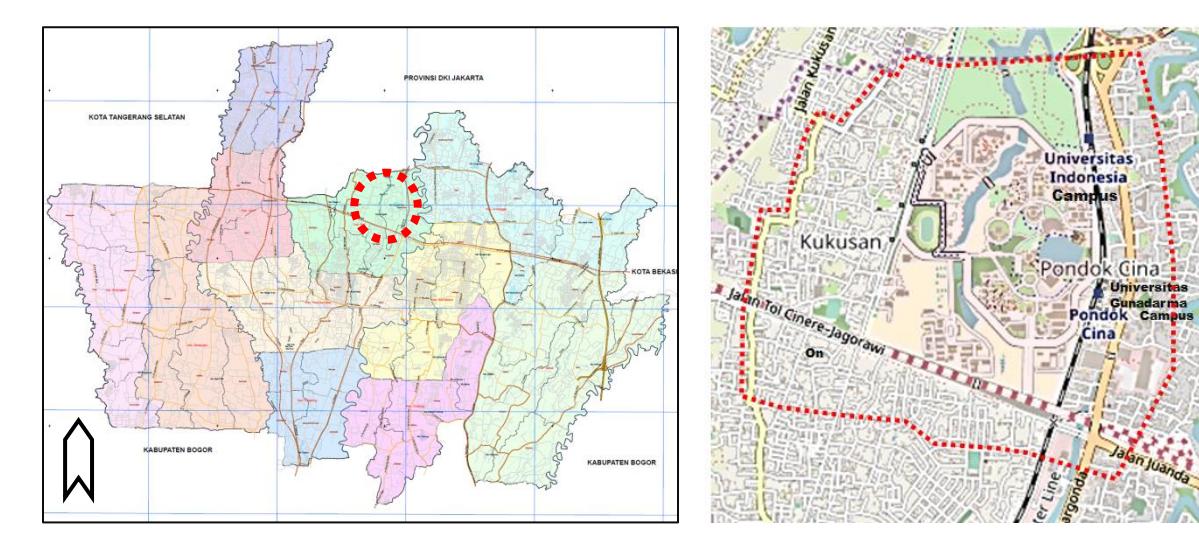
Figure 1. Map of Depok City (left) and study location (right). Source: processed from Peta Rencana Tata Ruang Wilayah Kota Depok 2011-2031 (left) and Peta Pertanahan Kota Depok (peta.bpn.go.id) – 2018 (right)
The spatial relationship between the university and the city has become an increasingly popular topic in recent years, as observed by Larkham (2000) and Perry and Wiewel (2008) in their publications on the relationship between university and city development. Some studies have shown that the influence of universities on cities, among others in the last decade, is expressed in the urban form (Larkham, 2000), the social community (Cisneros, 1995), the local economy (Ricci (1997) and Supriyadi (2008)), the physical and social economy (Salim, 2008), the typology of boarding house location (Nurdini, 2012), university-industrial synergy (Hall, 1997), the neighborhood (Webber, 2005), and urban change (Vasquez, Conceicao, and Alves (2008). No research has been published that discusses the relationship between the university and the architecture of the city for the case of Depok.
This paper is part of a dissertation research result on the transformation of the architecture of Depok city. This paper reveals the impacts of the process and pattern of the transformation related to the establishment of higher education institutions (university campuses) on the architecture of the city in Depok. The result of this study can be applied to deal with changes in the physical environment around the UI campus, and also for comparison to other cities with similar cases.
Methodology
Based on the problem statement of this study and its purpose, the method used was descriptiveexplorative. Neuman (2006) describes descriptive research as research that, among others, aims to provide an accurate image, create categories or classifications of types, describes a series of stages or steps, describes a process or causal mechanism, and reports the background or context of a situation. Data collection and analysis were conducted using a combined strategy (Groat: 361). The qualitative method of urban typo-morphology study was used to investigate the transformation process and pattern of transformation in the study location and the factors influencing the transformation of the architecture of the city in the area and its effect on the quality of the physical environment of the area.
Field data were obtained through observation and interviews. Observation was carried out by recording, mapping and making photo documentation in order to describe the condition and quality of the elements of the city architecture in the Kukusan area (at Kecamatan Beji) surrounding the UI and UG campuses, inlcluding land use and activity, plot patterns, building mass patterns, open space patterns, road patterns, and the façades of buildings and the city.
Interviews were conducted with eleven residents/landowners who have lived in the Kukusan area for the last thirty years, i.e. since the 1980s, which meant that they could provide information on the development of the region and the transformation of the city architecture since the establishment of the UI and UG campuses in Depok. Information about the informants was obtained from officials at the Kelurahan Kukusan. The interviews were conducted in the form of open questions about the process and pattern of the transformation of city architecture elements and the effect of the transformation on the quality of the physical environment.
The Presence of the University Campus
Depok, a city located on the southern side of Jakarta, the capital of Indonesia, has experienced rapid growth and changes in the last 30 years. Silver revealed that Depok had only a few thousand inhabitants in the early 1970s. In 1990, the population reached 390,000 inhabitants. During the 1990s there was a surge of population growth and in 2000 the population of Depok city reached 816,000 inhabitants (Silver, 2008). Depok city, with an area of 200.29 km2 , had a population of about 1,898,567 people with a population density of 9,479 inhabitants/km² in 2012 (Badan Pusat Statistik Kota Depok, 2012).
In that time-frame, Depok also experienced a rapid transformation of its city architecture: dynamic land use change, an increase in land use intensity and an increase in building height, followed by changes in the appearance of buildings as well as other architectural elements of the city. The city, which is part of West Java Province, was still dominated by agricultural land and plantations until the early 1980s (Jonathans, 2011) but is now packed with residential, trade and services areas.
Until the 1970s, in the area surrounding the current UI campus land there were only a few villages, dominated by farmland. Based on a map of Kukusan village in Kecamatan Beji from 1979 (source: Arsip Nasional Republik Indonesia), the road network was still in the form of hardened village roads, unpaved village roads and footpaths. At that time there were only 682 buildings in the Kukusan village area of 357 ha. Conditions have greatly changed. In 2015 there were 1,983 buildings (Badan Pusat Statistik Kota Depok, 2016). In our interview with one of the residents who has lived in Kukusan since 1978, Komang Suarloka said that at that time the UI campus land was only farmland managed by the surrounding community.
In the last decade there has been a rapid change with the construction of high-rise buildings along the main street corridors of the city. Depok first experienced significant changes due to the construction of national housing projects Perumnas Depok I and Perumnas Depok II in the middle of the 1970s. The presence of housing at affordable prices, supported by the availability of a railway and highway transportation network connecting Depok with Jakarta, received high appreciation from the people of Jakarta, who were facing the problem of high land prices in Jakarta.
The UI campus, with an area of 320 hectares, comprises almost all faculties, except the Faculty of Medicine and the Graduate Programs, which are located in Salemba, Jakarta. In the span of 20 years (Figure 2), by 2013 the number of students at the two universities plus several other campuses in Depok has reached about 60,000 people (Badan Pusat Statistik Kota Depok, 2013).
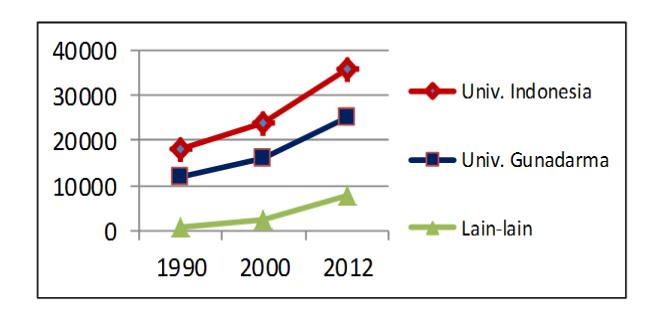
Figure 2. Number of UI and UG students in Depok (1990-2012). Source: processed from data of Badan Pusat Statistik Kota Depok (2013)
The presence of the university has had multiple effects on the land use in this area. Throughout this segment there are service activities related to campus activities and student needs, such as photo copy services, printer/ink refill, typing services, restaurants, shops, and mini markets (Figure 3). In the area behind the main corridor, boarding houses flourish. The Chief of Kecamatan Beji stated that there were 5,000 boarding rooms in his area, with an average monthly rent fee starting from Rp. 500.000,- per room (in: http://metro.tempo.co/read/news/ 2013/01/30/083457847/depok-genjot-pajak-kos-kosan). The results of observation and the interviews showed that the residents of boarding houses are not only students but also commuter workers. In addition to the presence of universities, the existence of the Pondok Cina train station on the west side of Margonda Raya Road in this segment makes it a strategic infrastructure also influences the multiple effects on land use.
Figure 3. Some business places selling student needs. Source: Prasidha (2015).
Figure 4. Various ways of marketing boarding houses and boarding house facilities (left). Marketing strategy offering an apartment in the area of Kukusan by advertising that its location is close to UI Campus (center and right). The UI Rectorate building is featured in the advertisements. Source: Prasidha (2015) (left). https://rumahdijual.com/depok/985876-daveapartment.html (center); https://agenjualbelirumahapartemen. wordpress.com/ 2016/02/12/ jualapartemen-nempel-ui-depok/ (right)
In the area surrounding the UI campus and UG campus, several vertical residential/apartment buildings have been constructed, namely Taman Melati Margonda Apartment, Parkview Park Depok, Dave Apartment, and Atlanta Apartment. The presence of apartments in Depok city is an interesting phenomenon, i.e. the process of residential transformation from boarding houses to vertical dwellings/apartments. This is process further strengthened by apartments that provide studio type units with 1 bedroom and bathroom facilities with an area between 21 and 24 m2 , and a typical design that resembles the layout of a hotel bedroom. Even though apartments are shifting to the suburbs due to high land prices in the city center (Info Apartemen Magazine, 2013: 8-10), the presence of apartments in Depok city is clearly aimed at UI students and/or commuter workers (Figure 4). The phenomenon of 'vertical boarding houses' is in fact also happening in some other cities with concentrated universities, such as Bandung and Jatinangor.
Transformation of the Architecture of the City
The term 'the architecture of the city' was popularized by Aldo Rossi in his book The Architecture of the City, published in the mid-1960s, as a critique of the modern architecture movement. Rossi (1988) introduced the concept of the city as a man-made object. City as an architecture should not only be interpreted visually, related to its architectural diversity, but it should also be understood as an architectural construction that takes place over time (Rossi, 1988). The architecture of the city, as the whole of artificial and natural elements that forms the shape or shapes of the city, reflects the factors of urban life (Wirasonjaya, 1992). The elements of the architecture of the city include: land use and activity, street patterns, plot patterns, building mass patterns, open space patterns, façades of buildings and city, and natural elements, such as rivers, etc.
Habraken (1983) in his book entitled Transformation of Site states that the transformation of a site is characterized by the spatial changes of its elements. The transformation of a site occurs in four ways: 1) addition of elements, 2) elimination of elements, 3) movement of elements in the site, and 4) experiencing all three transformations (addition, elimination, and movement of element locations). The transformation of the architecture of the city is a process of changes in the architecture of the city, which is influenced by various factors, both internal and external. The comparison of aerial photos made between 1972 and 2011 shows that until 1982 the Kukusan area was still empty. Significant changes began in 1989, i.e. the period of the establishment of UI campus (Figure 5).
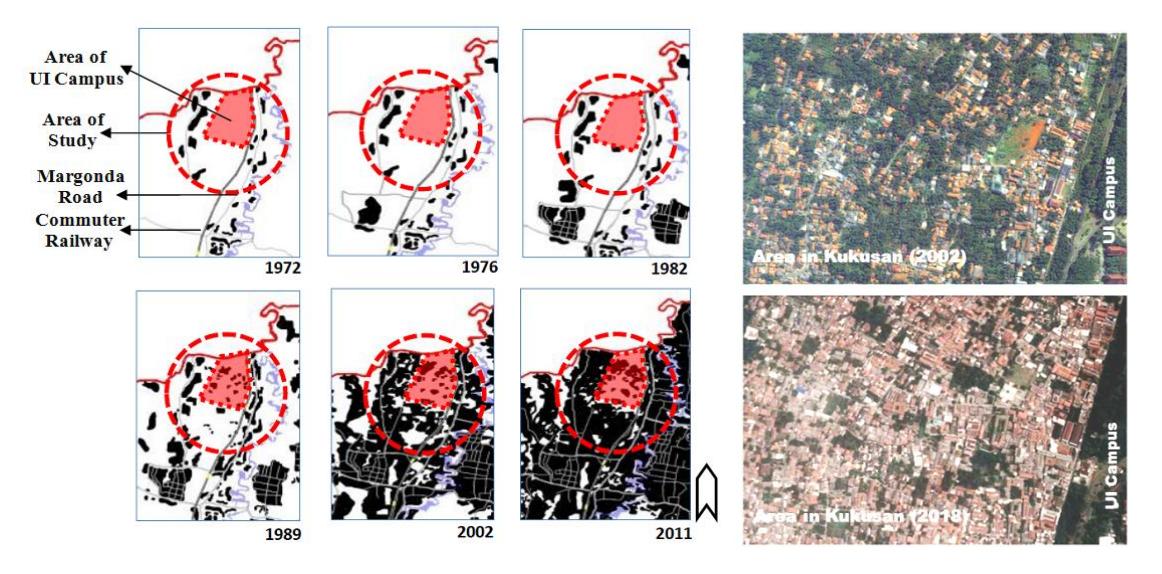
Figure 5. The morphological transformation of Kukusan, Kecamatan Beji, area near the UI campus from the early 1970s to 2011 shows a rapid and massive increase of the built area. Comparison of the built area in Kukusan 2002 (top right) and 2011 (bottom right). Sources: Results of Interpretation of Built-in Areas on Satellite Image Maps LAPAN 1970 (left), processed from the Ikonos Map 2002 and Google Earth Map 2018 (right)
The various changes in land use have led to an increase in land use intensity accompanied by changes in the architectural appearance of buildings and surrounding areas. Based on observations and interviews with owners of boarding houses, five basic types of boarding house buildings were identified: 1) parallel to the street, 2) perpendicular to the street, 3) L-shaped, 4) U-shaped, and 5) O-shaped (open space inside the building), as illustrated in Figure 6. The five basic types may have different variations, namely: a) number of floors, b) distance of the building to the street (Garis Sempadan Bangunan/GSB), c) distance of the building to the side or back edge of the land
(Garis Sempadan Samping/GSS), d) the length and width of the building, e) building mass shape, f) open space, g) roof shape, h) placement of building entrance, and i) building material.
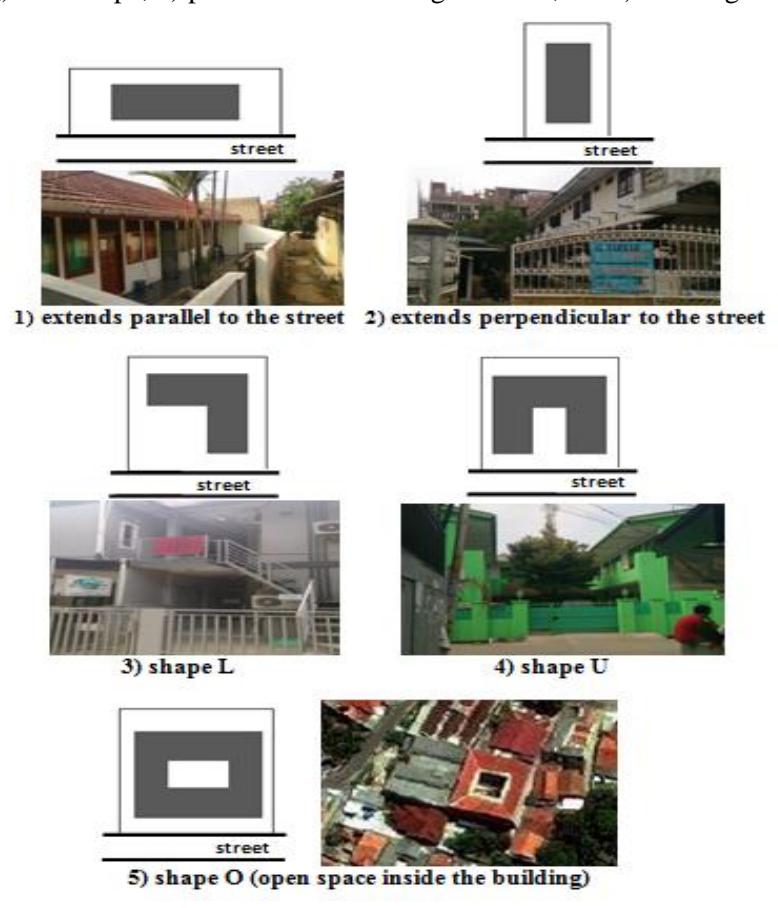
Figure 6. Types of boarding houses in Kukusan, Kecamatan Beji.
The transformation of buildings in the area of Kukusan has created several building types. The early form of the residential buildings, generally with a yard in the front, side, and/or back, has changed with variations in the addition of building area and/or number of stories (Figure 7). Jones (2017) in his study on building transformation in dense residential areas describesthat the addition of building area can be carried out horizontally or vertically. The transformation of these buildings affects the open space pattern. The aerial image in Figure 5 shows the change of covered area (built area) and open space in one section of Kukusan. In less than ten years, the massive increase in the number of buildings has led to a decrease in open spaces in the area. The research results of Setyani, Sitorus, and Panuju, (2017) revealed that in 2006 the green open space in Depok city was 2,359.20 ha while in 2011 was 1,729,53 ha, i.e. in the period 2006-2011 there was a huge decline of 629.67 ha. Kecamatan Beji in 2006 had 360,79 ha of green open space. In 2011, it was reduced to 300.73 ha, or within a span of 5 years there was a decline of 60.06 ha.
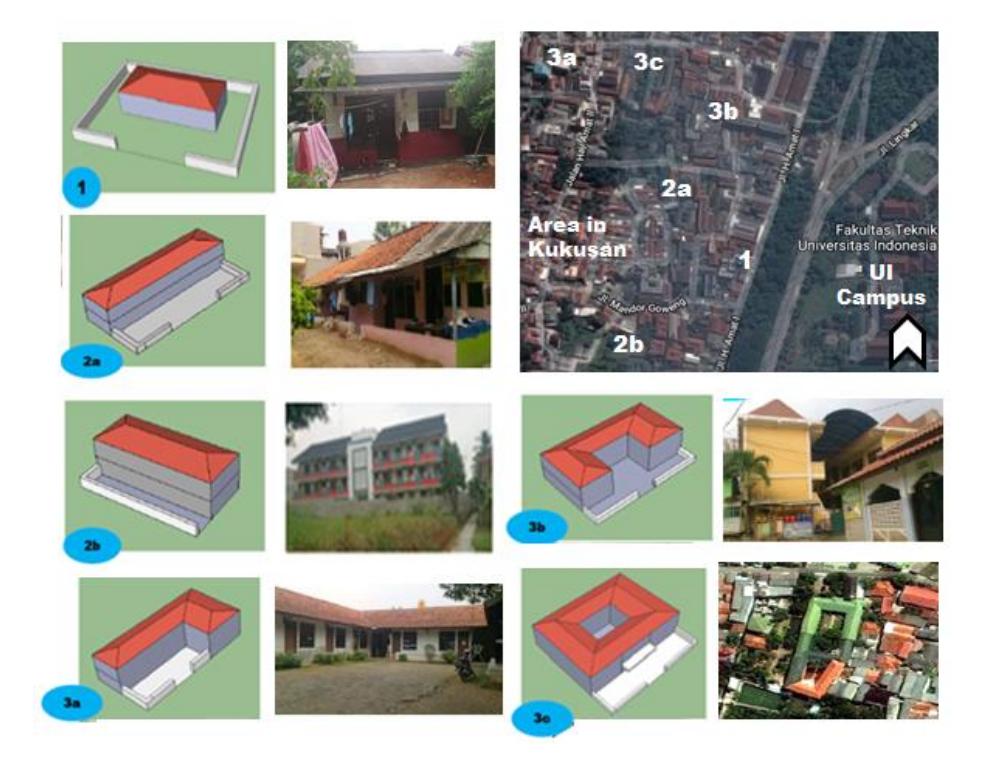
Figure 7. Transformation of boarding house typology in the area of Kukusan, Kecamatan Beji. In general, the buildings originally had a front, side or rear yard.
Decreasing Environmental Quality and Unsafe Conditions
The most rapid transformation of the architecture in the area surrounding the UI campus and UG campus has been caused by the growing number of boarding houses. It is unfortunate that most of the boarding houses are built without any regard for environmental capacity and building safety factors. Most buildings in this area violate the coefficient of building coverage area (Koefisien Dasar Bangunan/KDB) and the coefficient of building floor number (Koefisien Lantai Bangunan/KLB). The physical environment is unsafe in relation to disaster threats, especially earthquake and fire hazards. The survey results show that most of the boarding houses have extentions, or 1 or 2 floors were added to an original building with only 1 or 2 floors. The extra floors of these buildings are often simply built on top od the old structure, or in some cases columns were added.
The issue of building quality also occurs when development does not involve architects or engineers. Meanwhile, building owners aim for structural efficiency in view of cost efficiency, without considering the safety and feasibility of the structure. Many boarding houses have unsafe conditions regarding earthquake hazards. In their book entitled People's Vulnerability and Disasters, Wisner, Blaikie, Cannon, and Davis (2003) explain that unsafe conditions are the specific forms in which the vulnerability of a population is expressed in time and space in conjunction with hazards. Examples include people having to live in hazardous locations or being unable to afford safe buildings. In one case of an area with unsafe buildings vulnerable to disasters, they revealed "…the new houses were intended to be reinforced, but in reality they were built without any real understanding of how to connect steel to concrete or roofs to walls" (Wisner, Blaikie, Cannon, and Davis, 2003: 57-59). Economic interests take precedence over building safety.
Figure 8. Narrow alleyways formed by the breaking up of a plot for access to the plot behind it (left). Boarding houses with 3-4 floors on a narrow street (right).
Figure 9. Violations of areas reserved for utilities. Residential area under high voltage electric lines (left). Expansion of buildings above waterways (right).
City transformation also occurs through land use maximization, so the space between buildings becomes very narrow (Figure 8). Many four-story buildings are located in the middle of a dense environment and are adjacent to each other. As a result, there is no space between buildings to provide access for firefighters. Similarly, many boarding houses with 3 storeys or higher, mostly with large numbers of units, do not conform to fire safety requirements, such as having emergency stairways. Another problem is that some areas in Kukusan are close to high voltage power lines (Saluran Udara Tegangan Ekstra Tinggi/SUTET). The threat of the high voltage electrical network is limited to buildings located under/at very close proximity to the high voltage power lines parallel to the western edge of the UI campus, but the threat is not only a security hazard, but also a health threat due to electrical voltage radiation. Interviews with several residents at this site revealed induction of electronic equipment, especially during heavy rain storms, as well as anxiety about the health effects of high voltage electric radiation. Another violation is that quite a large number of buildings have been expanded or built over waterways (Figure 9).
Figure 10. Boarding houses with 100% building coverage area and a facade like a cage box.
The high increase of residential dwellings leads to an increase in the use of ground water. Most of the boarding houses utilize water pumps. Our interviews with an official from the Kukusan District revealed that ground water in Kukusan before 1990 was quite abundant. However, since the 2000s, especially during the dry season, pumping wells keep getting deeper because the ground water level is reduced.
Likewise, the amount of public open space is reduced due to occupational space utilization. Most boarding houses have only narrow open spaces and some even have no open spaces. They offer no space for outdoor activities or parking so the road space in front of the building is used as parking space. Reduced open space as a result of maximum land utilization for boarding houses not only reduces water absorption but also reduces disaster evacuation space.
A decrease in visual quality also occurs in the area surrounding the UI and UG campuses. Most boarding houses are built by maximizing the land coverage area, up to 100%. The shape of the building maximizes the function, creating a building mass that is monotonous and resembles a box cage (Figure 10). These buildings display an individual architecture that does not take environmental aesthetics into account.
Conflicts of Needs
Depok is a rapidly growing peri-urban area. The transformation of the architecture of the city as a result of the presence of university campuses in Depok, conforms to the phenomenon of periurban area transformation. As Woltjer (2014) states: "these kinds of changes express themselves most evidently in peri-urban areas, where urban and rural life meets. These peri-urban areas in particular have been the stage for rapid physical, social and economic transformations…".
Changes in function that occur in bulk also affect the architectural appearance of the area surrounding the UI and UG campuses. This condition seems to confirm Vittorio Gregotti's critique of market-driven architecture and the loss of basic architectural principles of meaning and aesthetics. The appearance of a city reflects economic exploitation and individuality (Gregotti, 1996: 13-15). Transformation of the architecture of the city in Kukusan and other areas around the university campuses are the expression of the individuality of the building owner, who build their boarding house without considering the impact on architectural and environmental
quality. Considering only their profit and minimizing the building investment often also ignores the safety, comfort and aesthetic factors of boarding house buildings. The problems in Kukusan will be increased further with the establishment of UI Hospital, which will soon be completed. The presence of this hospital will certainly generate new changes in the area of Kukusan and even Depok city.
Rapid boarding house growth in Depok has encouraged the city government to try to boost regional revenue through a boarding house tax. The Depok city council requested the Depok city government to maximize the boarding house tax to supplement local revenue of Depok city. Meanwhile, the Chief of Kecamatan Beji stated that not all boarding houses pay their taxes. Also, boarding house are being built without a building permit (Izin Mendirikan Bangunan/IMB) and still they are operating (http://metro.tempo.co/read/news/ 2013/01/30/083457847/ depok-genjotpajak-kos-kosan).
Larkham states: "Not all universities have the same spatial or development relationships with the towns in which they live" (Larkham, 2000: 65). The issues in the Kukusan area invoke the question posed by Larkham related to the presence of a university in a city. Is it "... isolated or an integral part of the city?" (Larkham, 2000: 65). The university campuses in Depok seem to consider only their own 'space importance' without considering their surroundings. But, as stated in the results of the study by Brennan, King, and Lebeau (2004) on the role of the university in the transformation of society, a university is an important part of the city and its social history. "They are not ivory towers." The mere presence of a university is able to direct the transformation of the people and the city (Brennan, King, and Lebeau, 2004).
Conclusion
The transformation of the architecture of a city around university campuses is influenced to a large degree by changes in the functions of buildings, leading to building extensions, the addition of floors, and the combination of plots of land. Changes are made by maximizing the building coverage coefficient, resulting in reduced or lost open space area. There are no specific building or environmental regualtions for rental occupancy. Violations seem to be legitimized by the imposition of local government revenue policy.
The area of Kukusan has experienced a transformation of the architecture of the city without a regional development plan. There is only a macro scale spatial plan for the city. The presence of boarding houses in Depok, especially in the Kukusan area, produces a paradoxical condition. On the one hand, the boarding houses are a source of income for the local government, while on the other hand there are no instruments for controlling regional development. This condition has resulted in uncontrolled changes in the area of Kukusan. Because of the transformation that has occurred around its campus, UI should be criticized as a university. In its role as an agent of civilizational change, which is expected to have positive influence on the development of society or the nation. Not only at the national and international level, but interests at the local level, especially the area surrounding the university, should also be taken into account.
Understanding the decline of the physical environment and unsafe conditions that threaten the area of Kukusan, steps to improve the arrangement of buildings and the environment in the area surrounding the university campus should be taken. Law enforcement against violations of the building coverage area and the building floor ratio and other regulations related to building and environmental safety and security should be taken. It is necessary to distinguish zoning for land use between residential housing and boarding houses. Until now, boarding houses are equated with residential housing in zoning regulations, while their capacity is very different. There are more occupants of boarding houses compared to residential houses, which affects the carrying capacity of the environment, including more use of ground water. Zoning regulations and a building code are needed specifically for boarding houses and areas around the campus that are oriented towards carrying capacity and environmental quality.
The establishment (development policy) of a university campus is expected to stimulate the economy of a region (Kompas, 30 Januari 2019). Related to the relocation of the UI and UG campuses to Depok, Kivell (1993) has stated that the establishment of university campuses creates new activities that encourage economic development in small cities. The paradigm of the university's role in the city must be changed. The establishment of a university should not only stimulate the economy of the city but should also increase the quality of the city's architecture. Hence, the construction or the presence of a large-scale activity such as a university should consider not only the university's own site plan but also the surrounding area or neighborhood plan. Here, the role of urban spatial plans and urban design guidelines is very important as well as the need for regulations as directing forces of the transformation of the architecture of a city.