

Introduction
The public private partnership (PPP) scheme is widely applied to cope with limited government budgets to develop infrastructure since Thatcher and Reagan promoted the so-called neoliberal policies (Vento, 2016). The PPP scheme enables stakeholders outside the governmental structure, such as the private sector, quasi-public corporations, etc., to take part in financing developments. It has changed the landscape of infrastructure development projects, involving many stakeholders in decision-making processes in each development stage, i.e. preparation, planning, design, financing, construction, operation, and maintenance.
In the context of Indonesia's infrastructure development, prior to the establishment of Government Regulation No. 57/2005, development was conservatively provided through central and local government budgeting, categorized according to provincial, district and municipal budget levels. After the government enacted this new regulation, the opportunity of developing infrastructure involving other parties, in this case private companies, was opened up. When infrastructure development is done by the government in collaboration with the private sector, all parties involved need to build a way of communicating in seeking effective infrastructure procurement through the PPP mechanism.
Many PPP schemes using regular planning procedures have failed, ending in project abandonment or cancelation. Therefore, finding the right planning approach in a PPP scheme is an important issue. To achieve the common goal of successful development using PPP, the stakeholders need to attain some level of interpersonal or mutual understanding. Communicative planning offers a promising approach to deal with this issue. As mentioned by Mohit (2007), communicative planning emphasizes community participation through communicative activities that transmit information, knowledge and moral values, which are key factors in increasing mutual understanding and building consensus. Through the communication process, shared meanings can be shaped and the ensuing actions of stakeholders can be affected accordingly (Castells, 2009). This approach can potentially be adopted in PPP as communication is needed to manage collective risks (Steyer, 2013).
The debate about communicative planning based on Habermas notion of communicative rationality has been conducted by many planning theorists, finally generating two main streams. The first is collaborative planning, which focuses on consensus-building, where the stakeholders participate in authentic dialogue, including experimentation, learning, changing, and building shared meaning besides producing agreements and plans on the same table (Innes and Booher, 1999;2010; Healey, 1997). This approach has been hugely criticized by some theorists from the other stream because it does not take into consideration how powerful groups can distort the authentic dialogue and because of its failure to look deeply into economic and social forces
(Fainstein, 2005). The other stream is called critical communicative planning, or critical pragmatism, and relies upon critiques of distorted communication to influence better agreements in planning (Forester, 1982). It assumes that interests of powerful groups cannot be simply mobilized into mutual interests (Sager, 2006). Therefore, political considerations are brought into the discussion.
As a third way to resolve the fierce debate between theorists from both streams, Yiftachel (1999) states that communicative planning and critical communicative planning are not contradictory and can complement one another. The established power relations between powerful groups that have historically exercised power to defeat powerless groups need to be considered by communicative planners before being involved in the dialogue. Then, by bringing the powerful groups to the negotiating table or into the bargaining process instead of letting them pursue the objectives on their own, better agreements can be made that are fair, lasting, and significantly strengthen their relationships with each other (Machler and Milz, 2015).
This paper draws upon those ideas in articulating the case of the Drinking Water Supply System (SPAM) project in Tangerang district, which applied a PPP scheme, highlighting the planning process of water intake placement. The project covered public infrastructure development for five sub-districts of Tangerang district (Sepatan, Cikupa, Balaraja, Jayanti and Pasar Kemis). The goals of the partnership between local, provincial, and national governments, as well as a private sector party (PT Aetra Air Tangerang) was to provide high-quality drinking water, referring to drinking water standards, under a twenty-five-year contract. The water was taken from Cisadane river as recommended by the Ministry of Public Works. However, this river is located outside of the municipality of Tangerang, 20 kilometers away from the boundaries of Tangerang district. Consequently, the district government had to construct a building facility located outside of the municipality of Tangerang, which could potentially lead to conflicts between different interests.
Although it required three years of lengthy communication processes, this case is considered the fastest preparation of a PPP scheme in Indonesia until now. Hence, this study aimed to explore an effective communicative planning approach in infrastructure development using a PPP scheme incorporating the complementary concepts of communicative planning and critical pragmatism, which has previously been mentioned by other scholars as a potential approach. In applying the PPP scheme successfully in this case, the planners involved in the PPP team dealt with power imbalances by creating networks with the other actors and making them engaged in bargaining processes to reach the desired agreements.
Firstly, as Olsson (2009, p. 264) states, communicative planning is also devised "to create networks that have potential to create and sustain social capital". The social capital created by the networks can provide access to strategic information as well as decrease the risk of opportunistic behavior (Olsson, 2009). In other words, it potentially minimizes the transaction costs. The case study in Tangerang shows that the planners in the PPP team actively built networks with the other actors and conducted extra intense communications during the PPP project. As a matter of fact, the communication process for the PPP scheme was already initiated from the beginning phase of project preparation and was continued in identification phase, planning and design, funding agreement, transaction, construction and implementation, operation and maintenance, signing contract, monitoring and evaluation until all the physical and management building facilities and systems were delivered to the government according to the contract.
Secondly, after creating new networks, the planners built dialogues with the other stakeholders in bargaining processes by focusing on their interests. Fisher and Ury (1981) argue that to find opportunities for mutual gains, exploring interests is much more significant than bargaining over fixed positions (interests). Better agreements can be achieved by investigating "why they wanted something to happen and why it would be advantageous to them" instead of only "what they wanted without revealing why" (Fisher and Ury, 1981). In this case, communication was intensively arranged and engaged between Ministry of Public Works, National Land Authority, River Catchment Board, Provincial Authority, District Authority and the Municipal Development Planning Board (BAPPEDA) to recommend alternative locations for the water intake building. Adaptive negotiation during communication between actors was a key to successfully finding the best location for the water intake building of the Drinking Water Supply System in Tangerang (Naipospos, 2014). Thus, adaptive negotiation then successfully led to an agreement, upon which the Ministry of Public Works signed a recommendation letter to the District Government Authority to issue a land lease certificate (Pinjam Pakai Lahan) for the location of the water intake building, which was going to be constructed by PT Aetra Air Tangerang.
Literature Review
Communicative Planning
The paradigm shift from rational comprehensive planning to communicative planning has resulted in some major contributions from planning theorists since the 1980s (Forester 1982, Healey 2003, Innes and Booher 2004). As an alternative for the former paradigm, instead of building a systematic planning model to explain how the world works, communicative planning emphasizes the understanding of social phenomena (Machler and Milz, 2015). Science-based problem solving is not a relevant approach in many cases because to understand the social phenomena, planning should be an interactive and interpretive process involving respectful discussion within and between discursive communities (Healey, 1992). Therefore, community participation in communicative activities to transmit information, knowledge and moral values is a key factor in increasing mutual understanding and building consensus in communicative planning (Mohit and Raja, 2007).
Drawing upon the notion of communicative rationality from Habermas (1981), communicative planning has been conceptualized in various works and has raised a great deal of theoretical debate within this field. Forester (1982) was the first to bring Habermas' theory to planning by explaining how the information and knowledge transmitted by planners can be distorted and influence the citizens' participation in the planning process. Furthermore, some types of planners have different responses in exercising their power when counteracting misinformation or certain efforts of influential interest groups that may thwart the planning process (Forester, 1982). These actions reflect the extent to which power imbalances occur between planners, politicians, regulators, investors, and community groups.
There is another stream to understand and develop Habermas' thinking in communicative planning, which is called collaborative planning (Innes and Booher, 1999). Derived from the concept of 'concensus', Judit Innes focused on procedures that foster consensus-building between actors. Although collaborative planning provides new insight into dealing with current social phenomena in planning practice, its framework does not systematically confront the inequal power relation issue. However, power imbalance is the main 'weapon' to problematize the ideal speech concept that is embedded both in the communicative and the collaborative
planning framework. This gap has been observed by the critical pragmatists, who rely upon a critique of distorted communication to leverage better agreements in planning (Machler and Milz, 2015)
Critical pragmatism as a critical theory paradigm suddenly not only emerged in the social science literature but also entered the communicative planning debate. The concept was discussed by scholars who reflected on the action of actors for negotiating transaction costs (Machler and Milz, 2015). On this basis, transcation cost negotiations are understood as dialogue action in the pursuit of mutual interest rather than self-interest among actors. Mutual understanding, therefore, is an important rationale to examine and decipher power networks. However, this idea has not yet been discussed extensively before, because the political costs of informing, negotiating, monitoring and enforcing agreements do not match well with the rationale for consensus-oriented communicative planning (Sager, 2006). It is possible to say that using a communicative (or collaborative) approach in planning research has to engage any framework that can decipher power relations. Debates about this idea not only must be conducted in a productive way but also begin to be applied in concrete research. These debates are not contradictory and may complement each other, both in understanding and practical action (Yiftachel, 1999)
For mediating both ideas, firstly, we can understand that communication is powerful in shaping meaning and influencing the actions of actors. In this context, power is embedded in and distributed throughout the construction of meaning on the basis of discourses through which social actors guide their actions (Castells, 2009). The complexity of power can be represented in the communication process of actors (followed by action) to reach agreement on transaction costs. At this stage, agreement is an important meeting point of conflicting interests that can potentially emerge. However, emerging conflicts that represent a power imbalance can be stabilized by an agreement between actors through bargaining processes. By focusing on their interests rather than their position, negotiation may lead all actors to gain mutual understanding (Fisher dan Ury, 1981) even though sometimes there are interests or objectives that have to be downgraded.
Using the insight of such conceptual reorientation, it is possible to look at practical cases in the planning arena. It is important to state that in the planning process, planners usually face dificulties in finding a decision in the face of conflicting interests. Building communication between actors in a very complex system not only should be done by authentic dialogue (Innes and Booher, 2010) but also by political transaction (Yiftachel, 1999). In practice, power distortion and imbalance have to deal with agreement between actors, both powerful and subversive groups, rather than just reflexive dialogue. In this context, planners are forced to build an actors' network and are involved in bargaining processes to produce a good agreement. Thus, the interests of both groups can be met and their relationships becomes stronger than before (Machler and Milz, 2015). The actors' network itself is an important outcome of communicative planning, since it is social capital to connect understanding, interest, and policy decisions (Ollson, 2009)
Public private partnerships are an exercise of power through the planning process. As public policy that can be implemented across institutions and territories, the imagination of different interest among actors is real. How to communicate the difference perspectives in a PPP scheme can be categorized as: (1) direct or comprehensive communication; (2) expanded or persuasive communication; (3) responsive or suggestive communication; (4) supportive or stabilized communication (5); logic or improved communication (Naipospos, 2014). All of these communication styles typically occur between actors and agents on the government side and the private side to find solutions for differences in perspective when trying to reach an agreement. The goals of communication can be divided to: (1) changing attitude; (2) changing opinion; (3) changing behavior; (4) changing society.
Public Private Partnership
PPPs were first developed in England and the USA around 1980, when both countries had been badly hit by the world economic crisis and tried to escape from the situation by proposing new financial strategies. The crisis influenced the national budget and the government expenditure on public services. The finance of public services had become a major issue in both countries and Prime Minister Thatcher proclaimed the Private Finance Initiative scheme in England while President Reagen proclaimed the Public Private Partnership scheme in the USA as alternatives to help the government administration to facilitate infrastructure development for public services by inviting private companies to take part in support of the government. These revolutionary schemes changed the old perspectives of how to build infrastructure through government agency only, shifting to prospective agents outside the government administration. This gradually brought a change to part of the operation and maintenance activities, which were now submitted to the private sector as a representative of the government in providing public services and facilities.
As a theoretical concept, PPP had already been mentioned in 1970 as part of the new public policy alternatives, i.e. the new paradigm of the New Right called new public management (NPM). Within planning theory, the new paradigm split the field in two: (1) state-controlled planning; and (2) neo-liberal planning. State-controlled planning focuses on regulatory planning and prescriptive solutions in the planning arena. Neoliberal planning focuses on market power and market-driven solutions, which are usually more flexible and efficient in planning. PPP is placed in between these two paradigms and is called 'the middle way'. PPP adopts a combination of the economic concept of efficiency introduced by Keynes (general economy theory), Friederich Hayek (market theory) and Milton Friedman. In planning, the term partnership in PPP is referred to as 'state-and-market planning', or as a combination of 'capitalism' and 'collectivism'.
The PPP scheme in Indonesia was first mentioned in Presidential Regulation Nr. 56/2005 as a new government funding scheme or as an alternative funding scheme to solve deficiency problems related to infrastructure budgets. The regulation allows private companies to participate in government programs to build infrastructure and also opened the opportunity to bundle it in the form of operation and maintenance over long-term cycles. After three adjustments of the original regulation, Presidential Regulation Nr. 38/2015 now regulates the participation of private companies in PPP schemes. Under this regulation, there are no obstructions anymore for private companies to take part in infrastructure development projects. In parallel with the Presidential Regulation many rules, guideline, yardsticks, and other ministerial regulations have been adjusted to support the possibility of building infrastructure through PPP schemes. It was also hoped to attract foreign investment for infrastructure funding through PPP schemes by under syndication of the international banking system.
ADB data from 2012 (Figure 1) show that most PPP schemes in Asia were executed using a services contract (32%) and the Build Operate and Transfer (BOT) mechanism (27%), while the rest used ROT (6%), BOO (3%), and DBO (2%). The data are different for Indonesia, where most PPP schemes are executed through BOT, mostly because it is considered fit for the current administration and regulation system.
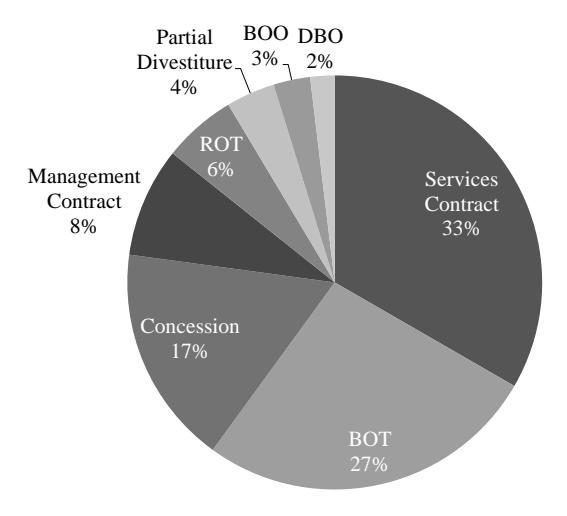
Figure 1. Public private partnerships in Asia. Source: ADB, 2012.
Build–operate–transfer (BOT) under Indonesian regulations should be adjusted to what is called 'modified BOT' to make it compatible with the Indonesia government administration system. BOT contracts under Indonesia Regulations are limited to 25-30-year contracts. The contract is signed at the ministerial level and the provincial or district or municipality government level, which is why its use is very limited. The PPP scheme for the time being has to be prioritized to one specific national strategic infrastructure project only to make the team fully commit and pay special attention to the multiyear preparation program.
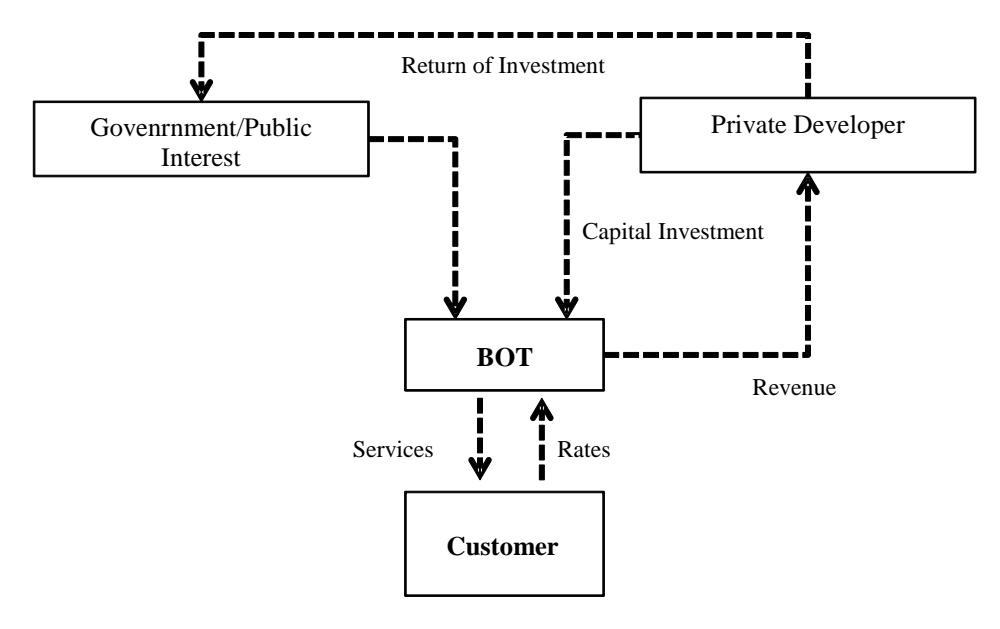
Figure 2. Build–operate–transfer (BOT) in Indonesia. Source: ADB, 2012.
Why the government prefers to choose modified BOT rather than BOO, BOL, DBO, or DBFO is because it fits the Indonesian government administration system, i.e. the rules and regulations, the law system, the central and provincial government budgeting system, and the monitoring and evaluation systems.
Long before 2005, the infrastructure development for public services was procured by the government only through national, provincial and district public budgets. There was no or very limited participation from the private sector. This was because common opinion said that the provision of public services is a responsibility of the public administration. If the private sector is eager to contribute, they pay their taxes and get retribution for their activities and responsibilities. This was a common perception and there was no mechanism yet to allow private participation through what were considered unconventional participation schemes, such as betterment tax, tax increment financing, land property taxes or land value capture. All the unconventional private participation schemes to develop infrastructure in Indonesia were still only an academic exercise (Naipospos, 2014).
Indifferent communication between the government administration, academicians, the private sector and industry often created unsynchronized infrastructure development for public services. There was no close relation between development agents in communicating about infrastructure deficiencies and discussing budget shortages related to public services. Actualizing the PPP concept for infrastructure development more specifically needs better communication from all agents involved, such as the government, lawmakers, private companies, investors, insurance, banks, industry, construction and building management, and suppliers of utilities such as energy, telecommunications, public transport, drinking water and also community, social and political organizations.
Close relations require intense communication about what the government and the users expect from the PPP scheme and both sides should express everything they want as a representative of the public by collecting aspirations from the people and further transform this information to the prospective private company to make all aspirations clear within the partnership. Usually, communication between actors requires more than a hundred formal meetings, consultation sessions, discussions, seminars, workshops and informal communication such as telephoning, text messaging, chatting, informal meetings among direct and indirect actors involved in the PPP scheme. The common PPP communication style in Indonesia is typically poor and weak and there is a lack of commitment among actors, which furthermore causes bad preparedness for all activities and programs during the whole PPP cycle.
Communication during the execution of a PPP scheme should be bundled integrally, starting from the very beginning of the project, i.e. from developing the idea, making preparations, planning, design, financing, constructing, operating and maintenance to the delivery of the built infrastructure to the government and should be facilitated by one management system. During the PPP preparation stage, until the agreement is officially signed, all actors should becommitted from the very beginning until the project is officially implemented and usually multiple years of preparation time are needed. For example, in our case study of the Drinking Water Supply System in Tangerang through PPP by BOT, it took approximately three years until the negotions were closed and an agreement was signed between the district government of Tangerang and the private company PT Aetra Air Tangerang (AAT).
Methodology
This study used a qualitative analysis approach, i.e. a single case study, in order to describe the phenomena of the research object and to explore the research object by questioning and discussing the research question (Creswell, 2009). The data were obtained from primary and secondary resources by having interview sessions, making observations in the field and collecting meeting notes during the planning process. The interviews contained several questions delivered to actors involved in the PPP project. The observations took place in several proposed sites by engaging the people and the community in the surrounding environment. The result of the observations was in the form of discussion manuscripts and photos taken during the meetings. In choosing the respondents for interview sessions, purposive sampling was used. The key respondents included Mrs Yenny M. Zein, the Head of the Investment Office, as a representative of the Drinking Water Supply System project in Tangerang District in 2008. At that time she acted as the secretary for the team leader in the PPP project. The secondrespondent was the private company who acted as a partner in the PPP project, namely PT Aetra Air Tangerang, represented by Mr. Edy Hari Sasono as Director of Technology.
To analyse the data, qualitative data screening as developed by Cresswell (2009) was used, consisting of three main stages, i.e. reducing the rough data, restructuring the data, and concluding the findings. Reducing the rough data was done by choosing valid and reliable data and collecting essential information related to the research question. By reducing the rough data, the researchers were helped to summarize the result of the research and to recognize patterns in the data. After discarding the irrelevant data, the researchers focused on the research question.
The complex three-stage communication in the project caused a long process of intra and interagency negotiation, which comprised several meetings, discussions, seminars, and workshops. Therefore, five different topics in the communication in the project were distinguished: (1) communication to find the best location for the water intake building, which has an impact on the land use for distribution of the main pipeline from the riverside to the final drinking water processing site; (2) communication to obtain a permit from the village community andmunicipality governments in the surrounding environment, along with permits from the River Authority Board (BBWS) and the Ministry of Public Works; (3) communication to plan the pipeline system of 30 kilometer length from the water source to the drinking water processing site; (4) communication to get location permits from the Ministry of Public Works, BBWS, provincial government, district administration and municipal administration; (5) communication to obtain a building permit for the water intake building from the municipal government in view of constructing the building outside the district area. It is argued that regarding this topic, coordination was required between the two adjacent government administrations, facilitated by the upper government administration, i.e. the provincial and central government.
Research Findings
Communication to find the best location for the water intake building at the Cisadane river was part of the pre-feasibility study. This phase was conducted before the calculation of investment spending. The issue arose because the water resource was located in the territory of another municipality, i.e. 20 to 30 kilometers away from the Tangerang district boundaries.
The communication process was conducted by the Regent of Tangerang and started withconsultancy with several central government agencies, namely the Ministry of Health in view of the diarrhea epidemy, the Ministry of Public Works to seek possibilities of a providing drinking water pipeline from Cisadane River and with the River Authority Agency to find out the requirements for utilizing water from the Cisadane river. To obtain more in-depth information, several consultancies at the provincial level were also undertaken, including with the Provincial Environmental Planning Board (BPLHD), to consult about the environmental impact on the Cisadane river, with the Provincial Revenue Management Board (BPPD) to consult about taxes, retribution and other revenues, and with the provincial Development Planning Board (BAPPEDA) to consult about the spatial planning in the environment of the Cisadane river. Further, the municipal government of Tangerang city was invited to a consultation session in order to propose a partnership in providing the location for the water intake building.
After having conducted this communication round with the central government, the provincial government and the municipal government, the Regent was very optimistic and decided to set up a PPP scheme for the project. The completion of safeguarding the project began with submitting a Regent's Decree regarding the establishment of a local PPP team. The PPP team was assigned as the champion for this mission. The preparation process took one year, in which communication with the central, provincial, municipal and other local district authorities were set up. This was directed and led by the Regent as head of the local authority, accompanied by PPP team. After holding several consultancies, meetings and workshops, he established the scope of the work of the PPP team, i.e. preparing a feasibility study, procuring the investment mechanism, inviting private companies, preparing a sound market, deciding the winner of the procurement auction. This mass of work required that it could be comprehended and agreed upon by all actors.
The first task of the PPP team was to consult with the National Development Planning Board (BAPPENAS) and the Deputy Director of Public Private Partnership (PPP) for Infrastructure, who gave insight into the successful preparation of a PPP scheme. In practice, the local PPP team also had to consult with other agencies, such as the Ministry of Economy and the Investment Coordinating Board (BKPM), even though a private company was in charge of supplying the capital and manpower.
Until 2008, the Indonesian Infrastructure Guarantee Fund (IIGF) did not exist yet so there was no independent agency to aid in setting up the financing mechanism for such a project. This condition was worsened by the absence of a banking system for infrastructure. It can be said that there was still no support for managing the risk and for guaranteeing the funding from the government. Therefore, PT AAT applied for a joint partnership with an international bank from France (Paribas Bank) to finance the project.
Communication between the public and the private sector was necessary to clarify and finalize the scope of the work within the business core, such as site location, site analysis, risk allocation during land acquisition, land clearing, including acquiring location permits, land use permits and building permits. All of the permits were prepared by PT AAT together with the PPP team. Apart from that, several forms and prerequisite documents needed to be prepared before the permit comprising a contract between the Regent and PT AAT could be signed.
On the other hand, the obtainment of a land use permit should attach an environmental impact analysis document (AMDAL), where all of the documents should already have been approved by BPLHD. The PPP team and PT AAT also consulted about the prospective site location, which was matched to the land use plan and the district's and municipality's spatial plans. After
approval was obtained from the district and municipal Development Planning Board (BAPPEDA), all agencies, namely the PPP team, BAPPEDA and PT AAT, set up a site visit and prepared a public hearing for the communities surrounding the project. Communication and consultation also accommodated a dialogue between district and municipal lawmakers, professionals, academics, technical experts, community leaders, social and mass organizations, and political organizations, which was reported to the Regent for a certain time. As public acceptance is important during the project's development, information dissemination through open discussions, workshops and seminars was done occasionally. Before enquiring into public opinion, the communication process was conveyed by a formal presentation where all inputs, interests and needs were noted. This enabled a summary of the meeting to be collected as a bundle of valuable information for both the PPP team and PT AAT.
In a more practical matter, reports and summaries of the consultations had to be submitted to Ministry of Public Works since the drinking water program fell under its responsibility. To keep the supervisory work efficient, this task was given to the Supporting Agency for Drinking Water Supply System Development (BPP SPAM). Meanwhile, the engineering, technology and design of the infrastructure were prepared by PT AAT with approval from BPP SPAM.
Another challenge in the communication delivery occurred at the regency level, wherelawmakers had to hear the different opinions from the five sub-districts, with many interests, political tendencies and bold expressions. Thus, the role of the Regent as a wise mediator and facilitator during the open discussion was pivotal. Without the intervention of the head of the local government, it was feared that the decision would be driven by political parties and would not accord with the public interest.
Under Government Law No. 32/2004, local governments (including district governments) have to receive an approval letter from local lawmakers (provincial, district or municipal) if any local government signs an agreement with a private company or other parties if the content of the agreement has a direct or indirect impact on people or communities within the local administration boundaries. Because the PPP project would involve an agreement between the government administration of Tangerang and the private company PT AAT and the objective was to build a drinking water supply system where the water intake building had an impact on the people in the surrounding environment, under Government Law No. 32/2004 approval from district and municipality lawmakers was required. This process took about 13 months to accomplish through meetings, consultancies, workshops, and seminars.
Public consultancy also had to be offered to other actors and agencies, for example to the business community, industry, prospective investors, prospective shareholders and customers (the market). Because this was done, the next process proceeded easier because the team had strong legitimate support. At this stage, the team had to appraise any obstructions they faced to find out what kind of service quality they wanted to have. Usually, all restrictions at this stage were managed through discussion and communication by reciprocal interaction of whatinformation each actor had and exchanging it conversely. The reciprocity of know-how through communication of what they need and what they know about everything is the best solution to find differences. There should be intense reciprocal communication between all actors and interest groups, who give information to the PPP team as the coordinator. In this case, the PPP team played an important role in resolving differences between actors from different locations toward finding the best location for the water intake building.
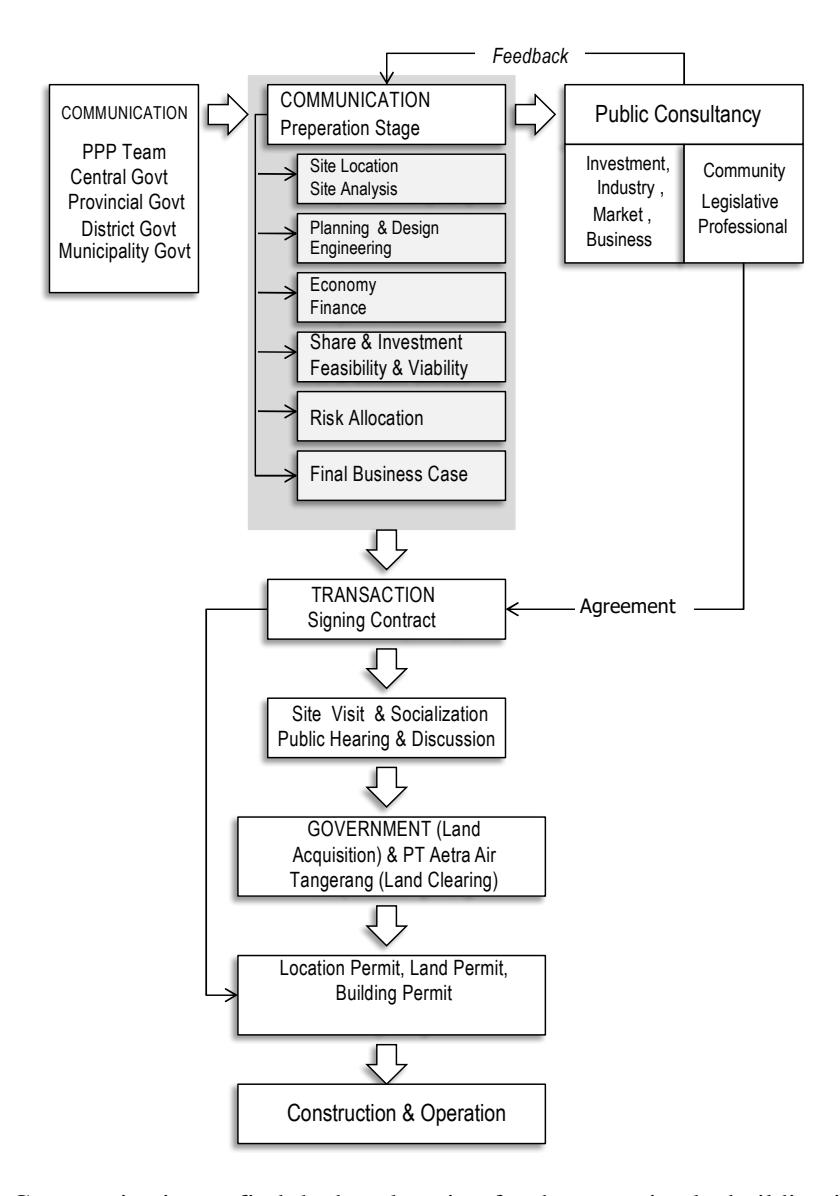
Figure 3. Communication to find the best location for the water intake building in the PPP scheme. Source: Analysis, 2016
After all the preparation processes were accomplished and clearing all the differences within the project, the next step was to sign the formal transaction between the government of Tangerang District and PT AAT. The PPP contract was signed at the end of 2008, binding both parties legally.
The first step after the signing the contract was to make a visit to the water processing zone, where the pipeline tract would pass and the site where the water intake building would be located. Because the water intake location was outside of the city's boundaries, inter-zonal communication between the provincial, district and municipal government administrations was needed. All of the external governments should also arrange and manage the communication with their personnel, community and their lawmakers respectively. This communication had to be reciprocal between all actors, where each of them exchanged data, information and technical know-how to accommodate a better understanding in view of solving differences.
Confirming the best location for the water intake building was the responsibility of the district government authority, but because the prospective location was outside the district boundaries, the district government authority had to make a contract agreement with the municipal government in whose territory the water intake building was going to be located. For all this activity the district authority needed strong support from central government authorities such as the National Land Authority (BPN) and provincial government authorities such as BBWS (Balai Besar Wilayah Sungai), Ciliwung Cisadane, or River Catchment Board of the Ciliwung and Cisadane rivers, the Development Planning Boards (BAPPEDA) of the province of Banten, the district of Tangerang and the city of Tangerang. All of these institutions were responsible for making recommendations to the respective provincial, district and municipality government authorities to synchronize the plan with spatial plans and land use plans, or RTRWs (Rencana Tata Ruang Wilayah). BBWS was involved because the location of the water intake building was at the edge of the river bank.
Intensive communication had to be arranged and engaged between the Ministry of Public Works, the National Land Authority, the River Catchment Board, the provincial authority, the district authority, and the municipal Development Planning Board (BAPPEDA) to recommended alternative locations for the water intake building. After all these authorities had submitted their considerations, the district PPP team proposed the best location. Adaptive negotiation during communication between actors was a key success factor in finding the best location for the water intake building of the Drinking Water Supply System in Tangerang (Naipospos, 2014). The lengthy communication process culminated in the Ministry of Public Works signing a recommendation letter to the district government authority to issue a land lease certificate Pinjam Pakai Lahan for the location of the water intake building to be constructed by PT Aetra Air Tangerang.
Communication was also required with the provincial government authority, who was in charge of giving a location permit to the district and municipal government authorities, who later would give administrative and technical permits to the project, such as building permits, land use permits, a river water tapping permit, a water utilization permit, or SIPA (Surat Ijin Pemanfaatan Air), etc. All of this communication was prepared by the PPP team, facilitated by PT AAT. After three years to collect all the required letters, i.e. letters of agreement, letters of recommendation, letters of approval, permits and many minutes of meetings signed by part of the actors and agents as an attachment, this stage was finally completed in September 2008. All of the documents were attached to prove that all activities were legal and that all the required schedules were prepared. Although it took three years, this process was the fastest preparation of a successful PPP scheme in Indonesia up until today.
Conclusion
This paper explored an effective communicative planning approach in infrastructure development using a PPP scheme reflecting the complementary concepts of communicative planning and critical pragmatism. To make the project successful, the planners involved in the PPP team dealt with power imbalances by creating networks with the other actors and engaging them in bargaining processes to reach the desired agreements. The team carried out extra intense communications during the PPP project. The communication process was already initiated at the beginning of the preparation phase of the project and was continued in the identification phase, planning and design, funding agreement, transaction, construction and implementation, operation and maintenance, signing contract, monitoring and evaluation until all the physical and management building facilities and systems were delivered to the government.
After creating the communication networks, the planners built dialogues with the other stakeholders in bargaining processes by focusing on their interests. Fisher and Ury (1981) argue that to find opportunities for mutual gain, exploring interests is much more important than bargaining over fixed positions (interests). Better agreements can be achieved by investigating "why they want something to happen and why it would be advantageous to them" instead of just "what they want without revealing why" (Fisher and Ury, 1981). In this case, intensive communication was arranged and engaged between the Ministry of Public Works, the National Land Authority, the River Catchment Board, the provincial authority, the district authority and the municipal Development Planning Board (BAPPEDA) to recommend alternative locations for the water intake building. Adaptive negotiation during communication between actors was a key success factor in finding the best choice for the location of the water intake building of the Clean Water Supply System in Tangerang (Naipospos, 2014). Successfull adaptive negotiation then led to an agreement that made the Ministry of Public Work sign a recommendation letter to the district government authority to release a land lease certificate (Pinjam Pakai Lahan) for the location of the water intake building to be constructed by PT Aetra Air Tangerang.
The communication process during the development of the drinking water supply system was not a simple PPP through BOT scheme. Because of its complexity it was more difficult to prepare PPP scheme in this case compared to PPP schemes for other kinds of infrastructure such as toll roads. The PPP team faced many problems from the very beginning of the project related to finding the best location of the water intake installation. The PPP team as the champion of the project played an important role in supporting the Regent as the head of the district authority hand in hand with other technical agencies. A large number of actors were involved, who were accomodated in setting up the communication process that took place from the beginning of the preparation stage all the way to the end of the construction, operation and maintenance stage.