

Introduction
Food security is one of the Indonesian government's national priorities in 2015-2019, as stated in RPJMN 2015-2019 [National Medium-Term Development Plan 2015-2019] (2015), where the Indonesian government sees this issue as complex and multidimensional related not only to policies to increase staple food production but also to policies to stabilize food prices, improve food quality, increase capacity of food business actors, and mitigate disruptions of food security. This is a very serious issue in Indonesia – home to 261.89 million people in 2018 (BPS 2018) – which not only leads to increasing demand for decent food but also to increasing demand for settlement, social, and economic facilities, which is often met by eliminating productive agricultural land. WFP (2018) notes the vulnerability of Indonesian food security. Even though the poverty rate in Indonesia had declined to 9.8% (almost 26 million) by March 2018, 7.9% of Indonesians were not able to meet basic food needs and 30.8% children under 5 years old suffered from stunting.
Law No. 18 of 2018 on Food states that food security can be achieved by providing various types of food products (Indonesian Government, 2012). Although Indonesia has extensive and fertile land for various agricultural commodities, i.e. roughly 1.9 million square kilometers (the 15th largest agricultural area globally) (Limenta and Chandra, 2017), the strong and rooted dominance of rice in the Indonesian food system (Bulog, 2019; Octasefani and Kusuma, 2015; Simatupang and Timmer, 2008; Timmer, 2010) causes food security in Indonesia to be closely linked to rice. This commodity is very important for poor people and is the main indicator for measuring poverty in Indonesia (Timmer, 2004). McCulloh and Timmer (2008) mention the high multiplier effects of rice farming in rural economies influencing the service and trade sectors as well as the labor market. Therefore, this research looked at food security from the point of view of rice farming.
Land for paddy farming in Indonesia is concentrated on Java island. Even though the island comprises only 6.7% of Indonesia's land area (BPS, 2014), its paddy land in 2014 amounted to 5,083,743 hectares (ha), or 47% of the country's paddy land (Kementan, 2016a). The province of West Java was the third highest paddy production area in Indonesia in 2015, producing 11,373,144 tons of rice paddy (Kementan, 2016b), indicating its importance for food security in Indonesia. Indramayu Regency (115,913 ha), Karawang Regency (97,529 ha), and Subang Regency (87,365 ha) (BPS, 2016) have the largest areas of wetland in the province, where more than 95% of rice is grown (Irawan, 2011).
On the other hand, these regencies face the problem of rapid loss of agricultural land, which poses a serious threat to food security. Land is a significant factor in rice production considering the current level of farming technology in developing countries, including Indonesia, which is more focused on extension rather than intensification or using high technology. A decline in agricultural land is a serious threat because it makes it increasingly difficult to produce rice in quantities that meet the needs of the Indonesian people. The research of Irawan (2011) in West Java showed that paddy land loss amounted to 8,140 ha per year. The following regencies in Indonesia have already lost more than 1,000 ha of wetland each: Bekasi (1,359 ha), Indramayu (1,268 ha), Karawang (1,205 ha), and Bandung (1,050 ha). They are all near the Trans-Java toll road, indicating the severe impact of the toll road on the size of the wetland paddy area.
Badan Pengatur Jalan Tol [BPJT – Indonesian Toll Road Authority] (2016b) has stated the intention of the government of Indonesia to develop the Trans-Java toll road in the northern area of Java island. The toll road passes through Indramayu Regency (BPJT, 2016a), which has the highest rice production in West Java, and the Gantar District, which is the top rice producer in Indramayu Regency, totaling 118,681 tons per year (BPS Indramayu, 2014). Rukmana (2008) states that the Trans-Java toll road will result in the conversion of 655,400 ha of agricultural land to other uses, especially in areas near the entry-exit gates of the toll road. An entry-exit gate will be located in the Terisi District, close to the Gantar District (about 5 km away). The toll road will cause a rapid development of this area, which is expected to increase the sale of paddy land. The area in which the toll road will be located will no longer be able to support rice paddies; consequently, the increase in demand for land in this area could lead to a rise of land prices of 20% per year (Ariyani, 2015). The toll road links city and rural areas, which raises the value of the land, mainly residential and industrial land, but it has a negative effect on the agricultural market. According to Chung (2002), the toll road will block markets between rural transportation routes, because it will create a 'wall' between rural areas. If the land has more value for non-agricultural use, then the toll road will result in the conversion of agricultural land.
Thus, the development of the Trans-Java toll road is likely to threaten food security in Indonesia because this road passes the most strategic agricultural area of Indonesia, which could lead to rapid agricultural land conversion. However, the impact of toll road development on agricultural land conversion has not yet been studied comprehensively. Most studies, such as those conducted by Lambin and Meyfroidt (2011), Deng et al. (2009), Liu et al. (2003), Seto and Kaufmann (2003) and Chung (2002), focused more on changing land use as an outcome of the phenomenon of urbanization, so that their focus was on the spatial pattern of land use change, including land used for agriculture, as well as the scarcity of productive land as a result of massive urban development. Azadi et al. (2016), for example, using multi-stakeholder analysis (a sampling of 101 executive officers) and a mixed research approach (qualitative and quantitative), found that socio-economic and political factors were the main drivers of change in agricultural land use in northern Iran. Although they mention the main factors as detailed indicators, they did not consider the effect of infrastructure development, particularly transportation infrastructure, on the rate of agricultural land-use change and did not consider the preferences of actors who are directly involved in agricultural activities. However, large-scale infrastructure development, which is often developed to connect two large urban areas, is becoming a serious issue, especially in developing countries, because the opportunity is large not only to significantly change the structure and land use of regional areas (Verburg et al., 2004) to concentrations of built-up land on a large scale (Florida et al., 2008), but also the rate of agricultural land-use change due to infrastructure development varies depending on the type of transportation infrastructure being developed. Another thing is that agricultural entrepreneurs at the local level who are directly involved in agricultural production activities, such as farmers, play an important role in determining the rate of land-use change. Farmers (landowners) not only have a role as owners of increasingly limited land resources; they have land tenure rights but also have a position as subject and object of development. As an object of development, farmers are targets of government development programs, while as the subject of development, farmers are agents of change in their communities, who have the right to determine their decisions and participate actively in developing their agricultural business.
The urgency to consider farmers as the main actors influencing in agricultural land-use changes due to large-scale infrastructure development is not a major concern in the studies that have been conducted so far. Farmers' perceptions are only related to the development of land value/land prices (Awasthi, 2008, 2014), development of sustainable agriculture (Alam et al., 2010; Tatlidil et al., 2009), changes in environmental conditions, especially climate change (Elum et al. 2017; Fosu-Mensah et al., 2012; Habiba et al., 2012; Deressa et al., 2011) as well as changes in farm management (Nabahungu and Visser, 2013; Adesina and Zinnah, 1993). This creates a theoretical gap, both in comprehensively understanding the theory of agricultural landuse change as well as in the theory of food security due to the low transfer of high agricultural technology in developing countries, which has caused a food supply decline closely related to a decrease in agricultural land area. The limited research on the perception of the main actors in agricultural activities also creates a gap in understanding the impact of large-scale infrastructure development on regional space patterns from the socio-economic perspective of the communities involved.
Meanwhile, in the context of decision-making, development policies, including agricultural policies, are often carried out without considering the opinions of all stakeholders involved in the field, so that their implementation is ineffective and inefficient. Therefore, with the aim of identifying farmers who have the desire to convert their agricultural land as a direct consequence of toll road construction, this research aimed to help the Indonesian government to identify the characteristics of the owners of agricultural land (objects), so that strategic interventions can be designed. In addition, this also contributes to assisting the government in identifying the extent to which farmers can be subjects of development programs, which can play a role in diffusing knowledge and becoming agents of change within their communities.
Literature Review
Yu et al. (2010) and Pinstrup-Andersen (2009) state that the concept of food security has developed in the last 30 years to reflect changes in worldwide policy thinking. Initially, in the mid-1970s, the concept of food security as defined by the World Food Summit in 1974 focused on self-sufficiency or countries having sufficient food supply to meet the population's needs. In line with the increasing complexity of global problems and uncertainty in food supply, food security is now conceptualized in a more holistic and comprehensive manner (Tendall et al., 2015), not only related to the level of the problems but also to dimensions of food security. In terms of the level of the problems, the focus of food security is changing from only being seen as a problem at the global and national level to a concrete issue at the household and individual level. In addition, food security is no longer only linked to the dimension of food availability, but also involves three other dimensions, namely access to food consumption, food utilization, and food stability (FAO, 2008). Therefore solving this issue must consider the interrelationship between these dimensions. In the Indonesian context, through Law No. 18 of 2002 on Food, food security is also understood as a multidimensional issue that reflects adequate food
availability (quantity and quality), safety, diversity, nutritiousness, equitability, and affordability, not conflicting with religious and cultural prescripts and helping the people to live healthy, active and productive lives in a sustainable manner (Indonesian Government, 2012). The evolution of the concept of food security, both at the global and the Indonesian level, shows the development of an awareness to understand this issue more comprehensively.
In a more globalized and connected world, urbanization adds to the complexity of the food security issue. On the one hand, Masters et al. (2013) have argued that urbanization will significantly change global agriculture to be more specialized and will encourage the creation of opportunities for millions of farmers to commercialize their agricultural commodities. Lambin and Myefroidt (2011) added that urbanization will encourage more efficient agricultural land management innovations by using technology, restoring degraded land, adopting better dietary patterns and arranging tighter land-use plans until an agricultural industrialization process emerges. However, in developing countries, because of the absence or ineffectiveness of spatial plans governing land-use in cities and their hinterland and the low diffusion of agricultural technology, urbanization is seen as a negative phenomenon that adversely affects food security. This view is based on urbanization, both caused by the process of the population moving from rural to urban areas and the process of expanding urban areas, which will lead to increasing land requirements to meet settlement needs, to provide supporting social facilities and to expand economic activities such as industry, trade and services. Urbanization will also increase the need for transportation infrastructure in order to improve the accessibility and mobility of the people to surrounding areas as well as to production areas and commodity markets (Liu et al., 2003; Seto and Kaufmann, 2003; Verburg et al., 2004), which is often done by eliminating agricultural land. In some cases, as explained by Florida et al. (2008) and Weber and Puissant (2003), largescale infrastructure development has been carried out to accelerate urbanization, but in reality it also accelerates agriculture land-use change. This makes fertile and productive land for agricultural activities become scarce (Lambin and Meyfroidt, 2011; Gerbens-Leenes and Nonhebel, 2002) and thus contributes to the decline of food security (Chen, 2007; Masters et al., 2013; Matuschke, 2009).
According to Azadi et al. (2016), Brorsen et al. (2015), Rahman (2010), and Awasthi (2014), many factors determine the characteristics of farmers who desire to sell their land. Urban sprawl resulting from infrastructure development, especially toll roads, is expected to make agricultural land more valuable in the future. According to Plantinga et al. (2002), the potential for future land development is a determinant of farmland prices, because if land is expected to be more valuable in the future, even for non-agricultural use, prices will increase. The more expensive the farmland, the more income famers will receive from selling it. Satterthwaite et al. (2010) state that agricultural landowners often leave their agricultural land abandoned to wait until the land price rises dramatically and sell the land for non-agricultural land use when prices are high. In addition, farmers feel pressure due to the growth of housing, commercial and industrial areas around agricultural areas, making it difficult for them to overcome agricultural operational problems and making them sell their agricultural land (Zollinger and Krannich, 2002).
Their perception of the profitability of non-agricultural sectors can also impact the desire of farmers to sell their land (Azadi et al., 2016; Brorsen et al., 2015). Puga and Venables (1996) explain that high added value in the industrial sector is slowly changing the dominance of the agricultural sector in the economic structure of countries. This high profitability changes the perception of farmers towards other sectors, which may lead to the sale of agricultural land. In other words, if non-agricultural sectors are more profitable than the agricultural sector, then farmers will be tempted to convert their farm businesses to other businesses.
Income contributes significantly to farmers' desire to sell their land. Low appreciation of farmers is reflected in low income, encouraging them to look for other livelihoods that are more profitable. Zollinger and Krannich (2002) add that low income lowers the expectation of farmers that they or their family members will continue to farm in the future, so they choose to sell their land. This problem is made worse by the price unstability of agricultural commodities (McCulloch, 2008; Timmer and Dawe, 2007), which often occurs during the harvest period. Also, the percentage increase in prices of agricultural commodities is not comparable with the percentage increase of regional minimum wages. This makes the income of farmers highly uncertain, which makes it difficult for them to fulfill their families' needs for decent living, which affects their desire to sell their land.
The conviction that living in an urban area is better than in a rural area also influences farmers' desire to sell their land. Urban modernization, which is usually represented by advanced technology, high, varied, and specialized employment opportunities and relatively high income, plays a major role in changing the mindset of farmers and young people in rural areas to move to urban areas (Leavy and Hossain, 2014). Especially for young people, the city is a place to realize their dreams and lead a more prosperous life. Vanderbeck & Dunkley (2003) state that the idea that life in the city is more advanced and modern also contributes to increasing the desire of the younger generations to leave the countryside and live in the city. In addition, the completeness and high quality of urban facilities, such as health, education, and trading facilities, which are often not found in rural areas, also cause farmers to try to move their families to the city to find a better life. These circumstances encourage them to sell their agricultural land assets in the village to acquire capital for starting a new life in the city.
A further factor that affects the desire to sell farmland is activity in farmers' groups. Law No. 41 of 2009 (Indonesian Government, 2009) regulates agricultural land conversion in Indonesia. Badan Pertanahan Nasional [National Land Agency] states that Law No. 41 is intended to protect sustainable land (Indonesian Government, 2009). Paragraph 1 of Article 44 states that land cannot be converted for non-food business use. However, this law is difficult to implement because not all farmers and buyers understand it. Additionally, there are only a small number of public government employees to implement it compared to the large number of farmers and buyers. The government is responsible for maintaining the nation's food security and should protect and control paddy land. It cannot only make rules but must also actively execute them by approaching paddy farmers to ensure that they do not to sell their farmland easily. An institution through which paddy farmers can be reached is Kelompok Tani [Farm Activity Group], which employs state agricultural officers to explain government policies and laws to farmers, especially regarding agricultural issues. If farmers are active in Kelompok Tani, they are more likely to understand the law. For this reason, the extent of activity in a farmers' group impacts their desire to sell land.
Rahman (2010) has argued that the location of land, infrastructure, and fertile soil are determinants of farmland purchase. The decision of buyers to purchase agricultural land is not related to the land's production capacity but to its location (Reed and Kleynhan, 2009). Deng et al. (2009) and Verburg (2000) found that high attractiveness of a location regarding investment, both because of its proximity to urban centers and transportation nodes, encourages the conversion of agricultural land, especially land used for horticulture, thus decrasing agriculture production.
Therefore, the price of agricultural land increases as the size of the parcels decreases, because small parcels tend to be close to residential areas and high-quality roads (Brorsen et al., 2015). In addition, this is also determined by the number of parcels; if a farmer has several parcels of land, he or she can still operate the farm after selling one parcel.
Proximity or closeness of farmland to a road can affect the demand for farmland, making it more desirable to sell. The development of roads causes agricultural land to be in close proximity to cities and industrial areas. In addition, Verburg et al. (2004) and Seto and Kaufmann (2003) explain that infrastructure development, especially of roads, does not only have implications for accessibility and mobility of communities, but also encourages development of agricultural land into settlements along with trade and services facilities around the infrastructure. Proximity to a road also correlates with a high desire of developers to acquire the land below market price and converting it for commercial purposes, such as renting out at high prices (Petit et al., 2011). From the farmers' point of view, proximity to a road will give their land a high economic value, so they choose to sell their land, either to move their agricultural business outside the area with a larger size of land or for acquiring business capital to use outside the agricultural sector in the region.
Soil fertility determines the productivity of farmland and therefore its profitability. Thus, if farmland is not fertile, farmers will be more willing to sell their land. However, the rise in development for urban use has an impact on agricultural land by making it uneconomical and unfeasible for cultivation. Lambin and Meyfroidt (2011) found that land degradation as a result of urbanization has a negative impact on land productivity and makes 1-2.9M ha unsuitable for cultivation each year, with high land rehabilitation costs. The long-term use of chemical fertilizers, as described by Rigg (2006) and Tatlidil et al. (2009), has reduced the quality of agricultural land, making it less productive. When faced with this situation, a farmer has only three options: sell, rent out, or lease the land (Awasthi, 2008) and most of them choose to sell their land.
Other determinants are the perception of the value of farmland by farmers who are influenced by socio-economic factors such as age, education, size of the family workforce, and dependency on agricultural income (Awasthi, 2014). Age can affect the desire of farmers to sell their land. The dominance of farmers in their old age in rural areas as well as the low interest of the younger generations in continuing to farm makes the sale of agricultural land an option for many of these farmers (Rigg, 2006). This is supported by the findings of Zollinger and Krannich (2002), who found a tendency of farmers at retirement age to sell their agricultural land as their main source of income during retirement; this tendency is increased if the farmers do not have a successor in their family to take over the agricultural business. As for the younger generations, the research conducted by Leavy and Hossain (2014) in Cianjur, Indonesia illustrated the reason for the negative sentiment of the younger generations towards the agricultural sector. It is considered to have low social status (heavy manual work that makes their skin darker), the benefits of this sector are low, and the development of the sector and commodities is highly uncertain. The perception that cities have more opportunities for high-paying jobs also contributes to persuading inexperienced young farmers sell their land and move to the city.
Education is another factor that has an impact on farmers' desire to sell their land. On the one hand the quality of education will make it easier for farmers to be able to adapt to the development of agricultural technology and changes in agricultural patterns due to climate change, but this also means that they have more opportunities to engage either in high-income agricultural or in high-income non-agricultural businesses. This can lead them to sell their
agricultural land rather than survive in the agricultural sector, which has low added value. In addition, Rigg and Sakunee (2001) and Rigg (2006) note that there is a tendency for farmers to provide better education to their children, which leads them to find work outside the agricultural sector and outside agricultural areas. Hayami & Kikuchi (2000) also found that financing their children's education at a higher level was the reason for farmers to sell their agricultural land. Farmers hope that investments in their children's education will provide their children with a better future, which they cannot get from the agricultural sector. This shows that education, both the level of education possessed by farmers and their desire to get a better education for their children, is a factor that influences the desire of farmers to sell their land.
Furthermore, farmers with a large family workforce face a greater risk when their farmland shrinks (Alam et al., 2010; Ruerd and Masset, 2003). These farmers fear the loss of livelihood for their family members, which can impact the desire to sell their land. Another factor that can influence the risk is dependence on family income from agriculture. Tatlidil et al. (2009) and Leavy and Hossain (2014) found that low education, specialized expertise and capital make it more difficult for farmers to get jobs outside the agricultural sector or to start their own business. This makes them highly dependent on agricultural income, so the loss of farmland will pose a greater risk for their family, which influences farmers' desire to sell their farm.
Based on these arguments, the hypothesis of this research is that the following factors impact the desire of farmers to sell their farmland: the perception of the profitability of non-agricultural sectors, land prices, farmers' income, perception of urban life, activity in farmers' group, proximity to a road, number of land parcels, soil fertility, age, education, family workforce, and dependence on agricultural income.
Methods
We chose Gantar District as the location for our research because it is the highest rice paddy producing region in Indramayu Regency, Indonesia (BPS Indramayu, 2014). The Indramayu Regency was selected because it is the top paddy producer in West Java (BPS Jabar, 2014). West Java was selected because the Trans-Java toll road is already operational in this province (BPJT, 2016b). We conducted our research using as dependent variables the group characteristics of farmers who have the desire to sell their land. Farmers were grouped into those who have the desire to sell their land and those who do not. The independent variables that impact the group variables are: the perception of profitability of non-agricultural sectors, land prices, farmers' income, perception of urban life, activity in farmers' group, proximity to the road, number of parcels of land, soil fertility, age, education, family workforce, and dependency on agricultural income. The scale of the dependent variable was nominal and that of the independent variables was ordinal. Ratio scales for the farmers' perceptions were not practical because their answers were based on perceptions; however, the researchers provided guidance indicators for the responses. Furthermore, we made these results scalable, so they could be analyzed and assigned values. Table 1 shows the variables, responses, values, and guidance indicators of the research.
Table 1 shows the basic questions asked to the respondents. The first column contains the question and the second column contains the farmers' responses. The value of the farmers' responses are in brackets. This study used 315 farmers from six farmers' groups as respondents. The method to select the farmer groups was cluster method sampling. The six groups were selected as shown in Table 2.
Table 1. Research Variables.
| Variable | Response |
|---|---|
| Desire to sell land | No desire [0], desire [1] |
| Perception of non-agricultural profit | Very low [1], low [2], middle [3], High [4], very high [5] |
| Land prices | Very low [1], low [2], middle [3], High [4], very high [5] |
| Income | Very low [1], low [2], middle [3], High [4], very high [5] |
| Perception of urban life | Very low [1], low [2], middle [3], High [4], very high [5] |
| Activity in farmers' group | Very low [1], low [2], middle [3], High [4], very high [5] |
| Proximity to road | Very low [1], low [2], middle [3], High [4], very high [5] |
| Number of land parcels | Very low [1], low [2], middle [3], High [4], very high [5] |
| Soil fertility | Very low [1], low [2], middle [3], High [4], very high [5] |
| Age | Very low [1], low [2], middle [3], High [4], very high [5] |
| Education | Very low [1], low [2], middle [3], High [4], very high [5] |
| Number of family members in the workforce | Very low [1], low [2], middle [3], High [4], very high [5] |
| Dependency on agriculture | Very low [1], low [2], middle [3], High [4], very high [5] |
Table 2. Sample of farmers' groups.
| No. | Farmers' Group Selected | Place | Sample |
|---|---|---|---|
| 1 | Punduan 1 | Mekaryaja | 194 |
| 2 | Wana Bakti Lestari 2 | Sanca | 21 |
| 3 | Mekarsari 1 | Mekaryaja | 44 |
| 4 | Pemuda Tani | Bantar Waru | 16 |
| 5 | Pada suka 2 | Sanca | 17 |
| 6 | Wana Bakti Lestari 3 | Sanca | 22 |
| Total | 315 |
After the farmers' groups were selected, assistant researchers attended meetings of the groups and collected data from the paddy farmer members. The research lasted for about three months.
The data were analyzed using the variables of this study. The analysis was based on a test to find the differences between the two groups using ordinal data. For statistical analysis the Mann-Whitney U test was used. This is a statistical test to compare two independent groups with ordinal-scale data without normally distributed data. The test was applied to two groups, the first consisting of farmers who had the desire to convert agricultural land by selling their farmland; this group was given the value zero [0]. The second group consisted of farmers who did not have the desire to convert agricultural land and was given the value one [1]. According to (Conover, 1980) the Mann-Whitney U test can be applied if the samples consist of ordinaltype data with two sample sets. Because the data were divided into two groups and all variables were ordinal in scale, the test was suitable for this research. The confidence level was 99%, which means that the variables could be used in the analysis, using graphs and other statistical tests if required. Analysis was carried out using SPSS. The variables were selected through a literature review. The details of variable selection are given in the Theory section.
Results
Table 3 presents the results of the Mann-Whitney U test for the two groups of farmers – those who were had the desire to sell their land and those who did not – using the following variables: perception of the profitability of non-agricultural sectors, land prices, farmers' income, perception of urban life, activity in farmers' group, proximity to the road, number of parcels of land, soil fertility, age, education, family workforce, and dependency on agricultural income.
Table 3. Mann-Whitney U test for groups of farmers who desired and did not desire to sell farmland.
| Mean Rank | Mann-Whitney U | |||
|---|---|---|---|---|
| Variable | Not Desire | Desire | Test | P-Value |
| Perception of non-agricultural profit | 158.1 | 154.8 | 7,169.0 | 0.791 |
| Land price | 143.6 | 220.1 | 3,756.5 | 0.000**) |
| Income | 164.3 | 126.9 | 5,582.5 | 0.002**) |
| Perception of urban life | 157.0 | 159,7 | 7,197.5 | 0.828 |
| Activity in farmers' group | 176.4 | 72.5 | 2,478.0 | 0.000**) |
| Proximity to road | 156.6 | 161.4 | 7,103.5 | 0.702 |
| Number of land parcels | 156.6 | 161.4 | 7,101.0 | 0.560 |
| Soil fertility | 154.55 | 171.3 | 6,539.0 | 0.045 |
| Age | 154.3 | 171.8 | 6,508,0 | 0.163 |
| Education | 160.1 | 145.9 | 6,662.0 | 0.232 |
| Number of family members working on farm | 161.5 | 139.6 | 6,303.5 | 0.029 |
| Dependency on agriculture | 157.4 | 157.8 | 7,308.0 | 0.978 |
** highly significant at 99% confidence level or p-value < 0.01
From Table 3 it can be seen that the variables with high significance were: land price, income, and activity in farmers' group. The next subsection elaborates the proportion of farmers who desired to sell their farmland and those who did not based on the variables.
Higher land prices can have the effect of making farmers want to sell their farmland. The results from the collected data can be seen in Figure 1.
Figure 1 shows that a dominant proportion of high-value farmland is owned by farmers who desire to sell farmland. This is not surprising, because high prices tend to encourage farmers to sell their farmland. In the group of farmers who did not desire to sell their farmland, only a tiny proportion of the land was very expensive. On the other hand, a tiny proportion of farmers desired to sell their farmland even though land prices are low; in social science, this is considered an exception.
The farmers' income can affect their desire to sell land, indicating that farmers' income can affect the proportion of farmers that wish to sell their land. Figure 2 shows the proportion of farmers who desired and did not desire to sell their farmland.
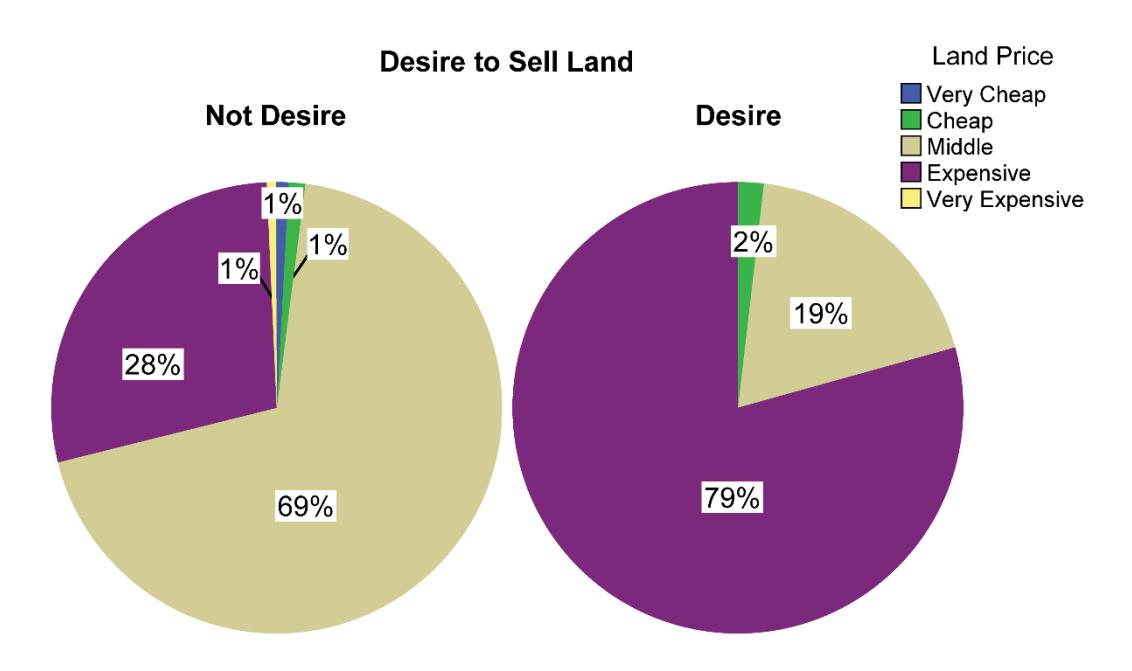
Figure 1. Effect of land prices on desire to sell farmland.
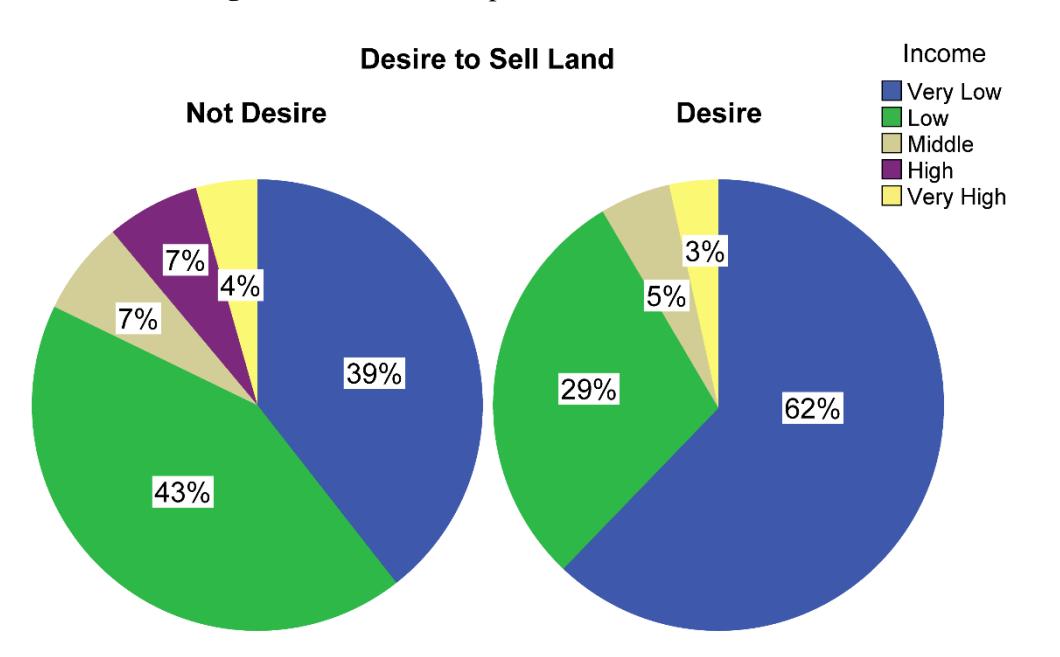
Figure 2. Effect of farmers' income on desire to sell their farmland.
A large proportion of farmers who desired to sell their farmland had very low income. The proportion of farmers who had very high income and did not desire to sell land was higher than that of farmers with high income who desired to sell land.
Farmers' groups are institutions that enable the government to explain policies and laws to farmers. Another function of these groups is to act as an institutional channel for the government to support farm businesses. If farmers are active in these groups, then they are likely to better understand the government's policies and laws. Law No. 41 of 2009 (Indonesian Government, 2009), states that farmland used for food production cannot be transferred to another sector. This research assumed that the more active farmers are in farmers' groups, the better they understand this law. Figure 4 shows the proportion of farmers who desired and did not desire to sell land by their level of activity in a farmers' group.
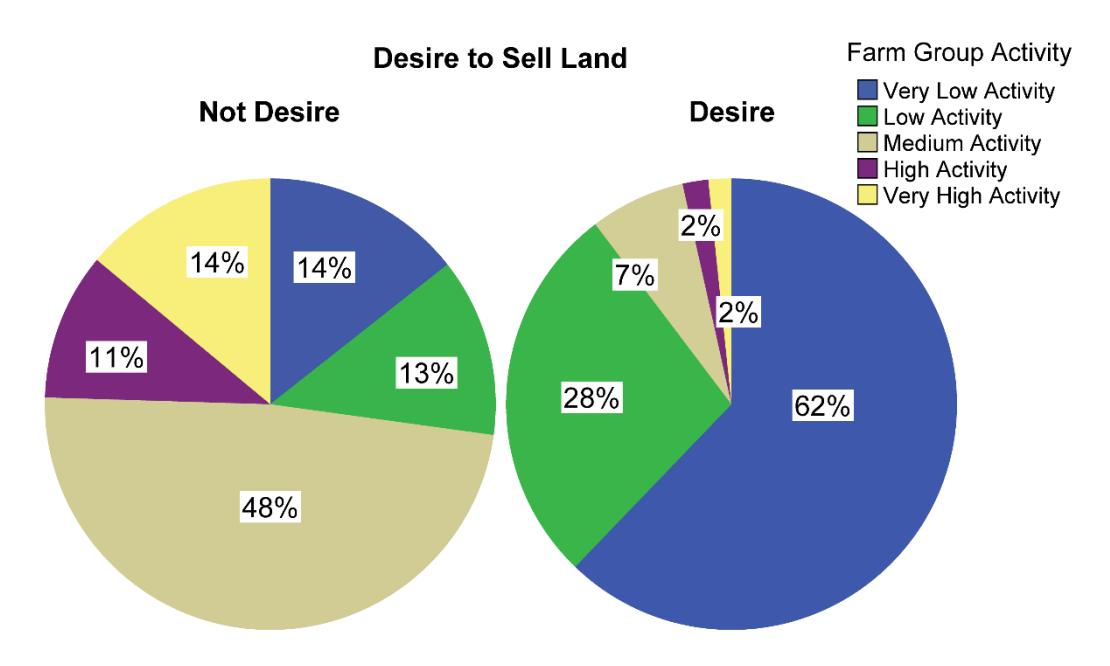
Figure 3. Effect of farmers' group activity on desire to sell farmland.
The most significant proportion of farmers who desire to sell land comprised those with very low activity in a farmers' group, and the second largest proportion comprised farmers with low activity. This reflects the fact that high activity in a farmers' group can reduce the desire to sell land. This result suggests that increasing the activity of farmers' groups through more events and expansion of their membership could support the government's program to maintain food security.
Discussion
These results show that farmers who desire to sell land are less active in farmers' groups, have low income, and have more valuable land. The results have a high significance level (p-value < 0.01). The sale of land is a channel for agricultural land conversion; the final issue for consideration in this research was the control of agricultural land conversion for food sustainability.
We compared the results of other studies to ours. Azadi et al. (2016) (Azadi, et al., 2015) conducted research in northeast Iran using structural equation modeling and found that agricultural land conversion was impacted by the profitability of non-agricultural sectors, land price, farmers' income, land fragmentation, urban sprawl, and inheritance law. In comparison with the present research, the common significant variables were farmers' income and land price. The impact of inheritance law is like activity in farmers' groups in the present research, because Law No. 41 of 2009 (Indonesian Government, 2009), which forbids the conversion of land for food production to alternative uses, is explained via farmers' groups. Farmers who are more active in a farmers' group understand this law better. According to the findings of Harini et al. (2012), in Sleman Regency, Indonesia, the significant factors influencing agricultural land
conversion are land price and location. Land price in their research is the same as agricultural land conversion in this research and in Azadi et al. (2016). A similar research was conducted in central Vietnam by Phuc et al. (2014), who found two factors that impacted agricultural land conversion: extensive use of state power to convert land and profit-seeking by multiple stakeholders. Vietnam has a development program to convert agricultural land for industrial and urban development. Upon comparison of the above results with those from our research, the factor of land price was found to be the same as that of agricultural land conversion, but other factors were not the same. These different results are due to the studies' different locations and methods.
High land prices and low income will make farmers want to sell their land. This is natural because farmers need money to support their families. An increase in income from rice farming could reduce farmers' tendency to want to sell their land. Paragraphs 1 and 2 of Article 39 of Law No. 41 of 2009 (Indonesian Government, 2009) state that the Indonesian central government and local governments can provide incentives through special budget allocations to train farmers in sustainable food farming. Thus, the central government and local governments can implement programs to grant incentives in areas with sustainable food farm locations. Incentive programs can be implemented by granting subsidies through farmers' groups in order to reduce the tendency to sell land. In addition, granting subsidies via farmers' groups could entice farmers to participate in group activities and attract non-farmers as group members. These activities could be directed toward providing an increased understanding of the importance of Law No. 41 of 2009 (Indonesian Government, 2009) since improving farmers' understanding of the law can be achieved via farmers' groups. Once farmers better understand the law, implementing it will be easier. In this case, farmers could mentor their fellow farmers and encourage them not to sell their land. In addition, if outside parties wish to buy land for non-farming purposes, members of the farmers' groups could report this information to a government official.
Our research results show that farmers who are less active in a farmers' group are more likely to have the desire to sell land. Thus, when a farmers' group develops new programs to attract members, the tendency to sell land will presumably be reduced. The government has published Law No. 41 of 2009 (Indonesian Government, 2009) to protect agricultural land for sustainable food production. In Paragraph 1 of Article 44, this act states that land used for food production cannot be sold for non-food activities. A control policy that allows land sale only by juridical means will not be enough to reduce the sale of agricultural land; public information programs for farmers are also required. Increased activity of farmers in these programs will depend on the farmers. If they understand the importance of food security in Indonesia, they will remind each other about the importance of retaining land for food security. Such activities will create social pressure on farmers and discourage the sale of land.
The Gantar District is the largest paddy producer in Indramayu Regency; this location is of utmost strategic importance for food security in Indonesia. The Trans-Java toll road will have a significant impact on the sale of agricultural land for non-farming uses. More industrial zones and real estate will be created and built along the toll road. If not controlled, this will reduce paddy production in the most strategic rice-producing areas of Indonesia. Increasing mentoring programs for farmers' groups in food farm locations with high productivity along highways and national roads could reduce the sale of farmland for non-agricultural uses. Such programs are important for maintaining food security in Indonesia.
Conclusions and Suggestions
The findings of this research can contribute to the understanding of infrastructure development and its implications for regional food security. Land price is a very significant factor in determining the desire of farmers to sell their farmland. Land prices are naturally the result of supply and demand, and in a free market system it is difficult to intervene in the determination of prices. The government could use transaction costs to influence the sale of farmland, because higher transaction costs discourage the sale of land. Transaction costs can be raised if an area is declared a 'Sustainable Agricultural Food Land Area'. Section 44 of Law No. 41 of 2009 (Indonesian Government, 2009) states that it is forbidden to convert land to non-food agricultural use. If someone insists on purchasing land, according to Section 45 the buyer must replace the land with another area that is three times larger, or, if the purchased land is part of a reclamation area, the replacement land must be twice the area of the acquired land or larger if it is not irrigation land.
The farmers' income variable is very significant and can affect the desire to sell land. Thus, the government should initiate a program to increase farmers' incomes in these areas to maintain the country's food security. This program should have higher priority in these areas compared to other areas in Indonesia.
Another factor that influences farmers' desire to sell farmland is activity in a farmers' group. This suggests that the government could undertake more programs promoting the importance of food security in Indonesia for farmers' groups in areas near entry-exit gates of the Trans-Java toll road. Such programs could reduce the conversion of farmland. Thus, promoting the importance of food security in Indonesia through participation in farmers' groups could reduce the desire to sell farmland.
Acknowledgement
Thanks to the Directorate General of Research and Development, Ministry of Research, Technology and High Education for funding this research.