
Introduction
The globalization of lifestyles has grown significantly in recent decades, especially in Western societies. The consumption culture and lifestyle encourage people to consume more than their biological needs and become a factor in the disruption and linkage of people with various social and economic statuses through the use of goods. For a long time, the Iranian lifestyle was combined with religion, along with a focus on God and religion, and, consequently, an attitude of simplicity towards consumerism. Material and non-material resources and wealth were used to provide optimal welfare. Today, however, Iranian society has been heavily influenced by the lifestyle of Western societies, paying more attention to its consumerist dimension rather than other dimensions of modernity. The result is a consumerist lifestyle, which shows itself perfectly in the various spheres of life of Iranian society. It is for example quite evident in intraurban trip patterns. Today, Iranian cities, including Tehran, see many changes in lifestyle in connection with the proliferation of private cars and long, tedious and unnecessary intra-urban trips between the destinations of work, housing, shopping and leisure, which, in a sense, is one of the consequences of modernization. The inability to accurately predict the future as well as the complexities caused by an ever-increasing rate of change have led researchers to take advantage of the emerging knowledge of futures studies and inject foresight into planning and forecasting scientific and technological developments (Purmohammadi, 2010).
The first work on futures studies was conducted in the form of a scientific review conducted from 1930 to 1933 by a group of American researchers headed by William F. Ogburn in the field of sociology, which was a nascent science at the time. For the first time, a scientific methodology was applied in order to extrapolate social trends in the United States. A catalog of trends was published. The researchers succeeded in making important predictions, including increasing rates of immigration and divorce (Moqimi, 2015). Activities and research regarding futures studies started in 1948 by the RAND Corporation, affiliated with the US Department of Defense. Most of these studies were based on prediction. Kaplan, Rishe, Dakly and Gordon were among the first thinkers in the field of futures studies who studied the future based on prediction. Gradually this discipline started to be practised worldwide. In the 1980s, the concept of foresight was introduced into policy-making and forecasting was gradually forgotten over the following decades.
Some futures studies that have been conducted in the field of urban studies are:
Krawczyk (2006) may be considered the first researcher who argued for futures studies in urban planning professionally. In 2006, she completed her doctoral dissertation entitled Futures Thinking in City Planning Processes: The Case of Dublin, in which she studied the structure and methods of urban planning and the use of the various techniques of futures studies in planning the city of Dublin.
In 2005, Cynthia G. Wagner, in her book entitled Foresight, Innovation and Strategy: Toward a Wiser Future, addressed the leading prospects and forecasts of foresight. Foresight arises from the need to prepare for the future, that is, the best use of resources to achieve a competitive advantage, improve the quality of life, or achieve sustainable development. The increasing application of this approach in recent years has led to a change in fundamental considerations in the current concept of foresight in Europe.
In Iran, the discussion on foresight and planning in a specialized way is still in its early stages. Among the studies carried out in Iran is the study by Behešhti and Zāli (2010), entitled Identification of the Key Factors of Regional Development with a Scenario-based Planning Approach: The Case of East Azerbaijan Province). This study was conducted using the Delphi method with 76 factors. The researchers tried to provide a pattern to identify the key factors affecting the development process on a regional scale, which is the basis for providing possible and contingent scenarios for the next 10 years in the province of East Azerbaijan (13 major driving forces).
Rabbāni (2011) in his Master's thesis entitled The Application of the Futures Studies Approach, and Strategic Thinking in Urban Development Planning discusses the future development of Baneh. In this research, key variables affecting the future development of Baneh were identified and then the most important actors who affect the key variables, the impact amount of each actor on the variables, etc. were analyzed and, finally, strategies were presented for the future development of Baneh.
Zāli and Mansuri-Birjandi (2014) analyzed the key factors that affect the development of sustainable transportation with a time horizon of 2025 in the Tehran metropolis by means of the structural analysis method. For this purpose, 18 factors were identified and analyzed using the MICMAC software. Finally, transportation infrastructure, urban compact development, culturebuilding, transportation system management and new technologies were identified as effective key factors.
Na'imi and Purmohammadi (2016) identified the key factors that affect the future situation of urban poor settlements in Sanandij with the emphasis on the application of futures studies. In this research, out of 54 factors that were analyzed by cross-impact/structural analysis using the MICMAC software, the 12 key factors that have the largest influence on the future situation of the urban poor settlements in Sanandij were selected.
Finally, it can be said that previous researches focused mostly on explanations of looking into the future in the field of regional and urban studies and housing. Discussion of behavioral geography and citizens' image of the city and the study of the impacts of urban lifestyle changes on trip generation is a novel approach.
Hence, in this study, considering social, economic, physical and political indices, we tried to answer the following question: How does lifestyle affect the growth of urban trips in the future?
This study is innovative as well as important because a comprehensive understanding of the city in this context can only be achieved by examining the factors that affect lifestyle and urban trip generation. Taking into account the consequences of urban trip generation, feasible plans and solutions will be put forward in future studies.
Theoretical Foundations
Lifestyle
In 1922, Adler presented a definition of lifestyle from a psychological perspective. He sees it as a relatively constant style in which individuals pursue their goals and solve their problems. From this perspective, an individual's values play a decisive role in lifestyle and for every human being their lifestyle can be imagined. However, in sociology, in contrast with the term 'class', lifestyle is used to represent the distinction and classification of social groups based on their quantity and type of use (Abāzariyān and Čāvošiyān, 2002).
Lifestyle as a constantly changing paradigm takes its essence from social and human values. These values are constantly altering along with the fundamental and cultural changes of modernism and post-modernism. However, the close relationship between lifestyle and concepts such as globalization, culture, and social and dignity groups, highlights more and more its importance in the social sciences and the behavioral and environmental sciences. Lifestyle is a set of repetitive but purposeful habits and daily activities. Moreover, lifestyle is a set of choices in everyday life that a person normally follows, influenced by the behavior of others to meet his/her own current needs. Lifestyle also embodies the particular narrative that a person chooses for his/her own identity compared to others. In the following, some of the definitions of lifestyle and its components are summarized (Tables 1 and 2).
Table 1. Definitions of lifestyle.
| Theorists | Definitions | ||||
|---|---|---|---|---|---|
| Georg Simmel | Lifestyle is the objectification of minds in the form of well-known social | ||||
| forms. It is kind of expresses a superior individuality in a format that others | |||||
| understand. Lifestyle is the embodiment of the human effort to find the | |||||
| fundamental values or, in a sense, his or her own superior individuality | |||||
| within objective culture and introducing it to others. | |||||
| Max Weber | Lifestyle comprises the common values and traditions that give a group a | ||||
| sense of collective identity. | |||||
| James McKay | Lifestyle is a pattern derived from the common values and beliefs of a | ||||
| community or group, which appears as common behaviors. | |||||
| William Lazer | Lifestyle is a distinct way of living of a group of people. It is a system that | ||||
| takes shape from the effect of culture (values, resources, symbols, and rules) | |||||
| on the forces of life in the group. | |||||
| Pierre Bourdieu | Lifestyle is the property by which the occupants of different positions with | ||||
| or without intention to differentiate themselves from others, or the | |||||
| systematic activities that originate from the taste of a person that are mostly | |||||
| objective. At the same time, lifestyle symbolically gives identity to a person | |||||
| and distinguishes different social classes. | |||||
Source: Jabbārān (2015)
Table 2. Components of lifestyle.
| Theorists | Componens |
|---|---|
| Veblen and Simmel | Nutrition style, dress (type of garment; following fashion), type of housing |
| (decoration, architecture and furniture), type of transportation vehicle, ways of | |
| leisure and entertainment, behaviors indicative of nobility or being free | |
| handed, smoking in public, the number of workers and their outfit | |
| Pierre Bourdieu | Assets (luxurious or cultural goods, such as houses, villas, recreational boats, |
| cars, furniture, paintings, books, drinks, cigarettes, perfumes, clothes), | |
| distinguishing activities (sports, games, recreations, wearing cloths), taking | |
| care of one's own physical appearance, language use, spending | |
| Fern | Activities (such as work, entertainment and recreation), interests (such as |
| family and media), beliefs (related to social, political, and economic issues) | |
| Veal | Consumption, values, attitudes, demographic issues, sexual differences, |
| economic status, occupation, social classifications, participation in leisure | |
| activities | |
| Leslie et al. | Patterns of consumption, including clothes, gestures, conversational style, |
| tastes (choosing a drink, equipping the home, reading material, spending | |
| leisure time), etiquette |
Source: Olfat (2012)
Theories of Urban Sociology in Relation to Urban Lifestyle
Most researchers believe that isolation and alienation are a predominant feature of urban life. Their tendency toward the community approach has led researchers to discover the existence of friendships, kinship, and neighborhood boundaries in urban life, indicating that Wirth's interpretation of the urban way of life (the city produces a special kind of man and urban life) is not entirely correct. Among social relations theorists we can mention William Whyte, who challenged the isolation of humans in the city in his book entitled Street Corner Society (1943), which addresses the nature of social organization in an Italian slum in Boston. Herbert Gans investigated lifestyle, criticizing Louis Wirth. He believed that the lifestyle of people in the city center is different from that in other districts and that differences in human behavior are not due to their place of living but arise from the socioeconomic characteristics of the group to which the individual belongs. For this reason, the middle class has the same behavior in all parts of the city. According to Gans, features such as sex, class, and age influence the diversity of urban lifestyles. He distinguished four types: the middle class (those who enjoy diversity, have a high education and complex attitudes, for example, intellectuals, students, artists, etc.); the unmarried (those who usually live in apartments and whose workplaces are located in urban centers); ethnic villagers (their way of life is like that of peasants, they have a very close kinship and live in urban centers); and deprived people (those who have little opportunity to choose and who live like they are in prison). Claude S. Fischer has presented the theory of subcultures and discussed the formation and disappearance of community life. Urban space provides a good environment for growth, differentiation and interaction between different groups of people who share common interests. The larger the city, the greater the cultural diversity and the percentage of social deviations. In addition, the isolation of people in public places is a consequence of urban life and is related to the size of the city. Conflict and competition in the city exacerbate and emphasize subcultures (the city as affected by class, gender, and age intensifies the conflict).
In the study of urban social psychology and behavioral geography, theorists' attention has been drawn to both physical and social aspects. We can refer to Kevin Lynch and Stanley Milgram among the psychological theorists and Goffman, Lofland, Mumford among the social theorists. Lynch investigated how people perceive the physical environment of a city through interviews
conducted in three cities. He assessed the image of the city and attitudes toward the city of these people referring to the map of the central city district and identified five effective elements in the cognitive map of individuals (paths, edges, districts, nodes, and landmarks). He states that cities differ according to their capability of representing people's image of the city (some are capable of identifying differential city levels while others are not) and an environment that is clear in their minds will increase their safety and improve the human experience in the city. Through the people's image of the city, Milgram has shown that mental maps are based on personal experience, interests, and which parts of the city, in their view, are socially important. Goffman analyzed pedestrian interaction through a scrupulous approach. He states that pedestrians comply with a set of rules (such as preventing collisions with other pedestrians, adjusting the speed of movement, etc.) and that their behavior is regular, contrary to what one would assume. Lofland investigated the world of strangers and apparent signs (the appearance and physical position of a person) of privatizing public places. The residents of the city not only have to deal with large crowds and obscurity, but some people also turn some areas into private and semi-private places, depending on their class, age or race. In the end, Mumford, by studying the city and urban culture, believes that there are many initial relationships in the city that lead to innovation and creativity. People contribute to culture through their interaction in public places. The city arises from the social needs of its inhabitants and is shaped in the mind (Šāre'pur, 2010).
Factors Affecting Trip Generation
Generally, the trip demand theory has been used as the theoretical basis for studying the relationships between trip behavior and the spatial structure of a city. This theory assumes that people take a trip to a specific destination for participating in an activity, not necessarily the trip itself. Based on this theory, Borant and Crane believe that people decide to take a trip with different options under a rational choice. In fact, people are looking for options to minimize costs and time on the basis of financial constraints. Since the characteristics of the built environment affect the trip cost (through the impact on the average trip distance, the average trip speed, etc.), it can thus affect trip generation and the choice of trip option. This theory is perfectly true if reaching activities at different destinations is the main motivation for the trip, but this is not true for all sorts of trips, such as strolling or jogging. Before explaining the relationship between the built environment and trip behavior, in order to better understand trip behavior, it is important that the main motivations of individuals for making trips are explored and explained (Xeyroddin and Mirzā'i, 2015). In this regard, two major types of motivations can be distinguished by a review of motivation theory in psychology (Maslow's hierarchy-ofneeds theory, self-determination theory, etc.): external motivations (instrumental, beneficial, functional) and internal motivations (inner, pleasurable, experimental). Internal motivations are inspired by the interest and enjoyment of the activity itself, that is, the purpose of doing an activity is the activity itself. In contrast, in external motivations, the stimulus factor is outside the activity itself, that is, an activity is merely an instrument for achieving a purpose. It is worth noting that a trip usually is not either internally or externally motivated exclusively and it is difficult to determine the contribution of each. However, it can be said that utilitarian trips are done mainly based on external motivation, whereas trips whose purpose is the trip itself are done based on internal motivation (Mokhtarian et al., 2015). In fact, in response to the question of why people take certain non-destination trips, Mokhtarian et al. presented several conceptual reasons that indicate that the individual's decision for this type of trips is mainly influenced by personality, lifestyle and personal attitude (for example, adventure, curiosity, sports, etc.). Steg found that effective motivations (enjoyment and stimulation of emotion by driving) and symbolic motivations (self-expression, prestige, etc.) have an increasing and significant
contribution to the use of cars on daily trips. The specified destination can also be considered as an index for identifying the type of trip. In other words, people taking a utilitarian trip have a specific destination, but when the purpose is the trip itself, people do not have a specific destination in mind (Mokhtarian et al., 2015; Ory and Mokhtarian, 2005).
In general, the following factors play an important role in generating trips (Olson, 2003):
- 1. Factors such as proximity to a station and the station's condition, trip cost, trip information, infrastructure and service level, proximity to a cycling network and access that is usually determined by local authorities, companies, residence and work of individuals, and choice of trip type.
- 2. Environmental factors, including landform, topography, climate, etc.
- 3. Family and personal characteristics, including socioeconomic factors, age, gender, attitudes, habits and lifestyle, which are easily affected by current developments at the local and global levels.
- 4. The reasons for the urban trip.
- 5. Economic motivations, taxes, and traffic constraints.
- 6. Qualitative factors that encourage people to take a trip.
In this research, the urban lifestyle and its impact on generating trips and its positive and negative consequences were studied. In the past, cities in Iran have clearly seen the impact of lifestyle on transport patterns, such as more urban trips; more public transport usage; simpler trips; more shared transportation; shorter travel time and distance for urban trips. This has encouraged people to create and use mixed-use transportation. Today, Iranian cities, including Tehran, see a change in lifestyle as evidenced by the proliferation of private cars and long and tedious trips within the city between the destinations of work, housing, shopping and leisure time, which, in a sense, are consequences of modernization. Furthermore, public transport systems having become less welcoming to urban residents has led to changes in trip patterns, trip distance and time, encouraging the use of private cars, etc.
Futures Studies
Today's world is changing rapidly. The expansion of information and communication systems and the growing trend of socioeconomic, political and cultural globalization have had significant impacts on changing lifestyles, ecological separation, increasing interdependence between countries and communities, changing roles and economic structures of urban communities (manufacturing communities, exchange communities and consumption communities), and so on. In addition, they require a better understanding of changes and future prospects by governments, businesses, organizations, and residents.
Futures studies can open up people's view about events, opportunities and challenges in the future and by reducing corrosive ambiguities and doubts can increase people's and society's ability to choose cleverly and allow everyone to know where they can go and where they must go (Na'imi and Purmohammadi, 2016). Futures studies reflect how tomorrow's reality is born from the change (or stability) of today. The plural 'futures' is often applied to systematic and rational speculations about not only one future but several possible futures with the use of a wide range of methods. Futures studies include possible, contingent and ideal types for transforming the present into the future (Moqimi, 2015). Futures studies are the principles and methods in the field of science and technology related to the future in view of decision-making, planning and action. Futures studies try to investigate unpredictable and unknown futures more
deeply and more critically and work towards a desirable future based on long-term decisions (10 to 50 years) to solve social problems. As Flechtheim (1972), cited in Kešāvarz-Tork and Barāti (2013), also states: "Futures studies should address the great human problems, including preventing war and securing peace, preventing famine and poverty, preventing tyranny, increasing democracy, ending the excessive use of natural resources and preserving nature, fight against aliens and building new human houses" (Kešāvarz-Tork and Barāti, 2013).
Research Method
The Delphi method was used in this research. This method is designed to establish an accurate interaction between the actual views of individuals. It is based on collecting the views of experts at several time points with the use of successive questionnaires to illustrate the convergence of views and identify differences of opinions and/or divergence of views. Each repetition is one period. The questionnaires are used as a tool of communication between experts. The main idea of this method is that respondents can make use of the views of others without being influenced by celebrities or authentic people or those who have a high ability to speak at meetings. In the Delphi method, without limiting the person's ability to speak, all opinions are returned equally to the members of the group for the next analysis. Therefore anonymity and feedback are two indispensable elements of the Delphi method. The main advantage of this method is that the members of a group can rethink their views when they arrive at compelling reasons to reject their views without fear of losing their reputation (Bozorgi, 2009).
To use the Delphi method, questionnaires were prepared in three stages. The first stage consisted of an open-ended questionnaire. 4 In this questionnaire, the most important factors that affect lifestyle changes in Tehran Region 6 were given to experts, considering different areas, which resulted in the general extraction of factors that affect lifestyle changes in the studied area. Table 3 shows the indices that affect lifestyle changes that also influence urban trip generation.
The second stage of the research included a questionnaire to determine the key factors that affect urban trip generation through weighting, which was completed by experts (professors and PhD students of geography and urban planning who reside in Tehran). In the third stage, based on the results of the questionnaires, suggestions were formulated for policymakers and planners to properly address the management of lifestyle and factors affecting it, considering the consequences that trip generation may have for the urban fabric and space. The output of the cross-impact analysis model shows the relationships between the variables. The MICMAC software has the ability to convert relationships to shapes and graphs and can easily analyze the relationships and structure of a system. Generally, the output matrices and charts of the software are of two types: (1) matrices of direct influences of the variables and the related graphs, and (2) matrices of the indirect influences of the variables and the related graphs. If the potential relationships between the variables are also identified in the initial matrix, then the software provides the matrix of potential direct influences of the variables 4 The questionnaire consists of ten open-ended questions, including:
- What are the factors affecting lifestyle?
- What are the most important indices affecting urban trip generation?
- What are some of the components to consider when discussing the subject (effect of lifestyle changes on trip generation in Tehran) and why?
Table 3. Indices affecting lifestyle changes and urban trip generation.
| Components | Criteria | Indices |
|---|---|---|
| Patterns | Personality | Generational group |
| characteristics | Gender | |
| Marital status | ||
| Purchase | Shopping online | |
| Shopping complexes and malls | ||
| Buying from the covered bazaar | ||
| Housing | Residence | |
| Type of housing (villa, apartment) | ||
| Landscape | ||
| Trip | Type of trip (business, shopping, recreational, etc.) | |
| Trip time | ||
| Trip location (street haunting, visit to relatives, etc.) | ||
| Ownership | Housing | |
| Car (both Iranian and foreign) | ||
| Gardens and Villas | ||
| Advertising | Via online sites and SMS | |
| Billboards of highways and urban roads | ||
| Flyer and print advertising | ||
| Access | Transportation lines and infrastructure | |
| New achievements of the world (e.g. scientific, recreational, | ||
| etc.) | ||
| Health services | ||
| Body management | Hair style | |
| Following fashion | ||
| Cosmetic surgery | ||
| Use of cosmetics | ||
| Food | Type of food (homemade, fast food) | |
| Eating place (restaurants, homes, etc.) | ||
| Period of time | ||
| Leisure time | Spending time with family and relatives | |
| Spending time with friends | ||
| Spending time with colleagues | ||
| Activities outside the | Distance from residence to work | |
| home | The time interval between different uses | |
| Type of activity (business, recreational, therapeutic, etc.) | ||
| Values | Psychological | Language and dialect |
| Religious tendencies | ||
| Cultural differences (traditional, western) | ||
| Wealth | Income | |
| Ownership of cars and housing | ||
| Buying brand products | ||
| Socio-economic status | Type of family (nuclear family, extended family, etc.) | |
| Job | ||
| Education (degree of education and field of study) | ||
| Security | Role of immigrants living in urban neighborhoods | |
| Attention to crime in the region | ||
| Participation | Neighborhood and kinship relationships | |
| Role of the individual in the development of the city | ||
| Role of the individual in local decision-making | ||
| Product usage and | Daily consumption of foodstuffs | |
| everyday services | Consumption of luxury goods |
| Components | Criteria | Indices |
|---|---|---|
| Consumption of health products and services | ||
| Usage of cultural | Attention to and interest in music | |
| products | Reading books and journals | |
| Cinema and theater | ||
| Importance of using and owning smartphones and tablets | ||
| Usage of information | Use of cybercafés and postal service offices | |
| and communication | Use of social networks like Facebook and Telegram | |
| technology products | Use of bodybuilding gyms | |
| Health | Walking and bazaar hunting | |
| Use of open spaces and parks | ||
Source: Results from the Delphi method and the matrix of potential indirect influences of the variables. To analyze the results, in the first step, the influence of the variables can be seen simply by considering the number of relational groups in the matrix. A variable that has a direct influence on a limited number of variables, also has a small influence on the whole system. All variables and environments containing them can be represented by displaying a conceptual diagram or a coordinate axis (influence-dependence):
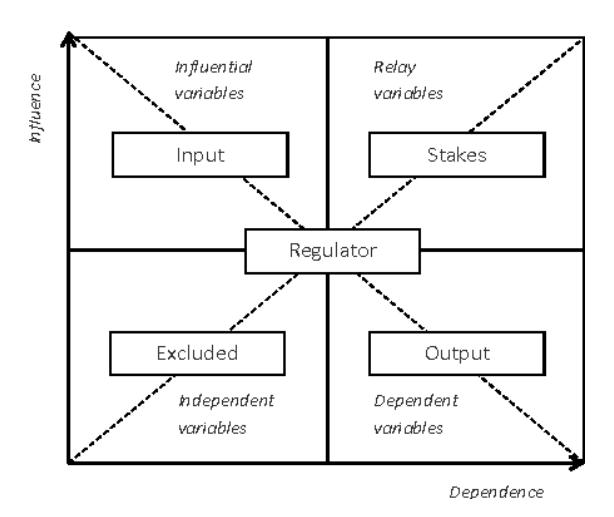
Figure 1. Influence and dependence diagram (Source: Zāli and Atriyān, 2016).
The Scope of This Study
Tehran Region 6, with an area of 45.21 hectares, accounts for 3.2% of Tehran's total area. It is limited to the north by the Hemmat Highway, to the south by the Enqelāb-Āzādi road, to the east by the Modarres Highway, and to the west by the Šahid-Čamrān Highway. This region includes six urban areas and 18 neighborhoods. It is located approximately in the geographical center of Tehran and it has spatial-activity centrality due to its proximity to the old center of gravity of the city and the progressive movement of the location of Tehran's center towards the north. Meanwhile, by building blocks such as the Ministry of Agriculture Jihad on Kešāvarz Blvd., the office buildings on Tāleqāni and Irānšahr Streets, the student dormitories and the administrative-commercial sections, on a more limited functional scale and for a specific demographic and social fabric, have a double central position (Figure 2). According to the Iran census in 2016, the region houses 251,384 people (85,092
households), consisting of 123,161 males, and 128,223 females (National Population and Housing Census, 2016; detailed plan of the Tehran Region 6, 2006).
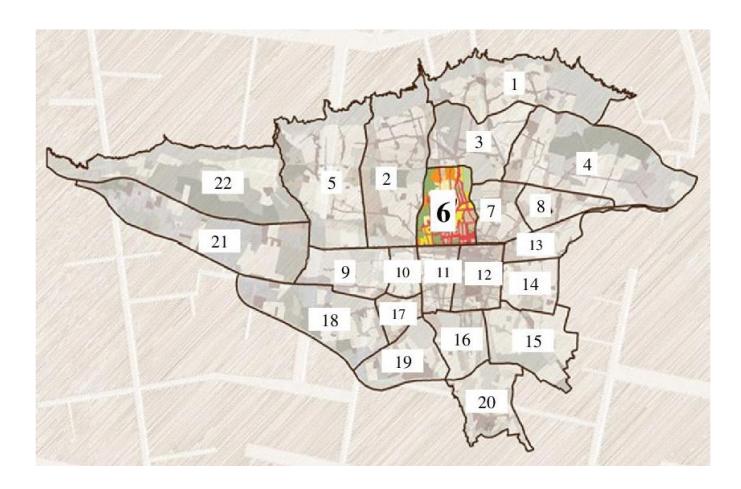
Figure 2. Location of Tehran Region 6. (Source: The Tehran detailed plan, edited by the authors)
Results and Discussions
Initial Review of the Variables
In this research, 56 variables and 20 criteria in two main areas (values and patterns) as factors affecting lifestyle change and its effects on urban trip generation were identified and analyzed by cross-impact/structural analysis using the MICMAC software in order to extract factors that affect the future of the urban lifestyle. The matrix size was 56 × 56 (Table 3). Two iterations were executed. The matrix fill rate was 98.18%, representing a high coefficient and an unstable state of the system. From a total of 3,079 relationships in this matrix, 57 relationships were zero, which indicates that the variables had no influence on each other and had no dependence on each other. In this matrix, the cross-impacts had 100% stability after two iterations of the data, indicating high validity of the questionnaire and its responses. As can be seen in Table 4, from a total of 3079 relationships in the matrix, 2165, 829 and 85 relationships were 2, 1 and 3, respectively.
| Table 4. Initial Results of cross-impact analysis. |
|---|
| Index | Value | |
|---|---|---|
| Matrix size | 57 | |
| Number of iterations | 2 | |
| Zeros | Number | 57 |
| Percent | 1.9 | |
| Ones | Number | 829 |
| Percent | 27 | |
| Number | 2165 | |
| Twos | Percent | 70.3 |
| Number | 85 | |
| Threes | Percent | 2.7 |
| Total | 3079 | |
| Fill rate (percent) | 98.18 | |
Iteration Influence (%) Dependence (%) 1 93 95
Table 5. Degree of stability of the matrix.
Investigating the Direct and Indirect Influence and Dependence of the Variables
2 100 100
Generally, the variables studied in this study can be distinguished as follows (Rustā'i et al., 2016):
Influential variables (input): because of the system's unstability, the existence of highly influential factors at the edge of the map on the northwestern side is unlikely, since this location has variables in a stable system. However, there are several factors near this part that have a huge influence on the entire system. These factors include 12 variables, some of which are: increasing income level of people; increasing ownership of cars, gardens and villas; increasing rate of apartment living; increasing number of unmarried people in the region, etc.
Relay variables (stakes): these variables have both high influence and high dependence, and any action on these variables will have impact on the others. These variables can be divided into two groups: risk variables5 and target variables. The risk variables are located around the diagonal line in the northeast of the map and have a very high potential to become key factors of the system. In the present study, only one variable (the changing role of streets for a new type of recreational trips apart from serving traffic) is a risk variable. The target variables are located below the diagonal area in the northeast of the map. These variables are the evolutionary results of the system and represent possible targets in the system. By manipulating and making changes in these variables, evolution of the system can be achieved according to a certain program and purpose. In this study, the variables in this group are: increasing number of young and adolescents in the region; increasing number of residential, commercial and office units, the daily, monthly, seasonal and annual purchases from large retail stores and luxury shopping malls away from downtown; increasing residence of people in new and high-quality urban areas away from the central regions of the city; increasing non work-related trips; etc.
Dependent variables (output): these variables are located in the southeast of the map. They can also be called outcome variables. These variables have low influence and high dependence. They are variables such as: increasing the time spent on dining outside of one's own residence; emphasis on spending time with the same age group and friends; increased number of flyers and print advertising distributed in the region; etc.
Autonomous variables (excluded): these variables have low influence and low dependence. These variables are located in the southwest of the map. They are variables such as: emphasis on spending time with colleagues; emphasis on the use of bodybuilding gyms; importance of walking and bazaar hunting; increase and decrease of urban crime rates at 5 A risk variable is a variable that has a high probability of becoming an influential variable and is recognized as an influential variable when certain conditions are met. For example, if the streets have the multiple (commercial, cultural, leisure, theatrical, etc.) roles, they attract a larger population as users of these spaces, and thus it becomes an influential variable in urban trip generation.
the level of the neighborhood; the number of people being welcome to neighborhood relationships; etc.
Regulatory variables: these variables are located near the gravity center of the map. They have a regulatory mode and sometimes act as secondary lever. They depend on government policies regarding development goals. Furthermore, these variables can be upgraded to influential variables or target and risk variables. The only regulatory variable in this research was increased importance of individual trust in urban policymakers on issues related to urban development.
The direct and indirect graphical relationships between the variables are shown in the following figures.
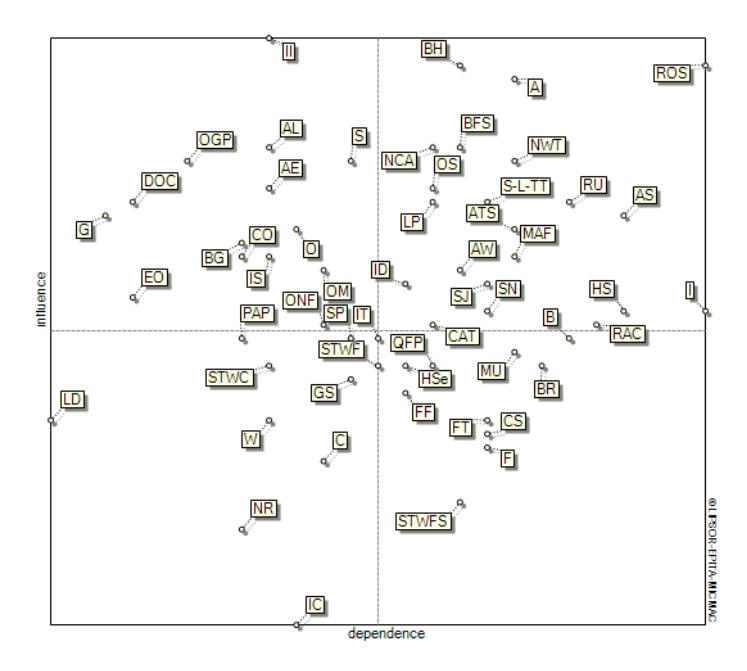
Figure 3. Direct influence/dependence map. (Source: findings by the authors)
Note: A = Age, G = Gender, S = Singles, LD = Linguistic Dialect, EO = Ethnic Orientation, DOC = Distinction of Culture, OS = Online Shopping, BFS = Buying from Shop, OM = Old Markets, NCA = New City Areas, AL = Apartment Living, BH = Beautiful Housing, NWT = Nonwork-related Trip, S-L-TT = Short- and Long-term Trips, ROS = Role of Streets, RU = Rental Units, CO = Car Ownership, OGP = Ownership of Garden Plots, AW = Advertising Websites, B = Billboards, F = Flyer, I = Infrastructure, ATS = Access to Services, AS = Achievements, MAF = Mode and Fashion, MU = Make-up, HSe = Hair Style, FF = Fast Food, RAC = Restaurants and Cafes, FT = Food Time, STWF = Spending Time with Family, STWFS = Spending Time with Friends, STWC = Spending Time with Colleagues, II = Individual Income, BG = Brand Goods, ONF = One Nuclear Families, SJ = Service Jobs, AF = Academic Education, IS = Immigrants, C = Crime, NR = Neighborhood Relationships, IT = Individual Trust, ID = Individual Decision, QFP = Guality Food Products, LP = Luxury Products, HS = Health Services, CS = Concerts, BR = Book Reading, CAT = Cinemas and Theaters, SP = Smart Phones, SN = Social Networks, IC = Internet Cafes, GS = Gyms, W = Walking, PAP = Playground and Parks
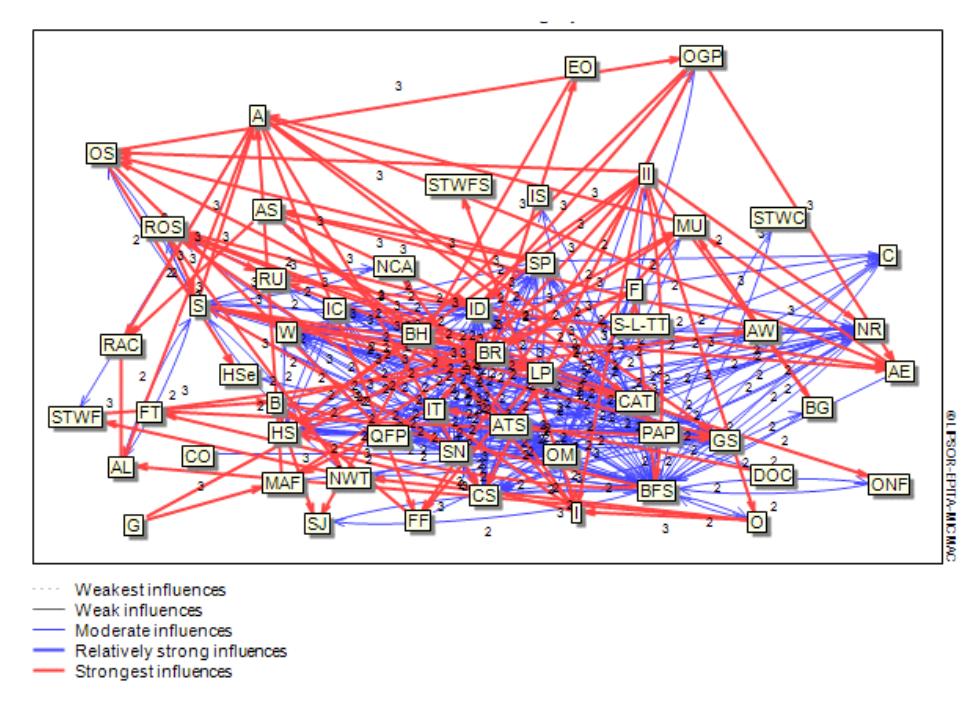
Figure 4. Direct influence graph. (Source: findings by the authors)
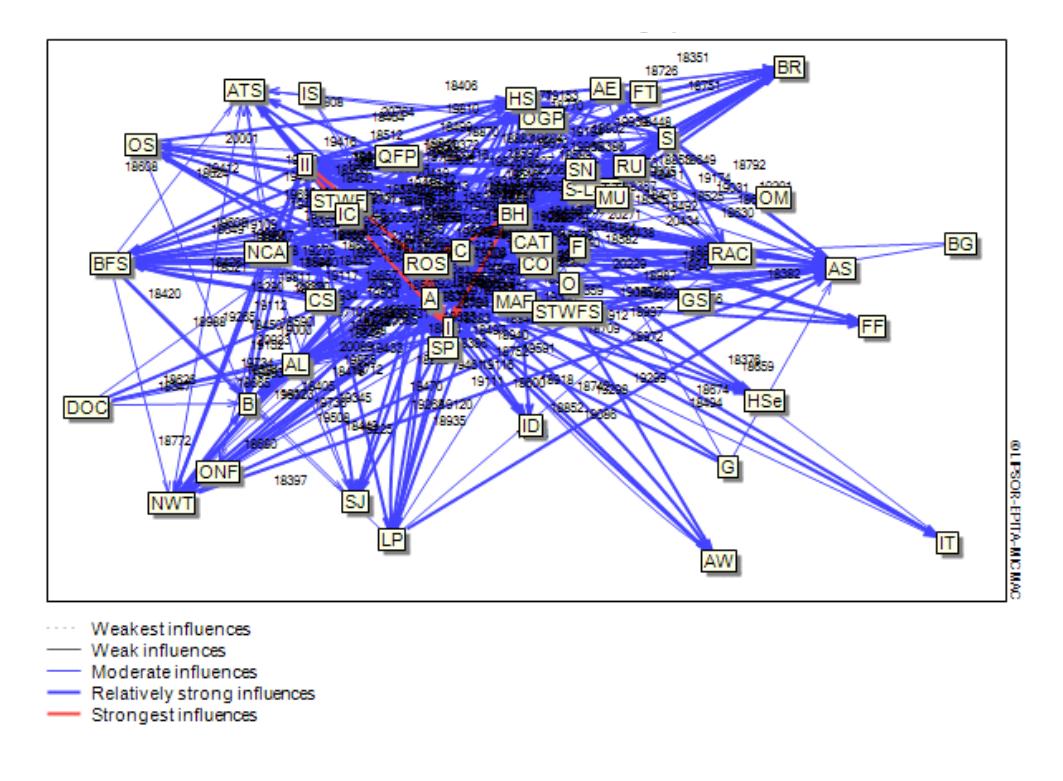
Figure 5. Indirect influence graph. (Source: findings by the authors)
According to the results, 56 factors were identified in the first stage. In addition, the amount of influence of these factors on urban trip generation and how they influence each other was investigated using direct and indirect methods. Finally, among the factors studied, 25 main factors were selected as effective key factors that were repeated in both direct and indirect ways (Table 6). It should be added that although many variables are subsets of some of the other variables in terms of meaning, since lifestyle changes were studied by two components (values and patterns), the variables will be discussed in detail.
Table 6. Major driving forces (direct and indirect).
| Final obtained score | Obtained rank | ||||
|---|---|---|---|---|---|
| Variables | Direct | Indirect | Direct | Indirect | |
| Increasing income level of people | 212 | 211 | 1 | 1 | |
| More welcoming to urban residents from | |||||
| well-kept homes and high-quality residential | 208 | 208 | 2 | 3 | |
| neighborhoods | |||||
| Changing role of the streets for a new type of | 208 | 208 | 3 | 2 | |
| recreational trips apart from serving traffic | |||||
| Increasing number of young children and | 206 | 206 | 4 | 4 | |
| adolescents in the region | |||||
| Increasing daily, monthly, seasonal and | |||||
| annual purchases from large retail stores and | 197 | 196 | 5 | 7 | |
| luxury shopping malls away from downtown | |||||
| Increasing residence of people in new and | |||||
| high-quality urban areas away from the | 197 | 196 | 6 | 6 | |
| central regions of the city | |||||
| Increasing rate of apartment living and | |||||
| preference to stay in an apartment rather than | 197 | 197 | 7 | 5 | |
| in a single-family house | |||||
| Increasing number of unmarried people | 195 | 195 | 8 | 8 | |
| Increasing non-work trips | 195 | 194 | 9 | 10 | |
| Increasing ownership of cars, gardens and | 195 | 195 | 10 | 10 | |
| villas | |||||
| Emphasis on daily, monthly, yearly purchases | 192 | 192 | 11 | 11 | |
| from online stores | |||||
| Increasing academic and specialized education | 192 | 191 | 12 | 12 | |
| Increasing socio-cultural differences between | 190 | 190 | 13 | 15 | |
| urban residents | |||||
| Interest of individuals in trips inside and outside | |||||
| of the city based on time spent (short and long | 190 | 189 | 14 | 16 | |
| trips) | |||||
| Increasing number of residential, commercial | 190 | 190 | 15 | 14 | |
| and office rental units | |||||
| Importance of consuming luxury products | 190 | 191 | 16 | 13 | |
| Gender | 188 | 187 | 17 | 18 | |
| Increasing access to the most up-to-date | |||||
| achievements and scientific-technological | 188 | 188 | 18 | 17 | |
| services in the world | |||||
| Importance of consuming products and health | 186 | 185 | 19 | 20 | |
| services | |||||
| Increasing importance of car and housing | 186 | 187 | 20 | 19 | |
| ownership | |||||
| Increasing purchase of brand products, | 184 | 184 | 21 | 21 | |
| regardless of product price | |||||
| Increasing amount of personal car ownership for | 182 | 183 | 22 | 23 | |
| each individual and multi-car household | |||||
| Increasing number of followers of fashion | 182 | 183 | 23 | 22 | |
| Final obtained score | Obtained rank | |||
|---|---|---|---|---|
| Variables | Direct | Indirect | Direct | Indirect |
| Increasing and decreasing number of migrants at | 182 | 182 | 24 | 24 |
| the level of the urban neighborhood | ||||
| Increasing number of people being welcome in | 181 | 180 | 25 | 25 |
| old markets and downtown shopping complexes | ||||
The results showed that the following variables play an important role in lifestyle changes and urban trip generation: increasing income level of people; more welcoming to urban residents from well-kept homes and high-quality residential neighborhoods; changing role of the streets for a new type of recreational trips apart from serving traffic; increasing number young children and adolescents in the region; increasing daily, monthly, seasonal and annual purchases from large retail stores and luxury shopping malls; and increasing residence of people in new and high-quality urban areas. These results are not fully consistent with the study done by Gans, who considered socio-economic factors to have an effect on lifestyle changes. Also, he considered sex, class, and age to influence lifestyle. Furthermore, the results from the present study did not conflict with the studies carried out by Milgram who identified the image of the city as a key factor in lifestyle, so that the variable more welcoming to urban residents from well-kept homes and high-quality residential neighborhoods was second in importance and was somewhat influenced by the people's image of the city. Lofland considered class, age, and race important for lifestyle and neglected the role of economic agents, particularly property and income level. In this regard, the present study was not fully consistent with the studies done by Lofland. The present study also neglected the role of culture as opposed to Mumford and considered socioeconomic and demographic factors as factors affecting lifestyle. The results of this study showed that although material factors similar to Borant and Crane's theory were effective in trip generation, non-material factors (such as more welcoming to urban residents from well-kept homes and high-quality residential neighborhoods; non-work trips, age, mode of residence, etc.) were also effective. Mokhtarian et al. (2015) considered lifestyle to be effective in urban trip generation, but did not explore other factors that affect lifestyle and urban trip generation. Steg studied individuals' internal motivations for driving and personal car use and did not investigate non work-related trips and factors that affect them. The present study investigated work-related trips as well as non work-related trips. Olson explored qualitative and environmental factors and personal characteristics and, unlike the present study, paid less attention to the role of lifestyle.
Conclusion
Lifestyle as a constantly changing paradigm takes its essence from social and human values. These values are constantly altering along with the fundamental and cultural changes of modernism and post-modernism. One of the outcomes of lifestyle change is an increase in urban trip generation and its numerous consequences, including urban development in new areas away from the city center, the creation of large commercial complexes in these areas, the segregation of urban communities, etc. This research aimed to investigate the most important factors that affect urban lifestyle changes and trip generation in Tehran Region 6 in the future by utilizing the intellectual base of futures studies with the theoretical framework of a normative paradigm (foresight) using the Delphi method and cross-impact analysis. In the present study, to identify the early variables that affect lifestyle changes, environmental scanning through a group of experts was used. In addition, cross-impact analysis was used to investigate the amount of influence and how the factors influence each other to identify the key factors that affect lifestyle. The MICMAC software was used for data analysis. First, experts and executives
involved in the subject area were selected. After selecting them, according to different methods of questioning (data gathering, questionnaires, interviews, etc.), the process of conducting the questionnaire survey and extracting their views on the field of the study was first carried out by identifying 70 effective factors. In the next step, using the Delphi method, the group of experts were asked to judge each other's views. Finally, 56 variables and 20 criteria, i.e. psychological characteristics, purchase, housing, trip, ownership, advertising, access, body management, etc. were extracted. These were then analyzed to extract the main factors in the form of a direct and indirect influence/dependence map by cross-impact analysis using the MICMAC software. Thus, five categories (influential factors, relay factors, regulatory factors, dependence factors and autonomous factors) were identified. Most variables were relay variables and thus highly influential variables on the system. Finally, among the 56 variables studied, 25 key factors were selected in order of priority as key factors that affect urban lifestyle changes and urban trip generation: increasing income level of people, more welcoming to urban residents from wellkept homes and high-quality residential neighborhoods, changing role of streets for a new type of recreational trips apart from serving traffic; increasing number of young children and adolescents in the region; increasing daily, monthly, seasonal and annual purchases from large retail stores and luxury shopping malls away from downtown; increasing residence of people in new and high-quality urban areas away from the central regions of the city; increasing rate of apartment living and preference to stay in apartment rather than in a single-family house; increasing number of unmarried people; increasing non work-related trips, etc. By investigating the key variables, the following criteria had an effect on lifestyle changes (in order of importance): housing, trip, age, wealth, purchase, ownership, socio-economic status of the family, security, body management, consumption, access, and psychological characteristics of people.
According to the results, changes in patterns lead to changes in values and changes in lifestyle. Therefore, lifestyle through the main patterns of components is effectively able to generate urban trips (both work-related and non work-related trips) in Tehran. Factors such as the income level of people and being more welcoming to urban residents from well-kept homes and highquality residential neighborhoods, etc. in Tehran Region 6 have effectively affected the importance of city passages and leisure and shopping spaces, etc., in turn leading to trip generation throughout the day, month, and year. Of course, the role of policymaking and publicity should not be overlooked, although they have a low level of importance in urban trip generation. In fact, the sum of these factors, in spite of having positive consequences, such as revitalizing neighborhoods, multipurpose spaces and enhancing social interactions, etc., will have many unfavorable consequences if they are not properly planned in terms of lifestyle changes and trip generation. Although this study focused on the role of lifestyle changes in trip generation in Tehran Region 6, by examining two factors affecting lifestyle changes in other parts of Tehran and Iranian cities in general it is possible to extend the assumption that economic-image, socio-demographic, and physical factors lead to changes in the role of city passages and an increase in the number of city trips. Hence, maintaining and producing balanced, coordinated and responsive lifestyles with the aim of reducing the negative consequences caused by increased trip generation (dispersion of economic activity and urban housing, increasing economic and social gaps between residents, etc.) should be on the agenda of policymakers, planners, and city executives.