
Introduction
The meanings and significance of green space for kampung kota dwellers have temporal and spatial as well as cultural and economic characteristics. Temporally, these places have been part of the urban fabric in many Indonesian cities for generations and their presence may predate the formal city, when a village becomes absorbed by urban development (Dovey & King, 2011). Over time, the multiple meanings of green space can be expected to have changed and so this paper provides a snapshot of generations of dynamic urban processes. Economically, the kampung kota is a dominant type of settlement in many Indonesian cities, providing much needed affordable housing for urban dwellers. The morphology of the kampung kota is recognisable from its distinct characteristic of large numbers of dwellings built from makeshift materials, typically incrementally, starting from a very simple unit, which later develops into a permanent house (Silas, 1992). Thus, the spatial morphology of kampung kota is the result of economic and social structures and it is in this context that green space is maintained or abandoned around the built form of the kampung.
Spatially, complex relations govern private and public spaces in kampung kota. As a cohesive unit, the kampung kota serves as a safe haven for often-marginalised urban communities. The neighbourhood operates as a micro-ecosystem that supports their daily livelihood and this leads to a strong sense of belonging among kampung dwellers (Tunas & Peresthu, 2010). Unsurprisingly, as in all human cultures, there are both symbolic and material dimensions to the ways in which residents create and re-create green spaces and in this process memory plays an important role.
The existence of green space in the kampung kota cannot be separated from the role of human memory in the place-making process, where individual and collective memories are significant tools in the creation of place identity and the character of urban space (Rose-Redwood et al., 2008). Their significance in the place-making process is highly contested within the social research realm. However, some studies have been conducted in the Global South context that discuss this phenomenon.
In this paper, the literature related to discourses in urban design and the notion of place-making in the Global South is examined, with a focus on space identity. The narrative that supports the connection between place and identity will be unfolded, thus clarifying the relation between those two entities. Furthermore, the relationship between human memory and urban space in the Global South context will be unpacked through the investigation of community-based green space in the urban kampung.
Place-Making from Urban Design Perspectives
The burgeoning of green space in urban areas is often the result of an urban design process, as suggested by Barnett & Jones (1982, p. 12), who define urban design as the "process of creating a physical design for growth, conservation and changes in urban context, this physical design includes landscaping and the built environment consisting of preservation and new construction". This definition implies that the urban designer has the responsibility to create a livable urban space and open green space is one of the important urban elements that need to be considered.
Urban design, as an inter-disciplinary study, combines various disciplines such as architecture, urban planning, landscape architecture, civil engineering and social studies, and has given rise to a discipline that is multifaceted, with a primary focus on the connection between people and place. In relation to the nature of urban design, Lang (1994) describes the challenges faced by urban designers: "urban designing is an increasingly complex task as the range of human activities grows, communications processes become more diverse, new ways of putting geometries together are found, and the rate of physical changes being made in cities speeds up" (1994, p. 453). This understanding means that the challenges faced by urban designers will evolve and become more complex, given that change in urban areas is constant.
The creation of a physical setting for green space within the realm of urban design is related to the notion of place-making. According to Schneekloth & Shibley (1995, p. 1) place-making is "the way all of us as human beings transform the places in which we find ourselves to places in which we live". Place-making sees space and place as the focal points of the discussion. Relph (1976, p. 8) defines space as "amorphous and intangible and not an entity that can be directly described and analysed". The definitions of place-making and space show an interrelated linkage between these two aspects, where one will not exist without the other.
Aravot (2002, p. 207) states that "Place is a phenomenological term, introduced into architectural and urban design by Edward Relph (1976) and Christian Norberg-Schulz (1984)". Space provides the context for place but derives its meaning from particular places. Certain types of space can be distinguished; this variety of space seems to be relevant to a phenomenological understanding of place and to clarify the space-place relationship.
The narrative of contemporary place-making in urban design has been extensively shaped by the unseen power of neoliberalism, thus creating a capitalist urbanism that favours large investors and capital. The profession of the urban designer has been widely criticised for their unfair biases (Hubbard, 1996). Examples from cities in the developed world suggest that much of the creation of open space in the public sphere is influenced by the interplay of market-driven decisions, where some sort of privilege is kept to ensure the continuity of the model (Gunder, 2011). The notion of contemporary public space is closely related and intertwined with commercial space; sometimes both are built on top of each other (Lees, 1994). The universal model of public space will never be achieved, because its one-size-fits-all nature and uniform interpretation of public space clashes with contextual differences and local circumstances. This accords with Matthew Carmona's explanation that the application of his research findings to the "developed Asian context will need careful interpretation, and they are likely to be least applicable in the least developed parts of the world" (2015, p. 399).
Place-making also correlates significantly with identity of place. Lynch (1960, p. 8) defines identity of place as "that which provides its individuality or distinction from other places and serves as the basis for its recognition as a separate entity; this definition means that each place has a unique nature". Edward Relph (1976, p. 45) states that:
"Identity is a basic feature of our experience of places which both influences and is influenced by those experiences. What is involved is not merely the recognition of differences and sameness between place but also the much more fundamental act of identifying sameness in difference. And it is not just the identity of a place that is important, but also the identity that a person or group has with that place, in particular whether they are experiencing it as an insider or as an outsider."
This case study highlights the significance of the kampung kota as a 'special place' for the community and portrays the community's strong connection with the place. The kampung is an inherent part of their identity, which distinguishes them from other urban dwellers. According to the findings of Jones (2017, 2019), the kampung is not merely an informal settlement; rather, informality is part of everyday life and is the backbone that generates kampung activities. The community finds refuge and solace through the kampung to deal with the many challenges of social disadvantage experienced as a result of the harsh and troubled urban life. The essence of the kampung positions the community within the wider social structure of urban society.
Research Design
The aim of this paper is to posit that place and identity present compelling considerations within the context of densely populated settlements in emerging Asian megacities that differ from those in urban environments in the Global North. The approach chosen to investigate this issue was conducting a two-fold case study in the emerging megacity of Jakarta. This approach was adopted to enable a deep analysis of context, community and process. According to Thomas (2011), case studies are analyses of persons, events, decisions, periods, projects, policies, institutions, and other systems that are studied holistically by one or more methods. The unit of a case study can be a person, a small group, a community, or even an episode.
The data collection process employed in this research involved the gathering of primary and secondary data. Primary data were collected through semi-structured in-depth interviews to obtain narratives and elicit specific qualitative information using a community participatory approach. Bahasa Indonesia as the working language was used with participants from different groups of the community. The snowball method was used for acquiring relevant interviewees. Data collection was conducted from April 19, 2014 to June 17, 2014. During data collection 20 members of the community were interviewed.
Kampung Kota in South Jakarta
One major problem that cities in the Global South face are residential issues, especially in densely populated settlements with poor infrastructure. Similar to other cities across the world, Jakarta is not immune to this urban problem. The word 'kampung' literally means village (Bahasa, 2001). Kampung is a visually recognisable feature across the Indonesian urban landscape, providing much needed settlements for low-income communities. As a result of city expansion, these traditional settlements have been absorbed and trapped within the growing urban setting and transformed into 'kampung kota' (urban villages). Some of the kampung kota in Jakarta still retain their rural characteristics, for example in the people's way of living and the minimum availability of basic infrastructure (Winarso 2011, p. 181). According to Winarso (2011), the general characteristics of the kampung include lack of public facilities, the presence of small alleys or footpaths, limited clean water supply, and poor management of solid waste and drainage.
As one of the components that make up Indonesia's urban fabric, the kampung kota still holds an important place in the everyday life of many Indonesians. This is due to the fact that although kampung kota have limited resources and infrastructure, they are still a favoured place for many urban dwellers to find affordable housing. This is especially pertinent for those of low-income or those who work in the informal sector. This is why the presence of kampungs is prevalent in Indonesian cities and will remain a dominant and quintessential part of the Indonesian urban landscape for many years to come.
For this research, two local communities in South Jakarta were chosen as case studies (see Figure 1). The selection of these locations was based on their respective involvement in green initiative programmes, which are mostly community-driven. These sites also show the diversity of the livelihoods of the inhabitants and the different approaches towards green initiatives in their kampung. The two communities chosen were located in separate districts, i.e. the district of Mampang Prapatan and the district of Cilandak.
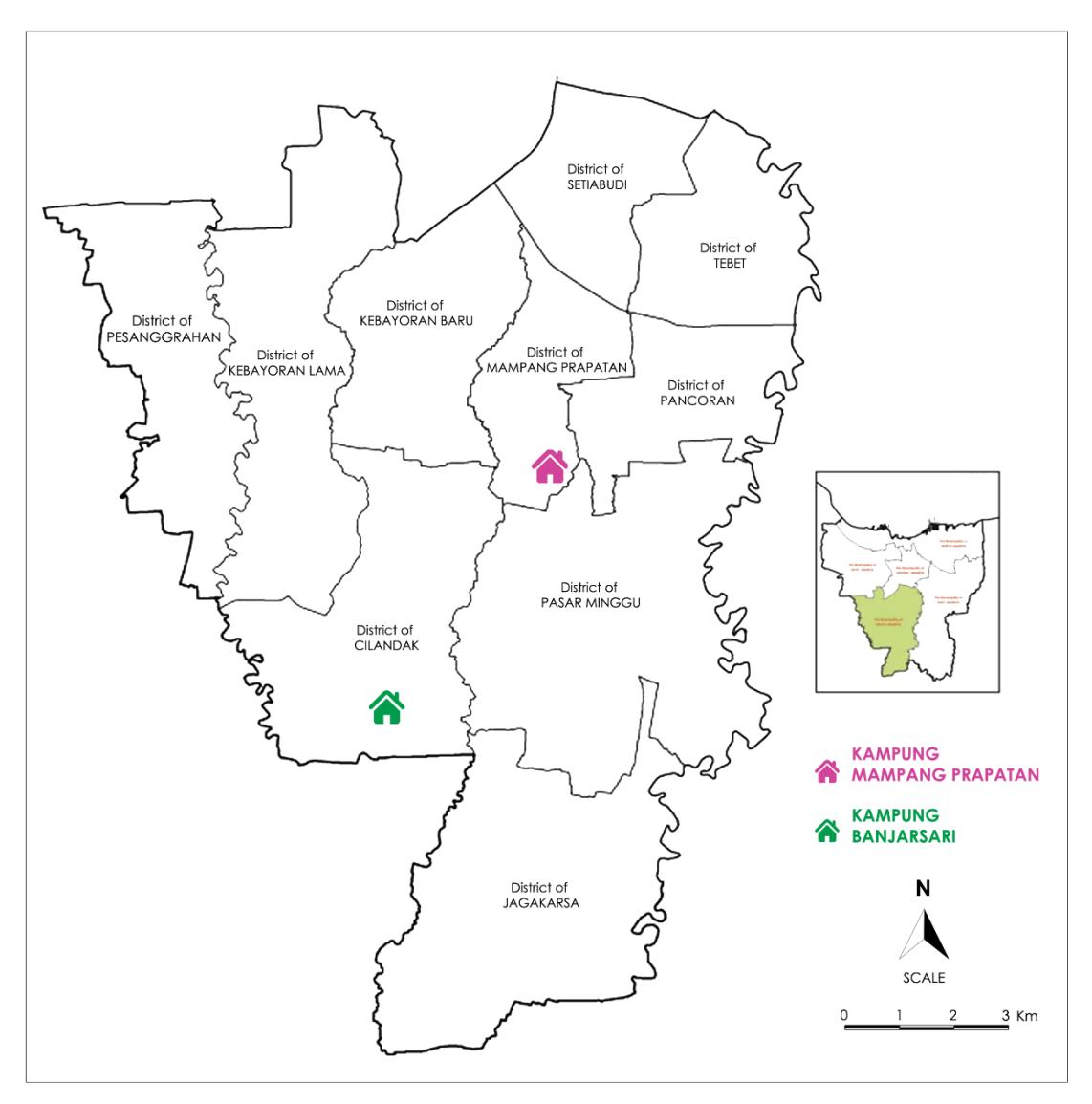
Figure 1. Map of the Municipality of South Jakarta. Source: Author
Kampung Mampang Prapatan
The first case study of this research is located in the district of Mampang Prapatan in the Municipality of South Jakarta, Special Administrative Province of Jakarta. Three neighbourhood units or Rukun Tetangga/RT ('harmonious neighbourhoods') were chosen in this area, namely RT 007, RT 008 and RT 011. These neighbourhoods or kampungs are located near
Jakarta's CBD, also known as the Jakarta's Golden Triangle (Segitiga Emas), which includes Thamrin, Sudirman and Kuningan, and is accessible via the Jakarta Inner Ring Road. This close proximity to the CBD creates the opportunity for some homeowners in this part of the city to lease their empty rooms to people working in the CBD. However, this phenomenon also creates problems for the neighbourhood, where homeowners sacrifice existing green space around their house to give way to more dense and profitable purpose-built rental housing.
Green community initiatives began in 2007, started by a community leader. In the beginning, the initiatives focused on household waste management but now they have expanded to include various greening programmes and activities.
Kampung Banjarsari, Cilandak
The second case study selected for this research is located in the district of Cilandak, in the Municipality of South Jakarta, Special Administrative Province of Jakarta. For the purpose of this research, three neighbourhoods or Rukun Warga/RW ('harmonious citizens') were chosen, i.e. RW 02, RW 03 and RW 08, which are located in proximity to each other. The Jakarta Outer Ring Road (JORR) and the newly constructed Corridor 1 of Jakarta's Mass Rapid Transportation (MRT) run through the district of Cilandak. The area along the JORR is planned to become a new business district in the southern part of the city alongside two other CBDs, which are located in the eastern and western part of the city. Currently many offices, apartments and other high-rise buildings have sprung up along the toll road, which has increased demand for land and caused a surge in land prices.
Green initiatives in this kampung started in 1986, introduced by a local community leader, Ibu Harini. Kampung Banjarsari has become a national model for kampung household waste management and has received numerous awards, both on the national and the international level (Safiera 2013).
Image, Identity and Memory – Voices of the Community
Image, identity and memory in the green place-making process provide key motives among members of the community in creating their ideal dwellings and spaces. Examples from community members in Mampang Prapatan show how they have successfully created images for their settlement, such as when they designed greenery in the urban kampung to make their environmental conditions more liveable, thus creating a sense of aesthetic warmth and homeliness not only for the benefit of the kampung dwellers but also to provide a welcoming presence for visitors and passers-by who happen to walk past the area.
"The trees and flower pots make home more welcoming and comfortable..." (Nunung, 16 May 2014)
Within the same area, members of the community worked to re-image the green space surrounding their dwellings to produce a village-like ambience with lush greenery and abundant fresh air. Many community members that come from a village have a vivid recollection of their childhood, where they want to bring back the concept and idea of greenery that they are familiar with to their current dwellings.
"So that we can breathe fresh air and it reminds us of the village in our hometown..." (Rosmita, 01 May 2014)
Meanwhile, the case from Cilandak shows that the community applies greenery in their dwellings as a beautification strategy in order to distance themselves from the rundown image that the urban kampung is mostly associated with.
"More for the beauty of the neighbourhood, to decorate my house to make it look beautiful, serene and sociable…" (Kamsiyah, 16 May 2014)
Figure 2. Green patches inside kampung kota. Source: Author
In addition, the presence of green space in the urban kampung helps to create a cosy and pleasant feeling for the kampung dwellers. Portraying a positive image of their dwellings is central to their lifestyle, given the negative conditions of their accommodation arrangements, which are typically cramped and densely populated.
"I have lived here for more than 36 years, so I feel that home is here... and because I live here, I have a responsibility towards the community..." (Suhartinah, 20 May 2014)
The existence of green space in the urban kampung can also be interpreted as a way for a particular area to create its own identity. This is done by displaying a visually recognizable identifier, which distinguishes the kampung from others. This is the case in Mampang Prapatan, where urban greenery helps its dwellers to uniquely differentiate their kampung from surrounding kampungs and marks its identity as a kampung kota, which retains its village atmosphere.
"I want to create an atmosphere just like in my village, because Jakarta is crowded with building structures and high-rise buildings..." (Shoimah, 30 April 2014)
Figure 3. Green open space as a source of identity and pride. Source: Author
Furthermore, the green space attached to one of the kampungs in Mampang Prapatan has created an additional identity to their area, which is known as an urban green oasis. This inherent identity is the result of a green design initiative that was carefully planned and implemented by community members so that their kampung could become a green oasis amidst large urban developments.
"It looks fresh on the eyes too... nice to wake up and see some greenery. It is nicer here because you can still see some green. In other places, you can only see the walls surrounding you..." (Sri Wimujati, 06 May 2014)
Kampungs as an embodiment of urban minorities have a reputation as safe havens for people of marginalised backgrounds, whether by race, culture, language, religion, and sexual or gender identity, ability and economic means. This reputation has attracted many migrants from the hinterland to seek refuge and shelter during their stay in the city, which eventually helps to redefine the identity of the kampung kota as a diverse multicultural hotspot in a complex and harsh urban setting. Their instinct as migrants in an unknown and foreign place is to create a community based on common adversity, where they can freely communicate and share stories and experiences with the aim to establish a home away from home with the help and support of their new social network.
"Now there have been a lot of migrants coming to the neighbourhood, which makes it easier to communicate and cooperate with each other. This is due to our common goal which is to create a home away from home..." (Shoimah, 30 April 2014)
In addition, urban greenery can also be used as an identity to represent the neighbourhood. This can be seen in RW 03 Cilandak, where the community has selected dragon fruit as the neighbourhood's iconic plant. They hope when people see dragon fruit they will remember their neighbourhood, which will eventually boost the profile of the kampung.
"The residents here had the idea to replace the crops planted by the Women Farmers' Group with dragon fruit, and our dream is to iconise the fruit at RW 03, and we already started the initiative in our neighbourhood..." (Slamet Prayitno, 02 June 2014)
A pervasive, consistent theme arising from the interviews was that aspects of the green space reflect a sense of home, whether it is a childhood/original rural home or a long-held aesthetic of the kampung's identity. Green space gives character to the neighbourhood and also evokes nostalgia. Memory plays an essential part in shaping kampung green spaces; through memory, green spaces are created, constructed and modelled. This includes childhood memories, which are often the inspiration for green initiatives. The examples below show that many of the kampung dwellers try to imitate the natural atmosphere they once experienced in the village and recreate them in their current neighbourhood:
"Well, this is our neighbourhood. We only have that much of a garden and we have to take care of it. It makes it nicer, like up in the mountains... like in Jogja, where in the villages there are a lot of trees, not so many houses. That's what I was going for..." (Sarjono, 03 May 2014)
Figure 4. Community participation in creating a green neighbourhood. Source: Author
Childhood experiences are significant in accounts of contemporary green practices. Having been brought up in a family that cares for the environment, one participant described how this shaped her views and practices in addressing environmental issues:
"During the Dutch era, my father worked as agriculture and farming instructor for the Dutch government in the city of Solo, Central Java. Since I was born, raised and educated in a family that is very concerned with environmental issues, automatically I feel that I am one with nature and I regard plants and animals as my best friends..." (Harini Bambang Wahono, 25 May 2014)
This example illustrates the manner in which the family, as an institution, forms the character and identity of children as people that are aware of their living surroundings. The daily practices conducted by parents create a learning environment for children to observe, imitate and in turn adopt the same behaviour as they mature into adults. Through the internalisation of living behaviours, self-awareness of environmental issues is identity-forming for young people living within spaces with such affirming experiences.
Discussion
Identity is an important tool for creating an image. Through identity a place can instantly be recognised and can also be made distinct from other places. This will ultimately decide how a place will be remembered by the observer (Lynch 1960). At RW 003 Cilandak, identity is being reproduced and created by members of the community through various explicit means, one of which is through having an iconic plant to represent the neighbourhood. The plant does not just symbolise the identity of place but is also expected to bring economic and environmental benefits. The creation of identity in the neighbourhood helps to create a sense of attachment between the dwellers and their surroundings. This accords with what Lilburne (1989) states about the relationship between the environment and sense of place, where he asserts that the care for the environment can be reactivated by reviving sense(s) of place. In creating an attachment to a place, the residents seek to keep and preserve the quality of their neighbourhood. Lilburne's finding is supported by more recent research (De Sousa, 2003; Arnberger & Eder, 2012; Kimpton et al., 2014; Buta et al., 2014), which observed the same phenomenon as Lilburne did, i.e. enhancing the sense of attachment by having a patch of nature or green space in the neighbourhood. A green kampung is the embodiment of community attachment to a place in manifesting their ideas, visions and memories of what a place 'should' be and how they want it to be created. Creating identity through green space strengthens the synergy between residents and their neighbourhood. This in turn creates a sense of belonging and attachment to the place, and reinforces collective memories among members of the community. The green kampung case study in South Jakarta provides insights into how green space in low-income settlements in the Global South context creates a sense of attachment and togetherness for marginalised members of communities from rural backgrounds who try to assimilate into the larger urban society.
In interpreting the role of memory in shaping the urban village, the starting point is the relation between memory and urban space, including the relation dynamics referred to as 'urban memory' by Crinson (2005). This concept is supported by the findings of the current study. Srinivas (2004, p. 25) describes urban memory as a "means of accessing how various strata of society and different communities construct the metropolitan world". Social-ecological memory, a term coined by Barthel et al. (2015, p. 5), provides "the combined means by which knowledge, experience and practice of ecosystem management are captured, stored, revived and transmitted through time".
The role that memory plays in shaping green spaces in kampung kota is highly influential in shaping both the meaning and material making of green space. This supports findings by various scholars who highlighted the role memory plays in shaping urban space (Boyer, 1996; Ladd, 2008; Crang & Travlou, 2001; Srinivas, 2004; Huyssen, 2003; Crinson 2005; Legg, 2005; Till, 2005; Jordan, 2006). In the case of urban green space, based on observation in several urban villages in Jakarta, the findings imply that childhood and hometown memories are a crucial factor that enables the creation of green space in the first place. Some members of the community try to re-create green space in their neighbourhood to make it resemble their former space based on memory. This is in line with Rose-Redwood et al. (2008, p. 161), where they assert that "memories ultimately made visible on the landscape do not simply emerge out of thin air, but rather they result directly from people's commemorative decisions and actions as embedded within and constrained by particular socio-spatial conditions".
Memory is one of the instrumental building blocks in the process of creating community green space. With vivid recollections of the past, the community tries to re-enact and revive the old memories within compact, urban and modern time settings. Yet, the notion of memory-based space creation has been challenged by various scholars. Lowenthal (1998) in his book titled The Heritage Crusade and The Spoils of History warned of the danger of being obsessed by the past, although memory can be beneficial and important when it is implemented at the right time and place. David Gross challenges the role of memory by questioning the rationale of holding up memories as a basis for action, where he argued that "always available to anyone at any time is the freedom not only to remember in a manner unlike most other people but also to remember other and different things that are encouraged by conventional norms" (Gross, 2000, p. 134). Furthermore, the discourse on memory and space has been critiqued as embodying colonialist tendencies in its narrative, therefore depriving precolonial memory in counter-historical ways (Behdad, 1994, p. 8).
Undoubtedly the role of memory in kampung kota is neither entirely progressive nor faithful to the past. Moreover, research on identity and memory-based space in the Global South context is scarce and along with place theory more broadly, theoretical and empirical work is mostly rooted in cities in the developed world. The contribution of this research on kampung kota is all the more important given that it is rooted in the creation of public space in the developing world, where much of the world's urban growth is taking place now and will continue to take place throughout the 21st century and beyond. Contemporary concepts of public space as we know them today were formalised in the early 20th century, derived from the field of urban design with cases from cities in the US and Europe (Carr et al., 1992).
The first-world 'models' of public space were then duplicated in many parts of the world including the Global South, where the concept has been accepted largely without criticism and at least to some extent without acknowledging the socio-cultural diversity and uniqueness of each place. Thus, in post-colonial theory, a dichotomy is present between first-world 'models' and third-world 'models' (Roy, 2005). One aspect that is pertinent is the role of informality, which according to Roy (2011, p. 233) is "synonymous with poverty and marginality" and is the dominant mode of livelihood among the poor in the Global South (Davis, 2006). The role of memory-based space as a driving force in the creation of public green space is also contingent on the informality of space in kampung kota due to the inhabitants' role as initiators and space being an important building block in reshaping their neighbourhood and creating a sense of identity for it.
Conclusion
The discourse on green space within the realm of public space and urban design in the context of the Global South is relatively new. Based on the findings from the case studies in selected neighbourhoods in South Jakarta, place and identity are intertwined and interconnected with each another.
In addition, image, identity and memory are important variables that construct the meanings of green space within the kampung kota context and play a significant role in strengthening the community's sense of place. According to the empirical data, the creation of identity through green initiatives helps to strengthen the community's social capital, which leads to a stronger sense of belonging and place attachment. Identity and image creation of green space in kampung kota can be done inspired by individual or communal memories in the form of childhood or hometown memories. Memory as an informal instrument in the green placemaking process is essential for many members of the community, where vivid recollections of the past can be re-enacted and revived to invoke nostalgic moments in their surroundings. Memory in identity and image creation of green space is one of the major informal driving forces in the Global South context. However, research on identity and memory in the Global South context is limited, because the existing knowledge on this topic is mainly rooted in cities in the developed world.
This paper pioneers in drawing upon western theories and empirical studies, and applying them to the Global South context. As such, the findings have parallels with previous work but also build upon it and provide new insights.
Acknowledgements
The writer would like to express his deepest gratitude to the Directorate General of Higher Education (DGHE), Ministry of Research and Technology and Higher Education Republic of Indonesia for their continous support during the writer's research, especially through Beasiswa Unggulan (superior scholarship), scheme which funded the writer's doctoral study at RMIT University.