

Introduction
Rusunawa in Indonesia is vertical rented public housing built by the government to meet the housing needs of low-income people. Based on a survey conducted by Statistik (2017) on 23 Rusunawa in Jakarta, about 60.64% of the Rusunawa's residents were evictees from urban slums. Before relocation, many residents of slums displayed reluctance to be relocated to Rusunawa. They were afraid of facing the significant risk that came with moving to a new place, especially related to their economic and social situations. Fear of job loss, fear of having no employment opportunities, fear of change of livelihood and social kinship were among the reasons why they were reluctant to move into Rusunawa (Diharjo, 2018; Manaf, Wahyono, Sari, & Aprilia, 2018; Syafruddin & Adi, 2017; Tuti & Mawar, 2018). Empirically, relocation to Rusunawa causes economic challenges to many residents. Residents show dissatisfaction with their economic conditions after relocation, as seen in several case studies, such as Rusunawa Pulogebang (Diharjo, 2018), Rusunawa Muara Baru (Agyaputeri & Rahayu, 2017), Rusunawa Jatinegara Barat (Syafruddin & Adi, 2017), Rusunawa Rawa Bebek (Tuti & Mawar, 2018), Rusunawa Manis and Rusunawa Gebang in Tangerang (Wibowo, Jusoh, Ahmad, & Malek, 2019).
In most cases, the Rusunawa is located at a significant distance from the residents' previous schooling, work and economic activities. A survey by Statistik (2017) indicates that 52.69% of residents had to travel about 5 to 25 kilometres to work and 55.77% residents relied on a privately owned motorcycle to commute to work. About 67% (Rp. 3.1 million) of their income (Rp. 4.6 million) was spent on routine and mandatory expenses, i.e. food, milk, education, transportation, rent, electricity, water, service, and loan installments (Statistik, 2017). The total percentage of unemployed residents in Rusunawa was about 61% and only about 25% of the residents had skills to support their family's economic situation (Statistik, 2017). Based on the same survey, the residents expressed that living in Rusunawa led to higher costs and their financial situation was not better in the Rusunawa than before. The reasons were that the location of Rusunawa was not strategic for finding jobs nearby or opening a small business and finding a market.
The typical architectural design of Rusunawa is a simplex with a central corridor and untis comprising of one to three bedrooms arranged vertically over 5 to 16 storeys. The buildings are typically clustered to form an enclosed courtyard area. Social, educational, medical and commercial facilities are located at the ground level. Commercial spaces for selling goods or foods provided in Rusunawa are limited and the design is generic for any type of home industry or economic activity. A study by Swasto (2018) found that many residents had difficulty in continuing their previous business and continuing their work habits since the living space and the commercial spaces in the Rusunawa had no flexibility and compatibility to support their business and work habits. Although the design of Rusunawa does not serve and empower the economic needs of its residents, a recent study by Subagijo and Suhartono (2018) discovered that 28% of residents of the Rusunawa in Kutobedah Malang utilized part of their living units, the area around stairs and corridor, as their economic activity space.
Many studies have recommended that the government should improve the economic aspects of resident life in Rusunawa. For example, a study by Wibowo et al. (2019) recommended that the government or housing policymakers should have an appropriate design strategy that empowers the improvement of the economic conditions of Rusunawa residents. A study by Diharjo (2018) suggests that the relocation process of slum residents to Rusunawa needs to be supported by the availability of suitable work or jobs in and nearby Rusunawa. Integrating the living units with working units was one of the strategies that should be taken into consideration by the government in meeting the quality of Rusunawa to be more sustainable from an economic point of view (Rosilawati, Setijanti, & Noerwasito, 2016). Despite the plethora of existing studies related to the design of Rusunawa, including those regarding the design of the units (Lestari, Khaliesh, Zain, & Sari, 2017), the use and the need of social spaces in Rusunawa (Muhsin, Wibisono, Zahara, & Keisha, 2016; Rahmawati, 2018) and design criteria for social facilities in Rusunawa (Subagijo & Suhartono, 2018), we still know very little about the possibility of integrating living and working in Rusunawa. Therefore, we were motivated to investigate the feasibility of the live-work concept for Rusunawa in Indonesia.
In this paper, we first present a review of the literature on the live-work housing concept, experiences with it and its practice in low-income housing. Then, the case study is described that was carried out based on qualitative studies in Rusunawa Pesakih, Jakarta. The objectives of this study were to investigate the feasibility of the live-work concept for Rusunawa in Indonesia. In this context, questions about the feasibility of the live-work concept emerged as significant: How does the existing design of Rusunawa Pesakih support the resident's economic activities? How were the residents' financial and work situations before relocation to the Rusunawa? Do the residents have potential skills that could contribute to the feasibility of the live-work concept in the Rusunawa? Finally, this study proposes design recommendations for live-work housing in Rusunawa by categorizing the characteristics of different home industries into three types of live-work: live-with, live-near, and live-nearby (Dolan, 2012; Khoury, 2014). This study concludes with recommendations on how the live-work concept in Rusunawa could be used as a strategy to improve the economic conditions of low-income residents in Rusunawa.
Live-Work Housing Concept and Its Practice in Low-Income Housing
The live-work housing concept, or zero-commute living, refers to a building type that combines residential space and workplace in a single property or unit (Dolan, 2012; Holliss, 2015). This type of building has a long tradition and has existed in every country and culture for hundreds and even thousands of years. Examples can be found worldwide. In China and Southeast Asia, this building type is called 'shophouse' (Davis, 2012; Davison & Tettoni, 2011) or by New Urbanists 'flex house' (Dolan, 2012). In Japan, it was called 'machiya', a building where shopkeepers and merchants lived and worked together, or 'nagaya', work homes for artisans and craftsmen (Holliss, 2015). In England before and after the industrial revolution, almost every household inhabited this type of building. For example, in 'top-shops' silk-weavers or watchmakers or stocking-knitters worked and lived in the same building (Holliss, 2015).
Although the live-work building type can be found worldwide, this type of building often goes unnoticed and remains nameless as a type (Dolan, 2012; Holliss, 2015). Before the industrial revolution, this type of buildings was called 'house', with subsets such as 'longhouse', 'manor
house', 'ale house', 'bath house', bakehouse', 'fire house' (Holliss, 2015). However, in the 20th century, the term 'house' started to be used to refer to a building for unpaid domestic work rather than paid work, which ordinarily took place outside the house. Thus, a building type that combines living and working became nameless (Holliss, 2015). The term 'live-work' was coined in the 1970s to describe the emerging loft development phenomenon in SoHo, New York and a decade later in San Francisco. Since then, this type of building has evolved and has been built globally, for example in the US, Europe, UK, Australia (Dolan, 2012; Doyon, 2015; Holliss, 2015). Live-work projects have a diversity of forms, scales, locations and constructions (Conway, Taing, & McCormick, 2014; Dolan, 2012; Hoskere, 2016; Kakal, 2010; Notley, 2019).
Today, emerging trends in technology and communication advancement, such as the internet, social media and teleconferencing, make face-to-face meetings and on-site work less necessary (Dolan, 2012). People tend to work from home or live in their office. This makes live-work buildings important. The benefits of live-work include transportation cost saving, increasing the number of two-income households, fostering economic development, and inherent affordability of live-work, eliminating rent payment for a workplace (Dolan, 2012; Holliss, 2015; Olson & Urness, 2014). Reducing the commuting time between work and home via working at home is associated with increased job and leisure time satisfaction, which in the end will positively affect subjective well-being (Clark, Chatterjee, Martin, & Davis, 2019).
Living and working in the same unit has long been a way of life in the context of low-income groups in many major cities in Indonesia. Everyday economic activities, such as a home occupation or a home-based enterprise, can be abundantly found in any low-income housing projects in Jakarta and any other major city in Indonesia. For example, small retail shops selling food, drinks and everyday goods, mobile or stationary food vendors, in-house workshops, and hair salons. Home occupation refers to places where small-scale work activities take place in homes (Dolan, 2012; Khoury, 2014). They are home-based enterprises and are more commonly conducted by women than men (Ezeadichie, Jiburum, Onodugo, Onwuneme, & Kingsley, 2018; Reuschke & Domecka, 2018; Tipple, Coulson, & Kellett, 2002). A home-based enterprise is defined as income-earning activities located in the home, using personal assets and living quarters for income-generating activities (Lawanson & Olanrewaju, 2012). Using a home occupation or a home-based enterprise as a working base for informal economic activities is a way to generate a household income without having to pay an extra fee for renting a workplace outside the home. This phenomenon is found in many Global South countries, including Indonesia. For example, the informal settlements of low-income people in Semarang City, Salatiga City, Boyolali Regency, Surakarta City and Surabaya City (Tyas et al., 2019), in Egypt (Nadim, 2016), in Mumbai (Yang, 2019), in Nigeria (Adeokun & Ibem, 2014), in Kumasi Ghana (Afrane, 2003), where residents use their homes not only for living but also as a working, workshop or storage space. It is estimated that one out of every three households in Indonesia has a home-based enterprise (Ezeadichie et al., 2018).
Home-based enterprises are an essential source of income and employment for low-income people and have a positive impact on improving their quality of life and the general welfare of the local neighborhood (Afrane, 2003; Ezeadichie et al., 2018; Lawanson, 2012; Lawanson & Olanrewaju, 2012; Matsebe, 2009; Tipple et al., 2002). Thus, several studies have suggested that housing policymakers and city planning agencies should support and recognize the importance of home occupations and home-based enterprises and their positive implications for low-income people in social housing policy schemes and architectural design solutions
(Adeokun & Ibem, 2014; Afrane, 2003; Ezeadichie et al., 2018; Lawanson & Olanrewaju, 2012; Matsebe, 2009; Tipple et al., 2002).
Method
Case Study
A case study was conducted in Rusunawa Pesakih, Jalan Pesakih, Duri Kosambi Cengkareng District, West Jakarta. Rusunawa Pesakih is a vertical rented public housing project built by the government in 2013 to meet the housing needs of low-income people who were evicted from several slum areas in Jakarta. Rusunawa Pesakih is situated about 700 m from the main road. Vacant lands surround it and there is only one access road to get to the location (Figure 1). Its isolated position from the main road and the neighborhood center cause residents to rely on feeder buses provided and operated by the government to get in and out of the Rusunawa.
Figure 1. Location (left) and view (right) of Rusunawa Pesakih.
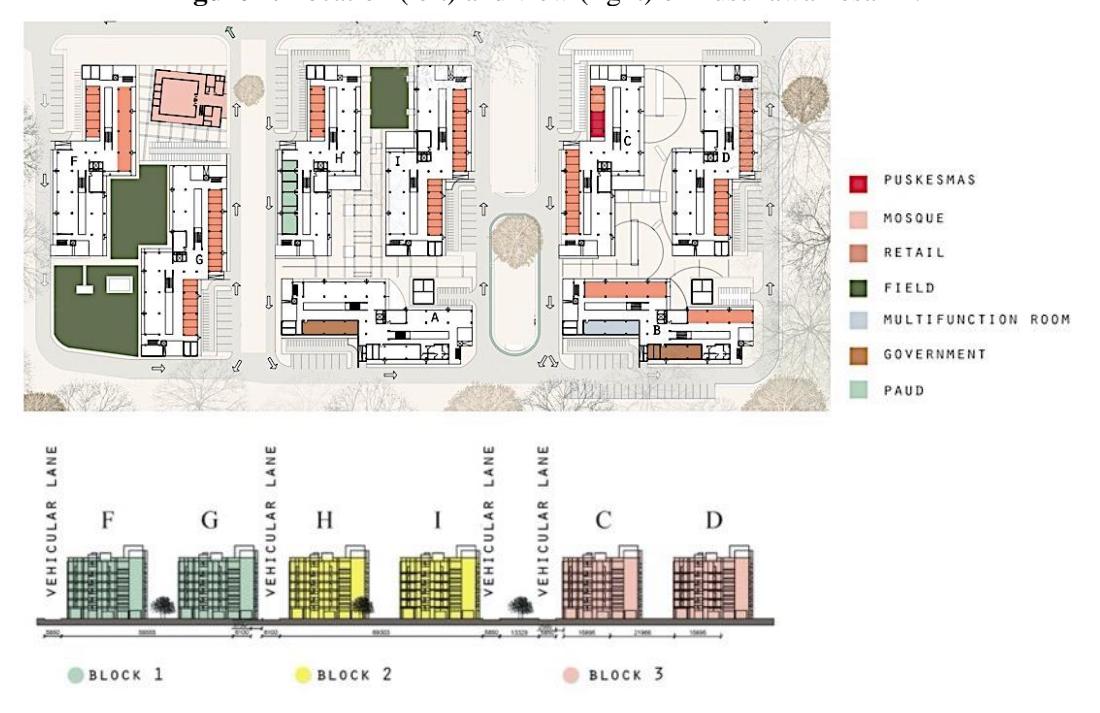
Figure 2. Site planning of Rusunawa Pesakih
There are three blocks and eight buildings in the Rusunawa Pesakih complex. The buildings are clustered to form an enclosed courtyard area (Figure 2). The design of each building is identical: six-storey buildings, divided into two zones. The public space is located on the first floor to accommodate public facilities, such as a health clinic (puskesmas), commercial or retail spaces, management offices, multipurpose areas, library and kindergarten (PAUD). The private spaces (housing units) are located on the second up to the sixth floor (Figure 3). The typical architectural design of Rusunawa Pesakih is a simplex with a central corridor and four stairs (Figure 4). There are a total of 640 units of a two-bedroom type, sized 36 m2 , arranged vertically over five levels (Figure 4).
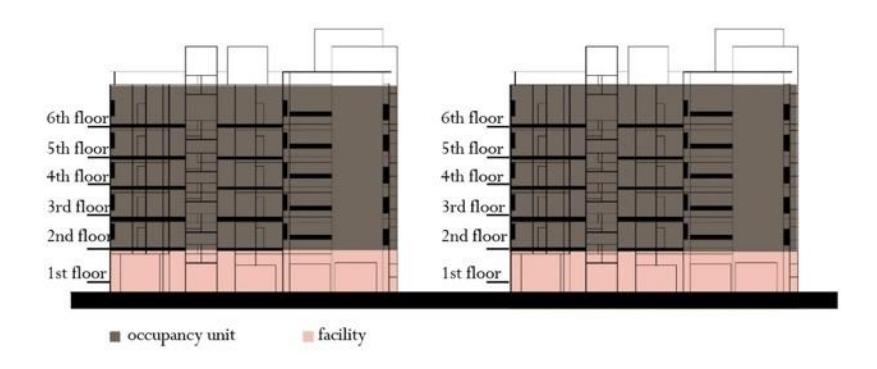
Figure 3. Vertical zoning of Rusunawa Pesakih.
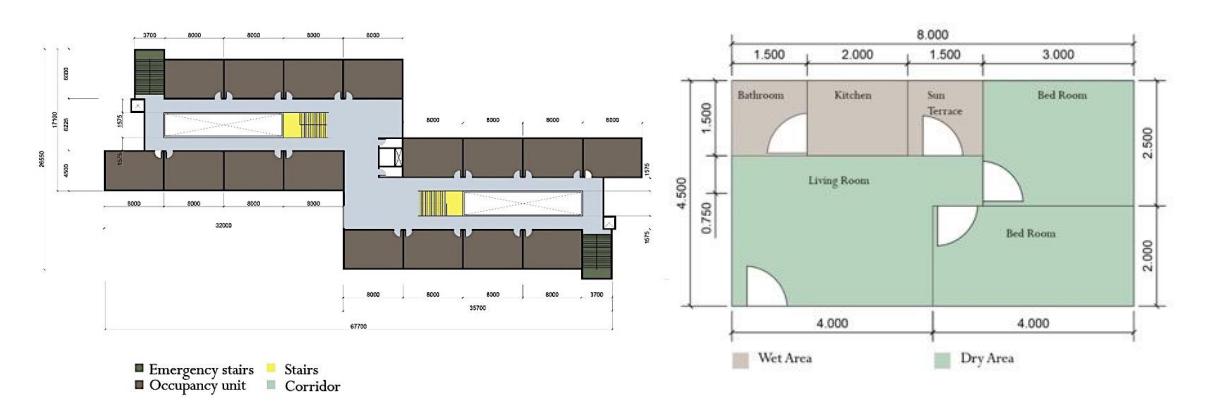
Figure 4. Typical floor plan (left) and unit plan (right) of Rusunawa Pesakih.
Resident Profile
At the time the case study was conducted 640 families were residing in Rusunawa Pesakih. All of them were evicted from urban slums in Kali Angke, Stasiun Duri and Kebon Jeruk Jakarta. They were relocated to Rusunawa Pesakih, which is located at a significant distance from the residents' previous workplaces and economic activities. After relocating, many of them lost their jobs and had difficulty in finding a job near the Rusunawa. Living in Rusunawa Pesakih meant higher commuting cost to the workplace, to school and other economic activities. Most of the residents worked as food and drink sellers/vendors. Some of them worked part-time in a factory or were construction laborers. Many of them were unemployed. These uncertain occupations and income sources made them unable to pay rent on time, eventually accumulating
unpaid debts. As per February 2019, 452 residents were unable to pay their rent on time, resulting in 1.34 billion Rupiahs unpaid debt.3 Residents' economic difficulties since their relocation to a Rusunawa have also been found in other places, such as Rusunawa Pulogebang (Diharjo, 2018), Rusunawa Muara Baru (Agyaputeri & Rahayu, 2017), Rusunawa Jatinegara Barat (Syafruddin & Adi, 2017), Rusunawa Rawa Bebek (Tuti & Mawar, 2018), Rusunawa Manis and Rusunawa Gebang in Tangerang (Wibowo et al., 2019).
Data Collection
All data related to the existing conditions in Rusunawa came from a survey and observations from January to March 2019. This study collected and mapped the residents' economic activities. In-depth interviews with a random sampling of 40 residents (14 men and 26 women, aged 20-67) were conducted about their financial and work situations, including their previous jobs and their potential skills in order to understand the feasibility of the live-work concept in Rusunawa. The interview questions were grouped into several subjects: (1) resident profile, including name, age, gender, marital status, education and current address; (2) current situation, including length of residence, occupation, income, work-related skills, ownership of commercial or retail spaces at Rusunawa Pesakih; (3) previous situation, including prior occupation, work competencies and income; (4) work and production process and skills training and development needed to help generate income.
Results and Discussions
Each building in Rusunawa Pesakih facilitated eight commercial or retail spaces with a size of 2.5 m x 5 m. In total, there were 64 commercial spaces, or 10% of the total of 640 units provided for residents for selling foods, drinks or everyday goods. The commercial or retail spaces were designed with an open concept without dividers or walls to separate each commercial area (Figure 5). Only 48% (31) commercial spaces were occupied by residents to run a home industry business. See the detailed list of home industry businesses and their characteristics in Rusunawa Pesakih in Table 1.
Figure 5. Commercial spaces in Rusunawa Pesakih.
3 As reported by https://megapolitan.kompas.com/read/2019/03/22/16484731/tunggakan-penghunirusunawa-pesakih-capai-rp-13-miliar. Accessed 26 November 2019.
| Home | Home Industry Business | Number of Businesses | Characteristics of the Home Industry | |||
|---|---|---|---|---|---|---|
| Industry Classifications | Individual/ Group | Use of Hazardous Materials/Tools | Noise | Smell | ||
| Trading | Selling fresh vegetable x | 1 | Individual | No | Yes | No |
| Selling snacks | 8 | Individual | No | No | No | |
| Selling groceries (sembako) | 5 | Individual | No | No | No | |
| Selling sewing tools | 1 | Individual | No | No | No | |
| Selling flower decorations | 1 | Individual | No | No | No | |
| Selling tires and oil | 1 | Individual | No | No | No | |
| Food processing | Selling drinks and juices | 5 | Individual | No | No | No |
| Making and selling egg rolls | 1 | Individual | No | Yes | No | |
| Making and selling rice dishes (warteg) | 2 | Individual | No | Yes | No | |
| Making and selling meatballs and chicken noodles | 4 | Individual | No | Yes | No | |
| Food processing | Baking and selling roast chicken | 1 | Individual | No | Yes | No |
| Services | Hair salon | 1 | Individual | No | Yes | Yes |
Table 1. List of home industry business and its characteristics at Rusunawa Pesakih.
Fotocopy centre 1 Individual No No Yes
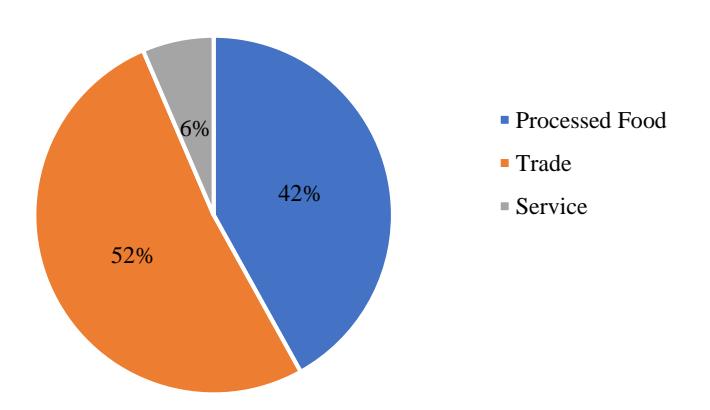
Figure 6. Three classifications of home industries in Rusunawa Pesakih.
The home industry businesses in Rusunawa Pesakih and their characteristics were grouped into three classes (Figure 6). There were 13 (42%) businesses related to food and beverage processing industries that required particular food production processes, such as selling rice and dishes (warteg), selling meatballs, selling chicken noodles, selling roasted chicken, selling drinks and juices, and selling egg rolls. There were 16 (52%) businesses related to trade
industries that sold everyday goods needed by residents of the Rusunawa, such as fresh vegetables, snacks, groceries, sewing tools, flower decorations, tires and oil. There were two (6%) businesses related to service industries that offered salon and photocopy services.
The above results show that Rusunawa Pesakih already provided commercial spaces to accommodate residents' economic activities. However, more than half of the retail spaces provided were empty. The design of the retail spaces did not comply with the particular characteristics of the home industries. The plan was generic for any type of home industry or economic activity. They had no storage and loading facilities to deliver goods in and out of the unit. Also, parking spaces obstructed the movement of transporting products in and out of the commercial areas. Based on the interviews, the residents who occupied the commercial areas had difficulty making sufficient income. They said that they could not rely on insider customers only for their business. However, due to the unstrategic location of Rusunawa Pesakih, they had difficulty attracting customers from outside of Rusunawa. Ease of movement in and out of the Rusunawa was worsened even more when the feeder bus was decreased in number, from three feeder buses daily to only one feeder bus operated per day. 4 The decreasing number of feeder buses caused inconvenience for residents commuting to work or school.
Before relocation, this study found that 70% of respondents had work and skills related to home-based enterprises, such as sewing, baking, cooking, batik making, craft, furniture making, wood and steel making, car mechanics, and flower arranging (Figure 7). The list of their potential skills, the percentages and work characteristics can be seen in Table 2.
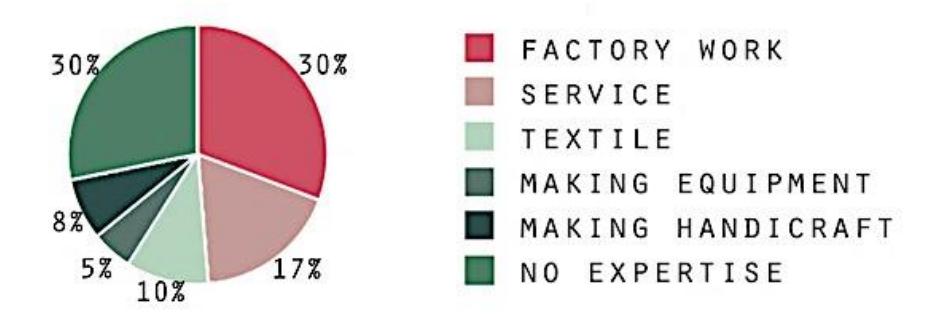
Figure 7. Composition of work and skills of the respondents.
However, because of relocating and the difficulty of commuting to their previous workplace, most of them were forced to leave their job and became unemployed, housewife or doing parttime jobs. The management of Rusunawa Pesakih took action by providing various trainings every month to develop the residents' skills and knowledge, for example on making sandals, baking cakes, cooking, hair cutting, mechanics, sewing, and driving. Although many of the residents attended the trainings, there was no real economic impact. The residents found it difficult to implement the learned skills and knowledge since they had no adequate working space inside their units to do home-based work. In the end, the residents felt that the trainings were not useful. This study discovered that 35% of the respondents worked as part-time factory workers who did their work at home. They did take-home work-related activities in the 4https://megapolitan.kompas.com/read/2017/07/25/22200791/warga-rusunawa-pesakih-keluhkanpengurangan-feeder- Accessed 20 November 2019.
corridors of Rusunawa and inside the unit, such as folding maps, making boxes, and glueing paper (Figure 8).
| Table 2. Potential skills | of respondents | and their works' characteristics. |
|---|
| Aspects of the Home Industry | ||||||
|---|---|---|---|---|---|---|
| Home industry types and percentage (%) | Potential skills | Number of respondents | Individual/ Group | Use of Hazardous Materials/Tools | Noise | Smell |
| Service (25%) | Tutor | 1 | Individual | No | No | No |
| Mechanic | 3 | Individual | Yes | Yes | Yes | |
| Driver | 3 | Individual | No | No | No | |
| Textile (14%) | Clothes making | 2 | Group | Yes | Yes | Yes |
| Sewing | 2 | Individual | No | No | No | |
| Making batik | Group | No | No | No | ||
| Wood and steel (7%) | Making furniture | 2 | Group | Yes | Yes | Yes |
| Handicrafts (11%) | Making sandals | 3 | Group | Yes | Yes | Yes |
| Making key chains | Individual | No | No | No | ||
| Others/ stationary (43%) | Glueing paper | 6 | Individual | No | No | No |
| Making boxes | 2 | Individual | No | No | No | |
| Making folders | 4 | individual | No | No | No | |
Figure 8. Take-home work-related activities at Rusunawa Pesakih.
Despite the insufficiency of the design of the commercial spaces, this study discovered that livework life did take place in Rusunawa Pesakih. The majority of respondents had a diversity of potential skills related to home industries. Unfortunately, their skills were unchanneled and unaccommodated when they moved into Rusunawa.
Design Recommendations
Based on the list of existing home industry businesses (Table 1) and the list of potential skills (Table 2), this study concludes with a list of combined proposed percentages of home industry types and suggested live-work types for Rusunawa (Table 3).
| Home Industry Type | Existing Percentages of Businesses Found at Rusunawa Pesakih | Potential Percentages of Skills Based on Respondents | Combined Proposed Percentage | Proposed Live-Work Types |
|---|---|---|---|---|
| Food and beverages | 42% | none | 22% | Live-near or live-with |
| Textile | none | 14% | 7% | Live-near or live-with |
| Handicraft | none | 11% | 5% | Live-near |
| Wood and steel making | none | 7 % | 3% | Live- nearby |
| Services | 6% | 25% | 15% | Live-near |
| Trades | 52% | none | 27% | Live-near |
| Other/stationary | none | 43% | 21% | live-with |
Table 3. Proposed percentages of home industry types and live-work types.
Based on the above data, this study proposes to increase existing commercial spaces by 10% (64 commercial spaces) of to 25% (160 commercial spaces). As most codes for home occupation allow up to 25% of a home to be dedicated to workspace (Khoury, 2014), this study proposes four types of housing units (Figure 9): the regular type (\(36 \text{ m}^2\)), the live-with type (\(40 \text{ m}^2\)), the live-near types (\(40-54 \text{ m}^2\)) and the live-nearby types (\(60-70 \text{ m}^2\)). The proposed composition of each category can be seen in Table 4.
Table 4. Proposed composition of regular and live-work unit types.
| Live-Work Types | Home Industry Business | Proposed Percentage | Proposed Number of Units |
|---|---|---|---|
| Regular | No home occupation | 75 % | 480 units |
| Live-with | Sewing | 8% | 51 units |
| Box making | |||
| Clothes making | |||
| Making paper folders | |||
| Glueing paper | |||
| Live-near | Groceries | 12% | 77 units |
| Processed food | |||
| Service | |||
| Salon | |||
| Photocopy service | |||
| Clothes making | |||
| Making batik | |||
| Making sandal | |||
| Live-nearby | Steel workshop | 5% | 32 units |
| - | Wood workshop | ||
| Tota | al 100% | 640 units |
The regular type is a standard 36 m2 housing unit for five people. It has two bedrooms, a living room, a kitchen, a bathroom and a balcony (or sun terrace). The regular unit is a unit for residents without home occupation and for residents who have a separate working space outside their housing unit. The live-with type (40 m2 ) is a type where working and living are done in one area (Figure 10). The live-with type is for non-hazardous and flexible work activities, such as box making, paper folder making, sewing, designing, clothes making. It is also for one person or individual work, where the work can be done in a space conjoined with the living room.
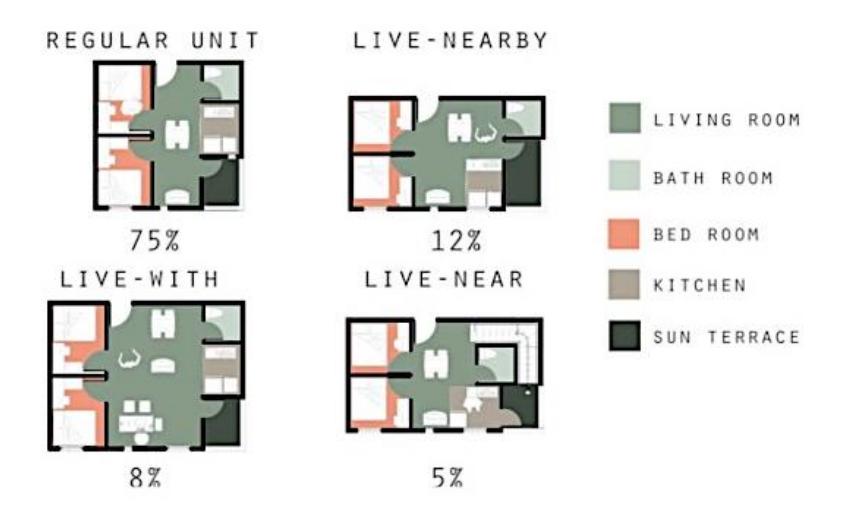
Figure 9. Floor plans of proposed housing units.
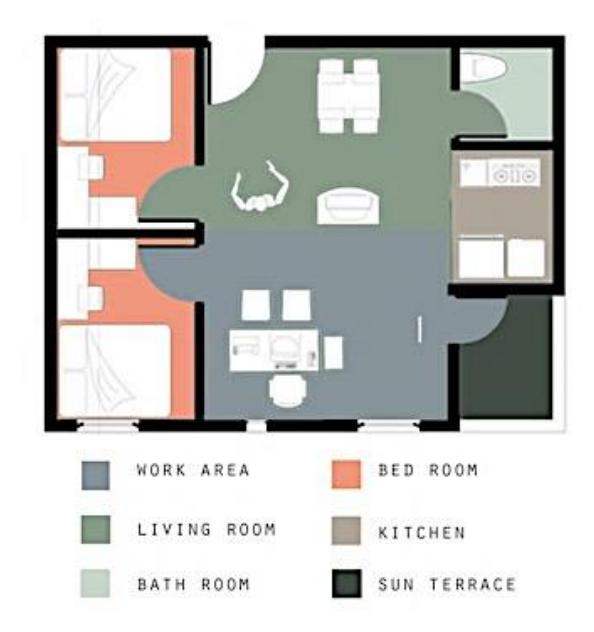
Figure 10. Floor plan of the live-with type.
The live-near type (40-54 m2 ) is a type where working and living are required to be separated by a wall or floor/ceiling. It is a type dedicated to home industry businesses that may produce harmless odors and relatively little noise. It has more space for storage, processing or welcoming customers. Based on the nature of the businesses, this study proposes two forms of live-near units, namely simplex and duplex. The simplex form is for home industry businesses without walk-in trade. This study suggests three possible floor plans that are separated from living units. This simplex form of live-near type is for home industry businesses that require more workspace for placing machines, storage and group work, for example, clothing making (or convection businesses), batik making and sandal making (Figure 11).
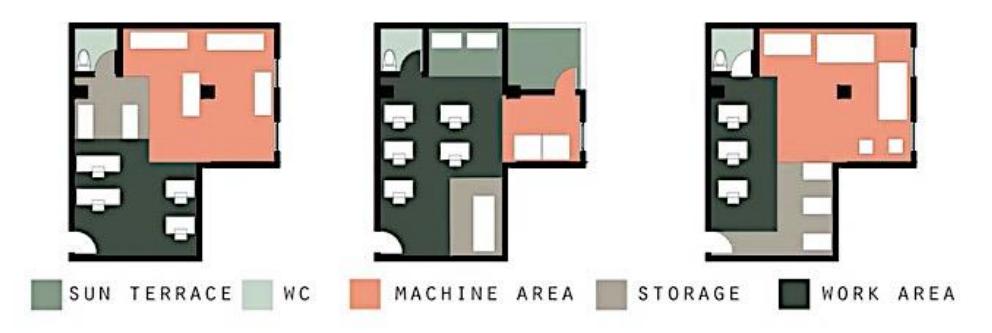
Figure 11. Three possible floor plans for a simplex form of the live-near type.
The duplex form is for home industry businesses that have walk-in trade, for example, salons, photocopy services, processed food selling and groceries. The design of the living and working spaces are separated by a floor but connected with an internal stair (Figure 12). The first floor is for working spaces, displaying products and welcoming customers. The second floor is for living spaces. This type of unit has only one kitchen shared by living and working areas for efficiency. The design also proposes a sun terrace or balcony, as a transition space between the first and second floor, to prevent odors and noise leaking from the working area to the living spaces. The design also proposes five possible sample first-floor plans with varying sizes ranging from 9 to 16 m2 to accommodate different types of home-industry businesses, such as cake businesses, groceries, food stores, salons and photocopy or printing services (Figure 13).
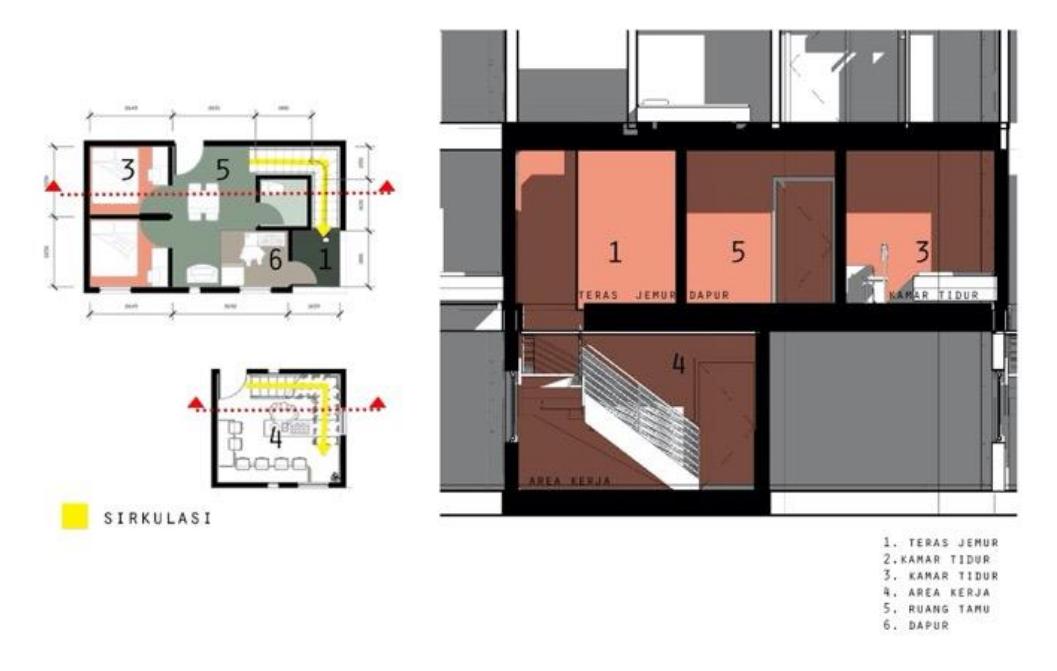
Figure 12. Duplex form of the live-near type.
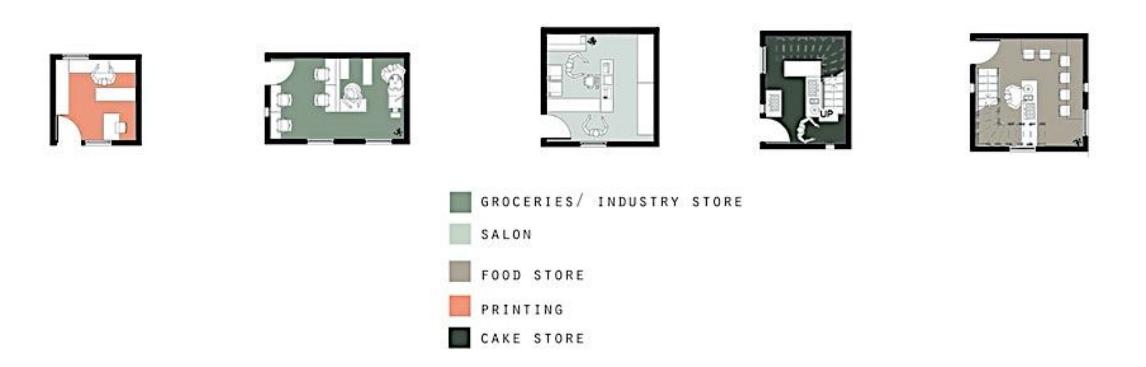
Figure 13. Five possible sample first floor plans of a duplex form of the live-near type.
The live-nearby types (60-70 m2 ) is a type where working is done outside the living unit but on the same property. This type is for home industry businesses that produce loud noise, odors and require heavy machinery, such as wood workshops and steel workshops. Two sample plans are proposed (Figure 14). One is for wood workshops and the other is for steel workshops. The suggested unit size can accommodate spaces for up to 12 persons, storage, machines and equipment.
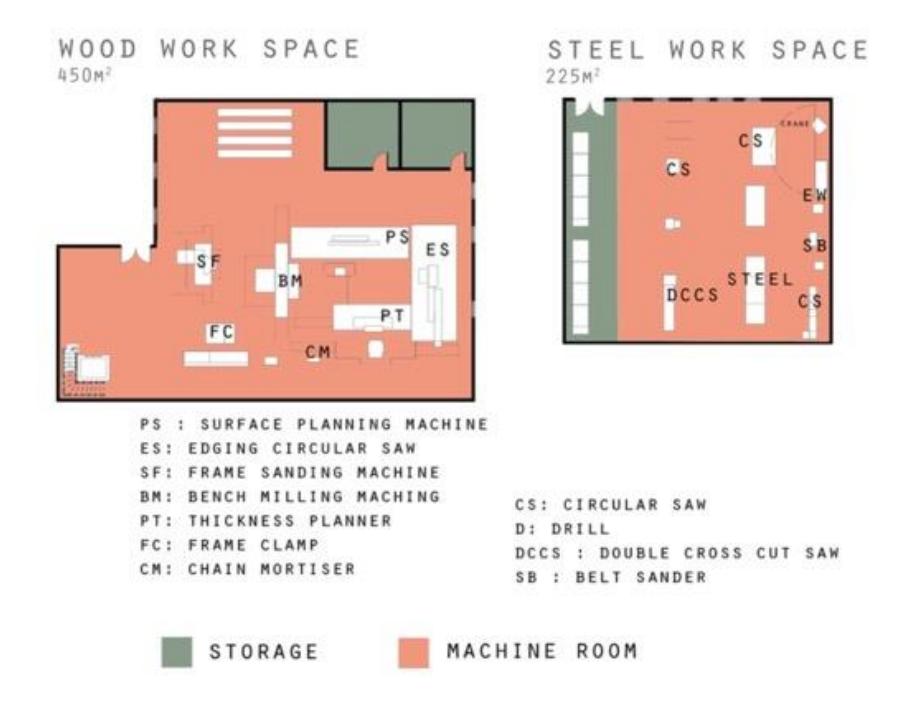
Figure 14. Sample floor plans of the live-nearby type.
Conclusion
Rusunawa Pesakih did not adequately support residents' economic activities. The design of the commercial spaces was generic for any type of home industry business and was not equipped with proper loading and storage spaces. The residents occupied only 48% of the commercial spaces provided. The location of Rusunawa Pesakih was also at a significant distance from the main road and the neighborhood center. Thus, for their mobility to workplaces, schools and other economic activities the residents had to rely on a feeder bus, the operational schedule of which was decreased from three feeder buses daily into only one feeder bus per day. The unstrategic location of the Rusunawa caused the shop owners to have difficulty in attracting outside customers. They had to rely solely on inside customers for their income. Therefore, moving to the Rusunawa did not improve the residents' economic situation. In the end, they failed to pay rent on time, eventually accumulating unpaid debts. The same financial difficulties of the residents since relocation have not only been discovered in Rusunawa Pesakih but also in other Rusunawa, such as Rusunawa Pulogebang (Diharjo, 2018), Rusunawa Muara Baru (Agyaputeri & Rahayu, 2017), Rusunawa Jatinegara Barat (Syafruddin & Adi, 2017), Rusunawa Rawa Bebek (Tuti & Mawar, 2018), Rusunawa Manis and Rusunawa Gebang in Tangerang (Wibowo et al., 2019).
This study revealed that 70% of respondents had a diversity of potential skills related to smallscale work activities that could take place in the Rusunawa. This study also found that 35% of respondents did take-home work-related activities in the corridors of the Rusunawa, similar to the study by Subagijo and Suhartono (2018), who discovered that 28% of residents in Rusunawa Kutobedah Malang utilized part of their living unit, the area around the staircases and corridors, as their economic activity space. Therefore, this study concluded that live-work life or homebased enterprises did exist in Rusunawa and that there is an opportunity to accommodate the live-work housing concept in Rusunawa.
This study proposed several architectural design recommendations for live-work housing to accommodates home-based enterprises within the residential domain of Rusunawa. This study proposes to increase the percentage of workplace units from 10% to 25% and categorizing the characteristics of the Rusunawa units into four types: (1) the regular type (36 m2 ) for residents without home occupation and for them who had a separate working space outside their housing unit; (2) the live-with type (40 m2 ) for non-hazardous and flexible work activities, where working and living all occur in one space; (3) the live-near type (40-54 m2 ) for home industry businesses that produce harmless odors and relatively little noise, where working and living require to be separated by a wall or floor/ceiling; (40 the live-nearby type (60-70 m2 ) for home industry businessses that produce noise and odors, and require heavy machinery, where working occurs outside the living unit but on the same property.
This study is preliminary and based on only one case study. This study did not take into consideration how the proposed architectural designs that incorporate the live-work concept for the Rusunawa will impact the construction costs and the overall feasibility of such Rusunawa for low-income people. However, there are exciting findings related to the opportunity to bring back live-work life or home-based enterprises into the design of Rusunawa, as suggested by several scholars (Adeokun & Ibem, 2014; Afrane, 2003; Ezeadichie et al., 2018; Lawanson & Olanrewaju, 2012; Matsebe, 2009; Tipple et al., 2002). This study may have implications for the design of Rusunawa, which should take into account the nature of live-work life of its residents and how Rusunawa should not only serve the housing needs of its residents but also have a positive economic impact to improve the quality of life of the residents. It is hoped that this study provides inspiration for the government, policymakers and housing designers for future planning and design of Rusunawa that empower their residents economically, because live-work contributes towards sustainability, economic restructuring and self-employment (Kakal, 2010), particularly for low-income people (Afrane, 2003; Ezeadichie et al., 2018; Lawanson, 2012; Lawanson & Olanrewaju, 2012; Matsebe, 2009; Tipple et al., 2002). The live-work concept also shows potential as niche innovation in urban planning (Doyon, 2015) as long as there is a supportive and enabling planning framework at all levels (Amos, 2008).
Acknowledgements
This study was part of the undergraduate thesis of the author and was presented at the 4 th International Conference HABITECHNO 2019 in Bandung on 16 November 2019.