

Introduction
Decentralization is seen as a prescription to expand the range of responsibilities of a central government by providing resource management to external organizations (local governments) (Faguet, 2014; Balaguer-Coll et al., 2010; Asante & Ayee, 2008; Bardhan, 2002), so the provision of public goods will be more in line with heterogeneous community preferences and needs (Oates, 2008). Significant changes in the governance system in Indonesia have been made through decentralization, which is implemented on a legal basis in the form of law No. 22 of 1999 on Regional Government. More authority is given to districts/cities, which are considered to have a better understanding of the problem.
After fifteen years of implementation of this decentralization policy in Indonesia, amidst highcomplexity problems related to the implementation of Law No. 6 of 2014 on Villages as described by Lewis (2015), Firman (2009), Fitrani et al. (2005), and Hadiz (2004), the government of Indonesia has decided to extend decentralization to the village level. The village government has the authority to determine the development in its region and can empower local communities in their villages. This is intended to increase the closeness of service providers to the community and improve the performance of the delivery of public services. This law is a symbol of the central government's attention to villages, which is home to 60% of the Indonesian population (Hehamahua, 2015) and strengthens the village's position as subject of development. Additionally, it is in line with the regional autonomy goals that seek to create local self-reliance and development of local potentials (Rakhman, 2019).
One form of granting this authority is realized through the provision of village funds at 1 billion rupiahs per village per year to be managed by the village government. Even taking into account the regional budget for communities as 10% of the total regional budget, Puspasari (2015) estimated that each village in Indonesia has the opportunity to receive 1.4 billion rupiahs annually. The euphoria about the high amount of funds for local communities was followed by serious polemics at both the central and regional levels. This was due to the increasing desire for local proliferation at the village level, which is supported by Law No. 6 of 2014, which facilitates the formation of villages. This desire for proliferation increases the burden on the central government in allocating village funds. On the other hand, its effectiveness in improving community welfare on a regional scale remains a big question, so it is not yet known whether the territorial reform at the village scale can improve well-being or will only be an opportunity to obtain funds from the central government.
Until now, very few studies have discussed village funds related to village expansion in the macro level or in a spatial context. Existing studies tended to examine the implementation of village funds with case study techniques in one or two villages, such as the Astuti study (2018), which links village funds to environmental conditions. The researches of Rakhman (2019), Hehamahua (2015), Nadyastika and Siswantoro (2019), and Kurrohman (2015) focused on accountability in managing village funds. The study of Yusuf et al. (2019) and Vel and Bedner (2015) was related to governance in managing village funds. The Simangunsong and Hutasoit research (2017) tried to link village funds to urbanization in West Java, similar to the study of Warsono and Ruksamin (2014), which discusses obstacles in the implementation of village funds in North Sulawesi. Macro studies, such as those conducted by Djatmiati et al. (2019), Rachma et al. (2019), Ismail (2019), and Ismail et al. (2016) discuss the effectiveness of the implementation of the accounting and financing system and the impact on poverty and income inequality. These studies describe proliferation as a logical consequence of granting 1 billion rupiahs per village, but no one has seen where the territorial reform at the village level in Indonesia takes place on the macro level and how this affects the improvement of village welfare. This condition influences the ability of the central government to assess the effectiveness of allocating large village funds and to formulate derivative policies because interventions accepting proliferation or not will be different in different regions. Therefore, this study aimed to identify the spatial pattern of village proliferation in Indonesia and its impact on regional development. The results of this study are expected to serve as input for the development of strategic policies of the government of Indonesia that can encourage the acceleration of development benefits from village funds in Indonesia.
Literature Review
Village Decentralization and Village Fund
The big bang of decentralization in Indonesia, as represented by the enactment of law No. 22 of 2009 concerning Regional Government, has had a tremendous impact on the regional management in Indonesia (Bünte, 2004; Hofman & Kaiser, 2004). It also an important moment in becoming a more democratic country (Fauzi & Zakaria, 2002; Matsui, 2003). Basic decentralization through delegation, deconcentration and devolution (Imron, 2011; Martinez-Vazquez, 2008; Rondinelli et al., 1989; Schneider, 2003) influences the authority transfer from central to local governments in performing specific tasks. It means that the role of the central government is no longer patronizing but supervising based on evaluation of the implementation of programs and activities in the regions. Hadiz (2004), Martinez-Vazquez (2008) broadened the perspective of decentralization to include not only the transfer of political power but also increased participation, both of local government and society, in the decision-making process. The big expectation of this policy is a more accountable and transparent government, so its systems can significantly improve of the welfare of local communities.
The implementation of this policy in Indonesia is focused on the district/city level (Usman, 2001, 2002). District/city governments have many functions related to public services and public welfare. The central government only has absolute authority in the fields of foreign policy, defense, security, justice, monetary and national fiscal, and religion. The provincial government also has power, but limited to authority that cross regencies/cities, and also acts as an extension of the central government in coordinating the implementation of development within the provincial territory.
The debate about the effectiveness of policy implementation in the third layer of government in Indonesia is extensive. Various experts (Fauzi & Zakaria, 2002; Firman, 2009; Hadiz, 2004; Matsui, 2003; Usman, 2002) have highlighted that drastic changes in the institutional arrangement have not been followed by supported regulations, adequate technical capabilities, and improved professionalism of the apparatus, so the policies drawn up at the local level do not represent the needs of the community. Imron (2011), Seymour and Turner (2002), and Nasution (2017) added a terrible portrait of decentralization in Indonesia because of increased corruption, collusion, nepotism, money politics, which are widespread at the local government level. Even Firman (2009) and Fitrani et al. (2005) mention the term 'small kings' in the regions. The latter do not want to coordinate with other lower governments, creating disintegration between regions. Problems became even more complicated with the occurrence of fusion and fission at the level of vertical and horizontal governance, bringing economic and political uncertainty (Moeliono & Limberg, 2004). This condition was later explained by Seymour and Turner (2002), Badrudin and Siregar (2015), and Brodjonegoro and Asanuma (2000) by pointing to the fact that the implementation of regional autonomy actually has a negative correlation with regional economic growth. These things indicate that the debate in Indonesia is more dominated by unfavorable views of the current implementation of decentralization.
In its development, the government of Indonesia seeks to expand the reach of decentralization to the lowest level of government, i.e. village government. The arrangements at the village level are not new but continue to change. Martinez-Bravo (2017) notes that before president Soeharto took the throne of government, the village was only seen as a autonomous unit, traditionally led, often by local leaders. Furthermore, despite Law No. 5 of 1979 promoting a uniform structure of village institutions and encouraging village leaders to be loyal to the Suharto party, this law became the initial spearhead for the recognition of the village as the lowest government unit under sub-district leadership. Then, the 1999 reforms that took place in Indonesia also had a radical influence on the village government. The village became a legal unit, where the village leader is directly elected by the village community and is also responsible for the Village Consultative Body (BPD). Villages also received funds sourced from block grants of the regency government and other local sources. Democracy was one of the principles implemented in the organization, although the amount of autonomy given was still unclear.
Subsequently, after fifteen years of reform, the government of Indonesia sought to correct the lack of granting villages autonomy through Law No. 6 of 2014. This law was an essential milestone in the paradigm shift in village governance. The village concept adopted in this regulation provides space for traditional villages to manage their territories (Vel & Bedner, 2015). Besides, communities were no longer seen as objects of development (Pratolo et al., 2020; Yuhertiana et al., 2016) but as subjects and agents of development. This regulation reconstructs democracy through the village council making important decisions and placing a hybrid system between the self-governing community and local self-government (Antlöv et al., 2016). The critical thing in this paradigm shift is that more trust is given by the central government in matters of public administration and social services. This is reflected in more funds being managed at the village level.
In the context of decentralization, increased power at the village level can be an exciting innovation because it gives stakeholders the ability to deal with problems on the ground directly. The smaller scope of authority is believed to be able to eliminate the possibility of the voice of the people being lost in the democratic process. Hence, this development should encourage community responsiveness in assessing real development needs and creating a sense of ownership of development programs/activities. The self-reliance of the village is expected to not only increase village community participation but also increase social, political and economic development (Wida et al., 2017; M. Ismail et al., 2016; Abidin, 2015). It can give the color of village identity to social and institutional entities (Phahlevy & Multazam, 2017). However, there are still limits to decentralization at the village level. Villages are not permitted to determine the form and structure of the government, so these institutions are the same in all villages in Indonesia. The same must be done for the authority. Therefore, there is the impression that decentralization carried out at the village level does not entirely liberate the village in managing its territory. There are rules regarding rights and responsibilities that must be carried out by the village with the village head as the village representative.
To support implementing of village functions and carrying out village governance and development, Law No. 6 of 2014 mandated the central government to allocate so-called village funds. The Village Fund program involves a national budget intended for villages that is transferred through district/city regional budgets and is prioritized for the implementation of development and empowerment of village communities. Some studies (Ekayuliana et al., 2019; Rachma et al., 2019; Hehamahua, 2015) add that the granting of village funds is intended to provide stimulus to the wheels of the economy at the village level. It is envisaged as a driver in reducing poverty and development inequality.
The budget distribution, directly to the villages, is 10% on top of the regional transfer funds and is done stages. The distribution of village funds is based on the number of villages per region. It is allocated based on population (10%), poverty rate (50%), area (15%), and geographical difficulty level (25%) (Ministry of Finance, 2017).
The village fund policy is not new in Asian countries. Until 2009 several states had implemented similar policies, namely Vietnam through the Vietnam Bank for Social Policy; Bangladesh through Gramend Bank, BRAC, and ASA; India through Spandana; and Thailand through the Village Fund (Boonperm et al., 2012). Thailand is one of the countries considered successful in implementing a similar policy through the Thailand Village and Urban Community Fund (VF) Program, which was initiated in 2001 and was aimed at 74,000 villages and more than 4,500 urban communities, with a total budget of $ 1.75 billion or 1.4% of GDP in 2002 (Boonperm et al., 2009, 2012, 2013). However, what distinguishes the Village Fund program in Indonesia and village funds in other countries in Asia is that the funding scheme is provided by the central government. Studies conducted by Boonperm et al. (2009, 2013), Menkhoff and Rungruxsirivorn (2011), and Haughton et al. (2014) state that the village funds in Thailand, the most massive microfinance scheme in the world, focus on providing access to public funding by providing loans managed by the villages. This principle is very different from village funds in Indonesia, where the Village Fund program provides grants (Tasik & Lengkong, 2019), so there is no obligation for the villages to return the funds like in Thailand. Besides, the village funds in Indonesia can also not be lent to village communities, but rather are aimed at carrying out development activities (village roads, bridges, water connections, village ponds, village delivery houses, village markets, early childhood education, wells, drainage) and village community empowerment (Ministry of Finance, 2017)
Regional Proliferation
Imron (2011), Ferrazzi (2007) and Shah and Thompson (2004) have stated that regional proliferation can be seen as part of a territorial reform or a reorganization through the management of the size, shape, and hierarchy of local governments. Its political and administrative purposes are to improve public services, accelerate economic growth, and increase employment. Fitriani et al. (2005) added that regional proliferation can occur due to one or several of the following things, namely administrative dispersion, homogeneity preferences, and fiscal benefits. Several studies also mention regional proliferation as a representation of political desires in the region, such as the desire to rule, political brokerage (Firman, 2013; Ratnawati, 2010; Tarigan, 2010; Fitrani et al., 2005) and gerrymandering (Pratikno, 2007), so the regional issue of proliferation has become an increasingly complex regional issue.
Regional proliferation has occurred since the New Order era, where the spread was carried out with a top-down approach through careful observation and evaluation so that territorial expansion became a closed and limited process conducted by the central government (Santoso, 2012; Firman, 2009, 2009). This was very different after the decentralization bang after of the reformation that took place in Indonesia in 1998, which placed more emphasis on a political process with a bottom-up approach based on community aspirations at the local level (Muqoyyidin, 2016; Imron, 2011; Firman, 2009). This political process, as explained by Santoso (2012) and Ratnawati (2010) is a logical consequence of decentralization, giving enormous authority to the regions to manage the resources within their own area, including the management of regional finances.
Regional proliferation in Indonesia could initially only be carried out at the provincial or district or city level (Tarigan, 2010) as specified in law No. 22 of 1999 concerning Regional Government, which was later revised into Law No. 23 of 2014. A division will be approved if the proposed area meets administrative, technical, and physical territorial requirements. Organizational conditions are given in the form of the approval of the Regional People's Representative Council and recommendations from the Minister of the Interior. The technical requirements relate to potential of natural resources, economic, social, cultural, socio-political, population, area, defense, security, and other factors that enable the implementation of regional autonomy. The final requirement is a physical condition where the proposed space must cover at least five districts/cities for the formation of a province, at least five sub-districts for the formation of a district, and four sub-districts for the formation of a city.
Nearly fifteen years later, the enactment of Indonesia's Law No. 6 of 2014 concerning Villages, had severe implications for regional proliferation. This law provides the opportunity for proliferation at the lowest level of government in Indonesia, namely village government. Division at the village level is regulated through a clause on village formation or the act of establishing a new village outside an existing village. This can be realized by splitting one village into two or more villages, merging parts of a village with neighboring villages into one village, or merging several villages into one new village.
Similar to proliferation at the provincial and district/city level, proliferation at the village level must also meet several requirements, such as (1) an age limit of the parent village of at least five years; (2) availability of local transportation access; (3) socio-cultural conditions that create harmony among communities; (4) potential natural resources, human resources, and supporting economic resources; (5) village boundaries; (6) infrastructure for village government and public services; and (7) availability of operational funds, fixed income, and other benefits for equipping the village government. The interesting thing is that there is one criterion that represents the heterogeneity of the characteristics of rural areas in Indonesia, namely the number of the population of the location where the parameter values are determined. If the village is located on the island of Java, the total population should be at least 6,000 people or 1,200 inhabitants, while in the east of Indonesia, the minimum required population is lower. In this case, in the Papua and West Papua regions the village should have at least 500 inhabitants or 100 households.
A substantive difference in proliferation between villages and provinces/districts/cities is reflected in the procedures for village formation. While the establishment of a province/regency/city is determined based on the law, the division of villages is determined through a regency/city regional regulation that has been approved by the regent/mayor with the local legislative assembly and the governor.
The phenomenon of proliferation at the village level started to mushroom with the enactment of Law No. 6 of 2014, which promised to grant village funds of 1 billion rupiahs per village. The substantial development funding at the village level to make public services more effective and efficient has encouraged village expansion in many regions. Some regional heads in Indonesia, such as in West Java Province (Suara.com, 2019; Warta Ekonomi, 2019) and Luwu Regency (DPR, 2019) have even stated explicitly that they encourage village expansion in their regions.
Methodology
The approach used in this research was a quantitative approach, which is a process of research and understanding based on positivist philosophy that seeks to construct exact formal knowledge by defining concepts and conducting measurements (Creswell & Creswell, 2017; Fisher Jr & Stenner, 2011; Brannen, 2005). Sugiyono (2010), where the phenomena are seen as concrete, observable by the senses, and can be categorized according to type, shape, and color and do not change or diversify so that from them the relationship between variables in a causal relationship can be found. This research looked at proliferation patterns associated with village distribution, funding, poverty rates, and development levels. This would be difficult or even impossible with a qualitative or mixed approach due to the extensive scope of the observation area (all of Indonesia) so that enormous amounts of time and funding would be required to identify every region that has experienced proliferation in Indonesia.
The scope of the research area comprised all districts/cities in Indonesia that received village funds. The data collected in this study focused on secondary data collection and research data sources obtained through intermediary media or indirectly in the form of books, notes, evidence, and archives, whether public or not (Boslaugh, 2007; Hox & Boeije, 2005). The data collected were sourced from the Ministry of Finance, as the ministry responsible for allocating the village funds, related to data on the realization of the allocation of village funds in each district/city in Indonesia in 2015 (a year after the Village Fund program was started) and 2018 (latest available yearly data). These data were used to find patterns in village fund allocation in Indonesia.
Also, data were obtained from the Central Statistics Agency, which functions as a provider of statistical data in Indonesia at the national level. The types of data collected from the agency were the number of villages in each district/city, the poverty rate in each district/city, and the Village Development Index in 2014 (initial year of implementation) and 2018 (latest available yearly data). The village development index is a composite index constructed from data from the Village Data Collection (Podes), which illustrates the level of progress or development of a village at a certain time (BPS, 2019). This index is an input for determining the targets of underdeveloped village development in the National Medium-Term Development Plan. Five dimensions are measured in this index, namely essential services, infrastructure conditions, accessibility, public services, and governance. In aggregate, this index was also used for determining village classes, namely underdeveloped villages, developing villages, and developed communities. The data obtained from these agencies were used not only to explain the distribution of villages (including areas that have undergone division) but also patterns of welfare distribution and patterns of development at the village level.
With a district/city analysis unit in Indonesia that receives village funds in Indonesia, a spatial analysis was carried out, which is an attempt to manipulate spatial data into various forms and extract new notions as a result (Bailey & Gatrell, 1995). With spatial data or data that have geographical references, visualization can be used to prove hypotheses about patterns or groupings in geographic space and the role of locations in human activities and environmental systems. This analysis was completed by dividing the districts/cities in Indonesia into three categories, namely regions/cities that increased their number of villages (proliferation), those that did not change their number of villages, and those that decreased their number of villages (merging villages). The analysis was continued by looking at the spatial patterns related to the number of village funds, the poverty rate and the development level of each village. The results of the analysis were the basis for determining the pattern of regencies/cities that have experienced village proliferation in Indonesia, compiled with the principle of characteristic homogeneity. The spatial analysis was also strengthened by descriptive statistical analysis to illustrate the accumulation of data in the form of tables, pie charts, and bar charts.
Villages and Village Funds in Indonesia
Villages in Indonesia
Between 2015 and 2018, an increase in the number of villages occurred, from 74,073 villages to 75,516 villages, or a rise of 1,443 villages. The highest concentration of villages was in Java, which had the lowest average village area in Indonesia but had the highest average population per village, reaching 5,390 people/village. The second highest village concentration was also in the western region of Indonesia, namely on Sumatra Island, where there was an increase in the percentage of villages from 29.18% to 28.96% in the 2015-2018 period. The villages in Sumatra are relatively more populated than in Sulawesi and Papua. Thus, the number of residents served by each village in Sumatra is quite high. The high number of villages in western Indonesia can be attributed to the high number of residents that must be served in one area.
Table 1. Number of villages by island average village size and total population 2018.
| No | Island | ber of ages | Average Area of The Village (Km²) | Average of The Number of Population | ||
|---|---|---|---|---|---|---|
| 2015 | 2018 | v mage (Km-) | ||||
| 1 | Java | 26,406 | 26,498 | 5.9 | 5,390 | |
| 2 | Sumatra | 23,099 | 23,431 | 28.8 | 2,470 | |
| 3 | Bali-Nusa | 4,772 | 4,870 | 16.2 | 4,770 | |
| Tenggara | ||||||
| 4 | Kalimantan | 6,546 | 6,684 | 94.3 | 1,975 | |
| 5 | Sulawesi | 8,907 | 9,279 | 21.7 | 2,107 | |
| 6 | Maluku | 2,254 | 2,266 | 159.3 | 1,834 | |
| 7 | Papua | 7,358 | 8,062 | 80.8 | 1,468 | |
Source: Analysis results, 2019.
While the western region in Indonesia contributed 61.71% of the total villages in Indonesia, in the eastern region of Indonesia, the number of villages on each island was much lower, especially in Papua and Kalimantan. The number of villages in these two islands was not only
low but also had an extensive range for their services. For example, villages in Papua had an average area of 80.8 km2 and in Kalimantan 94.3 km2 , far different from villages in Java, which only had an average area of 5.9 km2 . However, the number of people served in villages in eastern Indonesia is very low, where one village serves less than 2,200 people. Another interesting thing is the vast area of these services because of the geographical characteristics of eastern Indonesia, especially Maluku, which is an archipelago, making the coverage area per village very wide. In general, the conditions in these areas, which tend to be sprawled with a low population number, make providing adequate public services at the village level very difficult.
The following example explains the spatial distribution of villages in Indonesia in 2015 and 2018. Districts that had a high number of villages were not only related to a high population, as in Java, but also occurred in the vicinity of growth centers, such as around Banda Aceh City (Aceh Province), Medan City (North Sumatra Province), Padang City (West Sumatra Province), Makassar City (South Sulawesi Province), and Kendari City (Southeast Sulawesi Province). High numbers of villages were also found in areas that had large administrative areas, such as those in Sintang District, Kapuas Hulu District, and Ketapang District, Kalimantan. Besides that, locations in remote areas in the middle of the mountains in vast conservation areas also had a high number of villages, as in Yahukimo Regency and Tolikara Regency, Papua.
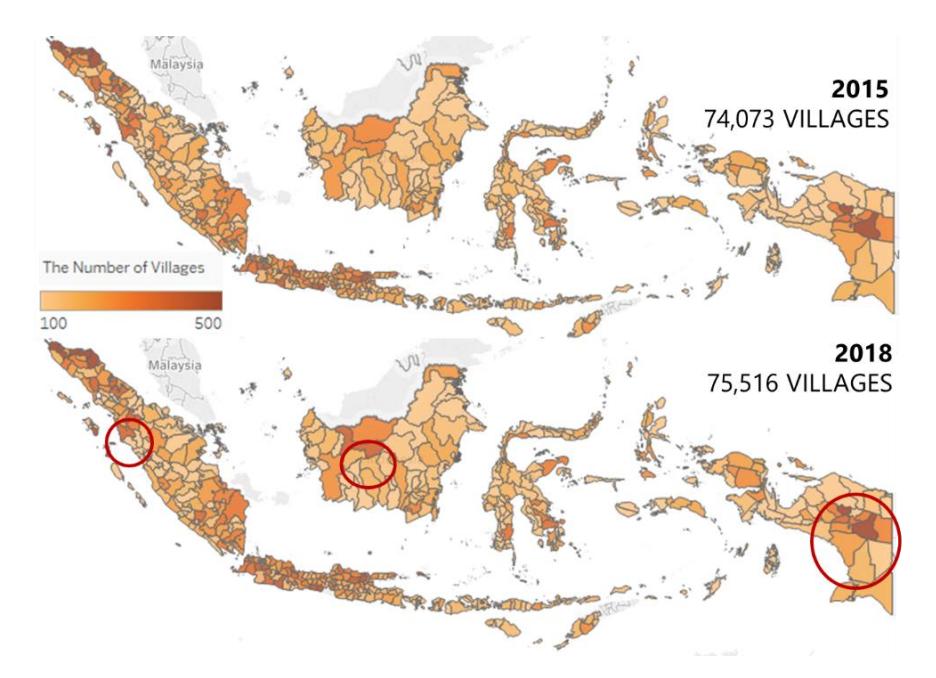
Figure 1. Map of village distribution in each regency/city in Indonesia in 2015 and 2018. Source: Analysis results, 2019
A significant increase in the number of villages in districts/cities in Indonesia is expected to occur due to several factors. Firstly, division occurs in disadvantaged areas where development is not only limited by insufficient accessibility and supporting infrastructure but also the lack of human resources, indicated by high levels of poverty. This condition occurred in Teluk Bintuni Regency with an increase of 145 villages, Paniai Regency with an increase of 139 villages, and Puncak District with an increase of 126 villages. Secondly, districts that experienced high village proliferation but were not in remote locations but did have extensive administrative areas, such as in Sintang, Ketapang, Konawe, and Ogan Komering Ulu districts. Thirdly, division occurring due to regional specificity. By the central government, as stated by the Ministry of Finance (2017), nagari is considered a designation for village in West Sumatra Province (Vel & Bedner, 2015). However, the results of interviews conducted with government officials in West Sumatra Province showed that a nagari is not a village, but rather a collection of villages that are in a government-level position between a subdistrict and a village (jorong). If village funds are given at the nagari government level, this becomes a weakness in West Sumatra Province due to the small number of funds allocated. This encourages districts in West Sumatra Province to conduct or facilitate proliferation at the village level.
Figure 2. Map of the increase of the number of villages in city districts in Indonesia in the 2015-2018 period. Source: Analysis results, 2019.
Village Fund
The first year of implementing the village fund policy in Indonesia was 2014. In that year, the government issued a budget of 20.76 trillion rupiahs with an increase of 184% in 2018 to 60 trillion rupiahs. The allocation was concentrated in Java at 6.50 trillion (34.02%) and this percentage increased until 2018. Sumatra, also in western Indonesia, had the lowest increase in village funds, at 167%. Hence, the portion of funds villages experienced a decline to 26.48% of the total allocation. Furthermore, eastern Indonesia, which had a high level of regional expansion, as was the case in Papua, the overall contribution of village funds declined by 0.01%. This also happened in Kalimantan, which experienced a contribution decrease of 0.04%. However, this did not occur on the island of Sulawesi, where the growth of village funds increased rapidly compared to other islands in eastern Indonesia.
Total Amount of Village Fund Percentage (%) Growth Island (Billion Rp) No (%)2018 2015 2018 2015 1 19,228.00 34,02 196 6,499.78 35,62 Java Sumatra 2 28,22 26,48 6,257.05 16,712.35 167 3 Bali-Nusa 1,300.10 3,873.43 6,06 6,33 198 Tenggara 4 Kalimantan 1.811.95 5,132.80 8.18 8.14 183 5 Sulawesi 2,376.26 6,838.89 10,86 11,01 188 6 Maluku 625.08 1,750.31 2,80 2,75 180 Papua 1,968.96 5,614.56 9,68 9,67 185 Total 20,766.20 60,000.00 100 100 184
Table 2. Development of village funds 2015-2018.
Source: Analysis results, 2019
Furthermore, referring to the number of villages in each district, in the initial year of implementation, the highest village funds were given on Papua Island with an average allocation per community of 300 million rupiahs. The next highest village-by-village funds were awarded in Kalimantan and Maluku Islands, which shows the government's attention to allocating more funds to pockets of poverty in Indonesia. Three years later, this pattern underwent a significant change: the highest village funds awarded per village were located in Java and the Bali-Nusa Tenggara Islands (Bali), which have relatively better economic conditions than other regions. Meanwhile, in areas with a low financial level there was a small growth rate of village funds per village. Papua, which used to have the highest village funds per community, is currently declining to become the third-highest village fund recipient per village. The lowest increase in village funds was in Sumatra, which had the third-highest village division rate in Indonesia.
Table 3. Development of village funds per village 2015-2018.
| No | Island | Total Amount of V Village (Mil | Growth | |
|---|---|---|---|---|
| 2015 | 2018 | - (%) | ||
| 1 | Java | 194.22 | 870.78 | 1.96 |
| 2 | Sumatra | 282.52 | 766.68 | 1.71 |
| 3 | Bali-Nusa Tenggara | 289.65 | 860.64 | 1.97 |
| 4 | Kalimantan | 285.18 | 809.88 | 1.84 |
| 5 | Sulawesi | 272.52 | 801.42 | 1.94 |
| 6 | Maluku | 284.98 | 808.12 | 1.84 |
| 7 | Papua | 309.56 | 827.04 | 1.67 |
| Average | 286.85 | 813.52 | 1.84 | |
Source: Analysis results, 2019
The element of closeness to a center of growth, in this case metropolitan cities, is also evident in the spatial distribution of village funds per village. This occurs in the Greater Jakarta Metropolitan area (West Java), Bandung Raya (West Java), Kedungsepur (Central Java), and Mamimasata (South Sulawesi). The high allocation of village funds per village in these areas is inseparable from the high number of residents in these areas, because 10% of village funds are determined by considering the population number; the higher this number, the higher the village funds received. Furthermore, in 2018 the allocation of village funds per village was 1 billion rupiahs per year. However, the number of districts that had an average village fund of more than 1 billion rupiahs was small, namely in Malinau District, Mahakam Ulu, East Kutai, Memberamo Raya, and Merauke, which were dominated by regions with large administrative areas. Another interesting thing happened in Aceh Province, where the allocation of village funds per village was the lowest in Indonesia, although in the northern part of the province it had the highest number of villages. This shows that the number of villages is not the primary determinant in determining the amount of village fund allocation.
The increase in the percentage of village funds per village in districts/cities experiencing village proliferation (growth) was not as high as in districts/cities that did not experience village expansion, or even in districts/cities that experienced merging of regions (decrease). Referring to the area category, regencies/cities that experienced village proliferation in Sumatra and Papua Provinces tended to experience the lowest increases, while in Bali Nusa Tenggara Province they experienced the highest increases.
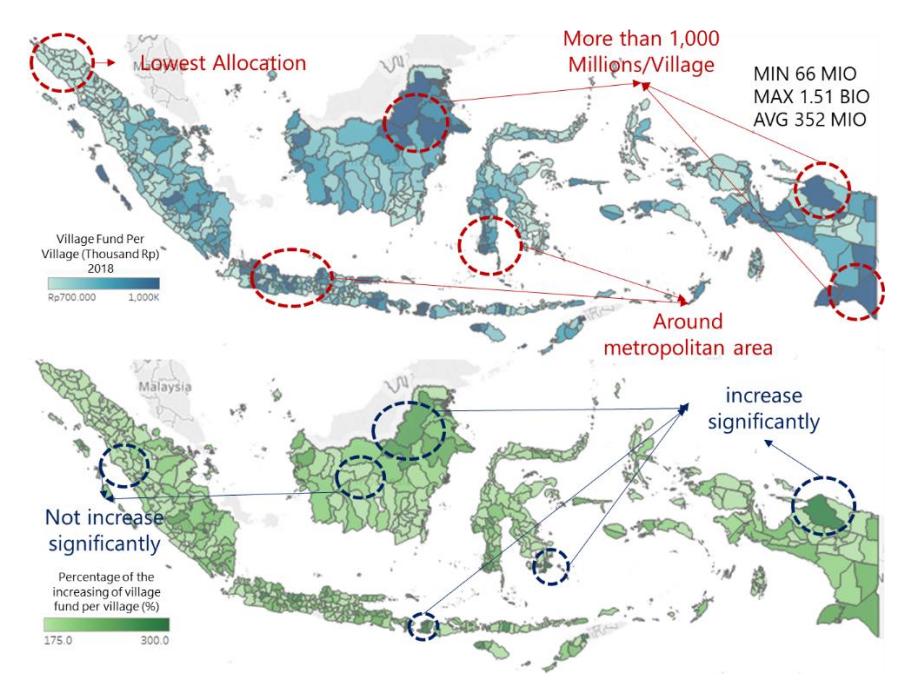
Figure 3. Village fund map per village in regencies/cities in Indonesia 2018 (above) and percentage of increase in village funds (below). Source: Analysis results, 2019.
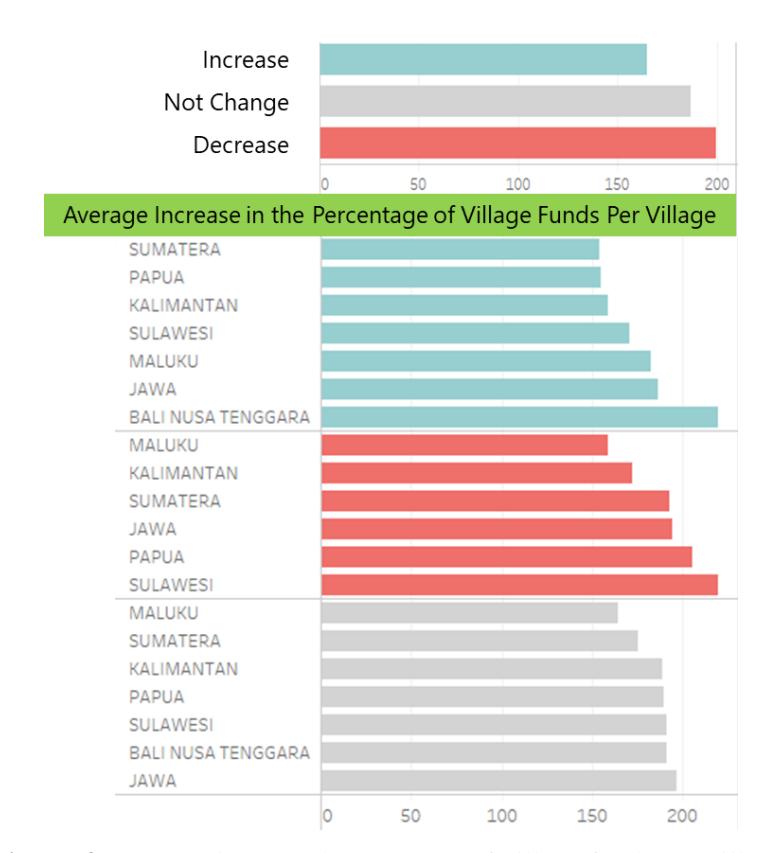
Figure 4. Average increased percentage of village funds per village. Source: Analysis results, 2019.
Village Proliferation And Development In Indonesia
Figure 5 shows that development disparities occur in Indonesia, where regions with high poverty rates are in eastern Indonesia, particularly in Papua and the Nusa Tenggara islands. Where South Tangerang City had a poverty rate of only 1.69%, the poverty rate in Deiyai Regency, Papua, was 43.49%. Almost all regencies/cities in Papua had poverty rates of more than 29% in 2018. Not only faced with high poverty levels, these regions also experienced difficulties in reducing poverty levels, even seeing an increase in poverty in the period 2015- 2018. For example, Deiyai Regency, Papua experienced a significant increase in poverty by 4.55%, from 38.16% to 42.71%. Thus, it is a huge challenge for such regions to conduct regional expansion to narrow the area of public services.
Furthermore, it can be seen that at the districts/cities experiencing territorial reform at the village level there has been an increase in poverty by 0.478%. This was particularly the case on the islands of Sulawesi, Bali, and Nusa Tenggara, where village-level expansion increased poverty by 5.43% and 2.23%. In Papua, proliferation reduced poverty by 1.42%, which means that the spread in this region was positively correlated with an increasing reach of public services so that poverty could decrease. Furthermore, in areas that did not experience regional integration at the village level, in general, poverty rates declined in all regions in Indonesia. Interestingly, in regions that did not experience proliferation Papua experienced a significant increase in poverty.
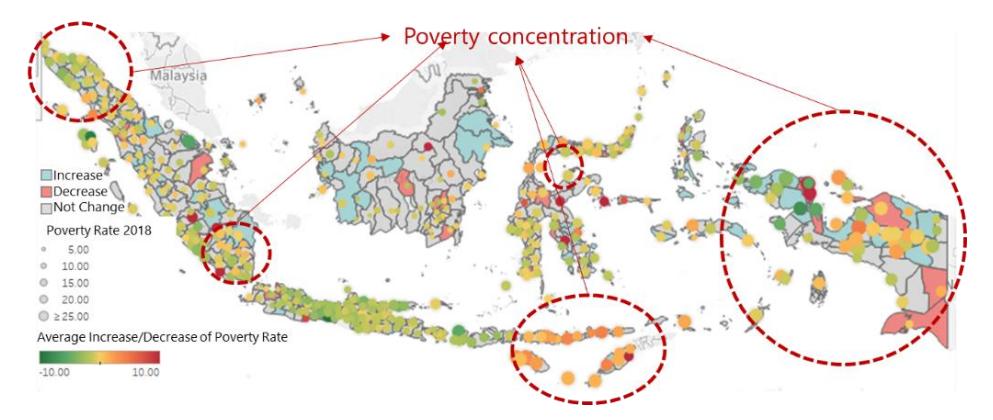
Figure 5. Regional expansion and poverty rates in Indonesia. Source: Analysis results, 2019.
Table 4. Percentage of decreasing/increasing poverty rates associated with regional expansion.
| Percentage of Decrease/ Increase of Poverty Rate (%) | |||||
|---|---|---|---|---|---|
| No | Island | Increase (Village Proliferation) | Not Change | Decrease | |
| 1 | Java | -2.81 | -1.46 | -1.02 | |
| 2 | Sumatra | -0.08 | -0.39 | -0.38 | |
| 3 | Bali-Nusa Tenggara | 2.23 | 0.39 | - | |
| 4 | Kalimantan | -0.22 | -0.12 | -1.04 | |
| 5 | Sulawesi | 5.43 | 0.34 | -0.76 | |
| 6 | Maluku | -0.25 | 0.26 | -0.82 | |
| 7 | Papua | -1.42 | 3.98 | -1.80 | |
Source: Analysis results, 2019
To measure development achievement at the village level, in the National Medium-Term Development Plan the level of village progress is represented by village category indicators, namely the percentages of underdeveloped villages, developing villages and developed villages, calculated by the Central Statistics Agency. The results of the analysis found that in districts/cities that experienced division at the village level tended to reduce disadvantaged villages quickly. Still, this decline was higher in regions that experienced village integration (decreasing the number of villages), so in some areas, village integration likely brought down the number of backward villages faster. In regions experiencing village proliferation, the lowest decline in underdeveloped communities was in Java, but this does not mean that development in Java was slow. On the contrary, on this island the level of disadvantaged villages was much lower than other islands. The highest decline of disadvantaged communities was in the Maluku Islands, Bali-Nusa Tenggara, and Kalimantan, which in general had wide public service areas.
Concerning the developing village category, it can be seen that although regional proliferation had the highest increase in the number of villages, this does not mean that the rise followed it in regional competitiveness. This did not apply to Java, where although the number of growing villages fell – both in areas that experienced expansion and those that did not – the increase in the number of developed villages was very significant. This seems to have been influenced by the availability of infrastructure that is far more adequate and supported by relatively more skillful human resources than in other regions in Indonesia.
Table 5. Average Percentage of decreasing/increasing the number of underdeveloped, developing and independent villages.
| No | Island | Increase (Village | Not | Decrease | |
|---|---|---|---|---|---|
| Proliferation) | Change | ||||
| Under Developed Village | -9.37 | -6.12 | -12.56 | ||
| 1 | Java | -2.81 | -1.00 | -0.23 | |
| 2 | Sumatra | -9.33 | -7.01 | -18.70 | |
| 3 | Bali-Nusa Tenggara | -15.12 | -8.46 | - | |
| 4 | Kalimantan | -13.96 | -10.06 | -15.28 | |
| 5 | Sulawesi | -6.36 | -8.89 | -12.72 | |
| 6 | Maluku | -18.71 | -16.21 | -23.97 | |
| 7 | Papua | -6.59 | -5.52 | -11.94 | |
| Developing Village | 11.19 | 3.27 | 10.19 | ||
| 1 | Java | -4.79 | -3.59 | -7.22 | |
| 2 | Sumatra | 6.14 | 5.49 | 17.55 | |
| 3 | Bali-Nusa Tenggara | 15.01 | 3.84 | - | |
| 4 | Kalimantan | 12.63 | 8.29 | 12.73 | |
| 5 | Sulawesi | 30.59 | 6.34 | 9.89 | |
| 6 | Maluku | 17.62 | 13.85 | 21.60 | |
| 7 | Papua | 6.50 | 5.28 | 11.89 | |
| Developed Village | -1.82 | 2.85 | 2.37 | ||
| 1 | Java | 7.60 | 4.59 | 7.45 | |
| 2 | Sumatra | 3.19 | 1.53 | 1.15 | |
| 3 | Bali-Nusa Tenggara | 0.11 | 4.63 | - | |
| 4 | Kalimantan | 1.33 | 1.77 | 2.55 | |
| 5 | Sulawesi | -24.24 | 2.54 | 2.83 | |
| 6 | Maluku | 1.08 | 2.36 | 2.37 | |
| 7 | Papua | 0.08 | 0.25 | 0.06 | |
Source: Analysis results, 2019.
Looking at the pattern of underdeveloped villages in Indonesia, inequality is also an important issue. Almost all regencies/cities in Papua, the Nusa Tenggara islands, the northern region of Kalimantan, the central area of Sulawesi, and the western part of Sumatra, had a percentage of underdeveloped villages more than 40% while in the other regions, especially Java, the level of backward villages was less than 10%. The analysis also showed that similar to the pattern that occurred in poverty indicators, regions with a high underdeveloped village level had difficulty to reduce the number of disadvantaged villages in their area due to limited accessibility and infrastructure in these regions. For example, the Natuna Islands and Anambas, Riau Islands, the poor accessibility of small islands in this region correlated to an increase in disadvantaged villages of more than 50%.
Of the districts/cities that experienced regional proliferation, most had a relatively low percentage of underdeveloped villages, below 20%, and tended to experience a significant drop in lag. However, this did not apply in the provinces of Papua and Kalimantan, where the percentage of disadvantaged areas was very high, more than 40%. This shows the differences in characteristics of the proliferation of villages between western and eastern Indonesia. The division of villages in eastern Indonesia occurred more because of the extended public service area of each village.
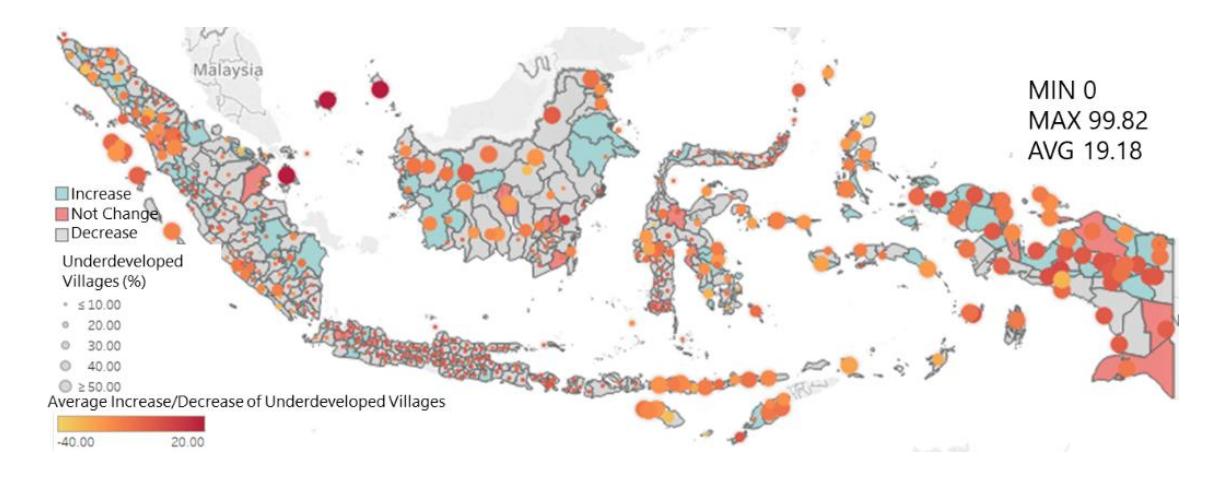
Figure 6. Increase/decrease in percentage of underdeveloped villages in regencies/cities in Indonesia. Source: Analysis results, 2019.
The islands of Java, Sumatra, and Sulawesi experienced a high increase in the percentage of developing villages, while in Papua most communities were still underdeveloped, where there was a tendency for growth of the villages in the region. Furthermore, associated with regional proliferation, the regencies/cities in Java that experienced division at the village level experienced a significant decrease in developing villages, but this does not mean that the regions declined, but rather that the shift increased towards developed areas. Different patterns occurred on other islands, where village proliferation was associated with a significant increase in the percentage of growing villages in Indonesia, especially in Sulawesi, Bali-Nusa Tenggara, and Maluku.
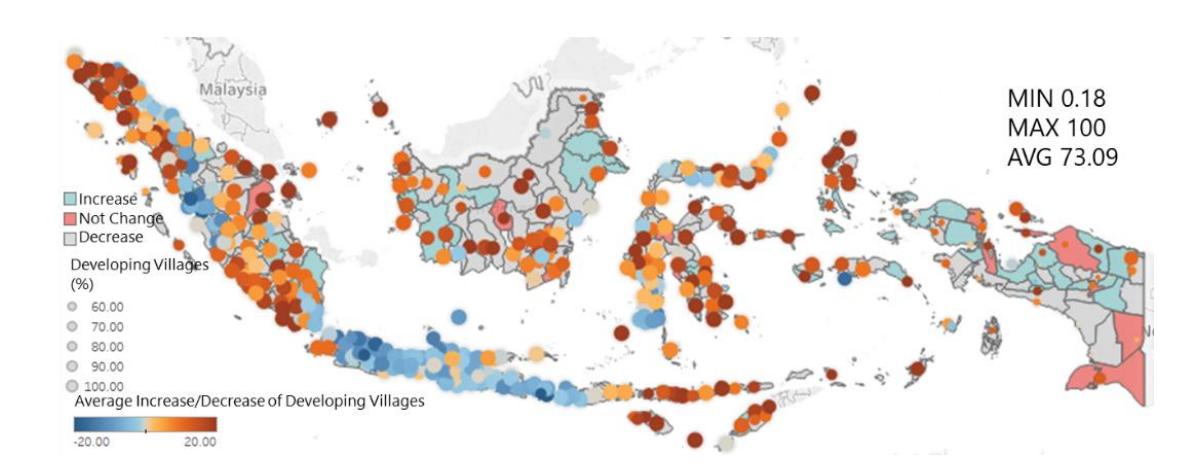
Figure 7. Increase/decrease in percentage of developing villages in regencies/cities in Indonesia. Source: Analysis results, 2019.
The following figure explains that the development of villages was concentrated in Java, as indicated by the highest percentage of developed villages on this island. In addition to Java, high levels of village development occurred in West Sumatra Province, as well as around provincial capitals, such as around Banda Aceh, Makassar, Manado and Ambon. In other regions, the percentage of developed villages was less than 10% of the total number of villages in the district.
Another finding was that division taking place in Java and Sumatra tended to increase the number of developed regions significantly. A much different pattern occurred on the island of Sulawesi, where proliferation reduced the level of regional progress.
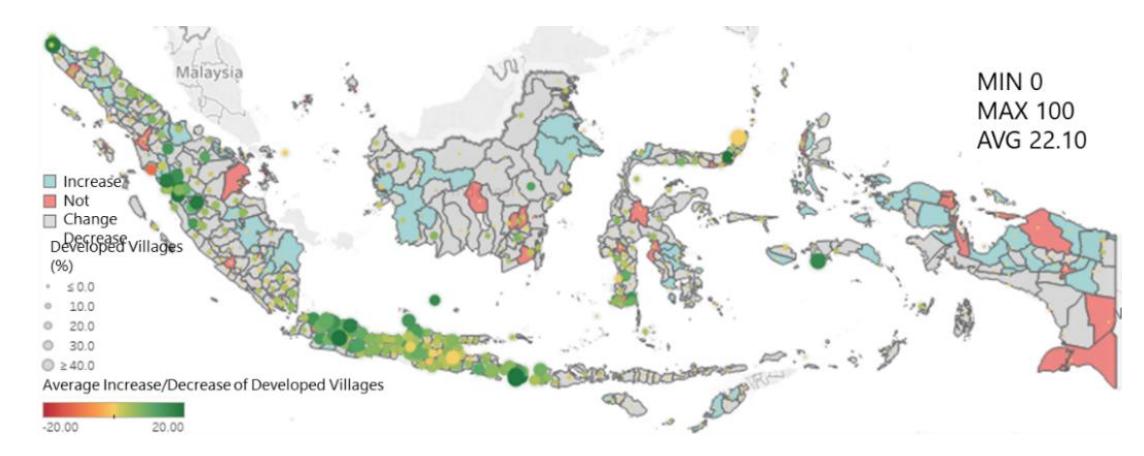
Figure 8. Increase/decrease in percentage of developed villages in regencies/cities in Indonesia. Source: Analysis results, 2019.
Further analysis was carried out by looking at changes in each component of the calculation of village development, both in terms of essential services, public services, accessibility, infrastructure, and government services. In general, regional expansion is positively correlated with a rapid increase of almost all components, namely public services, accessibility, infrastructure, and government services. In the primary service category, regions that experienced expansion, the development was quite good, but it was even better in areas that experienced village integration.
On a regional basis, proliferation that occurred in districts/cities in Bali and Nusa Tenggara tended to increase the village development index. The primary sectors, government service components and infrastructure in these regions are excellent, but accessibility within the region is limited due to the regional characteristics of the islands. Proliferation in Sulawesi can be said to be the best because it increased all development components calculated in the village development index. On the island of Java, which is a center of growth, regions that experienced proliferation had better performance than those that did not experience proliferation or experienced village integration. It was also found that proliferation in this region was able to increase access to primary and public services. The pattern of proliferation in Sumatra only increased accessibility and infrastructure while it was not able to improve access to essential and public services. Proliferation in Maluku, which has archipelagic characteristics, increased access to public services and accessibility between regions but was not able to speed up infrastructure improvement. Finally, proliferation in Kalimantan and Papua, which have the most significant administrative areas, division was not able to significantly increase all components of the village development index. This shows that although proliferation in regions with substantial administrative areas started to reduce the number of underdeveloped villages, the extent of the area is still a significant challenge in the provision of adequate public services and infrastructure.
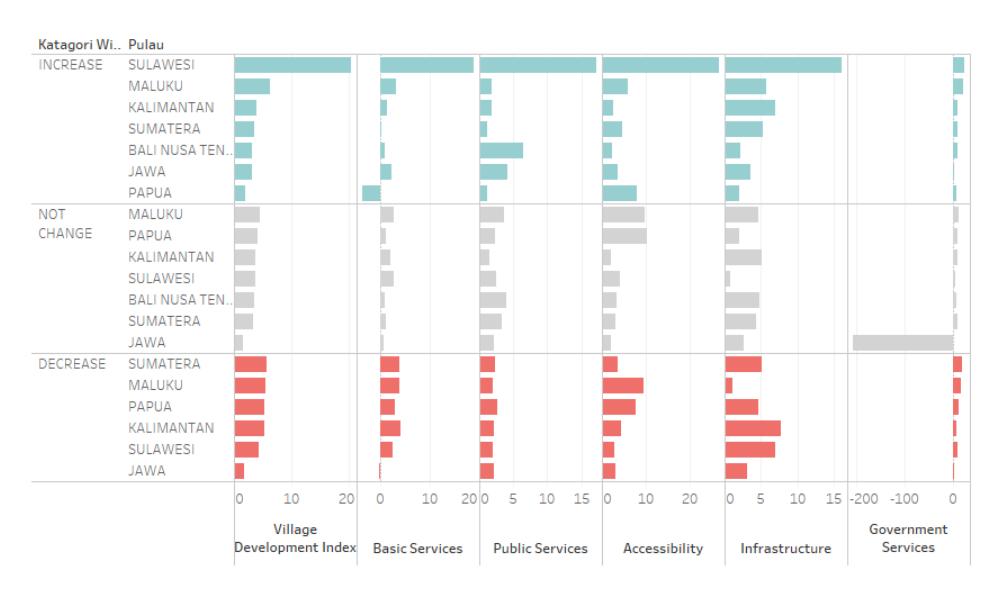
Figure 9. Changes in the village development component. Source: Analysis results, 2019.
Pattern of Village Proliferation and Challenges in the Future
The results of the assessment carried out in the previous section formed the basis for looking at patterns of village division that occurred. There were seven patterns of village proliferation. The first pattern is in Java, which had the best performance, with poverty decreasing, the number of disadvantaged villages decreasing, and village development increasing. This is not surprising because in Java as the center of economic growth and the center of government in Indonesia each village is supported by infrastructure and public services that are far better than in other regions in Indonesia. Moreover, the increase in village funds per village on the island of Java was relatively high compared to other regions. In addition to being in Java, other regions included in category one were districts around provincial capitals that showed a significant role as growth center in influencing development in villages. The percentage of regencies/cities included in this category was 46.48%.
The second and third patterns showed an increase in village funds that was not high but could reduce poverty and village development, albeit insufficiently. What distinguishes both types is that in the second pattern proliferation was followed by a decrease in the percentage of disadvantaged villages, while in the third pattern there was an increase in the percentage of disadvantaged communities. The percentage of regencies/cities included in this category was 9.82% and 4.22% respectively.
As many as 25.35% of districts that experienced division at the village level comprise the fourth pattern. This pattern illustrates that although the village funds obtained were high and reduced the percentage of disadvantaged villages and encouraged development at the village level, the poverty level increased. This pattern occurred in some islands of Nusa Tenggara and regions of Kalimantan and Papua with vast areas.
The fifth to seventh patterns illustrate that the village funds obtained per village were generally low in the regions while the poverty level increased. In the fifth pattern, which occurred in mountainous areas in Papua, although the number of underdeveloped villages decreased, the development in communities, especially related to infrastructure and accessibility, was still not proper due to the extent of the area and the location of isolated regions. The sixth pattern occurred in island, which is a new autonomous region. The number of underdeveloped villages in this region experienced an increase, which means that the division was done to decrease poverty that occurred between the parent region and the autonomous region. The last pattern, which occurred in middle mountainous areas in Papua, division was not able to reduce poverty or decrease the number of disadvantaged villages, while village development was still limited.
Table 6. Village proliferation patterns in Indonesia.
| Category | Number of Districts/ Cities | Village Fund Per Village | Poverty | Under developed Village | Village Development | Location |
|---|---|---|---|---|---|---|
| Category 1 | 66 (46.48%) | High | Decrease | Decrease | Good | Java Island |
| Category 2 | 14 | Low | Decrease | Decrease | Not good | Mostly in |
| (9.86%) | Northern Papua | |||||
| Category 3 | 6 | Low | Decrease | Increase | Not good | West Sumatra, |
| (4.22%) | South Sumatra | |||||
| Category 4 | 36 | High | Increase | Decrease | Good | Mostly in Nusa |
| (25.35%) | Tenggara, | |||||
| Kalimantan, | ||||||
| Papua (large | ||||||
| district) | ||||||
| Category 5 | 6 | Low | Increase | Decrease | Not good | Middle |
| (4.22%) | mountains in | |||||
| Papua | ||||||
| Category 6 | 6 | Low | Increase | Increase | Good | Island (a new |
| (4.22%) | autonomous | |||||
| district) | ||||||
| Category 7 | 8 | Low | Increase | Increase | Not good | Middle |
| (5.63%) | mountains in | |||||
| Papua |
Source: Analysis results, 2019
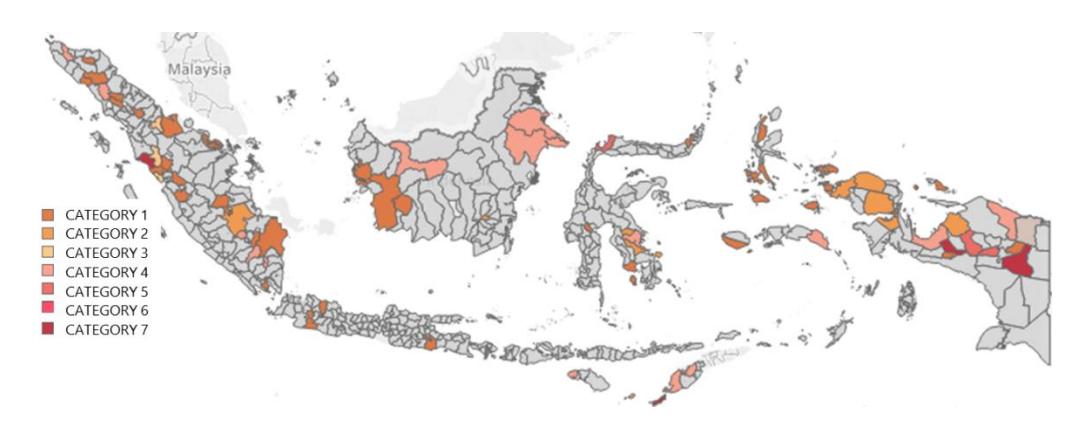
Figure 10. Patterns of village expansion in Indonesia. Source: Analysis results, 2019.
The patterns of village proliferation in Indonesia that were found show that, although village funds per village obtained by each community increased significantly, this does not mean that the increase in development that occurred in the region was a direct result of proliferation. Instead, other factors drove this development. For example, in the first pattern in Java, a significant decrease in the number of disadvantaged villages was more owed to the given conditions in Java, which has far better resources than other regions in Indonesia. This influence is more likely if the area is located close to a growth center.
Despite having raised village funds and being able to reduce poverty levels, the development level in these villages did not improve. This was caused by the diverse characteristics of Indonesia's territory, such as extensive administrative areas, isolated areas, and archipelago regions. This makes the village funds insufficient to finance inter-regional accessibility. For this reason, the village funds must be integrated with funding schemes from the district, provincial, or national governments.
Discussion: Its Impact on Regional Development
Nijkamp and Abreu (2009) describe regional development as a multidimensional concept with dynamic variations in socioeconomic conditions, including policy factors that are implemented in an area. Decentralization policies in various countries have significantly changed the landscape of regional development. Although the practice of this policy is not easy (Imron, 2011; Balaguer-Coll et al., 2010b; Firman, 2009; Colfer & Capistrano, 2005; BInte, 2004), the granting of power to lower levels of government means greater trust given to locals to contribute actively in the decision-making processes in their region. The participation of agents who understand the conditions in the field is expected to provide output in the form of policies/programs/activities that adequately represent regional needs. Furthermore, this will encourage community welfare.
The dynamics in this policy are wide-ranging. One is proliferation as a form of territorial reform. At the beginning of regional autonomy implemented in Indonesia, division occurred at the provincial and district/city levels. Initially, this expansion was based on efforts to increase the reach of public services. The motives that then emerged were not only related to gaining power, but also to being able to manage regional allocation funds. This condition triggered dishonest practices from candidates/regional heads (Bardhan & Mookherjee, 2006; Firman, 2009, 2013). The impact of proliferation on economic growth and improvement in welfare has not yet been widely proven (Faoziyah & Salim, 2016). Considering many problems with proliferation at the district/city level, Imron (2011) notes that the president has instructed temporary cessation of regional divisions, primarily if the division was carried out with political motives. However, this did not eliminate the corrupt culture in the entrenched governmental order.
Fifteen years later, the government of Indonesia established a radical breakthrough by granting more power to the village level. In practice, this breakthrough was also faced with various threats that affected its effectiveness in improving the welfare of communities at the village level.
Firstly, concerning the uneven capacity of the apparatus at the village level. Decentralization at the district/city level in Indonesia is still faced with the problem of the low quality of the district/city apparatus in managing its territory (Balaguer-Coll et al., 2010a; Firman, 2009; Shah & Thompson, 2004), also in villages areas. Djatmiati et al. (2019), Nadyastika & Siswantoro (2019), and Rakhman (2019) support the argument that the apparatus at the village level is still dominated by people with education levels below secondary school. They not only have difficulty in making financial accountability reports of village funds but are also challenged by carrying out planning, implementation, evaluation in order to be able to become an agent of community empowerment. This low capacity is reflected in the BPKP report (2016), which states that in 2016 there were 15,100 cases of mismanagement of village funds.
Secondly, although in several regions in Indonesia development has made a start, the next challenge is how local communities can benefit from the progress that has been made. This is related to the low overall human resource capacity and the community empowerment that has not been effectively implemented. Proper village development does not yet correlate with a reduction in regional poverty. According to the results of this study, 39.42% of districts that experienced proliferation were unable to reduce poverty levels in their area and 23.93% did not experience an increase in the level of village development. This indicates that giving power to the village level does not necessarily reduce poverty in all villages in Indonesia. Some villages can seize the opportunities that this power provide, but there are also still quite a lot of villages that are not able to benefit from the opportunities that exist in their area.
Thirdly, giving significant funds to villages can lead to proliferation, but division occurs not only because of vast administrative areas but also because of the desire of certain political elites to gain power (Tasik & Lengkong, 2019; Yaya & Santoso, 2018). Giving more strength to the village head in managing these funds, including providing approval to all development programs to be carried out in the village (I. Ismail, 2019; Nadyastika & Siswantoro, 2019; Rakhman, 2019; Yaya & Santoso, 2018) attracts political elites at the village level to establish new villages. In several cases, it was also found that construction contractors in villages came from the family of the village head. Political interests in managing village funds related explicitly to village proliferation subsequently also pose challenges in the form of opportunities for corruption by village officials (Afifah et al., 2017; Ash-shidiqqi & Wibisono, 2018; Yuhertiana et al., 2016). Indonesian Corruption Watch (ICW) in CNN (2019) has stated that village funds were the most corrupt sector in Indonesia. The Corruption Case Action Report compiled by ICW (2018) found 454 corruption cases with a state loss of 5.6 trillion rupiahs and a bribe/gratification value of 140.8 billion rupiahs.
Conclusion
Most of the proliferation at the village level in Indonesia occurs in administrative areas that are too large. In other words, regional spread is seen as a solution to get more village funds so that the reach of public services can be increased and infrastructure development at the village level can be conducted according to the needs of the community. However, there are also indications that this proliferation has been carried out on a political basis to gain power over managing village funds.
The analysis also found that 60.56% of regions experiencing proliferation at the village level were able to reduce poverty levels in their area. However, not all of these areas were able to reduce the percentage of underdeveloped villages or to increase development at the village level. This shows that proliferation must be comprehensively understood by considering the various characteristics of regions in Indonesia.
In a theoretical framework, the spatial distribution pattern of districts experiencing proliferation at the lower levels of government will provide insight into how location factors contribute to determining how proliferation can be carried out effectively. In regions with low levels of development, such as Papua, and with limited infrastructure and natural resources, this does not mean that division cannot be carried out. Expansion can still be done but with additional interventions. Another insight comes from the amount of village funds received by each village where a rise in the amount of funds did not always correlate to the ability to reduce the poverty rate. There is an indication of the inability of the village apparatus to manage the money so if decentralization is applied purely without considering the uniqueness of the region it will pose a severe problem.
To increase the effectiveness of village fund implementation and to anticipate the negative impacts of village proliferation, the central government must provide strict limits on village proliferation, especially in regions that do not have large administrative areas. The regency/city government must also tighten regional expansion as the giver of approval for the division of villages. Besides that, the central government can also apply incentives to communities that have proper performance levels regarding village growth in their areas, to increase village government capacity and to reduce opportunities for corruption at the village level.
Acknowledgements
The authors would like to thank the Research Center for Infrastructure and Regional Development for supporting this study. An earlier draft of this paper was presented at the 3rd Endinamosis International Conference on Rural Development and Community Empowerment, Bandung, November 2-3, 2019.