
Introduction
The urban population now accounts for 55 percent of the total population. By 2050, the urban population is projected to touch 68 percent of the total global population (UN DESA, 2018). This is a significant milestone for the world, and much of the future urban population growth (90 percent) is expected to occur in African and Asian countries. The limitless potential of opportunities ushered in by urbanization, such as better education, health care, and technology, cannot be denied. Today, much of the developed world is reaping the benefits of urbanization. The massive productivity growth taking place in urban areas, mainly through innovation and creativity, has contributed to the nation's income more than rural areas in the last century. However, urbanization symbolizes a mixed bag, as it also entails problems like rising inequality and various forms of exclusion that now characterize cities (Kanbur and Zhuang, 2013 & Liddle, 2017). The phenomenon of rural-urban migration has created enormous pressures on cities to provide basic amenities such as housing and other necessary services to the increasing flow of migrants. This mismatch between the demand and supply of land and other resources has resulted in an almost 33 percent rise in the slum population worldwide while also adversely affecting the environment. The estimated number of slum dwellers increased from 650 million in 1990 to 863 million in 2012 (United Nations Population Fund, 2016).
While urbanization is occurring all over the world, India is undergoing the most extensive urban transformation in modern history. India already has 377 million urban dwellers and will be adding another 400 million new residents by 2050 (Census 2011) (see Figure 1). At present, India has 53 urban agglomerations (UAs) with a million-plus residents, up from 35 UAs in 2000, and this number is expected to grow significantly. More than 40 percent of the urban population lives in million plus cities, making the urbanization in India a top-heavy phenomenon (Alakshendra, 2019). It has thus become imperative to reduce this burden on limited resources and prevent their over-exploitation by focusing on sustainable methods of living and livelihoods.
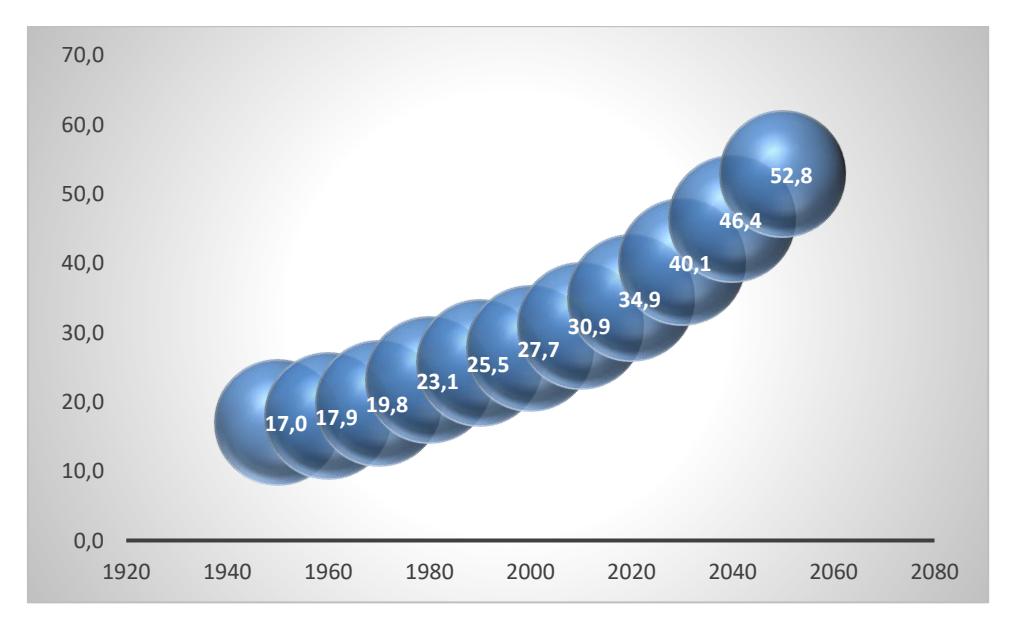
Source: Census 2011, Government of India.
Figure 1. Urbanization trends in India.
It is now well established that human activities directly impact the climate we live in. The UN Framework Convention on Climate Change (UNFCCC) defines climate change as "a change in climate due to direct or indirect human activity that alters the global atmosphere along with natural variation in climate". Although it is almost impossible to estimate the value of climate destruction due to human activities, it is relatively easy to monetize the destruction caused by climate change to both physical infrastructures as well as the livelihoods of people. Climate change also has a deleterious effect on human health by increasing illnesses and deaths, and according to a WHO study from 2014, more than 250,000 people may lose their lives as a result of climate change. These, however, are the direct and visible effects of climate change. Simultaneously, it is also essential to analyse its indirect or second-order effects caused by migration, especially since climate change can further accelerate the pace of rural-urban migration (Mukhopadhyay and Revi, 2009). For instance, in rural India, more than 70 percent of households are dependent on agriculture for their livelihoods and any adverse change in climatic conditions such as drought, soil erosion, and flooding often results in a massive exodus of people from rural to urban areas in search of a livelihood (Singh et al., 2018). At the same time, the rate of groundwater recharge has been declining since 1996 in north-west and north-central India due to the reduction in lowintensity rainfall, further making agriculture less productive, and resulting in mass out-migration of communities engaged in agricultural activity (Kulkarni et al., 2015). Rising temperatures and humidity are also causing imbalances in rainfall and precipitation cycles. In recent years, several states of India have been severely hit by environmental disasters, leading to large-scale loss of human lives and property (see Figure 2). These include the widespread floods in Jammu and Kashmir and Cyclone Hudhud in Andhra Pradesh in 2014, and Cyclones Nisarga and Amphan, which hit the coasts of Maharashtra and Gujarat, and West Bengal and Odisha, respectively, earlier in 2020. These episodes of climatic disasters are the direct result of human activities causing destruction to the environment such as emissions of greenhouse gases (GHG) and changes in the usage of land. The unchecked population rise in a developing country like India is also exerting a strain on natural resources, thereby compromising the resilience of both urban and rural areas to climate change.
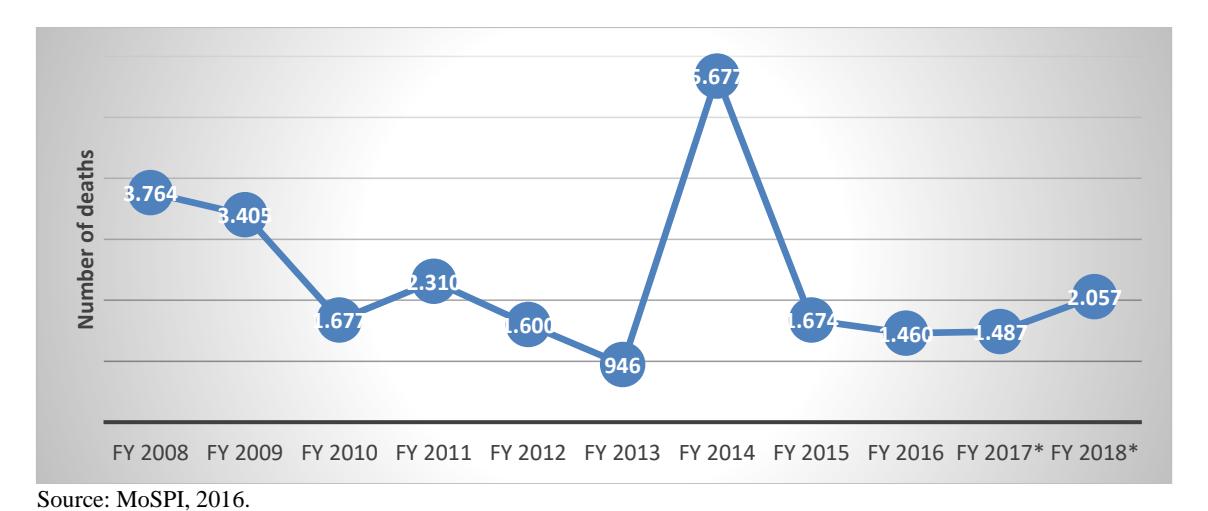
Figure 2. Number of deaths due to natural disasters in India (2008-18).
The following section points out how climate change is impacting the urban population through various transmission mechanisms and highlights the importance of adopting mitigation and adaptation strategies for dealing with climate change in order to ensure sustainable growth.
The Interlinkages
Poverty: There is a plethora of research suggesting that poor populations are disproportionately affected by climate change (IPCC, 2014). As per the 2011 Census, about 22 percent of Indians live below the poverty line, and a 2015 report by the World Bank asserts that climate change would push 45 million Indians into extreme poverty by 2030. Since these poor populations have limited access to infrastructure and other amenities, they are at increased risk to the direct and indirect effects of climate change and external climatic shocks such as floods, droughts, and other natural disasters. The existence of the poverty–environment trap in developing countries has also been well established in research studies (Barbier and Hochard, 2018), including in India (Bhattacharya and Innes, 2013). Most of the urban poor live in slums, which are often located near open drains or in low-lying areas. Slum dwellers are thus more likely to experience low environmental quality, resulting in reduced life expectancy (Dao and Edenhofer, 2018). Further, almost 63 million Indians are pushed into poverty every year due to unaffordable healthcare costs. India spends just 3.6 percent of its GDP on public healthcare, which is one of the lowest in the world. Thus, the poverty–environment trap and the lack of a safety net further exacerbate climate change-related problems for the poor, who have to spend a higher proportion of their income on healthcare and education. The areas dominated by under-privileged populations also experience the weakest form of urban governance, leading to the prevalence of exclusion and inequality among these communities.
Inequality: It has been reported that India has succeeded in bringing about 270 million people out of poverty in just 10 years between 2005 and 2015 (Conceição, 2019). However, the divide between the rich and the poor has been widening in urban India. Figure 3 depicts the extent of urban poverty in the major states of India. In 2017, the top 1 percent of the population held about 73 percent of the country's wealth, whereas for the bottom 1 percent, their wealth increased by a meager 1 percent (Hardoon, 2017). Inequality fueled by changing climate is thus adding to the vulnerabilities of the poor population.
In any natural disaster, the total economic loss in absolute terms may be higher for the highincome population, but the relative loss tends to be higher for poor people, who lose a more significant proportion of their assets. Also, it usually takes much longer for the poor to recover their losses. However, there are many types of inequalities at play. The most visible and commonly discussed inequality is income and asset inequality. Apart from that the poor also suffer from another type of inequality, viz. unequal access to public services.
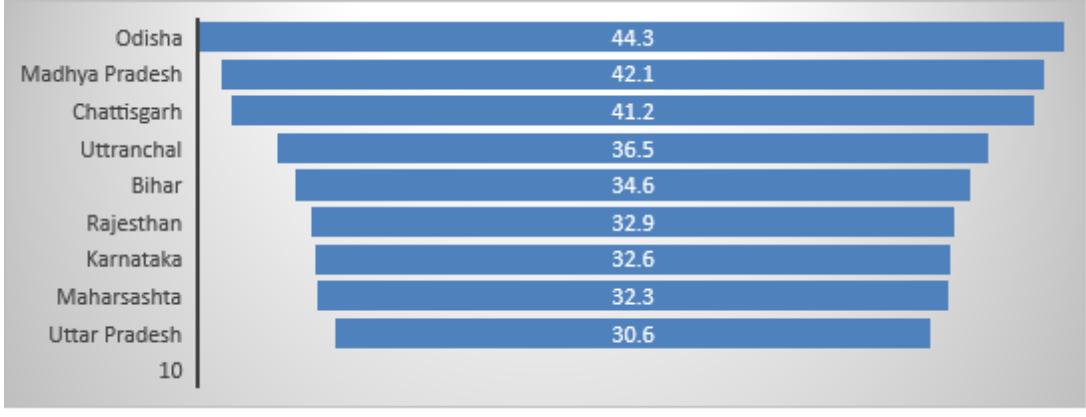
Source: Ministry of Poverty Alleviation and Urban Development (2011).
Figure 3. Urban poverty in major states of India.
It has been found that social and demographic groups such as those comprising men, the higher castes, the young, and Hindus are in general better off and have better access to amenities, resources, jobs, and livelihoods than other groups. At the same time, inequality within and among cities/states has been rising, which has further increased the complexities. For example, in Kerala, just 7 percent of the population is poor, while in Bihar, the poverty rate is close to 34 percent (see Figure 3). The per capita income (adjusted for purchasing power) in Kerala is close to $9300 as compared to $2000 for Bihar. Unfortunately, adverse and frequent climatic events, along with pervasive inequalities, make convergence of the rich and poor states impossible and in fact widen the inequality between them. There is thus an urgent need to combat inequality and climate change together as the rise in inequality makes the fight against climate change difficult (Human Development Index, 2019). The relationship between income inequality and carbon emission is quite revealing. We know that as income inequality rises, emissions also increase – this trend is not only true within cities and countries but has also been observed at the global level. As per the Human Development Index 2019 (HDI), the adversely changing climate has added about 25 percent to global inequality.
Gender-based violence: The impact of climate change is not equal for all. A plethora of research studies have found that climate change increases the risk of violence against women in both developing as well as in developed countries. Whittenbury (2013) found that the incidence of drought increased episodes of violence against women in Australia. Enarson's (2012) study on the United States of America reports that women are more likely than men to die in natural disasters and less likely to receive adequate and timely critical help. In India, climate change affects women in multiple ways due to the very nature of the work performed by women in Indian households. For example, the chore of fetching of water is usually performed by women, and the depletion of groundwater has made this job harder for women (Figure 4) as they now have to walk longer distances to fetch water, which has made them more susceptible to sexual assault and rape.
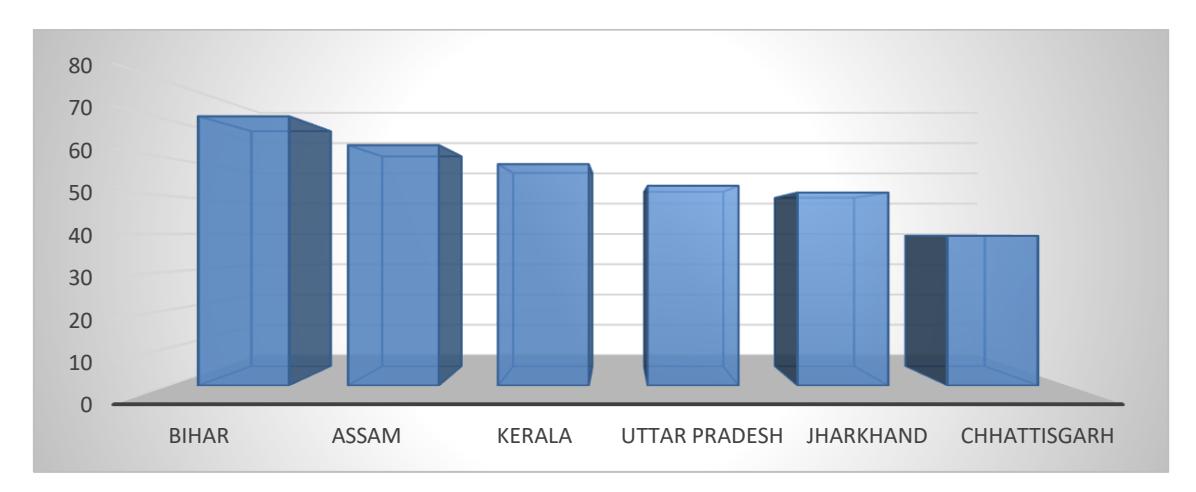
Source: NSSO, 69th Round, MoSPI.
Figure 4. Households without access to tap water (at least 200 m) (Big States).
Similarly, women are often subjected to both verbal and physical violence when defecating in the open. Even though India has made tremendous progress when it comes to accessibility to toilets, every year hundreds of thousands of climate refugees have no option but to resort to open defecation. Hence, women are particularly at risk to climate shock from both the socio-economic and physical the perspective (Satterthwaite et al., 2007).
The Interlinkages: Major Climatic Events
Most of the major coastal cities in the world have recently been experiencing higher incidences of storm surges. Similarly, torrential rains have become a big concern in densely populated cities. Rising sea levels have also become a common phenomenon, affecting the way people live in coastal areas. Coastal cities are vulnerable to high climatic risks as most of them are located in low-lying flood-prone coastal areas and along riverbanks, which are vulnerable to typhoons, cyclones, storms and landslides. The impacts of climate change and disasters in cities disproportionately affect the poor, who usually settle in illegal habitations or in compact settlements and slums along riverbanks and in steep slope areas, where land is more affordable (UN Population Fund, 2016).
a) Floods
In the last ten years, many megacities have experienced incidences of major coastal and river flooding in which climate change played a significant role. Climate change-induced flooding can happen due to a rise in the sea level or due to torrential and prolonged rainfall. In 2019, 850 people lost their lives because of heavy rainfall and floods. Five large states, including Maharashtra, Karnataka, Tamil Nadu, Odisha, and Bihar, experienced massive coastal and river flooding induced by the changing climate in one single year, in 2019. The total length of the Indian coastline is about 4,600 miles, including the island territories of Andaman and Nicobar, and Lakshadweep. It is estimated that by 2050, nearly 40 million Indians will be at risk due to rising sea levels, and coastal megacities like Mumbai and Kolkata will face maximum exposure to coastal flooding in the future due to rapid urbanization and economic growth (Times of India, 2016).
A large part of Mumbai is built on a landfill, which makes flooding inevitable. Mumbai experiences floods almost every year, causing immense human and monetary losses. In the long run, Mumbai is also likely to suffer from massive storm surges and continuous unfavorable weather due to climate change. For example, a study by McKinsey Global has estimated that the economic damage due only to flash floods in Mumbai could top $920 billion by 2050 (McKinsey Global, 2020). The estimation in this study was based on the use of scenario-based models, including those incorporating rising temperatures and sea-level changes. Unfortunately, lowincome households living in informal or illegal settlements will be at greater risk to climate disasters than others (Satterthwaite et al., 2007). It is obvious that the rapid pace of urbanization, and the consequent pressure it creates on land and the environment addsto the risk of catastrophes. For example, the massive landslides and floods that occurred in Kedarnath in the State of Uttarakhand in 2013 were the direct result of unauthorized construction activities along the rivers, the setting up of massive hydroelectric projects, and pollution of the water due to the disposal of corpses and innumerable solid wastes into it (Mehta, Kumar, and Lal, 2018).
b) Heatwaves
Global warming is occurring due to the heat island effect, thereby increasing the intensity of the heat in cities and killing hundreds of people in the process. Chauhan (2019) suggests that India seems to be on course to break a 31-year-record. In 1988, the highest number of heatwave days was 33, from April 1 to June 30. In 2019, the Indian Meteorological Department (IMD) data showed that there had been 32 extreme heatwave days. The forest cover in urban areas has been going down and as a result Indian cities are becoming urban heat islands
As mentioned earlier, incidences of heatwaves have been growing in intensity and coverage in India. The number of states hit by heatwaves in the country went up from just 9 states in 2015 to 19 in 2018 (New York Times, 2019). Further, increased greenhouse gas emissions and energy demand, leading to the urban heat island effect, will adversely affect more states and urban areas in the future (Oliver et al. 2017). More than three-quarters of the electricity in India is produced by using coal, instead of renewable resources, which further adds to the emission of greenhouse gases (Tongia and Gross, 2018). This increase in the frequency and severity of heat-stress events in cities has a direct adverse effect on the health, labor productivity, and leisure activities of the urban population. A considerable variation has also been observed in the extent and duration of extreme temperatures between different residential, commercial, and industrial buildings, and between different neighborhoods or districts (Satterthwaite et al., 2007).
c) Cyclones
India is no stranger to the occurrence of cyclones. In October 2014, Cyclone Hudhud, which caused heavy rainfall and strong gales in north Andhra Pradesh and south Odisha, led to losses of human and animal lives, and large-scale structural damage in these two states. During the same month, Cyclone Nilofar, which was at the time the third strongest cyclone in the Arabian sea, affected thousands of people in the coastal state of Gujarat. In 2015, Cyclone Koman led to massive destruction in parts of Odisha and West Bengal. In October and November 2016, Tamil Nadu, Puducherry, and Andhra Pradesh were hit by cyclones Kyant and Nada. In May 2017, Cyclone Mora, formed during the onset of the southwest monsoon, caused widespread devastation and severe flooding in the Andaman and Nicobar Islands and parts of North-east India.
d) Air pollution
Air pollution, caused mainly by emissions from intensive human activities and unchecked industrial activity, is a major environmental concern in cities around the world. However, cities at different stages of development may have diversified sources of emission of air pollutants, including industrial effluents, power generation, transport, construction, and household emissions. High-population-density air pollution, especially severe levels of air pollution experienced by many developing cities, poses severe health risks to the urban residents, leading to higher incidence of respiratory diseases and mortality rates (Bai et al., 2017).
While much of the climate change crisis in India is a result of outside forces, there are domestic drivers as well. For instance, India emerged as a pollution haven during the 1990s when it set out to attract foreign investment while allowing laxity in environmental norms (Sanders et al., 2014). Similarly, India continues to depend on heavily polluting coal for meeting most of its energy needs, as coal is a cheaper source of energy than environment-friendly and renewable energy sources. All these practices have devastating long-term effects on air pollution levels and consequently on human life.
e) Municipal wastes
The massive influx of people into cities has led to unprecedented levels of waste generation. Globally, 3 billion urban residents generate two pounds of waste a day, equivalent to 1.3 billion tons per year (UNDP, 2016). Although per capita waste generation in India is lower than in developed countries, India makes up in absolute numbers, as about 62 million tons of waste are generated annually in the country, out of which almost 31 million tons end up in landfill sites (Press Information Bureau, 2016).
In India, cities are also usually unplanned and often built on agricultural land, causing persistent waterlogging and exposing water bodies to waste disposal. The overflowing of landfills and drainage has become a common problem in Indian cities, both directly and indirectly, causing damage worth billions every year. Apart from household waste, the other contributors to municipal waste include transport, marine pollution (including plastics) in coastal cities, and shortage of land for landfill sites, all of which add to the crisis by generating huge quantities of untreated waste and causing health hazards such as outbreaks of cholera and typhoid (UNDP, 2016).
f) Water scarcity
Unmanageable municipal wastes are increasingly being dumped by people into water bodies, leading to water pollution and collection of wastes in rivers and seas. Consequently, river water, an important source of drinking water for the country, is becoming unfit for drinking, primarily affecting the health and well-being of poor residents who cannot afford filtration costs or packaged drinking water. Also, a consistent rise in the population and increased economic activities have led to extensive and unsustainable usage of groundwater, causing depletion of the underground water table and India may soon face scarcity of replenishable water resources. Water scarcity in India is also expected to worsen with the population projected to cross 1.6 billion by the year 2050. As per projections, almost 21 cities in India, including Delhi, Bengaluru, Chennai, and Hyderabad, will run out of groundwater by 2020, affecting 100 million people (Mattoo, 2019). According to the 2011 Census, 29 percent of households lacked access to drinking water facilities and only around 62 percent of households received treated tap water. India's water crisis is often attributed to a lack of government planning, prevalence of corruption in the government, increased corporate privatization, and large-scale generation of industrial and human waste. The water crisis is in fact a global issue, with a whopping 1.1 billion people around the world lack access to water while 2.6 billion people are without sanitation.
The available statistics pertaining to demand for water show that the agriculture sector is the largest consumer of water in India, with agriculture and related activities accounting for about 83 percent of the total water consumption. The rapid depletion of the water table is thus likely to have a severely adverse effect on the agriculture sector. India has also been experiencing regular incidences of widespread drought in recent times. It is estimated that presently, about 600 million people in India are facing high to extreme water stress and by 2030 the country's water demand is projected to be twice the available supply (NITI Aayog, 2018). At the same time, water quality is another major concern for India. In 2019, the government conducted a drinking water quality test in 20 major cities. The municipal water supply failed on all testing parameters in 14 cities and the water samples from another 3 cities failed on almost 80 percent of parameters. These statistics are concerning, as the municipal water supply is the primary source of drinking water in Indian cities. India's water quality fares poorly too when compared internationally. According to 2019 WaterAid's water quality index, India is ranked 120th out of 122 countries (Desai, 2019).
g) Diseases, epidemics and pandemics
Chapter 8 of the IPCC Fourth Assessment Report outlines the following three main mechanisms by which climate change may affect human health:
i) Direct exposure to extreme climatic events. These events affect health by impacting human physiology, as in the case of heat waves, or by provoking physical trauma.
- ii) Indirect effects from changes to the determinant factors of human health. These climatic effects have an adverse impact on the production of food, on the quality of the water and air, and the ecology vectors of infectious diseases, such as those caused by mosquitoes.
- iii) Effects of climatic events on social welfare by disruption of social and economic systems. An example of this phenomenon is rural-urban migration due to prolonged drought, which creates a huge burden on the receiving communities.
The rapid spread of the novel coronavirus COVID-19 across the world has caused a humanitarian and economic crisis of unprecedented proportions. Currently, more than 4 billion people are under some kind of lockdown or are being compelled to stay at home across the world. Even countries with the most sophisticated health systems are finding it a challenge to manage this highly contagious outbreak.
In Dharavi in Mumbai, which is Asia's most densely packed slum, on average five people share about 250-square foot homes and 80 people share one public toilet. The extreme density of Dharavi and most other Indian slums is not designed to allow for social distancing, which has been a universal strategy to fight the spread of the Coronavirus. Such intense urbanization and high population density act as perfect enabling factors for the spread of any infectious disease. Adiga et al. (2018) suggest that even after practicing social distancing and aggressive vaccination, the influenza infection rates in slums would be 30-44 percent higher than in non-slum areas. This pandemic has reignited the debate about acceptable levels of density. The spread of the virus has been higher in cities and slower in semi-urban and rural areas. Unplanned urbanization adds to the problem. Even before the COVID-19 outbreak, the number of deaths from communicable diseases was quite high in India. In 2018, close to 500,000 Indians died because of tuberculosis, malaria, chikungunya, H1N1, and diarrhea. Some of the infectious diseases spread faster due to unplanned urbanization and in some climatic conditions determine the extent of the spread of diseases. According to the National Communications Corporation Limited (NATCOM), by the 2080s malaria will penetrate elevations above 1,800 meters and some coastal areas and 10 percent more states will have favorable climatic conditions for the breeding of the malaria vector throughout the year.
h) Urban Governance
In India, the lack of coordination between urban local governments and the state and central government has always hindered urban local bodies (ULBs) from providing adequate resources and support to residents (Ahluwalia, 2017). Also, the lack of technical, financial and managerial capacities among the ULBs to fill the growing gap in infrastructure and services further imposes a very high burden on citizens, who have to invest in household- and community-level coping measures (Bhat et al., 2013). Informal settlements are often developed haphazardly without essential infrastructure networks being laid out before expansion. ULBs have a vital role to play in dealing with the challenges of climate change and could become the first line of defense against its ill effects. Routine jobs that ULBs perform include zoning, regulating building design and industrial activities, procuring land for development purposes, and overall work to make cities resilient and prepared to deal with disasters. However, the lack of funds and trained personnel prevents ULBs from functioning effectively. Thus, they have to continually depend on central and state funds not only for meeting the capital costs of infrastructure but also for maintaining the services being provided to urban residents. Further, they are also either incapable or not empowered enough to fix tariffs due to a mix of administrative as well as political challenges (Bhat et al., 2013).
International Interventions
Climate change is not only an environmental concern but also affects society in multiple other ways. Hence, mitigation of this challenge is necessary even if it entails a high cost. Leaders all over the world have now started accepting that inaction has severe consequences for the future and therefore the cost of mitigation of the impact of climate change should be viewed as an investment for attaining a sustainable future. The current cost of mitigation may amount to 1 percent of global GDP, whereas inaction would cost almost 20 times that.
Thus, world leaders are now paying attention to this threat and forging alliances and signing various agreements and treaties to help resolve this crisis. In the following sections, we discuss some of the high-profile international efforts that have been taken since the turn of the century to ensure a sustainable future for citizens. With 195 signatories, the Paris Agreement of 2016 is the most significant coordinated effort at the global level. The Paris Agreement acknowledges that climate change is a common concern of humankind. The long-term goal of the accord is to keep the global temperature rise below 2 degrees Celsius at the pre-industrial level and further to pursue efforts to keep the temperature rise below 1.5 degrees Celsius.
The countries that are signatories of the Paris Agreement are required to strengthen regional cooperation in adaptation. The Agreement underlines the need to develop technology, promote research, undertake technology assessments and identify the needed financial support. The Agreement focuses on capacity building and provides institutional and methodological support to scale up at the national, regional, and sub-national levels. The Agreement, however, had an early setback when the US decided to withdraw from it in 2017. It is also noteworthy that the agreement encourages consensus-building but is not legally binding.
Another vital intervention in the area of climate change has been the Asian Cities Climate Change Resilience Network (ACCCRN). The ACCCRN aims to catalyze attention, funding, and action on building resilience to climate change for the poor and the vulnerable. The ten core cities in the ACCCRN program are Indore, Gorakhpur, and Surat in India, Bandar Lampung and Semarang in Indonesia, Chiang Rai and Hat Yai in Thailand, and Can Tho, Da Nang, and Quy Nhon in Vietnam. The agreement mainly focuses on the impacts of floods, water scarcity, and health systems in the cities concerned.
The Airport Carbon Accreditation (ACA) is another important initiative, launched in June 2009 in Europe, which aims to reduce carbon emissions from airports. This program was started at 17 airports in Europe and its operations were subsequently extended to other areas of the Asia-Pacific region, North America, Africa, Latin America, and the Caribbean region, with a total of 237 accredited airports being brought under the initiative in 2017-2018. The ACA now covers 65 countries and has succeeded in declaring 44 airports as carbon-neutral in the first 10 years of its operation. The Indira Gandhi International, Dallas-Fort Worth, and Abidjan airports were the first airports in Asia-Pacific, North America, and Africa, respectively, to become carbon-neutral. Galapagos and Queen Alia International were the first airports in Latin America and the Caribbean and the Middle East, respectively, to become carbon neutral. This non-state action empowers the airports to reduce carbon emissions by providing them with technical assistance and public recognition for their management. As per the Carbon Accreditation Report 2018, aggregate emissions at airports have been reduced by 5.3 percent.
The Oil and Gas Methane Partnership (OGMP), which was launched at the United Nations Secretary General Climate Summit in September 2014, aims to reduce methane emissions by the nine partner companies, which own more than 10 percent of the market share of oil and natural
gas production. The OGMP currently covers 15 countries, up from 7 countries in 2014. This initiative has been able to prevent 25,000 tons of methane emissions (which is equal to removing at least 134,000 passenger cars from roads) over the same time (United Nations Environment Programme, 2019).
The New Urban Agenda is an agreement accepted by various countries during the United Nations Conference on Housing and Sustainable Urban Development (Habitat III) held in 2016. The aim of this agreement is to end poverty and hunger, reduce inequalities, promote inclusive and sustainable economic growth, achieve gender inequality, empower women and girls, improve human well-being and protect the environment. The Urban Agenda also considers cultural diversity while implementing new sustainable consumption and production patterns that contribute to the responsible use of resources and address the adverse impact of climate change.
The Clean Development Mechanism (CDM) allows carbon reduction in countries to earn Certified Emissions Reduction (CER) credits, which are equivalent to one ton of carbon dioxide (CO2) and are saleable. The CDM primarily focuses on reducing emissions from developing countries. The CDM which has successfully pushed the use of renewable energy sources, currently has 7,803 registered projects and operates in 140 countries, including 36 developed countries.
Local, State, and Federal Interventions
India remains committed to the obligations related to the United Nations Framework for Climate Change and the Paris Agreement. The Indian mitigation strategy primarily revolves around maximizing the use of renewable energy resources and decreasing dependence on fossil fuels. This strategy serves two purposes: achieving a cleaner environment and lowering oil import bills. Also, the National Action Plan on Climate Change (NAPCC) 2008 was released to facilitate sustainable development simultaneously with the fulfilment of economic and environmental objectives. The NAPCC is an amalgamation of eight national missions, representing multipronged, long-term and integrated strategies for achieving the key goals of good health and reforestation, among others.
The Indian government approved the Climate Change Action Programme (CCAP) in 2014. Its objective is to create and strengthen the scientific and analytical capacity of the assessment of climate change in the country with the help of an appropriate institutional foundation in the context of sustainable development. The focus of the CCAP is on revitalizing groundwater tables, saving wells and other water sources to help irrigation and on restoring restore reefs and seagrass to improve ecosystem services. Similarly, the National Adaptation Fund on Climate Change (NAFCC) was launched in 2015 with a budget provision of $50 million to meet the adaptation costs of the states and the union territories of India. The NAFCC covers activities not considered under any of the other missions and funds of the nation. Besides, it aims to enhance the adaptive capacity of the beneficiaries by organizing awareness programs, promoting research and development, and establishing a coordination and monitoring unit (Biennial Update Report, 2018).
The International Solar Alliance (ISA) is an Indian initiative to generate electricity by using solar energy. The ISA, a joint effort between India and France, came into effect in Paris in 2015, and became the first treaty-based inter-governmental organization to be located in India. It is an alliance of 122 solar countries that lie entirely or partially between the Tropic of Cancer and Tropic of Capricorn.
Further, the Jal Jeevan Mission (JJM) aims to provide safe and good quality drinking water through the household water supply. The JJM is one of the most critical interventions aimed at safeguarding the health of citizens and the safety of women and recharging the depleting water table.
The Pradhan Mantri Ujjwala Yojana (PMUY), which was launched in 2016, aims to replace fossil fuels used in cooking with clean LPG fuel. The LPG is distributed to poor households, which are also provided monetary support to encourage the adoption of LPG usage. This scheme is a gamechanger in many ways, as it protects women from the long-term health hazards of use of nonrenewable sources for cooking, while also significantly decreasing air pollution.
In 2014, the Indian government launched the Smart Cities Mission, one of the most ambitious urbanization programs aimed at ensuring a clean and sustainable environment through the deployment of smart solutions. The Mission envisaged the implementation of a wide range of projects such as the Smart Public Transport System, Public Information Systems, Public Bike Sharing System, Smart Water Management, Grid Power, Green Buildings, and Waste Management Systems. The Smart Cities to be covered under the project are identified on the basis of their existing capacities to provide services and to implement smart solutions.
The Atal Mission for Rejuvenation and Urban Transformation (AMRUT) was launched by the Indian Government to focus on 500 cities for ensuring the provision of necessary infrastructural facilities such as water supply, sewage, stormwater drains, transport, and development of Green Cities by adopting resilient climate technologies.
India has also developed and adopted a rating system for buildings, referred to as the Green Rating for Integrated Habitat Assessment (GRIHA). GRIHA is based on 34 criteria, such as site planning, conservation, and efficient utilization of resources. GRIHA is very similar to the LEED rating system. However, GRIHA functions as per India-specific criteria, thereby making it more contextual for construction in India.
The Pradhan Mantri Awas Yojana (PMAY) (Housing for All-2022) is a central sector scheme for providing housing at reasonable rates to poor urban slum-dwellers living in informal settlements. The beneficiaries are economically weaker sections and low-income group families. According to the Ministry of Housing and Urban Affairs, the Mission is slated to be implemented during the period 2015-2022. It will provide central assistance to ULBs and other implementing agencies through States/UTs for providing Credit Linked Subsidy, subsidy for beneficiary-led individual house construction/enhancement, and in-situ rehabilitation of existing slum-dwellers using land as a resource by instituting private-public partnerships. Under this scheme, a total of 15.3 million houses have been constructed during the period 2014-2018.
The public transport system is an essential element of mitigation of the adverse impact of climate change on the transport sector. The mass transit system in India consists of a variety of transport systems including busways and the Bus Rapid Transit System, Light Rail Transit, Tramways, Metro Rail, and regional rail. India currently has 11 operational metro systems in the cities of Kolkata, Delhi, Gurugram, NOIDA, Bengaluru, Mumbai, Jaipur, Lucknow, Kochi, Chennai, and Hyderabad. The government has approved the extension of the metro in several other cities. According to the National Electric Mobility Mission Plan, 2020, India is aiming to have 400,000 electric cars on the road by the end of 2020. If this target is achieved, India can avoid importing 120 million barrels of oil and prevent 4 million tons of CO2. emissions by 2020. Fully electric
buses have been added to the Mission to reduce the dependence on fossil fuels (Biennial Update Report, 2018).
Many more initiatives have also been taken by various ULBs, state governments, and the federal government to mitigate the direct and indirect impact of climate change. Civil society has played an essential role in identifying critical gaps and monitoring approved projects at the local level. The city of Ahmadabad in Gujarat State has become a success story in creating a city-wide ewaste project with the help of a committed civil society. Similarly, civil society has contributed to the Town Development Authority of another city in Gujarat, Rajkot, to ensure passive cooling, lighting, and ventilation and rainwater harvesting features in guidelines for building design.
Finally, the implementation of an Integrated Watershed Development Program, beginning with the help of communities, states, international institutions and agricultural practices, has gained momentum. This initiative has ensured ready availability of adequate water for farmers and has brought half a million acres under soil and moisture conservation, benefiting over 1,60,000 households. This public-private-people partnership has built over 6,400 water harvesting structures and created more than 1,480 functioning Water User Groups. The model is highly replicable, as it entails the use of traditional methods in conjunction with modern techniques to build location-specific, low-cost water-harvesting structures relying on simple technology and locally available materials.
The Centrally Sponsored Programmes have been implemented along with some of the interventions discussed above, such as AMRUT, PMAY, and Smart Cities Mission, which are designed to make Indian cities and human settlements inclusive, safe, resilient and sustainable. India has a robust policy paradigm, however, it is clear that the country needs to do more to mitigate the risks associated with climate change. For example, clear afforestation directives from various government levels would help the environment in a big way (Singh et al., 2015). The use of the latest technology to make agriculture less water-intensive would slow groundwater depletion considerably. By 2030, India aims to implement a 10-year framework of programs, reduce by half the global food wastage at the consumer level, bring down overall waste generation, and educate people about sustainable lifestyles to co-exist in harmony with nature.
The Way Forward
After the experience of several natural disasters occurring in India's states, it is now high time to rethink existing policies and frame new ones, and also analyze those undertaken by other nations. There is a consensus among all stakeholders that dedicated efforts are needed in terms of allocating finances to fight the adverse effects of climate change. Many countries have an exclusive budgetary allocation to mitigate climate change. One of the recommendations is to allocate a budget for dealing with climate change and allocate public expenditures to enable the states to tackle this issue. The inclusion of this subject and measures to mitigate its effect on populations across the country in the union budget could also be a viable move, as it would also be in accordance with the objectives of the Paris Agreement, 2016.
As a union, India has no climate budget; however, one of the most vulnerable states in India, Odisha, has just come out with a budgetary allocation for mitigating climate change. This measure could help to ensure that the policy commitments made by the government of India have been realized. The budget should also list the adaptation and mitigation activities that need to be adopted and assign funds for all activities that should be implemented urgently to combat climate change.
India has, in fact, been considering the adoption of 'climate budgeting' since 2009-10, when the government's expenditure on adaptation exceeded 2.6 percent of GDP. In 2010, the government increased various schemes dedicated to adaptation to and expenditure on climate change mitigation to 2.84 percent of GDP. In 2011, the inter-ministerial meetings focused on the financial requirements and provision of resources for low-carbon inclusive growth. Finally, decentralized governance will prove to be the key for successful implementation of mitigation strategies.
In view of rapid urbanization across the country, ULBs could play a significant role in helping implement these policies. For this purpose, the ULBs must be empowered financially and socially for taking up various initiatives on climate change through people-centric, data-driven, robust urban planning. By continuously engaging with citizens, local governments too have the power to alleviate the adverse impacts of phenomena like climate change on communities and the population. In fact, local governments can prove to be effective only if they are able to leverage the interests of the people they administer in the enactment of national-level policies.
In the context of ever-increasing climate exploitation, international and national interventions have been focusing on developing sustainable measures, while also making cities climateresilient. India could learn from many success stories around the world. For example, Canada's commitment to low-impact development (LID) infrastructure design standards have significantly reduced its annual water runoff. Similarly, Singapore is investing in massive water drainage improvements as traditional improvements are not working effectively. India will need to take an aggressive approach to mitigate the risk. This study thus argues in favor of urgent institutional reforms by the government as well as the private sector to ensure improved service delivery through enhanced financial allocations for such steps, especially for the urban poor.