

Introduction
Creating a liveable and sustainable environment for a better quality of life is challenging, as it involves multifaceted perspectives and undertakings. One of the means is via green open space provision; adequate and good quality spaces are proven to play a vital role in providing ecosystem services and benefitsto communities. However, despite a raft of studies on the protection of public open space (hereinafter POS) – predominately from the fields of landscape/architectural design and spatial planning – and on how to provide sufficient attractive spaces (in terms of location, shape, size, design), such shared spaces (i.e. commons or common pool resources, CPR), mainly owned and managed by governments, are still subject to overexploitation (overconsumption), mismanagement and quality issues (Ling et al. 2019a). For example, due to government/state failures in some developing countries, issues of vandalism, unkempt, unaccessible and dangerous public spaces, and land conversion to private use (e.g. through the misuse of space) are common (Ling et al. 2019a). These negative externalities related to POS/commons, especially associated with governance and management issues in the residential neighbourhood context, have also been occurring within the study area, i.e. Sabah, Malaysia. As such, to address the institutional-related issues, which influence POS governance and management effectiveness as well as the POS consumption patterns of individuals, an interdisciplinary approach that covers the socialecological system is necessary. This would essentially look into institutional effects on humanenvironmental behaviours. Therefore, a solution to address the above POS issues is required. Prior to solely and directly focusing on the solution itself, selecting a suitable methodology and design framework incorporating institutional-social-ecological considerations to formulate such a solution is a crucial concern, which should take precedence.
Finding a suitable and relevant design framework is difficult, as there is limited research, especially on how to step-by-step (procedurally) and systematically construct and validate a conceptual countermeasure (solution) within the complex context of a social-ecological system. A conceptual solution formulation with qualitative descriptions was particularly emphasised in this study, rather than a detailed practical one with accurate quantitative measures. Given that, a question related to the contribution of this study was posed, i.e. does the conceptual solution offer any originality/novelty and values if there are existing practical solutions addressing them? The latter, which are not mainstream, can be confined to a specific, unique case study. A valid and effective conceptual solution helps to develop more advanced solutions and provide rationalisations for current practices/practical solutions (see Hanid, 2014). Besides, developing a detailed practical solution is time-consuming and costly, acknowledging the scarcity of resources in terms of technical know-how and the complex nature of the POS issues, which require prompt action. Therefore, a conceptual version is preferable, at this point in time, to serve as a preliminary model. It provides a pragmatic baseline for subsequent detailed design decisions and solutions and allows the concepts of the solution to be first evaluated via a cost-and-benefit analysis.
Based on a brief literature search, design frameworks such as Roadway's practical solution concept (Stamatiadis et al. 2010), the practical problem-solving methodology of Toyota (Liker, 2004), constructive research (Lukka, 2003), and design science research (DSR) (Vaishnavi and Kuechler, 2007) have been adopted in developing solutions to remedy emergent issues. However, most of them are more about designing practical solutions, which may not be relevant to this study. As for constructive research, although it has much resemblance (as a good validation) to DSR, the former is not as robust and comprehensive as the revised version of DSR (Hanid, 2014). Hence, the revised DSR was chosen as sole methodological framework with the following rationale. DSR, which emphasises practical problem-based solutions, also involves solution-based knowledge and concepts, in which the outcome of a phenomenon from systematic reasoning (via prediction and explanation) can be useful for formulating solutions to address complex practical problems (see Lukka, 2003 on theory building). Similarly, related to the theorybuilding aspect, Carstensen and Bernhard (2019) posited that DSR is "…a qualitative research approach… it simultaneously generates knowledge about the method used to design an artifact and the design or the artifact itself."
Furthermore, Hevner (2007) asserts that the DSR framework, incorporating multiple methods and knowledge bases, can potentially address existing real problems in a more innovative manner, which is in line with this study's intention. Besides, since DSR is popular in engineering and architecture, focusing on creation, and to a certain extent in accounting information systems (Geerts, 2011) and education engineering research (Carstensen and Bernhard, 2019) it is found that there is a DSR application gap in the urban and environmental planning fields. Thus, exploration of DSR is worth to be undertaken, particularly in this predominantly qualitative study so that it may offer a different approach towards finding solutions or model formulation in the planning field, which also methodologically adds value to the DSR framework in terms of its application validity and flexibility. Moreover, DSR is very similar to the long-established and renowned constructive research approach and Toyota's practical problem solving model, which can serve as a basis for the former (Hanid, 2014). And lastly, various DSR models for different research areas (e.g. management and economics) (see Peffers et al. 2007; Hevner, 2007) have been published in highly prestigious journals.
Against this background, this paper explores the applicability and relevancy of the revised DSR framework in developing a solution in the context of environmental planning. More precisely, it demonstrates how the revised DSR can be employed in a local context encompassing institutionalsocial-POS dimensions. This study focused on existing issues of neighbourhood POSs that are governed by the local property system, primarily referencing and sourcing from prior studies' empirical data and findings. This means that we succinctly describe the key findings and relevant data that are required for identification of the problems and root causes as well as for solution development and validation, instead of explaining the methodology in detail, e.g. covering what factors and variables are involved and how they were obtained. The study's methodological approach is consistent with the reporting method by Robson et al. (2008) (see also Ling and Leng, 2018).
The rest of this paper presents the folllowing: (i) a methodology covering the study area against the background of its POS property rights system as well as the DSR framework, focusing on the steps and processes involved in the analysis of problems and root causes, and solution design, construction and validation; (ii) results and discussion based on the DSR process; and finally (v) the conclusion, including a summary of the key findings, the research's significance and policy implications as well as research limitations and suggestions of future research.
Methodology
Study Area
Focusing on institutional-commons (POS) issues, the Kota Kinabalu district and the Penampang district of Sabah state, Malaysia, with a heterogeneous property rights structure governing country lease (CL) and native title (NT) POS use and management (Ling et al. 2019b), were chosen as the areas of research. Figure 1 shows the two study areas' geographical locations and territorial coverage and boundaries. Based on the residential land use data for 2014, there were approximately 350 CL POS and 22 NT POS in Kota Kinabalu and Penampang (Ling et al. 2019b). These CL and NT spaces are governed and managed by the city hall of Kota Kinabalu and the district council of Penampang, respectively. Rather than relying only on the capital city-level district, i.e. Kota Kinabalu, Penampang was selected concurrently in this study to offer a more holistic view of how the local property rights system results in POS governance and management issues. Besides, due to the inadequate sample size of NT POS from Kota Kinabalu, the NT POS data samples and related data were primarily elicited from relevant private and public organisations of the Penampang district.
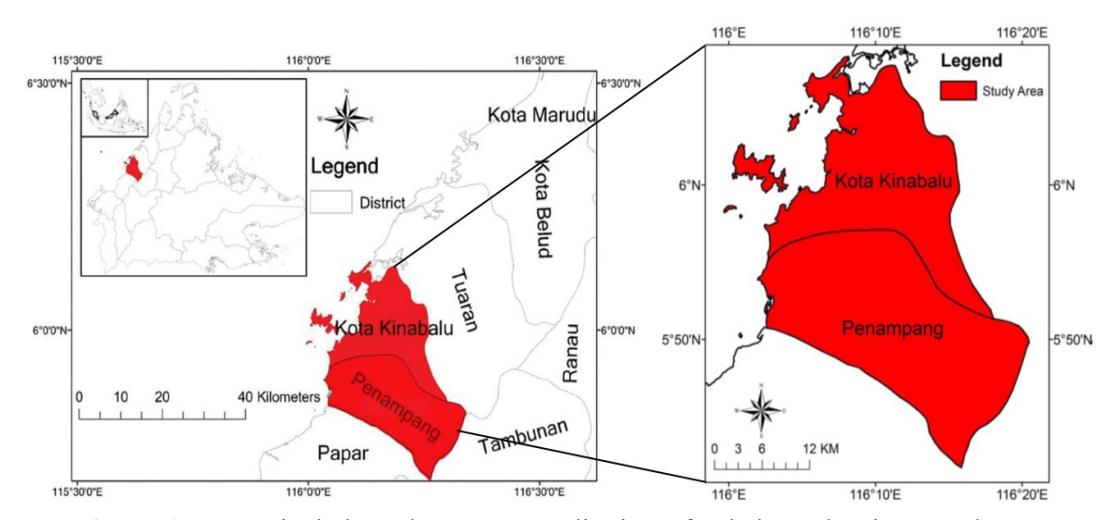
Figure 1. Kota Kinabalu and Penampang districts of Sabah, Malaysia as study areas (Ling et al. 2019b).
Property rights system governing local CL POS and NT POS
Public environmental goods (in this case POS) are provisioned through the land development process, more precisely land subdivision or partition. Sections 25(2)(q), 28D, and the Third Schedule of Part 4 (1) of the Town and Country Planning Ordinance Cap 141 state that when land subdivision is undertaken at least 10% of the land acreage should be reserved for open space for public purposes. The subdivision process and related procedures related to the surrender of land are also based on the Sabah Land Ordinance (SLO) Cap 68, specifically Sections 38 and 40.
Rather than covering the general land subdivision of various types of land use, this study is set within the context of landed, open and unexclusive residential and housing property. More specifically, we looked at how the current formal and legal institutions (law, land policies and practice) influence the system of POS provision, management, and consumption in terms of its property rights. There are two categories of land for alienation and leasing purposes, namely Country Land and Native Land. For the Country Land subdivision, according to Section 48 of the SLO, a title deed/leasehold with a lease not exceeding 99 years will be granted to (CL) POS, whereas for native title (NT) POS, no title deed issuance is involved.
The ownership of NT POS can only be held by local natives, pursuant to the SLO under Sections 17 and 64, and following the same ordinance under Section 66, highlighting the permanency and security of NT rights, its customary tenure is in perpetuity (Ling et al. 2019b). Moreover, according to Sections 4 and 5, NT POS, which is deemed state land governed by the state government, serves a public purpose. In addition to the above provisions of the primary land and planning laws, a local judicial decision/case law in line with Section 88 of the SLO on the importance of land registration for validity, emphasises the concept of bare trusteeship of the Modified Torrens System. To better understand POS management and consumption, Sections 38(1), 49(1)(53), and 49A of the Local Government Ordinance 1961, statutory local plans, development and landscape plans, the Housing Development Enactment 1978, and the offer letter were also reviewed (see more in Ling et al. 2019b).
Table 1. The property rights system of CL POS and NT POS.
| Property-Rights System | CL POS | NT POS | |||
|---|---|---|---|---|---|
| Title-ship of POS (Issuance of title deed) | (Title deed is granted on POS) (Involving POS site handing over and POS title deed transfer) | (No title deed issuance on POS) | |||
| Status of transfer and site handing over of POS | First phase CL POS (Before title deed issuance) | Second phase CL POS (Before title deed issuance: Interim) | Third phase CL POS (Title deed issued) | _ Surrendered POS (State land) | |
| (Un-transferred title) (Un-handed over site) (Held under owner's covenant) | (Un-transferred title) (Handed over site) ('Bare Trustee') ** | (Transferred title) (Handed over site) | (Without involving site handing over/title transfer) | ||
| Land ownership | Private/Common property-developer/owners | State property-Local government (As an equitable owner) | State property-Local government (As a legal owner) | State property-Local government (As an equitable owner) | |
| Management regime (including monitoring, maintaining, control, etc.) | Private/Common Property-(Developer/Co-landowner(s)) (Temporary—e.g., minimum 18 months) | State property-Local Government or Local government + Common property/community association-residents (registered) * | Open-access resource (without being vested in the local council) | ||
| Positions: Bundle of rights | Claimant: Only access, use and management rights are clearly and actively possessed by subdivider(s) and local government | Authorised users: Public users with use and access rights | |||
| Access | Yes | Yes | |||
| Withdrawal/use | Yes | Yes | |||
| Management | Yes | None | |||
| Exclusion | None | None | |||
| Alienation (e.g., POS disposal, title deed transfer) | The title deed is only transferable to the local council by private titleholder(s) | Not transferable | |||
* Only certain neighbourhood communities may adopt the co-management regime, on a voluntary basis.
The above land titling practice concerning local POS (i.e. titled CL POS and untitled NT POS) is considered to be consistent with the mixed institutions concept, which means that a self-enforced (de facto convention) and a formal-but-not-necessarily-legal system co-exist (see Ling et al. 2019b). Based on the above institutions, both CL POS and NT POS have their specific rules and conditions pertaining to ownership, management, access, exclusion, and consumption rights.
** Subdividers/owners will become bare trustees, i.e. a person who is deprived of his/her equitable management rights on POS, after satisfying the owner's covenant in terms of temporary and transitional (18-month) POS maintenance duty. The bare trustee still owns a non-active duty, i.e. to undertake the registration of POS title conveyance, where the local government ultimately becomes the legal owner of the POS.
However, more complex ones are imposed on the former. Table 1 shows the diversity and heterogeneity of the property rights distribution of local CL POS and NT POS. For the untitled NT POS system, since they are surrendered to the state government, the POS is de jure deemed state or government property, where management rights and duties (i.e. POS maintenance) should in principle and formally be vested in the local government (Ling et al. 2016). Nevertheless, due to the issue of nonvested management rights by the state, the local government does not own and may not effectively exercise any duties regarding the legal management of NT POS. Therefore, NT POS is subject to an open-access resource regime (i.e. no man's land); such spaces are likely to be ungoverned, unmanaged, and exploited/degraded (see Ling et al. 2019b). This has led to a reality that the local government, similar to other users, only owns active use and access rights.
As for the governance of CL POS, such titled POS involves a 3-phase process. In the 1st phase, since the POS title is yet to be issued by the land office it involves a not yet handed over POS site5 and a not transferred POS title deed, where the legal and equitable private developer/owner is liable to fulfilling the owner covenants. The owner covenants entail that the owners/private subdividers are required to carry out the POS management duties effectively to the satisfaction of the local government, stipulated and agreed in the letter of offer prior to the approval of subdivision (Ling et al., 2019b). Next, the interim or intermediate phase involves both handed over POS and not yet transferred POS. Only after the satisfaction of the owner covenants, handing over of the POS and a registrable memorandum of transfer to the local government are allowable; implicitly, the owner (title holder), becoming a bare trustee, formally relinquishes his/her active POS ownership and management rights and duties to the new equitable owner, namely the local authority. That said, the bare trustee, who is the titleholder, is still a legitimate owner because the transfer of the POS title deed is yet to be undertaken or effectuated (registered). Furthermore, in this stage, some residential neighbourhoods' communities and residents are endowed with management rights by the local government, where they can be involved and participate in the management task together with the local authority (i.e. co-management). Lastly, as for the 3rd (final) phase, once the handed over POS title deed has been issued and the transfer of the POS title is executed, the equitable local government will be the formal, de jure owner and manager of the POS (with active claimant rights), where the same rules imposed on the private owner during the 1st phase of the CL POS process are applied to the authority (Ling et al. 2016). For example, alienation or transfer of POS (change of ownership) is not allowed, as the local government will be the ultimate manager/steward of the POS. Also, the CL POS must remain shared, unexclusive and open to the public, and in terms of POS use and function, no land conversion and development are permissible for both CL POS and NT POS.
The goal of the above discussion is to provide an understanding of the heterogeneity/diversity of local institutional property rights and governance features for CL POS and NT POS, which are used as data input, feeding into the following SES-based DSR procedural framework. Specifically, the current institutions and property rights, as exogenous variables, are required in the DSR system for explanantion of the root causes of POS issues and the formulation of institutional-social-POS countermeasures.
5 A mechanism ensuring continued, efficient POS maintenance and management by subdividers due to the long and time-consuming process of title issuance and transfer, i.e. if the POS title is still to be issued and transferred but the 18-month owner's covenants have been fulfilled, the handing over of the site should be executed while awaiting the title deed issuance. In this case, since the covenant in terms of the time period of 18 months and maintenance of POS is yet to be fulfilled, POS site handing over is not allowed.
A Revised DSR Methodology
Generally speaking, DSR covers the following three steps: (i) establishing awareness of critical issues or problems; (ii) design science (countermeasure) development and evaluation; and (iii) theory building, despite the differences in terms of the elements involved in each step (see more in Ling, 2017). For instance, in March and Smith's (1995) idiosyncratic DSR process, there is no problem identification and Peffers et al. (2007) have argued that the sequence of steps of the DSR process is flexible. In this study, building on the conventional and general DSR process, the revised version was adopted (see Vaishnavi and Kuechler, 2007; Hevner, 2007) (see Figure 3 below). The reasons are that the former (i.e. general DSR) faced several criticisms related to the unclearness of how the root causes of a problem are identified, while the second one is about the derivation or origination of the solution (artifact), i.e. a series of questions is posed: how is a solution constructed? More precisely, is developing the solution based on any concept or theory? And next, how is the concept/theory used formulated towards the artifact (solution) (see Hanid, 2014). More specifically, Figure 2 which shows the three design cycles –the relevance cycle (problem and root cause identification), the design cycle (countermeasure formulation), and the rigor cycle (knowledge bases: theories and concepts) – are only found and embedded in the revised DSR process but not in the general methodology.
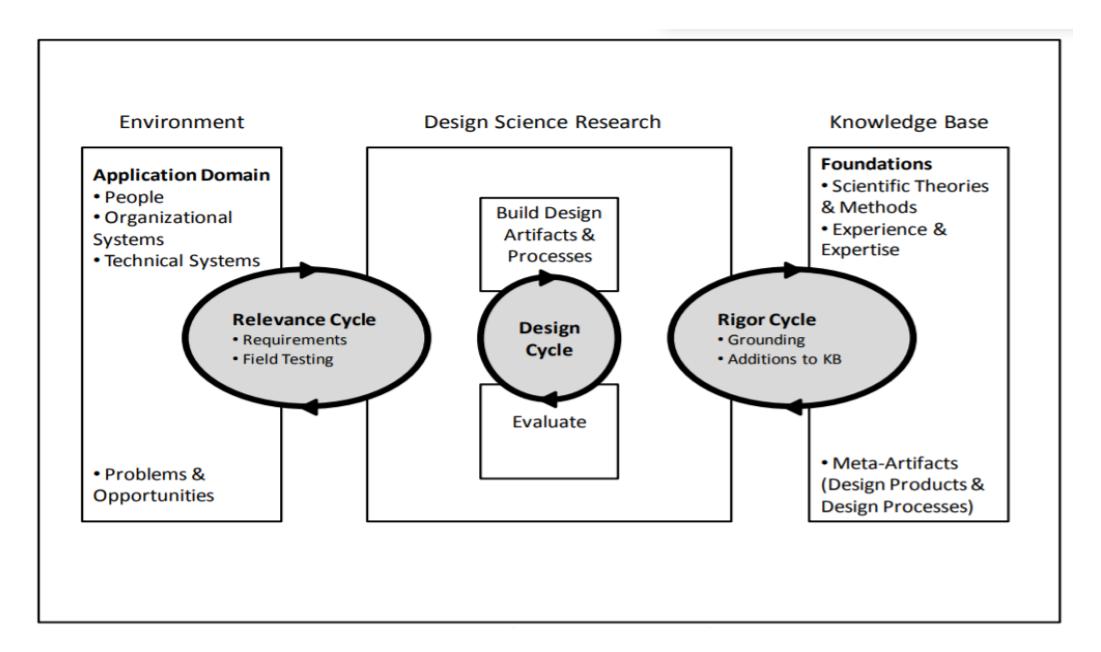
Figure 2. Design science research cycles (Hevner, 2007).
Similar to the general DSR, the first stage of the revised DSR focuses on the awareness and establishment of practical problems based on anomalies. Subsequently, the focus is on the rootcause examination. The primary idea is that inductive and deductive (abductive) reasoning and a multi-tier 'why' analysis (an enquiry technique engaging in a series of questions on why the problem occurred) are required to discover the real, in-depth and systemic root causes of the problems, so that a valid countermeasure can be developed to respond effectively (see causal effect theory) (Hanid, 2014; see also Sondalini, 2009 Toyota's 5-level 'why' analysis). As Liker (2004) argued: "identifying 'root cause' rather than 'source'; the Root Cause lies hidden beyond the source". There are three types of causes in determining the root causes (Hanid, 2014): (a) physical causes; (b) human causes; and (c) organisational causes involving a system, process, or policy. However, only the organisational factors were primarily emphasised in this study, as they are the inherent parts of the institutional-social-ecological (physical) system. More specifically, due to issues with the local property right system it influences social behaviours, which therefore impact the physical/ecological system (i.e. POS). Next, a conceptual solution (artifact) design and development was carried out through: (i) deduction (theories and concepts) and induction (evidence); and (ii) observation of practical, initial ideas and solutions forwarded by empirical subjects. Last but not least, the solution requires validation and standardisation. The conceptual solution needs to undergo validation in terms of the feasibility/viability of the development of the solution as well as potentiality and effectiveness in ameliorating the problems (against the set objective of the artifacts). The validated solution will be standardised against and compared with existing theoretical or methodological knowledge bases to verify whether the validated conceptual solution confirms or extends any theories.
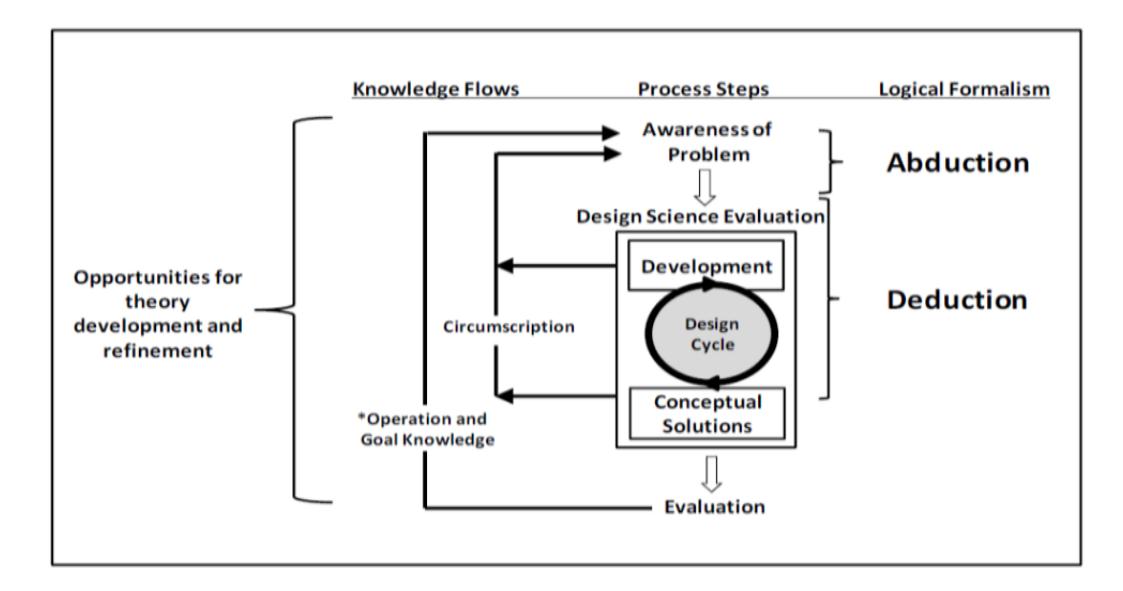
Figure 3. The revised DSR framework (Vaishnavi and Kuechler, 2007; Hevner, 2007).
Methods in 3-Step DSR
As highlighted earlier, this study's data elicitation process solely involved secondary data and an extensive literature review of both theoretical and empirical works. Next, a qualitative content analysis was performed in which several deductive themes (based on a priori/theoretical concepts) for each stage of DSR were identified. The social-ecological impacts of the property rights system (including collective action/common property) via transaction costs and incentive distribution, and social behavioural issues of POS management and consumption that act as mediating factors, were analysed based on the seminal theoretical works of Coase (1960), North (1990), Hanna et al. (1996), Barzel (1997), Ostrom (1990), Hardin (1968), Colding et al. (2013), and Webster (2007). Apart from that, a number of empirical works were consulted, particularly on Sabah, by Ling et al. (2016), Ling (2017), Ling and Leng (2018), Ling (2019), Ling et al. (2019a) and Ling et al. (2019b). Table 2 shows a summary, describing the literature, data collection and analysis sources, areas of concerns, and deductive themes involved in each step of DSR.
Table 2. A methodological summary of the 3-step DSR framework.
| 3-Step DSR | Literature Sources and Concepts | Data Collection & Data Analysis | Areas of Concerns | Themes Established |
|---|---|---|---|---|
| 1st stage: Problem and root cause identification | Ling (2017), Ling's et al. (2016) statistical associations between property rights issues and POS quality, Ling's et al. (2019b) mixed-method approach studying the effects of property rights tragedies on | Literature review Qualitative content analysis Root-cause 'why' analysis | Emphasising Sabah public open space quality issues and institutional factors (property right system), especially on how the property right system leads to POS governance, consumption, and management | Property right issues: Emergence of maladaptive rights, attenuated rights, incomplete rights, and de facto rights Defective social-ecological |
| POS governance and quality, Foster (2011), Foster and Laione (2016), Webster and Lai (2003), Musole (2009) on transaction costs and perverse incentives influencing social ecological behaviour | issues. The review is about the social POS impacts of Sabah's diverse property rights system, or the interrelationships between institutional property rights and local POS governance (quality issues) | behaviour Common dilemmas and negative externalities: POS overexploitation/ tragedy of the commons, shirking (underinvestment), free riding, moral hazard, disuse, and exclusion | ||
| 2nd stage: Development of a conceptual solution | Ling (2019) on local application of Ostrom's design principles in POS governance, Van Laerhoven (2010) on successful collective action design principles (see also Ostrom, 2011), Webster and Lai (2003) on property rights realignment, Ostrom (1990) on collective action design principles, Buchanan (1965) on club goods, Carmona (2008) advantages of community approach on public space management | Literature review Qualitative content (thematic) analysis | Realignment of the state property regime (state-owned POS) to a self-organising collective action, which is a common-property based regime that is believed to result in better POS governance and quality | A self-governing system, Ostrom's eight design principles and other successful institutional-social-ecological attributes for collective action, POS management via a community, Nelson's (2004) procedural homeowners association (HOA) formation, Williamson's (1993) ex-post opportunism contractual and transaction costs governance, subsidiarity (polycentricity) concept, the efficiency of club goods |
| 3rd stage: Validation (evaluation) and standardisation of the solution | Ling and Leng (2018), Ostrom's (1990) design principles and Institutional Analysis and Development (IAD) framework, Ling's (2017) mixed-method study on the acceptability/willingness of stakeholders in adopting the collective action mechanism, review of the existing local solutions and concepts of rukun tertangga, neighbourhood watch, management corporation, neighbourhood safety programmes | Literature review Qualitative content analysis | To explore whether or not the conceptual common property regime as a solution (artifact) is valid (successful) to address the POS governance and quality issues and is pragmatic, feasible (implementability and acceptability) in the local POS context | High resemblance/similarity with Ostrom's design principles and other collective-action enabling factors entails there is a higher likelihood (feasibility) to adopt a collective action approach for POS governance as it means lower transaction (adaptation) costs |
Findings and Discussions
Problems (Symptoms) and Root Causes
This section summarises the key practical or real problems of the social dilemmas related to CL POS and NT POS triggered by institutional (property-rights structure) issues. The findings are tabulated in a three-column table (Table 3): interrelated institutional root causes, key issues, anomalies, and grasping of problems/effects.
Table 3. Key issues, symptoms, and negative effects of POS.
| Grasping the Entire Problem Situation and Root Causes of POS | ||
|---|---|---|
| Key Issues | Anomalies (Symptoms) | Grasping the Problems (Negative Effects) |
| POS Social/Commons Dilemmas | ||
| Overexploitation (overuse)/tragedy of the commons | Proper consumption is expected, but signs of overharvesting (vandalism, littering, strangers loitering, squatting, overcrowding) are detected; POS is no used longer as POS (other purposes) | The POS facilities are broken, dirty, unsafe, dissatisfaction or conflict, inaccessible, other negative externalities (e.g.,pollution) |
| Shirking | Management, maintenance or other tasks should be executed; however, there are signs of lack of maintenance, insufficient resources (underinvestment/under-maintenance), unenforced duties, e.g. no monitoring, transfer or handing over of title is evident | The POS facilities and amenities look old, vandalised, broken, unattractive, dirty, wear and tear, poor landscaping (bushes, overgrown grass) |
| Free-riding | It is expected a fair system is provided in which the 'no free lunch' concept is employed, i.e. it needs payment or something in return for the consumption of POS (no free-riding is intended). However, some users who are not from the locality have used the POS, such as squatters or users from other neighbourhoods (outsiders), and yet no de jure exclusion (blocking) is allowed | If everyone/anyone can access the space then overcrowded/congested space may exist, poor POS quality and social conflict exist, especially due to outsiders who may contribute to POS overconsumption (security, unfairness, and dissatisfaction issues) |
| Moral hazard | Even though the POS is not owned and managed by public users as the government or private supplier de jure hold these rights, it is still expected the users can courteously use it and can protect it since they are the regular and potential local users, but some users are behaving irresponsibly towards POS consumption, e.g. they may use the space recklessly or overuse it | Overexploitation of space (see the above examples of overexploitation) may also lead to other dilemmas, e.g. free-riding and shirking and hence poor quality of POS. Selfish and uncooperative behaviour among users is inculcated as well |
| Disuse | Optimal use of space is expected (no overuse or underused/unused space). However, it can be seen that no one is using and managing the current POS anymore (no man's land), totally neglected/ abandoned, idle (desolate), vacant and under/undeveloped | Poor quality of POS occurs; the POS becomes unkempt, i.e. surrounded by thick and overgrown bushes, grass and consequently the space is inaccessible and not functional |
| De facto (direct) exclusion (indirect overexploitation) | The public space is open for the public, i.e. no exclusion is allowed but alas, some POS seem to be excluded for private use by some individuals | The POS no longer serves as public space, worse still: the POS is overused or converted to other private uses (poor quality exists) |
| Property-Rights Structure Issues as Root Causes to the Above POS Dilemmas | ||
| Maladaptive (misallocated) property rights | The current property rights are expected to be adaptively and suitably assigned, i.e. rights and duties are easily enforced, but it appears that the current rights distribution is not sustainable and efficient. | Inefficient, unsuitable, and unsustainable management (monitoring, maintenance), consumption and other unenforced rights and duties on POS; hence, leading to suboptimal POS governance quality |
| Incomplete property rights | Ideally, clear and certain rights are expected but in a practical sense, it is not possible to have complete rights, i.e. specifying every single right; especially the complex ones are not possible as the rights will always have ambiguity/gaps (due to high transaction costs). However, it is possible to | This unclearness of how and when to use, when to manage the POS leads to both issues of consumption and management of POS, which, hence, leads to poor quality of the POS (negative externalities) like overuse, |
minimise the ex-post opportunism via other means.
shirking, and disused
| Grasping the Entire Problem Situation and Root Causes of POS | ||||
|---|---|---|---|---|
| Key Issues | Anomalies (Symptoms) | Grasping the Problems (Negative Effects) | ||
| Attenuated property rights (ownership, exclusion, and development rights on POS are weakened) | Attenuated (weakened) rights are seen as a double edged sword; the good side is expected to outweigh the other side. However, it turns out that the negative sides (less profiteering terms) evidentially emerge (less return due to reduced benefits), which leads to opportunistic private suppliers of POS governance and management | This weakened right leads to mismanagement and underinvestment of the POS, resulting in a poor quality of the POS (negative externalities) like overuse and misuse. | ||
| De facto (perception) rights on CL POS title deed and ancestral land on NT POS | Legally, title deed possession does not necessarily mean exclusive ownership with indefeasibly un attenuated rights; instead, there is a bare trustee of the POS, especially after the duties have been performed. Some owners perceive that by retaining the title, it is exclusive and secured ownership. This also applies to NT POS; some owners who live nearby the POS may perceive that they still own such state POS | Unnecessary externalities emergence, e.g. de facto exclusion, overconsumption, other unexecuted or unenforced duties (e.g. investment, transfer, or handing over) | ||
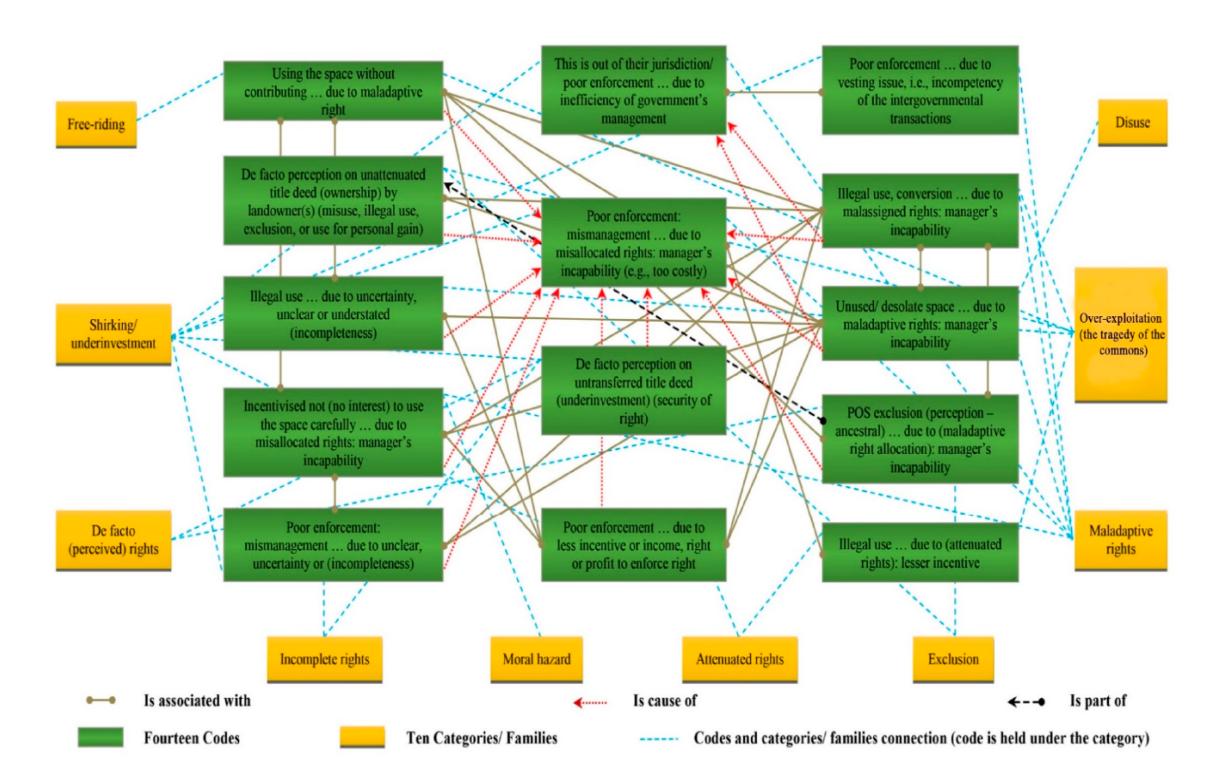
Figure 4. Interrelationships between property rights issues (root causes) and POS dilemmas (Adapted from Ling et al. 2019b).
This study discovered four key interrelated property rights tragedies under the state-private property rights regime, i.e. rights attenuation, incomplete rights, maladaptation of rights, and insecure and self-enforced rights. From an institutional lens, the property rights issues rudimentarily associated with high transaction costs and perverse incentives are deemed to be the root cause because they incentivise individuals' self-interest and opportunistic behaviour, thus resulting in the above commons dilemmas, namely overexploitation, free riding and shirking. The outcomes also suggest that the local property rights tragedies and POS dilemmas caused or are associated with other rights issues and commons dilemmas, and such interrelationships lead to a property-rights-POS dilemmas nexus. For example, the overexploitation of POS is due to shirking (i.e. a POS dilemma) as well as incomplete and attenuated property rights. See Figure 4 for the expanded version (i.e. more details of codes) of interrelationships between property rights issues and POS dilemmas as well as the simplified version of the right-dilemmas nexus with two abstraction levels in Figure 5. The current local institutional arrangement is indeed adversarial as it externalises POS common dilemmas; thus, an institutional change (as a solution) via an efficient adaptation or re-distribution of property-rights over such state-owned public-domain POSs is required (see Webster and Lai, 2003; Webster, 2007).
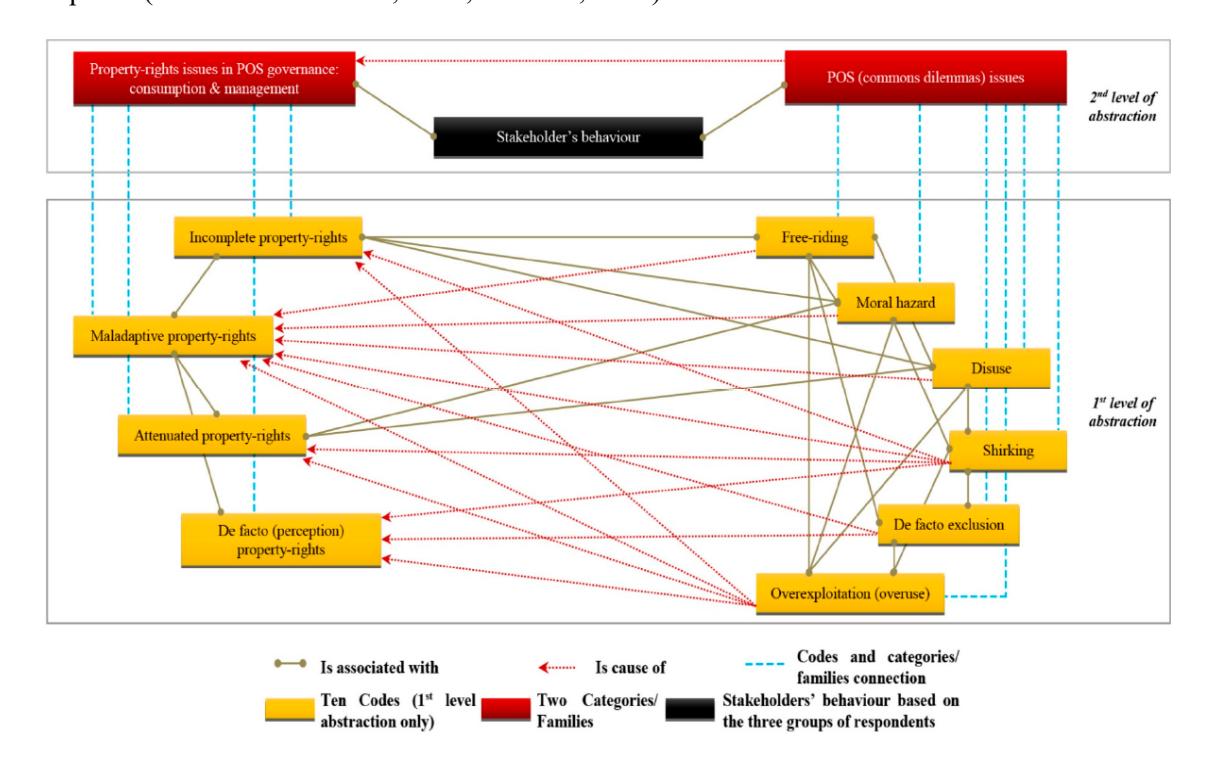
Figure 5. Simplified nexus illustrating property rights issues (root causes) and POS dilemma linkages (Adapted from Ling et al. 2019b).
Conceptual Solution: Ostrom's Eight Design Principles in Local POS governance
Based on the above inferences of POS dilemmas, issues and institutional root causes, it is necessary to propose the adaptive realignment (reallocation) of the property rights regime from state property to common property via Nobel laureate Elinor Ostrom's eight design principles in governing and managing common resources (or CPR) as the solution (Ostrom, 1990). More precisely, Ostrom's self-governing collective action system offers the following features, advocating the idea of few perverse incentives and low enforcement costs to help disincentivise opportunistic, defective behaviours in POS management and consumption: (i) more effective governance and enforcement of operational duties (e.g. maintenance) by better positioned stakeholders (see the subsidiarity principle) to address the issue of a maladaptive property regime; (ii) providing an incentive system as a motivator so that the POS managers will be more willing to enforce their management rights and impose sanctions on violators (both users and managers), i.e. shirkers and overusers, to address both insecure and attenuated rights issues; (iii) a more comprehensive contract (as comprehensive as possible, as these are better than simple and general
ones) to curb the issue of incomplete rights; (iv) an exclusionary right should be assigned to the community, i.e. the POS still remains public but for members only, e.g. via a payment system (i.e. it becomes club good POS instead of CPR-based POS) (see Buchanan (1965) on the efficiency of club goods in effectively governing resource overconsumption or the free-rider issue via an exclusionary mechanism); and lastly (v) the government recognises the community comanagement right and act as a monitor, providing assistance to the community; a contract between managers, users and the government is agreed, which can help address the insecure rights and maladaptive allocation (high enforcement costs) of the state regime.
The following is to illuminate how the modified common property-based eight principles of Ostrom with the above features can be conceptually adapted and realised in Sabah's current CL POS and NT POS governance.
1st principle: well-defined rights and POS boundaries
The rights to use resource units from CPR-based POS must be clearly specified and allocated, as must be the boundaries of the POS itself. Both titled CL POS and untitled NT POS have well defined physical boundaries and spatial attributes; the spaces are immovable and tangible, in which category of use, location, size/area, and shape are predetermined during land subdivision. Satisfying the homeownership association institution's procedural requirements by Nelson (2004), with the elements of the coerciveness of such institution formation (Chen and Webster, 2006), all residents living within the community neighbourhood with POS are obliged to become members who have access and consumption rights on POS. Some of them who are elected or
Table 4. Common-property rights governing CL POS and NT POS.
| Property-Rights Structure | Titled CL and NT POS | ||
|---|---|---|---|
| Land ownership | Communal regime (gazetted) | ||
| Management regime (Hybrid/mixed institutions) | Common property + state property: committee of residents + state (local authority) (should be vested in)* | ||
| Positions: Bundle of rights: | Proprietors (residents + committee of the commons) | ||
| Access | Yes | ||
| Withdrawal/consumption | Yes | ||
| Management | Yes | ||
| Exclusion | Yes (on outsiders or violators: including members) | ||
| Alienation | Yes** | ||
| Public access and withdrawal rights | Yes if membership/permission is granted (as this is now public-closed access) (see Buchanan's 1965 club goods) | ||
* Local governments provide assistance in terms of sanctioning, monitoring, conflict resolutions & other maintenance/management operations. Such interventions are essential to reduce the transaction costs.
voted as committee members are to take up the rights and duties of governing and managing (including monitoring) the POS. In terms of communal property rights, the POS ownership regime should be held by the community, so that the proprietors (members) have the incentive and
** Transfer and rent/lease of accessory/auxiliary resource/property (i.e. POS) is permitted so long as the main dwelling unit is transferred to another party. Within the title deed, a restriction should be imposed that such a common resource cannot be used for any collateral purposes.
interest to invest in, govern and manage the resource (see the rights attenuation theory). A hybrid management regime is proposed: co-management and assistance rendered by a government are essential to ensure more efficient POS governance. As for the POS exclusion of free riders or shirkers/violators, such an exclusionary right promotes and incentivises the willingness of the community for better resource investment and protection. It is not just a legal enclosure right conferred upon the community. Rather, more physical signs of exclusion involving verbal exclusion are crucial to provide an explicit notification to others on such exclusivity, e.g. barricading the compound of POS and posting a signboard. In sum, Table 4 illustrates the selforganising common property system for CL POS and NT POS governance.
2nd principle: congruity of operational rules with local conditions, and costs and benefits should be proportionate
POS operational rules specifying the access and consumption time (i.e. when), place (i.e. where), and quantity of resource units (i.e. how long can the POS be occupied) should correspond to local social-ecological conditions. This is a means to specify more complete rights for users, curbing potential opportunistic behaviours and commons dilemmas due to uncertainties of duties and rights. Devising appropriate and equitable POS operational rules is essential, and POS management costs (investment) and consumption benefits (enjoyment) must be somewhat proportionate. The latter must at least be more significant by reasonably exceeding the former so it incentivises individuals to appreciate and invest in the POS. However, if the benefits substantially transcend the costs, this may connote that overexploitation or overuse of POS by certain users, or the rules in use, are not equitable because some individuals' interests are being favoured while others' are being infringed.
3rd principle: collective rules arrangement
A community comprising both committee members and resident members can participate in modifying and devising the operational rules about its management and consumption of the POS, particularly in a changing social-ecological environment, as community and POS characteristics may vary over time. Via periodical community meetings, any members who have interests within the neighbourhood can voice their ideas, suggestions, preferences and dissatisfaction about the issues of the existing operational rules of access, consumption, exclusion, management and alienation of the POS so that necessary improvements and adjustments can be carried out to address specific issues of the rules in use. Consensus building via effective communication between the committee and the members is crucial in devising and modifying the rules.
4th principle: monitoring
Effective monitoring of (i) POS users (residents or non-residents with permission to use) by ensuring they will not behave opportunistically or selfishly to overuse/vandalise the space; (ii) managers (committee members) managing and maintaining POS so that they may not shirk their management duties; and (iii) POS condition and quality. The monitoring task can be executed voluntarily (with existing POS non-pecuniary benefits) or mandatorily (with a sanction and incentive system) or local government assistance. Routine policing activities involving residents who live nearby the POS with the assistance of the local government and informal-mutual surveillance via resident cooperation are vital, not only to reduce the costs of monitoring compared to hiring a private guard for each neighbourhood, ultimately to ensure the good condition and quality of the POS. Pecuniary incentives, e.g. management fee reduction or payment, can be provided to the residents involved in order to incentivise and sustain their positive behaviour in running the monitoring duties.
5th principle: graduated sanctions/penalties
Based on the types and severity of violations, anyone/users violating the POS operational rules (e.g. POS overexploitation, free riding and duty shirking) are liable to graduated sanctions/penalties. The sanctions must be carried out impartially and are based on a good or reasonable basis; issues of dissatisfaction and complaints due to unfair treatment/sanctions should not occur. For example, a first-time rule breaker causing mild vandalism at the POS either accidentally or purposely should lightly be fined compared to more severe cases done by the same individual, where they need to face heavier sanctions. Penalties imposed can vary (either in a pecuniary or non-pecuniary form), including increased management fee, the involvement of violators in maintenance tasks within a specified time frame, and temporary banning of POS use. Local governments can intervene in the local sanctioning process, in case more severe violations transcend the community level. At times, coercive punishment can ensure better cooperation among community members.
6th Principle: conflict resolution mechanism
Both the POS community and users should have access to a low-cost platform to resolve conflicts. Conflicts or disagreements over certain POS issues between users or members are sometimes inevitable; however, they should be detected early on and efficiently resolved via a possible range of options. This is to avoid unnecessary transaction costs, which may contribute to complicated and more significant unsolvable issues. Additionally, if conflicts are efficiently addressed, it reduces cooperation costs and misunderstanding among the stakeholders (users and committees) and thus social capital (e.g. trust and mutuality) is promoted. Aside from litigation, which is a costly and time-consuming avenue and hence less preferable, there are various informal means and low-cost conflict management platforms, such as negotiation, mediation, public hearings and forums, that can be used to resolve local conflicts. Local government assistance can be necessary if there are more severe conflicts and issues that are not resolvable at the local level.
7th principle: recognition of rights to self-governing and organising
The communal rights to devise their self-organising institutions/rules in governing POS are not disputed by external governmental authorities or formal and legal institutions, such as land and planning laws. Having the formal government recognition and endorsement via legal land title registration of POS (see the 1st principle) provides secure tenure of the common property regime. Such assurance and certainty incentivise the members to manage, protect and invest in the POS. This principle opens up the opportunity for a co-management regime (co-existence of top-down and bottom-up approaches) comprising both the community and the government, as adopted in the 4th, 5th, and 6th principles above. As described, assistance and empowerment of governments minimise transaction costs, i.e. it helps facilitate the community's operational and managerial activities and decision-making.
8th principle: polycentricity and subsidiarity
For a larger, complex social-ecologicalsystem (e.g. there are many POSsin a district), polycentric (multiple centres) governance with all of the above design principles is required. Similar to the concept of subsidiarity or devolution/nesting (see the concept of vertical linkages), it is essential to delegate/coordinate power to the most local level by establishing a community-level centre as well as to the relevant group, which has a stronger position to govern and manage the POS (Webster and Lai, 2003). Relying only on a single, centralised unit/government will have a severe impact, because operational and management costs will be very high. Despite differences in terms of social-POS characteristics of neighbourhoods, horizontal linkages, i.e. collaboration and communication between the same level/hierarchy of centres satisfying the principles of polycentricity is encouraged. Thus, information and experience-sharing is promoted between different neighbourhoods, which contributes to improving the existing collective operational tasks. Also, government involvement is required in the broader social-ecological context, where it directly deals with the highest committee level.
Validation and Standardisation of Self-Organising Collective Action for Local POS
Next, after the phase of development of the artifact, it is vital to identify whether the proposed self-organising solution is valid and effective to address the current issues with state-owned POSs and is institutionally and operationally feasible. Hence, validation of the developed solution was executed based on the IAD framework and local stakeholders' (residents, local governments, and land officers) views. This is crucial to determine the adaptation and modification likelihood of the current local SES to the collective action system; questions of how many complex attributes of the existing local SES resemble the DPs or how many DPs are present in the local SES, and to what extent, have been addressed. High similarity and a large number of DPs means lower transaction costs (adaptation and modification costs) and therefore leads to potential and feasible institutional property regime reallocation to self-organising collective action and vice versa (see Ostrom, 2011). The IAD framework emphasising governance (institutional), social and ecological components has a total of 21 SES sub-attributes. Based on a coding system, there are five options used to express the degree of existence of DPs, namely Present (P), Mostly Present (MP), Sometimes Present (P), Rarely Present (RP), and Absent (A). Table 5 presents the result of local NT POS and CL POS attributes, benchmarked and assessed with the modified collective action DPs that serve as ideal, standard conditions. In general, based on the assessments cutting across the three aspects of SES, relative to NT POS scoring 0 (P), 3 (MP), 6 (SP), 4 (RP), and 8 (A), CL POS, with 1 (P), 12 (SP), 3 (MP), and 5 (RP), and 0 (A) (see more details in Table 5) is more likely or potentially feasible to be shifted or realigned to a common-property self-organising regime. This is because the transaction costs of adaptation and modification for CL SES are not very high compared to NT SES deviating much from the collective action DPs.
The IAD-validated results below suggesting the institutional and operational feasibility of local POSs to adapt collective action were triangulated using the pilot survey of multi-stakeholders. It can be seen that over 95% of respondents showed an interest and intention to shift from the current adversarial centralised state-owned POS regime to a self-organising regime. The same respondents believed that such a self-organising system for POS provides better governance and quality of CPR-based POS after experiencing the advantages of communal management in other common/shared resources contexts, e.g. parks, lifts, swimming pools in closed access apartments or gated and guarded residential property. The above high consensus in terms of interest and common goals can be associated with Olson's (1965) concept of homogeneity of a community, which is a vital component for incentivising the formation and success of collective action within a neighbourhood.
Table 5. Validation of the SES attributes of local NT POS and CL POS with the modified DPs.
| I | IAD-based SES Attributes | CL POS | NT POS | Successful Collective Action DPs (as a Standard) | |
|---|---|---|---|---|---|
| Community Attrib | utes | (us u sumum u) | |||
| , | nall number of actors or size of group (DP 2) | (SP) | Moderate (SP) | (P) | |
| ow growth of actors/community (P 2) | Slow growth (MP) | Slow growth (MP) | (P) | ||
| iii) Lo | ocal leadership (DP 2, DP 3) | With co-management (SP) | POS with the head of villages, referred to as (Ketua Kampong) (ancestral land) (SP) | (P) | |
| cul bac | omogeneity (norms, belief, ltural, interest, goal, values, ckground) (DP 2) | Fairly homogeneous (RP) | Fairly heterogeneous, more homogeneous than CL POS (SP) | (P) | |
| ust and reciprocity (DP 2) | Unlikely (RP) | Occasionally (RP) | (P) | ||
| ex | ocal management knowledge an perience (DP 2) | d With co-management (SP) | (RP) | (P) | |
| igh dependability on NPOS nctionality/benefits (DP 2) | (SP) | (RP) | (P) | ||
| POS | S Spatial/Physical Syste | m Attributes | |||
| _ | nall and appropriate size/area | Small/moderate (MP) | Small/moderate (MP) | (P) | |
| Pro | gh predictability of production oductivity (availability and coverability based on its quality P 2) | (SD) | (RP) | (P) | |
| ow mobility (facilities and nenities) (DP 2) | (MP) | (SP) | (P) | ||
| emarcability of boundary (DP 1 P 7) | , (P) | (P) | (P) | ||
| ood location (accessibility, oximity, centrality) (DP 2) | (SP) | (SP) | (P) | ||
| egular shape (flexibility) (DP 2) | (SP) | (SP) | (P) | ||
| vii) Cl | lub good features (DP 1, DP 7) | With co-management (SP) | (A) | (P) | |
| Governance/Institution Attributes | |||||
| rig | rmal common property- | With co-management (SP) | (A) | (P) | |
| mo ma | perational rules (e.g., ponitoring, consumption, anagement and monitoring les) (DP 3, DP 4) | With co-management (SP) | (A) | (P) | |
| iii) Co | With co-management (SP) | (A) | (P) | ||
| iv) Co | -management by | With co-management (SP) | (A) | (P) | |
| nalty involves exclusion (RP) | (A) | (P) | |||
| IAD-based SES Attributes | CL POS | NT POS | Successful Collective Action DPs (as a Standard) |
|---|---|---|---|
| vi) Conflict resolution mechanism (DP 6) | (RP) | (A) | (P) |
| vii) Polycentricity (DP 8) | With co-management (RP) | (A) | (P) |
Source: Adapted from Ling (2019)
Finally, there is a conceptual contribution for the standardisation of the countermeasure. The developed and validated solution above not only confirms but also modifies and extends the theoretical knowledge basis, mainly taking the comprehensive integration of Ostrom's (1990) eight common-property-regime-based-self-organising design principles for collective action, which includes property-rights, transaction costs, commons, social dilemmas theories and other scholars' design principles, Nelson's (2004) homeowner association concept, and Williamson's theory of opportunism (Williamson, 1993) into account. This is not only consistent with the DSR framework's assumption that a theory has to be used in designing the solution, but its amalgamation of various concepts and theories is also deemed desirable (see Venable, 2006 that such integration is meant for the purpose of triangulation).
Conclusion
Finding a suitable, valid model or design framework to step-by-step construct an urban planning solution, in particular addressing POS governance, management and consumption issues, is challenging as it has so far received little attention from both scholars and practitioners. Nevertheless, a revised DSR framework serving as a common methodological platform in the fields of management and information systems was adopted for developing and validating a conceptual solution in the planning field. This paper reported how the DSR methodology was applied in the context of a dynamic institutional-social POS system, in which the framework's applicability was explored. We discussed how the revised three-step iterative, systematic framework using both theoretical knowledge and empirical data from the literature review was applied in identifying issues and root causes, constructing and validating a conceptual solution, and standardising the solution with an existing theory or concept.
In summary, the following were the key findings found in each stage. Firstly, via the in-depth problem/issue analysis to distinguish symptoms and root causes, one can accurately define and understand the real underlying causes contributing to POS issues. In this case, POS governance and quality issues were due to the institutional factor. That is, the complex state-owned POS regime, leading to for example maladaptive rights, attenuated rights, de facto rights and incomplete rights, has triggered high transaction (enforcement) costs, which therefore externalise opportunistic and self-interested behaviours of POS users and managers to mismanage, underinvest in and overuse POSs. Secondly, based on the POS issues and root causes, a conceptual institutional solution of self-organising collective action was developed, advocating strong, secure communal rights, low enforcement costs and perverse incentives, more welldefined exchange of rights and duties, and co-management. This is likely to be a valid, efficient and suitable alternative to address the POS governance issues. Thirdly, in the validation stage, the proposed conceptual solution drawing on different theories and concepts and possibly generating new knowledge was deemed institutionally and operationally feasible, especially for local CL POSs, with low adaptation or shifting costs from the state property regime to the common property regime.
Therefore, there are three main observations of the current application of DSR, suggesting that: (i) the procedural framework is relevant and applicable in the urban planning (POS management) context; (ii) it is a flexible approach allowing multiple methods and theories to be used to reach the aim of this study; and (iii) adopting the DSR methodology in other social science and planning fields would be a productive research endeavour. Aside from making conceptual contribution and methodological innovation, there are policy implications. Not only does the developed artifact provide insight into the institutional causes resulting in POS governance issues to policymakers (e.g. land officers and local governments), it also offers potentials and the detailed institutional formation and operational guides of self-organising collective action to neighbourhood residents. The artifact offering successful institutional-social-ecological design principles helps to incentivise and stimulate active participation as well as new collaborative work practices in the community.
Nevertheless, this study is not without limitations. The analysis results presented are limited to one state (i.e. two districts of Sabah) and can be strengthened and refined through similar institutional POS issues in other states or districts. The design and analysis of the current study were solely based on the available secondary sources. Additionally, the conceptually validated solution was based on a pilot study and has not been field-tested. Therefore, we suggest future studies to consider carrying out a more in-depth, holistic validation study and to test the generalisability of our results to a broader CPR domain.
Acknowledgement
This work was financially supported by the Ministry of Education Malaysia and Universiti Teknologi Malaysia through the Research University Grant (GUP) Q.J130000.2652.16J54.