

Introduction
The 21st century promises more emancipation for women. Women of any age can work and travel, regardless of culture and religion, in contrast to women in the previous century. Interestingly, womens' roles as homemakers, mothers and wives continue and have not changed much in the 21st century. They have adopted and adapted to the changes, generating more challenges for women in the 21st century. Women continue to struggle with their multiple roles at the workplace and at home. The support system of childcare centers, kindergartens and other services that have been mushrooming in recent years have provided some relief to working mothers. The growth and improvement of transport systems has made it possible for women to move around outside their homes, while at the same time meeting the transportation needs of children who are traditionally placed under womens' care at home. E-hailing8 services like Über and Grab have also been instrumental in increasing womens' ability to travel. Having a car driving license and being able to drive has increased among women in the 21st century (Blumenberg, 2016). It is, therefore, necessary to review this trend with the aim of improving women's mobility in all aspects.
It has been a traditionally accepted norm that women are bounded by household responsibilities, even in modern times. At the same time, due to improved education of women and the rising cost of living, women presently are no longer confined to the home; they move and travel for work and other purposes, including social activities. This shows that the role of women in society has evolved and it is therefore important to address the issue of women's mobility from the viewpoint of physical movement in public spaces (Kerzhner, Kaplan & Silverman, 2018; Graglia, 2016; Thynell, 2015; Graglia & Brooks, 2013; Schmucki, 2012). However, in understanding mobility it is also important that the term is not restricted to physical movement. Past studies examining women's mobility also highlighted mobility as a prerequisite for women to gain entry to jobs traditionally exclusive to men (Assad & Arntz, 2005; Ferdous & Mallick, 2019). The various interpretations of mobility in women boil down to the same thing: women face challenges in gaining equity and equality to be on par with men when mobility is concerned. Will this trend continue? Should women's mobility be seen from an empathetic perspective? This systematic review study is important to understand the direction and contributions of work related to women and mobility, published from 2001 to 2020. We also examined the existing trends and the future direction of studies related to women's mobility across the globe. In understanding these trends, the systematic review was structured according to a number of aspects: authorship and geographical coverage, dimension and focus of mobility, mobility motivation, barriers of mobility, coping strategies and government interventions.
8 E-hailing is the process of ordering a car, taxi, limousine, or any other vehicle service. E-hailing applications refer to any car service company providing services to hail a ride using electronic devices such as a mobile phone, which has eased travelling.
Research Background
In the beginning of the 19th century women started to explore their relationship with the urban environment by travelling around the city without accompaniment, which has resulted in a significant increase of the number of women travelling alone, for purposes of tourism, migration and pleasure (Baumgarten & Franchi, 2018). With the emergence of new technology such as trains and railways in the 19th century both men and women were enabled to move around more easily and faster than before. The use of railways offered an entirely different travel experience, as it reduced travel distances and travel time and also provided opportunities to increase women's mobility. More women in the present day are no longer confined to the home and are involved in activities outside the home. Education and literacy have increased among women and this has resulted in more women working in the formal sector (Hill & King, 1995). In this light there is a need to examine the needs and issues pertaining to women travelling such as safety as well as underlying factors that challenge women's mobility.
Women-only transportation as can be found in many Asia countries, such as Malaysia, Japan, India and Taiwan, was introduced with the aim to protect women's right to travel safely. The Women-only transportation reflects the gender-segregation and the lack of autonomy women often have within it (Abernethy, 2015). In the late 19th century many women commuted shorter distances and less time than men. The segregation of race and ethnicity contributed to the pernicious effects on minority women commuters (Preston & McLafferty, 2014). During the 20th century transportation systems were greatly improved and the use of private vehicles began at the end of 19th century and after World War I cars became cheaper and more affordable for common people. The use of private vehicles increased after World War II and the car became a commodity in the 1960s.
Urbanization is often correlated with increasing opportunities for women, especially job prospects, thereby increasing demand for travel and mobility. Mobility and travel are important for women in the 21st century regardless of age, gender, marital status and occupation to boost their participation in society, thus improving their quality of life. In most urban areas women's travel patterns are more diverse as they tend to make multiple stops for employment and household duties (Naffa et al., 2018). Socio-economic and physical factors are important in the context of travelling behavior. The ability of women to drive and have a driving license are equally important in the context of defining mobility. It influences womens' decision to travel, as car ownership is associated with socio-economic factors.
Empirical studies have found that non-working women prefer to use a private vehicle rather than public transportation, as this group is frequently expected to do non-work related chores, and needs more travel flexibility in making more trips chains between home and child care, school and market, often accompanied by their children (Sideris et al., 2009). This is in contrast to working women, as a majority of them prefer to use public transport due to its convenience while also saving time and money. A survey reported by Sanchez de Madariaga and Robert (2013), who worked with the United Nations (UN), found that most of the users of public transportation are women. Generally, women choose a workplace that is closer to their home at the expense of better work or a higher income (Spector, 2012). According to the study, race and ethnicity have a strong correlation to public transport use. However, the data also show that women make more trips than men across all racial and ethnic categories. Sanchez de Madariaga and Robert (2013) reported that urban women commute using public transportation for: i) employment; ii) caring work, including transporting children to school and childcare; iii) study; iv) shopping; v) leisure; vi)
strolling; and vii) visits. However, dealing with sexual harassment in public transportation is worrying in countries that have issues concerning gender inequality (Dunckel-Graglia, 2013).
Barriers to women's mobility are also greatly influenced by psychological barriers such as spouse support and encouragement in their daily travelling. There are many interrelated issues correlating to and possibly affecting women's travel behavior, which finally goes back to the role of culture and what is accepted by the public regarding the role of women.
Methodology
Two techniques were used to explain the similarities between the different methods used by various researchers via Preferred Reporting Materials for Systematic Reviews and Meta Analyses, PRISMA for short, while Scopus and Web of Science (website) were used for the systematic assessment of the papers.
Systematic Review
A systematic review is an analysis of a specifically articulated problem using comprehensive and specific methods to classify, select and critically evaluate relevant research and gather and interpret data from the studies included in the evaluation (Higgins & Green, 2008). Despite the sizeable amount of studies on women and mobility, efforts to systematically review this topic are still scarce. This study attempted to fill this gap in understanding and identify the issues and challenges faced by urban women increasing their mobility in the 21st century.
To develop a systematic review of this topic, this study was driven by the following main research question: How can urban women respond to the challenges of mobility in the 21st century? This study attempted to analyze the existing literature on the mobility patterns of women from the year 2001 onwards in the 21st century, thus highlighting the issues and challenges faced by today's women in commuting and travelling. Each section outlines the intent of the systematic review. The next section illustrates the approach and the strategy adopted. The third section systematically reviews and synthesizes the literature and finally identifies the issues and challenges faced by women in commuting.
PRISMA
The PRISMA Statement was used as the guideline for these systematic analysis procedures. It has also been used by for example Tricco et al. (2018) and McInnes et al. (2018) to collect reviews published in high-impact journals with very high citation rates. Sierra-Correa and Cantera Kintz (2015) emphasize the advantages of PRISMA, which include: 1) defining clear research questions that permit systematic research; 2) identifying inclusion and exclusion criteria; 3) examining a large database of scientific literature in a predefined time. By using the PRISMA Statement, a clear search for women's and mobility-related words was made and the difficulties faced by women in the transportation sector were established to address the related issues.
Resources
This method relied on two central journal databases: Scopus and Web of Science (WoS). These are vital databases for the sciences, offering more than 20,000 journals with coverage of over 256 disciplines, including subjects related to interdisciplinary social sciences, environmental studies, social development, planning, etc. Journal articles from 2001 to 2019 were assembled to explicitly
focus on issues and challenges facing 21st-century women. Subsequently, summarization was conducted of articles focusing on women's mobility issues from the 19th and 20th centuries by seminal works by Baumgarten & Franchi (2018), Abernethy (2015) and Preston & McLafferty (2014).
Systematic Review Process
In the systematic review process there were four stages: identification, screening, eligibility and inclusion.
a. Identification
The first phase was the identification of keywords to be used in the searching process. Keywords similar and related to women and mobility were identified (see Table 1). Articles not related to the specific keywords were excluded. A total of 375 articles were retrieved from the Scopus and Web of Science databases with the keywords used.
Table 1. Databases and keywords.
| Databases | Keyword Used |
|---|---|
| Scopus | TITLE-ABS-KEY ('Women Mobility' OR 'Women Travelling' OR |
| 'Women Commuting') | |
| Web of Science | TS = (('Women Mobility' OR 'Women Travelling' OR 'Women |
| Commuting')) |
b. Screening
The search and screening processes were limited to English-language journal articles in the Social Sciences Citation Index (WoS) and Scopus. The screening criteria were restricted to articles published in 2001 and after (see Table 2). Thus, based on the criteria set and the screening/exclusion process, 59 articles were collated. Subsequently, duplicated articles were removed from the pool of journal articles and further screened for full-text access from the databases, reducing the number of journal articles eligible to be reviewed to 38.
Table 2. Exclusion and inclusion criteria.
| Criteria | Eligibility | Exclusion |
|---|---|---|
| Literature type | Journal | Book series, book, chapter in book, |
| conference proceeding | ||
| Languages | English | Non-English |
| Timeline | 2001 to 2019 | < 2001 |
| Indexes | Social Sciences Citation Index | Science Citation Indexed Expanded |
| (SSCI), Environmental Sciences |
Figure 1 explains in detail the process involved in reviewing the papers retrieved based on the themes, issues and methodology used that reflect the topic of research.
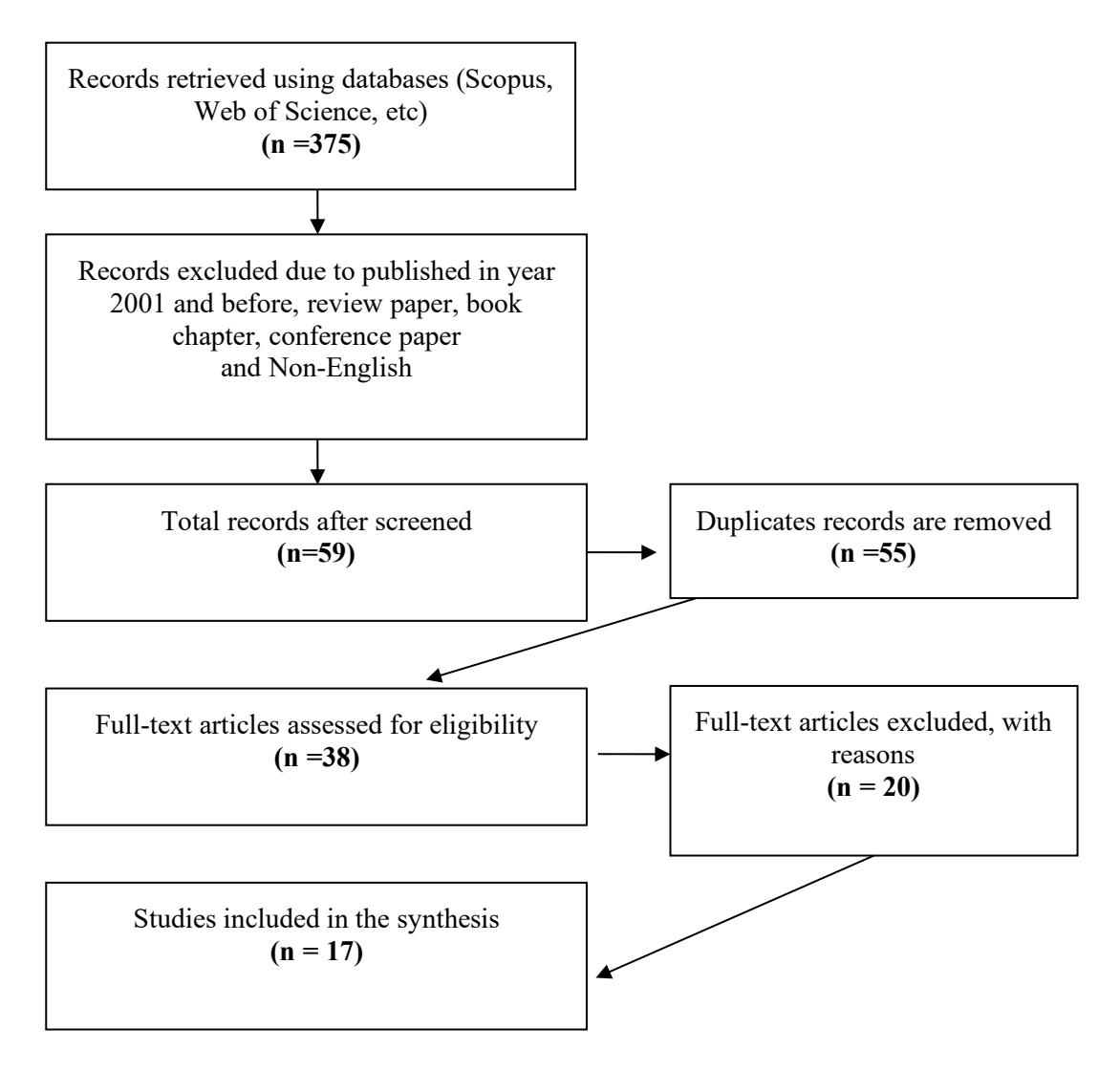
Figure 1. Diagram SEQ diagram \* ARABIC 1: flow diagram of systematic review on women's mobility.
c. Data Abstraction and Thematic Analysis
After abstraction, the following 17 articles were studied in depth, based on the following aspects: authorship and geographical coverage, dimension and focus of mobility, mobility motivation, barriers of mobility, coping strategies and government interventions. After the entire article had been thoroughly read, the papers were listed under different themes and sub-themes. A thematic analysis of the 17 articles was then conducted according to the respective themes, issues and methods (see Table 3).
Table 3. Relevant studies on women's mobility (2019-2001).
| No. | Author (Year) | Themes | Issues | Method |
|---|---|---|---|---|
| 1 | Ferdous & Mallick (2019) | Socioeconomic Stressor | Gendered Vulnerability | FGD |
| 2 | Kerzhner, Kaplan & Silverman (2018) | Physical and Psychological barriers | Public and private car use | FGD In-depth interviews |
| 3 | Graglia (2016) | Gender-sased violence | Barriers to mobility | Informal |
| 4 | Thynell (2015) | Gender sensitive perspective | Condition for | interviews Secondary data |
| 5 | Bhattacharyya (2015) | Social and patriarchal norms | women's mobility Sexual assault against women | Survey |
| 6 | Graglia & Brook | Role of culture and public | Utilization of women | In-depth interviews Survey |
| 7 | (2013) Schmucki (2012) | opinion Urban Environment | only transportation Gendered link between transport and | In-depth interviews Photographs |
| 8 | Jain, Line & Lyons (2011) | Role of ICT | the urban environment Barriers to women's mobility | Diary interviews; exploratory research of group of mothers who worked part time |
| 9 | Porter (2011) | Gender roles | Women's mobility and travel behavior | Field Research; ethnographic action research; large-scale survey; in-depth interviews |
| 10 | Noack (2010) | Women's participation in activities | Rural women's mobility opportunities | In-depth interviews; theoretical sampling |
| 11 | Dobbs (2007) | Women's opportunities to enter public domain of paid work | Access to transport | Multi-method approach: questionnaire survey and FGD, semi- structured interviews; and in-depth interviews |
| 12 | Guash (2016) | Age Modal split Trip purposes | Gendered mobility | Analytical context; survey; comparing data between urban and rural travel patterns; gender-based mobility model |
| 13 | Nadal (2015) | Household Responsibilities | Individual mobility behavior | Multinational Time Use Survey (MTUS); Propensity Score Matching (PSM) |
| 14 | Singh & Cready (2015) | Getting micro-loans | Women's access to spaces outside their | Logistic regression using National Family |
| 15 | Crane (2007) | Race | home Commuting time | Health Survey (NFHS-3) Multivariate analysis using panel data from the American Housing Survey |
| 16 | Assaad & Arntz (2005) | Evolution of gender gaps in labor market | Geographical mobility | Comparable household surveys; |
| 17 | Miller (2018) | Types of residential location | Commuting behavior | examining gender-based; journey-to-work trips in Chicago's suburban fringe based on Tri City Directory |
Findings
Authorship and Geographical Coverage
Seventeen academic papers on mobility published between 2005 and 2019 were carefully studied after applying the PRISMA methodology. The studies were predominantly about mobility in Asia and Europe. Among the research in Asia there were four papers examining women's mobility in India, one in Israel, Africa and Egypt, respectively. Six papers relating to case studies in Europe mostly focused on women's mobility in the United Kingdom, along with by one each in Spain and the Netherlands. Two papers from North America solely focused on the USA, with one paper examining women's mobility in the USA, the Netherlands and the UK. The diverse interest in women's mobility is reflected by the diversity of journals that have published on this topic. These include journals on gender studies, transportation, policy studies, feminist geography, rural and regional and environmental science. Most studies on women's mobility examine the barriers and social concerns about women mobility, followed by mobility motivation, coping strategies by women and governmental interventions to address the issue (see Table 3).
Disciplinary Scopes and Methodology
Gender-related issues were highlighted in a significant number of transport investigations, especially on women as users, the effect of women's mobility on transport policy, regional sciences and the field of feminist geography. The current paper attempts to increase the extent of understanding women's mobility as an aspect of a global geographic continuum, based on research data from India, Israel, Latin America, Britain, the Netherlands, the United States and Egypt. This recognizes several study scopes and methods that theoretically deliver promising insights into women's gender mobility.
Between 2001 and 2020, a significant body of research has challenged the traditional view on how the study of mobility should be conducted. These studies explore the scope of analysis involving various methodologies used in their analysis, such as informal interviews, questionnaire surveys, focus group discussions, in-depth interviews, photography, and diary interviews. There are also many approaches involving multifaceted data, such as analysis using multivariate analytical techniques utilizing panel data from the America Housing Survey, household surveys and an analysis of data from the Tri City Directory database.
Focus and Dimension of Mobility
The term mobility is interpreted and elaborated with slight variations of focus among the authors. Most papers address mobility as the ability of women to move around in urban space safely (Kerzhner, Kaplan & Silverman, 2018; Graglia, 2016; Thynell, 2015; Graglia & Brooks, 2013; Schmucki, 2012) and highlight the barriers faced by women in navigating public spaces either by walking or using public transportation. Except for the studies by Kerzhner, Kaplan and Silverman (2018) and Thynell (2015), which examine this dimension of mobility in Israel and India respectively, the rest of the studies focus on women's mobility in North America and Europe.
Five authors examined the deeper structural issues that discourage women's mobility that are associated with women's traditional roles at home (Jain, Line & Lyons, 2011; Porter, 2011; Noack, 2010; Dobbs, 2007; Nadal, 2015). These papers highlight the roles of women at home as factors that determine the extent and challenges of mobility faced by women. It is observed that papers that focus on women's mobility in Asia examined deeper structural issues related to women's mobility. For example, Bhattacharyya (2015) examined the deeper association between domestic violence against women behind closed doors and the rising levels of sexual assault of women that restricts women's mobility in general. Kerzhner, Kaplan and Silverman (2018) investigated the challenges faced by Palestinian women in navigating public spaces that are being monopolized by Israel communities.
Some authors examined the economic aspect of mobility. For example, Assad & Arntz (2005) address mobility in the context of geographical mobility and across occupations and sectors. This is similar to the focus of the study by Ferdous & Mallick (2019), who examined mobility in terms of the freedom of women who are working in the agriculture field to improve their economic situation, especially in relation to climatic stress. Singh (2015) attempted to analyze the effect of getting micro-loans on Indian women's empowerment and access to public places.
Barriers of Women Mobility
There are many forms of barriers that restrict or challenge women's mobility. Papers on mobility that focus on the aspect of freedom to move around in public spaces safely mostly cite fear of physical harassment as the main barrier (Graglia, 2016; Kerzhner, Kaplan & Silverman, 2018; Thynell, 2015). This barrier is common not just in Europe and North America, but also in the case studies in Asia. In India, this barrier is further aggravated by the dominance of males in public space and the general lack of respect for women due to hegemonic patriarchy and power (Bhattacharyya, 2015). There is a lack of trust in the police as the police (also a profession dominated by men) often do not take reports of sexual harassment seriously.
Being a woman itself is a threat (Bhattacharyya, 2015) – this perception does not only exist in India but also in Mexico, as mentioned by Graglia and Brook (2013). Kerzhner, Kaplan & Silverman (2018) specifically emphasize that being a Palestinian woman in Israeli-dominated public spaces is even more challenging due to the political situation and racial discrimination. Palestinian women can be easily identified through their attire and face constant fear of verbal abuse and physical attack while navigating public space. This has caused Palestinian women to accept that such harassments are a cost of travelling that they must bear. Studies in India and Mexico have reported that there is a general perception that women who dress attractively are asking for sexual harassment (Bhattacharyya, 2015 and Graglia, 2016). This perception has caused women to desexualize their bodies by not wearing revealing clothes in public space. Besides wearing revealing clothes, wearing too many accessories is also considered asking for harassment (Bhattacharyya, 2015)
Gender discrimination has also been cited as a factor that contributes to the restriction of women's mobility. Ferdous & Mallick (2019) emphasize that lack of access to education and property ownership as well as the dowry system practiced in India are reasons why women are being looked down upon in the community. The concept of patriarchy explains the limited access to mobility and freedom to travel for women. Even in developed nations women are still plagued with traditional expectation to cope with household chores (Assaad and Arntz, 2005; Jain, Line, Lyons, 2011; Porter, 2011; Noack, 2010; Dobbs, 2007), which explains why women have more limited mobility compared to men. Bhattacharyya (2015) explains that social constructions of gender, socially and traditionally expected roles put women in a marginalized position.
Apart from gender discrimination, an exclusive environment has also been cited as a factor that hinders women's mobility. In Israel, for example, Palestinian women face stress while travelling on public transport due to the language barrier. The information signage, station names and information are written in Hebrew making it difficult for Palestinian women to understand the information given, as noted by Kerzhner, Kaplan & Silverman (2018). Unmet transportation needs are also a barrier for women's mobility. This can be in the form of unreliable transport services (Jain, Line and Lyons, 2011). Women are particular about safety and unreliable transportation services such as bus delays may cause additional stress for them. Due to their responsibilities at home, women are also particular about making an effective transport journey as commuting time is normally double the time for women than for men (Nadal, 2015; Crane, 2007). Women also make more regular but shorter trips during off-peak hours, because women are more tolerant of car use than men (Thynell, 2015). Apart from that, expensive transport fares are also being cited as a challenge for some women (Porter, 2011; Dobbs, 2007).
Table 4. Summary of issues and challenges related to women's mobility.
| Author (year) | Issues and Challenges |
|---|---|
| Porter (2011); Kerzhner et al. (2018); Miller (2018). | Ethnic discrimination, aggressive social environment, poor ● infrastructure and poor public transportation rates create multi faceted obstacles to daily transportation in the area. Cultural and social factors, the feeling of alienation and ● uncertainty, together with a poor infrastructure, poor service rates and restrictive planning policies, impose significant restrictions on transportation use and travel preference. |
| Assaad & Arntz (2005); Crane (2007); Dobbs (2007); Noack (2010); Jain, Line & Lyons (2011); Schmucki (2012); Guash (2016); Nadal (2015); Thynell (2015); Graglia (2016); Ferdous & Mallick (2019) | The concept of patriarchy explains women's limited options to ● mobility and men generally have access to an automobile/car, Gender-based harassment in public transportation restricts ● mobility for women and increases gender inequality. Women tend to work closer to home, while making more trips ● than men but are more likely to use public transport and walk. There is a gender gap in wages and reluctance of employers to ● hire women due to higher turnover rates. Social norms that discourage women from working in certain ● occupations and working environments. |
| Graglia & Brook (2013); Bhattacharyya (2015); Singh & Cready (2015). | Domestic violence leading to harassment/sexual exploitation. ● Sometimes crowds leak into public spaces, restricting the freedom of people and creating fear of (re)occurrence. Violence women face in public transit leads them to always opt ● for women-only services, encouraging local policy makers to increase their number. The initiative has been advocated by local feminist groups, who ● contend that regular public transit abuse is discrimination against women. Public transit harassment also encourages political pressure on local officials from women to establish or expand women-only public transportation systems. |
Urbanization provides more opportunities for women, but most urban women experience significant drawbacks compared to men on their day-to-day journeys. Thynell and Wolmar (2014) believe that demographic changes continue to be a major problem and that more people will be mobile in the future. There are many women worldwide who rely for their travel on public transport, which is often inefficient, inconvenient, dirty, unreliable, unsafe and poorly maintained. In conclusion, the issues and challenges facing urban women's mobility in the 21st century are multi-faceted, including a hostile social environment, ethnic segregation, poor infrastructure (Kerzhner et al., 2018), gender-based violence and sexual harassment (Table 4).
Coping Strategies
Women around the world have built various coping mechanisms to tackle mobility problems and gender concerns. In Bangladesh, where prevalent gender discrimination norms and practices have conditioned women to remain at home and not move around in public places, women have resorted to secret caches of money for survival (Ferdous & Mallick, 2019). Additionally, significant numbers of women have been engaging in income generating activities within the confines of their private space, such as creating cooperative funds, sharing livestock rearing tasks with livestock owners, selling domestic produce such as eggs, vegetables and milk, all for their secret money stock (Ferdous & Mallick, 2019).
Women have also taken recourse to changing the way they dress in public, hiding or showing their bodies by wearing 'decent' clothing or long loose clothing such as ridha, sari, and burqa (Graglia, 2016; Bhattacharyya, 2015). However, this misogynistic view of what women should or should not wear is widely debated and considered a false excuse for rape and gender-based violence that reveals an inherent gender inequality in a society (Bhattacharyya, 2015). This consequently has made women accept that gender-based harassment as a cost of travel and travel in constant fear (Kerzhner, Kaplan & Silverman, 2018). Therefore, women have also had to develop alternative travelling modes and times to avoid gender-based harassment, such as avoiding to travel alone or at night (Graglia & Brook, 2013), using a private car or a taxi instead of public transportation (Kerzhner, Kaplan & Silverman, 2018), finding employment near their home (Dobbs, 2007; Noack, 2010; Jain, Line & Lyons, 2011; Miller, 2018), or working only in a part-time job to limit the time and travel distance (Noack, 2010; Miller, 2018).
Government Interventions
Government and agencies play a vital role in addressing the challenges to women's mobility, especially related to public transportation and employment. Some countries have implemented segregated women-only public transportation systems for buses, taxis and trains (Graglia & Brook, 2013; Assaad & Arntz, 2005). Lack of enforcement on safety policies and gender-based crime remains a big challenge related to women's mobility. Bhattacharyya (2015) recommends harsh punishments to deter gender-based crime and discrimination, and encourages government agencies to have severe punishment of perpetrators of extreme rape cases, punishment for police officers in failing to report rape or gender-based violence cases, penalties for reprehensible forms of crime (stalking, touching, sexual remarks) and eliminate easy access to acid (often used to attack women in India).
However, this must be met and coupled with information, education and training of personnel (Kerzhner, Kaplan & Silverman, 2018), to address women's practical and strategic needs for gender transformative change (Assad & Arntz, 2005; Ferdous & Mallick, 2019). Concurrently, public awareness and education through media campaigns on social inclusion, gender equality and women's right are also essential in addressing gender-based discrimination and violence (Dobbs, 2007; Schmucki, 2012; Graglia & Brook, 2013; Kerzhner, Kaplan & Silverman, 2018; Ferdous & Mallick, 2019).
Gender-sensitive policies are essential to improve the position of women relative to men in public space, as women have a vital role in poverty reduction, social cohesion and sustainability (Thynell, 2016). More gender-centric employment or family-friendly policies (Nadal, 2015), and incentives by the government to encourage employers to provide door-to-door transportation for their workers would increase women's access to employment (Assad & Arntz, 2005). Other
policies in support of women's access to private transportation and developing flexible employment for childcare and schooling are needed to mitigate the gender division in transport and the gender discrimination women face in employment (Dobbs, 2007).
Conclusion
The systematic literature review from this study provides insight into the issues and challenges facing urban women while commuting and discusses mobility patterns in the 21st century. In most developing countries, poor transport facilities have been found to be a major problem, thus contributing to significant losses in economic opportunities. Understanding the issues and challenges related to women's mobility is critical in finding ways to improve equal access of women to mobility, thus enhancing their quality of life. Women should no longer be relegated to their domestic roles; in the 21st century their gender roles are expected to become more dynamic and versatile due to expanded opportunities to work outside their home boundaries. Increasing women's participation in social and economic activities would enable more women, particularly from rural areas, to leave their comfort zone. Therefore, the urban ecosystem must be able to address women's needs in the 21st century, particularly in ensuring that gender roles are equalized and no one is left behind. Future studies on women's mobility should not be restricted to women's ease of movement, but emphasis should also be placed on ensuring economic and social equality. As the world is becoming borderless, these barriers need to be addressed in order to allow women to achieve their fullest potential and capacity.
Acknowledgement
This research is a collaborative research project between University Malaya, Coventry University, University of Illinois at Urbana-Champaign and Design-PAK Pakistan and is fully funded by an Arts and Humanities Research Council Research Networking Grant 2018.