

Introduction
Under the threat of urbanization, preserving traditional villages and settlements is an essential task regarding urban heritage conservation goals. In the Vietnamese context this issue has gained great urgency. Ho Chi Minh City is a typical example. With rapid urbanization, urban spaces are continuously expanding to rural areas. As a consequence, many traditional villages have been demolished and replaced by new urban developments to deal with urbanization issues, to improve the efficiency of urban land use, to maximize economic benefits, and to create a modern development image [Huynh-Cong T., 2014]. This encroachment continues despite traditional craft villages bringing many benefits to people living in suburban areas.
This research chose Ho Chi Minh City as case study location. Ho Chi Minh City is the largest urban centre in Vietnam, with bustling economic, financial, commercial and service activities from modern and specialized industries. However, besides modern economic activities there are also many traditional economic activities. Ho Chi Minh City has more than 60 handicraft industries, concentrated in 19 trade villages [Ngoc-Thu H., 2004]. However, in some historically famous craft villages only a handful of small businesses have survived, for example the incense-making villages in Binh Chanh District, or the nem village in Thu Duc District (nem is a special Vietnamese food). Some households in traditional villages are also engaged in basket weaving, cushion knitting, rice-paper production, pottery, and brick making [Ngoc-Thu H., 2004]. Today, Ho Chi Minh city retains traditional residential communities, such as Phu Dinh-Hiep An (earthenware), Phap Gioi (dry noodles), Bay Hien (weaving), Rach Lo (railway jam), Cho Lon (pottery) (Figure 1 & 2). These craft villages are from 50 to 100 years old. For example, Bay Hien weaving village, or Lo Chen weaving village, was established in 1954-55 by people from Quang Nam and Quang Ngai.
Traditional craft villages provide jobs for local people, migrants, materials providers, salespeople, and other ancillary service providers [Nu Quynh Tran T., 2002]. Phu Tho glass village brings income for bottle collectors; Tan Xuan and Bay Hien weaving villages create jobs for dyers; Phu Tho tannery village creates jobs for painters and leather polishers. The communities of craft villages have a local cultural lifestyle, local occupation characteristics, and a local ethnic spirit. The craft village structure reduces society's negative effects and enhances local cultural life [Quoc-Tuan V., 2015]. Unlike other 'cultural-historical sites', these villages can be considered to be living heritage. Therefore, if the city government has appropriate policies and management mechanisms to protect and enhance the value of traditional craft village products in the market, it would ensure sustainable urban development. Traditional
villages contribute positively to the prosperity and affluence of peri-urban areas and provide support for the city centre.
Figure 1 Rach Bai Say, Cho Lon in the 1950s – Canal of ceramic kilns (Source: Kien Viet, 2012)
Figure 2 Hung Loi Pottery Village, District 8, Ho Chi Minh City (Source: authors, 2017)
Based on the above literature review, this research aimed to propose a new development model for traditional villages in peri-urban areas of Ho Chi Minh City. This model helps to build a common support space between urban centres and suburban areas. The purpose of these spaces is to protect cultural heritage, maintain social foundations, limit social risks, and create new career opportunities for local people.
Peri-Urban Areas and the Urbanization Process of Peri-Urban Areas
Peri-urban areas (urban space, outskirts, hinterland) are located between urban and rural areas [Buxton, M., 2016] and have both urban and rural characteristics. Although there is no consensus on the definition of peri-urban areas there is an increasing recognition that urban and rural characteristics tend to coexist in cities and intersect with one another (Figure 3). These areas are considered an extension of urban areas but tend to develop horizontally. Urban and rural areas have a significant and intimate relationship, where suburban areas are a buffer zone that connects urban and rural areas and bridge the gap between them [Aldous T., 1992]. Periurban areas provide natural, human and food resources to the city centre. Under the pressure of climate change (Figure 4), increasing energy costs and changes in food consumption, the role of peri-urban areas is becoming increasingly critical [Buxton, M., 2016]. To deal with these challenges there should be specific changes in their spatial organization and administrative management to conserve valuable traditional aspects and respond adequately to the process of urbanization.
Figure 3 Peri-urban areas are a cross between rural and urban areas. (Source: authors, 2019)
Under the pressure of urbanization and influence from the city centre, peri-urban areas change in both structure and characteristics. The dispersion of the population and the redistribution of jobs across newly developed urban areas lead to an increase of peri-urbanization. This phenomenon is a new challenge in the context of Asian cities [Le-Minh N., 2020]. Large Asian cities where population explosion and rapid urban development lead to suburban expansion require a considerable amount of land and natural resources [Viet Quang Ngan N., 2014]. On average, population growth in Asian cities is more than 45 million people each year, resulting in converting agricultural land-uses to urban land-uses in a total area of more than 10 km2 . According to the 2019 Census of the Vietnamese General Statistics Office, the country now has a high urbanization rate of 35.92 percent. The migration rate in 12 provinces and the large cities is positive. This means that there are more immigrants than migrants. The majority of migrants create a demand for rental houses. Industrial development areas are the places that attract the most migrants and have the highest proportion of rental housing [Vietnam General Statistics Office, 2019]. This rural-to-urban migration has made significant changes to peri-urban areas. These areas adapt to the resettlement needs of people from both the suburbs and the inner city (Figure 5). Hence, peri-urban areas develop in a vertical direction to accommodate the high population density. There is also land that is reserved for future urban development. In the case of Ho Chi Minh City, the latest statistics show that the population is increasing by 1 million people every 5 years [VietNam General Statistics Office, 2019].
Peri-urban areas are a transaction zone for urban and rural activities. In the process of expansion and land-use transformation, human activity is the determinant that links urban and peri-urban areas. Because of this there should be more urban research and cooperation among Asian universities and research institutions and consultation with government to ensure a sustainable future for the suburban areas of Ho Chi Minh City in particular and urban areas in Vietnam in general.
Figure 4 Peri-urban area of Ho Chi Minh City, Vietnam. (Source: authors, 2020)
Figure 5 The influx of urban migrants seeking new jobs. (Source: authors, 2018)
Main Characteristics of The Peri-Urban Area
All peri-urban areas go through a rapid urbanization process. This expansion of new urban areas has led to the conversion of agricultural land into urban land [Wu, J., 2008]. In the Ho Chi Minh city context, the region stretching from rural to urban areas will experience strong fluctuation and transformation and take on new functions. This creates a mixture of economic, social and lifestyle factors from urban and rural areas. At this time, suburban areas have the following main features.
Firstly, in terms of spatial planning, peri-urban areas benefit from urban economic activities. Compared to rural areas, peri-urban areas have better infrastructure networks for transportation, communication, electricity and water. Moreover, these areas have a high level of adaptation when they turn into new urban areas [Jin T., 2014]. However, there are also differences between peri-urban areas and urban centres in some sectors, including service facilities, employment opportunities, quality of education, and quality of life [Zhao, P., 2012].
Secondly, in terms of demographics, peri-urban areas are inhabited by local people and immigrants from rural areas. Urbanization leads to millions of farmers moving to the city to find new jobs. However, because of their low level of education and work skills they suffer in the competitive job market. Low income, low access to housing and lack of social networks in urban areas are the main reasons why workers choose to settle in suburban areas [Xiaoming L., 2011]. People living in peri-urban areas who are landowners can work in agriculture or have accommodation to rent out. Thus, local people and immigrants from rural areas become neighbours.
Thirdly, in terms of economic and cultural benefits, the existing traditional villages in Ho Chi Minh City do not have these job issues because traditional occupations have simple requirements with few legal constraints for labourers. The workforce for traditional jobs is diverse, including elderly, children, illiterate people, and disabled people [Zhao, P., 2012]. Thus, job security is ensured, unemployment is reduced, and social evils are limited. Hence, traditional villages provide economic and cultural benefits and contribute to social stability.
The above shows that peri-urban areas have special spatial, economic, social and political characteristics. The postion of peri-urban craft villages in relation to the city has not been fully addressed in previous research. A development model specifically for craft villages in suburban areas should focus on analyzing the interaction between rural and central urban areas [Wu, J., 2008]. In this study, two existing models for traditional peri-urban craft villages were analyzed.
After that, a new, more flexible and dynamic model is proposed, taking into account the need for cooperation in conservation and development.
Current Development Models
The proactive model is a spontaneous and proactive development model for local people. This model is based on the behaviour of individuals who want to change their real estate properties and renovate a village for better profit at minimum cost. It is difficult for the local or upper-level government to interfere in urban planning and management [Jin T., 2014]. The first reason for this is the household registration policy, which makes a distinction between urban households and rural households. Families with an urban household registration often benefit more than famlies with a rural household registration in terms of subsidies for housing, health care, and education among others. Workers from rural areas have low income (the average income is less than 3 to 4 million VND a month, equivalent to 130-180 US dollars) so they cannot rent houses in urban areas at high prices and usually choose to live in suburban areas. This hugely increases housing demand in these areas. Land owners in suburban areas take full advantage of their land plots to build housing for rent. Building a house on former farmland costs less because there is no cost of land use or cost for real estate brokers [Zhao, P., 2012]. The land area for each family is limited, while the profit from the rent is proportional to the construction area, so people often build simple and high-rise houses to maximize the living area. As a result, traditional houses are replaced by row houses that are similar to urban houses. As a result, the village landscape changes drastically without any way to protect the village's historical traditional heritage.
The traditional villages in the outskirts of Ho Chi Minh City, such as Binh Loi orchid village (Binh Chanh District), handicraft flower village (Go Vap district), or Binh Loi incense village (Binh Chanh District) of Ho Chi Minh City are examples of this active model. Because of the rapid urbanization and the advantageous location, local people in peri-urban areas have developed new residential areas quickly, so the image of traditional villages has changed. However, in the context of dynamic development it is inevitable that spontaneous rental housing construction has serious negative impacts. Over the past decade, these areas have become bustling construction sites. Most families have expanded or renovated their houses for renting out. Historical buildings in these areas are under risk of demolition. Spontaneous development without management leads to conflicts of personal interests and causes complex social problems [Viet Quang Ngan N., 2014]. The proactive model brings economic benefits for individual local inhabitants but is detrimental to the community. The cultural value of the village is lost, heritage value is destroyed, and the local authority cannot control the socio-economic activities in the area (Figure 6).
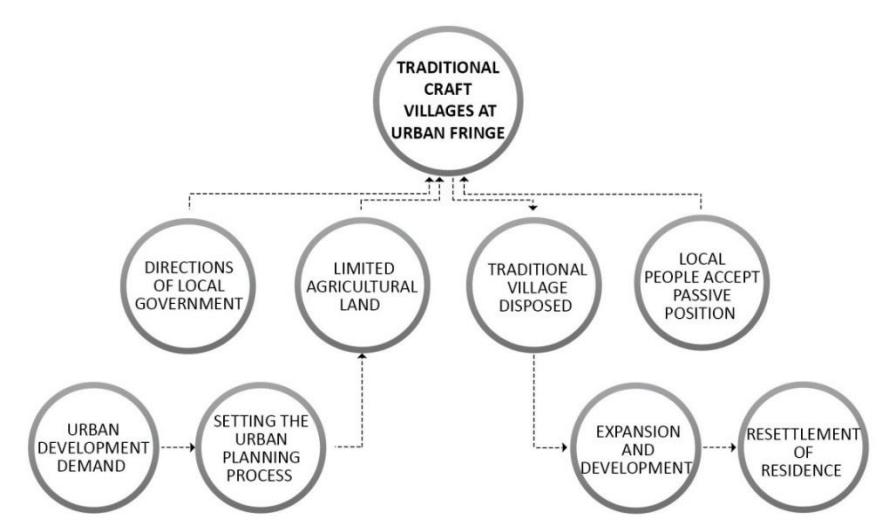
Figure 6 Operation diagram of the proactive model. (Source: authors, 2020)
The passive model is a model in which the development is initially managed by the government. This model is passive for the local inhabitants and beneficial to the city government. The local government approves new urban planning to gather traditional villages together and transform them into a small urban area structure (Figure 7). The traditional villages are demolished and only a small number of valuable or typical historical buildings are conserved. These remaining buildings are separate from the newly built environment and their traditional meaning fades. In the passive model, the local and urban authorities play a central role in the development process and traditional villages are replaced by new developments in a short time [Jin T., 2014]. The living environment changes because of the addition of more socio-economic functions. Local people become rich thanks to agricultural land compensation. Local governments benefit significantly from projects that enable land-use changes and social infrastructure improvement. However, the methods of renovating traditional villages are arbitrary and lack professionalism. Thus, values from traditional culture, history and traditional professions vanish [Viet Quang Ngan N., 2014].
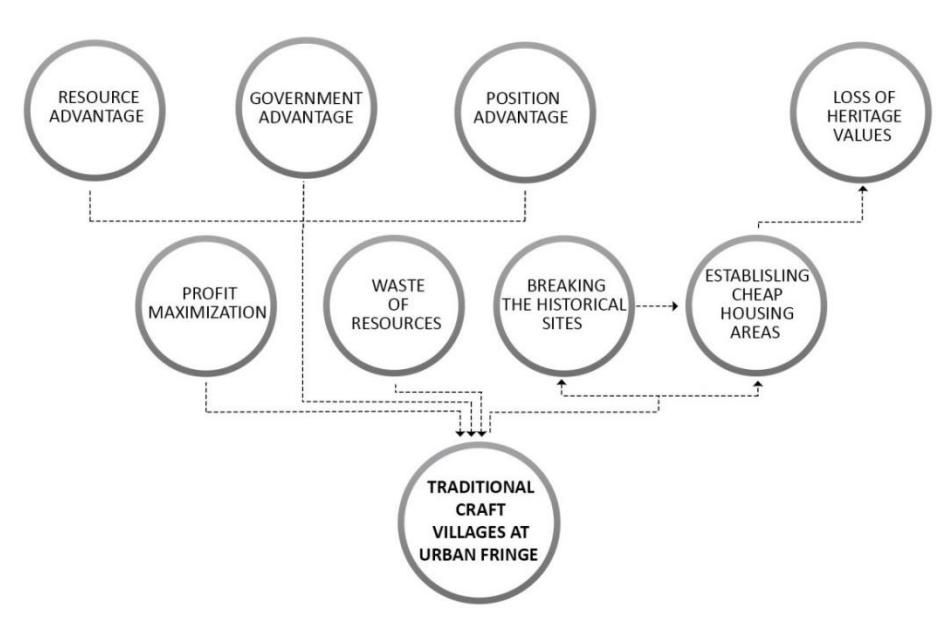
Figure 7 Operation diagram of passive model. (Source: authors, 2020)
Recommended New Development Model for Traditional Craft Villages in Peri-Urban Areas
Analyzing the two current models, the active model is a classic bottom-up operation model, while the passive model is a classic top-down operation model. Both models cannot protect the efficacy of traditional craft villages in suburban areas. These two models only take into account rural or urban interests without managing their relationship in a sustainable way and in view of long-term goals. In other words, these two models do not bring benefits for both rural and urban areas. Therefore, the present study proposes a flexible model for renewing traditional villages in suburban areas, called the joint development model. The research team particularly emphasizes flexibility and resilience in adapting to urbanization as essential for the renewal of traditional craft villages in peri-urban areas.
In general, the operational viewpoint is based on cooperation in development. Cooperation of different parties has mutual impacts, affecting each other's development. To achieve mutual benefits for both parties it is necessary to balance the advantages of a multipolar relationship. Some benefits can be prioritized for only one side according to the context. The model of renewal of traditional craft villages in peri-urban areas is based on cooperation while respecting the existence and development of both urban and rural areas [Le-Minh N., 2020]. The main characteristics of the new model are:
- a) In terms of urban space, the renovation process needs to optimize the spatial structure between the urban and suburban areas;
- b) In terms of time, the transition needs to be a long-term, continuous process, avoiding discrete transformations;
- c) In terms of implementation method, the urban and rural areas need to be planned in view of transformation and adaptation.
This joint development model adapts itself to the development demands of the urban and rural areas, balancing the benefits of future developments for each. It is essential to renovate traditional villages in the peri-urban area. The joint development model is described in the aggregate diagram in Figure 8. A multi-sectoral collaborative organizational structure is established, which includes citizens, government, investors and immigrants. A mutual exchange and supervision mechanism is applied to establish the rights and obligations of the different stakeholders. At the same time, a transitional zone between the rural and urban areas is created. This zone is a transfer space between the traditional craft village and the urban centre. Without this transitional space, the traditional village will be encroached by a wave of urbanization. Support policies on low-interest bank loans, conversion of agricultural land, mortgages, land transfer and funding for traditional village rebuilding and employment will be applied to ensure long-term and sustainable benefits.
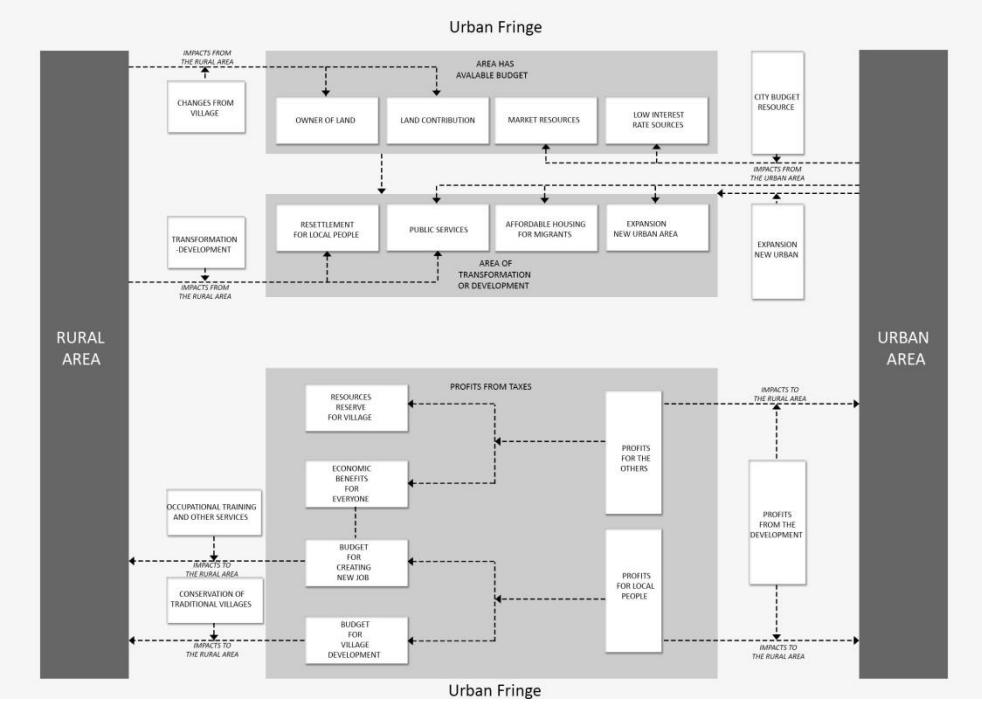
Figure 8 Operation diagram of the joint development model. (Source: authors, 2020)
In the joint development model, traditional villages are considered the 'sending area' while the transformation/development area is considered the 'receiving area'. When parts of the village are officially transformed into a 'receiving area', the village will be protected against spontaneous development under the impact of the real estate market. At the same time, the 'receiving area' has the role of harmonizing the relationship between the urban and rural areas, increasing the value of peri-urban land. The government supports the 'receiving area' through specific policies, such as reducing taxes or providing credit loans and project loans to improve the quality of life and quality of the living environment in the traditional village.
In summary, the basic principle of this cooperation model is to promote the interaction and development of urban and rural areas through the establishment of a buffer zone. The aim of this zone is to protect cultural heritage, maintain social foundations, limit social risks, provide reasonably priced accommodation for immigrants, and create job opportunities for local people.
Conclusion
Peri-urban areas play a vital role as a buffer zone that regulates the relationship between urban and rural areas. Peri-urban issues resulting from rapid urbanization need to be examined and specific values need to be identified to propose appropriate conservation solutions to ensure sustainable development in the future.
Traditional craft villages are vulnerable in the process of urbanization of rural areas. In this context, cultural and traditional heritage conservation is challenging. How to preserve traditional villages under the pressures of rapid urbanization is a critical question related to conservation in Vietnamese urban areas. It is urgently needed to find ways to balance economic benefits and social benefits, distinguishing between short-term benefits and long-term benefits. As a result, an appropriate development model should be established specifically for small and vulnerable craft villages undergoing rapid urbanization in order to distribute benefits among stakeholders fairly.
Based on the above research results, the joint development model to protect traditional craft villages in peri-urban areas was proposed. This innovative model is flexible to meet the development needs of the different sides and brings benefits to different stakeholders. The mobilization of investment capital for urban areas is carried out through intermediary organizations and individuals to ensure effectiveness. In the operational process, the focus is on pretecting and conserving traditional cultural heritage. Research on this joint development model for traditional villages in Ho Chi Minh City was conducted on a small scale. This research aimed to provide a foundation for the innovation and sustainable development of traditional peri-urban villages in Ho Chi Minh City in particular and urban areas in Vietnam in general.
Acknowledge
This work was presented at Endinamos.