

Introduction
South Korea has accomplished remarkable economic achievements during the period of modernization and as a consequence experienced rapid changes in population and socio-economic
conditions. The economy has grown by more than 8 percent each year since the early 1960s, making it a record growth rate. This accomplishment is especially impressive because it was achieved against adversities such as the sequela of the Japanese colonial period and the Korean War, and little experience with democratic policy and society. The first nongovernment rural community movements such as the Christian 4-H Club2 , introduced in the 1950s by the UN Commission, initiated and spread rural rehabilitation movements in South Korea. As a government-driven campaign, the National Reconstruction Movement promulgated by the military junta in 1961, was followed by the Six-Year Rural Development Plan, presented by the Government of the Republic of Korea in 1966. The Saemaul Undong movement, referring to the New Village Movement, came up around the same time and was adopted by the government of President Park Chung Hee in 1971. These movements and plans included a series of projects focused on increasing rural household income and improving the quality of the living environment.
The industrial development of South Korea is an exceptional success story, achieving rapid growth with equity (World Bank, 1993). The government, strictly guiding society throughout the period of the economic boom, made a major contribution to the expansion of education, in particular at the secondary level, where the enrolment rate of school-aged children increased steadily (Lee, 1997). Meanwhile, there were several side effects of the strong economic growth, such as rapidly increasing city populations and severe socio-economic inequality due to the concentration of population and profit in certain areas and strata of the country.
South Korea has undergone steady urbanization in the process of industrialization and has been confronted with issues of national land-use planning. As the migration from rural areas to cities increased along with industrialization, the rural population decreased rapidly, while the urban population continued to increase until urbanization reached its peak. The population in the capital area currently amounts to half of the national population of South Korea.
The government responded with urban policies to the massive migration of the population to the area of the capital and metropolitan cities. For a more balanced national development, the government has transferred major government agencies to the administrative capital and implemented various regional development policies for the entire country. The government also enforced various rural development policies, including some remarkable projects such as the Project for Improving the Quality of Life and the General Agricultural and Fishing Village Development Project, which gained a lot of interest and made many achievements in this period.
In this context, this study investigated the land-use and management system of South Korea under population change during the period of industrialization, and analyzed the process and the significance of important economic and rural development projects that contributed to the record economic development of South Korea. Some issues of representative rural development policies being implemented or recently introduced by the government are criticized, considering the relationship between the land-use system, population change and development policies.
Land Use Planning and Population Change in South Korea
2 4-H is a social education movement that helps to inspire the youth of Korea to be agriculturally minded as well as to become well-rounded individuals by living by the 4-H club ideals of Head, Heart, Hands, and Health (http://english.korea4-h.or.kr/).
In addition to incidental problems such as traffic congestion, overinflated housing prices and environmental problems such as air pollution, many intrinsic problems such as inequality of space and income distribution between regions and levels of urban hierarchy also increased during the period of economic growth. It is undeniable that imbalances in the national land-use planning and management system have had a profound impact on this situation. Thus, a comprehensive strategy laid down in a national land policy framework is required that can affect land use, such as regulations for land-use planning.
Land-use Management System
To improve the efficiency of land-use management, the South Korean government has issued a systemic set of hierarchical plans that embrace how land use should be controlled and implemented at different scales, ranging from the national to the regional level.
At the top of the hierarchy, the National Land Law was enacted for the purpose of contributing to a healthy development of the national land and improvement of the wellbeing of the people by arranging basic matters regarding the establishment and implementation of national land policies. Further, the National Land Planning and Utilization Act arranges matters necessary for the establishment and execution of plans for the use, development and conservation of national land. The National Land Master Plan provides extensive guidelines and planning processes for the national land, while the Provincial Master Plan and the Urban and County Master Plan provide guidelines and processes for effective planning at the lower levels. At the regional level, the Metropolitan Urban Plan provides guidelines for the Urban Master Plan and the Urban Management Plan. The Urban Master Plan covers basic spatial structures and long-term planning for development within the jurisdiction of each city and provides guidelines for Urban Management Plans. The Urban and County Management Plan is an implementation plan, as it mainly deals with the land-use zoning system and imposes legally binding restrictions on land use, designates authorities, contents and processes for land-use plans, including division and control of special-purpose areas, districts and zones that steer the development of actual neighborhoods and individual sites (Figure 1).
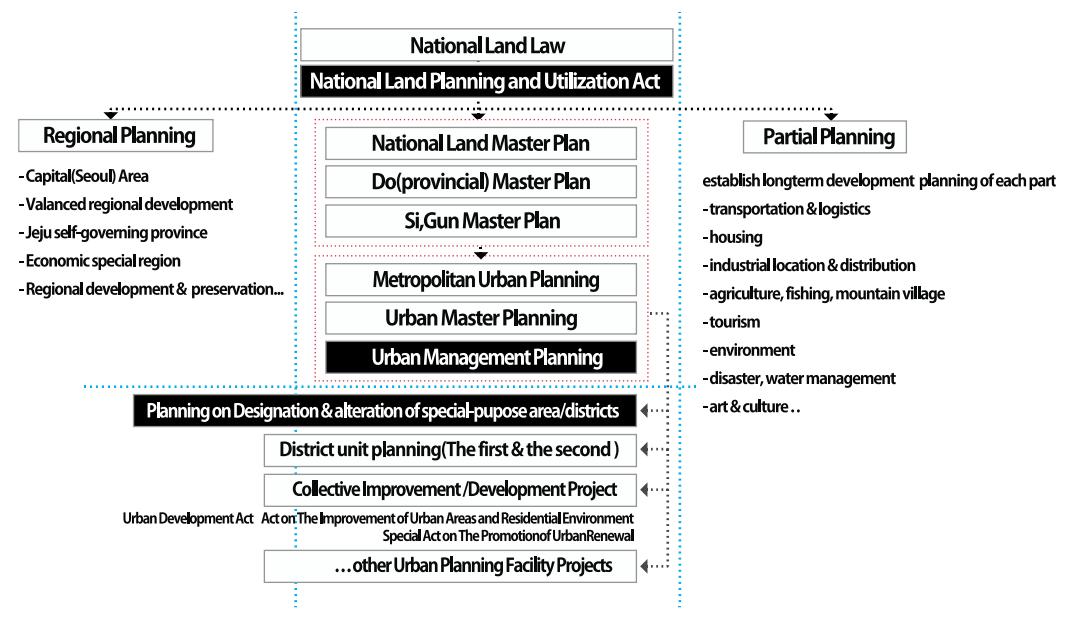
Figure 1 Management system of land use and rural areas in South Korea.
Before 2000, the governing act for urban areas, the Urban Planning Act, was separated from that for rural areas, the Act on the Utilization and Management of the National Territory. The current system of land-use governance was created in 2002, when the National Land Planning and Utilization Act was introduced (OECD, 2019). The National Land Planning and Utilization Act became the governing act for urban and rural areas. It provides the formulation of and implementation guidelines for plans for the utilization, development and preservation of the national land. The land-use area system was changed and rearranged by this law.
Management of Land Use Area and Population
Categories of urban and rural areas in South Korea are distinguished by land use as registered in the cadastral record (Figure 2). By land-use classification (Figure 2(A)), four categories (residential, commercial, industrial and green areas) are classified as urban areas, whereas three categories (control, agricultural and forest, natural environment conservation areas) are classified as non-urban areas. Meanwhile, another classification is also available that is based on the division of administrative units of national land (Figure 2(B)). Small towns at the county level (myeon (面), including villages) can be classified as rural area according to the division of administrative units. Indexes based on both classifications are used for specific purposes in the administrative processes of the regular urban planning system (Figure 2(A)). The area division by land-use classification is mostly used for control of development and preservation.
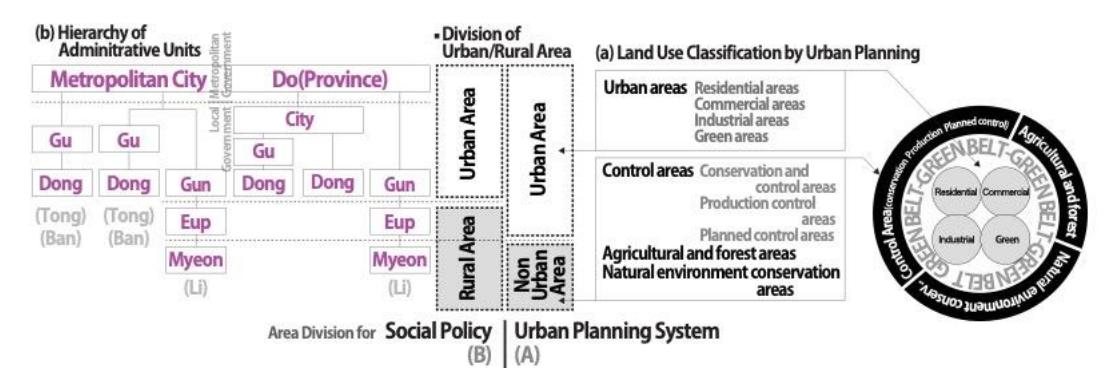
Figure 2 Division of urban/rural areas in South Korea.
The published total area3 of the national territory of South Korea spanned 106,285.9 km2 in 2018, of which only a small proportion consisted of urban area (Table 1). By land-use classification based on urban planning, 83.2% of the land was classified as non-urban area and only 16.8% was classified as urban area. Of the rural area, agricultural area covered 59% of non-urban area, 32.6% was classified as control area, and the rest was classified as natural environment area. However, from a social point of view, also a wider area, including eup and myeon, is usually considered rural area, because the life circles of the people living in eup and myeon are generally linked with surrounding villages and downtown areas in eup and myeon are normally seen as centers of rural villages for the purpose of social policies (Figure 2(B)).
The population of South Korea recorded its maximum growth rate of 3.0% due to the post-war baby boom. Despite the social turmoil and economic hardship due to the Korean War in 1950, the population grew rapidly until 1960 because many soldiers returned from Manchuria and Japan to their hometowns after the liberation, and many refugees from North Korea migrated to South 3 The published area is calculated by adding the sea surface area to the sum of land-use classification.
Korea during the war. The post-war baby boom4 caused a significant increase in fertility, which also had a significant impact on the population growth and productivity during the 1970s. Korea's population growth rate has slowed down after this temporary phenomenon.
After the Korean War, the rural population recorded its maximum number of 19,619,690 in 1966, after which a sharply declining trend of the rural population continued until 2010, with a minimum value of 8,627,388, or 18% of the overall population (Table 1). The rapid decrease of the rural population in South Korea happened during the industrialization period, lasting almost 20 years, from 1975 to 1995, because of mass migration from rural areas to urban areas (Figure 3, source: KSIS). Meanwhile, the overall population of South Korea was 51,629,512 in 2018 and the rural population5 was 9,714,131, or 18.82% of the overall population. The rural population living in eup and myeon has gradually increased in the last few years. Because there are more opportunities for economic activities and excellent social overhead capital in eup than myeon, the population growth of eup has led to an growing trend of the rural population (Table 2, source: KSIS). Population change by mass migration from rural to urban areas has caused loss of productivity in rural areas, addressed by the revised settlement system and development policy in the National Land Planning and Utilization Act enacted in 2002.
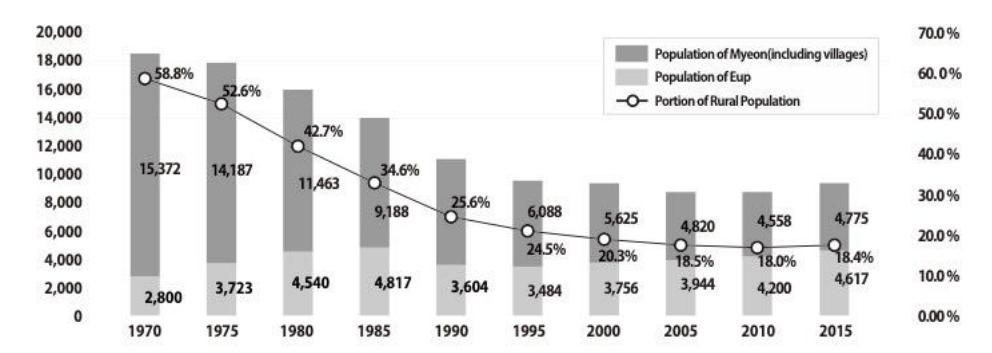
Figure 3 Population change in rural areas by administrative unit (1970~2015)6 .
Along with massive migration, the age structure of the population between urban and rural has changed. In 1960, there was a small difference in age composition between urban and rural areas: a higher percentage of elderly people was living in rural areas than in urban areas. However, in 2000 the proportion of elderly people in the total population was higher in rural areas than in urban areas, because the working-age population migrated to urban areas to find jobs and earn more money. Overall, the population shows an aging trend, because the proportion of elderly people in rural areas is greater than 14 percent, while in urban areas it is less than 7 percent, with the prospect of Korea becoming an aging society (Table 3, source: NSO).
4 The increase in births after the war produced what became known as the baby boom generation. In Korea, this is mainly the generation born after the Korean War, while in Europe, the United States, and Japan it is the generation born after the Second World War. All countries around the world have experienced this same phenomenon in the post-war period.
5 'Rural population' refers to people living in eup and myeon as stated above and defined by the Korean national statistical offices. It is calculated as the difference between the total population and the urban population.
6 Korean Statistical Information Service (http://kosis.kr).
Table 1 Rural Areas Classified by Land Use in Urban Planning System (2018)<sup>7</sup>
| Published Area | Land Use Classification | |||||||
|---|---|---|---|---|---|---|---|---|
| Admin. District Area | Non-Urban Area | Sea | ||||||
| Sum | Urban Area | Sum | Control Areas | Agricult ural Areas | Natural Env. Areas | Surface Area | ||
| 100,377.7 | 106,285.9 | 100,507.8 | 16,882.8 | 83,625 | 27,221.1 | 49,351 | 7,052.9 | 5,778.1 |
| 100% | 16.8% | 83.2% (100%) | (32.6%) | (59.0%) | (8.4%) | |||
Table 2 Yearly Change of Rural Population in South Korea (2015-2018)<sup>8</sup>
| Year | 2015 | 2016 | 2017 | 2018 | |
|---|---|---|---|---|---|
| Overall | |||||
| population | 51,069,375 | 51,269,554 | 51,422,507 | 51,629,512 | |
| D 1 | Eup areas | 4,616,802 | 4,707,855 | 4,794,377 | 4,984,023 |
| Rural population | Myeon areas | 4,774,878 | 4,793,569 | 4,835,090 | 4,730,290 |
| population | Sum | 9,391,680 | 9,564,424 | 9,629,467 | 9,714,313 |
Table 3 Yearly Change of Rural Population in South Korea (2015-2018)<sup>9</sup>
(Units: 1,000 persons, %)
| 1960 | 2000 | ||||||
|---|---|---|---|---|---|---|---|
| _ | Sum | Urban | Rural | Sum | Urban | Rural | |
| Overall | 24,989 | 6,997 | 12,992 | 45,985 | 36,642 | 9,343 | |
| (%) | 100.0 | 100.0 | 100.0 | 100.0 | 100.0 | 100.0 | |
| 0-14 years old | 10,153 | 2,735 | 7,419 | 9,639 | 7,897 | 1,742 | |
| (%) | (40.6) | (39.1) | (41.2) | (21.0) | (21.6) | (18.6) | |
| 15-64 years old | 13,901 | 4,089 | 9,812 | 32,973 | 26,743 | 6,230 | |
| (%) | (55.6) | (58.4) | (54.5) | (71.7) | (73.0) | (66.7) | |
| 65 years old + | 935 | 174 | 761 | 3,372 | 2,001 | 1,371 | |
| (%) | (3.7) | (2.5) | (4.2) | (7.3) | (5.4) | (14.7) | |
| Index of aging | 9.2 | 6.4 | 10.3 | 35.0 | 25.3 | 78.7 | |
<sup>7</sup> Statistics of Urban Planning, MOLIT Statistics System
\((http://stat.molit.go.kr/portal/cate/statView.do?hRsId=15\&hFormId=1264\&hDivEng=\&month\_yn=).\)
<sup>8</sup> Re-edited source from Korean Statistical Information Service
(http://kosis.kr/statisticsList/statisticsListIndex.do
?menuId=M_01_01&vwcd=MT_ZTITLE&parmTabId=M_01_01#SelectStatsBoxDiv).
<sup>9</sup> National Statistical Office, Census Population Report, each year.
Economic Development in the Modern Era
South Korea's economy has shown impressive growth during the past half-century, with an average annual GDP growth rate surpassing 7.1%, raising the level of real per capita GDP in international prices by almost 26 times (Lee, 2016). Even though the impressive achievement of high GDP growth rates starting from the 1960s was interrupted by the Asian financial crisis in 1997, there were driving forces to overcome it that were rooted in the remarkable economic development of Korea and the self-confidence gained from the experience with Saemaul Undong. South Korea largely managed to avoid the shock of the global financial crisis in 2008 due to very limited exposure and its strong defense against global impacts.
Economic Growth after the Korean War
The remarkable record economic growth in South Korea started in the early 1960s when economic policy shifted from import-based to export-based. In October 1961, Park's military government nationalized the banks for control of the financial market. At the same time, the government rushed to shift toward an export-based industrialization strategy. Exporters were provided with extensive direct subsidies and other incentives, including tax exemptions and export loans with preferential interest rates (Lee, 2016). The Export First policy was established in the later part of the first Five-year Economic Development Plan period (1962-66) and government leaders and technocrats apparently became fully convinced that the promotion of manufactured commodity exports was the most effective means available to achieve rapid industrialization.
Meanwhile, investment in heavy industry was made possible by money flowing in from Middle East construction projects. Despite benefits promised by the government, no companies were willing to step up to the plate, except chaebols. 10 The South Korean steel industry used highly automated production methods and benefits from scale economies and production was exceptionally efficient, running at near capacity. The government's policies resulted in real GDP growth averaging 10 percent annually between 1962 and 1994. This spectacular performance was fueled by an annual export growth of 20 percent in real terms, while savings and investment rose sharply to above 30% of GDP.11 Unexpectedly, South Korea withstood the Asia Financial Crisis in 1997 and the government managed to turn around the situation faster than anyone had expected, leading to a rapid recovery. However, there seems to be a permanent decline in growth potential, as the average GDP growth rate remained at 4.1% from 2000 to 2010. The global financial crisis caused by the US subprime mortgage crisis in 2008-2009 also seriously affected South Korea's economy through unfavorable conditions in global trade and financial markets.
Even if the economy in South Korea has not yet fully recovered and returned to its pre-crisis growth rates, the government has countered the global financial crisis relatively well, with South Korea having the fastest recovery among OECD countries. The capacity of South Korea's economy is considered to be based on the successful implementation of the series of Five-Year Economic Development Plans (1962-1997) and the Saemaul Undong movement (1970-1998) (Figure 4, source: World Bank, 2020). Therefore, it is necessary examine the process and significance of the Five-Year Economic Development Plans that laid the foundation for Korea's economic development.
10 A chaebol is a big industrial conglomerate that is run and controlled by an owner or family in South Korea, often consisting of many diversified affiliates controlled by an owner whose power over the group often exceeds legal authority (https://en.wikipedia.org/wiki/Chaebol).
11 From the website of the World Bank in Korea (https://www.worldbank.org/en/country/korea/overview).
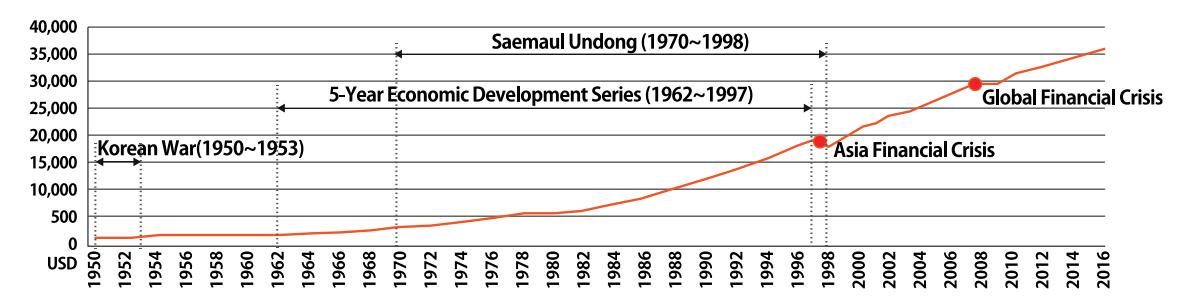
Figure 4 GNI per capita of South Korea after the Korean War (1950-2016)12 .
The Series of Five-Year Economic Development Plans
The five-year development plans were initiated in order to promote wealth in South Korea and strengthen political stability. Economic policy shifted from industrialization for import substitution to export-oriented growth in these five-year plans. Park's military government established four-step five-year plans under the initiative of the planning agency. The targets for each step were always exceeded. The First Five-Year Economic Development Plan (1962-66) presented the initial steps for building a self-sufficient industrial structure, while the Second Five-Year Economic Development Plan (1967-71) stressed modernization of the industrial structure and promoted the establishment of a self-reliant economy. Agriculture played a key role in the South Korean economy at the start of the 1960s, accounting for forty percent of GDP. To meet agricultural demand, the Korea Fertilizer Corporation was established in 19672 and the stateowned Korea Oil Corporation was established in 1962, which later merged into the SK Group. The Pohang Iron and Steel Company (POSCO), established in 1968, supplied the basic materials for future industrialization.
The Third Five-Year Economic Development Plan (1972-76) achieved rapid progress in building an export-oriented and independent economic structure by promoting heavy and chemical industries. Issues related to rural development, such as increasing farmer income, improving the living environment in rural areas and balancing regional development, were addressed during the third period. Meanwhile, the Fourth Five-Year Economic Development Plan (1977-81) fostered the development of industries focused on global export markets and various activities, such as the establishment of a self-directed growth structure, promoted social equity through balanced development, technological innovation and efficiency improvement, because previously unaddressed problems began to arise.
The South Korean government established the next three steps in five-year plans focused on social development. The Fifth Five-Year Economic and Social Development Plan (1982-86) shifted the emphasis away from heavy and chemical industries to technology-intensive industries, such as precision machinery, electronics and information technology. More attention was to be devoted to developing the infrastructure to stabilize the national economy and the people's quality of life in order to strengthen competitiveness and improve the international balance of payment. The Sixth Five-Year Economic and Social Development Plan (1987-91) emphasized economic advancement and promotion of national welfare, while also considering the goals of the previous 12 The background graph was drawn based on data of South Korea's trade economy from the World Bank (https://tradingeconomics.com/south-korea/gni-per-capita-ppp-us-dollar-wb-data.html) on 24th, January 2020.
plan to a large extent. The goal of the Seventh Five-Year Economic and Social Development Plan (1992-96), formulated in 1989, aimed to develop high-technology fields (Table 4).
In the period of Seventh Development Plan, the government chose a different role for itself than in the previous stages. The government's industrial policy was changed from the previous selective fostering policy to a functional support system that indirectly supported industrial development. In other words, the government promoted the development of science, industry and technology by encouraging research activities through government-funded research institutes and subsidizing research expenses for designated research projects. The most important industrial policy of the government implemented during this period was the restructuring of industry. The Shipping Industry Rationalization Plan from 1989 can be mentioned as a representative case of this restructuring policy.
Table 4 Five-Year Economic Development Series of South Korea (1962-1996).
| Stage | Period | Main Issues | Growth rate(%) | GNI per capita (US$) |
|---|---|---|---|---|
| First 5-Year Plan | 1962- 1966 | Expand the electrical/coal energy industry and promote technological advancements, emphasizing infrastructure | 7.8 | 140 (1966) |
| Second 5-Year Plan | 1967- 1971 | Shift to heavy industry by making it more competitive in the global market based on the steel and petrochemical industries | 9.6 | 292 (1971) |
| Third 5-Year Plan | 1972- 1976 | Referred to as the Heavy Chemical Industrialization Plan (HCIP), designating 5 separate fields as strategic fields | 9.2 | 830 (1976) |
| Forth 5-Year Plan | 1977- 1981 | Previously unaddressed problems such as lack of everyday necessities, oil shock, democratization movement, etc. began to arise | 5.8 | 1,857 (1981) |
| Fifth 5-Year Plan | 1982- 1986 | Shift emphasis from heavy and chemical industries to technology-intensive industries such as precision machinery | 9.8 | 2,774 (1986) |
| Sixth 5-Year Plan | 1987- 1991 | Emphasize the goals of the previous plan, intending to accelerate import liberalization and remove restrictions on imports | 10.0 | 7,627 (1991) |
| Seventh 5-Year Plan | 1992- 1996 | Develop high-technology fields, such as microelectronics, new materials, fine chemicals, bioengineering, optics, and aerospace | - | 13,351 (1996) |
Saemaul Undong and Achievement of Rural Development
Saemaul Undong (SU), the New Village Movement, was a community-driven development initiative pursued during the 1970s in South Korea as a key program for the country's long-term economic development, implemented during the period of industrialization. The initial movement was aimed at rural development, while in its latter stages it emphasized various enlightenment activities implemented in relation to the industrial and urban environment. SU achieved its objectives and brought unprecedented success in rural development and people empowerment. The most valuable lesson learned from movement was that it devised appropriate strategies and measures that reflected and made use of specific political, economic and social contexts (Park, 2009).
Stages and Main Issues of Saemaul Undong
In the winter of 1970, the government first distributed 335 bags of cement and 0.5 tons of iron rods to each of the 34,665 rural communities in South Korea under its first experimental community-driven development program. It received a favorable public reaction and achieved significant results. SU then adopted four major government-defined objectives for a better quality of life in rural areas: modernizing infrastructure, raising household incomes, reforesting mountains, and improving the overall rural environment. This was Stage I (1971-1973), focused on provision and improvement of basic rural infrastructure. In 1973, following the appearance of positive tangible results from the initial SU movement, the government designed a long-term plan for its implementation by promoting the movement. Stage II (1974-1976) focused on increasing household income by standardizing agricultural production infrastructure, including activities such as construction of farm roads, alignment of farm roads and farmland, mechanization of agricultural production and developing agribusinesses. Tangible progress of the SU movement immediately appeared in the form of modernization of the agricultural production infrastructure, improvement of the living environment and an increase of rural household income. Activities for improving the living environment included projects of modernized housing, such as replacing thatched roofs by tile or slate coverings, modernizing kitchen facilities, and upgrading overall living conditions in rural villages by means of electrification and telecommunications on a mass scale.
Table 5 Stage and Main Projects of Saemaul Undong(1970-1998).
| Strategies Driving force | - Improving the living environment - Increasing income as a nation-wide community development movement | ||||||
|---|---|---|---|---|---|---|---|
| - Consensus between government and rural people and communities - Revolution in attitude developing people's mindset and attitude | |||||||
| Stage | Period | Main Issues | Main Projects | ||||
| Stage 1 | 1970- 1973 | Foundation & groundwork | ∙ Improving the living environment: Expanding roads, constructing facilities for living, improving houses ∙ Increasing income: Improving farmland/seeds, division of labor ∙ Attitude reform: Fostering diligence, frugality, cooperative atmosphere | 375 US$ (1973) | |||
| Stage 2 | 1974- 1976 | Proliferation | ∙ Increasing income: alignment of rice fields & creeks, encouraging combined farming & common working spaces, identifying non-agricultural income sources ∙ Attitude reform: Saemaul education and public relations activities ∙ Improving living conditions: housing, water supply and village centers | 765 US$ (1976) | |||
| Stage 3 | 1977- 1979 | Energetic implementation | ∙ Rural areas: construction of modern housing, planting special purpose plants, industrial facilities to combine agriculture and manufacturing ∙ Urban areas: Paving and cleaning alleys, establishing order ∙ Corporations and factories: Enhancing productivity, saving materials, promoting sound labor-management relations | 1,394 US$ (1979) | |||
| Stage 4 | 1980- 1989 | Overhaul | ∙ Social atmosphere: Kindness, order, selflessness, cooperation | 4,934 US$ | |||
| ∙ Economic development: Combined farming, credit union activities ∙ Environmental activities: Cleaning, developing parks and better roads | (1989) | |
| Stage 1990- Autonomous 5 1998 growth | ∙ Sound atmosphere: Developing traditional culture, emphasizing hard work, sound lifestyles, recovery of moral ethics ∙ Economic stability: Economic recovery, urban-rural direct trade, ∙ Living environment: better community and autonomous living | 10,548 US$ (1996) |
While these changes brought revolutionary changes in the village environment, Stage III (1977- 1979) of the SU movement's long-term development plan continued, focusing on expanding the number of self-reliant villages through increases in rural household income derived from agriculture-related activities such as animal husbandry or agricultural production by Saemaul factories (ADB, 2012). In the 1980s, the responsibility for the government-initiated SU was assumed by the private sector, enhancing the division of roles between the governmental and nongovernmental sectors. Stage IV (1980-1989) featured efforts to get the campaign back on the right track. Stage V (1990-1998) was characterized by initiatives such as developing independent capabilities, improving competitiveness of organizations in the global market, and reforming the attitudes of citizens to bring about a sound and healthy social atmosphere. SU went through five stages characterized by different ideals, guiding spirits, goals, projects, organizations and activities, but the overall evaluation of the movement remains positive.
Method and Strategy of Saemaul Undong
The government has established and implemented a circular methodology in order to realize the goals of SU, including environmental improvement, mental reform, and increase of income, with the purpose of creating livable villages. Therefore, the government focused primarily on environmental improvement projects with the combined support of government and villager workforces in order to persuade villagers to participate in the absence of physical resources. As in the case of the New Village Recreation Project, which has been in effect since 1970, these projects intended to give confidence to the villagers and inspire them through village environment improvement projects. In this process, the government focused on the mental reform of rural communities. The aim was to induce a mental revolution through specific methods, such as eradicating unproductive conventions, rationally accommodating modern technology and science, leveraging traditional customs, and cultivating a healthy spirit (Figure 5).

Figure 5 Strategy and axis of movement.
Even if the SU movement in the 1970s was led by the government, it was also possible to achieve visible results by voluntary participation in rural villages. Most rural villages participated in the SU movement and in each village Saemaul leaders were democratically elected at village general meetings (ADB, 2012). The activities and roles of Saemaul leaders were influenced not only by the background of the individuals and families, but also by the external environment, including
education offered by the government. From the beginning of the SU Movement, the government paid attention to the roles and functions of Saemaul leaders and made great efforts to foster them. These were aimed at inspiring the pride and mission of Saemaul leaders by providing various educational opportunities and giving rewards. Through Saemaul Education, Saemaul leaders were fostered as practical representatives of the village, certified by the government by awarding Saemaul Medals to pioneers and devoted leaders.
On the other hand, in terms of policy, in accordance with the President's willingness to promote SU, the government urged cities, towns and villages to participate in SU. The President occasionally praised and encouraged successful Saemaul leaders and villages by visiting Saemaul Villages and providing special subsidies, inviting excellent Saemaul leaders to monthly economic reporting meetings at the government level. Saemaul villages were inspected by government representatives and success stories were promoted to all areas of society. Additionally, traditional social structure factors, such as the traditional village meetings in which all villagers can participate, have had an important influence on the movement's ability to attract volunteers. Existing village meetings were continued by various names and types such as gye and hoe until the 1970s. At the start of SU movement they were incorporated into the organizational system of the SU. By incorporating local organizations such as the women's club, the young man's association, the senior's association, working groups, the mutual aid society, and the village fund into the village development committee, a social structure was created in which all villagers could participate. Village heads, Saemaul leaders and local governments were able to use the village development committee to attempt various exchanges with villagers for publicity and education about SU movement policies and for enlightenment and persuasion.
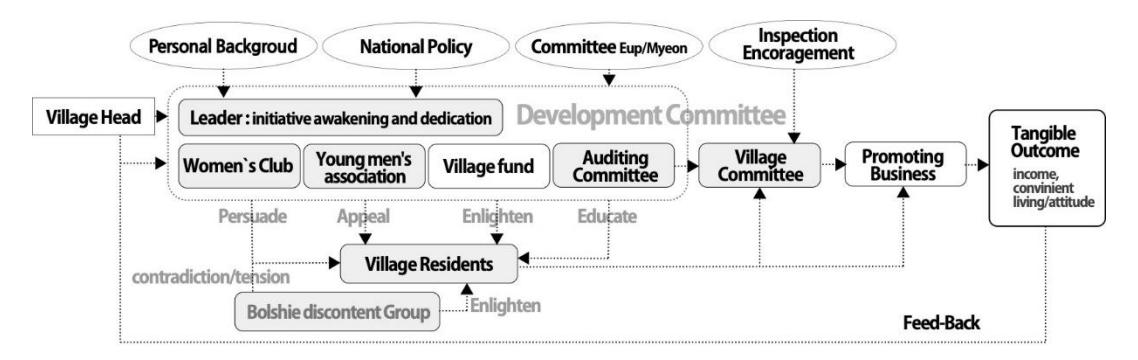
Figure 6 Organizational system of Saemaul Undong13 .
In the village committee, land donations, fundraising, and consensus building were conducted among the villagers, and positive reflux effects could be seen in accordance with the tangible performance of the SU movement, while an uncooperative atmosphere and dissatisfaction with the SU project could be excluded from the village. The SU movement was able to produce successful results in rural villages in the 1970s due to the enthusiasm of the Saemaul leaders, effective policies from the government and the President, and the durability of the social structure of the rural village (Figure 6, re-configured by author from source: DaSM, 2008).
Outcomes and Limitations
In 1960, South Korea was a poor and desperate country, with 80% of the population suffering from 'barley humps' until the new barley harvest in late spring. SU was a movement that led the struggle to escape from the bridle of poverty. SU leaders who volunteered in each village tried to 13 Re-configured by author from the original figure: DaSM (2008) 9p.
improve the living environment in the villages and made impressive achievements. SU brought significant increases in household income, poverty reduction, environment improvement as well as social development.
(1) Income Increase and Poverty Reduction
Basically, SU focused on the reduction of the income gap between rural and urban households, and the eradication of absolute poverty. Therefore, projects for increasing individual and communal incomes were among its most important goals. Advanced agricultural technologies and improved crop varieties and the usage of chemical inputs and fertilizers became even more widely implemented. Improvement of rural infrastructure helped productivity increase and income grow by opening a new window of opportunity for villagers to venture into new activities and by providing efficient access to the markets, resources and assets necessary for their work (Park 2009). This is apparent from the fact that 96% of SU investment went to rural communities, with 44% being used to fund income-generating projects (ADB 2012). Income of rural households increased remarkably during the 1970s, from the movement's Stage I to the first year of Stage III. Average annual rural household income was in balance with its counterpart in urban areas (Table 6, source: ADB, 2012).
Table 6 Annual Household Income of Rural Farmers and Urban Laborers (1970-1979)14 .
| (Unit: 1,000 KRW) | |||||||
|---|---|---|---|---|---|---|---|
| Rural Farmers (A) | Urban Laborers (B) | Difference | |||||
| Year | Income per household | Percent increase | Income per household | Percent increase | A-B | A/B | |
| 1970 | 255.8 | 28% | 381.2 | 39% | (125.4) | 67.1% | |
| 1971 | 356.4 | 39% | 451.9 | 18% | (95.5) | 78.9% | |
| 1972 | 429.4 | 20% | 517.4 | 14% | (88.0) | 83.0% | |
| 1973 | 480.7 | 12% | 550.2 | 6% | (69.5) | 87.4% | |
| 1974 | 674.5 | 40% | 644.5 | 17% | 30.0 | 104.6% | |
| 1975 | 872.9 | 29% | 859.3 | 33% | 13.6 | 101.6% | |
| 1976 | 1,156.3 | 32% | 1,151.8 | 34% | 4.5 | 100.4% | |
| 1977 | 1,432.8 | 24% | 1,405.1 | 22% | 27.7 | 102.0% | |
| 1978 | 1,884.2 | 32% | 1,916.3 | 36% | (32.1) | 98.3% | |
| 1979 | 2,227.5 | 18% | 2,629.6 | 37% | (-402.1) | 84.7% | |
In particular, the projects for the breeding of improved varieties of rice during Stage I ended barley humps. Consequently, the SU movement successfully solved the endemic problem of absolute poverty through its income-generating projects.
(2) Improvement of Living Environment and Rural Infrastructure
The SU movement brought various improvements in the rural living environment and infrastructure. The improved physical infrastructure helped to increase productivity and income, with better access and wider opportunities. Widened and extended roads made mechanized farming possible, while the extension of the electrical and telecommunications infrastructure provided timely information and enabled people to adjust to changing market situations. Thus, the SU movement transformed people's life in rural communities by introducing motor vehicles, mechanized farming, electricity and telephone services. In the early 1970s, only 24.1% of the nation's homes had access to electricity and only 11.1% had telephones. SU budgets were 14 ADB (2012).
dominated by electrification projects, targeting the country's 2,834,000 houses that lacked access to electricity. As a result, 2,777,500 houses, or 98% of the targeted number, had been electrified by 1979 (ADB 2012). The experience of cooperation with the government provided learning-bydoing opportunities for building capacity in project management.
(3) Change of Attitude and Social Atmosphere
The general view of farmers was that they were conservative, unwilling to participate in cooperative efforts, hedonistic and lazy in 1970. These bad habits and negative attitudes were considered to be the background of low agricultural productivity and chronic poverty. Thus, the main way to change rural living conditions was to bring aboutsignificant changes in rural people's attitudes. SU received a favorable response and achieved significant results through its campaign for attitudinal change. More than 500,000 people participated in SU training programs from 1972 to 1979. The Saemaul spirit with three components (diligence, self-help, and cooperation) spread rapidly as well. The culmination of all these attitudinal changes was the empowerment of people and improvements in local governance. The leading factor was the atmosphere of enthusiastic participation rather than something provided by the government, even though the government gave administrative and financial support to the movement. This attitude can be seen as a special mode of social capital in South Korea called sinbaram. 15
Simultaneously, the movement encouraged voluntary participation by awakening the Saemaul spirit of diligence, self-help, and cooperation in the rural population. As a new kind of community-based leadership, Saemaul leaders were elected by the villagers and the villagers worked together towards common goals under their leadership (Park, 2009). SU thus stimulated social capital formation in terms of leadership and cooperation derived from of enthusiastic participation, the foundation of which is trust, networking, and social norms (ADB, 2012).
SU's program was efficiently carried out in the 1970s by relying on government-led national administrative organization and achieved many results in a short time. However, with government-led development promotion, there was a limit to sustaining the active participation of rural residents' organizations. The administrative capacity reached its limits in the process of carrying out the increasing tasks of rural reform. Therefore, the responsibility for SU was taken over by the private sector in the 1980s in order to sustain voluntary activities by private organizations, intending to make advancements in achieving national harmony through the participation of residents in the movement. Unfortunately, undesirable corruption occurred in the private organizations and the democratization movement and the growing resistance against the military government during the 1980s changed the social atmosphere. Although the formal organization of the SU was maintained, in terms of voluntary participation the movement was greatly weakened.
Recent Rural Development Policy in South Korea
The rural development projects in South Korea were not only about economic growth but also about the reduction of poverty and inequality and the transition to democracy. Consistent efforts to further develop an inclusive society, including the successful economic and social policy response to the Asian Economic Crisis in 1997 and the Global Economic Crisis in 2008, are particularly notable features of South Korea's development experience (UN, 2016). The 15 Sinbaram in Korean means an atmosphere in which people are happy and excited when their wishes are fulfilled or good things happen, which can be compared with 'volunteerism' in a Western context, resulting from trust, social networks and norms.
challenges in terms of land use and urban regeneration vary from place and time. Economic restructuring, unemployment, social exclusion, insufficient infrastructure quality, and a lack of adequate affordable housing often define the content of the regeneration process and its operation in South Korea. (OECD, 2019).
Change of Rural Development Policy (1970~2020)
The current rural development projects in South Korea targeting the eup and myeon areas that are classified as rural areas for improving the quality of rural life by social policy. SU upgraded the poor infrastructure in rural areas by organizing community-level group activities carried out by residents to pave roads, construct village centers, and maintain small rivers as a nationwide movement during the 1970s. As the economic gap between the urban and rural areas widened and the rural population rapidly decreased, many local communities lost vitality and the settlement environment deteriorated in the 1980s, 16 the Korea Rural Economic Institute proposed 'comprehensive development in rural areas' in 1984 as an integrated concept for regional policy to be implemented by local authorities. Comprehensive rural development plans for complementary linkage between rural towns and hinterland, urban-rural linkage at the regional level to improve local economies and the everyday living environment, and comprehensive development linked with social welfare were carried out as pilot projects (KREI, 2019).
In the 1990s, national investments in agriculture and rural areas expanded greatly as the crisis in the farming sector and the implementation level of rural development was changed from the gun (county) level to the eup and myeon level. For some myeons in remoter areas, where the living conditions were even poorer, the Ministry of Home Affairs carried out Remoter Area Development Projects. In the 2000s, the government adopted balanced regional development policies to spread socio-economic functions and infrastructure to the provinces, establishing Comprehensive Measures for Agriculture and Rural Areas and enacting the Special Act on Improvement of Quality of Life of Farmers and Fishermen and Promotion of Development in Rural Areas. By improving poor public services and promoting integrated regional development, the government intended to overcome the worsening conditions in rural communities caused by the opening of the domestic agricultural products market and falling prices of agricultural products.
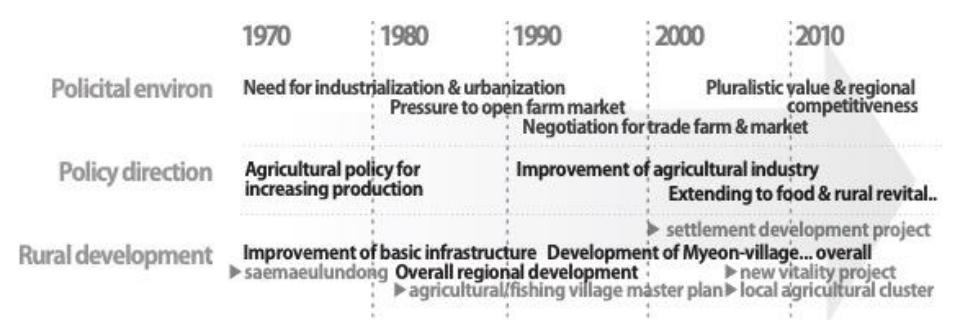
Figure 7 Change of rural development policy (1970-2010).
In the 2010s, rural development projects supported by a block grant subsidy program were introduced as integrated rural development policies were linked with various sectors. Projects to improve the quality of life in rural areas by cooperative projects between departments for welfare, 16 Although, income inequality was mitigated during the development and growth period of the 1970s and 1980s, the rural population continued to decline sharply after the 1980s as the economic gap between urban and rural areas and the gap in socio-cultural opportunities deepened.
health, education, regional development and other departments were implemented. Moreover, the government improved the system by reducing the intervention of the central government and increasing the autonomy of local governments. In 2020, rural policies in South Korea were expected to face a new turning point with a significant portion of the central government's budget for local development projects being transferred to local governments (Figure 7).
Recent Projects for Rural development
(1) Project for Improving the Quality of Life
The government established Agricultural and Rural Comprehensive Measures in 2004 as a comprehensive countermeasure to various problems faced by agriculture and rural communities in order to cope with the crisis, such as agricultural import liberalization pressure17 and aging rural areas, and implemented the five-year Basic Plan for Improving the Quality of Life of Agriculture, Forestry and Fisheries and the Development of Agricultural and Fishing Villages by enacting the Special Act on Improvement of Quality of Life to Improve Living Conditions in Farming and Fishing Villages (March 2004).
The first phase (2005-2009) of the Basic Plan focused on securing welfare and educational infrastructure and developing the region of underdeveloped farming and fishing villages. The second phase (2010-2014) was dedicated to providing standards for public services in farming and fishing villages, discovering new resources and exploiting their value. Otherwise, the major contents of the third phase of the Basic Plan (2015-2019) was based on the vision of creating happy and livable farming and fishing villages based on vibrant communities, reducing the urbanrural gaps in health and welfare, education and infrastructure.
Category Contents Health & Welfare Expand the social safety net for farmers and fishers in the form of a national pension, regional medical institutions for emergency and childbirth, and Nonghyup's visiting happiness bus services Education & Culture Expand ICT base for smart learning, foster excellent middle schools in each city and county, reinforce career path education in farming and fishing villages, and expand cultural facilities such as small theaters Residential Conditions & Environment Improve central parts of eup and myeon and build practical infrastructure such as shared homes for seniors, small LPG storage facilities, agricultural wastes and livestock excreta treatment facilities, and transportation specialized for farming villages Jobs Support startup and commercialization, combining processing of agricultural and fishery products and tourism by designating Farming and Fishing Village Convergence Industry Support Centers and promoting Urban-Rural Job Centers Safety Improve facilities that are vulnerable to natural disasters, install additional surveillance cameras in villages, and improve safety in everyday life, for example when using agricultural machinery
Table 7 Major Contents of the Phase Three of the Basic Plan.
In particular, measures to increase income levels in farming and fishing households, to reduce imbalance in supply and demand of manpower, and to prevent natural disasters, crimes and 17 After the 1994 Uruguay Round negotiations, the markets for all agricultural products except rice were opened. From 2004, when the grace period of tariffication on rice imports was over, the pressure to open the rice market from outside began to increase, and it was finally opened in 2015.
accidents were strengthened during this period (Sim, 2017). The Basic Plan provided a promotion system and a legal and institutional basis for collaboration among departments and contributed to improving the basic conditions of rural life, expanding the base of urban and rural exchange and revitalizing local economies.
(2) General Agricultural and Fishing Village Development Project
In 2009, the existing 210 regional development projects were merged into 24 business groups, a comprehensive subsidiary project. Twenty of the projects consisted of autonomous organization projects in cities and provinces, while four projects consisted of autonomous organization projects in cities, counties, and districts. The government systematically ensured that local governments could autonomously plan and promote regional development projects within budget limits.
| Type of project | Contents |
| Revitalization of rural centers | Fostering rural centers as a rural development base with competitiveness by utilizing the potential and unique themes of a region as a connecting base to the hinterland and the city |
| Creation of creative villages | Through step-by-step support based on village capacities develop villages while making reasonable use of the budget to create a rural villages everyone wants to live in |
| Empowerment in cities and counties | Promote creative SW-oriented projects to create cultural, public, and economic added value, spread business effects across cities and counties, and strengthen capabilities |
| Infrastructure for basic living | Rural living environment maintenance, rural vacant house maintenance, tillage road expansion and paving, small-scale rural water development, and so on |
Table 8 Major Contents of the Phase Three of the Basic Plan.
The Ministry of Food and Agriculture implemented the General Agricultural and Fishing Village Development Project through municipal, county, and district autonomous organization projects.18 Promoted projects were reorganized into four types: revitalization of rural centers, creation of creative villages, empowerment in cities and counties, and infrastructure for basic living (table 7). As a result of long-term investment through rural development projects, the basic living infrastructure has been steadily expanded. However, with the aging trend of the population in rural areas and the income gap between urban and rural areas unfolding over decades, the impact of the basic infrastructure on improving the quality of life of residents is relatively decreasing.
(3) Happy Local Life Circle Project
A 'happy local life circle' is defined as the daily life circle of residents who can enjoy basic infrastructure of good quality, jobs, education, culture, and medical and welfare services. The Happy Local Life Circle Policy is a local-led resident-oriented policy targeting residents' daily living zones, which was promoted for efficiency and win-win development of policies through cooperation between local governments. A regional happy local life circle consists of two to four adjacent local governments and if necessary a zone that transcends the boundaries between a metropolitan and municipalities can also be included. A rural happy living circle can be composed of small towns with rural characteristics rather than urban ones and nearby rural areas. Synergistic
18 Among the municipal, county, and district autonomous organization projects, the General Agricultural and Fishing Village Development Project was managed by the Ministry of Agriculture and Food, the Growth Promotion Zone Development Project and the City Vitality Promotion Zone Development Project were managed by the Ministry of Land, and the Special Situation Zone Development Project was managed by the Ministry of Safety Administration from 2009.
effects can be expected through complementary linkages and integration between areas. The Happy Local Life Circle Project is a legislative autonomous plan established every five years, including vision, goals, development strategies, major business plans, and implementation plans for each circle. In some cases, there is consensus on the necessity of inter-regional cooperation and the response of residents is improved through linkage cooperation between local areas within the living circle (Jeong, 2017). However, the project has been criticized for the lack of a careful review of regional settlement characteristics such as regional economic infrastructure, social exchanges and public services, and the lack of public consensus on the social necessity and feasibility of linkages and integration between regions in each case (Sim, 2017).
Issues for Current Rural Development Policy
Sustainable development to improve the quality of life of rural residents and increase rural income is an essential task for future generations. Recently, the Fourth Basic Plan for Quality of Life was established to activate new opportunities such as value enhancement in rural and fishing villages, based on the awareness of the crisis situation, such as the aging trend, the captivation phenomenon, the gap in living conditions with cities, and the polarization phenomenon in rural areas. However, despite recent rural development projects targeting a variety of goals, there are chronic problems that are difficult to solve. Therefore, in order to effectively promote the projects for regional development and improvement of the living environment, we still need to focus on issues of the aging trend, import expansion and the lack of interconnection between related laws and regulations.
(1) Depopulation and aging tendency in rural areas
As the fertility rate and the productive population have been decreasing gradually and the life expectancy is increasing, South Korea is becoming one of the fastest aging societies in the world and there is an increasing number of elderly people who live alone in rural villages. In addition, the population of eup areas is expected to increase due to better conditions for settlement and economic activity, while the population of myeon areas is likely to decrease. Therefore, it is necessary to develop a variety of policy measures to secure a competent agricultural workforce in the future and to satisfy the elderly population in agricultural activities and rural life.
(2) Import expansion and unstable grain supply by FTA
As the uncertainty in the international trade environment increases, the consumption of domestic agricultural products stagnates while international oil prices are expected to continue to rise, it is expected that the environment of agricultural products trade will gradually deteriorate. As agricultural imports expand, agricultural income growth will not be available and the income gap between the provinces is expected to continue to grow. Therefore, it is necessary to create high added value in the promising industry of future agri-food products, such as functional health food, the food service industry, and the seed and life industry.
(3) Limits of interconnection between related laws and regulations
Through rural area development projects many laws have been enacted and implemented in various fields, but there are limits to applying the new rural area development policy paradigm due to lack of interconnections. The development and maintenance of rural areas are being conducted based on the National Land Planning and Utilization Act and the Development and Farming and Farming Development Act. For more efficient implementation of rural development projects, systematic review and maintenance of related laws and regulations, including the landuse system, should be conducted.
Conclusion
Since the 1950s, national spatial planning has played a key role in the socio-economic development of South Korea. The national spatial planning has evolved from modernization of the industrial structure to promoting globalization and sustainable development (OECD, 2019). Currently, land-use policies aim to pursue balanced development of the land and improvement of regional inhabitants' quality of life and employment promotion. Rural development activities have been planned and executed in South Korea to achieve a balanced evolution of the national land-use planning system.
The National Land Law was enacted for the purpose of contributing to a healthy development of the national land and improvement of the living environment. The National Land Planning and Utilization Act arranges matters necessary for the establishment and execution of plans for the use, development and conservation of the national land. Based on the land management system, South Korea's economy has shown impressive growth during the past half-century. The series of Five-Year Economic Development Plans that laid the foundation for Korea's economic development and the SU movement were enacted as driving forces for a remarkable economic development and increased self-confidence of the people from the beginning of the modern era. The series of Five-Year Economic Development Plan was designed to increase wealth within South Korea and strengthen political stability and subsequently the formation of market-based policies toward an advanced Korea. Meanwhile, Saemaul Undong as a South Korean community development program improved villagers' quality of life and raised rural income based on a spirit of diligence, self-help and cooperation.
Recently, the development and maintenance projects implemented in rural areas in South Korea are being conducted based on the National Land Planning and Utilization Act, enacted in 2002 for urban and rural areas, and the Development and Farming and Farming Development Act. However, even if eup populations show a growing trend, rural areas have already become aging societies. Rural development projects in South Korea during the 2010s were introduced as integrated rural development policies linked with various sectors by cooperative projects between departments of government. The Project for Improving the Quality of Life provided a promotion system and a legal and institutional basis for collaboration among departments and contributed to improving the basic conditions of rural life, expanding the base of urban and rural exchange. In 2009, the government systematically ensured that local governments could autonomously plan and promote regional development projects within budget limits. The Ministry of Food and Agriculture implemented the General Agricultural and Fishing Village Development Project among municipal, county, and district autonomous organization projects and the Happy Local Life Circle Policy was implemented as a local-led resident-oriented policy targeting residents' daily living zones as well.
In this paper, some issues were identified as problems to be discussed for more reasonable promotion of rural development projects in South Korea, such as the limits of interconnection between related laws and regulations, the depopulation and aging trends in rural areas, and import expansion and unstable grain supply by FTA. In a situation where nationwide attention to the phenomenon of 'local extinction' is required, the living conditions of farming and fishing villages and the quality of life of the residents no longer exclusively fall under the ministries or the relevant regions. Moreover, measures to alleviate the social and economic impacts from the low-growth era on rural areas need to be considered too.
Acknowledgement
This work was supported by a 2-Year Research Grant from Pusan National University and was presented at Endinamosis.