

Introduction
In the transitional process of a country developing from a traditional agricultural economy to a modern industrial economy, the phenomenon of the urban-rural dual economy is common. Rural areas are usually poor and backward, with weak infrastructure. To accelerate the modernization process of rural areas, two models are generally used in developing economies. One is efficiency-oriented intervention aimed at development. In the initial stage, the economic development level of the entire country, which can be described as a backward and poor traditional agricultural society, is very low. It is urgent to develop a modern urban economy, refeeding agriculture with industry, liberating rural labor, increasing agricultural labor productivity, and driving rural development through urbanization, modernization and industrialization (Jiang, 1999; Zeng, 2003). The other approach is equity-oriented intervention aimed at social stability, where rural development is promoted directly by policy and fiscal support. Examples are the New Village Movement in South Korea, the Six Industries strategy in Japan and Taiwan, etc. According to survey data, government support recently accounted for 58% of rural income in Japan and 63% in South Korea (Qu & Zhang, 2009; Zhao & Lee, 2018).
From a historical perspective, many developing countries have tried to strike a balance between these two models and China is no exception. China's rural areas mainly refer to regional complexes outside the built-up areas of cities, with specific natural, social, economic characteristics and multiple functions related to production, life, ecology and culture, including townships (ethnic townships, towns), villages (including administrative villages, natural villages, etc.). Since the introduction of the reform and opening-up policy in 1978, China has entered an era of rapid urbanization (Jiang, 2002). The urban-rural dual structure has continuously been strengthened, poverty in rural areas has been deteriorated, and the urban-rural dual economy has been solidified due to the household registration system and the social management system. To ensure social equity, the central government had to provide policy intervention and financial support for rural development. At different stages of urbanization, the policy interventions for rural development have gone through several typical periods. At the same time, due to the significant regional differences, the local-level responses to national-level policies differed from one another.
This paper reviews the rural development accompanying China's urbanization process, discussing the following questions: 1) What is the relationship between the evolution of national rural policies and the different stages of urbanization? 2) How did different regions at different development stages respond to the national policy and promulgate rural development policies suitable for local conditions? This paper is organized into seven sections. Following the introduction, the theoretical basis of urban and rural development and government intervention is explained. The research method and the profiles of the case study areas are introduced in the third part. The fourth section summarizes the evolution of China's rural development policy under the developmental government model. Section 5 takes Shanghai, Suzhou, Chengdu, Chongqing, Zhejiang Province and several regions in central and western China as examples, and compares the differences in policy intervention in rural areas in different development stages in response to central policies, based on three aspects: urban-rural coordination, rural revitalization, and rural poverty alleviation. In Section 6, the rural development practices in the context of rapid urbanization in China are re-conceptualized and a government intervention development model is proposed that is adapted to the development stages of urbanization. The final section provides some relevant discussions and summarizes the results.
Urban-rural Relationship and Government Intervention
In terms of the development of the urban-rural relationship, economists, urban planners, geographers, sociologists and demographers have developed plenty of theoretical frameworks, for example the S-curve model of the urbanization process, linear stages-of-growth models, and theories of structural change.
- 1)The S-curve model of the urbanization process, as proposed by Kingsley Davis (1965), is based on statistical laws and argues that the urbanization process follows an attenuated S-curve with a long left tail representing slow urbanization, a rapidly rising mid-section as the country industrializes, and then a flattening right tail that will eventually remain steady or decline (Figure 1). A country may be considered fully urbanized when its urbanization ratio reaches 75% to 85% (Chen, Legates, Fang, 2018).
- 2)Linear stages-of-growth models include Rostow's stages of growth model, Chenery's industrialization stage theory, Kuznets' five-stage theory, Huffman's four-stage theory, etc. (Chen, 2015). These models describe the focus of economic development gradually shifting from rural to urban accompanying industrial development.
- 3) As for theories of structural change, the most representative is Lewis' dual development model (Lewis, 1954) (Figure 2). He believes that the marginal productivity of plentiful surplus laborers in rural areas of developing countries is negligible; it can be zero or even negative. These rural areas cannot develop without capital accumulation. Therefore, the government should adopt policies to accelerate the transfer of the remaining rural labor force to the capitalist field, promoting a pattern of industrial-driven rural development. Finally, the gap in productivity and wage levels between urban and rural areas will gradually disappear.
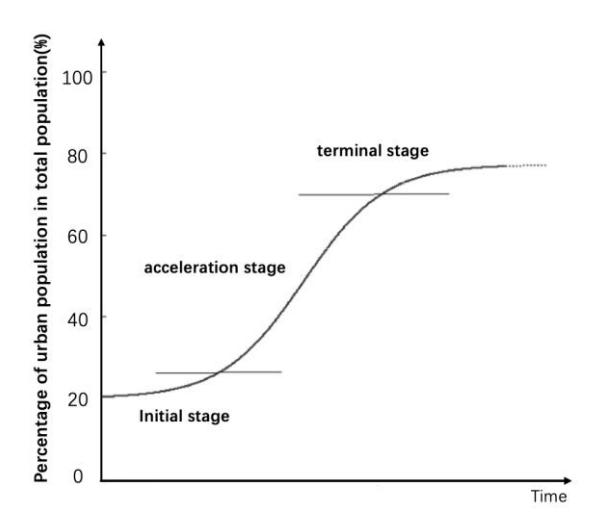
Figure 1 The S-curve of urbanization and its stages.
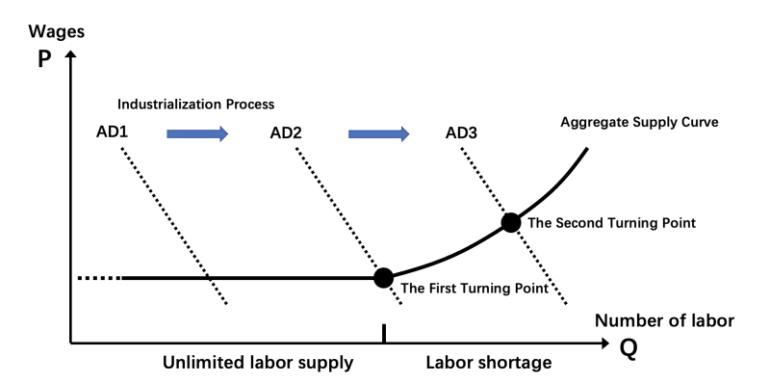
Figure 2 Schematic diagram of Lewis' turning point.
What these theories have in common is that they all emphasize the laws behind the evolution of urban-rural relations, ignoring the critical role of government intervention in urban-rural development. Whether in the West or in the East, in developed or in developing countries, government-led policy intervention is always there in the evolution process of urban-rural relations, with different policy tools. European and American countries have typical characteristics of large rural areas and strong agriculture, and the predominant idea of urbanrural development is market-led development with little government regulation (Huang, 2007). With a long farming tradition, East Asian countries are usually characterized by a small-peasant economy. The starting point of urban-rural relations is similar. The so-called developmental state model emphasizes the leading role of the government in economic development, reflected in the central government's strong intervention in urban-rural development, which is totally different from the Western neoliberal model. Due to the economic take-off of the NIEs3 after the Second World War, the East Asian developmental state (state or government in different contexts) model became the third way to replace the Soviet centrally planned economy and the US free-market model, typically including a willingness to stimulate continuous development, a highly cohesive economic and administrative agency, good relations between government and business, national autonomy, and selective enforcement of industrial policies (Zhang & Wang, 2015; Liu, 2011; Huang, 2016).
China has been actively engaged in government intervention to promote rural development and has formulated a large number of public policies as well as investing huge amounts of funds, so it can be seen as a socialist developmental state or a human developmental state. On the one hand, since 2002, from the perspective of managing urban-rural relations, coordinating urbanrural development has been a policy that was continuously emphasized at the national level in China. The policy goals have gone from urban-rural coordination (chengxiang tongchou) (2003) to urban-rural integration (chengxiang yitihua) (2008) and urban-rural co-prosperity (chengxiang ronghe fazhan) (2017). On the other hand, from the perspective of rural development, China's rural policies have gone through several stages: building a new socialist countryside (shehui zhuyi xin nongcun) (2006); building a beautiful countryside (meili xiangcun) (2013); and rural revitalization (xiangcun zhenxing) (2018). However, so far, in-depth research on the Chinese government's policy intervention in rural development as a developmental state is scarce and is worthy of a systematic summary.
3 The Newly Industrialized Economies, referring to the four economies of Taiwan, Hong Kong, South Korea, and Singapore, praised as the four rising powers of Asia.
Research Design
Research Methods and Data resources
This paper first reviews the history of China's urbanization development since the founding of the People's Republic of China, sorts out national policy documents related to rural development, and divides relevant policies at different development stages according to the following aspects: 1) efficiency and equity, 2) urban-rural relations and rural development. Further, in order to clarify how urban-rural development policy can play a role under the guidance of China's emerging developmental government, this paper summarizes the responses of regions at different stages of the urbanization process to the central rural policy according to the following three aspects: urban-rural coordination, from the perspective of urban-rural relations; rural revitalization and rural poverty alleviation, from the perspective of rural development.
In this study, in-depth semi-structured interviews were conducted with experts from the leading group in charge of the Urban and Rural Development Bureau of the case cities (usually located in the Agricultural Office), the Municipal Planning Bureau, the local provincial and municipal planning institutes, and local colleges and universities. The abovementioned systematic research was carried out based on relevant research topics commissioned by the local government of the case cities and regions in which the authors presided or participated. At the same time, also relevant research reports, literature and statistical data were used as auxiliary research materials.
Case study descriptions
To shed light on how coordinated urban development policy contributes to China's emerging human developmental state, this study examined coordinated urban-rural development in China's the two developing megacity regions with the most advanced coordination programs (Chengdu and Chongqing) and two highly urbanized megacity regions with well-developed strategies to integrate city and countryside (Shanghai and Suzhou). The reasons for choosing these four cities as the research objects were: on the one hand, the urban and rural development stages of Chongqing, Chengdu, Suzhou, and Shanghai have certain differences, forming a combination of cases with low to high stages of urban and rural development (Table 1); on the other hand, Chongqing and Chengdu are national pilot zones for the reform of the national urban-rural coordination; Suzhou is a national pilot zone for the reform of urban-rural integration; and Shanghai is the first pilot city in the country to promote coordinated urban-rural development (in the 1990s). These cities have large policy spaces for coordinating urban-rural development with many policy tools and the creativity of local governments has been fully demonstrated.
In terms of rural revitalization, this study took Zhejiang Province as an example to briefly describe the process and working methods of rural development practices in that province and the differences with efforts in other provinces in China. Zhejiang Province is located in the eastern coastal area of China and its level of economic development is relatively high. In 2019, the urbanization rate of Zhejiang Province reached 68.9%, which is among the highest in the country (Figure 3). Its rural development policies and practices are pioneering and typical for developed regions and even across the country.
As for rural poverty alleviation, this study selected a number of policy practices in underdeveloped areas in central and western China. We introduce rural poverty alleviation
experiences and methods as well as China's impressive achievements in this field. Figure 4 shows the locations of the case areas selected in this article.
Table 1 Comparison of Urban and Rural Development Level and Fiscal Revenue and Expenditure of the Four Case Cities (Source: Compiled by the author according to the 2019 National Economic and Social Development Bulletin of each city. The per capita indicator was calculated based on the permanent population)
| City name | Shanghai | Suzhou | Chengdu | Chongqing |
|---|---|---|---|---|
| City administrative level | Municipality | Prefecture- level city | Prefecture- level city | Municipality |
| Administrative unit | 16 districts (including 107 streets, 109 towns and 1593 villages) | 6 districts, 4 county-level cities (including 55 towns and 1039 villages) | 11 districts, 4 counties, and 5 county-level cities (including 204 townships and 1911 villages) | 26 districts, 8 counties, 4 autonomous counties (including 204 neighborhoods, 804 townships, 14 ethnic townships, and 8220 villages) |
| Jurisdiction area (km²) | 6340 | 8488 | 14312 | 82400 |
| Population (ten thousand) | 2428 | 1075 | 1658 | 3124 |
| Urbanization rate (%) | 88.1 | 77.0 | 74.4 | 66.8 |
| Urban-rural income ratio | 2.22 | 1.95 | 1.88 | 2.50 |
| GDP (100 million yuan) | 38155 | 19236 | 17013 | 23606 |
| GDP per capita (ten thousand yuan) | 15.73 | 17.92 | 10.26 | 7.56 |
| Per capita local general public budget revenue (yuan) | 29510 | 20668 | 8945 | 6833 |
| Per capita local general public budget expenditure (yuan) | 33687 | 19919 | 12104 | 15518 |
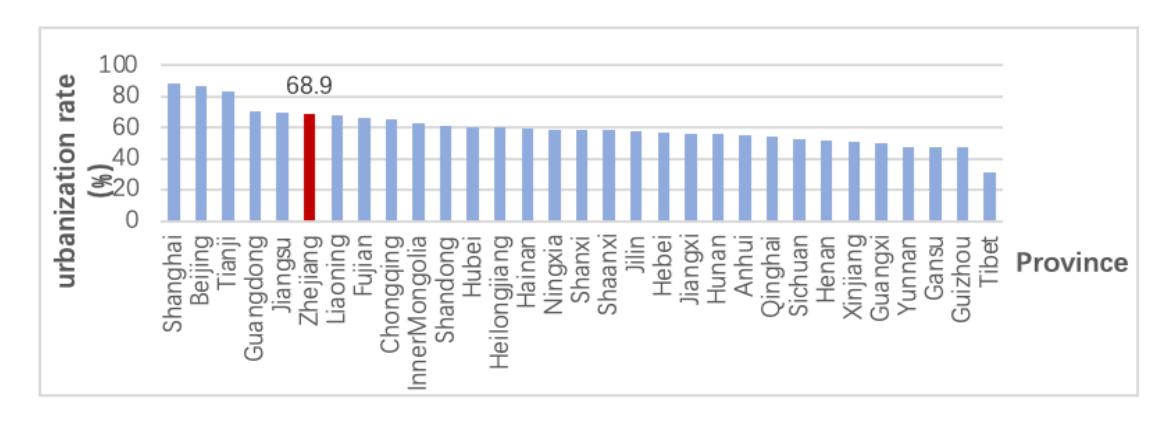
Figure 3 Urbanization rate of China's provinces in 2018.
Source: 2019 China Statistical Yearbook
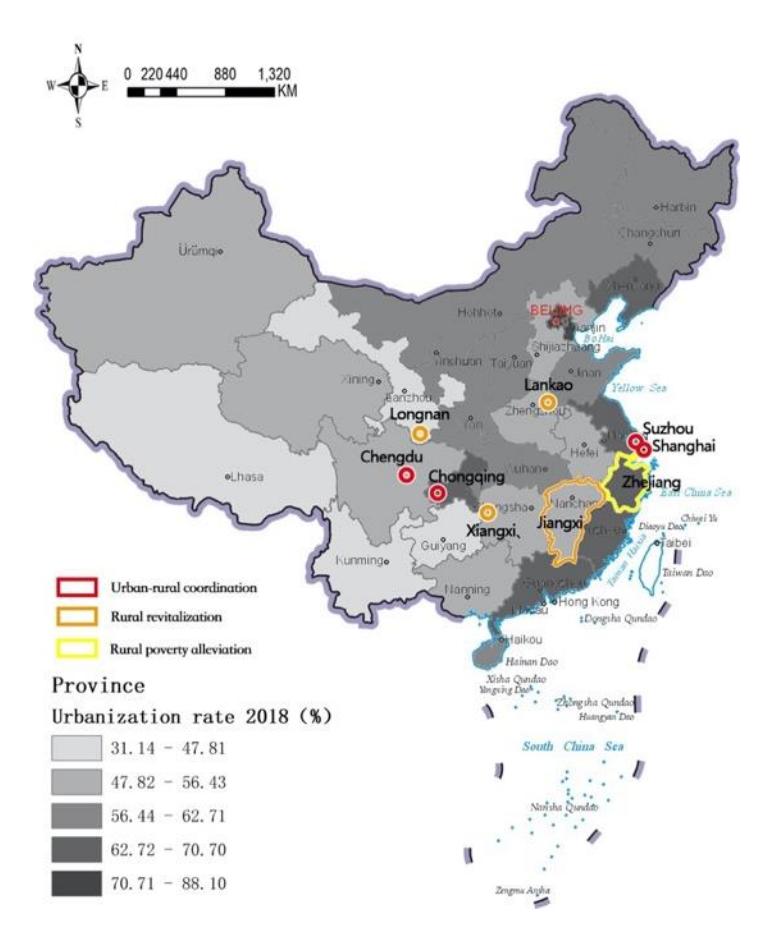
Figure 4 Urbanization rate and case distribution in China's provinces.
Figure drawn by the authors.
Changing Policies on Rural Development Accompanying China's Urbanization Process
The development of China's urbanization since 1949 (when the People's Republic of China was founded) can be roughly divided into four stages: the pre-industrialization stage (1949-1952), the initial stage of industrialization (1953-1957), the stagnation stage (1958-1978), and the rapid growth stage after 1978 (Zhu, 2003; Zou, 2004; Tang & Zhou, 2005). As mentioned above, since 1978 China has implemented the reform and opening-up policy, focusing on economic development and entering a wave of rapid urbanization. At the same time, in the process of national economy adjustment, much attention has been paid to the macro-control of agricultural development (Zhou & Zhu, 2018), focusing on restoring and developing agricultural production, and gradually realizing agricultural modernization to promote the national economy. Since then, China's rural development has ushered in the so-called 'second leap' 4 4 The Chinese Communist Party has made two historic leaps in the process of combining Marxism with Chinese reality. The first leap took place during the period of the new democratic revolution. After repeated explorations, the Chinese Communists, represented by Mao Zedong, found China's revolutionary path and established Mao Zedong Thought, guided by which a historic victory of the revolution was achieved and a socialist system was established. The second leap took place after the Third Plenary Session of the Eleventh Central Committee of the Communist Party of China. The opportunity. Rural society has developed rapidly, with significantly improved agricultural production efficiency and continuously increasing farmers' income. Looking back on China's rural policies since 1978, reform is a constant theme, mainly focusing on the two main lines of efficiency and equity, urban-rural relations and rural development (see Appendix 1).
From the perspective of the process of urbanization, this article divides China's national-level policy on rural development after 1978 into the following five stages:
- (1) The stage of rural economic system reform promoting urbanization (1978-1984), when market-oriented reforms took the lead in rural areas and rural policies were farmer benefitsoriented and inspired farmer autonomy (Wang & Fang, 2006). The main policies included reforming the rural operating system and establishing a household contract responsibility system, deconstructing the people's commune system and establishing a rural governance system, developing diversified operations, and regulating the rural economy and agricultural structure. During this period, agricultural and rural areas developed rapidly.
- (2) The stage of urbanization driven by township enterprises and urban economic system reform (1985-1992), when marketization was the main orientation of rural policies, focused on establishing agricultural market mechanisms and developing rural commodity economies. Besides, the central government supported and guided the development of township enterprises while also adjusting and optimizing the rural economy and industrial structure, increasing agricultural investment to ensure the power of agricultural development.
- (3) The stage of urbanization promoted by the transformation of the socialist market economy system (1993-2001). Rural policies were mainly oriented towards establishing a rural socialist market economy system in this stage. However, with the comprehensive development of economic system reform, especially the establishment of a socialist market economic system in 1992 and the advancement of reform and opening-up, it caused to the emergence of developmental local governments and once again led to an imbalance in urban-rural relations (Xing et al., 2019). During this period, rural labor and land entered into urban sectors on a large scale.
- (4) The stage of coordinating urban and rural development (2002-2012), when the central government was determined to curb the condition of dual separation between the urban and rural sectors, coordinate urban and rural development, and let the farmers share in the fruits of reform and development. During this period, the policy focused on rural tax-fee reform and the building of a new socialist countryside. Urban-rural coordination in the economic and social field was promoted and comprehensive rural reforms were launched in order to increase farmers' income and improve the capacity of the overall agricultural production (Wang & Fang, 2006). The concept of urban-rural coordination was also put forward as a long-term task.
- (5) The stage of urban-rural integration and rural revitalization (2013-present). Since 2013, the central government has attached great importance to the adjustment of urban-rural relations and proposed to advance China's urban-rural relations from coordinated development and integrated development to the stage of urban-rural co-prosperity. 5 In 2018, the rural revitalization strategy
Communist Party members, represented by Deng Xiaoping, found China's path in the new practice of reform and opening-up and established Deng Xiaoping's theory of building socialism with Chinese characteristics, guiding China's socialist modernization to move forward steadily.
5 Report of the 19th National Congress of the CPC.
was put forward, aimed at gradually realizing the equalization of urban and rural residents in basic rights, public services and income, as well as rationalization of urban and rural resources, and integration of urban and rural industrial development. Rural areas and agriculture were given priority to develop. As a result, rural areas ushered in a new era of development. During this period, public finances invested heavily in agriculture and rural areas at all levels and a political commitment was made to complete poverty alleviation in rural areas by 2020.
In summary, from 1949 to 2019, the evolution of China's rural policy closely followed the stage characteristics of urbanization. Generally speaking, it developed from balanced urban-rural development to urban-rural coordination and then to urban-rural integration, and from industrial development relying on agricultural accumulation to industry nurturing agriculture. However, demands for efficiency based on national development and requirements for equality based on national governance and social stability still compete with each other in China's rural policies accompanying the rapid urbanization process. There is no linear development path and the complex diversity of urban-rural contradictions is always present during this process.
Regional Responses to National Rural Policies in Different Development Stages
Urban-rural coordination
'Coordinating urban and rural development' is a policy proposition that has been continuously emphasized at the national level since 2002, the core point of which has evolved from coordinated urban-rural development (chengxiang tongchou) (2002) to integrated urban-rural development integration (chengxiang yitihua) (2007), and to urban-rural co-prosperity (chengxiang ronghe) (2017). Responding to the rural policy at the national level, including developing modern agriculture, releasing rural labor to promote urbanization, advancing housing conditions and infrastructure construction to improve the rural living environment, promoting equalization of public services, improving the rural welfare system and social management, etc., prefecture and county governments have become the main practitioners in coordinating urban and rural development. Based on these common goals, different regions have developed different paths according to their own development stage and resources.
The effect of urban-rural coordination is more prominent in economically developed areas, closely related to their urban-rural development stage and financial capacity as well as the political goals of the local government. This study took Shanghai, Chengdu, Chongqing, and Suzhou as cases, constituting four typical 'policy-driven' urban-rural integrated development models, which appeared explicitly in the operating model and implementation subject.
The Shanghai model can be seen as a top-down model led by the municipal government (Figure 5). The urbanization rate of Shanghai reached 90% in the 1980s. With a robust urban economy and a deficient proportion of the rural population, the Shanghai municipal government subsidized rural areas and agricultural industries with great efforts while its percentage of total subsidies in fiscal expenditure was not necessarily high. The municipal government-led topdown model of Shanghai is consistent with the experiences in developed East Asian economies such as Japan, South Korea, and Taiwan Province in China.
The Suzhou model can re-conceptualized as empowering the entrepreneurial township government model (Figure 6). When Suzhou began to explore integrated urban-rural
development in 2008, its urbanization rate was only 66%. Through granting land quota6 to township governments, thus decentralizing development rights, the town government and village collectives could benefit from industrial development and real estate income, such as factory rent, land transfer fees, and tax revenue. In order to obtain this income, the townships and villages had to provide good infrastructure and public services to attract enterprises to settle down and provide sufficient land quotas for real estate development. This has promoted infrastructure construction and public service supply in towns and villages. At the same time, the increasing income of townships and villages could further strengthen the financial capacity of towns and villages to undertake infrastructure construction and public service supply. However, the Suzhou model also has limitations. In the process of promoting the development of urban-rural integration it failed to control peri-urbanization in the townships.
Figure 5 Municipal government-led top-down model.
Source: Chen, Legates, Fang, 2018
Figure 6 Empowering the entrepreneurial township government model.
Source: Chen, Legates & Fang, 2018
The Chengdu model can be seen as a negotiation model. The economic development level and the government's financial capacity of Chengdu largely lagged behind those of Shanghai and Suzhou, and Chengdu has not developed booming township and village enterprises like the eastern region. Therefore, the land quota obtained through the merging of peasant homesteads and the concentration of rural collective construction land could not be converted into sufficient 6 In order to protect cultivated land, the Chinese government adopts planned allocation control measures for construction land, i.e. the maximum area of construction land is set every year for each locality that must not be exceeded. If there is a lack of land for development, it is necessary to adjust with other provinces and report to the provincial government or State Council for approval. Therefore, different regions will have a different land quota.
income to subsidize new construction areas. As a result, projects such as consolidated housing still require a certain amount of funding from farmers or village collectives. Rural residents are not only involved earlier but also with a greater voice to express their opinions. Through multisubject negotiations, the Chengdu model has fully expressed the wishes of all members and has improved the vitality of rural industries and the rural living environment. Another essential contribution is that the farming culture and traditional rural society could be preserved and continued. However, the work efficiency of this model was considerably lower.
The Chongqing model can be seen as a labor transfer model. From the perspective of resource endowment, Chongqing and Chengdu are both big cities with a large suburban area. Chongqing's overall characteristics are a high proportion of the agricultural population and the floating population. Besides, complex terrain and ecological fragility are prominent features of Chongqing, which makes that its urban-rural coordination model is significantly different from the aforementioned areas. Based on its own conditions, Chongqing focused on strengthening the economic development of labor services, promoting peasant employment in eastern coastal cities as a breakthrough point in coordinating urban-rural development.
Like the afore-mentioned case studies of metropolitan areas in China, different stages of urbanrural development, especially different levels of urbanization, have laid the foundation for different models of coordinating or integrating urban-rural development, which determine the strategic direction of local government interventions. The choice of policy objectives, paths, and tools for urban-rural coordination and integration must fit in with the local urban-rural development stage.
Rural revitalization
From the perspective of rural development across the country, China's rural policies have gone through several main stages: the building of a new socialist countryside (shehui zhuyi xin nongcun) (2006); the building of a beautiful countryside (meili xiangcun) (2013); and rural revitalization (xiangcun zhenxing) (2018). Among all the provinces, Zhejiang Province is relatively rich and its rural areas have a good foundation for development. The rural policy development in this area is very forward-looking and the rural development is leading in the whole country.
Rural development in Zhejiang Province has gone through several stages in Zhejiang: the remediation of the rural environment (2003-2007), the improvement of the rural living environment (2008-2010), and building a beautiful countryside and creating a new ecological civilization (2011-present) (Wu et al., 2017). More specifically: (1) In the initial stage of rural construction, with the main goal of solving environmental pollution problems in rural areas, the local government promoted road construction, garbage collection, sanitary improvement of toilets, river dredging and village greening in villages through strategic measures such as classified remediation, environmental construction, departmental coordination, and funding subsidies. The urban infrastructure and public services were extended to rural areas, which has effectively promoted new rural construction in Zhejiang. (2) In the stage of improving the rural living environment, the comprehensive remediation of the rural environment and rural land was carried out. The project was extended to non-point source pollution such as domestic sewage, livestock and poultry manure, fertilizers and pesticides, and the renovation and construction of rural houses, simultaneously supporting the creation of better living conditions and protection of the ecological environment. (3) In the stage of building a beautiful country and creating a new ecological civilization, the 'people-oriented' principle is valued. A rural domestic sewage
treatment program, pilot projects of classification and treatment of rural domestic waste, and the protection and utilization of historical-cultural villages were launched. Other measures included the strengthening of the supply of rural public service facilities and cultivating characteristic rural industries in order to attract the urban population to return and stay. In fact, in recent years, the rural revitalization of Zhejiang Province has increasingly emphasized the shift from 'building a beautiful countryside' to 'building a beautiful economy', and industrial vitality has gradually become the focus of rural development.
From the perspective of government intervention, the four key points of rural development in Zhejiang province were: 1) Active guidance from leaders and decision-makers in different periods continuously emphasized the value of a grassroots approach for rural construction. 2) Based on the current status and specific problems of rural construction in different periods and localities, provincial, municipal, and county (district) governments have formulated action plans and local supportive policies for rural development. By batch and classification and considering local conditions, active guidance was implemented step by step, thereby effectively improving the effectiveness of rural construction in different periods. 3) Implementing financial subsidy measures and increasing funding support for winning units. The units that did not meet the standards did not get funds or their subsidy was reduced. 4) Model village construction promoted the comprehensive renovation of provincial villages. In different periods of the development, Zhejiang Province selected model villages that had achieved outstanding results, which then set a leadership example among villages in the same area (Wu et al., 2017).
In fact, as one of the most developed regions in China, Zhejiang has a high level of urban-rural development. Under such conditions, to promote rural development by improvement of the rural environment and the construction of rural settlements is in line with the local development level.
Rural poverty alleviation
Unlike Zhejiang Province, rural development in central and western provinces of China is significantly lagging behind and the most pressing persisting issue is poverty. Since the national strategy of Targeted Poverty Alleviation7 was put forward in 2013, local governments have carried out diversified policy practices based on regional development conditions and resource endowments. Taking industry poverty alleviation8 as an example, the local governments' policy practice included:
- (1) Poverty alleviation through e-commerce. For instance, in Longnan City of Gansu Province, a comprehensive rural e-commerce poverty alleviation service center was popularized at the county, township and village levels, and online shops were established in poor villages, which could effectively communicate with outside buyers to attract and expand consumption of unique products, thus driving economic development in poor areas.
- (2) Poverty alleviation with financial support. A good example is the establishment of an industrial poverty alleviation fund led by listed companies in Lankao County, Henan Province.
7 Targeted poverty alleviation specifically includes accurate support objects and project arrangements, precise use of funds and measures in place, targeted sentiment by the village and targeting specific goals in poverty alleviation.
8 Industrial poverty alleviation mainly refers to a model of poverty alleviation that cultivates sustainable industries in poor areas or groups, giving the poor access to sustainable development opportunities through industrial development.
According to the government's relevant poverty alleviation policy, the fund invests in poor counties, regions, and districts identified by the state council that require specific poverty alleviation measures, focusing on modern agriculture, tourism, and the modern service industry.
(3) Poverty alleviation through rural tourism development. For example, Shibadong Village in Hunan Province has created a 'tourism plus' industry system based on its unique natural environment and Miao culture, and promotes the development of related derivative industries, so that village residents can escape from poverty and prosper. In addition, there are regional differences in the poverty reduction standards applied in other rural poverty alleviation actions financed by localities, depending on the local fiscal revenues and transfer payment income.
From 2013 to 2020, China has lifted more than 10 million people out of poverty each year. By the end of 2020, China's fight against poverty has been fully successful. Under the current national standards, 98.99 million rural poor people, 832 poor counties, 128,000 poor villages have been lifted out of poverty and overall regional poverty has been resolved. While this significant progress in the development of human civilization is no doubt based on the rapid urbanization, industrialization and modernization that China has been pushing in the past 30 years of reform and opening-up, it also shows the Chinese government's determination and wisdom dedicated to rural development from central-level to local-level government.
Reconceptualizing China's Rural Development Practice: A Government Intervention-Based Development Model Adapted to the Stages of Urbanization
China's urbanization development process since 1949 (Figure 7) occurred in obvious stages and does not fully conform to the S-curve model. Besides, due to the vast spatial scope and significant regional differences, the urban and rural labor markets in different regions of China are quite different, so the Lewis model cannot fully explain the evolution of urban-rural relations either. China's urbanization rate exceeded 60% in 2019, entering a period of slowing growth. Although urbanization will still remain the direction of development for a relatively long period of time, accelerating development is definitely no longer the goal of urbanization policies. At the same time, the importance of rural development has become increasingly prominent. However, rural development cannot be driven solely by the market, it also has to rely on appropriate policy intervention and guidance while the critical point is to use the right tools at the right time.
Research has shown that there is a specific correlation between urbanization and economic development(Zhao et al. 2016). Unlike an entirely linear development process, there are periodic differences, which can be roughly divided into five stages (see Figure 8). Further, we argue that rural development policy in China is not subjectively set. It is a phased mission adapted to the historical process of urbanization. In this context, we constructed a phased understanding of China's urbanization process, providing a government intervention development model adapted to this process.
Phase I is the 'traditional society' stage with an urbanization rate between 10% and 15%. China was in this stage from the early days of the founding of the PRC until the period of reform and opening-up (1978), basically a backward and poor traditional agricultural society that awaited change.
Phase II is the 'take-off' stage, with an urbanization rate between 15% and 30%. The initial stage of China's reform and opening-up was in this period. In this stage it is necessary to break the balance between the urban and rural sectors through industrial development, which requires cities and towns as carriers. The urbanization rate increases and industrialization proceeds while rural development stagnates and even becomes weak because of the scissors model of urbanrural development. 9
Phase III is the 'accumulation' stage, with an urbanization rate between 30% and 50%. In this stage, the secondary and tertiary industries make considerable progress and city regions flourish. The rural population flows out greatly and moves into cities, causing traditional rural communities to disintegrate, and the rural physical environment becomes increasingly degraded. As a result, the industry's demand for nurturing agriculture becomes increasingly strong.
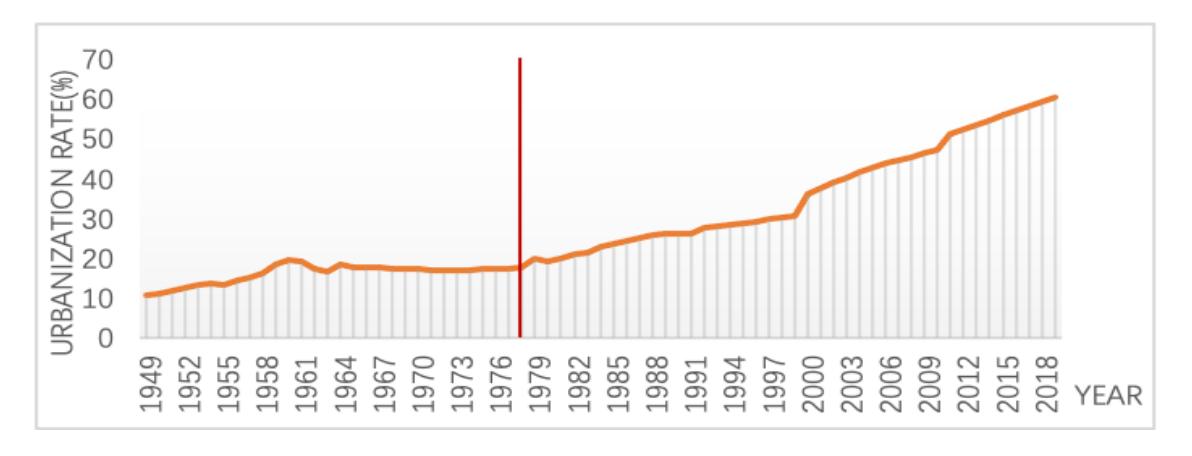
Figure 7 China's urbanization rate from 1949 to 2019, from the China Statistical Yearbook.
Phase IV is the 'coordinated urban-rural development' stage, with an urbanization rate between 50% and 70%. Considering the national average level, China is currently in this stage, with the secondary and tertiary industries reaching a high level and the agricultural population having decreased significantly. Public finances are stronger and coordinating urban-rural planning is on the agenda. The government actively promotes the building of a new socialist countryside and inequality in the urban-rural welfare system and public services begins to decrease.
Phase V will be the 'integrated urban-rural development' stage, with an urbanization rate higher than 70%. This is the current situation of developed countries in East Asia and the developed areas along the eastern coast of China, while the megacities in the central and western regions have also entered this stage. With a highly developed national economy, the rural population and agricultural labor force or labor force engaged in the primary industry account for a tiny proportion. The urban-rural social welfare system, public services, and factor markets are basically integrated. Subsidies for the countryside and agriculture are extremely powerful (Zhao et al. 2016). Based on historical experience, the integration of the dual economy into a unitary economy will be completed in this stage (Zhao & Chen, 2013). The experience of the developed economies in East Asia shows that an urbanization rate of 60% to 75% is the turning point in the 9 Before the 1990s, in the process of the exchange of industrial and agricultural products, the price of industrial products was higher than their value, and the price of agricultural products was lower than their value. This unequal exchange relationship gradually expanded. In graph form this looks like the shape of a pair of open scissors, so it is called 'scissors difference', also known as the industrial and agricultural product price scissors difference.
development of urban-rural relations in a developing country. It is a critical period, when income inequality decreases and the middle class expands, avoiding the middle-income trap (Wang & Zhong, 2011; Chen, 2011). What is more, the dual economy transforming into a unitary economy is not a natural process; neither does it reduce the income gap. Without a doubt, policy intervention is necessary.
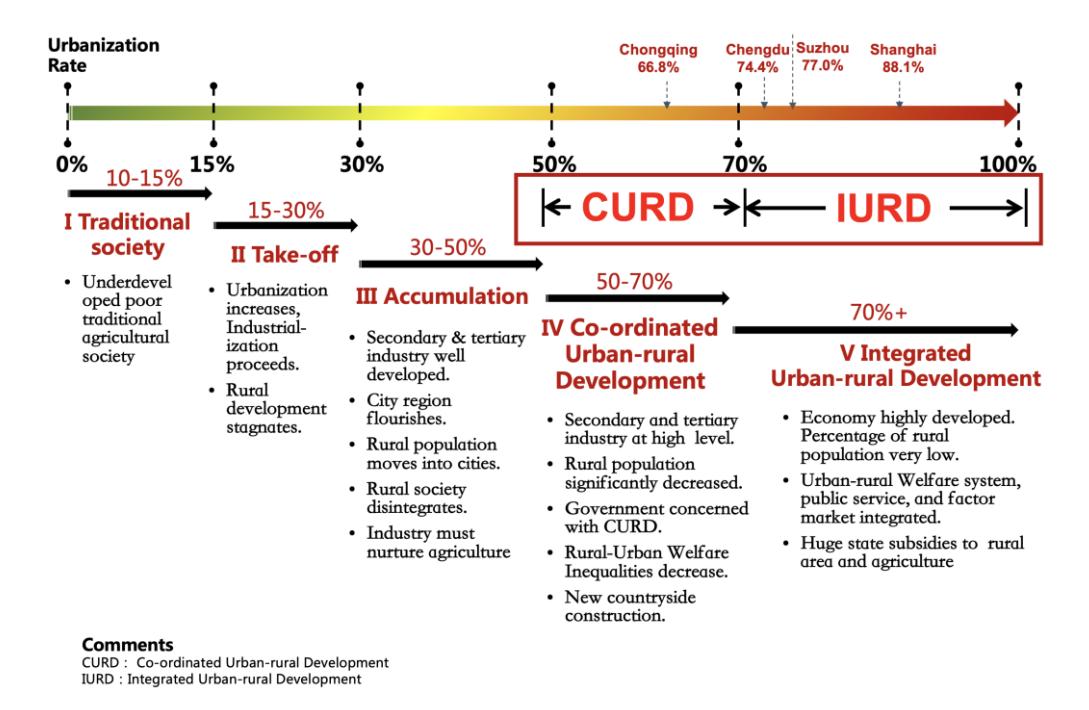
Figure 8 Conceptualizing China's policy intervention in closing the rural-urban divide as a stage of the linear growth model.
The importance of the above-mentioned five-stage development model lies in, first of all, recognizing the importance of correctly timing policy interventions related to urban-rural integration: neither too early nor too late. Urban-rural integration can only be conducted when there is a high level of urbanization. Only when economic development reaches a certain height is it possible to achieve a comprehensive urban-rural integration. Savvy methods must be adopted in relevant policy interventions. Social governance must be in accordance with the objective law of the gradual increase of urbanization and take the needs of rural residents into account as well, i.e. the gradual improvement of production and living standards. Secondly, during the integration process of the urban-rural dual economy into a unitary economy, breaking the solid rights structure and realizing the transformation of the economic and social system as well as reducing the income gap between urban and rural residents will not occur naturally. Having observed government interventions in western developed economies, we believe that public intervention is indispensable and applies to both free-market economies and economies in transition.
Conclusion
Generally speaking, the evolution of China's urban-rural relationship has gone through five stages: 1) the initial stage, 2) the take-off stage, 3) the accumulation stage, 4) the urban-rural coordination stage, and 5) the urban-rural integration stage. However, the urbanization process and the rural development status quo still differ greatly in different regions. For regions in different stages of urbanization, local governments should respond to the national rural policies in line with local conditions, among which some successful policy practices include urban-rural coordination, rural revitalization, rural poverty alleviation, etc.
China's experience has shown that this is an effective model that allows local governments to carry out effective urban and rural coordination or rural revitalization under the actual development stage and the institutional framework in the process of urbanization and modernization, which can provide a valuable example for other developing countries. The logic of policy choice, on the one hand, lies in the different stages of urban-rural development, especially different levels of urbanization laying the foundation for rural development, which causes regional differences in rural policies, while the strategic direction of rural development chosen by local governments is also endogenous to this. The goals, paths and tools for rural development policy in all regions must be compatible with the urban-rural development process. On the other hand, in addition to market forces, the government plays a leading role in several aspects of rural development, including investment in the living environment, housing, infrastructure, social welfare, public services, etc. in rural areas. The intensity of government intervention to support rural development should basically be the same as the fiscal capacity of the local governments.
The evolution of urban-rural relations has certain stage characteristics, and policy intervention by local governments in rural development will significantly affect the urbanization and socioeconomic development of the region. Despite the many successful policy practices mentioned above, there are still problems such as the continuation of semi-urbanization, excessive consumption of space resources, and low economic efficiency in the process of coordinating urban and rural development in China. Therefore, more powerful urban-rural space governance planning and supporting institutional mechanisms are needed to achieve 'smart growth' in cities and towns and 'smart contraction' in rural areas in the future. It is necessary for local governments to establish the proper timing of policy interventions related to urban-rural relations. Policies that are too far ahead or inappropriately intervene will not only increase the financial burden but also hinder the normal urbanization process, which will lead to stagnation or even intensification of peri-urbanization.
A limitation of this paper is that the research was mainly based on qualitative case analysis and empirical data of existing research, while the quantitative analysis was relatively insufficient. In addition, in terms of the selection of cases, due to data access limitations, we were not able to conduct in-depth research on a larger scale. In the future, based on the government intervention development model with Chinese characteristics, we plan to further carry out research on practical cases and summarize experiences with rural revitalization in terms of motivation mechanisms and implementation paths in the context of China's comprehensive promotion of rural revitalization.
Acknowledgement
This research was funded by the 13th Five-Year Plan national key research project 'Key Technologies for Optimizing and Planning the Village-Town Structure at the County Level' (grant no. 2018YFD1100802). Moreover, this work was presented at Endinamosis.
Appendix
China's Public Policies on Rural Development since 1978
| Period | Year | Policy | Orientation | |
|---|---|---|---|---|
| 1979 | Increase the purchase price of agricultural products. | equality | Rural development | |
| Rural economic system reform promoting urbanization | 1981 | Develop multiple business models for agriculture, industry, and commerce. | efficiency | Rural development |
| 1982 | Promote the household responsibility system. | efficiency | Rural development | |
| Revitalize rural industry and commerce. | efficiency | Rural development | ||
| 1983 | Abolish the people's commune system of 'integration of government and society', establish a township government, and establish a new model for a dual governance system of 'township and village governance'. | efficiency | Rural development | |
| 1984 | Develop rural commodity production; continue to stabilize and improve the joint production contract responsibility system, and the main form of household contract production responsibility system is the nationwide implementation. | efficiency | Rural development | |
| Support township and village enterprises. | efficiency | Rural development | ||
| reform of township | 1985 | Abolish the unified agricultural product purchasing system, establish and improve the agricultural product market system (rural marketization) and promote the development of the rural commodity economy. | efficiency | Rural development |
| 1986 | Increase agricultural investment and adjust the urban-rural relationship between workers and peasants. | equality | Urban-rural relationship | |
| system reform | 1987 | Establish a rural social endowment insurance system. | equality | Rural development |
| System reform | 1991 | Stabilize and improve the household responsibility system. | efficiency | Rural development |
| Speeding up the development of township and village enterprises in the central and western regions. | efficiency | Rural development | ||
| 1993 | The responsibility system for agricultural production based on household co-production is written in the Constitution of the People's Republic of China. | efficiency | Rural development | |
| The construction of small towns. | efficiency | Urban-rural relation | ||
| 1994 | China Agricultural Development Bank established as a specialized policy financial institution for rural service. | efficiency | Rural development | |
| Promulgate the National Poverty Alleviation Plan (1994-2000), strive to take about seven years (from 1994 to 2000) to basically solve the problem of food and clothing for 80 million poor people in rural areas at that time. | equality | Rural development | ||
| Urbanization | 1995 | Supply and Marketing Cooperative Reform | efficiency | Rural development |
| promoted by the transformation of | Pilot Establishment of Rural Minimum Living Guarantee System | equality | Rural development | |
| the socialist market economy | 1996 | Promote agricultural industrialization. | efficiency | Rural development |
| system | Guide the concentration of township and village enterprises, accelerate the construction of township and village enterprise communities, and promote the construction of small towns. | efficiency | Urban-rural relationship | |
| 1997 | Development and improvement of rural cooperative medical care. | equality | Rural development | |
| 1998 | Improve the purchasing and marketing system for agricultural and sideline products. | efficiency | Rural development | |
| 2000 | Initiating Agricultural Tax Reform | equality | Rural development | |
| Promote the healthy development of small towns. | efficiency | Urban-rural relationship | ||
| 2001 | 'Two Exemptions and One Supplement' Policy for Rural Compulsory Education | equality | Rural development | |
| 2001 | Promulgated the Outline of China's Rural Poverty Alleviation and Development (2001-2010). | equality | Rural development | |
| Coordinating urban and rural | 2002 | Establish a new land system for the legal transfer of rural land. | efficiency | Rural development |
| development | Establish the New Rural Cooperative Medical System. | equality | Rural development | |
|---|---|---|---|---|
| Coordinating Urban and Rural Development. | equality | Urban-rural relationship | ||
| 2004 | The policy of 'giving more, taking less, and revitalizing' to promote farmers' income. | equality | Rural development | |
| 2005 | Improve comprehensive agricultural production capacity; strictly protect cultivated land; strengthen farmland water conservancy construction. | efficiency | Rural development | |
| Implementing the policy of industry nurturing agriculture and cities supporting rural areas. | equality | Urban-rural relationship | ||
| Abolition of agricultural tax. | equality | Rural development | ||
| 2006 | Building a new socialist countryside. | equality | Rural development | |
| Protecting the rights and interests of migrant workers and promoting the transfer of employment. | equality | Urban-rural relationship | ||
| Actively develop modern agriculture. | efficiency | Rural development | ||
| 2007 | Establishing a rural minimum living security system throughout the country. | equality | Rural development | |
| Strengthening agricultural infrastructure and increasing investment in rural areas. | equality | Rural development | ||
| 2008 | Urban-rural integration. | equality | Urban-rural relationship | |
| 2009 | Increase investment in agricultural infrastructure and technology services, and increase direct subsidies to agriculture. Increase efforts to solve the employment problem of migrant workers. | equality | Rural development | |
| New rural social endowment insurance. | equality | Rural development | ||
| 2010 | Strengthen the development of strong agriculture and benefit agriculture in coordinating urban and rural development; strengthen the development of small and medium-sized cities and small towns; accelerate the implementation of policies to relax the settlement conditions of small and medium-sized cities, small towns, especially county towns and central towns and enjoy the same rights as local urban residents. | equality | Urban-rural relationship | |
| 2011 | Speed up farmland water conservancy construction. | efficiency | Rural development | |
| 2012 | Speed up the promotion of agricultural science and technology innovation. | efficiency | Rural development | |
| 2013 | Strengthen rural reform, policy support, and technology driven efforts to further enhance rural development vitality. | equality &efficiency | Rural development | |
| Building a beautiful countryside. | equality | Rural development | ||
| Urban-rural integration and rural revitalization | Establish a working mechanism of 'precision poverty alleviation' and promote poverty alleviation through the industry, ecological compensation, education, social welfare and relocation projects. | equality | Rural development | |
| 2014 | Comprehensively deepen rural reform, coordinate urban rural development, give farmers more property rights and promote an equal exchange of urban and rural factors and balanced allocation of public resources. | equality | Urban-rural relationship | |
| New-type urbanization | efficiency | Urban-rural relationship | ||
| 2015 | Adapt to the new normal of economic development, and promote the simultaneous development of new-type industrialization, informatization, urbanization and agricultural modernization in accordance with the general requirements of stable grain supply, increased income, improved quality and efficiency, and innovation-driven development. | efficiency | Rural development | |
| 2016 | Implement the development concepts of innovation, coordination, greenness, openness and sharing, and promote agricultural modernization. | equality & efficiency | Rural development |
| 2017 | Adhere to the priority development of agriculture and rural areas; urban-rural co-prosperity. | equality | Rural development | |
|---|---|---|---|---|
| Promote structural reform of agricultural supply. | equality & efficiency | Rural development | ||
| Rural Revitalization Strategy | equality | Rural development | ||
| 2018 | Implement the rural tourism poverty alleviation project and provide special support in areas such as talent, finance, and entrepreneurship to poor areas. | equality | Rural development | |
| 2019 | Accelerate the development of characteristic rural industries and implement the digital village strategy; implement village infrastructure construction projects, improve rural public service levels, strengthen rural pollution control and ecological, environmental protection; give full play to the role of farmers. | equality | Rural development | |
| Establish and perfect urban-rural integration development | equality & | Urban-rural | ||
| mechanisms. | efficiency | relationship | ||
| Establish a pilot zone for the integration of urban and rural | equality & | Urban-rural | ||
| development. | efficiency | relationship |
Source: Compiled by the authors according to policy documents issued by the Chinese government.