

Introduction
Humans naturally develop relationships and have interactions to meet their needs; they understand that these mutual relationships can enhance over time and improve the way their needs are met. As a result, these mutual relationships have been extended to more complex dimensions. The effects of these interactions are so essential that they are an inseparable part of human life. Concerns about the degradation of social relationships' is a critical topic often discussed in classical and modern sociology. Contemporary sociologists use the concept of social capital to investigate the quantity and quality of social relationships (Sharepour, 2005). Social capital is often proposed alongside human, financial, and economic capitals. Social capital is a rather new concept in the field of the social sciences but has very rapidly become an important topic of debate in many fields such as medicine, psychology, economics, politics, and urban planning. "Empirical research links social capital to increased access to a variety of human and material resources" (Nicholas, 2011, p. 19). Many years of urban planning experience all over the world have shown that even in this field human resources are more important than financial resources. Neglecting them also makes it impossible to reach higher levels of human ecosystem promotion. The issue of social capital has been introduced into urban planning discussions as a quantitatively measurable subject.
Streets are regarded as an urban space and a fundamental element of urban public construction. Streets are not only a physical element for public use, but they also manifest the life of an urban society. Humans are social animals who enjoy interacting with others. People need safe and secure places other than their houses and workplaces to meet each other, talk, visit their friends, and establish social interactions. Streets are among the most important public spaces, since they have long been used as a place of meeting, interacting, recreating, trading, and also traffic. In general, urban streets reflect the residents' lifestyles in a city, including their daily routines.
Today, in Iran, the streets are not adequately responding to the needs of humans as social units and people consider these spaces just as traffic routes. In fact, these spaces cannot motivate people to pause, be present, and establish social relationships in them. In contrast, they encourage people to move as transportation elements through cities. People need to feel a belonging to society through face-to-face interactions, social interactions, and the experience of seeing and being seen. The lack of these feelings ultimately results in lifeless, abandoned urban spaces, and a decrease of the social capital level.
The city of Sanandaj is located in the west of Iran. It has valuable sociocultural characteristics, which include distinct behavioral patterns in social relationships, the majority of which are rooted in traditions and public beliefs. Analyzing social capital factors in this region with rich traditional culture and relationships can shed some light on this matter and help other similar regions across the world to accentuate their social values. This can also help them decrease social segregation and socio-economic challenges.
The case study of this paper encompassed four central streets in Sanandaj: Imam Khomeini Street, Enqelab Street, Taleqani Street, and Firdausi Street. The reason for selecting these streets pertains to several factors. The central part of Sanandaj includes inhomogeneous streets with some similarities in the age, gender, and economic levels of their visitors. Unique physical patterns and historical values were two other important factors in selecting the case study areas. Moreover, the social and economic structures of these streets represent four different types of urban spaces in a traditional region. Imam Khomeini Street is located in the main historical core of the city, and its social and economic structure is at the middle and high levels. The street also includes a valuable physical pattern, with historical and cultural units along its sides. Enqelab Street has a middle and lower level of social and economic structure and is mostly used by male visitors and salesmen (peddlers). Taleqani Street has a low level of social and economic structure. The last case study is Firdausi Street, which connects the old and new textures of the city and the two main squares by a bridge, which is located in the middle part of the street, hence it is used as a passing canal. The main question in this research was: What are the physical-spatial dimensions that contribute to strengthening civil relationships and increasing street social capital?
The term social capital was proposed in 1916 in an article by L.J. Hanifan from West Virginia University. Hanifan believed that social capital includes some essential indicators that exist in residents' everyday lives, such as feelings of understanding, friendship, sympathy, and the social relationships among people and families who constitute a social unit (Farr, 2004). Jane Jacobs in her classic work from 1961 entitled The Death and Life of Great American Cities attracted the attention of urban planners and designers to social issues. In this book, she explains that the compact social networks in the old countryside and mixed urban areas form one significant type of social capital. These social networks, compared to other official institutions such as police force or security teams, show more responsibility in terms of cleanliness, preventing street crime, and other essential interventions to improve the quality of life.
Literature Review
Social Capital
There is no agreement among researchers on the meaning of social capital. Generally, it encompasses those aspects of social relationships that help people achieve efficient and adequate results in their social life (Therrien, Jutras, & Usher, 2019). In general, social capital refers to a type of investment in social relationships that is defined by the expected output. "It refers to relationships that enable people to acquire resources" (Wichowsky, 2019, p. 261). The main idea behind social capital is that family, friends, and colleagues are important assets that an individual can employ in times of crisis and financial need. This definition is more applicable within groups.
Scholars provide different definitions based on their points of view, which can be summarized by their commonalities as follows: social capital is a hidden potential asset of people and groups of a society and their relationships that assists them to achieve their goals (Yavari & Saadat, 2002). It is necessary to point out that social capital does not exist inside a person or social structure, but it exists within the relational space between people; hence, social capital is created by the thousands of actions and reactions in people's everyday life (Onyx & Bullen, 2000). Some researchers consider this concept as a tool to keep people together (Kim, Marcouiller, & Choi, 2019) in order to create an integrated community.
Two famous scholars studying the social capital concept were Bourdieu and Putnam, who had contrasting opinions about this subject (Portes & Vickstrom, 2011). Bourdieu considers social capital as the ability for individuals to obtain resources through their membership in family and friends' network. Putnam believes that social capital is a public good, a potential ability to participate in social activities and increase the amount of trust in societies. Coleman, as one of the most well-known researchers in this field, states that "unlike the other forms of capital, social capital is not characteristic of one individual but rather is embodied in the relations among persons" (Njaya, 2015, p. 99). The present paper employs Putnam's definition and indicators of social capital, where he defines it as "the features of social organization such as networks, norms and trust that facilitate co-ordination and co-operation for mutual benefit" (Verdouw & Flanagan, 2019, p. 3). The three mentioned features (networks, norms, and trust) are key factors to measure and consider social capital in communities.
Social capital is also a necessary concept for urban management and environmental planning, especially in public spaces. Fine (2010) believes that social capital "would be any aspect of the social that cannot be deemed to be economic but which can be deemed to be an asset" (p. ix). "Social capital development has been identified as essential for environmental policy and adaptation, particularly concerning with public engagement" (Li, Beeton, Sigler, & Halog, 2019, p. 58). The implication and application of social capital indicators in public spaces must be considered by planners, designers, and managers. The absence of social capital affects "self-rated health (SRH), life satisfaction, depression, physical disease, and even mortality" (Zhang & Lu, 2019, p. 1). The positive impact of this consideration (Neethi, Kamath, & Paul, 2019) can be seen in local and urban economy (Kebede, 2015), social interactions, user knowledge (Walls & Kemper, 2019), and consequently the quality of life (Woody, 2016) in societies.
A study by Mereine-Berki, Malovics & Gretan (2021) explored the relationship between social mixing, social capital, and lived experience in a poor urban Roma community. They concluded that social mixing is directly related to the enhancement of well-being and social mobility for many marginalized Roma families. Another research, by Balogh, Bajmócy & Makra (2018), investigated the importance of social segregation and its effects on different target groups in a small community. They studied different aspect of social segregation and analyzed how this phenomenon can cause socio-economic challenges.
Urban space
Considering urban public spaces is a necessity for urban development plans, which indicates the role of these spaces in enhancing the sociocultural dimension of cities (Christensen, Malberg Dyg, & Allenberg, 2019). Hence, promoting the quality of urban public spaces to create social capital and enhance the integrity of society is essential (Dadpour, Pakzad & Khankeh, 2016). Urban space is one of the elements of spatial construction in cities that is formed over the history of a nation during different periods of time and change. To construct cities with a more humanistic face, we need to refer to the city spaces that are public and where the most interactive urban movements take place (Kashi & Bonyadi, 2013). Social capital is formed in public social spaces. In this sphere, people have the opportunity to break some social borders, have unregulated encounters, and also be a part of a new social environment.
One of the most dynamic urban public spaces is 'the street', which includes the communicative and accessibility activities that take place there; it also has the capacity of accommodating social activities, communications, and face-to-face interactions between citizens, as well as exchanging thoughts and information. Streets constitute the framework, body, and main structure of every city. Streets are in fact the part of public space that act like the arteries of a body; they keep the city alive and dynamic by connecting districts and activities. In other words, streets are the junctions of urban communications, activities, and spaces.
Street social capital is a term that has been used by researchers to provide an opportunity for individuals to access the benefits of relationships in streets (Ilan, 2013). Social interactions and city movements' quantity and quality are at their maximum level in the street and fill the citizens' minds with collective memories and common points of view about urban life. Urban streets are full of various events. Citizens attend these events at different hours for various reasons. Shopping, visiting event centers, hanging around, window shopping, having fun, seeing and being seen, all make the street a space for individual and collective events for citizens. Citizens have a perceptual understanding of the street as a place full of events and various opportunities of urban life.
Method
In this study, the indices considered for measuring social capital were: (1) trust and trustiness, (2) social norms, and (3) social networks. According to the definitions provided for these indices, a questionnaire including 23 questions was designed to investigate the behavior of people who visited the case study areas (the four streets indicated above) and another questionnaire with thirteen questions was designed to address shopkeepers' opinions. Figure 1 shows the location of the four case study areas in the city of Sanandaj.
Figure 1 Location of the four streets in the city of Sanandaj's network.
The reason for including shopkeepers in the research sample wasthat they are permanent residents of the streets, and their communications with and trust in one another can enhance the social capital. Moreover, the undeniable relationships among the key players of the space, including residents, shopkeepers, and visitors of the street, contribute largely to the formation of trust and consistency across these inseparable members of the space.
The statistical population for this research was composed of Imam Khomeini Street, Enqelab Street, Taleqani Street, and Firdausi Street. These streets are populated by a total of 13,000 permanent residents along with a floating population of about 300,000 individuals. According to these numbers and based on the Cochran formula, the sample size was determined to be about 373. However, considering the possibility of ending up with a number of non-completed questionnaires, the sample size was set to about 400 (i.e., 100 individuals were sampled in each of the mentioned streets). Of the total sampled individuals, 52% were men, with the remaining 48% women. Moreover, most of the sampled individuals were between 20 and 30 years old.
Table 1 shows the different dimensions of the social capital concept. In order to evaluate social capital to determine the physical and perceptual factors affecting street relationships, the dimensions and components of social capital described by Shokuhi Dolatabadi & Masoud (2010) were used together with some other factors to be investigated in the streets, including trust in people of the same age, same sex, or neighbors, that are in line with the research objective of evaluating street social capital.
The collected data were analyzed using descriptive and inferential statistical techniques implemented in the SPSS Software. Descriptive statistics (frequency, percentage, mean) related to each of the research variables are tabulated in the following sections. Furthermore, considering the research objective, the two-independent sample t-test and analysis of variance (ANOVA) were used to analyze the collected data.
| Main Dimensions | Subordinate Dimensions | Definition | ||||
|---|---|---|---|---|---|---|
| Informal trust | The respondent's trust in the people with whom they are going to a street. | |||||
| Common trust | The respondent's trust in people in a street and strangers. Trust in people of the same sex, same age, or neighbor. | |||||
| trustiness of the Trust and the environment | Environment's trustiness | Finding a bag full of money in a street and delivering it to its owner. | ||||
| Feeling safe and secure | the daytime. | Feeling of security walking in a street at the nighttime and Lack of verbal disturbance, insults, etc. | ||||
| Collaboration | Personal responsibility Social devotion | condition of a street. | Feeling personally responsible for the improvement of the street's condition, such as refraining from littering. Ready to spend time and money for improving the | |||
| Cooperation Cooperation in a Having a background of improving the condition of the neighborhood neighborhood where one lives. Cooperating with Cooperation with local authorities if requested, such as local authorities maintaining the cleanliness of a street. | ||||||
| Norms | Capacity to accept differences | The possibility to enjoy walking in a street with others with different beliefs and traditions. The tendency to experience a hybrid rather than a mono cultural street. | ||||
| Feeling efficient and effective | Believing in being effective to solve problems and improve a street. Believing in people's ability to solve problems of a street thorough a cooperative process. | |||||
| Social mediation | Being a volunteer to intervene in a street dispute. | |||||
| Emotional-economic matters | Helping and respecting physically and mentally disabled users. | |||||
| Horizontal | Social participation | Participation in religious rituals. Organized participation. Participating in recreational group activities | Participation in religious events that are held in a street. Participation in ceremonies and national events held in a street. Attending a street in groups for leisure and recreation. | |||
| Social networks | Social integrity Network quality | Giving importance to the people moving through a street. Giving priority to disabled people moving through a street. Being able to see real friends in a street. Respecting other citizens' rights while moving through a street. Having passionate and humanistic relationships with people who accompany one in a street. | ||||
Table 1. Dimensions and variables of social capital and their operational definitions. Adapted from Shokuhi Dolatabadi & Masoud (2010)
Results
According to the analysis, Imam Khomeini Street had the highest the amount of social capital among the four streets, followed by Firdausi Street with a slight difference. Meanwhile, Taleqani Street had the lowest and Enqelab Street was in third place in this order. The reason for these differences lies in the dimensions of social capital, such as trust, norms, and social networks, which are addressed in the rest of this discussion. Tables 2 and 3 show the SPSS analytical outcomes, including visitors' and shopkeepers' opinions about the social capital in the case study areas, as well as the ANOVA analysis between and within the target groups.
Std. Std. Shop Keepers Street Mean Mean Deviation Deviation Visitors Engelab 35.76 3.18 14.40 2.02 Taleqani 35.63 3.01 14.88 2.13 3.28 Firdausi 36.66 14.80 2.56 2.94 Imam Khomeini 37.16 4.08 14.66
Table 2 Mean social capital between visitors in each street
| Table 3 ANOVA | to compare mean | cocial capital | botyyoon vicitors |
|---|---|---|---|
| Table 5 ANOVA | to compare mean | social cabital | between visitors |
| ANOVA | ||||||||
|---|---|---|---|---|---|---|---|---|
| Sum of Squares | df | Mean Square | F | Sig. | ||||
| Between Groups | 48.42 | 3 | 16.14 | 1.38 | .251 | |||
| Within Groups | 1353.16 | 116 | 11.66 | |||||
| Total | 1401.59 | 119 | ||||||
Regarding Table 4, it is clear that the highest amount of trust was observed in Firdausi Street and the lowest in Taleqani Street The amount of trust in people who accompany them in the streets was measured to be acceptable, however, trust in strangers was very low, which refers to a social dilemma. The majority of people believed that if they would find a wallet or any other things, they would try to find its owner; meanwhile, when they would lose their own property, they had no hope of finding it or being contacted.
Table 4 Mean trust between people
| Street | Mean | Std. Deviation | Mean | Std. Deviation | ||
|---|---|---|---|---|---|---|
| OLS | Enqelab | 24.7 | 2.52 | p ers | 3.93 | 1.22 |
| isito | Taleqani | 23.73 | 2.83 | po eb | 4 | 0.84 |
| \ \times | Firdausi | 25.43 | 2.63 | S | 4.40 | 1.05 |
| Imam Khomeini | 25.06 | 3.03 | 4.33 | 1.54 |
According to the findings from the questionnaires, shown in Table 5, it can be said that the level of social norms, i.e., accepting differences, helping the needful, social mediation, and believing in the effectiveness of oneself in the social environment, was evaluated as being acceptable.
Table 5 Mean norms between people in each street
| Street | Mean | Std. Deviation | Mean | Std. Deviation | ||
|---|---|---|---|---|---|---|
| isitors | Enqelab | 2.73 | 0.58 | p ers | 9.53 | 2.03 |
| Taleqani | 2.86 | 0.77 | ho] | 9.20 | 1.85 | |
| \ \rightarrow \rightarrow \rightarrow \rightarrow \rightarrow \rightarrow \rightarrow \rightarrow \rightarrow \rightarrow \rightarrow \rightarrow \rightarrow \rightarrow \rightarrow \rightarrow \rightarrow \rightarrow \rightarrow \rightarrow \rightarrow \rightarrow \rightarrow \rightarrow \rightarrow \rightarrow \rightarrow \rightarrow \rightarrow \rightarrow \rightarrow \rightarrow \rightarrow \rightarrow \rightarrow \rightarrow \rightarrow \rightarrow \rightarrow \rightarrow \rightarrow \rightarrow \rightarrow \rightarrow \rightarrow \rightarrow \rightarrow \rightarrow \rightarrow \rightarrow \rightarrow \rightarrow \rightarrow \rightarrow \rightarrow \rightarrow \rightarrow \rightarrow \rightarrow \rightarrow \rightarrow \rightarrow \rightarrow \rightarrow \rightarrow \rightarrow \rightarrow \rightarrow \rightarrow \rightarrow \rightarrow \rightarrow \rightarrow \rightarrow \rightarrow \rightarrow \rightarrow \rightarrow \rightarrow \rightarrow \rightarrow \rightarrow \rightarrow \rightarrow \rightarrow \rightarrow \rightarrow \rightarrow \rightarrow \rightarrow \rightarrow \rightarrow \rightarrow \rightarrow \rightarrow \rightarrow \rightarrow \rightarrow \rightarrow \rightarrow \rightarrow \rightarrow \rightarrow \rightarrow \rightarrow \rightarrow \rightarrow \rightarrow \rightarrow \rightarrow \rightarrow \rightarrow \rightarrow \rightarrow \rightarrow \rightarrow \rightarrow \rightarrow \rightarrow \rightarrow \rightarrow \rightarrow \rightarrow \rightarrow \rightarrow \rightarrow \rightarrow \rightarrow \rightarrow \rightarrow \rightarrow \rightarrow \rightarrow \rightarrow \rightarrow \rightarrow \rightarrow \rightarrow \rightarrow \rightarrow \rightarrow \rightarrow \rightarrow \rightarrow \rightarrow \rightarrow \rightarrow \rightarrow \rightarrow \rightarrow \rightarrow \rightarrow \rightarrow \rightarrow \rightarrow \rightarrow \rightarrow \rightarrow \rightarrow \rightarrow \rightarrow \rightarrow \rightarrow \rightarrow \rightarrow \rightarrow \rightarrow \rightarrow \rightarrow \rightarrow \rig | Firdausi | 2.66 | 0.66 | S | 9.13 | 1.76 |
| , | Imam Khomeini | 3.13 | 0.73 | 9.20 | 2.14 |
According to Table 6, the level of the network dimension in the case study areas was the highest in Imam Khomeini Street The main reason is the role of this street in hosting many social events, including national and local ceremonies.
Mean Std. Deviation Mean Std. Deviation Street Visitors Enqelab 6.83 1.13 1.14 0.35 6.96 1.21 1.20 0.41 Taleqani Firdausi 7.13 1.13 1.40 0.50 Imam Khomeini 7.20 1.15 1.26 0.45
Table 6 Mean network between people in each street
Table 7 explains the ANOVA analysis between and within target groups based on the three social capital dimensions. The variance analysis test of the difference in the mean values of network, trust, and norms as dimensions of social capital among the studied shopkeepers showed a score of more than 0.05, which means no significant difference existed among the dimensions of social capital in the four studied streets.
| Table 7 ANOVA to com | oare mean social capi | ital dimensions | between visitors in streets |
|---|---|---|---|
| Sum of Squares | df | Mean Squares | F | Sig. | ||
|---|---|---|---|---|---|---|
| Between Groups | 2.46 | 3 | .82 | .60 | .612 | |
| Network | Within Groups | 157.40 | 116 | 1.35 | ||
| Total | 159.86 | 119 | ||||
| Between Groups | 48.06 | 3 | 16.02 | 2.09 | .105 | |
| Trust | Within Groups | 887.40 | 116 | 7.65 | ||
| Total | 935.46 | 119 | ||||
| Between Groups | 3.83 | 3 | 1.27 | 2.67 | .051 | |
| Norms | Within Groups | 55.46 | 116 | .47 | ||
| Total | 59.30 | 119 |
According to Table 8, the level of significance from the t-test of social capital was 0.36, i.e., more than 0.05. Therefore, it was concluded that there was no significant difference between the means of social capital of men and women.
Table 8 ANOVA to compare mean social capital between men and women
| Equa | Test for lity of ans | T | T-test for Equality of Means | |||||
|---|---|---|---|---|---|---|---|---|
| F | Sig. | t | df | Sig. | Mean Difference | 95% Co. Interva Diffe | ||
| Equal variances assumed | 3.17 | .078 | .91 | 118 | .36 | .57 | 66 | 1.81 |
| Equal variances not assumed | .91 | 110.77 | .36 | .57 | 66 | 1.80 | ||
Table 9 indicates that the level of significance from the t-test in the first line was 0.000, i.e., lower than 0.05. Thus, it was concluded that there was a significant difference between the means of social capital of both groups (shopkeepers and visitors of the streets). The mean of social capital of visitors of the streets was higher than the mean of social capital of shopkeepers.
Levene's Test for Equality of Means T-test for Equality of Means F Sig. t df Sig. Mean Difference 95% Confidence Interval of the Difference Lower Upper Equal variances assumed 7.310 .008 -43.76 178 .000 -21.62 -22.60 -20.64 Equal variances not assumed -49.18 159.38 .000 -21.62 -22.49 -20.75
Table 9 Test to compare mean social capital between visitors and shopkeeperss
Discussion
The case study confirmed some of the main dimensions of social capital suggested by the literature. The uniqueness of this paper is related to the importance of physical and historical characteristics of the streets, which enhance social trust and accentuate social values in urban areas. In the following paragraphs, the main findings will be reviewed in the context of the existing literature and the main gaps in the concept of social capital will be addressed.
One of the secondary dimensions of social trust is related to the feeling of safety and security (Dadpour et al., 2016). This means that users of a street must have a feeling of security to have a feeling of trust. The reason of a low amount of social trust can be investigated by looking at factors such as mixed use by pedestrians and cars, as well as the width of the sidewalks, where a narrow sidewalk can cause the occupancy to exceed the capacity of the space. In addition, the presence of salesmen and peddlers in different parts of sidewalks occupies a large space and decreases the accessibility of people who want to pass by. Hence, users of the street do not feel safe and secure because of the pressure and crowding this causes, which affects their trust.
Other reasons that cause social trust to be lower in Taleqani Street and Enqelab Street than in the other two streets are related to the social groups who are the users of these streets. Most of the people observed in Enqelab Street are peddlers and brokers who buy and sell secondhand goods and even stolen items, which decreases the level of trust (Portes & Vickstrom, 2011) in these streets. The mix of users and variety of activities in Firdausi Street and Imam Khomeini Street, along with the existence of the Bahman cinema, restaurants, and coffee shops, attract users from different social classes and also increasesthe feeling of security (Ilan, 2013) of these streets during the night and day.
The dimension of norms of social capital finds its meaning in relation to concepts such as cooperation, assistance, and the feeling of effectiveness and efficiency. Therefore, decreasing or increasing the norms in the street can be sought in relation to the identity, sense of place, and the feeling of belonging (Kashi & Bonyadi, 2013) in the street. When a street has an identity and the sense of place and feeling of belonging of people toward the street are at a high level, people intend to cooperate and assist in maintaining it. The identity and uniqueness of a street makes
people feel a sense of belonging in a street, while the existence of distinct elements in a street enhances the sense of place. As a result, people tend to maintain and protect it by cooperating with each other and the local authorities and feel responsible about taking care of the street.
Among the other reasons that enhance the sense of place in a street is the condition of the street in terms of visual quality and also the presence of suitable urban furniture (Njaya, 2015). The visual disturbances on the sidewalks of Taleqani street and a lack of suitable and enough urban furniture decrease the sense of place among the users. Thus, people will not be encouraged to improve the condition of the street. High visual quality, attractive physical form and good urban furniture in Imam Khomeini Street, along with the skyline of Enqelab Street, which adds a unique character to it, all together enhance the social norms in these two streets.
Another dimension of social capital, network (Verdouw & Flanagan, 2019), can be evaluated by the possibility of face-to-face relationships, participation, and social integrity in the streets. It is clear from the statistics that the network dimension of social network in Imam Khomeini Street was higher than in the other streets. Imam Khomeini Street hosts different ceremonies in a year, which increases social participation. This factor was also observed in Firdausi Street and Taleqani Street.
The existence of attractive activities and functional attractions (Zhang & Lu, 2019) in Imam Khomeini Street and Firdausi Street attracts different groups and individuals with different aims to the street. Most people attend these streets in the form of groups for shopping and enjoyment. These factors increase the level of social participation and social integrity and ultimately enhance social networks in a street. The mean of the network dimension at Enqelab Street and Taleqani Street was lower than in the other two streets. This difference can be explained by the nature of these streets, because in these two streets the only goals are shopping and official work. People do not have the intention to visit the street in groups for recreation and leisure, as a result of which they are only thinking about reaching their destination while passing through the street. Hence, the possibility of face-to-face interactions decreases in the street. In fact, it can be said that social integration is destroyed in these locations.
Lack of open and public spaces that attract people and create the possibility to stop by, talk, rest, relax, and meet friends are among the factors that decrease social participation. This factor also contributes to the increase or decrease of the network dimension in a street. The short length of these streets is an opportunity to create conditions for walking. In fact, this opportunity, combined with the mixed land use and variety of activities in Firdausi Street and Imam Khomeini Street, made them good places for walking, which increased the social interactions in these two streets.
There was no significant difference between the social capital of men and women. The underlying reason for this can be found in the culture of this society, which gives equal rights to men and women when using urban public spaces and is rooted in the beliefs and culture of people regarding the role of women in social activities. The mean social capital of visitors of these streets was higher than the mean social capital of shopkeepers. This may be due to the fact that shopkeepers are more focused on economic issues and earning more profit and pay less attention to issues related to the street. However, visitors pay more attention to the street because they would like to enjoy the space, and also to feel safe and comfortable. As the final outcome of this paper, the main elements of a street that can be effective to increase the level of social capital and its related dimensions are shown in figure 2.
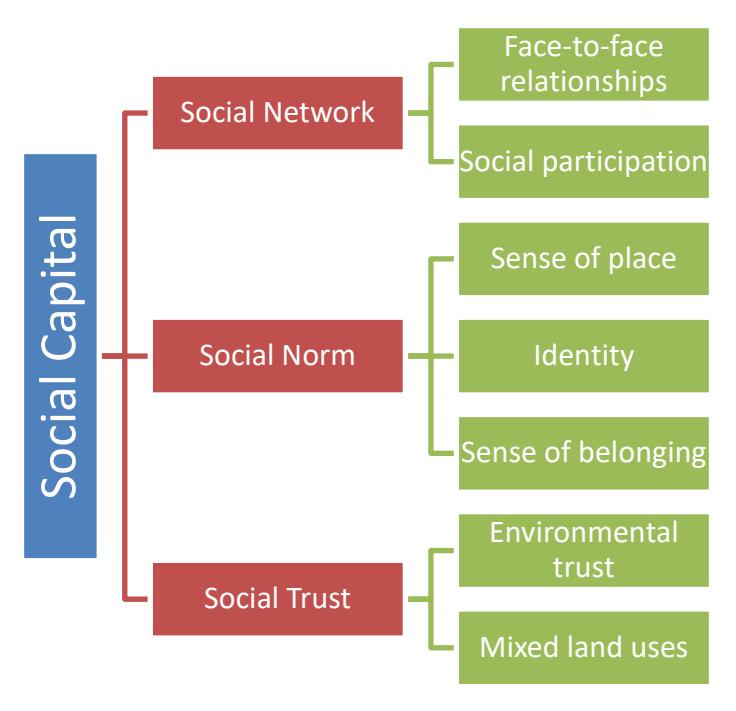
Figure 2 Effective elements on social capital.
Conclusion
Social capital is an issue at risk of decreasing in urban spaces, which makes the success of urban spaces unlikely. Urban planners must think of increasing the interactions and social capital in urban spaces. According to the results obtained from the analytical section, it can be stipulated that the level of people's trust in other individuals who are present in the street is adequate. This, while the level of trust in strangers was very low, which itself constitutes a social problem. Most of the participants expressed that if they should find a lost/missing bag/anything else, they would try to find its owner, while seeing no hope in retrieving a missing/lost bag/anything else of their own if they lost it. The level of social norms, including the acceptance of differences, helping needy people, and social mediation as well as the belief in influencing the environmental status, were evaluated as having an acceptable level.
The four case study areas of this paper were located in the main core of the city of Sanandaj and play an important role within the city and also play an important role in terms of the social capital of the city. The streets host people from different social classes and groups and from different wards of the city, who use these streets for different goals. The short length of the streets is an important factor, which, along with enhancing their strengths and decreasing their weaknesses, creates a suitable environment for walking, as well as attracting many people, establishing social interactions, increasing trust, enhancing social norms and social networks.
Future studies can use the elements in streets that can be effective in improving the level of social capital in a society. Case studies in a city like Sanandaj must focus on some physical and cultural aspects of the society to find a balance between social activities and social capital in order to increase their residents' quality of life. A lack of attention to these elements may create negative outcomes, including social segregation, individuals' inactivity, physical and mental health issues, generational cultural gaps, unsustainable communities, and ultimately a lower quality of life. One of the main limitations of this study pertains to the target groups and the data collection process. We did not use any incentives to encourage participants to share their thoughts and opinions with us. The survey was conducted in-person and there were no popular online tools available in Iran at the time the study was conducted to facilitate the data collection process.