

Introduction
The world population has grown remarkably in urban areas over the last seventy years. It is forecasted that the total global urban population will be 6.68 billion in 2050, which will be very close to seventy percent of the entire world population (UN, 2019). This excessive urban expansion influences sustainable urban development (Marvuglia, Havinga, Heidrich, Fonseca, Gaitani & Reckien, 2020). Sustainable urban development has evolved from the concept of sustainable development, which is also getting close attention worldwide (Wang, Ho & Fu, 2019). The UN report World Commission on Environment and Development: Our Common Future states that sustainable development depends on three broad areas of concern, namely environment, economics, and social (UN, 1987). These three dimensions of sustainable development are equally vital issues for sustainable urban development (Rafieian & Technology, 2014; Baffoe & Mutisya, 2015). The rapid urban expansion the world is facing leads to severe social problems. These social problems, such as poverty, social isolation, unemployment, and lack of social collaboration, are responsible for a lack of social sustainability (Ali, Al-Betawi & Al-Qudah, 2019). Despite the equal importance of the three dimensions, social sustainability is receiving less attention in the academic literature (Hajirasouli & Kumarasuriyar, 2016; Akan & Selam, 2018; Kumar & Anbanandam, 2019). Eventually, these urban social problems will create an obstacle to securing socially sustainable urban environments. Hence, the role of social sustainability in sustainable urban development must not be overlooked.
'Sustainable Cities and Communities' is the eleventh Sustainable Development Goal (SDG 11) of the UN, emphasizing the issues of rapid urbanization and social development (United Nations General Assembly, 2015). Social sustainability is necessary for urban quality of life and help create a culturally and socially diverse environment (Stren & Polèse, 2000). The priority of social sustainability in sustainable urban development planning and policies is getting insufficient attention, as it is often assumed that social issues are already included in urban policies (Weingaertner & Moberg, 2014). Related to building sustainable cities, social issues viz. equality, employment, access to public services, and safety, ensure the quality of life in communities (ODPM, 2003). Accordingly, the nexus between social sustainability and sustainable urban development is essential for the welfare of city residents in the present and future.
Social sustainability is defined as consisting of several essential elements: equitable income, services, employment, access to goods, and human rights (Sachs, 1999; Chiu, 2002; Godschalk, 2004). Later, social sustainability was deemed to consist of two broad concepts: social equity and sustainable community (Bramley, Dempsey, Power & Brown, 2006; Bramley, Dempsey, Power, Brown & Watkins, 2009; Dempsey, Bramley, Power & Brown, 2011; Dempsey, Brown & Bramley, 2012). Overall, social sustainability is a favorable condition in a society where every individual can achieve good quality of life by ensuring that human social needs are met, which helps to create healthy and livable communities for current and future generations. On the other hand, sustainable urban development is an effective way to identify real urban challenges in creating a relationship between the environment, economy, and society for a resilient future of the people (Ameen, 2017). Also, sustainable urban development ensures the quality of urban human resources and supports conditions like resources and the environment (Wang, Yuan, Yan
& Zhang, 2020). Sustainable urban development must bring about fair social, environmental and economic conditions, creating a stable situation in urban areas for present and future generations.
Many authors have done research in this relatively new research area by combining a more comprehensive range of sustainability issues. A literature review was done on the social dimension of sustainable development for conceptual framework and policy analysis by Murphy (2012). A bibliometric study on urban sustainability was conducted by Fu and Zhang (2017), who focused on significant city concepts and their evolution process. Another bibliometric analysis showed that smart city research has been approached in an inconsistent and fragmented manner (Mora, Bolici & Deakin, 2017). Another literature review was done about the incorporation of environmental and social sustainability into supply chain management by Ciccullo, Pero, Caridi, Gosling & Purvis (2018). Social and human capital linked to sustainability issues are presented in the bibliometric study by Garrigos-Simon, Botella-Carrubi and Gonzalez-Cruz (2018). Subsequently, a similar study looked at publications on social sustainability aligned with public health, using a quantitative approach (Sagaz, Kneipp, Lucietto & Madruga, 2018). Likewise, Wang et al. (2019) investigated the global performance of sustainable cities and research trends related to this topic using a bibliometric analysis.
None of these bibliometric studies emphasized how sustainable urban development aligns with social sustainability. It is noteworthy that the number of publications on social sustainability for sustainable urban development has expanded rapidly over the last five years but a bibliometric analysis of this field has yet to be conducted. To fill this knowledge gap on social sustainability for sustainable urban development3 research, we conducted a bibliometric analysis of this field of research. It is important to know the publication trends, current research streams, and hotspots of this field based on the context. This information can create a scope for researchers to know the latest overview, pioneering research streams, and research hotspots, which is necessary to contribute to this research field. Therefore, the two main research questions of this research were:
- 1) What were the publication trends related to the subject of social sustainability for sustainable urban development from 1985 to 2020?
- 2) What are the global research streams and hotspots in urban social sustainability studies?
This article is organized as follows. Section 2 introduces the research methodology, followed by the results and discussion in Section 3, which includes publication trend analysis, high impact documents analysis, author analysis, country analysis, research institute analysis, keyword analysis, co-citation analysis, research methodologies distribution, and theories used in articles. Finally, Section 4 contains the conclusion with some remarks.
Research Methodology
Data Collection
This research used the Web of Science (WOS) Core Collection database for information on publications with a retrieval period from January 1, 1970, to July 3, 2020. However, the publications that were found in response to our search started only in the year 1985; thus, we limited our study to the period from 1985 to 2020. WOS guarantees the scientific quality of data
3 Some authors have used 'urban social sustainability' as an alternative name for the research field of social sustainability in the urban context. All sections of this paper use both 'urban social sustainability' and 'social sustainability for sustainable urban development'.
sources for bibliometric studies and provides access to multiple databases, which helps obtain publication records, including global and extensive citation data in a diverse academic arena (Xie, Zhang & Duan, 2020). Thus, our bibliometric analysis used the complete citation information regarding social sustainability research for sustainable urban development published in the Social Sciences Citation Index (SSCI), the Science Citation Index Expanded (SCI-EXPANDED), and the Arts and Humanities Citation Index (A&HCI).
This research covered all published documents (articles and book chapters) in the WOS database related to social sustainability research for sustainable urban development. We used the SALSA framework to achieve the research aim and reduce biases in data analysis. SALSA is an analytical framework with four sequential steps, namely Search, Appraisal, Synthesis, and Analysis. It is widely used to examine and identify review type (Booth, Sutton & Papaioannou, 2016; Vicente-Saez & Martinez-Fuentes, 2018; Mengist et al., 2020). This framework aims to enhance the understanding of scientific literature. The required steps for the SALSA framework are given in Table 1.
Steps Strategy SALSA Framework Search Strategy for identification of studies Appraisal Strategy for quality assessment of studies Synthesis Strategy for data extraction Analysis Strategy for data analysis
Table 1. Illustration of the SALSA framework.
Source: Vicente-Saez and Martinez-Fuentes (2018); Mengist, Soromessa and Legese (2020)
The first stage of the SALSA framework is search, which identifies studies through keywords to ensure that the data are relevant to the area of choice. On July 3, 2020, we conducted a search on urban social sustainability research papers in the WOS Core Collection. We used several searches and filtering to avoid the chance of missing publications records and citation information. In the first stage, we selected specific keywords based on the literature using WOS advanced search and found 3,190 documents (see details in Step 1, Figure 1).
The second stage of the SALSA framework is appraisal, which guarantees the quality of the studies. We used all WOS categories but limited to three scientific indexes, namely the Social Sciences Citation Index (SSCI), the Science Citation Index Expanded (SCI-EXPANDED), and the Arts and Humanities Citation Index (A&HCI). Thus, the 3,190 documents from the first stage were reduced to 1,987 documents (see details in Step 2, Figure 1).
Synthesis is the third stage of the SALSA framework; the strategy used is data extraction. Thus, the 1,987 documents from the second stage were reduced to 1,623 documents by selecting 'articles' OR 'book chapter' AND language 'English' (see detail in step 3, Figure 1). Excluding other languages than English in reviewing publications requires an explanation (Jackson & Kuriyama, 2019). This research had two specific reasons for choosing English as the sole language. Firstly, this study used bibliometric analysis focusing on theoretical and methodological discussions, so a multilingual combination would create a significant barrier due to insufficient language skills. Secondly, we found that only 2.4 per cent of papers published were in other languages than English and none of these were highly cited papers. Therefore, limiting our research to English did not significantly impact global research hotspots in this field.
The final stage of the SALSA framework is 'Analysis.' This research finally selected 1,623 documents for bibliometric analysis, visualization, and content analysis (see details in Step 4, Figure 1). The search methodology used in this research is displayed in Figure 1.
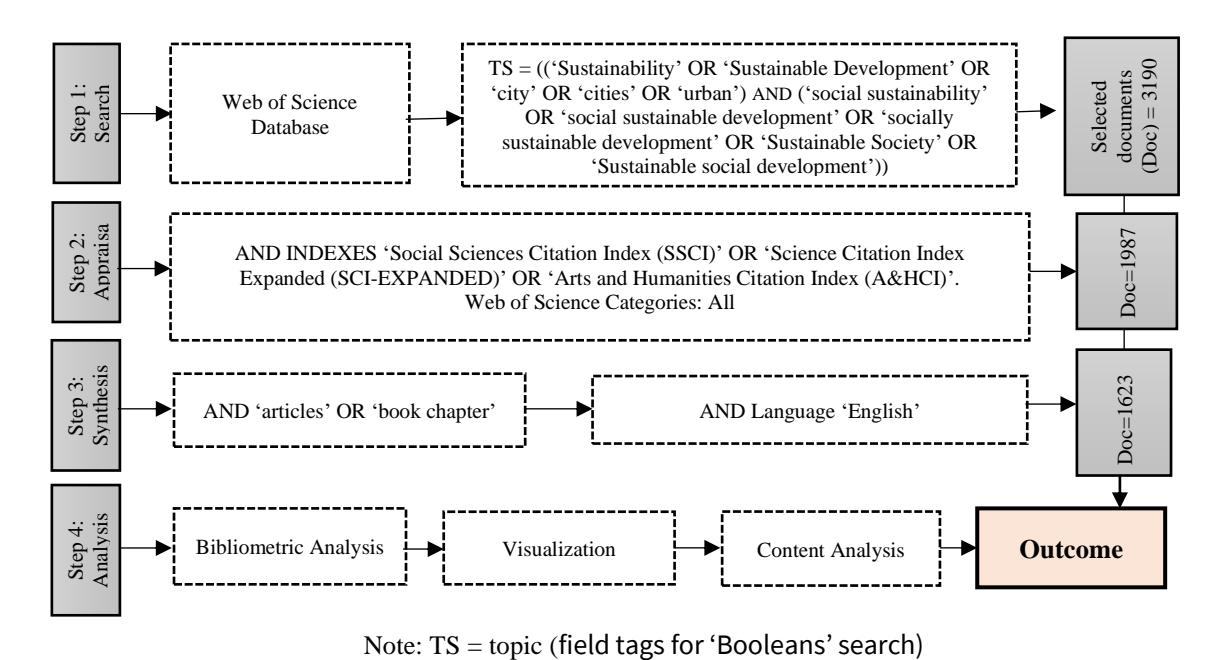
Figure 1. SALSA Framework for Bibliometric Analysis.
Research Method
The rapid development of software programs is changing the research world by providing numerous options for exploring large numbers of data through searching, extracting, analyzing, interpreting, and visualizing (Meng, Wen, Brewin & Wu, 2020). Likewise, using bibliometric analysis software helps researchers to efficiently perform multistage analysis and visualization without errors (Xie, Zhang, Zeng & He, 2020). This article used two software programs for bibliometric analysis, namely VOSviewer and Bibliometrix (Biblioshiny), to analyze the entire scientific literature in this field. VOSviewer was developed by Van Eck, Waltman, and Noyons to create and visualize econometric networks. In terms of co-citation, coupling, and cooccurrence, it can form networks for journals, keywords, researchers, and publications and visualize the results (Waltman, Van Eck & Noyons, 2010). The R-tool Bibliometrix was introduced by the scholars Aria and Cuccurullo for science mapping analysis based on the R language (Aria & Cuccurullo, 2017). R is a programming language for statistical computing and graphics that is extensible and easy to use for systematic analysis, network creation, and visualization of multiple publications and was developed by Biblioshiny.
These two bibliometric analysis software packages were pertinent to accomplishing the quantitative analysis of the selected scientific literature in this research. This study considered publication trends analysis, high impact document analysis, author analysis, country analysis, research institute analysis, keyword analysis, and co-citation analysis. We also provide theory identification and a methodological overview as part of the content analysis, revealing the currently available global research information in this area. The research design for the bibliometric analysis on urban social sustainability is shown in Figure 2.
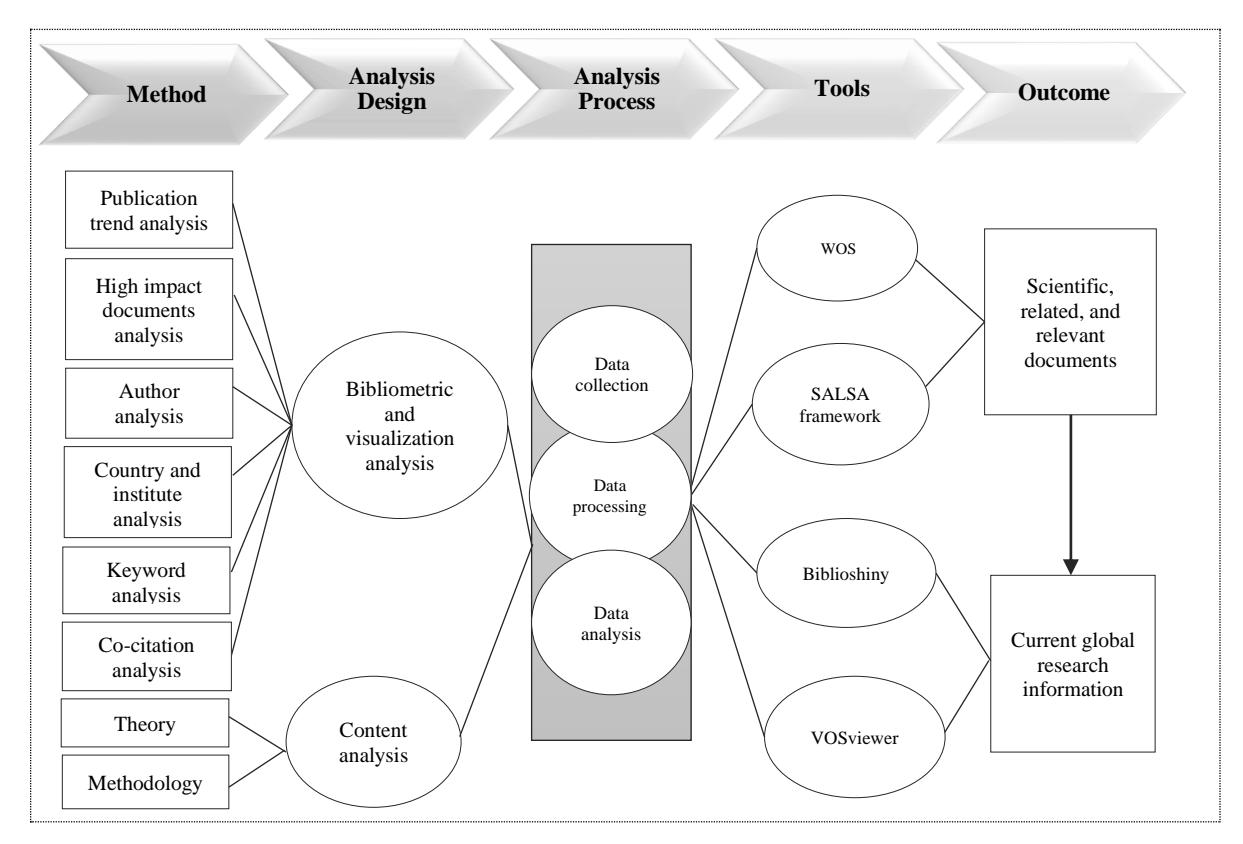
Figure 2. Research design for the bibliometric analysis of urban social sustainability.
Results and Discussion
Publication Trend Analysis
This study found 1,623 publications on social sustainability for sustainable urban development in the WOS Core Collection that were published in the last 35 years. Figure 3 presents the number of publications and citations on urban social sustainability per year. About 85 percent of the research papers were published in the last decade, with more than two-thirds (68 percent) of them published in the last five years (2015 to 2020). In Figure 3, an early peak in 1992 is visible in terms of average citations per year, but the number of papers was only one. Afterwards, there were five peaks between 2010 and 2020 with frequencies (average citations/year) of 6.45, 4.14, 6.18, 4.09, and 4.83 for 2010, 2011, 2012, 2016, and 2017, respectively.
Due to their vast population, cities are becoming more extended than ever before, creating challenges to ensure basic human needs like health services, sanitation, shelter, and other infrastructure (Colantonio, 2007). Colantonio also explained that a sustainable urban debate has emerged mainly around ecological and spatial issues, while less attention has been paid to social problems. In 2015, the United Nations established SDG-11 'Sustainable Cities and Communities', which focuses on the issue of social development to build sustainable cities. Sustainable development emphasizes the social dimension with the new concepts of urban sustainability and social sustainability (Ali et al., 2019). Coincidentally, we found a pronounced research trend related to the subject of urban social sustainability since 2015, which is highly related to the establishment year of SDG 11. As our study did not focus on SDG implementations and research trends in this field, we left this issue for future researchers.
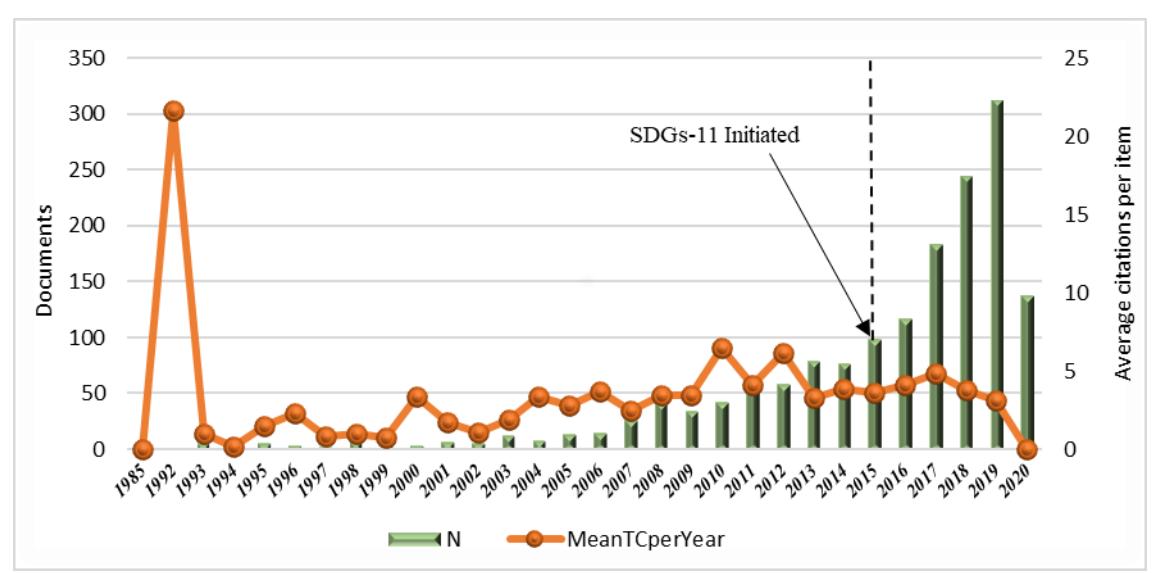
Notes: 1. N = number of papers, 2. TCperYear = average total citations per year.
Figure 3. The number of publications and average total citations on urban social sustainability per year.
High Impact Documents Analysis
Impactful academic research develops the world with high-quality scientific contributions. This article presents the source impact of the top thirty journals and the top twenty global highly cited documents as part of our high-impact document analysis.
Source Impact of the Top Thirty Journals
Table 2 illustrates the top thirty journals in the academic arena that published documents on urban social sustainability. These journals published 730 out of the 1,623 selected documents, nearly 46 percent of the total number of selected documents. More specifically, the journal Sustainability was in first place with 257 papers. However, the Journal of Cleaner Production held first position in total citations, at 3,284, and the highest h-index among the top journals, at 29. It should be noted that the other leading journals in the urban social sustainability field, such as Sustainable Development, Sustainable Cities and Society, and Ecological Economics, published a total of 78 articles and book chapters. It is also worth mentioning that the International Journal of Life Cycle Assessment, Sustainable Development, World Ecology, and Production Economics together contributed 47 documents to this research field. In terms of total citations and h-index, other prominent journals, such as Sustainability, Sustainable Development, and Ecological Economics, led this research area.
Based on the content of articles and book chapters published in journals, this research field focused on sustainability, sustainable development, social sustainability, sustainable urban development, sustainable indicators, quality of life, sustainable society index, social capital, framework development, and performance measurement, and so on.
Table 2. Source impact of the top thirty journals.
| Table 2. | Source impact of the top thirty | journals. | ||||
|---|---|---|---|---|---|---|
| PYS | Name of Journal | NP | TC | h-index | g-index | m-index |
| 2011 | Sustainability | 257 | 1219 | 17 | 25 | 1.70 |
| 2003 | Journal of Cleaner Production | 140 | 3284 | 29 | 51 | 1.61 |
| 1999 | Sustainable Development | 31 | 1133 | 14 | 31 | 0.64 |
| 2011 | Sustainable Cities and Society | 27 | 265 | 10 | 15 | 1.00 |
| 1997 | Ecological Economics | 20 | 613 | 14 | 20 | 0.58 |
| 2003 | International Journal of Life Cycle Assessment | 17 | 334 | 10 | 17 | 0.56 |
| 1995 | International Journal of Sustainable Development and World Ecology | 16 | 282 | 7 | 16 | 0.27 |
| 2014 | International Journal of Production Economics | 14 | 314 | 8 | 14 | 1.14 |
| 2008 | Social Indicators Research | 13 | 156 | 5 | 12 | 0.38 |
| 2007 | International Journal of Production Research | 12 | 261 | 8 | 12 | 0.57 |
| 2009 | Journal of Business Ethics | 12 | 338 | 7 | 12 | 0.58 |
| 2005 | Journal of Environmental Management | 12 | 274 | 10 | 12 | 0.63 |
| 2015 | Local Environment | 12 | 110 | 6 | 10 | 1.00 |
| 2010 | Cities | 11 | 350 | 6 | 11 | 0.55 |
| 2013 | Journal of Construction Engineering and Management | 10 | 170 | 6 | 10 | 0.75 |
| 2010 | Marine Policy | 10 | 138 | 6 | 10 | 0.55 |
| 1999 | Science of The Total Environment | 10 | 93 | 5 | 9 | 0.23 |
| 2015 | Environment Development and Sustainability | 9 | 35 | 4 | 5 | 0.67 |
| 2014 | International Journal of Operations & Production Management | 9 | 291 | 4 | 9 | 0.57 |
| 2002 | Ocean & Coastal Management | 9 | 83 | 4 | 9 | 0.21 |
| 1999 | Resources Conservation and Recycling | 9 | 215 | 6 | 9 | 0.27 |
| 2011 | Ecological Indicators | 8 | 165 | 5 | 8 | 0.50 |
| 1994 | Futures | 8 | 117 | 5 | 8 | 0.19 |
| 2000 | Journal of Rural Studies | 8 | 244 | 6 | 8 | 0.29 |
| 2011 | Journal of Sustainable Tourism | 8 | 94 | 6 | 8 | 0.60 |
| 2012 | Journal of Transport Geography | 8 | 235 | 7 | 8 | 0.78 |
| 2008 | Problemy Ekorozwoju | 8 | 61 | 5 | 7 | 0.38 |
| 2017 | Sustainable Production and Consumption | 8 | 49 | 5 | 7 | 1.25 |
| 2007 | Ecological Modelling | 7 | 200 | 5 | 7 | 0.36 |
| 2016 | Energies | 7 | 42 | 4 | 6 | 0.80 |
Notes: PYS = publication year started, NP = number of publications, TC = total citations.
Top Twenty Global Highly Cited Documents
The number of highly cited documents indicates the quality of publications and their significance and influence within this research field. Table 3 shows the top twenty global highly cited documents with the most citations (more than 150 citations). The article by Wang and Kaskel (2012) ranked first in terms of number of citations (1,145) as well as citations per year (127.22). This article examines carbon-based materials such as supercapacitors and lithium-sulfur cells for energy storage in the context of achieving social sustainability and reducing environmental hazards. Two other documents, by Costanza and Daly (1992) and Dempsey et al. (2011), ranked second and third, with the number of citations at 606 and 436, respectively. Based on the citations, the study by Costanza and Daly (1992) describes the preservation of natural capital stock for sustainability, because society cannot control the further decline of natural capital due to severe effects of uncertainty and wrong estimation. Overall, the study highlights the issue of quantifying eco-services, natural capital, and its concessional valuation.
The third highly cited article, by Dempsey et al. (2011) revealed that of the three dimensions of sustainability, the environmental dimension is getting the highest concern, while the economic and social dimensions are mostly ignored. The authors also explained that social sustainability is an equal part of sustainability, but this dimension has not yet been clearly defined. Hence, the study focused on social sustainability in the urban context to clarify this disparity through a detailed explanation. Finally, the authors examined the relationship between urban form and social sustainability to reveal the importance of urban social sustainability. Based on citations per year, the joint authors Keesstra, Bouma, Wallinga, Tittonell, Smith, Cerda, Montanarella, Quinton, Pachepsky, van der Putten, Bardgett, Moolenaar, Mol, Jansen and Fresco (2016) and Ahvenniemi, Huovila, Pinto-Seppa and Airaksinen (2017) held second and third rank, at 77.2 and 53.5 citations per year, respectively. These articles explain various content from the urban social sustainability research field.
We found that sustainability issues are often discussed in multidisciplinary areas. This multidisciplinary character urged us to be very careful in assessing the relevancy of the impact of cited documents in this field. We combined seven relevancy assessment criteria of the top twenty highly cited documents presented in Table 4. We used a dichotomous or binary scoring system, i.e., 1 for 'yes' and 0 otherwise. Hence, our total possible maximum relevancy assessment score was 7, and the minimum was 0. We considered 3.5 or higher as relevant highly cited documents. Based on the relevancy assessment score, 16 out of 20 documents were qualified with a 3.5 score or higher. Paper ID and rank are denoted by the same number; only 1, 6, 18, and 20 (paper ID) were not entirely relevant in this research area.
| 0 | 0 | , | ` | |||
|---|---|---|---|---|---|---|
| Rank | Title | Authors Name | Journals | Year | Citations | AC/Y |
| 1 | KOH activation of carbon-based materials for energy storage | Jiacheng Wang, Stefan Kaskel | Journal of Materials Chemistry | 2012 | 1,145 | 127.22 |
| 7 | Natural Capital and Sustainable Development | Robert Costanza, Herman E. Daly | Conservation Biology | 1992 | 909 | 20.90 |
| 3 | The Social Dimension of Sustainable Development: Defining Urban Social Sustainability | Nicola Dempsey, Glen Bramley, Sinead Power, Caroline Brown | Sustainable Development | 2011 | 436 | 43.60 |
| 4 | Community Resilience: An Indicator of Social Sustainability | Kristen Magis | Society & Natural Resources | 2010 | 404 | 36.73 |
| 5 | An exploration of measures of social sustainability and their application to supply chain decisions | Margot J. Hutchins, John W. Sutherland | Journal of Cleaner Production | 2008 | 402 | 30.92 |
| 9 | The significance of soils and soil science towards realization of the United Nations Sustainable Development Goals | Saskia D. Keesstra, Johan Bouma, Jakob Wallinga, Pablo Tittonell, Pete Smith, Artemi Cerdà, Luca Montanarella, John N. Quinton, Yakov Pachepsky, Wim H. van der Putten, Richard D. Bardgett, Simon Moolenaar, Gerben Mol, Boris Jansen, Louise O. Fresco | Soil | 2016 | 386 | 77.20 |
| 7 | Building Sustainable Organizations: The Human Factor | Jeffrey Pfeffer | Academy of Management Perspectives | 2010 | 307 | 27.91 |
| œ | Information Systems and Environmentally Sustainable Development: Energy Informatics and New Directions for The IS Community | Richard T. Watson, Marie-Claude Boudreau, Adela J. Chen | Mis Quarterly | 2010 | 283 | 25.73 |
| 6 | Social impact assessment: the state of the art | Ana Maria Esteves, Daniel Franks, Frank Vanclay | Impact Assessment and Project Appraisal | 2012 | 235 | 26.11 |
| 10 | What is social sustainability? A clarification of concepts | Suzanne Vallance, Harvey C. Perkins, Jennifer E. Dixon | Geoforum | 2011 | 220 | 22.00 |
| 11 | What are the differences between sustainable and smart cities? | Hannele Ahvenniemi, Aapo Huovila, Isabel Pinto-Seppä, Miimu Airaksinen | Cities | 2017 | 214 | 53.50 |
| 12 | Sustainability assessment of energy systems: integrating environmental, economic, and social aspects | Edgar Santoyo-Castelazo, Adisa Azapagic | Journal of Cleaner Production | 2014 | 212 | 30.29 |
| 13 | Urbanization in sub-Saharan Africa and implication for malaria control | Jennifer Keiser, Jürg Utzinger, Marcia Caldas De Castro, Thomas A. Smith, Marcel Tanner, Burton H. Singer. | American Journal of Tropical Medicine and Hygiene | 2004 | 189 | 11.12 |
| 15.25 | 12.64 | 8.33 | 14.50 | 42.25 | 14.82 | 7.70 |
|---|---|---|---|---|---|---|
| 183 | 177 | 175 | 174 | 169 | 163 | 154 |
| 2009 | 2007 | 2000 | 2009 | 2017 | 2010 | 2001 |
| Business Ethics-A European Review | Agriculture and Human Values | Environmental Impact Assessment Review | Environment and Planning B-Planning & Design | International Journal of Research in Marketing | Corporate Social Responsibility and Environmental Management | Environmental Management |
| Heledd Jenkins | Laura T.|Raynolds, Douglas Murray, Andrew Heller | Anke Valentin, Joachim H Spangenberg | Glen Bramley, Sinéad Power | Stephen L. Vargo, Robert F. Lusch | Joseph Sarkis, Marilyn Michelle Helms, Aref A. Hervani | Girma Taddese |
| A 'business opportunity model of corporate social responsibility for small- and medium-sized enterprises | Regulating sustainability in the coffee sector: A comparative analysis of third-party environmental and social certification initiatives | A guide to community sustainability indicators | Urban form and social sustainability: the role of density and housing type | Service-dominant logic 2025 | Reverse Logistics and Social Sustainability | Land degradation: A challenge to Ethiopia |
| 14 | 15 | 16 | 17 | 18 | 19 | 20 |
Author Analysis
Information on the authors was obtained from the WOS database for analysis. The author analysis identified the authors leading the urban social sustainability research area. The number of publications and highly cited authors indicate a high level of knowledge and innovation, resulting in impactful research. It is essential to analyze the authors' contributions to reveal the contribution and significance of a research. This section shows authors who are influential in the urban social sustainability research field, based on the number of publications, citation frequency, citations/publications, and h-index.
Topmost Prolific Authors
Dedicated efforts of researchers are reflected by regular publications in their respective research fields. Likewise, a researcher's publications being cited mainly by other studies, represents a prolific researcher in a specific area. Furthermore, the percentage of citations per published document (citations/publications) indicates the average significance and influence per publication of a researcher. The h-index (a researcher published h papers and has been cited at least h times) measures both the production and source impact of a researcher.
Table 5 illustrates the scientific productivity of the top ten authors based on the number of publications, the citation frequency, citations/publications, and the h-index. The first name in the first row is Yepes V, who published 11 articles, followed by Sueyoshi T, Vanclay F, and Gunasekaran A, who published 9, 8, and 8 publications, respectively. Yuan Y, Mani V, Pellicer E, Sarkis J, Azapagic A, and Longoni A also published more than 6 papers. Kaskel S and Wang JC are the most prominent authors in terms of citation frequency, cited 1,145 times. They were followed by Bramley G, Power S, Brown C, Dempsey N, Costanza R, and Daly H, cited more than 600 times. The rest of the authors were cited at least 408 times. Thus, their papers on this topic had a persistent and significant effect.
| Tuble of Top To contributing dutions in the field of drough Sustainationity. | ||||||||
|---|---|---|---|---|---|---|---|---|
| Rank | Authors | Publications | Authors | Citations | Authors | Citations/ Publications | Authors | h-index |
| 1 | Yepes V | 11 | Kaskel S | 1145 | Kaskel S | 1145.00 | Sueyoshi T | 8 |
| 2 | Sueyoshi T | 9 | Wang JC | 1145 | Wang JC | 1145.00 | Gunasekaran A | 8 |
| 3 | Vanclay F | 8 | Bramley G | 826 | Daly He | 606.00 | Vanclay F | 6 |
| 4 | Gunasekaran A | 8 | Power S | 716 | Magis K | 404.00 | Sarkis J | 6 |
| 5 | Yuan Y | 7 | Brown C | 652 | Costanza R | 311.50 | Yuan Y | 6 |
| 6 | Mani V | 7 | Dempsey N | 652 | Pfeffer J | 307.00 | Mani V | 6 |
| 7 | Pellicer E | 7 | Costanza R | 623 | Boudreau Mc | 283.00 | Yepes V | 6 |
| 8 | Sarkis J | 6 | Daly He | 606 | Chen AJ | 283.00 | Diele K | 5 |
| 9 | Azapagic A | 6 | Hutchins MJ | 408 | Power S | 238.67 | Azapagic A | 5 |
| 10 | Longoni A | 6 | Sutherlan d JW | 408 | Esteves AM | 235.00 | Berentsen PBM | 5 |
Table 5. Top 10 contributing authors in the field of urban social sustainability.
Regarding citations per publication, Kaskel S and Wang JC came in topmost position with the same ratio of 1145.00, followed by Daly H, Magis K, Costanza R, and Pfeffer J who also had a significant number of citations per paper. The remaining top ten authors also played a substantial
role in terms of citations per paper. The h-index of the authors is presented in the last column, where Sueyoshi T and Gunasekaran A had the highest h-index. As can be seen, the rest of the authors in this column had almost the same h-index.
The abovementioned most prolific authors have enriched the urban social sustainability research field. However, we did not find any author who scored high on all four proliferation criteria; hence, no single individual author can be said to have made the most significant contribution.
Authors' Collaboration Network
The co-authorship network can be used to reveal collaborative research networks. A co-authorship network develops among researchers based on their social network and co-author relationships that are built over time by scientists (Biscaro & Giupponi, 2014). Likewise, co-authorship network analysis is the best way to figure out such links among researchers who play a significant role in a specific field (Chen, Zhao, Tang, Price, Zhang & Zhu, 2017).
Figure 4 shows the authors' collaboration network generated with the help of VOSviewer. In VOSviewer, the minimum number of documents of an author was set to 1; 4,544 documents met the threshold. The links among researchers denote the partnerships formed by co-authorships that build over time. The thickness of the line reflects the level of strength of the collaborative relationship between two authors. Here, the 27 most prominent authors' networks are divided into two clusters, where the red-colored cluster represents authors who have been working from 2017 to now, while the authors of the blue-colored cluster conducted research before 2014. The redcolored cluster has 14 authors, and the blue-colored cluster has 13 authors. Notably, the three authors in the middle (green color) were interlinked with the two other clusters from 2015.
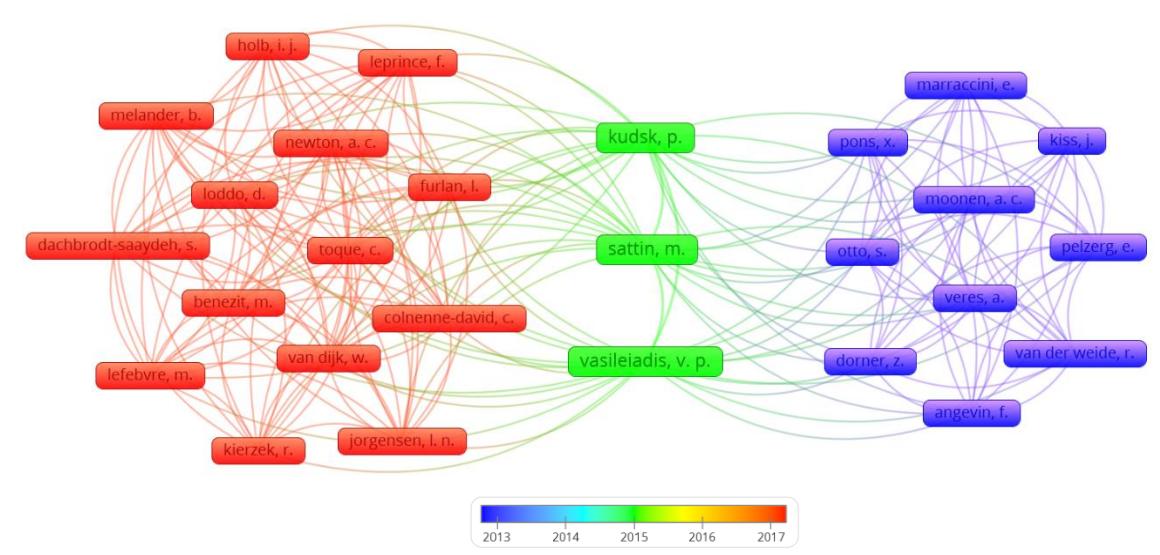
Figure 4. Co-authorship networks.
Leading Research Country Analysis
The total number of published papers from different countries reflects the influence of a country. Table 6 shows the top ten countries in terms of total publications. Among them, the top five developed countries were USA, United Kingdom, Italy, Sweden, and Australia, and the top five developing countries were China, India, Brazil, Iran, and Turkey. This study classified the countries as developed and developing according to the United Nations World Economic Situation Prospects report (Nations, 2020).
In terms of total publications, nine developed countries were in the top ten publishing countries, with China as the only developing country. China ranked first among all countries with a total number of publications of 190 and held the third position in total citations (1,893). The second rank was for the USA, with a total number of published papers of 186, but it was in first place based on the total number of citations, at 6,017. Regarding the average article citations, the USA reached the highest position with a ratio of 32.35, whereas China had a low ratio of only 9.96 among the top ten publishing countries. The papers from the USA reflect a high level of academic strength in this research field.
| Table 6. Top 10 co | ountries (from devel | oped and developing | ) in terms of total | publications. |
|---|---|---|---|---|
| Country type | Country | Overall Rank | TP | SCP | MCP | TC | AAC |
|---|---|---|---|---|---|---|---|
| USA | 2 | 186 | 138 | 48 | 6017 | 32.35 | |
| UNITED | 3 | 136 | 97 | 39 | 3480 | 25.59 | |
| Developed | KINGDOM | ||||||
| Country | ITALY | 4 | 96 | 74 | 22 | 957 | 9.97 |
| Developing Country | SWEDEN | 5 | 92 | 75 | 17 | 1220 | 13.26 |
| AUSTRALIA | 6 | 88 | 70 | 18 | 1438 | 16.34 | |
| CHINA | 1 | 190 | 126 | 64 | 1893 | 9.96 | |
| INDIA | 12 | 35 | 32 | 3 | 388 | 11.09 | |
| BRAZIL | 14 | 24 | 16 | 8 | 243 | 10.12 | |
| IRAN | 16 | 22 | 18 | 4 | 166 | 7.55 | |
| TURKEY | 21 | 17 | 15 | 2 | 73 | 4.29 |
Notes: 1. The country type is classified based on the nature of the economy as per the UN (Nations, 2020), 2. The overall country ranking was selected in terms of total publications of scientific research papers, 3. SCP = single country production, 4. MCP = multiple country production, 5. TP = total publications, 6. TC = total citations, 7. AAC = average article citations
As shown in Figure 5, we used VOSviewer to generate a collaboration map for the top twenty countries. The threshold was set at 25 as the minimum number of documents per country. Twenty out of 87 countries met the threshold. The collaboration status between two countries is indicated by a connecting line between both countries; the circle size indicates the number of publications. The thickness of the line represents the level of collaboration within the countries; however, each country has various levels of collaboration. This figure represents a total of four clusters that had strong connections. In the research field of urban social sustainability, scholars from the USA, England, and China had solid collaborations and interactions, as shown by their total link strength. Also, the number of citations for these countries were comparatively high. Developed countries dominated this research field in terms of scientific publications, citations, and collaborations. Moreover, developing countries started to focus on this area only after 2017, while the situation was the reverse just before that, as the figure clearly shows.
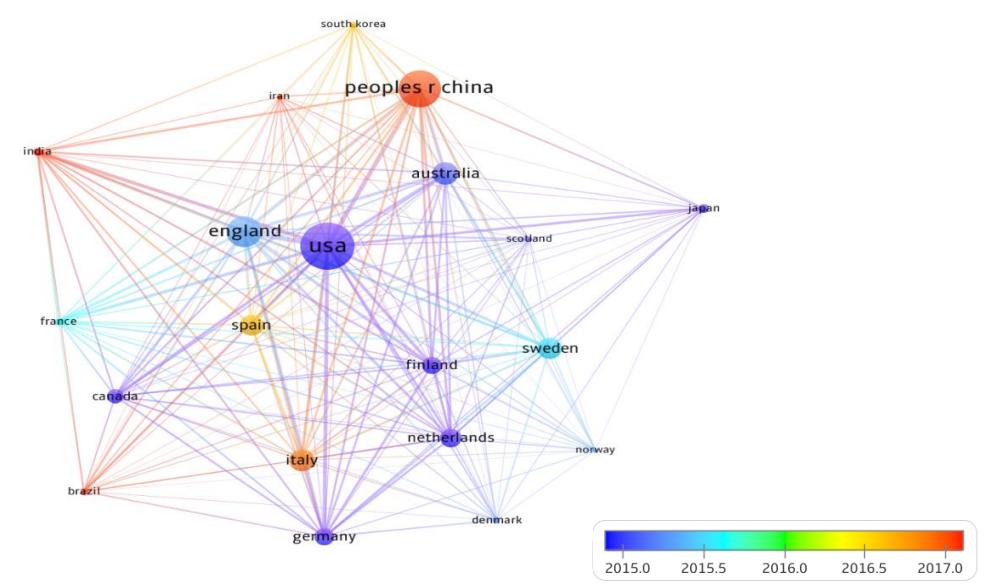
Figure 5. Country collaboration map of the twenty highest producing countries.
Table 7 shows the top twenty corresponding author's countries in terms of total documents. The country status of this top twenty indicates that fifteen authors from developed countries contributed 1,057 publications out of 1,352. Only five authors from developing countries contributed 295 publications out of 1,352. It is evident from the top twenty corresponding authors' countries analysis that authors from developed countries contributed more than authors from developing countries in this research field.
The leading research countries analysis illustrates the top ten countries in terms of total number of publications, country collaboration map, and corresponding author's countries. The result showed that developed countries had a strong research impact on the urban social sustainability field. In contrast, 76 percent of the total urban population lives in developing countries, which is forecast to reach 83.23 percent in 2050, while it is expected to decrease from 24 percent to 16.77 percent in developed countries (UN, 2019). Indeed, it is a direly needed wake-up call for researchers from developing countries to focus on urban social sustainability issues. The literature reveals that the current rapid urbanization in developing countries is leading to severe social problems within urban areas (Panda, Chakraborty & Misra, 2016; Ghalib, Qadir & Ahmad, 2017). These social problems in developing countries lead to a lack of social sustainability, such as inadequate public transport, stressful life, lack of open space, low living conditions, high crime rates, and extreme population density (Satu & Chiu, 2019). In contrast, developed countries have taken sustainable urban development serious as an issue since the 1990s, whereas developing countries are now starting to rapidly expand their industrialization and urbanization, thus facing extra challenges in building sustainable urban environments (Kiamba, 2012). At the same time, developed countries are focusing on social sustainability aspects, social integration, and coordination in building sustainable cities (Burton & Mitchell, 2006; Dempsey, 2006).
| Rank | Country | Articles | Freq | SCP | MCP | MCP_Ratio |
|---|---|---|---|---|---|---|
| 1 | CHINA | 190 | 0.1182 | 126 | 64 | 0.3368 |
| 2 | USA | 186 | 0.1157 | 138 | 48 | 0.2581 |
| 3 | UNITED KINGDOM | 136 | 0.0846 | 97 | 39 | 0.2868 |
| 4 | ITALY | 96 | 0.0597 | 74 | 22 | 0.2292 |
| 5 | SWEDEN | 92 | 0.0573 | 75 | 17 | 0.1848 |
| 6 | AUSTRALIA | 88 | 0.0548 | 70 | 18 | 0.2045 |
| 7 | SPAIN | 82 | 0.0510 | 59 | 23 | 0.2805 |
| 8 | FINLAND | 77 | 0.0479 | 52 | 25 | 0.3247 |
| 9 | GERMANY | 69 | 0.0429 | 41 | 28 | 0.4058 |
| 10 | NETHERLANDS | 66 | 0.0411 | 46 | 20 | 0.3030 |
| 11 | CANADA | 59 | 0.0367 | 41 | 18 | 0.3051 |
| 12 | INDIA | 35 | 0.0218 | 32 | 3 | 0.0857 |
| 13 | JAPAN | 33 | 0.0205 | 25 | 8 | 0.2424 |
| 14 | BRAZIL | 24 | 0.0149 | 16 | 8 | 0.3333 |
| 15 | KOREA | 24 | 0.0149 | 23 | 1 | 0.0417 |
| 16 | IRAN | 22 | 0.0137 | 18 | 4 | 0.1818 |
| 17 | NORWAY | 20 | 0.0124 | 13 | 7 | 0.3500 |
| 18 | DENMARK | 18 | 0.0112 | 10 | 8 | 0.4444 |
| 19 | NEW ZEALAND | 18 | 0.0112 | 13 | 5 | 0.2778 |
| 20 | PORTUGAL | 17 | 0.0106 | 12 | 5 | 0.2941 |
Table 7. Top 20 corresponding author's countries.
Notes: 1. Freq = frequency, 2. SCP = single country production, 3. MCP = multiple country production.
According to Dave (2008), developed countries are more focused on implementing social sustainability on a larger scale. Dave also revealed that social sustainability factors, such as access to facilities, quality of living space, public health, sense of safety, social interaction, and satisfaction with the neighborhood, are getting the highest level of priority in developed countries but not in developing countries. Moreover, developed countries follow adequate urban policies, proper financing, infrastructure planning, and ensure good governance, which helps in implementing social sustainability (Dave, 2011). On the other hand, developing countries have high economic growth rates but focus insufficiently on housing quality, adequate infrastructure, and urban poverty (Habitat, 2006). Although social sustainability for sustainable urban development is essential in both developed and developing countries, the condition of social sustainability in developing countries does not reach the desired level. To ensure quality of life for all citizens of developing countries, it is high time to consider urban social sustainability as a significant topic in the academic arena. Therefore, researchers from developing countries need to contribute more to this research area, which would help to build socially sustainable urban environments.
Research Institute Analysis
A total of 1,782 research institutes were involved in the research field of urban social sustainability from 1985 to 2020. Table 8 shows the top twenty research institutes in terms of total number of publications. The most influential research institute was the Chinese Academy of
Sciences, which had 27 publications in this field, while Wageningen University Research was in second place with 25 publications and third was Aalto University, whose publications numbered 22. The rest of the institutes in the top twenty also had a significant influence on the urban social sustainability research field. However, only two research institutes among the top twenty came from developing countries, while eighteen came from developed countries (see Table 8). Again, it is evident that urban social sustainability is getting more attention in developed countries compared to developing countries.
Table 8. Top 20 research institutes in terms of total publications.
| Rank | Institute | TP | Originating | Country |
|---|---|---|---|---|
| Country | Status | |||
| 1 | Chinese Academy of Sciences | 25 | China | Developing |
| 2 | Wageningen University Research | 25 | Netherlands | Developed |
| 3 | Aalto University | 22 | Finland | Developed |
| 4 | University of Helsinki | 19 | Finland | Developed |
| 5 | Polytechnic University of Milan | 17 | Italy | Developed |
| 6 | University of British Columbia | 17 | Canada | Developed |
| 7 | Chalmers University of Technology | 16 | Sweden | Developed |
| 8 | Indian Institute of Technology System | 16 | India | Developing |
| 9 | Delft University of Technology | 15 | Netherlands | Developed |
| 10 | State University System of Florida | 15 | USA | Developed |
| 11 | University of Gothenburg | 15 | Sweden | Developed |
| 12 | Utrecht University | 15 | Netherlands | Developed |
| 13 | Queensland University of Technology | 14 | Australia | Developed |
| 14 | Universitat Politecnica De Valencia | 14 | Spain | Developed |
| 15 | University of California | 14 | USA | Developed |
| 16 | University of Groningen | 14 | Netherlands | Developed |
| 17 | University of Manchester | 14 | England | Developed |
| 18 | City University of Hong Kong | 13 | Hong Kong | Developed |
| 19 | Swedish University of Agricultural Sciences | 13 | Sweden | Developed |
| 20 | Aristotle University of Thessaloniki | 12 | Greece | Developed |
Note: TP = total publications.
Keyword Analysis
To know the research focuses and trends, it is essential to identify the most used keywords in the articles, i.e., title words, abstract keywords, authors' keywords, keywords plus, and all keywords (Zhang, Xie & Ho, 2010; Wang & Ho, 2016). Each kind of keyword helps the researchers to get an overall idea about the research and emphasizes a specific area. Publications on urban social sustainability were evaluated and ranked for the total period of 35 years (1985-2020) based on title words, abstract keywords, authors' keywords, keywords plus, and all keywords from. Table 9 illustrates the most frequently used words in the title, author keywords, keywords plus, abstract keywords, and all urban social sustainability research keywords from the scientific index of SCI-Expanded, SSCI, and A&HCI.
| Title's Keywords | Fre. | Author's keywords | Fre. | Abstract's keywords | Fre. | Keywords Plus | Fre. | All keywords | Fre. |
| Sustainability | 969 | Social Sustainability | 401 | Sustainability | 4424 | Management | 200 | Social sustainability | 207 |
| Social | 511 | Sustainability | 322 | Social | 3804 | Performance | 153 | Sustainability | 376 |
| Sustainable | 358 | Sustainable development | 145 | Sustainable | 1821 | Framework | 139 | Management | 200 |
| Development | 199 | Social | 66 | Environmental | 1523 | Social sustainability | 109 | Sustainable development | 157 |
| Case | 138 | Sustainable | 47 | Development | 1433 | Indicators | 104 | Performance | 148 |
| Assessment | 121 | Environmental sustainability | 39 | Economic | 1253 | Model | 101 | Framework | 141 |
| Analysis | 116 | China | 37 | Study | 1200 | Impact | 86 | Indicators | 125 |
| Environmental | 112 | Development | 37 | Paper | 876 | Sustainability | 87 | Model | 66 |
| Urban | 104 | Indicators | 35 | Analysis | 751 | Systems | 85 | Impact | 86 |
| Supply | 86 | Environmental | 26 | Management | 652 | Responsibility | 62 | System | 85 |
| Study | 96 | Community | 24 | Urban | 630 | Design | 09 | Governance | 69 |
| Management | 82 | Economic sustainability | 24 | Indicators | 581 | Challenges | 54 | China | 63 |
| China | 79 | Stakeholders | 24 | Approach | 571 | Industry | 54 | Environment sustainability | 63 |
| Approach | 77 | Sustainability assessment | 24 | Based | 563 | Governance | 53 | Responsibility | 61 |
| Chain | 70 | Corporate social responsibility | 23 | Society | 553 | Impacts | 52 | Design | 09 |
| Economic | 69 | Social capital | 23 | Local | 551 | Policy | 52 | Life-cycle assessment | 99 |
| Energy | 99 | Assessment | 22 | Data | 550 | Life-cycle assessment | 90 | Policy | 99 |
| Framework | 99 | Environment | 22 | Performance | 544 | Health | 46 | Challenges | 54 |
| Performance | 99 | Management | 21 | Supply | 542 | City | 45 | Environment | 53 |
| Systems | 53 | Quality of life | 21 | Model | 515 | Cities | 44 | Industry | 52 |
High-Frequency Keywords
Table 9 shows the top twenty most frequently used keywords in urban social sustainability. Using the title keywords and the author-selected keywords is a sensible way to detect a research's importance to the readers. In title keywords, the most frequently used words were 'sustainability', 'social', 'sustainable', 'development', 'case', 'assessment', etc. Analysis of the author's keywords helps the researchers to identify the areas of most interest. In terms of the author's keywords, 'sustainability', 'social sustainability', 'sustainable development', 'social', 'sustainable', 'environmental sustainability', etc., got the highest priority in this research field. Almost the same keywords were found in the abstracts, i.e., 'sustainability', 'social', 'sustainable', 'environmental', and 'development' were used most frequently in articles. Keywords plus cannot always be found in the article's title; instead, they can exist in its references (Zhang et al., 2010). 'Management', 'performance', 'framework', 'social sustainability', 'indicators', and the rest were used as top keywords plus in this area. Considering 'all keywords', such as 'social sustainability', 'sustainability', 'management', 'sustainable development', 'performance', and so on were most frequently used. Implicit in each keyword's field is that social sustainability is a prominent research area, including 'performance', 'framework', 'model', 'indicators', and 'assessment'. Linking social sustainability with sustainable urban development had the highest priority among scholars.
Author's Keyword Network and Trends
The authors' keyword network indicates the hotspots of a study area and the current research trends in a particular field (Li, An, Wang, Huang & Gao, 2016). This section provides the current research trends according to the authors' keywords (see Fig. 6). VOSviewer software generated the authors' keywords analysis, where the threshold was set at 5. 165 keywords met the threshold among 4,953 keywords. VOSviewer divided these 165 keywords into 14 clusters. The most prominent nodes were 'social sustainability' (401), 'sustainability' (322), and 'sustainable development' (145), which ranked first, second, and third, respectively. The yellow-color circles in Figure 6 represent the research trends in 2018 on sustainable urban development, urban sustainability, sustainable city, smart cities, sustainable societies, and other topics closely related to the research field of social sustainability. These areas got the highest preference among the authors; therefore, 'urban social sustainability' has been considerably expanding over the last few years.
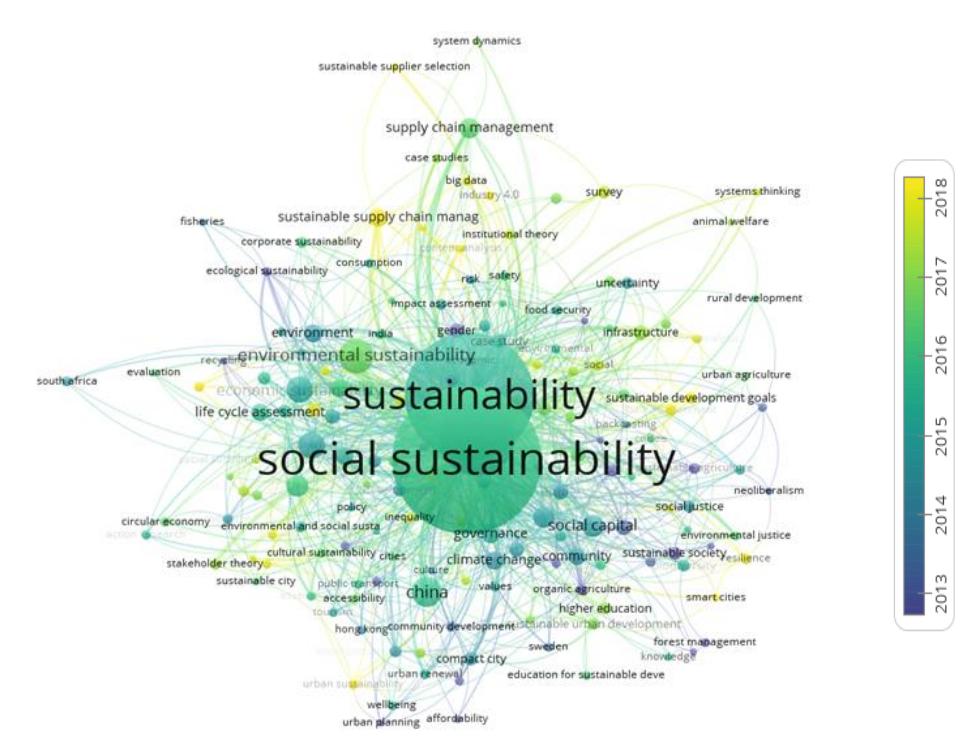
Figure 6. Author's keyword network in the urban social sustainability research field.
Co-citation Analysis
Small introduced the concept of co-citation analysis in 1973. Co-citation analysis represents subject similarity between documents (Small, 1973). A co-citation connection occurs between two documents when it appears in a third document's references list at the same time (Tang, Liao, Wan, Herrera-Viedma & Rosen, 2018). Generally, there are three types of co-citation analysis: reference co-citation analysis, sources co-citation analysis, and authors co-citation analysis. This section aims to examine these three types of co-citation analysis to reveal the scientific frequency of similar documents.
Co-citation Network of Cited References
Figure 7 presents the reference co-citation network of publications on social sustainability for sustainable urban development from 1985 to 2020. VOSviewer generated this network with the threshold set at 26. Thirty references met this requirement, and these references were cited more than thirty times in these publications. The node size indicates the frequency of the documents being cited in urban social sustainability publications. A higher thickness of nodes between two documents represents a higher frequency and a stronger link.
The research work by Dempsey et al. (2011) ranked first with 115 citations. The authors thoroughly defined urban social sustainability and explained social sustainability as an essential dimension of sustainable development. In WOS, this article received 439 citations. The second rank was obtained by Vallance, Perkins and Dixon (2011), who clarified the concept of social sustainability and its importance for the urban planning field. The third rank was obtained by Hutchins and Sutherland (2008), published in the Journal of Cleaner Production. This article evaluates the indicators and framework of social impact related to measuring the ability of social sustainability in supply chains. These thirty articles are divided into two clusters by author.
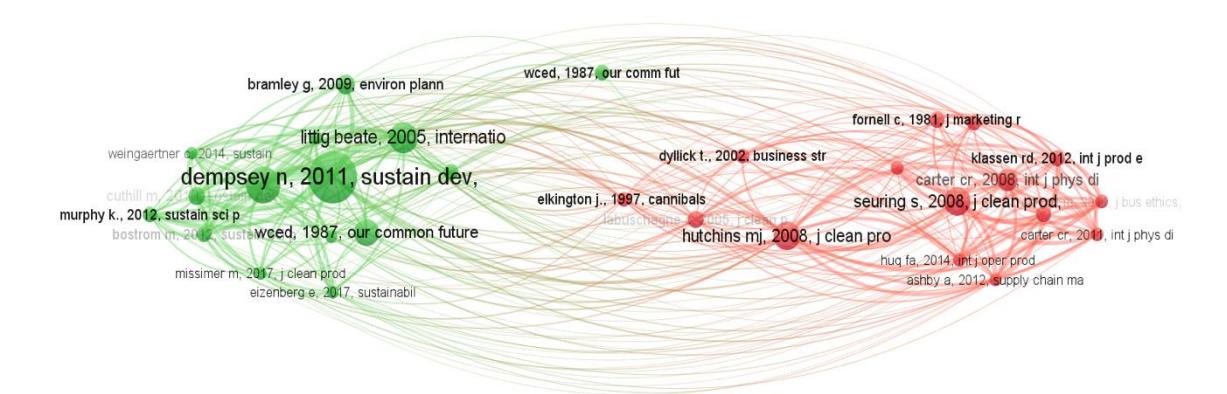
Figure 7. Reference co-citation network of urban social sustainability publications.
Co-citation Network of Cited Sources
Figure 8 shows the co-citation network of cited sources. VOSviewer was used for journal cocitation analysis, with the threshold set at 68; 150 publications met the requirement. Four different colors represent the four clusters. VOSviewer separated the 150 sources into four clusters. Frequency denotes the link strength between two publications that appear in one publication concurrently. In Figure 8, the top ranking co-cited sources of urban social sustainability publications were Journal of Cleaner Production, Energy Policy, International Journal of Production Economics, Journal of Business Ethics, Energy Economics, European Journal of Operational Research, Sustainability-Basel, Journal of Operations Management, Journal of Energy, and Ecological Economics. The top ten journals had strong links, with several publications out of the 150 cited several times.
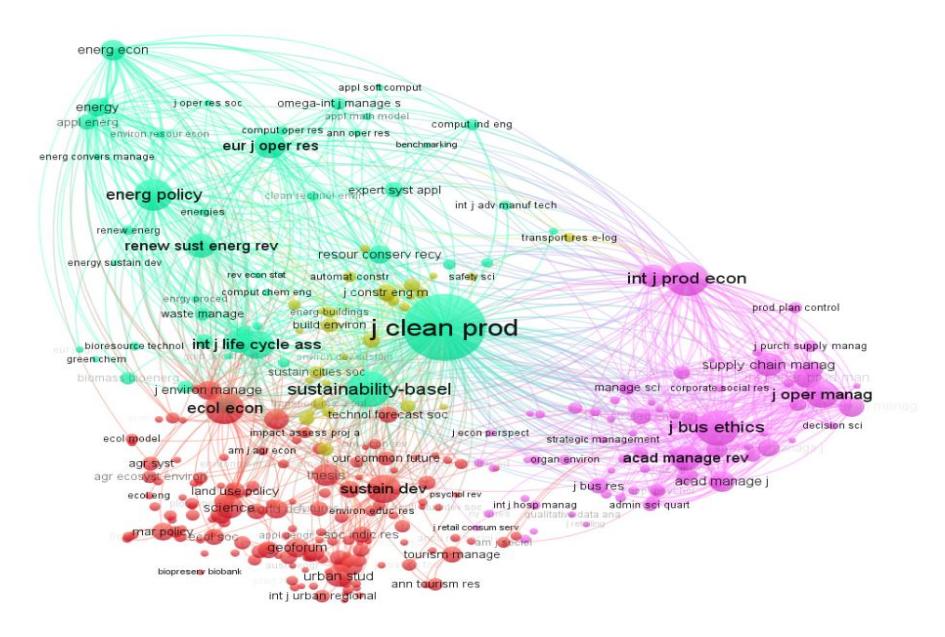
Figure 8. Journal co-citation network.
Co-citation Network of Cited Authors
The co-citation network analysis of cited authors is shown in Figure 9. 52,272 authors were cited simultaneously in publications on urban social sustainability. In VOSviewer, the threshold was set at 20; 248 authors met the threshold requirement. Each node represents a link between two authors when they are both cited in one document. The thickness of the node indicates the frequency of co-citations among authors. The ten most influential co-cited authors were Sueyoshi T, Carter CR, Mani V, Seuring S, Sarkis J, Pagell M, Zhou P, Dempsey N, Elkington J, and Fare R, among 248 authors. This means they have strong links within this research field.
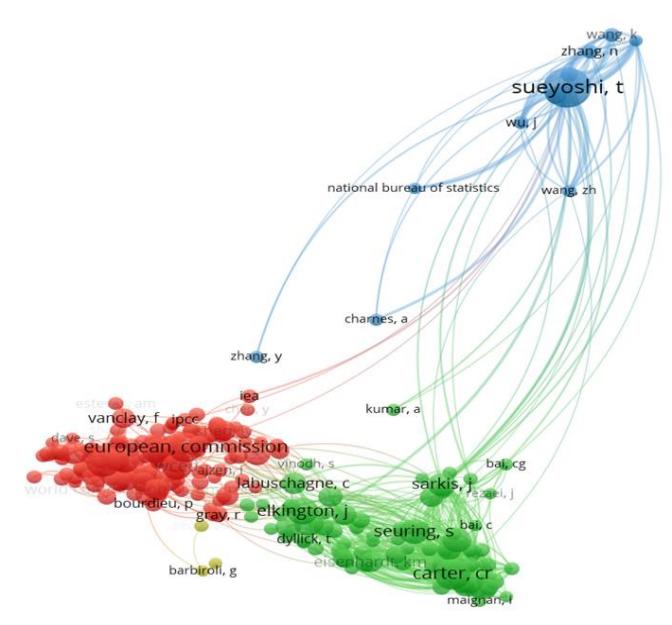
Figure 9. Author co-citation network.
In summary, the co-citation analysis of cited references, sources, and authors revealed solid scientific networks in the academic arena. The identified networks indicate the importance of this research field for creating socially sustainable urban environments.
Research Methodologies Distribution
Finally, this article selected 1,623 documents from WOS using all categories for the bibliometric analysis. To ensure the homogeneity of the research field on urban social sustainability, this research narrowed down all WOS categories to seven selected categories for 'methodologies distribution' and 'used theories'. A total number of 214 articles were considered out of the 1,623 by choosing the specific seven 'WOS' categories, namely Regional Urban Planning, Urban Studies, Development Studies, Social Sciences Interdisciplinary, Social Issues, Sociology, and Social Work. The reason for selecting these 214 articles was to determine the methodological distribution in the urban social sustainability research field. Table 10 shows the methodology distribution across the 214 selected articles. The classification of research types and research methods was adopted from the prominent authors Clark and Creswell (Clark & Creswell, 2014).
The different types of research used in the 214 articles were: qualitative research (59), quantitative research (76), mixed-method research (7), conceptual and theoretical research (68), and others (4). (See Table 10). The case study method was most used in the category of qualitative research, namely in 46 among 59 articles, i.e., 21.5 percent of the total number of articles. The survey method was adopted by 71 articles in quantitative research, which held the highest position (33.18 percent) among all types of research. Only seven articles used mixed methods, for instance, 'case study + survey,' 'survey + in-depth interviews,' and 'focus group discussion + case study + survey.' Theoretical and conceptual methods were used in 68 articles to develop a conceptual framework and practically test the propositions. Besides, four articles adopted parametric mathematical models and non-parametric models such as data envelopment analysis (DEA). In summary, the survey method was used most frequently to reveal practical scenarios in this research field, but there is a scope for adopting mixed-method research in future research.
Type of Research Research Method Frequency Percentage Percentage (Total) Qualitative Case study 46 77.97% 21.50% In-depth interview 12 20.34% 5.61% Participant observation 4 6.78% 1.87% Focus group discussion 3 5.08% 1.40% Total Papers Used in Qualitative Method 59 27.57% Quantitative Survey 71 93.42% 33.18% Meta-analysis 5 6.58% 2.34% Secondary analysis 1 1.32% 0.47% Total Papers Used in Quantitative Method 76 35.51% Mixed Methods 7 3.27% Theoretical and conceptual papers 68 31.78% Others 4 1.87% Total Papers 214 100.00%
Table 10. Research methodology distribution.
Theory Used in Articles
Table 11 shows the most frequently used theories in the 214 articles. These articles were selected based on the seven above-mentioned 'WOS' categories. Theoretical analysis is a significant part of research, providing a guideline to the researcher for data collection, analysis, and interpretation. Besides, it helps to formulate research problems and answer research questions. Likewise, theoretical discussion reveals implicit ideas about the central concepts, which helps to provide a guideline towards building solid arguments for the research. In urban social sustainability, stakeholder theory, planning theory, urbanism as a way of life, and the theory of good city form were most frequently used. Researchers also used classical theory, coherent theory, contingency theory, ecological modernization theory, institutional theory, and other theories in this research field.
Table 11. Theories used in the field of urban social sustainability.
| Theory Used | Frequency |
|---|---|
| Stakeholder theory | 4 |
| Planning theory | 3 |
| Theory of urbanism as a way of life | 2 |
| Theory of good city form | 2 |
| Classical theory | 1 |
| Coherent theory | 1 |
| Contingency theory | 1 |
| Ecological modernization theory | 1 |
| Institutional theory | 1 |
| Interactive governance theory | 1 |
| Organizational theory | 1 |
| Practice theory | 1 |
| Regional innovation system (RIS) | 1 |
| Social capital theory | 1 |
| Social exchange theory | 1 |
| Systems theory and action theory | 1 |
| Theory of affordances | 1 |
| Theory of basic human values | 1 |
| Theory of urban park geography | 1 |
| Transformative learning theory | 1 |
| Unifying livability and comparison theory | 1 |
Conclusion
This article presented a bibliometric analysis of scientific publications on social sustainability for sustainable urban development based on 1,623 relevant articles and book chapters. Many publications have appeared over the last few years, but previously no bibliometric study had been conducted on this subject yet. This encouraged us to explore publication trends and global hotspots in urban social sustainability. The findings of this article revealed that the number of publications in this area significantly increased in 2015; coincidentally, the UN established SDG 11 'Sustainable Cities and Communities' in the same year.
This article also presented global research streams and research hotspots by analyzing highimpact documents, authors' contributions, leading research countries, research institutes, keyword identification, co-citations, research methodologies, and different theories used in articles. Interestingly, the results of the analysis of leading countries, country collaborations, and corresponding author's country indicated that developed countries had high research strength compared to developing countries. It is also explicit from the research institute analysis that most research institutes came from developed countries, while developing countries performed less well. Interest for research on social sustainability for sustainable urban development is smaller in developing countries compared to developed countries. However, other factors may have affected the performance of developing countries. For example, this study only considered the published documents in English, where academic articles or published documents in developed countries are usually published in English, which are more visible in academic journals. In contrast, related articles could be published in non-index journals or in their local language in developing
countries, which were not covered in this study. Thus, we leave this issue for future researchers, which may help to further explore this topic.
This study had some limitations. First, we considered only the WOS database covering high indexed but limited publications in this research field. Using a Scopus database could provide visualization of this field in the future. Second, we used all possible keywords to find relevant documents. This may be upgraded in the future, as social problems highly influence social sustainability and future studies may focus on all individual social issues rather than limiting keywords to social sustainability. Third, we used seven selected categories out of all WOS categories to explicate the research methodologies distribution and used theories. All WOS categories might be used in the future to get more insight into theories and methodologies used, and there is also scope for content analysis or systematic literature review. This article's effort contributes to existing research progress and provides a scientific mapping for future researchers.
This article used various bibliometric tools and methods to illustrate research streams and research hotspots that deserve future attention from urban social sustainability researchers. Also, this study contributes to researchers finding new insights into urban social sustainability research.
First, the authors' keywords trend analysis demonstrated that social sustainability is currently mainly related to sustainable urban development, urban sustainability, or sustainable city. Some studies concentrated on social sustainability frameworks, effects, policies, and design in the urban context. Therefore, there is scope to focus on a more comprehensive framework or model of social sustainability for sustainable urban development. Additionally, the implementation challenges of urban social sustainability should be examined for creating socially sustainable urban environments.
Second, it is evident that developing countries pay insufficient attention to this field of research. Therefore, researchers from developing countries could provide more effort to assess social sustainability for sustainable urban development in their country and find the obstacles and solutions to implement it.
Third, research methodological distribution revealed that the survey method is used most frequently. Yet, this research field offers an excellent opportunity to use mixed-method (qualitative and quantitative) research to achieve a more comprehensive understanding. Mixedmethod research can incorporate different methods to help researchers investigate various aspects of urban social sustainability. Fourth, this article revealed that stakeholder theory, planning theory, the theory of urbanism as a way of life, and the theory of good city form were the most frequently used theories on urban social sustainability. Therefore, these highly used theories can help future researchers to conduct their research with strong theoretical boundaries.
Acknowledgement: We have not received substantial contributions from non-authors.