

Introduction
The term 'superhub' refers to a new and evolving concept in urban planning and economic development (Brodjonegoro, 2021). There is no specific individual or organization that can be credited with coining it. It emerged organically as a way to describe highly influential and dominant economic centers or hubs, often in the context of global or regional economic development (Kaiser and Godschalk1999; Hall P., 2005; Kunzmann and Wegener, 2008). Kaiser and Godschalk (1999) discuss the evolution of land-use planning in the twentieth century. They touch upon the concept of polycentric development and its role in shaping metropolitan areas and examine the historical perspective of planning and its implications for contemporary urban development. The term superhub can be applied to several major world cities. Examples of superhubs or dominant economic centers include New York City, London, Tokyo, Shanghai, Dubai, Singapore, and many others. These centers are instrumental in shaping the economic landscape of their respective regions and countries and contribute significantly to global economic development.
Since 2019, Indonesia has planned to build a new economic superhub. As part of the national capital development plan, it will build the superhub in an area of 252,660 hectares, with a core area of around 56,180 hectares, while the remaining 256,142 hectares is its development area (see Figure 1). This is Indonesia's most ambitious infrastructure endeavor so far, and involves relocating its capital city, Jakarta, from Java to East Kalimantan (Indonesian Borneo). The new capital, called Nusantara, will not only serve as the seat of the national government and administration but also function as the country's economic focal point. The US$ 32 billion capital relocation project was initially slated for completion by 2024, but this date was postponed due to the Covid 19 pandemic. It encompasses enhancements to airports, seaports, and new transportation networks. These improvements aim to transform the region into an environmentally conscious superhub, fostering economic development throughout the archipelago. The relocation is expected to yield socioeconomic advantages, aligning with the government's commitment to create a 'smart', 'green', and 'sustainable' capital city (Adri, 2019; Da Costa and Lamb, 2022).
The statements above present a positive outlook on the relocation and development of an environmentally conscious superhub, highlighting the potential for economic development and socioeconomic benefits in line with a commitment to sustainability. However, learning from previous studies, several negative insights and potential concerns may arise from such an ambitious project. Despite the aim to create an environmentally conscious superhub, the development and construction activities involved in building new infrastructure could have significant negative impacts on local ecosystems, biodiversity, and natural resources. The largescale alteration of land and potential deforestation could disrupt habitats and contribute to environmental degradation. The development of a new superhub often requires extensive land, which can lead to the displacement of local communities. This can result in the loss of homes, land, and livelihoods for indigenous populations and local residents, leading to social and economic dislocation. Moreover, while aiming to foster economic development, such projects can also exacerbate economic inequality. Benefits may disproportionately favor wealthier individuals, corporations, and investors, leaving behind small businesses and local workers. The promised socioeconomic advantages may not be evenly distributed. Achieving a truly 'smart', 'green', and 'sustainable' development is challenging and requires ongoing commitment and resources. There is a risk that initial sustainability goals could be compromised over time due to economic pressures, political changes, or inadequate planning and execution. Lastly, the development can lead to an increased strain on resources such as water and energy, potentially leading to shortages or the need for significant investments in sustainable infrastructure solutions that may not be fully realized or prioritized. Each of these concerns reflects the complex balance between development and sustainability, highlighting the importance of careful planning, stakeholder engagement, and rigorous environmental and social impact assessments to mitigate potential negative outcomes of such an ambitious project.
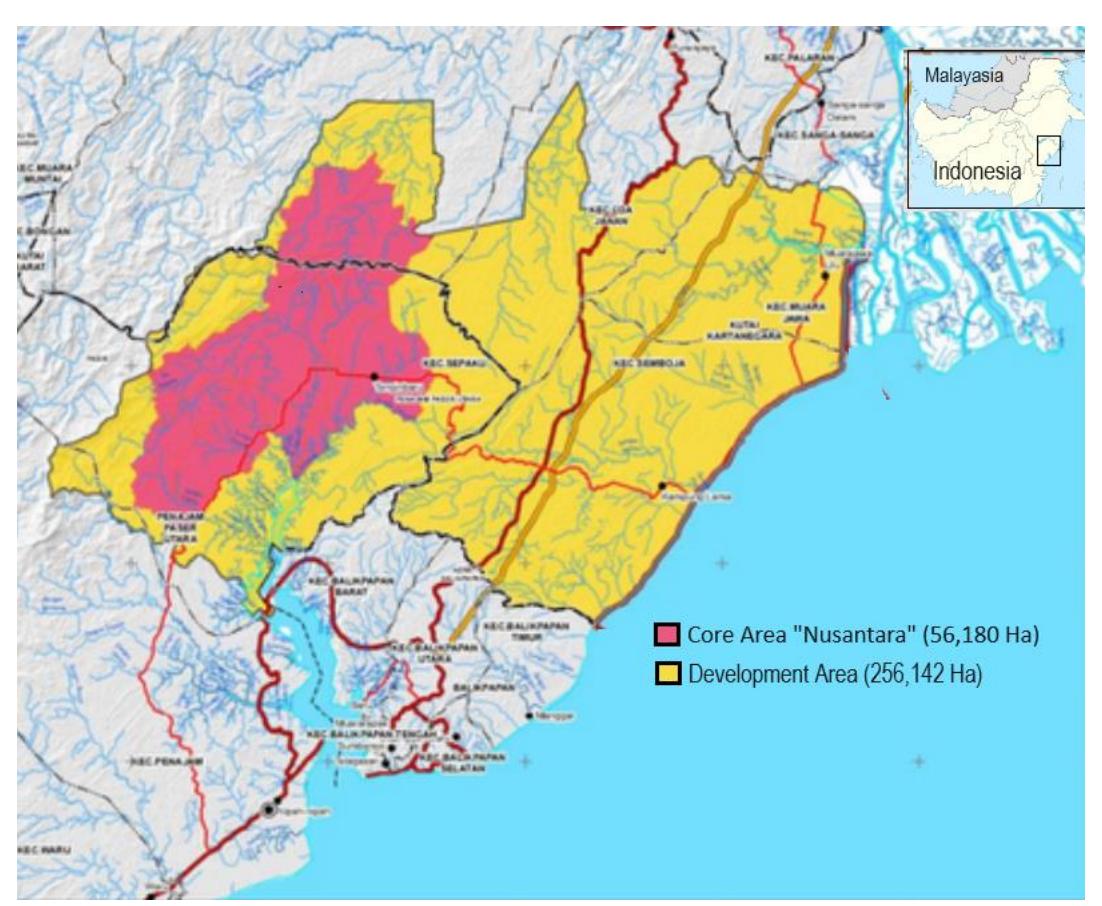
Source: Peraturan Presiden Nomor 63 Tahun 2022 Tentang Perincian Rencana Induk Ibu Kota Nusantara
Figure 1. Location of the new capital of Indonesia, Nusantara, with a core area of 56,180 ha and a development area of 256,142 ha.
Another suggested approach to support the development of Nusantara is the concept of a smart sustainable city that can utilize technology and innovation to improve environmental and socioeconomic sustainability (Höjer & Wangel, 2014). A smart and sustainable city combines sustainable technologies and strategies to optimize city life and the environment and provide residents with sustainable social, economic, and environmental benefits (Bibri & Krogstie, 2017b). One of the concepts that emerged in responding to the challenges of developing sustainable smart cities is the superhub concept, which emphasizes the integration of transportation, economy, and infrastructure in the development of interconnected cities.
Superhubs can catalyze economic growth and sustainable regional development (Rodrigue, 2020). In South Korea, the superhub concept has been implemented at Incheon airport, which has successfully developed the airport into a global logistics and economic hub through key strategies in infrastructure development, partnerships with airlines, innovation, operational efficiency, focusing on passenger services and business diversification (Lee & Yang, 2003). Hong Kong has succeeded in becoming one of the largest and most important air cargo hubs in the world, attracting investment and increasing economic growth in the region through the adoption of the superhub concept (Zhang, 2003). In the Indonesian context, moving the capital from Jakarta to a new city in East Kalimantan underlines the importance of good planning in creating a sustainable and competitive city on a global level. The superhub concept promoted in developing Indonesia's new capital city in East Kalimantan is the answer to the vision of sustainable urban development (Brodjonegoro, 2021).
However, while the potential benefits of the superhub concept in promoting technological, environmental, and smart socio-economic sustainability in urban development, there may be negative expectations and potential challenges associated with developing sustainable smart cities. Smart cities rely heavily on technology and data collection to optimize operations and services. This raises issues of data privacy and security, as well as concerns about the digital divide, where parts of the population may lack the skills or access to participate fully in the digital aspects of city life. While smart and sustainable cities and superhubs were conceptualized with long-term benefits in mind, achieving and maintaining these sustainability goals over time can be challenging. Changes in political leadership, economic conditions, and technological advancements can affect the commitment to and effectiveness of sustainability strategies. The implementation of the superhub concept, though promising in theory, requires careful consideration of these negative expectations to ensure that the development of a smart sustainable city truly benefits all residents and minimizes negative environmental and social impacts.
Nusantara's development plan also features a development concept with a polycentric spatial approach. This refers to the distribution of urban centers within an area, where these centers are interconnected and work together to achieve more efficient and sustainable development (Meijers, 2008). This approach is relevant in urban planning because it can facilitate a more equitable and efficient distribution of economic, social, and environmental activities throughout urban areas. In addition, the polycentric concept can help understand the dynamics of social and language interactions in a heterogeneous and multicultural global environment (Blommaert et al., 2005). By implementing a polycentric structure, Indonesia's new capital city as a superhub may create efficiently connected hubs of activity, reduce dependency on city centers, and provide residents with better access to services and facilities. Building knowledge and creativity-based infrastructure partnerships between the public and private sectors is essential to developing sustainable and innovative spatial structures (Sutriadi & Miftah, 2020). Moreover, creating a sustainable smart city requires optimizing the adaptation of technology and innovation. It also requires community involvement, appropriate policies, and collaboration between parties (Höjer & Wangel, 2014).
The polycentric spatial development approach, while offering a framework for sustainable and equitable urban growth, especially in the context of Nusantara, presents several implementation challenges, including the need for sophisticated planning and coordination across various urban centers. Achieving effective integration and addressing existing infrastructure and governance deficits are significant hurdles, leading to potential inefficiencies and delays in development efforts. Uneven resource distribution and the risk of certain areas being underdeveloped can exacerbate regional inequalities and place additional strain on existing infrastructure, necessitating substantial investments. Furthermore, the development of new urban centers could
result in the displacement of local communities and gentrification, challenging the goals of equitable development and raising concerns over environmental degradation. Despite its potential, the successful implementation of a polycentric development strategy requires overcoming these obstacles through effective community involvement and the creation of inclusive policies to avoid favoritism and opposition, ensuring benefits for all residents.
The pros and cons discussed above touch upon various challenges that can significantly influence public sentiment towards such spatial development projects in Nusantara. Public sentiment reflects the community's perceptions, attitudes, and reactions to development initiatives and their impacts on daily life, the environment, and the socio-economic fabric of a region. Public sentiment can be negatively affected by inefficiencies and delays in development, as well as by uneven resource distribution. Residents in areas with infrastructure deficits or those that remain underdeveloped may feel neglected or unfairly treated, leading to dissatisfaction and possibly resistance to a project. The perception of inequity in development efforts can foster public opposition, particularly if certain regions or communities do not see tangible benefits from the development. Furthermore, public sentiment may also be influenced by concerns over environmental degradation and questions regarding the economic viability and sustainability of polycentric development. Environmental activists and concerned citizens may oppose development that threatens natural habitats or increases pollution. Economic challenges, such as the struggle to attract investment or the competition between new and established urban centers, can lead to skepticism about the long-term success and sustainability of the development, affecting overall public support. The extent to which communities are involved in the planning process and how well policies reflect the diverse needs of the population are critical factors that can shape public sentiment. Failure to engage communities effectively or the perception that policies favor certain groups over others can lead to discontent and opposition. Public sentiment is likely to be more positive when people feel heard, included, and fairly treated in the development process. In sum, these challenges related to Nusantara's development are intrinsically linked to public sentiment. We argue that the success of such urban development projects depends significantly on addressing these concerns to ensure broad public support and minimize opposition. Effective communication, inclusive planning, and responsive governance are essential to aligning development objectives with the expectations and needs of the public.
Based on the above discussion the main objective of the present study was to explore public sentiment towards Nusantara's spatial development projects by examining the community's perceptions, attitudes, and reactions to the development initiatives regarding Nusantara. This objective aimed to provide a comprehensive understanding of the dynamics between the spatial development projects of Nusantara and public sentiments gathered from social media, identifying the challenges that need to be addressed to ensure the success of such initiatives through broad public support.
Based on the objectives of this study, we formulated the following three research questions:
- 1. What issues and problems faced by Nusantara's spatial development projects influence public sentiment?
- 2. What are the key factors contributing to the perception of inequity in development efforts within the Nusantara project, and how do these factors affect public opposition and dissatisfaction?
- 3. What are the specific challenges and opportunities related to gathering and analyzing public sentiments from social media in the context of Nusantara's spatial development projects, and how can these insights inform project success and mitigation of opposition?
The rest of the paper is organized as follows. The following section presents the methodology and data used, while in Section 3 we discuss the key components and principles that define and guide the analysis of superhub development in Nusantara. In Section 4 we discuss our main findings. Lastly, close off with the Conclusion section.
Methodology and Data
Methodology
In this research, we used comprehensive analysis and evaluation techniques to understand the meaning of the data from content analysis and public sentiment via Twitter. The concept and plan for superhub development in Nusantara were evaluated based on sentiment analysis, considering technical, economic, social, and environmental aspects. The polycentric space approach was used as the conceptual framework to formulate recommendations on how the spatial structure in Nusantara can be developed to support collaboration and economic growth (Sutriadi & Miftah, 2020). This approach allowed us to relate the research findings to a broader theoretical framework and understand how they correlate. The analysis was carried out to see the impact likely to occur as a consideration and input for the government in developing Nusantara.
This study used a qualitative approach to examine the superhub concept in Indonesia's new capital city. It involved analyzing content from various documents, which included: (1) research journals, books, government policy documents, popular media, and spatial analyses related to the nation's capital's planning and development; and (2) we analyzed large-scale data from social media (Twitter) to explore public sentiment towards the policy of moving the national capital and building a new capital city in East Kalimantan. By combining these two approaches, we hoped to better understand how the superhub concept can be implemented in the planning and development of a new capital city and how this policy is accepted and absorbed by the community.
Content analysis of the documents was carried out using thematic coding techniques to identify patterns and trends emerging from the data, and sentiment analysis of Twitter data was carried out using machine-learning algorithms and text analysis to classify public opinion regarding the relevant policies. We looked for ways to distinguish between the responses of Indonesians in general and those in Kalimantan more specifically. Twitter's data has a non-standardized and variable component of the account owner's location. We developed a strategy to identify the location of each tweet analyzed. We created a new dataset that included provincial information for each tweet during the analysis process. This information was obtained by extracting the name of the city or the name of the province in the territory of Indonesia listed in the account owner's location data. While these location recordings are not always consistent, we used this approach to get an overview of the geographic location of users commenting on Nusantara. This allowed us to see the similarities and differences in public perception regarding Nusantara, thus providing deeper insight into how the related policies are received and viewed by various community groups in various regions of Indonesia.
This study sought to provide an in-depth understanding of how the superhub and polycentric concepts are applied in the planning and development of Nusantara and how the public accepts these policies. In addition, these findings were meant to provide recommendations and suggestions to the government to improve the development strategy for Nusantara, taking into account the aspirations and needs of the community and ensuring inclusive and sustainable development.
Data
Preparing Twitter Data Set
We collected Twitter data from the period January 1 to December 31, 2022, using the Twitter API mechanism that provides access rights for academic purposes. This allowed us to collect data over a period of one year. We focused on Twitter posts related to Nusantara by selecting relevant hashtags and keywords that reflected the topic. To ensure the relevance of the data for the Indonesian context, we only collected data from Twitter users whose locations were recorded as being in Indonesia. The raw data obtained consisted of 1,408,107 tweets (over 4.5 GB). After being cleaned, filtered, and validated, raw data was obtained from as many as 433,6377 records.
Before analyzing the data, we performed pre-processing to ensure data quality and validity. The data pre-processing stage is very important in the sentiment analysis process on Twitter posting data because Twitter data has much noise, such as meaningless words, hashtags, punctuation, and URLs (Pak & Paroubek, 2010). The pre-processing stages included removing duplicates to ensure each tweet for analysis was unique; filtering out irrelevant content that does not align with the research questions; handling missing data in critical fields and deciding on a strategy (imputing, removing, or leaving unchanged) based on the extent and nature of missing data; performing text processing, which consisted of normalizing text case, tokenizing text into words, removing stop words, URLs, and hashtags, and applying stemming to reduce words to their root form; and finally transforming the cleaned text and metadata into a structured format (e.g., CSV, database) and extracting additional features (sentiment scores, word counts) as needed. After pre-processing, the data was further analyzed using text analytic techniques and machine learning to explore public sentiment and opinion regarding Nusantara. These steps, tailored to our specific research needs, ensured the preparation of a clean, structured dataset for effective analysis.
Preparing public documents data set
Analyzing the contents of public documents, especially in a research context, involves methodologies from fields like content analysis, text mining, and natural language processing (Krippendorff, 2018; Manning et al., 2008). Content analysis is a systematic, quantitative, and qualitative method for studying and interpreting the content of communications. The goal here was to identify patterns, themes, or biases within a set of documents or media outputs (Krippendorff, 2018) related to the Nusantara development plans. The pre-processing stages included reviewing our research goals and questions and understanding what we wanted to achieve. Then, we looked to identify themes, measure the frequency of certain words or concepts, and choose the sample by selecting a relevant set of documents that could provide meaningful insight related to the research questions. Having done this, based on the research question we identified categories, established a set of codes to apply to the data, and developed a codebook that clearly defined each category, including a description, and inclusion criteria. Finally, we systematically applied our coding scheme to all selected documents manually.
After the two preprocessing steps above were completed, the final step consisted of combining the two data sets into a unified data set to be used for sentiment analysis. The process of combining these two data sets required careful planning and execution to ensure that the different data sets were harmonized and analyzed cohesively to provide comprehensive insight relevant to the objectives of this study.
Measuring Sentiment
Measuring sentiment using the unified data set with government reports and other social media platforms involved a structured approach to harmonize and analyze the diverse nature of these sources. The steps that were taken to analyze the data set began when everything was available in the unified set of data that had gone through the data preparation and integration process as explained in Section 2.2. The next step was to choose the sentiment analysis tools or libraries suitable for diverse data types. We used TextBlob, which was adapted for the Indonesian language. Then, the sentiment of each data record was calculated using the NLTK (Natural Language Toolkit) Python library, which provides tools for text classification, tokenization, stemming, tagging, and parsing. The sentiment value was categorized as 'negative', 'neutral', or 'positive' based on specific thresholds. The average sentiment value for each tweet was calculated. If the value was less than -0.01, it was labeled as a negative sentiment; between -0.01 and 0.01 as neutral sentiment; and if the value was more than 0.01 it was labeled as positive sentiment.
Elements of Nusantara's Polycentric Regional Development
Elements of polycentric regional development refer to the key components and principles that define and guide the strategy of developing multiple centers of economic and administrative activities within a region, rather than focusing on a single dominant city or area. This approach aims to distribute economic growth, infrastructure development, and public services across several urban and rural centers to reduce regional disparities, promote balanced regional development, and enhance sustainability (among others, see Christophe Sohn, Olivier Walther, and Antoine Decoville, 2020; Hall and Pain, 2006; Fischer and Nijkamp, 2004; Batty, Besusi, and Chin, 2003).
Applying this approach and assessing various sources of documents, as listed in Table 1, including scientific works related to theories and concepts of regional development, especially related to the theory of the formation of polycentric regions, and publications of scientific studies related to Nusantara's polycentric regional development, we offer the conclusion that there are at least six elements that are the subject of discussion in planning and developing Nusantara. The six elements are: (1) the superhub and the Nusantara economic cluster, (2) the polycentric spatial structure, (3) the territorial impact, (4) superhub development towards the Nusantara's spatial planning, (5) stakeholder engagement, and (6) government policy support.
Results and Discussion
Twitter Sentiment Analysis
Drawing from the analysis conducted in the previous section, the ensuing discourse provides an explication of the outcomes, with particular focus on six aspects of Nusantara's development, which comprises a discussion of Twitter sentiment analysis: (1) the superhub with the Nusantara economic cluster, (2) the polycentric spatial structure, (3) the territorial impact; (4) superhub development towards the Nusantara's spatial planning, (5) stakeholder engagement, and (6) government policy support.
Table 1. List of supporting documents for defining polycentric elements
A. Social and Politics
- 1 Agama, J. S., Masyarakat, D., & Yahya, H. M. (2018). Pemindahan Ibu Kota Negara Maju dan Sejahtera. Jurnal Studi Agama Dan Masyarakat, 14(1), 21–30. https://doi.org/10.23971/JSAM.V14I1.779
- 2 Dwi Djayanti, H., Gede Sumertha, I., & Puji Utama, A. (2022). Potensi Konflik Sosial Dalam Pemindahan Ibukota Negara Republik Indonesia. Jurnal Damai Dan Resolusi Konflik, 8(1), 1– 15.
B. Economics
- 3 Brodjonegoro, B. P. S. (2021). Nusantara as an Economic Superhub. Presented at the Indonesia Pavilion Dubai World Expo on December 9th, 2021.
- 4 indonesiabaik.id. (2019). Dampak Ekonomi Pemindahan Ibu Kota. https://indonesiabaik.id/motion_grafis/dampak-ekonomi-pemindahan-ibu-kota
- 5 djkn.kemenkeu.go.id. (2023, February 28). Mengukur Manfaat dan Biaya dari Pengembangan Ibukota Baru. https://www.djkn.kemenkeu.go.id/kpknl-palu/baca-artikel/15931/Mengukur-Manfaat-dan-Biaya-dari-Pengembangan-Ibukota-Baru.html
- 6 https://jurnalprodi.idu.ac.id/index.php/DRK/article/view/1164
- 7 Firmanda, H., Afia, N., & Rahmadani, S. (2022). Kajian Postmoderenisme Terhadap Pemindahan Ibu Kota Negara Republik Indonesia. Jurnal Pendidikan Dan Konseling (JPDK), 4(6), 9975–9981. https://doi.org/10.31004/JPDK.V4I6.9919
C. Laws and Regulations
- 8 Government Regulation of the Republic of Indonesia Number 13 of 2017 concerning National Spatial Plans, (2017).
- 9 Government Regulation Number 17 of 2022 regarding the Mechanism of Transfer & Implementation of Nusantara, (2022).
- 10 Law Number 3 of 2022 on the State Capital (2022).
- 11 Presidential Regulation Number 63 of 2022 concerning the Nusantara Master Plan (2022).
- 10 Presidential Regulation Number 64 of 2022 concerning National Strategic Areas of Nusantara, (2022).
- 11 Hukum, J., Syariah, E., Syariah, F., Hukum, D., Sunan, U., Djati, G., Jalan, B., Nasution, A. H., 105, N., Bandung, K., Barat, J., & Herdiana, D. (2022). Pemindahan Ibukota Negara: Upaya Pemerataan Pembangunan ataukah Mewujudkan Tata Pemerintahan yang Baik. Jurnal Transformative, 8(1), 1–30. https://doi.org/10.21776/UB.TRANSFORMATIVE.2022.008.01.1
D. Public Opinion and Seminars regarding Nusantara Development
- 12 inilah.com. (2023, March 24). Wajib Tahu, Ini Dampak Positif dan Negatif Pemindahan Ibu Kota Negara. https://www.inilah.com/dampak-positif-dan-negatif-pemindahan-ibu-kota-negara
- 13 jawapos.com. (2023, February 13). Perpindahan Nusantara Memberi Banyak Dampak Positif | Radar Sampit. https://radarsampit.jawapos.com/nasional/13/02/2023/perpindahan-Nusantaramemberi-banyak-dampak-positif/
- 14 kaltimprov.go.id. (2022, June 3). Adi Buhari : Dampak Positif Nusantara Luar Biasa. https://www.kaltimprov.go.id/berita/adi-buhari-dampak-positif-Nusantara-luar-biasa
- 15 merdeka.com. (2022, August 14). BI: Dampak Pembangunan Ibu Kota Baru Sudah Terasa di Kalimantan Timur | merdeka.com. https://www.merdeka.com/uang/bi-dampak-pembangunanibu-kota-baru-sudah-terasa-di-kalimantan-timur.html
- 16 mkri.id. (2022, April 12). Nusantara Pindah ke Kalimantan Berisiko Merusak Lingkungan Hidup | Mahkamah Konstitusi Republik Indonesia. https://www.mkri.id/index.php?page=web.Berita&id=18127&menu=2
- 17 okezone.com. (2022, October 19). Mengenal Dampak Positif dan Negatif Pemindahan Ibukota ke Kalimantan : Okezone Nasional. https://nasional.okezone.com/read/ 2022/10/19/ 337/2690066/mengenal-dampak-positif-dan-negatif-pemindahan-ibukota-ke-kalimantan
- 18 politik.brin.go.id. (2022, March 28). Dampak Pemindahan Ibu Kota Negara Terhadap Pengembangan Kompetensi Aparatur Sipil Negara. https://politik.brin.go.id/kolom/pemilupartai-politik-otonomi-daerah/dampak-pemindahan-ibu-kota-negara-terhadap-pengembangankompetensi-aparatur-sipil-negara/
- 19 Pribadi, D. S., & Utomo, S. (2021). Dampak Perpindahan Ibu Kota Negara terhadap Pemulihan Ekonomi dalam Perspektif Persaingan Usaha. Jurnal Persaingan Usaha, 1(2), 27– 42. https://doi.org/10.55869/KPPU.V2I.28
- 20 Ria, R., Hasibuan, A., & Aisa, S. (2020). Dampak dan Resiko Perpindahan Ibu Kota Terhadap Ekonomi di Indonesia. AT-TAWASSUTH: Jurnal Ekonomi Islam, 5(1), 183–203. https://doi.org/10.30829/AJEI.V5I1.7947
- 21 Saputra, S. D., J, T. G., & Halkis, M. (2021). Analisis Strategi Pemindahan Ibu Kota Negara Indonesia Ditinjau dari Perspektif Ekonomi Pertahanan (Studi Kasus Upaya Pemindahan Ibu Kota Negara dari DKI Jakarta ke Kutai Kartanegara dan Penajam Paser Utara. Ekonomi Pertahanan, 7(2), 192–220. https://doi.org/10.33172/JPBH.V3I1.373
- 22 setneg.go.id. (2022, January 24). Nusantara Nusantara Magnet Pertumbuhan Ekonomi Baru dan Smart City | Sekretariat Negara. https://www.setneg.go.id/baca/index/Nusantara_Nusantara_magnet_pertumbuhan_ekonomi_b aru_dan_smart_city
During the data collection period, we managed to collect a total of 1,408,107 tweets. The frequency of tweets per month is shown in Figure 2.
After the pre-processing phase, there were 433,637 clean tweets ready to be analyzed. The sentiment analysis results using a lexicon-based approach revealed that as many as 261,903 tweets expressed positive sentiment, 103,906 expressed negative sentiment, and 67,566 expressed neutral sentiment, as shown in Figure 3.
The data shows that the community's response to the development of the National Science Institute had a positive value. It shows that as much as 60.43% of the people positively responded to the construction of the new capital city, while 23.98% gave a negative response. This response needs to be looked at further to see which challenges and obstacles there are based on the community's views that the government needs to pay attention to in the Nusantara's development process.
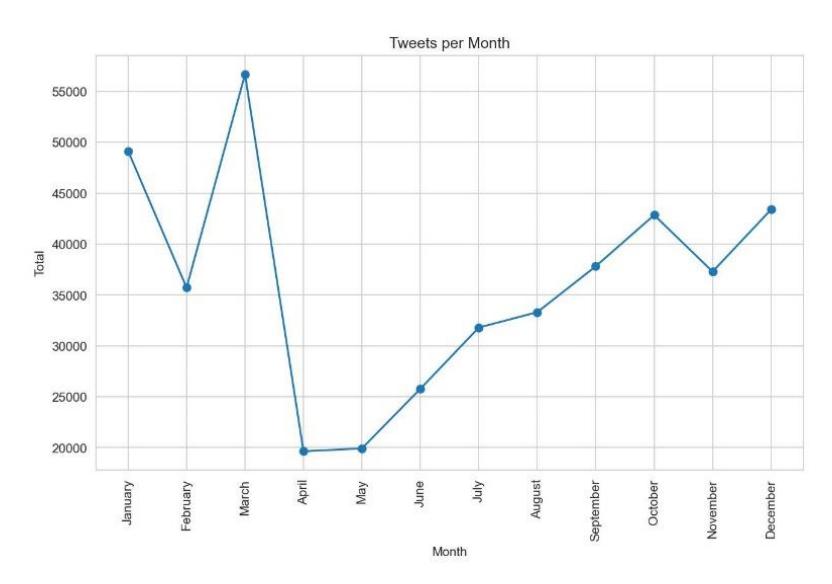
Figure 2. Frequency of tweets related to Nusantara throughout Indonesia in 2022.
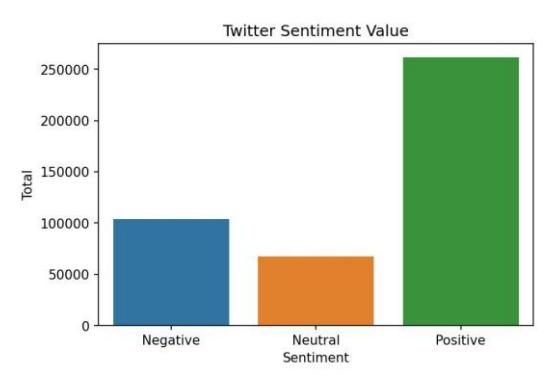
Figure 3. Community sentiment values for Nusantara in 2022.
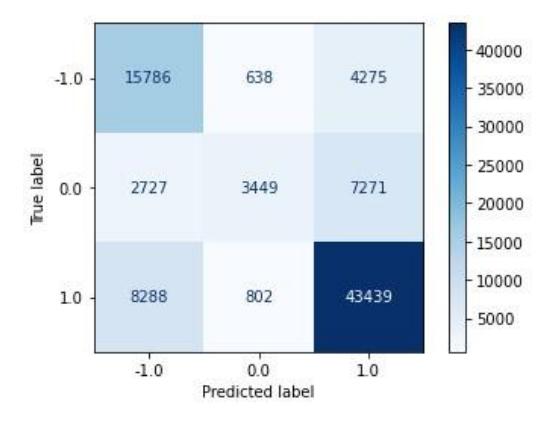
Figure 4. Graph of confusion matrix evaluation of the sentiment analysis.
The naive Bayes classification method calculates the accuracy of sentiment analysis and showed an accuracy value of 72.31%. This result confirmed that the sentiment analysis was reliable in interpreting the public perception of Nusantara's development (Desai & Mehta, 2017). Furthermore, the confusion matrix in Figure 4 describes 43,439 true positives, 15,786 true negatives, 8,288 false positives, and 4,275 false negatives.
The results of the sentiment analysis in this study revealed the main trends and differences in opinion between the people of Indonesia and those in Kalimantan regarding the development of Nusantara as the new capital city of Indonesia. From 17,284 tweets recorded in Kalimantan, the distribution included West Kalimantan with 1,487 tweets, South Kalimantan with 1,143 tweets, Central Kalimantan with 5,817 tweets, East Kalimantan with 7,160 tweets, and North Kalimantan with 1,677 tweets. Sentiment values obtained throughout Kalimantan expressed positive sentiment at 11,577, negative sentiment at 3,182, and neutral sentiment at 2,525. The frequency of sentiment values obtained is illustrated in Figure 5.
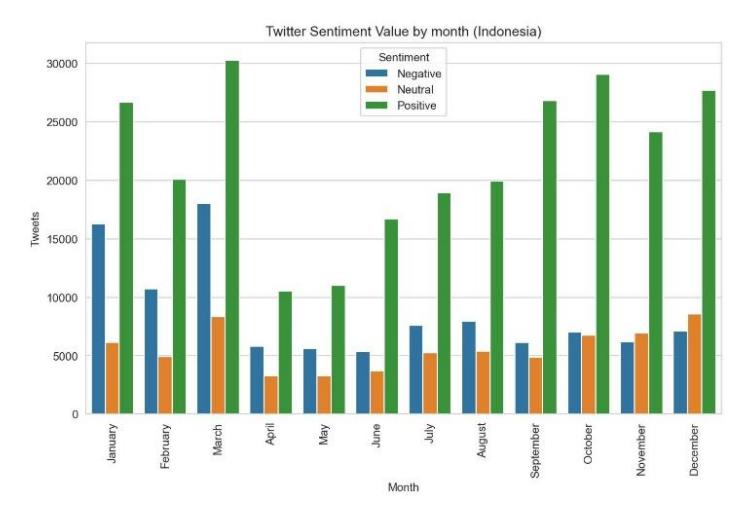
(a) Sentiment values in Indonesia.
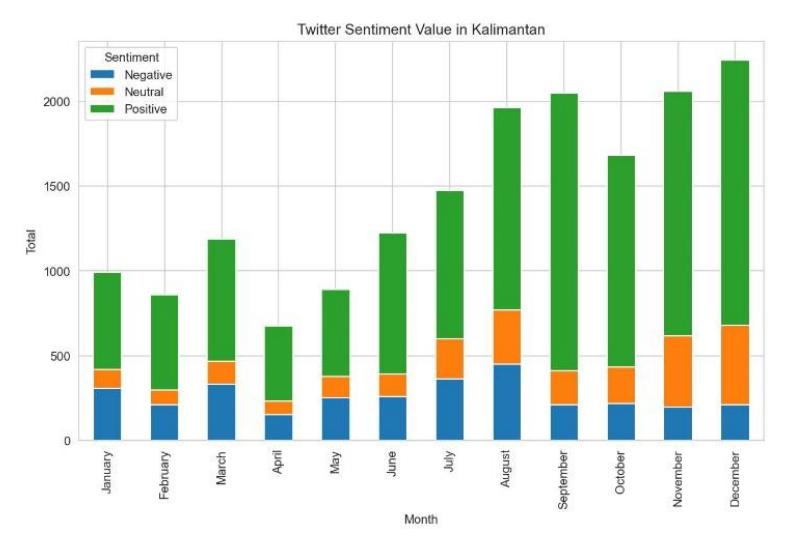
(b) Sentiment values in Kalimantan.
Figure 5. Frequency of sentiment values per month in Indonesia and Kalimantan.
Based on these results, both at the national, Kalimantan, and other regional levels, the dominant sentiment regarding the development of the Nusantara was positive. It shows that most people support and feel optimistic about the plan to develop Nusantara as the new capital city of Indonesia. However, the current negative and neutral sentiments cannot be ignored because they represent the concerns and questions of a part of society that need to be addressed by policymakers. People's negative opinions on urban development must be considered in efforts to achieve sustainable urban development. Negative public opinion can significantly challenge sustainable urban development, such as resistance to developing certain areas or controversial infrastructure projects (McCann, 2010).
As shown in Figure 6, most posts were from Jakarta, indicating that Nusantara's development is a major concern in the current capital city. Moreover, Jakarta is an area that will be directly affected by the relocation of the capital, both from an administrative perspective and concerning social and economic life. However, the graph in Figure 6 shows that a majority of people in the Jakarta area support the construction of Indonesia's new capital city. In this context, it appears important to involve communities in various regions, including in Kalimantan and other areas, in discussions and decision-making processes related to the development of Nusantara. Thus, the aspirations and interests of various communities can be accommodated in the planning and implementation of the development of the new capital city of Indonesia, through social media in this case (De Lange & De Waal, 2017).
The conclusion that can be drawn from the sentiment analysis is that geographically, among the 433,637 tweets analyzed, public sentiment was almost evenly distributed across 33 provinces, with 63% expressing positive sentiment, 24% negative sentiment, and 13% neutral sentiment. However, sentiment varied over the course of 2020, with a significant increase in negative sentiment (41%) from January to March due to concerns about financing risk and economic challenges in the development of Nusantara, but afterward, negative sentiment decreased, and positive sentiment continued to rise from April to December 2020.
The results of the sentiment analysis in this study can provide valuable insights for the planning and implementation of the development of Nusantara as the new capital city of Indonesia. Although positive sentiment dominated, negative sentiment and several issues arising from the analysis must be considered in formulating development strategies.
Based on the findings of the sentiment analysis visually represented in Figure 6, it can be inferred that several keywords reflect negative sentiment and issues, including corruption, state budget burden, increased flooding, and environmental degradation. Henceforth, Nusantara's development plans must include endeavors to heed the apprehensions and requirements expressed by the community regarding these matters. Potential measures involve enhancing transparency in budgetary administration, safeguarding environmental conservation, and engaging local communities in the developmental undertaking.
On the other hand, the sentiment analysis also revealed keywords that reflect positive sentiment and the development potential of Nusantara, such as economic equity, infrastructure development, and technological development. It shows that the community recognizes the potential benefits that may be obtained from Nusantara's development, such as equitable distribution of development and increased welfare.
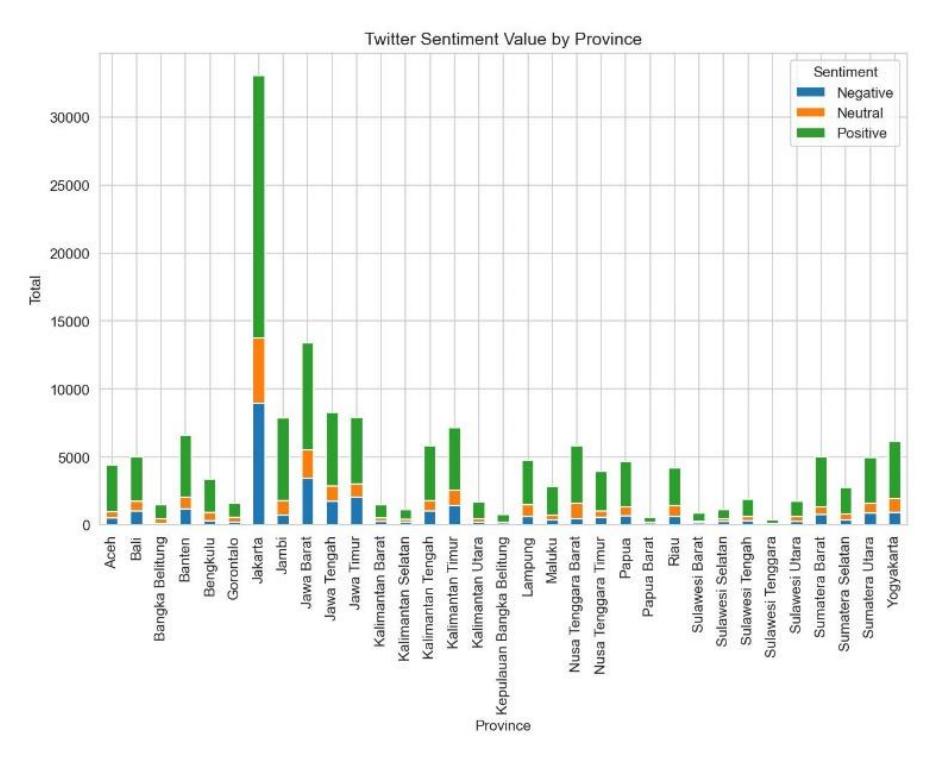
Figure 6. Distribution of sentiment values by province.
(a) Sentiment word cloud for positive value
(b) Sentiment word cloud for negative value
Figure 7. Word cloud of positive and negative sentiments regarding Nusantara.
The author combined keywords obtained through the results of sentiment analysis and other keywords obtained based on other sources to see more broadly the various potentials, challenges, and obstacles the government must face to achieve sustainable development. The representation of the important keywords are shown in Figure 7(a) and 7(b), and the list of keywords is shown Table 2.
Table 2. Collection of keywords related to Nusantara's development
| Source | Positive Keywords | Negative Keywords |
|---|---|---|
| Community support, economic equity, welfare improvement, infrastructure development, and technological development | Community rejection, wrong policies, corruption, state budget burden, increased flooding, and environmental degradation | |
| Journal Articles | Large areas, not vulnerable to natural disasters, and small populations (Agama et al., 2018) Increased GDP, controlled inflation rate (Ria et al., 2020) Economic equity in the Eastern region, job creation (Pribadi & Utomo, 2021) Improved defense and security (Saputra et al., 2021) Connectivity for economic equity, new growth centers on a national scale outside Java (Taufiq, 2020) Equitable development (Hukum et al., 2022) | Financing risk, high risk of the new city economy, excessive inflation from rising land prices (Ria et al., 2020) Influencing the state budget in other sectors, hedonic culture, image, and imagination (Firmanda et al., 2022) Limited fiscal space (Purnama & Chotib, 2023) Potential for social conflict (Dwi Djayanti et al., 2022) |
| Popular Media | Reducing inequality at the regional and national levels, encouraging trade between regions, and creating a magnet for investment (indonesiabaik.id, 2019) Reducing the burden and density of Jakarta, focusing on defense and security (okezone.com, 2022) Improvement of the national economy, reduction of inequality, equitable distribution of development (inilah.com, 2023) Improving the economy of the area around Nusantara, empowering local communities (jawapos.com, 2023) Increased investment, job creation, new economic growth, and national prosperity (liputan6.com, 2022; merdeka.com, 2022) | Huge budget burden, environmental degradation, and population explosion in the new capital (okezone.com, 2022) Environmental damage, swelling portion of the budget (inilah.com, 2023) |
| Government Statement | Reducing the burden on Jakarta and Jabotabek, equitable distribution of development in the eastern region, effective and efficient governance, and increasing competitiveness (politik.brin.go.id, 2022) Reducing the problems of the current capital city, reducing the gap between Java and outside Java (djkn.kemenkeu.go.id, 2023) Infrastructure development, economic equity (kaltimprov.go.id, 2022) Inclusive economic development, reducing poverty, increasing trade flows (setneg.go.id, 2022) | Improper budget allocation, potential for environmental damage (mkri.id, 2022) New environmental and social problems (djkn.kemenkeu.go.id, 2023) |
These keywords can be related to the context of Nusantara's development, the Nusantara superhub plan, and the economic cluster that will be built. In formulating a development strategy, the government must consider the potential identified in this analysis and combine it with efforts to overcome the negative issues that may arise. In addition, stakeholders must ensure that communication between the government and the community is maintained properly to maintain community involvement in the Nusantara development planning and the implementation process by paying attention to the diverse sentiments of society and addressing emerging issues to create a prosperous, advanced, and sustainable new capital city.
Superhub and Nusantara Economic Cluster
The development plan for Indonesia's new capital city, Nusantara, embraces the superhub concept, aiming to establish a modern and sustainable smart city. This concept revolves around six economic clusters, i.e., clean technology, an integrated pharmaceutical industry, sustainable agri-industry, inclusive ecotourism and wellness, advanced chemicals, and low-carbon energy. By focusing on these sectors, Nusantara aims to foster innovation and become a hub for the creative and digital economy. In line with this vision, the development mission prioritizes inclusive public services, a competitive economy, and innovative governance. Achieving these goals necessitates ensuring equal access to infrastructure and facilities, fostering innovation through economic clusters, and leveraging digital technology for efficient governance.
However, challenges such as technological dependence, economic focus, limited community participation, social inequality, and short-term thinking must be addressed for sustainable smart city development. Economic clusters, while promising for productivity and inclusive growth, require strategic planning and governance to navigate their complexities effectively. The government and stakeholders must integrate scientific findings and community needs into the development strategy, ensuring inclusivity, competitiveness, and sustainability. Through careful planning and coordination, Nusantara can exemplify an inclusive, competitive, and sustainable new capital city.
4.3 Polycentric Space Structure
The polycentric concept refers to a spatial structure of several related activity centers that function efficiently, creating a sustainable and inclusive environment (Calthorpe, 1993; Francis, n.d.). In this case, Nusantara is designed to realize a polycentric spatial structure by integrating keywords obtained through sentiment analysis and other sources, the superhub and economic cluster concepts.
The sentiment analysis provides an understanding of the public's perception of the development of Nusantara, which is vital to ensure that development plans reflect the aspirations and needs of diverse communities. In a polycentric context, considering community sentiments can help identify locations and sectors that need to be strengthened in the development, thereby creating centers of activities that are complementary and connected. To broaden the view of the challenges that must be faced to realize sustainable development, this can be done by elaborating various information based on community responses and keywords from popular media sources, scientific journals, and government statements.
The superhub and economic cluster concepts are part of a polycentric approach to the development of Nusantara. By creating economic clusters focusing on strategic sectors such as clean technology, low-carbon energy, and integrated pharmaceutical industry, Nusantara can develop economic clusters that support each other and promote sustainable growth. The focus of developing economic clusters must be adapted to the regional characteristics, including local interactions and other factors such as global relations, to facilitate innovation and create sustainable competitive advantages (Fitjar & Rodríguez-Pose, 2011). For example, ecotourism and wellness clusters can be developed in centers adjacent to forest and nature areas. In contrast, clean technology and low-carbon energy clusters can be placed in centers with access to renewable energy infrastructure.
Studies on polycentric spatial concepts for cities and governance have shown that this approach can help reduce traffic congestion, optimize resource use, and promote inter-industry
collaboration (Batty, 2001; Stead & Meijers, 2009). In the context of Nusantara, developing a polycentric spatial structure that includes the superhub and economic cluster concepts may help create an inclusive, sustainable, and competitive environment in line with the goals of developing Indonesia's new capital city. Therefore, the government and related stakeholders need to consider the polycentric concept in formulating Nusantara's development strategy and ensure that the development plans reflect the diverse aspirations and needs of the community.
Territorial Impact
Through an economic cluster, the superhub concept in Nusantara has a significant territorial impact on the surrounding areas. The Nusantara core areas in Sepaku, North Penajam Paser, and Kutai Kartanegara will be the main centers of activity focusing on economic cluster development, such as clean technology, sustainable agri-industry, and integrated pharmaceutical industry (Susantono, 2023). Nusantara's satellite city Samarinda will become a support center focusing on historical centers and renewable energy, while Balikpapan will focus on downstream oil and gas and logistics nodes. In this case, the planning and implementation of Nusantara's development must consider the territorial impacts that will arise and try to reduce the negative impacts. Sustainable urban development must consider the territorial impact on the surrounding areas and the impact on ecosystems and people's welfare (Gómez-Baggethun & Barton, 2013).
When the development mission includes inclusive and sustainable public services, a competitive economy, and innovative governance, it can help minimize the negative impacts and maximize the positive impacts of Nusantara's development. Inclusive and sustainable public services can help minimize the negative impacts of developing new areas on the environment and surrounding communities (Caprotti et al., 2017; and Carmona, 2021). Through the superhub concept and economic clusters, Nusantara can become a center for sustainable and inclusive economic growth and provide wider benefits for the people in the surrounding areas. The government needs to pay attention to Nusantara's development. Various policies will directly impact areas around the new capital city and affect the lives of the local people. Development of supporting infrastructure, mechanisms for economic activity, and accessibility of good public services need to be balanced with a mature governance system so that a smart sustainable city can be realized optimally and provide prosperity for the community.
In addition, the government and related stakeholders need to consider the territorial impacts that Nusantara's development will cause and mitigate the negative impacts. Even the distribution of the development process for Indonesia's new capital city must always uphold the principles of sustainable development by implementing the superhub concept under its functions and objectives. The planning and implementation of Nusantara's development must be holistic and sustainable, considering the balance between economic, social, and environmental aspects, and minimizing negative impacts on the surrounding areas.
Superhub Development Towards Nusantara's Spatial Planning
The superhub concept implemented through six economic clusters, i.e., clean technology, integrated pharmaceutical industry, sustainable agri-industry, inclusive ecotourism and wellness, advanced chemicals, and low carbon energy, may affect the spatial planning of Nusantara. The Nusantara area is divided into five areas: South, West, East 1, East 2, and North Nusantara. In addition, nine economic generators will be built in different Nusantara areas, focusing on specific sectors such as the central government area in South Nusantara, economic and financial centers in West Nusantara, renewable energy in South Nusantara, tourism in East Nusantara 1, educational services in Northern Nusantara, innovation and research in East Nusantara 2, and agriculture and fisheries in the buffer zones, namely Simpang Samboja, Kuala Samboka, and Muara Jawa (Susantono, 2023).
The link between the superhub, the economic clusters, and the spatial planning of Nusantara and the division of areas can impact the potential for uneven development in several areas of Nusantara. For example, constructing a government center in the southern part of the Nusantara area and an economic and financial center in the western part of the Nusantara area may cause development inequality in other regions if it is not balanced with the right development strategy. Therefore, it is necessary to carefully study sustainable and inclusive development strategies so that the development in the different Nusantara areas can go hand in hand and be evenly distributed. Equitable development can increase the accessibility of public services, minimize socio-economic disparities, and ensure environmental sustainability (Todaro, 1989).
The superhub concept through the previously discussed economic clusters may help realize the principles of Nusantara's planned development, namely 'green', 'smart', 'inclusive', 'resilient', (Caprotti et al., 2017), and 'sustainable' (Susantono, 2023). For example, clean technology and sustainable agri-industry economic clusters can support green and sustainable principles. In contrast, the advanced chemicals and low-carbon energy economic clusters can support smart and resilient principles. It shows that Nusantara's development principles are important for every development aspect.
Nusantara's spatial planning must consider social and environmental factors to realize inclusive and sustainable principles (Brain & Prieto, 2021). In addition, it is very important to collaborate between the government, society, and the private sector in formulating sustainable and inclusive development strategies (Sutriadi & Miftah, 2020). Smart sustainable city development must consider society and daily life, such as community participation, equality, justice, and security (Bibri & Krogstie, 2017a). Community participation and public involvement are important in developing a smart sustainable city because this approach allows the community to feel ownership and involvement in urban development (Bibri & Krogstie, 2017b). Strong collaboration, inclusive community participation, awareness, and commitment from the government and the private sector are essential for creating more sustainable and inclusive cities (Caprotti et al., 2017). It should be noted that implementing the superhub concept and economic cluster must be carried out by considering the territorial impacts, development inequalities that may arise, and the established development principles.
Stakeholder Engagement
The development of the Nusantara superhub through economic clusters requires the involvement of organized and mutually supportive actors. Several actors are involved, both primary and supporting actors, who have an essential role in developing Nusantara. Prominent actors, such as the Nusantara Authority Board, are responsible for implementing, managing, and supervising the development of Nusantara (Government Regulation Number 17 of 2022 regarding the Mechanism of Transfer & Implementation of Nusantara, 2022). Meanwhile, supporting actors such as the Ministry of Finance, Ministry of Public Works and Public Housing, Bappenas, and State-Owned Enterprises have an essential role in terms of investment management, asset management, planning and management of infrastructure development, and coordinating cooperation with the private sector in the development of Nusantara. The key actors involved and their functions in Nusantara development are shown in Table 3 below.
Table 3. Key actors in the development of Nusantara
| Institutions/Actors | Function | ||
|---|---|---|---|
| Main Actor | Nusantara Authority | Preparation of draft regulations, work plans, and Nusantara Authority budgets Transfer, implementation, and development of Nusantara Implementation of public-private partnership (PPP) asset management | |
| Supporting Actor | Ministry of Finance | Investment, funding, and expenditure allocation | |
| Ministry of Public Works and Public Housing | Asset management and infrastructure development | ||
| Bappenas | SBSN project priorities, PPP planning and mechanisms, and review of Nusantara Authority work plans and budgets | ||
| Ministry of Home Affairs | Review of draft Nusantara Authority regulations | ||
| State-owned enterprises | Support for infrastructure development and PPP collaboration actors | ||
| Private | Investments and PPP cooperation actors | ||
Collaboration between the parties involved, including government, communities, and the private sector, is essential to create a smart sustainable city (Höjer & Wangel, 2014). Collaboration between actors involved in the development of Nusantara must have the same views and visions in urban development and work together to achieve the same goals. Thus, a policy regulation is needed that regulates the functions and authorities of each actor involved in the development of Nusantara. Every actor involved must work together to achieve development goals that are smart, green, inclusive, resilient, and sustainable under Nusantara's development principles. These actors must also pay attention to the territorial and social impacts that may occur due to the construction of the Nusantara superhub through economic clusters, to minimize negative impacts and maximize the positive potential of Nusantara's development.
The roles of these actors also influence the superhub concept and the polycentric spatial structure. Main actors such as the Nusantara Authority Board and supporting actors such as the Ministry of Public Works and Public Housing play a vital role in the infrastructure development and spatial arrangement of Nusantara so that they can influence the division of the Nusantara area and the development of the six planned economic clusters. Meanwhile, other actors, such as the private sector, can play an important role in investment and development in Nusantara to influence economic and industrial development in the region. Therefore, ensuring collaboration and coordination between stakeholders involved in developing Nusantara to achieve effective and sustainable development goals is crucial.
Government Policy Support
The superhub implementation in the new capital city of Indonesia is a national strategic project of the Indonesian government to build an innovative, green, inclusive, resilient, and sustainable city. In achieving this goal, the government issued several policy documents, such as the Republic of Indonesia Government Regulation Number 13 of 2017 concerning National Spatial Plans (Government Regulation of the Republic of Indonesia Number 13 of 2017 concerning National Spatial Plans, 2017), Law Number 3 of 2022 concerning Nusantara (Law Number 3 on the State Capital, 2022), Presidential Regulation Number 63 of 2022 concerning the Nusantara Master Plan (Presidential Regulation Number 63 of 2022 concerning the Nusantara Master Plan, 2022), Presidential Regulation Number 64 of 2022 concerning the National Strategic Areas of Nusantara (Presidential Regulation Number 64 of 2022 concerning the National Strategic Areas of Nusantara, 2022), and Government Regulation Number 17 of 2022, which regulates the mechanism for the transfer and implementation of Nusantara as a new capital city (Government
Regulation Number 17 of 2022 regarding the Mechanism of Transfer & Implementation of Nusantara, 2022).
It is very important that these policies are implemented in the construction of the Nusantara superhub so that the development can run according to the principles of Nusantara's development. In addition, sufficient policy support is also a key factor in the success of superhub development in Nusantara. Appropriate policies must be based on environmental discourse that pays attention to the interests of society and the environment (Hajer, 1997). Therefore, the government needs to pay serious attention to all content in each policy regulation that has been established and evaluate the adequacy of the policy support that has been issued in facing the challenges of developing the Nusantara superhub.
In addition to policy support, policy strategy is also an important matter for the government to consider. The policy strategy must consider theoretical, disciplinary, and discursive dimensions to ensure sustainable smart city development considers social, economic, environmental, and technological aspects (Bibri, 2018). In developing the Nusantara superhub, the government must ensure that the superhub development through six economic clusters tends to be centered on the core area of Nusantara and pays attention to the division of other areas in Nusantara, including the buffer zones. Appropriate policy support and mature policy strategies can help the government to achieve Nusantara's development principles, which aim to create a new city that is green, smart, inclusive, resilient, and sustainable. In addition, support and the right policy strategy can also help the government to build the Nusantara superhub, which aims to create a city that will become a driving force of the national economy in the future (Susantono, 2023).
Conclusion
Public opinion supports the development of a superhub in the Nusantara area, emphasizing the significant positive impacts it is expected to have on Indonesia's future economy. The introduction of six economic clusters and a polycentric development model aims not only to foster equitable economic distribution across the nation but also to catalyze the uniform development of the East Kalimantan region. Despite the enthusiasm, concerns regarding the equitable distribution of development zones within Nusantara and potential disparities in development progress across different areas underline the need for meticulous planning and execution.
The concept behind Nusantara's development prioritizes soft infrastructure and sustainability, aiming to enhance community support, welfare, technological innovation, and equitable growth. The focus on sustainability encompasses efforts to build resilience against natural disasters, reduce inequality, and attract investment, thereby promoting national and regional economic enhancement. Nonetheless, challenges including community resistance, policy errors, and environmental threats pose substantial barriers to realizing the vision of a smart, sustainable city. These hurdles underscore the necessity for a comprehensive governance structure, strategic policy development, and collaborative engagement among all stakeholders.
To successfully navigate these challenges, strong government policy support is crucial. This entails the formulation of effective regulations, the allocation of the necessary resources, and the active involvement of key stakeholders in the development process. Ensuring that Nusantara's development adheres to the principles of being green, smart, inclusive, resilient, and sustainable is paramount. The superhub concept, alongside the polycentric spatial structure and the foundational development principles of Nusantara, serves as a critical reference point for shaping the appropriate policy strategy. As Indonesia's future capital, Nusantara is poised to become a global city and a major economic catalyst, promising substantial benefits for the entire Indonesian population.