

Introduction
The smart city is gaining significant attention as urban planning and development strategy in numerous countries around the world (Johan et al., 2021; Khatibi et al., 2021; Pinheiro Junior, 2019; Supangkat et al., 2023). This urban concept is viewed as a solution that promotes sustainability while simultaneously enhancing economic development and welfare (Bastian et al., 2022; Hajek et al., 2022; Lim et al., 2019). Therefore, the smart city practice and its discussion have exploded in recent years (Bastian et al., 2022; Ibănescu et al., 2020; Lee et al., 2022; Secinaro et al., 2022). Even though there is no consensus on its definition, several phrases represent smart cities, such as the incorporation of digital artifacts and processes in infrastructure and urban planning as well as the use of sensors, data analytics, and automation (Tan & Taeihagh, 2020a, 2020b).
In defining smart cities, the concept is centered around harnessing technological and digital solutions as well as innovative non-technological means to address urban challenges and continuously improve the lives of citizens by creating new opportunities (Kominfo, 2017). This definition is in line with the ASEAN Smart Cities Framework and reflects Indonesia's commitment to developing the concept as part of national strategy. The approach to smart city planning focuses on the use of artificial intelligence, machine learning, and the Internet of Things to bridge technology and efficiency gaps across various sectors, including education, government, and business. This strategy is part of a broader vision to create 100 smart cities by 2045, focusing on information, infrastructure, and implementation through public-private partnerships.
Efforts to develop smart cities have led to numerous types of studies. This keyword occurs 42,699 times in the documents found in the Scopus database. 2 The documents included conference articles, book journal articles, and book chapters. Meanwhile, a growing number of systematic literature reviews analyze smart city development and dimensions, such as governance (Tan & Taeihagh, 2020b)(Cardullo & Kitchin, 2019; Shihab & Hidayanto, 2021), citizen engagement (Kitchin et al., 2019; Kowalik, 2021; Tanan & Darmoyono, 2017), sustainability (Brorström et al., 2018; Martin et al., 2018; Mustaffa Kamal Effendee et al., 2022), measurement instruments (Anggadwita et al., 2020; Brorström et al., 2018; F. Purnomo et al., 2016a; Sharifi, 2019; Sharifi & Allam, 2022), smart buildings (Hasmawaty et al., 2022; Majdi et al., 2022; Tanan & Darmoyono, 2017), and public-private partnerships (Noor, 2022; Pesti et al., 2019).
In a report published by the World Competitiveness Center, 141 cities were analyzed in terms of economic, technological, and psychological dimensions to determine the most intelligent (World Competitiveness Center, 2023). This number increased from 102, 108, and 118 in 2019, 2020 and 2021, respectively. The report's analysis shows that Zurich, Oslo, Canberra, Copenhagen, and Lausanne are the five smartest capitals (World Competitiveness Center, 2023).
Jakarta, Makassar, and Medan are the three communities in Indonesia included in the Smart City Observatory Survey (World Competitiveness Center, 2023). These Indonesian cities are among many that have embraced the Smart Cities Movement, formerly known as the 100 Smart Cities Program. The movement has been successful in guiding fifty cities/regencies in the preparation of a development master plan containing innovations and challenges to maximize the potential of each district/city (Merdeka.com, 2017). The concept was initiated by the Indonesian Ministry of Communication and Informatics, supported by related ministries. This movement has
2 A search on the Scopus database in 7 may 2023.
successfully guided 191 localities and regencies from 2017 to 2022 (Kementerian Komunikasi dan Informatika, 2022). In line with this initiative, a competitive element has been introduced among Indonesian cities and regencies to foster progress in their development. The Ministry of Communication and Informatics has reported that the top-five smart cities in 2022 are Bandung, Surakarta, Semarang, Madiun, and Yogyakarta (Kementerian Komunikasi dan Informatika, 2022).
In response to this development, there is a collection of literature that analyzesthe growth of smart cities (Hasmawaty et al., 2022; Negara & Emanuel, 2019; Pratama, 2018). According to different results, the conceptualization is diverse, the management is fragmented, and the goals are yet to be realized (Bastian et al., 2022; Offenhuber, 2019; Purwanto, 2018). Social, political, legal, and economic factors greatly influence the development, potentially making Indonesia's approach to the practice differ from that of other countries.
The existing literature reviews on smart city development in Indonesia show certain limitations. Parlina et al. (2019) and Purnomo et al. (2021) focused on quantitative analysis using Vos Viewer, potentially overlooking qualitative insight and nascent research areas. Arief et al. (2022) concentrated on technological aspects, possibly neglecting the wider social, political, and environmental contexts. Additionally, Muhtar et al. (2023) examined smart villages and rural development, but a more integrated approach connecting the concept with broader initiatives could be more informative. There is also an urbanization trend from villages to cities, resulting in various social, ecological, and economic pressures. However, this trend has been accompanied by significant large-scale financial investments (Bastian et al., 2022; Istambul & Abinowi, 2019; Nashiruddin et al., 2022). In addition, smart cities will be flawed when technology investments are made without considering the benefits to the public interest (Cowley et al., 2018a; Del-Real et al., 2023).
This research aimed to provide a helicopter view of the critical topic of Indonesian smart cities, using bibliometric analysis to offer a comprehensive overview. Meanwhile, the knowledge gap is addressed through a bibliometric analysis of articles. This investigation was guided by the following questions: (1) What are the predominant trends and patterns in the academic literature on smart cities in Indonesia? (2) Which journals, authors, and institutions exert the most significant influence within this domain? (3) Which themes and topics are most prevalent in the literature? (4) How does collaboration between national and international research partners contribute to Indonesia's smart city domain?
This research's significance lies in the ability to provide a comprehensive landscape of smart cities in Indonesia, thereby providing valuable insight. The analysis informs the development of smart city initiatives, contributing to the creation of more sustainable, efficient, and livable urban environments by identifying gaps, trends, and potential future research areas.
Research Method
In the present study, a bibliometric analysis of articles pertaining to smart cities was conducted in Indonesia. The methodology was intended to provide insight into the topic's evolution, trends, and research areas. Additionally, data was collected using the Scopus database, a widely recognized source of peer-reviewed literature. Opting for Scopus was beneficial due to the expansive and quality-controlled coverage of the scientific literature, including a wide array of journals and other sources, which ensured a thorough as well as diverse collections of research in particular fields (Bakkalbasi et al., 2006; Franceschini et al., 2016). The search query was formulated as follows: TITLE-ABS-KEY ("smart cit*" AND Indonesia). Indonesia-related
articles containing the term 'smart city' in the title, abstract, or keywords were returned. This methodology ensured that the articles were directly pertinent to the query, which centered on smart cities. A total of 133 documents of journal articles were reported for data analysis. The information presented in Figure 1 was derived from a bibliometric analysis of the topic.
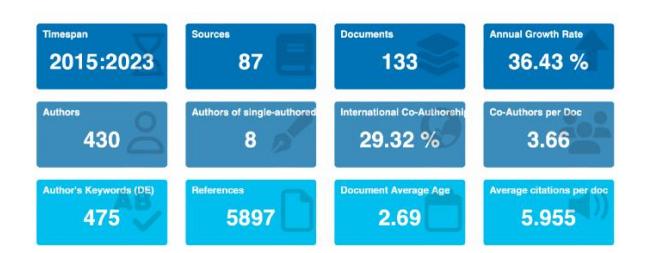
Figure 1. Data profile
The data ranged from 2015 to 2023 and was compiled from 87 publications. This period captures recent advancements in technology, policy changes, and trends in smart city initiatives. By focusing on this period, a current and relevant overview of the progress and challenges was provided in the implementation of the smart city concept within the rapidly evolving technological and socio-political landscape of Indonesia. The annual growth rate of the documents is quite high at 36.43%, showing that interest in the subject is growing. The average age of the documents was only 2.69 years, suggesting that the majority is relatively recent. Each document in the dataset has received an average of 5.955 citations since the topic has been extensively studied with a total of 5,897 references.
The dataset consisted of 487 and 475 keywords identified by 'Keywords Plus' and 'authors'. Furthermore, the dataset contained 430 authors with only 8 single documents. The average number of co-authors per publication was 3.66, showing that collaboration is prevalent in the field. Approximately one-third of the collaborations included international co-authors and the classification of 133 documents in the dataset was 'articles'. This information reflects the publication types and level of detail available in the dataset.
After obtaining the search results from Scopus and Bibliometrix, an open-source R utility was used to conduct the bibliometric analysis (Aria & Cuccurullo, 2017). Bibliometrix provides an extensive selection of functions and visualization tools that facilitate the extraction, processing, and analysis of bibliometric data (Aria & Cuccurullo, 2017). A total of 133 documents were analyzed to extract crucial insight using numerous Bibliometrix functions. The results are depicted in Figures 2 through 14, providing a comprehensive comprehension of smart city research in Indonesia.
Each image or data visualization is crucial for a better understanding of the topic. They visualize bibliometric data and provide additional information about the topic. Figure 2 depicts the annual development rate of citations for articles on smart cities for assessing the significance and caliber of the research-related articles. Figures 3 and 4 show the most prominent affiliations in Indonesian smart city research for comprehending the identification of institutional collaborations. Figures 5 and 6 show the outcomes of the keyword analysis and clustering analysis to determine the primary topics and the relationships between the keywords. This is essential for understanding themes and trends associated with smart cities. Figures 7 through 14 report the outcomes of network analysis, institution, and country collaboration. These are essential for identifying collaborations and networks between institutions as well as for supplying information about cross-national relations in the field of smart cities.
Results
This section gives an overview of the smart city research landscape in Indonesia, highlighting its initial phase of impactful studies and the subsequent expansion into diverse themes. It identifies key researchers and institutions driving the field forward and underscores the global relevance of this research through extensive international collaborations, emphasizing the necessity of interdisciplinary and cross-border partnerships to tackle complex urban challenges.
Average citations per year
Figure 2 shows the average number of citations per year for the articles published between 2015 and 2023. In 2015, a single article was published on the subject, which received a high average of 48 citations. Therefore, the article was well-received and had a substantial impact on the field of smart cities. The average number of citations per year for 2015 was 6, which is indicative of the article's sustained impact over the eight-year citable duration. In 2016, only one article was published, which received an average of nine citations per article. Even though the average number of citations per article was lower in 2016 than in 2015, the number remained relatively high at 1.29 over the seven years of the citable lifespan. In 2017, five articles were published, with an average of eleven citations per article. The mean number for 2017 was 1.83, showing that articles published were relatively well-cited over the six-year citable lifespan.
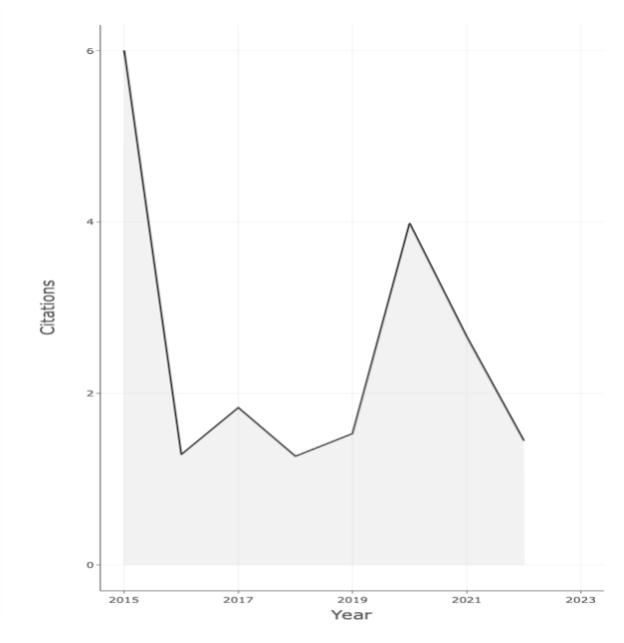
Figure 2. Average citations per year
In 2018 and 2019, the number of published articles increased by a significant margin, from 15 to 24. However, the average number of citations decreased to 6.33 and 6.13, respectively, showing that the quality of the output declined marginally. The average citations per year remained relatively high and stable at 1.27 and 1.53, respectively. In 2020, the average per article and year increased to 11.95 and 3, respectively. In 2021 and 2022, the average number of citations per article decreased to 5.32 and 1.45, respectively, while the average per year decreased to 2.66 and 1.45, respectively. Therefore, the output may have been of a lower quality than in previous years, resulting in decreased citation rates.
Most Relevant Authors
Based on publication count and fractionalized article count, Figure 3 shows the most influential authors in the Indonesian smart city field. The fractionalized article tally reflects the contribution to collaborative works, providing a more accurate depiction of influence in the field (Aria & Cuccurullo, 2017).
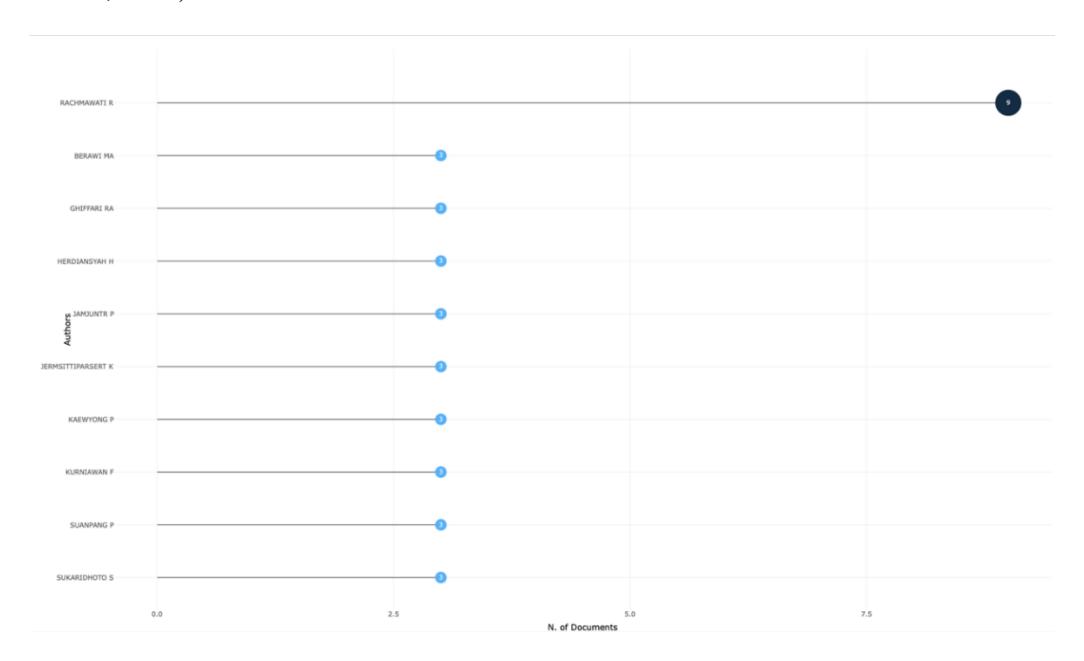
Figure 3. Most relevant authors
Rachmawati, R. is reported as the most prolific author in the domain with 9 articles and a high fractionalized article count of 3.57. The contributions have had a significant impact on the field, establishing Rachmawati, R. as a leader in the discipline. In addition, Berawi, M.A. contributed 3 articles with a high fractionalized article count of 3.00, indicating a substantial contribution. Herdiansyah, H. also made a significant contribution to the field, establishing a presence in the Indonesian landscape with 3 articles and a fractionalized article count of 1.45. Kurniawan, F. also published 3 articles with a fractionalized article count of 0.83. Meanwhile, Ghiffari, R.A., Jamjuntr, P., Jermsittiparsert, K., Kaewyong, P., Suanpang, P., and Sukaridhoto, S., have each written 3 articles with fractionalized counts ranging from 0.56 to 0.70. These academics are crucial to the development of smart city research, but their individual impact may be less considerable than that of the top contributors.
Author Impact
Most Relevant Affiliations
The affiliations with the highest number of published articles within the domain are shown in Figure 4. These have contributed significantly to the growth and dissemination of smart city knowledge.
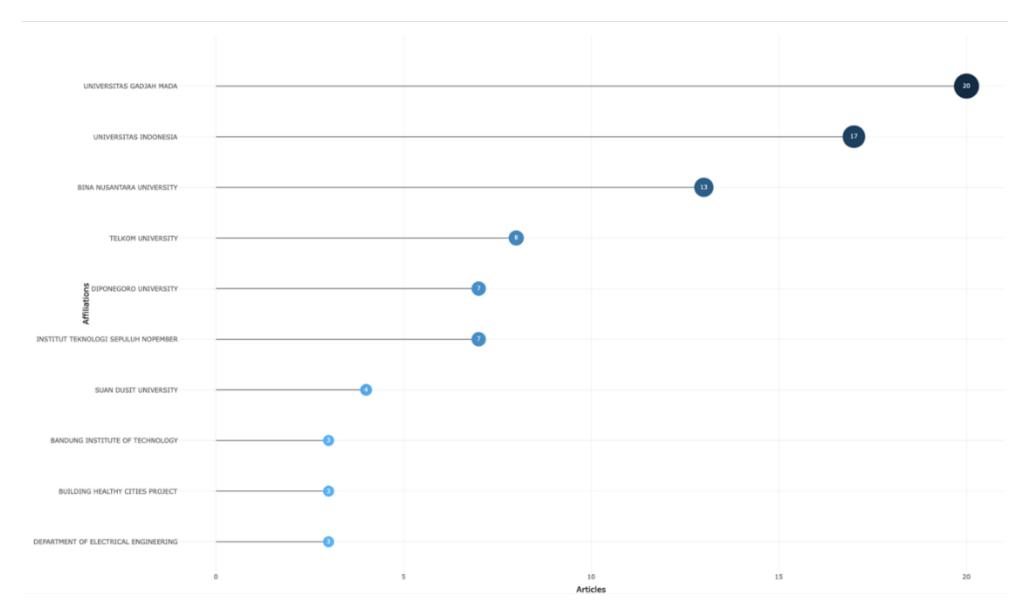
Figure 4. Most relevant affiliation
Figure 4 shows that Universitas Gadjah Mada was the foremost institution for smart city research, with 20 publications. This large number of publications reflects a significant development and dedication to advancing the field. Another significant contributor, Universitas Indonesia, published 17 articles, playing an important role in shaping the discourse on smart cities and promoting sustainable urban development. Furthermore, Bina Nusantara University was the third most influential institution in the field with 13 articles. The contributions provided valuable insight and influenced urban development policy decisions. Telkom University had a significant impact on the landscape, contributing to the development and understanding of the concepts with 8 articles. Diponegoro University and Institut Teknologi Sepuluh Nopember also made substantial contributions with 7 articles and the results influenced the development and implementation of smart city initiatives. Meanwhile, Suan Dusit University was a minor but significant contributor with 4 articles. The institution's publications provided novel insight and contributed to the broader comprehension of smart city development.
Reference Spectroscopy
Figure 5 is a reference spectroscopy analysis showing the distribution of citations (Aria & Cuccurullo, 2017). The distribution is the disparity between the number of citations in a particular year and the median number in the five years prior. Positive and negative values show an increase and decrease in citations relative to the median, respectively.
In 2014, there were 313 citations, a significant increase compared to the median of the preceding five years (diffMedian5 = 117). The number of citations reached a peak of 549 in 2019, a significant increase compared to the five-year median (diffMedian5 = 40). In 2021, the number of citations decreased to 361 compared to the median of the previous five years (diffMedian5 = -174). In 2022, there were 292 citations, a significant decrease compared to the median of the preceding five years (diffMedian5 = -244). This upward trend from 2014 to 2019, followed by a decline in 2021 and 2022, suggests a transition in interest or the maturation of the field. Despite the recent decline, the aggregate increase in citations from 2014 to 2020 showed a growing significance and impact.
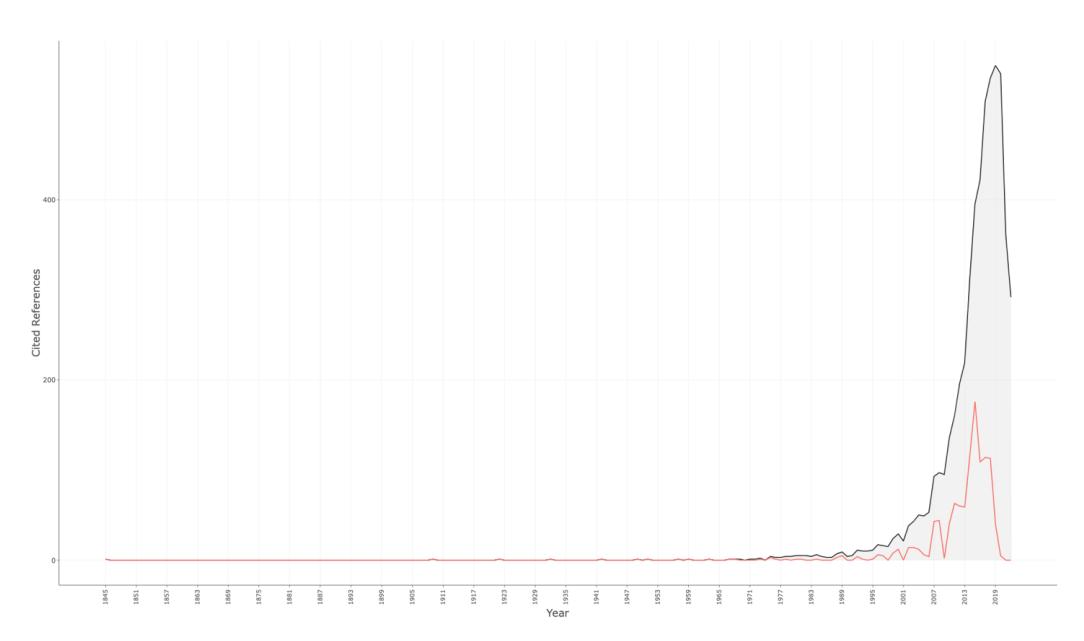
Figure 5. Reference spectroscopy
Word Dynamic Analysis
Figure 6 shows the word dynamics for selected smart city research terms in Indonesia. The analysis traces the frequency of these terms in the publications over time, reporting a shift in the field (Aria & Cuccurullo, 2017).
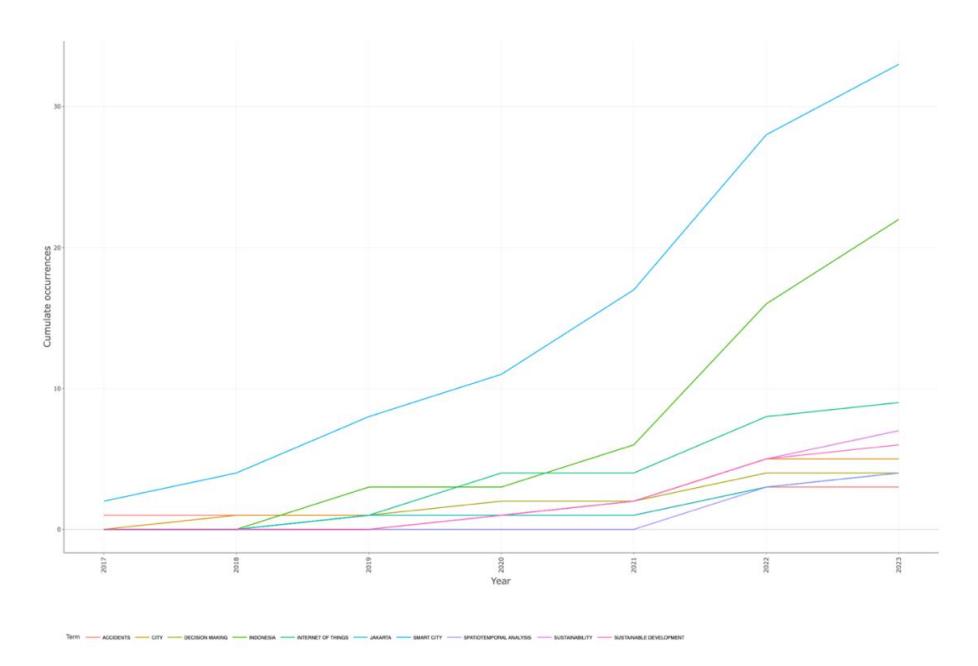
Figure 6. Word dynamics analysis
The analysis by word dynamics provides valuable insight into evolving trends and patterns. The term 'smart city' has gradually acquired popularity, with a significant increase in occurrences from 2 in 2017 to 33 in 2023, showing a growing interest in the field. Moreover, the frequency of the term 'Indonesia' increased significantly, from 0 in 2017 to 22 in 2023.
The increase in the term 'Internet of Things' from 0 in 2017 to 9 in 2023 shows its growing significance. The focus on sustainable practices is also reflected in the frequency of the terms 'sustainability' (from 0 in 2017 to 7 in 2023) and 'sustainable development' (from 0 to 6).
The analysis also reports a high focus on urban environments, decision-making processes, and spatiotemporal aspects due to the increase in the frequency of the terms 'city', 'decision making', 'Jakarta', and 'spatiotemporal analysis'. The increasing frequency of the term 'accidents' (from 1 in 2017 to 3 in 2022) shows an additional trend in addressing traffic- and transportation-related issues.
Clustering by coupling
Figure 7 shows topic trends, with a focus on the four most frequent terms. The analysis provides insight into the distribution of critical topics across the first quartile (year_q1), the median (year_med), and the third quartile (year_q3) (Aria & Cuccurullo, 2017).
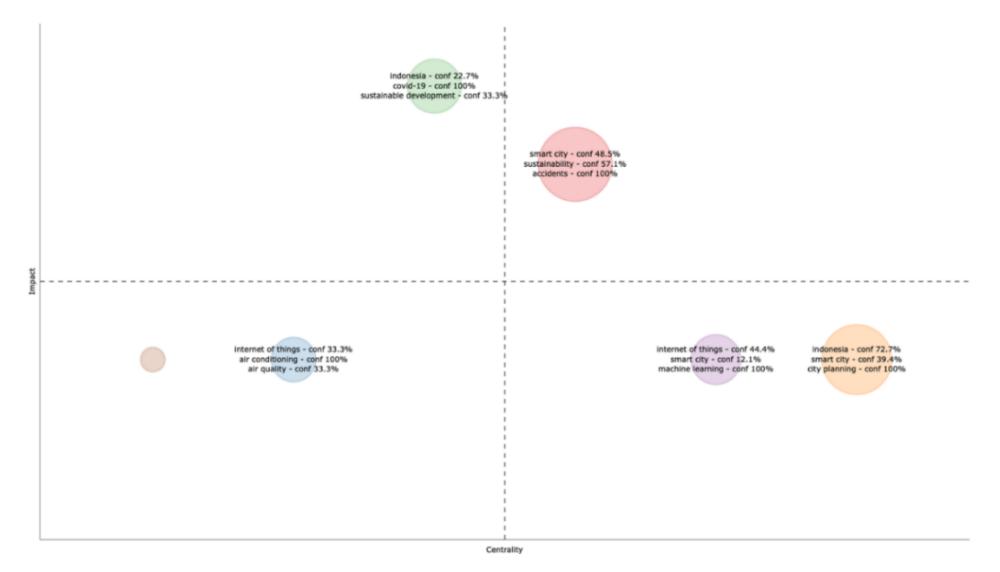
Figure 7. Clustering by coupling
Cluster 1 concentrates on the integration of sustainability, energy management, and sensing technologies. This cluster examines the use of innovative sensors and Internet of Things devices to monitor aspects of energy consumption, air quality, and transportation to achieve a more sustainable urban development. The publications include those by Suartika Gam (2020), Daely, P.T. (2017), and Firmansyah, H.S. (2019) in Sustainability, IEEE Sensors Journal, and IEEE Access, respectively.
Cluster 2 consists of investigations into the role of sensor technologies and their application in smart cities. The documents in this group discuss the design and deployment of sensor networks for a variety of purposes, including environmental monitoring, traffic control, and public protection. The publications of Nurkifli, E.H. (2023) and Panduman, Y.Y.F. (2022) in IEEE Sensors Journal are important in this cluster.
Cluster 3 focuses on the significance of sustainable development, pure production, and marine policy. The research investigated the effects of smart city initiatives in reducing pollution, enhancing resource management, and promoting environmentally responsible urban planning. In addition, the cluster emphasizes the importance of addressing marine policy and preserving littoral ecosystems in urban development. Related publications include studies by Rachmawati, R., Kurniawan, T.A., and Teniwut, W.A. in Sustainability, Journal of Cleaner Production, and Marine Policy in 2021, 2023, and 2022, respectively.
Cluster 4 focuses on the use of advanced computing technologies, such as grid computing and the Internet of Things, to promote sustainable urban development. This research investigates the use of technologies to enhance municipal infrastructure, optimize resource allocation, and facilitate decision-making processes contributing to the sustainability of urban areas. The publications in this cluster include Zhu, H. (2022) and Rahman, M.A. (2020) in ACM Transactions on the Internet of Things and Sustainable Cities and Society, respectively.
Cluster 5 investigates the broader aspects of sustainability, concentrating on the intersection between environmental management, urban health, and the role of technology in society. This cluster emphasizes the significance of addressing social, economic, and environmental challenges in smart city development as well as the potential benefits and drawbacks of technology adoption. The publications include Herdiansyah, H. (2023) in Global Journal of Environmental Science and Management and Kusumastuti, R.D. (2022) in Technology and Society.
In the outlined clusters, there appears to be an absence of a cluster dedicated to 'policy and governance in smart cities'. The missing cluster investigates the essential roles of policy-making, regulatory frameworks, and governance structures in the successful implementation of smart city initiatives. This includes topics such as the impact of governmental strategies, legislative challenges, data governance, privacy concerns, and the dynamics of public-private collaborations in smart city development. The absence of this cluster suggests a gap in the literature, specifically in understanding the effects of regulatory and governance mechanisms on the practical execution and long-term viability of projects.
Thematic Map
Figure 8 is a thematic map that provides a comprehensive overview of the co-occurrence of terms and clustering based on similarity within the dataset. Each word's occurrences, cluster, descriptor, betweenness centrality, closeness centrality, and PageRank centrality are shown on the map (Aria & Cuccurullo, 2017). A thorough analysis of the thematic map's main clusters shows key insight into the major themes and trends.
Cluster 1 (Smart City) shows the primary concentration of the dataset in the Indonesian context. 'Smart city', 'sustainability', 'Jakarta', and 'spatiotemporal analysis' appear frequently in Indonesian smart city initiatives, indicating the importance of sustainable practices, urban environments, and data analysis. The prevalence of these terms suggests that Indonesia places a significant emphasis on constructing smarter, more sustainable urban areas.
Cluster 2 (Internet of Things) emphasizes the significance of Internet of Things and related technologies in smart city research. The prevalence of terms such as 'decision making', 'machine learning', 'network security', and 'privacy-preserving techniques' shows a growing awareness of the impact of technology on urban planning, management, and safety. This cluster reports the increasing incorporation of Internet of Things in various aspects, showing the need to adopt technological advances.
Cluster 3 (Monitoring) reports the importance of the systems and real-time data analysis in smart city applications. This cluster shows that effective data acquisition and analysis are crucial for driving evidence-based decision-making and optimizing urban resource allocation.
Cluster 4 (City) represents the various facets of urban environments, including air quality, privacy concerns, and algorithm development. This cluster focuses on implementing advanced technologies and addressing various urban challenges.
Cluster 5 (Sustainable Development) shows the importance of sustainable development objectives and related technologies. The frequent terms suggest that achieving sustainable development is a primary objective for smart cities to promote energy efficiency, cost-effectiveness, and responsible resource management.
Cluster 6 (Urban Development) prioritizes the broader context of urban development and shows the significance of comprehending processes and patterns to produce more resilient environments.
Cluster 7 (COVID-19) reports the pandemic's impact and the implications for urban development. The prominence shows that different research examines the role of smart city initiatives in mitigating the effects of the pandemic and nurturing more resilient urban systems.
Cluster 8 (Local Government) emphasizes the importance of local government for urban growth and smart city development. This cluster suggests that successful smart city initiatives necessitate strong collaboration between various stakeholders to effectively resolve the diverse challenges of urban environments.
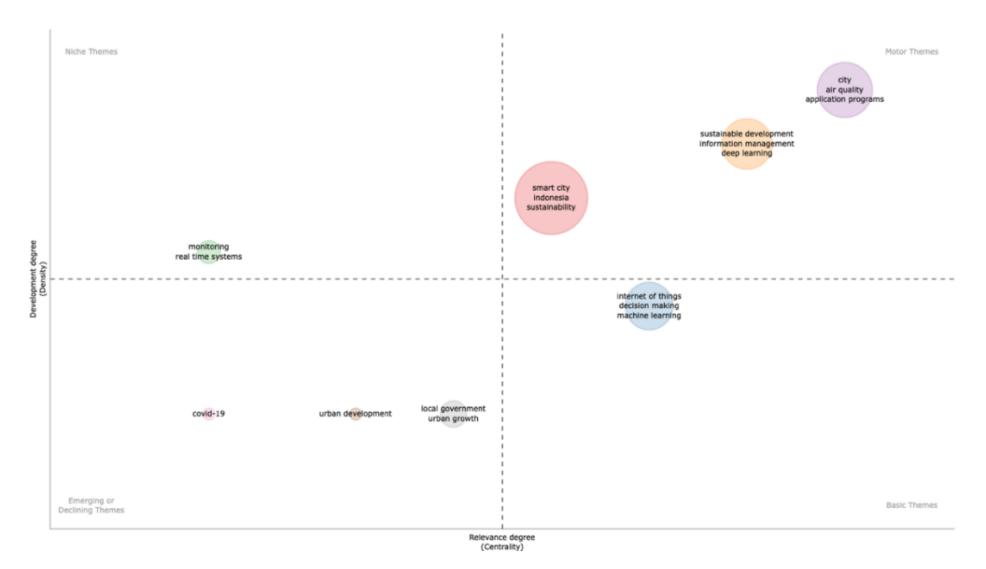
Figure 8. Thematic map
Factorial Analysis
Figure 9 depicts the factorial analysis, which is a technique for visualizing the relationships between variables in a multidimensional space (Aria & Cuccurullo, 2017). The figure presents the words, located in two dimensions (Dim 1 and Dim 2), and two clusters. The analysis provides a deeper comprehension of the relationships between the words in the dataset by grouping them into meaningful clusters and showing the themes.
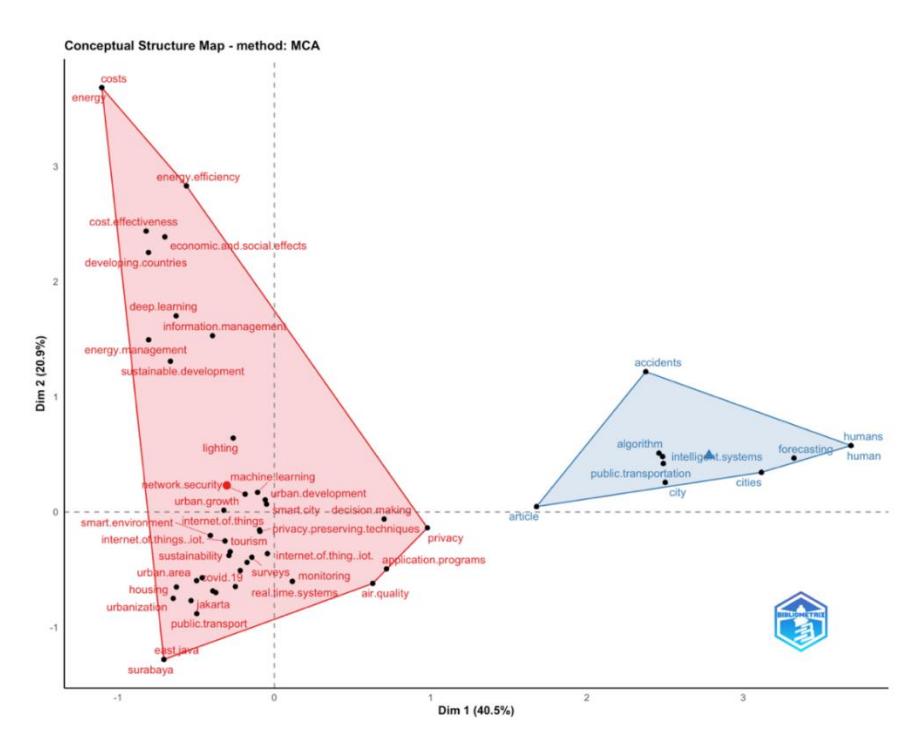
Figure 9. Factorial analysis
Based on the clusters identified by the factorial analysis, there were two primary groups of words, each representing distinct research focuses.
Cluster 1 focuses predominantly on concepts related to smart cities, sustainable development, and technology. Meanwhile, 'smart city', 'Indonesia', 'Internet of Things', 'sustainability', 'sustainable development', 'decision making', 'Jakarta', and 'spatiotemporal analysis' are some of the related terms. The presence of this cluster highlights the increasing significance of smart city initiatives and their role in addressing urban issues. Sophisticated technologies and sustainable development practices are incorporated into urban planning and management.
Cluster 2 is related to municipal aspects, such as urban development and infrastructure. The terms include 'city', 'accidents', 'cities', 'algorithm', 'article', 'forecasting', 'government', 'human', 'humanity', 'intelligent systems', and 'public transportation'. This cluster emphasizes the complexity of urban environments and the variety of aspects to be addressed. The need to consider various urban development factors, such as public transportation, infrastructure, and humancentered design is stated when developing smart city strategies.
The factorial analysis showed the relationships between the words in the dataset, investigating the predominant themes and focus. The identified clusters focus on the integration of advanced technologies and sustainable development practices as well as the diverse aspects of urban development and infrastructure. These results can develop effective and innovative smart city initiatives to resolve the complex challenges facing urban environments.
Co-citation network
Figure 10 shows the co-citation network as part of the Bibliometrix-based bibliometric analysis of the academic literature. By analyzing various metrics, such as betweenness centrality, closeness
centrality, and PageRank, the significance of different publications was evaluated (Aria & Cuccurullo, 2017).
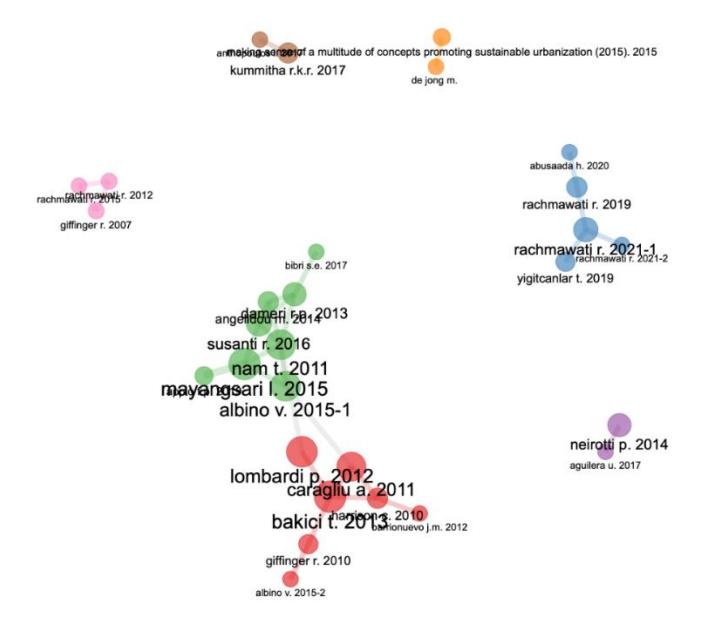
Figure 10. Co-citation network
The provided data reports 28 publications organized into seven clusters. These metrics aid in comprehending the influence and impact of each publication. Analyzing the most influential publications can show the development and implementation of smart city initiatives. With a betweenness centrality, closeness centrality, and PageRank of 5, 0.04, and 0.0616, Rachmawati, R. (2021-1) emerges as a significant publication. Therefore, the publication connects multiple clusters and is highly cited in the field. Nam, T. (2011) has a betweenness centrality, closeness centrality, and PageRank of 40.333, 0.0089, and 0.0554, respectively.
Another influential publication is Bakici, T. (2013), which has a betweenness centrality, closeness centrality, and PageRank of 30,667, 0.0078, and 0.0597. These values show the publication's significant influence within the domain and the capacity to connect others within the network. Caragliu, A. (2011), Lombardi, P. (2012), and Harrison, C. (2010) are also publications with relatively high values for betweenness centrality, closeness centrality, and PageRank. These publications make a substantial contribution to the academic discourse on smart cities and serve as essential references for future research.
Collaboration network
Figure 11 shows the collaboration network in Indonesian smart city research. This analysis investigated the relationships and patterns of collaboration among 32 articles organized into 10 subgroups. The betweenness centrality, closeness centrality, and PageRank values provide a basis for assessing their influence and impact.
With a betweenness centrality, closeness centrality, and PageRank of 0.8, 0.333, and 0.047, Rachmawati, R. is highly influential in the collaboration network. As a significant network collaborator, it plays a significant role in connecting various clusters. Ghiffari, R.A. has a betweenness centrality, closeness centrality, and PageRank of 0.2, 0.333, and 0.0342. Despite
being less influential than Rachmawati, R., Ghiffari, R.A. appears to play a significant role in the collaboration network. Mei, E.T.W. and Widhyastana, I.M.A. have lower betweenness centrality values, indicating that their contribution to connecting distinct clusters is not significant. As evidenced by the closeness centrality and PageRank values, the contribution to the domain is high. Additionally, Sukaridhoto, S., Panduman, Y.Y.F., Sengan, S., and Setiawan, R., have closeness centrality values of 1, which is quite intriguing. In contrast, the betweenness centrality and PageRank values were lower than those of Rachmawati, R. and Ghiffari, R.A.
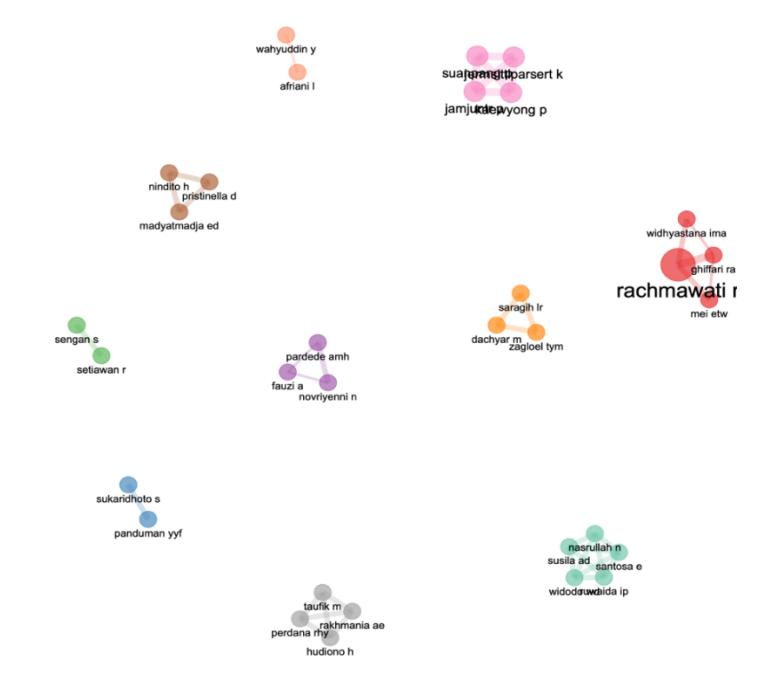
Figure 11. Collaboration network
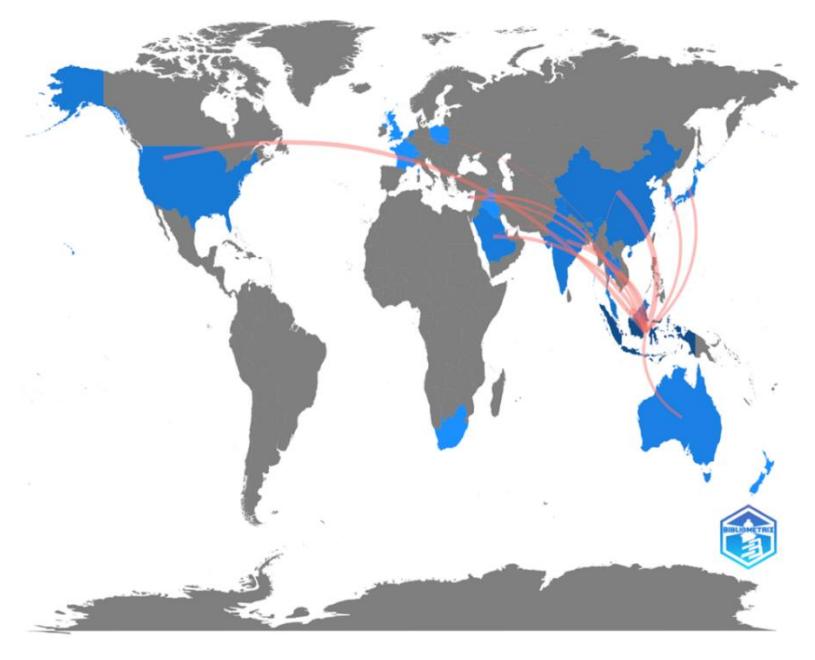
Figure 12. Global collaboration map
Collaboration world map
Figure 12 is a collaboration world map that provides insight into international collaborations. This analysis concentrates on the frequency of collaborations between countries, with 38 pairs of countries, and the extent of efforts listed in the provided data.
The focus of this analysis is on collaboration among several nations based on the global collaboration map (Figure 12). The strongest collaboration ties are with Malaysia (9), China (7), and India (5), showing the active cooperation from these nations in addressing smart city challenges. Additionally, the world map shows the significance of regional collaboration in furthering smart city research. Collaboration has been reported between China and Malaysia, India, and Saudi Arabia, as well as Malaysia and Singapore. These regional partnerships report the importance of cooperation in advancing smart city research. In addition, the data shows intercontinental partnerships between Indonesia and Cyprus (3), Indonesia and the United States (5), and the Netherlands and South Africa (1). These partnerships show global interest and cooperation in addressing the challenges of smart cities, regardless of location.
Discussion
These findings analyze several significant aspects and trends, including shifts in priorities, topic maturity, and a variety of thematic focuses. Although literature reviews on smart city development exist, the present research introduces novelty by offering a comprehensive analysis addressing the limitations of previous works. This expands beyond the quantitative focus of Parlina et al. (2019) and Purnomo et al. (2021) by incorporating qualitative insights and exploring areas. In contrast to Arief et al. (2022), which primarily looked at technological aspects, this research analyzed the wider social, political, and environmental contexts of smart cities. Muhtar et al. (2023) examined smart villages and rural development, by presenting a more integrated approach connecting the components with wider smart city initiatives. Practitioners, and policymakers interested in developing smart cities must be aware of this information to formulate effective strategies to advance the field (Sentosa et al., 2019; Tan & Taeihagh, 2020a).
The shifting priorities and the evolution of smart city topics, as reported by the decrease in citations after 2020, suggest that studies are moving towards newer and more innovative subjects. This reflects the necessity for a broader approach to tackling urban challenges with the integration of diverse disciplines and technologies (Anthopoulos, 2015; Kyriazopoulou & Institute for Systems and Technologies of Information, 2015; Madyatmadja et al., 2021a; Myeong et al., 2022; Pratama, 2021; Stübinger & Schneider, 2020). Therefore, practitioners will continue to investigate unexplored topics and incorporate diverse perspectives into their work.
The identification of influential institutions shows an essential role in the development of the field. However, this research showed that international collaboration remains limited, particularly with Southeast Asian and East Asian nations. Therefore, regional and international cooperation should be increased to benefit from the knowledge, resources, and innovation of other nations (Madyatmadja et al., 2021b; Myeong et al., 2022; Pratama, 2021).
The shift in Indonesia's smart city research, moving from a focus on integrating sustainability and sensor technology to a broader exploration of sustainable development and societal role, signifies a paradigm shift. Recent trends suggest a more holistic approach, examining the interplay between technological innovation, civic engagement, and urban life quality. This evolution transcends the perception of technology as a tool for environmental objectives, recognizing the transformative influence on social equity, community engagement, and urban governance (Cowley et al., 2018b;
Sakuma et al., 2021; Secinaro et al., 2022). The current trajectory is closely tied to technological advancements and the development of inclusive, multifaceted solutions connected with the diverse needs and dynamics of urban communities.
According to the analysis of the period, the thematic evolution shows a shift in concentration from decision making and concepts to the Internet of Things and city development. Therefore, research on smart cities has evolved and followed global trends in the discipline. To ensure the relevance and efficacy of proposed smart city solutions, stakeholders are expected to follow the latest developments and incorporate international findings (Alam & Ibrahim, 2021; Argento et al., 2020; Hollands, 2015; Houston et al., 2019; F. Purnomo et al., 2016b).
The breadth of topics, ranging from basic concepts to city development and infrastructure, reflects the intricacy of urban challenges (Aljowder et al., 2019; Berawi, 2022; Dashkevych & Portnov, 2022; Madyatmadja et al., 2021a). This diversity shows the need for a multidisciplinary approach but there is a gap related to the socio-political aspect. The integration of the socio-political aspect is essential for shaping effective policies and stakeholder collaboration in the implementation of smart city initiatives. Therefore, future research and practice will continue to analyze the various facets of smart cities, including technology, environment, and infrastructure as well as incorporating socio-political dimensions to develop comprehensive solutions in addressing the complex urban challenges.
Several studies have made significant contributions to the comprehension of smart cities based on our evaluation of the publications. This serves as a source of inspiration and a reference for learning about the subject. Moreover, the network shows the significance of collaboration between diverse backgrounds and institutions in addressing challenges (Mahesa et al., 2020; Pratama, 2021; Stübinger & Schneider, 2020).
The global collaboration map shows the significance of regional and global cooperation in overcoming smart city challenges. In the context of Indonesia, the strong collaborative ties with Malaysia, China, and India focus on the opportunity to leverage knowledge and innovation from these nations. Therefore, practitioners and policymakers are expected continue to collaborate with regional and international entities to develop innovative, effective, and sustainable solutions to the country's urban challenges.
Social, political, economic, and management aspects of smart cities have been neglected. Even though research has become increasingly focused on the fundamental concepts, there are gaps in the effects of these factors on the implementation and success of smart cities (Dameri & Rosenthal-Sabroux, 2014; Marchesani et al., 2023; Noor, 2022; Pesti et al., 2019; Tan & Taeihagh, 2020a, 2020b). The social aspects include community participation, social welfare, and justice, contributing significantly to the creation of inclusive and sustainable cities. For instance, extensive research on integration processes provides practitioners and policymakers with crucial insight for optimizing community participation in smart city development (Lee et al., 2022; Leitheiser & Follmann, 2020; Trencher, 2019).
The economic aspects are inclusive growth, employment opportunities, and equitable distribution of economic benefits. Further research on the generation of sustainable economic growth and benefits can be distributed equitably among residents to provide crucial information for designing and implementing inclusive smart city strategies (Dameri & Rosenthal-Sabroux, 2014). Aspects of the management include coordination between various stakeholders, efficient resource utilization, and assessment of performance. Meanwhile, in-depth analyses of effective
management identify the best practices and develop effective approaches (Brorström et al., 2018; Pesti et al., 2019).
Conclusion
In conclusion, this research was carried out to provide a bibliometric analysis of articles related to smart cities in Indonesia. The analysis provided valuable insight into the research landscape, including trends, research areas, and collaborations. In recent years, the output has increased, with a strong focus on sustainable development, urban planning, and transportation, according to the key findings. The results revealed a high level of collaboration, showing the significance of international partnerships. However, one of the primary limitations was the focus on the sociopolitical aspect, which is crucial in smart city governance and policy making. The research also showed the need for more international collaboration, particularly with Southeast Asian and East Asian nations, to enrich the development of smart cities. Future analyses should fill these gaps by incorporating socio-political, economic, and management perspectives. The contributions of community participation, economic growth, and effective management in increasing the success of smart cities were also explored. Therefore, further analyses should focus on expanding international collaborations to leverage global knowledge and innovations. This comprehensive approach enhanced the understanding and contributed to the development of more inclusive, sustainable, and effective urban solutions.
Acknowledgment
The publication of this article was supported by the DIPA of the Public Service Agency at Universitas Sriwijaya for the year 2023 under the grant number SP DIPA-023.17.2.677515/2023, dated November 13, 2022. This support is in line with the Rector's Decree Number: 0189/UN9.3.1/SK/2023, issued on April 18, 2023.