

Introduction
According to the 2015 Inter-Census Population Survey (SUPAS), people with disabilities made up around 8.56% of the Indonesian population, or roughly 8 out of every 100 Indonesians aged 10 years and older have some form of disability. In addition, a report from the National Basic Health Research Report (Riskesdas) in 2018 revealed that 22% of adults (aged 18-59 years) in Indonesia had disabilities (BPS, 2020). Another resource from the Central Statistic Agency (BPS), the 2020 Long Form Population Survey, mentions that the prevalence of people with disabilities in Indonesia is around 1.43% (BPS, 2023).
Persons with disabilities have equal rights and should also have equal opportunities as other people, including the right to accessible and adequate transport services to increase their mobility. Enhancing mobility is crucial for people with disabilities, as it enables them to attain autonomy and access to employment opportunities, enhance economic advancement, and quality of life (Ahmad, 2013; Casas, 2007; Lucas, 2012; Marquez et al., 2019). Hence, improvements in the transportation sector designed for people with disabilities play an important role in boosting the overall well-being of this population (Lubin & Deka, 2012).
People with disabilities have been observed to engage in travel activities, particularly for their regular commuting needs. According to a survey conducted among commuters in the 'Jabodetabek' area (greater metropolitan area of Jakarta consisting of 5 cities, i.e., Jakarta, Bogor, Depok, Tangerang, and Bekasi), among 4.4 million commuters in the year 2023, 182,221 were persons with a certain level of disability (BPS, 2024). This significant contrast was assumed to come from the prevailing accessibility barriers within transportation systems. Accordingly, regardless of the proliferate existing research on transport accessibility for this demographic (Bezyak et al., 2018, 2019; Ferrari et al., 2014; Jill et al., 2023; Grise et al., 2018; Vale, 2017; UN DESA, 2019), studies often center on external factors, offering only limited information regarding the mobility patterns and behaviors of people with disabilities. Analyzing these travel patterns and behaviors enables the development of well-informed policies and effective transportation planning (Froehlich, 2008; Habib et al., 2012; Yue et al., 2014; Zhu et al., 2017).
Currently, there is a lack of comprehensive research and literature on the travel patterns and behaviors of people with disabilities in Indonesia. For example, the study by Fitri (2024) solely focused on exploring travel behavior among women with disabilities in Jakarta. In contrast, previous research from other countries, particularly in middle-high-income countries, offers general information about people with disabilities (Bombom & Abdullahi, 2016; Brucker & Rollins, 2016; Brumbaugh, 2018). Therefore, this study aimed to provide a preliminary analysis of the commuting behaviors exhibited by people with disabilities, which is a pioneering and groundbreaking effort within the Indonesian context.
This research focused specifically on commuting travel and, due to its predictable nature, aimed to uncover the daily travel behaviors of people with disabilities, including the utilization of transportation modes and facilities. This knowledge is essential, as it will be able to assist the government in formulating inclusive transportation policies that align with this demographic's
specific travel behaviors. Simultaneously, these policies can be enacted to support the mobility of people with disabilities by effectively addressing their transport accessibility needs.
Literature Review
According to Law Number 8 of 2016, Article 1, people with disabilities are those enduring prolonged physical, intellectual, mental, and sensory constraints impeding their complete and meaningful engagement in society, based on the principle of equal rights. In Indonesia, disabilities are typically categorized into physical, intellectual, mental, and sensory classifications. In this regard, physical disabilities refer to restrictions in motor functions; intellectual disabilities relate to below-average cognitive abilities; and mental disabilities include disruptions in overall personality functions (cognitive, emotional, and behavioral); lastly, sensory disabilities refer to impairments in the function of the five senses.
The approach to disabilities is commonly categorized into three main models: moral, medical, and social (Olkin, 2002). According to Olkin (2002), the moral model ascribes disability to moral transgressions, while the medical model perceives disabilities as failures within organ systems that cause physical abnormalities to pathologies, and require corrective interventions. On the other hand, the social model views disability as a product of societal inadequacies in accommodating people with disabilities. Among these, the medical and social models have played a significant role in the discourse of disability research (Dirth & Branscombe, 2017). Within this context, the medical model concentrates on rectifying disability issues by addressing individual impairments. In contrast, the social model promotes inclusivity by advocating for environmental and societal adjustments to ensure equal rights and status for those with disabilities.
As observed, transportation plays a crucial role for people with disabilities, since it can significantly impact their means of mobility support. Enhanced mobility not only fosters social engagement but also has a substantial impact on poverty alleviation and empowerment for this demographic (Rosenbloom, 2007). Therefore, adequate transportation policies and planning are fundamental to elevating the lives of people with disabilities.
While comprehensive research exploring the relationship between transportation and disabilities has been extensively carried out in developed countries, a lack of similar studies exists in developing or low-middle-income countries (Bombom & Abdullahi, 2016; Kett et al., 2020). Furthermore, existing research yielded inconclusive results on specific behavioral characteristics (Table 1). Based on this understanding, there is a significant gap in thoroughly investigating the travel behaviors and patterns of people with disabilities.
Table 1. Summary of travel behaviors of people with disabilities.
| Dimension | Travel Behaviors | |
|---|---|---|
| Trip frequency, distance, | Lower trip frequencies, shorter travel distances, and longer commuting | |
| and duration | times compared to people withouth disabilities | |
| Main mode of transport | • Dependency on public transportation | |
| • Preference to use private vehicle | ||
| • Limited variation of transportation modes | ||
Some studies have indicated that people with disabilities generally engage in fewer and shorter trips than the general population but the duration tends to be longer (Brucker & Rollins, 2016; Brumbaugh, 2018; Jansuwan et al., 2013; Marquez et al., 2019; Park et al., 2022; Rosenbloom, 2007). Following this observation, the variance in travel frequency is more noticeable for noncommuting trips. Moreover, a discernible decline in travel frequency is associated with the aging process within this demographic (Neven et al., 2013).
People with disabilities rely heavily on public transportation for their travel needs (Amin et al., 2021; Bascom & Christensen, 2017; Stancliffe, 2017; Zhang et al., 2021), with women with disabilities demonstrating a higher dependence compared to men (UN, 2009). However, recent findings have shown that women with disabilities in Jakarta prefer to use paratransit services and private vehicles because of practical considerations and to avoid negative attitudes and perceptions of their presence in public transportation (Fitri, 2024). Furthermore, contrary findings from various studies have suggested that people with disabilities often prefer utilizing private vehicles or paratransit as their primary modes of transportation. This inclination comes from challenges in accessing public transportation, which compels people with disabilities to opt for private transportation means or paratransit services (Behrens & Gorgens, 2018; Hwang et al., 2020; Kett et al., 2020; Rosenbloom, 2007). However, it is crucial to acknowledge that paratransit services do not entirely meet the expectations of individuals with disabilities, with issues such as lengthy service queues and delayed pickup requiring attention.
Following this, the transportation mode choices of people with disabilities remain constrained due to prevailing accessibility barriers (Brumbaugh, 2018). As observed, the younger demographic segment favors public transportation, whereas older groups predominantly rely on private vehicles, particularly cars (Bocker et al., 2017).
Data and Methods
Participants
This research obtained relevant information from the National Public Accessibility Movement (GAUN), an NGO that actively promotes accessible transportation for people with disabilities. Regarding sample selection, involving people with disabilities as research participants pose inherent challenges, a common obstacle encountered in related studies (Park & Chowdhury, 2018; 2020). Therefore, the sample selection process was carried out using snowball sampling, which leveraged the assistance of people with disabilities to refer to others within the disability community. This type of sampling is more effective in finding participants with criteria relevant to this study because people with disabilities are usually involved in disability communities as a medium for sharing information and communication, making them able to recognize each other as group members.
The participants in this study were limited to those between the ages of 17 and 60, which is considered the productive age range, residing and working within the Jabodetabek area, and facing physical and sensory disabilities (related to mobility, auditory, speech, or vision) in accordance with the disability classification in Law Number 8 of 2016. This study did not involve participants with mental and intellectual disabilities because of the different nature of these disability types, which need separate studies and perspectives. The selection criteria were restricted to employed people with disabilities (full-time or part-time) because the present investigation was focused on commuting, primarily associated with work-related travel patterns. Therefore, the participant pool consisted of employed adults of people with disabilities who were assumed to commute regularly for work.
Commuting Behavior Indicators
In this research, 'commuting' was explicitly defined as movement to and from the workplace on a home-work-home basis, distinct from its broader usage, which comprises routine travel to various locations (e.g., schools, hospitals). It is essential to clarify that this definition aligns with established conventions in related studies, limiting commuting to round trips between home and workplace (Battacharjee, 2020; Blumen, 1994; Igic et al., 2020; Ma & Ye, 2019; Madden & Chen Liu, 1990; Preston et al., 1998).
Multiple dimensions were investigated within this research, including the frequency of weekly commuting; trip duration to the workplace; trip chaining behavior; usage of public transportation; and utilization of private vehicles. In order to effectively explore these dimensions, a comprehensive questionnaire comprising 27 questions featuring categorical and open-ended response options was used to obtain information pertinent to the commuting behaviors of people with disabilities. The questionnaire was disseminated online to individuals within the disability community with the help of GAUN and the Directorate General of Social Rehabilitation. Data collection took place from June 21 to August 31, 2023.
Results and Discussions
Table 2. Sociodemographic characteristics of the participants.
| Sex | N (%) | |
| • Male | 15 (29.4%) | |
| • Female | 36 (70.5%) | |
| Age range | ||
| • 17 - 27 | 5 (9.8%) | |
| • 28 - 38 | 22 (43.1%) | |
| • 39 - 49 | 14 (27.5%) | |
| • 50 - 60 | 10 (19.6%) | |
| Types of disabilities | ||
| • Sensory: | ||
| - visual | 5 (9.8%) | |
| - speech-auditory | 11 (21.6%) | |
| • Physical: | ||
| - mobility | 35 (68.6%) | |
| Marital status | ||
| • Single | 15 (29.4%) | |
| • Married | 35 (68.6%) | |
| • Widow | 1 (2%) | |
| Working time | ||
| • Full-time | 26 (51%) | |
| • Part-time | 4 (7.8%) | |
| • Freelance | 21 (41.2%) | |
| Educational level | ||
| • Primary | 3 (5.9%) | |
| • Lower secondary | 7 (13.7%) | |
| • Highschool | 19 (37.3%) | |
| • Diploma | 2 (3.9%) | |
| • Undergraduate | 20 (39.2%) | |
Table 3. Commuting behaviors of people with disabilities
| Characteristics | % |
|---|---|
| Commuting frequency per week | |
| 1-3 | 45.1 |
| 4-6 | 9.8 |
| 7 | 45.1 |
| Average commuting duration | |
| < 1 hour | 25.5 |
| 1-2 hours | 54.9 |
| 3 hours | 13.7 |
| > 3 hours | 5.9 |
| Trip chaining | |
| Yes | 64.7 |
| No | 35.3 |
| • Number of trip chaining stops | |
| 1 | 69.7 |
| 2 | 30.3 |
| • Trip chaining frequency per week | |
| 1 | 42.4 |
| 2 | 15.2 |
| 3 | 27.2 |
| 7 | 15.2 |
| • Trip chaining planning | |
| Planned | 87.9 |
| Unplanned | 12.1 |
| • Average stop duration | |
| < 15 minutes | 9.1 |
| 15-30 minutes | 18.2 |
| 30-60 minutes | 27.3 |
| > 60 minutes | 45.4 |
| Public transportation mode | |
| • Public transportation mode employed from the nearest transit-home location | |
| Yes | 70.6 |
| No | 29.4 |
| • Public transportation mode variations (multimodal trip) during commuting | |
| Yes | 68.6 |
| No | 31.4 |
| • Number of transportation mode variations (multimodal trip) for commuting | |
| 2 | 71.4 |
| 3 | 25.7 |
| 4 | 2.9 |
| • Justification for using different transportation modes | |
| Cheaper | 20 |
| Comfortable | 20 |
| Shorter route and duration | 8.6 |
| No direct travel modes | 51.4 |
| Private transportation mode | |
| • Vehicle ownership | |
| Yes | 66.7 |
| No | 33.3 |
| Characteristics | % |
|---|---|
| • Type of vehicle owns | |
| Car | 11.8 |
| Motorcycle | 79.4 |
| Car and motorcycle | 5.9 |
| Bicycle | 2.9 |
| • Private vehicle usage for commuting | |
| Always | 17.6 |
| Frequently | 17.6 |
| Occasionally | 35.3 |
| Rarely | 23.6 |
| Never | 5.9 |
| Accompanied during trips | |
| Always | 9.8 |
| Frequently | 9.8 |
| Occasionally | 29.4 |
| Rarely | 17.6 |
| Never | 33.3 |
The investigation included the participation of 51 individuals, predominantly women (70.6%), aged between 28 and 38 years (43.1%), engaged in full-time employment (51%), and experiencing motor disabilities (68.6%). Table 2 presents a concise overview of the demographic characteristics of the participants. Consistent with prior research, the majority of the participants comprised individuals with motor disabilities (Park and Chowdhury, 2018; 2020), potentially indicating the prevalence of such disabilities or the current higher employment rates observed among individuals with mobility disabilities compared to other disability categories.
From the findings presented in Table 3, it can be seen that various commuting behavior patterns existed among the participants. Some were found to engage in commuting activities ranging from 1 to 3 times per week, sometimes daily, with travel durations spanning 1 to 2 hours. Participants also engaged in pre-planned trip chaining. More than half (70.6%) of the participants had access to public transit, making it possible for them to ride public transportation. This aligns with the preference of people with disabilities to use public transportation as their primary mode of transport.
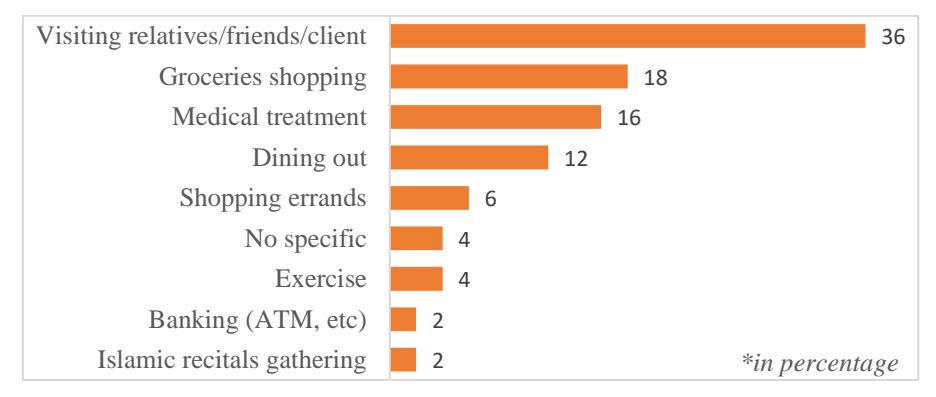
Figure 1. Trip chaining purposes.
It is also important to state that some participants frequently incorporated trip chaining into their commuting activities, often with a single stopping point. During trip chaining, participants typically stay over an hour at each stop. Trip chaining commonly revolves around visiting family, friends, and clients, shopping for daily necessities, or getting medical treatment. The participants in this research were observed to typically arrange these trip chaining activities in advance (Figure 1).
Detailed information with a focus on age and gender revealed that women aged between 28 and 38 years more frequently engaged in trip chaining (Figure 2). This is consistent with non-disabled travel behaviors, where women also tend to engage in trip chaining more frequently than men (Currie & Delbosc, 2011; Scheiner & Holz-Rauu, 2015; Susilo et al., 2018).
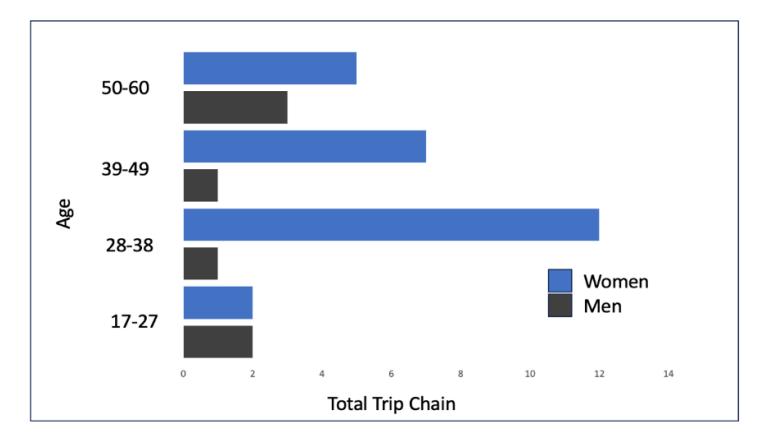
Figure 2. Trip chaining by age and gender.
Further analysis was carried out using one-way ANOVA to test trip chaining differences based on gender, age range, and type of disability. It revealed that there was no significant influence of gender [F(1, 31) = 0.12, p = 0.914], age [F(3, 29) = 0.668, p = 0.579] or type of disability [F(2, 30) = 1.429, p = 0.255] on trip chaining (p < .05). However, due to the unequal sample size among the types of disabilities and gender groups, this result should be interpreted carefully.
Almost all participants with speech-auditory disabilities engaged in trip chaining, followed by participants with mobility disabilities (Table 4). In contrast, trip chaining was less carried out by participants with visual disabilities. Trip chaining usually involves transfer between modes, but several previous studies have confirmed that transport interchanges hinder the mobility of people with visual disabilities in public transportation (Low et al., 2020). Meanwhile, people with speech-auditory disabilities can travel more independently and employ trip chaining because they do not have any physical constraints related to mobility issues compared to any other type of disability. They also use fewer assistive devices to commute.
| Type of Disability | Trip Chaining (%) | |
|---|---|---|
| Yes | No | |
| Visual | 20 | 80 |
| Mobility | 63 | 37 |
| Speech-auditory | 91 | 9 |
Table 4. Trip chaining behavior by type of disability.
The participants were found to predominantly rely on public transportation for commuting, citing several benefits, such as cost-effectiveness, faster travel, and satisfactory comfort (Figure 3). Furthermore, despite possessing private vehicles – mostly motorcycles – over half of the participants continued utilizing public transportation for commuting. Hence, this preference for public transportation remains consistent despite private vehicle ownership.
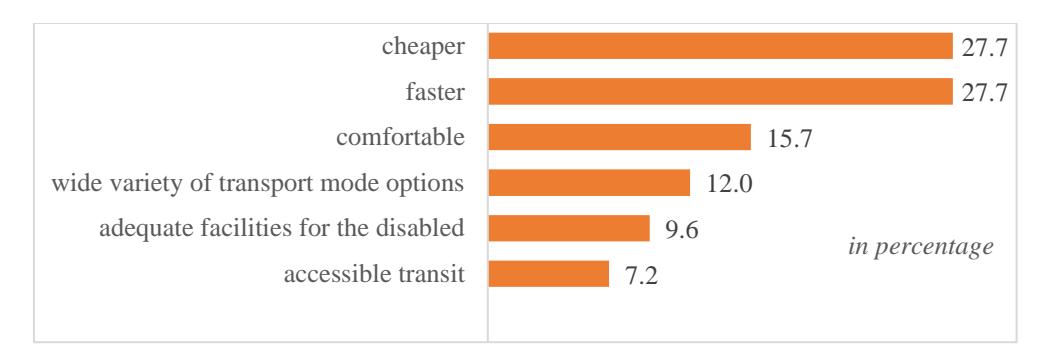
Figure 3. Justification for using public transportation.
As observed, the participants frequently used various public transportation modes for commuting (Figure 4), including the TransJakarta busway, online motorcycle taxis (ojek), and the electric rail train (KRL). TransJakarta is a type of bus rapid transit (BRT), commonly known in Jakarta as the busway. Meanwhile, ojek, a semi-public paratransit mode utilizing motorcycles, has traditionally offered convenient transportation solutions due to its door-to-door service, ensuring time efficiency. Accordingly, to further streamline the process, recent technological advancements now enable passengers to book ojek services online. Other transportation modes mentioned were angkot and bajaj/bemo. Angkot (acronym from angkutan kota, or urban transportation) is a type of small bus, whereas bemo/bajaj is Jakarta's traditional public transportation similar to minibus (bemo) and three-wheeler rickshaw (bajaj).
The findings obtained from this research regarding the prevalent use of buses and paratransit by people with disabilities align with prior studies, indicating the preference of this demographic for these transportation modes (Bascom & Christensen, 2017; Behrens & Gorgens, 2018; Hwang et al., 2018). This underscores the necessity for supporting public transportation services to continually improve mobility among people with disabilities.
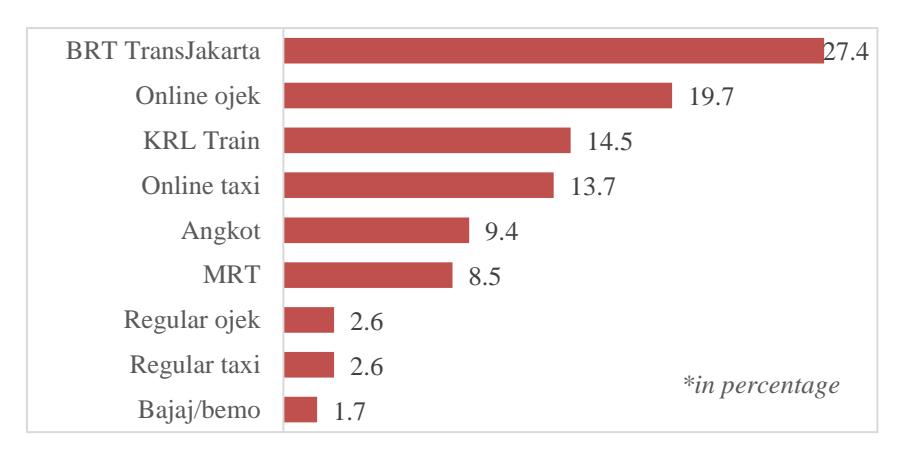
Figure 4. Main public transportation modes (including paratransit).
When breaking down the types of disabilities, participants with mobility disabilities use all modes compared to the rest of the groups (Figure 5). In contrast, fewer different transportation modes were utilized by participants with visual disabilities.
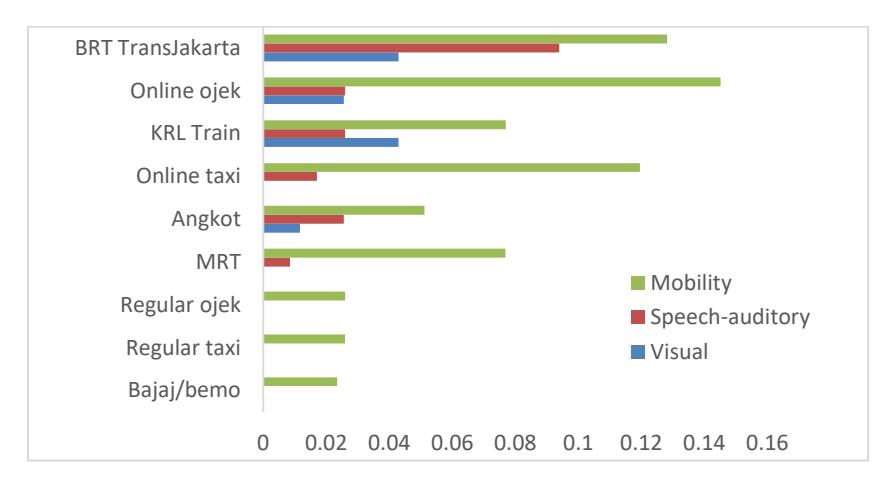
Figure 5. Transportation modes and type of disability.
Figure 6 summarizes the comparison between vehicle ownership and types of vehicles for daily commuting based on participants' assistive devices. Participants without assistive devices tended to use all public transportation modes except regular taxis because technological advancement has made it easier for people with disabilities to order taxis through mobile applications, reducing the waiting time to commute using online taxis rather than conventional taxis. For participants with a mobility disability, those who had a wheelchair used various modes – except for angkot, because it is challenging to bring a wheelchair on an angkot. Meanwhile, participants with prosthetic legs used fewer modes, such as online ojek, compared to the other participants with assistive devices. Participants with visual disabilities using a cane rode BRT, KRL train, online ojek, and angkot. This is in line with previous studies concluding that people with visual disabilities preferred using buses and trains, with some exceptions regarding the availability of information and assistance (Low et al., 2020). These mode preferences were identical for those who used hearing aids, except for online ojek, although it was the most used transportation mode for many participants. When riding online ojek, the traveler should interact with the driver, which is difficult if the driver cannot communicate in sign language.
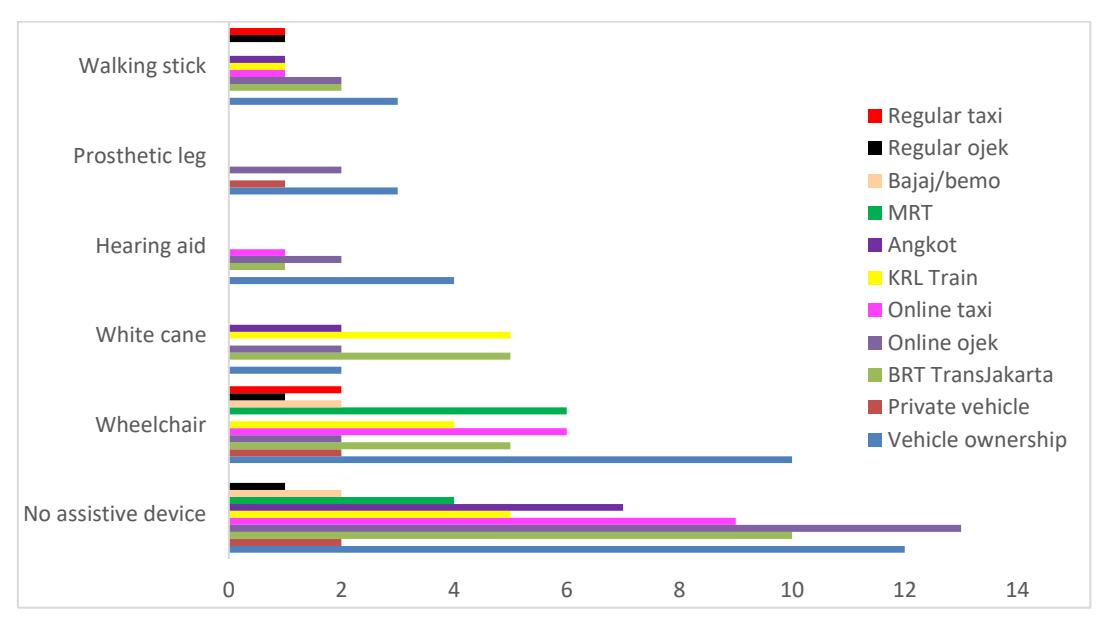
Figure 6. Transportation modes and vehicle ownership based on participants' assistive devices.
In addition, very few participants used private vehicles as their daily transportation mode. It can be inferred that participants prefer to use public transportation rather than private vehicles regardless of their vehicle ownership (Figure 7). Riding a private vehicle means that participants must rely on another person, particularly someone in the family, to accompany them, limiting their mobility, but escorting during trips is not always available for participants with disabilities due to a conflicting activity schedule of the accompanying person (related to work or any other activities). Moreover, not all participants can drive their vehicles due to physical or sensory constraints and restricted regulations regarding driving for people with disabilities.
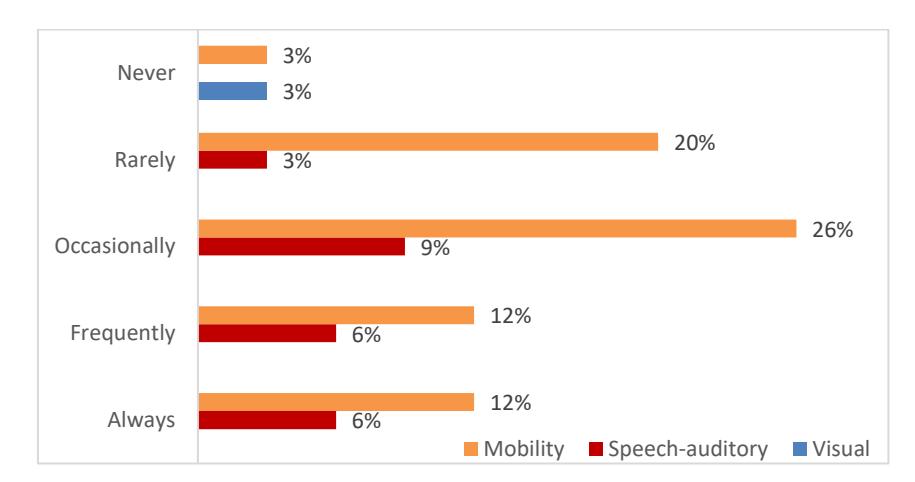
Figure 7. Private vehicle usage by type of disability (participants as vehicle owner).
Some participants also used multimodal trips for their daily commute when riding public transportation (Table 5). The modes used by participants varied across the different types of disabilities. However, these variations were dominated by five primary public transportation means and ride-hailing services, as shown in Figure 5 earlier: BRT TransJakarta, online ojek, KRL train, online taxi, and angkot. The primary reason behind this behavior was that no single mode directly took participants to their destination, which compelled them to switch between modes.
| Type of disabilities | Transportation Mode | |
|---|---|---|
| Visual | • KRL train, BRT TransJakarta, online ojek | |
| • KRL train, BRT TransJakarta, angkot | ||
| Speech-auditory | • BRT TransJakarta, online taxi/ojek | |
| • BRT TransJakarta, angkot, online ojek | ||
| • MRT, BRT TransJakarta, online ojek | ||
| • KRL train, BRT TransJakarta, angkot | ||
| Mobility | • KRL train, BRT TransJakarta | |
| • MRT, BRT TransJakarta, online taxi | ||
| • KRL train, angkot, online taxi | ||
| • KRL train, BRT TransJakarta, angkot | ||
| • MRT, BRT TransJakarta, online taxi | ||
| • KRL train, MRT, BRT TransJakarta | ||
| • KRL train, angkot, online ojek | ||
| • BRT TransJakarta, online taxi/ojek | ||
• KRL train, online taxi/ojek
• BRT TransJakarta, ojek (reguler/online)
Table 5. Combination of modes in multimodal trips.
Table 6 presents the differences in commuting behaviors between people with disabilities and general commuters in Jabodetabek according to the 2023 survey by BPS. From the presented information, people with disabilities typically spend more time commuting due to their physical limitations. This observation aligns with prior research indicating the extra time required for travel among this demographic (Jansuwan et al., 2013; Brucker & Rollins, 2016; Wong et al., 2020).
Table 6. Commuting behaviors comparison between people with and without disabilities
| Commuting Behaviors | People with Disabilities | People without Disabilities* |
| Commuting duration | > 1 hour | 30-60 minutes |
| Transport mode variations (multimodal trips) | 2-4 | 1-2 |
| Public transportation modes usage | Public transportation | Private vehicle |
| Main mode of commuting | BRT TransJakarta | Motorcycle |
| Perception of public transportation | Faster, cheaper | Impractical, long distance to public transportation, long trip duration |
* Jabodetabek Commuter Survey 2023 (BPS, 2024)
Similar to general commuters, people with disabilities were also found to utilize various transportation modes. However, the presence of multiple modes poses challenges, particularly for those with motor and visual disabilities, requiring the need to switch between various modes. Consequently, accessibility factors at transit locations and within transportation modes are essential. Unfortunately, the participants frequently encountered inadequate accessibility to public transportation (Bezvak et al., 2018, 2019; Ferrari et al., 2014; Jill et al., 2023; Grise et al., 2018; Vale. 2017; UN DESA, 2019), leading to more trip cancellations and lower travel rates compared to the general community (Bascom & Christensen, 2017). This situation manifests itself as a form of transport disadvantage (Battelino, 2009; Bombom & Abdullahi, 2016; Cochran et al., 2022; Duvarci et al., 2011), fostering social exclusion and impacting the well-being of this particular group (Delbosc & Currie, 2011a; 2011b; Lucas, 2012; Ma et al., 2018; Stanley et al., 2011). Accessibility concerns within transportation systems affect people with disabilities and impede progress toward achieving the Sustainable Development Goals, particularly Goal 11. This goal comprises indicators of providing safe, affordable, and accessible sustainable transportation for marginalized groups, including people with disabilities. Therefore, mainstreaming adequate access for people with disabilities within all transportation infrastructure and services is important in transportation policies and planning. This can be achieved by implementing the principle of universal design, serving as a fundamental criterion for constructing inclusive public transportation systems.
The transportation mode choice of people with disabilities is closely intertwined with their residential locations. Unlike the general community, this demographic often experiences lower economic status and encounters reduced employment opportunities due to discrimination (Jansuwan et al., 2013; Shen et al., 2023; UN DESA, 2019), leading to comparatively lower wages (Wong et al., 2020). As a result, the majority may opt for more affordable housing which was farther removed from the city center, which is in line with their income. It is crucial to acknowledge that these residential locations often lack accessibility to public transportation or may not suit the specific needs of these individuals. Considering these limitations, people with disabilities must endure extended commuting times, impeded mobility, and hampered endeavors when seeking employment, perpetuating a persistent cycle of challenges that necessitate immediate attention. This scenario underscores the pressing requirement for enhancements in infrastructure and public transportation services to reach and interconnect all areas within the
Jabodetabek region, thereby creating more seamless accessibility, particularly for commuters with disabilities. Addressing these accessibility issues is crucial in overcoming the challenges faced by people with disabilities and promoting better opportunities for mobility and employment without enduring an excessive commuting burden.
The diversity in transportation modes among people with disabilities stem from their engagement in trip chaining activities. Typically, locations that are outside the workplace or homes of these individuals prompt a transition between transportation modes. According to Krygsman et al. (2007), the complexity of trip chaining significantly impacts transportation mode choices. Hence, people with disabilities tend to carefully plan trip chaining endeavors, which usually comprise the selection of multiple transportation modes to reach the intended destinations. This situation highlights the need for improved transit-oriented development (TOD). As stated, such development should prioritize meeting the specific needs of people with disabilities, thereby ensuring accessibility to essential services like grocery shopping and medical facilities without necessitating transportation mode changes.
Addressing commuting time challenges for people with disabilities warrants implementing specialized disability feeder services accessible in real time. This is particularly important because it enables the observed demographic to plan their daily journeys effectively. Current disability transportation services primarily focus on factors such as transit locations, public transportation modes, and road infrastructure. However, feeder transportation services, known for their ability to connect transit hubs and provide smooth journeys, must be utilized more in public transportation. The TransJakarta BRT initiative, namely the TransJakarta Cares program, endeavors to bridge this gap by providing disability pick-up services from homes to BRT stations and transit points designed specifically to cater to people with disabilities. Although currently limited in scope, this exemplary program presents an opportunity for broader implementation. Following this, similar services have been successfully implemented for specific groups, such as students, through school buses. Scaling such services could result in manifold benefits, reducing commuting time and significantly enhancing the mobility, autonomy, and well-being of people with disabilities.
As noted, the inclination of this demographic toward public transportation aligns with earlier studies that highlight their reliance on such services (Amin et al, 2021; Bascom & Christensen, 2017; Stancliffe, 2017). Interestingly, this tendency was in contrast to general commuters, who may perceive public transportation as impractical and slow. Ideally, the positive outlook and dependence of people with disabilities on public transportation should serve as a driving force for the government to further enhance these services to support their specific needs. Public transportation usually offers an economical price for commuting. This monetary concern is typical among people with disabilities (Shen et al., 2023). The current study also shows this justification, where most participants prefer public transportation modes because they are considered cheaper than private vehicles. For example, participants voted BRT TransJakarta as their most popular commuting mode since it provides people with disabilities with special commuting cards that allow them to commute inclusively for free. This gesture helps the daily travel of people with disabilities and should be extended to other public transportation modes to tackle mobility barriers due to economic constraints.
In addition to promoting physical inclusivity in transportation planning, the government needs to support human resource policies to encourage inclusivity among all workers involved in public transport services for people with disabilities, including field staff and drivers. It is crucial to integrate the idea of inclusion into the mainstream human resource training in the public transportation sector because by incorporating this principle in such training, related staff can be equipped with the necessary knowledge to enhance comfort levels, understand diverse needs, and proficiently offer the necessary services. Additionally, it is crucial to emphasize that public transportation drivers play a significant role in facilitating the mobility of those with disabilities. Prior studies have identified occurrences of discrimination, negative perceptions, unfavorable attitudes, and insufficient knowledge among these drivers concerning disabilities (Bezyak et al., 2017; Duri & Luke, 2022; Park & Chowdhury, 2018). This emphasizes the need for increased awareness and knowledge enhancement through inclusive training programs. Primarily, these training programs would foster sensitivity among field staff and drivers to the needs of people with disabilities in public transportation, thereby paving the way toward a more supportive and accommodating environment.
Fostering creativity and technological innovations to augment service quality within transportation modes also remains crucial for people with disabilities. For instance, enhancing ojek services to include sidecar motorcycles capable of accommodating people with disabilities and their assistive devices is a promising prospect. Adapting regular motorcycles into sidecar versions has gained traction, especially considering that it empowers people with disabilities to travel independently. However, accessibility remains a concern due to the associated costs. The introduction of sidecar ojek services could offer a more comfortable paratransit option compared to regular ojek, which would significantly benefit people with disabilities seeking enhanced transportation accessibility.
Furthermore, the development of the Jabodetabek metropolitan area towards achieving smart city status offers a chance to prioritize mobility technology planning that explicitly addresses the needs of those with disabilities in their everyday commutes. For instance, the innovation of a disabilityfriendly, super-smart public transportation application could assist users in navigating to their destinations, offering information on travel obstacles, reporting problems or difficulties during travel, and even serving as a transportation payment tool. Such technological advancements hold the potential to significantly enhance the efficiency of commuting for people with disabilities. However, to fully benefit from these advancements, there must be a parallel emphasis on increasing the digital literacy of people with disabilities.
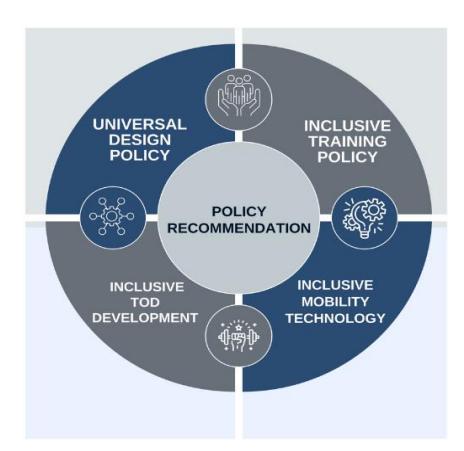
Figure. 8 Transport policy recommendations.
To summarize, four transport policy recommendations can be strengthened to improve the mobility of people with disabilities based on their commuting travel behavior (Figure 8). First, adopting a universal design policy, i.e., ensuring the implementation of universal design principles as a fundamental criterion for constructing transportation infrastructure and services that provide adequate access for people with disabilities. Second, adopting an inclusive training
policy, i.e., implementing inclusive training programs as fundamental skill programs for transportation services. The goals are to increase awareness and knowledge and foster sensitivity among all human resources in transportation services, particularly field staff and drivers, to the needs of people with disabilities, creating a supportive and accommodating environment for people with disabilities. Third, adopting an inclusive mobility technology policy, i.e., supporting and prioritizing the development of mobility and assistive technology advancement to increase travel accessibility and efficiency of people with disabilities in transportation services. Fourth, adopting an inclusive TOD development policy, which should be implemented to plan and improve the strategy to address the specific needs of people with disabilities and ensure efficient mobility and accessibility to essential services and facilities within the TOD environment.
Conclusion
This pioneering research investigated the commuting behaviors of people with disabilities, marking an initial step in providing an overview of their commuting habits within the Jabodetabek area, a region in Indonesia known for its high commuter volume. The results obtained from this investigation showed that people with a disability typically require over an hour to reach their destinations, which is slightly longer than their counterparts without disabilities. Moreover, it was found that this demographic frequently engages in pre-planned trip chaining activities during commuting, primarily for the purpose of visiting family, friends, and clients, grocery shopping, and medical treatment. Utilizing public transportation, such as BRT, and paratransit vehicles, like online ojek, serve as their primary modes of transportation. In this regard, the affordability, the short travel time, and the comfort offered by public transportation are critical reasons for their preference for these modes.
The information obtained in this research is a crucial reference point for formulating inclusive transportation policies and planning strategies designed to meet their specific needs within the Jabodetabek area. In this regard, initiatives such as improved accessibility, the provision of dedicated disability feeder services, enhanced inclusive training for public transportation personnel, comprehensive transit-oriented development (TOD), and the application of technology to innovate disability-oriented public transportation may all provide valuable input for policymakers and transportation planners.
This preliminary research serves as a starting point, indicating the necessity for more expansive and comprehensive studies to detail the commuting behaviors of people with disabilities. Therefore, future research should include in-depth analysis to explore the travel behaviors and patterns of people with disabilities on a larger scale. This emphasizes the need for a more diverse sample representing various types of disabilities. As a recommendation, future investigations should also consider incorporating additional variables, such as more precise spatio-temporal dimensions or comparisons between employed and unemployed individuals with disabilities, achieving a more detailed understanding of commuting dynamics. By broadening the scope and sample size, future research holds the promise of providing a more comprehensive and detailed understanding of commuting behaviors among people with disabilities, thereby informing more targeted and effective policy interventions.