

I. INTRODUCTION
A. Background
Coffee from Southwest Sumba (East Nusa Tenggara province) is considered to have the potential to become a mainstay commodity and even generate foreign exchange for the country. This leads to the achievement of coffee as a commodity that generates foreign exchange, as well as a source of income for farmers, job creation, and a bridge for increasing regional competitiveness (LIPI, 2020). In order to realize the sustainable development of coffee, development planning is needed based on science, technology, and innovation in managing regional resources. This is intended to obtain higher added value and management that emphasizes the community's welfare.
Furthermore, LIPI (2020) explains the research that has been carried out, namely that 95 percent of coffee product contributors in the Southwest Sumba district come from community plantations. Therefore, development policies and strategies must be aimed at the welfare of local coffee farmers. Wijayanti (in LIPI, 2020) explained that farmers' traditional gardens are essential Robusta coffee producers in Sumba, which are managed in an agroforestry system with various other plants but still need to implement good cultivation technology. This is indicated by the low productivity of coffee per tree because it is dominated by old plants, with coffee productivity per tree below the national average productivity. Data from Wijayanti's research (in LIPI, 2020) shows that 93.1 percent of the coffee plants in Laga Lete Village are owned by farmers aged more than 20 years, with a productivity percentage of only 23.5 percent. Only 50 percent of the coffee population is productive because old trees and low maintenance efforts cause problems in plantation management. Furthermore, LIPI (2020) conveyed four policy recommendations, namely (1) it is necessary to increase the productivity of robusta coffee trees in farmer's gardens by applying the principles of good coffee cultivation technology; (2) increasing the productivity of robusta coffee trees is also carried out through vegetative rejuvenation by replacing unproductive plants with certified superior seeds; (3) the regional government through the Department of Agriculture and Food Security in the Plantation Sector needs to have nursery infrastructure and be managed sustainably; and (4) strengthening the adoption of coffee cultivation technology by farmers in the context of increasing productivity is carried out through technical assistance and strengthening coffee farming businesses and coffee farmer institutions.
The institutional coffee farmers in Southwest Sumba Regency are members of a community known as Umma Pande or Rumah Pintar (Imelda Sulis Setiawati from the Donders Humanity Foundation, interview, 5 January 2022). Umma Pande symbolizes local wisdom, in which farmers have cultural ties and maintain community brotherhood even though administrative areas are separated. Community-based community empowerment with its local wisdom is interesting because there is local potential to drive the success of community empowerment programs. Meanwhile, the obstacle faced by coffee farmers is increasing sales of coffee products outside the region. Therefore, we need a technology application, one of which is digital marketing.
Digitalization marketing is part of digital transformation. The definition of digital transformation includes adopting and integrating various new information and communication technologies to develop more efficient, flexible, and sustainable solutions for industrial systems (Camarinha-Matos et al., 2019). Based on research, these processes also involve new forms of organization and lead to new business models. This digital transformation requires a digital collaborative network (DCN) among stakeholders in the fourth industrial revolution dimension. The aim of forming this collaborative network is to balance competition and sharing, which will bring many benefits to creating a profit strategy between collaborating parties (Fachrunnisa et al., 2012). The advantages of the rapid growth of the internet have resulted in collaboration through the WWW (The World Wide Web) platform going beyond the boundaries of time and place, as well as broadening the spectrum of collaboration (Danuri, 2019). MSMEs (Micro, Small and Medium Enterprises) in Indonesia, especially the batik industry, have taken advantage of DCN and created a digital community, a new and crisis-resistant business model. However, for the coffee commodity, there has been no report on the application.
B. Problem Identification
The Umma Pande has 375 members who experience communication barriers between fellow members and administrators. Apart from that, administrators need to learn about the conditions of coffee planting in the field, harvesting coffee cherries, quality of coffee cherries, stocks of coffee cherries in the form of green beans, and coffee roasting. When it comes to coffee marketing, the management has yet to determine a strong position in the existing coffee supply chain in the area. Limitations on communication, knowledge, and better marketing methods further reduced the income of coffee farmers during the Covid 19 pandemic. Based on previous reviews, we submitted a proposal entitled Digitalizing community-based coffee Umma Pande in Southwest Sumba Regency, East Nusa Tenggara, as an effort for the economic recovery of coffee farmers.
C. Activity Goals and Target
The main goal of the Economic Recovery in Community program was the digitalization of coffee marketing based on the Umma Pande in the Southwest Sumba Regency. It will form a digital community with three main networks, namely ICT, knowledge, and social. Another goal is to train community members to use ICT innovation and provide community assistance, so they are ready to become a digital community.
II. METHODOLOGY
The research was conducted from March to October 2022, in three sub-districts, namely West Weweha, East Weweha and Central Weweha, Southwest Sumba Regency, East Nusa Tenggara Province. The research method used a qualitative approach with 20 respondents based on data that has been obtained by the Donders Humanity Foundation. We conducted in-depth interviews and field visits in June and August 2022.
Our program was carried out in three stages. The first stage, namely the initiation stage, begins with mapping the parties involved, then identifying the primary needs for establishing a digital community network. Furthermore, in the second stage, the Umma Pande community brand design and packaging design were made, which used the branding design method, namely the design thinking with the stages of empathizing, defining, ideating, prototyping, and testing. The third stage, we created a website that contains several features, namely dashboards, community data features, coffee condition features (harvest potential, harvest
predictions, green bean stocks, and coffee roasting stocks), and info features which consist of market info, training, international meetings, external meetings (regional), international exhibitions and regional exhibitions.
A digital community will be formed if community members always provide and seek the latest information on the digital platform, communicate regularly, and maintain mutual cohesiveness and transparency. In addition, we created a network structure (all stakeholders, marketing partners, agricultural extension partners, partners in providing production inputs, and administrators) and risk mapping. Next, we created an interaction model between community members in a digital collaboration network. This stage will be used to digitize marketing using social media and website.
III. RESULT AND DISCUSSION
A. Problem Identification
Coffee farmers in the Umma Pande community face two obstacles, namely low product competitiveness and product connectivity to market. Product competitiveness improvement based on data: farmers cannot facilitate buyer requests regarding coffee quality standards, lack of capital, lack of product standard information, lack of access to the market, and issue of farmers' credibility (Figure 1). The postharvest process determines the quality of coffee, especially in coffee processing (Banti and Abraham, 2021). Meanwhile, Wahyudi (2020) stated that sustainability certification is a pillar of promoting Indonesian coffee competitiveness. Directorate General of America & Europe, Ministry of Foreign Affairs of the Republic of Indonesia (2013) suggested that exhibitions and competition were other efforts to increase product competitiveness, especially for exports.
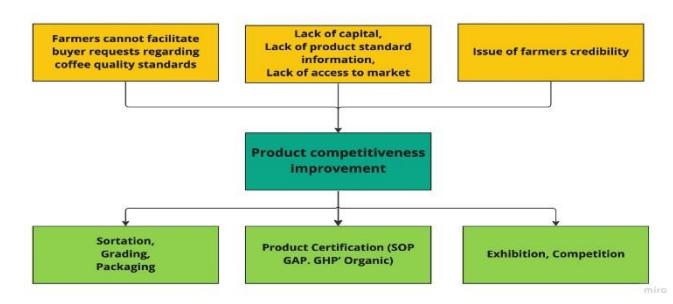
FIGURE 1. PRODUCT COMPETITIVENESS IMPROVEMENT IN UMMA PANDE COMMUNITY
The second obstacle coffee farmers face in the Umma Pande Community is product connectivity to the market (Figure 2). The second obstacle is that most coffee farmers need gadgets and are constrained by internet signals; some farmers are less skilled at using digital platforms in marketing. In addition, farmers and buyers are limited by 3 Q (quality-quantity – continuity). According to Ghoumrassi et al. (2019), product quality, delivery, and good market share must be controlled due to high costs. Also, the flow of information between various actors in the supply chain must be transparent and efficient. Supply chain flow improves efficiency, cost control, time management, quality control, and product competitiveness. Another solution is to improve
communication skills in English, particularly in overseas marketing.

FIGURE 2. PRODUCT CONNECTIVITY SOLUTION IN UMMA PANDE COMMUNITY
B. Community Branding
We are making coffee brand designs from the Umma Pande community and packaging designs using the branding design method, namely the design thinking with the stages of empathizing, defining, ideating, prototyping, and testing. Design Thinking is an iterative process in which we seek to understand users, challenge assumptions, and redefine problems to identify alternative strategies and solutions that may not be immediately apparent at our initial level of understanding (Binus, 2020). The advantage of design thinking is that, at the same time, it will provide a solution-based approach to solving problems. The first stage of the Design Thinking process is to gain an empathic understanding of the problem it is trying to solve, namely the competitiveness of coffee products and low connectivity (empathize). In the next stage, namely definition, Umma Pande will become an indigenous community that facilitates increasing the ability of coffee farmers to increase product competitiveness and connectivity. Next, the ideate stage is when the designer is ready to start generating ideas. We use the SCRAMPER technique to collect ideas. Investigate and test ideas until the end of the ideation phase so we can find the best way to solve the problem.
FIGURE 3. PROTOTYPE OF LOGO KOPI ROBUSTA FROM UMMA PANDE COMMUNITY
The design team will produce some product versions in the form of a prototype (Figure 3). Prototypes are shared and tested within the team. This is the experimental phase, and the goal is to identify the best solution for each of the problems identified during the first three stages. Solutions are implemented in the prototype, and one by one, they are investigated and accepted, corrected and rechecked, and rejected based on user experience. By the end of this stage, the design team will have a better idea of the product's inherent constraints and existing problems. The final stage of design thinking phase testing is often used to redefine one or more problems and inform user understanding, conditions of use, how people think, behave and feel, and empathize (Binus, 2020).
C. Collaboration Network in Umma Pande Community
We created a digital community model based on the data on obstacles in setting quality standards, obstacles in coffee marketing, communication in groups, the role of leaders in managing communities, the desire to improve communication in the community, and the use of digital marketing (Figure 3). This model was developed assuming coffee farmers used the website (WWW) to market their coffee. Umma Pande community describes a virtual organization internally that they can communicate internally. The board of chairman controls co-creation on coffee marketing, co-management in plantations, and coffee processing showed improvement in communication virtually and directed communication through regular meetings. Establishing a digital community is aimed at increasing marketing and sales to the market virtually (website and social media) and directly (by handphone and visit to Umma Pande's office).
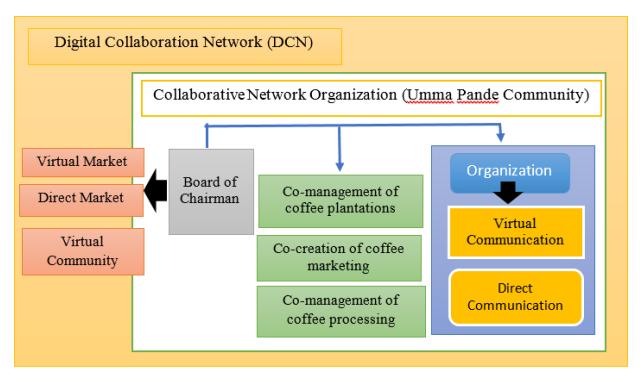
FIGURE 3. MODEL OF DIGITAL COLLABORATION NETWORK IN UMMA PANDE COMMUNITY
SOURCE: MODIFIED MODEL FROM CAMARINTHA-MATHOS AND AFSARMANESH
IV. CONCLUSION
Coffee farmers who are members of the Umma Pande community face two obstacles: low product competitiveness and connectivity. Digital marketing is a solution to overcome these obstacles. The effectiveness of digital marketing coffee based on indigenous community is determined by efforts to increase product competitiveness, product connectivity to markets, ICT, and the use of social media, as well as the establishment of digital collaboration networks.
ACKNOWLEDGEMENT
We thank The Agency of Research and Community Service (LPPM) Bandung Institute of Technology, especially Community Service - Economic Recovery 2022 Program, for their financial support and guidance. We also thank the students Muhammad Rizki Aflahul Muzhidin, Muhammad Hafizh Izzatullah, and Putra Rafii Santosa. Thank you to the Chairman of the Dekranas of the Southwest Sumba Regency (SBD), Chambers of Commerce and Industry of SBD Regency and Agriculture Service of SBD Regency. Also, thanks to Pastor Mike Keraf, CSR, and Mrs. Imelda Sulis Sulistiati from the Donders Humanity Foundation.
REFERENCES
- [1] Banti, M and E. Abraham: Coffee Processing Methods, Coffee Quality and Related Environmental Issues, Journal of Food and Nutrition Sciences, 9(6): 144-152 (2021)
- [2] Binus (2020): https://sis.binus.ac.id/2020/03/17/design-thinkingpengertian-tahapan-dan-contoh-penerapannya/ last accessed 2022/11/20 (2020)
- [3] Camarintha-Mathos L. M. and Afsarmanesh H.: Collaborative networks: a new scientific discipline, Journal of Intelligent Manufacturing, 16, 439–45 (2005)
- [4] Camarinha-Matos, L.M. , Rosanna Fornasiero, Javaneh Ramezani and Filipa Ferrada (2019): Collaborative Networks: A Pillar of Digital Transformation, Appl. Sci. , 9, 5431, p.1-33 (2019).
- [5] Danuri, M.: Perkembangan dan transformasi teknologi digital, INFOKAM, 2 (15), p.116-123 (2019)
- [6] Directorate General of America & Europe, Ministry of Foreign Affairs of the Republic of Indonesia: Welcome to The Heaven of Specialty Coffee, Jakarta (2013).
- [7] Fachrunissa, O., Mutamimah and Gunawan: A Framework of Digital Collaboration Networks for SME's Sustainability, last accessed 2020/11/20 (2012)
- [8] Ghoumrassi, A, H. Kabalan, and G. Ţigu: The role of Supply Chain in improving competitiveness, Proceedings of the 13th International Conference on Business Excellence, pp.589-600 (2019)
- [9] GoodStats (2022) https://goodstats.id/article/10-provinsi-denganestimasi-produksi-kopi-terbanyak-tahun-2022-IwfhD, last accessed 2022/11/06.
- [10] LIPI (2020): http://lipi.go.id/berita/rekomendasi-kebijakanpenguatan-usaha-kopi-berbasis-inovasi-di-sumba-barat-daya/22301 last acessed 2022/02/22 (2020)
- [11] Wahyudi, A., S. Wulandari, A. Aunillah and J.C. Alouw, Sustainability certification as a pillar to promote Indon, IOP Conference Series: Earth and Environmental Science, Volume 418, Issue 1, pp. 012009 (2020)