

I. INTRODUCTION
Indonesia has excellent demographic potential due to a population of 270.2 million based on the 2020 population census (BPS, 2021), of which 50 percent live in rural areas. Regarding age, the productive age is also very prominent because 70.72 percent of Indonesia's population is in the productive age group, 15-64 years (BPS, 2022). With a large population of productive age, the age dependency ratio is automatically relatively low. It means that Indonesia is in an era of demographic dividend and is expected to continue for the next few years.
The benefits of the demographic dividend cannot be earned automatically (Adioetomo, 2017). The immense productive age must be followed by an adequate increase in the quality of human resources so that profits from having considerable productive age can be obtained. If, on the contrary, the quality of human resources is inadequate, the demographic dividend cannot be reached and may even bring misses. It is a big challenge for the Government and all components of the nation, considering that this demographic dividend period can only be experienced once in the history of a nation.
Since half of Indonesia's population lives in rural areas, rural development is critical in achieving this demographic dividend. Improving the quality of human beings in rural areas must be the Government's main focus so that it is in line with urban development, which is already running faster. Through Village Law No. 6 of 2014, the Government has rolled out around 500 trillion rupiahs as village funds.
There are many programs of line ministries in Indonesia focusing on village level such as Desa SDGs (Villages of SDGs), Desa Digital (Digitalized Villages), Desa Ramah Perempuan dan Anak (Women and Children Friendly Villages), Desa Ramah Lansia (Elderly Friendly Villages), Kampung Keluarga Berkualitas (Quality Family Villages) and so on. In addition, through Presidential Instruction No. 3 of 2022, the Government strengthens the integration of development in villages through the Quality Family Villages (Kampung Keluarga Berkualitas) program to encourage an increase in the quality of human resources starting from the village. Various village-based programs are owned by ministries/agencies to take under the same coordination, namely the Quality Family Villages.
However, integrated development in the village must be supported by integrated and digital demographic data. Digitalization of village data is urgently needed to integrate and converge development processes in the village, including situation analysis, planning, coordination meetings, regulatory support, field cadre capacity building, data management, measuring achievement, and monitoring and evaluation. This paper aims to initiate data digitalization in villages through the Demographic Information System (DIS) based on Population Data Warehouse (Rumah Data Kependudukan - Rumah DataKu) and will be used by Multi Dimentional Rural Development model to accelerate mandate Inpres number 3 of 2022.
II. INDONESIAN DEMOGRAPHIC CHALLENGES
In 2020, Indonesia will become the fourth country with the largest population after China, India, and the United States. (United Nations Population Division, 2019). Even though Indonesia's population is relatively high, Indonesia's density level is still relatively low because Indonesia has a large archipelago land area (BPS, 2022). Projected population growth until 2045 is estimated to be still positive every year, but Indonesia's population growth rate will progressively decline. So, in general, Indonesia is one of the contributors to half of the world's population growth, and in 2045 Indonesia's population is predicted to shift to become the fifth country with the largest population in the world after Nigeria.
The proportion of the productive age population (15-64 years) in Indonesia is considerable; based on the results of the 2020 Population Census, the productive age population reaches 69.28 percent of the total population (BPS, 2022). In 2045, the proportion of the productive age population is predicted to be still relatively high, reaching 67 percent, even though the proportion has started to decline. The large proportion of the population aged 15-64 years provides an opportunity for Indonesia to benefit from the demographic dividend. The demographic dividend occurs when the productive age population is vast compared to the nonproductive age population. Indonesia has entered the windows opportunity demographic dividend period since 2012 and is predicted to end in 2035. The maximum utilization of demographic dividend is an excellent opportunity for Indonesia to accelerate economic growth, starting from changes in the demographic structure of the population (KemenPPA, 2018) and supported by an increase in productivity and productive investment (Bappenas, 2019).
An increase in the proportion of the productive age population must be balanced with an increase in the quality of human resources so that a country can produce more optimal economic output. The population's quality is closely related to the capabilities of human resources, both physical and non-physical (intelligence, mental, spiritual). Population quality is needed in accelerating development because development will be optimal if it is accompanied by increased productivity. The description of the development of the quality of life of Indonesian people can be assessed from the HDI (Human Development Index) or IPM (Human Development Index). Based on UNDP 2020 data, Indonesia ranks 107th with better and higher HDI or HDI achievements compared to countries in the South Asia and Africa region. Indonesia's HDI continues to increase even though it has slowed slightly during the Covid-19 pandemic (BPS, 2022a).
Net economic additions are obtained by improving: the nutritional status of children, mothers, and adolescents; high and relevant education, including vocational education according to industry needs; labor skills; women's work participation; entrepreneurship skills; conducive labor climate; investment and entrepreneurial climate; and good governance. Women's labor force participation rate, which lags behind men, must be increased. With a decrease in the TFR, where the number of children becomes less, the opportunities for women to work are more significant. For this reason, it needs to be supported by improving education and skills and expanding employment opportunities for women.
Welcoming Indonesia's gold era in 2045, several human resource quality issues are still challenging. The disparity in population education between regions of Indonesia is still quite significant and is an issue that must be taken seriously. Some parts of Indonesia, especially the western part, have an average education level higher than the eastern part of Indonesia. In addition, the dualism of educational development between urban and rural areas is still quite prominent, as evidenced by the wide gap in education levels between urban and rural populations.
The challenge of employment in Indonesia is not only the demand for an ever-increasing supply of employment. It
mainly concerns decent work, which is reflected in the characteristics of the working population themselves. Currently, the working population is dominated by loweducated workers who work in the informal sector and work less than the standard limit of working hours. These three characteristics are interrelated and impact workers' low wages/salaries. The large number of people working in the informal sector is caused by low education, which can result in less than standard working hours.
However, the issue of job creation will still be a concern in the next 25 years in line with the increase in the productive age population, and changes in the economic structure, progress, and technological developments will significantly impact the labor market. By 2045, around 60 percent of jobs will implement automation, and 30 percent of jobs will potentially be replaced by a technological revolution (Bappenas, 2019). Even now, Indonesia is already facing several challenges regarding employment in Indonesia. On the other hand, the economic structure changed from the agricultural sector to industry and services, as reflected in the declining ability of the agricultural sector to absorb labor, being replaced by the trade, manufacturing, and service sectors. At the same time, the knowledge-based economy increasingly relies on technological innovation, which requires residents to be more highly educated and master science and technology. The demand to provide education and training services for certain types of expertise and skills is increasing and must be met.
III. THE QUALITY FAMILY VILLAGES (KAMPUNG KELUARGA BERKUALITAS)
The Quality Family Villages develop improving the quality of human resources in villages that emphasize strengthening family and community institutions through program interventions and activities with a human life cycle approach. Since the President announced it on January 14, 2016, in Jenawi Hamlet, Mertasinga Village, Gunung Jati District, Cirebon Regency, West Java, under the former name Family Planning Village, the Quality Family Villages have grown to more than 18,000 villages until 2022.
The Quality Family Village is a concept of accelerating family development using an integrated and convergent approach to empowering individuals, families, and communities by cross-sectors and parties at various levels of government. The Quality Family Village aims to implement family development in all its dimensions, including the physical, socio-cultural, and economic dimensions, in a holistic and integrated manner. The goal is to achieve family quality to achieve quality Human Resources, physically and mentally healthy, moral, productive, active in social life, and have a healthy environment in line with national development priorities and the achievement of Sustainable Development Goals (SDGs) in 2030.
The Quality Family Villages targets are to provide population data and population document services; increase family behavior change; increase coverage of services for families, and improve family and community living environments. The policy direction is as follows:
1. Establishing Quality Family Villages in all villages in Indonesia.
- 2. Integrate, synchronize, and implement family development at all regional levels.
- 3. Strengthen the role and authority of the government at the village level in implementing family institutions.
- 4. Improve holistic and integrative family resilience and welfare according to the life cycle and strengthen character-building within the family.
- 5. Increase access to and quality of essential service delivery for families.
- 6. Increase advocacy for social and health behavior change for families.
- 7. Strengthen family databases and information systems at the village level as a basis for development planning.
Developing quality human resources requires integrated support from various sectors and parties. Collaboration and convergence within the framework of Quality Family Villages are determining factors for its success. To encourage collaboration and convergence, the president issued Presidential Instruction Number 3 of 2022 concerning Optimizing the Implementation of Quality Family Villages. The Presidential Instruction mandates ministries/agencies and government at all levels to coordinate and collaborate in implementing Quality Family Villages in all villages in Indonesia. In addition to the government, the non-government sector, such as the business world, non-governmental organizations, universities and professional organizations, religious organizations, development partners, and various community groups, also can be involved in the Quality Family Villages programs.
Based on Figure 1, various village-based programs and activities carried out by Ministries/Institutions, including the Family Hope Program and Independent Welfare Village (Ministry of Social Affairs), Independent Village, Family Caring Village (Ministry of Village Development of Poor Regions and Transmigration), Sakinah Family Village (Ministry of Religion ), Innovation Village (Ministry of Education and Culture), Rural Agro-industry (Ministry of Agriculture), Tourism Village (Ministry of Tourism), Independent Industrial Village (Ministry of Industry), and others synergize with the Quality Family Village. In order to coordinate the implementation of Quality Family Villages, a Coordinating Team forms at the national, provincial, and district/city levels. The team will coordinate and integrate, the implementation of Quality Family Villages to ensure that planning and budgeting, implementation, monitoring, and evaluation run correctly.
At the village level, a Quality Family Village forms a working group consisting of a chairperson, secretary, treasurer, and eight sections covering all dimensions of family development: religion, education, reproductive health, affection, social culture, economy, protection, and environment preservation. This working group carries out daily activities of the Quality Family Village and organizes various cross-sectoral activities in the Quality Family Village.
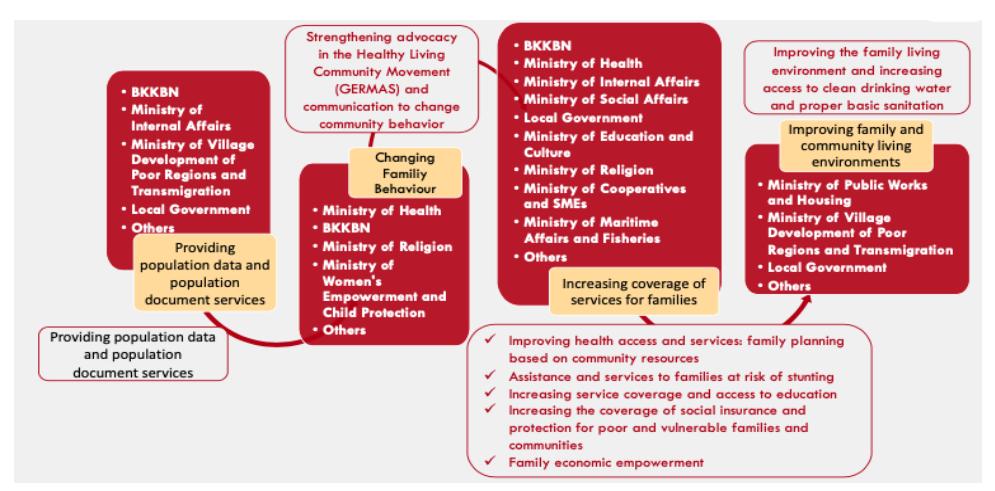
FIGURE 1. FRAMEWORK OF INTEGRATED MINISTRIES/AGENCIES PROGRAMS IN KAMPUNG KB
IV. POPULATION DATA WAREHOUSE (RUMAH DATAKU)
The availability of valid, up-to-date, and reliable population data and information is crucial in development planning and intervention. As Law Number 6 of 2014 concerning Villages, villages have the authority to carry out development planning and interventions. To facilitate village officials in planning and implementing development needs population data and information at the village level. Given the need for this data, the Population Data warehouse or Rumah Data Kependudukan (Rumah
Dataku) was formed and developed as a platform on integrated demographic data in villages. The Population Data Warehouse exists as a center for population data and information at the micro level based on community participation, which implicitly makes the resulting data an articulation of interests from society at large.
Rumah Dataku is a community-based activity group that provides valid and up-to-date population data from, by, and for the community in the Quality Family Village. The objectives of establishing the Rumah Dataku are as follows:
1. Building awareness and concern for data, population issues, and education on population for the village community.
- 2. Building activity groups in providing data at the micro level as a basis for making decisions and policies to improve people's welfare.
- 3. Providing digital population data and analysis for the government and cross-sectors for effective interventions to improve people's welfare.
Conceptually, the Rumah Dataku business process is using Generic Statistical Business Process Model (GSBPM)
by Unece (see figure 3) that contain 8 processes. Rumah Dataku contain a collection of related and structured activities and tasks to convert input data into statistical information. The output of the process may be a mixed set of physical or digital products presenting data and metadata in different ways, such as publications, maps, electronic services, among others.
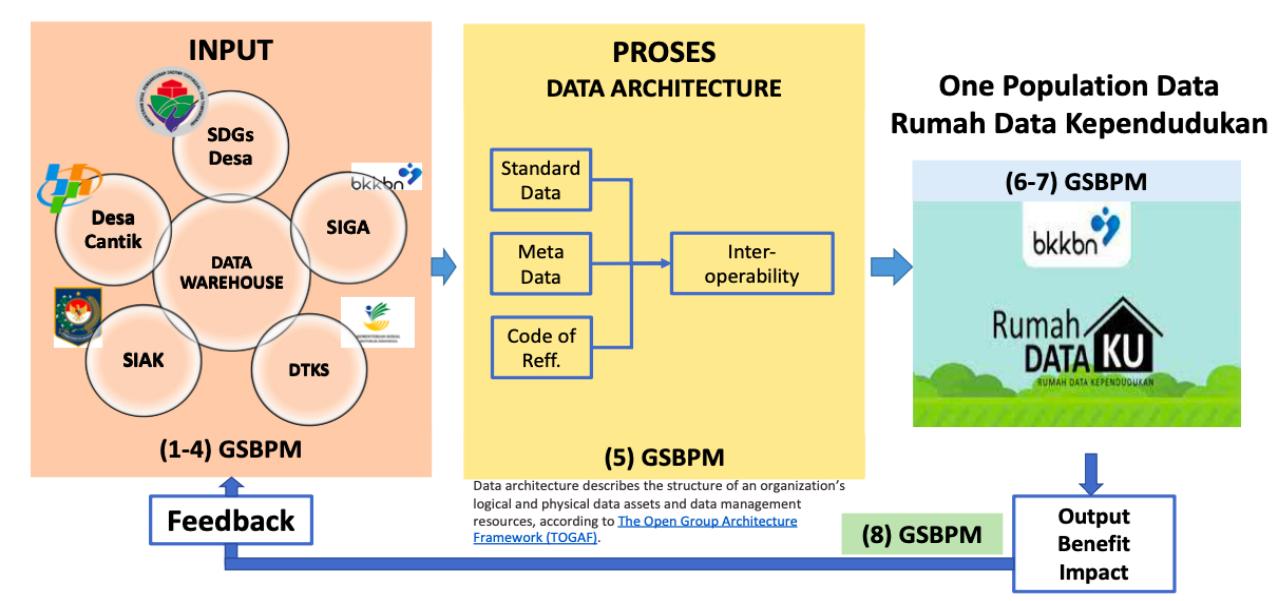
FIGURE 2. THE FRAMEWORK OF RUMAH DATAKU TOWARD ONE POPULATION DATA IN VILLAGES
The data will collect and unify various population data in villages managed by various ministries/agencies. The digitally population data is expected to be a form of initiation
towards realizing one population data at the village level. Rumah Dataku will play an important role of village planning and development, especially in population development.
| Overarching Processes | |||||||
|---|---|---|---|---|---|---|---|
| Specify needs | Design | Build | Collect | Process | Analyse | Disseminate | Evaluate |
| 1.1 Identify needs | 2.1 Design outputs | 3.1 Reuse or build collection instruments | 4.1 Create frame and select sample | 5.1 Integrate data | 6.1 Prepare draft outputs | 7.1 Update output systems | 8.1 Gather evaluation inputs |
| 1.2 Consult and confirm needs | 2.2 Design variable descriptions | 3.2 Reuse or build processing and analysis components | 4.2 Set up collection | 5.2 Classify and code | 6.2 Validate outputs | 7.2 Produce dissemination products | 8.2 Conduct evaluation |
| 1.3 Establish output objectives | 2.3 Design collection | 3.3 Reuse or build dissemination components | 4.3 Run collection | 5.3 Review and validate | 6.3 Interpret and explain outputs | 7.3 Manage release of dissemination products | 8.3 Agree an action plan |
| 1.4 Identify concepts | 2.4 Design frame and sample | 3.4 Configure workflows | 4.4 Finalise collection | 5.4 Edit and impute | 6.4 Apply disclosure control | 7.4 Promote dissemination products | |
| 1.5 Check data availability | 2.5 Design processing and analysis | 3.5 Test production systems | 5.5 Derive new variables and units | 6.5 Finalise outputs | 7.5 Manage user support | ||
| 1.6 Prepare and submit business case | 2.6 Design production systems and workflow | 3.6 Test statistical business process | 5.6 Calculate weights | ||||
| 3.7 Finalise production systems | 5.7 Calculate aggregates | ||||||
| 5.8 Finalise data files | |||||||
FIGURE 3. GSBPM VERSION 5.1 BY UNECE 2019
Rumah DataKu is a part of the Demographic Information System (Sistem Informasi Kependudukan – SIK) that will be developed by bkkbn. The structure of the systems consist of the quality family village dashboard, the Population Data Warehouse (Rumah DataKu), and the Population Early Warning Information System (Sistem Peringatan Dini
Pengendalian Penduduk-Siperindu). The Quality Family Village dashboard have a role for monitoring and evaluating the implementation of Presidential Instruction No. 3 of 2022 at the village level, which contains 77 critical indicators of implementation of the Presidential Instruction, some of which come from Rumah DataKU as an integrated demographic database. At the same time, SIPERINDU aggregates data at the district/city level, which gives a form of awareness of the implementation of population development and its impacts.
FIGURE 4. DEMOGRAPHIC INFORMATION SYSTEM BASED ON RURAL MANAGEMENT
The data collected includes indicators covered in 7 dimensions, namely: (1) Population Quantity, (2) Population Quality, (3) Population Mobility, (4) Family Development, (5) Population Administration, (6) Social Protection, and (7) Village Potential. Data sources come from the community directly and from all ministries/agencies that manage data at the village level so that it will become the forerunner of one population data in the village. Its broad dimensions also allow for extensive data use in the future, especially when data is stored in digital form, which can be accessed from anywhere.
V. MULTI-DIMENTIONAL RURAL DEVELOPMENT MODEL
Efforts to optimize Presidential Decree No. 3 of 2022 can be carried out with several strategies, including: First, the economic strategy is carried out by providing economic stimulus from the demand and supply side of village commodities. The role of Village-Owned Enterprises (BUMDes) or Joint Village-Owned Enterprises (BUMdesma) after the issuance of Government Regulation no.11 of 2021 as a driving force for the rural economy through entrepreneurship and Micro, Small and Medium Enterprises (MSMEs) is enhanced with productive stimulus support to improve the supply chain system. supply based on local resources with digital ecosystem. Strengthen rural logistics systems and develop networks and infrastructure within the framework of rural supply chains and increase investment both domestic and foreign with mutually beneficial partnership patterns. Second, the Socio-Cultural and Institutional (SBK) development strategy is carried out by optimizing social and cultural capital in overcoming health and education problems. This is very important because the problems of stunting and school participation are mostly sourced from traditional culture.
Third, the development strategy for Natural and Environmental Resources is carried out by utilizing the potential of environmental and natural resources by taking into account the local ecosystem. This strategy is also carried out by revitalizing peat areas, mangroves and former mining excavations for economic activities and environmental preservation. Fourth, community development strategy that uses the concepts of participation, mutual respect, openness, trust and using differences as strengths. The goal is how this development is based on the needs of the community so that they feel the programs in their village are belong to themselves. This ownership is shown in the activity of expressing opinions, access to development programs, and participating in controlling and supervising the programs. Fifth, the family development strategy through efforts that increase the dignity of the family, by taking into account various dimensions of functions, roles, and tasks of family, as well as paying attention to the stages of development of family towards resilience and quality of life. Family empowerment emphasizes increasing knowledge, awareness, and family capacity in relation to the dynamic conditions of the family which must have tenacity and toughness as well as physical-material and psychological-mental-spiritual abilities to live independently and develop their families to live in harmony and improve their physical and spiritual welfare. Increasing family resilience includes physical resilience, social resilience, and family psychological resilience (Sunarti, 2001).
Rural development does not have a single concept and meaning. Rural development is multidimensional in that changes are planned, implemented and expected to improved many aspects such as the economy, social structure, education, infrastructure, culture and institutions. Because it is multidimensional, the rural development process is carried out by multiple parties, including the government, the community, the private sector, civil society organizations and the support of media and academic society.
Rural development must be able to change the face of poverty and inequality between developed cities and developing villages through the principles of social justice. The dominant model over the past few decades has been development that promotes economic growth, market liberalization, globalization and industry. In a broader context, rural development is also closely related to access for improved welfare and quality of life. For example, in the field of education, the number of illiterates has been reduced, the participation of girls in school has increased and the average number of school-age to tertiary institutions has increased. Meanwhile, in the health sector, it is characterized by easy and affordable access to health services; decreased infant and maternal mortality rates, as well as increased life expectancy; increased access to sanitation and clean water; and reduced stunting prevalence.
An evaluation of the failure of the liberal economy recommends that rural development requires a multidimensional approach in which economic development must be balanced with social development, environmental and natural resource sustainability and equity in the distribution of development outcomes. The current challenge is to uphold social justice in realizing equitable distribution of development results so that all citizens can feel without anyone feeling left out (leave no one behind). Thus, progressive and transformative changes must be driven and applied to everyone.
The goals of rural development that have been proclaimed are not solely to achieve one goal and abandon other goals. More than that, community cooperation is needed to do more than the universality of power to drive rural development that creates justice and social welfare. A population-centred rural development approach focuses on human capital rather than physical development alone. Development of human resources is also used as a goal, so that it is both a process and a result of rural development. This approach implies that rural citizens must influence the development processes that shape their lives. Thus, economic growth is not the main focus of rural development, but is an important tool for human development in rural areas.
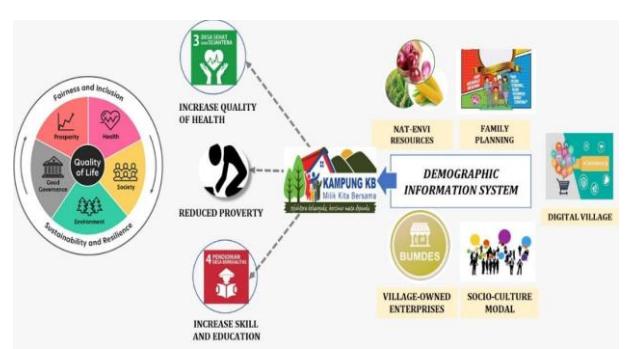
FIGURE 5. DIGITALIZATION MODEL ON RURAL DEVELOPMENT
Rural management is a multidimensional construct which concentrates on refining the quality of life of rural communities, specifically under-privileged and poor communities. Villages encounter numerous difficulties and encounters, for instance the occurrence of disasters due to impact of climate change, deficiency of infrastructure, and unsustainable usage of natural resources. Village resilience is a comprehensive concept that represents to a village's capability to sustainably cope with both unpredicted and predicted risk-related incidents. Furthermore, it comprises village competence to adjust to upcoming difficulties from a strategic outlook.
According to the regulation of the Minister of Villages, Development of Disadvantaged Regions and Transmigration number 13 of year 2020, there are at least 18 development goals and objectives through the Village SDGs which are: village without poverty, hunger, and gaps, healthy and prosperous, quality education, gender equal and decent with clean water and sanitation, clean and renewable energy, economic growth, innovation and infrastructure, sustainable residential area, sustainable consumption and production, climate change, marine and land ecosystem, peace and justice, partnership for rural development, dynamic institutions and adaptive village culture.
Rural areas cover most of the available land; though, they largely keep on outside the mainstream of the advanced development activities. However, villages have capacity and are very important for applying a very effective model of sustainable and continual growth. The concept of such development can be realized in various approaches, and the model of building Quality Family Villages is one of them. Establishing Quality Family Villages in all over Indonesia using five multi-dimensional village development strategies and integrated with other approaches such as digitalized village, natural and environmental resources, village-owned enterprises, socio-culture modal, family planning programs, and rural demographic information systems through the support of Population Data Houses, will ensure that some fundamental Village SDGs to be achieved, especially increased quality of health, increased skill and education, and reduced poverty, which resulted on sustainable and resilience villages that have fairness and inclusive development growth towards good village governance on rural environment, society, prosperity, and health.
VI. CONCLUDING REMARKS
To conclude, population problems and challenges in Indonesia can be overcome with the implementation of Presidential Decree No. 3 of 2022, by creating Quality Family Villages in all villages, with the support of Population Data Houses and 5 multi-dimensional village development strategies. The President of the Republic of Indonesia issued this Presidential Instruction in order to optimizing the implementation of Quality Family Villages. By establishing Quality Family Villages in all villages, the Village Government and related stakeholders can develop policies and take steps in a coordinated and integrated approach according to their duties, functions and authorities to improve the quality of families in their area through supporting the provision of family data at the Population Data House, changing family behavior in a better direction, increasing the scope of family services and referrals, and managing the family environment.
In addition, the benefits of establishing a Quality Family Village aside from being able to alleviate the poverty of the villagers, also bring development closer to the village community. The point is this program involves all development sectors. In other words, Quality Family Villages not only overcome the population issues, but also empower the potential of village communities to play a significant role in rural development. Other benefits of Quality family Village are building a family-based society, increasing community welfare, and meeting community needs through the implementation of cross-sector program integration. Cross-sectoral development and partnerships involve the roles of various parties such as the private sector, line ministries and other stakeholders. Cross-sector integration in the form of integrated inter-sectoral services that are a community need, such as family planning and reproductive health services, population services for provision of citizens documents, village health post, children educational development services, and etc.
Presidential Instruction number 3 of 2022 aims to improve the quality of human resources, empower and strengthen family institutions through optimizing the implementation of quality family villages in each village or sub-district. Quality Family Village is a development approach at the village/kelurahan level that is carried out in an integrated and convergent manner in implementing empowerment and strengthening family institutions in all its dimensions in order to improve the quality of human
resources, families and communities. Presidential Instruction number 3 of 2022 will be achieved more quickly by digitizing the rural development model based on a demographic information system in the population data house.
REFERENCES
- [1] Arinta, F. (2018) 'Efektivitas Program Kampung KB Guna Mewujudkan Keluarga Kecil Mandiri (Studi Kasus: Tiga Orang Penerima Program Kampung KB di Lingkungan IX Kelurahan'.
- [2] BKKBN. (2017). Petunjuk Teknis Kampung KB. Direktorat Bina Lini Lapangan.
- [3] BKKBN. (2020). Rencana Strategis BKKBN 2020-2024.
- [4] BKKBN. (2021). Profil Institusi Masyarakat Pedesaan/Perkotaan Tahun 2021. Direktorat Bina Lini Lapangan.
- [5] Ife, Jim & T. Frank. 1995. Community Development, Alternatif Pengembangan Masyarakat di Era Globalisasi. Pustaka Pelajar.
- [6] Istiadi, A. (2017) 'IMPLEMENTASI PROGRAM KAMPUNG KELUARGA BERENCANA (Studi Pada Kelompok Sasaran Keluarga Dengan Remaja di Dusun Waung Desa Sonoageng Kecamatan Prambon Kabupaten Nganjuk)', Publika, 5(4), pp. 1–8.
- [7] Kemenkes (2018). 'Kampung KB : Inovasi Strategis Memberdayakan Masyarakat', 19 Maret, (4), p.1.
- [8] Kemenkumham (2009). Undang-Undang Nomor 52 Tahun 2009 tentang Perkembangan Kependudukan dan Pembangunan Keluarga.
- [9] Kemenkumham (2014). Peraturan Pemerintah Nomor 87 Tahun 2014 tentang Perkembangan Kependudukan dan Pembangunan Keluarga, Keluarga Berencana, dan Sistem Informasi Keluarga.
- [10] Kemenkumham (2022). Instruksi Presiden Nomor 3 Tahun 2022 Tentang Optimalisasi Penyelenggaraan Kampung Keluarga Berkualitas.
- [11] Mardiyono (2017a). 'Kampung KB Sebagai Upaya Pemberdayaan Masyarakat/ Keluarga di Jawa Timur (Studi di Kota Malang dan Kabupaten Bondowoso)', Jurnal Cakrawala, 11(2), pp. 129–136.
- [12] Mardiyono (2017b). 'Pemberdayaan Keluarga Melalui Kampung KB Dalam Upaya Peningkatan Program KKBPK dan Terkait di Jawa Timur .', Jurnal Keluarga Berencana, 2(1), pp. 1–10.
- [13] Mulyadi, Ade (2013). Kampung KKB wujud Konkret People Centered Devolepment, Majalah Warta Kencana Edisi 12 halaman 8-9 April Tahun IV.
- [14] Nafisah, Lathifatun (2018). "Efektivitas Progam Kampung KB (Keluarga Berencana) Dalam Membentuk Keluarga Sejaterah Di Kota Yogyakarta". UIN Sunan Kalijaga Yogyakarta.
- [15] Nugroho, M. R. (2018). 'Sosialisasi Program Kampung Keluarga Berencana (Kampung KB)'.
- [16] Nurjannah, S. N. and Susanti, E. (2018). 'Implementasi Program Kampung Keluarga Berencana (Kb) di Kabupaten Kuningan Tahun 2018 (Studi Kuantitatif Dan Kualitatif)', Jurnal Ilmu Kesehatan Bhakti Husada: Health Sciences Journal, 9(2), pp. 27–33.
- [17] Prijono dan Pranarka (1996). Pemberdayaan Masyarakat. 1996 .
- [18] Resnawaty, R., Humaedi, S., & Adiansah, W. (2021). Evaluasi Program Kampung Keluarga Berencana Dalam Meningkatkan Ketahanan Dan Kesejahteraan Keluarga. Jurnal Kolaborasi Resolusi Konflik, 3 (1).
- [19] Sekarpuri, A. D. et al. (2016) 'Kampung KB : Saatnya Pupuskan Ego', (November).
- [20] Setiawati, E. (2017) 'Persepsi masyarakat terhadap Program Kampung Keluarga Berencana di Kelurahan Pantoloan Boya Kecamatan Tawaeli', GeoTadulako, 5, pp. 1–15.
- [21] Suhendra, K. (2006). Peranan Kampung KB dalam Pemberdayaan Masyarakat. Alfabeta. Bandung.
- [22] Zuhriyah, A. (2017) 'Kampung Keluarga Berencana Dalam Peningkatan Efektivitas Program Pembangunan Keluarga', Higeia Journal of Public Health Research and Development, 1(4).
- [23] Zultha, Nurhafifah (2017). Implementasi Program Kampung KB dalam Upaya Penanggulangan Kemiskinan. Lampung: Universitas Lampung.