

INTRODUCTION
Diabetes Mellitus (DM) is a chronic condition characterized by elevated glucose levels in the bloodstream due to either insufficient insulin production or ineffective utilization of insulin by the body. Insulin, a vital hormone produced in the pancreas, plays a key role in transporting glucose from the blood into the body's cells, where it's utilized for energy. When there's a deficiency of insulin or the cells become resistant to its effects, it results in high blood glucose levels, known as hyperglycemia, a defining feature of DM. Prolonged hyperglycemia can lead to severe health complications such as cardiovascular disease, neuropathy, nephropathy, and eye conditions like retinopathy, potentially causing vision impairment or blindness. (Ibrahim, 2017a).
It's commonly understood that diabetes mellitus (DM) is strongly influenced by dietary choices. Overconsumption of certain foods, including carbohydrates, sugars, proteins, fats, and overall energy intake, can increase the risk of developing DM. The greater the excess in food consumption, the higher the likelihood of DM onset (Susanti & Bistara, 2018a). Diabetes Mellitus refers to a cluster of metabolic disorders marked by elevated blood sugar levels, which disrupt the metabolism of carbohydrates, fats, and proteins. These conditions arise from a multifaceted array of causes (Rahayu & Nurhayat, 2019).
Diabetes mellitus (DM) is a metabolic condition that has various causes characterized by high blood sugar levels and impaired metabolism of carbohydrates, fats and proteins as a result of insufficient insulin function. Insulin deficiency can be caused by interference or lack of insulin production by beta (β) cells in the pancreatic gland, or by a lack of responsiveness of body cells to insulin. (Yosmar et al., 2018). Diabetes mellitus encompasses a range of metabolic conditions marked by elevated blood sugar levels, resulting from deficiencies in either insulin secretion, insulin action, or both (Wungouw, 2015).
Diabetes Mellitus is a metabolic disorder that can be effectively managed through four key strategies. Among these, exercise holds significant importance, especially when dietary balance is overlooked by patients. Elevated blood sugar levels in diabetes disrupt insulin levels, making exercise a vital tool in preventing further spikes in blood glucose. By engaging in appropriate physical activity, individuals can effectively regulate their blood sugar levels (Susanti & Bistara, 2018b).
Type 2 Diabetes Mellitus is predominantly observed in older individuals, yet its occurrence in children, teenagers, and young adults is on the rise. The primary factors contributing to type 2 DM include being overweight or obese, advancing age, and a family history of the condition. Additionally, emerging research indicates a correlation between excessive intake of sugar-sweetened beverages and the likelihood of developing type 2 DM (Ibrahim, 2017b). According to data from the Ministry of Health (2016), over 25% of Indonesia's population is insufficiently physically active. During exercise, muscles utilize stored glucose, and when glucose levels are low, they draw from the bloodstream to compensate. This process leads to a reduction in blood glucose levels, ultimately enhancing blood glucose regulation (Billings et al., 2012).
Exercise is a practice aimed at enhancing both the physical and spiritual aspects of an individual's well-being. The frequency of exercise directly correlates with improved overall health, rendering the body less vulnerable to a range of diseases and health issues. However, due to busy lifestyles and tendencies toward inertia, exercise is frequently overlooked or disregarded, leading to its neglect or forgetfulness (Kemenkes RI, 2016). Sports are embraced by individuals of all ages, serving as a means to foster physical, spiritual, and social development while concurrently serving as a life classroom. Within sports lie numerous values that can be absorbed and applied to life's lessons, shaping the character of those involved. Character, integral to daily interactions within families and society, is influenced by participation in sports. With its significant role in human life, sports have become inseparable from modern lifestyles, utilized not only for performance enhancement but also for maintaining overall health. Exercise, accessible to all genders and age groups, contributes to the creation of individuals who are physically and spiritually robust (Yarasheva, 2023)
Health Exercise for the elderly at an intensity corresponding to 60% to 85% of the maximum strength per individual. Improves fitness and strength levels better than Exercise (above 85%), older people as well as younger children. It is now recommended that healthy older people should train 3 or 4 times a week for best results, people with poor performance initially can achieve improvements even with less frequent training. Side effects from proper exercise are rare (Leddy et al., 2021). The types of exercise and physical activity recommended for diabetes mellitus sufferers include aerobic exercise, resistance training, flexibility training, and even combined exercise (Fadhila, 2019). In addition to mitigating risk, engaging in physical activity yields beneficial outcomes on various physiological aspects such as body fat levels, arterial blood pressure, baroreflex sensitivity, vasodilation of endothelium-dependent vessels, blood flow to the skin, hypertriglyceridemia, and fibrinolysis. Active individuals with diabetes mellitus experience a notable 50% reduction in both morbidity and mortality rates compared to their sedentary counterparts (Colberg et al., 2016). This study aims to compare the effects of aerobic exercise and resistance exercise on elderly individuals with diabetes. The anticipated outcome is that the findings will serve as valuable assessment criteria for anyone dealing with diabetes.
METHODS
In this research, it uses a comparative study with the aim of comparing two or more variables, in getting answers and facts whether there is a comparison or not to the object under study. Where researchers will see a comparison of the effectiveness of Aerobic Endurance Training and Resistance Exercise on Daily Blood Sugar Reduction in the Elderly at the Puter Health Center, Bandung City. This research uses the experiment method to find out the comparison results of the treatment given to samples from aerobic exercise intervention treatment with resistance exercise.
Participants
In this study, the population taken consisted of elderly patients at the Puter Health Center in Bandung City. The sample obtained in this study amounted to 24 samples. The sample was selected using purposive sampling techniques based on predetermined criteria. The inclusion criteria for the sample are as follows: patients with diabetes mellitus registered at Puter Health Cente, patients with diabetes mellitus categorized as elderly, and patients willing to actively participate in the exercise intervention program provided for 4 weeks. On the other hand, the exclusion criteria include patients with diabetes mellitus who are currently hospitalized and patients with diabetes mellitus who are unable to perform physical activities.
Materials and Equipment
In this study, two groups were divided to perform two physical activity activities. The first group will do Aerobic Endurance Exercise by walking for 20 minutes. While the second group will do Resistance Exercise by doing strength training or resistance training for 20 minutes, rest time is 15 seconds and the movement is done as many as 2 sets and 10 repetitions. These two activities were carried out by the sample accompanied by an expert as an instructor who accompanied and gave instructions on the two physical activity activities.
Procedure
This research has received supervision permission from the Bandung City Health Office, and obtaining a research ethics permit from the Bandung Health Polytechnic Ethics Commission. Research data collection was carried out at UPT Puskesmas Puter, Jl. Puter No.3, Bandung City. The research was conducted on November 17, 2022 - Januari 14, 2023.
In this study, at first the subject was briefed regarding the data to be taken.
After that the subject will be given an informed consent form to be filled in first. After the consent sheet has been filled in, this research is carried out 1 week for 3 meetings. Where the data collection process begins with taking a Blood Sugar Test before doing physical activity activities. Then after that the subject will carry out physical activity activities which are divided into two groups, namely Aerobic Endurance Exercise and Resistance Exercise. Finally, after doing physical activity the subject will take the Blood Sugar Test again.
Data Design or Analysis
Data analysis was carried out using the Independent T Test and using the Levene formula to determine the Comparative Effectiveness of Aerobic Endurance Training and Resistance Exercise on Daily Blood Sugar Reduction in the Elderly at the Puter Health Center, Bandung City. Data analysis using Microsoft Excel and Minitab 18 based software.
HASIL
The number of research subjects accepted was 24 elderly patients with diabetes mellitus in Puter community healt center, Bandung in Table 1.
Tabel 1. Subject characteristic.
| N | Mean ± St.d | |
|---|---|---|
| Age | 24 | 61.58 ± 6.50 |
| BW (Kg) | 24 | 71.86 ± 9.76 |
| BH (Cm) | 24 | 157.27 ± 8.99 |
| BMI (Kg/m2) | 24 | 27.71 ± 4.23 |
The data above shows that the average age (61.58 ± 6.50), body weight (71.86 ± 9.76), body height (157.27 ± 8.99), and BMI of elderly people suffering from diabetes mellitus falls into the obese category with a value of (27.71 ± 4.23).
Table 2. Average aerobic and resistance exercise pretest and posttest.
| Pretest | Posttest | |
|---|---|---|
| Aerobic | 26.41 ± 33.67 | 11.74 ± 10.28 |
| Resistance Exercise | 31.74 ± 54.10 | 9.33 ± 23.46 |
The results can be seen that the average decrease after being given treatment decreased further after being given resistance exercise compared to aerobic training.
The value of aerobic before exercise is (26.41 ± 33.67) after exercise it decrease (11.74 ± 10.28), resistance exercise before exercise is (31.74 ± 54.10) after exercise it decrease (9.33 ± 23.46).
Table 2. Average aerobic and resistance exercise pretest and posttest.
| Blood Glucose | |||
|---|---|---|---|
| T-value | P-value | ||
| Mean ± SD | 0.56 | 0.586 | |
Based on the statistical test data above, the P-Value value of 0.586 > 0.05 can be concluded that the hypothesis is acceptable, thus there is a difference between the results of lowering blood sugar from aerobic exercise and resistance. Because there is this difference, it can be known which one has a high decrease between the two variants.
DISCUSSION
This study aims to determine the comparison of the effectiveness of reducing blood sugar after being given aerobic treatment with resistance exercise. From the results it was found that providing resistance exercise treatment was more effective in lowering blood sugar. The results of this research can be useful for diabetes mellitus sufferers, especially the elderly, as a blood sugar control program as well as a prevention program.
The characteristics of elderly people with diabetes mellitus at the Puter Bandung Community Health Center are known to have an average body mass index in the obesity category, (Nakamura & Sadoshima, 2020) stated that obesity is a risk factor for higher obesity. For this reason, weight reduction is recommended by carrying out physical activity or exercise programs. This research shows that aerobic exercise can lower blood sugar, an aerobic physical exercise program that is based on science can be a valuable complementary tool in non-pharmacological therapy for diabetes mellitus, especially in type 2 diabetes mellitus. This occurs because of the beneficial effects of exercise with an increase in intake. Increased glucose during exercise (Almeida et al., 2020). Aerobic exercise makes muscles contract so that energy use increases when doing movements, which causes blood sugar concentrations to decrease (Rahman et al., 2022).
In these findings, resistance exercise is able to reduce blood sugar in elderly people suffering from diabetes mellitus. Resistance exercise is an effective strategy for managing systemic inflammation by lowering blood sugar in diabetes mellitus patients (Fernández-Rodríguez et al., 2023). This occurs due to increased glucose oxidation in skeletal muscle (Consitt et al., 2019). According to The American College of Sports Medicine (ACSM), regular resistance training, apart from lowering blood sugar, can also reduce body fat, lower blood pressure, improve muscle fitness and improve quality of life (Esco, 2013).
Aerobic and resistance training has been proven to be able to reduce blood sugar levels in the body and is able to increase adaptation in skeletal muscle, adipose tissue and liver which is associated with increased insulin action, even though there is no weight loss (Youssef, 2019). Aerobic exercise and resistance exercise can lower blood sugar and improve quality of life, but resistance exercise is better than aerobic exercise in lowering blood glucose and improving the health of diabetes mellitus sufferers, especially type 2 (Gowtham, Banu, Kumar, & Shanmugananth, 2023).
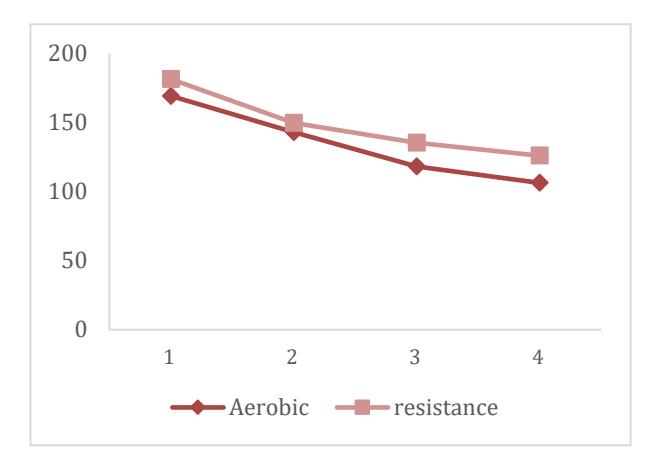
Figure 1. Diagram blood glucose aerobic and resistance exercise
Based on the diagram statistical test above, it is known that the decrease in blood sugar after resistance exercise is the best or high in its decrease. Endurance training compared to aerobic exercise will reduce blood sugar and even HbA1c values significantly, because resistance training causes greater glucose absorption at the cellular level, thereby reducing hyperglycemia (Nery et al., 2017). Resistance training causes an increase in the protein content of GLUT4, insulin receptor, glycogen synthase, and protein kinase B. Regarding greater changes in FBS and HbA1c for RTG, resistance training may be an optimal training modality to manage the symptoms of diabetes mellitus especially type 2 by improving insulin sensitivity (Keihanian et al., 2019).
These findings aim to expand related research, so that the effect of exercise can be maximized. Further research suggests always controlling the food intake consumed, and not forgetting to continue taking medication that has been given by the doctor. Long-term research can be carried out to see the long-term effects of each of these exercises, or even combined aerobic and resistance exercise can be done to see a greater effect.
CONCLUSION
In this study it can be concluded that aerobic endurance and resistance exercise can reduce the increase in blood sugar in the elderly, but when compared to the two exercises, resistance exercise suppresses the increase in blood sugar more, of course with the appropriate intensity. So that blood sugar levels remain within normal limits and prevent diabetes complications in the elderly because by doing resistance exercise the working muscles will be focused, thereby suppressing the increase in blood sugar more efficiently.
REFERENSI
- Almeida, H. F. R. de, Neto, L. S. da L., Queiroga, F. M., Souza, J. A. de, Paraguassú-Chaves, C. A., & Barros, J. de F. (2020). Effects of an Aerobic Physical Exercise Program on Blood Glucose Levels in Type-2 Diabetic Subjects, Associated with Pharmacotherapy and Diet Therapy. International Journal of Advanced Engineering Research and Science, 7(7), 27–35. https://doi.org/10.22161/ijaers.77.4
- Billings, L. K., Hsu, Y. H., Ackerman, R. J., Dupuis, J., Voight, B. F., Rasmussen-Torvik, L. J., … Florez, J. C. (2012). Impact of common variation in bonerelated genes on type 2 diabetes and related traits. Diabetes, 61(8), 2176– 2186. https://doi.org/10.2337/db11-1515
- Colberg, S. R., Sigal, R. J., Yardley, J. E., Riddell, M. C., Dunstan, D. W., Dempsey, P. C., … Tate, D. F. (2016). Physical activity/exercise and
- diabetes: A position statement of the American Diabetes Association. Diabetes Care, 39(11), 2065–2079. https://doi.org/10.2337/dc16-1728
- Consitt, L. A., Dudley, C., & Saxena, G. (2019). Impact of endurance and resistance training on skeletal muscle glucose metabolism in older adults. Nutrients, 11(11), 1–17. https://doi.org/10.3390/nu11112636
- Esco, M. R. (2013). Resistance Training for Health and Fitness. American College of Sports Medicine, 1–2.
- Fadhila, R. (2019). Pengaruh Latihan Fisik Terhadap Kadar Glukosa Darah Penyandang Diabetes Melitus Tipe 2: Literature Review. Jurnal Keperawatan Abdurrab, 3(1), 17–24. https://doi.org/10.36341/jka.v3i1.766
- Fernández-Rodríguez, R., Monedero-Carrasco, S., Bizzozero-Peroni, B., Garrido-Miguel, M., Mesas, A. E., & Martínez-Vizcaíno, V. (2023). Effectiveness of Resistance Exercise on Inflammatory Biomarkers in Patients with Type 2 Diabetes Mellitus: A Systematic Review with Meta-Analysis. Diabetes & Metabolism Journal, 47(1), 118–134. https://doi.org/10.4093/dmj.2022.0007
- Gowtham, R., Banu, R. S., Kumar, V. V., & Shanmugananth, E. (2023). Aerobic Exercise Vs Resisted Exercise on Blood Glucose and Health Related Quality of Life Among Coastal Patients with Type 2 Diabetes Mellitus- A Randomized Trial Keywords : Abstract :, 11(November 2022).
- Ibrahim, A. (2017). IDF Clinical Practice Recommendation on the Diabetic Foot: A guide for healthcare professionals. Diabetes Research and Clinical Practice, 127(April), 285–287. https://doi.org/10.1016/j.diabres.2017.04.013
- Keihanian, A., Arazi, H., & Kargarfard, M. (2019). Effects of aerobic versus resistance training on serum fetuin-A, fetuin-B, and fibroblast growth factor-21 levels in male diabetic patients. Physiology International, 106(1), 70–80. https://doi.org/10.1556/2060.106.2019.01
- Leddy, J. J., Master, C. L., Mannix, R., Wiebe, D. J., Grady, M. F., Meehan, W. P., … Willer, B. S. (2021). Early targeted heart rate aerobic exercise versus placebo stretching for sport-related concussion in adolescents: a randomised controlled trial. The Lancet Child and Adolescent Health, 5(11), 792–799. https://doi.org/10.1016/S2352-4642(21)00267-4
- Nakamura, M., & Sadoshima, J. (2020). Cardiomyopathy in obesity, insulin resistance and diabetes. Journal of Physiology, 598(14), 2977–2993. https://doi.org/10.1113/JP276747
- Nery, C., Moraes, S. R. A. De, Novaes, K. A., Bezerra, M. A., Silveira, P. V. D. C., & Lemos, A. (2017). Effectiveness of resistance exercise compared to aerobic exercise without insulin therapy in patients with type 2 diabetes mellitus: a
- meta-analysis. Brazilian Journal of Physical Therapy, 21(6), 400–415. https://doi.org/10.1016/j.bjpt.2017.06.004
- Rahayu, I., & Nurhayat, F. (2019). Perbandingan Asupan Gizi Dan Status Gizi Antara Mahasiswa Angkatan 2015 Dengan Angkatan 2016 Jurusan Pendidikan Olahraga Fio Unesa. Pendidikan Olahraga Dan Kesehatan, 7(2), 196.
- Rahman, F., Setiadi, M. I., & Budi, I. S. (2022). Pengaruh Aerobic Exercise terhadap Kadar Glukosa Darah Penderita Diabetes Mellitus Tipe 2: Critical Review. Urecol Journal. Part G: Multidisciplinary Research, 2(2), 57–69.
- Susanti, S., & Bistara, D. N. (2018). Hubungan Pola Makan Dengan Kadar Gula Darah Pada Penderita Diabetes Mellitus. Jurnal Kesehatan Vokasional, 3(1), 29. https://doi.org/10.22146/jkesvo.34080
- Wungouw, H. (2015). Kadar Glukosa Darah Sewaktu Pada Pasien Diabetes Melitus Tipe 2 Di Puskesmas Bahu Kota Manado 1Suci. Jurnal E-Biomedik (EBm), 3 No 1(184), 9. https://doi.org/10.1093/nq/s6-VIII.184.7-b
- Yosmar, R., Almasdy, D., & Rahma, F. (2018). Jurnal Sains Farmasi Dan Klinis. Survei Risiko Penyakit Diabetes Melitus Terhadap Kesehatan Masyarakat Kota Padang, 5(Agustus 2018), 134–141.
- Youssef, M. K. (2019). Effect of walking and aerobic exercise on physical performance and depression in cases of type 2 diabetes mellitus. The Egyptian Journal of Internal Medicine, 31(2), 142–148. https://doi.org/10.4103/ejim.ejim_116_18
- Almeida, H. F. R. de, Neto, L. S. da L., Queiroga, F. M., Souza, J. A. de, Paraguassú-Chaves, C. A., & Barros, J. de F. (2020). Effects of an Aerobic Physical Exercise Program on Blood Glucose Levels in Type-2 Diabetic Subjects, Associated with Pharmacotherapy and Diet Therapy. International Journal of Advanced Engineering Research and Science, 7(7), 27–35. https://doi.org/10.22161/ijaers.77.4
- Billings, L. K., Hsu, Y. H., Ackerman, R. J., Dupuis, J., Voight, B. F., Rasmussen-Torvik, L. J., Hercberg, S., Lathrop, M., Barnes, D., Langenberg, C., Hui, J., Fu, M., Bouatia-Naji, N., Lecoeur, C., An, P., Magnusson, P. K., Surakka, I., Ripatti, S., Christiansen, L., … Florez, J. C. (2012). Impact of common variation in bone-related genes on type 2 diabetes and related traits. Diabetes, 61(8), 2176–2186. https://doi.org/10.2337/db11-1515
- Colberg, S. R., Sigal, R. J., Yardley, J. E., Riddell, M. C., Dunstan, D. W., Dempsey, P. C., Horton, E. S., Castorino, K., & Tate, D. F. (2016). Physical activity/exercise and diabetes: A position statement of the American Diabetes
- Association. Diabetes Care, 39(11), 2065–2079. https://doi.org/10.2337/dc16-1728
- Consitt, L. A., Dudley, C., & Saxena, G. (2019). Impact of endurance and resistance training on skeletal muscle glucose metabolism in older adults. Nutrients, 11(11), 1–17. https://doi.org/10.3390/nu11112636
- Esco, M. R. (2013). Resistance Training for Health and Fitness. American College of Sports Medicine, 1–2.
- Fadhila, R. (2019). Pengaruh Latihan Fisik Terhadap Kadar Glukosa Darah Penyandang Diabetes Melitus Tipe 2: Literature Review. Jurnal Keperawatan Abdurrab, 3(1), 17–24. https://doi.org/10.36341/jka.v3i1.766
- Fernández-Rodríguez, R., Monedero-Carrasco, S., Bizzozero-Peroni, B., Garrido-Miguel, M., Mesas, A. E., & Martínez-Vizcaíno, V. (2023). Effectiveness of Resistance Exercise on Inflammatory Biomarkers in Patients with Type 2 Diabetes Mellitus: A Systematic Review with Meta-Analysis. Diabetes & Metabolism Journal, 47(1), 118–134. https://doi.org/10.4093/dmj.2022.0007
- Gowtham, R., Banu, R. S., Kumar, V. V., & Shanmugananth, E. (2023). Aerobic Exercise Vs Resisted Exercise on Blood Glucose and Health Related Quality of Life Among Coastal Patients with Type 2 Diabetes Mellitus- A Randomized Trial Keywords : Abstract : 11(November 2022).
- Ibrahim, A. (2017a). IDF Clinical Practice Recommendation on the Diabetic Foot: A guide for healthcare professionals. Diabetes Research and Clinical Practice, 127(April), 285–287. https://doi.org/10.1016/j.diabres.2017.04.013
- Ibrahim, A. (2017b). IDF Clinical Practice Recommendation on the Diabetic Foot: A guide for healthcare professionals. Diabetes Research and Clinical Practice, 127(April), 285–287. https://doi.org/10.1016/j.diabres.2017.04.013
- Keihanian, A., Arazi, H., & Kargarfard, M. (2019). Effects of aerobic versus resistance training on serum fetuin-A, fetuin-B, and fibroblast growth factor-21 levels in male diabetic patients. Physiology International, 106(1), 70–80. https://doi.org/10.1556/2060.106.2019.01
- Leddy, J. J., Master, C. L., Mannix, R., Wiebe, D. J., Grady, M. F., Meehan, W. P., Storey, E. P., Vernau, B. T., Brown, N. J., Hunt, D., Mohammed, F., Mallon, A., Rownd, K., Arbogast, K. B., Cunningham, A., Haider, M. N., Mayer, A. R., & Willer, B. S. (2021). Early targeted heart rate aerobic exercise versus placebo stretching for sport-related concussion in adolescents: a randomised
- controlled trial. The Lancet Child and Adolescent Health, 5(11), 792–799. https://doi.org/10.1016/S2352-4642(21)00267-4
- Nakamura, M., & Sadoshima, J. (2020). Cardiomyopathy in obesity, insulin resistance and diabetes. Journal of Physiology, 598(14), 2977–2993. https://doi.org/10.1113/JP276747
- Nery, C., Moraes, S. R. A. De, Novaes, K. A., Bezerra, M. A., Silveira, P. V. D. C., & Lemos, A. (2017). Effectiveness of resistance exercise compared to aerobic exercise without insulin therapy in patients with type 2 diabetes mellitus: a meta-analysis. Brazilian Journal of Physical Therapy, 21(6), 400–415. https://doi.org/10.1016/j.bjpt.2017.06.004
- Rahayu, I., & Nurhayat, F. (2019). Perbandingan Asupan Gizi Dan Status Gizi Antara Mahasiswa Angkatan 2015 Dengan Angkatan 2016 Jurusan Pendidikan Olahraga Fio Unesa. Pendidikan Olahraga Dan Kesehatan, 7(2), 196.
- Rahman, F., Setiadi, M. I., & Budi, I. S. (2022). Pengaruh Aerobic Exercise terhadap Kadar Glukosa Darah Penderita Diabetes Mellitus Tipe 2: Critical Review. Urecol Journal. Part G: Multidisciplinary Research, 2(2), 57–69.
- Susanti, S., & Bistara, D. N. (2018a). Hubungan Pola Makan Dengan Kadar Gula Darah Pada Penderita Diabetes Mellitus. Jurnal Kesehatan Vokasional, 3(1), 29. https://doi.org/10.22146/jkesvo.34080
- Susanti, S., & Bistara, D. N. (2018b). Hubungan Pola Makan Dengan Kadar Gula Darah Pada Penderita Diabetes Mellitus. Jurnal Kesehatan Vokasional, 3(1), 29. https://doi.org/10.22146/jkesvo.34080
- Wungouw, H. (2015). KADAR GLUKOSA DARAH SEWAKTU PADA PASIEN DIABETES MELITUS TIPE 2 DI PUSKESMAS BAHU KOTA MANADO 1Suci. Jurnal E-Biomedik (EBm), 3 No 1(184), 9. https://doi.org/10.1093/nq/s6-VIII.184.7-b
- Yarasheva, D. (2023). SPORTS CULTURE AND SOCIETY. American Journal Of Social Sciences And Humanity Research, 3(11-), 152–163.
- Yosmar, R., Almasdy, D., & Rahma, F. (2018). Jurnal Sains Farmasi Dan Klinis. Survei Risiko Penyakit Diabetes Melitus Terhadap Kesehatan Masyarakat Kota Padang, 5(Agustus 2018), 134–141.
- Youssef, M. K. (2019). Effect of walking and aerobic exercise on physical performance and depression in cases of type 2 diabetes mellitus. The Egyptian Journal of Internal Medicine, 31(2), 142–148. https://doi.org/10.4103/ejim.ejim_116_18