

INTRODUCTION
Burnout is one of the serious threats in the world of sports which is characterized by chronic physical, mental, and emotional fatigue due to prolonged accumulation of stress and pressure (Trifković, 2022). This condition can reduce athlete performance which will result in loss of motivation (Komarudin et al., 2024). Burnout is more likely to occur in athletes who face intensive training and performance demands (Darisman et al., 2021; Eklund & DeFreese, 2020). In this
Correspondence author: Komarudin, Universitas Pendidikan Indonesia, Indonesia. Email: komarudin_pko@upi.edu
DOI: http://dx.doi.org/10.5614/jskk.2025.10.1.5 e-ISSN: 2654-8860 . p-ISSN: 2477-1791
context, the motivation to achieve which initially drives achievement will become a detrimental factor (Borkowski & Thorpe, 2023; Novian et al., 2024). If directed properly, motivation can help athletes to deal with pressure and demands. However, if not directed properly, the motivation to achieve will cause burnout (Komarudin & Rahmat Fadhli, 2023). Therefore, it is important to understand the relationship between achievement motivation and burnout, to become a strategy for mental development and prevention of psychological fatigue in athletes and maintaining athlete performance, as well as helping athletes to maintain consistent performance even under high competitive pressure (Purnamasari et al., 2022).
In particular, rowing athletes will face heavy training, intense competition, and high expectations from the environment that can result in burnout, if not balanced with stress management, adequate rest, and adequate mental support (Darisman et al., 2021). Burnout is a complex process involving physiological, psychological, and behavioral aspects, the development of which can be influenced by individual personality and motivation factors (Weinberg & Gould, 2023). Symptoms of burnout are usually characterized by low motivation, impaired concentration, loss of passion for competition, lack of concern, sleep disturbances, physical and mental fatigue, decreased self-esteem, mood swings, and increased anxiety (Abubakar et al., 2022).
Researchers have studied the relationship between achievement motivation and burnout in athletes, where excessive pressure without good mental support will increase the risk of burnout (Peter & Jule, 2023). Conversely, high achievement motivation can help reduce burnout by engaging as a mediator (Graña et al., 2021). Although many researchers have discussed the relationship between achievement motivation and burnout in sports, specific studies on rowing athletes are still limited. Most studies focus on individual sports such as swimming or team sports such as soccer, which have different characteristics (Alvarez et al., 2021; Fagundes et al., 2021). Conceptual factors such as training duration, competitive pressure, and the social environment in rowing teams have also not been widely studied about the risk of burnout, even though rowing is a sport that demands high mental and physical endurance (Volianitis et al., 2020).
Thus, research on the impact of burnout on rowing athletes is important
because there is still a lack of specific studies that highlight the sport of rowing, even though burnout can reduce performance, increase the risk of injury, and accelerate the end of an athlete's career (Hilpisch et al., 2024). This study focuses on the relationship between achievement motivation and burnout in the context of rowing. Previously, more research was conducted on individual or team sports that have different characteristics. Therefore, this study is expected to provide a deeper understanding of the relationship between achievement motivation and burnout risk in rowing athletes. By knowing the relationship between the two, it can be used as a reference in designing effective burnout prevention strategies, so that rowing athletes can maintain optimal performance without sacrificing mental and physical health. This study also contributes to providing insight for coaches and athletes in balancing the drive to achieve with healthy psychology.
METHODS
Research Methods and Design
This study uses a quantitative descriptive method with an ex post facto approach to analyze the impact of achievement motivation on burnout in rowing athletes. The quantitative descriptive method aims to describe or describe a phenomenon based on numerical data collected and analyzed statistically (Febriani et al., 2023; Ghanad, 2023). Meanwhile, the ex post facto approach is used because the independent variable, namely achievement motivation, occurred before the study was conducted, so it was not directly manipulated by the researcher(Gordon, 2021). This approach allows researchers to investigate causal relationships based on data that has occurred without directly manipulating the variables. In this study, researchers identified independent variables that had occurred and analyzed their effects on the dependent variables using appropriate data analysis techniques, such as regression tests and correlation analysis, in order to obtain objective and measurable results .
Research Subject
The subjects of this study were 28 Bandung City Rowing Athletes. The sample selection was carried out using the purposive sampling technique, which is a sampling technique based on certain considerations in accordance with the research objectives (Lenaini, 2021). The sample criteria selected were active athletes who would take part in the West Java Porprov qualifying round. Purposive sampling is a sampling technique based on certain considerations in accordance with the research objectives so that the selected subjects are expected to be able to provide relevant and in-depth information related to the variables studied (Nyimbili & Nyimbili, 2024). This technique is often used in sports research to ensure that the samples taken truly have characteristics that are in accordance with the research needs (Skinner et al., 2024).
Research Instruments
The instrument used in this study was a closed questionnaire (Melya, 2024), where respondents were given limited answer choices (Kurniawan, 2022). Data collection was carried out through a questionnaire consisting of two scales, namely the achievement motivation scale in sports and the burnout scale. Both of these scales have been tested for validity and reliability to ensure measurement accuracy. The sports achievement motivation scale consists of 14 items covering two aspects, namely achievement thoughts in sport and achievement behaviors in sport (Jannah et al., 2022). Meanwhile, the burnout scale used in this study was the Maslach Burnout Inventory (MBI), which was developed by Christina Maslach to measure a person's level of burnout, especially in the context of work and professions that require high social interaction (Mondi et al., 2024).
The research instrument has been tested for validity, achievement motivation, there are 1 to 34 statements in the achievement motivation questionnaire indicating that all items are valid, this is because the calculated r value> r table 0.433. Furthermore, there are 1 to 28 statements in the burnout questionnaire indicating that all items are valid, this is because the calculated r value> r table 0.433 (Melya, 2024).
Data analysis
Data analysis using SPSS using linear regression test, which is a statistical method used to understand the relationship between dependent variables and independent variables (Lee, 2022). In the linear regression test, it can be seen how much influence the independent variable has on the dependent variable, making it possible to measure the pattern of the relationship between the two variables
(Montgomery et al., 2021). By understanding the relationship between variables using linear regression, researchers can find out to what extent the independent variable contributes to the dependent variable. The results of this analysis can provide deeper insights and be used as a basis for designing more effective strategies based on empirical results.
RESULTS
The results of data processing and analysis are presented in the form of tables and figures, statistical descriptions can be seen in Table 1.
Table 1. Statistics Description.
| Variable | Min | Maks. | Average | Sum | Standard Deviation |
|---|---|---|---|---|---|
| Motivation to Achieve | 78 | 109 | 2532 | 90.43 | 6.801 |
| Burnout | 46 | 90 | 1840 | 65.71 | 8.339 |
In Table 1 descriptive statistics, achievement motivation, and burnout variables. Achievement motivation obtained a minimum score of 78, while the maximum score was 109. With a total overall score for this variable of 2532, with an average of 90.43 and a standard deviation of 6.801, which shows the level of data variation from the average value. Meanwhile, in the burnout variable, the minimum score obtained was 46, and the maximum score was 90. The overall total for this variable was 1840, with an average of 65.71 and a standard deviation of 8.339, which shows how much data is spread out from the average. The author presents the results of the normality test in Table 2.
Table 2. Normality Test Results
| Variable | Statistic | df | Sig. |
|---|---|---|---|
| Motivation to Achieve | .941 | 28 | .118 |
| Burnout | .930 | 28 | .060 |
Table 2 shows the results of the Shapiro-Wilk normality test for the achievement motivation and burnout variables with a sample size of 28. The significance value (Sig.) for achievement motivation is .118, while for burnout it is .060. In the normality test, if the significance value is greater than .05, it can be concluded that the data is normally distributed. In Table 3 the author presents the results of hypothesis test 1.
Table 3. Normality Test Results Model t Sig. Motivation to Achieve 2.857 .008 a. Dependent Variable: Burnout
Table 3 shows the results of the linear regression hypothesis test that examines the effect of achievement motivation on burnout. The results of the analysis show a value of t = 2.857 with a significance value (Sig.) of .008. If the significance value is less than .05 its mean H0 rejected, then achievement motivation has a significant effect on burnout. In Table 4, the author presents the results of the hypothesis test 2.4
| Table 4. Hypothesis Test 2 | |||||
|---|---|---|---|---|---|
| R | R Square | Adjusted R Square | |||
| .489 | .239 | .210 | |||
| a. Predictors: (Constant), Motivasi Berprestasi | |||||
Table 4 shows the results of the hypothesis related to the strength of the relationship between the variables of achievement motivation and burnout. The results of the analysis of the R-value = .489, the relationship between the two variables is moderate, while the R Square value = .239 shows that 23.9% of the variability of burnout is quite weak, while the rest is influenced by other factors.
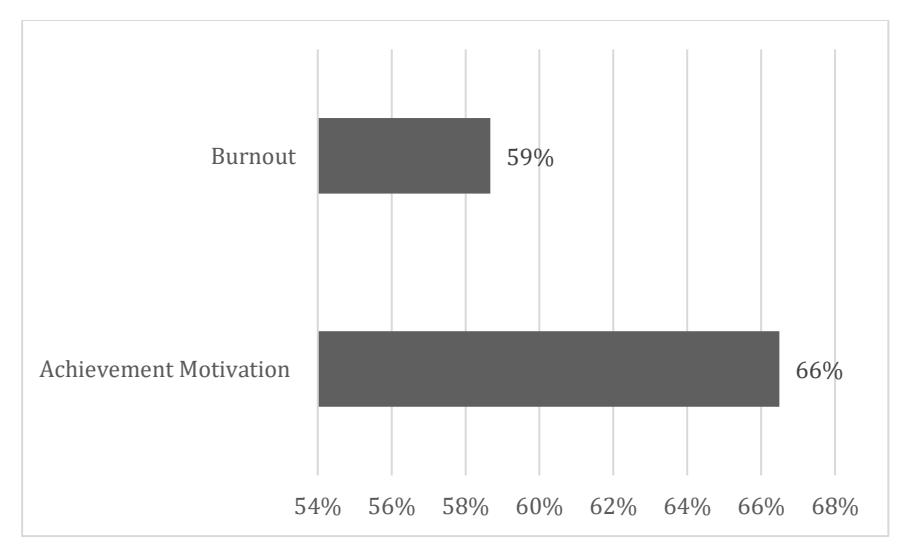
Figure 1. Percentage of Achievement Motivation and Burnout of Rowing Athletes.
Figure 1 shows the percentage of achievement motivation and burnout in rowing athletes. Based on the graph shown, the percentage of achievement motivation is higher, which is 66%, compared to the percentage of burnout, which is only 59%. This explains that in general, rowing athletes in this study have a higher level of motivation than the level of burnout. Although the achievement motivation is higher, the existence of burnout reaching 59% needs to be considered, because it is almost close to 60%, which shows that most athletes experience a fairly high level of burnout.
DISCUSSION
In the context of rowing, the physical and mental challenges athletes face are enormous. The use of psychological aspects in training leads to two main objectives. Studying how psychological factors affect the physical performance of athletes and the development of athlete health and psychological perfection can have a positive effect (Purnamasari & Novian, 2021). Rowing requires highintensity training, strict discipline, and the ability to survive competitive pressure (Furrer et al., 2023). Based on the results of this study, it was found that there was a negative relationship between achievement motivation and burnout in rowing athletes, which means that the higher the achievement motivation, the lower the risk of burnout experienced by rowing athletes. These results align with studies that have been conducted which show that achievement motivation plays a role in preventing burnout (Graña et al., 2021).
This finding also confirms that athletes with a strong mentality will be protected from burnout and social support, and motivation from coaches can help reduce the risk of burnout (Fan et al., 2023). High achievement motivation will help athletes to manage stress better (Simandjuntak et al., 2024). In this case, achievement motivation is a factor in achieving targets, as well as protecting athletes from the risk of burnout. Conversely, if motivation is low or not managed properly, the a risk of burnout and decreased performance (Peter & Jule, 2023).
This study also shows that external factors such as monotonous training patterns and excessive pressure are factors that can worsen burnout symptoms. This is in line with research that emphasizes that every athlete has the potential to experience boredom caused by monotonous training and lack of variation can reduce their enthusiasm and productivity (Velasco & Jorda, 2020). Burnout is triggered by various factors, both intrinsic such as determination, and extrinsic such as social support and training variation (Farivar & Esmaeelinezhad, 2021). Symptoms of burnout in training must be considered an early warning that will lead to a lack of seriousness, injury, and even quitting sports (Junaedi & Bawono, 2022).
In addition, the results of this study also support the view that athletes experience burnout but persist due to external pressure. However, persisting in a state of burnout due to external pressure can hurt the psychological well-being of athletes in the long term (Darisman et al., 2021). Therefore, this study emphasizes the importance of the right strategy in maintaining a balance between the drive to achieve and mental health. Coaches and support teams need to be more sensitive to the symptoms of burnout and build a supportive and varied training environment to maintain stable athlete motivation and performance.
CONCLUSSION
Based on the results of the study, it can be concluded that achievement motivation has a significant relationship with burnout levels in rowing athletes. Athletes with high motivation tend to have lower burnout levels because they are better able to manage pressure and challenges in training and competition. Conversely, low achievement motivation can increase the risk of burnout due to a lack of internal drive to deal with high physical and mental burdens in sports.
REFERENCES
Abubakar, A. M., Rezapouraghdam, H., Behravesh, E., & Megeirhi, H. A. (2022). Burnout or boreout: A meta-analytic review and synthesis of burnout and boreout literature in hospitality and tourism. Journal of Hospitality Marketing & Management, 31(4), 458–503.
Alvarez, O., Tormo-Barahona, L., Castillo, I., & Moreno-Murcia, J. A. (2021). Examining controlling styles of significant others and their implications for
- motivation, boredom and burnout in young swimmers. International Journal of Environmental Research and Public Health, 18(11), 5828.
- Borkowski, J. G., & Thorpe, P. K. (2023). Self-regulation and motivation: A lifespan perspective on under achievement. In Self-regulation of learning and performance (pp. 45–73). Routledge.
- Darisman, E. K., Prasetiyo, R., & Bayu, W. I. (2021). Belajar psikologi olahraga sebuah teori dan aplikasi dalam olahraga. Jakad Media Publishing.
- Eklund, R. C., & DeFreese, J. D. (2020). Athlete burnout. Handbook of Sport Psychology, 1220–1240.
- Fagundes, L. H. S., Noce, F., Albuquerque, M. R., de Andrade, A. G. P., & Teoldo da Costa, V. (2021). Can motivation and overtraining predict burnout in professional soccer athletes in different periods of the season? International Journal of Sport and Exercise Psychology, 19(2), 279–294.
- Fan, F., Chen, J., Chen, Y., Li, B., Guo, L., Shi, Y., Yang, F., Yang, Q., Yang, L., & Ding, C. (2023). How relationship-maintenance strategies influence athlete burnout: Mediating roles of coach–athlete relationship and basic psychological needs satisfaction. Frontiers in Psychology, 13, 1104143.
- Farivar, S., & Esmaeelinezhad, O. (2021). Can configurations of motivation and extraversion attenuate job demands-job burnout bond? International Journal of Organizational Analysis, 29(5), 1225–1239.
- Febriani, E. S., Arobiah, D., Apriyani, A., Ramdhani, E., & Millah, A. S. (2023). Analisis data dalam penelitian tindakan kelas. Jurnal Kreativitas Mahasiswa, 1(2), 140–153.
- Furrer, R., Hawley, J. A., & Handschin, C. (2023). The molecular athlete: exercise physiology from mechanisms to medals. Physiological Reviews.
- Ghanad, A. (2023). An overview of quantitative research methods. International Journal of Multidisciplinary Research and Analysis, 6(08), 3794–3803.
- Gordon, J. (2021). Integrating Collaborative Professional Development and Teaching to Increase Academic Achievement: Ex Post Facto. University of Phoenix.
- Graña, M., De Francisco, C., & Arce, C. (2021). The relationship between motivation and burnout in athletes and the mediating role of engagement. International Journal of Environmental Research and Public Health, 18(9). https://doi.org/10.3390/ijerph18094884
- Hilpisch, C., Krüger, K., Raab, M., Wiese, L., Zentgraf, K., & Mutz, M. (2024). Burnout symptoms in elite athletes: Assessing the role of effort–reward imbalance, support and emotions. International Review for the Sociology of Sport, 59(7), 1054–1074.
- Jannah, M., Permadani, F. D., & Widohardhono, R. (2022). Motivasi Berprestasi Olahraga Pada Atlet Pelajar Ketika Pandemi Covid-19 Di Jawa Timur.
- Paedagoria : Jurnal Kajian, Penelitian Dan Pengembangan Kependidikan, 13(1), 60. https://doi.org/10.31764/paedagoria.v13i1.8082
- Junaedi, M., & Bawono, M. N. (2022). Survei Tingkat Pengalihan Kejenuhan (Burnout) Latihan Pada Atlet Pencak Silat Puslatcab Kabupaten Pasuruan 2022. Jurnal Kesehatan Olahraga, 10(02), 145–156.
- Komarudin, M. P., & Rahmat Fadhli, E. M. (2023). Manajemen Mutu Kunci Kepuasan Atlet. Indonesia Emas Group.
- Komarudin, M. P., Saputra, M. Y., Awwaludin, P. N., Febrianty, M. F., & Novian, G. (2024). Model Latihan Kognisi dalam Olahraga. Indonesia Emas Group.
- Kurniawan, H. (2022). Pengantar praktis penyusunan instrumen penelitian. Deepublish.
- Lee, S. W. (2022). Regression analysis for continuous independent variables in medical research: statistical standard and guideline of Life Cycle Committee. Life Cycle, 2.
- Lenaini, I. (2021). Teknik pengambilan sampel purposive dan snowball sampling. Historis: Jurnal Kajian, Penelitian Dan Pengembangan Pendidikan Sejarah, 6(1), 33–39.
- Melya, E. (2024). Pengaruh motivasi berprestasi terhadap burnout pada atlet renang di kabupaten sleman. Αγαη, 15(1), 37–48.
- Mondi, C. F., Magro, S. W., Rihal, T. K., & Carlson, E. A. (2024). Burnout and perceptions of child behavior among childcare professionals. Early Childhood Education Journal, 52(8), 1803–1814.
- Montgomery, D. C., Peck, E. A., & Vining, G. G. (2021). Introduction to linear regression analysis. John Wiley & Sons.
- Novian, G., Paramitha, S. T., Ramadha, M. G., Rismayadi, A., Saputra, M. Y., Febrianty, M. F., & Awwaludin, P. N. (2024). COVID-19 Gymnastics: An
- Exercise used for Adult Mental Health. Journal of Physical Education Health and Sport, 11(1), 30–33.
- Nyimbili, F., & Nyimbili, L. (2024). Types of purposive sampling techniques with their examples and application in qualitative research studies. British Journal of Multidisciplinary and Advanced Studies, 5(1), 90–99.
- Peter, C., & Jule, A. (2023). Exploring the relationship between motivation and athletic burnout among elite athletes. Revista de Psicología Del Deporte (Journal of Sport Psychology), 32(2), 10–18.
- Purnamasari, I., Febrianty, M. F., & Novian, G. (2022). Kepercayaan Diri dan Kecemasan Atlet Judo Pada Masa Pandemik COVID-19. Jurnal Patriot, 4(1), 95–104.
- Purnamasari, I., & Novian, G. (2021). Tingkat kepercayaan diri dan kecemasan atlet pplp jawa barat selama menjalani training from home (TFH) pada masa adaptasi kebiasaan baru (AKB). Jurnal Patriot, 3(2), 203–213.
- Simandjuntak, C. N., Hanum, D., & Saputri, N. (2024). Peran Psikologi Olahraga dalam Meningkatkan Kinerja Atlet Bulutangkis. Jurnal Pendidikan Olahraga, 14(5), 330–337.
- Skinner, J., Smith, A. C. T., Read, D., Burch, L. M., & Mueller, J. (2024). Research methods for sport management. Routledge.
- Trifković, N. (2022). Burnout syndrome in athletes. Sport-Nauka i Praksa, 12(2), 89–94.
- Velasco, F., & Jorda, R. (2020). Portrait of boredom among athletes and its implications in sports management: A multi-method approach. Frontiers in Psychology, 11, 831.
- Volianitis, S., Yoshiga, C. C., & Secher, N. H. (2020). The physiology of rowing with perspective on training and health. European Journal of Applied Physiology, 120, 1943–1963.
- Weinberg, R. S., & Gould, D. (2023). Foundations of sport and exercise psychology. Human kinetics.