

INTRODUCTION
Futsal is a sport that is currently popular among students and college students. Futsal has the characteristics of a very fast and dynamic game that requires players to move quickly and dynamically on the field (Oktavia & Hariyanto, 2017; Rohman et al., 2021). Sports achievements depend not only on the sport's technical skills
Correspondence author: Mochamad Yamin Saputra, Universitas Pendidikan Indonesia, Indonesia. Email: mochyamins@upi.edu
DOI: http://dx.doi.org/10.5614/jskk.2025.10.1.6 e-ISSN: 2654-8860 . p-ISSN: 2477-1791 and the athlete's physical health but also on their psychological and mental health (Widyanti et al., 2023). Futsal emphasizes quick decision-making, precise ball control, and smart movement (Prabowo, 2023). One of the main elements for achieving success in sports is making good decisions (Sharma et al., 2022). The ability of athletes to make quick decisions is the first step to displaying something well. Incorrect decisions will usually cause many problems that occur both from internal and external perspectives because the existence of these problems will greatly affect the athlete's performance (Komarudin & Novian, 2021).
Decision-making is one of the basic skills needed by athletes to decide on actions in a game ( komarudin Komarudin et al., 2023). This is because the fact that players interact simultaneously with teammates and opponents implies the emergence of countless choices of action, which means that players must constantly make decisions about what to do and when, where, and/or how to achieve successful performance (de Pinho et al., 2021). During the match, psychological changes in futsal athletes will occur due to several factors, namely pressure (stress), concentration focus, and mental toughness when making decisions (Mario Azriel Iman Chodori et al., 2023). Therefore, good mental abilities are needed to be able to fight and block all pressure and negative thoughts. Therefore, one of the mental skills that can be used as a solution is Self-Talk skills (Sujarwo, 2022).
As for self-talk, it is one of the psychological strategies used by athletes and coaches, therefore self-talk can improve the ability and performance of athletes in sports, self-talk used in stressful, anxious, angry conditions is often uncontrolled and unreasonable because athletes are certainly not aware of what has been expressed (Komarudin, 2015). Self-talk is one of the effective training methods to control the influence of a person's thoughts and feelings on the goals they want to achieve (Komarudin, 2015).
In a study (Nurhadi et al., 2019) on futsal shooting accuracy through positive self-talk at SMPN 2 Jawai. In this study, researchers sought to determine whether positive self-talk could affect futsal shooting accuracy. Based on the results of this study, it can be seen in terms of the pretest and post-test values that increased from each participant in the experimental group compared to the control group. There is also previous research studied by (Ningsih et al., 2023) researchers revealed that positive self-talk has been proven to be an effective technique for increasing achievement motivation, helping athletes cope with pressure, increasing focus, and developing positive mindsets, thus contributing to achieving better performance.
Literature studies have shown the influence of positive self-talk on various aspects, including decision-making. Although self-talk is known to affect the psychological aspects of athletes, there has been no specific research examining how this mechanism affects the tactical or technical decisions of young futsal athletes in dynamic situations. Because, when making bad decisions such as wrong passes or failing to read the opponent's movements, it will have fatal consequences and determine the outcome of the match, especially in futsal matches. Based on research conducted by (Izzah & Setyawati, 2023) Which discusses the effect of positive self-talk training to increase self-confidence in archery accuracy. The results of this study show a significant effect between positive self-talk on athlete self-confidence in archery accuracy. Therefore, in this study, the researcher focuses on problems related to the effect of positive self-talk on decision-making because this study will help young futsal athletes make good decisions while on the field.
METHODS
Research Methods and design
The research method used is an experimental research method with a quantitative approach. The quantitative approach is an approach that in the research proposal, process, hypothesis, going to the field, data analysis, and data conclusions up to writing uses aspects of measurement, calculation, formulas, and certainty of numerical data.
Research Subject
According Margono in (Dika, 2020) Population is the entire object of research consisting of humans, objects, plants, symptoms, test scores, or incidents that are the source of data that have exclusive characteristics in a study. The sample in this study was 15 extracurricular students of SMAN 11 Bandung who were taken using total sampling techniques from the population. According Sugiyono in (Rizki Alamsyah & Adhi Nugroho, 2022) total sampling is a sampling technique where all members of the population are used as samples. The research design used was one-group pretest and posttest design (Abraham & Supriyati, 2022).
Research Instrument
The instrument used was the Decision Style Questionnaire (DSQ) to measure decision-making abilities (Leykin & DeRubies, 2010). Before being given treatment, the sample was given a pre-test questionnaire using the Decision Style Questionnaire (DSQ). Then the treatment was carried out for 4 weeks during which there were 3 training sessions/week. After that, the sample was given a post-test questionnaire with the same questionnaire, namely using the Decision Style Questionnaire (DSQ).
Data Analyst
The research results were obtained through statistical data calculations using SPSS (Statistical Package for the Social Sciences)(Elzati, 2024). Then, the results of quantitative data analysis are presented in the form of tables and figures.
RESULTS
The results of data processing and analysis are presented in the form of tables and figures, statistical descriptions can be seen in Table 1.
Table 1. Statistics Description
| Test | N | Min | Max | Sum | Mean | Std. Deviation |
|---|---|---|---|---|---|---|
| Pre | 15 | 101 | 170 | 2114 | 140.93 | 19.411 |
| Post | 15 | 129 | 190 | 2241 | 149.90 | 17.775 |
Based on Table 1, a statistical description of the 15 research subjects involved is obtained. Based on Table 1, it can be seen that in the pre-test, the minimum score was 101, the maximum score was 170, the total score was 2114, the average score was 140.93, and the standard deviation score was 19.411. In the post-test, the minimum score was 129, the maximum score was 190, the total score was 2241, the average score was 149.90, and the standard deviation score was 17.775. Furthermore, the author presents the results of the normality test in Table 2.
Table 2. Normality Test Results
| Test | Sig. | Information | |
|---|---|---|---|
| Pre | .200 | Normal | |
| Post | .118 | Normal |
Based on Table 2, the normality test value using the Kolmogorov-Smirnov Test is obtained. All data in the sample have a significant value greater than 0.05 so it can be concluded that all research data are normally distributed. Furthermore, the author presents the results of the Paired Sample T-test in Table 3.
Table 3. Hypothesis Test Results
| Pair | t | df | Sig. (2-tailed) |
|---|---|---|---|
| Pre-Post Test | 3.451 | 14 | .004 |
Table 3 shows the results of the hypothesis test to compare the pre-test and post-test values. This table contains information about the t value, degrees of freedom (df), and significance (Sig. 2-tailed). The t value obtained is 3.451 indicating a significant difference between the two measurements, degrees of freedom (df) of 13, and significance value (Sig. 2-tailed) of .004, which is smaller than .05, so the author concludes that there is a significant effects positive self-talk on decision-making of young futsal athletes. The following is the author's presentation of the results of the pre-test and post-test data processing percentages on decision-making, can be seen in Figure 1.
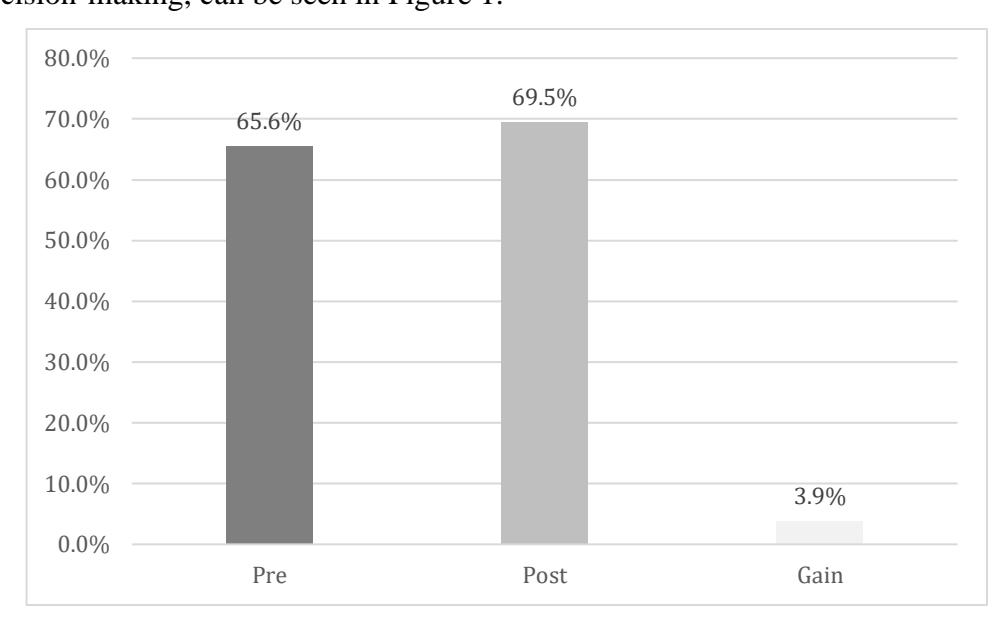
Figure 1. Percentage of Decision Making Ability of Young Futsal Athletes
Figure 1, shows the overall percentage of results that the pre-test results were 65.6% then there was an increase in the post-test results of 69.5% with a difference or gain of 3.9%. So the results of the study showed that there was a significant positive influence of self-talk on the decision-making of teenage futsal athletes with an increase of 3.9%.
DISCUSSION
These results strengthen the hypothesis that positive self-talk has a real influence on improving athletes' decision-making abilities. In the context of fast and dynamic futsal games, correct and quick decisions are one of the determining factors for the success of the game. As stated by (Oktavia & Hariyanto, 2017; Rohman et al., 2021). Futsal sports have the characteristics of a very fast and dynamic game that requires players to move quickly and dynamically on the field. Therefore, mental training such as self-talk can help athletes manage pressure in matches, increase focus, and sharpen self-confidence when facing situations that require quick decisions (M. P. Komarudin et al., 2024; Pratama & Utami, 2024).
The results of previous research conducted by (Nurhadi et al., 2019) Showed a significant effect of self-talk training on the accuracy of junior high school futsal shooting. Then, this study was also strengthened by previous research conducted by (Ningsih et al., 2023) Which stated that positive self-talk is effective in increasing achievement motivation, focus, and positive mindsets of athletes, thus having an impact on improving general performance.
In theory according to (Van Raalte et al., 2016) Self-talk (also called inner dialogue, internal monologue, intrapersonal communication, inner voice or speech, secret speech, private or silent speech, self-statement, self-communication, selfdirected verbalization, verbal thinking, verbal mediation, auditory imagination, articulated imagination, stream of consciousness) has been supported by coaches and athletes as one of the most widely used and effective strategies to improve sports performance. According to (Muflih Wahid Hamid, 2024; Weinberg & Gould, 2023). Self-talk is categorized into two, namely motivational self-talk or what is commonly called positive self-talk, namely efforts to improve athletes' abilities by using motivational words without being related to certain sports movement or stroke techniques, for example "I can do it", "I'm great", "let's be enthusiastic" and other motivational words. In addition, there is also instructional self-talk, which is an internal dialogue that is carried out by providing instructions about specific movements or techniques that must be done to improve skills or execute certain tasks.
Reaffirmed according to Hardy et al., in (K. Komarudin, 2015) self-talk is a psychological technique that can be used to improve athlete performance through cognitive, emotional, and behavioral regulation. Positive self-talk can provide internal reinforcement, reduce anxiety, and help athletes stay focused on the task at hand. Then according to (Galanis et al., 2016) Positive self-talk is a form of internal communication aimed at increasing self-confidence, emotional regulation, and focus of attention, which ultimately helps athlete performance. According to (Sujarwo, 2022) Positive self-talk will make athletes more optimistic, while negative self-talk will make athletes more depressed. The benefits of self-talk for athletes will make athletes better in motor skills and also accuracy in carrying out tasks.
Positive self-talk has often been used as a cognitive strategy to help maintain concentration, increase motivation, and overcome negative thoughts and emotions. Positive self-talk training in this study uses an approach that aims to change irrational beliefs (negative self-talk) held by subjects that can hurt emotions and behavior into rational beliefs (positive self-talk) so that they can increase concentration (Asnani et al., 2019). This is also in line with research conducted by (Effendy & Jannah, 2019) If athletes can do self-talk training, athletes will be able to increase their self-confidence and trigger good emotional control during training or the competition. Successful athletes are athletes who are highly motivated, focused, and confident.
Self-talk training will be more suitable for athletes because during the match the athlete will face the match alone (Khunaifi & Jannah, 2020). Negative self-talk is the self-talk that can cause a loss of self-confidence and cause anxiety. Positive self-talk is also often used as a cognitive strategy to help maintain concentration, increase motivation, and overcome negative thoughts and emotions (Asnani et al., 2019). The selection of self-talk types also greatly affects performance. For this reason, the self-talk teaching process must be truly focused so that it can patch up an athlete's shortcomings in terms of mental quality (Apriyanto, 2017). Therefore, it can be concluded that the results of this study show athletes who do positive selftalk can feel a good impact so that later when making decisions on the field they will be calmer than before knowing positive self-talk.
CONCLUSSION
Based on the findings of this study, it can be concluded that positive selftalk techniques can serve as a psychological strategy to assist young futsal athletes in overcoming decision-making challenges on the field. This technique not only enhances the mental and emotional resilience of athletes but also improves their performance during matches. Therefore, researchers suggest that coaches or sports teachers consider implementing positive self-talk training for their students or athletes to foster better achievement.
Researchers emphasize the need for coaches, teachers, and futsal coaches to focus more on the psychological aspects of athletes rather than solely on physical, tactical, and technical skills. The findings from this study also suggest that they should integrate positive self-talk mental training programs into their training sessions and activities, as this approach has significantly enhanced athletes' decision-making, self-confidence, and focus during competitions. For those conducting future research, it's advised to include a larger and more diverse sample concerning age, gender, and athletic experience to bolster the results. Additionally, future studies could investigate different forms of self-talk, including instructional and motivational self-talk.
REFERENCES
- Abraham, I., & Supriyati, Y. (2022). Desain Kuasi Eksperimen Dalam Pendidikan: Literatur. Jurnal Ilmiah Mandala Education, 8(3).
- Apriyanto, T. (2017). Psikologi Olahraga. Sulawesi Selatan: Edukasi Pratama Madani.
- Asnani, A. A., Triansyah, A., Puspa, F., Program, H., Pendidikan, S., Fkip, J., & P`1ontianak, U. (2019). Pengaruh Strategi Self Talk Terhadap Kemampuan Lompat Tinggi.
- de Pinho, S. T., Letícia da Silva, S., Clavijo, F. A. R., Alves, D., & Corrêa, U. C. (2021). The learning of decision-making on interception and passing in futsal.
- International Journal of Sport and Exercise Psychology, 19(6), 1005–1021. https://doi.org/10.1080/1612197X.2020.1803950
- Effendy, A., & Jannah, M. (2019). Pengaruh Pelatihan Self-Talk terhadap Kepercayaan Diri Atlet Lari 100 Meter. Jurnal Penelitian Psikologi, 06, 1–6.
- Elzati, W. (2024). Pembelajaran Aplikasi SPSS Dalam Meningkatkan Pemahaman Statistik Mahasiswa. HIKMAH: Jurnal Pendidikan Islam, 13(1), 72–80. https://doi.org/10.55403/hikmah.v13i1.638
- Galanis, E., Hatzigeorgiadis, A., Zourbanos, N., & Theodorakis, Y. (2016). Why Self-Talk Is Effective? Perspectives on Self-Talk Mechanisms in Sport. In Sport and Exercise Psychology Research: From Theory to Practice (pp. 181– 200). Elsevier Inc. https://doi.org/10.1016/B978-0-12-803634-1.00008-X
- Izzah, A., & Setyawati, H. (2023). Pengaruh Latihan Self-talk Positif untuk Meningkatkan Kepercayaan Diri terhadap Akurasi Memanah (Atlet Panahan PERPANI Kudus). https://journal.unnes.ac.id/sju/index.php/inapes
- Jarwo, S. (2022). Pengetahuan Atlet tentang Self Talk sebagai salah satu solusi mengatasi tekanan dalam Permainan Bola Voli. Jurnal Patriot, 4(2), 117– 122.
- Khunaifi, M., & Jannah, M. (2020). Pengaruh Pelatihan Positive Self-talk terhadap Peningkatan Konsentrasi pada Atlet Taekwondo. Character Jurnal Penelitian Psikologi, 7(1).
- Komarudin, komarudin, Nurmansyah Awwaludin, P., Rivan Firdaus, I., Fiametta Febrianty, M., & Novian, G. (2023). Multimodel Cognitive Training to Improve Athletes' Decision-Making Ability in Open-Skill Sports. Journal of Physical Education, Sport, Health and Recreation, 12(1), 2023. http://journal.unnes.ac.id/sju/index.php/peshr
- Komarudin, K. (2015). Psikologi olahraga. Bandung: Rosda Karya.
- Komarudin, M. P., Saputra, M. Y., Awwaludin, P. N., Febrianty, M. F., & Novian, G. (2024). Model Latihan Kognisi dalam Olahraga. Indonesia Emas Group.
- Komarudin, & Novian, G. (2021). Antropomemtric, biomotor, and physiological faktor for indonesian fencing athletes talent identification. Jurnal Terapan Ilmu Keolahragaan. 10.17509/jtikor.v6i1.33200
- Leykin, Y., & Derubeis, R. J. (2010). Decision-making styles and depressive symptomatology: Development of the decision styles questionnaire. Judgment and Decision Making, 5(7), 506–515. https://doi.org/10.1017/s1930297500001674
- Mario Azriel Iman Chodori, Sapto Adi, & Nanang Tri Wahyudi. (2023). Pengaruh Latihan Mental Terhadap Kepercayaan Diri Pemain Ekstrakurikuler Futsal SMA Negeri 6 Malang. Atmosfer: Jurnal Pendidikan, Bahasa, Sastra, Seni, Budaya, Dan Sosial Humaniora, 1(4), 63–75.
- https://doi.org/10.59024/atmosfer.v1i4.320
- Muflih Wahid Hamid. (2024). Peran Motivasional Self-Talk pada Mahasiswa-Atlet yang Mengalami Kecemasan Pra-Pertandingan. Jurnal Penelitian Psikologi, 15(1), 46–51. https://doi.org/10.29080/jpp.v15i1.1210
- Musianto, L. S. (2002). Perbedaan Pendekatan Kuantitatif Dengan Pendekatan Kualitatif Dalam Metode Penelitian. Jurnal Manajemen Dan Wirausaha, 4(2), 123–136. https://doi.org/10.9744/jmk.4.2.pp.123-136
- Ningsih, D. N., Herlina, H., & Damaianti, L. F. (2023). Pengaruh Self-Talk Terhadap Kepercayaan Diri Pada Atlet Panahan Remaja. Jurnal Psikologi, 16(2), 342–352.
- Nurhadi, T. (2019). Ketepatan Shooting Futsal Melalui Self Talk Positif Di Smp Negeru 2 Jawai. Jurnal Pendidikan Dan …, 9(1).
- Nurhadi, T., Simanjuntak, V. G., Program, A. A., Pendidikan, S., Fkip, J., & Pontianak, U. (2019). Ketepatan Shooting Futsal Melalui Self Talk Positif di SMA Negeri 2 Jawai. https://jurnal.untan.ac.id/index.php/jpdpb/article/view/39124/0
- Oktavia, R. D., & Hariyanto, D. (2017). Pengaruh latihan passing berpasangan statis dan latihan passing bergerak dinamis terhadap ketepatan passing pada permainan futsal. Jp. Jok (Jurnal Pendidikan Jasmani, Olahraga Dan Kesehatan), 1(1), 30–41.
- Prabowo, R. A. (2023). Analisis Faktor-Faktor Yang Mempengaruhi Prestasi Atlet Futsal Utp Surakarta. Journal Management and Muamalah, 01(Juli), 276– 286.
- Pratama, E. Y., & Utami, R. J. (2024). Psikologi olahraga: Pendekatan holistik bagi atlet. Pradina Pustaka.
- Rahmi Pertiwi, G., Risnita, & Jailani, M. S. (2023). Jenis Jenis Penelitian Ilmiah Kependidikan. Jurnal QOSIM Jurnal Pendidikan Sosial & Humaniora, 1(1), 41–52. https://doi.org/10.61104/jq.v1i1.59
- Rohman, A., Ismaya, B., & Syafei, M. M. (2021). Survei teknik dasar passing kaki bagian dalam peserta ekstrakurikuler futsal smk pamor cikampek. Jurnal Ilmiah Wahana Pendidikan, 7(6), 357–366.
- Sharma, M., Tokas, S., Sharma, S., & Mishra, M. (2022). Role of sports activities in developing decision making skill. World Journal of English Language, 15(2), 1717–1731.
- Sujarwo. (2022). Pengetahuan Atlet tentang Self Talk sebagai salah satu solusi mengatasi tekanan dalam Permainan Bola Voli. Jurnal Patriot, Volume 4 Nomor 2, 177–122. https://doi.org/10.24036/patriot.v%vi%i.829
- Van Raalte, J. L., Vincent, A., & Brewer, B. W. (2016). Self-talk: Review and sportspecific model. In Psychology of Sport and Exercise (Vol. 22, pp. 139–148).
- Elsevier Ltd. https://doi.org/10.1016/j.psychsport.2015.08.004
- Weinberg, R. S., & Gould, D. (2023). Foundations of sport and exercise psychology. Human kinetics.
- Widyanti, I. T., Izzuddin, D. A., & Armen, G. Q. (2023). Analisis Tingkat Kecemasan Atlet Futsal Kabupaten Bogor Dalam Menghadapi Pertandingan Liga AAFI Kabupaten Bogor. Jurnal Ilmu Keolahraagan, 4(3), 300–310.